As proposals for nuclear stations proliferate across Canada, ‘fleet-based’ reactor deployment remains elusive.

The Ontario government announced last summer a body called the New Nuclear Technology Panel, composed of senior executives from OPG, Bruce Power and the government, and instructed it to co-ordinate a technology selection decision. But the panel has not been established, and there is no timeline for doing so.
among those few proponents that have publicly committed to specific models, at least three have already wavered on their decisions. The situation underlines how tentative plans for nuclear expansion in Canada remain
Matthew McClearn, 9 March 26, https://www.theglobeandmail.com/business/article-nuclear-stations-canada-fleet-based-reactor-deployment-remains-elusive/
In the nuclear industry it is practically gospel: Canada isn’t populous or wealthy enough to purchase a smorgasbord of different nuclear reactors. Yet after years of lukewarm efforts by Canadian utilities and governments to reach a consensus on which ones to buy, there are few indications that one is emerging.
In January, Saskatchewan’s government announced it had begun evaluating large nuclear reactors for potential deployment. Jeremy Harrison, a minister whose responsibilities include the Crown-owned SaskPower, said the utility will study the readiness of reactors to be built, vendors’ ability to support licensing and construction, and their track record of executing previous projects.
Ontario’s utilities have been asking similar questions for several years. In 2023 Bruce Power began hunting for a reactor for Bruce C, a proposed four-unit station at its facility near Tiverton, Ont. Ontario Power Generation recently began its own search for a huge plant dubbed Wesleyville, planned in Port Hope, Ont.
Observers have long warned that given Canada’s population and economy, utilities, private developers and provinces must co-ordinate procurement of reactors – an approach sometimes dubbed “fleet-based deployment.” But it hasn’t arrived yet.
Indeed, among those few proponents that have publicly committed to specific models, at least three have already wavered on their decisions. The situation underlines how tentative plans for nuclear expansion in Canada remain, even as governments forecast spiking demand for electricity in the immediate future and consider their options for generating that power.
All 25 reactors built in Canada during the 1960s through the 1990s featured Canada deuterium uranium (Candu) technology developed by Atomic Energy of Canada Ltd., a Crown corporation. One benefit was that later Candus, such as those at the Bruce B and Darlington stations, proved significantly more reliable than earlier ones in that they suffered fewer outages. Similar dynamics applied when those stations required midlife overhauls. Another advantage was that utilities could share operational experience through the Candu Owners Group (now known as Conexus Nuclear).
By the time the federal government began promoting small modular reactors (SMRs), though, the Candu’s monopoly seemed precarious, and international vendors arrived promoting early-stage designs. In 2018 the government published a “roadmap” for SMRs, recommending stakeholders settle on a small number of finalized designs.
Jeremy Whitlock, a nuclear consultant and adjunct professor at McMaster University, wrote in an e-mailed response to questions that fleet-based deployment is vital for nuclear. “There is simply not enough infrastructure, resources, and (currently at least) work force to support multiple lines of technology,” he wrote.
A report released in February by Clean Prosperity, a Toronto-based energy and climate policy think tank, asserted that one necessary precondition for nuclear expansion is that all proponents converge on three designs at most: one “large” design with a capacity of 1,000 megawatts or more (enough to power a large city), one “small” reactor with an output around 300 megawatts, and one “micro” reactor putting out less than 20 megawatts.
Brendan Frank, Clean Prosperity’s head of policy development, said a first-of-a-kind reactor is far too expensive; the industry needs to learn how to build subsequent units more cheaply to compete with other generation options. “Your chances of doing that are significantly higher if you build the same reactor design over and over and over again,” he said.
The BWRX-300 from U.S.-based GE Vernova Hitachi Nuclear Energy has seemingly emerged as the lone contender among the larger SMRs. Yet only OPG has committed to build one.
As for large and micro-reactors, no firm orders have been placed in Canada. However attractive fleet-based deployment might seem, it might be difficult to achieve. Selecting a model has numerous implications, from securing a fuel supply to managing the resulting waste; what’s best for Ontario mightn’t seem so for Saskatchewan or New Brunswick.
Nuclear power is among the few generation options that has grown more expensive, and eliminating pricing competition by sourcing from a single reactor vendor won’t help
Options are limited. AtkinsRéalis Group Inc.
ATRL-T -1.07%decrease, the company which purchased Atomic Energy of Canada’s reactor business more than a decade ago, is developing an updated 1,000-megawatt Candu dubbed the Monark. Its most significant home-court advantage is that utilities and their workers are already familiar with operating and maintaining Candus. Moreover, its supply chain is on Canadian soil, an appealing feature amid surging economic nationalism. Its greatest vulnerability might be its readiness: The Canadian Nuclear Safety Commission says it has not yet begun a preliminary assessment of the Monark, known as a vendor design review.
The CNSC reviewed the Monark’s most obvious competitor more than a decade ago. It concluded there were “no fundamental barriers” to licensing Westinghouse Electric Co.’s AP1000. Although AP1000s have been built in China and the U.S., the American projects suffered disastrous setbacks during construction. Souring Canada-U.S. relations further diminish the AP1000’s appeal.
GE Vernova Hitachi, which designed the BWRX-300, faces similar obstacles in marketing its larger Advanced Boiling Water Reactor. Dark horses include the European Pressurized Reactor, a French design, and the South Korean APR-1400.
If fleet-based deployment is to succeed in Canada, Ontario appears to be the most credible co-ordinator. Between Bruce C and Wesleyville, it might purchase up to 14 large reactors.
Neither OPG nor Bruce Power specified reactors in their regulatory applications, which are intended to encompass a variety of options. Bruce Power’s chief operating officer, James Scongack, said since late 2023 his company has sought information from reactor vendors, a process intended to ascertain which reactors are ready to be constructed and at what cost. The process “was really designed to look at what are all the technologies available for new nuclear, assess them, review them, narrow them down,” he said.
Citing confidentiality agreements, Mr. Scongack declined to discuss which ones had emerged as front-runners. But “we’re now very focused on options that would not be a surprise to you.”
The Ontario government announced last summer a body called the New Nuclear Technology Panel, composed of senior executives from OPG, Bruce Power and the government, and instructed it to co-ordinate a technology selection decision. But the panel has not been established, and there is no timeline for doing so.
Lately, Ontario Energy Minister Stephen Lecce has spoken emphatically about the importance of promoting Canadian technology and supply chains – comments suggesting strong support for Candus.
“My first preoccupation is: What is going to advance the national interest of Canada in a post-Trump world,” he told The Globe in late January.
“We need to be fiercely protective of our intellectual property, of Canadian technology for Candu, a large-scale [reactor] that is made in Canada, stored in this country, a supply chain that is Canadian, a work force that is mature and Canadian.”
But a different champion could emerge in Saskatchewan. As far back as 2022, SaskPower selected the BWRX-300. Yet just two years later, SaskPower announced it had signed an agreement with Westinghouse to evaluate other models including its AP300, a direct competitor.
That sudden interest in Westinghouse didn’t come out of nowhere. The uranium giant Cameco Corp. CCO-T +5.86%increase, based in Saskatoon, is one of the province’s most influential companies. In 2023 it purchased a 49-per-cent stake in Westinghouse.
Mr. Harrison said the AP300 is no longer under consideration, and SaskPower confirms it’s planning to announce a proposed site for building BWRX-300s later this year. But SaskPower won’t make a final investment decision until at least 2029, leaving plenty of time to pivot again.
And that’s one reason Saskatchewan’s decision to explore large reactors could be highly significant. Mr. Harrison said the province is prepared to go its own way. And while SaskPower will consider candidate reactors on their merits, he added that local companies’ interests are an important consideration.
“We are really very, very proud of Cameco, a great Saskatchewan company,” Mr. Harrison said. “To be a 49-per-cent owner of this iconic American company, Westinghouse Electric, is really a quite an amazing story for a company that began life as a Crown corporation.”
He added: “Without question, benefits to the supply chain in Saskatchewan is a part of the consideration. We’ve been very upfront about that.”
Energy Alberta, a nascent developer with a long-standing proposal to build a four-reactor plant in Peace River, Alta., offers perhaps the most striking example of indecision. It had selected the Monark, but late last year announced it was considering Westinghouse’s AP1000s instead.
New Brunswick selected two reactors for construction at its Point Lepreau station nearly a decade ago. But neither the ARC-100 nor the SSR-W appear to be nearing a completed design; their vendors (ARC Clean Technology and Moltex Energy Canada, respectively) have few employees and have struggled to raise capital.
NB Power’s chief executive officer, Lori Clark, said her utility remains committed to building reactors. But it has come around to fleet-based thinking: it no longer wants to build a first-of-a-kind, or one-of-a-kind, reactor, because they are inevitably costlier. Provincial officials have expressed interest in a variety of different reactors over the past year, including the BWRX-300, AP1000 and Candu.
“We want to watch what’s happening in Ontario, because they are much bigger player in the nuclear field than we are.”
Hungary detains Ukrainians transporting tens of millions in cash and gold
Hungarian authorities have launched an investigation into potential money laundering, but Ukraine insists those facilitating the transfer were state-owned bank employees carrying out their job

Thomas Brooke, ReMix News, 2026-03-06, https://rmx.news/article/hungary-detains-ukrainians-transporting-tens-of-millions-in-cash-and-gold/
Hungarian authorities have detained seven Ukrainian citizens and seized tens of millions of dollars, euros, and gold that were being transported through the country in armored vehicles, triggering the latest diplomatic dispute between Budapest and Kyiv.
Hungary’s National Tax and Customs Administration (NAV) confirmed on Friday that criminal proceedings had been launched on suspicion of money laundering following an operation carried out on March 5. Authorities intercepted two armored cash-transport vehicles traveling through Hungary from Austria toward Ukraine.
According to the Hungarian authorities, the vehicles were carrying approximately $40 million, €35 million in cash, and 9 kilograms of gold.
Hungarian Foreign Minister Péter Szijjártó said the case raised serious questions about the movement of large quantities of physical cash through the country.
“Since January, a total of $900 million and €420 million in cash has been transported through Hungary, and 146 kilograms of gold bars have also been transported through the country,” he said, as cited by Magyar Hírlap.
“We have a number of serious questions about this. First of all, this is a huge amount of cash, and we wonder why Ukrainians need to transport such a large amount of cash. If it is true that this is a transaction between banks, then the question rightly arises as to why the banks do not settle this between themselves by bank transfer, why it is necessary to transport such a large amount of cash, and why it has to be transported through Hungary,” Szijjártó added.
“These questions arise mainly because these cash shipments are accompanied by people who have clear ties to Ukrainian secret services.”
Hungarian Prime Minister Viktor Orbán’s political director, Balázs Orbán, also commented on the case, raising concerns about the purpose of the funds.
“Hundreds of millions in cash and gold moving through Hungary toward Ukraine — escorted by people linked to Ukrainian intelligence. Armored vehicles, suitcases full of money, staggering sums,” he wrote on X……………………………………………………………………………………….. https://rmx.news/article/hungary-detains-ukrainians-transporting-tens-of-millions-in-cash-and-gold/
In US/Israeli war on Iran, all roads point to rise in global nuclear weapons.

Trump and Netanyahu are already boasting of success. But the war is not going to plan for any of the parties involved
Paul Rogers, 6 March 2026, https://www.opendemocracy.net/en/us-iran-israel-war-lead-to-nuclear-weapons-donald-trump-netanyahu/
One week in, there is little prospect of an early end to the Israeli war with Iran and even less of preventing a regional escalation. Given Binyamin Netanyahu’s success in bringing Donald Trump’s United States on board as Israel’s partner in a widening war, he may feel satisfied with progress so far. In reality, though, the conflict is not going according to plan for any of the three states involved.
Netanyahu’s intended outcome was straightforward regime termination in Tehran, with the assassination of the supreme leader and most of Iran’s senior war leaders. A public uprising would then have followed, ending the power of the theocrats.
Israel and the US could then have brought sufficient force to terminate Iran’s nuclear and ballistic missile program and cut back its conventional forces, starting with the abolition of the Iranian Revolutionary Guard Corps (IRGC).
Finally, the removal of the US’s punishing economic sanctions on Iran would have been agreed, allowing some civil recovery for the country – although this would, of course, have been contingent on the new leaders agreeing to oil and gas deals that would prove punitive for Iran and lucrative for the US, likely ensuring Trump’s continued support for Israel.
The Israeli war aims may have been clear, but it is impossible to say for sure what the White House wanted.
A muddle of reasons and statements of intent for bombing Iran have been given by Trump, his secretary of state, Marco Rubio and self-styled secretary of war, Pete Hegseth, who last year sought to rebrand from the ‘secretary of defense’ title that has been used by successive post-holders since the end of the Second World War. While Washington initially embraced Israel’s desire for total regime termination through an uprising, that aim has disappeared from its recent statements. Now it seems that crushing Iran’s military capabilities, starting with its nuclear ambitions, is the US order of the day.
For Iran’s theocratic leadership, the primary war aim was survival in the face of the massive power of the Israeli/US war machine, which would itself have been quite an achievement. Indeed, Iran’s supreme leader, Ayatollah Khamenei, barely survived the first hour or so of the war before being killed in a missile strike.
The unexpected has since become clear: Khamenei is gone, but Iran’s leadership system is likely to survive for now. His successor will probably be his son, Ayatollah Mojtaba Khamenei, who will quite possibly be as hard-line as his father. Israeli defence minister Israel Katz has declared that whoever is chosen as Iran’s next supreme leader will be “a target for elimination” – a clear indication that for Netanyahu and the Israeli Defence Forces, there is no turning back.
If regime survival is one of the surprises of the conflict, the other is Iran’s continuing ability to fire barrages of armed drones and ballistic missiles, which has been the least expected element of the war so far.
By last July, the IDF and the US believed they had massively damaged Iran’s air defences, with Trump boasting of “spectacular military success” in a press conference. On top of this, the past week has seen the determined and intensive targeting of Iran’s missile systems by the combined power of the IDF and US armed forces. Yet to the genuine surprise of many Western political and military analysts, Iran can still launch its missiles.
Three elements of this survival offer a clue as to what comes next.
One is that the regime in Tehran is likely to continue to survive. Look to Gaza, where Hamas is still active despite the massive destruction that Israel has inflicted over the past two and a half years. This, as I noted in last week’s column, is largely down to its quite extraordinary network of tunnels dug mostly by hand and reinforced with concrete walls. The network, which extends to around the distance from London to Edinburgh, has around 5,700 shafts, as well as electricity, ventilation and communication facilities.
In Iran, the IRGC now looks to have been similarly active in extensively preparing for war. It has built numerous and widely dispersed underground ‘missile cities’ – deep tunnel complexes built into mountains for making and storing armed drones and other weapons – as well as producing undersea armed drones for use against the US Navy, especially if it tries to guide tankers through the Strait of Hormuz.
The second element follows on. There are indications that the IRGC appears to be using its older and least advanced missiles and drones first, aiming to deplete Israeli and US stocks of their anti-missile defences. Quite apart from anything else, this means Israel and the US are depleting their high-cost weaponry to “catch” incoming missiles, while Iran saves its most recently developed drones and ballistic missiles – with greater reach and more power for destruction, as well as improved accuracy and reliability – for later in the war.
Finally, there is the decision to opt for economic warfare against Western interests in many Gulf states. This involves the closure of the Strait of Hormuz, alongside attacks on oil and gas processing plants and distribution systems, as well as tourist infrastructure across the Gulf, with a luxury hotel in Dubai reportedly hit by a retaliatory strike.
This puts states such as Saudi Arabia, Kuwait and the United Arab Emirates in a difficult position as to how to respond. To react forcefully by joining the war against Iran may be the natural response, but this has consequences. It means allying with an Israel that has killed at least 80,000 Palestinian Arabs in Gaza and enacted violence in the occupied West Bank to make life fraught with difficulty and increasingly dangerous.
This war is barely a week old but is having a worldwide impact and, despite Trump’s bluster, is already problematic for the US. The killing of at least 165 people, many of them children, at the Shajareh Tayyebeh Girls School in Minab is just one example of this, while another may be significant in a different way.
On Wednesday, a US Navy submarine torpedoed an Iranian frigate, the IRIS Dena, killing at least 87 crew members. The Dena had recently left a series of exercises organised by the Indian Navy in the Bay of Bengal, and its sinking was reported with great glee by Hegseth, who told reporters: “Yesterday, in the Indian Ocean, an American submarine sunk an Iranian warship that thought it was safe in international waters. Instead, it was sunk by a torpedo. Quiet death. The first sinking of an enemy ship by a torpedo since World War II.”
Earlier in the press conference, Hesgeth had used the same celebratory and boastful tone to discuss what he framed as early US success. “We are only four days into this, and the results have been incredible. Historic, really,” he said. “Only the United States of America could lead this – only us. But when you add the Israeli Defence Forces, a devastatingly capable force, the combination is sheer destruction for our radical Islamist Iranian adversaries. They are toast, and they know it. Or at least, soon enough, they will know it. America is winning – decisively, devastatingly, and without mercy.”
The US war secretary’s speech betrayed the sense of impunity in Trump’s White House, confirming that members of his administration are certain in their own minds that in this war, Israel and the US can do what they like.
The consequences of this war are impossible to say for sure, but all roads appear to lead to increased uptake of nuclear weaponry, leaving the world an even less safe and stable place. If Israel and the US fail to terminate the Iranian regime and if any significant part of the IRGC survives, the very first thing it will do is to go to the ends of the earth to put together a crude nuclear device. Across the wider region, any state that sees two nuclear-armed regimes seeking to destroy a non-nuclear regime will see a need to go nuclear itself.
Senator Joins Police to Eject Antiwar Marine From Hearing, Breaking His Arm
“America does not want to send its sons and daughters to war for Israel,” McGinnis said as he protested the hearing. “This is wrong.”
Police and Sheehy tried to force the protester out of the room as he yelled, “no one wants to fight for Israel.”
By Sharon Zhang , Truthout, March 5, 2026, https://truthout.org/articles/senator-joins-police-to-eject-anti-war-marine-from-hearing-breaking-his-arm/
Republican senator joined Capitol Police as they violently ejected an anti-war protester and U.S. Marine veteran from an Armed Services subcommittee hearing on Wednesday, appearing to break his arm as the group tried to wrestle him out of the chamber.
Video of the incident shows Sen. Tim Sheehy, a Republican from Montana, rushing over to help police as they try to tug and push the protester out of the chamber, as the protester yells, “no one wants to fight for Israel.” The protester appears to be wearing a U.S. Marine Corps dress uniform.
The protester, Green Party candidate Brian McGinnis, has his hand stuck in the door frame, with his arm hooked around the adjacent open door panel as several police try to force him out of the room. Sheehy lifts up McGinnis’s leg as police officers grab his torso and tug.
As Sheehy is moving over to dislodge the protester’s hand and tug on his arm, McGinnis’s forearm can be seen appearing to snap in half. There is a loud cracking sound, and bystanders begin to yell at the police to stop. Shortly after, officers let up on their tugging, and begin to work to dislodge McGinnis’s hand, as Sheehy returns to the front of the room.
“The senator broke his hand. A sitting U.S. senator just broke the hand of a Marine,” one person yells. One bystander asks McGinnis, “is your hand ok?”
“No, it’s not,” McGinnis responds. McGinnis is running for Senate in North Carolina, and is a Marine who fought in Iraq, according to his campaign website.
Police arrested McGinnis and have charged him with three counts of assault on a police officer, and three counts of resisting arrest and crowding, obstructing, and incommoding for his demonstration.
In a statement posted on McGinnis’s X account, his family expressed gratitude for the well wishes. “We are taking a necessary step back from the public eye to allow him to focus fully on his recovery in private,” the statement said.
The protest occurred during a hearing by the Senate Armed Services Subcommittee on Readiness and Management Support, held to hear testimony from military officials on the readiness of various military branches for combat. The hearing was scheduled before the U.S. and Israel launched their war on Iran on February 28.
“America does not want to send its sons and daughters to war for Israel,” McGinnis said as he protested the hearing. “This is wrong.”
Sheehy called McGinnis an “unhinged protester,” and claimed on social media that he was trying to “help out and deescalate the situation,” ignoring that he helped lift McGinnis off the ground, potentially helping to break his arm.
“This gentleman came to the Capitol looking for a confrontation, and he got one,” Sheehy said, though McGinnis was merely protesting the hearing.
In a video posted to social media ahead of his protest, McGinnis said that he was in D.C. to “speak out against the Senate and ask them why they’re going to send our men and women to harm’s way.”
“Anyone who feels disillusioned and betrayed, you’re not alone. Join us in demanding accountability for this betrayal,” he said. “Free Palestine, free America.”
The Welsh dragon is getting ready to roar.
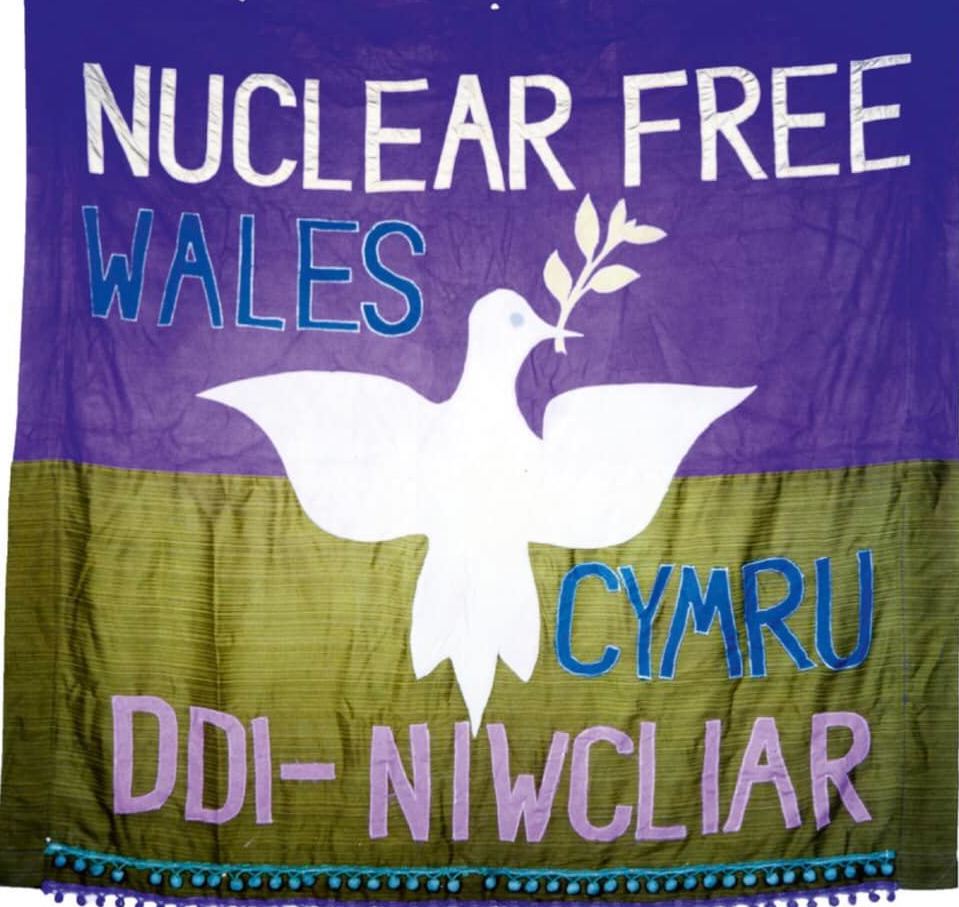
Citizens of Wales are gearing up for another assault on their right to a safe, clean and healthy environment
Anti-nuclear campaigners meeting in Wrexham last October issued a declaration calling on politicians representing Welsh constituencies in parliaments in Cardiff and Westminster to work for a nuclear-free, renewables-powered Wales.
Welsh campaigners are working with US, Canadian and other UK activists to establish a Transatlantic Nuclear-Free Alliance to campaign on issues of common concern. The new initiative came in conjunction with a screening of the award-winning film SOS: The San Onofre Syndrome, which highlights the impact of the decommissioning and the legacy of managing deadly radioactive waste faced by the neighbors of the San Onofre nuclear power plant in California.
The film’s messages resonate with international audiences faced with identical threats and challenges. At the screening, the audience heard from the filmmakers Marybeth Brangan and the now sadly late Jim Heddle as well as from Professor Stephen Thomas, Emeritus Professor in Energy Policy at Greenwich University and Richard Outram, Secretary of the Welsh Nuclear Free Local Authorities.
“The nuclear industry tries to assure us the radioactive waste disposal and reactor decommissioning are established processes with easily affordable costs,” Thomas said. “The truth is that we are three or more decades away from permanent disposal of waste and of carrying out the most challenging stages of decommissioning. The cost will be high, and the failure of previous funding schemes means the burden will fall on future taxpayers, generations ahead”.
Despite this, the UK Government will introduce developer-led siting plans, permitting nuclear operators to apply to locate new plants in sites throughout Wales, and intends to reduce regulation in the nuclear industry.
A recent Memorandum of Understanding was also signed with the United States that could lead to British regulators being obliged to accept US reactor designs not currently approved for deployment in the UK. Great British Energy – Nuclear has also acquired land at Wylfa in Anglesey (Ynys Môn) as a potential site for the deployment of one or more so-called Small Modular Reactors being commissioned from Rolls-Royce and the US company Westinghouse has also expressed interest in constructing a larger nuclear plant there.
The Welsh Government specifically created Cwmni Egino to develop a new nuclear plant on the Trawsfynydd site at the heart of the beautiful Eryri National Park. And in South Wales, US newcomer Last Energy is seeking permission to deploy multiple micro reactors on a former coal power station site at Llynfi outside Bridgend.
Eight leading campaign groups have backed the Wrexham Declaration which denounces the continued political obsession with the pursuit of nuclear power as a ‘fool’s errand’. NFLA Secretary Richard Outram explains why:
“Nuclear is too slow, too costly, too risky, contaminates the natural environment compromising human health, and leaves a legacy of nuclear plant decontamination and radioactive waste management lasting millennia that is ruinously expensive and uncertain. And nuclear plants represent obvious targets to terrorists and, as we have seen in Ukraine, to hostile powers in times of war”.
Campaigners are also convinced that nuclear power will worsen fuel poverty and climate change. As Welsh people face spiraling energy costs, with many in fuel poverty, while a new nuclear levy is to be added to all customers’ energy bills to help pay for the construction of the eye-wateringly expensive Sizewell C nuclear plant in Suffolk. Further, nuclear generation costs much more than generation from renewables, meaning more expensive electricity for consumers……………………………………………………………………………………………………………………………………………………………………………………………………………………… Read the Declaration. https://beyondnuclearinternational.org/2026/03/08/the-dragon-is-getting-ready-to-roar/
IAEA says no evidence Iran is building a nuclear bomb
Middle East Monitor 4th March 2026
The head of the International Atomic Energy Agency (IAEA), Rafael Grossi, has said there is no evidence that Iran is currently building a nuclear bomb, while warning that unresolved issues surrounding Tehran’s nuclear programme remain a serious concern.
Speaking in remarks reported on Tuesday evening, Grossi said Iran possesses a large stockpile of enriched uranium that has reached levels close to weapons-grade. However, he stressed that the agency has not found proof that Iran is developing a nuclear weapon…………………
Oman’s Foreign Minister, Badr al-Busaidi, said one day before the conflict began that Iran had agreed in principle not to retain enriched uranium as part of ongoing diplomatic discussions. According to al-Busaidi, the proposal included relinquishing enriched material and ensuring that no nuclear fuel would be stockpiled, with verification mechanisms in place.
US President Donald Trump, however, insisted that Iran should not enrich uranium at all, including at levels below weapons-grade, reiterating Washington’s long-standing demand that Tehran completely halt enrichment activities. https://www.middleeastmonitor.com/20260304-iaea-says-no-evidence-iran-is-building-a-nuclear-bomb/
COMMENTS:
There has never been evidence and the Ayatollah had banned nuclear weapons due to their religion. Getting a US president to believe this has taken Netanyahu over 30 years. Then along came the ignorant, unintelligent deranged Trump…………..and here we are.
Israel is the only country in the Middle East which has nuclear weapons. But it has not signed the Treaty on the Non-Proliferation of Nuclear Weapons (NPT) and refuses to place its nuclear facilities under the watch of UN inspectors. This is unlike Iran, whose facilities are monitored constantly and which, as a non nuclear-weapon state which is a signatory to the NPT, has also agreed not to seek or acquire these weapons…
Israel is not only believed to possess 90 nuclear warheads, but also to have produced enough plutonium to produce 100 to 200 more nuclear weapons. And according to new research from the Stockholm International Peace Research Institute (SIPRI), it is actively modernising its nuclear arsenal.
(‘When it comes to WMDs, Israel’s are very much part of the problem’, Canary 24 June 2025)
A War for Oil: Economist Michael Hudson on U.S. Quest to Control the World’s Oil Trade
We speak with economist Michael Hudson, who details how President Trump opted to attack Iran despite progress at indirect U.S.-Iran negotiations. “The whole reason that America has attacked Iran has nothing to do with its getting an atom bomb,” but instead the aim was U.S. control of oil, says Hudson. The Trump administration may have been after the ability to “turn off the power” to countries that don’t follow U.S. foreign policy, he says.
Transcript……………………………………………………………………………………………………………………………….. https://scheerpost.com/2026/03/04/a-war-for-oil-economist-michael-hudson-on-u-s-quest-to-control-the-worlds-oil-trade/
Loony Bin Rationales: The Continuing War on Iran
6 March 2026 Dr Binoy Kampmark, https://theaimn.net/loony-bin-rationales-the-continuing-war-on-iran/
Villainous lunacy is abundant these days as the bombing of Iran by Israel and the United States continues. The rationale for this illegal pre-emptive war that not only lacks legitimacy but should land its perpetrators in the docks of the International Criminal Court, continues to get increasingly muddled. With US President Donald Trump now given to giving press conferences on the conflict, loony bin mutterings are becoming increasingly the norm.
A common assumption behind these attacks is Israel’s firm, unremitting stranglehold on the US President. Combined with the considerable influence of what John Mearsheimer and Stephen Walt called the “Israeli Lobby,” American foreign policy in the Middle East has been tenanted by Israeli interests. And Israel has shown itself to be a particularly bruising tenant in this regard.
While the central rationale is both fantastic and mendacious – namely, the destruction of a nuclear capability that had been, in any case, apparently obliterated last June – the view that Iran was going to unilaterally strike either Israel, the United States, its allies or all of the above, is fascinatingly absurd.
In a classified briefing with Republican and Democratic lawmakers on Capitol Hill on March 2, senior administration officials put forth the position that Israel had already planned to strike Iran, with or without US support. Present were Secretary of State Marco Rubio, the increasingly deranged Secretary of Defense Pete Hegseth, CIA Director John Ratcliffe and the Chair of the Joint Chiefs of Staff Gen. Dan Caine. Prior to the briefing, Rubio put forth the view that “there was going to be an Israeli action. We knew that that would precipitate an attack against American forces, and we knew that if we didn’t pre-emptively go after them before they launched those attacks, we would suffer high casualties.” Israeli impulsiveness proved the heaviest of tails in wagging the dimmest of dogs.
This less than convincing explanation worried Virginia Democratic Senator Mark Warner, who serves as vice chair of the Senate Intelligence Committee. “This is still a war of choice that has been acknowledged by others that it was dictated by Israel’s goals and timeline.” He questioned whether American lives should be put at risk when an alleged imminent threat was directed at an ally. “Israel is a great ally of America. I stand firmly with Israel. But I believe at the end of the day when we are talking about putting American soldiers in harm’s way and we have American casualties and expectations of more, there needs to be the proof of an imminent threat to American interests. I still don’t think that standard has been met.” Had Iran actually posed an imminent threat to the US, “better planning” should have been in place.
An even clearer statement of the foolish rationale was allegedly put to conservative broadcaster and commentator Tucker Carlson by Trump himself, suggesting that Israel had essentially painted him into the smallest of corners. Carlson, according to The New York Times, had attempted no fewer than three times in meetings at the Oval Office to argue why the US should not go to war with Iran. Reasons for not doing so included risks to US military personnel, the soaring effects of war on energy prices and concern about how Washington’s Arab partners would react. He surmised that it was Prime Minister Benjamin Netanyahu’s desire to strike Iran that was the sole reason the president was considering a military effort. It would be prudent, suggested Carlson, if the Israeli PM was restrained in his bellicosity.
Carlson has also personally expressed the view that the war took place “because Israel wanted it to happen. This is Israel’s war. This is not the United States War.” It had been launched on a freight of “lies” and orchestrated by Netanyahu’s beguiling approach. “The point is regional hegemony.” Israel wanted “to control the Middle East” and “sow chaos and disorder” in the Gulf.
Another right-wing commentator, Megyn Kelly, reiterated what had been a central, even canonical line of MAGA: “No one should have to die for a foreign country.” The four service members (there were actually six) who had given their lives for the US “died for Iran or for Israel.” The war was clearly Israel’s and based on a fictional threat. “Does it make any sense to you that Iran was planning pre-emptive strikes against us? Obviously, it doesn’t.”
Trump was dismissive of both Carlson and Kelly, slipping into that habit common to megalomaniacs humming before a mirror: he referred to himself in the third person. “I think MAGA is Trump – not the other two.” The movement wished “to see our country thrive and be safe, and MAGA loves what I’m doing.” Carlson’ could “say whatever he wants. It has no impact on me.”
Israel, however, did and does, though Trump, in what can only be regarded as piffling nonsense, is now promoting the view that Israel was the second hitter, with the US taking the bold lead. “We were having negotiations with these lunatics, and it was my opinion that they were going to attack first,” he reasoned at a bilateral meeting with Germany’s Chancellor Friedrich Merz. As he “didn’t want that to happen,” Trump thought he “might have forced Israel’s hand, but Israel was ready and we were ready.”
Hegseth, in another mad, uneven display before the press, also laid the entire blame for the war on Iran itself. “We didn’t start this war, but under President Trump, we are finishing it.” Not that the facts even mattered. International law did not exist. “No stupid rules of engagement, no national-building quagmire, no democracy building exercise, no politically correct wars.” (What do politically correct wars look like?) He sums up the jungle attitude to conflict, a deranged, semi-literate Tarzan whose views would sit well with the state machinery of Nazi Germany, one that showed the world how best to avoid international protocols and violate the laws of war in the name of streaky fantasy and monstrous ego.
Trump Says He Must Have a Say in Picking Iran’s New Leader
by Dave DeCamp | March 5, 2026, https://news.antiwar.com/2026/03/05/trump-says-he-must-have-a-say-in-picking-irans-new-leader/
President Trump said in an interview with Axios on Thursday that he must have a say on who is chosen as Iran’s next leader following the killing of Iranian Supreme Leader Ayatollah Ali Khamenei, contradicting other administration officials who say the US’s goal is not regime change.
Trump made clear to Axios reporter Brak Ravid that Khamenei’s son, Mojtaba Khamenei, who has reportedly emerged as a frontrunner to replace his father, wouldn’t be acceptable to the US.
“They are wasting their time. Khamenei’s son is a lightweight. I have to be involved in the appointment, like with Delcy [Rodriguez] in Venezuela,” the president said, referring to Venezuelan Acting President Delcy Rodriguez.
The US didn’t choose Rodriguez as Nicolas Maduro’s replacement, but she was the next in line as the vice president and has been willing to work with the US to stave off another attack. A much different dynamic is unfolding in Iran as the killing of Khamenei has not slowed Iran’s military response, and the country’s leadership shows no sign of backing down despite the massive US-Israeli bombing campaign, which has killed over 1,000 civilians.
Trump said that he wouldn’t accept any leader who continues Khamenei’s policies because it would result in the US launching another war within five years. “Khamenei’s son is unacceptable to me. We want someone that will bring harmony and peace to Iran,” he said.
Earlier this week, Trump said that all of the people he had in mind to replace Khamenei have been killed and acknowledged that in the end, Iran’s next leader could be “as bad” as Khamenei.
“The worst case would be we do this, and then somebody takes over who’s as bad as the previous person,” he said. “That could happen. We don’t want that to happen. It would probably be the worst — you go through this and then in five years, you realize you put somebody in who was no better.”
Canada will soon release new electricity and nuclear strategy, minister says
Canada’s Energy and Mining Minister Tim Hodgson said on Thursday the
government will release a new electricity and nuclear strategy in the
coming months as demand for nuclear energy rises. “Investors want
clarity. They want speed, and they want direction from nations to which
they are allocating capital. That is why our government will release a
new comprehensive electricity and nuclear strategy in the coming
months, probably weeks,” Hodgson said at CIBC’s nuclear summit.
Reuters 5th March 2026, https://www.reuters.com/business/energy/canada-will-soon-release-new-electricity-nuclear-strategy-minister-says-2026-03-05/
.
Trident workers to strike in row over nuclear job cuts.
Union says staff have been ‘pushed to the brink’ and warns walkout could cost millions of pounds
The workers who build and maintain Britain’s Trident nuclear arsenal are
to go on strike in a row over hundreds of job cuts at the Ministry of
Defence’s atomic weapons factories. Members of the Prospect union voted
81pc in favour of strike action at the Atomic Weapons Establishment (AWE),
which is responsible for manufacturing warheads intended for use on the
UK’s nuclear submarines.
The ballot covered sites including the AWE’s
plants in Aldermaston and Burghfield. Strikes are expected to take place on
March 12 and March 26. Union leaders accused the agency of a “litany of
errors” in a dispute over a restructuring that is expected to see as many
as 800 jobs cut.
Telegraph 6th March 2026,
https://www.telegraph.co.uk/business/2026/03/06/trident-workers-to-strike-in-row-over-nuclear-job-cuts/
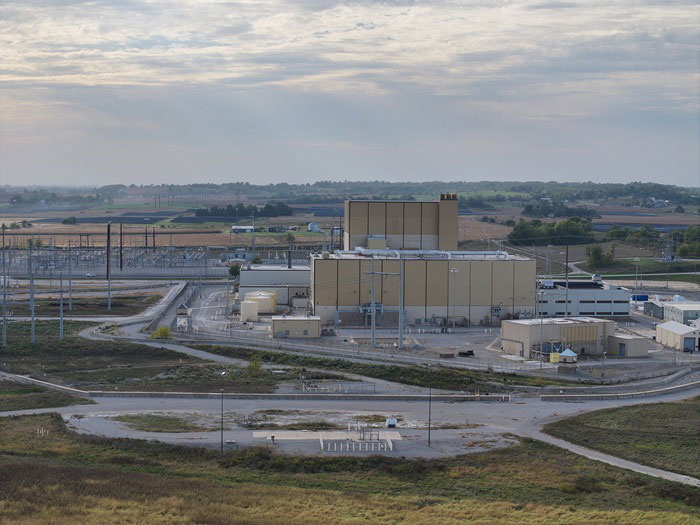
Natural Resources Defense Council supports restart of NextEra’s Duane Arnold nuclear station, a known danger.
March 5, 2026, https://beyondnuclear.org/nrdc-lends-support-to-restart-closed-reactor/
Natural Resources Defense Council supports the proposed restart of Iowa’s permanently closed Duane Arnold nuclear power station on assurances of adequate public safety upgrades to a Fukushima-style reactor from the US Nuclear Regulatory Commission
In a disappointing reversal of its previously critical stance toward nuclear power and especially the dangerously flawed 1960s vintage GE Mark I boiling water reactor, a major green group now appears to be supporting the restart of exactly that reactor model. The Natural Resources Defense Council’s stated in a blog “Rising Demand, Real Choices” that it had submitted comments to the Nuclear Regulatory Commission supporting the restart of the permanently closed and decommissioning GE Mark I Duane Arnold nuclear reactor in Iowa. NRDC “filed comments today at the Nuclear Regulatory Commission supporting an early step in the reactor’s restart: the transfer of the plant’s license to NextEra.” Duane Arnold is nearly identical to the three reactors that melted down in Japan in March 2011.
NRDC nuances its advocacy for the restart with, “To be clear, NRDC’s long-held concerns regarding nuclear energy—including issues related to siting, cost, safety risks, waste management, water use, mining supply chain issues, and community impacts—remain unchanged and must be addressed. The Duane Arnold plant will have to prove it can operate safely and responsibly.”
Let the record reflect, “easier said than done” as this nation’s nuclear regulatory agencies, from the beginning, with the Atomic Energy Commission (AEC) first licensing Duane Arnold on November 24, 1974, knowing full well in 1972 that the undersized design of the GE Mark I boiling water reactor containment would very likely fail under the tremendous overpressurization and explosive hydrogen gas generated under severe nuclear accident conditions and their top safety official encouraged development to be halted. That scientifically confirmed warning was not only ignored but suppressed for years by AEC fears that the halt of construction and cancellations would derail the government plan for a massive nuclear power build up. Duane Arnold was one of the those obfuscated start-ups.
Since then, the US Nuclear Regulatory Commission (NRC) is identified as a captured regulator and an expert at stonewalling reactor safety concerns from fire protection for safe reactor shutdown to ignoring currently projected climate change impacts on severe nuclear accident risks and frequency.
The NRC relicensed Duane Arnold on December 16, 2010, with an initial extension of 20 years to February 21, 2034 with the built-in containment vulnerability. Eighty-five days later, the Fukushima nuclear accident demonstrated a 100% containment failure rate under overpressurization from hydrogen gas detonations for the three units at that were at full power. NRC wrangled for years with the weak, undersized containment vulnerability only to allow the fundamental design flaw to remain unchecked to date.
Duane Arnold is presently utility certified to the NRC as “permanently” closed and defueled reactor for the purpose of decommissioning in SAFSTOR mode or “deferred dismantling”. The 615 megawatts electric Mark I boiling water reactor is owned by three utility entities; the majority owner, NextEra Energy Resources (70% interest) and two minority owners, Central Iowa Power Cooperative (CIPCO with 20% interest) and Corn Belt Power Cooperative (10% interest). The utilities have submitted an application to the NRC to consolidate a 100% ownership transfer to NextEra as sole owner and a plan to reverse the decommissioning certification to instead seek NRC approval for a likely to exceed $1.6 billion rehabilitation, refueling and restart effort by 2029. Google has signed with NextEra for a Power Purchase Agreement as the primary electricity customer for an expanded AI infrastructure, cloud computing and energy guzzling data centers. Post-consolidation, CIPCO, at 0%, will purchase Duane Arnold surplus electricity and Corn Belt Power Cooperative, at 0%, will sell its share to NextEra.
In Beyond Nuclear’s view, as well as many public safety, environmental protection and safe energy advocates, the immediate, permanent closure, decommissioning and environmental cleanup of Duane Arnold and all GE Mark I boiling water reactors are warranted in the ever extending aftermath of the Fukushima Daiichi’s multiple hydrogen explosions. The subsequent reactor core meltdowns breached the universally flawed GE Mark I containment design and construction, releasing harmful radiation downwind into the atmosphere and recurring radioactive batch releases from the wreckage of the three melted reactor cores into the Pacific Ocean that persist today.
The uneconomical, aging and dangerously flawed Duane Arnold nuclear power station was first announced by NextEra Energy Resources in a Federal Register Notice of its intent to the NRC on March 2, 2020 to permanently close and defuel the reactor by October 30, 2020.
Then, on August 10, 2020, a fierce “derecho” with severe thunderstorms, a deluge of rain and straight line winds reaching up to 140 mph swept across the hundreds of miles of prairie knocking out vast stretches of the electric grid including all six offsite power lines to 100% of Duane Arnold’s safety systems causing the reactor to SCRAM. Onsite back up generators restored critical reactor cooling systems but the badly damaged site included the collapse of the reactor’s cooling towers. NextEra’s subsequent damage assessment concluded, “[O]ur evaluation found that replacing those towers before the site’s previously-scheduled decommissioning on Oct. 30, 2020, was not feasible.” NextEra elected to immediately set the date for permanent closure of Duane Arnold, a Fukushima-style reactor, a notorious General Electric Mark I boiling water reactor even in 1972 under warnings from the Atomic Energy Commission safety officials that it was not safe.
We are now coming up on the 15th commemoration of the triple meltdown of Japan’s Fukushima Daiichi reactors caused by a combination of natural disasters that overwhelmed the significantly flawed and identified vulnerable design problem built into every GE Mark I reactors containments. These containments are now demonstrated to have a 100% failure rate under severe accident conditions as were all three Fukushima reactors at full power on March 11, 2011 experiencing devastating hydrogen gas explosions and widespread radioactive releases. This widespread radioactive contamination of the biosphere (land and sea) from the fallout persists to date and indefinitely into the future.
Where Fukushima’s radioactive releases largely blew out over the Pacific Ocean, a radioactive breach from the volumetrically undersized Mark I reactor containment system in the event of a severe over-pressurization accident, will instead spread out over US populations sickening those caught in the fallout, contaminating farms, pastures and agriculture, and similarly dislocating local, commercial and industrial economies.
If restarted, as NRDC supports, Duane Arnold initial 20-year license renewal (40 to 60 years) will expire on February 21, 2034. And well before that date, NextEra will most assuredly file an application to extend the operating license of a still fundamentally flawed and vulnerable reactor with an additional 20 year subsequent license renewal application (60 to 80 years) out to February 21, 2054, presently without a hard look at a changing climate that might already have been central to it closure.
Beyond Nuclear and the Sierra Club presently have a “petition for judicial review” pending ruling from an October 30, 2025 oral argument in the US Court of Appeals for the District of Columbia Circuit, Beyond Nuclear and Sierra Club v. US NRC. The petitioners through legal counsel have raised a purely legal issue of whether the US NRC, as a matter of law, can refuse to evaluate climate change change impacts (derechos, increasingly severe hurricanes, flooding, sea level rise, etc.) on the risk and frequency of severe nuclear accidents. The NRC is illegally entrenched in refusing to perform a lawfully required environment impact statement that fully evaluates the impact of climate change, saying only that such an evaluation is “out of scope” of reactor licensing.
NRC buckles to White House and licenses dangerous TerraPower reactor

5 Mar 2026, , https://beyondnuclear.org/nrc-buckles-to-white-house-and-licenses-dangerous-terrapower-react
Nuclear Regulatory Commission license of dangerous new reactor risks lives
Beyond Nuclear decries NRC decision to put public safety aside and buckle to Trump orders to license a Gates reactor known as “Cowboy Chernobyl”
Last September, the then three sitting commissioners at the US Nuclear Regulatory Commission insisted during a Senate hearing they would put safety first when considering the approval of new reactor projects.
Senators had raised fears that new executive orders issued by the White House last May that demanded fast-tracking new reactor projects, could jeopardize the commissioners’ judgement. The Senators also asked if the commissioners feared losing their jobs if they refused to license a reactor they viewed as dangerous. Two said they did.
“This week we learned that the now five members of the NRC commission are all too willing to capitulate to Trump’s rubber stamp orders, protect their jobs and sacrifice public safety in order to license a new reactor design that is known to be extremely dangerous,” said Paul Gunter, director of the reactor oversight project at Beyond Nuclear. The two new commissioners are nuclear industry insiders chosen by the White House.
Gunter’s remarks came after the NRC commissioners voted unanimously this week to grant a construction license to the Bill Gates company TerraPower’s 345-megawatt sodium-cooled small modular reactor, designated for a site in Kemmerer, Wyoming.
“It appears that the White House influence is working,” Gunter said. “But pressuring regulators to cut safety corners and fast-track a technology as inherently dangerous as nuclear power is gambling with the lives of thousands and possibly millions of people.”
Dr. Edwin Lyman, a physicist at the Union of Concerned Scientists, warned last December after NRC staff approved the TerraPower design, that the “fast” reactor, known as the Natrium, is deeply flawed and highly vulnerable to a serious accident.
“Make no mistake, this type of reactor has major safety flaws compared to conventional nuclear reactors.” Lyman said. “The potential for rapid power excursions and the lack of a real containment make the Kemmerer plant a true ‘Cowboy Chernobyl.’”
“The White House, through its executive orders and by exerting control over the NRC, has embarked on a dangerous dismantling of essential safety regulations,” Gunter said.
The new reactor rush puts the US on a path to another nuclear disaster while wasting precious time and billions of taxpayer dollars better spent on implementing a rapid and widespread renewable energy program. This would answer the country’s energy needs faster and without the extreme risks and ever soaring costs posed by nuclear power technology,” Gunter concluded.
In Iran, Israel’s morbid military cult now has the US fully in its grip

In this catastrophic war of choice, it is Tehran fighting a rearguard action to restore geopolitical sanity. If Iran loses, god only knows where Israel and the US will drag the world next
Jonathan Cook, Mar 06, 2026
The admission this week by US secretary of state Marco Rubio, echoed by Mike Johnson, Speaker of the House of Representatives, that Israel forced Washington’s hand in attacking Iran has rightly caused consternation.
Breathing life into something that would normally be treated as an antisemitic trope, Rubio argued that the Trump administration had been left with no choice but to attack Iran because, had it not, Israel would have launched an attack anyway, exposing US soldiers to retaliation.
Rubio stated: “The president made the very wise decision: We knew that there was going to be an Israeli action, we knew that that would precipitate an attack against American forces, and we knew that if we didn’t preemptively go after them before they launched those attacks, we would suffer higher casualties.”
Rubio was using the term “preemptively” in a highly irregular and misleading way.
In international law, aggression is an illegal application of force – the “supreme international crime”, according to the 1950 principles set out by the Nuremberg war crimes tribunal. But there is a potential mitigating factor if the attacking state can show it was acting pre-emptively: that is, it was acting to prevent a plausible, immediate and severe threat of attack.
Rubio, however, was not suggesting that the US acted “preemptively” against a threat from Iran. He meant Washington had acted preemptively to stop its ally, Israel, from setting off a chain of military events that would lead to US soldiers being harmed.
Had the Trump administration really been acting preemptively in these circumstances, the US should have attacked Israel, not Iran.
Paper tiger
But Rubio’s comment begged a further question: Why didn’t Washington simply tell Israel it was forbidden from starting a war against Iran without US approval?
After all, Israel would be incapable of mounting any kind of attack on Iran without the critical support provided by the US.
Israel has had to rely on help from US military bases dotted around the region, as well as the Arab states that host those bases.
The attack would have been quite inconceivable without the backup of a massive armada of US war ships sent to the region by Trump.
Israel can withstand Iranian retaliation only because it gets a degree of protection from missile interception systems provided and funded by the US.
And on top of all that, Israel is regional hegemon only because it gets massive subsidies from the US – worth many billions of dollars a year – to preserve it as one of the strongest militaries in the world.
In other words, Israel would have found it impossible to wage war on Iran alone. It is a paper tiger without the US.
Rubio’s comment suggested one of two possibilities: either that the US, with the strongest military in world history, is under the thumb of the tiny state of Israel; or that Trump has made his own military, the strongest-ever, servile to Israel.
Whichever it is, it is hard to square with Trump’s repeated assertion that he is putting America First.
This point is so glaringly obvious it is presumably the reason why Rubio was forced to walk back his comments the next day. Meanwhile, Trump hurriedly suggested it was he who had forced Israel’s hand to attack Iran, not the other way round.
Geopolitical insanity
The more likely truth is not that Israel forced Trump’s hand. It is that he was seduced by Israeli prime minister Benjamin Netanyahu’s false claim that an attack on Iran would be a cakewalk – if they struck at a moment when they could be sure of killing Iran’s supreme leader, Ali Khamenei.
Such a decapitation strike, Trump was led to believe, would be a repeat of his Venezuela “success”, when he kidnapped President Nicolas Maduro from Caracas to bring him to trial in New York.
In Venezuela, the flagrant flouting of international law by the US was intended to be the equivalent of pointing a loaded shotgun at the head of Maduro’s replacement, Delcy Rodriguez. Do as we say, or the new president gets it from both barrels.
Netanyahu knew exactly how to sell Trump, still giddy on the noxious fumes of this lawbreaking venture, the idea that he could repeat the exercise in Iran. The ayatollah’s successor would similarly be putty in his hands.
Which is why, in this catastrophic war of choice by the US and Israel, it is Tehran fighting a rearguard action to restore a little geopolitical sanity. If Iran loses, or the US succeeds without paying a fearsome price, god only knows where Israel and Washington will drag the world next.
The world’s fate, in a real sense, is in Tehran’s hands.
Israelisation’ of the US
What the joint attack on Iran demonstrates most clearly is how much Netanyahu has succeeded over the past quarter of a century in “Israelising” Washington and the Pentagon.
The US has always waged illegal wars of aggression. It has always been more gangster than global policeman. But just because Washington was run by ruthless criminals, it did not mean it was incapable of getting still more deranged, still more psychopathic.
That is what Netanyahu has been working on. And Trump is now giving full rein to the Israelisation of the US. The clues are everywhere.
On Wednesday secretary of war Pete Hegseth – the traditional title of “secretary of defence” presumably sounded too law-abiding – dropped any pretence of being the good guy.
He insisted US forces were acting “without mercy” and that the Iranian regime “are toast”. The US would deliver “death and destruction all day long”.
The previous day he had set out the game plan: “No stupid rules of engagement, no nation-building quagmire, no democracy building exercise, no politically correct wars.”………………………………………………………………………………………………………………………………………………………………………………………………………………………………………
The word of God
Central to these beliefs is the gathering of Jews, as God’s Chosen People, into the Land of Israel – a much larger area than that covered by the modern state of Israel.
For Christian fundamentalists such as Hegseth and a growing number of US commanders, Israel is the catalyst for the End Times.
For very obvious reasons, Israel has been nuturing its ties with the huge numbers of Christian fundamentalists in the US. They are politically active – their vote secured the presidency for Trump – and they treat Israel as a critically important domestic issue rather than a foreign policy matter. https://jonathancook.substack.com/p/in-iran-israels-morbid-military-cult
Good grief…Jesus freaks taking over military indoctrination

Walt Zlotow, West Suburban Peace Coalition Glen Ellyn IL, 6 Mar 26.
As a non-theist I both respect freedom of religion and demand separation of church and state.
Most violations of the latter concern relatively minor infractions such as school prayer or posting the 10 Commandments in the public square.
Never in my life could I imagine our government promoting America’s grotesque, criminal war on Iran by telling military personnel in all the services that this war is God’s plan to cause Armageddon and mark his return to Earth,”
This was not one-off insanity by a rogue military leader. The
Military Religious Freedom Foundation (MRFF) reports over 100 complaints from 30 military installations about their commanders’ instructions. One NCO complained their commander “urged us to tell our troop this was all part of God’s divine plan and supported it with numerous citations from the Book of Revelation referring to Armageddon and the imminent return of Jesus Christ.”
While Christian nationalism has simmered on the back burner of the military for decades, under fanatical Christian Nationalist and War Secretary Pete Hegseth, it’s now official US military policy. Hegseth is egged on by irreligious President Trump, who cynically uses Christian nationalism to justify his warfare in the Middle East on behalf of Israel.
You do not have to be a non-theist to oppose this religious madness Trump and Hegseth infect our military with to promote endless war in the name of God. You just have to be a decent, morally centered person.
1 This Month

of the week – Shut Down Drone Warfare!


Tell the Ukrainian Government to Drop Prosecution of Peace Activist Yurii Sheliazhenko

Petition to revoke the licensing of the Near Surface Nuclear Disposal Facility (NSDF) at Chalk River. https://www.ourcommons.ca/petitions/en/Petition/Details?Petition=e-7247
To see nuclear-related stories in greater depth and intensity – go to https://nuclearinformation.wordpress.com
-
Archives
- April 2026 (68)
- March 2026 (251)
- February 2026 (268)
- January 2026 (308)
- December 2025 (358)
- November 2025 (359)
- October 2025 (376)
- September 2025 (257)
- August 2025 (319)
- July 2025 (230)
- June 2025 (348)
- May 2025 (261)
-
Categories
- 1
- 1 NUCLEAR ISSUES
- business and costs
- climate change
- culture and arts
- ENERGY
- environment
- health
- history
- indigenous issues
- Legal
- marketing of nuclear
- media
- opposition to nuclear
- PERSONAL STORIES
- politics
- politics international
- Religion and ethics
- safety
- secrets,lies and civil liberties
- spinbuster
- technology
- Uranium
- wastes
- weapons and war
- Women
- 2 WORLD
- ACTION
- AFRICA
- Atrocities
- AUSTRALIA
- Christina's notes
- Christina's themes
- culture and arts
- Events
- Fuk 2022
- Fuk 2023
- Fukushima 2017
- Fukushima 2018
- fukushima 2019
- Fukushima 2020
- Fukushima 2021
- general
- global warming
- Humour (God we need it)
- Nuclear
- RARE EARTHS
- Reference
- resources – print
- Resources -audiovicual
- Weekly Newsletter
- World
- World Nuclear
- YouTube
-
RSS
Entries RSS
Comments RSS
 nuclear-news