Trump Advisers Call for U.S. Nuclear Weapons Testing if He Is Elected

A former national security adviser says Washington “must test new nuclear weapons for reliability and safety in the real world,” while critics say the move could incite a global arms race that heightens the risk of war.
New York Times, By William J. Broad, 5 July 24
Allies of Donald J. Trump are proposing that the United States restart the testing of nuclear weapons in underground detonations should the former president be re-elected in November. A number of nuclear experts reject such a resumption as unnecessary and say it would threaten to end a testing moratorium that the world’s major atomic powers have honored for decades.
In the latest issue of Foreign Affairs magazine, Robert C. O’Brien, a former national security adviser to Mr. Trump, urges him to conduct nuclear tests if he wins a new term. Washington, he wrote, “must test new nuclear weapons for reliability and safety in the real world for the first time since 1992.” Doing so, he added, would help the United States “maintain technical and numerical superiority to the combined Chinese and Russian nuclear stockpiles.”
At the Cold War’s end, in 1992, the United States gave up the explosive testing of nuclear arms and eventually talked other atomic powers into doing likewise. The United States instead turned to experts and machines at the nation’s weapons labs to verify the lethality of the country’s arsenal. Today the machines include room-size supercomputers, the world’s most powerful X-ray machine and a system of lasers the size of a sports stadium.
In his article, Mr. O’Brien described such work as just “using computer models.” Republican members of Congress and some nuclear experts have faulted the nonexplosive testing as insufficient to assure the U.S. military establishment that its arsenal works, and have called for live tests.
But the Biden administration and other Democrats warn that a U.S. test could lead to a chain reaction of testing by other countries. Over time, they add, resumption could result in a nuclear arms race that destabilizes the global balance of terror and heightens the risk of war.
“It’s a terrible idea,” said Ernest J. Moniz, who oversaw the U.S. nuclear arsenal as the secretary of energy in the Obama administration. “New testing would make us less secure. You can’t divorce it from the global repercussions.”
Siegfried S. Hecker, a former director of the Los Alamos weapons lab in New Mexico where J. Robert Oppenheimer led the creation of the atomic bomb, called new testing a risky trade-off between domestic gains and global losses. “We stand to lose more” than America’s nuclear rivals would, he said.
It’s unclear if Mr. Trump would act on the testing proposals. In a statement, Chris LaCivita and Susie Wiles, Mr. Trump’s co-campaign managers, did not directly address the candidate’s position on nuclear testing. They said that Mr. O’Brien as well as other outside groups and individuals were “misguided, speaking prematurely, and may well be entirely wrong” about a second Trump administration’s plans.
Even so, Mr. Trump’s history of atomic bluster, threats and hard-line policies suggests that he may be open to such guidance from his security advisers. In 2018, he boasted that his “Nuclear Button” was “much bigger & more powerful” than the force controller of Kim Jong Un, the North Korean leader.
A U.S. detonation would violate the Comprehensive Test Ban Treaty, long considered one of the most successful arms control measures. Signed by the world’s atomic powers in 1996, it sought to curb a costly arms race that had spun out of control……………………………………………………………… more https://www.nytimes.com/2024/07/05/science/nuclear-testing-trump.html
US announces more than $2 billion package for Ukraine

BY BRAD DRESS – 07/02/24, https://thehill.com/policy/defense/4752120-biden-administration-lloyd-austin-2-million-ukraine-aid-package/
Defense Secretary Lloyd Austin announced a $2.3 billion security assistance package for Ukraine ahead of a meeting with his Ukrainian counterpart Tuesday.
The package will include critical air defense interceptors and other weapons. A spokesperson for the Pentagon said more details on the package would be made available soon.
Austin met with Ukrainian Defense Minister Rustem Umerov at the Pentagon on Tuesday and underscored the U.S. commitment to defending the country against a Russian invasion.
“Ukraine is in a tough fight,” Austin said in remarks ahead of the meeting, adding “make no mistake, Ukraine is not alone.”
The Pentagon chief also noted that the U.S. has signed a 10-year bilateral security agreement with Ukraine, providing Kyiv with defense cooperation guarantees over a decade. He added that he would discuss with Umerov additional ways to strengthen the partnership.
The U.S. has announced billions of dollars of assistance to Ukraine since the last congressional package of some $60 billion was approved in April. That legislation came after months of delays, giving Russia the advantage on the battlefield before more U.S. aid began arriving on the battlefield.
Ukrainian troops are fighting across the 600-mile front against Russian forces, including in the northeastern Kharkiv region, where Moscow opened a new front in May.
Why Julian Assange couldn’t outrun the Espionage Act

the grave threat the Espionage Act poses to journalism and the First Amendment
SOTT, Jordan Howell The FIRE, Wed, 26 Jun 2024
Julian Assange spent seven years in self-exile in London’s Ecuadorian Embassy avoiding arrest, and five more in prison, for publishing classified documents on WikiLeaks.
Julian Assange is a free man, and one of the most contentious press freedom controversies in living memory may finally be coming to a close.
The WikiLeaks founder reached a plea deal with the Department of Justice on Monday after spending five years in an English prison fighting extradition to the United States. Federal officials sought to charge Assange with conspiracy to obtain and disclose national security information under the Espionage Act of 1917.
Assange and WikiLeaks shocked the world in 2010 by publishing hundreds of thousands of secret military documents and diplomatic cables related to the wars in Iraq and Afghanistan that were leaked by Army intelligence analyst Chelsea Manning. Months later, Assange was on the run and Manning was in jail.
Assange claimed that by receiving and publishing confidential information, what he did was no different than the type of routine news reporting that journalists around the world engage in every day. As the Supreme Court ruled in New York Times Co. v. United States (1971), better known as “The Pentagon Papers” case, publishing leaked documents is protected under the First Amendment.
FIRE has long opposed use of the Espionage Act to curtail the rights of journalists to source information. And in December 2022, FIRE signed an open letter organized by the Committee to Protect Journalists along with 20 other civil liberties groups calling on the federal government to drop its charges against Assange.
“We are united . . . in our view that the criminal case against him poses a grave threat to press freedom both in the United States and abroad,” we argued. “[J]ournalists routinely engage in much of the conduct described in the indictment: speaking with sources, asking for clarification or more documentation, and receiving and publishing official secrets. News organizations frequently and necessarily publish classified information in order to inform the public of matters of profound public significance.”
Assange’s 12 year ordeal, including seven years in self-exile in the Ecuadorian Embassy in London before his arrest and imprisonment, underscores the continued threat that the century-old Espionage Act still poses to civil liberties today — and not just in the United States. Assange is not a U.S. citizen, nor was he ever a resident. But because of modern extradition treaties, there were few places in the world where he could travel to escape the Act’s reach,
Under the terms of Monday’s deal, Assange pleaded guilty to the charges and was sentenced to 62 months incarceration, but with credit for time served, according to documents filed with the U.S. District Court for the Northern Mariana Islands.
Ultimately, freedom of the press is what was at stake with the government’s case against Assange. It was never only about him. The precedent that would have been set by his extradition and trial would have sent a chilling message to journalists across the country and the world: You can run, but you can’t hide from the Espionage Act.
What is the Espionage Act?……………………………………………………………………………………….Based on the Defense Secrets Act of 1911, the Espionage Act of 1917 included much stiffer penalties — including the death penalty — for sharing secret or confidential information or otherwise interfering with the operations of the U.S. military.
The Espionage Act made it a crime to obtain information regarding national defense “with intent or reason to believe” that doing so would hurt the U.S. or to advantage another country. While subsequent amendments and court decisions have refined its language and scope, its core purpose remains the same.
Espionage Act and the Supreme Court
The law was immediately controversial because its use was not limited to actual acts of espionage. Rather, the Espionage Act allowed the government to clamp down on anyone who opposed the war effort.
In Schenck v. United States, in 1919, the Supreme Court upheld the conspiracy conviction against socialist Charles Schenck under the Espionage Act for distributing anti-war leaflets that urged people to boycott the draft.
The problem with the Court’s ruling in Schenck, as subsequent decisions would affirm, is that Schenk’s speech was not calling for violence or even civil disobedience. Rather, his speech was precisely the kind of political expression that decades of subsequent Supreme Court decisions would ultimately uphold. Numerous convictions under the Espionage Act would make their way to the Court, including that of socialist presidential candidate Eugene Debs, who was arrested for giving a speech opposing the war.
Since then, one of the most nefarious uses of the Espionage Act has been to silence journalists. At least insofar as publishing the leaked documents on the Wikileaks website, what Assange did was little different than what The New York Times and The Washington Post did in 1971 when they published and reported on thousands of pages from a classified report about the war in Vietnam.
……………………………………….As the Supreme Court has ruled, freedom of the press is a foundational principle, enshrined in the Bill of Rights. And though Julian Assange is finally free, FIRE continues to have serious concerns about the grave threat the Espionage Act poses to journalism and the First Amendment. https://www.sott.net/article/492768-Why-Julian-Assange-couldnt-outrun-the-Espionage-Act
You Don’t Want to Live in America’s ‘Nuclear Sponge’

military planners often describe ICBMs as a “nuclear sponge” that would soak up hundreds of Russian warheads as they tried to destroy the missiles before they could launch.
People living in Montana, North Dakota, Wyoming and Colorado may not think of their homes as “nuclear sponges” but that is one of the primary justifications for ICBMs today………. . ICBMs are sitting ducks
By Joseph Cirincione, National Security Analyst, 3 July 24, https://www.newsweek.com/you-dont-want-live-americas-nuclear-sponge-opinion-1919646
ou have to be a real optimist to think that we can keep thousands of nuclear weapons in fallible human hands indefinitely and nothing terrible will happen. Something terrible will happen—and it could mean the end of human civilization.
The risks are growing. Today, nine nations hold over 12,000 nuclear weapons, each many times more powerful than those used on Japan. The United States and Russia have most of them—about 90 percent of the global total—but China may be trying to catch up.
The fear that China might increase its nuclear arsenal from some 500 to 1,000 weapons has fueled calls for America to abandon all arms control limits and vastly increase its stockpile of some 5,000 weapons. In fact, massive new programs to build a new generation of nuclear-armed bombers, submarines and missiles were well under way before China began its build up—and may well have triggered China’s move.
The cost of this new nuclear arms race is high. A new report shows that global spending on nuclear weapons jumped last year—and that the United States accounted for 80 percent of that increase.
The global costs and the U.S. share will grow. This year, U.S. spending climbed again to more than $70 billion. The Congressional Budget Office estimates that the government will spend over $750 billion on nuclear weapons over the next 10 years. The total modernization cost will likely be over $2 trillion. Add in the $30 billion a year spent on programs to try to intercept ballistic missiles and the cost goes from unimaginable to unaffordable.
It gets worse. The Air Force just disclosed that the price of its new intercontinental ballistic missile (ICBM) has jumped 37 percent. Originally, the Air Force claimed that replacing the existing force of 400 Minuteman III missiles would cost only $62 billion. That rose to $95 billion, then to more than $125 billion (plus tens of billions more for the nuclear warheads). In a new report, the watchdog group, Taxpayers for Common Sense, warns that the price tag could hit $315 billion.
For a family, a cost increase of 37 percent on a house or car they want to buy would certainly change their minds. Even for the Pentagon, this hike was “a critical breach” of cost projections, triggering a rare report to Congress.
This is likely why defense contractors are working furiously with their Congressional supporters to defend the program, supplying members with talking points and briefings, in addition to the generous contributions that flow into their campaign coffers. Members in the few states that have nuclear bases also do not want to lose the considerable economic benefits they provide.
Thus, Sen. Deb Fischer, a Republican from Nebraska, home to the Strategic Command, pleads in her recent piece for Newsweek, to continue the programs no matter what the cost. She argues that “Our ground-based intercontinental ballistic missiles (ICBMs) are indispensable. …by virtue of their location in our heartland, [they] are also unlikely to be targeted by enemy attacks.”
That would be a surprise to military planners who often describe ICBMs as a “nuclear sponge” that would soak up hundreds of Russian warheads as they tried to destroy the missiles before they could launch. This would complicate an adversary’s planning so severely that it would discourage any attack, the theory goes.
People living in Montana, North Dakota, Wyoming and Colorado may not think of their homes as “nuclear sponges” but that is one of the primary justifications for ICBMs today. Formerly valued as being more accurate and faster to launch than missiles from submarines, that is no longer the case. As the Taxpayers report notes. “Both ballistic missile submarines and nuclear-armed aircraft carry more accurate and powerful nuclear weapons than they used to,” allowing them to destroy even the most hardened target. Meanwhile, “the survivability of U.S. ICBMs has steadily declined as U.S. adversaries have developed more powerful and accurate nuclear weapons.”
Submarines are undetectable and bombers can be scrambled. ICBMs are sitting ducks that must be launched on warning of an enemy attack, stressing their human controllers to decide within minutes whether to launch Armageddon. Former Secretary of Defense William Perry says we must eliminate these relics of the Cold War, calling them, “some of the most dangerous weapons in the world. They could even trigger an accidental nuclear war.”
There have been dozens of close calls in the nuclear age, most caused by the need to launch these hulking missiles so quickly. Rep. John Garamendi (D-CA), Don Beyer (D-VA) and Sen. Ed Markey (D-MA) will hold a public hearing July 24 to examine the troubled missile program and “raise the alarm about our unsustainable, reckless nuclear posture.”
“We must confront the challenges before us, not by building ever more dangerous weapons,” says Garamendi, “but by placing the same priority on effective arms control and risk reduction measures that we currently place on modernization.”
This hearing may be our last, best chance to evaluate the risks of putting more nuclear weapons on hair-trigger alert before it is too late.
Joe Cirincione is the author or editor of seven books and over a thousand articles on nuclear policy and national security.
U.S. Congress Votes To Bar State Department From Citing Gazan Health Ministry
If passed into law, US diplomats would be unable to discuss casualty figures from Palestinian sources that are generally considered credible.
by Kyle Anzalone June 27, 2024 https://news.antiwar.com/2024/06/27/house-votes-to-bar-state-department-from-citing-gazan-health-ministry/
During the debate of the State Department funding bill, the House added a provision that would bar American diplomats from citing statistics from the Gaza Health Ministry. The amendment would prevent American diplomats from discussing the casualty figures produced by the Palestinian agency.
On Thursday, the House voted 269-144 for an amendment to the Department of State appropriations bill proposed by a bipartisan group led by Rep. Jared Moskowitz (D-FL). The provision “prohibits funds appropriated by this act to be made available for the State Department to cite statistics obtained from the Gaza Health Ministry.”
The amendment received bipartisan support. All but 14 Republicans voted yes, with Reps. Paul Gosar (AZ) and Matt Rosendale (MT) are the only no votes. The Democrats split support 69-114. The Democratic leadership in the House elected not to endorse or oppose the amendment.
During Israel’s nearly nine-month-long onslaught in Gaza, the Health Ministry has recorded nearly 38,000 deaths and 85,000 injuries. Many of those injured have life-altering wounds. The head of the UN Palestinian Aid Agency (UNRWA) estimates that over 2,000 children, or nearly ten per day, have lost legs since October 7.
Prior to Israel’s most recent military campaign in Gaza, the casualty figures were generally considered accurate and regularly cited by Western media. During Israel’s “Swords of Iron” operations, the corporate press has started to slant cover of those numbers by asserting Hamas runs the health ministry whenever the numbers are reported.
However, many human rights groups and officials believe the official figures are an undercount. Save the Children estimates that in addition to the 15,000 dead Palestinian children counted by the health ministry, an additional 4,000 are uncounted because their bodies have not been recovered.
During the debate over Moskowitz’s amendment, Rep Rashida Tlaib blasted the provisions as being a part of the decades-long coordinated effort by the House to “erase Palestinians from existence.”
“Today, we are witnessing the apartheid Israeli government carry out a genocide in real-time. This amendment is an attempt to hide it.” She added, “My colleagues don’t even want to acknowledge that Palestinians exist at all.”
Why cost should not be an obstacle to compensating nuclear survivors
By Alicia Sanders-Zakre, Susi Snyder | July 1, 2024, https://thebulletin.org/2024/07/why-cost-should-not-be-an-obstacle-to-compensating-nuclear-survivors/?utm_source=Newsletter+&utm_medium=Email&utm_campaign=MondayNewsletter07012024&utm_content=NuclearRisk_CompensatingNuclearSurvivors_07012024
Passing an extended and expanded Radiation Exposure Compensation Act (RECA) would be an enormous victory for those affected by US nuclear weapons testing and development who will receive compensation from the legislation. A proposed revised bill would include many communities formerly left out from the compensation program, including additional residents of Arizona, Nevada and Utah, for the first time, residents of Colorado, Idaho, Guam, Montana and New Mexico, uranium miners after 1971, veterans of nuclear waste clean-up in the Marshall Islands, and St. Louis area residents exposed to nuclear waste. The bill, originally estimated by the Congressional Budget Office to cost $147 billion over 10 years, was cut down to cost $50 billion over 10 years, due to concerns by members of Congress about the expense. A RECA bill has gained overwhelming support in the Senate, but it has yet to be passed by the House, in part due to ongoing concerns about the price tag.
Our research shows that more resources exist and should be directed to this important effort, in the United States and internationally, where many nuclear survivors still wait for justice. In our report, we found that nuclear-armed countries spent $91.4 billion on nuclear weapons in 2023 alone. That’s nearly $3,000 every second. The United States spent more than half of that total – $51.5 billion or $1,633 per second. In the five years that we have done this research, from 2019 to 2023, governments have spent a total of $387 billion on nuclear arsenals. The United States alone spent more than $212 billion of that total.
The amount that the United States and other nuclear-armed governments have put towards addressing the harmful legacy of nuclear weapons for their citizens pales by comparison. Since RECA was passed in 1990, the United States has put $2.67 billion into one-time settlements to compensate those whom the United States considered eligible. To address the nuclear legacy of its testing in the Marshall Islands, the United States gave $150 million to establish a Nuclear Claims Tribunal in 1987, but has not provided further funds explicitly for this purpose since.
Internationally, compensation for survivors also comes up short. Russian nuclear test veterans receive one-time compensation for harm to health of 22,102 roubles ($245 as of February 1, 2024) as well as small monthly stipends for food. In 2023, Russia spent 710.5 billion roubles ($8.3 billion) on its nuclear arsenal. In France, CIVEN, le Comité d’Indemnisation des Victimes des Essais Nucléaires, provided 14.9 million euros ($15.9 million) to victims of its nuclear testing in Algeria and French Polynesia in 2022. Last year, France spent 5.6 billion euros ($6.1 billion) on its nuclear weapons. The United Kingdom provided a “full and final” settlement payment of £20 million to Australia in 1993 to remediate former nuclear tests sites there, in comparison to the £6.5 billion ($8.1 billion) it spent on its nuclear arsenal in 2023.
It is no coincidence that, around the world, formerly colonized and Indigenous populations were the first to be bombed and the last to receive recognition and compensation. Existing programs rarely address the multifold harms of nuclear testing beyond physical harm from radiation, such as the psychological and economic toll of displacement, deprivation of traditional ways of life or the fear of children also suffering the scars of nuclear weapons.
But international efforts to address nuclear harms, grounded in human rights principles, have increased in recent years. In July 2017, 122 governments adopted the Treaty on the Prohibition of Nuclear Weapons. The treaty includes Articles 6 and 7, creating for the first time an international collective effort to address the impacts of nuclear weapons use and testing on people and the environment. States affected by nuclear weapons use and testing that have joined the treaty—such as Kazakhstan, Kiribati, Fiji, and New Zealand—take the lead in identifying needs for affected people and for environmental remediation in their countries and designing national plans of action and structures to address those needs. All governments that have joined this treaty pledge to help if they are able. States are currently discussing establishing an international trust fund to support this work.
Providing adequate assistance to those suffering from nuclear harm and beginning to remediate contaminated environments will cost money. It will also take time. But the cost is not an excuse to forgo necessary nuclear justice programs. Our research clearly shows that ever-growing budgets to build and rebuild nuclear arsenals are readily approved by every nuclear-armed government, while funds to help those suffering are a pittance in comparison.
The exorbitant funding poured into producing and maintaining weapons of mass destruction—as those who have borne the brunt of their impacts are dismissed—constitutes a gross dereliction of duty by the nuclear-armed countries. Governments must work together at the national and international level to address the multifaceted harms that nuclear weapons production and testing have inflicted on survivors and the environment. Extending and expanding RECA would be a good place to start. House leaders should stop stalling and start acting.
Most important issue facing US, world, largely absent from presidential debate.

Chances for a serious debate on America’s despicable wars in Ukraine and Gaza at the next debate? Zero
Biden claimed Hamas must be destroyed before there can be any discussion of a Palestinian nation. But Biden, like Netanyahu, remains in denial of Israeli military leaders who tell Netanyahu, you cannot destroy Hamas because it’s an idea…the idea to end Israeli Apartheid and establish a sovereign and genocide free Palestinian state.
Walt Zlotow, West Suburban Peace Coalition, Glen Ellyn IL , 30 June 24, https://heartlandprogressive.blogspot.com/
Chances for a serious debate on America’s despicable wars in Ukraine and Gaza at the next debate? Zero.
Americans concerned about ending 2 catastrophic wars the US is funding in Ukraine and Gaza were sorely disappointed by the Biden, Trump presidential debate.
Neither candidate offered a single coherent nor encouraging statement to explain why we’re squandering upwards of $200 billion to maintain these wars in perpetuity. Millions dead, wounded, homeless or refugees have made no dent on the conscience of either man.
Trump’s statements Ukraine were delusional. He claimed he’s so tough, Russia would not have dared attack Ukraine had he been president at the time. Same goes for Hamas attacking Israel. He topped that by charging he’d end the Ukraine war while he was still president elect. How? Trump believes he’s so tough, he would scare Putin into crying ‘Uncle’ out the fear of Trump’s retribution upon reentering the White House.
Regarding Israel, Trump was bloodthirsty. He scolded Biden for trying to stop Israel from completing the destruction and takeover of Gaza even tho Biden is doing the opposite. Trump’s position all along on this 9 month long bloodbath destroying life for 2,300,000 Palestinians in Gaza, is to let Israel “finish the job.”
Biden was even worse on Ukraine and Gaza because, as president, he’s responsible for supporting both grisly wars with hundreds of billions in weapons instead of sound diplomacy to end them. His utter lack of conscience and compassion for the beleaguered people of Ukraine and Gaza prevent him from doing that.
Biden remains locked in1970’s Cold War brinkmanship. He charged Russia is trying to recreate the old Soviet Union when Russia’s ceasefire proposal, which Biden dismissed out of hand, leaves Ukraine west of Donbas and all of Europe in peace and the Donbas Ukrainians free from Kyiv’s neo-fascist marauders.
On Israel, Biden offered up huge whoppers befitting dinner at Burger King. He claimed only Hamas is preventing peace when it’s Netanyahu kicking the sand of war in Biden’s face at every Biden overture for peace. Biden poses as sympathetic to Palestinians while bragging how he’s given Israel everything they need to destroy any semblance of sustainable life in Gaza.
Biden claimed Hamas must be destroyed before there can be any discussion of a Palestinian nation. But Biden, like Netanyahu, remains in denial of Israeli military leaders who tell Netanyahu, you cannot destroy Hamas because it’s an idea…the idea to end Israeli Apartheid and establish a sovereign and genocide free Palestinian state.
Most of the post debate chatter concerned Biden’s feeble attempt to appear vigorous enough to govern America and Trump’s blizzard of lies. While Biden did nothing to appear ready for another 4 years, Trump did offer one astounding truth about Biden’s governance that should terrify us all. He charged that Biden’s reckless foreign policy is risking WWIII. That ominous possibility has stalked the world since Biden provoked the war in Ukraine and has kept it ravaging Ukraine for 29 months with mushroom clouds more likely every day on the horizon.
Chances for a serious debate on America’s despicable wars in Ukraine and Gaza at the next debate? Zero.
What does Chevron mean for nuclear? The USA courts can now supercede the safety role of the Nuclear Regulatory Commission

should we trust the courts to be better arbiters of how nuclear power plants should be regulated than the actual agency set up to regulate them?
In the worst-case scenario, rogue judges are now empowered to issue out-of-pocket decisions on highly technical matters they don’t actually understand.
The NRC was the undisputed final word in what goes for nuclear energy in the United States. Did the overturning of the longstanding Chevron decision now put the courts above the regulatory agency?
Elemental, ANGELICA OUNG, JUN 30, 2024
The US Supreme Court just overturned the longstanding “Chevron deference” This is a move so dramatic that Dahlia Lithwick, senior legal editor at Slate, described it as a “requiem” for the Administrative state.
According to Lithwick in the Slate Podcast on the issue, the Chevron doctrine said that when a statute is unclear, federal courts should defer to a reasonable interpretation by administrative agencies. No more. Courts can now decide from the get-go what a statute means, regardless of what the agency thinks.
Once upon a time, ironically, it was the conservative Justice Scalia who was the Chevron doctrine’s biggest fan. But as it becomes increasingly clear that the conservative justices are going to enjoy a generational hold on the Supreme Court while the party holding the Executive Branch flips and flops, it became an advantageous political project for the court to take out Chevron and transfer power from the “ABC agencies,” which of course includes the National Regulatory Commission (NRC) over to the courts.
“This fundamentally changes the way government governs,” said Lithwick.
So what now? If the court is now the final arbiter for whether, say, a bump stock makes a gun a machine gun, is it also going to become the final arbiter on whether a giant trampoline works as well as a reinforced containment dome for that purpose of protecting a nuclear reactor from the impact of a large commercial aircraft?
In fact, since the Aircraft Impact Assessment (AIA) is a part of the NRC’s regulations, not explicitly mandated by law, the court can even opt to throw the regulation out entirely.
The undercutting of the NRC goes both ways: just as nuclear companies can now challenge what they see as unreasonably onerous NRC regulations in court, they are now also vulnerable to individuals or groups claiming harm, even if the companies followed all the regulatory guidelines, increasing their legal risk.
As Chief Justice John Roberts wrote in his opinion in the landmark 6-3 ruling, “Agencies have no special competence in resolving statutory ambiguities. Courts do.”
In a dissenting opinion, Justice Elena Kagan warned that Congress does not have the ability to write perfectly complete regulatory statutes and it would be preferable for the gaps formed by inevitable ambiguities to be filled by the responsible agency, not a court. The decision “is likely to produce large-scale disruption.”………………………………………………………………………………………………
…….should we trust the courts to be better arbiters of how nuclear power plants should be regulated than the actual agency set up to regulate them?
In the worst-case scenario, rogue judges are now empowered to issue out-of-pocket decisions on highly technical matters they don’t actually understand. https://elementalenergy.substack.com/p/what-does-chevron-mean-for-nuclear
Save Ukraine from American meddling

COMMENT. While the fatuous mainstream media focusses on nan unintelligent TV debate between two US presidential candidates – we increasingly look for some intelligent news.
And today – to my amazement, today – “The Hill” actually does give us an analysis of the Ukraine situation. And it’s not from the mega-paid lackeys of the military-industrial-corporate-media complex, but from the respected economist Jeffrey Sachs.
BY JEFFREY SACHS, OPINION CONTRIBUTOR – 06/27/24 https://thehill.com/opinion/international/4741597-save-ukraine-from-american-meddling/
Ukraine can only be saved at the negotiating table, not on the battlefield. Sadly, this point is not understood by Ukrainian politicians such as Oleg Dunda, a member of Ukraine’s parliament, who recently wrote an oped on this site against my repeated call for negotiations.
Dunda believes that the U.S. will save Ukraine from Russia. The opposite is true. Ukraine actually needs to be saved from the U.S.
Ukraine epitomizes Henry Kissinger’s famous aphorism, “It may be dangerous to be America’s enemy, but to be America’s friend is fatal.”
Thirty years ago, Ukraine was embraced by America’s neoconservatives, who believed that it was the perfect instrument for weakening Russia. The neocons are the ideological believers in American hegemony, that is, the right and responsibility of the U.S. to be the world’s sole superpower and global policeman (as described, for example, in the Project for a New American Century’s 2000 report, “Rebuilding America’s Defenses”).
The neocons chose three methods to push U.S. power and influence into Ukraine: first, meddle in Ukraine’s internal politics; second, expand NATO to Ukraine, despite Russia’s red line; and third, arm Ukraine and apply economic sanctions to defeat Russia.
The neocons whispered a sweet fantasy into Ukraine’s ear back in the 1990s: Come with us into the glorious paradise of NATO-land and you’ll be safe ever after. Pro-European Ukrainian politicians, especially in Western Ukraine, loved the story. They believed that Ukraine would join NATO just as Poland, Hungary and the Czech Republic had in 1999.
The idea of expanding NATO to Ukraine was fatuous and dangerous. From Russia’s perspective, the NATO expansion into Central Europe in 1999 was deeply objectionable and a stark violation of the solemn U.S. promise that NATO would not expand “one inch eastward,” but it was not deadly to Russia’s interests. Those countries do not border the Russian mainland. NATO enlargement to Ukraine, however, would mean the loss of Russia’s Black Sea naval fleet at Sevastopol and the prospect of U.S. missiles minutes from the Russian mainland.
There was, in fact, no prospect that Russia would ever accept NATO enlargement to Ukraine. The current CIA Director, William Burns, said as much in a memo to Secretary of State Condoleezza Rice when he was U.S. Ambassador to Moscow in 2008. The memo was famously entitled “Nyet means Nyet.”
Burns wrote, “Ukrainian entry into NATO is the brightest of all redlines for the Russian elite (not just Putin). In more than two and a half years of conversations with key Russian players, from knuckle-draggers in the dark recesses of the Kremlin to Putin’s sharpest liberal critics, I have yet to find anyone who views Ukraine in NATO as anything other than a direct challenge to Russian interests.”
The neoconservatives never described this Russian redline to the American or global public, then or now. Senior diplomats and scholars in the U.S. had reached the same conclusion about NATO enlargement more generally in the 1990s, as has been recently documented in detail.
Ukrainians and their supporters insist that Ukraine has the “right” to join NATO. The U.S. also says so repeatedly. NATO’s policy says that NATO enlargement is an issue between NATO and the candidate country, and that it is no business of Russia or any other non-NATO country.
This is preposterous. I’ll start to believe that claim when Adm. John Kirby declares from the White House podium that Mexico has the “right” to invite China and Russia to put military bases along the Rio Grande, based on the same “open door policy” as NATO. The Monroe Doctrine has said just the opposite for two centuries.
So Ukraine was set up for disaster by the neocons. Actually, the Ukrainian public sensed the truth, and overwhelmingly opposed NATO membership until the 2014 uprising that overthrew Ukrainian President Viktor Yanukovych.
Let’s retrace the chronology of this shockingly misguided American policy. In the early 2000s, the U.S. began to meddle intensively in Ukraine’s politics. The U.S. spent billions of dollars, according to Victoria Nuland, to build Ukraine’s “democracy,” meaning to turn Ukraine to the U.S. and away from Russia. Even so, the Ukrainian public remained strongly against NATO membership, and elected Viktor Yanukovych, who championed Ukrainian neutrality, in 2010.
In February 2014, the Obama team actively sided with neo-Nazi paramilitaries, which stormed government buildings on February 21 and overthrew Yanukovych the next day, cloaked as a “Revolution of Dignity.” The U.S. immediately recognized the new government. The astounding intercepted call between Nuland and U.S. Ambassador to Ukraine Geoffrey Pyatt, where they talk about who should be in the new Ukrainian government several weeks before the rebellion, demonstrates the level of American involvement.
The post-uprising government in Ukraine was filled with Russia-haters, and was backed by extremist right-wing paramilitaries like the Azov Brigade. When the ethnically Russian Donbas region broke away from the uprising, the central government aimed to retake the region by force. A peace agreement was reached between Kyiv and the Donbas in 2015, known as Minsk II, that would end the fighting by extending autonomy to the ethnically Russian regions of Donetsk and Luhansk.
Alas, Ukraine and the U.S. undermined the treaty even while publicly endorsing it. The treaty was a mere temporizing measure (according to German Chancellor Angela Merkel) to give Ukraine time to build its army. The U.S. shipped armaments to Ukraine to build up its military, make it interoperable with NATO and support the retaking of the Donbas by force.
The next diplomatic opportunity to save Ukraine came in December 2021, when Vladimir Putin proposed a U.S.-Russia Treaty on Security Guarantees, calling for an end to NATO enlargement, among other issues (including the urgent question of U.S. missile placements near Russia). Instead of negotiating, Biden again flatly said no to Putin on the question of ending NATO enlargement.
Yet another diplomatic opportunity to save Ukraine arose in March 2022, just days after the start of Russia’s “special military operation,” launched on February 24. Russia said that it would stop the war if Ukraine would agree to neutrality. Zelensky agreed, documents were exchanged and a peace deal was nearly reached. Yet, according to former Israeli Prime Minister Naftali Bennett, the U.S. and other NATO allies, notably the U.K., stepped in to block the agreement, telling Ukraine to fight on. Recently, Boris Johnson said that Ukraine should keep fighting to preserve “Western hegemony.”
Ukraine can still be saved through neutrality, even as hundreds of thousands of lives have been squandered by the failure to negotiate. The rest of the issues, including boundaries, can also be resolved through diplomacy. The killing can end now, before more disasters befall Ukraine and the world. As for the United States, 30 years of neoconservative misrule is long enough.
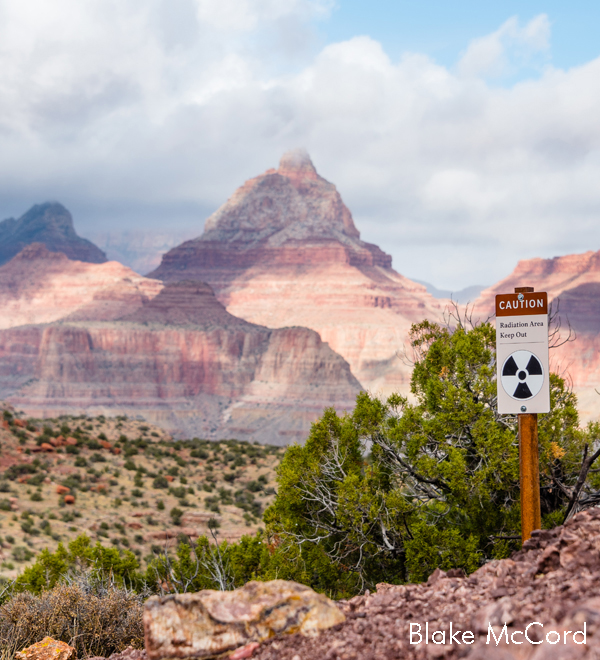
Uranium and the Grand Canyon – A Call to Close and Cleanup the Pinyon Plains Uranium Mine

http://nuclearactive.org/ 27 June 24
A recent mapping project by Stanford University shows about 23,000 abandoned uranium mines across the country. One must question beginning a new round of uranium mining when closure and cleanup of previous mining efforts have not been done. As a result, water continues to be contaminated.
June 27th, 2024
One of the most beautiful and majestic sights is found by looking across and down into the Grand Canyon at the spread of the red walls, the patches of green and the glorious Colorado River. All of this is threatened by an exemption from a federal law banning uranium mining in the watershed that feeds the complex river system. Uranium mining is allowed on U.S. Forest Service lands where the Pinyon Plains Uranium Mine is located less than ten miles from the Grand Canyon’s south rim. https://www.grandcanyontrust.org/grand-canyon-uranium
In December 2023, the Pinyon Plains Uranium Mine, formerly called the Canyon Mine, began mining operations. The owner of the mine, Energy Fuels Inc., plans to begin transporting extracted uranium 300 miles across the Navajo Nation to the corporation’s White Mesa Uranium Mill in southeast Utah. https://www.grandcanyontrust.org/white-mesa-uranium-mill and https://www.energyfuels.com/
Tribes and others in this large area know little about the corporation’s plans for transporting the dangerous materials. The federal and state agencies have done little, or none, of the required consultation with the tribes and communities about the transportation plans. The corporation has brought the threat of harm while ignoring its responsibilities to consult with those who want to keep their families safe. See links to the Uranium and the Grand Canyon panel conversation below.
The Navajo Nation passed a law against the transport of uranium across its lands. https://opvp.navajo-nsn.gov/wp-content/uploads/2024/05/President-Nygren-signs-uranium-legislation-for-April-30.pdf It is unknown what the Nation will do when the first load leaves the mine.
It is irresponsible to mine, let alone transport uranium ore through the Grand Canyon Watershed when we have already experienced the harm done to all living beings by decades of uranium mining.
A recent mapping project by Stanford University shows about 23,000 abandoned uranium mines across the country. One must question beginning a new round of uranium mining when closure and cleanup of previous mining efforts have not been done. As a result, water continues to be contaminated.
New groundwater scientific studies reveal what Peoples living in and around the Grand Canyon know: that the high interconnectivity of the groundwater systems makes uranium mining not only risky, but extremely risky. https://www.grandcanyontrust.org/blog/uranium-mining-near-grand-canyon-too-risky-research-shows and https://www.grandcanyontrust.org/blog/flooding-uranium-mine-near-grand-canyon-tops-66-million-gallons
To learn more, watch the June 27, 2024 Uranium and the Grand Canyon panel conversation with a tribal leader, a health professional, an activist, and a former uranium miner. https://video.search.yahoo.com/yhs/search?fr=yhs-iba-3&ei=UTF-8&hsimp=yhs-3&hspart=iba&p=kjzz+news&type=teff_10019_FFW_ZZ#id=3&vid=9775763ef083421924a855a8b7311be1
Navajo Nation President Buu Nygren provided an opening message. https://video.search.yahoo.com/yhs/search?fr=yhs-iba-3&ei=UTF-8&hsimp=yhs-3&hspart=iba&p=kjzz+news&type=teff_10019_FFW_ZZ#id=2&vid=9d88817057e55e3bb6c9803bc3b59c88&action=click
Gabriel Pietrorazio, of KJZZ News, hosted the event. He is a national award-winning tribal natural resources reporter. Pietrorazio’s most recent article about these issues: https://www.kjzz.org/news/2024-06-27/inside-pinyon-plain-mine-the-grand-canyon-uranium-dispute-from-two-points-of-view
Take action by going to the Grand Canyon Trust website to sign the petition to close and clean up the Canyon Mine, which was recently renamed the Pinyon Plains Uranium Mine. https://www.grandcanyontrust.org/take-action
Assange Is Free, But US Spite Will Chill Reporting for Years
ARI PAUL, 26 June 24 https://fair.org/home/assange-is-free-but-us-spite-will-chill-reporting-for-years/
In some ways, the nightmare for WikiLeaks founder Julian Assange is coming to an end. After taking refuge at the Ecuadorian embassy in London in 2012, he was arrested in 2019 by Britain, who have since been trying to extradite him to the United States on charges that by publishing official secrets he violated the Espionage Act (FAIR.org, 12/13/20; BBC, 6/25/24). Once he enters a guilty plea, he will be sentenced to time served and walk away a free man (CBS, 6/25/24).
Assange’s case has attracted the attention of critics of US foreign policy, and those who value free speech and a free press. His family has rightly contended that his treatment in prison was atrocious (France24, 11/1/19; Independent, 2/20/24). A group of doctors said he was a victim of “torture” tactics (Lancet, 6/25/20). In 2017, Yahoo! News (9/26/21) reported that the “CIA plotted to kidnap the WikiLeaks founder, spurring heated debate among Trump administration officials over the legality and practicality of such an operation” and that CIA and Trump administration insiders “even discussed killing Assange, going so far as to request ‘sketches’ or ‘options’ for how to assassinate him.”
His supporters noted that the charges against him came after he harmed the US imperial project, particularly by leaking a video showing US troops killing Reuters journalists in Iraq (New York Times, 4/5/10). Under his watch, WikiLeaks also leaked a trove of diplomatic cables that the New York Times (11/28/10) described as an “unprecedented look at back-room bargaining by embassies around the world, brutally candid views of foreign leaders, and frank assessments of nuclear and terrorist threats.”
Press freedom and human rights groups like the International Federation of Journalists and Amnesty International had long called for his release. Several major news outlets from the US and Europe—the New York Times, Guardian, Le Monde, Der Spiegel and El País—signed a letter calling for his release (New York Times, 11/28/22). They said his “indictment sets a dangerous precedent and threatens to undermine America’s First Amendment and the freedom of the press.
Hostility toward press freedom
Assange’s loved ones and supporters are certainly glad to see him come home (Guardian, 6/25/24). But let’s be perfectly clear-eyed: The entire ordeal and his plea deal are proof of a hostile climate toward a free press in the United States and the wider world, and its chilling effect on investigative journalism could substantially worsen.
Assange’s deal has echoes of the end of the West Memphis Three case, where three Arkansas men were wrongfully convicted as teenagers of a heinous triple homicide in 1993 (Innocence Project, 8/19/11). The three re-entered guilty pleas in exchange for time served. They won their freedom, but their names were still attached to a terrible crime, and the state of Arkansas was able to close the case, ensuring the real killer or killers would never be held accountable. It was an imperfect resolution, but no one could blame the victims of a gross injustice for taking the freedom grudgingly offered.
Something similar is happening with Assange. It compounds the persecution already inflicted on him to force him to declare that exposing US government misdeeds was itself a high crime.
“On a human level, we’re thrilled that he’s out of prison, including the time in the embassy,” said Chuck Zlatkin, a founding member of NYC Free Assange, a group that has held regular protests calling for his release. “We’re thrilled for him personally.”
But the deal shows how eager the US government is to both save face and remain a threatening force against investigative reporters.
‘Criminalization of routine journalistic conduct’
As Seth Stern, the director of advocacy at the Freedom of the Press Foundation (6/24/24), said in a statement:
It’s good news that the DoJ is putting an end to this embarrassing saga. But it’s alarming that the Biden administration felt the need to extract a guilty plea for the purported crime of obtaining and publishing government secrets. That’s what investigative journalists do every day.
The plea deal won’t have the precedential effect of a court ruling, but it will still hang over the heads of national security reporters for years to come. The deal doesn’t add any more prison time or punishment for Assange. It’s purely symbolic. The administration could’ve easily just dropped the case, but chose to instead legitimize the criminalization of routine journalistic conduct and encourage future administrations to follow suit. And they made that choice knowing that Donald Trump would love nothing more than to find a way to throw journalists in jail.
And that is all happening while threats against leakers and journalists remain. Edward Snowden, the source in the Guardian’s investigation (6/11/13) into National Security Agency surveillance, still resides in Russia in order to evade arrest. I recently wrote about the excessive sentencing of the man who leaked tax documents to ProPublica and the New York Times showing how lopsided the tax system is in favor of the rich (FAIR.org, 2/2/24). NSA contractor Reality Winner was sentenced to five years in prison for leaking documents to the Intercept on the issue of Russian interference in the 2016 US election (Vanity Fair, 10/12/23)
Laura Poitras, one of the journalists who brought Snowden’s revelations about NSA surveillance to light, said that Assange’s conviction could silence reporters doing investigative reporting on the US government (New York Times, 12/21/20). Chelsea Manning, Assange’s source for these investigations, spent only seven years in prison out of the 35 years of her sentence thanks to presidential clemency, but that is still a harrowing experience (NPR, 5/17/17).
‘Not transparency’ but ‘sabotage’
Worse, some in the so-called free press have rallied behind the government. The Wall Street Journal editorial board (4/11/19) cheered the legal crusade against Assange, arguing that the leaks harmed national security. “Assange has never been a hero of transparency or democratic accountability,” the Murdoch-owned broadsheet proclaimed.
The neoconservative journal Commentary (4/12/19) dismissed the free press defenders of Assange, saying of Wikileaks’ investigations into US power: “This was not transparency. It was sabotage.”
And the British Economist (4/17/19) said, in support of Assange’s extradition to the US:
WikiLeaks did some good in its early years, exposing political corruption, financial malfeasance and military wrongdoing. But the decision to publish over 250,000 diplomatic cables in 2010 was malicious. The vast majority of messages revealed no illegality or misdeeds. Mr. Assange’s reckless publication of the unredacted versions of those cables the following year harmed America’s interests by putting its diplomatic sources at risk of reprisals, persecution or worse.
Unsurprisingly, Murdoch outlets gave the plea deal a thumbs down. “Don’t fall for the idea that Mr. Assange, the founder of WikiLeaks, is a persecuted ‘publisher,’” the Wall Street Journal editorial board (6/25/24) warned.
The New York Post editorial board (6/25/24) disparaged Assange’s motives, saying he “wasn’t interested in justice or exposing true abuse; he simply relished obtaining and releasing any secret government or political material, particularly if US-based.” Alleging that the documents he published were sensitive, the paper argued in favor of government secrecy: “Uncle Sam needs to keep some critical secrets, especially when lives are on the line.”
In reality, US intelligence and military officials have never been able to trace any deaths to WikiLeaks‘ revelations (BBC, 12/1/10; Guardian, 7/31/13; NPR, 4/12/19)—and certainly have never identified any damage anywhere nearly as serious as the very real harms it exposed. (NPR did quote a former State Department lawyer who complained that WikiLeaks‘ exposes “can really chill the ability of those American personnel to build those sorts of relationships and have frank conversations with their contacts.”) Alas, some publications side with state power even if journalistic freedom is at stake (FAIR.org, 4/18/19).
‘Punished for telling the truth’
Assange’s case is over, but he walks away a battered man as a result of the legal struggle. And that serves as a warning to other journalists who rely on brave people in high levels of power to disclose injustices. Stern is right: Another Trump administration would be horrendous for journalists. But the current situation with the Democratic administration is already chilling.
“All he was being punished for was telling the truth about war crimes committed by this country,” Zlatkin told FAIR.
And without a real change in how the Espionage Act is used against journalists, the ability to tell the truth to the rest of the world is at risk.
“We’re still not in a situation where we as a general population are getting the truth of what’s being done in our name,” Zlatkin said. “So the struggle continues.”
The U.S. power structure is blindly dedicated to Israel
When the board of the Columbia Law Review clumsily censored a pro-Palestinian article it revealed the degree to which pro-Israel ideology is enmeshed in the U.S. power structure. Luckily, a generational shift is changing this before our eyes.
BY PHILIP WEISS , Mondoweiss
Recently there was an important event at Columbia Law School. The school’s law review published a piece on a sweeping legal theory of the Nakba by Harvard law student Rabea Eghbariah — and the board of the law review stepped in in unprecedented fashion to shut down the publication online. After the Intercept reported that the website had been “nuked,” the authoritarian move became an embarrassment; and the piece was restored. Though students obviously feel chilled.
This story reminds us that the U.S. establishment is firmly and blindly pro-Israel. The board that squashed the students included operators of the highest order: professor Gillian Metzger, who also serves in the Justice Department’s Office of Legal Counsel; Justice Department senior counsel Lewis Yelin; and Ginger Anders, a former assistant to the U.S. Solicitor General.
We used to call people like this the ruling class. These high appointees understand what American values are, and today American values are standing by Israel even as it massacres thousands of children. These values surely have to do with the importance of Zionist donors to Joe Biden and universities, but they go beyond that to the makeup of the U.S. establishment. Pro-Israel voices — including Jewish Zionists — are a significant element of corporate culture. They are a generational force. Young progressives and young Jews are rejecting Israel. But they aren’t in the power structure…………………………………………………………………………………………………. more https://mondoweiss.net/2024/06/the-u-s-power-structure-is-blindly-dedicated-to-israel/
The US nuclear arms control community needs a strategic plan
in By Stewart Prager | June 24, 2024
It is a commonplace that the danger of nuclear weapons is becoming more severe year by year. This is reflected in the Bulletin’s Doomsday Clock, for which the time to midnight has declined steadily since 1996. At this trend, the international security situation will continue to grow even more perilous, despite the ongoing efforts of the US arms control community.
To avert such a tragic outcome and drastically slash nuclear risk, the arms control community needs a new approach. It is usual within the scientific community, when faced with a grand challenge, to erase the blackboard, think fresh, and develop a new vision and strategic plan—with great positive effect in many sub-fields. Yet, such brainstorming and planning is not underway in the field of US nuclear arms control.
The US nuclear arms control community has been extremely resourceful and effective, with many past successes despite its constrained resources. However, the current approach of the collection of arms control organizations—each with independent efforts and plans—is unlikely to map to a more secure future. It is now the time for members of this community to challenge themselves with a community-wide effort to develop a strategic plan commensurate with the challenge of reducing nuclear risk.
Losing the debate. Currently, the United States is increasing the capability of its nuclear weapons through its massive modernization program. With this escalating capability—and the growing political pressure for further expansion to respond to nuclear plans in China and Russia—in 10 years the prominence of nuclear weapons will likely be even greater than it is today.
Societal forces that argue for increased dominance of nuclear weapons as providers of security have far larger influence on US policy than arms control advocates—and are winning the debate.
Funding for the nuclear weapons complex in 2024 is approaching $70 billion. The annual congressional lobbying effort that spawns is funded at over $100 million. Lobbying for nuclear weapons exceeds by several-fold the entire budget for all activities within the arms control community, which includes research, education, information dissemination, policy analysis, and lobbying. The relative persuasive power of arms control advocates likely exceeds its relative funding; ideas are not measured by the dollar. But the current level of effort and the approach for nuclear threat reduction advocacy are sorely inadequate, despite the creative, savvy, and persistent work of this community.
The arms control community is sufficiently under-resourced that it is difficult to free up the energy and time for a process of strategic planning, given the challenges of preserving even the funding currently available. However, it is at such a time that strategic planning is most crucial and must be provided priority.
The need for a strategic plan. The US arms control and disarmament community is united in the overarching goal of reducing the salience of nuclear weapons in international relations. But the community lacks not only a plan on how to fulfill that goal, but even a common statement of its grand challenge. An example of such a statement is “to alter the US nuclear arsenal and posture to accomplish global arms reduction in 10 years and disarmament in 20 years.”…………………………………………………………………………………………………………… more https://thebulletin.org/2024/06/the-us-nuclear-arms-control-community-needs-a-strategic-plan/?utm_source=Newsletter+&utm_medium=Email&utm_campaign=MondayNewsletter06242024&utm_content=NuclearRisk_USNuclearArmsControlPlan_06242024
Senate Nuclear Fetishists Take Lid Off of Pandora’s Box

“It’s extremely disappointing that, without any meaningful debate, Congress is about to erase 50 years of independent nuclear safety oversight by changing the NRC’s mission to not only protect public health and safety but also to protect the financial health of the industry and its investors
19 June 2024, David Kraft, Director, NEIS
CHICAGO—In a lopsided 88-2 vote (with 10 not voting, including Sen. Richard Durbin), the Senate passed S.870 – the so-called ADVANCED Act, a bill which quite literally takes the lid off of the nuclear safety box, both domestically and internationally.
So proud and confident were the Senators in nuclear power’s promises, rather than being introduced as stand-alone legislation, the 93-page bill had to be snuck into the 3-page Fire Grants and Safety Act – a bill reasonably assured to pass at a time when huge parts of the nation are again in the process of burning to the ground.
Using the logic similar to that of an adolescent purchasing a first car (“If it’s red, fast, and a convertible – that’s it! What could go wrong?”), bill advocates trotted out the usual litany of at best contestable at worst discredited arguments for its passage: nuclear is clean and green, is needed to fight the climate crisis, creates jobs, and is over-regulated.
Sen. Shelley Moore Capito (R-W.Va.), the bill’s lead sponsor, (quite erroneously) stated, “Today, nuclear power provides about 20% (18.2% in 2022; 18.6% in 2023) of our nation’s electricity. Importantly, it’s emissions-free electricity (allowed to release radionuclides into the air and water, below regulatory limits) that is 24/7, 365 days a year. (except for outages and maintenance)”
While critics of the legislation warned of significant weakening of regulatory oversight built into the bill, John Starkey, director of public policy at the pro-nuclear American Nuclear Society, stated the Nuclear Regulatory Commission (NRC), “is a 21st century regulator now.”
That statement alone should send shivers up the spine, since that list would include: the FAA allowing Boeing to self-regulate in designing the 737-MAX, resulting in two crashes and hundreds of deaths, and the revelation that sub-standard parts have been manufactured into new planes; Norfolk Southern preventing desperately needed rail safety measures from passing in Congress, resulting in the East Palestine train disaster; and the federal pipeline regulatory agency PIMSA being asleep at the wheel, resulting in the Sartortia, Mississippi CO2 pipeline explosion.
Residents of Illinois – the most nuclear state in the U.S., which recently repealed its nuclear construction moratorium, opening the door to new reactors – might begin to feel some elevated distress, but – relax. There’s nothing you can do about it, since homeowners are unable to obtain private insurance coverage against nuclear disasters.
Nuclear safety expert Dr. Ed Lyman of the Union of Concerned Scientists had this to say about the ADVANCED Act:
“It’s extremely disappointing that, without any meaningful debate, Congress is about to erase 50 years of independent nuclear safety oversight by changing the NRC’s mission to not only protect public health and safety but also to protect the financial health of the industry and its investors. Just as lax regulation by the FAA—an agency already burdened by conflicts of interests—can lead to a catastrophic failure of an aircraft, a compromised NRC could lead to a catastrophic reactor meltdown impacting an entire region for a (many) generations.
“Make no mistake: This is not about making the reactor licensing process more efficient, but about weakening safety and security oversight across the board, a longstanding industry goal. The change to the NRC’s mission effectively directs the agency to enforce only the bare minimum level of regulation at every facility it oversees across the United States.
“Passage of this legislation will only increase the danger to people already living downwind of nuclear facilities from a severe accident or terrorist attack, and it will make it even more difficult for communities to prevent risky, experimental reactors from being sited in their midst.”
The Biden Administration legislation of the past few years has lavished more than $7 billion on the development of experimental, still non-existent “small modular nuclear reactors” (SMNRs) as a way to fight climate change. Yet, only one design has passed NRC licensing muster to date, and these reactors will not be commercially available in sufficient numbers to have an appreciable effect on climate disruption until well into the 2030s – assuming the proposed designs actually work.
As alarming as the domestic implications of the ADVANCED Act are, the international implications can be devastating. The Act fast-tracks the development of SMNRs, which nuclear industry companies intend to sell oversees. Some of these reactor designs require fuel that is more highly “enriched” – just barely below weapons-grade concerns – than that used in contemporary reactors. Currently, the only available source for this fuel – called “HALEU”, for “high assay low-enriched uranium” – is RUSSIA. Another design, using a different fuel concept, requires specially refined carbon, the main source of which is CHINA.
It is not unreasonable to ask: just where would SMNRs have been placed in, say – Mariupol, Ukraine? Or in Gaza? Or any of the other world hot spots? Again, not an unreasonable line of questioning since a recent priority of the Biden Administration is to sell nuclear technology to Saudi Arabia – where apparently the sun no longer shines, and journalists are hacked to pieces for covering such controversial topics.
Viable alternatives to nuclear expansion do exist: renewable energy, energy efficiency, energy storage, and transmission improvements are ALL cheaper, quicker to implement, reduce carbon emissions, produce no radioactive wastes, create no nuclear proliferation issues, and, most importantly – ALREADY EXIST. Nothing more needs to be invented; just implemented.
The Federal Energy Regulatory Commission (FERC) stated in December, 2023 that roughly 2,600 giga-watts (GW) of electric power projects – over twice the entire electrical use of the US, and roughly 27 times the entire output of all current US reactors combined. The large majority of this backlog are renewable energy projects awaiting connection access to the aging transmission grid. New EXISTING transmission technologies like reconductoring could double the capacity of the grid, creating greater ease of access for renewables and storage.
To summarize, The ADVANCE ACT:
• kick-starts more radioactive releases and exposures using tax dollars;
• spreads contamination to more places in the US and abroad;
• ignores the potential increased harm from nuclear reactors large and small;
• creates more intensely radioactive fuel;
• less regulatory oversight;
• export to other countries, and
• foreign control of nuclear sites within our homeland.
Yet, the nuclear zealots continue to pour tax dollars into the nuclear power black hole by means of the ADVANCED Act. This legislation was indeed a Trojan Horse – filled with killer bees. And they don’t make honey.
Nuclear Energy Information Service (NEIS) was formed in 1981 to watchdog the nuclear power industry, and to promote a renewable, non-nuclear energy future.
U.S. and China hold first informal nuclear talks in five years
By Greg Torode, Gerry Doyle and Laurie Chen, June 22, 2024
HONG KONG, (Reuters) – The United States and China resumed semi-official nuclear arms talks in March for the first time in five years, with Beijing’s representatives telling U.S. counterparts that they would not resort to atomic threats over Taiwan, according to two American delegates who attended.
The Chinese representatives offered reassurances after their U.S. interlocutors raised concerns that China might use, or threaten to use, nuclear weapons if it faced defeat in a conflict over Taiwan. Beijing views the democratically governed island as its territory, a claim rejected by the government in Taipei.
“They told the U.S. side that they were absolutely convinced that they are able to prevail in a conventional fight over Taiwan without using nuclear weapons,” said scholar David Santoro, the U.S. organiser of the Track Two talks, the details of which are being reported by Reuters for the first time.
Participants in Track Two talks are generally former officials and academics who can speak with authority on their government’s position, even if they are not directly involved with setting it. Government-to-government negotiations are known as Track One.
Washington was represented by about half a dozen delegates, including former officials and scholars at the two-day discussions, which took place in a Shanghai hotel conference room.
Beijing sent a delegation of scholars and analysts, which included several former People’s Liberation Army officers.
A State Department spokesperson said in response to Reuters’ questions that Track Two talks could be “beneficial”. The department did not participate in the March meeting though it was aware of it, the spokesperson said.
Such discussions cannot replace formal negotiations “that require participants to speak authoritatively on issues that are often highly compartmentalized within (Chinese) government circles,” the spokesperson said.
Members of the Chinese delegation and Beijing’s defence ministry did not respond to requests for comment.
The informal discussions between the nuclear-armed powers took place with the U.S. and China at odds over major economic and geopolitical issues, with leaders in Washington and Beijing accusing each other of dealing in bad faith…………………………………………………………………………………………………………………………………………………………. more https://www.reuters.com/world/us-china-hold-first-informal-nuclear-talks-5-years-eyeing-taiwan-2024-06-21/
1 This Month

of the week – Shut Down Drone Warfare!


Tell the Ukrainian Government to Drop Prosecution of Peace Activist Yurii Sheliazhenko

Petition to revoke the licensing of the Near Surface Nuclear Disposal Facility (NSDF) at Chalk River. https://www.ourcommons.ca/petitions/en/Petition/Details?Petition=e-7247
To see nuclear-related stories in greater depth and intensity – go to https://nuclearinformation.wordpress.com
-
Archives
- April 2026 (7)
- March 2026 (251)
- February 2026 (268)
- January 2026 (308)
- December 2025 (358)
- November 2025 (359)
- October 2025 (376)
- September 2025 (257)
- August 2025 (319)
- July 2025 (230)
- June 2025 (348)
- May 2025 (261)
-
Categories
- 1
- 1 NUCLEAR ISSUES
- business and costs
- climate change
- culture and arts
- ENERGY
- environment
- health
- history
- indigenous issues
- Legal
- marketing of nuclear
- media
- opposition to nuclear
- PERSONAL STORIES
- politics
- politics international
- Religion and ethics
- safety
- secrets,lies and civil liberties
- spinbuster
- technology
- Uranium
- wastes
- weapons and war
- Women
- 2 WORLD
- ACTION
- AFRICA
- Atrocities
- AUSTRALIA
- Christina's notes
- Christina's themes
- culture and arts
- Events
- Fuk 2022
- Fuk 2023
- Fukushima 2017
- Fukushima 2018
- fukushima 2019
- Fukushima 2020
- Fukushima 2021
- general
- global warming
- Humour (God we need it)
- Nuclear
- RARE EARTHS
- Reference
- resources – print
- Resources -audiovicual
- Weekly Newsletter
- World
- World Nuclear
- YouTube
-
RSS
Entries RSS
Comments RSS
 nuclear-news