The US Empire Isn’t A Government That Runs Nonstop Wars, It’s A Nonstop War That Runs A Government

CAITLIN JOHNSTONE, JUN 01, 2024,
It clears up a lot of confusion when you understand that the US empire is not a national government which happens to run nonstop military operations, it’s a nonstop military operation that happens to run a national government.
The wars are not designed to serve the interests of the United States, the United States is designed to serve the interests of the wars. The US as a country is just a source of funding, personnel, resources and diplomatic cover for a nonstop campaign to dominate the planet with mass military violence and the threat thereof.
This campaign is not waged to benefit the American people or their security, but to benefit the loose international alliance of plutocrats and unelected empire managers whose wealth and power are premised on the world order of continuous violence, exploitation and extraction which the campaign of global domination upholds. This campaign of global domination and its manifestations as a whole may be referred to as the US empire, which has very little in common with the US as an individual nation
Until you understand this, nothing the US government or the US war machine does will make sense. You won’t understand why military operations are being waged which don’t seem to benefit the American people in any way, and which if anything actually harm the national security interests of the United States. You won’t understand why US foreign policy remains the same no matter who’s in office, regardless of party or platform. You won’t understand why the US and its allies do crazy things that otherwise make no sense for governments to do, like backing an increasingly unpopular genocide in Gaza, starting a cold war with China, or tempting nuclear armageddon with Russia.
And the answer is that these aggressions are not happening because they benefit the US as a nation, or even because they serve the political agendas of any elected officials. The nonstop violence is a means to a completely different end, and is almost an end in and of itself — benefiting war profiteers, shoring up geostrategic control, and expanding the sphere of the US empire’s particular brand of global capitalism.
There’s the nonstop worldwide military operation, and then there’s the theatrical set pieces of an official government slapped together in the foreground which we’re all meant to pretend has something to do with all the wars and militarism we are seeing. In reality the war machine just does what it’s going to do while the official elected suits in Washington put on these performances where they argue about abortion and Donald Trump to make it look like the US has a real government that’s making real decisions.
It was decided long ago that war is too important to be left to the will of the electorate, so now there’s this fake dummy political system that the American people are given to play with so they won’t meddle with the gears of the imperial machine. The local inhabitants of the hub of the globe-spanning empire are kept too propagandized, entertained, distracted, busy, poor, and sick to have a truth-based relationship with what’s being done in their name around the world, and if they do make some space in their life to become politically engaged they are herded into a kayfabe two-party system where both factions support war, militarism, imperialism, plutocracy and ecocidal capitalism but put immense amounts of energy into empty culture warring over issues that nobody with any real power cares about.
Trying to talk about this to people who are still plugged into the mainstream imperial worldview is like if Amazon had a children’s cartoon show called Andy Amazon & Friends, and the public believed the cartoon show was Amazon — they didn’t know anything about the sprawling trillionaire megacorporation that’s devouring the global economy. You’d try to talk about the gargantuan e-commerce company and they’d think you were talking about the cartoon, and object that what you’re saying doesn’t line up with what they know about the show and its characters.
Once you see the corporation behind the cartoon, once you see the empire behind the performative puppet show of official politics, you see it everywhere. You see it in the movements of the imperial war machine. You see it in the news headlines. You see it in the phony justifications and narratives that are being spouted by the western political-media class. You see it in our education system. You see it throughout our vapid mainstream western culture of interminable diversion and capitalist indoctrination.

And you stop caring about the puppet show. You stop caring about presidential elections, about Stormy Daniels and Donald Trump, about the culture war wedge issue of the day and the latest hot topic that everyone’s saying you need to take a position on. It becomes as interesting to you as some Youtube video your kid has on in the background when you’re busy dealing with a home emergency.
And the behavior of the empire absolutely is an emergency. The escalations against Russia and China that these freaks are pushing have the world on a trajectory that’s going to get us all killed, and the horrors they are inflicting in Gaza and elsewhere are creating a nightmare on earth right here and now. The empire is only getting crazier and more violent as its planetary domination becomes more challenged, and until people can see it for what it really is, it’s going to be very hard to build up the necessary public opposition against it to use the power of our numbers to force them to stop.
US Energy Secretary calls for more nuclear power while celebrating $35 billion Georgia reactors
AP News, BY JEFF AMY, June 3, 2024
WAYNESBORO, Ga. (AP) — U.S. Energy Secretary Jennifer Granholm on Friday called for more nuclear reactors to be built in the United States and worldwide. But the CEO of the Georgia utility that just finished the first two scratch-built American reactors in a generation at a cost of nearly $35 billion says his company isn’t ready to pick up that baton.
Speaking in Waynesboro, Georgia, where Georgia Power Co. and three other utilities last month put a second new nuclear reactor into commercial operation, Granholm said the United States needs 98 more reactors with the capacity of units 3 and 4 at Plant Vogtle to produce electricity while reducing climate-changing carbon emissions. Each of the two new reactors can power 500,000 homes and businesses without releasing any carbon.

COMMENT. That’s if you don’t count radioactive emissions, and the huge carbon emissions from the entire nuclear fuel chain.
“It is now time for others to follow their lead to reach our goal of getting to net zero by 2050,” Granholm said. “We have to at least triple our current nuclear capacity in this country.”
The federal government says it is easing the risks of nuclear construction, but the $11 billion in cost overruns at Plant Vogtle near Augusta remain sobering for other utilities. Chris Womack is the CEO of Southern Co., the Atlanta-based parent company of Georgia Power. He said he supports Granholm’s call for more nuclear-power generation, but he added that his company won’t build more soon………….
Friday’s event capped a week of celebrations, where leaders proclaimed the reactors a success, even though they finished seven years late…….
The new Vogtle reactors are currently projected to cost Georgia Power and three other owners $31 billion, according to calculations by The Associated Press. Add in $3.7 billion that original contractor Westinghouse paid Vogtle owners to walk away from construction, and the total nears $35 billion.
Electric customers in Georgia already have paid billions for what may be the most expensive power plant ever. The federal government aided Vogtle by guaranteeing the repayment of $12 billion in loans, reducing borrowing costs…………..

The Biden administration promised that the military would commission reactors, which could help drive down costs for others. It also noted support for smaller reactors, suggesting small reactors could replace coal-fueled electric generating plants that are closing. The administration also pledged to further streamline licensing.
………………………… In Michigan, where Granholm was a Democratic governor, she announced in March up to $1.5 billion in loans to restart the Palisades nuclear power plant, which was shut down in 2022 after a previous owner had trouble producing electricity that was price-competitive.
But with much of the domestic effort focused on building a series of smaller nuclear reactors using mass-produced components, critics question whether they can actually be built more cheaply. Others note that the United States still hasn’t created a permanent repository for nuclear waste, which lasts for thousands of years. Other forms of electrical generation, including solar backed up with battery storage, are much cheaper to build initially.
…………….Regulators in December approved an additional 6% rate increase on Georgia Power’s 2.7 million customers to pay for $7.56 billion in remaining costs at Vogtle, with the company absorbing $2.6 billion in costs. That is expected to cost the typical residential customer an additional $8.97 a month in May, on top of the $5.42 increase that took effect when Unit 3 began operating. https://apnews.com/article/georgia-nuclear-plant-energy-secretary-granholm-05a6e2444a8b5a9e9c7c61b111b87192
US doubtful it could help Korea on nuclear-powered subs
Korea Times 3 June 24
The United States is unlikely to help Korea build nuclear-powered submarines at the moment, as it is stretched by AUKUS commitments to Australia, U.S. Defense Secretary Lloyd Austin said at the Shangri-La security dialogue in Singapore.
In 2021 the United States signed the AUKUS pact with Britain and Australia to share nuclear-powered submarine technology and to sell at least three Virginia-class boats to Australia in the 2030s.
Several other allies, including Korea, have expressed interest in involvement.
Asked on Saturday at the security summit how he would respond to a direct Korean request for help obtaining nuclear submarines, Austin said it would be “very, very difficult” for Washington to accommodate that “on top of what we do right now.”
“(AUKUS) is no small endeavour,” he said. “We just started down this path with Australia. (It’s) highly doubtful that we could take on another initiative of this type anytime in the near future.”…………………….. https://www.koreatimes.co.kr/www/nation/2024/06/113_375778.html
To continue the Gaza genocide, Israel and the US must destroy the laws of war
Israel presumably dared to defy the court only because it was sure it had the Biden administration’s backing.
Israel has sought to close down Palestinian legal and human rights groups by designating them as “terrorist organisations”.
Middle East Eye Jonathan Cook, 31 May 2024
The world’s two highest courts have made an implacable enemy of Israel in trying to uphold international law and end Israeli atrocities.
Separate announcements last week by the International Court of Justice (ICJ) and the International Criminal Court (ICC) should have forced Israel on to the back foot in Gaza.
A panel of judges at the ICJ – sometimes known as the World Court – demanded last Friday that Israel immediately stop its current offensive on Rafah, in southern Gaza.
Instead, Israel responded by intensifying its atrocities.
On Sunday, it bombed a supposedly “safe zone” crowded with refugee families forced to flee from the rest of Gaza, which has been devastated by Israel’s rampage for the past eight months.
The air strike set fire to an area crammed with tents, killing dozens of Palestinians, many of whom burnt alive. A video shows a man holding aloft a baby beheaded by the Israeli blast.
Hundreds more, many of them women and children, suffered serious injuries, including horrifying burns.
Israel has destroyed almost all of the medical facilities that could treat Rafah’s wounded, as well as denying entry to basic medical supplies such as painkillers that could ease their torment.
This was precisely the outcome US President Joe Biden warned of months ago when he suggested that an Israeli attack on Rafah would constitute a “red line”.
But the US red line evaporated the moment Israel crossed it. The best Biden’s officials could manage was a mealy-mouthed statement calling the images from Rafah “heart-breaking”.
Such images were soon to be repeated, however. Israel attacked the same area again on Tuesday, killing at least 21 Palestinians, mostly women and children, as its tanks entered the centre of Rafah.
‘A mechanism with teeth’
The World Court’s demand that Israel halt its attack on Rafah came in the wake of its decision in January to put Israel effectively on trial for genocide, a judicial process that could take years to complete.
In the meantime, the ICJ insisted, Israel had to refrain from any actions that risked a genocide of Palestinians. In last week’s ruling, the court strongly implied that the current attack on Rafah might advance just such an agenda.
Israel presumably dared to defy the court only because it was sure it had the Biden administration’s backing.
UN officials, admitting that they had run out of negatives to describe the ever-worsening catastrophe in Gaza, called it “hell on earth”.
Days before the ICJ’s ruling, the wheels of its sister court, the ICC, finally began to turn.
Karim Khan, its chief prosecutor, announced last week that he would be seeking arrest warrants for Israel’s prime minister, Benjamin Netanyahu, and his defence minister, Yoav Gallant, along with three Hamas leaders.
Both Israeli leaders are accused of war crimes and crimes against humanity, including attempts to exterminate the population of Gaza through planned starvation.
Israel has been blocking aid deliveries for many months, creating famine, a situation only exacerbated by its recent seizure of a crossing between Egypt and Rafah through which aid was being delivered.
The ICC is a potentially more dangerous judicial mechanism for Israel than the ICJ.
The World Court is likely to take years to reach a judgement on whether Israel has definitively committed a genocide in Gaza – possibly too late to save much of its population.
The ICC, on the other hand, could potentially issue arrest warrants within days or weeks.
And while the World Court has no real enforcement mechanisms, given that the US is certain to veto any UN Security Council resolution seeking to hold Israel to account, an ICC ruling would place an obligation on more than 120 states that have ratified its founding document, the Rome Statute, to arrest Netanyahu and Gallant should either step on their soil.
That would make Europe and much of the world – though not the US – off-limits to both.
And there is no reason for Israeli officials to assume that the ICC’s investigations will finish with Netanyahu and Gallant. Over time, it could issue warrants for many more Israeli officials.
As one Israeli official has noted, “the ICC is a mechanism with teeth”.
‘Antisemitic’ court
For that reason, Israel responded by going on the warpath, accusing the court of being “antisemitic” and threatening to harm its officials.
Washington appeared ready to add its muscle too.
Asked at a Senate committee hearing whether he would support a Republican proposal to impose sanctions on the ICC, Antony Blinken, Biden’s secretary of state, replied: “We want to work with you on a bipartisan basis to find an appropriate response.”
Administration officials, speaking to the Financial Times, suggested the measures under consideration “would target prosecutor Karim Khan and others involved in the investigation”.
US reprisals, according to the paper, would most likely be modelled on the sanctions imposed in 2020 by Donald Trump, Joe Biden’s predecessor, after the ICC threatened to investigate both Israel and the US over war crimes, in the occupied Palestinian territories and Afghanistan respectively.
Then, the Trump administration accused the ICC of “financial corruption and malfeasance at the highest levels” – allegations it never substantiated.
Fatou Bensouda, the chief prosecutor at the time, was denied entry to the US, and Trump officials threatened to confiscate her and the ICC judges’ assets and put them on trial. The administration also vowed to use force to liberate any Americans or Israelis who were arrested.
Mike Pompeo, the then US secretary of state, averred that Washington was “determined to prevent having Americans and our friends and allies in Israel and elsewhere hauled in by this corrupt ICC”.
Covert war on ICC
In fact, a joint investigation by the Israeli website 972 and the British Guardian newspaper revealed this week that Israel – apparently with US support – has been running a covert war against the ICC for the best part of a decade.
Its offensive began after Palestine became a contracting party to the ICC in 2015, and intensified after Bensouda, Khan’s predecessor, started a preliminary investigation into Israeli war crimes – both Israel’s repeated attacks on Gaza and its building of illegal Jewish settlements in the West Bank and East Jerusalem to ethnically cleanse Palestinians from their lands.
Bensouda found herself and her family threatened, and her husband blackmailed. The head of Israel’s Mossad spy agency, Yossi Cohen, became personally involved in the campaign of intimidation. An official briefed on Cohen’s behaviour likened it to “stalking”. The Mossad chief ambushed Bensouda on at least one occasion in an attempt to recruit her to Israel’s side.
Cohen, who is known to be close to Netanyahu, reportedly told her: “You should help us and let us take care of you. You don’t want to be getting into things that could compromise your security or that of your family.”
Israel has also been running a sophisticated spying operation on the court, hacking its database to read emails and documents. It has tried to recruit ICC staff to spy on the court from within. There are suspicions at the ICC that Israel has been successful.
Because Israel oversees access to the occupied territories, it has been able to ban ICC officials from investigating its war crimes directly. That has meant, given its control of the telecommunications systems in the territories, that it has been able to monitor all conversations between the ICC and Palestinians reporting atrocities.
As a result, Israel has sought to close down Palestinian legal and human rights groups by designating them as “terrorist organisations”.
The surveillance of the ICC has continued during Khan’s tenure – and it is the reason Israel knew the arrest warrants were coming. According to sources that spoke to the Guardian and 972 website, the court came under “tremendous pressure from the United States” not to proceed with the warrants.
Khan has pointed out that interference in the court’s activities is a criminal offence. More publicly, a group of senior US Republican senators sent a threatening letter to Khan: “Target Israel and we will target you.”
Khan himself has noted that he has faced a campaign of intimidation and has warned that, if the interference continues, “my office will not hesitate to act”.
The question is how much of this is bravado, and how much is it affecting Khan and the ICC’s judges, making them wary of pursuing their investigation, expediting it or expanding it to more Israeli war crimes suspects.
Legal noose
Despite the intimidation, the legal noose is quickly tightening around Israel’s neck. It has become impossible for the world’s highest judicial authorities to ignore Israel’s eight-month slaughter in Gaza and near-complete destruction of its infrastructure, from schools and hospitals to aid compounds and bakeries.
Many tens of thousands of Palestinian children have been killed, maimed and orphaned in the rampage, and hundreds of thousands more are being gradually starved to death by Israel’s aid blockade.
The role of the World Court and the War Crimes Court are precisely to halt atrocities and genocides before it is too late.
There is an obligation on the world’s most powerful states – especially the world’s superpower-in-chief, the United States, which so often claims the status of “global policeman” – to help enforce such rulings.
Should Israel continue to ignore the ICJ’s demand that it end its attack on Rafah, as seems certain, the UN Security Council would be expected to pass a resolution to enforce the decision.
That could range from, at a minimum, an arms embargo and economic sanctions on Israel to imposing no-fly zones over Gaza or even sending in a UN peacekeeping force.
Washington has shown it can act when it wishes to. Even though the US is one of a minority of states not a party to the Rome Statute, it has vigorously supported the arrest warrant issued by the ICC against Russian leader Vladimir Putin in 2023…………………………………………………
Divisions in Europe
It is not just that the US is missing in action as Israel advances its genocidal goals in Gaza. Washington is actively aiding and abetting the genocide, by supplying Israel with bombs, by cutting funding to UN aid agencies that are the main lifeline for Gaza’s population, by sharing intelligence with Israel and by refusing to use its plentiful leverage over Israel to stop the slaughter.
And the widespread assumption is that the US will veto any Security Council resolution against Israel.
According to two former ICC officials who spoke to the Guardian and 972 website, senior Israeli officials have expressly stated that Israel and the US are working together to stymie the court’s work.
Washington’s contempt for the world’s highest judicial authorities is so flagrant that it is even starting to fray relations with Europe.
The EU’s foreign policy chief, Josep Borrell, has thrown his weight behind the ICC and called for any ruling against Netanyahu and Gallant to be respected.
Meanwhile, on Monday, French President Emmanuel Macron expressed his outrage over Israel’s attacks on Rafah and called for them to stop immediately.
Three European states – Spain, Ireland and Norway – announced last week that they were joining more than 140 other countries, including eight from the 27-member European Union, in recognising Palestine as a state.
The coordination between Spain, Ireland and Norway was presumably designed to attenuate the inevitable backlash provoked by defying Washington’s wishes.
Among the falsehoods promoted by the US and Israel is the claim that the ICC has no jurisdiction over Israel’s military actions in Gaza because neither of them have recognised Palestine as a state.
But Palestine became a state party to the ICC way back in 2015. And, as Spain, Ireland and Norway have highlighted, it is now recognised even by western states usually submissive to the US-imposed “rules-based order”.
Another deception promoted by Israel and the US – a more revealing one – is the claim that the ICC lacks jurisdiction because Israel, like the US, has not ratified the Rome Statute. ……………………..
Might makes right
Both the ICJ and the ICC are fully aware of the dangers of taking on Israel – which is why, despite the dissembling complaints from the US and Israel, each court is treading so slowly and cautiously in dealing with Israeli atrocities.
…………………………………………………………………………………………………………… Taking on Goliath
In making the case against Israel, Khan clearly knew he was taking on a Goliath, given Israel’s stalwart backing from the US. He had even recruited a panel of legal experts to give its blessing, in the hope that might offer some protection from reprisal.
The panel, which unanimously endorsed the indictments against Israel and Hamas, included legal experts like Amal Clooney, the nearest the human rights community has to a legal superstar. But it also included Theodor Meron, a former legal authority in the Israeli government’s foreign ministry.
In an exclusive interview with CNN’s Christiane Amanpour, explaining his reasoning, Khan seemed keen to preempt the coming attacks. He noted that an unnamed senior US politician had already tried to deter him from indicting Israeli leaders. The prosecutor suggested that other threats were being made behind the scenes. ………………………………………………….
The ICC prosecutor made clear that he understands all too well what is at stake if the ICC and ICJ turn a blind eye to the Gaza genocide, as Israel and the US want. He told Amanpour: “If we don’t apply the law equally, we’re going to disintegrate as a species.”
The uncomfortable truth is that such disintegration, in a nuclear age, may be further advanced than any of us cares to acknowledge.
The US and its favourite client state give no sign of being willing to submit to international law. Like Samson, they would prefer to bring the house down than respect the long-established rules of war.
The initial victims are the people of Gaza. But in a world without laws, where might alone makes right, all of us will ultimately be the losers. https://www.middleeasteye.net/opinion/gaza-genocide-continue-israel-us-must-destroy-laws-war?utm_source=substack&utm_medium=email
Plutonium found in Indiana Street air filters near Rocky Flats; Boulder Commissioners reconsider trail project

High winds carry plutonium-laden dirt from former weapons plant to filters on Indiana Street, experts say
ARVADA PRESS, by Rylee Dunn, May 30, 2024
A recent discovery of plutonium in air filters on Indiana Street near Rocky Flats has given Boulder County Commissioners pause as they appear to reconsider involvement in the Rocky Mountain Greenway Project trail system.
The Greenway project began in 2016 as an effort to connect three National Wildlife Refuges — Rocky Mountain Arsenal, Two Ponds and Rocky Flats — through an interconnected trail system.
The project calls for the installation of an underpass connecting Rocky Flats to Boulder Open Space through the Rock Creek Corridor and an overpass to connect Westminster trails to the Greenway.
When gale-force winds hit on April 6, chemist and DU Professor Michael Ketterer and retired FBI agent Jon Lipsky — who led the 1989 raid of Rocky Flats that eventually led to the plant being shut down and designated as an EPA Superfund site — set up air filters in three locations nearby to conduct a study on the contaminated soil’s activities in high winds.
Ketterer said he has taken air filter samples near Rocky Flats a handful of times, but that the high wind event of April 6 drew special interest because dirt was visibly moving in the air.
“We both observed large, rapidly moving suspended dust clouds extending from ground level up to heights of hundreds of feet, originating from areas on the (Central Operating Unit of Rocky Flats) and/or contaminated buffer zone,” Ketterer said in an affidavit written after collecting the samples.
Two samples were collected along Indiana Street while high winds were blowing from the west. Ketterer sent the samples to the radiochemistry lab at Northern Arizona University, where scientists used mass spectronomy to study the filters.
“Plutonium was unequivocally detected in the two Indiana Street air filters,” a statement from Ketterer said. “With less than 30 minutes sample collection time, quantities ranging from 47 to 128 milligrams of filter ash were recovered from air filters; plutonium was detected in all six of the individual preparations of ash from the two Indiana Street samples.”
The concern surrounding Ketterer’s findings, he says, is that if the Greenway is constructed, increased foot traffic will spread the contaminated soil to neighboring communities.
“The more that people walk on the refuge, and the more land use that is taking place… undisturbed soil is pretty well protected against wind erosion, but once people and animals start walking on the development, then the erodibility, if you will, of the soil surface is going to greatly increase,” Ketterer said.
He added that this could mean more contaminated soil being transported off the refuge toward neighboring properties.
Radioactive plutonium is a material that is produced by nuclear reactors, and has been known to cause lung, bone and liver cancer in people exposed to it, according to the CDC.
The two isotopes of plutonium Ketterer found near Rocky Flats are 239 and 240, which have a “fingerprint” that confirms they originated at the former nuclear weapons plant.
Now, Ketterer’s findings are giving some governmental agencies pause about the construction of the Greenway Project, which calls for the Federal Highway Administration to install the underpass and overpass.
At an April 4 Boulder County Commissioners meeting, Lipsky warned county leaders of the dangers of building such structures on the site, referencing the Colorado State construction standard that forbids building when more than 0.9 picocuries per gram are found in soil.
Ketterer’s recent samples ranged from 0.15 to 1.19 picocuries of plutonium per gram of soil.
“I have a couple concerns: there is going to be digging, and the standard at Rocky Flats changes dramatically, exponentially, when it goes below three feet,” Lipsky said. “If it goes below six feet, there is no standard, and there’s no consideration for the workers, no consideration for the residents, like Superior, that will be receiving contaminants from this digging.”
Ketterer also gave comment at the April 4 meeting and did not mince words in his caution to commissioners.
“Commissioners, it’s not a marvelous idea to dig up and disturb plutonium-contaminated soils,” Ketterer said. “It’s all very unsettling to me. Not only do the soils near Rocky Flats and the Indiana Street corridor have plutonium in them, but a lot of it is in these discreet particles… I think this whole area is generously sprinkled with that.
“Commissioners,” Ketterer continued, “Rocky Flats is just one of the unsettling places in the U.S. and the world that we should worry about plutonium at — there’s a whole mess of uncontained plutonium at the central operating unit (of Rocky Flats) buried under… and we’re seeing a few breadcrumbs on the surface.”
………………………………………………………. legal action was brought in January when the advocacy group Physicians for Social Responsibility Colorado filed a lawsuit that seeks to block construction of trails in and around Rocky Flats. That litigation is ongoing as of press time…………………………………. https://coloradocommunitymedia.com/2024/05/30/plutonium-found-in-indiana-street-air-filters-near-rocky-flats-boulder-commissioners-reconsider-trail-project/
Presidents Who Gamble With Nuclear Armageddon
Each of the last five presidents, both Democrats and Republicans, have brought us closer to the brink. We desperately need leaders with a knack for peace who can steer the nation, and the world, toward a more secure and less dangerous future.
JEFFREY D. SACHS, May 29, 2024, https://www.commondreams.org/opinion/nuclear-armageddon
The overriding job of any U.S. president is to keep the nation safe. In the nuclear age, that mainly means avoiding nuclear Armageddon. Joe Biden’s reckless and incompetent foreign policy is pushing us closer to annihilation. He joins a long and undistinguished list of presidents who have gambled with Armageddon, including his immediate predecessor and rival, Donald Trump.
Talk of nuclear war is currently everywhere. Leaders of NATO countries call for Russia’s defeat and even dismemberment, while telling us not to worry about Russia’s 6,000 nuclear warheads. Ukraine uses NATO-supplied missiles to knock out parts of Russia’s nuclear-attack early-warning system inside Russia. Russia, in the meantime, engages in nuclear drills near its border with Ukraine. U.S. Secretary of State Antony Blinken and NATO Secretary-General Jens Stoltenberg give the green light to Ukraine to use NATO weapons to hit Russian territory as an increasingly desperate and extremist Ukrainian regime sees fit.
These leaders neglect at our greatest peril the most basic lesson of the nuclear confrontation between the U.S. and Soviet Union in the Cuban Missile Crisis, as told by President John F. Kennedy, one of the few American presidents in the nuclear age to take our survival seriously. In the aftermath of the crisis, Kennedy told us, and his successors:
Above all, while defending our own vital interests, nuclear powers must avert those confrontations which bring an adversary to a choice of either a humiliating retreat or a nuclear war. To adopt that kind of course in the nuclear age would be evidence only of the bankruptcy of our policy—or of a collective death-wish for the world.
Yet this is exactly what Biden is doing today, carrying out a bankrupt and reckless policy.
Nuclear war can easily arise from an escalation of non-nuclear war, or by a hothead leader with access to nuclear arms deciding on a surprise first strike, or by a gross miscalculation. The last of these nearly occurred even after Kennedy and his Soviet counterpart Nikita Khrushchev had negotiated an end to the Cuban Missile Crisis, when a disabled Soviet submarine came within a hair’s breadth of launching a nuclear-tipped torpedo.
The Doomsday Clock was at 17 minutes to midnight when Clinton came to office, but just 9 minutes when he left it. Bush pushed the clock to just 5 minutes, Obama to 3 minutes, and Trump to a mere 100 seconds. Now Biden has taken the clock to 90 seconds.
Most presidents, and most Americans, have little idea how close to the abyss we are. The Bulletin of Atomic Scientists, which was founded in 1947 in part to help the world avoid nuclear annihilation, established the Doomsday Clock to help the public understand the gravity of the risks we face. National security experts adjust the clock depending how far or how close we are to “midnight,” meaning extinction. They put the clock today at just 90 seconds to midnight, the closest that it’s ever been in the nuclear age.
The clock is a useful measure of which presidents have “gotten it” and which have not. The sad fact is that most presidents have recklessly gambled with our survival in the name of national honor, or to prove their personal toughness, or to avoid political attacks from the warmongers, or as the result of sheer incompetence. By a simple and straightforward count, five presidents have gotten it right, moving the clock away from midnight, while nine have moved us closer to Armageddon, including the most recent five.
Truman was president when the Doomsday Clock was unveiled in 1947, at 7 minutes to midnight. Truman stoked the nuclear arms race and left office with the clock at just 3 minutes to midnight. Eisenhower continued the nuclear arms race but also entered into the first-ever negotiations with the Soviet Union regarding nuclear disarmament. By the time he left office, the clock was put back to 7 minutes to midnight.
Kennedy saved the world by coolly reasoning his way through the Cuban Missile Crisis, rather than following the advice of hothead advisors who called for war (for a detailed account, see Martin Sherwin’s magisterial Gambling with Armageddon, 2020). He then negotiated the Partial Nuclear Test Ban Treaty with Khrushchev in 1963. By the time of his death, which may well have been a government coup resulting from Kennedy’s peace initiative, JFK had pushed the clock back to 12 minutes to midnight, a magnificent and historic achievement.
It was not to last. Lyndon Johnson soon escalated in Vietnam and pushed the clock back again to just 7 minutes to midnight. Richard Nixon eased tensions with both the Soviet Union and China, and concluded the Strategic Arms Limitation Treaty (SALT I), pushing the clock again to 12 minutes from midnight. Yet Gerald Ford and Jimmy Carter failed to secure SALT II, and Carter fatefully and unwisely gave a green light to the CIA in 1979 to destabilize Afghanistan. By the time Ronald Reagan took office, the clock was at just 4 minutes to midnight.
The next 12 years marked the end of the Cold War. Much of the credit is due to Mikhail Gorbachev, who aimed to reform the Soviet Union politically and economically, and to end the confrontation with the West. Yet credit is also due to Reagan and his successor George Bush, Sr., who successfully worked with Gorbachev to end the Cold War, which in turn was followed by the end of the Soviet Union itself in December 1991. By the time Bush left office, the Doomsday clock was at 17 minutes to midnight, the safest since the start of the nuclear age.
Sadly, the U.S. security establishment could not take “Yes” for an answer when Russia said an emphatic yes to peaceful and cooperative relations. The U.S. needed to “win” the Cold War, not just end it. It needed to declare itself and prove itself to be the sole superpower of the world, the one that would unilaterally write the rules of a new U.S.-led “rules-based order.” The post-1992 U.S. therefore launched wars and expanded its vast network of military bases as it saw fit, steadfastly and ostentatiously ignoring the red lines of other nations, indeed aiming to drive nuclear adversaries into humiliating retreats.
Since 1992, every president has left the U.S. and the world closer to nuclear annihilation than his predecessor. The Doomsday Clock was at 17 minutes to midnight when Clinton came to office, but just 9 minutes when he left it. Bush pushed the clock to just 5 minutes, Obama to 3 minutes, and Trump to a mere 100 seconds. Now Biden has taken the clock to 90 seconds.
Biden has led the U.S. into three fulminant crises, any one of which could end up in Armageddon. By insisting on NATO enlargement to Ukraine, against Russia’s bright red line, Biden has repeatedly pushed for Russia’s humiliating retreat. By siding with a genocidal Israel, he has stoked a new Middle East arms race and a dangerously expanding Middle East conflict. By taunting China over Taiwan, which the U.S. ostensibly recognizes as part of one China, he is inviting a war with China.
Trump similarly stirred the nuclear pot on several fronts, most flagrantly with China and Iran.Washington seems of a single mind these days: more funding for wars in Ukraine and Gaza, more armaments for Taiwan. We slouch ever closer to Armageddon. Polls show the American people overwhelmingly disapprove of U.S. foreign policy, but their opinion counts for very little. We need to shout for peace from every hilltop. The survival of our children and grandchildren depends on it.
Searchlight Journalist Receives 2024 MOLLY Award for Story on Trucheña Whose Plutonium Count Was New Mexico’s Highest
Concerned Citizens for Nuclear Safety Basia Miller, 31 May 24
The Austin newspaper, the Texas Observer, chose Searchlight reporter Alicia Inez Guzmán, to receive its 2024 MOLLY Prize on May 30th. Guzmán holds a Ph.D. in Visual and Cultural Studies from the University of Rochester in New York. Her article, “Buried Secrets, Poisoned Bodies,” is exemplary investigative journalism. https://searchlightnm.org/buried-secrets-poisoned-bodies/ The prize, awarded to only one journalist a year, honors Molly Ivins, the Observer editor for six years in the 70’s.
Alicia, newly given the nuclear affairs beat at Searchlight, had been immediately intrigued on learning that a woman from Truchas was found at her death to have 60 times as much plutonium in her body as the average New Mexican. Alicia knew Truchas well. She’d grown up in the mountain village, elevation 8,000 feet and her grandfather and uncles had worked at Los Alamos National Laboratory (LANL) as had Alicia, who interned there one summer.
The reporter’s challenge was two-fold, both to identify the unknown woman and probe the origin of the very high plutonium readings. To that end, Truchas village offered the possibility of a deeply personal connection and at the same time could serve as a point of leverage to investigate, measure, and publicize the threat of nuclear contamination to New Mexico’s residents.
Guzmán first explored Trinity Site statistics, since places as far away as Rochester, NY—2500 miles away—saw their nuclear readings rise from the drift after the 1945 test explosion there, just before the U.S. dropped bombs on Hiroshima and Nagasaki. This takes Guzmán to the LAHDRA report (the Los Alamos Historical Document Retrieval and Assessment, a project of the U.S. Centers for Disease Control (CDC)) containing statistics on nuclear fallout. It includes autopsies–critical information in this case of questionable legality–for understanding how radiation affects the human body. Here Guzmán finds the very high readings for the Trucheña, still nameless. She says,
The only fact is the plutonium itself. Somewhere, somehow it
entered her body in the form of barely visible specks of alpha
radiation. And once there, those particles began a long migration,
from her bloodstream to her kidneys and, ultimately, to her liver. The
question is how?
…………………………………………………………Alicia Guzmán’s article comes full circle, as she has been able to give the unknown Trucheña a solid identity for the record, and bring a kind of justice to a small corner of the world by discovering many truths for the family. http://nuclearactive.org/—
Small modular nuclear reactors get a reality check in new report

New Atlas By Michael Franco, May 31, 2024
A new report has assessed the feasibility of deploying small modular nuclear reactors to meet increasing energy demands around the world. The findings don’t look so good for this particular form of energy production.
Small modular nuclear reactors (SMR) are generally defined as nuclear plants that have capacity that tops out at about 300 megawatts, enough to run about 30,000 US homes. According to the Institute for Energy Economics and Financial Analysis (IEEFA), which prepared the report, there are about 80 SMR concepts currently in various stages of development around the world.
While such reactors were once thought to be a solution to the complexity, security risks, and costs of large-scale reactors, the report asks if continuing to pursue these smaller nuclear power plants is a worthwhile endeavor in terms of meeting the demand for more and more energy around the globe.
The answer to this question is pretty much found in the report’s title: “Small Modular Reactors: Still Too Expensive, Too Slow, and Too Risky.”
If that’s not clear enough though, the report’s executive summary certainly gets to the heart of their findings.
“The rhetoric from small modular reactor (SMR) advocates is loud and persistent: This time will be different because the cost overruns and schedule delays that have plagued large reactor construction projects will not be repeated with the new designs,” says the report. “But the few SMRs that have been built (or have been started) paint a different picture – one that looks startlingly similar to the past. Significant construction delays are still the norm and costs have continued to climb.”
Too Expensive
The cost of SMRs is at the forefront of the report’s argument against the deployment of the reactors. According to some of the data it provides, all three SMRs currently operating (plus one now being completed in Argentina) went way over budget, as this graph shows.

The report authors also point out that a project in Idaho called NuScale had to be scrapped because during its development between 2015 and 2023, costs soared from $9,964 per kilowatt to $21,561 per kilowatt. Additionally, the costs for three other small plants in the US have all skyrocketed dramatically from their initial cost assessments.

Not only are the excessive costs of building SMRs problematic in and of themselves, says the IEEFA, but the money being poured into the projects is money that is not being spent on developing other sources of energy that are cleaner, quicker to deploy, and safer.
“It is vital that this debate consider the opportunity costs associated with the SMR push,” write the authors. “The dollars invested in SMRs will not be available for use in building out a wind, solar and battery storage resource base. These carbon-free and lower-cost technologies are available today and can push the transition from fossil fuels forward significantly in the coming 10 years – years when SMRs will still be looking for licensing approval and construction funding.”
Too Slow
That last bit gets to another of the report’s findings: that building SMRs simply takes too much time. The Shidao Bay project in China, for example, was supposed to take four years to build, but actually took 12; the Russian Ship Borne project had an estimated completion time of three years, but took 13; and the ongoing CAREM project in Argentina was supposed to be done in four years, but it’s now in its 13th year of development. (another excellent graph on original)………………………………………………………………………
Too Risky
Both the unpredictable costs and the extraordinary building delays makes SMR development just too big of a risk, says the IEEFA. But that’s not the only potential peril. Because the technology for this small-scale nuclear facility is fairly new and untested, risks could exist in terms of functionality and safety as well. For example, the authors question if the new SMRs will actually be able to output the kind of power they claim. Based on cost and development estimates going so widely afield, the sense in the report is that power output claims could also be off.
In terms of safety, the report quotes a 2023 study for the US Air Force that said: “Since SMR technology is still developing and is not deployed in the US, information is scarce concerning the various costs for [operations & maintenance], decommissioning and end-of-life dissolution, property restoration and site clean-up and waste management.”
The authors also point out that because many SMRs are being built using identical technologies, if a component of that tech fails, it could easily affect reactors around the world……………………………
Conclusion
So: too expensive, too slow, and too risky. And not at all where we should be focussing our, um – energy – these days, as the study authors make clear in their conclusion.
“At least 375,000 MW of new renewable energy generating capacity is likely to be added to the US grid in the next seven years,” they say. “By contrast, IEEFA believes it is highly unlikely any SMRs will be brought online in that same time frame. The comparison couldn’t be clearer. Regulators, utilities, investors and government officials should acknowledge this and embrace the available reality: Renewables are the near-term solution.”https://newatlas.com/energy/modular-nuclear-reactors/—
Top Biden aides signal openness to letting Ukraine strike Russia with US weapons

No final decision has been made, but the consideration comes amid mounting pressure from allies and Democrats.
Politico, By MATT BERG, ALEXANDER WARD and NAHAL TOOSI, 05/29/2024
Two senior Biden administration officials Wednesday opened the door to allowing Ukraine to use American-donated weapons to strike inside Russia.
The move, if made, would come as European allies, lawmakers and Ukrainian officials exert pressure on the White House to lift the restrictions, and as Russia has made major advances on the battlefield. It also suggests that President Joe Biden and his team are increasingly worried about Kyiv’s ability to fend off Russia’s attacks, especially its latest advance in Ukraine’s second-largest city of Kharkiv.
Secretary of State Antony Blinken signaled the possible change during a visit to Moldova when pressed by reporters. A “hallmark” of the Biden administration’s approach toward Ukraine since Russia launched its full-scale invasion two years ago “has been to adapt as the conditions have changed, as the battlefield has changed, as what Russia does has changed.”
“We’ve adapted and adjusted, too, and we’ll continue to do that,” he continued.
Shortly afterward, National Security Council spokesperson John Kirby, while stating that there’s “no change” in the current policy that says Ukraine can’t use U.S.-supplied weapons to strike inside Russian territory, also noted that America’s “support to Ukraine has evolved appropriately.”
Two other Biden administration officials cautioned that no final decision has been made and that Blinken and Kirby were describing a general trend of American support for Ukraine during the war — one of initial caution followed by permission. They were not necessarily guaranteeing a forthcoming shift.
The topic is “under consideration,” a U.S. official familiar with the issue said. Both were granted anonymity to speak about sensitive internal deliberations.
Kyiv hasn’t seen concrete movement on the matter from the Biden administration, according to a person close to Ukraine President Volodymyr Zelenskyy’s office. Zelenskyy, during a visit to Belgium on Tuesday, begged Western governments to “please give us permission” to use their weapons to strike targets in Russia’s sovereign territory………………………………………..
This month, U.K. Foreign Minister David Cameron said Kyiv could use British weapons to strike sovereign Russian territory. Then on Monday, NATO’s parliamentary assembly adopted a resolution calling on Western countries to allow Ukraine to use weapons to strike military targets inside Russia.
The issue gathered momentum on Tuesday, when French President Emmanuel Macron opened the door to Ukraine using donated weapons to “neutralize” Russian military sites…………………………………………………………………
Many top U.S. lawmakers are publicly supportive of the idea……………………………………. more https://www.politico.com/news/2024/05/29/biden-aides-signal-openness-to-allowing-ukraine-to-strike-russia-with-us-weapons-00160462
SOS – An Antidote to Crackpot Neo-Nuclearism
“One cannot exist without the other. Without civil nuclear power, there can be no military nuclear power, and without military nuclear power, there is no civil nuclear power.” – French President Emmanuel Macron
“Imagine a death technology calling itself a nuclear renaissance. All it is, is a nuclear rebirth of an even more gouging crony capitalism, or corporate welfare system.” – Ralph Nader
Nuclear power in the US is in decline…42 reactor projects were abandoned, 41 built but closed, and scores now operate only thanks to government rescues…Nuclear power is a minor distraction, adding each year at best only as much electricity supply as renewables add every few days. It has no business case or operational need anywhere. – Amory Lovins
[C]ivilian nuclear power is merely a cover for producing more nuclear weapons.” – Alfred Meyer
By James Heddle By Mary Beth Brangan – EON, MAY 31, 2024, https://planetarianperspectives.substack.com/p/sos-an-antidote-to-crackpot-neo-nuclearism?utm_source=post-email-title&publication_id=518676&post_id=145178002&utm_campaign=email-post-title&isFreemail=true&r=cqey&triedRedirect=true&utm_medium=email
Psychopathological Nuclear Revivalism is on the Loose
At the last COP 28 Climate Summit, over 20 nuclear nations on four continents and their allies and vassal states pledged to triple their ‘nuclear capacities’ by the year 2050, thus multiplying planet-wide nuclear risks by orders of magnitude. Source
· The U.S., China and Russia each have plans to build nuclear reactors on the moon. The reactors would be constructed by robots, run remotely via AI, and be prototypes for subsequent installations on other planets in the first phase of the hubristic galactic imperialism agenda. Source
· Nuclear propulsion and energy production in space are considered essential for military uses like High Energy Laser (HEL) directed energy weapons, and for mining the resources on asteroids and other planets. Source
Although no working model of much-touted Small, Modular Nuclear Reactors (SMNRs) has yet made it off the drawing board, mass production of such reactors continues to be advocated both as a fictitious ‘solution’ for climate change, and as a necessary power source for the planned build-out of Artificial Intelligence (AI) facilities.
· This is the same specious rationale being used for extending the operating licenses of obsolete, aged, inadequately maintained old style nuclear reactors that are scheduled for shutdown and decommissioning – like Diablo Canyon. There is even a push to restart obsolete reactors already shutdown like Palisades in Michigan.
The burgeoning spent nuclear fuel management industry is dominated by companies with dubious, predatory companies like Holtec International, which have their eyes on the massive accumulated decommissioning funds at each reactor site, dumping radioactive waste water into adjacent water systems, and even repurposing decommissioning sites for installation of their own brand of SMNRs.

Former Secretary of Energy Ernest Moniz, now head of the Energy Futures Initiative Foundation justifies nuclear revivalism because it supports the Nuclear Navy, spear tip of American power projection around the planet.
· Nuclear energy, weapons and radioactive waste management industries are key, interlocking components of the Permanent War Economy, yet they could not survive without massive government subsidies and support (both overt and covert) with taxpayer dollars.
In her book Plutopia: Nuclear Families, Atomic Cities, and the Great Soviet and American Plutonium Disasters, M.I.T. professor and environmental historian Kate Brown reveals the schizoid cognitive and ethical contradictions of societies organized around the production of the deadly man-made element plutonium. It is a history with relevance today. As the developments listed above clearly show, Crackpot Nuclearism is having a heyday.
In the widest context, this is the implied scope of what we have dubbed in our film ‘the San Onofre Syndrome.’ It is the dedication of unlimited resources to a quintessentially totalitarian technology, the products and societal spin-offs of which are antithetical to democracy and to life in all its forms.
While our just released, multi-award-winning feature documentary SOS – The San Onofre Syndrome: Nuclear Power’s Legacy – focuses on the potential impacts of informed people power, and the universal conundrum of responsible radioactive waste management, our broadest intent is to use SOS screenings as a wake-up call and catalyst for discussions helping to make viewers aware of the enveloping presence of what is termed by proponents and critics alike the over-arching ‘the nuclear enterprise.’
The Nuclear Enterprise impacts virtually all sectors and institutions of our society and incorporates the mutually co-dependent nuclear energy and nuclear weapons production industries, their shared industrial base of extraction, milling, fabrication, transportation; an extensive infrastructure of education, research, labor training; the growing radioactive waste management industry; and a powerful lobbying arm with global reach. It is a ‘public-private partnership’ on steroids.
We have examined aspects of this Nuclear Energy-Weapons-Waste Complex and the geopolitical and cosmic context for the ‘Save Diablo’ PsyOp in previous articles including: The Real Nuclear Triad; Joined At The Hip; Nuclear Revivalism as a Cargo Cult; and The Hydra-Heads of Armageddon Man. Because of the widespread impacts of this Nuclear Industrial Complex, we now live in a literally MAD world in which the certainty of Mutually Assured Destruction of adversarial nuclear weapons states is seen as the main ‘deterrent’ to nuclear war. Is this clearly insane, or what?
Both government control of business (or ‘communism’), and business control of government (or ‘fascism’) are in the thrall of the nuclear enterprise – or nuclear energy-weapons-waste complex.
Our documentary SOS, The San Onofre Syndrome: Nuclear Power’s Legacy, portrays a microcosm of this general situation with universal implications. We show the reality of this monstrous death industry, and the state and federal agencies that provide for its support, structure, and funding through portraying the events at San Onofre and the ordinary citizens who grapple with them.
Our five main characters work tirelessly to first shut down the leaking reactors that they live close to, and then discover the horrifyingly inept waste management plans.
The waste is being stored only 108 ft. from the rising ocean, in a tsunami and flooding zone, surrounded by earthquake faults and only inches above rising groundwater.
The industry does not have a plan for how to remove the waste or to safely move it technically, yet it promises the public that if it only had a place to put it, it would be easily transportable. Billions are being dangled before impoverished – often minority – communities to allow them to be ‘consolidated interim storage’ sites, or CIS.
SOS specifically opposes the concept of Consolidated Interim Storage (CIS). CIS requires that the lethal waste be moved twice. We also oppose the storage and long-distance transport of Spent Nuclear Fuel (SNF) in unsafe containers. We oppose the idea of contaminating yet more land and communities, which are most of the time poor, minority people.
SOS explicitly advocates for ongoing, transgenerational stewardship of spent fuel on existing reactor sites (or as close by as is safely possible to avoid the horrendous transportation risks) using aspects of the Swiss model for interim storage.
The parts of the Swiss model technology that we need in the U.S. are:
1) a hot cell/dry handling facility for robotic handling; and
2) repackaging of the waste from inevitably short-term canisters into thick, monitored, inspectable, retrievable casks;
3) stored in secure, climate-controlled buildings as close to the site of generation as is safely possible;
4) with ongoing skilled maintenance for as long as it is necessary.
This of course, is needed at every reactor site in the U.S. (and beyond) that currently is storing the ever-increasing volume of this lethal material. Each site’s needs would be in the billions of dollars to do this properly. But the industry makes decisions based on profit and so far, believes it won’t profit from safely managing the waste.
Therefore, it thinks of the problems of radioactive waste and nuclear risks in general, as a Public Relations problem and that if they only solve the P.R. problem, they can keep on making the messes and making profits from supposedly ‘dealing’ with them the cheapest, fastest way. The billions in trust funds set aside for decommissioning from years of ratepayers’ fees are used by the industry with no adequate oversight or auditing.
So, this industry that must operate flawlessly to avoid catastrophic damage to the planetary DNA of all living creatures, makes decisions based on profits, not public health and safety.
Not even considering the any other adverse effects of this ultimate destructive force, the problem of the everlasting poisonous waste alone, in a sane society, would be enough to ban the use of this technology either for weapons or for boiling water to produce electricity.
For more information and viewing options:
Ukrainian Grad Students Complete Nuclear Internship Program in the United States
MAY 28, 2024
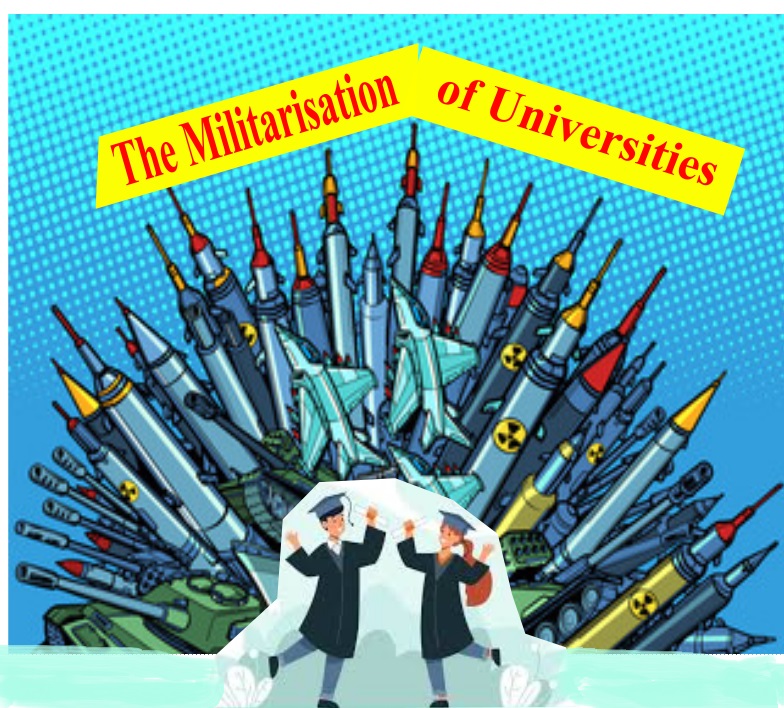
Eight university students from Ukraine recently completed their nuclear energy internship program with the U.S. Department of Energy (DOE).
The program was implemented through Argonne National Laboratory and is designed to assist Ukraine’s nuclear power industry in growing its nuclear energy workforce.
A Long Overdue Visit
The two-year internship program was tailored to Ukrainian university graduate students pursuing nuclear energy-related degrees that specialize in areas such as small modular reactors, accident tolerant fuels, and even misconceptions of nuclear energy.
The students selected for the program were supposed to spend their first summer in the United States taking extra courses and the second summer working with U.S. nuclear energy companies.
A Country Rebuilding
Ukraine’s 15 nuclear reactors generate more than half of the country’s electricity, but the plants are old and so is the country’s aging nuclear workforce.
The grad students returned to their country to continue their studies and careers in Ukraine’s nuclear energy program as they work to pursue new technologies independent of Russia.
Ukraine’s entire fleet of reactors is based on old Russian VVER pressurized water reactor technology. Six of the reactors were seized by Russian forces during the war and placed in cold shutdown.
The U.S.-Ukraine nuclear energy internship program was funded by the Office of Nuclear Energy’s Office of International Cooperation, which collaborates with international partners to support the safe, secure, and peaceful use of nuclear energy. https://www.energy.gov/ne/articles/ukrainian-grad-students-complete-nuclear-internship-program-united-states—
Rafah Invasion Was Once Biden’s “Red Line” — But Israel Continues to Cross It

Israel’s Rafah massacre has been widely condemned as a grave violation of international law, but there has been no clear criticism or outrage from the White House.
Israel bombed civilians it had previously ordered to move to a designated “safe zone” in the northwestern part of Rafah.
By Michel Moushabeck , TRUTHOUT, May 28, 2024
Two days after the International Court of Justice (ICJ) ordered Israel to halt its military offensive on Rafah, dozens of displaced Palestinians were killed in Israeli airstrikes. On Sunday night, the Israeli military bombed civilians whom it had previously ordered to move to the designated “safe zone” of Tal Al-Sultan in the northwestern part of Rafah.
Israel has bombed Rafah dozens of times since the ICJ ruling. But on Sunday, the bombardment of Palestinians in a tent encampment behind the UNHCR school in Rafah resulted in a large inferno and massive casualties, including children who were burned alive in a sea of flames. According to Al Jazeera, the Israeli airstrikes struck the camp at night. The fire from the bombs falling on the plastic tents spread rapidly, killing at least 45 Palestinians, injuring 249, and razing the tent camp to the ground. This was reportedly followed by an Israeli drone strike on the Kuwaiti Hospital entrance as medics were bringing in the dead and the wounded, killing two staff members.
Hospital director Suhaib al-Hams announced on Monday that the Kuwaiti Hospital would have to suspend services due to “the repeated and deliberate attacks on the hospital’s surroundings.”
The graphic images and cell phone video recordings that have been circulating on social media — a headless child, charred bodies of children, women and children frantically running in all directions trying to escape the fires — are painful to watch. They bring Israeli atrocities in Gaza to a new level of unspeakable cruelty and horror.
I don’t know how anyone can recover from this gruesome monstrosity. Do we mourn the dead infants or weep for those who have just been orphaned? Do we scream for those children who have been maimed, or for the parents who had to wrap their loved ones in white shrouds?
Israeli officials first said the strike was “based on precise intelligence” and claimed that the bombardment targeted a Hamas compound, killing two senior Hamas officials. After global condemnation, Israeli Prime Minister Benjamin Netanyahu instead started calling the strike “a tragic accident.”
The U.S.-made bombs that were dropped on the camp in Tal Al-Sultan came after Israeli airstrikes hit shelters in northern Gaza and Gaza City, killing 160 displaced Palestinians, according to Gaza health officials. In Jabalya, at least four people were reportedly killed when a missile hit a residential building during an intense night of shelling. Witnesses reported raging fires throughout the city. Elsewhere in the north, Israeli occupation forces continue to demolish residential neighborhoods, burying countless numbers of people under the rubble. Israeli soldiers were also seen firing on a group of Palestinians filling water containers in the Al-Faluja area.
Israel’s Rafah massacre has been widely condemned as a grave violation of international law, but there has been no clear criticism or outrage from the White House.
As the Biden administration emphasizes the deaths of Hamas leaders and utters the same words we’ve become accustomed to hearing over the past eight months — that the U.S. urges Israel to protect civilians and minimize civilian casualties — its statements have become a farce. The inaction on the part of the Biden administration and the continued flow of weapons to the Israeli state as it carries out such massacres in front of the eyes of the entire world — and in defiance of the ICJ ruling — show the extent of the U.S.’s complicity and participation in the Gaza genocide.………………………………………………………………. more https://truthout.org/articles/rafah-invasion-was-once-bidens-red-line-but-israel-continues-to-cross-it/—
Nuclear sites, including Hanford, feeling the heat as climate change stokes wildfires drought

Dozens of active and idle laboratories and manufacturing and military facilities across the nation that use, store or are contaminated with radioactive material are increasingly vulnerable to extreme weather. Many also perform critical energy and defense research and manufacturing that could be disrupted or crippled by fires, floods and other disasters.
Dozens of active and idle laboratories and manufacturing and military facilities across the nation that use, store or are contaminated with radioactive material are increasingly vulnerable to extreme weather. Many also perform critical energy and defense research and manufacturing that could be disrupted or crippled by fires, floods and other disasters.
Officials scramble to up security at facilities with radioactive materials
The Columbian By TAMMY WEBBER, Associated Press, May 25, 2024,
As Texas wildfires burned toward the nation’s primary nuclear weapons facility, workers hurried to ensure nothing flammable was around buildings and storage areas.
When the fires showed no sign of slowing, Pantex Plant officials urgently called on local contractors, who arrived within minutes with bulldozers to dig trenches and enlarge fire breaks for the sprawling complex where nuclear weapons are assembled and disassembled and dangerous plutonium pits — hollow spheres that trigger nuclear warheads and bombs — are stored.
“The winds can pick up really (quickly) here and can move really fast,” said Jason Armstrong, the federal field office manager at Pantex, outside Amarillo, who was awake 40 hours straight monitoring the risks. Workers were sent home and the plant shut down when smoke began blanketing the site.
Those fires in February — including the largest in Texas history — didn’t reach Pantex, though flames came within 3 miles (5 kilometers). And Armstrong says it’s highly unlikely that plutonium pits, stored in fire-resistant drums and shelters, would have been affected by wildfire.
But the size and speed of the grassland fires, and Pantex’s urgent response, underscore how much is at stake as climate change stokes extreme heat and drought, longer fire seasons with larger, more intense blazes and supercharged rainstorms that can lead to catastrophic flooding. The Texas fire season often starts in February, but farther west it has yet to ramp up, and is usually worst in summer and fall.
Dozens of active and idle laboratories and manufacturing and military facilities across the nation that use, store or are contaminated with radioactive material are increasingly vulnerable to extreme weather. Many also perform critical energy and defense research and manufacturing that could be disrupted or crippled by fires, floods and other disasters.
There’s the 40-square-mile Los Alamos National Laboratory in New Mexico, where a 2000 wildfire burned to within a half mile (0.8 kilometers) of a radioactive waste site. The heavily polluted Santa Susana Field Laboratory in Southern California, where a 2018 wildfire burned 80% of the site, narrowly missing an area contaminated by a 1959 partial nuclear meltdown. And the plutonium-contaminated Hanford nuclear site in Washington, where the U.S. manufactured atomic bombs.
“I think we’re still early in recognizing climate change and … how to deal with these extreme weather events,” said Paul Walker, program director at the environmental organization Green Cross International and a former staff member of the House Armed Services Committee. “I think it’s too early to assume that we’ve got all the worst-case scenarios resolved … (because) what might have been safe 25 years ago probably is no longer safe.”
That realization has begun to change how the government addresses threats at some of the nation’s most sensitive sites.
The Department of Energy in 2022 required its existing sites to assess climate change risks to “mission-critical functions and operations,” including waste storage, and to develop plans to address them. It cited wildfires at Los Alamos and Lawrence Livermore national laboratories and a 2021 deep freeze that damaged “critical facilities” at Pantex.
Yet the agency does not specifically consider future climate risks when issuing permits or licenses for new sites or projects, or in environmental assessments that are reviewed every five years though rarely updated. Instead, it only considers how sites themselves might affect climate change — a paradox critics call short-sighted and potentially dangerous.
Likewise, the Nuclear Regulatory Commission considers only historical climate data rather than future projections in licensing decisions and oversight of nuclear power plants, according to a General Accounting Office study in April that recommended the NRC “fully consider potential climate change effects.” The GAO found that 60 of 75 U.S. plants were in areas with high flood hazard and 16 were in areas with high wildfire potential.
“We’re acting like … (what’s) happening now is what we can expect to happen in 50 years,” said Caroline Reiser, a climate and energy attorney at the Natural Resources Defense Council. “The reality of what our climate is doing has shifted dramatically, and we need to shift our planning … before we experience more and more of the extreme weather events.”……………………………………………………..
One of the most dangerous radioactive materials is plutonium, said Edwin Lyman, director of nuclear power safety at the Union of Concerned Scientists. It can cause cancer, is most dangerous when inhaled, and just a few hundred grams dispersed widely could pose a significant hazard, he said.
Experts say risks vary by site. Most plutonium and other radioactive material is contained in concrete and steel structures or underground storage designed to withstand fire. And many sites are on large tracts in remote areas where risk to the public from a radiation release would be minimal.
In 2000, a wildfire burned one-third of the 580-square-mile (1,502-square-kilometer) Hanford site, which produced plutonium for the U.S. atomic weapons program and is considered the nation’s most radioactive place.
Air monitoring detected plutonium in nearby populated areas at levels higher than background, but only for one day and at levels not considered hazardous, according to a Washington State Department of Health report.
The agency said the plutonium likely was from surface soil blown by the wind during and after the fire, though site officials said radioactive waste is buried several feet deep or stored in concrete structures………………..
The 2018 Woolsey Fire in California was another wakeup call.
About 150,000 people live within 5 miles (8 kilometers) of the Santa Susana Field Laboratory, a former nuclear power research and rocket-engine testing site.
The fire burned within several hundred feet of contaminated buildings and soil, and about 600 feet (183 meters) from where a nuclear reactor core partially melted down 65 years ago.
The state’s Department of Toxic Substances Control said sampling by multiple agencies found no off-site radiation or other hazardous material attributable to the fire. But another study, using hundreds of samples collected by volunteers, found radioactive microparticles in ash just outside of the lab boundary and at three sites farther away that researchers say were from the fire.
The state ordered demolition of 18 buildings, citing “imminent and substantial endangerment to people and the environment because unanticipated and increasingly likely fires could result in the release of radioactive and hazardous substances.”
It also ordered cleanup of old burn pits contaminated with radioactive materials. Though the area was covered with permeable tarps and did not burn in 2018, the state feared it could be damaged by “far more severe” wildfire, high winds or flooding.
“It’s like these places we think, it’ll never happen,” said Melissa Bumstead, founder and co-director of Parents Against Santa Susana Field Laboratory. “But … things are changing very quickly.”
Jay Coghlan, executive director of Nuclear Watch New Mexico, said he and others successfully urged federal nuclear security officials to include a wildfire plan in a 1999 final environmental impact statement for the Los Alamos National Laboratory.
The next year, the 48,000-acre (19,000-hectare) Cerro Grande Fire burned 7,500 acres (3,035 hectares) at the laboratory, including structures, and came within a half-mile (0.8 kilometers) of an area with more than 24,000 above-ground containers of mostly plutonium-contaminated waste………………………………………………………………………………..
In 2010, Pantex was inundated with 10 inches (25 centimeters) of rain that forced the plant to shut down, affecting operations for almost a month. The plutonium storage area flooded and corrosion later was found on some containers that’s since “been addressed,” said Armstrong, the field office manager.
In 2017, storms flooded facilities that processed nuclear material and led to power outages that affected a fire alarm control panel.
Then in 2021, Pantex was shut down for a week because of extreme cold that officials said led to “freeze-related failures” at 10 nuclear facilities and other plants. That included failure of a sprinkler head in a radiation safety storage area’s fire suppression system.
Pantex has since adopted freeze-protection measures and a cold weather response plan. And Armstrong says there have been upgrades, including to its fire protection and electrical systems and installation of backup generators.
Other DOE sites also are investing in infrastructure, the nuclear security agency’s Weckerle said, because what once was considered safe now may be vulnerable.
“We live in a time of increased risk,” he said. “That’s just the heart of it (and) … a lot of that does have to do with climate change.” https://www.columbian.com/news/2024/may/25/nuclear-sites-feeling-the-heat-as-climate-change-stokes-wildfires-drought/
White House to support new nuclear power plants in the U.S.

CNBC, MAY 29 2024
The White House on Wednesday plans to announce new measures to support the development of new U.S. nuclear power plants, a large potential source of carbon-free electricity the government says is needed to combat climate change.
The suite of actions, which weren’t previously reported, are aimed at helping the nuclear power industry combat rising security costs and competition from cheaper plants powered by natural gas, wind and solar……………………………………..
Critics worry about the buildup of radioactive waste stored at plants around the country and warn of the potential risks to human health and nature, especially with any accidents or malfunctions. Biden signed a law earlier this month banning the use of enriched uranium from Russia, the world’s top supplier.
At a White House event on Wednesday focused on nuclear energy deployment, the Biden administration will announce a new group that will seek to identify ways to mitigate cost and schedule overruns in plant construction.
It also said the Army will soon solicit feedback on deploying advanced reactors to provide energy for certain facilities in the United States. Small modular reactors and microreactors can provide energy that is more resilient to physical and cyber attacks, natural disasters and other challenges, the White House said.
The Department of Energy also released a paper outlining the expected increased safety of advanced reactors. And a new tool will help developers figure out how to cut capital costs for new nuclear reactors.
The youngest U.S. nuclear power reactors, at the Vogtle plant in Georgia, were years behind schedule and billions over budget when they entered commercial operation in 2023 and 2024. No new U.S. nuclear plants are currently being built……………………………….. https://www.cnbc.com/2024/05/29/white-house-to-support-new-nuclear-power-plants-in-the-us.html
Radiation Exposure Compensation Act (RECA) set to expire soon, while many nuclear test victims await justice .
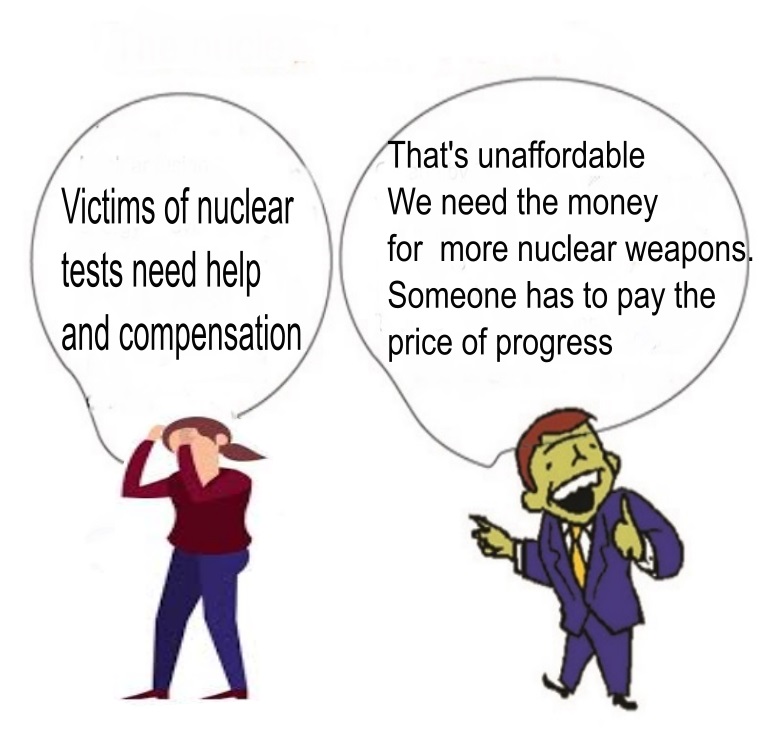
The defense spending bill for 2024 was signed into law on Dec. 22 by Biden, but the RECA expansion was cut from the final bill before it landed on his desk.
Without an extension, RECA is set to expire in June, and the deadline for claims to be postmarked is June 10, 2024, according to the DOJ.
‘Time is running out’
by beyondnuclearinternational by Shondiin Silversmith, Arizona Mirror
Navajo Nation urges Congress to act on RECA expansion bill
Kathleen Tsosie remembers seeing her dad come home every evening with his clothes covered in dirt. As a little girl, she never questioned why, and she was often more excited to see if he had any leftover food in his lunchbox.
“We used to go through his lunch and eat whatever he didn’t eat,” Tsosie said, recalling when she was around 4 years old. “And he always had cold water that came back from the mountain.”
Tsosie’s father, grandfather, and uncles all worked as uranium miners on the Navajo Nation near Cove, Arizona, from the 1940s to the 1960s. The dirt Tsosie’s father was caked in when he arrived home came from the mines, and the cold water he brought back was from the nearby springs.
Tsosie grew up in Cove, a remote community located at the foothills of the Chuska mountain range in northeastern Arizona. There are 56 abandoned mines located in the Cove area, according to the Environmental Protection Agency.
In the late 1960s, Tsosie said her grandfather started getting sick. She remembers herding sheep with him and how he would often rest under a tree, asking her to push on his chest because it hurt.
Tsosie said she was about 7 years old when her uncles took her grandfather to the hospital. At the time, she didn’t know why he was sick, but later on, she learned he had cancer. Her grandfather died in October 1967.
Over a decade later, Tsosie’s father also started getting sick. She remembers when he came to visit her in Wyoming; she was rubbing his shoulders when she felt a lump. She told him to get it checked out because he complained about how painful it was.
Her father was diagnosed with cancer in 1984 and went through treatments, but died in April 1985.
“When my dad passed away, everybody knew it was from the mine,” Tsosie said. He was just the latest on a long list of Navajo men from her community who worked in the uranium mines and ended up getting sick and passing away.
Because of that history, Tsosie became an advocate for issues related to downwinders and uranium mine workers from the Navajo Nation, including the continuation of the Radiation Exposure Compensation Act.
The Radiation Exposure Compensation Act, or RECA, provides a program that compensates individuals who become ill because of exposure to radiation from the United States’ development and testing of nuclear weapons.
RECA was initially set to expire in 2022, but President Joe Biden signed a measure extending the program for two more years. Now, it’s set to expire in less than a month…………………………………………………………………………………
In July 2023, the U.S. Senate voted to expand and extend the RECA program, and it was attached as an amendment to the National Defense Authorization Act, which funds the Department of Defense.
It could have extended health care coverage and compensation to more uranium industry workers and “downwinders” exposed to radiation in several new regions — Colorado, Missouri, New Mexico, Idaho, Montana, and Guam — and expanded coverage to new parts of Arizona, Nevada and Utah.
The defense spending bill for 2024 was signed into law on Dec. 22 by Biden, but the RECA expansion was cut from the final bill before it landed on his desk.
When she heard that the Radiation Exposure Compensation Act amendments failed to pass, Tsosie said it really impacted her, and she cried because so many people deserve that funding.
“I know what it feels like. I know what it feels like to suffer,” she said.
Without an extension, RECA is set to expire in June, and the deadline for claims to be postmarked is June 10, 2024, according to the DOJ.
The sunset of the Radiation Exposure Compensation Act is approaching fast, and leaders from the Navajo Nation are urging Congress to act on the expansion bill that has been waiting for the U.S. House of Representatives to take it up for more than two months.
“Time is running out,” Justin Ahasteen, the executive director of the Navajo Nation Washington Office, said in a press release.
“Every day without these amendments means another day without justice for our people,” he added. “We urge Congress to stand on the right side of history and pass these crucial amendments.”
Republican Sen. Josh Hawley from Missouri introduced S. 3853 – The Radiation Exposure Compensation Reauthorization Act, which funds RECA past its June sunset date for another six years.
The bill passed through the U.S. Senate with a bipartisan 69-30 vote on March 7. But since being sent to the House on March 11, the bill hasn’t moved.
The RECA expansion bill would include more communities downwind of nuclear test sites in the United States and Guam. It would extend eligibility for uranium workers to include those who worked after 1971. Communities harmed by radioactive waste from the tests could apply for the program, and expansion would also boost compensation payments to account for inflation.
“The Navajo Nation calls for immediate passage of S. 3853,” Ahasteen said in a press release. “This is to ensure that justice is no longer delayed for the Navajo people and other affected communities.”
Ahasteen told the Arizona Mirror in an interview that congressional leaders holding the bill back due to the program’s expense is not a good enough reason not to pass it.
“They keep referencing the cost and saying it’s too expensive,” he said. But, he explained, the RECA expansion is only a sliver of U.S. spending on foreign aid or nuclear development.
And it shouldn’t even be a matter of cost, Ahasteen said, because people have given their lives and their health in the interest of national security.
“The bill has been paid with the lives and the health of the American workers who were exposed unjustly to radiation because the federal government kept it from them and they lied about the dangers,” he said.
From 1945 to 1992, the U.S. conducted a total of 1,030 nuclear tests, according to the Arms Control Association.
Many were conducted at the Nevada Test Site, with 928 nuclear tests conducted at the site between 1951 and 1992, according to the Nevada National Security Site. About 100 of those were atmospheric tests, and the rest were underground detonations.
According to the United Nations Scientific Committee on the Effects of Atomic Radiation, atmospheric tests involved unrestrained releases of radioactive materials directly into the environment, causing the largest collective dose of radiation thus far from man-made radiation sources………………………………………………………………………
The legacy of uranium mining has impacted the Navajo Nation for decades, from abandoned mines to contaminated waste disposal.
From 1944 to 1986, nearly 30 million tons of uranium ore were extracted from Navajo lands, according to the EPA, and hundreds of Navajo people worked in the mines, often living and raising families in close proximity to the mines and mills.
Ahasteen said those numbers show exactly how large the uranium operations were on the Navajo Nation and the impact it would have on the Navajo people.
“There are photos on record to show Navajo people being exploited, not given any proper protective equipment, but (the federal government) knew about the dangers of radiation since the ’40s,” Ahasteen said. “They were given a shovel and a hard hat, and they were told: Go to work. You’ll earn lots of money. You’ll have a nice life, and we did that, but it didn’t work so well for us.”……………………………………………………………………………………………………………………
WHAT YOU CAN STILL DO BEFORE JUNE 7TH
Urge your U.S. Representative to push for a House floor vote on, and to vote in favor of, extending/expanding RECA, the Radiation Exposure Compensation Act. And urge House Speaker Mike Johnson to allow the vote on the House floor, on the Hawley version of RECA (the most expansive). There is likely enough support to pass the bill. Johnson’s phone is: 202-225-4000.
Shondiin Silversmith is an award-winning Native journalist based on the Navajo Nation. Silversmith has covered Indigenous communities for more than 10 years, and covers Arizona’s 22 federally recognized sovereign tribal nations, as well as national and international Indigenous issues. This article was first published by the Arizona Mirror, https://beyondnuclearinternational.org/2024/05/26/time-is-running-out-2/
1 This Month
19 February – VIRTUAL EVENT-Decision Time: AI and Our Nuclear Arsenal
12:45 p.m. Central / 1:45 p.m. Eastern
To see nuclear-related stories in greater depth and intensity – go to https://nuclearinformation.wordpress.com
-
Archives
- February 2026 (161)
- January 2026 (308)
- December 2025 (358)
- November 2025 (359)
- October 2025 (376)
- September 2025 (258)
- August 2025 (319)
- July 2025 (230)
- June 2025 (348)
- May 2025 (261)
- April 2025 (305)
- March 2025 (319)
-
Categories
- 1
- 1 NUCLEAR ISSUES
- business and costs
- climate change
- culture and arts
- ENERGY
- environment
- health
- history
- indigenous issues
- Legal
- marketing of nuclear
- media
- opposition to nuclear
- PERSONAL STORIES
- politics
- politics international
- Religion and ethics
- safety
- secrets,lies and civil liberties
- spinbuster
- technology
- Uranium
- wastes
- weapons and war
- Women
- 2 WORLD
- ACTION
- AFRICA
- Atrocities
- AUSTRALIA
- Christina's notes
- Christina's themes
- culture and arts
- Events
- Fuk 2022
- Fuk 2023
- Fukushima 2017
- Fukushima 2018
- fukushima 2019
- Fukushima 2020
- Fukushima 2021
- general
- global warming
- Humour (God we need it)
- Nuclear
- RARE EARTHS
- Reference
- resources – print
- Resources -audiovicual
- Weekly Newsletter
- World
- World Nuclear
- YouTube
-
RSS
Entries RSS
Comments RSS
 nuclear-news