After election, will progressives acknowledge and oppose US genocide in Gaza?

Walt Zlotow, West Suburban Peace Coalition, Glen Ellyn IL 4 Nov 24
During the current US election cycle, many progressives have recoiled from addressing the 13 month long US enabled Israeli genocide in Gaza.
They are singularly focused on pushing Kamala Harris to victory, saving democracy from the unhinged authoritarian Trump. As a result they’ve banished the word much less the reality of the genocide which the US enables.
That is deplorable. Every day dozens, hundreds, possibly a thousand Palestinian civilians die in the worst genocide this century. All financed, publicly supported and weaponized by their beloved Biden/Harris administration.
When the genocide in Gaza is brought up for discussion, too many progressives are ‘hear no evil, see no evil, speak no evil.’
When asked to push back against US weaponizing, publicly supporting, financing the genocide, progressives come up with the darnedest excuses
‘There is no genocide in Gaza, just a defensive war against Hamas.’
‘Don’t dare say anything that will jeopardize Harris’ chances.’
‘The destruction in Gaza will be much worse under Trump.’
‘The United States has no influence on the government of Israel.’
‘President Biden and Vice President Harris are working night and day to achieve ceasefire in Gaza.’
‘People have been fighting each other there for thousands of years and nothing will change that.’
Maybe these otherwise fine progressives will open their eyes and souls to ongoing destruction of Gaza once the election ends and decide to resist it passionately.
Alas, with both candidates locked in ironclad support for sending endless billions for Israel to ‘finish the job’, they just might shrug and continue ignoring the most greatest moral dilemma of their lifetime.
Regulators deliver successive blows to Amazon and Meta’s nuclear power ambitions
Amazon, Meta, and Microsoft have placed big bets on nuclear power to secure electricity for their data centers as AI and cloud computing have sent power use surging.
But as Amazon and Meta discovered last week, those bets are far from a sure thing. A series of recent rulings from regulators dashed their hopes of finding a quick fix for their electricity needs. For now, Microsoft’s plans to revive a reactor at Three Mile Island are moving ahead.
Perhaps unexpectedly, the roadblocks have nothing to do with nuclear power itself, illustrating the challenges of building massive data centers without first locking up new sources of electricity.
Meta, for example, is planning to build an AI data center next to an already operating nuclear power plant. But as the project progressed, regulatory hurdles began piling up. CEO Mark Zuckerberg told staff in an all-hands meeting that one hurdle was the sighting of a rare bee species on the land, according to a Financial Times report. (Many bee populations are currently fragile, at best, after decades of exposure to a new generation of pesticides, among other stressors.)
Amazon’s plans have also hit a snag. The company is planning to build a new hyperscale data center next to the nuclear power plant near Susquehanna, Pennsylvania, and use a significant portion of the plant’s electricity. The Federal Energy Regulatory Commission (FERC), which oversees the U.S. electricity and natural gas grids, voted 2-1 on November 1 to deny the expansion of an existing data center power agreement that would have allowed Amazon to connect directly to the power plant.
The concern in Amazon’s case was that other customers would potentially suffer lower reliability — brownouts or blackouts — and higher costs as the data center would divert a significant portion of the massive power plant away from the rest of the region’s electricity grid.
This likely won’t be the last time FERC wades into the power question for hyperscale data centers: The commission has at least another eight large co-location requests to review.
Amazon’s nuclear datacenter dreams stall as watchdog rejects power deal

Federal Energy Regulatory Commission cites grid stability concerns
The Register, Dan Robinson, Mon 4 Nov 2024
Amazon has hit a roadblock in its plans for nuclear-powered US datacenters. Federal regulators rejected a deal that would let it draw more power from a Susquehanna plant to supply new bit barns next to the site, on the grounds this would set a precedent which may affect grid reliability and increase energy costs.
The Federal Energy Regulatory Commission (FERC) issued an order on November 1 rejecting an amended Interconnection Service Agreement (ISA) that would have increased the amount of co-located load from 300 to 480 MW, and to “make revisions related to the treatment of this co-located load.”
Co-located load means the Cumulus datacenter complex that Talen Energy built next to the 2.5 GW Susquehanna nuclear plant in Pennsylvania which it operates, and which Amazon acquired in March via a deal worth $650 million.
The online megamart announced plans in May to expand the site with more than a dozen new datacenters for its Amazon Web Services (AWS) cloud subsidiary over the next decade.
Soon after that, official objections were filed by two utility companies, American Electric Power (AEP) and Exelon. They argued that the revised agreement between Talen and PJM Interconnection, the regional power grid operator, would give the Cumulus site preferential treatment and may result in less energy going to the grid in some circumstances.
Exelon and AEP also argued that the amended ISA should be subject to an official hearing because “it raises many factual questions,” and, in the absence of any such hearing, that FERC should reject the amended ISA. It seems a majority of the commissioners agreed.
Specifically, Exelon and AEP said the amended ISA had not been adequately supported, meaning no good reason was given as to why the amendments were necessary………………………………………………………………………………………………………………..
The move highlights the difficulties datacenter operators face in expanding their facilities to keep pace with the booming demand for training and operating the latest AI models, and the challenges that power companies face in delivering the energy required.
As The Register has covered recently, access to enough power has become a major issue in building or expanding those bit barns, with one major commercial property developer in the UK citing this as the single biggest constraint it faces.
Yet according to Bloomberg, the hyperscalers – Amazon, Alphabet, Meta, and Microsoft – are set to collectively splash out well over $200 billion this year chasing the AI dragon, despite increasing warnings the AI market is a bubble set to burst and many investors and enterprises are not seeing much return for all the cash they are throwing at it.
Amazon itself said in its recent earnings report it expects to spend $75 billion on capex this year and even more in 2025, largely due to rising demand for AWS services related to generative AI.
We asked the company to comment on the rejected Susquehanna power proposal.
The company has also recently pursued small modular reactors (SMRs) via a $500 million investment into three projects to develop these miniature nuclear plants. https://www.theregister.com/2024/11/04/aws_nuclear_datacenter_ferc/
Endangered Bees Halt Meta’s Nuclear-Powered AI Data Center Plans
Mark Zuckerberg is trying to find more renewable energy sources for his AI ambitions.
By Kate Irwin, Nov 05, 2024, https://au.pcmag.com/ai/108105/endangered-bees-halt-metas-nuclear-powered-ai-data-center-plans
Meta’s plans to set up a nuclear-powered AI data center in the US have been halted in part because a rare bee species was found on the land, the Financial Times reports.
Meta CEO Mark Zuckerberg told staff about the issue in an all-hands meeting, according to sources familiar with the situation. The project has also faced other environmental and regulatory hurdles, and Meta is now looking for other ways to access carbon-free energy for its AI data centers.
Zuckerberg previously said Meta would build bigger AI computing clusters if the company could get the electricity to do so, admitting that limited energy resources are the main bottleneck for AI expansion.
Because AI uses a lot of electricity (and water), energy is one of its biggest challenges. Because of existing rules, adding new sources to US grids can take years, and utility firms may not want to add large, new power plants to their systems because of the challenges associated with the additions, MIT researcher and energy council member Robert Stoner previously told PCMag.
A 2017 report from the Center for Biological Diversity found that there are 347 endangered bee species in North America and Hawaii. It noted that 90% of wild plants require pollinator activity in order to survive, meaning that disrupting bee habitats could result in not only extinct species but also a loss of plant life, which could further accelerate climate change.
The 1973 Endangered Species Act currently only protects one species of endangered bee in the continental US: the Rusty Patched Bumblebee. While it’s unclear which bee species has posed a challenge to Meta’s nuclear plans, according to a map from the US Fish and Wildlife Service, there are only about 471 Rusty Patched Bumblebees left, and most of them are in Minnesota, Wisconsin, Illinois, and around the Virginia-West Virginia border.
Meta’s website currently lists nearly two dozen data centers worldwide, with the majority concentrated in the US. A map shows 26 data centers either completed or being built in addition to 75 different solar power locations, 21 wind power locations, and 25 “Water Restoration” projects.
Meta isn’t the only big tech firm eyeing nuclear power, though. Google has ordered six or seven small modular nuclear reactors from Kairos Power, and Microsoft has made plans to reopen Three Mile Island in Pennsylvania to power its AI plans.
US Bombers Arrive in Middle East as Part of New Deployment for Israel

The US has reportedly warned Iran not to respond to Israel’s attack
by Dave DeCamp November 3, 2024, https://news.antiwar.com/2024/11/03/us-bombers-arrive-in-middle-east-as-part-of-new-deployment-to-protect-israel/
US B-52 bombers arrived in the Middle East on Saturday as part of a new deployment to “defend” Israel amid speculation over whether or not Iran will respond to Israel’s October 26 attack.
“B-52 Stratofortress strategic bombers from Minot Air Force Base’s 5th Bomb Wing arrived in the US Central Command area of responsibility,” US Central Command wrote on X.
The Pentagon announced it was beefing up its military presence in the region on Friday, saying Secretary of Defense Lloyd Austin ordered the “deployment of additional ballistic missile defense destroyers, fighter squadron and tanker aircraft, and several US Air Force B-52 long-range strike bombers to the region.”
The Pentagon said the purpose of the deployment is the “protection of US citizens and forces in the Middle East, the defense of Israel, and de-escalation.” The US also recently deployed a THAAD missile defense system and about 100 troops to Israel.
Iranian officials have been vowing there will be a response to Israel’s attack, which killed four Iranian soldiers and one civilian. Israel launched the airstrikes on Iran in retaliation for the October 1 Iranian missile barrage that was fired into Israel in response to a string of Israeli escalations and assassinations in the region.
Axios has reported that Israeli intelligence suggests Iran is planning to launch a major attack from Iraqi territory and that it could happen before the US presidential election on November 5. However, a report published by The Wall Journal on Sunday said that Iran didn’t want to influence the US election and would likely wait until after.
The Journal report, which cited unnamed Arab and Iranian officials, said Iran has told Arab diplomats it’s planning a complex response against Israel that would involve more powerful warheads and other weapons not used in its previous attacks on Israeli territory. One source said Iran would likely target military facilities again “but much more aggressively than last time.”
Another Axios report said the US warned Iran that if it attacked, the US wouldn’t be able to restrain Israel. “We told the Iranians: We won’t be able to hold Israel back, and we won’t be able to make sure that the next attack will be calibrated and targeted as the previous one,” a US official told Axios.
Biden’s Destructive Legacy

by Daniel Larison , , https://original.antiwar.com/Daniel_Larison/2024/10/31/bidens-destructive-legacy/
As President Biden’s term approaches its end, the US and several parts of the rest of the world are significantly worse off than they were when he took office. While the president is frequently lauded by members of the foreign policy establishment as a successful foreign policy leader, his tenure has been marked for the most part by deepening US involvement in foreign conflicts that show no signs of ending anytime soon. US policies under Biden have served only to stoke destabilizing conflict, and the president has shown no inclination to bring any of the wars currently backed by Washington to an end. Biden’s presidency showed the world just how extensive the rot in US foreign policy is, and most other nations will not soon forget what restored American “leadership” wrought.
Biden ran on the promise of ending America’s forever wars, but after the withdrawal from Afghanistan he then spent most of his presidency going out of his way to involve US in conflicts where no vital American interests were at stake. The risk of great power conflict has also risen under Biden as he has pursued a China policy of containment and rivalry that the US can ill afford while US-Russian relations have sunk to new lows over Ukraine. In the Middle East, Biden has enabled Israel’s genocidal campaign in Gaza, backed their invasion of Lebanon, and supported their attacks on Iran. He has helped Israel sow chaos across the region, and he committed the US to a new open-ended and illegal war in Yemen. The president’s extreme ideological attachment to Israel led him to pursue an indefensible policy of unconditional support that has fueled the slaughter of civilians and created one of the worst man-made famines in modern times.
The president’s aversion to serious diplomatic engagement meant that the US continued the disastrous economic wars against Iran, Venezuela, and North Korea that Trump had been waging. Biden’s refusal to reenter the nuclear deal with Iran ensured that there would be no progress in negotiations with Tehran. The administration’s efforts to secure a ceasefire in Gaza have been a face-saving exercise so that the US could claim to be doing something to end the war while it continued arming Netanyahu’s government to the teeth. The US hasn’t so much as pretended to be interested in a ceasefire in Ukraine. On almost every front, the Biden administration’s answer has been more militarism.
The Biden administration has brought the US close to direct conflict with Iran thanks to Washington’s backing for Israel. It is still possible that the US and Iran might be at war in the next few months. It would be bad enough to get into an unnecessary war to support a non-ally, but to do it when the client is also massacring and starving civilians is inexcusable. US backing for the wars in Gaza and Lebanon is a strategic and moral debacle, and Biden shouldn’t be let off the hook for putting the US in this position. Even if the US and Iran avoid war again, it is a measure of how dangerous administration policy has been that it was ever this close to happening.
There is never any real accountability in Washington for the outrages and crimes committed by our leaders. It is doubtful that officials in the Biden administration will face legal or personal consequences for their role in these horrors. Regardless, Americans should remember that Biden and his administration were willing accomplices to mass starvation and genocide. Their complicity should never be forgotten, and they deserve all the opprobrium that the world has to offer.
The result of Biden’s decisions is that our already heavily militarized foreign policy has become even worse than it was before. The administration’s limited diplomatic efforts have been consumed by the president’s obsession with giving Saudi Arabia a security guarantee. Biden has done extensive damage to the reputation and interests of the United States, and he will likely be remembered as one of the two worst foreign policy presidents of the last fifty years along with George W. Bush. Biden’s foreign policy legacy is mostly one of fanning the flames of war and the destruction of innocent lives.
Daniel Larison is a columnist for Responsible Statecraft. He is contributing editor at Antiwar.com and former senior editor at The American Conservative magazine. He has a Ph.D. in History from the University of Chicago. Follow him on Twitter @DanielLarison and at his blog, Eunomia, here.
Congress Must Investigate Corruption in Nuclear Energy Industry
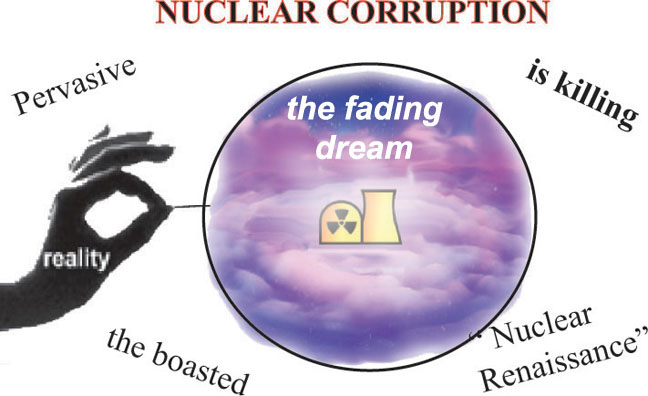
Real Clear Energy, By Craig Shirley, April 10, 2024
In their zeal to achieve a carbon-free environment, Democrats have done a big turnaround to promote nuclear energy as a safe, clean energy source. Some states are moving as fast they can to reactivate idle reactors. In 2022, Congress passed the Inflation Relief Act (IRA) to grant $30 billion for nuclear subsidies.
Scandals involving bribery over nuclear energy have toppled high-level state officials and corporate executives in Ohio, Illinois and other places.
In 2020, federal prosecutors brought charges against officials on Commonwealth Edison (ComEd), an Illinois company, for offering jobs and favors to friends of the Speaker of the Illinois House of Representatives in exchange for a bill to bailout the company’s nuclear division.
At nearly the same time, Ohio-based FirstEnergy executives were charged with paying $60 million in bribes to state legislators. Former Ohio Speaker of the House Larry Householder is currently serving a 47 year prison sentence.
Floodlight, a non-profit environmental news service, wrote a piece that appeared in the liberal magazine Mother Jones that perfectly encapsulates the corruption in the nuclear industry:
“Utility fraud and corruption—in Florida, Illinois, Mississippi, Ohio, and South Carolina—have cost electricity customers at least $6.6 billion, according to Floodlight’s analysis. Ratepayers have bankrolled nuclear plants that never got built, transmission systems that were over-engineered to beef up profits, and aging coal facilities that couldn’t compete with cheaper plants powered by methane, which the industry calls natural gas.”
Before these scandals erupted, and before Congress passed the Inflation Recovery Act, the nuclear industry had become so unpopular, it was a tempting target for political corruption.
According to the Bulletin of Atomic Scientists:
“Changes in the economics of electricity markets are threatening the profitability of nuclear power plants, a shifting reality driving a demand for these financial bailouts. As the New Jersey-based energy company Public Service Enterprise Group (PSEG) explained in October 2020, across the nation “nuclear plants continue to struggle economically to survive. Since 2018, three nuclear plants have closed in the eastern US, all for economic reasons, and the impact has had a ripple effect.”
Over the past several years, the Justice Department and the courts have done their jobs in prosecuting and sentencing bad actors in the nuclear industry. It is time for Congress to investigate the root causes of the corruption. Executives and experts alike must be brought before congressional committees to explain why the nuclear industry has been allowed to fall into corruption at the expense of the taxpayer and the consumer……………………………………….
https://www.realclearenergy.org/articles/2024/04/10/congress_must_investigate_corruption_in_nuclear_energy_industry_1024272.html
Lest we forget – Nuclear Power Runs on Dirty Money: The Corporate Scandal of the Proposed National Nuclear Subsidy
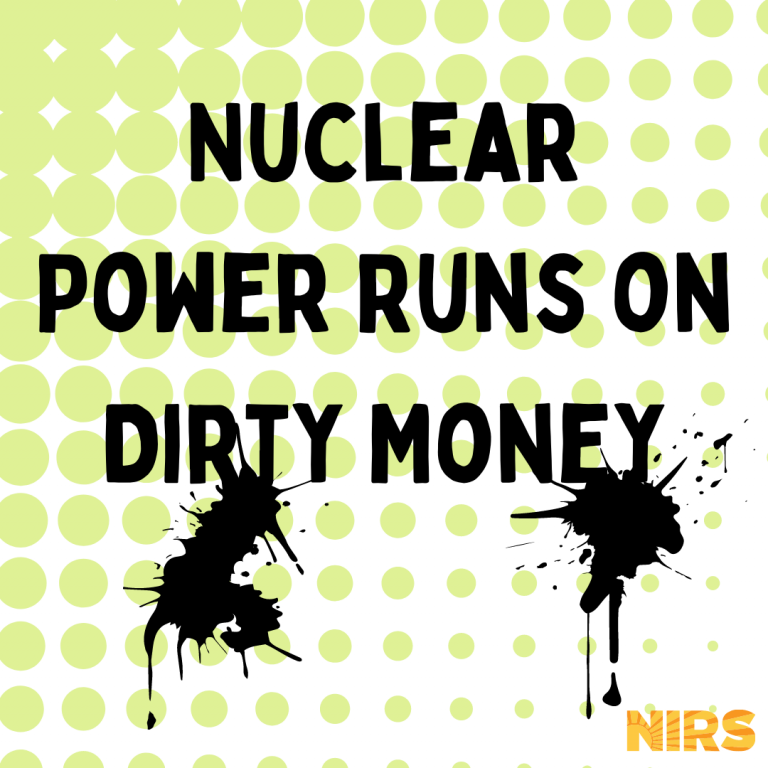
August 5, 2021
A few days ago, we published a piece showing the cost of federal nuclear bailout proposals. It’s a big, big number — $50 billion. But all of that money would not create a single new job, nor reduce greenhouse gas emissions by a single pound. In fact, as a new report released last month found, investing that $50 billion in wind, solar, and efficiency instead would accelerate our transition to a zero-emissions electricity system. And, as we showed last week, a national nuclear bailout would prevent the creation of 60,000 new jobs in renewable energy, efficiency, and other clean energy infrastructure.
So with all of these strikes against it, why are members of Congress pushing so hard to give a slate of old, uneconomical nuclear power plants so much money out of a large, but still limited, budget for energy investments needed for a just transition to a carbon-free future?
There’s one tried-and-true way to answer that question: follow the money. We wondered: who would actually receive the money proposed to bail out nuclear reactors? The answer is revealing.
From our analysis, we found that there are 33 reactors at 19 nuclear power plants, located in eight states, which would qualify for the proposed bailouts. Those power plants are owned and operated by only eight large power companies (along with four smaller companies that are minority co-owners of three of the plants). Note: because both proposed bailouts would subsidize the same group of reactors, we combined the amounts for our calculations. As a result, nearly the entire $50 billion–94% of the total–would go to these eight corporations.
However, because ownership of nuclear reactors is highly concentrated, over $35 billion of the bailout (70%) would go to just three of those corporations:
- Exelon $24.5 billion (49%)
- Energy Harbor $5.5 billion (11%)
- PSEG $5.1 billion (10%)
All three of these companies have been lobbying for subsidies for their nuclear reactors for years. As we speak, Exelon is pushing for a nuclear subsidy in Illinois and threatening to close four reactors within the next few months if the state legislature does not convene a special session and enact a new law with at least $700 million in nuclear subsidies within weeks.
In fact, both Exelon and Energy Harbor (a spinoff of FirstEnergy), are the subjects of federal corruption cases over billion-dollar nuclear bailouts for which they lobbied in Illinois and Ohio, respectively. In both cases, prosecutors have indicted former company lobbyists and staff to the Speakers of the House of Representatives in each state. Also in both cases, Exelon and FirstEnergy have signed deferred prosecution agreements with federal prosecutors to pay fines and restitution and to cooperate with the prosecutions. As the investigations proceed, more corporate executives, legislators, and lobbyists could be indicted.
In the case of FirstEnergy and Energy Harbor, there are also multiple state-level investigations of these nuclear bailout scandals. At the heart of that case, FirstEnergy made $61 million in bribes and payments to former House Speaker Larry Householder’s political action committee. Through the scheme, FirstEnergy helped win Householder the speakership after the 2018 election, by also buying the support of Republican legislators and Ohio Gov. Mike DeWine. As a result, FirstEnergy was able to get Ohio to enact a $1 billion nuclear bailout, which was key in winning the support of the corporation’s creditors in a major bankruptcy proceeding. The bankruptcy settlement resulted in FirstEnergy spinning off its power plants into Energy Harbor, a new, unaffiliated corporation that only owns the unprofitable nuclear and coal power plants. As a result of the federal corruption case, Ohio legislators repealed the nuclear bailout earlier this year, leaving Energy Harbor without the subsidies its creditors were assured it would have when they agreed to the bankruptcy settlement.
In addition to the federal corruption case, states where FirstEnergy operates want to know where the $61 million in bribes came from. In April, under pressure in the federal case, FirstEnergy filed a report with the Federal Energy Regulatory Commission indicating that “all 14 of its power-providing companies” in five states misappropriated ratepayer monies for a decade. State utility commissions in three of those states–Maryland, New Jersey, and Ohio–are investigating how much money the corporation misappropriated from state residents’ power bills to fund the nuclear bailout corruption scheme.
Back to Exelon
The corruption investigation in Illinois stems from two bills that have cost electricity consumers billions of dollars: a 2011 “smart grid” law, and a 2016 energy law. The latter awarded Exelon a 10-year, $2.35 billion subsidy for three uneconomical reactors that Exelon threatened to close without the bailout. Consumers have already paid out $1 billion over the last four years. Exelon awarded jobs to associates and relatives of former House Speaker Michael Madigan and other legislators, in exchange for lucrative legislative outcomes. Despite the ongoing investigation, Exelon is now pursuing subsidies in Illinois for its other eight reactors in Illinois, which it claims are also under economic pressure.
In the same year as the Illinois bailout, Exelon won a massive 12-year, $7.6 billion subsidy for four reactors in New York, and won final approval of a deal that has made it the largest utility company in the country. In those cases, there were eyebrow-raising reports of backroom lobbying, employment favors, and political contributions. And in 2018, Exelon and PSEG (the other big winner from a federal bailout) got New Jersey to enact a $300 million/year subsidy for three reactors in that state. Exelon pulls in about $85 million/year through its ownership stake in two of the New Jersey reactors.
In total, Exelon is receiving nearly $11 billion in nuclear subsidies at the state level. $24.5 billion in federal subsidies may assist Exelon in winning investors’ support for its plan to spin off its nuclear business, as FirstEnergy did. But how is any of this going to help the country solve the climate crisis?
With $30 billion of a federal nuclear subsidy accruing to two companies that are the subject of federal corruption cases over state-level nuclear subsidy laws, this could become an even larger scandal. President Biden and Congressional leaders should not risk the American Jobs and Families Plan being derailed over corporate corruption cases. And as we’ve shown, the infrastructure bills will do more for climate, jobs, and justice without a nuclear bailout, and by simply investing in the transition to 100% renewable energy.
There are many reasons why we cannot afford to sacrifice the climate to a nuclear bailout. Our economic future, justice for all communities impacted by climate chaos and the nuclear fuel chain, and our environment all depend on real action and true investment in clean energy, good jobs, and a just transition. Short-sighted corporate interests–once again–block the path towards the liveable, just, and equitable future. We cannot allow the pockets of nuclear corporations and their shareholders to grow as our window for climate action shrinks.
[Tables of subsidies etc included here on original]
Take Action!
We can’t let our leaders sacrifice the economy and environment to a corporate nuclear bailout scandal! Tell President Biden, Vice-President Harris, and your representatives in Congress: “No Corrupt Nuclear Bailouts in the American Jobs and Families Plan – Invest in American Jobs and a Just Transition to 100% Renewable Energy by 2035”
Despite History of Fabrication, Press Uncritically Covers IDF-Provided Documents on Hamas

a pattern of Israel engineering misleading narratives to shape public opinion, and fabricating the evidence needed to do so.
Bryce Greene, FAIR, 1 Nov 24
Earlier this month, the New York Times (10/12/24), Washington Post (10/12/24) and Wall Street Journal (10/12/24) each published front-page articles based on different sets of documents handed to them by the Israeli military.
Israel claims it seized all the documents—in the form of meeting minutes, letters and planning documents—in its ground invasion of Gaza, and that they reveal insights into Hamas’s operations prior to the October 7 attacks. The documents include alleged evidence of Hamas’s pre-10/7 coordination with Iran, plans to blow up Israeli skyscrapers, and even a scheme to use horse-drawn chariots in an attack from Gaza.
Documents received directly from intelligence agencies should always be treated with skepticism, and that’s especially true when their government has a well-documented history of blatant lying. Yet leading newspapers took these Israeli document dumps largely at face value, advancing the agenda of a genocidal rogue state.
A history of lying
Israel’s use of fabrications to shape public perception is well known, and was put on display early in the assault on Gaza that began last October. After an explosion at Al Ahli hospital killed and injured hundreds (misreporting of which caused a great deal of confusion), the media naturally pointed the finger at Israel. The Israeli government, concerned about the public backlash, denied responsibility, claiming that the explosion was caused by a misfired rocket from Palestinian Islamic Jihad. (See FAIR.org, 11/3/23.)
To back up their claims, Israel released a recording allegedly capturing two Palestinian militants discussing Palestinian Islamic Jihad’s responsibility for the strike. However, an analysis by the firm Earshot found that the audio was the result of two separate channels being edited together (Channel 4, 10/19/23). In other words, Israel engineered a phony audio clip in an attempt to clear itself of war crimes in the public mind.
Investigations based on open sources have since come to various conclusions about the attack (Guardian, 10/18/23; Bellingcat, 10/18/23; Human Rights Watch, 11/26/23; AP, 11/22/23; Michael Kobs, 2023; New Arab, 2/19/24), but Israel’s fraudulent attempt to manipulate evidence certainly suggests that they had something to hide, and demonstrates their lack of reliability as a media source. Recently, the UN released a report accusing Israel of systematically targeting healthcare infrastructure in Gaza, making their denials of this earlier attack far less credible.
In another instance, Israel presented 3D renderings of a supposed Hamas “command center” beneath Al Shifa hospital, claiming it was based on intelligence. However, no such command center was ever found (FAIR.org, 12/1/23). Upon storming the hospital, Israel staged scenes in order to bolster claims that the facility was used by militant groups. The deception was so blatant that mainstream outlets were openly calling it out.
Recently Israel was caught actually providing fabricated documents to the press with the aim of manipulating public opinion. Earlier this year, the Israeli government provided documents to both the Jewish Chronicle (9/5/24) and the German paper Bild (9/6/24) that purportedly showed that Hamas had no interest in a ceasefire, and had a plan to sneak the late Hamas chief Yahya Sinwar out of Gaza to Iran, along with some of the remaining hostages. The reports were then uncritically repeated in outlets like the Times of Israel (9/6/24).
Shortly after these documents were published, the Israeli paper Yedioth Ahronoth (9/8/24) reported on an internal IDF investigation that found that they had been leaked to foreign media as part of a campaign to “shape public opinion on Israel.” The documents were determined to be forgeries, after a comprehensive search of all databases containing documents found in the wake of Israel’s operations. The IDF told the paper that an investigation was underway to determine the origin of the leak.
This non-exhaustive list of examples demonstrates a pattern of Israel engineering misleading narratives to shape public opinion, and fabricating the evidence needed to do so.
Questionable authenticity
Whether they are authentic or not, it is clear that the documents leaked to the Wall Street Journal, New York Times and Washington Post serve the same purpose of propagandizing on behalf of Israel. In an attempt to preserve some journalistic integrity, the Post and Times both gave separate justifications for why they believed the respective documents leaked to them were authentic.
The Post was quick to note that “the documents’ authenticity could not be definitively established,” but gave readers the impression there was reason to believe they were real. First, it claimed that the contents of the documents it received were
“broadly consistent” with US and allies’ post–October 7 intelligence assessments about Hamas’s long-range planning and complex relationship with Iran.
…………………………………………..While Haaretz made no note of the leaked documents provided to the Wall Street Journal, the article ironically acknowledged that
having them published by Fox News or even the Wall Street Journal would have looked like an Israeli public diplomacy operation rather than a legitimate journalistic investigative report.
Haaretz noted that the documents promote narratives that “Israel would be happy to burn into the world’s consciousness,” namely the well-known propaganda effort to equate Hamas with organizations that are universally reviled by Americans. The Post documents purportedly outlined a Hamas plan to blow up a skyscraper in Tel Aviv, evoking the September 11 attacks against the World Trade Center:
The Hamas documents are supposed to bolster Netanyahu’s claim that Israel isn’t fighting against a liberation movement seeking to free the occupied Palestinian people, or even against a paramilitary organization that is poorly funded and trained and lacks planes, the Iron Dome anti-missile system, tanks and artillery….
Rather, it is fighting a terrifying “axis of evil” led by Iran that threatens to destroy Western culture as a whole.
Haaretz also argued that this kind of propaganda campaign was designed to ensure that the violence continues to escalate:………………………………………………………….
………………….Israel’s campaign of genocide in Gaza and greater war in the Middle East has been successful in part because the Israeli government can count on Western press to present and contextualize facts in a way that advances their narrative. Despite Israel’s long history of fabrications, the corporate media will dutifully republish documents, statements and explanations with complete credulity. https://fair.org/home/despite-history-of-fabrication-press-uncritically-covers-idf-provided-documents-on-hamas/
Report: US Sitting on Nearly 500 Reports of US Weapons Killing Civilians in Gaza

Officials are reportedly ignoring the Biden administration’s own weapons guidance to continue fueling Israel’s genocide.
By Sharon Zhang , Truthout, October 30, 2024, https://truthout.org/articles/report-us-sitting-on-nearly-500-reports-of-us-weapons-killing-civilians-in-gaza/
iden administration officials are sweeping aside hundreds of reports of Israeli forces using U.S.-provided weapons to slaughter civilians in Gaza, new reporting finds, flouting the administration’s own policies regarding weapons to give Israel a pass.
According to a new report by The Washington Post published Wednesday, the State Department has received nearly 500 reports of U.S. weapons being used in attacks that caused “unnecessary harm” to civilians amid Israel’s genocide. But, despite policies requiring these reports to be urgently investigated, hundreds of the cases are still unresolved, former and current officials cited by the Post said.
In August of last year, the Biden administration established a process for responding to incidents of U.S.-made weapons killing civilians. Under the system, known as the Civilian Harm Incident Response Guidance, officials must recommend actions like a suspension of arms transfers if U.S. weapons are found to have been used to kill civilians by U.S. allies. At the time, the initiative was lauded as a step toward reducing civilian harm and boosting the U.S. commitment to human rights.
The State Department receives the reports from within the government, as well as humanitarian aid groups, media reports and eyewitness accounts. As media reports have demonstrated numerous times over the past year of the genocide, many reports are accompanied by photographic evidence of fragments of U.S. weapons at sites of attacks.
However, as the U.S. has done countless times over the last year of the genocide (and in the decades of Israeli apartheid preceding it), officials are ignoring their own regulations in order to continue fueling Israel’s atrocities in Gaza, the occupied West Bank, Lebanon, and beyond.
Even though the guidance requires investigations to be done within two months, over two-thirds of the cases are unresolved, “with many pending response from the Israeli government, which the State Department consults to verify each case’s circumstances,” the Post writes.
Officials have not taken a single case to the final stage, where action is recommended, officials said, despite the deadlines.
One of the cases reportedly concerns the Israeli military’s killing of 6-year-old Hind Rajab and the paramedics who came to save her — despite U.S officials’ public insistence that they are relying only on Israel’s own investigation into the killing. Another regards a horrific Israeli strike in July on the Gaza “humanitarian safe zone” in al-Mawasi, in which Israeli forces dropped eight 2,000-pound bombs on civilian areas and killed at least 90 Palestinians.
Humanitarian groups, Gaza officials and weapons experts — including ones within the State Department — have repeatedly said that Israel is making extensive use of U.S. weapons to commit war crimes against Palestinians in Gaza. In fact, experts have said that it would be impossible for Israel to carry out the level of destruction it has in Gaza without U.S. help.
The Washington Post report is the latest evidence that the Biden administration is purposefully sidestepping domestic law in its support of Israel.
In a bombshell finding last month, ProPublica found that, this spring, two U.S. agencies had recommended a suspension of weapons transfers to Israel, citing Israel’s humanitarian aid blockade and attacks on aid efforts.
But Secretary of State Antony Blinken lied to Congress about the findings, saying that the government did not assess that Israel has been blocking humanitarian aid just as Israel embarked on its Rafah invasion that would mark the beginning of an even harsher Israeli aid blockade. Now, months later, aid entry into Gaza has hit record lows, as disease and famine plague the population.
Department of Defense Releases Fiscal Year 2024 Military Intelligence Program Budget – just the bare $29.8 billion

Today, the Department of Defense released the Military Intelligence Program (MIP) appropriated top line budget for FY2024. The total was $29.8 billion and is aligned to support the National Defense Strategy.
The Department determined that releasing this top line figure does not jeopardize any classified activities within the MIP. No other MIP budget figures or program details will be released, as they remain classified for national security reasons.
Nuclear Energy “Renaissance”: Should You Buy NuScale Power Stock?

The Motley Fool, By Brett Schafer – Oct 27, 2024
Key Points
The stock is incredibly risky at the moment.
NuScale Power stock is up close to 500% this year.
The company wants to disrupt the energy market with small modular reactors.
Companies are betting big on nuclear energy to power AI…………..
Tens of billions are going to be spent on nuclear power in the next few decades, but there are few publicly traded nuclear energy stocks one can buy. One, NuScale Power Corp (SMR -0.68%), plans to disrupt the market with its new small modular reactors (SMRs). Its shares are up close to 500% this year as investors pile into the nuclear energy trade. Should you follow them and buy some shares yourself?
………………………NuScale won’t generate meaningful revenue for years
The problem is, NuScale Power is far from this reality. The company has never sold an SMR and has virtually zero revenue today. Many companies in multiple countries have proposed deals with NuScale, but none are operational and, if they ever get built, they won’t be ready until 2030 or later. That is over five years until NuScale Power is generating any form of revenue, let alone profits.
Given all the upfront costs in research and development, Nuscale is currently burning a lot of cash. Over the last 12 months, its free cash flow was negative $170 million. That is more than the cash it holds on the balance sheet ($130 million). What this means is NuScale is set to run out of money within a year but needs over five years of runway — if not more — before getting its SMRs commercialized. Management is going to need to raise money in the form of stock offerings or debt to bridge the gap between this cash burn and the time when its SMRs finally get sold.
The stock is shaky, at best
Investors in NuScale Power are thinking all about the upside of SMR technology right now. That is why the stock is up close to 500% in less than 12 months. However, there is a lot of potential downside that they may be forgetting right now, and that is how investors can get in trouble.
For one, it trades at a market cap of $1.7 billion and has zero revenue. Shareholders are likely going to be weighed down by stock offerings or debt, which will need to happen within the next 12 months. This will present a headwind to long-term shareholder returns.
Two, we don’t even know if the SMR technology will work. It isn’t proven, and it is unclear whether utilities want these solutions or the older large nuclear reactors. The idea of SMRs makes sense, but it is only an idea. And ideas don’t generate positive cash flow.
NuScale Power is a pre-revenue business burning a ton of cash that will likely stay pre-revenue through 2030. Even though the stock is soaring, smart investors will stay far away from this risky stock. There are better places to store your money right now. https://www.fool.com/investing/2024/10/27/nuclear-energy-renaissance-should-you-buy-nuscale/?fbclid=IwY2xjawGQ6g9leHRuA2FlbQIxMQABHTdbZQF5x3-PErplyYXEJmIRC-1UX_k9hjjgDgdnSdU8KfJLMojZSpSrlQ_aem_felvtV_-cil14iXalVC_yg
Technical troubles delay new tests at huge Eastern WA radioactive waste melter

BY ANNETTE CARY, Tri City Herald, June 21, 2024
The Department of Energy is unlikely to meet a deadline set by a federal court for the next step to prepare the Hanford site’s vitrification plant to treat radioactive waste for disposal. On Thursday DOE notified the Washington state Department of Ecology that it was at risk of not meeting the Aug. 1 deadline to start cold commissioning of the plant, a test of vitrification using nonradioactive chemicals to simulate waste before radioactive waste is introduced into the plant.
DOE is asking the Department of Ecology to agree to a four-month extension to Nov. 29 of this year. “The process for commissioning this first-in-kind facility is comprehensive and dynamic,” said DOE Hanford Manager Brian Vance in a message to Hanford employees Thursday…………………..
DOE remains committed to starting treating radioactive waste by the federal court consent decree deadline of August 2025, Vance said, despite the shortened time proposed between the start of cold commissioning and introducing radioactive waste into the plant for hot commissioning. DOE broke ground 22 years ago on the vitrification plant at the Hanford nuclear reservation to turn much of the 56 million gallons of radioactive and hazardous chemical waste stored in underground tanks into a stable glass form for disposal.
The waste is left from chemically processing uranium fuel irradiated at the Hanford site adjacent to Richland in Eastern Washington to produce nearly two-thirds of the plutonium for the nation’s nuclear weapons program from World War II through the Cold War.
The current plan is to begin treating some of the least radioactive tank waste next year as DOE continues to work toward meeting a consent decree deadline to also start treating high level radioactive waste in the tanks by 2033.
The 2010 consent decree resulted from a Department of Ecology lawsuit over legal deadlines that DOE had missed or was near certain to miss. The consent decree deadlines originally called for cold commissioning to treat both low activity radioactive waste and high level radioactive waste to begin in 2018. Consent decree deadlines have been extended several times over the last 14 years, including to allow DOE more time due to work delays caused by the COVID pandemic. The Department of Ecology said Thursday morning that it was reviewing the notification from DOE, which also was sent to Oregon.
If the Department of Ecology agrees to the extension, the federal court must then sign off on the change. TECHNICAL ISSUE AT HANFORD PLANT DOE told the Department of Ecology in its notification Thursday that it has had technical issues with the glass former system at the vitrification plant’s Low Activity Waste Facility.
Glass forming materials are planned to be mixed with waste and then heated to fill canisters with a molten glass mixture. After cooling, the radioactive waste will be immobilized and ready for disposal.
The glass forming material is trucked to 12 vertical tanks outdoors at the vitrification plant in central Hanford. From there horizontal pipes with a screw conveyor are used to move the solid glass forming material into vessels inside the plant before the glass forming material and waste or waste simulant are added to melters.
There have been problems with clogging as the system has been used so far to move 40,000 pounds of glass forming material into the plant. The issue with the glass forming system is the main reason DOE has asked for a deadline extension, but it also has some other issues it is addressing at the vitrification plant that might interfere with the Aug. 1 deadline to start cold commissioning. Other issues are with the thermal catalytic oxidizer, the steam plant Morrison tubes and the overall reliability of the mechanical handling system, DOE told the Department of Ecology.
The delay comes as DOE and its vitrification plant contractor Bechtel National have been making progress on preparing to treat waste at the vitrification plant……….
The first shipment of 10,000 gallons of the simulated waste, which is liquid sodium hydroxide, has been delivered to the vitrification plant for the start of cold commissioning after technical issues with the glass forming system are resolved…….. https://www.tri-cityherald.com/news/local/hanford/article289415648.html?fbclid=IwY2xjawGQ85pleHRuA2FlbQIxMAABHXSOmqPdX05-ob45hMlDtydxbNAUQaYy3hZHsjjJN36uXswbGOitN8vfCw_aem_T6xrJeHnpOhqhMLAvIemaQ
The Rise and Fall of NuScale: a nuclear cautionary tale

Kelly Campbell, October 29, 2024 ,
https://oregoncapitalchronicle.com/2024/10/29/the-rise-and-fall-of-nuscale-a-nuclear-cautionary-tale/
A decade ago, NuScale, the Oregon-based small modular nuclear company born at Oregon State University, was on a roll. Promising a new era of nuclear reactors that were cheaper, easier to build and safer, their Star Wars-inspired artist renditions of a yet to be built reactor gleamed like a magic bullet.

As of last year, NuScale was the furthest along of any reactor design in obtaining Nuclear Regulatory Commission licensing and was planning to build the first small modular nuclear reactor in the United States. Its plan was to build it in Idaho to serve energy to a consortium of small public utility districts in Utah and elsewhere, known as UAMPS.
This home-grown Oregon company was lauded in local and national media. According to project backers, a high-tech solution to climate change was on the horizon, and an Oregon company was leading the way. It seemed almost too good to be true.
And it was.
image

Turns out, NuScale was a house of cards. The UAMPS project’s price tag more than doubled and the timeline was pushed back repeatedly until it was seven years behind schedule. Finally, UAMPS saw the writing on the wall and wisely backed out in November, 2023.
After losing their customer, NuScale’s stock plunged, it laid off nearly a third of its workforce, and it was sued by its investors and investigated for investor fraud. Then its CEO sold off most of his stock shares.
NuScale’s project is the latest in a long line of failed nuclear fantasies.

Why should you care? A different nuclear company, X-Energy, now in partnership with Amazon, wants to build and operate small modular nuclear reactors near the Columbia River, 250 miles upriver from Portland.

Bill Gates’s darling, the Natrium reactor in Wyoming is also plowing ahead. Both proposals are raking in the Inflation Reduction Act and other taxpayer funded subsidies. The danger: Money and time wasted on these false solutions to the climate crisis divert public resources from renewables, energy efficiency and other faster, more cost-efficient and safer ways to address the climate crisis.
A recent study from the Institute for Energy Economics and Financial Analysis concluded that small modular nuclear reactors are still too expensive, too slow to build and too risky to respond to the climate crisis.
While the nuclear industry tries to pass itself off as “clean,” it is an extremely dirty technology, beginning with uranium mining and milling which decimates Indigenous lands. Small modular nuclear reactors produce two to thirty times the radioactive waste of older nuclear designs, waste for which we have no safe, long-term disposal site. Any community that hosts a nuclear reactor will likely be saddled with its radioactive waste – forever. This harm falls disproportionately on Indigenous and low-income communities.

For those of us downriver, X-Energy’s plans to build at the Hanford Nuclear Site on the Columbia flies in the face of reason, as it would add more nuclear waste to the country’s largest nuclear cleanup site.
In Oregon, we have a state moratorium on building nuclear reactors until there is a vote of the people and a national waste repository. Every few years, the nuclear industry attempts to overturn this law at the Oregon Legislature, but so far it has been unsuccessful. This August, Umatilla County Commissioners announced they’ll attempt another legislative effort to overturn the moratorium. Keeping this moratorium is wise, given the dangerous distraction posed by the false solution of small modular nuclear reactors. Let’s learn from the NuScale debacle and keep our focus on a just transition to a clean energy future–one in which nuclear power clearly has no place.
Biden to Bibi: ‘OK to continue Gaza genocide till after election’

Walt Zlotow, West Suburban Peace Coaliton, Glen Ellyn IL, 27 Oct 24
On October 14, President Biden sent a letter to Israeli Prime Minister Benjamin Netanyahu giving Israel 30 days to allow more aid of food, water and medicine into Gaza’s 139 square miles being utterly destroyed by Israel for the past year. It’s noteworthy that the 30 day time limit ends 9 days after the US election. Biden’s letter is brilliant politics and grotesque governance. Biden, who has been funding, supporting and enabling the yearlong genocide in Gaza, desperately needs to appear peace loving ahead of the election. He knows a majority of his Democratic voters are horrified by his genocide enabling. They want him to end the so far 50,000 tons of weapons he’s already given Israel to demolish Gaza.
The letter, designed to promote his concern for the devastation he’s enabled, will do nothing to end the genocide in Gaza. Netanyahu has ignored every one of Biden’s pleas for supplying life sustaining aid there. The letter doesn’t even state Biden will cut off aid to Israel. It merely implies that if US demands aren’t met, the US might consider enforcing foreign assistance laws. Those laws forbid the US from sending weapons to any nation committing wholesale destruction of civilian populations. But not one word about actually cutting off those weapons destroying Gaza.
Every day dozens, hundreds, even a thousand or more Palestinians die in Gaza, obliterated by Biden’s 2,000 lb. bombs, or killed more slowly from disease or starvation. Biden does not care. His toothless letter begging for more aid to the 2,300,000 Palestinians will do nothing to alleviate their suffering. But it may mollify his antiwar critics enough to help achieve Democratic victory Election Day.
Win or lose November 5, Biden is unlikely to do anything substantive to end the genocidal ethnic cleansing of Gaza. It goes against everything he’s believed in and supported about Israeli colonial domination of Palestine for his entire 52 year governmental career. But it will ensure he descends into historical infamy for enabling the worst genocide of the 21st century.
1 This Month

of the week – Shut Down Drone Warfare!


Tell the Ukrainian Government to Drop Prosecution of Peace Activist Yurii Sheliazhenko

Petition to revoke the licensing of the Near Surface Nuclear Disposal Facility (NSDF) at Chalk River. https://www.ourcommons.ca/petitions/en/Petition/Details?Petition=e-7247
To see nuclear-related stories in greater depth and intensity – go to https://nuclearinformation.wordpress.com
-
Archives
- March 2026 (244)
- February 2026 (268)
- January 2026 (308)
- December 2025 (358)
- November 2025 (359)
- October 2025 (376)
- September 2025 (257)
- August 2025 (319)
- July 2025 (230)
- June 2025 (348)
- May 2025 (261)
- April 2025 (305)
-
Categories
- 1
- 1 NUCLEAR ISSUES
- business and costs
- climate change
- culture and arts
- ENERGY
- environment
- health
- history
- indigenous issues
- Legal
- marketing of nuclear
- media
- opposition to nuclear
- PERSONAL STORIES
- politics
- politics international
- Religion and ethics
- safety
- secrets,lies and civil liberties
- spinbuster
- technology
- Uranium
- wastes
- weapons and war
- Women
- 2 WORLD
- ACTION
- AFRICA
- Atrocities
- AUSTRALIA
- Christina's notes
- Christina's themes
- culture and arts
- Events
- Fuk 2022
- Fuk 2023
- Fukushima 2017
- Fukushima 2018
- fukushima 2019
- Fukushima 2020
- Fukushima 2021
- general
- global warming
- Humour (God we need it)
- Nuclear
- RARE EARTHS
- Reference
- resources – print
- Resources -audiovicual
- Weekly Newsletter
- World
- World Nuclear
- YouTube
-
RSS
Entries RSS
Comments RSS
 nuclear-news