Renaming Defense Dept. War Dept. wrong but accurately describes deranged US perpetual war policy
7 September 2025 AIMN Editorial By Walt Zlotow, https://theaimn.net/renaming-defense-dept-war-dept-wrong-but-accurately-describes-deranged-us-perpetual-war-policy/
President Trump’s Executive Order renaming the Department of Defense the Department of War disgraces and dishonours everything America should stand for in the community of nations.
What is that? Most importantly, peace and tranquility in our dealings with the other 192 UN states.
Early on Presidents George Washington and John Quincy Adams set the tone for this wise governing agenda.
Washington, in his Farewell Address on September 19, 1796 warned against foreign entanglements and alliances that could lead to war and jeopardise American independence and prosperity.
Before he was President, then Secretary of State John Quincy Adams advised on July 4, 1821 that America:
“… goes not abroad in search of monsters to destroy. She is the well-wisher to the freedom and independence of all. She is the champion and vindicator only of her own. She will commend the general cause by the countenance of her voice, and the benignant sympathy of her example. She well knows that by once enlisting under other banners than her own, were they even the banners of foreign independence, she would involve herself beyond the power of extrication, in all the wars of interest and intrigue, of individual avarice, envy, and ambition, which assume the colors and usurp the standard of freedom. The fundamental maxims of her policy would insensibly change from liberty to force… She might become the dictatress of the world. She would be no longer the ruler of her own spirit.”
Washington and Adams both spoke when America had a Department of War, but not a Military Industrial Complex such as the one that arose following WWII to wage perpetual war. Tho the US embarked on 80 years of senseless wars and regime change operations worldwide, it sugarcoated its belligerence by renaming the War Department, Defense. The only connection to defense was America’s willingness to intervene, even make war, wherever, whenever it suited America’s ‘defense’ of its unipolar world dominance.
So when Trump decreed it’s no longer defense but war at the Pentagon, he truly reflects our foreign policy enabling Israeli genocide in Gaza, destroying Ukraine to weaken, isolate Russia, preparing for war with China over Taiwan, obliterating a Venezuelan ship to “send a massage”, repeatedly bombing imagined bad guys in Somalia… and on and on.
If America doesn’t succeed in triggering nuclear war first, it would be wise to seek a third name change for the folks working at the Pentagon, CIA and a myriad of other perpetual war facilities. How about a Department of Peace? Then make peace, not war, its governing mission.
The U.S. visa cancellations for Palestinians mark another step towards West Bank annexation.
Mondoweiss, 7 Sept 25
The cancellation of visas for Palestinian officials is part of a a wider effort by Israel and the U.S. to prevent international recognition of a Palestinian state, and to further Trump’s grandiose plans for Gaza and Israel’s plans for the West Bank.
Mondoweiss, By Mitchell Plitnick , September 5, 2025
Last week, the U.S. State Department revoked visas for leaders of the Palestine Liberation Organization (PLO), including Palestinian President Mahmoud Abbas. That effectively blocked them from attending the upcoming United Nations General Assembly session in New York.
Abbas had hoped to address the assembly, where France and Saudi Arabia are planning to co-chair a meeting intended to salvage the long-dead and mythical “two-state solution.” The assembly is also expected to see a number of European states respond to Israel’s genocide in Gaza with recognition of Palestinian statehood. Of course, the recognition is largely symbolic and ineffective, given that no Palestinian state actually exists, thanks to Israel.
The U.S. claims its decision is based on “security concerns,” but this is obviously nonsense. A delegation from the PLO or Palestinian Authority presents no security issues. On the contrary, Abbas has lost all the legitimacy he once had many years ago due to his kowtowing to Israeli demands and American pressure in the vain hope that this would win the Palestinians some concessions toward self-governance.
The entirely predictable, and predicted, outcome of the PA’s quisling behavior is that Israel and the United States, under successive administrations and through years of congressional formations, routinely degrade and condescend to it, and offer it no boon or rewards for its genuflection.
The PA has seen Israel seize its tax revenues, and it continues to be demonized as a terrorist organization by virtue of nothing more than being Palestinian. Meanwhile, the Palestinian people living under its threadbare “authority” have lost all faith in the PA after years of “security coordination” with Israel, corruption, ineffective governance, and significant human rights violations against Palestinians, often in service of Israeli concerns and interests.
So no, it is not about the PA being a security threat. This was about sending messages to states recognizing Palestine as a state, and laying the groundwork for continuing the Gaza genocide and moving annexation forward on the West Bank.
When Reagan tried to stifle Yasser Arafat
This isn’t the first time the United States has abused its position as custodian of the United Nations building in New York to prevent a Palestinian leader from addressing the General Assembly. But the circumstances and, especially, the result, were very different the last time.
In November 1988, as Ronald Reagan was serving out the lame duck period of his second term as president, Secretary of State George Shultz denied visas to Yasser Arafat and his PLO delegation, preventing them from addressing the UN General Assembly. The technical excuse Shultz invoked — security concerns — was the same one the current Secretary, Marco Rubio, is using to block Abbas from speaking at the UN.
Other circumstances were markedly different……………………………………………………………………………………………. https://mondoweiss.net/2025/09/the-u-s-visa-cancellations-for-palestinians-marks-another-the-step-towards-west-bank-annexation/
The NEW, new world order
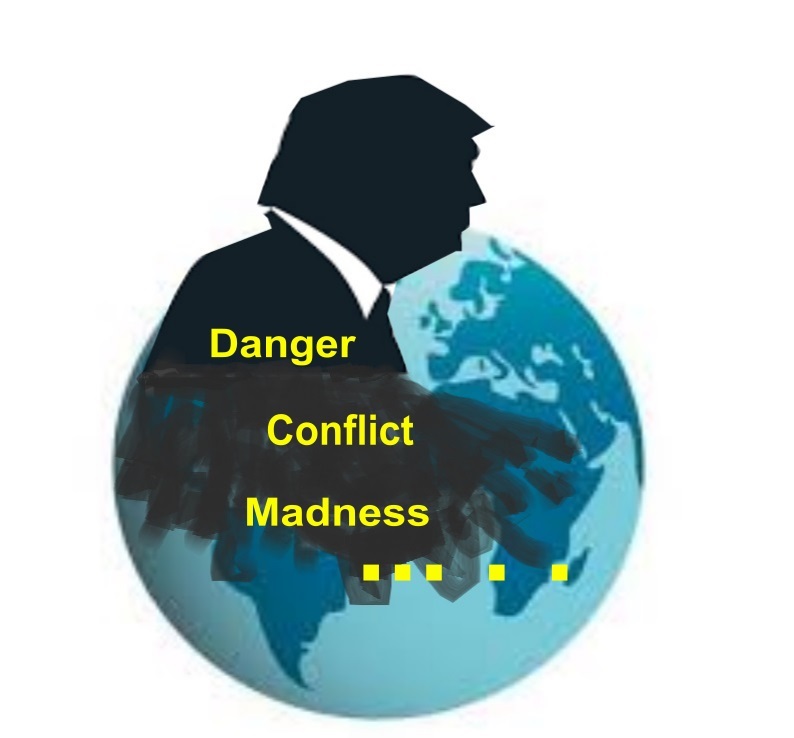
Introduction: How the Trump administration has upended international relations and increased existential risk
By Dan Drollette Jr | September 4, 2025
Proposed tariffs that are the highest in a century. Threatened annexations of other countries. Pulling out of the Paris agreements to fight climate change. Slashes to the funding of public health research. Attacks on higher education (and indeed, any outside source of expertise), along with threats to deport any foreign students or immigrants who don’t toe the line. Cozying up to dictators at the expense of long-time Western allies.
The role of the United States in international affairs is changing dramatically, as the Trump administration imposes a new order upon the planet. It may not be as coherent and coordinated as, say, the Marshall Plan to rebuild Europe after World War II, but the 80-year-old post-war order is clearly morphing into something else, for better or worse.
To help make sense of the thinking behind this new state of affairs, this issue of the Bulletin of the Atomic Scientists includes expert viewpoints from disparate fields—including a top analyst of international security policy, historians, a climate scientist, a college president, a former presidential science adviser, and a Nobel Prize-winning economist. Each examines a different facet of the new new world order that Donald Trump has wrought in his second presidential term.
As Harvard University strategist Graham Allison notes, the current US president enjoys violating rules. Indeed, Allison says, “he [Trump] sees rules and norms as invitations to violation—if by violating the rules he can outrage his audience. In his book The Art of the Deal he explains how if by violating a rule or norm, he can outrage his target audience, they will be less comfortable and thus more willing to give him a better deal than he could get otherwise.”…………………………………………………………………………………………..https://thebulletin.org/premium/2025-09/introduction-how-the-trump-administration-has-upended-international-relations-and-increased-existential-risk/?utm_source=ActiveCampaign&utm_medium=email&utm_content=The%20NEW%2C%20new%20world%20order&utm_campaign=20250901%20Monday%20Newsletter%20%28Copy%29
It’s past time to start protecting U.S. nuclear power reactors from drones.

September 3, 2025
In January, I shared a Bulletin of Atomic Scientists piece with you in which I recommended President Trump protect our nuclear power plants from drone strikes.
In the attached piece, “It’s past time to start protecting U.S. nuclear power reactors from drones,” I return to this topic. Over the last eight months, more drones have overflown American nuclear power plants. Meanwhile, the House Armed Services Committee has proposed legislation authorizing the Secretary of Energy to defend Energy Department-operated nuclear plants against drone attacks.
What’s missing is authority for civilian nuclear power plant operators to protect their plants against such threats. These reactors produce 19 percent of America’s electricity.
In the piece below, I recommend that the congressional committees with jurisdiction over these civilian plants—the energy and homeland security committees—grant the operators similar authority to destroy or disable threatening drones.
I also propose that the Energy Department’s National Nuclear Security Administration launch a “Nuclear Security Initiative” to ensure American reactors don’t become attractive military targets.
NPEC 3rd Sept 2025, https://npolicy.org/its-past-time-to-start-protecting-u-s-nuclear-power-reactors-from-drones/
Trump supports nuclear power as it is ‘more American’ than wind, solar, US official says

By Reuters, September 6, 2025
WASHINGTON, Sept 4 (Reuters) – The Trump administration is more willing to support loan guarantees and tax breaks for nuclear power than for wind and solar because it is “more American” than those forms of energy, the director of the U.S. Energy Dominance Council said on Thursday.
Jarrod Agen said nuclear power is more likely to be made from U.S.-made parts than wind and solar farms, so the administration is more willing to give it financial aid from the U.S. Loan Programs Office and support tax incentives. https://www.reuters.com/business/energy/trump-supports-nuclear-power-it-is-more-american-than-wind-solar-us-official-2025-09-04/
Trump Is Renaming the Defense Department the Department of War

President Trump will sign an executive order on Friday renaming the Department of Defense the Department of War, the White House said, fulfilling his pledge to realign the military’s mission by restoring the name the agency held until shortly after World War II……………… (Subscribers only) https://www.nytimes.com/2025/09/04/us/politics/trump-department-of-war-defense.html?campaign_id=190&emc=edit_ufn_20250904&instance_id=161936&nl=from-the-times®i_id=60047519&segment_id=205306&user_id=432fc0d0ad6543e820e2dfcd39f76c35
The world moves on without Trump

For Trump, being ignored may be worse than being opposed. He thrives on conflict, boasting of tough deals and headline-grabbing summits. But as more leaders refuse his calls, sideline him in negotiations, and leave him off the guest list, the reality sets in: the world can get along without him
3 September 2025 Michael Taylor, https://theaimn.net/the-world-moves-on-without-trump/#comment-12111
President Trump entered his second term promising to “make America respected again.” Yet nearly nine months in, the opposite has happened. Far from restoring U.S. influence, his confrontational diplomacy and transactional worldview have pushed the United States to the margins of global affairs. Allies are charting their own course, rivals are filling the vacuum, and Washington – once the indispensable power – is finding itself ignored.
Canada fights back
Canada, historically one of America’s closest partners, has become a frontline example of this new dynamic. Trump reignited a tariff war in early 2025, slapping duties on Canadian steel, timber, and dairy imports. Ottawa wasted little time retaliating with its own tariffs on U.S. agricultural products and manufactured goods. Instead of cowing Canada into submission, Trump’s threats hardened its resolve. Prime Minister Mark Carney openly declared that Canada “will not be bullied,” signaling a rare breakdown in a relationship that for decades symbolised North American unity.
India hangs up the phone
Trump once basked in his self-styled friendship with Prime Minister Narendra Modi, frequently recalling their joint rally in Houston during his first term. Today, that relationship is in tatters. Indian officials confirm that Modi has not returned several of Trump’s calls in recent weeks, a deliberate snub reflecting New Delhi’s frustration with Washington’s unpredictable trade policies and waning reliability as a strategic partner. For Trump, who prizes personal relationships with world leaders, the silence from Modi is a humiliation.
Excluded from history
Perhaps the most symbolic snub came when China marked the 80th anniversary of the end of World War II – and excluded the United States from the guest list. For decades, Washington had been at the heart of such commemorations, both as a wartime victor and as the principal architect of the postwar international order. This time, however, the stage belonged to the world’s three dominant authoritarian leaders – Xi Jinping, Kim Jong Un, and Vladimir Putin – delivering a stark message: America was no longer considered essential. Trump, clearly agitated at being left out by his supposed “friends,” dismissed it all as a “conspiracy.”
Europe moves on
Across the Atlantic, the European Union is steadily disentangling itself from Washington’s orbit. Frustrated by Trump’s climate skepticism and unilateral tariffs, Brussels has accelerated trade and renewable energy partnerships with Asian economies. Even Britain – long America’s closest ally – launched its own Middle East ceasefire initiative without so much as consulting Washington. The “special relationship” now feels like an afterthought.
Asia hedges
In Asia, longtime U.S. allies Japan and South Korea are building closer defense ties with each other and with Australia. The moves reflect deep concern over Trump’s erratic handling of security commitments, especially his repeated threats to withdraw U.S. troops unless allies pay more for their presence. For decades, Washington was the cornerstone of regional stability; now, partners are learning to do without it.
Africa and Latin America assert independence
The African Union recently declined Trump’s request to address its annual summit, citing his history of disparaging remarks about African nations. Instead, EU and Chinese envoys were welcomed. In Latin America, regional powers including Brazil, Mexico, and Argentina are forging trade agreements that deliberately exclude the United States. Where once Washington dominated hemispheric affairs, its neighbors now treat it as just another power to manage.
The cost of isolation
What unites these developments is not simply Trump’s personal unpopularity, but a structural shift in global politics. For decades after World War II, the United States was seen as indispensable – the partner of first resort in security, trade, and diplomacy. Today, countries are discovering that they can move forward without Washington. Trump’s “America First” doctrine, intended to project strength, has instead revealed weakness: allies no longer trust the U.S., and rivals no longer fear it.
Echoes of decline
There are historical echoes here. Britain, once the world’s preeminent power, found itself increasingly sidelined after World War II as its empire collapsed and the U.S. rose. Now America is experiencing a similar moment. The difference is that while Britain yielded to a trusted ally, the U.S. is ceding ground to China and other powers less committed to liberal democracy.
Trump’s personal frustration
For Trump, being ignored may be worse than being opposed. He thrives on conflict, boasting of tough deals and headline-grabbing summits. But as more leaders refuse his calls, sideline him in negotiations, and leave him off the guest list, the reality sets in: the world can get along without him. For a man who equates personal validation with national success, nothing cuts deeper.
Conclusion
The United States remains a powerful nation, with unmatched military strength and vast economic clout. But power unused wisely is power wasted. Under Trump, Washington has squandered goodwill, alienated allies, and emboldened rivals. The result is a geopolitical landscape where America is no longer central. The world is moving on – and Trump, watching from the sidelines, is discovering the true price of isolation.
Golden Dome is already a turning point for American space policy.
As the space community awaits the upcoming deadline for a Golden Dome architecture, perhaps the biggest story on Golden Dome is how the program is resonating through the industry.
Last month, a new report by the Aerospace Corporation’s Center for Space Policy and Strategy identified Golden Dome (and its prominence within the Trump administration’s fiscal year 2026 defense budget request) as a significant turning point for American space policy, Pentagon spending priorities and the role of the Space Force.
The report said that “the introduction of Golden Dome is arguably the most important development affecting the defense space budget since the inception of the Space Force.”
As SpaceNews’ Sandra Erwin wrote:
For the relatively young Space Force, established in 2019, Golden Dome represents a significant expansion of resources and responsibilities. Sam Wilson, budget analyst at the Center for Space Policy & Strategy and author of the report, views the initiative as creating “a major opportunity for the Space Force as it brings extra resources for some of Space Force’s priorities such as missile warning satellites that the service already was planning to develop.”
“This is an opportunity to get those funded at higher levels,” Wilson told SpaceNews.
The article describes how Golden Dome’s prominence – and the level of attention paid to it – is elevating space issues within broader defense planning. It’s also a program that could benefit new and old space firms alike while calling broader public attention to the military’s role in and influence over space.
Investors feel the same. A note from Capital Alpha Partners this week highlighted that “Golden Dome gave something new for U.S. contractors to talk about and position for,” but so far details are scarce. At last month’s industry summit in Huntsville, Alabama, defense firms got little more than high-level overviews.
“Even if it’s classified, clarity on the architecture may provide something more meaningful for companies to discuss in the October-November earnings season,” the Capital Alpha note read….(Read more at link –
https://spacenews.bluelena.io/index.php?action=social&chash=980ecd059122ce2e50136bda65c25e07.830&s=d7cea81a8b3dc478fa14dbee41fab337)
Widened recall of radioactively contaminate shrimp
The FDA continues to widened a recall of shrimp packages contaminated with radioactive cesium 137. Various theories abound regarding the exact source of the contamination. As of September 2, the recall encompasses grocery stores, distributors, and wholesalers across many states.
Such a recall comes as no shock to many organizations — including Beyond Nuclear — who, in the wake of the 2011 Fukushima meltdowns, have warned about radioactive contamination of food for over a decade. These groups petitioned FDA (2013), and two appeals are currently being made to lawmakers, to reduce the amount of radioisotopes allowed in U.S. food. The U.S. has one of the highest allowable limits worldwide for radiocesium. https://nislappdc.org/wp-content/uploads/2025/08/FFAN-FINAL-release-on-shrimp-recall-1-4-1.pdf
US nuclear safety regulators say their jobs could be at risk under Trump

By Timothy Gardner, September 4, 2025, https://www.reuters.com/world/us/us-nuclear-safety-regulators-say-their-jobs-could-be-risk-under-trump-2025-09-03/
- Summary
- Pressure high on nuclear regulators after Trump orders
- Trump wants to quadruple nuclear power capacity by 2050
- Commissioner: hard to make safety calls if more staff leave
WASHINGTON, Sept 3 (Reuters) – Two of the three remaining commissioners at the Nuclear Regulatory Commission, the U.S. nuclear safety watchdog, told a Senate hearing on Wednesday they feel President Donald Trump could fire them if they obstruct his goal to approve reactors faster.
Trump signed executive orders in May that set goals of fast-tracking new reactor licenses and quadrupling U.S. nuclear energy capacity by 2050 to boost the power grid, while also reducing staffing at the NRC.
Trump later fired Commissioner Chris Hanson, a Democrat, while Commissioner Annie Caputo, a Republican, left in July, saying she wanted to more fully focus on her family. That brought the traditionally five-member panel down to three.
Commissioner Matthew Marzano, a Democrat, told the hearing he felt he could be fired by the administration if he decides a new reactor design is unsafe and declines to license it.
Commissioner Bradley Crowell, also a Democrat, said he felt on “any given day I could be fired by the administration for reasons unknown.”
The White House did not immediately respond to a request for comment.
NRC Chairman David Wright, a Republican, said the agency has five applications from so-called advanced nuclear reactors that it is reviewing and it expects another 25 to 30 soon.
Wright declined to say whether he felt he could be fired, saying it would be “speculation.”
But he said NRC should not approve incomplete applications from companies looking to build new nuclear plants, even if it means missing an 18-month approval deadline set in Trump’s executive orders.
Senator Sheldon Whitehouse, a Democrat who supports nuclear energy for its potential to reduce greenhouse gas emissions, said about a dozen senior level managers at the NRC have left or announced they will leave since January, and that 143 staff departed between January and June.
“It’s a personnel bloodbath,” Whitehouse said. “The industry stands or falls on the NRC’s gold-standard reputation for nuclear safety. It’s now in jeopardy.”
Crowell said if the agency lost any more staff, it would be tough to credibly make safety cases on the timeline in Trump’s orders.
Why NuScale Power Stock Slid 31% Last Month

By Brett Schafer – Sep 3, 2025 ,
https://www.fool.com/investing/2025/09/03/why-nuscale-power-stock-slid-31-last-month/
Key Points
- NuScale Power’s stock has pulled back after a huge gain coming from a recent executive order signing.
- The company has a small modular nuclear reactor approved, but has not won a customer contract.
- The stock trades at an expensive price, even though it generates barely any sales and has no customer wins.
The nuclear energy stock doesn’t generate much in revenue and is losing a lot of money.
Shares of NuScale Power (SMR 8.15%) fell 31% in August, according to data from S&P Global Market Intelligence. The nuclear energy upstart and designer of small modular reactors (SMRs) is experiencing wild gyrations with its stock price. The stock is up 432% in the last year and trades at a market cap of $11.5 billion, even though it generates minimal revenue and is burning a lot of cash.
It’s been a roller-coaster ride for nuclear start-ups
Nuclear energy stocks soared at the beginning of this summer, with the current presidential administration’s push to accelerate the development of nuclear energy to keep up with data center demand around artificial intelligence (AI). President Trump signed an executive order for advanced nuclear reactor technologies, of which NuScale Power is one.
In fact, NuScale Power is the only SMR company to have its design approved by the Nuclear Regulatory Commission (NRC), which could give it a head start in winning customer contracts. However, it has failed so far to win any customer contracts outside prospective contracting from a Romanian power company that’s exploring whether to use SMRs for its upcoming energy needs.
With close to zero revenue and a history of burning cash, NuScale Power is a stock that trades with a ton of volatility. As the air comes out of the post-executive order excitement, it is no surprise to see NuScale Power stock hit a bit of a rough patch. The company has no fundamental basis to anchor its $11.5 billion market cap, which makes it a risky stock to invest in.
NuScale Power’s uncertain future
NuScale Power has a few energy projects in the works that it could potentially win deals on, including a recent proposal from the Tennessee Valley Authority. Bringing these to fruition could help it actually develop an SMR to be deployed in the real world instead of talking about it, which has been all the company has done since its inception.
Even if these projects get approved, NuScale Power won’t generate much in revenue to warrant its $11.5 billion market cap, with revenue not showing up for years due to the long project life for nuclear energy developments. It is foolish to buy a stock valued at over $10 billion that’s generating zero revenue. Therefore, investors should avoid putting NuScale Power in their portfolios, given its uncertain future.
U.S. Government Is Taking Historic Steps To Restart Nuclear Plants
The Nuclear Regulatory Commission is considering allowing a Michigan
nuclear plant to restart after approving in July its first such plant
resumption with Palisades Nuclear Plant to increase U.S. energy output for
data centers. The NRC held a series of public meetings from July 31 through
August 6 to gather feedback about enabling a restart of a former Three Mile
Island Unit 1 that permanently stopped operating after 40 years in
September 2019.
Forbes 28th Aug 2025, https://www.forbes.com/sites/noelfletcher/2025/08/28/us-government-is-taking-historic-steps-to-restart-nuclear-plants/
Why won’t 519 other congresspersons join Rep. Marjorie Taylor Green and 13 other congresspersons in condemning US enabled Israeli genocide in Gaza?
Walt Zlotow, West Suburban Peace Coalition, Glen Ellyn IL, 29 Aug 25.
Only 14 of Congress’s 533 members (2 vacancies) are correctly calling Israel’s genocide in Gaza… genocide and calling for end to all US weapons fueling that genocide.
The most impassioned and articulate in condemning the most grotesque US foreign policy in its 250 years is Georgia Republican Marjorie Taylor Green. She doesn’t hold back while the 519 congresspersons who dare not jeopardize their standing with the Israel Lobby cower in the background. “I don’t know about you, but I don’t want to pay for genocide in a foreign country against a foreign people for a foreign war that I had nothing to do with. And I will not be silent about it.”
Greene is an outlier in the Israeli genocide loving Republican Party. All 272 other Republicans in the House and Senate want nothing to do with Greene’s principled stance.
Democrats are just a tad better. The other 13 congresspersons condemning Israel’s genocide and calling or end to all US weapons fueling it are Democrats. But that is only 5% of 260 Democrats in Congress, a sorrowful indictment of the so called progressive party. Supporting genocide is not progressive. It is ghastly.
My peace organization West Suburban Peace Coalition in Glen Ellyn IL in the IL 6th District, reached out to our Congressman Sean Casten in January, 2024 and this month on Zoom regarding the genocide. He refuses to join the morally centered congresspersons calling the genocide what it is and demanding end to all genocide weapons to Israel. He continues to claim he’s “doing everything he can to end the suffering of the Palestinian people.” Nonsense, he doing nothing except engaging in ‘happy talk’ designed to lull his constituents into believing he cares about a people being wiped out of their homeland with his tacit cooperation.
My appeal to Congressman Casten including this appropriate warning. “Congressman Casten, please do not let ignoring the genocide you surely know is happening remain a stain on your congressional resume for one more day during your congressional career.”
Sadly, my Congressman Sean Casten remains in league with the other 518 congresspersons who refuse to stand up against the Israeli genocide their government, of which they are members of and are complicit with, is supporting.
The Detached Cruelty of Air Power- From Guernica to Gaza Mass Killers Have Been Above It All .
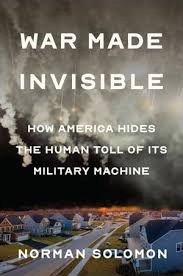
The increasing American reliance on air power rather than combat troops has shifted the concept of what it means to be “at war.”…………… congressional approval was unnecessary since the United States wasn’t actually engaged in military “hostilities” — because no Americans were dying in the process.
By Norman Solomon, August 28, 2025
Killing from the sky has long offered the sort of detachment that warfare on the ground can’t match. Far from its victims, air power remains the height of modernity. And yet, as the monk Thomas Merton concluded in a poem, using the voice of a Nazi commandant, “Do not think yourself better because you burn up friends and enemies with long-range missiles without ever seeing what you have done”
Nine decades have passed since aerial technology first began notably assisting warmakers. Midway through the 1930s, when Benito Mussolini sent Italy’s air force into action during the invasion of Ethiopia, hospitals were among its main targets. Soon afterward, in April 1937, the fascist militaries of Germany and Italy dropped bombs on a Spanish town with a name that quickly became a synonym for the slaughter of civilians: Guernica.
Within weeks, Pablo Picasso’s painting “Guernica” was on public display, boosting global revulsion at such barbarism. When World War Two began in September 1939, the default assumption was that bombing population centers — terrorizing and killing civilians — was beyond the pale. But during the next several years, such bombing became standard operating procedure.

Dispensed from the air, systematic cruelty only escalated with time. The blitz by Germany’s Luftwaffe took more than 43,500 civilian lives in Britain. As the Allies gained the upper hand, the names of certain cities went into history for their bomb-generated firestorms and then radioactive infernos. In Germany: Hamburg, Cologne, and Dresden. In Japan: Tokyo, Hiroshima, and Nagasaki.
“Between 300,000-600,000 German civilians and over 200,000 Japanese civilians were killed by allied bombing during the Second World War, most as a result of raids intentionally targeted against civilians themselves,” according to the documentation of scholar Alex J. Bellamy. Contrary to traditional narratives, “the British and American governments were clearly intent on targeting civilians,” but “they refused to admit that this was their purpose and devised elaborate arguments to claim that they were not targeting civilians.”
Past Atrocities Excusing New Ones
As the New York Times reported in October 2023, three weeks into the war in Gaza, “It became evident to U.S. officials that Israeli leaders believed mass civilian casualties were an acceptable price in the military campaign. In private conversations with American counterparts, Israeli officials referred to how the United States and other allied powers resorted to devastating bombings in Germany and Japan during World War II — including the dropping of the two atomic warheads in Hiroshima and Nagasaki — to try to defeat those countries.”
Prime Minister Benjamin Netanyahu told President Joe Biden much the same thing, while shrugging off concerns about Israel’s merciless killing of civilians in Gaza. “Well,” Biden recalled him saying, “you carpet-bombed Germany. You dropped the atom bomb. A lot of civilians died.”
Apologists for Israel’s genocide in Gaza have continued to invoke just such a rationale…………………………………………………………………….
The United Nations has reported that women and children account for nearly 70% of the verified deaths of Palestinians in Gaza. The capacity to keep massacring civilians there mainly depends on the Israeli Air Force (well supplied with planes and weaponry by the United States), which proudly declares that “it is often due to the IAF’s aerial superiority and advancement that its squadrons are able to conduct a large portion” of the Israeli military’s “operational activities.”
The “Grace and Panache” of the “Indispensable Nation”
The benefactor making possible Israel’s military prowess, the U.S. government, has compiled a gruesome record of its own in this century. An ominous undertone, foreshadowing the unchecked slaughter to come, could be heard on October 8, 2023, the day after the Hamas attack on Israel resulted in close to 1,200 deaths. “This is Israel’s 9/11,” the Israeli ambassador to the United Nations said outside the chambers of the Security Council, while the country’s ambassador to the United States told PBS viewers that “this is, as someone said, our 9/11.”
Loyal to the “war on terror” brand, the American media establishment gave remarkably short shrift to concerns about civilian deaths and suffering. The official pretense was that (of course!) the very latest weaponry meshed with high moral purpose. When the U.S. launched its “shock and awe” air assault on Baghdad to begin the Iraq War in March 2003, “it was a breathtaking display of firepower,” anchor Tom Brokaw told NBC viewers with unintended irony. Another network correspondent reported “a tremendous light show here, just a tremendous light show.”
As the U.S. occupation of Iraq took hold later that year, New York Times correspondent Dexter Filkins (who now covers military matters for The New Yorker) was laudatory on the newspaper’s front page as he reported on the Black Hawk and Apache helicopter gunships flying over Baghdad “with such grace and panache.” Routine reverence for America’s high-tech arsenal of air power has remained in sync with the assumption that, in the hands of Uncle Sam, the world’s greatest aerospace technologies would be used for the greatest good.
In a 2014 commencement speech at West Point, President Barack Obama proclaimed: “The United States is and remains the one indispensable nation. That has been true for the century passed and it will be true for the century to come.”
After launching two major invasions and occupations in this century, the United States was hardly on high moral ground when it condemned Russia for its invasion of Ukraine in February 2022 and frequent bombing of that country’s major cities. Seven months after the invasion began, President Vladimir Putin tried to justify his reckless nuclear threats by alarmingly insisting that the atomic bombings of Japan had established a “precedent.”
Whoever Doesn’t Count Goes Uncounted
…………………………………………………………………………………………………………………………….. Normal and Lethal
When Shakira and Guljumma lost relatives to bombs that arrived courtesy of the U.S. taxpayer, their loved ones were not even numbers to the Pentagon. Instead, meticulous estimates have come from the Costs of War project at Brown University, which puts “the number of people killed directly in the violence of the post-9/11 wars in Afghanistan, Pakistan, Iraq, Syria, Yemen, and elsewhere” at upwards of 905,000 — with 45% of them civilians. “Several times as many more have been killed as a reverberating effect of the wars — because, for example, of water loss, sewage and other infrastructural issues, and war-related disease.”
The increasing American reliance on air power rather than combat troops has shifted the concept of what it means to be “at war.” After three months of leading NATO’s bombing of Libya in 2011, for instance, the U.S. government had already spent $1 billion on the effort, with far more to come. But the Obama administration insisted that congressional approval was unnecessary since the United States wasn’t actually engaged in military “hostilities” — because no Americans were dying in the process.
………………………………………………………………………………….the nation’s actions targeting Libya involved “no U.S. ground presence or, to this point, U.S. casualties.” Nor was there “a threat of significant U.S. casualties.” The idea was that it’s not really a war if Americans are above it all and aren’t dying………………………………………
in a September 2021 speech at the United Nations soon after the last American troops had left Afghanistan, President Biden said: “I stand here today, for the first time in 20 years, with the United States not at war.” In other words, American troops weren’t dying in noticeable numbers. Costs of War project co-director Catherine Lutz pointed out in the same month that U.S. engagement in military actions “continues in over 80 countries.”
…………………the Biden and Trump administrations have directly sent bombers and missiles over quite a few horizons, including in Yemen, Iraq, Syria, Somalia, and Iran.
Less directly, but with horrific ongoing consequences, stepped-up U.S. military aid to Israel has enabled its air power to systematically kill Palestinian children, women, and men with the kind of industrial efficiency that fascist leaders of the 1930s and 1940s might have admired. The daily horrors in Gaza still echo the day when bombs fell on Guernica. But the scale of the carnage is much bigger and unrelenting in Gaza, where atrocities continue without letup, while the world looks on. https://tomdispatch.com/from-guernica-to-gaza/
Donald Trump’s assault on U.S. nuclear watchdog raises safety concerns
Donald Trump’s attack on the independence of the US nuclear safety watchdog
has accelerated a severe “brain drain” at the agency, raising the risks
of future accidents, former officials have warned. Almost 200 people have
left the US Nuclear Regulatory Commission since the president’s
inauguration in January, and the pace of executive departures shows little
sign of slowing with the resignation of the agency’s director of nuclear
security and its general counsel.
Nearly half of the agency’s 28-strong
senior leadership team has been installed in an “acting” capacity, and
only three of five NRC commissioner roles are occupied. Trump sacked
commissioner Christopher Hanson in June and Annie Caputo resigned
unexpectedly last month. “It is an unprecedented situation with some
senior leaders having been forced out and many others leaving for early
retirement or worse, resignation,” Scott Morris, the former NRC deputy
executive director of operations who retired in May, said in an interview.
FT 28th Aug 2025, https://www.ft.com/content/f082e338-d4bf-4b5b-882d-09a8795a93ef
1 This Month





PLEASE OPPOSE HR 8255 AND S.3639 – bills would accelerate satellite deployment, with no environmental review or safeguards – https://ncstd5li.quorum.us/campaign/169331/
To see nuclear-related stories in greater depth and intensity – go to https://nuclearinformation.wordpress.com
-
Archives
- October 2026 (39)
- September 2026 (339)
- August 2026 (330)
- July 2026 (355)
- June 2026 (287)
- May 2026 (306)
- April 2026 (356)
- March 2026 (251)
- February 2026 (267)
- January 2026 (308)
- December 2025 (358)
- November 2025 (359)
-
Categories
- 1
- 1 NUCLEAR ISSUES
- business and costs
- climate change
- culture and arts
- ENERGY
- environment
- health
- history
- indigenous issues
- Legal
- marketing of nuclear
- media
- opposition to nuclear
- PERSONAL STORIES
- politics
- politics international
- Religion and ethics
- safety
- secrets,lies and civil liberties
- spinbuster
- technology
- Uranium
- wastes
- weapons and war
- Women
- 2 WORLD
- ACTION
- AFRICA
- Atrocities
- AUSTRALIA
- Christina's notes
- Christina's themes
- culture and arts
- Events
- Fuk 2022
- Fuk 2023
- Fukushima 2017
- Fukushima 2018
- fukushima 2019
- Fukushima 2020
- Fukushima 2021
- general
- global warming
- Humour (God we need it)
- Nuclear
- RARE EARTHS
- Reference
- resources – print
- Resources -audiovicual
- Weekly Newsletter
- World
- World Nuclear
- YouTube
-
RSS
Entries RSS
Comments RSS

