Trump Turns Pentagon Into Department of War on First Amendment
Ari Paul, 22 Sept 25, https://fair.org/home/trump-turns-pentagon-into-department-of-war-on-first-amendment/
The Trump administration has said it will require Pentagon reporters to “pledge they won’t gather any information—even unclassified—that hasn’t been expressly authorized for release, and will revoke the press credentials of those who do not obey,” the Washington Post (9/19/25) reported. It added that even being in possession of “confidential or unauthorized information, under the new rules, would be grounds for a journalist’s press pass to be revoked.”
The National Press Club (NBC, 9/20/25) called the rules “a direct assault on independent journalism at the very place where independent scrutiny matters most: the US military.’” Even right-wing provocateur James O’Keefe (The Hill, 9/20/25) came out against the restrictions, saying the US government “should not be asking us to obey.”
Other Trump loyalists stood with the government decision. “For too long, the halls of the Pentagon have been treated like a playground for journalists hungry for gossip, leaks and half-truths,” long-time Republican activist Ken Blackwell said on Facebook (9/20/25). He added that “reporters have strutted around the building like they owned it.”
The authoritarian impulse
The US government has always been aggressive when it comes to undermining the press’s ability to obtain government information, especially when it pertains to national security. The pooling system for frontline correspondents in the first US war against Iraq in 1990–91 has long been considered one of the most draconian acts of wartime censorship in recent US imperial memory. The US under the elder President George Bush regularly detained press who dared to report on the war independently and without the restraint of government minders (New York Times, 2/12/91; Human Rights Watch, 2/27/91).
This authoritarian impulse only accelerated in the post-9/11 age (Extra!, 9/11). The Justice Department under then-President Barack Obama obtained “two months of telephone records of reporters and editors for the Associated Press,” AP (5/13/13) reported, in an apparent “investigation into who may have leaked information contained in a May 7, 2012, AP story about a foiled terror plot.”
Former New York Times journalist James Risen (Intercept, 1/3/18) documented his ordeal with the Obama and George W. Bush administrations, which took legal action against him to force him to release sources:………………………
Full-throttle attack
The new Trump directive transcends this already anti-democratic tradition of suppressing national security and military information, and takes the nation into new authoritarian and absurd territory.
For one thing, telling Pentagon reporters to avoid unreleased information is like telling a fish to avoid water. Recall that top Trump administration officials accidentally included Atlantic editor-in-chief Jeffrey Goldberg in a Signal chat about an attack on Yemen. To quote Mark Wahlberg from The Departed, “Unfortunately, this shithole has more fuckin’ leaks than the Iraqi navy.”
Now the Pentagon is saying it will only credential reporters if they promise to be stenographers for the department’s press team, regurgitating press releases and spokesperson talking points, and avoid independent interviews and investigations. This is happening as the White House has iced out reporters from the AP for not relabeling an international body of water at the president’s directive (FAIR.org, 2/18/25), while bringing administration sycophants like Brian Glenn and Tim Pool into the presidential press herd.
Journalist access is only one piece of the Trump administration’s full-throttle attack on the free press. The president “said overwhelming negative coverage of him by television networks should be grounds for the Federal Communications Commission to revoke broadcast licenses” (USA Today, 9/18/25). He threatened ABC’s Jon Karl, saying the attorney general will “probably go after people like you, because you treat me so unfairly” (Deadline, 9/16/25). More television and online new outlets are coming under the ownership umbrella of Trump allies (FAIR.org, 9/19/25).
Imperial bellicosity
IT is especially chilling that this directive came from the Pentagon. The US has the most powerful military in the world, and it is the taxpayer’s largest expense after Social Security. Despite assurances from right-wing media that Trump would be a peace president (Compact, 4/7/23), he is in fact delivering a ferocious brand of imperial bellicosity.
Trump carried out nearly as many airstrikes in the first six months of his second term as the hawkish Joe Biden did in four years (Independent, 7/15/25). Almost as many civilians were killed in his attacks on Yemen as were previously killed in two decades of strikes against that nation (Airwars, 6/17/25).
Trump dropped 14 of the world’s biggest non-nuclear bombs on Iran, weapons that had never been used against an enemy before. He boasted of using the military to murder supposed Venezuelan drug smugglers, hundreds of miles from US shores. He resumed shipments of 2,000-pound bombs to Israel, even as he encouraged Tel Aviv to ethnically cleanse Palestinians from Gaza (Guardian, 1/26/25).
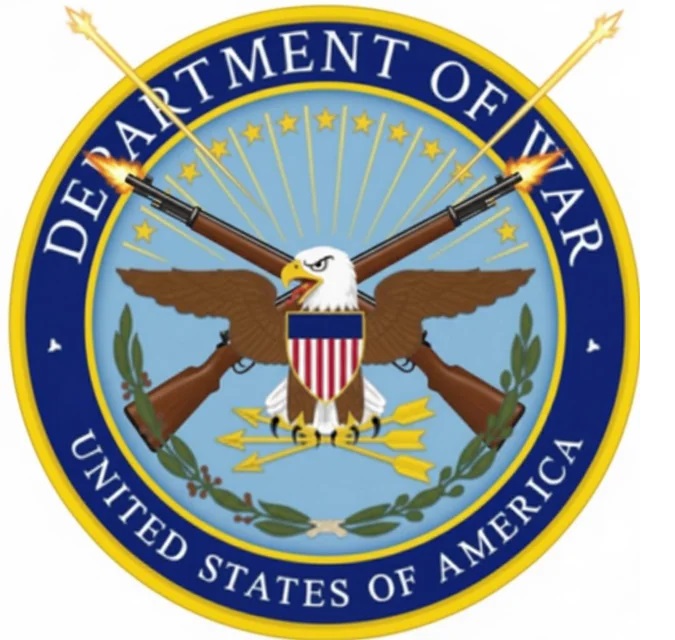
Meanwhile, he’s deployed the military domestically, vowing to use it to carry out mass deportations , renaming the Department of Defense to the Department of War, firing top officers who disagree with him.
If there’s ever been a time when we need an independent press keeping a close eye on the military, and listening to dissenting voices, it’s now.
Resisting Pentagon dictates
Thankfully, some news organizations are speaking out against the Pentagon’s new edict (Reuters, 9/21/25; CNN, 9/22/25). The New York Times called it an “attempt to throttle the public’s right to understand what their government is doing”; the Washington Post said that “any attempt to control messaging and curb access by the government is counter to the First Amendment and against the public interest.”All major news organizations can and should fight this, in the public and in court; a ban on reporting any unauthorized information clearly violates the First Amendment, and any prior restraint is regarded as constitutionally suspicious.
News outlets should also bear in mind that reporting on the military does not necessarily require being physically present in the Pentagon. As the brave correspondents showed who defied the US military’s patronizing pooling system in the Gulf War, some of the best reporting is done outside official channels. An independent press corps with no physical access to the Pentagon is infinitely more valuable to democracy than a press corps that has pledged to only report officially sanctioned news.
Trump’s nuclear ‘renaissance’ rests on risky plan for radioactive waste

The administration goes all-in on recycling spent fuel despite a history of spectacular mishaps, including an unintentional atom bomb.
By Evan Halper, 23 Sept 25, https://www.washingtonpost.com/business/2025/09/22/trump-nuclear-waste-recycling-risk/
The Trump administration’s plan to fast-track construction of new commercial nuclearreactors to address a power cruncharound the country leans heavily on a small group of start-ups trumpeting a bold claim: that they can make almost all of these operations’ radioactive waste disappear.
That effort is already underway, with a company called Oklo announcing this month that it will spend $1.7 billionto build an “Advanced Fuel Center” made upof shiny, futuristic buildings on a Tennessee plot where uranium was enriched for the Manhattan Project more than 80 years ago. The first phase of the development, to be completed in the next five to seven years, will use nascent recycling machinery to spin radioactive reactor waste into fresh, usable fuel for plants.

Industry and administration officials also plan to recycle into reactor fuel plutonium retrieved from dismantled nuclear weapons, one of the most dangerous materials on the planet. The projects follow a decades-long pursuit of nuclear energy recycling in the U.S. with a history of spectacular failures, including inadvertently helping a renegade nation build an atomic bomb.
Even as some prominent nuclear scientists warn that Oklo and other start-ups are glossing over major shortcomings in their technology, the companies argue the effort is key to securing enough energy to beat China in artificial intelligence innovation.
Oklo presents nuclear recycling as a tidy process: Waste gets reformulated into fuel, the nuisance of spent-fuel stockpiles goes away, and a small amount of unusable radioactive material is safely buried, perhaps in compact canisters tubed thousands of feet into the Earth’s crust.
“We’re moving forward to actually bring this to scale and realizing the benefits of it,” said Oklo CEO Jacob DeWitte.
Nonproliferation groups and prominent nuclear scholarsoppose those plans. They say neither the companies nor the administration has shared the science backing the claim that recycling nuclear fuel at commercial scale using current industry techniques is safe or practical.
The Nuclear Regulatory Commission has redacted Oklo’s entire project plan at the company’s request. The findings from testing at federal government labs by Oklo’s main rival, a firm called Curio, are kept confidential, citing security concerns.
But the details that are public so far, experts say, don’t seem to break new ground.
“These are the same technologies that were developed and rejected decades ago,” said Ross Matzkin-Bridger, a senior adviser at the Energy Department during the Biden administration who now heads the Nuclear Materials Security Program at the nonprofit Nuclear Threat Initiative. “They have been rebranded with new names and slight tweaks, but they still have the same problems. The only thing new is misleading narratives that they have solved the safety, security and waste-management issues that make these technologies unworkable.”
If recycling spent fuel is possible, it would solve a real problem.Some 90,000 metric tons of radioactive spent fuel sits mostly in casks outside operating and retired plants. Were it all in one place, storing it could require a facility sprawling dozens of acres.
Spent nuclear fuel storage sites
More than 90,000 metric tons of radioactive spent fuel from commercial reactors sits in storage containers scattered across the country on the properties of the nation’s operating and retired nuclear plants.
“All of that spent uranium fuel from our reactors today is just a growing liability for our country,” Energy Secretary Chris Wright said at a congressional hearing in May. Calling it “a growing burden,” he said, “A lot of this waste and burden right now could actually be fuel and could be of value to next-generation reactors.”
Days later, President Donald Trump signed an executive order calling for the quadrupling of nuclear power in the U.S. and directing his Cabinet to “utilize all available legal authorities” to enable large-scale recycling of nuclear waste. Meeting that goal requires deployment of hundreds of new reactors in communities across the country.
DeWitte,Oklo’s CEO, was in the Oval Office for the signing. Before becoming energy secretary, Wright sat on Oklo’s board. He resigned in February and forfeited his unvested shares in the firm. He pledged in his government ethics disclosures to “not participate personally and substantially” in any government matters involving Oklo.

Both Oklo’s and Curio’s methods involve putting either spent fuel rodsor material recovered from theminto molten salt and using an electric current to separate out usable fuel. The technique, called “pyroprocessing,” was first developed in the Argonne National Laboratory in the 1960s, but worries about the immense cost and the risks that the process would create weapons-grade materials kept it from being deployed commercially.
Curio also converts uranium directly from spent fuel rods into a gas it says can be enriched into fuel.
DeWitte argues that the recycling process can now be completed more safely and affordably,in part because it could be used in a new generation of nuclear reactors that would not require as high a level of fuel purity as the existing fleet does. Oklo and Curioalso say new safeguards make the technology impractical for weapons production, a central claim that critics say is not backed by the research they’ve seen.
“We didn’t try to go about doing this the way that others have looked at this and which hasn’t really worked out well in the past,” said DeWitte. Earlier commercial efforts separated out usable fuel from spent rods using acid instead of molten salt, a process the start-ups say is more costly and environmentally harmful.
The advanced reactors Oklo hopes to fuel don’t yet exist in the United States. Only Russia and China have such commercial “generation IV” reactors, at deeply subsidized demonstration plants. Test reactors have been built in the U.S. and in Britain, but cost overruns and engineering setbacks have long scuttled plans to bring them to market and forced developers to push back target dates for their projects. Oklo is now attempting to build the first such commercially viable reactor at the Idaho National Laboratory by late 2027.
More than 90 percent of the energy innuclear fuel rods currently goes to waste because conventional reactors cannot extract it before it becomes mechanically useless, according to the Energy Department. Promoters of recycling argue that is like building a Porsche and junking it after one lap around the track. Skeptics have their own car metaphor: They argue that the latest iteration of the technology is just a new paint job on the same old, un-roadworthy jalopy.
Former energy secretary Ernest Moniz, an MIT physicist, warns that the administration’spush to recycle plutonium from dismantled warheads is particularly worrisome, threatening to create material that can be used in weapons in the U.S. and abroad, drive up the cost of nuclear power, and raise the risk of a dangerous radioactive incident. “None of these concerns have been addressed convincingly by new technology, and reviving ideas that have not worked in the past is particularly ill-timed now,” he said in a statement.
Those concerns are echoed in a letter that 17 prominent nuclear scholars, nongovernmental organization leaders and former nuclear regulators sent to congressional committee chairs in July, warning that the U.S. could “unintentionally foster the spread of sensitive nuclear weapons-related technology.”
The United States largely abandoned efforts to recycle waste for civilian reactors during the Carter administration, after technology shared with India was used by that country to create its first nuclear weapon, according to Frank von Hippel, co-founder of the Program on Science and Global Security at Princeton University. The recycling machinery the U.S. helped India build through the “Atoms for Peace” program enabled scientists there to separate plutonium from spent reactor fuel, he said, a key step to making a bomb.
The companies now promoting recycling have launched a public relations blitz to convince lawmakers and the public that those risks are obsolete, despite experts like von Hippel arguing otherwise.
At Curio’s headquarters in Washington, an office decorated with mid-century nuclear posters and other artifacts from the atomic era’s heyday, CEO Edward McGinnis explained his company’s solution.
“We want to make sure that we have a security barrier,” McGinnis, who was a top nuclear and nonproliferation adviser in previous administrations, said as he walked a reporter through a model of the technology. “It is self-protecting. If you attempted to get to that plutonium to use it for bad purposes, you’d probably die trying.”
The industry has won over the Trump administration.
“A couple years ago, we would have never thought about using plutonium in reactors,” Bradley Williams, the lead for energy policy at the Idaho National Laboratory, where the administration is pursuing recycling research in partnership with companies, said at a recent industry event promoting recycling. “Now it might be a necessity.”
He said the challenge of producing enough fuel to power all the new reactors needed to meet America’s surging demand for energymay require it, as the nation seeks to win a global race to develop artificial intelligence and revive its manufacturing sector. “If the U.S. is going to quadruple nuclear production by 2050, fuel availability is quickly becoming the key issue,” Williams said.
“Fuel availability and energy security are the new national security interest and our focus in light of [competition with] Russia and China,” he said. “Nonproliferation is something we continue to worry about. But I’d argue that most of the world is more worried about keeping the lights on right now, and they’ll use whatever fuel they can get, and we might need to use every fuel we can get.”
That enthusiasm has spread to the states. Curio, which is also prospecting for a site to build a football-field-size spent-fuel recycling plant where nuclear waste would be shipped from around the nation, says officials in several states are courting the firm.
It’s a marked turnabout from the first Trump administration, which pulled the plug in 2018 on a planned plutonium recycling facility in South Carolina after nearly $6 billion in tax dollars was spent on building it. The project’s cost had more than tripled by then, and its estimated completion date, according to the Government Accountability Office, had been extended to as late as 2048 — “a potential delay of nearly 32 years.”
Britain invested decades in a project intended to recycle uranium and plutonium for the type of next-generation nuclear reactors Curio and Oklo are now targeting.
But the new reactors did not work out as planned, beset by engineering challenges and cost overruns. And the recycling systems were constantly breaking down. By the early 2000s, it was significantly more expensive to try to recycle spent fuel in the U.K. than to dispose of it at storage facilities. As a result of the failed recycling efforts, the nation was left with one of the world’s largest stockpiles of plutonium, and no place to put it.
Japan has had similar problems. A facility it planned to open in the 1990s is still not producing fuel, after its cost exploded to $27 billion. France, which uses an acid process to recycle spent fuel on a large scale, has had more success. But, according to nuclear energy economists, it requiresbillions of dollars of subsidies and highly secure facilities to keep plutonium from getting into the wrong hands.
The administration projects confidence those issues are being solved, arguing that perfecting the technology is a national imperative at a time when the U.S. is growing ever more desperate for solutions to its power crunch and its nuclear waste problem.
Recycling can’t turn all of the waste into fuel. The small amount left at the end of the process is highly radioactive and challenging to dispose of. That has companies exploring technologies to put such waste in canisters that can be sent into boreholes drilled as deep as 15,000 feet underground — a solution on paper, but one that may be no more appealing to the public than forgoing recycling altogether and building a national repository for all nuclear plant waste.
“The idea that it will be more politically acceptable to build reprocessing plants that are handling intensively radioactive materials, and that also require their own waste repository, doesn’t make any sense to me,” said Matthew Bunn, a nuclear and energy policy scholar at Harvard.
States courting the projects are largely ignoring such warnings. Rep. Chuck Fleischmann, a Republican from Tennessee who co-chairs the House Nuclear Cleanup Caucus, said Oklo is just one of several recycling outfits looking to locate in his district, and he welcomes the interest. He’s convinced that the technology is no longer risky.
Utah is also positioning to go all-in, after the state’s Office of Energy Development declared in a report that “the risks of recycling are primarily political in nature, all technical risks can and already are being navigated safely around the world.” -[???]
Curio’s McGinnis got little pushback from lawmakers there when he made his pitch at a legislative hearing last fall. Following his presentation, Utah state Sen. David P. Hinkins, a Republican from Orangeville, pronounced: “You’re welcome here.”
Nuke Power is Trump/Fascist Power…and an Epic Global Failure.

Karl Grossman – Harvey Wasserman, 15 Sept 25, https://www.counterpunch.org/2025/09/15/nuke-power-is-trump-fascist-powerand-an-epic-global-failure/
Donald Trump has torched atomic power’s last illusion of credible regulation. He’s destroyed the last shreds of the U.S. Nuclear Regulatory Commission, exponentially raising the likelihood of an apocalyptic radioactive disaster while escalating America’s transition to energy fascism. His nuclear boosterism has been joined by the core of the Democratic Party, including California’s Governor Gavin Newsom among many others.
But the low-cost zero-carbon tsunami of green Solartopian technology may yet prove unstoppable in the marketplace.
For the first time in US history, a president has fired a sitting NRC commissioner. Another has resigned. A DOGE flunky with zero nuclear expertise has decimated the NRC’s technical support staff.
The NRC has always acted, as the Boston Globe has put it, “more like an industry booster than a watchdog.” But a recent Washington Examiner headline may comprise the Commission’s ultimate epitaph: “Regulators fear dismissal if they slow Trump nuclear power plans.”
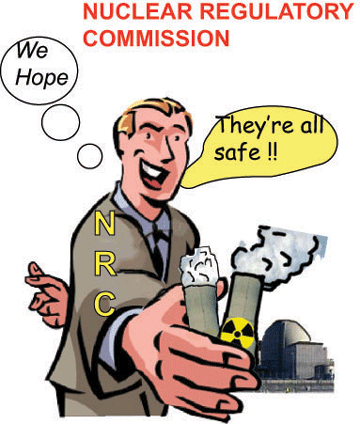
The commissioners themselves have nearly all been absurdly industry-friendly. But the rank-and-file NRC staff offered significant expertise. Now even that is gone.

Trump now loudly demands the commissioners “rubber stamp” Small Modular Reactors that are untested, unproven, uninsured and hyper-expensive. Industry supporters worry that soaring delays and prices followed by underperformance, accidents and radiation releases due to unreliable, unregulated construction could doom the technology.
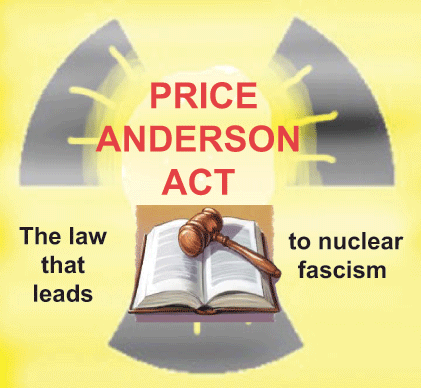
Safety concerns have been confirmed by the refusal of the insurance industry to cover damages from an accident. The refusal stretches back to 1957, when Congress approved the Price-Anderson Act, shielding the industry from a requirement to get private insurance. Thus the “nuclear clause” in every U.S. homeowners policy says: “This policy does not cover loss or damage caused by nuclear reaction or nuclear radiation or radioactive contamination.”
“The NRC has always been a nuclear lapdog, not a watchdog. But under the Trump Administration’s new executive orders” expediting a drive for nuclear power in the U.S. “the lapdog has had its teeth removed. Its vocal cords cut. It can’t bite. It can’t bark, even if it wanted to!” said Arnie Gundersen, a form top executive in the nuclear power industry and now as chief engineer of Fairewinds Associates a leading challenger nuclear power.
As the orders, notes the U.S. Department of Energy, state: “The executive orders instruct the U.S. Nuclear Regulatory Commission to create an expedited pathway to approve reactors” and “expand American nuclear energy capacity from around 100 GW [gigawatts] today to 400 GW by 2050.”
Under Trump, “Nuclear safety is in complete free fall at NRC, and there is no parachute,” said Kevin Kamps, radioactive waste specialist at the organization Beyond Nuclear. “For example, the agency’s staff and licensing board have already shockingly approved an unprecedented, extremely risky restart of the closed Palisades nuclear power plant in Michigan. To restore the operating license, the NRC cobbled together an ad hoc and convoluted regulatory pathway in close collusion with Palisades’ owner, reckless Holtec International. Holtec has zero experience or competence with operating a reactor, repairing one, building or restarting one, let alone at a problem-plagued nuclear lemon like Palisades.”

Palisades is “a badly designed, poorly built, and now dangerously age-degraded 60-year-old reactor that cannot begin to meet modern-day safety standards, which are themselves under serious attack by Trump, DOGE, and the industry,” said Kamps. “If the NRC commissioners reject our appeals and rubberstamp Palisades’ unneeded restart, it will risk a Chornobyl- or Fukushima-scale radioactive catastrophe, an existential threat to 21 percent of the entire planet’s surface freshwater supply, the Great Lakes.”
Further, by approving the Palisades restart, the NRC appears to be getting ready to approve “copycat closed reactor restarts at Three Mile Island-1 nuclear power plant in Pennsylvania, and the Duane Arnold nuclear power plant in Iowa,” he said.
Said Tim Judson, executive director of the Nuclear Information and Resource Service: “The atmosphere in the agency is clearly one where people who speak out will likely be first on the DOGE reduction-in-force list and everyone left is on notice that they could be next. As much as the chilling effect, my concern is also that inspections and enforcement could well be ending. Even if they keep resident inspectors at reactors to comply with the Atomic Energy Act, they may be taken off inspection duty and told to work on license applications and rewriting the regulations.”
Said Michel Lee, chairman of the Council on Intelligent Energy & Conservation Policy:
“To truly understand the developing safety and security threat, you have to connect the dots.”
“First you have the series of Trump executive orders demanding a rushed buildout of the nuclear-military-industrial complex. These orders and other actions being undertaken by administration, especially DOGE, are effectively dismantling the nation’s long-established nuclear regulatory scheme,” said Lee, an attorney.
“Cost-benefit analysis is being directed to focus on the ‘benefits’ of nuclear,” she continued. “Transparency is being drastically reduced. The Nuclear Regulatory Commission is being ‘reformed,’ and its mission now explicitly includes ‘facilitating nuclear power.’ The Department of Energy and the Department of Defense—apparently now the “Department of War”—are now designated as facilitators in the processing of nuclear reactor license applications. This whole enterprise is stated as needed for national security and to promote energy intensive industries, namely AI.”
“So, all that is worrisome enough. Now connect the dots with the demolition derby going on across the broader federal regulatory landscape, with other independent agencies and boards deemed no longer independent and the vast numbers of federal employees—the ones not laid off—losing labor union rights and protections,” said Lee. “Connect the dots and draw your own picture.”
Among the complex of 94 licensed nuclear power plants in the United States, the myriad owners display wildly varying levels of competence, corruption and criminal behavior.
In the 1979 Three Mile Island disaster, the NRC and plant owners lied about radiation releases, their health impacts, and the reactor’s melted core. They produced no credible epidemiological studies of radiation impacts on nearby downwinders but still claim without basis that “no one was harmed.”
In California, NRC resident site inspector Dr. Michael Peck was purged by the NRC for warning that Diablo Canyon’s reactors cannot withstand a credible earthquake. His warning was trashed. Had any of the many large earthquakes that have recently shaken our planet hit in central California in the fault-studded area where Diablo Canyon is located, downwind Los Angeles could now be a radioactive wasteland.
Diablo’s owner, Pacific Gas & Electric, has pleaded guilty to 92 federal manslaughter felonies for incinerating eight San Bruno, California residents in an avoidable 2010 gas pipeline fire, and more than 80 people who perished after PG&E ignited the Northern California infernos that destroyed the California town of Paradise.
The owners of the decrepit Davis-Besse and Perry nuclear power plants bribed Ohio’sHouse Speaker, now in federal prison, with $61 million.
Despite the vulnerability of all nuclear power plants in the U.S. and the criminal incompetence of so many atomic owner/operators, there are no realistic plans to evacuate any major American city facing radioactive clouds like those that spewed from Chernobyl and Fukushima. And with Trump destroying FEMA and the NRC, the public can expect no workable warning. Without insurance, a public health safety net, or a feasible emergency response apparatus, countless residents of Los Angeles, Chicago, Philadelphia, et. al, will lose their lives, health, homes and property. Martial law will become inevitable.
As renewables advance, the economics of atomic power make ever less sense. Zero new large reactors are under construction in the U.S. The two at the V.C. Summer site in South Carolina have been abandoned, wasting $9 billion. Two at the Vogtle, Georgia nuclear plant site took 15 years to build and cost $40 billon, double their original time frame and price tag.
The 94 operating US plants can’t compete with renewables.

Nor can much-hyped Small Modular Reactors, already plagued with massive overruns, delays, cancellations, and no promise of significant power generation for at least a decade. Unproven plans to reopen dead reactors like Palisades and TMI-1 involve cost projections very far beyond already proven, readily available renewables.
All commercial reactors emit radioactive Carbon14. Additional greenhouse gases come with both reactor operations and the mining, milling, and enrichment of radioactive fuel, along with the as-yet unsolved demands of storing spent stuff.

All nuclear power plants scorch the planet at 300 degrees Centigrade, killing billions of fish with hot water outtakes that have repeatedly forced much of the French fleet—among others—to shut. Immensely expensive fusion reactors would burn at 100 million degrees Centigrade, far hotter than the sun.
Major breakthroughs in renewables have made wind, solar, geothermal, wave energy, batteries, and efficiency far cheaper, safer, cleaner, faster-to-build, and more job-producing than nukes or fossil fuels.
Renewables are now capable of producing all the planet’s energy needs at far less cost than any fossil/nuclear generators while operationally creating virtually zero greenhouse gases. Recent advances in wave energy, solar panels installed over aqueducts and canals, “balcony solar” in Germany and elsewhere keep the technology ever on the rise.
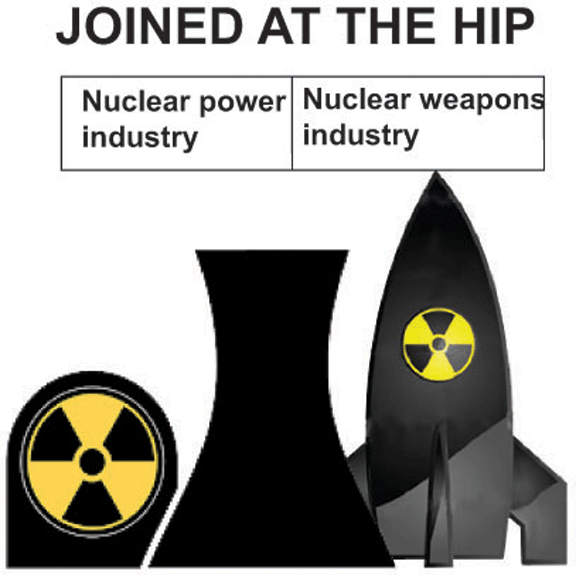
But there are powerful forces still pushing nukes, all of them bound up with fascism. Atomic reactors were first meant to produce fissionable material for atomic weapons. The nuclear power/nuclear war connection has always been intimate.
Trump’s fierce attacks on wind and solar aim primarily to preserve market share for the fossil/nuke billionaires who buy his elections. That income is at the core of American fascism.
Nuke apologists who claim to simultaneously support both atomic power and renewables suffer a deadly delusion. Every dollar wasted on the “Peaceful Atom” delays the vital transition to the green-powered Earth that the human species must have to survive.
Renewable technologies offer the public the power to own and control the
decentralized nature-based power supply essential to any future democracy on this planet—which is precisely what the fossil/nuke industry most hates about them.
Atomic power is a corporate/military-based technology designed to keep all electric and political power under the firm fascist grip of the likes of Donald Trump and his billionaire beneficiaries. Its mission in their eyes is to obliterate all renewables, not to co-exist in some “all the above” delusion.
Nuke reactors burn the planet at 300 degrees Centigrade while spewing radioactive carbon 14, and even more carbon in the mining, milling, enriching, transporting and then burying nuclear fuel. Should any reactor explode it would turn much of the US into a radioactive wasteland while opening the door to martial law and a Trumpian dictatorship.
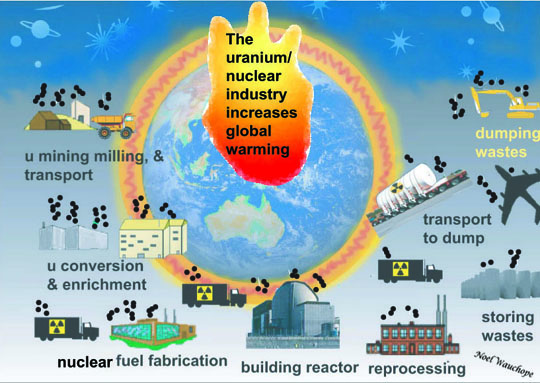
The astonishing success of new green supply, storage and efficiency has completely dwarfed nukes and fossil fuels in terms of cash, climate and competitive economics.
It’s a revolution that’s been seized by China, handing it near-total control of the export market in wind turbines, solar panels, batteries, electric cars—and thus the global economic future. Worldwide roughly 90% of new energy installations involve wind, solar or batteries, with the vast majority being controlled by the Chinese. The New York Times has recently reported on how China is spectacularly advancing, “pulling away” in “selling clean energy to the world.”
Thus Trump and California Governor Newsom have teamed up with an insane death squad of “liberal” pro-nuke Democrats to decimate the America’s once-vanguard green industries and their long-lost lead in the global economy.
They’re at the same time dooming our democracy to permanent nuclear dictatorship and our economy to the dead-end radioactive dump of a profoundly failed technology—all at once dooming our democracy, our prosperity and our planet. Thankfully, Solartopian green technologies can reverse the death spiral—if we make it happen.
As physicist Amory Lovins, professor of Energy and Environment at Stanford University, has just written: “An intensive influence campaign seeks to resurrect a ‘nuclear renaissance’ from the industry’s slow-motion collapse documented in the independent annual World Nuclear Industry Status Report. Claims that past failures won’t recur have convinced many politicians that socializing nuclear investments rejected by private capital markets, weakening or bypassing rigorous safety regulation, suppressing market competition, and commanding military reactor and data-center projects as a national-security imperative will restore nuclear expansion and transform the economy. This illusion neatly fits the industry’s business-model shift from selling products to harvesting subsidies.”
“A few awkward facts intrude,” Lovins continues. “Even the most skilled firms and nations keep delivering big reactors with several times the promised cost and construction time. A swarm of startup firms that have never built a reactor are dubiously rebranding their inexperience as a winning advantage. New designs are said to be so safe they don’t need normal precautions (though not safe enough to waive nuclear energy’s unique exemption from accident liability). Political interference in nuclear licensing is eroding public confidence. Proposed smaller reactors cost more per kWh, produce more nuclear waste per kWh, and often need more concentrated fuel directly usable for nuclear weapons.”
“And nuclear power faces the same fundamental challenges as fossil fuels: uncompetitive costs, runaway competitors, dwindling profits, and uncertain demand. Few, if any, vendors have made profits selling reactors—only fueling and fixing them. Nuclear electricity loses in open auctions, so only Congressional bailouts–$27 billion ($15 billion paid out) in 2005, $133 billion in 2021-22, tens of billions more in 2025 — saved most existing U.S. reactors from closure.”
“Now comes another vision: powering the glorious new world of artificial intelligence,” Lovins went on. “This may be a trillion-dollar bubble, but it’s sellable until market realities intervene. The International Energy Agency expects data centers, mostly non-AI, to cause only a tenth of global electricity demand growth to 2030, doubling their share of usage—to just 3%. So AI won’t eat the grid. But IEA forecasts renewables will power data-center growth 10-20 times over, while Bloomberg NEF predicts over 100. Nuclear lost the race to power the grid, so new reactors have no business case or operational need.”
Harvey Wasserman wrote the books Solartopia! Our Green-Powered Earth and The Peoples Spiral of US History. He helped coin the phrase “No Nukes.” He co-convenes the Grassroots Emergency Election Protection Coalition at www.electionprotection2024.org Karl Grossman is the author of Cover Up: What You Are Not Supposed to Know About Nuclear Power and Power Crazy. He the host of the nationally-aired TV program Enviro Close-Up with Karl Grossman (www.envirovideo.com)
Trump and the Shadow of Fascism
22 September 2025 Michael Taylor, https://theaimn.net/trump-and-the-shadow-of-fascism/
In recent months, accusations that Donald Trump and his administration embody fascism have become more frequent. The word carries historical weight, and using it carelessly risks turning it into a mere insult. But the question is worth asking seriously: how many characteristics of fascism can be seen in Trump’s presidency – and his ongoing movement?
Political theorists have identified common traits of fascist regimes: cult of personality, scapegoating of minorities, attacks on the press, obsession with law and order, disinformation, and disdain for democratic norms. Viewed through this lens, Trump and his administration tick many of the boxes.
Trump has built a cult of personality unlike any modern U.S. president, insisting that loyalty to him is more important than loyalty to law or country. He scapegoats immigrants, Muslims, and political opponents, framing them as existential threats to “real Americans.” He repeatedly called the media “the enemy of the people,” sought to revoke press credentials, and encouraged investigations into his critics.
Perhaps most concerning was his open disdain for democratic norms. From loyalty tests for judges and civil servants to his attempt to overturn the 2020 election, Trump treats democracy as conditional – acceptable only if it delivered the outcome he wanted.
Where the comparison to fascism is less exact is in the total control of society and the economy. Trump has not dissolved Congress, suspended elections (yet), or nationalised industry. The courts, press, and opposition party remain functional, though under immense and constant pressure. This distinction is crucial, but it may also reveal fascism’s modern adaptation rather than its absence. Historical fascism seized power through overt revolution; the Trumpist method appears to be the exploitation of democratic institutions from within, using their inherent weaknesses and freedoms – such as free speech and political polarisation – to consolidate power. The goal seems not to be to abolish the system outright, but to render it so subservient to a single leader that its formal structures become a façade.
What we are left with is not a carbon copy of 1930s Europe but something closer to what scholars call “authoritarian populism” or “illiberal democracy.” Still, the overlap is close enough to warrant alarm. The cult of personality, the scapegoating, the attacks on democratic institutions – these are not harmless quirks of an unconventional politician. They are warning signs.
These signs are amplified by a key tactic of modern authoritarianism: the creation of a parallel information ecosystem. Through relentless propaganda, the delegitimisation of factual reporting, the embrace of conspiracy theories, and the promotion of outlets that serve as state-media proxies, a significant portion of the population is persuaded to live in a reality defined not by shared facts, but by the leader’s will. This breaks the common ground necessary for democratic debate and makes accountability impossible.
If anything, Trump’s movement shows how easily a democracy can slide toward authoritarianism without formally abolishing elections or rewriting constitutions. The question now is not whether Trumpism matches fascism perfectly, but whether we are willing to ignore the unmistakable echoes. The history of the 20th century teaches us that fascism does not arrive in a day; it arrives in degrees, often masked by populist appeal and enabled by those who believe the institutions are too strong to fail. The warning is not that America has become a fascist state, but that it has proven vulnerable to the very playbook that leads there.
First of four containers of tritium waste at LANL has been vented
By Alaina Mencinger amencinger@sfnewmexican.com
Sep 16, 2025
The first of four flanged tritium waste containers awaiting removal from Los Alamos National Laboratory has been vented, the New Mexico Environment Department announced Tuesday afternoon.
The container can now be moved for treatment at LANL and then, eventually, to an off-site disposal area.
No internal pressure was found in the first container, according to the National Nuclear Security Administration, suggesting the inner containers in the flanged tritium waste container hadn’t leaked. Air monitoring did not show an increase of tritium beyond background levels, the federal agency wrote…………………………………
This weekend, several groups, including Communities for Clean Water, urged state and federal officials to stay the venting and requested additional guidance on precautionary measures. The New Mexico Environmental Law Center drafted a letter to Gov. Michelle Lujan Grisham on Friday asking the state leader to halt the process.
“This project is the direct result of decades of mismanagement,” Joni Arends of Concerned Citizens for Nuclear Safety stated in a news release ahead of scheduled weekend venting. “Instead of investing in real solutions like filtration or long-term storage until decay, DOE is forcing our communities to accept dangerous shortcuts.” https://www.santafenewmexican.com/news/local_news/first-of-four-containers-of-tritium-waste-at-lanl-has-been-vented/article_4b5cf404-0458-4880-ba3f-7a1c754a500e.html
Can the US, Russia and China break their nuclear talks impasse?
With a key US-Russia arms treaty due to expire in February, the world is at risk of entering a new era of strategic instability, analysts warn.
Shi Jiangtao, SCMP, 21 Sep 2025
US President Donald Trump’s summit in Alaska last month with Russian leader Vladimir Putin failed to revive long-stalled nuclear negotiations or advance efforts to preserve the last major arms control pact between Washington and Moscow, which is set to expire in February.
Trump’s subsequent push for trilateral “denuclearisation” talks involving China elicited a firm refusal from Beijing, underscoring challenges to extending the New Strategic Arms Reduction Treaty (New START) amid fears of a fresh nuclear arms race, analysts said.
Following the summit, Beijing, with its long-standing policy of “no first use” and a nuclear strategy rooted in self defence, spurned Trump’s proposal, with Chinese foreign ministry spokesman Guo Jiakun calling it “neither reasonable nor realistic”…………………………(Subscribers only) https://www.scmp.com/news/china/diplomacy/article/3326243/can-us-russia-and-china-break-their-nuclear-talks-impasse?module=perpetual_scroll_0&pgtype=article
Remembering the fight to make Sebastopol a “nuclear-free zone”

Forty years ago, local activists kicked off a campaign to declare Sebastopol “nuclear free”
Sebastopol Times, Albert Levine and Laura Hagar Rush, Sep 21, 2025, https://www.sebastopoltimes.com/p/remembering-the-fight-to-make-sebastopol
When you drive into Sebastopol, an official city sign welcomes you to town and informs you that you have entered a Nuclear Free Zone.
Those too young to remember the anti-nuclear movement of the 1970s and 80s can be excused for thinking, “Wha…?”
This is the story of that sign and the movement behind it.
The long march of the anti-nuclear movement
The anti-nuclear movement in the United States began almost as soon as the United States dropped two atomic bombs on Japan in August of 1945. J. Robert Oppenheimer, often called “the father of the atomic bomb,” became part of a growing movement opposed to the development of nuclear weapons in the 1950s. He paid for his opposition with the loss of his U.S. security clearance and the loss of his job at the Atomic Energy Commission.
But the movement continued apace, growing over the years on college campuses, eventually blending with the anti-war movement of the sixties and the burgeoning environmental movement of the 1970s.
To be clear, nuclear energy and nuclear weapons are separate things. One heats your home, the other blows it up. But they’re entwined because the process of producing nuclear energy also produces material that can be used in nuclear weapons. Nuclear energy production also produces radioactive waste, which is difficult (some say impossible) to store safely.
But it wasn’t until the nuclear accident at Three-Mile Island in 1979—which was turned into a 1983 hit movie, “Silkwood,” starring Meryl Streep and Cher—that opposition to nuclear energy went mainstream……………………………………
From the sixties onward, there was also a sea change in people’s attitude toward authority.
“People tended to believe that the government was looking out for their best interests and slowly, people came to realize that the government doesn’t always look out for your best interest,” said James. “Therefore, you have to question what they’re doing.”
Sebastopol picks up the gauntlet
It was in this environment that, in 1984, Sebastopol architect John Hughes formed a group called Nuclear Free Sebastopol, which worked to get the Nuclear Free Zone initiative on the Sebastopol ballot.
………………………………………………………… the council voted 3 to 2 to place the measure on the ballot.
The measure was initially scheduled to go on the November 1986 ballot, but after pressure from activists, that was moved up to the June 1986 ballot. It was named Measure A, and it passed with 73% of the vote.
According to a Sebastopol Times article, dated June 12-June 18, 1986, activists made sure the city posted the new “Nuclear Free Zone” sign the day after the vote was made official.
…………………………………..Sebastopol’s Nuclear Free Zone ordinance reads as follows:
The City Council shall place and maintain a sign reading “Nuclear-Free Zone” at all City limit signpost locations. The sign shall be clearly visible and its letters at least equal in size to those on the nearest City limit sign.
…………………………………………………….Other nuclear-free zone efforts in Sonoma County
There were two other attempts in Sonoma County to declare other nuclear-free zones: one in Camp Meeker, which took place before the Sebastopol campaign, and a county-wide measure, Measure B. Both went down to defeat.
………………………………………………………………………………………………………. Ernie Carpenter, who lives in West County, was on the Sonoma County Board of Supervisors at the time.
“The issue of war comes and goes, but it never really goes. And the issue of nuclear weapons never really goes.” said Carpenter.
“There were a couple of businesses that kind of led the charge against [Measure B], because it hurt them. I think the populists mainly turned it down because they didn’t see it as the business of local government,” he said.
“[But] it must have worked, because we haven’t had any nuclear weapons or applications to build bombs in Sonoma County. It’s really an expression of the people, and the people need to keep making these expressions and keep pushing on the gates. It does have an impact, but it’s not always clear-cut. Ask the suffragettes—it takes a long time.”
Looking forward
When asked if he saw a future where the production of any bombs or weapons would be prohibited from being manufactured or transported through Sonoma County, Carpenter said, “Never say never.”
Some local activists, for example, have protested against General Dynamics, the world’s fifth-largest weapons manufacturer, which operates a facility in Healdsburg, which has a role in producing weapons to be used in Gaza………………………https://www.sebastopoltimes.com/p/remembering-the-fight-to-make-sebastopol
8.20.010 Declarations.
The people of Sebastopol hereby declare it to be a nuclear-free zone. No nuclear weapon shall be produced, transported, stored, processed, disposed of, nor used, within Sebastopol. No facility, equipment, supply or substance for the production, storage, processing, disposal or use of nuclear weapons, except radioactive materials for medical purposes, shall be allowed in Sebastopol.
8.20.020 Signs.
and
Sep 21, 2025
America’s overreach: bullying allies to bury Palestine’s statehood
21 September 2025 Michael Taylor, https://theaimn.net/americas-overreach-bullying-allies-to-bury-palestines-statehood/
As the United Nations General Assembly convenes on September 22, the world watches a pivotal moment in the Israel-Palestine conflict. But instead of diplomacy, the U.S. Congress has chosen intimidation. On September 18, Republican leaders fired off a letter* to the leaders of Australia, Canada, France, and the UK, demanding they scrap plans to recognise Palestine as a state. Labeled a “reckless policy” that “empowers Hamas” and “rewards terrorism,” the missive warns of “punitive measures” if these allies dare defy Washington. This isn’t leadership – it’s overreach, a desperate bid to prop up a failing status quo amid Gaza’s humanitarian catastrophe.
Let’s be clear: This letter reeks of hypocrisy and imperial arrogance. The U.S., which has vetoed UN resolutions on Palestinian rights for decades, now lectures sovereign nations on their foreign policy. With over 64,000 Palestinian deaths since October 2023 and famine gripping Gaza, recognising Palestine isn’t a “reward” for violence – it’s a moral imperative for justice and a two-state solution. France, Canada, the UK, and Australia have signaled their intent to join 147 other nations in this recognition, conditional on ceasefires and demilitarisation. Yet here comes Congress, threatening economic retaliation and demanding crackdowns on “antisemitic activity” as if free speech were collateral damage. It’s a playbook straight out of the autocrat’s handbook: bully your “allies” into silence while ignoring the International Court of Justice’s rulings against Israel’s occupation.
The backlash has been swift and scorching, exposing the letter’s isolation. On X (formerly Twitter), users worldwide branded it “disgraceful” and “compromised,” with one Australian poster calling them “vile creatures” enabling “shredding babies with impunity.” Palestinian-American commentator Abier Khatib fired back: “Any country with self-respect… should be telling them, respectfully, to shove it.” Independent journalist Chris Menahan highlighted the veiled threats: “may invite punitive measures in response,” a line that reeks of mafia tactics. Even in Canada, voices decried it as “disgraceful interference in our sovereignty,” urging a firm condemnation. Spanish activists noted the “Zionist spokespersons” amplifying these threats online, turning social media into a battleground for outrage.
Domestically, the pushback is even more telling. Just hours after the letter, Democratic senators led by Jeff Merkley introduced the first-ever Senate resolution urging President Trump to recognise a demilitarised Palestinian state alongside a secure Israel – a direct rebuke to Republican sabre-rattling. “Settlement expansion, annexation, and rejection of Palestinian statehood are incompatible with peace,” they argued, spotlighting the Gaza crisis as a tipping point. House Democrats, over a dozen strong, echoed this in August with a letter to Trump and Secretary Rubio, insisting Palestinian self-determination is “long overdue” and essential to end the war and famine. Progressives such as Ro Khanna warned against U.S. isolation: “We cannot be isolated from the rest of the free world.” UN experts piled on, slamming U.S. visa denials for Palestinian officials as discriminatory and a violation of diplomacy ahead of the UNGA.
Of course, not everyone’s applauding the revolt. Pro-Israel hawks in Congress and on X cheer the letter as a bulwark against “Hamas’s intransigence,” with one user crowing, “The gloves are off… What now @AlboMP?” They argue unilateral recognition skips negotiations and endangers Israel. Fair point? Hardly. Hamas’s October 7 atrocities were horrific, but Israel’s response – collective punishment on steroids – has radicalised a generation and eroded global sympathy. The two-state solution isn’t dying from Palestinian bids; it’s being suffocated by endless settlements and vetoes. As the General Assembly endorses the New York Declaration for Palestinian statehood, even abstainers like Latvia affirm solidarity with civilians on both sides.
This overreach isn’t just about Palestine – it’s a symptom of America’s fraying empire. Trump’s administration, with its strongman sympathies, treats allies like vassals, demanding loyalty to a policy that’s bankrupted U.S. credibility. The backlash proves the world is waking up: From X rants to Senate floors, the chorus is clear – enough with the threats; let justice prevail.
Australia, Canada, France, and the UK: Stand firm. Recognise Palestine. And to Americans: Pressure your leaders to join the 147 nations choosing humanity over hegemony. The UNGA isn’t a stage for U.S. bullying – it’s a forum for the silenced to speak. Silence it now, and the echoes of Gaza will haunt us all.
*You can read the letter here.
What’s In a Name? The “Defense” Department Has Always Been About War.
Washington reserves for itself the unilateral right to intervene, violently and antidemocratically, in the affairs of other nations to secure what it considers its interests.
The reversion of the Defense Department to the War Department should be seen less as a rupture than a revelation. It strips away a euphemism to make far plainer what has long been the reality of our world.
Tom Dispatch, By Eric Ross, September 18, 2025
The renaming of the Defense Department should have surprised no one. Donald Trump is an incipient fascist doing what such figures do. Surrounded by a coterie of illiberal ideologues and careerist sycophants, he and his top aides have dispensed with pretense and precedent, moving at breakneck speed to demolish what remains of the battered façade of American democracy.
In eight months, his second administration has unleashed a shock-and-awe assault on norms and institutions, civil liberties, human rights, and history itself. But fascism never respects borders. Fascists don’t recognize the rule of law. They consider themselves the law. Expansion and the glorification of war are their lifeblood. Italian fascist leader Benito Mussolini put it all too bluntly: the fascist “believes neither in the possibility nor the utility of perpetual peace… war alone brings up to its highest tension all human energy and puts the stamp of nobility upon the peoples who have courage to meet it.”
Pete Hegseth is now equally blunt. From the Pentagon, he’s boasting of restoring a “warrior ethos” to the armed forces, while forging an offensive military that prizes “maximum lethality, not tepid legality. Violent effect, not politically correct.” The message couldn’t be clearer: when the U.S. loses wars, as it has done consistently despite commanding the most powerful military in history, it’s not due to imperial overreach, political arrogance, or popular resistance. Rather, defeat stems from that military having gone “woke,” a euphemism for failing to kill enough people.
The recent rechristening of the Department of Defense as the Department of War was certainly a culture-war stunt like Trump’s demand that the Gulf of Mexico be renamed the Gulf of America. But it also signaled something more insidious: a blunt escalation of the criminal logic that has long underwritten U.S. militarism. That logic sustained both the Cold War of the last century and the War on Terror of this one, destroying millions of lives.
When Hegseth defended the recent summary executions of 11 alleged Venezuelan drug smugglers on a boat in the Caribbean, he boasted that Washington possesses “absolute and complete authority” to kill anywhere without Congressional approval or evidence of a wrong and in open defiance of international law. The next day, in responding on X to a user who called what had been done a war crime, Vance wrote, “I don’t give a shit what you call it.” It was the starkest admission since the Iraq War that Washington no longer pretends to operate internationally under the rule of law but under the rule of force, where might quite simply makes right.
While such an escalation of verbiage — the brazen confession of an imperial power that believes itself immune from accountability — should alarm us, it’s neither unprecedented nor unexpected. Peace, after all, has never been the profession of the U.S. military. The Department of Defense has always been the Department of War.
American Imperialism and “Star-Spangled Fascism”
The U.S. has long denied being an empire. From its founding, imperialism was cast as the antithesis of American values. This nation, after all, was born in revolt against the tyranny of foreign rule. Yet for a country so insistent on not being an empire, Washington has followed a trajectory nearly indistinguishable from its imperial predecessors. Its history was defined by settler conquest, the violent elimination of Indigenous peoples, and a long record of covert and overt interventions to topple governments unwilling to yield to American political or economic domination.
The record is unmistakable. As Noam Chomsky once put it, “Talking about American imperialism is like talking about triangular triangles.” And he was hardly the first to suggest such a thing. In the 1930s, General Smedley Butler, reflecting with searing candor on his years of military service in Latin America, described himself as “a racketeer, a gangster for capitalism… I helped make Mexico, especially Tampico, safe for American oil interests… I helped make Haiti and Cuba a decent place for the National City Bank boys to collect revenues in. I helped in the raping of half a dozen Central American republics for the benefit of Wall Street.”
Historically, imperialism and fascism went hand in hand. As Aimé Césaire argued in his 1950 Discourse on Colonialism, fascism is imperialism turned inward. The violence inherent in colonial domination can, in the end, never be confined to the colonies, which means that what we’re now witnessing in the Trumpian era is a reckoning. The chickens are indeed coming home to roost or, as Noura Erakat recently observed, “The boomerang comes back.”……………………………………………………………
Imperialism incubates fascism, a dynamic evident in the carnage of World War I, rooted, as W.E.B. DuBois observed at the time, in colonial competition that laid the foundations for World War II. In that conflict, Césaire argued, the Nazis applied to Europe the methods and attitudes that until then were reserved for colonized peoples, unleashing them on Europeans with similarly genocidal effect.
War is Peace
In the postwar years, the United States emerged from the ruins of Europe as the unrivaled global hegemon. With some six percent of the world’s population, it commanded nearly half of the global gross domestic product. Anchored by up to 2,000 military bases across the globe (still at 800 today), it became the new imperial power on which the sun never set. Yet Washington ignored the fundamental lesson inherent in Europe’s self-cannibalization. Rather than dismantle the machinery of empire, it embraced renewed militarism. Rather than demobilize, it placed itself on a permanent global war footing, both anticipating and accelerating the Cold War with that other great power of the period, the Soviet Union.
The United States was, however, a superpower defined as much by paranoia and insecurity as by military and economic strength. It was in such a climate that American officials moved to abandon the title of the Department of War in 1947, rebranding it as the Department of Defense two years later. The renaming sought to reassure the world that, despite every sign the U.S. had assumed the mantle of European colonialism, its intentions were benign and defensive in nature………………………………………………………………………….
“The Greatest Purveyor of Violence”
As with the CIA, the not-so-aptly-renamed “Defense Department” would oversee a succession of catastrophic wars that did nothing to make Americans safer and had little to do with the protection of democratic values. Within a year of its renaming, the U.S. was at war in Korea. When the North invaded the South in 1950, seeking to reunify a peninsula divided by foreign powers, Washington rushed to intervene, branding it a “police action,” the first of many Orwellian linguistic maneuvers to sidestep the constitutional authority of Congress to declare war………………………………………………………………………………………………………………………………………………..
Washington reserves for itself the unilateral right to intervene, violently and antidemocratically, in the affairs of other nations to secure what it considers its interests. The reversion of the Defense Department to the War Department should be seen less as a rupture than a revelation. It strips away a euphemism to make far plainer what has long been the reality of our world.
We now face a choice. As historian Christian Appy has reminded us, “The institutions that sustain empire destroy democracy.” That truth is unfolding before our eyes. As the Pentagon budget tops one trillion dollars and the machinery of war only expands in Donald Trump’s America, the country also seems to be turning further inward. Only recently, President Trump threatened to use Chicago to demonstrate “why it is called the Department of War.” Meanwhile, U.S. Customs and Immigration Enforcement, or ICE, is set to become among the most well-funded domestic “military” forces on the planet and potentially the private paramilitary of an aspiring autocrat.
If there is any hope of salvaging this country’s (not to speak of this planet’s) future, then this history has to be faced, and we must recover — or perhaps discover — our moral bearings. That will require not prolonging the death throes of American hegemony, but dismantling imperial America before it collapses on itself and takes us all with it.
Eric Ross is an organizer, educator, and PhD candidate in the history department at the University of Massachusetts Amherst https://tomdispatch.com/whats-in-a-name/
Antifa Nation

The Australian Independent Media Network, By Walt Zlotow 19 Sept 25, https://wordpress.com/reader/blogs/240145538/posts/22161
I must thank President Trump for a moment of personal enlightenment. He’s made me aware that for the past 75 years I’ve been a member of the domestic terrorist group Antifa.
Back around first grade my parents informed me about WWII, the Holocaust and Nazism. It was a difficult concept for my young brain to grasp but it spurred a lifelong commitment to anti-fascism, which is precisely what Antifa is short for.
Eight decades on we have a cynical, McCarthyite-channeling president designating a long forgotten, amorphous fringe group with no organized structure, no leadership, no nothing as a ‘terrorist organization’. It’s a cynical dissent suppressing strategy to crush any peaceful opposition to his anti-democratic, fascistic agenda.
He spent his first term demonizing Antifa as a terrorist organization. In his current term he has officially designated Antifa as a terrorist organization with this bit of lunacy: “I am pleased to inform our many U.S.A. Patriots that I am designating ANTIFA, A SICK, DANGEROUS, RADICAL LEFT DISASTER, AS A MAJOR TERRORIST ORGANIZATION”.
Our mentally disintegrating president believes his terrorist designation paves the way to expand his road to fascism in America. But there are tens of millions of us peacefully but strenuously resisting his fascistic mindset and governing agenda. We will not let Trump’s wide net of Antifa terrorist designation to our pushback deter us. Resisting the first attempt of fascist rule in America’s 250 years must be a priority of every decent American.
Political witch hunts and blacklists: Donald Trump and the new era of McCarthyism
September 19, 2025 , Shannon Brincat, Senior Lecturer in Politics and International Relations, University of the Sunshine Coast, Frank Mols, Senior Lecturer in Political Science, The University of Queensland, Gail Crimmins, Associate professor, University of the Sunshine Coast, https://theconversation.com/political-witch-hunts-and-blacklists-donald-trump-and-the-new-era-of-mccarthyism-265389?utm_medium=email&utm_campaign=The%20Weekender%20-%2019th%20September%202025&utm_content=The%20Weekender%20-%2019th%20September%202025+CID_d7a6e5ec27e543170fba8540bf95d6ea&utm_source=campaign_monitor&utm_term=Political%20witch%20hunts%20and%20blacklists%20Donald%20Trump%20and%20the%20new%20era%20of%20McCarthyism
A modern-day political inquisition is unfolding in “digital town squares” across the United States. The slain far-right activist Charlie Kirk has become a focal point for a coordinated campaign of silencing critics that chillingly echoes one of the darkest chapters in American history.
Individuals who have publicly criticised Kirk or made perceived insensitive comments regarding his death are being threatened, fired or doxed.
Teachers and professors have been fired or disciplined, one for posting that Kirk was racist, misogynistic and a neo-Nazi, another for calling Kirk a “hate-spreading Nazi”.
Journalists have also lost their jobs after making comments about Kirk’s assassination, as has the late-night television host Jimmy Kimmel.
A website called “Expose Charlie’s Murderers” had been posting the names, locations and employers of people saying critical things about Kirk before it was reportedly taken down. Vice President JD Vance has pushed for this public response, urging supporters to “call them out … hell, call their employer”.
This is far-right “cancel culture”, the likes of which the US hasn’t seen since the McCarthy era in the 1950s.
The birth of McCarthyism
The McCarthy era may well have faded in our collective memory, but it’s important to understand how it unfolded and the impact it had on America. As the philosopher George Santayana once said, “Those who cannot remember the past are condemned to repeat it.”
Since the 1950s, “McCarthyism” has become shorthand for the practice of making unsubstantiated accusations of disloyalty against political opponents, often through fear-mongering and public humiliation.
The term gets its name from Senator Joseph McCarthy, a Republican who was the leading architect of a ruthless witch hunt in the US to root out alleged Communists and subversives across American institutions.
The campaign included both public and private persecutions from the late 1940s to early 1950s, involving hearings before the House Un-American Activities Committee and the Senate’s Permanent Subcommittee on Investigations.
Millions of federal employees had to fill out loyalty investigation forms during this time, while hundreds of employees were either fired or not hired. Hundreds of Hollywood figures were also blacklisted.
The campaign also involved the parallel targeting of the LGBTQI+ community working in government – known as the Lavender Scare.
And similar to doxing today, witnesses in government hearings were asked to provide the names of communist sympathisers, and investigators gave lists of prospective witnesses to the media. Major corporations told employees who invoked the Fifth Amendment and refused to testify they would be fired.
The greatest toll of McCarthyism was perhaps on public discourse. A deep chill settled over US politics, with people afraid to voice any opinion that could be construed as dissenting.
When the congressional records were finally unsealed in the early 2000s, the Permanent Subcommittee on Investigations said the hearings “are a part of our national past that we can neither afford to forget nor permit to reoccur”.
Another witch hunt under Trump
Today, however, a similar campaign is being waged by the Trump administration and others on the right, who are stoking fears of the “the enemy within”.
This new campaign to blacklist government critics is following a similar pattern to the McCarthy era, but is spreading much more quickly, thanks to social media, and is arguably targeting far more regular Americans.
Even before Kirk’s killing, there were worrying signs of a McCarthyist revival in the early days of the second Trump administration.
After Trump ordered the dismantling of public Diversity, Equity and Inclusion (DEI) programs, civil institutions, universities, corporations and law firms were pressured to do the same. Some were threatened with investigation or freezing of federal funds.
In Texas, a teacher was accused of guiding Immigration and Customs Enforcement (ICE) squads to suspected non-citizens at a high school. A group called the Canary Mission identified pro-Palestinian green-card holders for deportation. And just this week, the University of California at Berkeley admitted to handing over the names of staff accused of antisemitism.
Supporters of the push to expose those criticising Kirk have framed their actions as protecting the country from “un-American”, woke ideologies. This narrative only deepens polarisation by simplifying everything into a Manichean world view: the “good people” versus the corrupt “leftist elite”.
The fact the political assassination of Democratic lawmaker Melissa Hortman did not garner the same reaction from the right reveals a gross double standard at play.
Another double standard: attempts to silence anyone criticising Kirk’s divisive ideology, while being permissive of his more odious claims. For example, he once called George Floyd, a Black man killed by police, a “scumbag”.
In the current climate, empathy is not a “made-up, new age term”, as Kirk once said, but appears to be highly selective.
This brings an increased danger, too. When neighbours become enemies and dialogue is shut down, the possibilities for conflict and violence are exacerbated.
Many are openly discussing the parallels with the rise of fascism in Germany, and even the possibility of another civil war.
A sense of decency?
The parallels between McCarthyism and Trumpism are stark and unsettling. In both eras, dissent has been conflated with disloyalty.
How far could this go? Like the McCarthy era, it partly depends on the public reaction to Trump’s tactics.
McCarthy’s influence began to wane when he charged the army with being soft on communism in 1954. The hearings, broadcast to the nation, did not go well. At one point, the army’s lawyer delivered a line that would become infamous:
Until this moment, Senator, I think I never really gauged your cruelty or your recklessness […] Have you no sense of decency?
Without concerted, collective societal pushback against this new McCarthyism and a return to democratic norms, we risk a further coarsening of public life.
The lifeblood of democracy is dialogue; its safeguard is dissent. To abandon these tenets is to pave the road towards authoritarianism.
The Department of War Is Back!
But Victoryless Culture Remains.
William J. Astore, 17 Sept 25, https://tomdispatch.com/the-department-of-war-is-back/
My fellow Americans, my critical voice has finally been heard inside the Oval Office. No, not my voice against the $1.7 trillion this country is planning to spend on new nuclear weapons. No, not my call to cut the Pentagon budget in half. No, not my imprecations against militarism in America. It was a quip of mine that the Department of Defense (DoD) should return to its roots as the War Department, since the U.S. hasn’t known a moment’s peace since before the 9/11 attacks, locked as it’s been into a permanent state of global war, whether against “terror” or for its imperial agendas (or both)
A rebranded Department of War, President Trump recently suggested, simply sounds tougher (and more Trumpian) than “defense.” As is his wont, he blurted out a hard truth as he stated that America must have an offensive military. There was, however, no mention of war bonds or war taxes to pay for such a military. And no mention of a wartime draft or any other meaningful sacrifice by most Americans.
Will the US Continue to Aid, Abet, and Arm Genocide in Gaza?
Every leader should move now to end our complicity.
Katrina vanden Heuvel, 16 Sept 25, https://www.thenation.com/article/world/israel-genocide-complicity-gaza-palestine/
he United States is aiding and abetting genocide in Gaza. This horror has the support —like so many of our most disastrous foreign debacles from Vietnam to Iraq—of both political parties.
As more and more children die of starvation and the famine deepens, as the Netanyahu government begins its attack on Gaza City, moving to occupy all of Gaza, as Israeli soldiers and bulldozers systematically level city after city in Gaza, the criminal horror is reaching its obscene goal: the ethnic cleansing of Palestinians from Gaza (and, if Netanyahu’s ministers have their way, all of the occupied West Bank).
While all signatories to the Genocide Convention have the right—and indeed the duty—to intervene to halt this slaughter, only two countries have the power to actually stop the genocide: the Israeli government that is committing it and the US government that is aiding, abetting, and arming it. The US could stop this criminal assault by ending its support for Israel, cutting off the flow of arms, ammunition, bombs, and military coordination and demanding and helping to organize immediate, emergency humanitarian relief. To do any less makes us complicit in the ongoing crime.
Across the world—and within Israel itself—some brave leaders have demanded an end to the horror.
David Grossman, Israel’s leading literary and moral voice, says that for many years he has refused to use the word genocide, but now he must—“with immense pain and with a broken heart.”
Two leading Israeli human rights groups—B’Tselem and Physicians for Human Rights Israel—released a report on “Our Genocide,” detailing the unfathomable violence and concluding that there is “no doubt” that since October 2023, the Israeli regime has been responsible for carrying out genocide against the Palestinians in the Gaza strip.” Physicians for Human Rights Israel provided a medical-legal analysis documenting Israel’s deliberate destruction of the healthcare system in Gaza, as well as other systems critical for the survival of the Palestinian civilian population.
The special rapporteur of the United Nations has reported on the companies and countries profiting from the “economy of genocide.”
Back In January 2024, the International Court of Justice ruled that there was a plausible risk that Israel’s actions amounted to genocidal acts—long before the systematic starvation became apparent. The International Criminal Court has issued arrest warrants for Israeli Prime Minister Benjamin Netanyahu, then–Defense Minister Yoav Gallant, and a former Hamas commander on the suspicion of war crimes and crimes against humanity.
A growing number of countries have suspended all or part of their arms shipments to Israel, including Germany, Italy, Spain, the Netherlands, Belgium, and Canada. Last month, in a resolution passed by 86 percent of its members, the oldest and largest association of genocide scholars concluded that Israel’s nearly two-year military campaign in Gaza meets “the legal definition of genocide,” The resolution, by the International Association of Genocide Scholars, added to a growing chorus from human rights organizations and academics concluding that Israel is committing genocide by “killing members of the group” and “deliberately inflicting on the group conditions of life calculated to bring about its physical destruction in whole or in part,” according to Emily Sample, a member of the association’s executive board.
Across the world, citizens of conscience demonstrate in greater and greater numbers, demanding an end to the horror.
And in the United States where the responsibility and the complicity are the greatest?
Courageous Jewish scholars like Omer Bartov and writers like Peter Beinart have spoken out early against the calamity.
More than 1,000 rabbis have called for Israel to allow humanitarian aid, stating “we cannot condone the mass killings of civilians…or the use of starvation as a weapon of war
After months of looking the other way, more and more of the mainstream US media are beginning to awake to the humanitarian catastrophe that is being inflicted on the Palestinians.
But among those who could actually bring the horror to an end, courage is in short supply.
Only 13 members of Congress have been willing to state the obvious: that Israel is committing genocide. House minority whip Katherine Clark declared that the “genocide and destruction” in Gaza needs to end—only to walk back her comments a few days later.
The Senate Resolution submitted by Senator Bernie Sanders to block some weapons sales to Israel received not one Republican vote. Instead, Republicans line up behind Donald Trump, who muses about beachfront properties in Gaza and tells Israel to hurry up and finish the job.
A Gallup poll showed only 8 percent of Democrats support Israel’s military action in Gaza. The Sanders Resolutions received support from a majority of the Senate Democratic caucus, yet those still refusing to stand up include Senator Charles Schumer, the Democratic leader in the Senate, as well as Senator Corey Booker, who styles himself as a voice for human rights.
This is no longer a policy debate. This is now an urgent question of basic humanity. Will the United States continue to arm genocide in Gaza? Will legislators continue to support an unconscionable crime against humanity—or act to end it? As more Palestinians starve to death, as more doctors and aid workers and journalists are murdered, as needed food and water continues to be withheld, as families are huddled into smaller and smaller open-air camps, no amount of censorship, doubletalk, lies, or excuses can hide the true horror.
There is no excuse for inaction. There is no escape from responsibility. Each legislator, official, and officer will have to look in the mirror. Complicity in this crime will destroy their reputations. Growing numbers of their constituents, their neighbors, even their own children will demand to know why they chose complicity rather than courage.
Popular
- Charlie Kirk’s Legacy Deserves No MourningCharlie Kirk’s Legacy Deserves No MourningElizabeth Spiers
- Kafka-land at UC BerkeleyKafka-land at UC BerkeleyJudith Butler
- Jimmy Kimmel’s Bosses Sold Us All OutJimmy Kimmel’s Bosses Sold Us All OutJeet Heer
- The Call Is Out for Mass, Simultaneous Strikes in 4 YearsThe Call Is Out for Mass, Simultaneous Strikes in 4 YearsSarah Lazare
Israel is committing genocide in Gaza.
America is aiding, abetting, and arming that genocide.
Every American should stand up to protest the horror being committed in our names.
Every leader should move now to end our complicity.
Every American should stand up to protest the horror being committed in our names.
Every leader should move now to end our complicity.
Trump not Commander in Chief…he’s Violence Inciter in Chief.

Walt Zlotow, Glen Ellyn IL 16 Sept 25
45 men have served as president. Everyone had a base of voters they geared their presidency toward to remain politically viable and enact their agenda. But all pledged fealty to serving all the people throughout their presidency without regard to political affiliation. All but one that is.
Donald Trump has served every one of his 1,700 days over 5 years ignoring his opposition. Worse, he relentless demonizes them, inciting threats and actual violence unprecedented in American history.
It began with his very first words campaigning for the 2016 election. He glided down the escalator at Trump Tower charging undocumented from Mexico are murderers and rapists, the worst of the worst.
That set the tone for his entire administration. Knowing he was likely to lose reelection, he pivoted to a treasonous assault on the electoral system that put a target on every election official, judge and worker not affiliated with the Trump base. Worse, he inspired, indeed orchestrated, a violent riot to overturn the 2020 election in which he was crushed by over 7 million votes. Also crushed were over 100 patriotic law enforcement injured by a ravenous mob doing Trump’s bidding. One died and 4 committed suicide shortly thereafter from Trump’s riot trauma.
His second term has continued apace. He’s sent his masked immigration storm troopers into American workplaces rounding up undocumented workers serving the economy. Why? Because he can’t round up enough law breaking undocumented on the street to satisfy his vengeful base.
When right wing influencer Charlie Kirk was gunned down Trump immediately blamed the ‘extreme left’, his favorite target for retribution. A number of his high profile supporters called for war against his imaginary enemy. Trump said nothing against this madness that will near certainly result in reprisal violence. Democratic office holders, media influencers and election personnel are all reassessing their security endangered by the very man responsible for their safety.
Trump’s love affair inciting demonization, if not outright violence against the ‘other’, is an aberration in American presidential history.
Someday Trump will leave the presidency he has shockingly betrayed. The only remaining question is how many will fall victim, whether threatened or assaulted, to the madness Trump has unleashed.
US Bombs Another Boat Near Venezuela.
President Trump claimed without evidence that the boat was running drugs and that the strike killed three ‘terrorists’
by Dave DeCamp | September 15, 2025 , https://news.antiwar.com/2025/09/15/us-bombs-another-boat-near-venezuela/
The US military on Monday bombed a boat near Venezuela and killed three people, according to a statement released by President Trump on Truth Social.
President Trump claimed without providing evidence that the boat was carrying drugs and that the three people who were killed were “narcoterrorists.” He made similar claims about the first US military strike on a boat near Venezuela that occurred on September 2, which he said killed 11 “narcoterrorists.”
The president also posted a video that purported to show the Monday strike. It showed what appeared to be a boat that was drifting at sea, followed by an explosion.
“This morning, on my Orders, US Military Forces conducted a SECOND Kinetic Strike against positively identified, extraordinarily violent drug trafficking cartels and narcoterrorists in the SOUTHCOM area of responsibility,” Trump said. “The Strike occurred while these confirmed narcoterrorists from Venezuela were in International Waters transporting illegal narcotics (A DEADLY WEAPON POISONING AMERICANS!) headed to the US.”
The president also signaled that more US strikes on boats in the region were coming. “BE WARNED — IF YOU ARE TRANSPORTING DRUGS THAT CAN KILL AMERICANS, WE ARE HUNTING YOU!” he wrote.
The second US bombing in the region came after the Venezuelan government said that personnel from a US warship boarded a Venezuelan tuna boat that was in Venezuelan waters. Venezuelan Foreign Minister Yván Gil said 18 armed US troops were on the vessel for 8 hours, a claim that hasn’t been confirmed by the US military.
“Those who give the order to carry out such provocations are seeking an incident that would justify a military escalation in the Caribbean,” Gil said.
While Trump and other US officials claim the military action and pressure on Venezuela’s government is about drug trafficking and a response to overdose deaths in the US, fentanyl doesn’t come from or through Venezuela, and the majority of the cocaine that is transported to the US comes through the Pacific, not the Caribbean. Gil said that the real purpose of the US operations was for the US to “persist in their failed policy” of regime change in Venezuela.
The Venezuela policy is being largely driven by US Secretary of State Marco Rubio, who has long pushed for regime change in Venezuela. Venezuelan President Nicolas Maduro on Monday called out Rubio in response to the US boarding the tuna boat, calling him a “lord of death and war.”
1 This Month





PLEASE OPPOSE HR 8255 AND S.3639 – bills would accelerate satellite deployment, with no environmental review or safeguards – https://ncstd5li.quorum.us/campaign/169331/
To see nuclear-related stories in greater depth and intensity – go to https://nuclearinformation.wordpress.com
-
Archives
- October 2026 (39)
- September 2026 (339)
- August 2026 (330)
- July 2026 (355)
- June 2026 (287)
- May 2026 (306)
- April 2026 (356)
- March 2026 (251)
- February 2026 (267)
- January 2026 (308)
- December 2025 (358)
- November 2025 (359)
-
Categories
- 1
- 1 NUCLEAR ISSUES
- business and costs
- climate change
- culture and arts
- ENERGY
- environment
- health
- history
- indigenous issues
- Legal
- marketing of nuclear
- media
- opposition to nuclear
- PERSONAL STORIES
- politics
- politics international
- Religion and ethics
- safety
- secrets,lies and civil liberties
- spinbuster
- technology
- Uranium
- wastes
- weapons and war
- Women
- 2 WORLD
- ACTION
- AFRICA
- Atrocities
- AUSTRALIA
- Christina's notes
- Christina's themes
- culture and arts
- Events
- Fuk 2022
- Fuk 2023
- Fukushima 2017
- Fukushima 2018
- fukushima 2019
- Fukushima 2020
- Fukushima 2021
- general
- global warming
- Humour (God we need it)
- Nuclear
- RARE EARTHS
- Reference
- resources – print
- Resources -audiovicual
- Weekly Newsletter
- World
- World Nuclear
- YouTube
-
RSS
Entries RSS
Comments RSS

