Trump’s Westinghouse Nuclear Fiasco: Wasting Money on a Corrupt Game of Hot Potato.

By now, it is evident that no one is buying Westinghouse’s reactors, so it must be up to the U.S. government to do it. But why?
That still means someone will have to pay the cost of $80 billion-112 billion, plus interest, for loans and/or investor returns, plus the costs of operating, fueling, decommissioning, and nuclear waste storage. Taxpayers will likely pay that cost, too.
On Tuesday, the White House announced an $80 billion deal with Westinghouse to finance construction of eight large new reactors in the U.S. There is not enough in the way of actual details about the deal, resulting in even more unanswered questions. But the promise of a large, direct investment in a pack of new reactors has predictably revved up talk of yet another “Nuclear Renaissance” and made it look like the DJT 2.0 administration is making good on big nuclear power goals from a group of executive orders issued in May.
$80 billion sure sounds like a lot! And the news that the announced $80 billion is going to come from Japanese taxpayers and not U.S. taxpayers sounds like a sweet deal!
If we were talking about just about any other energy source, it would be a lot. $80 billion could build:
- 58,000 megawatts of solar power, or
- 38,000 MW of wind power, or
- 48,000 MW of wind and solar combined, or
- 14,000 MW of geothermal power plants.
Any of those options would produce about the same amount of electricity each year as 14-16 large-sized nuclear reactors – twice as many as the Westinghouse deal promises to build.
But $80 billion is only enough to build, at most, four Westinghouse AP1000 reactors. That’s because the cost of building nuclear reactors is four to 10 times more than wind, solar, or geothermal power. Even wind and solar paired with battery storage are still several times cheaper than new nuclear reactors.
But where would the other $80+ billion for eight reactors come from? U.S. taxpayers? Ratepayers? In this case, probably taxpayers. The reactors would probably receive low-interest loans from the Department of Energy’s (DOE) loan guarantee program, and, following construction, they would be eligible to claim the Clean Energy Investment Tax Credit, which provides a 30-50% subsidy for the cost of a new energy project. That would mean $80 billion or more in loans up front, and, later, $48-80 billion in rebates from U.S. taxpayers.
That still means someone will have to pay the cost of $80 billion-112 billion, plus interest, for loans and/or investor returns, plus the costs of operating, fueling, decommissioning, and nuclear waste storage. Taxpayers will likely pay that cost, too. One of the projects that would probably be included in the deal is the proposed four-reactor Donald J. Trump Nuclear Power Plant (DJT NPP), which former Energy Secretary Rick Perry’s new company Fermi, Inc. has proposed. Fermi’s stock price surged on Tuesday after the Westinghouse deal was announced. The DJT NPP is to be built at the DOE’s Pantex nuclear weapons plant in Texas, to power AI data centers that Fermi also plans to build there. The reactors and data centers are likely to be categorized as “critical defense facilities”, per Executive Order 14299. Presumably, federal taxpayers would pay for the data centers and their power bills through DOE’s budget.
Another feature of the deal is a U.S. government profit-sharing and partial ownership in Westinghouse. The company’s Canadian owners – Brookfield Renewable Partners (BRP, an equity investment firm) and uranium company Cameco – would give the U.S. government a 20% share of Westinghouse profits, after the company earns its first $17.5 billion. Then, if Westinghouse’s corporate value reaches $30 billion, Brookfield and Cameco would have to take Westinghouse public on the stock market – and give the U.S. government at least 8.3% of the company’s stock.
This would benefit Brookfield and Cameco, but not U.S. taxpayers. Another Brookfield affiliate bought Westinghouse from Toshiba when it went bankrupt in 2017 due to soaring costs of building four AP1000 reactors for utilities in South Carolina and Georgia. The South Carolina reactors (V.C. Summer 2&3) were canceled, and the Georgia reactors (Vogtle 3&4) were completed in 2024, seven years late and $23 billion over budget. Brookfield Business Partners (BBP) was unable to sell Westinghouse after pulling it out of bankruptcy, but after countries started sanctioning Russia over its war on Ukraine, it looked like Westinghouse could replace Russia as the largest supplier of reactor fuel and services, so BBP sold the company to Brookfield Renewable Partners and Cameco.
Westinghouse’s value hasn’t exactly seen explosive growth, so it has been seeking deals to sell AP1000 reactors in Poland, Ukraine, Slovenia, the Czech Republic, and other countries, in partnership with the U.S. government, which has become increasingly convinced that it must retake global leadership in reactor construction from Russia and China. The Biden administration tried to convince states and utilities that all of the problems with Westinghouse’s AP1000 reactor had been resolved. But still, no state or utility has taken the plunge.
By now, it is evident that no one is buying Westinghouse’s reactors, so it must be up to the U.S. government to do it. But why? Japan’s offer to pitch in $80 billion will soften the blow to U.S. taxpayers. It may even be enough to build the four reactors Rick Perry wants to name after the president. But we would still end up paying the rest of the cost of too-expensive power and never-ending nuclear waste storage, from reactors that mostly will not be providing electricity to our homes and businesses, but to data centers to power AI. Westinghouse is being passed around like a hot potato and we’ll likely be on the hook when the music stops.
Rusting nuclear facilities hamper Trump’s plans for new tests
President insists new trials will begin, but officials say US not capable of doing so.
Benedict Smith, US Reporter
The United States is not ready to restart nuclear weapons testing and
risks losing ground to China and Russia if it pushes ahead with Donald
Trump’s plans, experts believe.
The president announced this week that
the US would conduct tests of nuclear weapons for the first time in more
than three decades, breaking one of the few remaining taboos among the
superpowers.
Experts fear that in doing so, Mr Trump has fired the starting
gun on a race Washington is ill-prepared to win, and that it could find
itself matched or overtaken by Moscow and Beijing.
Visitors to America’s
vast testing site in the Nevada desert said it is filled with equipment
that is slowly rusting away, while former officials say it simply has not
had the investment to match the president’s ambitions. Now there are
fears that Mr Trump has opened a “Pandora’s Box” that has remained
shut almost since the end of the Cold War. And he might not be prepared for what comes next.
Telegraph 3rd Nov 2025, https://www.telegraph.co.uk/us/politics/2025/11/03/trump-could-not-launch-nuclear-weapon-if-he-wanted/
Trump doubles down on nuclear tests as Russia issues warning.

By Reuters, November 1, 2025 , https://www.smh.com.au/world/north-america/trump-doubles-down-on-nuclear-tests-as-russia-issues-warning-20251101-p5n6z4.html
Washington: President Donald Trump has reaffirmed that the United States will resume nuclear testing, but he would not answer directly when asked whether that would include underground nuclear tests that were common during the Cold War.
“You’ll find out very soon, but we’re going to do some testing,” Trump told reporters aboard Air Force One on Friday (Saturday AEDT) as he flew to Palm Beach, Florida, when asked about underground nuclear tests.
“Other countries do it. If they’re [going] to do it, we’re going to do it, OK?”
Trump said on Thursday that he had ordered the US military to immediately restart the process for testing nuclear weapons after a halt of 33 years, a move that appeared to be a message to rival nuclear powers China and Russia, whose last known tests were in the 1990s.
Trump made that surprise announcement on social media while aboard his Marine One helicopter flying to meet Chinese President Xi Jinping for a trade-negotiating session in Busan, South Korea.
It was not immediately clear whether Trump was referring to nuclear-explosive testing, which would be carried out by the National Nuclear Security Administration, or flight testing of nuclear-capable missiles.
Continue readingThe Nastiest Warmongers Are Trump’s Biggest Fans Now.
Caitlin Johnstone, Nov 03, 2025, https://www.caitlinjohnst.one/p/the-nastiest-warmongers-are-trumps?utm_source=post-email-title&publication_id=82124&post_id=177879309&utm_campaign=email-post-title&isFreemail=true&r=1ise1&triedRedirect=true&utm_medium=email
Massacre fetishist Lindsey Graham said “Trump is my favorite president” because “we’re killing all the right people and we’re cutting your taxes” during a speech to the Republican Jewish Coalition Annual Leadership Summit on Friday.
“We’ve run out of bombs; we didn’t run out of bombs in World War II,” the senator said.
If Lindsey Graham ever gushed about me this effusively for any reason I think I would have to shave my head and join a convent or something, because it would be a clear and undeniable sign that I had been living my whole entire life completely wrong.
It says a lot about how much of a warmonger Trump has become that he himself actually slammed Lindsey Graham repeatedly during his first crack at the presidency for being such a firebreathing war slut.
In 2016 Trump said of Graham, “I hear his theory for the [Iraq] war; you’ll be in there forever. You’ll end up starting World War III with a guy like that.”
In 2017 Trump slammed Graham and his war porn circle jerk partner John McCain, saying “The two senators should focus their energies on ISIS, illegal immigration and border security instead of always looking to start World War III.”
In 2018 Trump attacked Graham for opposing the withdrawal of US troops from Syria, tweeting “So hard to believe that Lindsey Graham would be against saving soldier lives & billions of $$$. Why are we fighting for our enemy, Syria, by staying & killing ISIS for them, Russia, Iran & other locals? Time to focus on our Country & bring our youth back home where they belong!”
In 2019 Trump said during a press conference, “Lindsey Graham would like to stay in the Middle East for the next thousand years with thousands of soldiers and fighting other people’s wars. I want to get out of the Middle East.”
Trump used to at least posture as an anti-interventionist who didn’t get along with the warmongers of the DC swamp. Now he’s best butt buddies with the most bloodthirsty swamp creatures alive.
They love him, and why wouldn’t they? He bombed Iran. He bombed Yemen. He poured genocide weapons into Israel to incinerate Gaza and to bomb Lebanon, and has been aggressively stomping out free speech that is critical of Israel’s war crimes. He’s been bombing Somalia at an unprecedented rate. He’s giving every sign that he’s getting ready to do something truly horrible in Venezuela. He’s even threatening to invade Nigeria now.
Back in March, Trump’s intelligence chief Tulsi Gabbard embarrassingly tweeted that “President Trump IS the President of Peace. He is ending bloodshed across the world and will deliver lasting peace in the Middle East.” Now she’s spending her whole career helping Trump commit mass military violence around the globe.
Trump duped his base into believing he’ll make peace, and he turned out to be Lindsey Graham’s gooiest wet dream incarnate.
Resuming U.S. Nuclear Tests Is Reckless and Dangerous, One Expert Says
“The only countries that will really learn more if [U.S. nuclear] testing resumes are Russia and, to a much greater extent, China,” says Jeffrey Lewis, an expert on the geopolitics of nuclear weaponry
By Dan Vergano edited by Lee Billings, October 29, 2025, https://www.scientificamerican.com/article/trumps-baffling-call-for-resuming-u-s-nuclear-tests/
Editor’s Note (11/3/2025): Energy secretary Chris Wright stated on Sunday that any new nuclear testing pursued following Trump’s remarks would be of the “noncritical” variety, entailing already standard routine tests of weapons components and other parts of the U.S. arsenal. Scientific American will continue reporting any new developments on nuclear testing.
Ahead of a meeting with Chinese president Xi Jinping on Thursday, President Donald Trump said the U.S. will resume nuclear testing, ending a 33-year moratorium.
“Because of other countries [sic] testing programs, I have instructed the Department of War to start testing our Nuclear Weapons on an equal basis,” Trump announced on his social media platform Truth Social.
The U.S. last tested a nuclear weapon in an underground experiment in the Nevada Test Site in 1992, a marker of the end of the cold war. That last test concluded a decades-long testing program that included more than 1,000 detonations conducted by the civilian Department of Energy, which oversees the U.S. nuclear stockpile.
The Project 2025 report, now acknowledged by Trump as an indicator of his administration’s policies, had called for resuming U.S. nuclear testing to ensure the performance of the nuclear stockpile. Trump’s announcement follows recent Russian tests of a nuclear-powered cruise missile and a nuclear-capable underwater drone, but there have not been any known nuclear detonations recently made by either Russia or China. Both of those nations are signatories to the Comprehensive Nuclear-Test-Ban Treaty (CTBT), which the U.S. has signed yet never ratified. (China also hasn’t ratified the treaty, and Russia revoked its ratification in 2023, however.) China last tested a bomb in 1996, and the Soviet Union last tested one in 1990. Both countries have expressed concern about Trump’s announcement, and Russia has threatened to start its own tests.
To ask what is at stake in Trump’s call to resume U.S. nuclear tests, Scientific American spoke with Jeffrey Lewis, an expert on the geopolitics of nuclear weaponry at the James Martin Center for Nonproliferation Studies at the Middlebury Institute of International Studies.
[An edited transcript of the interview follows.]
We haven’t done a nuclear test since 1992. So what is the argument for doing this? Are there any technical benefits to resuming testing?
The question is: What sort of testing are we talking about? The U.S can presently test nuclear weapons in every way, shape or form—except for doing explosive tests that create yield. The U.S. now does so-called subcritical tests about 1,000 feet under the Nevada desert. And so it’s very unclear what the president means.
Are we talking about a full-yield test out in the desert? Or are we talking about small lab experiments that produce much less yield? It’s very unclear. And all of those [tests] have different yields [that have] different purposes.
But if I were to back up to issue one sweeping statement, it would be: No, [there aren’t any benefits to resuming testing] because the U.S. already conducted more than 1,000 nuclear tests. It has a vast trove of data that underlies the most sophisticated computer models imaginable. The U.S. knows more about its nuclear weapons today than it did in the period when it was testing them. The only countries that will really learn more if testing resumes are Russia and, to a much greater extent, China.
Project 2025 called for resuming underground nuclear tests, though. Would Trump’s announcement seem to point in that direction—basically, to the U.S. once again blowing up such weapons underground?
During the last [Trump] administration, [officials] spoke of being ready to resume nuclear testing. And they discovered that it would be a couple of years before they could do it. Then they started talking about doing uninstrumented tests—which are literally pointless.
You get no data from an uninstrumented test. It’s just a demonstration. All you do is demonstrate that we have functional nukes. It’s really unclear why you would do that.
What would this do to the nonproliferation movement, with the whole idea of a testing moratorium going out the window?
It’s possible the test ban collapses. But it is also possible that the nonproliferation treaty [the Treaty on the Non-Proliferation of Nuclear Weapons, which entered into force in 1970] collapses because that requires the U.S., Russia and other nuclear-weapon states to make good-faith efforts to work toward the elimination of nuclear weapons.
But non-nuclear-weapon states have made it clear that this test ban is literally the bare minimum. And most of those countries aren’t very happy that the U.S hasn’t ratified the [CTBT]. But the fact that there has at least been an end to nuclear testing has been really important to sustaining a sense around the world that nonproliferation is a common good rather than just an effort at a nuclear monopoly by a few countries.
Normally I am not one of those people who believes in that kind of symbolic stuff. But so much of [the Trump administration’s] foreign policy seems to be about being transgressive. Whatever effect a resumption in testing would have on our domestic politics, it also affects how people abroad see us. It becomes difficult to persuade people to do the things we want them to do when we seem reckless and selfish.
There’s also this matter of modernizing the U.S nuclear program, a long-running effort that’s over budget and delayed. How would new nuclear testing play into that?
If there were a technical reason to resume testing, you could imagine that would reduce the need for modernization—because successful testing would suggest that the existing systems are in excellent shape.
That said, I don’t think this is a sincere effort to get additional data to be more informed about the state of the U.S. arsenal. I think this is intended as a transgressive act that’s supposed to bully the Russians and the Chinese and aggravate the president’s domestic enemies.
So why do it?
Well, the real fundamental question here is: What the hell does [Trump] mean in that Truth Social post? Because Russia hasn’t conducted a nuclear test; it’s tested nuclear-capable or nuclear-powered assets.
And the Russians and Chinese aren’t accused of doing clandestine things at their test sites—or, at least, they haven’t been accused of that on an unclassified basis. And the Department of Defense doesn’t have any role in this, really, because nuclear testing is handled by the Department of Energy. So you just kind of stare at Trump’s statement, and you’re like, “What?”
I just don’t know what any of this means. I thought I was an expert, and I can’t parse the words he’s using.
It’s also confusing because, in some ways, Trump has seemed worried about nuclear war. He makes statements along the lines of saying that we all have too many weapons and should work together to disarm, and then he comes out with something like this.
I think what’s happened is that he’s been told that the Russians or the Chinese are doing bad things and that we’re at a disadvantage because we can’t do the same bad things. And he’s feels we ought to be able to do the same things. I doubt it’s any deeper than that.
But let me say a positive thing: [Trump] has political power here, in that he could force Senate Republicans to ratify the … CTBT if he thinks this is so important. He could absolutely get a verification protocol to the CTBT just like the Reagan administration did with the Threshold Test Ban Treaty [the Treaty on the Limitation of Underground Nuclear Weapon Tests, which entered into force in 1990], which would address some of these concerns about what the Russians and the Chinese are doing—if Republicans would accept it and ratify the treaty.
And then, you know what, he really would get a Nobel Peace Prize. If Trump got a verification protocol to the CTBT and then brought that treaty into effect, I would write in support of him getting a Nobel Peace Prize.
All right, let’s hope that, somehow, that idea gets whispered in his ear. Thanks for your thoughts.
The AI Drones Used In Gaza Now Surveilling American Cities

Skydio shows once again how Gaza is the laboratory for weapons makers, the place where new surveillance and apartheid technologies are tested, before being refined and used in the west.
Nate Bear, Nov 01, 2025, https://www.donotpanic.news/p/the-ai-drones-used-in-gaza-now-surveilling
AI-powered quadcopter drones used by the IDF to commit genocide in Gaza are flying over American cities, surveilling protestors and automatically uploading millions of images to an evidence database.
The drones are made by a company called Skydio which in the last few years has gone from relative obscurity to quietly become a multi-billion dollar company and the largest drone manufacturer in the US.
The extent of Skydio drone usage across the US, and the extent to which their usage has grown in just a few years, is extraordinary. The company has contracts with more than 800 law enforcement and security agencies across the country, up from 320 in March last year, and their drones are being launched hundreds of times a day to monitor people in towns and cities across the country.
Skydio has extensive links with Israel. In the first weeks of the genocide the California-based company sent more than one hundred drones to the IDF with promises of more to come. How many more were delivered since that admission is unknown. Skydio has an office in Israel and partners with DefenceSync, a local military drone contractor operating as the middle man between drone manufacturers and the IDF. Skydio has also raised hundreds of millions of dollars from Israeli-American venture capitalists and from venture capital funds with extensive investments in Israel, including from Marc Andreessen’s firm Andreessen Horowitz, or a16z.
And now these drones, tested in genocide and refined on Palestinians, are swarming American cities.
According to my research almost every large American city has signed a contract with Skydio in the last 18 months, including Boston, Chicago, Philadelphia, San Diego, Cleveland and Jacksonville. Skydio drones were recently used by city police departments to gather information at the ‘No Kings’ protests and were also used by Yale to spy on the anti-genocide protest camp set up by students at the university last year.
In Miami, Skydio drones are being used to spy on spring breakers, and in Atlanta the company has partnered with the Atlanta Police Foundation to install a permanent drone station within the massive new Atlanta Public Safety Training Center. Detroit recently spent nearly $300,000 on fourteen Skydio drones according to a city procurement report. Last month ICE bought an X10D Skydio drone, which automatically tracks and pursues a target. US Customs and Border Protection has bought thirty-three of the same drones since July.
The AI system behind Skydio drones is powered by Nvidia chips and enables their operation without a human user. The drones have thermal imaging cameras and can operate in places where GPS doesn’t work, so-called ‘GPS-denied environments.’ They also reconstruct buildings and other infrastructure in 3D and can fly at more than 30 miles per hour.
The New York police were early adopters of Skydio drones and are particularly enthusiastic users. A spokesman recently told a drone news website that the NYPD launched more than 20,000 drone flights in less than a year, which would mean drones are being launched around the city 55 times per day. A city report last year said the NYPD at that time was operating 41 Skydio drones. A recent Federal Aviation Authority rule change, however, means that number will undoubtedly have increased and more generally underpins the massive expansion in the use of Skydio drones.Prior to March this year, FAA rules meant that drones could only be used by US security forces if the operator kept the drone in sight. They also couldn’t be used over crowded city streets. An FAA waiver issued that month opened the floodgates, allowing police and security agencies to operate drones beyond a visual line of sight and over large crowds of people. Skydio called the waiver ground-breaking. It was. The change has ushered in a Skydio drone buying spree by US police and security forces, with many now employing what is called a ‘Drone As First Responder’ program. Without the need to see the drone, and with drones free to cruise over city streets, the police are increasingly sending drones before humans to call outs and for broader investigative purposes. Cincinnati for example says that by the end of this year 90% of all call outs will be serviced first by a Skydio drone.
This extensive level of coverage is enabled by Skydio’s docking platform hardware. These launch pads are placed in locations around a city enabling drones to be remote charged, launched and landed many miles away from police HQs. After launch, all the information gathered by these flights is both saved to an internal SD card and automatically uploaded to special software configured for law enforcement. This software is made by Axon, a major financial backer of Skydio and the controversial maker of Tasers and ‘less-lethal weapons’ used by police departments in the US and across the west. The software, Axon Evidence, enables, in the words of an Axon press release, ‘the automatic uploads of photos and video footage from drones into a digital evidence management system.’
Axon’s equipment is also central to Israel’s infrastructure of apartheid, with the company providing body cameras and Tasers to Israeli police forces and prison guards who routinely torture Palestinians. Axon, which participated in a $220 million Series E round of funding in Skydio, is just one of the many entities backing Skydio who serve a Zionist agenda.
Skydio’s first investor in 2015 was Andreessen Horowitz (a16z) which provided $3 million of seed capital to the three-man team behind the drone maker. They have since invested tens of millions across numerous funding rounds. The founders of a16z, Marc Andreessen and Ben Horowitz, are both notorious Zionists. The firm was the most active venture capital investor in Israel in 2024 and this summer Andreessen and Horowitz visited Israel to meet with tech companies founded by ex-IDF and Unit 8200 war criminals.
Other Skydio investors include Next 47, which has an office in Israel headed by Moshe Zilberstein who worked in the IDF’s computer spy centre Mamram, and Hercules Capital whose managing director Ella-Tamar Adnahan is an Israeli-American described by Israeli media as “Israel’s go-to tech banker in the US.”
The saturation of US police departments with drone technology so closely connected to Israel, technology used to carry out war crimes is a frightening, if not unsurprising, development. Skydio drones will be central to the rapidly advancing proto-fascism in the US and the crack down on Antifa and other so-called ‘domestic terrorists’ by the Trump administration. In this context, the bigger surprise is that the rapid expansion of Israel-linked surveillance drone technology across America has so far gone largely under the radar.
Skydio should also make it on to the agenda of Zohran Mamdani. Recently criticised for saying “when the boot of the NYPD is on your neck, it’s been laced by the IDF,” Skydio is just another example that shows he’s right. If he has the courage of his convictions, he could do worse than use his powers as mayor to shut down the NYPD’s Skydio deal.
Skydio is also a large supplier to the Department of Defence, recently signing a contract to provide the US Army with reconnaissance drones. As a significant supplier to both military and civilian security forces, it raises questions about what information is or will be shared between the US military and domestic security agencies via the Skydio-Axon digital evidence management system.
Skydio shows once again how Gaza is the laboratory for weapons makers, the place where new surveillance and apartheid technologies are tested, before being refined and used in the west. And next year Skydio is rolling out new indoor drones. We can only speculate as to what extent these new drones were informed by the ‘learnings’ accrued via genocide.
The story of Skydio shows that what happens in Gaza doesn’t stay in Gaza.
The logic of capitalist imperialism means these technologies will always find their way home.
Hegseth Declines To Say Whether the US Is Planning To Bomb Venezuela.

The Miami Herald reported on Friday that strikes could begin at any moment
by Dave DeCamp | November 2, 2025, https://news.antiwar.com/2025/11/02/hegseth-declines-to-say-whether-the-us-is-planning-to-bomb-venezuela/
US Secretary of War Pete Hegseth on Saturday declined to comment on whether the US was planning to bomb Venezuela amid a major US military buildup in the Caribbean and frequent strikes on alleged drug boats in the waters of Latin America.
“Appreciate the question, but, of course, we would not share any amount of operational details about what may or may not happen,” Hegseth said in Kuala Lumpur, Malaysia, when asked if the US was preparing to strike inside Venezuela.
The Miami Herald reported on Friday that the US has made a decision to attack military targets inside Venezuela as part of a campaign against the government of President Nicolas Maduro, whom the US seeks to oust. The report said that the US strikes could begin within a matter of “hours or days.”
When asked by reporters on Friday if he was planning strikes inside Venezuela, Trump said “no,” but he was asked again on Sunday and declined to answer. Secretary of State Marco Rubio, who also serves as Trump’s national security advisor and has been leading the push toward regime change in Venezuela, also denied the Miami Herald report.
“Your ‘sources’ claiming to have ‘knowledge of the situation’ tricked you into writing a fake story,” Rubio wrote on X in response to the report.
For weeks, multiple media outlets have been reporting that the US is considering launching strikes in Venezuela, and the US has built up a force in the region that’s well beyond what is needed to bomb small, defenseless boats. US officials have also made clear that the real goal of the campaign is regime change in Venezuela, something Rubio has wanted for many years.
A US aircraft carrier, the USS Gerald Ford, is also being deployed to the Caribbean, and the US has begun to run weekly bomber flights near the coast of Venezuela. Much of the military action and the leaks to the media are part of a psychological campaign aimed at getting Maduro to voluntarily step down or someone in his inner circle to turn on him, but it’s unlikely that will happen.
US amassing 16,000 troops off Venezuelan coast – Washington Post
1 Nov, 2025, https://www.rt.com/news/627242-us-amass-troops-venezuelan-coast/
The American forces in the area reportedly include eight Navy ships, a special operations vessel, and a nuclear-powered submarine.
The US is deploying a massive military contingent to an area near Venezuela, including 10,000 soldiers and 6,000 sailors, the Washington Post has reported. The move may indicate plans to expand regional operations.
The US has repeatedly accused Venezuela of aiding “narcoterrorists” and has imposed sweeping sanctions on the country. The American military has also attacked about a dozen vessels since September, claiming they were used by drug smugglers.
Venezuelan President Nicolás Maduro has denied the allegations, accusing Washington of “fabricating a new war” amid the continuing military buildup.
According to the Washington Post, eight US Navy warships, a special operations vessel, and a nuclear-powered attack submarine are already in the Caribbean. The aircraft carrier USS Gerald R. Ford, expected to arrive next week, will reportedly bring with it three more military vessels, with a total of over 4,000 military personnel onboard.
Additionally, F-35 fighter jets are stationed at a US base in Puerto Rico, the Post reported, citing satellite images.
The arrival of the carrier group suggests Washington’s plans could extend beyond a counter-narcotics operation, Ryan Berg, the director of the Americas Program and the Center for Strategic & International Studies, told the outlet. He added that US President Donald Trump has about a month to make “a major decision” before the group would need to be redeployed.
Multiple media outlets have recently reported that the White House was weighing potential military actions in Venezuela. Senator Rick Scott told CBS last Sunday that Maduro’s “days are numbered.” The WaPo claimed on Thursday that Washington had already identified some targets, including military facilities allegedly used for drug-smuggling.
When asked about the reports on Friday, Trump said, “No. It’s not true.” Last month, Trump confirmed authorizing the CIA to carry out lethal covert operations in the region.
Trump’s bet on US nuclear buildout ropes in Japan

By TIMOTHY CAMA . 10/31/2025
President Donald Trump is eager for the United States to build large nuclear reactors again — with Japanese money.
Administration officials are pulling every lever they can. They’re using trade deals, pulling the China card, and even elbowing into the boardroom of the largest U.S.-based reactor maker: Westinghouse Energy.
“The world is wanting to go and
embrace nuclear power,” Energy Secretary Chris Wright said last week.
“And guess who’s building their reactors? The Russians or the Chinese.”
The president and his loquacious Commerce secretary, Howard Lutnick,
unveiled two agreements during their trip to Asia this week that, at least
on paper, would lead to a nuclear buildout in the United States and could
boost U.S. reactor sales overseas. — One is a $550 billion investment
package folded into a U.S.-Japan trade deal. Under that, Japan will help
finance $80 billion worth of U.S. nuclear projects. — Under a second
deal, the Trump administration and Pennsylvania-based Westinghouse
effectively became business partners this week.
If government investment
leads to profits at Westinghouse, the deal opens the door to American
taxpayers getting a large equity stake in the company.
Politico 31st Oct 2025, https://www.politico.com/newsletters/power-switch/2025/10/31/trumps-bet-on-us-nuclear-buildout-ropes-in-japan-00631233
How could the US restart nuclear weapons testing?
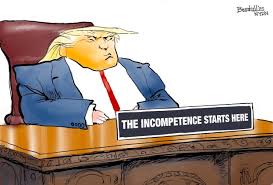
President Trump wants to revive a military programme mothballed at the end of the Cold War so America can stand ‘on an equal basis’ with global rivals
Trump implied
that rival nuclear powers were carrying out tests and that it was crucial
for the United States to start “testing our nuclear weapons on an equal
basis”. Neither Russia nor China, America’s “big power rivals”, have
conducted nuclear tests since a moratorium was agreed.
The last American test was in 1992, Russia stopped in 1990 and China in 1996, the same year the Comprehensive Test Ban Treaty was signed. The only countries that have carried out nuclear tests since then have been North Korea, most recently in 2017, and India and Pakistan, which both conducted underground testing
in May 1998.
Times 30th Oct 2025, https://www.thetimes.com/us/news-today/article/us-nuclear-weapons-testing-trump-s08xq9hgm
Trump’s Big Nuclear Reactor Push Raises Safety Concerns

1 October 2025, https://english.aawsat.com/features/5203506-trumps-big-nuclear-reactor-push-raises-safety-concerns
A huge nuclear deal announced by the Trump administration earlier this week provides a multi-billion-dollar incentive for the US government to issue permits and approvals for new Westinghouse reactors – an unprecedented structure that critics say poses environmental and safety risks.
Under the agreement with Westinghouse Electric’s owners, Canada-based Cameco and Brookfield Asset Management , the US government will arrange financing and help secure permits and approvals for $80 billion worth of Westinghouse reactors.
In return, the plan offers the US government a path to a 20% share of future profits and a potential 20% stake in the company if its value surpasses $30 billion by 2029.
The deal is one of the most ambitious plans in US atomic energy in decades, underscoring President Donald Trump’s agenda to maximize energy output to feed booming demand for artificial intelligence data centers.
But the financial incentives risk clouding regulatory scrutiny aimed at preventing nuclear accidents, according to safety advocates and regulatory experts. “The things that could go wrong are Three Mile Island, Chernobyl and Fukushima,” said Greg Jaczko, a former chairman of the Nuclear Regulatory Commission, pointing to three of the worst nuclear power accidents on record.
“All have causes tied to insufficient regulatory independence.”
The White House said concerns about safety were unfounded.
“The regulatory regime remains the same and is not compromised. There’s nothing in the deal about regulatory changes,” the White House said in an emailed statement. Westinghouse owner Cameco declined to comment. Brookfield and Westinghouse did not respond to messages requesting comment.
TD Cowen analysts told clients in a research note this week they expect Westinghouse to have 10 new large-scale reactors – enough gigawatts to power several million homes – under construction by 2030 as a result of the deal.
Typically, it takes around a decade for a new nuclear power plant to get built, largely due to the rigorous permitting requirements and enormous costs and complexities associated with construction.
Patrick White, a nuclear regulatory and technology expert at the Clean Air Task Force, said effective regulation did not need to be a slow or extended process and there were benefits to moving more efficiently.
“Ensuring that nuclear regulation is also timely and predictable is in the best interest of both companies and the public,” White said. Todd Allen, a nuclear expert at the University of Michigan, said the design of Westinghouse reactors is well established, but questioned how fast projects could progress.
“With that aggressive timeline, and demand for the reactors around the world, I wonder if there is a big enough workforce to handle all of these projects,” Allen said.
DELAYS TO PREVIOUS US PROJECT
Westinghouse’s last US-based nuclear project, building two nuclear reactors at the Vogtle power plant in Georgia, forced the company into bankruptcy protection in 2017.
The two reactors were about seven years behind schedule and cost about $35 billion, more than double the original estimate of $14 billion.
Patty Durand, director of nonprofit Georgians for Affordable Energy, has spent years analyzing that project and said she fears fast permitting would overlook the risks associated with climate change.
She said severe droughts have forced operators to curtail nuclear power in Europe and the United States to avoid overheating their reactors. Westinghouse also had a slew of problems related to the modular design of its AP1000 reactors, such as some parts’ dimensions being wrong when they arrived on site. The AP1000 would also be used for the new reactors, built from prefabricated parts and assembled on site.
Edwin Lyman, a physicist at the Union of Concerned Scientists, said he fears the Trump administration will exert too much power over the Nuclear Regulatory Commission to get the new reactors permitted.
“If the White House fully takes over the NRC and it is no longer at all independent, then it could be used just as a tool for sweeping deals for which the White House could accelerate licensing on its preferred projects regardless of their actual safety implications, and that’s a dangerous thing,” Lyman said.
Japan’s seismic history and the Westinghouse deal.
Letter to Ft.com : It almost feels impolite to point out some simple facts regarding your story “Westinghouse and US government strike $80bn nuclear reactor deal”. We are celebrating what Donald Trump hails as its “great friendship” between US and Japan, in addition to the election of our
first female prime minister, and an $80bn nuclear reactor deal — struck
by Washington and funded by Tokyo — all under the bright banner of what
appears to be a new era for our two countries.
Yet the simple fact remains,
whether we like it or not, that Japan is one of the most seismically active
countries in the world, which makes operating nuclear power plants far
riskier there than in the US.
The major nuclear players in both countries
— Westinghouse and Tokyo Electric Power (Tepco) — have faced bankruptcy or financial collapse. All publicly available, reliable data shows that solar power is significantly cheaper than new nuclear energy. Both our
countries’ leaders have issued similarly nationalistic statements on green
energy — President Trump even signed executive orders on “Unleashing
American Energy”, implicitly pointing to a common foe, namely China.
Warren Buffett once wrote that “more money has been stolen with the point
of a pen than at the point of a gun”. These nuclear power plant projects
will consume billions of dollars over the coming decades — long after
today’s leaders have left office. Future generations are being made the
“collateral” for decisions taken today.
FT 31st Oct 2025, https://www.ft.com/content/77769193-1cb0-4d8e-807a-e57936617de9
Trump’s testing plans for US nuclear weapons won’t include explosions, energy secretary says
Confusion does, too!
By AAMER MADHANI, November 3, 2025, https://apnews.com/article/trump-nuclear-weapons-testing-explosions-wright-energy-a920fc10aff85243cb6895fad55b2839
New tests of the U.S. nuclear weapons system ordered up by President Donald Trump will not include nuclear explosions, Energy Secretary Chris Wright said Sunday.
It was the first clarity from the Trump administration since the president took to social media last week to say he had “instructed the Department of War to start testing our Nuclear Weapons on an equal basis.”
“I think the tests we’re talking about right now are system tests,” Wright said in an interview on Fox News’ “Sunday Briefing.” “These are not nuclear explosions. These are what we call noncritical explosions.”
Wright, whose agency is responsible for testing, added that the planned testing involves “all the other parts of a nuclear weapon to make sure they deliver the appropriate geometry and they set up the nuclear explosion.”
The confusion over Trump’s intention started minutes before he held a critical meeting in South Korea with Chinese President Xi Jinping. Trump took to his Truth Social platform and appeared to suggest he was preparing to discard a decades-old U.S. prohibition on testing the nation’s nuclear weapons.
Later that day, as he made his way back to Washington, Trump was coy on whether he really meant to say he was ordering the resumption of explosive testing of nuclear weapons — something only North Korea has undertaken this century — or calling for the testing of U.S. systems that could deliver a nuclear weapon, which is far more routine.
He remained opaque on Friday when asked by reporters about whether he intended to resume underground nuclear detonation tests.
“You’ll find out very soon,” Trump told reporters aboard Air Force One on Friday, as he headed to Florida for a weekend stay.
The U.S. military regularly tests its missiles that are capable of delivering a nuclear warhead, but it has not detonated the weapons since 1992. The Comprehensive Nuclear Test Ban Treaty, which the U.S. signed but did not ratify, has been observed since its adoption by all countries possessing nuclear weapons, North Korea being the only exception.
Trump announced his plans for nuclear tests after Russia announced it had tested a new atomic-powered and nuclear-capable underwater drone and a new nuclear-powered cruise missile.
Russia responded to Trump’s nuclear testing comments by underscoring that it did not test its nuclear weapons and has abided by a global ban on nuclear testing.
The Kremlin warned though, that if the U.S. resumes testing its weapons, Russia will as well — an intensification that would restart Cold War-era tensions.
Pentagon Tells Congress It Doesn’t Know Who It’s Killing in Latin American Boat Strikes
by Dave DeCamp | October 30, 2025 , https://news.antiwar.com/2025/10/30/pentagon-tells-congress-it-doesnt-know-who-its-killing-in-latin-american-boat-strikes/
US War Department officials don’t know the identities of the 61 people who have been extra-judicially executed in US military strikes on boats in the waters near Venezuela and in the Eastern Pacific Ocean, POLITICO reported on Thursday, citing House Democrats who attended a classified briefing on the campaign.
“[The department officials] said that they do not need to positively identify individuals on these vessels to do the strikes, they just need to prove a connection to smuggling,” said Rep. Sara Jacobs (D-CA). “When we tried to get more information, we did not get satisfactory answers.”
While the Trump administration has cited overdose deaths in the US related to fentanyl to justify the bombing campaign, lawmakers were told in the briefing that the boats that have been targeted were allegedly smuggling cocaine, though the Pentagon has not provided evidence to back up its claims about what the vessels were carrying.
“They argued that cocaine is a facilitating drug of fentanyl, but that was not a satisfactory answer for most of us,” Jacobs said.
The briefing on Thursday came after the Pentagon shut out Democrats from another briefing it held with Republicans a day earlier, which left Democratic senators fuming. Democrats who attended Thursday’s briefing said Pentagon lawyers were pulled from the meeting at the last minute.
“Am I leaving satisfied? Absolutely not. And the last word that I gave to the admiral was, ‘I hope you recognize the constitutional peril that you are in and the peril you are putting our troops in,’” Rep. Seth Moulton (D-MA) told reporters after the briefing, according to CNN.
Jacobs said that, based on what she was told, even if Congress authorized the bombing campaign, it would still be illegal. “[T]here’s nothing that we heard in there that changes my assessment that this is completely illegal, that it is unlawful and even if Congress authorized it, it would still be illegal because there are extrajudicial killings where we have no evidence,” she said.
Criticism of the US bombing campaign has also come from Republicans, most prominently from Sen. Rand Paul (R-KY). “No one said their name, no one said what evidence, no one said whether they’re armed, and we’ve had no evidence presented,” Paul said this week of the people who have been targeted. “They summarily execute people without presenting evidence to the public … so it’s wrong.”
Paul has joined Senate Democrats in introducing a War Powers Resolution aimed at preventing the Trump administration from starting a war with Venezuela amid threats of US strikes on the country aimed at ousting President Nicolas Maduro and a major US military buildup in the region. A vote on the bill is expected to happen next week.
Donald Trump’s Nuclear Announcement Sparks Alarm: ‘He Is Misinformed’

“It’s incoherent, it’s illogical and when it comes to nuclear weapons, we simply cannot afford the kind of zig-zagging policies that we’re seeing from Trump on so many other topics.”
Oct 30, 2025,
https://www.newsweek.com/donald-trumps-nuclear-announcement-sparks-alarm-10967374
The resumption of nuclear weapons testing by the United States will undermine national security, arms control advocates told Newsweek.
Daryl Kimball, executive director of the Arms Control Association, denounced President Trump’s directive for the Department of War to immediately restart nuclear weapons testing for the first time in more than 30 years as reckless and unclear.
“Somebody needs to talk to an adult at the White House and find out what the heck he’s talking about,” Kimball told Newsweek early Thursday. “I can’t discern his grumblings beyond what you can. If he’s talking about resuming weapons test explosions for the first time since 1992, he is misinformed about what that’s for and whether it’s necessary.”
Kimball said Trump’s announcement on Truth Social on Wednesday was likely to spark strong opposition in Nevada, where the last nuclear detonations in the U.S. occurred underground, as well as potential ramifications abroad.
“It’s not militarily, technically or politically necessary,” Kimball continued. “It would lead to a chain reaction of nuclear tests by other countries, including Russia, probably North Korea, maybe China, and it would undermine U.S. security because the United States has conducted more nuclear tests — 1,030 — than any other country.”
Trump’s proposal will also face “tremendous opposition” from Congress, Kimball said, including legislators in Nevada like U.S. Rep. Dina Titus, who indicated late Wednesday she intends to introduce legislation to “put a stop” to Trump’s proposed shift.
The resumption of nuclear testing at the former site in Nevada would take up to 36 months and cost up to “hundreds of millions,” Kimball said.
“Many hundreds of millions of dollars,” he said. “If you can imagine, you’ve got to drill a vertical shaft, you have to bring in cranes, equipment, drillers, personnel. You have to make sure that containment is right and you have to get federal reviews, etcetera, etcetera. Congress would have an opportunity at some point to block this.”
North Korea is the lone country to have conducted a nuclear test explosion this century and the United States signed the Comprehensive Nuclear Test Ban Treaty in 1996, Kimball said.
“Most of all, we need to be asking why,” Kimball added. “What is the purpose? How does this advance our interests? This would take us back to the worst days of the Cold War where the U.S. and the Soviet Union were conducting tit-for-tat atmospheric nuclear test explosions to simply show the other side that we’ve got big bombs too.”
Kimball said Trump’s announcement represented an “incoherence and inconsistency” regarding nuclear weapons, citing prior recent calls to denuclearize.
“And now he’s talking about responding with our own nuclear tests,” he explained. “It’s incoherent, it’s illogical and when it comes to nuclear weapons, we simply cannot afford the kind of zig-zagging policies that we’re seeing from Trump on so many other topics.”
A message seeking additional details from the White House on Trump’s directive was not immediately returned on Thursday.
Alicia Sanders-Zakre, policy and research coordinator for the International Campaign to Abolish Nuclear Weapons (ICAN), characterized Trump’s announcement as “incoherent, untrue and alarming,” alleging his misrepresented the size of arsenals in the U.S., Russia and China.
Trump has also mistakenly claimed that China and Russia are currently testing nuclear weapons and directed the incorrect agency — the Department of War — to resume testing rather than the Department of Energy, which oversees the nation’s nuclear warheads, Sanders-Zakre said.
“The fact that Trump referenced Russian and Chinese activities and the Department of War could be interpreted as signaling that he was referring to testing nuclear-capable missiles, which all three countries do regularly test,” she told Newsweek.
The most recent nuclear test in the United States took place at the Nevada National Security Site, where nearly 1,000 detonations have occurred. Other U.S.-led detonations have happened in New Mexico, the Marshall Islands and Kiribati in the central Pacific, where joint testing occurred with the United Kingdom, Sanders-Zakre said.
In 2005, the National Cancer Institute estimated that 22,000 cancers resulting in 11,000 U.S. deaths would be caused in the aftermath of the Nevada nuclear tests, Sanders-Zakre added.
“Nuclear detonations in the Pacific obliterated entire atolls, and left others uninhabitable to this day,” she wrote in an email. “It was due in large part to the nationwide and global opposition to nuclear test detonations – and their clear devastating impacts for people and the environment – that nuclear test detonations were prohibited by the Comprehensive Test Ban Treaty in 1996.”
Any move by the United States to restart nuclear testing will evoke “widespread national and global condemnation,” Sanders-Zakre said.
The United States is slated to spend $95 billion on its nuclear arsenal per year over the next decade and ICAN estimated global nuclear spending last year at $100 billion, she said.
“Any additional funds wasted on weapons of mass destruction is diverting resources that could address real security needs,” Sanders-Zakre wrote in an email.
A senior Russian lawmaker, meanwhile, also warned Thursday that any move by the United States to resume nuclear testing could trigger global instability.
Dr. Emma Belcher, a nuclear proliferation expert at Ploughshares, a nonprofit that aims to reduce nuclear threats, described Trump’s directive as “reckless, needless and dangerous” for national and world security.
“While the details of this policy shift are unclear, including whether Trump is referring to missile testing or explosive nuclear tests, it threatens to upend relations between nuclear-armed states and push the world deeper into a new arms race,” Belcher told Newsweek in a statement. “If the U.S. breaks its 30-year moratorium on nuclear tests, China and Russia will likely return to wide-scale explosive testing. On the international level, this will heighten the risks of great power competition and increase the likelihood that strategic tensions lead to nuclear catastrophe.”
1 This Month





PLEASE OPPOSE HR 8255 AND S.3639 – bills would accelerate satellite deployment, with no environmental review or safeguards – https://ncstd5li.quorum.us/campaign/169331/
To see nuclear-related stories in greater depth and intensity – go to https://nuclearinformation.wordpress.com
-
Archives
- October 2026 (58)
- September 2026 (339)
- August 2026 (330)
- July 2026 (355)
- June 2026 (287)
- May 2026 (306)
- April 2026 (356)
- March 2026 (251)
- February 2026 (267)
- January 2026 (308)
- December 2025 (358)
- November 2025 (359)
-
Categories
- 1
- 1 NUCLEAR ISSUES
- business and costs
- climate change
- culture and arts
- ENERGY
- environment
- health
- history
- indigenous issues
- Legal
- marketing of nuclear
- media
- opposition to nuclear
- PERSONAL STORIES
- politics
- politics international
- Religion and ethics
- safety
- secrets,lies and civil liberties
- spinbuster
- technology
- Uranium
- wastes
- weapons and war
- Women
- 2 WORLD
- ACTION
- AFRICA
- Atrocities
- AUSTRALIA
- Christina's notes
- Christina's themes
- culture and arts
- Events
- Fuk 2022
- Fuk 2023
- Fukushima 2017
- Fukushima 2018
- fukushima 2019
- Fukushima 2020
- Fukushima 2021
- general
- global warming
- Humour (God we need it)
- Nuclear
- RARE EARTHS
- Reference
- resources – print
- Resources -audiovicual
- Weekly Newsletter
- World
- World Nuclear
- YouTube
-
RSS
Entries RSS
Comments RSS

