Star Wars redux: the false promise of space-based missile defense

by Najam Ul Hassan, November 24, 2025, https://spacenews.com/star-wars-redux-the-false-promise-of-space-based-missile-defense/?utm_source=ActiveCampaign&utm_medium=email&utm_content=Opinions%3A%20Is%20space-based%20missile%20defense%20a%20non-starter%3F&utm_campaign=Opinions%20-%202025-11-29
Star Wars is back in vogue with President Trump’s executive order to establish the “Golden Dome” missile defense shield. It will feature an ambitious space-based boost-phase interceptor program in addition to terrestrial systems. While admittedly the holy grail of defense against ballistic missiles, the obstacles that plagued its discontinued predecessor, “Brilliant Pebble,” under the Strategic Defense Initiative, remain unaddressed. The technological breakthroughs in launch capacity, decreasing costs of sending mass into space and faster data transfer have led to renewed hope for space-based missile defense, but the fundamental hurdle — physics, not technology — remains to be effectively overcome.
Recurrent interest in space-based missile interceptors (SBI) is driven by the motivation to neutralize the missile in the boost phase, contrary to the other air defense systems that intercept either in the mid-course or the terminal phase. This offers numerous advantages: it is substantially easier to detect and target as the booster has not detached yet, making the target bulkier; the plume from the burn makes it visible; its speed is slower compared to other phases; and the target has not hardened yet, making it more vulnerable. Once the missile enters the midcourse, it deploys decoys with a similar radar cross-section as the actual warhead, which float at similar trajectories, making it exponentially harder to achieve an effective kill. Additionally, the deployment of multiple warheads in case of a Multiple Independent Re-entry Vehicle or zig-zag moment of hypersonic glide vehicles adds another layer of complexity to successful interception.
However, this lucrative promise is heavily outweighed by the drawback of what could be termed the absenteeism problem in physics. These satellites, carrying kill vehicles, must be stationed in low Earth orbit (LEO) to reach the target in the boost phase, which only lasts from three to five minutes after launch. The fundamental problem is that objects in LEO cannot be parked above one point on Earth; they revolve around Earth, completing a cycle between 90 and 120 minutes. To cover the entire stretch of potential launching points and establish a genuinely global air defense, a constellation of 950 satellites has to be deployed, according to conservative estimates. The estimated cost, according to the Congressional Budget Office’s estimates, is $542 billion as opposed to the $175 billion claim by President Trump.
Not only is the scaling dynamic flawed, but the system is also easy to defeat. The constellation is easily overwhelmed by simultaneous launches. Even if each satellite were to carry more than one interceptor, the system still saturates quickly. Once that happens, instead of a linear increase in required satellites to intercept additional hostile launches, the requirement jumps exponentially, which is untenable. Besides, the enemy can simply punch holes in the chain by employing anti-satellite missiles, as the satellites can be tracked.
Furthermore, attempts to field even a limited number of SBIs for tests could pose a security dilemma for other states. These SBIs can be effective ASAT vehicles as they would require high thrust and maneuverability, allowing them to potentially reach and attack satellites in geosynchronous orbits. This can trigger an arms race of satellite-based weapons as well as counter-space capabilities, resulting in a net effect of added insecurity for all, including the U.S. itself, which depends heavily on its space capabilities. Challenging the effectiveness of an adversary’s deterrent would have profound strategic implications, at least insofar as it would either find qualitative ways to evade the newly developed defense architecture, or increase the number of their missiles to overwhelm the systems, or both. Ultimately, durable security cannot be achieved alone but in concert with others, including the adversary, and perhaps the only way to prevent attacks and ensure long-term stability remains deterrence by punishment.
The proposal for SBIs has also triggered sharp international reactions. China has already fielded its own “Golden Dome” prototype, which is essentially an early warning system with enormous big data computation ability, that uses the present capabilities in a more integrated and efficient manner, rather than seeking new platforms for interceptors. Criticizing the American approach, Beijing has asserted that SBIs would disturb “global strategic balance and stability” and turn “space into a war zone”, while Moscow has called it “very destabilizing.”
The desire to secure the homeland drives this saga, undergirded by the belief that technology could fundamentally alter defense logics. Yet despite significant progress in almost all the technological components needed to improve the cost-benefit equation, the physical — and perhaps insurmountable — barriers remain as formidable as they were three decades ago. The return to space-based interceptors thus reflects a recurring faith in technological solutions to strategic problems that are, at their core, governed by physics and deterrence. Rather than investing in an orbit-based missile shield that risks instability and imposes exorbitant costs, pursuing balanced security arrangements may offer a sustainable path toward long-term stability.
Najam Ul Hassan is a Research Assistant at the Centre for Aerospace and Security Studies, Lahore.
From WMDs to “Narco-States”: How the US Sells Wars the Intelligence Doesn’t Support
Mintpress News, September 18th, 2025, Alan Macleod
The United States is building up its military assets, sparking fears of another regime change attempt against Venezuela—and this one could be far more deadly than the others. Citing an influx of Venezuelan drugs into the U.S., the Trump administration is rapidly building up its military forces, encircling the South American nation, one which has been in Washington’s crosshairs for over a quarter of a century.
Military Buildup
The Trump administration is once again setting its sights on Venezuela. In recent weeks, President Trump deployed additional naval and air assets to the Caribbean, including seven warships, a submarine, and an amphibious assault ship, designed for maritime invasions. A squadron of advanced F-35 fighter jets has also been relocated to Puerto Rico, bringing them within striking distance of Caracas. In total, around 4,500 personnel (including 2,500 combat-ready Marines) have been repositioned to the area.
In what could be the opening salvo of a major war, the military has already begun to flex its muscles. Earlier this month, it destroyed a small Venezuelan vessel, carrying out multiple attacks on the boat to ensure there were no survivors. Trump celebrated the action in a post on Truth Social, claiming that the boat was carrying illicit drugs to the United States, and that its crew were member of the Tren de Aragua cartel (TDA), a group, he said, is “operating under the control of [Venezuelan president] Nicolás Maduro” himself; one that is “responsible for mass murder, drug trafficking, sex trafficking, and acts of violence and terror across the United States.”…………………………………………………………………………………………………
Claims vs Evidence
The Trump administration’s extraordinary claims about Maduro and Venezuela have convinced few experts. Professor Julia Buxton of Liverpool John Moores University, a specialist in both global drug policy and Venezuelan politics, told MintPress:
“The claim that Venezuela is a major drugs producer has been an ongoing theme of the U.S. campaign against Venezuela dating back to the early 2000s. This kind of anti-drug messaging is really common in U.S. foreign policy and strategy for at least 100 years. What we have got here is essentially just recycled Ronald Reagan [talking points] … It is unsubstantiated and absurd, and it is really not backed by any official data.”
The data does indeed jar wildly with the administration’s accusations. The United Nations Office on Drugs and Crime’s World Drug Report 2025 explains that cocaine—the drug most associated with South America—is primarily produced in Colombia, Peru, or Bolivia, and transported via ports in Ecuador to the United States. Venezuela is not mentioned at all in the 98-page document, which catalogs producers, consumers, suppliers, and supply lines of drugs.
The vast majority of lethal drugs produced in South America travel via the Pacific coastline from Ecuador. In terms of supply routes, a small amount of Colombian cocaine is trafficked through the country’s long and porous rainforest border with Venezuela, and then transported via the Caribbean. But this is minuscule in comparison to that transported via Pacific ships, over the land route through Central America and Mexico, or simply flown directly to the U.S. from the cocaine producing states………………………………………………………………………………………………………………………………………………………………………………..https://www.mintpressnews.com/us-venezuela-drug-war-claims/290475/
Trump’s Ukraine peace plan D.O.A with neocon Rubio as Secretary of State, National Security Advisor.

top diplomat Rubio doesn’t do peaceful diplomacy, only violent regime change.
Trump wants out of the US proxy war with Russia…but not because he’s man of peace.
Walt Zlotow West Suburban Peace Coalition Glen Ellyn IL , 28 Nov 25
Enabling the Israeli genocide in Gaza that has killed over 100,000 Palestinians made no dent on Trump’s degraded conscience. In fact, he’s ecstatic that he can both control and rebuild Gaza as head of the colonial ruling ‘Board of Peace’ which will essentially cement Gaza into Greater Israel.
Trump’s sadism extends to his ghoulish glorying in blasting 20 small unarmed boats to smithereens off Venezuela as prelude to his imminent and violent regime change operation.
But Trump wants out of America’s lost proxy war with Russia destroying Ukraine. He cares not a whit about the death and destruction his predecessor Biden brought Ukraine by promising NATO membership and fueling their war on Russian leaning Ukrainians in Donbas. He simply knows it’s a lost cause that gobbles up valuable war resources needed for Gaza, Venezuela and eventual confrontation with China.
Why then was he so stupid to appoint virulent neocon Marco Rubio as both Secretary of State and National Security Advisor? Rubio is not in sync with Trump’s peace plan. He flew to Geneva to reassure European leaders committed to an impossible Ukrainian victory that ‘all is not lost.’ Rubio’s remarks halted momentum derived from Trump’ 28 point peace plan that Russia President Putin agrees provides a sensible framework for a negotiated peace. Europe is risking self-destruction to prevail over Russia and Rubio is all too willing to assist them.
Trump should fire Rubio from both jobs to regain lost momentum to extricate America from its lost war to weaken, isolate Russia from Europe. With Rubio at State and National Security, Ukraine will simply lose more territory and more cannon fodder every day he continues to gum up the peace process.
One might surmise Rubio would push for peace in Ukraine so he could spend more of his supposed diplomatic portfolio effecting regime change in Venezuela followed by Honduras, Nicaragua, Columbia and his ultimate prize Cuba.
But top diplomat Rubio doesn’t do peaceful diplomacy, only violent regime change. Since Russian regime was part of our 11 year long proxy war against Russia beginning when we KO’d Russian leaning Ukrainian president Victor Yanukovych in 2014, Rubio remains all in.
If Trump was serious about withdrawing from Ukraine and indeed all of Europe bankrupting their economies to confront an imaginary Russian bogyman, he’d have put peacemakers at State instead of warmakers. Forget ending the Ukraine war on Day 1. Unless he dumps Rubio and his fellow neocons, Trump will get to Day 1,461, his last, still enmeshed in the Ukraine roach motel.
Soldiers Must Disobey Unlawful Orders Under Trump — It’s Their Legal Duty.

both the Nuremberg Principles and the Uniform Code of Military Justice established a duty to obey lawful orders but also a duty to disobey unlawful orders.
SCHEERPOST, November 26, 2025, Marjorie Cohn , Truthout
The courageous action of six Democratic members of Congress has thrust into the national discourse the duty of military and CIA personnel to disobey Donald Trump’s illegal orders. As the Trump administration continues to unlawfully murder people in small vessels in the Caribbean and Eastern Pacific, deploy the National Guard to U.S. cities, and ignore court orders, the six lawmakers were moved to act.
In a 90-second video organized by Sen. Elissa Slotkin (Michigan), two senators and four Congress members, all U.S. military or CIA veterans, take turns reading a statement to active servicemembers, urging them to refuse to follow illegal orders.
“Like us, you all swore an oath to protect and defend this Constitution,” the lawmakers said in the video. “Right now, the threats to our Constitution aren’t just coming from abroad, but from right here at home. Our laws are clear. You can refuse illegal orders. You can refuse illegal orders. You must refuse illegal orders. No one has to carry out orders that violate the law or our Constitution.”The other lawmakers speaking in the video are Sen. Mark Kelly (Arizona) and Representatives Chris Deluzio (Pennsylvania), Maggie Goodlander (New Hampshire), Chrissy Houlahan (Pennsylvania), and Jason Crow (Colorado).
Trump Threatens Six Lawmakers With Sedition Charges and Hanging
Their words, which constituted a correct statement of the law, elicited unprecedented vitriol from Trump, who wrote on Truth Social: “It’s called SEDITIOUS BEHAVIOR AT THE HIGHEST LEVEL. Each one of these traitors to our Country should be ARRESTED AND PUT ON TRIAL.”
In a second post, Trump wrote: “This is really bad, and Dangerous to our Country. Their words cannot be allowed to stand. SEDITIOUS BEHAVIOR FROM TRAITORS!!! LOCK THEM UP??? President DJT.” And he added in a third post: “SEDITIOUS BEHAVIOR, punishable by DEATH!” Trump also reposted a statement saying: “HANG THEM GEORGE WASHINGTON WOULD !!”
The six lawmakers responded to Trump’s diatribe in a statement: “What’s most telling is that the president considers it punishable by death for us to restate the law. Our servicemembers should know that we have their backs as they fulfill their oath to the Constitution and obligation to follow only lawful orders. It is not only the right thing to do, but also our duty.”
Now the Department of War is investigating Kelly for “serious allegations of misconduct,” threatening to call him back to active duty and court-martial him. The Department’s “Official Statement” posted on X adds, “All servicemembers are reminded that they have a legal obligation under the UCMJ to obey lawful orders and that orders are presumed to be lawful.” But they fail to add that servicemembers also have a legal duty to disobey unlawful orders, which is what Kelly and his fellow lawmakers accurately stated in their video.
The Duty to Disobey Unlawful Orders
Under the Uniform Code of Military Justice (UCMJ), a servicemember can be punished by court-martial for refusing to obey any lawful order or regulation. Although the UCMJ doesn’t define “lawful,” the Manual for Courts-Martial states that an order is lawful “unless it is contrary to the Constitution, the laws of the United States, or lawful superior orders or for some other reason is beyond the authority of the official issuing it.”
The manual also says that although it may be inferred that an order to perform a military duty or act is lawful, “this inference does not apply to a patently illegal order, such as one that directs the commission of a crime.” The Rules for Courts-Martial say that acting “pursuant to orders” is a legitimate defense “unless the accused knew the orders to be unlawful or a person of ordinary sense and understanding would have known the orders to be unlawful.”
Finally, the manual notes, “The lawfulness of an order is a question of law to be determined by the military judge.” Normally, that determination can be made only after a servicemember refuses or disobeys an order, in a court martial or war crimes tribunal. So the refuser takes the risk that a judge will find the order lawful and he or she will be punished for refusing to follow it.
Examples of unlawful orders within the United States include:
- The use of military forces to deport, remove, or detain immigrants. Removal to countries where there is a substantial likelihood of torture violates the Convention Against Torture and Other Cruel, Inhuman or Degrading Treatment or Punishment, which the U.S. has ratified.
- The use of military forces against civilian protesters. The Posse Comitatus Act forbids the use of federal troops to enforce domestic law unless there is an “insurrection.”
Examples of unlawful orders outside the United States include:
- Military attacks on vessels in international or foreign waters.
- An invasion or attack on Venezuela, Mexico, Nigeria, etc.
- The use of “preemptive” military force against Iran, China, etc.
- The use of nuclear weapons against any country.
- The torture or cruel treatment of civilians, prisoners of war, or other detainees.
- The intentional targeting of civilians.
- Attacking Palestinians in Gaza under the guise of “peacekeeping.”
Resistance to Illegal U.S. Wars — From Vietnam to Iraq
In 1968, U.S. Army Lt. William Calley led 100 U.S. troops into the village of My Lai in Vietnam and killed 500 civilian women, children, and elderly men in what came to be known as the My Lai Massacre.
Calley was accused of the premeditated murder of civilians. Charges were filed against 25 people, including two generals. The charges against the generals, 10 other officers, and seven enlisted men were dismissed. Five others, including the company commander, Capt. Ernest Medina, were court-martialed and acquitted.
At his court-martial, Calley claimed that he was just following Medina’s orders to kill all the villagers because everyone in the village was “the enemy.”
Like the Nazi officials at Nuremberg, Calley’s defense that he was just following superior orders was rejected. In 1971, he was convicted of the premeditated murder of “not less than” 22 Vietnamese people and sentenced to life in prison. Ultimately, Calley only served over three years of house arrest and confinement to barracks.
But there is a noble tradition in the United States of servicemembers refusing orders to deploy to illegal wars and/or commit war crimes. Some refusers have been arrested and court-martialed. Many have argued in their defense that they had a legal duty to disobey illegal orders.
Howard Levy
……………………………..Levy disobeyed an order to train Special Forces aidmen to be paramedics. He felt they would use their medical training to gain the trust of the Vietnamese people who would then not oppose U.S. troops carrying out their illegal missions. Levy, who called this the “prostitution of medicine,” thought these Green Berets were committing war crimes…………………….
Ehren Watada
…………………………….“The war in Iraq is in fact illegal. It is my obligation and my duty to refuse any orders to participate in this war. An order to take part in an illegal war is unlawful in itself……………………………………………………………………
Pablo Paredes.
………………………refused orders to board an amphibious assault ship that would transport 3,000 Marines to Iraq because he thought he would be complicit as a war criminal……………………………………………………………………………………………………. the Iraq War violated the UN Charter, and that Paredes had a reasonable belief that by transporting Marines to Iraq, he would place them in the position of committing war crimes………..U.S. forces were torturing prisoners at Abu Ghraib prison, which constituted war crimes…………both the Nuremberg Principles and the Uniform Code of Military Justice established a duty to obey lawful orders but also a duty to disobey unlawful orders……………………………………………………………………………………………………………………..
…………………..After the six members of Congress released their bold video, Veterans For Peace said in a statement:
We call on all veterans to stand with these members of Congress and amplify their message so that Airmen, Marines, Seamen, and Army troops know that if they ever face the difficult challenge of refusing an illegal order, they are carrying out their oath to defend the Constitution by following the law.
There are groups, including the GI Rights Hotline, the Center on Conscience and War, and the Military Law Task Force, that work with servicemembers to help them recognize when they have received an unlawful order and figure out their next steps. https://scheerpost.com/2025/11/26/soldiers-must-disobey-unlawful-orders-under-trump-its-their-legal-duty/
The “Arsenal of Freedom” is a Dangerous Fantasy for Armchair Warriors
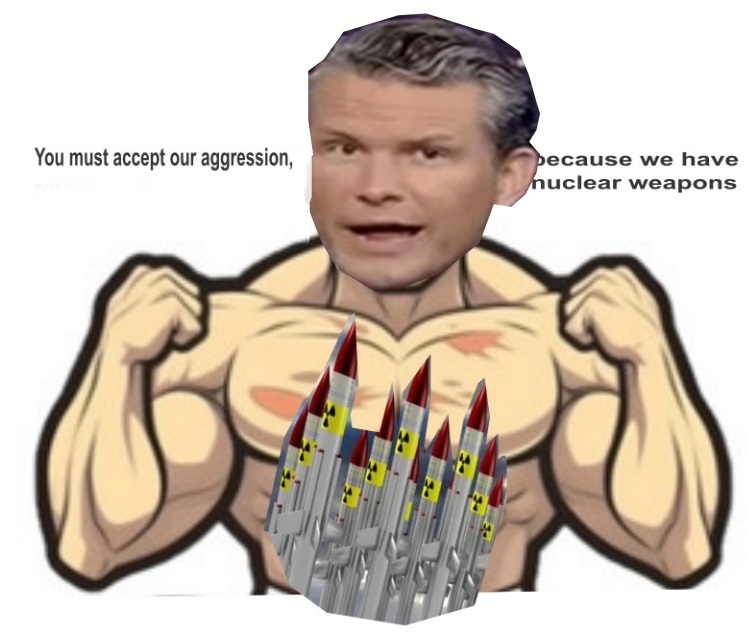
This vision of relentless war is consistently advocated by those who have never experienced its brutal reality.
These are men who have never found themselves in a trench. They see war as a video game – a contest of “Speed. Scale. Competition” – with clean graphics and no blood. They do not know the smell of a field hospital, the weight of a fallen comrade, or the thousand-yard stare of a soldier with PTSD.
27 November 2025 Andrew Klein , https://theaimn.net/the-arsenal-of-freedom-is-a-dangerous-fantasy-for-armchair-warriors/
The rhetoric of transforming the Pentagon into a “battlefield power” is historically illiterate, morally bankrupt, and a recipe for endless war.
A recent public statement by Secretary of War, Pete Hegseth, celebrating the transformation of the Department of Defence, offers a chilling vision for America’s future. He praised the shift “from bureaucratic process to battlefield power” and vowed to “unleash the ‘Arsenal of Freedom’.”
This is not a serious national security strategy. It is a dangerous and illogical fantasy, peddled by those who have never borne the true cost of war, and it threatens to plunge the nation into a cycle of perpetual conflict from which it may not recover.
The Illogical and Ahistorical Core of “Battlefield Power”
The rhetoric is built on buzzwords designed to sound strong, but which collapse under the slightest scrutiny.
First, the very idea of reframing the mission of the Department of Defence as pure “battlefield power” is a rejection of the very tools that prevent wars from starting. It sidelines diplomacy, intelligence, and strategic restraint in favour of the hammer – and when you are a hammer, every problem looks like a nail. This is not sophistication; it is intellectual bankruptcy.
Second, the phrase “Arsenal of Freedom” is Orwellian newspeak. An arsenal is a collection of weapons. Freedom is an ideal. To conflate the two is to argue that liberty is delivered by missiles and its volume is measured in munitions. This is the logic of a conqueror, not a liberator. True freedom is built in classrooms, hospitals, and polling stations, not imposed by a B-52 bomber.
History is littered with the ruins of empires that believed in their own unstoppable military might. The Roman Empire, Napoleon’s France, and the Third Reich all shared this faith in raw “battlefield power.” Their fates are a testament to the folly of this philosophy. More recently, the United States has “unleashed its arsenal” in Vietnam, Iraq, and Afghanistan. The result was not a wave of freedom, but decades of instability, the rise of new terrorist threats, millions of refugees, and a deep, lasting distrust of American motives.
The Hypocrisy of the Armchair General
The most glaring flaw in this rhetoric is the character of those who champion it. This vision of relentless war is consistently advocated by those who have never experienced its brutal reality.
These are men who have never found themselves in a trench. They see war as a video game – a contest of “Speed. Scale. Competition” – with clean graphics and no blood. They do not know the smell of a field hospital, the weight of a fallen comrade, or the thousand-yard stare of a soldier with PTSD.
This disconnect is often paired with a personal history that contradicts the virtues they preach. How can one speak of “Accountability” and “Patriotism” while allegedly fostering a toxic environment and demonstrating a leadership vacuum in their own professional conduct? This is not the profile of someone who understands the gravity of sending others to die. It is the profile of a man playing with live human beings as if they were toy soldiers.
The Ghost of Colonialism and the Path to Perpetual War
This speech is not about defense; it is about empire. It is a revival of the pernicious colonial power syndrome, dressed in the flag and speaking of freedom.
The language of bringing “freedom” to others through superior firepower is the exact same justification used by every colonial power from the British Empire to King Leopold’s Congo. It is a narrative that dehumanises the “other” and justifies their subjugation for their own “good.”
This path leads not to a peaceful hegemony, but to a state of perpetual war. It creates new enemies faster than it can kill old ones. It drains the national treasury, diverts resources from domestic prosperity, and morally corrupts the nation from within. The “Arsenal of Freedom” becomes a self-licking ice cream cone – an industry that exists to sustain itself, constantly in need of new enemies to justify its existence.
Conclusion: Rejecting the Fantasy
The vision of an America that unleashes its “battlefield power” upon the world is a dangerous fantasy. It is illogical because it mistakes destruction for creation. It is ahistorical because it ignores the graveyards of every empire that walked this path. It is hypocritical because it is championed by those who have never had to pay war’s personal price.
This is the rhetoric of a simpleton who believes the world is a simple place. It is a clear and present danger to global stability and to the soul of the nation itself. We must reject this folly and champion the true, difficult work of building a world that does not require such an “arsenal” to be free. Our future depends on it.
Risks of Restarting Duane Arnold nuclear plan

October 1, 2025, Sierra Club, Iowa Chapter
Risks of Restarting Duane Arnold Nuclear Plant and Iowa’s Renewable Energy Future
Sierra Club Iowa Chapter urges legislators and the public to oppose the restart of the Duane Arnold nuclear plant and to support Iowa’s transition to safe, clean, and renewable energy sources.
On September 29, 2025, the Iowa Chapter of the Sierra Club hosted a press conference to address NextEra Energy’s proposal to restart the Duane Arnold nuclear plant, which has been in decommissioning since 2020. Experts in nuclear energy, public health, and environmental law provided insight into the risks of nuclear power and Iowa’s proven success with renewables.
To see the recording of the press conference: Iowa’s Energy Future – Nuclear Risks vs. Renewable Solutions
To see the presentation slides:
Renewables vs. Nuclear in Iowa by Mark Z. Jacobson
Analysis of Changes in Local Health Near Duane Arnold Nuclear Plant by Joseph Mangano
The press conference was held to address NextEra Energy’s proposal to restart the Duane Arnold nuclear plant in Iowa, which has been in decommissioning since 2020. The company has requested federal approval to transfer connections from three planned solar projects to support the nuclear restart. The goal of the press conference was to inform the public about this proposal, its broader implications for Iowa’s energy future, and to provide clear, fact-based information about the challenges and alternatives to nuclear energy.
Restarting Duane Arnold poses significant safety, environmental, and economic risks. The plant’s GE Mark I reactor design is decades old and has known safety flaws, and components may have degraded during the five years of decommissioning. Nuclear energy generates highly radioactive spent fuel that remains dangerous for hundreds of thousands of years, and routine plant operations can impact local communities’ health, including increased cancer rates and infant mortality. Delays in decommissioning the Duane Arnold plant increase safety and financial risks, while the potential use of public funding raises concerns about taxpayers bearing the cost. Additionally, the abandonment of previously planned solar projects shifts resources away from proven renewable energy solutions, further undermining Iowa’s clean energy future.
Speakers highlighted that Iowa has the tools and proven capacity to meet its energy needs safely, affordably, and sustainably through renewable energy sources like wind and solar. Experts emphasized that the state can continue to lead with clean energy while avoiding the safety and financial risks of nuclear power. This amplified importance of science backed decision-making and public participation to ensure Iowa’s energy future is secure, clean, and renewable.
“Iowa now gets nearly 79% of its electricity from wind, water, and solar. Despite that, electricity prices here are about three cents per kilowatt-hour below the national average. The idea that renewables raise costs is simply a myth, in fact, they keep prices low,” said Mark Z. Jacobson, Director of the Atmosphere/Energy Program at Stanford University.
“Before Duane Arnold began operating, cancer rates in nearby counties were 6.5% below the state average. But after decades of operation, those same counties showed cancer rates more than 12% higher. That translates to nearly 500 additional cancer cases among local residents under age 40,” said Joseph Mangano, Executive Director of the Radiation and Public Health Project.
“Nuclear power is not clean or renewable. Uranium mining leaves radioactive waste, reactors routinely leak tritium into groundwater, and the spent fuel remains dangerous for hundreds of thousands of years with no solution in sight,” said Wally Taylor, Conservation Chair and Legal Chair of the Iowa Chapter of the Sierra Club.
“The Duane Arnold reactor uses the same GE Mark I design as the Fukushima reactors that melted down in 2011. This is an old, well-documented, and dangerous design, so flawed that even in the 1970s, engineers warned it could lead to a devastating accident. Fukushima proved those warnings were justified,” said Don Safer, Co-Chair of the Sierra Club Grassroots Network Nuclear Free Team.
More about the Speakers:……………………………………………….. https://www.sierraclub.org/iowa/blog/2025/10/risks-restarting-duane-arnold-nuclear-plan
US military orders that should be disobeyed
Walt Zlotow, Nov 27, 2025, https://waltzlotow.substack.com/p/us-military-orders-that-should-be
Loading up or flying planes to Israel with tons of weapons that have already killed over 100,000 Palestinians. Any service member doing that is guilty of assisting genocide…the worst crime any servicemember can commit.
Loading up or flying planes bombing small, unarmed boats near Venezuela. This is premeditated mass murder of unknown persons. US makes sure all the boaters are killed so no record of their innocence is retained. Every one of the hundred or more boaters killed in 20 such sinkings emanated from military orders that were illegal and should have been resisted.
The US military is not content with illegal orders to support Israeli genocide in Gaza and obliterating small unarmed boats off Venezuela. Their Commander In Chief Trump has ordered 100 bombing strikes on imagined bad guys in Somalia this year. Does even one American in a million believe the lies emanating from Trump’s military that this mass murder in Somalia is crucial to protect the Homeland. Orders to relentlessly bomb a pitifully poor country 7,800 miles from America, posing no threat whatsoever, are illegal and should be disobeyed.
Granted its not easy to risk banishment from service, possibly even being imprisoned for disobeying these illegal orders. But one service member took such resistance to heroic heights. In February 2024 U.S. Air Force serviceman Aaron Bushnell set himself on fire outside the Israeli Embassy in Washington, D.C. to protest US support of Israel’s genocide in Gaza.
Refusing to obey illegal orders to commit premeditated murder is the least that patriotic service members can do to end Uncle Sam’s worldwide killing rampage. We should commend the 6 members of Congress for reminding and supporting them to do that.
Walt Zlotow, West Suburban Peace Coalition, Glen Ellyn IL
Right-wing media praise Trump’s made-up excuses for war against Venezuela.

Trump massively inflated threat from Venezuelan “narco-terrorists” smuggling fentanyl into the US
MEDIA MATTERRS, by Zachary Pleat. Research contributions from Jane Lee, 11/24/25
President Donald Trump and right-wing media have been quick to cite fentanyl interdiction as the supposed justification for the administration’s likely illegal strikes against vessels in the Caribbean Sea and Pacific Ocean, which they have blamed on so-called “narco-terrorists” tied to the regime of President Nicolas Maduro of Venezuela. But reporting has shown the Trump administration’s excuses are built on lies — with virtually no fentanyl arriving in the United States via routes currently being targeted by the military in a bombing campaign that has already claimed at least 83 lives.
This isn’t the first time Trump and his media allies have used fentanyl as an excuse for his out-of-control policies, as it was used to justify his instigation of a trade war with Mexico and Canada earlier this year. The Trump administration’s military buildup also follows multiple actions that undermine efforts to combat fentanyl trafficking into the U.S.
- The New York Times: Military officials have told Congress “there was no fentanyl on the boats” destroyed by Trump administration military strikes. Rep. Sara Jacobs (D-CA) told the Times that according to briefings from military officials, the Trump administration’s “rationale for the strikes is because fentanyl is killing so many Americans, but these strikes are targeting cocaine.” Jacobs also told HuffPost that Pentagon officials “argued that cocaine is a facilitating drug of fentanyl, but that was not a satisfactory answer for most of us.” Another congressional source told HuffPost: “They’ve not recovered fentanyl in any of these cases. It’s all been cocaine.” [The New York Times, 11/19/25; HuffPost, 11/4/25]
- The New York Times: Multiple government agencies have found that “Venezuela plays virtually no role in the fentanyl trade.” A September New York Times report explained: “Fentanyl is almost entirely produced in Mexico with chemicals imported from China, according to the U.S. Drug Enforcement Administration, the Justice Department and the Congressional Research Service.” It added: “There is no proof that it is manufactured or trafficked from Venezuela or anywhere else in South America.” [The New York Times, 9/3/25]
- The Atlantic: Coast Guard data shows “Fentanyl Doesn’t Come Through the Caribbean.” A September 26 article in The Atlantic countered the Trump administration’s justification for extrajudicial killings via military strikes against boats off the coast of Venezuela: “Although the United States Coast Guard interdicts staggering quantities of illegal drugs in the Caribbean each year, it does not encounter fentanyl on the high seas. South American cocaine and marijuana account for the overwhelming majority of maritime seizures, according to Coast Guard data, and there isn’t a single instance of a fentanyl seizure—let alone ‘bags’ of the drug—in the agency’s press releases.” [The Atlantic, 9/26/25]
- According to the State Department’s March 2025 International Narcotics Control Strategy Report: “The Department of State, in consultation with the Drug Enforcement Administration (DEA) and other relevant agencies, has identified Mexico as the only significant source of illicit fentanyl and fentanyl analogues significantly affecting the United States during the preceding calendar year.” [Washington Office on Latin America, 11/5/25]
- Trump has bombed boats and built up a military presence near Venezuela based on dubious fentanyl-trafficking claims
-
- The United States has carried out at least 21 military strikes on alleged drug-smuggling vessels, in which at least 83 people have been killed, in the Caribbean and the Pacific since September 2 Trump and the Department of Defense have claimed the boats carried fentanyl and were being operated by “narcoterrorists.” After the first strike, Trump claimed that the people on the boat were members of Tren de Aragua; the Trump administration has falsely claimed that gang is controlled by Venezuela’s government and invaded the U.S., and has used the gang to justify many unrelated immigration arrests. [CNN, 11/16/25; ABC News, 11/16/25; PolitiFact, 9/3/25; ProPublica, 11/13/25]
Right-wing media suggested these military strikes are necessary to stop fentanyl from being moved into the U.S……………………………………………………………………………………………………………………………………………………………………………https://www.mediamatters.org/national-security/right-wing-media-praise-trumps-made-excuses-war-against-venezuela
International Uranium Film Festival 2025

IUFF 2025, Las Vegas, NV, NORTH AMERICAN TOUR 2025
November 26, 2025, https://beyondnuclear.org/10009-2/
LAS VEGAS, NEVADA, USA, NOVEMBER 21, 22, AND 23, 2025–The International Uranium Film Festival (IUFF) is proud to announce the highly anticipated North American Tour 2025 taking place November 21, 22 & 23 at the Downtown Cinemas in Las Vegas. Showcasing an array of compelling films and exploring the detrimental impacts of nuclear weapons testing, the festival promises to captivate audiences with its thought-provoking narratives and powerful storytelling. “You can’t hug your children with nuclear arms,” said Ian Zabarte, Secretary of NCAC.
Organizers of the IUFF Las Vegas, the Native Community Action Council (NCAC) composed of Shoshone and Paiute peoples believe these films are a necessary part of the ongoing awareness, witness and resistance to nuclear war, human health and a livable Mother Earth.
HIGHLIGHTS: “TO USE A MOUNTAIN” ● “WAYS OF KNOWING” ● “SILENT WAR” ● “UNDER THE CLOUD” are among the films addressing uranium, the fuel for both nuclear weapons and nuclear energy. As 2025 marks the 80th anniversary of the first atomic bombings at the Trinity Site, Hiroshima, and Nagasaki, the world faces a new Manhattan Project that includes nuclear modernization of weapons and the fast-tracking of uranium mining for nuclear-powered AI (artificial intelligence) data centers. The IUFF recognizes all radiation victims. Downwinders of nuclear weapons test sites and nuclear energy facilities are all impacted by environmental contamination that creates undue health risks that produce cascading health effects to future generations. The IUFF is a space for everyone who supports a nuclear-free future! We invite all to come together to view original films and to meet with affected community members, organizations and activists working toward protection from radiation risks, protection of our lands and water, and protection of all Peoples worldwide.
“The Shoshone Nation still bears the deadly legacy of nuclear testing on our unceded lands, an act that violates our treaty, our land and our lives.” said Laura Piffero of the NCAC.HIGHLIGHTS: “TO USE A MOUNTAIN” ● “WAYS OF KNOWING” ● “SILENT WAR” ● “UNDER THE CLOUD” are among the films addressing uranium, the fuel for both nuclear weapons and nuclear energy. As 2025 marks the 80th anniversary of the first atomic bombings at the Trinity Site, Hiroshima, and Nagasaki, the world faces a new Manhattan Project that includes nuclear modernization of weapons and the fast-tracking of uranium mining for nuclear-powered AI (artificial intelligence) data centers. The IUFF recognizes all radiation victims. Downwinders of nuclear weapons test sites and nuclear energy facilities are all impacted by environmental contamination that creates undue health risks that produce cascading health effects to future generations. The IUFF is a space for everyone who supports a nuclear-free future! We invite all to come together to view original films and to meet with affected community members, organizations and activists working toward protection from radiation risks, protection of our lands and water, and protection of all Peoples worldwide.
“The Shoshone Nation still bears the deadly legacy of nuclear testing on our unceded lands, an act that violates our treaty, our land and our lives.” said Laura Piffero of the NCAC.
FOR MORE INFORMATION:
Uraniumfilmfestival.org
Nativecommunityactioncouncil.org
Minnesota’s aging nukes pose national threat
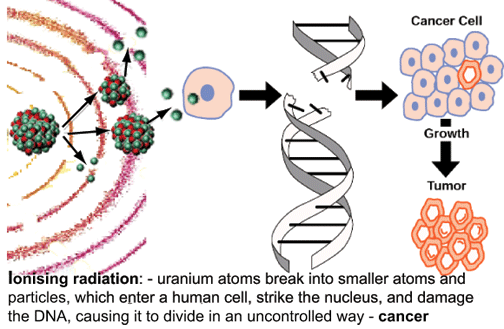
In a review of published studies of 136 nuclear reactor sites in the European Journal of Cancer Care in 2007, elevated leukemia disease rates in children were documented in the US, UK, France, Germany, Spain, Japan, and Canada. This is not a new story.
by beyondnuclearinternational, https://beyondnuclearinternational.org/2025/11/23/minnesotas-aging-nukes-pose-national-threat/
More than electricity, the reactors supply a steady dose of radioactive tritium in drinking water, writes Susu Jeffrey
“Sometimes before I give a speech, I ask the audience to stand up if they or someone in their family has had cancer,” says John LaForge of Nukewatch. “Eighty percent of the audience gets up.”
The Monticello nuclear power reactor is on the Mississippi River about 35-miles northwest of Minneapolis. Xcel’s twin Prairie Island reactors, plus about 50 giant dry casks storing waste reactor fuel, are all in the floodplain of the Mississippi. This waste is sited 44 to 51 miles southeast of Minneapolis and St. Paul.
There are no plans to move the waste off-island because there is no alternative destination. In fact, 34 more concrete encased steel casks are planned. There is no national hot radioactive waste repository. Think of these waste container sites as permanent radioactive waste dumps.
The greater Twin Cities’ 3.7 million people are in the nuclear “shadow” (within 50 miles) of all three nukes. The Mississippi River serves 20 million people with drinking water, way beyond the Minnesota state population of 5.7 million. Minnesota’s aging nukes are a national threat. For approximately the next six generations, radioactive tritium will be a part of the drinking water wherever those molecules wander.
The Monticello nuke was licensed in 1970 for 40 years, and went online in 1971, a year it had two radioactive cesium spills. In 2010, the license was renewed for another 20 years until 2030. Xcel Energy has even been granted an extension for another 20 years until 2050. It is a corporate financial security move not yet approved by the Minnesota Public Utilities Commission which holds the final consent. Paperwork is one thing, pipes are another.
In November 2022, a 50-year-old underground pipe leaked 829,000 gallons of tritium-contaminated wastewater that reached the Mississippi River, according to the Nuclear Regulatory Commission. Xcel failed to make public the radioactive spill for four months. After a May 15, 2024 public hearing in Monticello where citizens testified “We don’t trust you. You lie,” an NRC executive “clarified” Xcel’s “miscommunication.”
Senior Environmental Project Manager, Stephen J. Koenick admitted some tritium had been measured in the Mississippi. Tritium bonds with water and cannot be separated out. Water obeys gravity running downhill, in the case of Monticello, from the reactor to the Mississippi. The runaway tritium will persist in the environment for ten half-lives or about 123 years.
No telling where Xcel’s radioactive molecules will land. Men have a one in two chance of being diagnosed with cancer during their lifetimes; for women the chance is one in three (National Cancer Institute, 2/9/2022). There is tremendous popular, fear-driven support for the oncology industry.
The good news is that while cancer numbers are up so is the cancer survival rate. However, at nuke weapons, nuke reactors, and the virtually forever waste sites, “accidents” happen along with on-going radioactive decay. Radioactivity cannot be contained. When I was a newspaper reporter in Brevard County, Florida, where Cape Canaveral is located, I learned that nuclear waste cannot be rocketed off into space because it’s too hot, too heavy, and the rockets too faulty.
Nuclear Safety Regulations Changing
Among President Trump’s cost-cutting moves is a weakening of the Nuclear Regulatory Commission’s exposure standards. Staff would be cut and regulations “revised” virtually cutting off the commission’s independent status. The Monticello nuke was licensed for 40 years and was rubber stamped to work for 80. Octogenarian nukes are considered “safe enough” now by the nuclear/government consortium.
Piecemeal fix-it parts for geriatric machinery or people are a lucrative business. Locating a leaking tritium pipe underground, between buildings, removing and replacing it is a non-negotiable emergency at nuclear reactors with miles and miles of piping. Upkeep expenses figure in utility rate hikes.
Joseph Mangano and Ernest Sternglass did a study of eight downwind US communities in the two years after a nuclear reactor closure. A remarkable 17.4 percent drop in infant mortality was found. “We finally have peer-reviewed accurate data attaching nuclear power reactors to death and injury in the host communities,” New York State Assemblyman Richard Brodsky said of the 2002 report in the Archives of Environmental Health.
Monopoly capitalism or public service?
Clearly the Monticello reactor was designed to make money. In November 2024, Minnesota Attorney General Keith Ellison wrote that Xcel has “aggressively” pursued multi-year rate hikes while earning large profits. In 2024 Xcel reported $1.94-billion net earnings, a profit margin up 14% from 2023.
According to Xcel propaganda, the nuke is “the biggest employer and largest local taxpayer” in Monticello, MN, and generates an estimated $550 million in economic activity each year in the region. And like profits, cancer rates are up notably among people under 50 and rising faster among women than men the American Cancer Society reports.
Repeatedly, the Xcel corporation wins its rate hike and re-licensing “asks.” These asks get rewritten and resubmitted until a “compromise” is reached. In 2025, residential customers will pay $5.39 more per month, down from the original ask of $9.89, according to Minnesota Public Radio, which also noted that greater increases are on the horizon for EVs and data center capital improvements.
Cancer
St. Jude’s Children’s Hospital advertises heavily with videos of big-eyed, bald children cancer patients. In a review of published studies of 136 nuclear reactor sites in the European Journal of Cancer Care in 2007, elevated leukemia disease rates in children were documented in the US, UK, France, Germany, Spain, Japan, and Canada. This is not a new story.
The danger of mental retardation of fetuses exposed in the womb was reported in The New York Times (page A1 on 12/20/1989). Tritium crosses the placenta. In addition to the health costs of breathing and ingesting exhausts from nuclear power reactors, there is the problem of what to do with and how to contain its long-lived waste. The nuclear profit god is a once and future terrorist.
The Coalition for a Nuclear-Free Mississippi River is working for the immediate decommissioning of the Monticello nuclear reactor by educating the public on dangers of the nuclear power reactors and safe alternatives. To learn more, visit our website. See our Monticello report “Serial Killers on the Loose: Cancer Death Rates Rising in Reactor Host Communities”.
New Mexico Environment Department Requires Los Alamos National Laboratory to Stop All Injection Operations into Regional Drinking Water Aquifer.
Concerned Citizens for Nuclear Safety, 26 Nov 25
In a protective move, on Friday, November 18th, the New Mexico Environment Department required the Department of Energy (DOE) to cease all injection operations of treated waters back into the sole source regional drinking water aquifer shared by Pueblo de San Ildefonso, Los Alamos National Laboratory (LANL) and others. 2025-11-18-WPD-GWQB-NMED-Withdrawal-of-Temporary-Authorization-for-DP-1835-Final and EMID-704003_EMLA-26-BF028-2-1_Resp_DP-1835_Temp_Auth_WD_112125
In October, hexavalent chromium contamination was found beneath Pueblo de San Ildefonso while LANL was drilling a new well on the Pueblo, called San Ildefonso Regional Monitoring Well 3, or SIMR-3, in Mortandad Canyon. The Pueblo and LANL share borders in the area of Mortandad Canyon.
In Friday’s letter, the Environment Department wrote to LANL that “[S]ince 2021, DOE has neither complied with [the Environment Department’s] regulatory directives nor made substantial progress towards ensuring the protection of the regional aquifer. The latest sampling results from SIMR-3 prove that DOE’s refusal to take appropriate steps to ensure that contamiantion does not migrate further in the regional aquifer or offsite has created the harm to the environment that [the Environment Department] sought to prevent.”
Leavitt Says “All” Military Orders by Trump Must Be “Presumed to Be Legal”
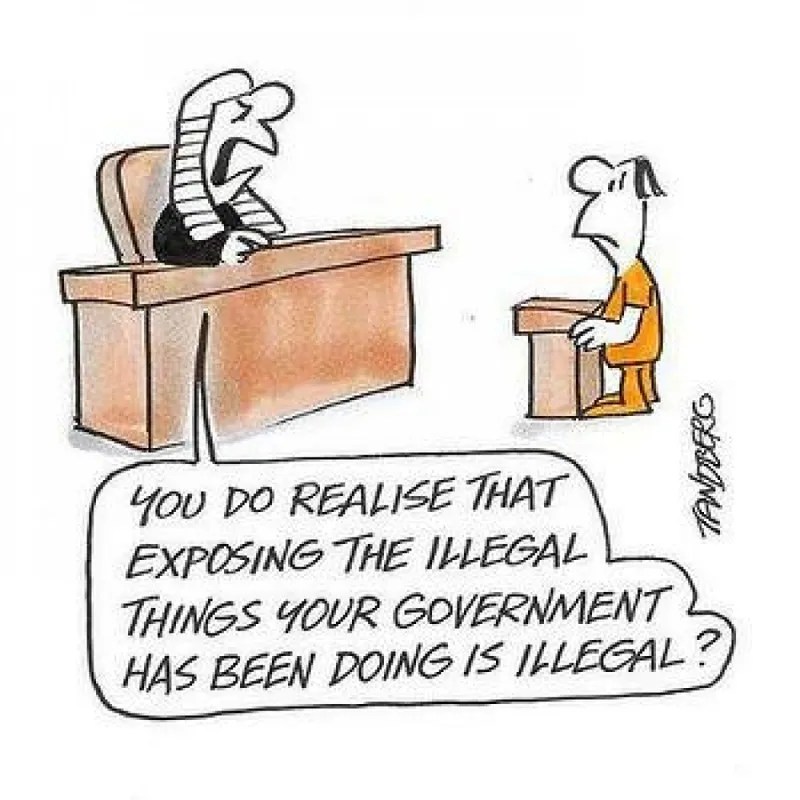
the use of military force to detain and deport immigrants could be considered illegal, as well as Trump’s boat strikes.
The dubious claim comes despite officials within the administration saying that the boat strike operation is unlawful.
By Sharon Zhang , Truthout, November 25, 2025, https://truthout.org/articles/leavitt-says-all-military-orders-by-trump-must-be-presumed-to-be-legal/?utm_source=Truthout&utm_campaign=bd2e9875e3-EMAIL_CAMPAIGN_2025_11_25_09_37&utm_medium=email&utm_term=0_bbb541a1db-bd2e9875e3-650192793
hite House Press Secretary Karoline Leavitt claimed on Monday that “all orders” by President Donald Trump should be “presumed” legal by the military, as she defended comments he made last week threatening Democratic lawmakers with “DEATH.”
Speaking to reporters outside of the White House on Monday, Leavitt claimed that Democrats were trying to create “chaos” within the military by reminding service members of their right to refuse to carry out illegal orders.
“All orders, lawful orders are presumed to be legal by our service members. You can’t have a functioning military if there is disorder and chaos within the ranks,” Leavitt said.
“And that’s what these Democrat members were encouraging. It’s very clear,” she went on, saying that none of them “can point to a single illegal order that this administration has given down, because it does not exist.”
Leavitt said that the White House backs the Department of Defense’s probe into Sen. Mark Kelly (D-Arizona) over a video he put out with fellow lawmakers reminding military members of their oath to “defend this Constitution.” A former Naval aviator, Sen. Kelly remains subject to military law despite retiring from the Navy in 2011.
“You can refuse illegal orders,” Kelly said in the video, alongside other ex-military and intelligence Democrats. “We need you to stand up for our laws. Our Constitution. And who we are as Americans.”
The lawmakers were referencing rights afforded to service members under the Uniform Code of Military Justice, which says that individuals in the military are not obligated to carry out orders that are illegal under U.S. law and known to be so by the service member. This summer, Truthout reported that a GI Rights Hotline saw an uptick in calls from members of the military seeking support for defying potentially illegal orders by Trump, like orders to carry out his immigration raids.
Leavitt’s assertion that all orders must be presumed to be legal is absurd on its face, regardless of who is handing down the orders. However, it echoes the twisted logic of a secretive Justice Department legal memo on the administration’s Latin American boat strike campaign, which reportedly suggests that Trump and his administration’s word alone is enough to establish legality for strikes. It also follows with the Trump administration’s relentless attempts to concentrate power within the executive branch, without oversight from Congress or other bodies.
The press secretary’s claim that there isn’t a “single illegal order” that has been passed down by the Trump administration is also patently false, experts have repeatedly said; as legal scholar Marjorie Cohn has noted for Truthout, the use of military force to detain and deport immigrants could be considered illegal, as well as Trump’s boat strikes.
Meanwhile, even officials within the military reportedly disagree. Last week, NBC reported that a senior judge advocate general, known as a JAG, raised concerns in August that the operations were unlawful. The man, a top military lawyer for the command that oversees the strikes, said that they could expose service members to legal action due to the illegality of the strikes, but his concerns were dismissed by more senior officials, sources said.
Poll Shows 70 Percent in US Disapprove of Striking Venezuela as Trump Mulls War
The US has built up the largest military presence in Latin America in decades off the coast of Venezuela.
By Sharon Zhang , Truthout, November 24, 2025
he vast majority of Americans say that the Trump administration hasn’t given proper explanation for potential military action in Venezuela and oppose the idea of strikes in the country, new polling finds as the U.S. builds up its military presence in the region.
New CBS/YouGov polling conducted late last week shows that 70 percent of Americans say that they would oppose the U.S. taking military action in Venezuela, with only 30 percent saying they support such an action.
Over three-quarters of Americans, 76 percent, say that the administration has not “clearly explained the U.S. position on military action in Venezuela.” The vast majority also say that President Donald Trump needs to provide an explanation, including 97 percent of Democrats, 86 percent of independents, and 64 percent of Republicans, the poll found……………………………………………………………………………………….https://truthout.org/articles/poll-shows-70-percent-in-us-disapprove-of-striking-venezuela-as-trump-mulls-war/?utm_source=Truthout&utm_campaign=eb51515458-EMAIL_CAMPAIGN_2025_11_24_10_25&utm_medium=email&utm_term=0_bbb541a1db-eb51515458-650192793
Security Council Shamefully Grants Colonial Domination Over Palestine to the US.

The resolution incorporates Donald Trump’s “peace plan.” It grants control over Gaza to the U.S.-led “Board of Peace” and it orders the deployment of a U.S.-led occupation force called “International Stabilization Force (ISF).” Trump will oversee both colonial bodies, in collaboration with Israel. Palestinians will not be allowed to participate in their own governance.
“It is a brazen attempt to impose, by threat of continued force against a virtually defenseless population, U.S. and Israeli interests, plain and simple.”
A UN Special Rapporteur has decried the resolution as a violation of Palestinian people’s right to self-determination.
By Marjorie Cohn , Truthout, November 21, 2025
In 1947, the United Nations General Assembly committed the UN’s original sin when it partitioned Palestine to create Israel. This launched the Nakba, the ethnic cleansing of the Indigenous people, and the establishment of a settler colonial state.
Now, 78 years later, the UN Security Council has committed the UN’s second cardinal sin. It enshrined Israel’s illegal occupation of Palestinian lands, put its imprimatur on Israel’s genocide, and granted colonial control over the lives of the Palestinians to the United States, which has aided and abetted the genocide.
On November 17, 2025, the Council adopted Resolution 2803, by a vote of 13-0. Russia and China, both permanent members of the Security Council, could have vetoed it. But shamefully they abstained, ostensibly influenced by support for the resolution from several Arab and Muslim states, including Egypt, Qatar, Jordan, Saudi Arabia, and the United Arab Emirates, as well as Turkey, Indonesia, and Pakistan.
The resolution incorporates Donald Trump’s “peace plan.” It grants control over Gaza to the U.S.-led “Board of Peace” and it orders the deployment of a U.S.-led occupation force called “International Stabilization Force (ISF).” Trump will oversee both colonial bodies, in collaboration with Israel. Palestinians will not be allowed to participate in their own governance.
The Board of Peace is designed to function as a transitional administrator of Gaza. It will control all services and humanitarian aid, all ingress and egress into and out of Gaza, and will supervise the financing and reconstruction of Gaza. The resolution “underscores the importance” of humanitarian assistance but does not require the unimpeded provision of aid.
The ISF will not be a peacekeeping force. Since the Council authorized it “to use all necessary measures to carry out its mandate,” the ISF will have the power to disarm Palestinian groups, as Israel insists. There is no provision in the resolution for disarming the Israel Occupation Forces, the body that has been conducting the genocide.

“A military force answering to a so-called ‘Board of Peace’ chaired by the President of the United States, an active party to this conflict that has continually provided military, economic and diplomatic support to the illegal occupying Power, is not legal,” said Francesca Albanese, Special Rapporteur on the situation of human rights in the Palestinian territories occupied since 1967. “It is a brazen attempt to impose, by threat of continued force against a virtually defenseless population, U.S. and Israeli interests, plain and simple.”
“Essentially, it will leave Palestine in the hands of a puppet administration, assigning the United States, which shares complicity in the genocide, as the new manager of the open-air prison that Israel has already established,” Albanese added.
Since October 2023, Israel has killed nearly 70,000 Palestinians and wounded more than 170,000. Nearly everyone in Gaza has been displaced by Israel multiple times and Gaza has largely been reduced to rubble. Israel has violated the latest ceasefire at least 393 times and killed at least 312 Palestinians since it went into effect on October 10, 2025.
In three recent cases, the International Court of Justice (ICJ) found a plausible case of genocide by Israel, that Israel’s occupation of Palestinian territory is unlawful, and that Israel has illegally used starvation of civilians as a weapon of war. The International Criminal Court issued arrest warrants for Israeli Prime Minister Benjamin Netanyahu and former Defense Minister Yoav Gallant for war crimes and crimes against humanity.
The Resolution Violates the Palestinian People’s Right to Self-Determination
The Security Council resolution violates fundamental tenets of international law including the right of the Palestinian people to self-determination. “The ICJ was clear: self-determination is an inalienable right of the Palestinian people and the UN and all States have an obligation to assist in its realization,” Albanese said…………………………………………………..
Resolution 2803 “rewards the U.S., a co-perpetrator of genocide, with control over Gaza and its potentially lucrative reconstruction process, while simultaneously relieving the Israeli regime of all of its responsibilities as an illegally occupying force,” Yara Hawari wrote in Al-Shabaka, a Palestinian-led think tank. “Palestinian participation is expected to be tightly limited and heavily conditioned. Trump’s plan confines it to ‘technocratic’ and ‘apolitical’ roles, subject to continuous external supervision and effectively excluding any representatives with democratic legitimacy or political agency.”
Hamas and other Palestinian factions rejected the resolution. They wrote in a joint statement that ISF “will turn into a type of imposed guardianship or administration — reproducing a reality that restricts the Palestinian people’s right to self-determination and to managing their own affairs.”
“Assigning the international force with tasks and roles inside the Gaza Strip, including disarming the resistance, strips it of its neutrality, and turns it into a party to the conflict in favor of the occupation,” Hamas said…………………………………………………………………………
it won’t prevent Israel from carrying out its military operations or aerial bombardments of Gaza. It may even help Israel achieve its goals.”
Uniting for Peace
……………………………………………..In adopting Resolution 2803, the Security Council did not discharge its responsibilities under the Charter to act on behalf of Palestine, a permanent observer state, which is undergoing the first live-streamed genocide in history. Nor is the Council discharging its responsibility to maintain international peace and security by memorializing an illegal occupation and an ongoing genocide.
Colombian President Gustavo Petro has declared that he will introduce a Uniting for Peace resolution in the UN General Assembly to establish a multinational protection force for Palestinians and levy sanctions and an arms blockade to end the genocide and liberate Palestine from the unlawful Israeli occupation.
In retaliation, the U.S. government has revoked Petro’s visa, imposed sanctions against him, raised punitive tariffs on Colombia, and threatened the use of military force against Colombia.
People opposed to the U.S.’s colonial takeover of Palestine can join the Boycott, Divestment, and Sanctions Movement, lobby for arms embargoes, and support accountability for Israeli and U.S. leaders responsible for perpetrating the genocide.
We must do everything within our power to stop this atrocity and support the struggle of the Palestinian people for self-determination. https://truthout.org/articles/security-council-shamefully-grants-colonial-domination-over-palestine-to-the-us/?utm_source=Truthout&utm_campaign=7ccb24ce9d-EMAIL_CAMPAIGN_2025_11_21_07_46_COPY_01&utm_medium=email&utm_term=0_bbb541a1db-09cad751f9-650192793
European Leaders Condemn Trump’s Military Escalation Against Venezuela.
the escalation that Trump claims is the latest battle in the “War on Drugs” comes two years after he explicitly announced his desire to take control of Venezuela’s oil,
War would deliver “not security but a torrent of bloodshed,” said a letter signed by dozens of political leaders.
By Julia Conley , CommonDreams, November 22, 2025, https://truthout.org/articles/european-leaders-condemn-trumps-military-escalation-against-venezuela/?utm_source=Truthout&utm_campaign=0b29afb75c-EMAIL_CAMPAIGN_2025_11_22_04_56&utm_medium=email&utm_term=0_bbb541a1db-0b29afb75c-650192793
ith thousands of US troops patrolling the Caribbean, at least eight warships deployed in the region, and the BBC reporting that it tracked four US military planes that flew near Venezuela Thursday night, lawmakers and other leaders from across Europe on Friday issued a unified demand for the Trump administration to deescalate the tensions it has ratcheted up in recent weeks.
The administration’s “show of force has already proved lethal,” said the leaders, with more than 80 people — including fishermen and an out-of-work bus driver — having been killed in the US military’s strikes on more than 20 boats, which the administration has insisted were trafficking drugs to the US. The White House has publicized no evidence of the claims.
President Donald Trump has not taken further military action against Venezuela since he was presented with “options” for potential strikes last week by officials including Defense Secretary Pete Hegseth, nor has he followed through with threats he’s made against Mexico and Colombia.
But the European leaders — including British Members of Parliament Zarah Sultana and Jeremy Corbyn, former Greek Finance Minister Yanis Varoufakis, and Spanish Member of European Parliament Irene Montero Gil — noted that Trump “severed diplomatic channels with Caracas and approved covert [Central Intelligence Agency] operations in Venezuela” as the military buildup continues in the region.
The Trump administration has insisted it is engaged in a legal “armed conflict” with drug cartels in Venezuela, which it has accused of trafficking fentanyl to the US — though experts say drug boats originating in Venezuela are “are mainly moving cocaine from South America to Europe,” and analysis by both the United Nations and US intelligence agencies have shown the South American country plays virtually no role in the production or transit of fentanyl.
The US Congress has not authorized any military action against drug cartels or Venezuela’s government, and lawmakers from both sides of the aisle have attempted to pass war powers resolutions blocking the US from striking more boats or targets on land in Venezuela, only to have the resolutions voted down.
In his second term, Trump has sought to tie Venezuelan President Nicolás Maduro to drug cartels — despite a declassified US intelligence memo showing officials rejected the claim — and designated Cartel de los Soles a foreign terrorist organization last week, giving the White House what Hegseth called “new options” to go after the group.
But the escalation that Trump claims is the latest battle in the “War on Drugs” comes two years after he explicitly announced his desire to take control of Venezuela’s oil, and following years of condemnation of Maduro’s socialist government from Secretary of State Marco Rubio.
The European leaders said the administration’s narrative about the threat Venezuela poses to the US and the escalation is simply the “latest attempt to threaten and undermine the sovereignty of Latin America and the Caribbean nations.”
“Declassified documents have confirmed the CIA’s hand in overthrowing democratically elected governments in Latin America, such as Salvador Allende’s Chile in 1973, João Goulart’s Brazil in 1964, and Jacobo Árbenz’s Guatemala in 1954. The human cost of these regime change operations was catastrophic, and their political legacy endures,” reads the letter, which was organized by Progressive International.
A military intervention by the US in Venezuela “would mark the first interstate war by the United States in South America,” the leaders said, yet “the pretext for intervention is as tired as it is familiar.”
“Under the banner of combating the ‘narco-terrorists,’ Trump celebrates lethal strikes against peaceful fishermen arbitrarily labeled as carrying drugs,” the leaders said.
As in the past, they added, moving the War on Drugs to Venezuela would deliver “not security but a torrent of bloodshed, dispossession, and destabilization.”
Therefore, we condemn in the strongest terms the military escalation against Venezuela,” they said. “Our demand is clear and our resolve is firm: No war on Venezuela.”
As Peoples Dispatch reported Thursday, many European leaders have “subordinated” themselves to Trump and have avoided speaking out against the US escalation with Venezuela, but left-wing political parties have led the way in denouncing the US deployment of soldiers and warships to the region.
The Workers’ Party of Belgium said recently that the world is “witnessing an unprecedented military escalation in 20 years, a multifaceted aggression that threatens not only Venezuela, but any project of sovereignty and social justice in Latin America.”
1 This Month





PLEASE OPPOSE HR 8255 AND S.3639 – bills would accelerate satellite deployment, with no environmental review or safeguards – https://ncstd5li.quorum.us/campaign/169331/
To see nuclear-related stories in greater depth and intensity – go to https://nuclearinformation.wordpress.com
-
Archives
- October 2026 (58)
- September 2026 (339)
- August 2026 (330)
- July 2026 (355)
- June 2026 (287)
- May 2026 (306)
- April 2026 (356)
- March 2026 (251)
- February 2026 (267)
- January 2026 (308)
- December 2025 (358)
- November 2025 (359)
-
Categories
- 1
- 1 NUCLEAR ISSUES
- business and costs
- climate change
- culture and arts
- ENERGY
- environment
- health
- history
- indigenous issues
- Legal
- marketing of nuclear
- media
- opposition to nuclear
- PERSONAL STORIES
- politics
- politics international
- Religion and ethics
- safety
- secrets,lies and civil liberties
- spinbuster
- technology
- Uranium
- wastes
- weapons and war
- Women
- 2 WORLD
- ACTION
- AFRICA
- Atrocities
- AUSTRALIA
- Christina's notes
- Christina's themes
- culture and arts
- Events
- Fuk 2022
- Fuk 2023
- Fukushima 2017
- Fukushima 2018
- fukushima 2019
- Fukushima 2020
- Fukushima 2021
- general
- global warming
- Humour (God we need it)
- Nuclear
- RARE EARTHS
- Reference
- resources – print
- Resources -audiovicual
- Weekly Newsletter
- World
- World Nuclear
- YouTube
-
RSS
Entries RSS
Comments RSS

