Top nuke officials admit staffing challenges after DOGE layoffs, hiring freeze
Testifying to a Senate committee, National Nuclear Security Administration leaders acknowledged staffing woes after DOGE-led reductions.
Davis Winkie. USA TODAY, https://www.usatoday.com/story/news/politics/2025/05/21/nuclear-weapons-leaders-describe-workforce-woes-doge/83770727007/
Key Points
- During May 20 testimony, top acting officials from the National Nuclear Security Administration acknowledged the risk and impact of workforce vacancies caused by Elon Musk’s DOGE.
- A USA TODAY investigation published May 18 detailed the potential impact of endemic federal staffing shortages at NNSA recently exacerbated by the Trump administration’s cuts to the federal workforce.
WASHINGTON − Top leaders of the agency responsible for the U.S. nuclear weapons stockpile admitted to DOGE-related staffing challenges at a Senate hearing.
Asked by Sen. Angus King, I-Maine, if a hiring freeze, resignations and attrition could bring “some pretty important vacancies,” acting National Nuclear Security Agency defense programs head David Hoagland said, “That’s very true.” Hoagland said at the May 20 hearing that his office had “shifted people around” to meet “critical needs.”
Hundreds of NNSA staff were fired by Elon Musk‘s Department of Government Efficiency earlier this year, amid a $1.7 trillion nuclear weapons upgrade, in a chaotic wave of layoffs. Most were later rehired. Other critical staffers agreed to leave their jobs under DOGE’s “fork in the road” resignation offer.
King said NNSA claims that staffing shortages hadn’t placed agency’s mission at short term risk “strikes me as implausible.”
The NNSA struggled with staffing and talent pipeline issues for decades before the new Trump administration, a recent USA TODAY investigation found. Then Musk launched efforts to reduce the federal workforce, which further destabilized the NNSA workforce, experts said.
The agency currently faces a near-total hiring freeze and lost more than 130 of its 2,000 federal employees to the DOGE deferred resignation program. More than 300 more employees were fired and reinstated in February damaging morale.
NNSA’s acting principal deputy administrator, James McConnell, said told senators on a subcommittee of the Armed Services Committee the agency could handle the losses “in the short term,” but he said the NNSA needs to “make sure that our resources are adequate.”
Experts told USA TODAY sustained staffing shortages could cause further delays and cost overruns on the agency’s beleaguered portions of the nation’s broader $1.7 trillion nuclear arsenal modernization effort. USA TODAY documented billions of dollars in overruns, as well as safety issues, at NNSA facilities that were attributed to staffing shortages.
Marv Adams, Hoagland’s Senate-confirmed predecessor atop NNSA’s defense programs, said in an interview that during his tenure, “our federal [warhead] program offices struggled to keep up and not get behind because of understaffing.”
The agency’s field offices faced similar strain, according to David Bowman, a retired civil servant and former manager of the NNSA’s Nevada Field Office. From 2020 until his retirement in the fall of 2024, Bowman oversaw operations at the expansive Nevada National Security Site.
NNSA field offices must review and approve much of the work the agency’s massive contractor workforce does on the nuclear arsenal, as well as safety management plans. In an interview, Bowman said such review “requires … technical experts who are feds.”
“If the field offices or the safety experts are short staffed, the work is going to back up,” he said.
Bowman described finding qualified staff for his far-flung office northwest of Las Vegas as “the big challenge we had.”
Contributing: Cybele Mayes-Osterman, USA TODAY
NNSA completes assembly of the first B61-13 nuclear gravity bomb ahead of schedule

Major nuclear stockpile milestone assembled almost a year ahead of target date through streamlined production
National Nuclear Security Administration, May 19, 2025
MARILLO, TX – U.S. Secretary of Energy Chris Wright announced at the Pantex Plant today that the Department of Energy’s National Nuclear Security Administration (DOE/NNSA) has completed the manufacture of the first B61-13 gravity bomb, the latest modification to the B61 family of nuclear weapons. The first unit was assembled almost a year before the original target date and less than two years after the program was first announced, making the B61-13 one of the most rapidly developed and fielded weapons since the Cold War.
“Modernizing America’s nuclear stockpile is essential to delivering President Trump’s peace through strength agenda,” said Secretary of Energy Chris Wright. …………………………………………………………………………………………………………………… https://www.energy.gov/nnsa/articles/nnsa-completes-assembly-first-b61-13-nuclear-gravity-bomb-ahead-schedule
White House weighs overhaul of Nuclear Regulatory Commission
E and E News, By Francisco “A.J.” Camacho | 05/14/2025
Draft White House executive orders would overhaul nuclear regulation and hand the Department of Energy secretary new powers to approve advanced reactor designs and projects — placing a nuclear safety gatekeeper directly under President Donald Trump.
A review by POLITICO’s E&E News of the language in four separate draft orders shows that nuclear advocates in the Trump administration are looking for ways to bypass the independent Nuclear Regulatory Commission and challenge its central claim over nuclear safety standards.
“This is the detailed, agency-specific effort to override the historic independent agency construct,” Stephen Burns, former chair of the NRC during the Obama administration, said in an interview.
Burns emphasized that many of the reforms outlined in the draft orders are already being implemented under the ADVANCE Act that Congress passed last year. He questioned the necessity and merits of White House micromanagement.
“Everybody should be worried about that, especially because we depend on nuclear power plants for about 20 percent of our electricity across this country,” said Emily Hammond, a former DOE deputy general counsel and current George Washington University law professor. “That’s an important segment of low-carbon electricity, and if it’s not safe, that’s a huge gap to fill.”
It isn’t clear when or if any of the draft orders will land on Trump’s desk. But as written now, the drafts return to a theme laid out in many of Trump’s energy orders: Radical policy overhauls are needed to power the rapidly growing U.S. tech industry.
Efforts to restart large nuclear plants along with private-sector investment and Department of Energy support for small modular reactor technology are pushing the industry forward after decades of little or no growth. The government and big technology firms say they hope to plug AI data centers into nuclear power plants that can provide around-the-clock generation.
But in asserting more direct control over the NRC, some nuclear boosters fear more harm than good. Trump’s February executive order subjects “significant regulatory actions” to review by the White House’s Office of Information and Regulatory Affairs, or OIRA.
Judi Greenwald, executive director of the Nuclear Innovation Alliance, said adding the OIRA review of either technical nuclear safety issues or minor activities would make NRC less efficient and introduce uncertainty into licensing timelines.
“NRC’s reputation as a trusted regulator is important to the public, to industry, and to potential customers of U.S. nuclear technology both here and abroad,” Greenwald said. “We don’t want changing political winds in either direction to undermine NRC’s credibility.”
Sources with direct knowledge of how NRC and the White House are handling the February order have told E&E News that OIRA has instructed the agency to submit all draft rules. OIRA will decide on a case-by-case basis if a given regulation is “significant.” If it is, the White House will conduct a second review that may entail comments or edits. The draft rules will then be returned to the commission.
People familiar with policy discussions say OIRA has already deemed reactor safety rules to be “significant” enough for a deeper White House review. The proposed “Part 53” advanced reactor rule and updates to environmental standards are also considered likely to trigger a second review.
The new process also obscures the public record of internal commission deliberations.
“It would potentially run afoul of the Sunshine Act,” said Adam Stein, nuclear energy innovation director at the pro-nuclear think tank Breakthrough Institute. “The Atomic Energy Act does not say the commission will send regulations to OIRA for approval. It says that the commission will decide.”
The prospect of stripping away much of the NRC’s independence has rattled Republicans and Democrats on the House Energy and Commerce Committee.
Rep. Jay Obernolte (R-Calif.) said in February that he’s willing to give the administration “the benefit of the doubt” as it tries to bring more political control over independent agencies. “Everyone should be able to agree that regulatory authorities like the NRC should not be involved in the day-to-day political struggles that occur here in Washington, D.C.,” he said.
Rep. Lori Trahan (D-Mass.) characterized any White House effort to exert more control over the NRC as a “dangerous attempt to serve the interests of Donald Trump and his donors.”
“Undermining the NRC’s independence invites safety risks, regulatory dysfunction, and corruption that threaten the future of nuclear energy in America,” she said.
Adding to the instability is growing speculation about leadership changes at the NRC. The term of Trump-appointed Chair David Wright expires in June, and no renomination has been announced.
“At this point, it would be difficult to get him through the process without a lapse,” Stein said.
Here is what we know about the four draft orders:
Draft Order 1: Overhauling NRC
The White House is circulating draft executive orders that could radically alter nuclear policy. They touch on several fronts, from restructuring the NRC to reorienting federal nuclear research and development priorities to setting a goal to quadruple U.S. nuclear power capacity by 2040.
The first draft viewed by E&E News would order NRC, OIRA, the Department of Government Efficiency and “other agencies” to finalize NRC rules that would establish deadlines for reviewing license applications; reconsider the NRC radiation safety threshold; revise the environmental review process; expedite approvals for reactors that have been tested at DOE and Defense Department sites; and shrink the Advisory Committee on Reactor Safeguards, which independently reviews all nuclear licensing actions.
And the agencies, the draft says, would have 18 months to finish this “wholesale regulatory revision” of the NRC with mandatory “reductions in force.”………………………………………………………………….
Draft Order 2: Nuclear R&D
Another draft order would authorize DOE to more directly spearhead pilot and demonstration reactor projects at national laboratories and on other federal lands.
“The Department shall approve at least three reactors pursuant to this pilot program with the goal of completing construction of each of the three reactors by July 4, 2026,” the draft reads.
Experts say that the timeline is nearly impossible at this point.
Draft Order 3: Nuclear for “national security”
A third draft order seeks to boost American nuclear power by leveraging DOE and the Defense and State departments.
The draft would give the secretaries of Defense and Energy 60 days to “identify 9 military facilities at which advanced nuclear technologies can be immediately installed and deployed,” prioritizing bases in the Arctic and Indo-Pacific. Then, the military would move toward installation.
Another section would have the secretary of Energy “site, approve, and authorize the design, construction, and operation of privately-funded advanced nuclear technologies at Department of Energy-owned sites for the purpose of powering AI infrastructure.” It would classify such nuclear power as “defense critical infrastructure” and allow them to connect to the commercial grid……………
Other sections of the draft order would release DOE-held high-assay, low-enriched uranium to private advanced reactor developers and create a new State Department envoy to promote American nuclear exports.
Draft Order 4: Nuclear supply chain
The final draft order primarily focuses on bolstering the nuclear energy supply chain. It would have DOE bolster R&D and deployment of uranium enrichment and nuclear fuel recycling, fund the restart of closed nuclear plants and improve the “nuclear engineering talent pipeline” with other Cabinet departments.
It is unclear how likely Trump is to sign any of these draft executive orders. “Each executive order is almost written from a certain agency’s perspective,” Stein said. “They overlap and conflict in some places probably because they weren’t written together.”……………….. https://www.eenews.net/articles/white-house-weighs-nrc-overhaul/
Trump’s Break with Israel: Genuine Shift or Political Theater?
May 19th, 2025, Kit Klarenberg, https://www.mintpressnews.com/trump-breaks-with-israel/289818/
When Donald Trump was re-elected president in November 2024, expectations were widespread that Israel’s assault on Gaza would intensify, and that the incoming administration would take a much more active role in neutralizing Tel Aviv’s regional adversaries. The affinity between Benjamin Netanyahu, many Israelis, and Trump is well-established. As Foreign Policy noted in October 2024, “Israel is Trump country, and Trump’s No. 1 supporter is its prime minister,” the magazine wrote. Trump’s victory was widely celebrated in Israel, both publicly and at the state level.
Just days later, former CIA Director and Defense Secretary Leon Panetta predicted the president would give Netanyahu a “blank check” to cause havoc across the Middle East, up to all-out war with Iran. After taking office in January, the president did little to dispel such forecasts—quite the opposite. In February, Trump outlined plans for “Gaza Lago”—a total displacement and forced resettlement of Gaza’s Palestinian population and the creation of a so-called “Riviera of the Middle East” in its place.
In March, Trump renewed hostilities against Yemen’s Ansar Allah, after the group reinstated its Red Sea blockade in response to Israel’s flagrant breaches of its cease-fire agreement with Hamas. Battering Yemen far harder than Biden ever had, U.S. officials boasted that the air and naval effort against Ansar Allah would continue “indefinitely.” Trump also claimed that Washington’s “relentless strikes” would leave the resistance decimated.
In early May, however, Trump declared the mission over after agreeing to a cease-fire under which Ansar Allah would stop targeting U.S. ships in return for free rein in its war against Israel. Tel Aviv was reportedly kept out of the loop, learning of the deal via news reports. Mike Huckabee, the U.S. ambassador to Israel, responded to backlash over the deal by stating that the U.S. “isn’t required to get permission from Israel” to make deals.
Huckabee, an ultraconservative evangelical and outspoken Zionist who vowed upon his nomination to refer to Israel in biblical terms such as the “Promised Land,” and who has frequently claimed that Jews hold a “rightful deed” to Palestinian land, surprised observers with the statement. Yet it seemed to mark the beginning of a dramatic shift in direction by the Trump administration, which, as MintPress News has previously documented, is stacked with pro-Israel hawks.
Since then, Trump has embarked on a tour of the Middle East, with Israel conspicuously absent from his itinerary. Instead, he has traveled to states in the Gulf Cooperation Council. Meanwhile, the president negotiated the release of the last living U.S. hostage held by Hamas and convened direct peace talks with the resistance group—in both cases without Tel Aviv’s involvement. There are rumors that Hamas may end hostilities in return for U.S. recognition of a Palestinian state, an offer Trump is reportedly open to.
Washington went on to sign a slew of deals with Riyadh across various sectors, including the largest-ever defense agreement between the two countries, valued at nearly $142 billion. In sum, a string of seismic developments strongly suggests that Trump’s administration is breaking with the previously unshakable U.S. policy of lockstep support for Israel and serving its interests in nearly every regard—an arrangement in place since the country’s founding in 1948. But is this previously unthinkable rupture real, or just for show?
From the United States to Europe, Criticizing Israel Is Becoming a Crime
After October 7, governments across the West are moving to criminalize criticism of Israel — placing free speech under growing global threat.
MintPress News·Kit Klarenberg·Apr 30
Trump Snubs Israel in Middle East Pivot
Purported rifts in the U.S.-Israel relationship are nothing new. Throughout Barack Obama’s presidency, multiple mainstream reports suggested the relationship was “strained,” especially due to sharp personal differences between the then-president and Netanyahu. Similarly, from the start of the Gaza genocide, major news outlets intermittently reported that Joe Biden was “privately” angry with Netanyahu’s behavior. Meanwhile, White House spokespeople and prominent Democrats, including Alexandria Ocasio-Cortez, publicly insisted that the administration was committed to securing a cease-fire.
In both cases, though, the U.S. financial and military aid that is fundamental to Israel’s continued existence and erasure of the Palestinian people continued unabated, if not increased. In late April, Israel’s ambassador to Washington, Michael Herzog, who served from 2021 to 2025, proudly declared that “the [Biden] administration never came to us and said, ‘Cease-fire now.’ It never did.” As such, skepticism about the sincerity and substance of the Trump administration’s abrupt break from its traditionally pro-Israel trajectory is well-founded.
Giorgio Cafiero, CEO of Gulf State Analytics, tells MintPress News that there may be a real shift underway in U.S. foreign policy, driven in large part by Trump’s determination to counter China’s rising global influence, particularly in the Middle East. It is this agenda that, for now, is pushing Washington to conduct “a foreign policy increasingly friendly to deep-pocketed states on the Arabian Peninsula, at the expense of the historic U.S.-Israel alignment.” As Cafiero put it:
Trump wants to pull Saudi Arabia, Qatar and the UAE et al closer to U.S. geopolitical and geo-economic influence, while pulling them away from China to some extent. He likely won’t have much success in slowing down the momentum of Arab-Chinese relations in energy, investment, trade, logistics, commerce, AI, digitization, and so on. But in terms of defense and security, the U.S. will continue to dominate, and Trump will make clear these are uncrossable ‘red lines’ in terms of the Gulf’s relationship with China from Washington’s perspective.”
Trump’s large trade and investment deals with Gulf states play heavily into his “Make America Great Again” agenda and self-mythologizing as a dealmaker at home and abroad. The Gulf states are “ripe for lucrative deals” for U.S. companies, Cafiero says, adding that these agreements will create jobs and generate “good optics” for the administration at home.
Geopolitical risk analyst Firas Modad agrees that economic factors are central to Trump’s current course shift, and are alienating Tel Aviv. “Trump needs to sell F-35s. The U.S. defense industry needs the funds. The sale of F-35s to Turkey and perhaps to Saudi Arabia… a new deal with Iran, a Saudi civilian nuclear program — these will all be big bones of contention with Israel,” Modad said.
If nuclear negotiations succeed, Trump will likely seek to open Iranian markets to U.S. firms too. Israel doesn’t want this either. Trump is showing Netanyahu how much Israel needs the U.S., not the other way around.”
The Battle for the ‘Woke Right’: How Israel Is Dividing MAGA
A growing rift within MAGA sees right-wing influencers clashing over Israel and the ‘woke right.’
MintPress News·Robert Inlakesh·May 15
Gulf States Rise as Israel Loses Clout
Seyed Mohammad Marandi, a Tehran-based political analyst and professor at the University of Tehran, tells MintPress News that a “rift” between the U.S. and Israel does indeed exist, but that it is “difficult to say how significant or deep it truly is.”
Marandi believes the broader U.S. power structure recognizes that its support for what he calls the “Gaza Holocaust” since October 2023—“a 24/7 televised genocide”—has seriously damaged the West’s international image and soft power, telling MintPress News that “By default, this has greatly enhanced the soft power of China, Iran and Russia. The Global South looks to them, not the U.S. or its European vassals, for leadership, direction and partnership.”
Modad agrees, noting that in March 2023, Saudi Arabia unexpectedly reconciled with Iran “under Chinese auspices, without meaningful consultation with Washington.” Now that Arab and Muslim states view China and Russia as viable economic and military partners, the prospect of political scientist Samuel P. Huntington’s “Sino-Islamic alliance” becoming a reality is increasingly likely.
“The Americans will do whatever it takes to avoid resource-rich or militarily capable Muslim countries falling into Beijing’s orbit, even if that’s at Israel’s expense,” Modad tells MintPress News.
Marandi sees potential for shifts in U.S. relations with the region, saying “the space is there for progress”—though such progress remains “limited in scope and purely prospective for now.” He believes the current divide between Washington and Tel Aviv is largely tied to Netanyahu’s leadership.
“There’s a chance he’ll be sacrificed to preserve and rehabilitate Israel’s image internationally, with blame for everything since October 7 placed squarely on him,” Marandi says. “It would be like blaming Hitler alone for World War II and the Holocaust, instead of the system he led and everyone who enabled it.”
Marandi doubts a broader U.S.-Israel split will occur, saying the relationship is “so substantial, it’s not going to completely wither and die” over current events. “The Zionist lobby in the U.S. remains very powerful,” Marandi notes, adding that while Israel “has been discredited worldwide and is internationally despised, with people across the West condemning and abhorring the Zionist regime, the lobby still exerts enormous influence over Washington’s domestic and foreign policy.”
Modad is likewise under no illusions about the Israeli lobby’s clout in Washington. He expects its affiliated groups—and the many lawmakers they generously fund—to aggressively push back against Trump’s shift. He also suggests the administration could respond to the pressure by forcing the American Israel Public Affairs Committee (AIPAC) to register as a foreign agent. Given AIPAC’s political clout, such a move would be unprecedented.
U.S. political scientist John Mearsheimer has described AIPAC as “a de facto agent for a foreign government” with “a stranglehold on Congress.” Indeed, the powerful lobbying organization has a disturbing success rate in helping to elect hardcore proponents of Israel to Congress and the Senate, and aggressively works to unseat anyone on Capitol Hill who expresses solidarity with Palestinians. This effort has only intensified since October 7, and the organization is so confident in its impunity that it openly advertises its activities.
For example, AIPAC publishes an annual report highlighting its “policy and political achievements.” The committee’s 2022 report boasts, among other things, of securing $3.3 billion “for security assistance to Israel, with no added conditions” and funding “pro-Israel candidates” to the tune of $17.5 million—the most of any U.S. PAC. A staggering 98% of those candidates went on to win, defeating 13 pro-Palestinian challengers in the proces
A network of figures like Ben Shaprio, think tanks, and foreign policy advocates helped shift the right from advocating free speech to embracing blacklists.
AIPAC Faces White House Resistance
Trump is not unaware of the Israel lobby’s outsized influence over U.S. domestic and foreign affairs. As Marandi notes, on Jan. 15, Trump shared a video of Professor Jeffrey Sachs in which he blames Benjamin Netanyahu for the 2003 U.S. invasion of Iraq—a war that Trump has long criticized. The crucial role that AIPAC and its allies played in laying the groundwork for that war has largely been forgotten.
That’s likely due in part to the organization’s large-scale online cleanup operations in which evidence of their early cheerleading for a full-scale U.S. invasion of Iraq was quietly erased. In December 2001, AIPAC published a briefing for U.S. lawmakers on the “major threat” it claimed that Saddam Hussein posed in the Middle East, to U.S. interests in the region and to “Israel’s security”—accusing him of producing weapons of mass destruction and harboring terrorist organizations.
Both claims were false, forming the basis of Washington’s case for the invasion. AIPAC later removed the briefing from its website. In 2015, a committee spokesperson told The New York Times that “AIPAC took no position whatsoever on the Iraq War.” Later that year, AIPAC President Robert A. Cohen went even further, claiming that “Leading up to the start of the Iraq War in March 2003, AIPAC took no position whatsoever, nor did we lobby on the issue.”
Today, Israel and its lobbying network are pushing for another major conflict in the Middle East—this time with Iran. In April, The New York Times, citing anonymous briefings, revealed that Tel Aviv had drawn up detailed plans for an attack on the Islamic Republic that would have required U.S. support—plans that were reportedly waved off by Trump. Israeli officials were said to be furious over the leak, with one calling it “one of the most dangerous leaks in Israel’s history.”
While Tel Aviv is purportedly still planning a “limited attack” on Iran, The New York Times report sent an unambiguous message to Netanyahu and his government that the Trump administration would not support any such action under any circumstances. Opposition to belligerence towards Tehran is in itself quite an extraordinary reversal for Trump and his cabinet, given their past rhetoric and stances. Before even taking office, it was reported that the administration was concocting plans to “bankrupt Iran” with “maximum pressure.”
Secretary of State Marco Rubio, who had long called for tightening already devastating sanctions on Tehran, was at the forefront of this push. He was eagerly supported by National Security Adviser Mike Waltz, a Pentagon veteran who previously sat on the House Armed Services Committee. At an event convened by NATO adjunct the Atlantic Council in October 2024, Waltz bragged about how Trump had previously almost destroyed the Islamic Republic’s currency, and looked ahead to doling out even worse punishment following the president’s inauguration.
However, the reportedly positive progress of nuclear negotiations between the U.S. and Iran today suggests Trump and his team have not only jettisoned these ambitions but are determined to avoid war. Cafiero believes this objective is one of the key geopolitical considerations driving the President’s current course in the Middle East. He notes such a conflict would inevitably be “messy, bloody, and costly,” and believes Netanyahu’s determination “to pull the U.S. into war” means Trump now sees Israel as a real liability:
Trump views West Asia as a region the U.S. has historically been sucked into, and he believes Washington shouldn’t be excessively entangled there anymore – no more costly and humiliating quagmires, diverting resources and attention away from other parts of the world, where China is making major economic and geopolitical gains. The Gulf monarchies are sources of regional stability – they’re diplomatic bridges and interlocutors, facilitating dialogue and negotiation, and assisting in winding down local and international conflicts, or at least U.S. involvement in them.”
A costly and humiliating quagmire conflict between the U.S. and Iran would certainly be – and were Israel to dare strike Tehran alone, Washington would likely suffer adverse consequences in any event. A September 2024 report from the powerful and secretive lobby group the Jewish Institute for National Security of America (JINSA) spelled out in forensic detail that it would take “five minutes or less” for Iran’s ballistic and hypersonic missiles to reach most U.S. military bases in the Middle East and obliterate them.
Is US Support for Israel Ending?
Fears of such an eventuality, and the Empire’s repeatedly proven inability to prevail in battling Yemen’s Ansar Allah, surely lie behind Trump’s determined push for peace with Iran. Even if the administration’s current sidelining of Tel Aviv in favor of the Gulf states is temporary and conducted purely for expediency, given current geopolitical contexts, never before in Israel’s history have its leaders’ wishes and wills been so flagrantly and concertedly overlooked or outright contravened in American corridors of power.
Should this rocky period represent a mere transitory blip in the U.S./Israel relationship, the episode at least amply demonstrates that Washington isn’t as beholden to Israel as its leaders and the international Israel lobby like to think. With China’s rising influence and the newly anointed multipolar world going nowhere, U.S. leaders may think twice about being so deferential to Tel Aviv’s demands, its designs of endless territorial expansion, and its perpetual wars against its neighbors in the name of “security”.
US should never have intervened in Ukraine – Trump
19 May 25, https://www.rt.com/news/617888-us-never-intervened-ukraine-trump/
US President Donald Trump has rebuked his predecessor, Joe Biden, for funneling vast amounts of American taxpayer money into a foreign conflict that “should have remained a European situation.”
Speaking to reporters at the White House following a phone call with Russian President Vladimir Putin on Monday, Trump expressed frustration over the “crazy” scale of US involvement in the Ukraine conflict. He reiterated that it is “not our war” and stressed that his administration is working to end it through diplomacy.
This is not our war. This is not my war… I mean, we got ourselves entangled in something that we shouldn’t have been involved in. And we would have been a lot better off – and maybe the whole thing would have been better off – because it can’t be much worse. It’s a real mess,” Trump said.
The president stated that Washington has provided “massive” and “record-setting” levels of military and financial assistance to Kiev – far exceeding what the EU and other NATO countries have contributed.
“We don’t have boots on the ground, we wouldn’t have boots on the ground. But we do have a big stake. The financial amount that was put up is just crazy,” he added.
Again, this was a European situation. It should have remained a European situation. But we got involved – much more than Europe did – because the past administration felt very strongly that we should,” he said. “We gave massive amounts, I think record-setting amounts, both weaponry and money.”
Trump’s conversation with Putin was followed by calls with the leaders of Germany, Italy, and the UK, as well as European Commission President Ursula von der Leyen and Ukraine’s Vladimir Zelensky.
“They have a big problem. It’s a terrible war. The amount of anger, the amount of hate, the amount of death,” Trump said, adding that the conflict has reached a point where “it’s very hard to extradite themselves away from what’s taken place over there.”
Trump said he believes both Putin and Zelensky want peace, but only time will tell if it can be achieved.
Pressed by reporters on whether he has a “red line” that would cause him to walk away from mediating the conflict or potentially escalate US involvement, Trump declined to elaborate. “Yeah, I would say I do have a certain line, but I don’t want to say what that line is because I think it makes the negotiation even more difficult than it is,” he said.
Putin described the conversation with Trump as “substantive and quite candid,” adding that Moscow is prepared to work with Kiev on drafting a memorandum aimed at achieving a future peace agreement.
“In general, Russia’s position is clear. The main thing for us is to eliminate the root causes of this crisis,” the Russian president said.
Nuclear weapons woes: Understaffed nuke agency hit by DOGE and safety worries
The consequences of DOGE’s disruptions at the National Nuclear Security Administration could be far-reaching, experts say.
Davis Winkie and Cybele Mayes-Osterman, USA TODAY, 18 May 25
- For decades, the NNSA has struggled with federal staffing shortages that have contributed to safety issues as well as delays and cost overruns on major projects.
- Experts fear that the Trump administration’s moves to reduce the federal workforce may have destabilized the highly specialized federal workforce at the National Nuclear Security Administration.
- USA TODAY reviewed decades of government watchdog reports, safety documents, and congressional testimony on U.S. nuclear weapons.
In 2021, after a pair of plutonium-handling gloves had broken for the third time at the Los Alamos National Laboratory, contaminating three workers, and after the second accidental flood, investigators from the National Nuclear Security Administration found a common thread in a plague of safety incidents: the contractor running the New Mexico lab lacked “sufficient staff.”
So did the NNSA.
The agency, whose fewer than 1,900 federal employees oversee the more than 60,000 contractors who build and maintain the U.S. nuclear arsenal, has struggled to fill crucial safety roles. Only 21% of the agency’s facility representative positions – the government’s eyes and ears in contractor-run buildings – at Los Alamos were filled with qualified personnel as of May 2022.
Now, President Donald Trump’s administration has thrown the NNSA into chaos, threatening hard-won staffing progress amid a trillion-dollar nuclear weapons upgrade. Desperately needed nuclear experts are wary of joining thanks to chaotic job cuts by Elon Musk’s Department of Government Efficiency, experts say.
The disruption of NNSA’s chronically understaffed safety workforce is “a recipe for disaster,” said Joyce Connery, former head of the Defense Nuclear Facilities Safety Board.
Los Alamos is not the only facility with staffing shortages in crucial safety roles.
As of May 2022, less than one-third of facility representative roles at NNSA’s Y-12 facility in Oak Ridge, Tennessee, and the Pantex plant near Amarillo, Texas were held by fully qualified employees, according to a USA TODAY review of nuclear safety records.
At Pantex, where technicians assemble and disassemble nuclear weapons, only a quarter of safety system oversight positions had fully qualified hires, and only 57% of those safety positions had qualified employees at Y-12.
Nuclear weapons workers don’t grow on trees, nor do the federal experts who oversee them. Many of the jobs require advanced degrees, and new hires often need years of on-the-job training. Security clearance requirements limit the most sensitive jobs to U.S. citizens.
America’s nuclear talent crisis isn’t new, but its consequences have grown as tens of billions of dollars pour into the NNSA annually in a broader $1.7 trillion plan to modernize U.S. nuclear weapons.
Congress ordered the cramped, aging plutonium facility at Los Alamos – called PF-4 – to begin mass production of plutonium pits, a critical component at the heart of nuclear warheads, for the first time in more than a decade.
Enter Elon Musk and DOGE…………………………………………………………………………………………………………..
What’s at stake
The struggle for staff has been NNSA’s Achilles heel for decades – and the stakes have only grown.
But despite efforts to develop talent, watchdogs said in February of this year the NNSA was “understaffed” and struggling to execute key oversight requirements.
Then came DOGE…………………………………………………………………………………….
Connery fears the strain and staffing problems could combine to disastrous effect.
“When you take an inexperienced or an understaffed workforce and you combine it with old facilities and a push to get things done – that is a recipe for disaster,” Connery said. https://eu.usatoday.com/story/news/politics/2025/05/18/nuclear-weapons-woes-nuke-agency-hit-by-doge-and-safety-worries/83621978007/
US nuclear sector intensifies lobbying in bid to prevent subsidy cuts.

The US nuclear industry is intensifying its lobbying blitz to save the
Inflation Reduction Act tax credits it says are vital for meeting
artificial intelligence-fuelled energy demand. On Monday lawmakers from the
House ways and means committee, which is responsible for writing tax law,
released draft legislation that would phase out nuclear energy subsidies
starting in 2029, in a move that caught the sector by surprise. Lobbyists
are now racing to persuade lawmakers to rescind or moderate cuts to nuclear
industry subsidies, which until recently had more bipartisan support than
other low-carbon energy technologies such as wind and solar.
FT 19th May 2025,
https://www.ft.com/content/c243fd15-bef8-4c98-b06b-8b13ddd0a701
Trump Admin Fast Tracks Anfield’s Velvet-Wood Uranium Project in Push for US Energy Independence

Giann Liguid, Investing News 15th May 2025
Anfield Energy’s Velvet-Wood uranium-vanadium project in Utah is the first US uranium asset to receive a fast-track designation.
The US Department of the Interior announced on Monday (May 12) that it will fast track environmental permitting for Anfield Energy’s (TSXV:AEC,OTCQB:ANLDF) Velvet-Wood uranium project in Utah
The decision slashes what would typically be a years-long review process down to just 14 days, and makes Velvet-Wood the first uranium project to be expedited under a January 20 statement from President Donald Trump. In it, he declares a national energy emergency and emphasizes the importance of restoring American energy independence.
This week’s decision signals what Anfield calls “a decisive shift in federal support for domestic nuclear fuel supply.”
The Velvet-Wood project, located in San Juan County, Utah, is expected to produce uranium used for both civilian nuclear energy and defense applications, as well as vanadium, a strategic metal used in batteries and high-strength alloys.
Secretary of the Interior Doug Burgum characterized the move as part of an urgent federal response to what he said is “an alarming energy emergency” created by the “climate extremist policies” of the previous administration.
“President Trump and his administration are responding with speed and strength to solve this crisis,” he said. “The expedited mining project review represents exactly the kind of decisive action we need to secure our energy future.”
Anfield acquired Velvet-Wood, which is currently on care and maintenance, from Uranium One in 2015…………………….
The Trump administration’s decision to pause the implementation of its new reciprocal tariffs for 90 days provided utilities with the breathing room needed to resume contracting……………
These moves align with a broader US Department of Energy strategy that includes identifying 16 federal sites for co-locating data centers and new energy infrastructure. https://investingnews.com/trump-fast-tracks-velvet-wood/
Trump’s “wins” on nuclear power are losses for taxpayers and public safety

Many in the industry expected President Trump to be an even bigger booster of nuclear power than his predecessor. They must now be confused by the mixed signals coming out of the new administration.
To really “unleash” nuclear power, far greater subsidies would be required.
But this is not looking too likely in the current frenetic cost-cutting environment.
The future of other incentives, such as the tax credits under the Inflation Reduction Act, also remains uncertain, causing consternation within the nuclear industry.
By Edwin Lyman | May 19, 2025, https://thebulletin.org/2025/05/trumps-wins-on-nuclear-power-are-losses-for-taxpayers-and-public-safety/?utm_source=ActiveCampaign&utm_medium=email&utm_content=Russian%20nuclear%20arsenal%20today&utm_campaign=20250519%20Monday%20Newsletter
The US nuclear power industry is justifiably apprehensive about its future under the second Trump administration. President Donald Trump’s predilection for taking a sledgehammer to both the federal budget and the administrative state would appear to be the exact opposite of what the industry crucially needs to move forward: a predictable, long-term expansion of the billions of dollars in public funding and tax benefits it received under Joe Biden, arguably the most pro-nuclear power president in decades.
With little attention to safety and security concerns, President Biden and Congress made available an array of grants, loans, and tax credits to both operating and proposed nuclear plants, hoping to make them more appealing to risk-averse private investors. Now, at least some of these programs, which stimulated the emergence of a vast bubble of nuclear startups funded by token amounts of venture capital, may be on the chopping block. But this would not be bad news for the industry in the long run. The Biden administration’s “all of the above” support for nuclear power was on shaky ground even before Trump took office, and it needed a critical evaluation and reset.
However, if made final, the draft White House executive orders meant to bolster nuclear power growth that were leaked earlier this month would be a huge lurch in the wrong direction. By focusing on the wrong issues—namely, by scapegoating the Nuclear Regulatory Commission (NRC)’s oversight over the industry’s own inability to raise sufficient capital and competently manage large, complex projects—the orders would undermine the regulatory stability that investors demand, not to mention create the potential for significant safety and reliability problems down the road.
Trump’s mixed messages. Many in the industry expected President Trump to be an even bigger booster of nuclear power than his predecessor. They must now be confused by the mixed signals coming out of the new administration.
On the first day of his second term, Trump ordered an immediate pause and review of all appropriations provided through the 2022 Inflation Reduction Act and the 2021 Infrastructure Investment and Jobs Act. The decision initially swept up grants and loans for nuclear power along with other low-carbon energy projects, including a $1.52 billion loan guarantee that the Biden administration had awarded to Holtec International to restart the Palisades nuclear plant in Michigan, as well as billions in grants for the two so-called “advanced demonstration power reactor projects” proposed for construction: the TerraPower Natrium sodium-cooled fast reactor in Kemmerer, Wyoming and the X-Energy Xe-100 high temperature gas-cooled reactor complex in Seadrift, Texas.
Despite giving lip service to the need to “unleash” nuclear power, the actions of Energy Secretary Chris Wright, a former fossil fuel industry executive, have not matched the rhetoric. As part of the Trump administration’s self-congratulatory celebration of its first 100 days, the Energy Department posted a list of “11 big wins for nuclear.” However, these were typically continuations of programs from previous administrations rather than radically new initiatives.
The first claimed “big win” was restarting the Palisades nuclear plant. It referred to a March announcement that the Energy Department’s Loan Projects Office was going to release additional installments of the Palisades loan guarantee. But this had already been approved under the Biden administration. Even so, the future of the nuclear-friendly office, which in the past had awarded $12 billion in loan guarantees to prop up the two new (and wildly over-budget) reactors at the Vogtle plant in Georgia, remains in doubt under the new administration’s effort to shrink federal agencies. After reports of major staff cuts at the Loan Projects Office—or maybe rather “at the loan office”—surfaced in April, panicked nuclear advocates wrote to Secretary Wright in protest, and there are indications that the department may be moving to shrink the office even though some level of support for nuclear projects could remain.
The second so-called “win” on the Energy Department’s list—“unleashing American-made SMRs” (small modular reactors)—was simply a reissuance of a 2024 solicitation making available $900 million in repurposed funding provided by the Infrastructure Investment and Jobs Act. The funding redirection seeks to support the development of light-water SMRs, minus the Biden administration’s requirements for advancing societal goals, such as community engagement, that could help facilitate siting unpopular facilities. But this amount of funding is inconsequential considering the billions of dollars that likely would be needed to build even a single SMR facility. The first light-water SMR to receive a design certification from the Nuclear Regulatory Commission (NRC), NuScale, was estimated to cost $9.3 billion for a plant with six modules of 77 megawatts of electric power each.
The third nuclear so-called “win” was the submission in March by X-Energy and Dow of a construction permit application to the NRC to build the Long Mott plant (four Xe-100 reactors) in Seadrift, Texas. This can only be considered a win for the Trump administration if one forgets that the application was filed at least a year later than originally anticipated.
The fourth so-called “win”—high-assay low-enriched uranium (HALEU) for advanced reactor developers—would be better characterized as an admission of failure. HALEU is the fuel that most non-light-water reactors under development with Energy Department funding would use, which means it must be available if these reactors are ever going to operate. But because the United States has failed to date to enable industrial-scale enrichment of HALEU to support the new reactor projects, the Energy Department must instead draw from stockpiles of “unobligated” enriched uranium that is not constrained by peaceful-use agreements. These stockpiles were originally preserved for other uses, such as fueling operating reactors that produce tritium for the nuclear weapon stockpile. The decision to tap into this reserve is essentially a loan to the commercial sector, but it will likely have to be repaid in the future.
The remaining seven “big wins” are primarily incremental technical milestones in ongoing research programs: interesting, perhaps, but hardly major achievements.
What is missing from the Trump administration’s “nuclear wins” list, unfortunately, is any mention of a National Academies of Sciences, Engineering, and Medicine (NASEM) study that was announced in the final days of the Biden administration by former National Nuclear Security Administrator Jill Hruby to assess the proliferation risks of HALEU. Hruby ordered the study in response to an article in Science magazine last year in which my colleagues and I raised concerns about the potential usability of HALEU for nuclear weapons. The study was suspended by the Trump administration, and its future remains uncertain.
The cost of “winning.” With the Trump administration determined to cut trillions of dollars from the federal budget, the mere survival of any program might be considered a “win” by the program’s supporters. But simply staying the course is not going to be nearly enough to see the nuclear projects already underway to completion, much less pay for all the new reactors that nuclear advocates hope will spring up to meet the huge increases in demand, such as from the deployment of data centers.
Since 2020, the costs of the Xe-100 Seadrift and Natrium projects have ballooned due to inflation and supply chain problems. In 2023, X-Energy revised the cost of its four-reactor Long Mott plant upward to $4.75 to $5.25 billion, and in 2024, Bill Gates, the founder of TerraPower, estimated the cost of the Natrium project as “close to ten billion” dollars. Yet, these estimates were made before factoring in the potential impacts of the Trump tariffs on commodity prices and the supply chain. In total, the cost of these two projects has more than doubled, even as the original authorized amount of $3.2 billion of government support has not changed.
If the pipeline for providing previously appropriated funding continues and Congress does not provide billions of additional dollars for these projects, the remaining cost burden will fall on the companies themselves. It is not at all clear if TerraPower is going to be willing to pony up.
Similarly, the tax credits provided by the Inflation Reduction Act for new nuclear plants (if they survive) are not likely to be enough to make them commercially viable. Even factoring in the tax credits, NuScale’s “Carbon Free Power Project” was still too expensive, and the project was cancelled in 2023.
To really “unleash” nuclear power, far greater subsidies would be required.
But this is not looking too likely in the current frenetic cost-cutting environment. In its proposed budget for the next fiscal year, the White House plans to cut funding for the Office of Nuclear Energy by $408 million (over a quarter of its current annual budget), which it says corresponds to “non-essential research on nuclear energy.” The future of other incentives, such as the tax credits under the Inflation Reduction Act, also remains uncertain, causing consternation within the nuclear industry.
Looking at the “nuclear loss” side of the ledger is the Trump administration’s assault on independent federal agencies, including the NRC. Only last year, there was bipartisan concern as to whether the NRC would have enough experienced personnel to efficiently handle a projected onslaught of new applications. Now, the succession of attacks on the NRC’s workforce—from DOGE’s fork-in-the-road e-mail offering voluntary departure to federal workers, to the end of remote work, to the termination of its collective bargaining agreement—will have predictably devastating effects on employee morale, retention, and recruitment. Moreover, Trump’s burdensome and confusing executive orders—including requirements that agency actions be reviewed in secret by White House political appointees, and all energy permitting regulations be periodically reissued or scrapped—are recipes for delays and chaos.
Being serious about supporting safe and economical nuclear energy. What would a genuine “win” look like for the US nuclear energy industry and the public, then?
A good start would be a comprehensive and objective reassessment of the technical viability and realistic costs versus benefits of the Energy Department’s ambitious nuclear power and fuel cycle programs. The focus of these programs must be on their safety, security, proliferation, and waste management implications. While the leaked draft executive orders display a predictable hostility to science-based analysis and environmental protection, President Trump—as a self-proclaimed savvy businessman—may appreciate when taxpayers are getting a bad deal. After all, during his first administration, he terminated the $100 billion “mixed-oxide” (or MOX) Fuel Fabrication Facility project in South Carolina. Trump terminated the MOX fuel program despite the entreaties of some of his most loyal supporters, such as Sen. Lindsey Graham, a Republican from South Carolina. Trump would be right to question, for example, whether a company founded by Bill Gates—one of the richest people in America—needs to continue receiving countless billions of dollars of federal subsidies.
A nuclear power program based less on hype and more on fiscal realities and genuine safety improvements could ultimately be a win not just for the corporate recipients of government largesse, but for the public at large.
Trump should not threaten sanctions when he talks to Putin

It is clear to me that further US sanctions on Russia would kill stone dead any chance of a ceasefire in Ukraine at a time when Russia still has the upper hand.
Europe has neither the political capital nor the funds to maintain a losing war in Ukraine at enormous expense without massive domestic political blowback in their own countries.
Russia will keep fighting, Ukraine will lose all of the Donbass and Europe will pay the price
Ian Proud, May 18, 2025, https://thepeacemonger.substack.com/p/trump-should-not-threaten-sanctions?utm_source=post-email-title&publication_id=3221990&post_id=163841246&utm_campaign=email-post-title&isFreemail=true&r=1ise1&triedRedirect=true&utm_medium=email
Trump should not threaten Putin with sanctions during their planned phone call on Monday 19 May. This would only lock in the fighting for the rest of the year and leave Europe on the hook for a massive bill and political disruption that it cannot afford.
In the run up to the Russia-Ukraine bilateral peace talks which finally took place in Istanbul last week, both the EU and the UK imposed new sanctions on Russia. On 9 May, as Russian commemorated victory Day, Britain imposed sanctions on Russia’s shadow fleet and the EU followed suit with its 17th package of Russia sanctions on 14 May, the day before the Istanbul talks were due to start. Both the UK and EU have threatened further sanctions should Russia not agree a full and unconditional ceasefire in Ukraine and, with Zelensky, have actively urged the US to follow suit, which it has not done, so far. However, the Americans have spoken increasingly about the possibility of massive new sanctions against Russia: this would be a huge mistake.
Sanctioning a country before peace talks have already started, or while they are still going on, is already a bad look. Very clearly, the Ukrainians, Europeans and British hope that new sanctions will apply such pressure on Russia that it agrees to terms that are more favourable to the Ukrainian side. I.e. that Ukraine does not have to go back to the Istanbul 1 commitment to adopt permanently neutral status. The western mainstream press has been carpet bombing their intellectually degraded readers with the latest press line that Ukraine should not have to go back to the Istanbul 1 text as a starting point for talks. This is unrealistic.
But, in any case, there’s a problem. For this strategy to be effective, the sanctions have to work.
As I’ve pointed out before, sanctions against Russian have had limited impact, not just since 2022, but since 2014. Nothing about the glidepath of sanctions since February 2014 suggests that new sanctions will work now.
This latest round of UK and EU sanctions aimed to apply more pressure on enforcement of the G7 oil price cap of $60 which was first imposed in December 2022. Since the war started, that policy has failed.
Between 2021 and 2024, total volumes of Russian oil exported fell by just 0.2 million barrels per day, or 2.6%. After a bumper year for tax receipts in 2022 caused by Russian tumbling rouble and skyrocketing energy prices, Russia pulled in current account surpluses of $49.4bn and $62.3bn in 2023 and 2024. This was on the back of still strong goods exports of $425bn and $433bn respectively.
There are several reasons why the oil price cap didn’t work, the biggest being that Russia diverted 3 million barrels per day, around 39.5% of total oil exports to India (1.9 mbd), Türkiye (0.6 mbd) and China (0.5 mbd). Türkiye and India boosted exports of refined fuels to Europe providing a backdoor route for Russian oil to Europe. The second reason the oil price cap didn’t work is the near ten month time lag between war starting and the limit being imposed, which gave Russia space to readjust before punitive measure had been imposed. During this period, oil prices also dropped sharply from the high of $120 in the summer of 2022, to around $80 when the measure was imposed: the G7 missed the boat to impose maximum damage; this reinforces the point I make all the time that coalitions cannot act with speed and decisiveness.
Today, the Russian Urals oil price is below the $60 G7 cap meaning that any registered shipping company can transport it without penalty, which renders the British and European sanctions as pointless in any case.
Let’s be clear, western nations imposing sanctions against Russia that don’t work is not a new phenomena. As I have pointed out many times before, the vast majority (92%) of people that the UK has imposed assets freezes and travel bans upon have never held assets in the UK nor travelled here. For companies, the figure is just 23. The same, I am sure, is true of EU and US sanctions, which cover largely the same cast list of characters and companies, as we all share and compare the same lists of possible designations. Financial sector sanctions prompted a massive readjustment of Russia’s financial sector. Energy and dual use sanctions drove self-sufficiency in technology production, through Rosnet, Gazprom and RosTec: i.e. these companies invested more in R&D on component production while sourcing components from alternative markets, in particular China.
At well over 20,000 sanctions imposed so far, Russia’s economy has proved remarkably robust and its key export sectors still find ways to deliver similar volumes across the world. At some point, I hope policy makers in London, Brussels and Washington will start to ask whether this policy is working. We long ago passed the point of diminishing marginal returns. I fear, however, they have their heads in the sand or, possibly another, darker, place.
So, coming back to Trump’s phone call with Putin on Monday 19 May you might ask yourself, ‘so what if he imposes a few more sanctions if they won’t work anyway?’
Putin would see the imposition of new US sanctions as a complete 180, destroying any emerging trust he had in Trump or any belief in America’s stated intentions to end the war in Ukraine.
It is clear to me that further US sanctions on Russia would kill stone dead any chance of a ceasefire in Ukraine at a time when Russia still has the upper hand. Russia has increased the pace of its advance since the Victory Day ceasefire and seems to be adding new blocks of red to the battle map each day. At the current rate of advance, even without a catastrophic Ukrainian collapse, it seems realistic to expect that Russia would paint out the remaining territory in Donetsk and Luhansk during the remainder of this year. In the process they would need to overcome the heavily fortified towns of Pokrovsk, Kramatorsk and Sloviansk, in what would likely be brutal and attritional battles killing many thousands more on both sides.
Moreover, dragging out the war for longer would simply add to Europe’s contingent liability to fund Ukraine’s war effort at a time when it is only ever going to lose. Ukraine is spending over 26% of GDP on defence in 2025 and 67.5% of its budget expenditure is on defence and security, leaving a budget black hotel of $42bn that has to be filled. America under Trump isn’t going to fill this hole. And, as Ukraine is cut off from international lending markets, that black hole is being filled by Europe.
There is no money for this.
Europe has neither the political capital nor the funds to maintain a losing war in Ukraine at enormous expense without massive domestic political blowback in their own countries.
Notwithstanding the possibly understandable fear among European leaders of failing and being seen to fail in Ukraine, keeping the war going is at best, a gesture in cynical self-preservation, pushing their eventual political demise further down the track.
Unfortunately, we have been here so many times before. Right back to the Minsk II agreement, Ukraine has been pushing for ever more sanctions against Russia that only ever served to ramp up resentment and exacerbate the conflict. European leaders have invested too much in Zelensky and his self-serving demands aimed primarily at staying in power. He is quickly becoming the gun that shoots European elites in the head.
If Trump really wants to be seen as a peacemaker, he should avoid doing what every other western leader before him including Sleepy Joe did and resist the temptation to impose more sanctions. Instead, he should continue to press the President Putin to continue to engage with bilateral peace talks that finally recommences in Istanbul last week. He must also tell the Eurocrats and Zelensky that they must make compromises rather than plugging the same old failed prescriptions.
Don’t vent tritium gas
Lab should explore credible alternatives say Nuclear Watch New Mexico and Tewa Women United
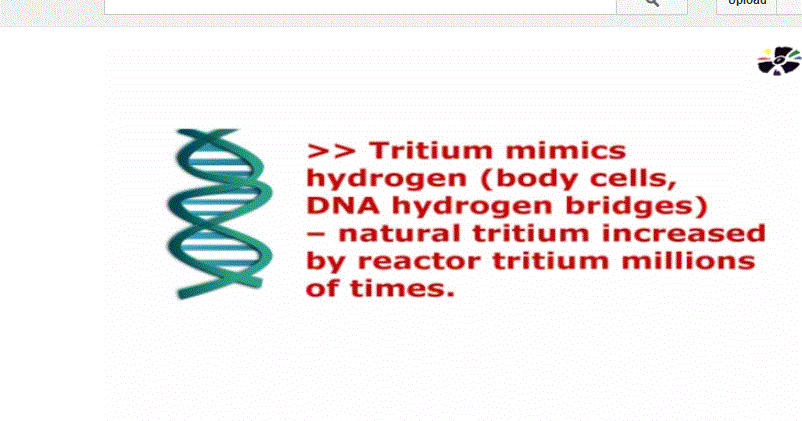
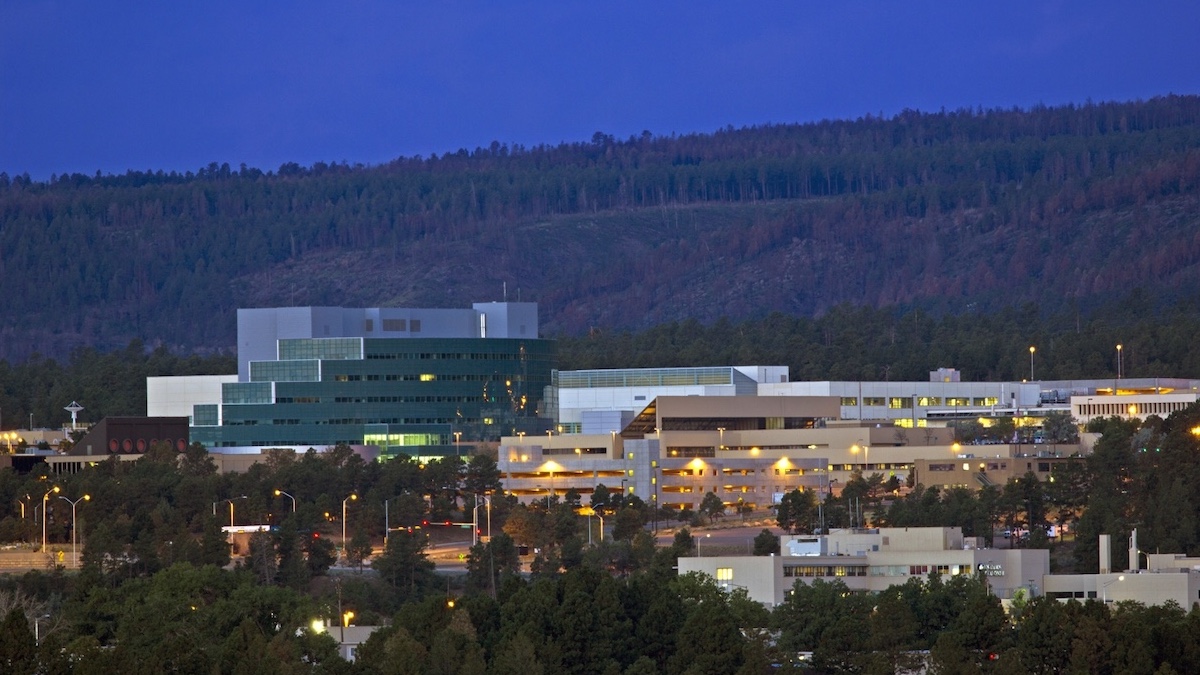
The Los Alamos National Laboratory plans to begin large releases of radioactive tritium gas any time after June 2, 2025. The only roadblock to the Lab’s plans is that it needs a “Temporary Authorization” from the New Mexico Environment Department to do so.
Reasons why the New Mexico Environment Department should deny LANL’s request are:
1. The state Environment Department has a duty to protect the New Mexican public. As it states, “Our mission is to protect and restore the environment and to foster a healthy and prosperous New Mexico for present and future generations.”
2. Why the rush? LANL explicitly admits there is no urgency. According to the Lab’s publicly-released “Questions and Answers” in response to “What is the urgency for this project?” “There is no urgency for this project beyond the broader mission goals to reduce onsite waste liabilities.”
3. In addition, the National Nuclear Security Administration (NNSA) admits that the end time frame for action is 2028, not 2025. Therefore, there is time for deliberate consideration.
4. Contrary to NMED’s Resource Conservation and Recovery Act permit for LANL, the Lab has not fulfilled its duty to inform the public via NMED of possible alternatives to its planned tritium releases. According to Tewa Women United, “LANL has told EPA there are 53 alternatives; that list of alternatives, initially requested in 2022, has not yet been disclosed. Tewa Women United has repeatedly asked LANL to provide the public with that list.”
5. Despite extensive prompting by the Environmental Protection Agency on possible better alternatives, the NNSA categorically rejected any modifications.
6. NNSA’s January 2025 draft LANL Site-Wide Environmental Impact Statement had no substantive discussion of the planned tritium releases, much less the required “hard look” at credible alternatives. Further, LANL and NNSA included these planned releases in the “No Action Alternative,” with the specious justification that “The Laboratory and NNSA have been integrating with the EPA and NMED to obtain approval to move forward with the plan to vent the Flanged Tritium Waste Containers currently located in TA-54.” Seeking approval makes them No Action? NNSA and LANL are legally required to consider public comments submitted for the LANL SWEIS. These planned tritium releases should not proceed until NNSA issues a Record of Decision on the final LANL Site-Wide Environmental Impact Statement.
7. NNSA’s publicized maximum release of 30,000 curies is merely an administrative decision point at which LANL will stop the venting process to avoid exceeding the Clean Air Act’s 10 millirem public exposure limit for radioactive air emissions. It is not the potential total quantity of tritium that will have been released. LANL’s radioactive air emissions management plan sets an annual administrative limit of 8 millirem for the tritium releases, meaning venting will cease once this limit is reached but may resume in subsequent periods.
8. In addition, these planned releases are not necessarily a one-time event, as indicated above, contrary to what the LANL Site-Wide Environmental Impact Statement falsely states.
9. Nor are these planned releases strictly confined to just Area G, as claimed.
10. LANL declares “There are no cumulative impacts from this operation. All limits are conservative, and well within regulatory limits that are protective of the public.” However, one independent report calculates that the effective dose to infants could be three times higher than to adults (therefore likely violating the 10 millirem Clean Air Act standard for “any member of the public”) and all of LANL’s calculated doses would be higher in the event of low wind speeds and low humidity.” Another independent report noted how tritiated water can pervade every cell in the body while the planned LANL tritium releases are three times the amount of tritium that the crippled Fukushima nuclear power plant would release to the ocean over 30 years.
11. LANL claims “This critical milestone [the planned tritium releases] furthers \ the cleanup of Area G.” But what so-called cleanup means to LANL is “cap and cover” of ~200,000 cubic yards of existing toxic and radioactive wastes at Area G, leaving them permanently buried in unlined pits and shafts as a permanent threat to groundwater. NMED knows this all too well given the draft order it issued to the Lab to excavate and treat all wastes at the smaller Area C waste dump, which LANL categorically opposes. NMED should carefully consider the extent to which approving these planned tritium releases is consistent with its desire for full comprehensive cleanup at the Lab, including Area G.
Recommendation: Given the self-admitted lack of urgency and remaining uncertainties in potential doses, times, locations and ultimate purpose of these planned tritium releases,NMED should deny LANL’s request for a “Temporary Authorization” to proceed until there has been an open and transparent analysis of alternatives and all possible public health impacts.
This fact sheet is available here. For more contact Nuclear Watch New Mexico and Tewa Women United.
And please sign the petition — Petition to Deny LANL’s Request to Release Radioactive Tritium into the Air.
US mainstream media still censoring US enabled Israeli genocide in Gaza

May 18, 2025 AIMN Editorial, By Walt Zlotow, https://theaimn.net/us-mainstream-media-still-censoring-us-enabled-israeli-genocide-in-gaza/
For the past 586 days US mainstream media refuses to condemn US enabling Israeli genocide of 2,300,000 Palestinians in Gaza.
The word genocide never appears in their print or pixels. They barely cover the genocide. But when they do make oblique references to it, simply calling it ‘Israel’s war on Hamas.’
US enabling of Israel’s genocide is bipartisan, with not a single pushback from the 535 congresspersons who, like the genocide enabling Biden and Trump administrations, betray their oath to protect life by promoting peace.
Special Trump Middle East envoy Steve Witkoff brushed off inquiries when the US will stop supporting Israeli genocide saying:
“We’re not the Israeli government. We don’t disagree. The Israeli government is a sovereign government. They can’t tell us what to do, and we can’t tell them what to do.”
Witkoff conveniently omitted that without America’s $20 billion providing over 50,000 tons of genocide weapons, Israel would be powerless to carry out 586 days of genocidal ethnic cleansing of Gaza with no end in sight.
Trump is even more ghoulish in promoting Israel’s genocide. On his Middle East trip Trump said.
“I’d be proud to have the United States have it (Gaza), take it, make it a freedom zone, let see good things happen. Put people in homes where they can be safe.”
Those people in safe homes won’t be Palestinians whom Trump has been lobbying African countries to take in so they don’t have to all be killed off.
With their bombs, planes and drones, Biden and Trump have made the Israeli genocide possible. It is no different than if FDR was supplying the Nazis with Zyklon B gas to complete their genocide 80 years ago.
With mainstream media compliance, the US enabled genocide will continue to its completion so Trump can build his ultimate real estate development on the bodies and destroyed homes of 2,300,000 Palestinians.
But if mainstream media began the first story of every day condemning America and Israel’s genocide body count from bombs and forced starvation, it might just galvanize the 535 congresspersons to acknowledge and resist the genocide they’re ignoring. It might even force the grotesque Trump administration to turn back from inflicting the worst horror on helpless people ever inflicted by the self-proclaimed greatest nation on earth.
Tomorrow is Day 587 of mainstream media genocide denial. Unless they pivot to peace in Gaza, mainstream media moguls will follow the Biden Trump administrations and Congress down the rabbit hole of genocide infamy.
President Trump to unleash atomic power

May 15, 2025, https://beyondnuclear.org/president-trump-unleashes-atomic-power/
On May 14, 2025, E&ENews updated reports on President Donald Trump’s four “pre-decisional” White House Executive Orders to radically alter the historic role of the US Nuclear Regulatory Commission’s (NRC) to oversee the performance of reactor design safety reviews and the regulatory approval of reactor siting, construction and operation of commercial atomic power plants.
In President Trump’s view, the NRC’s overly burdensome regulations are the primary obstacle to guaranteeing the development and deployment of a national “nuclear renaissance.” As a result, The White House is eyeing a “wholesale regulatory revision” of the federal agency that includes mandatory “reductions in force.” Simultaneously, the White House envisages authorizing the US Department of Energy and Department of Defense to instead take charge of quadrupling the current domestic nuclear energy capacity to 400 gigawatts by 2050. In order to achieve this goal, the draft Executive Orders outline 1) “overhauling NRC”; 2) significantly accelerating “nuclear R&D”; 3) redefining commercial nuclear power development as critical infrastructure for the “national security,” and 4) dramatically building out the domestic “nuclear supply chain” to include significantly ramping up domestic uranium mining, milling, enrichment and fabrication of US nuclear fuel.
While no energy generation system is entirely domestically sourced, the US nuclear fuel supply is predominantly sourced through foreign imports. According to the U.S. Energy Information Agency reporting in 2025, US domestic uranium mines produce roughly 1% of the uranium concentrate (U3O8) needed to fuel the current US nuclear fleet in 2023. Foreign imports accounted for 99% of our nation’s U3O8 with 48% coming from Russia and Russia-influenced Kazakhstan and Uzbekistan. Presently, Russia is the only commercially viable global supplier of high-assay low enriched uranium (HALEU fuel is less than 20% enriched uranium-235) as is rated for advanced Small Modular Reactor designs, including Bill Gate’s TerraPower Natrium reactor liquid sodium-cooled fast reactor and X-Energy’s Xe-100 high-temperature gas-cooled pebble-bed reactor.
The Trump Administration has declared by a Executive Order in February 2024 that it will no longer recognize any federal agencies as “independent” but rather all federal agencies are now in the President’s wheelhouse and subject to his supervision and control. All “significant regulatory actions” of the NRC would be reviewed by the White House’s Office of Information and Regulatory Affairs, or OIRA, opening the process to the White House review for comments, edits and influence. E&E news observed the new process “obscures the public record of internal commission deliberations” and is an apparent violation of the Atomic Energy Act which clearly states that it is expressly for the NRC to decide.
The draft order to overhaul the NRC would also require the agency to reconsider its standard for radiation exposure where it now understands that there is no safe dose of radiation. Dr. Edwin Lyman, a physicist and Director of the Nuclear Power Safety for the Union of Concerned Scientists is quoted in the E&E article to say, “Documented scientific evidence has only indicated that [low-level radiation exposure] is more dangerous than was known decades ago, when these standards were set.” Furthermore, Dr. Lyman adds, “Evidence has emerged about the impact of the level of radiation exposure on cardiovascular disease.”
The White House draft order to reframe nuclear power deployment for “national security” sets up the US Department of Energy and Department of Defense to “work around the NRC-led licensing and safety review processes” by providing the Secretaries of Defense and Energy accelerated schedules to “identify 9 military facilities at which advanced nuclear technologies can be immediately installed and deployed.” Those military base sited nuclear power plants can then provide transmission to the electric grid for commercial power.
It should be alarming that the Trump Executive Orders to fast track the still elusive and unpredictably costly construction of unproven Generation IV reactors by decommissioning the NRC comes at precisely the wrong time.
This is the still the 50th Anniversary Year of the creation of the NRC following the abolition of the U.S. Atomic Energy Commission by Congress for its blatant fast track promotion of atomic power plant licensing and a dangerous disregard of public health and safety. Least we forget, too many of those aging and now deteriorating nuclear power stations that are approaching and have exceeded 50 years of very harsh operating experience of radioactive neutron bombardment, embrittlement and cracking in base metal and dissimilar weld materials, fatigue, corrosion and a combination of extreme heat, pressure and vibration. Nobody knows better the growing level uncertainty, the multitude of technical knowledge gaps and innumerable shrinking reactor safety margins than those NRC nuclear engineers. Certainly, not Trump.
How Donald Trump’s Crypto Dealings Push the Bounds of Corruption.

With the meme coin $TRUMP and the company World Liberty Financial, the President is using an underregulated industry to enrich himself and court foreign influence.
By Kyle Chayka, May 14, 2025, https://www.newyorker.com/culture/infinite-scroll/how-donald-trumps-crypto-dealings-push-the-bounds-of-corruption?cndid=30183386&bxid=5be9d23d24c17c6adf3bf435&esrc=subscribe-page&hashc=ac5a1f5526e7292c73f49dfa8fb6d5d0cb87d8773cec3b9b03d38a4ce482d7c8&hashb=e1c24f6a6459c7d1d625eb2ea55d9dfbbb4633bf&hasha=432fc0d0ad6543e820e2dfcd39f76c35&mbid=CRMNYR012019&utm_campaign=aud-dev&utm_term=TNY_Science_Tech&utm_source=nl&utm_medium=email&utm_brand=tny&utm_mailing=TNY_Science_051725
Imagine that someone in a position of great political power created a hundred billion raffle tickets and made them available for public purchase. If you buy the tickets, eventually you will receive a reward: a proportional quantity of magic beans—and eventually each magic bean will be exchangeable for one United States dollar. What’s more, if you buy the raffle tickets early, you can get them for less than a dollar, perhaps for as little as five cents apiece. Not only will the raffle tickets eventually gain you more traditional currency; you can also vote on company matters with your raffle tickets and help manage the magic-bean supply, and the more tickets you purchase, the more say you have. Oh, and the creator of the raffle will keep a bunch of the tickets for himself, and much of the revenue generated by the magic-bean economy will also go back to him.
This effectively describes the workings of a new cryptocurrency created by World Liberty Financial, a company affiliated with the Trump family, with President Donald Trump serving as its “Chief Crypto Advocate.” The cryptocurrency, a so-called governance token called WLFI, is the raffle ticket, and another cryptocurrency, a “stablecoin” called USD1, is the magic bean. World Liberty deals in the nascent industry of “decentralized finance,” in which cryptocurrency instruments allow users to circumvent the traditional, regulated banking ecosystem for moving, storing, and lending money. Stablecoins are cryptocurrencies that are pegged to a single currency value, such as one U.S. dollar, though they are not always so stable: Terra, a once successful stablecoin, lost its peg and suffered a collapse in 2022. Stablecoins fall nebulously within the bounds of the law, so long as they don’t appear to function as securities (as, for instance, stock in a publicly traded company does). A banner on the World Liberty website serves as a legal disclaimer: “World Liberty Financial does not consider the tokens to be securities.” Donald Trump et fils quietly assumed a controlling stake of World Liberty, in January, through a company called DT Marks Defi. Though fine print specifies that no member of the Trump family is an “officer, director or employee” of World Liberty, DT Marks Defi receives seventy-five per cent of its subsidiary company’s net revenue. (The remaining twenty-five per cent goes to Axiom Management Group, which is connected with two of World Liberty’s official leaders, Chase Herro and Zachary Folkman, a pair of self-described “crypto-punks,” whose other ventures include, in Folkman’s case, a company called Date Hotter Girls.)
Trump is a onetime crypto skeptic who announced, in a tweet in 2019, “I am not a fan of Bitcoin.” Yet in recent years, he has touted several varieties of magic beans, bringing a P.R. boost to an industry in which new ventures are often dead on arrival. In 2022, he released Trump Digital Trading Cards, a series of non-fungible tokens that has continued to produce new batches, including a January, 2024, “Mugshot” edition, featuring his glaring police photo. (Bulk buyers of the mug-shot N.F.T. received invitations to Mar-a-Lago.) Three days before his Inauguration, he launched a so-called meme coin, cryptocurrencies based on online notoriety that become de-facto pyramid schemes as early buyers sell off to later ones at higher prices. $TRUMP consists of a billion coins, eighty per cent of which were kept by Trump-related companies, and the remainder sold to the public. It reportedly made around three hundred and fifty million dollars in revenue in its sale and has a market capitalization of nearly three billion dollars; Trump’s business earns a fee for every $TRUMP transaction.
The price of the meme coin is now down to less than a fifth of its all-time high, and the majority of its buyers have seen their purchases lose value. An official Melania Trump meme coin released soon after Trump’s has fared even worse. But $TRUMP was given a recent bump when Fight Fight Fight, a business associated with the Trump Organization and its crypto projects, ran a contest in which the two hundred and twenty largest holders of the meme coin won invitations to a gala dinner with Donald Trump, to be hosted at the Trump National Golf Club near Washington, D.C. (Black tie is optional.) The top twenty-five will get access to a more private reception with the President. The contest offers an explicit way to buy Trump’s attention, lending magic beans a new appeal as a lobbying tool. Many of the meme-coin investors are based abroad, and some have been unequivocal about their goal of influencing Trump’s agenda. (One Australian entrepreneur told the Times that he hopes to talk to the President about crypto policy; a Mexican buyer said that he would like Trump’s ear on tariffs.) On Tuesday, a small Chinese company that operates an e-commerce business on TikTok announced plans for a three-hundred-million-dollar purchase of $TRUMP and Bitcoin—at a time when the Trump Administration is considering whether to follow through on a TikTok ban.
The World Liberty operation has far vaster implications than the meme coin, however, because its stablecoin, which can be easily and reliably exchanged for U.S. dollars, creates something like an entire Trump-sponsored underground economy. It’s as if a new bank had opened under the sitting President’s name, and it was being sent large quantities of funds by various foreign businesses and political élites. Major buyers of WLFI have included Justin Sun, a Chinese crypto entrepreneur, who bought seventy-five million dollars’ worth, and DWF Labs, an Abu Dhabi-based cryptocurrency trading firm, which bought twenty-five million dollars’ worth. In March, World Liberty announced that it had sold more than half a billion dollars’ worth of its token. Earlier this month, another Abu Dhabi-based investment firm announced that it would use USD1, the stablecoin controlled by World Liberty, for a two-billion-dollar investment in Binance, the largest cryptocurrency exchange in the world.
Buying the Trumpian magic beans provides a way of purchasing influence, not unlike how foreign dignitaries could rent rooms at the Trump International Hotel in D.C. during Trump’s first Administration. But World Liberty makes renting hotel rooms look quaint by comparison. The more money that flows into WLFI and USD1, the more legitimate and valuable these currencies appear, and the higher their market capitalizations creep. Tether, the world’s largest stablecoin, has a market capitalization nearing a hundred and fifty billion dollars, with more than thirty billion dollars in daily trading volume. World Liberty aspires to create something similar.
The American public has been inundated with news of the Trump family’s self-enrichment for so long that many of their dealings now barely create a stir. Just this week, it was revealed that the Administration is preparing to accept the gift of a luxury Boeing 747-8 jet offered by the royal family of Qatar, to be used as a new Air Force One, at least until a new Air Force One is completed by Boeing. The Department of Defense will receive the jet, but when Trump leaves office it will reportedly be donated to his Presidential library, effectively turning the plane, worth four hundred million dollars, into a private possession—never mind that this arrangement would seem to blatantly contradict the foreign-emoluments clause, which prevents U.S. officials from accepting gifts from foreign leaders and governments. (Trump has dismissed ethical concerns by saying that declining a gift would be “stupid.”) In the realm of crypto, though, a backlash against Trump’s ventures may be mounting in Congress. Last week, some Senate Democrats balked at passing a popular crypto-friendly bill in light of the President’s naked profiteering. In a bit of almost farcical understatement, Senator Cynthia Lummis, Republican of Wyoming, recently told the Times, “The optics are challenging.” But the Trump family has so far wagered correctly that no one will stop them. ♦
Kyle Chayka is a staff writer at The New Yorker. His column, Infinite Scroll, examines the people and platforms shaping the Internet. His books include “Filterworld: How Algorithms Flattened Culture.
The US buried millions of gallons of wartime nuclear waste – Doge cuts could wreck the cleanup

Guardian, Andrew Buncombe in Richland, Washington. 16 May 25
Hanford made the plutonium for US atomic bombs, and its radioactive waste must be dealt with. Enter Elon Musk
Andrew Buncombe in Richland, WashingtonThu 15 May 2025 23.00 AESTShare
In the bustling rural city of Richland, in south-eastern Washington, the signs of a nuclear past are all around.
A small museum explains its role in the Manhattan Project and its “singular mission – [to] develop the world’s first atomic bomb before the enemy might do the same”. The city’s high school sports team is still known as the Bombers, with a logo that consists of the letter R set with a mushroom cloud.
Richland lies just 30 miles from the Hanford nuclear site, a sprawling plant that produced the plutonium for America’s atomic weapons during the second world war – and later the bomb dropped over Nagasaki. Over the decades, thousands of people in the Tri-Cities area of southern Washington worked at the plant, which shuttered in 1989.
Residents have long spearheaded an operation to deal with 56m gallons of nuclear waste left behind in dozens of underground tanks – a cleanup that is expected to cost half a trillion dollars and may not be completed until 2100. The government has called it “one of the largest and most expensive environmental cleanup projects worldwide”.
In recent weeks, what has already been a costly and painstakingly slow process has come under renewed scrutiny, following an exodus of experts from the Department of Energy (DoE) that is overseeing the cleanup being executed by thousands of contract workers.
According to local media, several dozen staff, who reportedly include managers, scientists and safety experts, have taken early retirement or been fired as part of a broader government reduction overseen by Elon Musk and his “department of government efficiency”. The government has refused to provide a specific figure for how many people involved with cleanup efforts have left. The top DoE manager at the Hanford site, Brian Vance, who had many years of experience, resigned at the end of March without giving a reason.
The changes have thrown the communities around the Hanford plant into limbo. And while the Department of Energy has said that only six staff have been fired, and reiterated its commitment to the cleanup, that hasn’t managed to assuage locals’ concerns.
Those raising the alarm include politicians from both parties, environmental activists, and Indigenous communities who have historically owned the land on which the 560 sq mile (1,450 sq km) site sits.
The US senator for Washington Patty Murray said workers were already understaffed, and that cutting further positions was “reckless”.
“There is nothing ‘efficient’ about indiscriminately firing thousands upon thousands of workers in red and blue states whose work is badly needed,” the Democrat said.
Dan Newhouse, the local Republican congressman is similarly concerned. “A strong, well trained federal workforce is essential,” he wrote in a weekly newsletter to constituents.
Concerns have also been raised by some over the difficulty former workers face in making medical compensation claims to the government for everything from cancer to acute pulmonary disease linked to their time at the plant.
Taken together, there is fresh anxiety in a community, where many are still living with the health and environmental effects of Hanford.
Richland, part of the Tri-Cities, was obtained by the army in 1943 to house workers engaged in top-secret efforts to produce plutonium used in the world’s first nuclear explosion – the-so-called “Trinity” device tested near Los Alamos, New Mexico, in 1945. Though the city was returned to the public a decade later, it can still feel like a company town.
To get anywhere near what is known as Hanford’s B-reactor, the world’s first full-scale plutonium production reactor, you need to sign up for an official tour. Yet a view of its grey, single tower, looming from the hillside, can be seen from state route 24, close to the Columbia River.
Those expressing concern about the federal government downsizing include local Indigenous groups who historically owned the land where the site is located and were pushed off it by the government. The Hanford plant area contains the location of several sacred sites, among them Gable Mountain, which were used for ceremonies, and the area of Rattlesnake Mountain, or Lalíik, which has for centuries been used to hunt elk.
The site is also located close to the Yakama Indian Reservation, home to 11,000 people, and the tribe has long pushed to be central to decisions about the cleanup and what it is eventually used for. The tribe recently signed a deal to carry out their first elk hunt in the area for seven decades.
“One of the biggest fears is that without proper manpower, there might not be a very good crew for the cleanup of the property,” says Gerald Lewis, chairman of the Confederated Tribes and Bands of the Yakama Nation. “Without this cleanup, that’s been happening for a number of years, we’re afraid of a nuclear mishap.”
Dr Elizabeth McClure, a health data specialist with the Union of Concerned Scientists, is currently conducting research in the communities around Hanford. She says there is a history of government-led cover-ups over the years at the site, including what is known as “the Green Run”, the intentional release of 8,000 so-called curies of iodine-1 into the atmosphere in 1949……………………………………………………………………………………………………………….. https://www.theguardian.com/us-news/2025/may/15/us-government-nuclear-waste-doge
1 This Month

of the week – Shut Down Drone Warfare!


Tell the Ukrainian Government to Drop Prosecution of Peace Activist Yurii Sheliazhenko

Petition to revoke the licensing of the Near Surface Nuclear Disposal Facility (NSDF) at Chalk River. https://www.ourcommons.ca/petitions/en/Petition/Details?Petition=e-7247
To see nuclear-related stories in greater depth and intensity – go to https://nuclearinformation.wordpress.com
-
Archives
- March 2026 (230)
- February 2026 (268)
- January 2026 (308)
- December 2025 (358)
- November 2025 (359)
- October 2025 (376)
- September 2025 (257)
- August 2025 (319)
- July 2025 (230)
- June 2025 (348)
- May 2025 (261)
- April 2025 (305)
-
Categories
- 1
- 1 NUCLEAR ISSUES
- business and costs
- climate change
- culture and arts
- ENERGY
- environment
- health
- history
- indigenous issues
- Legal
- marketing of nuclear
- media
- opposition to nuclear
- PERSONAL STORIES
- politics
- politics international
- Religion and ethics
- safety
- secrets,lies and civil liberties
- spinbuster
- technology
- Uranium
- wastes
- weapons and war
- Women
- 2 WORLD
- ACTION
- AFRICA
- Atrocities
- AUSTRALIA
- Christina's notes
- Christina's themes
- culture and arts
- Events
- Fuk 2022
- Fuk 2023
- Fukushima 2017
- Fukushima 2018
- fukushima 2019
- Fukushima 2020
- Fukushima 2021
- general
- global warming
- Humour (God we need it)
- Nuclear
- RARE EARTHS
- Reference
- resources – print
- Resources -audiovicual
- Weekly Newsletter
- World
- World Nuclear
- YouTube
-
RSS
Entries RSS
Comments RSS
 nuclear-news