Why the US must protect the independence of its nuclear regulator

By Stephen Burns, Allison Macfarlane, Richard Meserve | July 7, 2025, https://thebulletin.org/2025/07/why-the-us-must-protect-the-independence-of-its-nuclear-regulator/https://thebulletin.org/2025/07/why-the-us-must-protect-the-independence-of-its-nuclear-regulator/
The White House has introduced radical changes that threaten to disrupt the effectiveness of the US Nuclear Regulatory Commission (NRC). The agency was formed in 1975 to be an independent regulator, separating it from the promotional role pursued by its predecessor, the Atomic Energy Commission. The NRC has set safety requirements that have become the global gold standard for nuclear regulation. The White House actions threaten to undermine this record.
Conversations with fellow former NRC chairs and retired NRC experts reveal a shared concern that the changes will have unintended, dangerous consequences. In February, the White House issued an executive order that intruded on the traditional autonomy of independent agencies, thereby giving the White House the capacity to control NRC regulatory actions and allow politics to infect regulatory decision-making. A series of executive orders on nuclear matters issued in late May compounded the challenge. One of the executive orders focuses on the reform of the NRC. It would establish arbitrary deadlines for decisions on construction permits and operating licenses, regardless of whether the design offers new and previously unevaluated safety challenges. Other provisions demand the review of all the extensive NRC regulations within 18 months. The other executive orders allow the construction of nuclear power reactors on federal lands—sites belonging to the Energy Department and the Defense Department—without any review by the NRC.
Then, on June 13, the Trump administration fired Christopher Hanson, an NRC commissioner and former chair, without any stated justification. These actions all serve to weaken protections for those who work in or live near reactors. Given the anticipated expansion of reliance on nuclear power, the drastic staff reductions contemplated by the White House come at the wrong time.
There is always room to assess the efficiency and effectiveness of the regulatory process and adapt it to the evolution of nuclear technologies and their implementation. Recognizing that, past and current NRC commissioners and technical staff have set in motion changes to reduce the regulatory burden and speed the deployment of reactors at a lower cost. The changes are prudent and reasonable and support the promise of expanded reliance on nuclear energy. Congress has also encouraged those efforts and further instructed the NRC to make more improvements to the process through the bipartisan ADVANCE Act signed into law in 2024. All of this was underway before the White House interference.
The NRC has protected the health and safety of Americans for 50 years without a single civilian reactor radiation-related death. The lessons of the 1979 Three Mile Island accident have long been woven into the safety regime, and every commercial reactor in the United States is safer today because of major safety steps taken after the destruction of reactors in Japan’s Fukushima Daiichi plant by a massive earthquake and tsunami in 2011.
Since Three Mile Island, the agency has licensed approximately 50 power reactors to operate. It has recently issued construction permits for advanced reactors ahead of schedule. And the NRC has cleared utilities to boost the power of many existing reactors and has licensed them to run longer than originally planned.
We are concerned about the unintended safety consequences that a reduced NRC independence and a schedule-driven regulatory paradigm threaten to bring.
We fear the loss of public confidence that can befall a safety agency when expediency is seen to be given priority. Reducing the NRC’s independence while mixing promotion of nuclear energy and responsibility for safeguarding the public and environment is a recipe for corner-cutting at best and catastrophe at worst.
We are also concerned that such steps could damage the reputation of US reactor vendors worldwide. A design licensed in the United States now carries a stamp of approval that can facilitate licensing elsewhere, including the many countries that plan to embark on a nuclear power program. If it becomes clear that the NRC has been forced to cut corners on safety and operate less transparently, US reactor vendors will be hurt.
The US nuclear industry is helped by the fact that it has a strong independent regulator behind it. The White House’s executive orders may produce the opposite effect from their stated purpose.
Editor’s note: The authors are former chairs of the US Nuclear Regulatory Commission.
U.S. sanctions U.N. expert critical of Israel’s war in Gaza

Francesca Albanese has called for an arms embargo on Israel and accused the U.S. ally of waging a “genocidal campaign” in Gaza.
The United States said on Wednesday it was imposing sanctions on Francesca Albanese, the United Nations’ special rapporteur on human rights in the occupied Palestinian territories, who has been very critical of U.S. ally Israel’s war in Gaza.
“Today I am imposing sanctions on UN Human Rights Council Special Rapporteur Francesca Albanese for her illegitimate and shameful efforts to prompt (International Criminal Court) action against U.S. and Israeli officials, companies, and executives,” Secretary of State Marco Rubio said in a statement.
In a post on X late on Wednesday, Albanese wrote that she stood “firmly and convincingly on the side of justice, as I have always done,” without directly mentioning the U.S. sanctions. In a text message to Al Jazeera, she was quoted as dismissing the U.S. move as “mafia style intimidation techniques.”
Albanese, an Italian lawyer and academic, has called on states at the U.N. Human Rights Council to impose an arms embargo and cut off trade and financial ties with Israel while accusing the U.S. ally of waging a “genocidal campaign” in Gaza.
Israel has faced accusations of genocide at the International Court of Justice and of war crimes at the ICC over its devastating military assault on Gaza. Israel denies the accusations and says its campaign amounts to self-defense after a deadly October 2023 Hamas attack.
In a report published earlier this month, Albanese accused over 60 companies, including major arms manufacturers and technology firms, of involvement in supporting Israeli settlements and military actions in Gaza. The report called on companies to cease dealings with Israel and for legal accountability for executives implicated in alleged violations of international law.
Albanese is one of dozens of independent human rights experts mandated by the United Nations to report on specific themes and crises. The views expressed by special rapporteurs do not reflect those of the global body as a whole.
Rights experts slammed the U.S. sanctions against Albanese. Dylan Williams, vice president for government affairs at the Center for International Policy think tank, labeled them as “rogue state behavior” while Amnesty International said special rapporteurs must be supported and not sanctioned.
“Governments around the world and all actors who believe in the rule-based order and international law must do everything in their power to mitigate and block the effect of the sanctions against Francesca Albanese and more generally to protect the work and independence of Special Rapporteurs,” Amnesty International’s Secretary General Agnes Callamard, a former UN special rapporteur, said.
Since returning to office in January, President Donald Trump has stopped U.S. engagement with the U.N. Human Rights Council, extended a halt to funding for the Palestinian relief agency UNRWA and ordered a review of the U.N. cultural agency UNESCO.
He has also announced U.S. plans to quit the Paris climate deal and the World Health Organization.
His administration imposed sanctions on four judges at the ICC in June in retaliation over the war tribunal’s issuance of an arrest warrant for Israeli Prime Minister Benjamin Netanyahu and a past decision to open a case into alleged war crimes by U.S. troops in Afghanistan.
Republicans and Democrats Finally Agree on Nuclear. It’s the Industry That’s the Problem.

The atomic age is perpetually on the verge of dawning.
Nuclear power is a political winner — but not a money saver. Just ask
Tim Echols. Echols’ term on the Georgia Public Service Commission is up
this year, and unlike most states, his position is an elected one.
He says the Vogtle nuclear plant has been a campaign issue — it’s hiked
customers’ bills by about 12 percent since coming fully online last year,
$21 billion over budget and seven years behind schedule — but that his
opponents haven’t been able to weaponize it. He won his Republican
primary resoundingly last month.
“All the Democratic opponents are saying
that they would build Vogtle,” he said. “They’re just not saying how
they would pay for it. Or they’re saying they’re going to lower bills,
but they’re going to build nuclear, and those two things don’t go
together.”
The hippies are dying out, and with them the memories of
Shoreham, San Onofre, V.C. Summer, Three Mile Island and other nuclear
plants that didn’t pan out, suffered radiation leaks or otherwise closed
before their time. It’s not the policy that’s holding nuclear back:
It’s the industry.
All the incentives and permitting reforms the
government can muster won’t change the basic economics that have led to
just three new nuclear plants getting built in the U.S. this century: It
takes too long, is too expensive and is only getting pricier. “In terms
of new nuclear, it’s a nonstarter,” said Stanford engineering professor
Mark Z. Jacobson, a longtime skeptic of nuclear power. “They can spend as
much money as they want, it’s never going to happen.”
Politico 9th July 2025, https://www.politico.com/news/magazine/2025/07/09/gop-dems-nuclear-energy-industry-problems-debra-kahn-column-00344370
America’s largest airport reveals ‘plan’ to build NUCLEAR REACTOR on its land.
America’s largest airport by size is reportedly considering plans to build
a nuclear reactor on its sprawling 33,500-acre property. Denver
International Airport CEO Phil Washington, 67, made the shocking revelation
during a recent Future of Aerotropolis event hosted by local business
publication, Business Den. Washington, a former pick to lead Joe Biden’s
FAA before he withdrew under heavy Republican criticism over the airport’s
safety record, told the panel discussion the he was seriously considering a
‘small modular reactor’ to meet growing energy demands.
Daily Mail 9th July 2025, https://www.dailymail.co.uk/news/article-14890859/Americas-largest-airport-reveals-plan-build-NUCLEAR-REACTOR-land.html
The Trumpanyahu Administration
Caitlin Johnstone, Jul 01, 2025, https://www.caitlinjohnst.one/p/the-trumpanyahu-administration?utm_source=post-email-title&publication_id=82124&post_id=167261479&utm_campaign=email-post-title&isFreemail=true&r=1ise1&triedRedirect=true&utm_medium=email
Honestly at this point they should just get Netanyahu his own room in the White House and a desk in the Oval Office.
The prime minister of Israel is taking his third trip to the White House in the five months since Trump has been back in office. I have immediate blood family members who I love with all my heart and visit less often than this.
This comes as the Trump administration revokes the US visas of British punk rap duo Bob Vylan ahead of a US tour for chanting “Death, death to the IDF” at a concert in the UK. Trump’s sycophantic supporters who spent years complaining that their free speech rights were under assault appear fine with their government deciding what words Americans are allowed to hear in their own country.
This also comes as Trump actively intervenes in the Israeli judicial system to prevent Netanyahu’s corruption trial from moving forward.
The president has repeatedly taken to social media to demand that Israel abandon its corruption case against the prime minister, at one point even implying that the US could cut off arms supplies if his trial isn’t canceled.
“The United States of America spends Billions of Dollar a year, far more than on any other Nation, protecting and supporting Israel,” Trump said. “We are not going to stand for this. We just had a Great Victory with Prime Minister Bibi Netanyahu at the helm — And this greatly tarnishes our Victory. LET BIBI GO, HE’S GOT A BIG JOB TO DO!”
It’s so revealing what the US government is and is not willing to threaten conditioning military supplies on, and what it’s willing to interfere in Israel’s affairs to accomplish.
Ever since the Gaza holocaust began we’ve been hearing lines like “Israel is a sovereign country” and “Israel is a sovereign state that makes its own decisions” when reporters ask why the White House doesn’t leverage arms shipments to demand more humanitarian treatment for civilians in the Gaza Strip. But the president of the United States is willing to leverage those same arms shipments to directly interfere in Israeli legal proceedings which have nothing to do with the US government in order to get Netanyahu out of trouble.
And it would appear that the president’s intervention has been successful; Netanyahu’s corruption trial has since been postponed.
When it comes to committing genocide using American weapons funded by American taxpayers, Israel is a sovereign state upon which the US can exert zero leverage or control. When it comes to meddling in the corruption trial of a man who is wanted for war crimes by the International Criminal Court, the White House pulls no punches in protecting its favorite genocide monster.
There is no meaningful separation between the US and Israeli governments. They’re two member states in the undeclared empire that sprawls across the entire western world, and Trump and Netanyahu are two of the most depraved and most consequential managers of this empire today.
They are thick as thieves. They are partners in crime.
Call it the Trumpanyahu administration.
US Approves $510 Million Arms Deal for Israel
The deal is for more than 7,000 JDAM kits, which turn bombs into precision-guided weapons
by Dave DeCamp | Jun 30, 2025, https://news.antiwar.com/2025/06/30/us-approves-510-million-arms-deal-for-israel/
The Trump administration has approved a new arms deal for Israel that will provide the country with $510 million worth of Joint Direct Attack Munitions (JDAMS), kits that turn bombs into precision-guided weapons, as the US continues to provide military aid to support the genocidal war in Gaza.
According to the Pentagon’s Defense Security Cooperation Agency (DSCA), the State Department notified Congress of the sale of 3,845 JDAMS for 2,000-pound BLU-109 bombs and 3,280 JDAMS for 500-pound MK 82 bombs. The deal also includes US “government and contractor engineering, logistics, and technical support services; and other related elements of logistics and program support.”
The DSCA said Boeing is the principal contractor for the deal. The notification of the potential deal begins a time period when US lawmakers could potentially block the sale, but there’s little opposition to US military support for Israel within Congress, despite the many war crimes the US is implicated in by providing Israel with weapons.
Fragments of bombs with US-provided JDAM kits have been found at the scene of Israeli airstrikes in Gaza that have massacred many civilians. In 2023, Human Rights Watch said it identified JDAM fragments that were found in two airstrikes on homes in central Gaza that killed 43 civilians, including 19 children, and 14 women.
It’s unclear at this point how the deal will be financed, but many arms sales to Israel are funded by US military aid, and US assistance to Israel has significantly increased since October 7, 2023. According to the Israeli newspaper Haaretz, in that time, US funding has covered an estimated 70% of Israel’s war-related military spending.
Operation Midnight Hammer: Were Iran’s Nuclear Facilities Damaged?

After mulling over the attacks over the course of a week, Grossi revisited the matter. The attacks on the facilities had caused severe though “not total” damage. “Frankly speaking, one cannot claim that everything has disappeared and there is nothing there.” Tehran could “in a matter of months” have “a few cascades of centrifuges spinning and producing enriched uranium.” Iran still had the “industrial and technological” means to recommence the process.
1 July 2025 Dr Binoy Kampmark, https://theaimn.net/operation-midnight-hammer-were-irans-nuclear-facilities-damaged/
The aftermath of Operation Midnight Hammer, a strike by the US Air Force on three nuclear facilities in Iran authorised by President Donald Trump on June 22, was raucous and triumphant. But that depended on what company you were keeping. The mission involved the bombing of the Fordow Fuel Enrichment Plant, the uranium-enrichment facility at Natanz, and the uranium-conversion facility in Isfahan. The Israeli Air Force had already attacked the last two facilities, sparing Fordow for the singular weaponry available for the USAF.
The Fordow site was of particular interest, located some eighty to a hundred metres underground and cocooned by protective concrete. For its purported destruction, B-2 Spirit stealth bombers were used to drop GBU-57 Massive Ordnance Penetrator “bunker buster” bombs. All in all, approximately 75 precision guided weapons were used in the operation, along with 125 aircraft and a guided missile submarine.
Trump was never going to be anything other than optimistic about the result. “Monumental Damage was done to all Nuclear sites in Iran, as shown by satellite images,” he blustered. “Obliteration is an accurate term!”
At the Pentagon press conference following the attack, Defense Secretary Pete Hegseth bubbled with enthusiasm. “The order we received from our commander in chief was focused, it was powerful, and it was clear. We devastated the Iranian nuclear program.” The US Chairman of the Joint Chiefs of Staff Air Force Gen. Dan Caine was confident that the facilities had been subjected to severe punishment. “Initial battle damage assessments indicate that all three sites sustained extremely severe damage and destruction.” Adding to Caine’s remarks, Hegseth stated that, “The battle damage assessment is ongoing, but our initial assessment, as the Chairman said, is that all of our precision munitions struck where we wanted them to strike and had the desired effect.”
Resort to satellite imagery was always going to take place, and Maxar Technologies willingly supplied the material. “A layer of grey-blue ash caused by the airstrikes [on Fordow] is seen across a large swathe of the area,” the company noted in a statement. “Additionally, several of the tunnel entrances that lead into the underground facility are blocked with dirt following the airstrikes.”
The director of the Central Intelligence Agency, John Ratcliffe, also added his voice to the merry chorus that the damage had been significant. “CIA can confirm that a body of credible intelligence indicates Iran’s Nuclear Program has been severely damaged by the recent, targeted airstrikes.” The assessment included “new intelligence from a historically reliable and accurate source/method that several key Iranian nuclear facilities were destroyed and would have to be rebuilt over the course of years.”
Israeli sources were also quick to stroke Trump’s already outsized ego. The Israel Atomic Energy Commission opined that the strikes, combined with Israel’s own efforts, had “set back Iran’s ability to develop nuclear weapons by many years.” IDF Chief of Staff Lt. Gen. Eyal Zamir’s view was that the damage to the nuclear program was sufficient to have “set it back by years, I repeat, years.”
The chief of the increasingly discredited International Atomic Energy Agency, Rafael Grossi, flirted with some initial speculation, but was mindful of necessary caveats. In a statement to an emergency meeting of the IAEA’s 35-nation Board of Governors, he warned that, “At this time, no one, including the IAEA, is in a position to have fully assessed the underground damage at Fordow.” Cue the speculation: “Given the explosive payload utilised and extreme(ly) vibration-sensitive nature of centrifuges, very significant damage is expected to have occurred.”
This was a parade begging to be rained on. CNN and The New York Times supplied it. Referring to preliminary classified findings in a Defense Intelligence Agency assessment running for five pages, the paper reported that the bombing of the three sites had “set back the country’s nuclear program by only a few months.” The entrances to two of the facilities had been sealed off by the strikes but were not successful in precipitating a collapse of the underground buildings. Sceptical expertise murmured through the report: to destroy the facility at Fordow would require “waves of airstrikes, with days or even weeks of pounding the same spots.”
Then came the issue of the nuclear material in question, which Iran still retained control over. The fate of over 400 kg of uranium that had been enriched up to 60% of purity is unclear, as are the number of surviving or hidden centrifuges. Iran had already informed the IAEA on June 13 that “special measures” would be taken to protect nuclear materials and equipment under IAEA safeguards, a feature provided under the Non-Proliferation Treaty. Any transfer of nuclear material from a safeguarded facility to another location, however, would have to be declared to the agency, something bound to be increasingly unlikely given the proposed suspension of cooperation with the IAEA by Iran’s parliament.
After mulling over the attacks over the course of a week, Grossi revisited the matter. The attacks on the facilities had caused severe though “not total” damage. “Frankly speaking, one cannot claim that everything has disappeared and there is nothing there.” Tehran could “in a matter of months” have “a few cascades of centrifuges spinning and producing enriched uranium.” Iran still had the “industrial and technological” means to recommence the process.
Efforts to question the effacing thoroughness of Operation Midnight Hammer did not sit well with the Trump administration. White House spokeswoman Karoline Leavitt worked herself into a state on any cautionary reporting, treating it as a libellous blemish. “The leaking of this alleged report is a clear attempt to demean President Trump and discredit the brave fighter pilots who conducted a perfectly executed mission to obliterate Iran’s nuclear program,” she fumed in a statement. “Everyone knows what happens when you drop 14 30,000-pound bombs perfectly on their targets.”
Palantir’s Shadow War On Iran

July 2, 2025, Kit Klarenberg, https://www.kitklarenberg.com/p/palantirs-shadow-war-on-iran
As the dust settles on the “12 Day War”, it is ever-clearer that the conflict was a crushing defeat for Israel and the US. In retrospect, the Zionist entity’s sole success was a wave of assassinations in the conflict’s first hours. A fawning June 19th Financial Times report hinted cutting-edge technology drawing together diverse data and intelligence sources was responsible. This raises the obvious question of whether Tel Aviv was assisted in its murderous spree by notorious private spying giant Palantir.
An avowedly pro-Israel tech giant founded by Donald Trump confidante and ardent Zionist Peter Thiel, which reportedly provides artificial intelligence tech supporting Tel Aviv’s genocide in Gaza, Palantir’s tendrils extend typically unseen into almost every conceivable sphere of public and private life across the West. Moreover, the firm – launched with seed funding from CIA venture capital wing In-Q-Tel – has long-played a pivotal but barely acknowledged role in the International Atomic Energy Agency’s monitoring of Tehran’s nuclear research.
The interpretation Palantir was one way or another involved in Israel’s illegal “preemptive” war of aggression against Tehran is amply reinforced by the release of sensitive Israeli documents by Iran’s intelligence ministry. These files indicate the IAEA previously provided Israeli intelligence with the names of several Iranian nuclear scientists, who were subsequently assassinated. Additionally, current Association chief Rafael Grossi enjoys a close, long-running, clandestine relationship with Israeli officials. Subsequent disclosures could expose the IAEA’s dark alliance with Palantir.
‘Fishing Expedition’
In July 2015, the Obama administration inked the Joint Comprehensive Plan of Action with Tehran. Under its auspices, in return for sanctions relief, the IAEA was granted unimpeded access to Iran’s nuclear facilities, to ensure the Islamic Republic was not developing nuclear weapons. Vast amounts of information on and within the sites, including surveillance camera photos, measurement data, and documents were collected along the way. The Association consistently found Iran was stringently adhering to the JCPOA’s terms.
Following Trump’s first inauguration however, the JCPOA began to come apart at the seams. In October 2017, he refused to certify Iran’s compliance with its obligations on bogus grounds, and began threatening to tear up the agreement outright and reimpose sanctions. The next March, then-IAEA director general Yukiya Amano sounded alarm over this prospect, claiming the JCPOA had produced “the world’s most robust [nuclear] verification regime” in Iran, and its cessation would represent a “great loss”. He went on to boast of how Association inspectors:
“Now spend 3,000 calendar days per year on the ground in Iran. We have installed some 2,000 tamper-proof seals on nuclear material and equipment. We have carried out more than 60 complementary accesses [unannounced inspections] and visited more than 190 buildings…We collect and analyse hundreds of thousands of images captured daily by our sophisticated surveillance cameras…about half of the total number of such images that we collect throughout the world. We collect over one million pieces of open source information each month.”
Amano added IAEA activities in Tehran were “supported by state-of-the-art technology, including data collecting and processing systems.” Unmentioned was that these innovative resources were provided by Palantir. The company’s central role in scrutinizing Iran’s nuclear compliance and intimate handshake with the IAEA was revealed two months later by Bloomberg, mere days before the Trump administration shredded the Agreement and launched a “maximum pressure” campaign against Tehran. Former US energy secretary Ernest Moniz effusively praised Palantir’s contribution:
“We have a completely unique and unparalleled intrusive verification regime that was not there before the agreement.”
A tool dubbed Mosaic served as “the analytical core” and “platform of choice” for the IAEA’s verification mission in Iran. The software helped the Association “plan and justify unscheduled probes”, collating and processing data from around 400 million “digital objects” globally, “including social media feeds and satellite photographs.” Mosaic was also charged with examining en-masse documents not only collected by the IAEA, but tens of thousands of sensitive files stolen by Mossad from Tehran.
Bloomberg quoted Ali Vaez, International Crisis Group’s Iran Project director, as expressing concern about Mosaic analysing “dirty” data obtained by Mossad, “which prides itself on deception.” After all, “even a small amount of false information could trigger a flurry of unnecessary snap inspections and derail an agreement that took years to reach.” The broader the terms of Palantir’s work with the IAEA, the more the mission “appears as a fishing expedition,” Vaez fretted, suggesting Iran could become less willing “to open its doors to inspectors.”
Vaez’s comments were eerily prophetic. Recent disclosures of intensive collusion between the IAEA and Zionist entity authorities, and the resultant prospect Association inspections assisted Israeli and US attacks on Tehran, prompted Iranian lawmakers to unanimously pass legislation indefinitely suspending cooperation with the Association on June 25th. It is unlikely IAEA inspectors will ever be permitted to tread on the Islamic Republic’s territory again. But Bloomberg highlighted a number of other anxieties that have only gained in gravity in light of recent events.
‘False Assumption’
For one, the outlet recorded how Palantir’s IAEA role granted the company “access to information that governments don’t,” while questioning whether “an international agency known for its independence” could truly remain neutral and objective given “Thiel’s close personal ties to Trump.” Furthermore, Bloomberg noted the Association’s Palantir-provided “enhanced investigative abilities” had “raised concern that the IAEA may overstep the boundary between nuclear monitoring and intelligence-gathering,” transforming its inspectors into unwitting “potential cyber sleuths.”
Such fears were only exacerbated by Mosaic being based upon Palantir’s highly controversial “predictive-policing software”. For the IAEA, this capability turned “databases of classified information into maps” helping “inspectors visualize ties between the people, places and material involved in nuclear activities” in Tehran. The risk of innocent Iranian civilians being made targets for surveillance, harassment, or even assassination created by erroneous data being fed into and/or pumped out by Mosaic is gargantuan.
Bloomberg quoted a representative of a British company “that advises governments on verification issues” as saying “predictive-analysis” systems were extremely vulnerable to such corruption, “either by accident or design.” He noted, “you will generate a false return if you add a false assumption into the system…[and] end up convincing yourself that shadows are real.” Of course, a dangerous “false assumption” lay at the very core of the IAEA’s inspection mission in Iran – namely, that Tehran was developing nukes in the first place.
The Islamic Republic has for decades consistently denied any suggestion it harbours ambitions to possess nuclear weapons. Her denials were corroborated by a November 2007 US National Intelligence Estimate expressing “high confidence that in fall 2003, Tehran halted” any and all research into nuclear weapons. This assessment remained unchanged for several years, and was reportedly shared by Mossad. As Bloomberg recorded, come May 2018 the IAEA had “certified Iran’s work 10 times.”
In March 2025, Director of National Intelligence Tulsi Gabbard testified to Congress that Iran had not restarted the nuclear weapons program it halted in 2003. On June 17th, with the 12 Day War well-underway, IAEA chief Grossi declared “we did not have any proof of a systematic effort” by Tehran “to move into a nuclear weapon.” Yet, Israel justified its attacks based on an intelligence dossier that concluded the Islamic Republic had in fact reached the “point of no return” in acquiring nukes.
That dodgy dossier depended in no small part on the findings of a May IAEA report. The document provided no new information – its dubious charges related “to activities dating back decades” at three sites where purportedly, until the early 2000s, “undeclared nuclear material” was handled. If this report was analysed by Palantir’s “predictive-analysis” systems, it is all but inevitable false results and connections would’ve been created, in turn influencing the Zionist entity’s targets and strategy.
One of the “predictive policing” tools innovated by Palantir guiding Mosaic’s operations is Gotham, which is used by an uncertain number of Western law enforcement agencies. Leaked documents on the resource show it collects an extraordinary volume of data on entire populations – whether they are law-abiding, suspected of having committed a crime, or simply connected to individuals accused of wrongdoing. This includes sex, race, names, contact details, addresses, prior warrants, mugshots, surveillance photos, personal relationships, past and current employers, and identifying features such as tattoos.
In October 2024, a major Norwegian asset manager divested from Palantir due to the company offering “AI-based predictive policing systems”, aiding the Zionist entity’s mass surveillance of Palestinians in Gaza and the West Bank. These systems are designed “to identify individuals who are likely to launch ‘lone wolf terrorist’ attacks, facilitating their arrests preemptively before the strikes that it is projected they would carry out.” Their deployment results in countless Palestinians languishing in Israeli dungeons without charge or trial.
If Mosaic informed the Zionist entity’s strategy during the 12 Day War, that may account for why individuals with no connection whatsoever to Iran’s civilian nuclear program were directly targeted for assassination. This includes Majid Tajan Jari, a prominent professor in the field of AI locally, slain in an Israeli strike on a residential building in Tehran on June 16th. Yet, reliance on faulty or false information collated by Mosaic would simultaneously explain the conflict ending in embarrassing defeat for Israel, and victory for Tehran.
Trump reiterates Iran nuclear talking points despite swirling questions.

US president denies multiple reports and accounts that say US strikes did not destroy Iran’s nuclear capabilities.
Aljazeera, 29 Jun 2025
United States President Donald Trump has reiterated a vow not to allow Iran to get nuclear weapons following the end of Iran and Israel’s recent 12-day conflict, in which the US militarily intervened, and has stuck closely to his narrative as questions remain about the impact of US strikes on Iran’s nuclear sites.
On the Fox News programme Sunday Morning Futures with Maria Bartiromo, Trump repeated his claim that Iran was “weeks away” from making the weapons before Israel attacked on June 13. Nine days later, the US targeted Iran’s top three nuclear facilities: Fordow, Natanz and Isfahan.
Both US intelligence and the United Nations nuclear watchdog have ascertained that Tehran was not building a nuclear arsenal. Iran has long insisted that its nuclear programme is for civilian purposes only.
While Trump has said that the sites were “obliterated” by the US bombers, in the wake of the attacks, several major news organisations, citing intelligence sources, have reported that the US strikes did not destroy the facilities.
The International Atomic Energy Agency (IAEA) said on Monday that it was unclear what damage had been sustained at the Fordow plant, which houses the bulk of Iran’s most highly enriched uranium needed to make a nuclear weapon.
On Sunday, IAEA chief Rafael Grossi said Iran could restart uranium enrichment in a matter of months, while Trump insisted over the weekend that the attacks had set Iran’s nuclear ambitions back “by decades”.
According to an IAEA report last month, Iran has more than 400kg (880lb) of uranium enriched to up to 60 per cent purity, close to the roughly 90 per cent weapons grade – which is enough, if enriched further, for nine nuclear weapons.
Trump told Fox News that the news outlets questioning the efficacy of the attacks he ordered and lauded were spreading “fake news”.
“It’s just horrible and I could see it happening, and they [news outlets] tried to build that into a story, but then it turned out, no, it was obliterated like nobody has ever seen before and that meant the end to their nuclear ambitions at least for a period of time,” Trump said.
On whether or not Iran would restart its nuclear programme following the end of the conflict, Trump said, “The last thing they want to do right now is think about nuclear.”
During the attack on the sites, reports emerged that Iran had removed the enriched uranium from Fordow, but Trump claimed that was false.
“It’s a very hard thing to do, plus we didn’t give them much notice because they didn’t know we were coming until just then and nobody thought we would go after that site because everybody said that site was impenetrable… it’s at the bottom of a mountain and it’s granite,” he said.
“[But] the bomb went through it like butter, like it was absolute butter,” he said…………………………….. https://www.aljazeera.com/news/2025/6/29/trump-reiterates-iran-nuclear-talking-points-despite-swirling-questions
How Trump dumped the Ukraine war into Europe’s lap
it appears clear that any future Ukrainian purchases of American military materiel, if they happen, will in any case be made with European money…………… , Rutte appears single handedly trying to keep the European gravy train chugging forward.
President Zelensky has not given up on his aspiration for Ukraine to join NATO which renders any peace deal, and possibly any durable ceasefire with Russia, impossible.
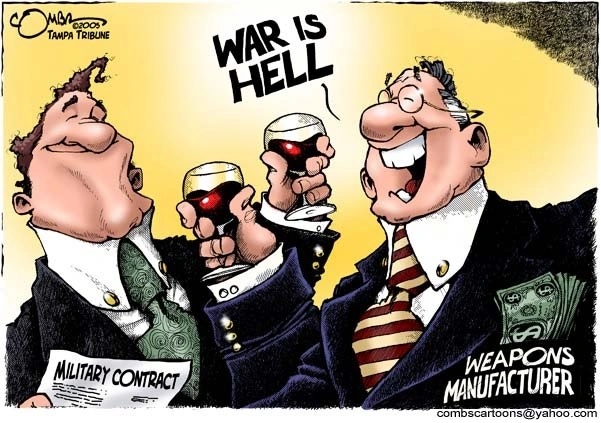
One thing is clear, U.S. defense contractors will arguably benefit the most from The Hague Summit.
Daddy says, ‘spend more on defence, pay for the war yourselves, but buy American kit’
Ian Proud, Jun 28, 2025, https://thepeacemonger.substack.com/p/how-trump-dumped-the-ukraine-war?utm_source=post-email-title&publication_id=3221990&post_id=166996238&utm_campaign=email-post-title&isFreemail=true&r=1ise1&triedRedirect=true&utm_medium=email
The NATO Summit was a coup for Trump. Cajoling the Europeans into upping defence spend to 5%, something most countries, Britain included, can’t afford. I was pleased therefore to see that Lord McDonald, the former Head of the Diplomatic Service, coming out today to suggest that the 5% target might wreck the UK economy.
Either way, it would take most countries time to ramp up their spending and military industrial capacity to even near this level. But it does raise questions about whether, as Mark Rutte suggested in his meeting with Zelensky, that NATO can fund the war in Ukraine for another decade.
That statement was far more concerning that his calling Donald Trump ‘daddy’, given the continued losses Ukraine is facing on the battlefield. And its ongoing quest to force unwilling Ukrainian men into fighting. More videos continue to emerge of recruitment officers fighting off mothers and wives in the street, as they force more recruits into minibuses headed for the front. How many men would Ukraine have left if NATO kept the fight going for another decade?
Really not clear that Rutte has considered that, which is disgraceful.
The aerial war between Israel and Iran over the past two weeks sucked most of the world’s attention away from the war in Ukraine.
The Hague NATO Summit confirms that President Donald Trump now sees paying for the war as Europe’s problem. It’s less clear that he will have the patience to keep pushing for peace.
One of the biggest diplomatic casualties of Israel and Iran’s aerial war was U.S. focus on and media coverage of the war in Ukraine. Despite continued exchanges of dead bodies and prisoners of war, there has been no further progress in peace talks between both sides that commenced in Istanbul in early June.
However, there has been talk of a third round of talks as early as next week. Before then, The Hague NATO Summit offered an opportunity to keep Ukraine on the U.S. radar. It didn’t quite happen that way.
Instead, if the NATO Summit showed any real purpose, it was to lock in European allies’ commitment to spend 5% of GDP on defense, a key priority for President Trump since he assumed office.
Mission accomplished. With the exception of Spain, NATO allies have now made that commitment.
Chipper as ever, NATO Secretary General, Mark Rutte, sent a message to President Trump, so eye-wateringly obsequious that it might even make some pro-war neocons cringe and reach for a sick bag. “Mr President, dear Donald… you have driven us to a really, really important moment for America and Europe, and the world. You will achieve something NO American president in decades could get done.” He was then chided for making remarks like he was calling Trump “daddy” at the summit.
But there was nevertheless no escaping the feeling that Ukraine has fallen some way down Trump’s priority list, and therefore NATO’s.
While the 2024 Washington Summit Communique ran to over 5300 words rich in normative intent and bureaucratic babble, the 2025 Hague Summit Declaration ran to a pithy 425 words focused almost exclusively on the NATO spending goal.
Whereas, the Washington Communique said, “we will continue to support it [Ukraine] on its irreversible path to full Euro-Atlantic integration, including NATO membership,” The Hague Declaration did not, which has already been seized upon as a softening of NATO’s stance by some mainstream commentators.
European ire was further provoked by Secretary of State Marco Rubio’s indication that the U.S. would not support further Russia sanctions at this time.
The declaration simply said, “Allies reaffirm their enduring sovereign commitments to provide support to Ukraine, whose security contributes to ours, and, to this end, will include direct contributions towards Ukraine’s defence and its defence industry when calculating Allies’ defence spending.”
For those not familiar with interpreting the subtleties of communique language, this language said two things. First, including the word “sovereign” means that while some allies may make sovereign choices to fund Ukraine, others may choose not to.
This is a clear indication of what we have observed for some time, that President Trump sees paying for the Ukraine war as Europe’s problem, not America’s. Second, and more obviously, that funding for Ukraine can contribute to Allies’ 5% target although, at least for the UK, this is already the case.
During their meeting, it is understood that Ukrainian President Volodymyr Zelensky asked President Trump about the possibility of purchasing additional Patriot missiles. While Trump was non-committal on this point, it appears clear that any future Ukrainian purchases of American military materiel, if they happen, will in any case be made with European money.
For his part, Rutte appears single handedly trying to keep the European gravy train chugging forward. Speaking ahead of the Summit, he referred to pledges of $35 billion in additional support to Ukraine so far this year without providing specifics.
However, we do know that over half of the earlier April pledge of $24 billion included funds from Germany to be paid over 4 years. In reality, therefore, NATO has only, so far, secured a maximum total of $22 billion for 2025, adding further pressure to Ukraine’s huge war financing needs.
What we haven’t seen in The Hague is any impetus behind efforts to bring the war in Ukraine to a close. Instead, and on the back of a Hague Declaration that rowed back any condemnation of Russia, Sir Keir Starmer continues to insist that allies remain resolved to “push again to get Putin to the table for the unconditional ceasefire.”
Like the proverbial scratched record, the British Prime Minister still believes that with U.S. offering no new money, with Ukraine continuing to lose ground on the battlefield, and with Europe struggling to make up the difference, that Russia will make unconditional concessions from a position of strength.
For his part, President Zelensky has not given up on his aspiration for Ukraine to join NATO which renders any peace deal, and possibly any durable ceasefire with Russia, impossible.
If the Hague Summit proved one thing, it may have been that getting European allies to spend more on defense is a bigger priority to President Trump than bringing peace to Ukraine. More focussed on the conflict in the Middle East, President Trump has once again conceded the difficulty of bringing the war in Ukraine to an end.
“It’s more difficult than people would have any idea,” he said. “Vladimir Putin has been more difficult, and frankly, I had some problems with Zelensky, you might have read about them. It’s been more difficult than other wars.”
One thing is clear, U.S. defense contractors will arguably benefit the most from The Hague Summit. To hit 5% of GDP, Britain would need to increase its spending by around $114 billion per year by 2035 and Germany has already pledged to hit the 5% target six years early, in 2029, hiking spending by $128 billion per year.
To kick off the spending spree, the UK has agreed to purchase twelve of the most modern F35A aircraft at a cost of $700 million. The F-35A is capable of delivering U.S. provided B61 nuclear bombs that were first designed in 1963. Keeping us safer, in this regard, relies on aircraft being able to fly far enough into Russia through its sophisticated air defences, to deliver a gravity nuclear bomb to target.
The most recent upgrade to the B61, during the Obama Administration, involved addition of a tail assembly to provide limited stand-off capability; it was so over-priced that every Sixties-era nuke is now worth more than its weight in gold, perhaps, the perfect allegory for Western defence spending.
With the fanfare of The NATO Summit starting to subside, the big question now is how much patience President Trump will have to push a peace agenda in Ukraine now that European allies have stepped up to spend more and buy American kit? My worry is, not much.
“Midnight Hammer” – a Fordow’s Bunker Buster or just Busted [i]
The reality is that the location of Iran’s 60% enriched uranium, along with key components of the program, is known only to a select few within Iran. Moreover, there are underground facilities believed to be even deeper than those at Natanz or Fordow — capable of continuing enrichment activities beyond the reach of current conventional weapons.
In short, the nuclear game is far from over.
The USA bombing the Iranian Nuclear facilities – Aftermath
– EXCELLENT ILLUSTRATIONS on original
Mike Mihajlovic, Jun 28, 2025, Black Mountain Analysis
The United States has conducted a series of airstrikes targeting key Iranian nuclear facilities – specifically, three high-value sites, with at least three B-2 Spirit bombers as well as a salvo of Tomahawk cruise missiles launched from submarines. In total, 14 GBU-57A/B Massive Ordnance Penetrators (MOPs) ( 12 for Fordow and 2 for Natanz) were deployed, along with 30 cruise missiles.
According to President Trump, who often portrays himself as a strongman unafraid to use force, the operation was extremely successful and all goals achieved, meaning the Iranian nuclear program went up in ashes. However, beneath the rhetoric and posturing, serious doubts remain about whether such strikes could meaningfully degrade Iran’s nuclear capabilities, especially when it comes to deeply embedded sites like Fordow. cspsbilities
At best, this could amount to little more than strategic theater, a carefully orchestrated display of power aimed at sending a political message rather than achieving lasting military results. In effect, the U.S. may have executed a strike based on an Israeli wish list: using bombs to project strength while avoiding actions that could trigger broader conflict.
For neoconservatives and proponents of an aggressive foreign policy, such a scenario would be hailed as a success—proof that decisive military action can shape geopolitical outcomes. Yet, Iran, a nation known for its strategic patience and resilience, chose to respond publicly in a controlled manner, targeting the US bases in Qatar. What will happen next is that they quietly assess the damage, reinforce their underground infrastructure, and continue their nuclear work beyond the reach of even the most powerful conventional weapons.
The world may be led to believe that the “threat” has been neutralized, for now. But history suggests that such illusions rarely last. Eventually, the same concerns will resurface, bringing the crisis back into the global spotlight.
“The roaring mountain just gave birth to a mouse.”
In the case of a high-profile strike, such as the one on Fordow, the symbolic value often overshadows the physical outcome. A site as hardened and deeply buried as Fordow—originally constructed within a mountain to withstand conventional attacks. It can’t be easily neutralized even with specialized munitions like the MOP or a direct hit from a hypersonic ballistic missile.
Yet, even then, the effectiveness depends on:
- Intelligence accuracy: Was the target still active?
- Timing: Was the infrastructure recently evacuated or relocated?
- Munition capability: Did the weapon used have sufficient penetration depth and explosive yield?
If the facility was decommissioned, emptied, or redundant, then the operation becomes more about message than material damage, a geopolitical performance aimed at deterring adversaries and reassuring allies.
Optical Effect Over Outcome
Such events often produce more theater than transformation. The media cycle amplifies the action, leaders issue statements of resolve, flags are waved, and bombs and missiles are launched – but the real question remains: What was actually destroyed?
This is where the gap between perception and reality widens. If core infrastructure remains intact or the targeted regime adapts quickly, the long-term strategic balance may not shift significantly. In this light, the operation resembles a symbolic punctuation mark in an ongoing diplomatic struggle rather than a decisive blow.
While political rhetoric and military parades dominate headlines, financial markets often act as the first honest arbiter of whether a crisis has real economic consequences, including:
A spike in oil prices could signal concerns over regional stability.- Currency fluctuations could reflect investor confidence (or lack thereof) in involved nations.
- Defense stocks may rise on expectations of increased military spending.
Markets don’t care about slogans or intercepted missiles shown in shaky phone videos; rather, they react to risk, uncertainty, and real shifts in power dynamics. So far, as the punches were exchanged, the market is not reacting “violently”.
The Depth
How deep is Fordow?
Open sources provide at least three distinct estimates for the depth of the Fordow facility: approximately 60–90 meters, 80–100 meters, and even up to 500–800 meters. These discrepancies arise from differences in measurement methodologies, limitations of satellite imagery, and deliberate information obfuscation by the Iranian government. Until engineering plans are leaked or the IAEA gains direct access to the site for inspection, the precise depth of Fordow remains uncertain.
Still, it is worth examining why Iran might engineer such a deeply buried facility, possibly extending toward the half-kilometer mark, and why that possibility alarms the Pentagon more than it does Israel.
The 60–90 Meter Estimate:
Outlets such as Deutsche Welle, Economic Times, and the Foundation for Defense of Democracies (FDD) estimate Fordow’s depth based on the thickness of the mountain rock layer above the main halls. In practical terms, this reflects the vertical cover, like measuring the height of “floor-1” from the surface. Their estimates place the depth at 60–90 meters.
The 80–100 Meter Estimate:
Moneycontrol cites a slightly deeper figure, likely accounting for a broader interpretation of structural depth rather than just the overhead rock.
The ~100 Meter Estimate via Satellite DEM:
Bloomberg reportedly used digital elevation models (DEMs) from commercial satellite imagery (Planet Labs and Maxar) to measure the distance from the entrance tunnel’s opening to the presumed facility roof. This method places Fordow around 100 meters deep. However, it should be noted that small angular errors, such as a ±3° deviation in tunnel slope, can introduce measurement discrepancies of dozens of meters. Additionally, some sources introduce further variance when rounding feet to meters.
Given these limitations, depth estimates are best treated as approximations unless corroborated by direct data……………………………………………………………………………………………………………………..
……………………………………………………………………………………………………………………………..Conclusion
Israel, acting without direct U.S. involvement, does not possess the necessary means to guarantee the destruction of the Fordow facility, even if its depth is “only” around 90 meters. While Israel has advanced airpower and precision munitions, it lacks the deep-penetration capability required to reach and neutralize such hardened underground infrastructure.
By contrast, the United States is undoubtedly capable of achieving a “mission kill”—disabling the site by targeting entrances, ventilation systems, and power nodes. However, a “layout kill” (the complete structural destruction of the underground halls) can only be reliably achieved if the facility is no deeper than approximately 35-40 m. Beyond that depth, even the GBU-57 MOP’s effectiveness is significantly reduced by the geological protection offered by dense rock formations.
So, how does the MOP manufacturer claim penetration of 60 m of concrete?
The U.S. spent considerable time and resources developing the MOP. Testing was conducted not far from the site where the first nuclear bomb test was previously carried out.
I am not aware of the Pentagon publicly sharing extensive results of these tests, but it is reasonable to believe that the intention was to demonstrate the MOP’s ability to penetrate to a depth comparable to the estimated depths of key Iranian nuclear sites, as well as underground facilities in North Korea and China.
It is reasonable to assume that U.S. assessments of destruction are based not only on classified intelligence but also on rudimentary analysis of test results shown in publicly released videos. However, the question remains: who should we believe?
The media landscape offers little clarity, with both pro-Trump and anti-Trump outlets presenting conflicting narratives. Analysts continue to assess the situation from multiple angles, and it may take time before a more definitive picture emerges.
Iranian sources contribute to the confusion, often contradicting themselves, with reports ranging from minimal damage to claims of major destruction. This inconsistency raises questions about intent: Is Iran attempting to downplay the impact of any strikes, or is it deliberately obscuring the true status of its nuclear infrastructure?
From a strategic perspective, there are clear incentives for each side to shape the narrative in their favor. By asserting total destruction, the U.S. can project military dominance and suggest the permanent end of Iran’s nuclear ambitions, at least for public consumption.
Meanwhile, Iranian claims of localized damage could serve as a deliberate distraction, shifting attention away from deeper, more resilient parts of its program. In this context, everyone has a stake in letting the dust settle, allowing ambiguity to work in their favor.
The reality is that the location of Iran’s 60% enriched uranium, along with key components of the program, is known only to a select few within Iran. Moreover, there are underground facilities believed to be even deeper than those at Natanz or Fordow — capable of continuing enrichment activities beyond the reach of current conventional weapons.
In short, the nuclear game is far from over. If anything, it has merely entered a new phase—one marked by strategic misdirection, information warfare, and long-term resilience planning.
The bottom line, summed up in one sentence about the current equation between the U.S., Israel, and Iran: “the wolves are fed, and all the cattle are accounted for”.
Edited by Piquet (EditPiquet@gmail.com)
References…. https://bmanalysis.substack.com/p/midnight-hammer-a-fordows-bunker?utm_source=post-email-title&publication_id=1105422&post_id=166540747&utm_campaign=email-post-title&isFreemail=true&r=1ise1&triedRedirect=true&utm_medium=email
The president who talks like a child

28 June 2025 Roswell, https://theaimn.net/the-president-who-talks-like-a-child/
Watching President Trump respond to questions is like watching a child give a report on a book they didn’t read. He rambles, repeats himself, and jumps from topic to topic with little connection to the original question. Ask about the economy, and you might get a story about how everyone says he’s done more than Lincoln. Ask about foreign policy, and he’s suddenly reminiscing about crowd sizes or a golf course he owns.
It’s cringeworthy – not just because it’s embarrassing to witness, but because it’s dangerous. The world sees it. Allies shake their heads; adversaries take notes. His speech patterns aren’t just odd – they reveal a mind that struggles with depth, nuance, or even basic coherence.
He often sounds like someone who needs constant validation, like a child needing applause. Every sentence is laced with “the best,” “nobody knew,” or “a lot of people are saying.” But the substance? Missing in action.
What’s even more concerning is that this isn’t new. His speaking style has always raised eyebrows, but in his second term, it seems to have become even more unhinged. When asked a direct question – about inflation, war, or national security – he responds with something entirely unrelated. He pivots to grievances, boasts about his supposed achievements, or launches into a tirade about the media. It’s not just deflection. It’s a fundamental inability to engage with the question at hand.
This is not a partisan complaint. It’s not about policy. It’s about the basics of leadership: coherence, focus, responsibility. A functioning adult in the Oval Office should be able to answer a question without wandering into fantasy, nostalgia, or conspiracy. Trump rarely does.
Supporters (both MAGAs and media) might claim it’s part of his charm – that he’s just speaking off the cuff, unscripted. But there’s a difference between authenticity and incoherence. When every answer sounds like a poorly rehearsed rally speech, it’s not refreshing – it’s exhausting.
Even his defenders have learned to lower the bar. “That’s just Trump being Trump,” they shrug, as if we should expect the most powerful man in the world to behave like a distracted child. If this were a reality show, it might be entertaining. But it’s not. It’s the presidency. And the stakes are real.
What does it say about America when its president communicates like a confused child? When complexity is replaced with slogans, when questions are treated as insults, and when leadership is reduced to soundbites?
A president doesn’t need to be a poet or a scholar. But they do need to be able to think, listen, and respond like an adult. On that front, Trump continues to fail – loudly.
Why Trump’s Golden Dome must be opposed – Bruce Gagnon & Dae-Han Song
19 Jun 2025
In January 2025, Donald Trump signed an executive order directing the US armed forces to construct a missile defense system – the ‘Golden Dome’ – a proposed multi-layer defense system, comparable to the Iron Dome system in Israel. It aims to place and maintain space weapons orbit, for the first time in history.
The proposed system will be exorbitant. According to US Congress sources it could cost several trillion dollars. This would require the US to cut every one of its remaining social programs. Such a military system would inflict ever more damage to the environment both on and around our planet.
Trump wants such a system, so that the US can launch a nuclear attack on another nuclear armed country and the US be confident that it has sufficient defenses to reduce the impact of any retaliatory missiles launched against US to levels deemed acceptable to US military planners. As the US advances its war drive, it is developing its military alliances with other countries and locking them into its war preparations.
Military coordination is being stepped up with increased ‘interoperability’ of hardware. In these alliances, such as NATO, it is always the US that is ‘in charge of the tip of the spear’.
Bruce Gagnon, in discussion with Dae-Han Song, explains why the proposed Golden Dome should be opposed. Bruce Gagnon has been organizing to stop the new arms race in space (Star Wars) since 1982. He began by coordinating the Florida Coalition for Peace and Justice from 1983-1998. During those years, in 1992, he co-founded the Global Network Against Weapons & Nuclear Power in space that he now coordinates. Bruce began his organizing career working for the United Farm Workers Union. He is a Vietnam war era veteran. He lives in Brunswick, Maine.
Website of The Global Network Against Weapons & Nuclear Power in Space: https://space4peace.org/ The petition against the Golden Dome is here: https://space4peace.org/global-networ… Dae-Han Song is a part of the International Strategy Center and the Korea Policy Institute. He is a member of the international No Cold War collective.
Why Limit Iranian Enrichment Peacefully When You Can Bomb Them Instead?
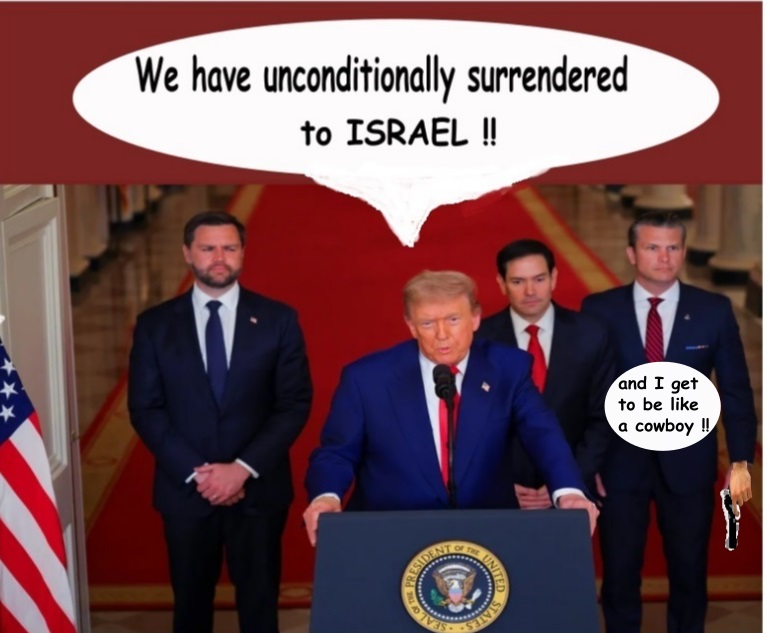
A deal was limiting Iran’s enrichment of uranium until Donald Trump pulled the U.S. out of it. Instead the Dealmaker bombed Iran, threatening to set the region on fire, writes Joe Lauria. With a ceasefire what does he do now?
By Joe Lauria, Consortium News. June 24, 2025, https://consortiumnews.com/2025/06/24/why-limit-iranian-enrichment-peacefully-when-you-can-bomb-them-instead/
In the last great achievement of international diplomacy, the United States and its allies Britain, France and Germany, concluded a deal in 2015 with Russia, China and Iran — something that today would be unthinkable — to limit Iran’s nuclear enrichment to purely civilian uses at 3.67 percent.
Negotiations on the deal began in November 2013, just three months before the U.S.-backed unconstitutional change of government in Kiev that started the long slide in U.S.-Russian relations. That did not prevent the nuclear deal from being concluded in July 2015 and endorsed by the Security Council in October of that year.
Seven years later, Washington and its European allies began fighting a hot war against Moscow through its proxy Ukraine. Relations with China have also sharply deteriorated. The idea of such cooperation on Iran now is unthinkable.
But in 2013 such wise diplomacy was still possible and the result was a peaceful resolution of the Iranian enrichment issue.
Iran agreed to stringent monitoring by the International Atomic Energy Agency and in exchange, the United States, Europe and the United Nations lifted economic sanctions against Tehran.
The IAEA certified that the deal was working. Iran was sticking to 3.67 percent enrichment. Diplomacy worked. Iran’s nuclear program was in check.
But the Israelis had opposed it all along because Israel’s aim has long been to overthrow the government in Iran in Israel’s quest for regional dominance.
Netanyahu could not stop Barack Obama from working with the Chinese and the Russians to conclude the deal that solved the nuclear issue and left the Iranian government in a more secure position.
Then Donald Trump became president. He did what Netanyahu wanted. He pulled the U.S. out of the deal, saying it was a lousy agreement and he could do better. But there was no new deal. Iran continued to cooperate with the existing agreement for a year before increasing enrichment, eventually to 60 percent for leverage in the negotiation. (90 percent is needed for a bomb, but U.S. intelligence and the IAEA said in recents months that Iran is not pursuing a bomb).
Obama’s vice president, Joe Biden, did nothing to return the U.S. to the deal to save it when he got into the White House, dishonoring probably Obama’s greatest achievement.
Trump 2.0’s idea of a better deal to limit Tehran’s enrichment was to demand zero percent after Iran agreed to return to 3.67 percent. Trump would look like a fool if he accepted 3.67 percent, as that would mean agreeing to the very deal that was working well before he tore it up.
So it was bombs away instead.
Clearing Smoke Reveals Trump’s Lies
More than 24 hours after the smoke cleared above Fordow, Natanz and Isfahan nuclear facilities Trump’s lies during his address Saturday night came clearly into view.
The strikes were not “a spectacular military success.” Iran’s “key nuclear enrichment facilities” were not “completely and totally obliterated.” There is no evidence that a single centrifuge was damaged and Iran’s 60 percent enriched fuel had already been removed and is in a location unknown to Israel, the U.S. and the IAEA.
Trump called Iran the “bully of the Middle East” when any neutral person knows that bully is Israel backed by the U.S., the bully of the world.
In just the past few months, with U.S. backing, Israel has invaded Lebanon and Syria, launched an unprovoked attack on Iran and is committing genocide in Gaza. The last time Iran invaded anyone was Iraq in 1982 but only after Iraq had invaded it first in 1980.
Israel gets away with this by portraying itself as the perpetual victim of an imminent new Holocaust 80 years after the fact and thus needs to invade and bomb its neighbors in “self defense” to pre-empt this from happening.
Regional hostility toward Israel does not stem from a reaction to its decades of aggression against Palestinians and its neighbors but purely from anti-semitic hatred. These countries must constantly be attacked to wipe out this hatred, not to reconstitute an ancient Hebrew empire from (beyond) the River to the Sea.
One power that empire never conquered was Persia
With their overlapping empires — Israel’s regional and the U.S.’s global — Iran, the land of Darius and Cyrus, is the prime target. The U.S. has sought to control it since at least its 1953 coup restored the shah to power for its oil and because of its Cold War rivalry with Russia.
Trump mimicked Israel, calling Iran “the world’s number one state sponsor of terror,” when an objective analysis would correctly award that title to the Gulf Sunni monarchies, principally Saudi Arabia, all allied with the United States.
They have sponsored al-Qaeda and ISIS and all their offshoots and rebrandings, while Iran has mostly supported militia resisting occupations in Lebanon, Iraq, Syria and Gaza.
Though formed in 1982 in response to Israel’s invasion and occupation of Lebanon, Hezbollah was only designated a terrorist organization by the European Union in 2013, for instance. Though founded in 1987, the EU did not view Hamas as a terrorist group until 2001.
Then Trump said of Iran:
“They have been killing our people, blowing off their arms, blowing off their legs with roadside bombs. That was their specialty. We lost over 1,000 people, and hundreds of thousands throughout the Middle East and around the world have died as a direct result of their hate.”
This is a bizarre statement that can only be related to attacks by militia against U.S. occupation forces in Iraq after the U.S. 2003 invasion. But only some of these groups were Iranian-backed and they killed not a thousand, but 169 U.S. soldiers, whom Trump referred to as “our people,” as if they were tourists and not an occupying army.
Trump’s thousand U.S. victims appears to come from propaganda put out by the Jerusalem Center for Public Affairs, which calls itself “a leading independent research institute, serving as Israel’s global embassy for national security and applied diplomacy.”
It combats what it calls “apartheid antisemitism.” It falsely called the 2015 nuclear agreement that Trump withdrew from “a deal that would allow Iran to become a nuclear-armed state.” In 2015, Haaretz named Sheldon Adelson, Trump’s principal donor, “one of the main financers of JCFA in recent years.”
Israel had to cut short its ambitions to conquer Iran (at least overtly) and agree to a ceasefire because it was running out of interceptor missiles; it’s economy, already weakened by Gaza, was threatened at $200 million a day; and it sustained far more damage than it will admit.
Now that there is a ceasefire, Trump is back to square one. The New York Times reported:
“Rafael Mariano Grossi, the director of the U.N.’s nuclear watchdog, welcomed news of a cease-fire. In a social-media post, he said he has invited Iran’s foreign minister Abbas Araghchi to meet to discuss a diplomatic solution on Iran’s nuclear program.”
That solution would be a return to 3.67 percent enrichment and Iran giving up its 60 percent stockpile, in other words, returning exactly to the deal Trump tore up to plunge the region into extreme danger with his bombing stunt.
Where will he turn now?
Joe Lauria is editor-in-chief of Consortium News and a former U.N. correspondent for The Wall Street Journal, Boston Globe, and other newspapers, including The Montreal Gazette, the London Daily Mail and The Star of Johannesburg. He was an investigative reporter for the Sunday Times of London, a financial reporter for Bloomberg News and began his professional work as a 19-year old stringer for The New York Times. He is the author of two books, A Political Odyssey, with Sen. Mike Gravel, foreword by Daniel Ellsberg; and How I Lost By Hillary Clinton, foreword by Julian Assange.
Iran Shows Us Why The US And Israel Should Not Be Allowed To Have Nukes.
Caitlin Johnstone, Jun 25, 2025
Well it’s been a crazy couple of days.
Trump bombed Iran’s civilian nuclear energy facilities in an attack that CNN reports did no lasting damage, and Iran exercised extraordinary restraint with symbolic retaliatory strikes on US military bases coordinated to avoid American casualties — a move many are comparing to Iran’s non-lethal response to the US assassination of General Qassem Soleimani in 2020.
After pumping out deception and fake diplomacy for weeks in order to assist Israel’s unprovoked war on Iran and launch an unprovoked attack on his own, Trump took to social media to proudly celebrate his administration’s facilitation of a ceasefire to the war he himself needlessly started, like an arsonist giving himself a trophy for extinguishing one of his own house fires.
And, for the moment at least, the ceasefire appears to be holding. Which is good. There are a lot of terrible people who did everything they could to get Iran to kill US troops and spark a horrific war, but Iran didn’t take the bait. Iran doesn’t want war at all. Trump found out that Americans disapproved of the airstrikes and opposed war with Iran. And Israel found out that fighting an actual military force is a lot less easy than fighting hospital patients and children.
So for now we’ve got a ceasefire.
We have never been shown any evidence that Iran was working on obtaining nuclear weapons, which given the US empire’s extensive history of lying about this sort of thing means we should assume it was not. But it has certainly been given every incentive to obtain them now, given that that’s probably the only thing that can stop the US and Israel from casually committing these egregious acts of aggression whenever they feel like it.
And isn’t it interesting how Iran keeps demonstrating a degree of restraint that we all know we’d never see from the United States or Israel if another country bombed their energy infrastructure or assassinated their military leaders, and yet Iran is the country we’re told can never be trusted with nuclear weapons?
The US empire and Israel both exist in a perpetual state of war and attack other countries constantly; Iran never invades other countries and avoids war like Melania Trump avoids missionary position. But we’re meant to accept that it’s fine for the US and Israel to have nukes and do anything necessary to prevent Iran from getting any?
Even if you accept the evidence-free premise that Iran would do crazy and reckless things if it became a nuclear-armed state, there is no rational argument that Trump and his handlers have been going about preventing this outcome intelligently. As Joe Lauria explains in Consortium News, the Iran nuclear deal was a remarkable achievement of international diplomacy that was working fine until Trump shredded it in 2018. Iran was following all the agreed upon rules and its nuclear enrichment was capped at 3.67 percent, but Trump killed it because the Zionists and warmongers who brought him to power want more aggression toward Iran instead of less.
It’s so intensely stupid that we have to keep doing this horrifying dance every few years just because there are too many war-horny freaks with way too much power inside the US empire. And every time they get closer to getting their wish. Iran is being given more and more reasons to view the US and Israel as an existential threat, more and more motive to obtain nuclear weapons, and less and less reason to negotiate anything with Washington.
These bastards keep pushing us toward something very ugly. Let’s hope people keep waking up to the depravity of Israel and the US empire before the warmakers succeed in obtaining their long-sought prize.
2
1 This Month

of the week – Shut Down Drone Warfare!


Tell the Ukrainian Government to Drop Prosecution of Peace Activist Yurii Sheliazhenko

Petition to revoke the licensing of the Near Surface Nuclear Disposal Facility (NSDF) at Chalk River. https://www.ourcommons.ca/petitions/en/Petition/Details?Petition=e-7247
To see nuclear-related stories in greater depth and intensity – go to https://nuclearinformation.wordpress.com
-
Archives
- March 2026 (230)
- February 2026 (268)
- January 2026 (308)
- December 2025 (358)
- November 2025 (359)
- October 2025 (376)
- September 2025 (257)
- August 2025 (319)
- July 2025 (230)
- June 2025 (348)
- May 2025 (261)
- April 2025 (305)
-
Categories
- 1
- 1 NUCLEAR ISSUES
- business and costs
- climate change
- culture and arts
- ENERGY
- environment
- health
- history
- indigenous issues
- Legal
- marketing of nuclear
- media
- opposition to nuclear
- PERSONAL STORIES
- politics
- politics international
- Religion and ethics
- safety
- secrets,lies and civil liberties
- spinbuster
- technology
- Uranium
- wastes
- weapons and war
- Women
- 2 WORLD
- ACTION
- AFRICA
- Atrocities
- AUSTRALIA
- Christina's notes
- Christina's themes
- culture and arts
- Events
- Fuk 2022
- Fuk 2023
- Fukushima 2017
- Fukushima 2018
- fukushima 2019
- Fukushima 2020
- Fukushima 2021
- general
- global warming
- Humour (God we need it)
- Nuclear
- RARE EARTHS
- Reference
- resources – print
- Resources -audiovicual
- Weekly Newsletter
- World
- World Nuclear
- YouTube
-
RSS
Entries RSS
Comments RSS
 nuclear-news