 US nuclear waste dump capacity a challenge https://www.news.com.au/world/breaking-news/us-nuclear-waste-dump-capacity-a-challenge/news-story/69f13410922c5570e187c9e529a54ffd
If the plan were to be approved, the US Energy Department has estimated that it would take 31 years to dilute and dispose of the of weapons-grade plutonium.
The lack of space at the US government’s only underground nuclear waste repository is among several challenges identified by a group of scientists and other experts who are looking at the viability of disposing of weapons-grade plutonium at the desert location.
The National Academies of Sciences, Engineering, and Medicine released a preliminary report on the US government’s plan, which calls for diluting 34 metric tons of plutonium and shipping it to the Waste Isolation Pilot Plant in southern New Mexico.
The purpose of the work would be to satisfy a nonproliferation agreement with Russia.
Another challenge, the scientists say, would be getting officials in that country to approve of the dilution of the materials.
The pact between the two countries was initially based on a proposal for turning the surplus plutonium into fuel that could be used for commercial nuclear reactors. That project, beset by years of delays and cost overruns, was cancelled earlier this year.
The review of the plan that calls for shipping the plutonium to New Mexico was requested by Congress. A final report from the National Academies is expected mid 2019.
The US Energy Department’s Office of Environmental Management has demonstrated that diluting the plutonium is possible by working with a separate batch of material. However, citing a lack of information, the scientists did not study the agency’s ability to scale up that process to handle the 34 metric tons that are part of the nonproliferation agreement.
If the plan were to be approved, the Energy Department has estimated that it would take 31 years to dilute and dispose of all 34 metric tons.
The work would involve four sites around the US – the Pantex Plant in West Texas, the Savannah River Site in South Carolina, Los Alamos National Laboratory in northern New Mexico and the Waste Isolation Pilot Plant.
The panel of scientists found that the agency doesn’t have a well-developed plan for reaching out to those host sites and stressed that public trust would have to be developed and maintained over the life of the project.
December 3, 2018
Posted by Christina Macpherson |
USA, wastes |
Leave a comment
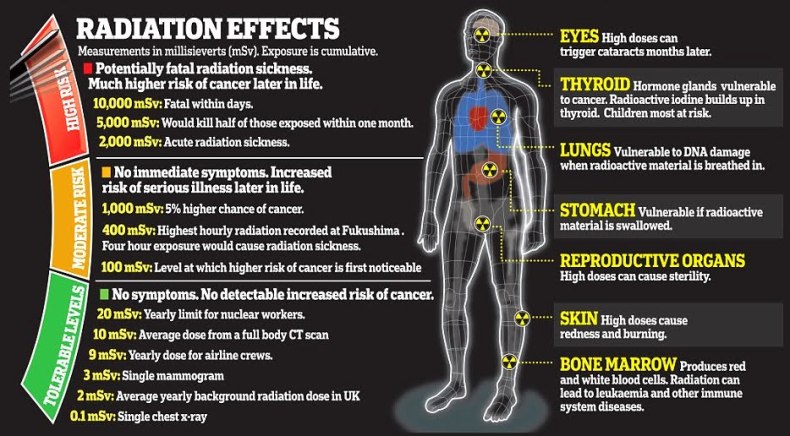
NUCLEAR LAB EMPLOYEES WITH RADIATION-LINKED CANCERS HAVE BEEN FORCED TO WAIT YEARS FOR POTENTIAL BENEFITS At the Los Alamos National Laboratory in New Mexico, workers are still waiting for answers about who is liable for sicknesses they say were caused by radiation from the lab. PACIFIC STANDARD, Nov 30, 2018
December 3, 2018
Posted by Christina Macpherson |
employment, USA |
Leave a comment

 By WAFF 48 Digital Staff | November 30, 2018 JACKSON COUNTY, AL (WAFF) – The deal for Tennessee valley Authority to sell the partially completed Bellefonte Nuclear Power Plant in Jackson County has been derailed. Officials with Nuclear Development say they’ve been told by TVA they will not close on the deal.
Nuclear Development was set to purchase the property for over $110 million.
The future of the plant has been in question for decades.
The final date to close on the sale has passed, and TVA informed Nuclear Development late Thursday that the deal was off. An extension was granted by TVA but Nuclear Development officials stated on Friday that TVA would not grant another.
According to TVA, Nuclear Development had not acquired a license to own a nuclear plant.
TVA’s official statement is as follows:
“On Nov. 30, 2018, the parties were unable to complete the sale of the Bellefonte property after Nuclear Development’s lack of progress in meeting its legal obligations related to future ownership of the site. Nuclear Development did not complete the necessary NRC license transfer prior to the closing date as required by the Atomic Energy Act………http://www.waff.com/2018/11/30/deal-purchase-bellefonte-nuclear-power-plant-is-off/
December 3, 2018
Posted by Christina Macpherson |
business and costs, USA |
Leave a comment
The Pentagon’s Massive Accounting Fraud Exposed, How US military spending keeps rising even as the Pentagon flunks its audit. The Nation , By Dave Lindorff, NOVEMBER 27, 2018 In November 15, Ernst & Young and other private firms that were hired to audit the Pentagon announced that they could not complete the job. Congress had ordered an independent audit of the Department of Defense, the government’s largest discretionary cost center—the Pentagon receives 54 cents out of every dollar in federal appropriations—after the Pentagon failed for decades to audit itself. The firms concluded, however, that the DoD’s financial records were riddled with so many bookkeeping deficiencies, irregularities, and errors that a reliable audit was simply impossible………..
Now, a Nation investigation has uncovered an explanation for the Pentagon’s foot-dragging: For decades, the DoD’s leaders and accountants have been perpetrating a gigantic, unconstitutional accounting fraud, deliberately cooking the books to mislead the Congress and drive the DoD’s budgets ever higher, regardless of military necessity. DoD has literally been making up numbers in its annual financial reports to Congress—representing trillions of dollars’ worth of seemingly nonexistent transactions—knowing that Congress would rely on those misleading reports when deciding how much money to give the DoD the following year, according to government records and interviews with current and former DoD officials, congressional sources, and independent experts.
“If the DOD were being honest, they would go to Congress and say, ‘All these proposed budgets we’ve been presenting to you are a bunch of garbage,’ ” said Jack Armstrong, who spent more than five years in the Defense Department’s Office of Inspector General as a supervisory director of audits before retiring in 2011.
The fraud works like this. When the DoD submits its annual budget requests to Congress, it sends along the prior year’s financial reports, which contain fabricated numbers. The fabricated numbers disguise the fact that the DoD does not always spend all of the money Congress allocates in a given year. However, instead of returning such unspent funds to the US Treasury, as the law requires, the Pentagon sometimes launders and shifts such moneys to other parts of the DoD’s budget.
Veteran Pentagon staffers say that this practice violates Article I Section 9 of the US Constitution, which stipulates that
No Money shall be drawn from the Treasury, but in Consequence of Appropriations made by Law; and a regular Statement and Account of the Receipts and Expenditures of all public Money shall be published from time to time.
Among the laundering tactics the Pentagon uses: So-called “one-year money”—funds that Congress intends to be spent in a single fiscal year—gets shifted into a pool of five-year money. This maneuver exploits the fact that federal law does not require the return of unspent “five-year money” during that five-year allocation period.
The phony numbers are referred to inside the Pentagon as “plugs,” as in plugging a hole, said current and former officials. “Nippering,” a reference to a sharp-nosed tool used to snip off bits of wire or metal, is Pentagon slang for shifting money from its congressionally authorized purpose to a different purpose. Such nippering can be repeated multiple times “until the funds become virtually untraceable,” says one Pentagon-budgeting veteran who insisted on anonymity in order to keep his job as a lobbyist at the Pentagon.
The plugs can be staggering in size. In fiscal year 2015, for example, Congress appropriated $122 billion for the US Army. Yet DoD financial records for the Army’s 2015 budget included a whopping $6.5 trillion (yes, trillion) in plugs. Most of these plugs “lack[ed] supporting documentation,” in the bland phrasing of the department’s internal watchdog, the Office of Inspector General. In other words, there were no ledger entries or receipts to back up how that $6.5 trillion supposedly was spent. Indeed, more than 16,000 records that might reveal either the source or the destination of some of that $6.5 trillion had been “removed,” the inspector general’s office reported.
In this way, the DoD propels US military spending higher year after year, even when the country is not fighting any major wars, says Franklin “Chuck” Spinney, a former Pentagon whistle-blower. Spinney’s revelations to Congress and the news media about wildly inflated Pentagon spending helped spark public outrage in the 1980s. “They’re making up the numbers and then just asking for more money each year,” Spinney told The Nation. The funds the Pentagon has been amassing over the years through its bogus bookkeeping maneuvers “could easily be as much as $100 billion,” Spinney estimated.
Indeed, Congress appropriated a record amount—$716 billion—for the DoD in the current fiscal year of 2019. That was up $24 billion from fiscal year 2018’s $692 billion, which itself was up $6 billion from fiscal year 2017’s $686 billion. Such largesse is what drives US military spending higher than the next ten highest-spending countries combined, added Spinney. Meanwhile, the closest thing to a full-scale war the United States is currently fighting is in Afghanistan, where approximately 15,000 US troops are deployed—only 2.8 percent as many as were in Vietnam at the height of that war…………
As things stand, no one knows for sure how the biggest single-line item in the US federal budget is actually being spent. What’s more, Congress as a whole has shown little interest in investigating this epic scandal. The absurdly huge plugs never even get asked about at Armed Services and Budget Committee hearings.
One interested party has taken action—but it is action that’s likely to perpetuate the fraud. The normally obscure Federal Accounting Standards Advisory Board sets the accounting standards for all federal agencies. Earlier this year, the board proposed a new guideline saying that agencies that operate classified programs should be permitted to falsify figures in financial statements and shift the accounting of funds to conceal the agency’s classified operations. (No government agency operates more classified programs than the Department of Defense, which includes the National Security Agency.) The new guideline became effective on October 4, just in time for this year’s end-of-year financial statements.
So here’s the situation: We have a Pentagon budget that a former DOD internal-audit supervisor, Jack Armstrong, bluntly labels “garbage.” We have a Congress unable to evaluate each new fiscal year’s proposed Pentagon budget because it cannot know how much money was actually spent during prior years. And we have a Department of Defense that gives only lip service to fixing any of this. Why should it? The status quo has been generating ever-higher DoD budgets for decades, not to mention bigger profits for Boeing, Lockheed, and other military contractors.
The losers in this situation are everyone else. The Pentagon’s accounting fraud diverts many billions of dollars that could be devoted to other national needs: health care, education, job creation, climate action, infrastructure modernization, and more. Indeed, the Pentagon’s accounting fraud amounts to theft on a grand scale—theft not only from America’s taxpayers, but also from the nation’s well-being and its future……… https://www.thenation.com/article/pentagon-audit-budget-fraud/
December 1, 2018
Posted by Christina Macpherson |
politics, USA, weapons and war |
Leave a comment
|
 America’s greatest danger: Nuclear war decision-making by Donald Trump https://thehill.com/opinion/white-house/418509-americas-greatest-danger-nuclear-war-decision-making-by-donald-trump America’s greatest danger: Nuclear war decision-making by Donald Trump https://thehill.com/opinion/white-house/418509-americas-greatest-danger-nuclear-war-decision-making-by-donald-trump
BY LOUIS RENÉ BERES, OPINION CONTRIBUTOR — 11/28/18 An inappropriate or irrational nuclear command decision by President Donald Trump is plainly conceivable. Nothing accurate can ever be said about the true probability of such a scenario, but it is not an unfounded worry.
Might this American president become subject to various forms of psychological debility? On 14 March 1976, in response to my specific query, I received a letter from General (USA/ret.) Maxwell Taylor, a former Chairman of the U.S. Joint Chiefs of Staff, concerning nuclear risks of U.S. presidential decisional irrationality. Most noteworthy, in this handwritten response, is the straightforward warning contained in the closing paragraph. Ideally, cautioned Taylor, presidential irrationality is a problem that should be dealt with during an election, and not later on: “As to dangers arising from an irrational American president, the best protection is not to elect one.”
There are assorted structural protections built into any presidential order to use nuclear weapons, including substantial redundancy. Nonetheless, virtually all of these reassuring and mutually reinforcing safeguards could become operative only at the lower or sub-presidential nuclear command levels.
The safeguards do not apply to the Commander-in-Chief.
This means there likely exist no permissible legal grounds to disobey any presidential order to use nuclear weapons. In principle, certain very senior individuals in the designated military chain of command could sometime choose to invoke applicable “Nuremberg Obligations,” but any such last-minute invocation would almost surely need to yield to considerations of U.S. domestic law.
Should an American president operating within a bewildering chaos of his own making issue an irrational or seemingly irrational nuclear command, the only way for the Secretary of Defense, the Chairman of the Joint Chiefs, the National Security Adviser, and several possible others to effectively obstruct this order would be illegal “on its face.” Under the very best of circumstances, such informal safeguards might somehow manage to work for a time, but accepting the unrealistic assumption of “best case scenario” is hardly a rational or sensible path to nuclear security.
It follows that we Americans ought to ask for more predictable and promising institutional impediments to any debilitated president.
The United States is already navigating in uncharted waters.
While President Kennedy did engage in personal nuclear brinkmanship with the Soviet Union back in October 1962, he had calculated his own odds of a consequent nuclear war as “between one out of three and even.” This seemingly precise calculation, corroborated both by JFK biographer Theodore Sorensen, and by my own later private conversations with former JCS Chair Admiral Arleigh Burke (my colleague and roommate at the Naval Academy’s Foreign Affairs Conference of 1977) suggests that President Kennedy was either irrational in imposing his Cuban “quarantine” or that he was wittingly acting out certain untested principles of “pretended irrationality.”
JFK operated with serious and manifestly capable strategic advisors.
The most urgent threat of a mistaken or irrational presidential order to use nuclear weapons flows not from any “bolt-from-the-blue” nuclear attack – whether Russian, North Korean, or American – but from an uncontrollable escalatory process. Back in 1962, Soviet premier Nikita Khrushchev “blinked” early on in the “game,” thereby preventing mutual and irrecoverable nuclear harms. Now, however, any escalatory initiatives undertaken by President Trump could express very unstable decision-making processes.
Donald Trump should understand the unprecedented risks of being locked into an escalatory dynamic. Although this president might be well advised to seek escalation dominance in selected crisis negotiations with determined adversaries, he would also need to avoid catastrophic miscalculations.
Whether we like it or not, and at one time or another, nuclear strategy is a bewildering game that President Donald Trump will have to play. To best ensure that this easily-distracted president’s strategic moves will be rational, thoughtful, and cumulatively cost-effective, it will first be necessary to enhance the formal decisional authority of his most senior military and defense subordinates.
At a minimum, the Secretary of Defense, Chairman of the Joint Chiefs of Staff, the National Security Advisor, and one or two others in appropriate nuclear command positions should immediately prepare to assume more broadly collaborative and secure judgments in extremis atomicum.
The only time for clarifying such indispensable preparations is now.
Louis René Beres, Ph.D. Princeton, is emeritus professor of international law at Purdue University. He is the author of 12 books and several hundred articles dealing with nuclear strategy and nuclear war. His newest book is “Surviving Amid Chaos: Israel’s Nuclear Strategy” (Rowman & Littlefield, 2016; 2nd ed. 2018)
|
|
December 1, 2018
Posted by Christina Macpherson |
politics international, USA, weapons and war |
Leave a comment
Will Congress Stop the Endless Wars? Mike Ludwig, Truthout, November 30, 2018 Lawmakers in both parties had plenty of reasons to advance a Senate resolution this week that would end the United States’ participation in Yemen’s bloody civil war. Death is rapidly spreading across Yemen, where the Saudi-led coalition fighting against Houthi rebels is blocking the flow of food and aid, leaving up to
14 million people on the brink of the world’s worst famine in over a century. Bombs made in the US have been found alongside dead civilians.Then there is President Trump, who appears all too eager to defend the Saudi royal family, even after his own intelligence agents
concluded that Saudi Crown Prince Muhammad bin Salman was likely behind the brutal killing and dismemberment of Saudi dissident and journalist Jamal Khashoggi.
Sen. Bernie Sanders of Vermont, who introduced the resolution back in February, said the legislation is certainly about addressing famine, bloodshed and Trump’s troubling embrace of Saudi monarchs. It’s also about Congress reasserting its constitutional authority over when and where the US makes war overseas. This has major implications for the peace movement, which is calling on Sanders to become a leading voice against US militarism.
The US military supplies the Saudi coalition with military equipment, intelligence and targeting assistance, and only recently agreed to stop refueling the Saudi warplanes bombarding Yemen. Congress never authorized participation in the civil war, even as the Obama administration began leveraging military assistance to the Saudis back in 2015. Speaking on the Senate floor on Wednesday, Sanders made this clear as he urged his colleagues to bring the resolution out of committee.
“It is a vote … that says that the United States Senate respects the Constitution … and understands that the issue of war making, of going to war, putting young men and women’s lives at stake, is something determined by the US Congress, not the president of the United States,” Sanders said.
The Senate voted 63-37 to advance the resolution on Wednesday, just months after tabling the measure with a solid majority that included several Democrats. The resolution invokes the War Powers Resolution of 1973, which compels the president to remove US forces from overseas military operations that are not authorized by Congress. A vote to pass the legislation is expected next week, and the antiwar movement now has a hard-fought victory in its sights.
“It’s enormous. This is the first time in the Senate’s history that they have ever gotten this far in invoking the War Powers Resolution,” said Hassan El-Tayyab, a peace activist and co-director of Just Foreign Policy who lobbied Congress on Yemen, in an interview.
The Constitution places the power to declare war with Congress, not the White House, but Congress has not declared war since World War II. From Vietnam to Afghanistan and Iraq, a succession of presidents led US troops into major foreign wars and a long list of other conflicts, rapidly expanding the size of the military and the power of the Oval Office along the way. Each time, these presidents sidestepped Congress. Today, the US has an estimated 800 military bases outside the 50 states, and US troops have regularly engaged in military operations in a long list of countries across the world. ……… https://truthout.org/articles/will-congress-stop-the-endless-wars/
December 1, 2018
Posted by Christina Macpherson |
politics, USA, weapons and war |
Leave a comment
 Senate Advances War Powers Resolution to End US Complicity in Saudi Assault on Yemen https://portside.org/2018-11-28/senate-advances-war-powers-resolution-end-us-complicity-saudi-assault-yemen
“Today’s victory is a testament to the power of grassroots activism across the country to bring about change. This vote sets a historic precedent for future action Congress can take to reclaim its constitutional authority over war.”
In a historic vote that could “mark the beginning of the end of American complicity” in Saudi Arabia’s mass atrocities in Yemen, the Senate on Wednesday voted to advance Sen. Bernie Sanders’ (I-Vt.) Yemen War Powers resolution by an overwhelming margin of 63-37.
“Today’s victory is a testament to the power of grassroots activism across the country to bring about change.”—Diane Randall, Friends Committee on National Legislation
“I’ve been at this for three years, and I am blown away by this,” wrote Sen. Chris Murphy (D-Conn.), who sponsored the resolution alongside Sanders and Sen. Mike Lee (R-Utah.). “The Senate just voted, for the first time, to move forward with a debate on ending American involvement in the Yemen war.”
According to Sanders communications director Josh Miller-Lewis, Wednesday marks “the first time the Senate has voted to advance a War Powers resolution.” Every single Democratic senator joined 14 Republicans in voting to move the measure forward.
“Cutting off military aid to Saudi Arabia is the right choice for Yemen, the right choice for our national security, and the right choice for upholding the Constitution,” Paul Kawika Martin, senior director for policy and political affairs at Peace Action, declared in a statement. “Three years ago, the notion of Congress voting to cut off military support for Saudi Arabia would have been politically laughable.”
While applauding the unprecedented rebuke of Saudi Arabia’s vicious, years-long assault on Yemen—which has been carried out with the help of U.S. weaponry and intelligence—anti-war advocates warned that there is still a long road ahead, with debate and a final vote on the measure expected as early as next week.
“Today’s victory is a testament to the power of grassroots activism across the country to bring about change,” said Diane Randall, executive secretary of the Friends Committee on National Legislation (FCNL). “This vote sets a historic precedent for future action Congress can take to reclaim its constitutional authority over war and end American involvement in wars around the world.”
This work is licensed under a Creative Commons Attribution-Share Alike 3.0 License
Jake Johnson is a staff writer for Common Dreams. Follow him on Twitter: @johnsonjakep
December 1, 2018
Posted by Christina Macpherson |
politics, USA, weapons and war |
Leave a comment
Stripes 29th Nov 2018 After spending billions of dollars over several decades to remove
radioactive waste leaking from a plant where nuclear bombs were made, the
Energy Department has come up with a new plan: leave it in the ground.
The shuttered Hanford Nuclear Reservation, which produced plutonium for U.S.
atomic weapons from World War II through the Cold War, is the nation’s
largest nuclear cleanup site with about 56 million gallons of waste stored
in leak-prone underground tanks in south-central Washington State.
The Energy Department has proposed to effectively reclassify the sludge left in
16 nearly empty underground tanks from “high-level” to “low-level”
radioactive waste. The re-classification would allow the department to fill
the tanks with grout, cover them with an unspecified “surface barrier,” and
leave them in place.
December 1, 2018
Posted by Christina Macpherson |
USA, wastes |
Leave a comment
Can Trump abrogate the INF Treaty without Congress? Bulletin of the Atomic Scientists, By Walter C. Clemens, November 28, 2018 President Donald Trump wants to withdraw the United States from the Intermediate-Range Nuclear Forces (INF) Treaty signed by presidents Ronald Reagan and Mikhail Gorbachev in 1987. But can he do so without Congressional approval?
At first glance, it may appear that Trump has the authority to do so, considering that the president has already used his executive powers to pull the United States from the Paris climate agreement and the Iran nuclear deal.
But those were technically not treaties, but accords. (While definitions vary and are a bit fuzzy, a treaty is generally considered to be a formal written contract between sovereign states, and recognized by international law. In contrast, an accord is viewed as a lesser animal, and because it is not a treaty it does not need Congressional approval………..
if the commitment is indeed a full-fledged, bona fide treaty such as the Intermediate-Range Nuclear Forces Treaty, that leaves the question: Does the White House have the right to flout or void treaties—described by Chief Justice John Marshall in 1823 as the “supreme law of the land”—without approval by one or both houses of Congress? Some members of Congress certainly think that their approval is needed to exit a treaty; when the president warned in July 2018 that he might pull the United States from NATO, founded on a multilateral treaty, several senators said he could expect an extensive fight in Congress.
The question seems to boil down to this: While the Constitution says that the Senate needs to approve a treaty negotiated by the president, it says nothing about pulling out of a treaty. That leaves us with a conundrum: If it takes two branches of government to make a treaty, can the White House alone terminate it?
A problem more difficult than it first looks. The US Constitution provides no clear answers to this question, but the precedents established over more than two centuries suggest that the president may not act alone to abrogate US treaty obligations. …………
The Senate did place explicit restrictions on the president when it approved the INF Treaty in 1988, and the Conventional Forces in Europe Treaty in 1991. In each case, the Senate conditioned its consent on an understanding that the original interpretation of each treaty could not be unilaterally altered by the president. …………https://thebulletin.org/2018/11/can-trump-abrogate-the-inf-treaty-without-congress/?utm_source=Bulletin%20Newsletter&utm_medium=iContact%20email&utm_campaign=AbrogateINF
|
|
|
December 1, 2018
Posted by Christina Macpherson |
politics, politics international, USA |
Leave a comment
San Onofre Safety 11/29/2018: NRC admits San Onofre Holtec nuclear waste canisters are all damaged, November 29, 2018 by Donna Gilmore
The Holtec nuclear waste storage canisters at San Onofre are lemons and must be replaced with thick-wall casks.
Oceanside: The Nuclear Regulatory Commission (NRC) admits in their November 28, 2018 NRC Inspection Report and Notice of Violation, ML18332A357 (page 8 and 9) every Holtec canister downloaded into the storage holes is damaged due to inadequate clearance between the canister and the divider shell in the storage hole (vault). The NRC states canister walls are already “worn”. This results in cracks. Once cracks start, they continue to grow through the wall.
The NRC stated Southern California Edison (and Holtec) knew about this since January 2018, but continued to load 29 canisters anyway. Edison’s August 24, 2018 press release states they plan to finish loading mid 2019.
The NRC states Edison must stop loading canisters until this issue is resolved. However, there is no method to inspect or repair cracking canisters and the NRC knows this.
Instead, the NRC should admit the Holtec system is a lemon — a significant defective engineering design — and revoke both San Onofre and Holtec dry storage system licenses.
The NRC should require all San Onofre thin-wall canisters be replaced with thick-wall transportable storage casks. These are the only proven dry storage systems that can be inspected, maintained, repaired and monitored in a manner to prevent major radiological releases and explosions.
California state agencies should revoke San Onofre permits and withhold Decommissioning Trust Funds until these issues are resolved.
The Navy should consider revoking the San Onofre Camp Pendleton lease until Edison agrees to replace thin-wall canisters with proven thick-wall transportable storage casks. This is a national security issue. If the NRC cannot do their job, maybe it’s time to bring in the Marines. The Navy has nuclear experts.
Sign petition to recall and replace San Onofre defective thin-wall canisters with proven thick-wall casks https://sanonofresafety.org/2018/11/29/11-29-2018-nrc-admits-san-onofre-holtec-nuclear-waste-canisters-are-all-damaged/
December 1, 2018
Posted by Christina Macpherson |
safety, USA |
Leave a comment
Agreement contingent on Dominion Energy purchasing the South Carolina energy company, Ars Technica , MEGAN GEUSS – 11/27/2018,
Today, South Carolina energy company SCANA and its potential purchaser Dominion Energy reached a settlement with class-action litigants to offer a significant energy bill rate cut in exchange for the litigants dropping a lawsuit over $2 billion in energy bill fees. Attorneys for the class-action members
told The Post and Courier that they will accept the deal if it’s approA class-action lawsuit representing these customers argued that they should not have to pay for an unfinished nuclear plant. Interestingly, the deal calls for SCANA to partially pay the settlement with its $115 million “golden parachute” fund, usually reserved to give high-level executives generous severance payments on their way out.
The deal must be approved by a judge, and it’s also contingent on SCANA being purchased by Virginia company Dominion Energy. Dominion appears motivated to purchase SCANA, and as part of today’s proposed settlement, Dominion would offer SCG&E customers a 15-percent customer rate cut that Utility Dive says could cut bills by more than $22 per month. Dominion’s acquisition of SCANA has secured approval from six state and federal regulatory agencies, and now the company is only waiting on approval from South Carolina’s Public Services Commission. South Carolina PSC says it wants to see a 33-percent rate cut for customers.
Even if this settlement is approved, SCANA still faces a shareholder lawsuit saying it misled investors on the progress of Summer’s reactor construction. Additionally, the $2 billion settlement would still leave customers on the hook for an additional “$2.3 billion for two unfinished reactors over the next two decades,” according to The Post and Courier.
The Post and Courier also notes that the settlement and Dominion’s acquisition deal don’t help out customers of Santee Cooper, which was another major owner of the Summer reactor expansion. Additionally, the settlement does not relieve the costs borne by the state’s 20 electric cooperatives, which also shared ownership in the project. https://arstechnica.com/information-technology/2018/11/2-billion-class-action-lawsuit-over-failed-nuclear-plant-sees-settlement-offer/ved
December 1, 2018
Posted by Christina Macpherson |
Legal, USA |
Leave a comment

China, vying with U.S. in Latin America, eyes Argentina nuclear deal, Cassandra Garrison, Matt Spetalnick, BUENOS AIRES/WASHINGTON (Reuters) 29 Nov 18 – Argentina and China are aiming to close a deal within days for the construction of the South American nation’s fourth nuclear power plant, a multi-billion dollar project that would cement Beijing’s deepening influence in a key regional U.S. ally.
Argentina hopes to announce an agreement on the Chinese-financed construction of the Atucha III nuclear power plant during Chinese President Xi Jinping’s state visit on Sunday following the summit of leaders of G20 industrialized nations in Buenos Aires, Juan Pablo Tripodi, head of Argentina’s national investment agency, told Reuters in an interview.
The potential deal, reportedly worth up to $8 billion, is emblematic of China’s strengthening of economic, diplomatic and cultural ties with Argentina. It is part of a wider push by Beijing into Latin America that has alarmed the United States, which views the region as its backyard and is suspicious of China’s motives.
………. The negotiations on Chinese financing of the Atucha III nuclear power plant are a key cause for concern for the U.S. government, a senior Trump administration official told Reuters.
Atucha III would be one of the biggest projects financed by China in Argentina, according to the Reuters review of Chinese state funding data…….. https://www.reuters.com/article/us-argentina-china-insight/china-vying-with-u-s-in-latin-america-eyes-argentina-nuclear-deal-idUSKCN1NX0FE
December 1, 2018
Posted by Christina Macpherson |
China, marketing, SOUTH AMERICA, USA |
Leave a comment
Watchdog groups call for Congress to protect nuclear weapons communities, Huntington News, Wednesday, November 28, 2018 Watchdog groups from across the country are insisting the Department of Energy withdraw DOE Order 140.1, a controversial order that would compromise safety at dozens of facilities in the US nuclear weapons complex, and are asking key Congressional committees to annul the revised order and preserve the critically important prerogatives of the Defense Nuclear Facilities Safety Board (DNFSB).
The order, first announced by DOE in April, 2018, has drawn scrutiny from members of Congressional committees with oversight over the Energy Department. DOE Order 140.1 seeks to limit access to information and personnel by the Safety Board .
Kathy Crandall Robinson will speak at a November 28 hearing in Washington, DC, at which DNFSB is soliciting comments from Department officials and members of the public. “Order 140.1, with its degradation of DNFSB’s role and authority, threatens to send us on a glide path back to a careless era as if this were a time when safety concerns and dangers at nuclear weapons facilities are shrinking.
They are not,” Robinson says. “Instead, there are aging facilities, facilities operating where serious safety concerns have been raised, and some facilities where plans for increased production of nuclear weapons components could lead to novel dangers.
For example, the President’s Nuclear Posture Review calls for production of 80 plutonium pits per year by 2030 and plans are being laid for increased pit production at Los Alamos as well as new capabilities at Savannah River Site.”
Members of the Alliance for Nuclear Accountability, a national network of organizations that addresses nuclear weapons production and waste cleanup issues, hail the work of the DNFSB as a critical guard against DOE and National Nuclear Security Administration efforts to cut corners on safety. “The Safety Board works outside of the media spotlight,” said Tom Clements, Director of Savannah River Site Watch in Columbia, South Carolina. “Its value to the public is immeasurable. DNFSB frequently provides information about SRS operations which DOE fails to communicate.
The role of the Safety Board should be expanded, not curtailed.” Marylia Kelley, Executive Director of Tri-Valley CAREs in Livermore, California, said, “The DNFSB is absolutely vital to worker and public safety. I have spent 35 years monitoring Livermore Lab. I can tell you that workers and community members rely on the Safety Board to do its job every day!”
DOE has been unresponsive to public concerns……..http://www.huntingtonnews.net/160792
December 1, 2018
Posted by Christina Macpherson |
safety, USA |
Leave a comment
By Andrew Brown abrown@postandcourier.com, Nov 28, 2018 COLUMBIA — Santee Cooper wants to weigh in before South Carolina Electric & Gas settles a lawsuit with its customers over the utilities’ shared nuclear project, arguing a rushed deal could harm the state-run power company and its ratepayers.
· Attorneys for Santee Cooper, South Carolina’s only public electric utility, filed a motion in court Wednesday that could disrupt a proposed legal settlement between SCE&G and several law firms that represent the utility’s customers in ongoing class-action lawsuits.
· That deal would allow SCE&G’s parent company, SCANA Corp., to do away with the risky litigation and help seal Dominion Energy’s proposed takeover of the Cacye-based company.
· n return, the law firms that pushed the class-action lawsuit would pocket a portion of the settlement, which requires the utility to turn over $115 million that was previously set aside for the company’s executives and the proceeds from the sale of several properties including a plantation near Georgetown and an office in downtown Charleston.
· Santee Cooper, which owns just under half of the failed V.C. Summer nuclear project, said SCE&G and the law firms involved in the case “attempted to stage a hurried settlement.”
· The state-run utility has an interest in the outcome of the lawsuit because it is still considering suing SCANA, its project partner, over the unfinished nuclear reactors located just north of Columbia. SCANA was responsible for overseeing the multibillion dollar reactors for both utilities and reigning in the nuclear contactors on the project.
……… https://www.postandcourier.com/business/santee-cooper-asks-judge-to-block-settlement-of-sc-nuclear/article_ffc26b1c-f346-11e8-a5de-cbddd0454e55.html
December 1, 2018
Posted by Christina Macpherson |
Legal, USA |
Leave a comment
https://www.propublica.org/article/los-alamos-ill-nuclear-workers-petition-has-lingered-for-ten-years
A security guard at Los Alamos National Laboratory has been seeking compensation for fellow lab workers who’ve become ill, but the government has repeatedly denied the petition and he’s still waiting for a final answer. by Rebecca Moss, Santa Fe New Mexican Nov. 30 Ten years ago, a Los Alamos National Laboratory security guard named Andrew Evaskovich submitted a petition seeking compensation for fellow nuclear lab workers diagnosed with cancer linked to radiation. The government has repeatedly recommended denying the petition, despite evidence of continuing safety and recordkeeping problems at Los Alamos. And today, Evaskovich is still waiting for an answer. (Read our investigation.)
October 2000: Congress creates a program to compensate nuclear workers who’ve become sick after being exposed to hazardous levels of radiation or toxic chemicals. The law allows groups of workers to petition the government for easier access to compensation if their worksite has not kept adequate worker health records. The process has yet to help workers who started after 1996, when labs had to begin meeting higher safety standards.
2000 to 2004: Government inspectors find continuing worker safety problems at Los Alamos. A top official writes that Los Alamos labs’ “corrective actions have not been effective in preventing the recurrence of the radiological and safety basis violations.”
March 2006: Internal government memos are revealed showing a plan to deny petitions seeking special compensation for workers whose exposure records are missing or were destroyed, as a way to keep the costs down.
January 2008: A government watchdog report finds numerous incidents of “unusually high, unexplained dosage readings for workers” at Los Alamos.
April 2008: Evaskovich files a petition seeking compensation for ill Los Alamos workers employed between 1976 and 2005 who may not have adequate records of radiation exposure, based on his research showing problems with lab safety and recordkeeping.
January 2009: The National Institute for Occupational Safety and Health, or NIOSH, recommends for the first time that Evaskovich’s petition be denied, saying Los Alamos records’ show the lab had a health and safety program and was monitoring workers.
February 2009: A government advisory board disagrees and tells NIOSH to continue studying the petition.
July 2009: Workers are exposed to radioactive arsenic-74 at two areas of the lab, violating radiation safety practices in part because personnel “did not recognize the extremely high beta radiation dose rate associated with the arsenic.” Los Alamos is later fined for the incident.
July 2010: In response to a different petition, the government provides easier access to benefits for workers employed at Los Alamos prior to 1975.
August 2012: NIOSH reverses course and says that workers employed prior to 1996 should be eligible for compensation as a group since they “may have accumulated substantial chronic exposures through intakes of inadequately monitored radionuclides.” It also says it needs to continue studying those who started work in subsequent years.
February 2014: Lab workers improperly pack nuclear waste, which causes a drum to burst at an underground nuclear waste facility in Carlsbad, New Mexico. The accident exposes more than 20 workers to radiation and is one of the costliest nuclear accidents in Department of Energy history.
August 2015: The DOE cites Los Alamos for six violations, with issues going back a decade, including a near-runaway chain reaction.
April 2017: NIOSH once again recommends denying Evaskovich’s petition for Los Alamos workers, saying the stricter rules implemented in 1996 meant the lab didn’t have systemic problems after that.
July 2017: Independent consultants disagree. The lab “did not magically” have the ability to follow the rules in 1996 just because the government said it had to, said one of the consultants who had been hired to provide technical advice to the government’s advisory board.
October 2018: NIOSH again recommends that Evaskovich’s petition be denied, saying it has plenty of documents to estimate workers’ radiation exposure, even if they weren’t individually monitored by the lab.
November 2018: Independent consultants again disagree.
The Department of Energy and NIOSH both say that nuclear sites are safer and have done a better job monitoring workers since the new rules were implemented in 1996. Los Alamos spokesman Kevin Roark said that workers are closely monitored for radiation exposure and that the lab complies with all federal requirements.
December 1, 2018
Posted by Christina Macpherson |
employment, health, USA |
Leave a comment