Nuclear waste awareness tour begins

 stories/nuclear-waste-awareness-tour-begins,586462 October 3, 2019
BRATTLEBORO — Leona Morgan isn’t in Vermont this week for leaf peeping, but for environmental justice.
 The Navajo woman from Albuquerque, N.M., is an indigenous community organizer and she wants the people of Vermont and New England what getting rid of the nuclear waste from the Vermont Yankee nuclear power plant means to her community.
Morgan, along with a group of anti-nuclear activists are touring New England this week to draw attention to what they concede is an oft-forgotten or ignored problem — where does the nuclear waste go?
Pulling a giant wooden mock cask that was built to resemble a cask used to transport — not store — high level radioactive waste, the activists are hoping the large dumbbell-looking prop will prompt discussion of the unsolved issue.
“It’s our job to wake them up,” Deb Katz, the executive director of the Citizens Awareness Network, said of residents.
Morgan said the nuclear industry — whether it is the existing 14,000-acre Waste Control Specialties (WCS) facility in west Texas, or its proposed expansion or a proposed Holtec nuclear storage facility just over the border in New Mexico — was overwhelming the communities in that region.
She said putting nuclear waste in that area, which she said is geologically unstable from a huge amount of oil and gas drilling, is dangerous and racist. The area is already home to the U.S. Department of Energy’s waste isolation pilot plant, which houses government-generated nuclear waste, including low-level plutonium. All those projects, Morgan said, are within 50 miles.
It is a largely Hispanic and Navajo area, she said, and the companies and politicians who are behind the nuclear project are “old, white men.”
“We are specifically targeted,” Morgan said.
The six-day tour has been organized by Citizens Awareness Network, a regional anti-nuclear organization based in Shelburne Falls, Mass. Katz and others made a brief stopover in Brattleboro on Wednesday with its large mock canister, as the group was making its way from the Vermont Law School to Greenfield, Mass., for a rally and concert.
“It is vital that citizens understand the issues and what’s at stake,” said Katz. “Until the criteria of sound science and environmental justice are the drivers behind any disposition, high-level nuclear waste must remain onsite,” she said.
All three members of Vermont’s congressional delegation have supported consolidated interim storage facilities, Katz said. Their support, she said, is based on the desire to get the high-level radioactive waste out of Vermont.
But she said that inherently unfair and short-sighted.
The stalled construction of a national depository at Yucca Mountain outside Las Vegas is still stalled, despite statements by President Donald Trump that he supports it. The project had been suspended during the Obama administration.
“This is an old bad idea,” said Diane D’Arrigo, the radioactive waste project director for the Nuclear Information and Resource Service in Washington, D.C.
Vermont Yankee emptied its spent fuel pool and completed the transfer of its thousands of spent fuel rods — the most dangerous of the radioactive waste — last year into a storage facility on the grounds of Vermont Yankee in Vernon. The fuel is now in large concrete and steel canisters called dry cask storage and will remain there until the federal Department of Energy builds a nuclear waste facility to store it for the thousands of years it remains dangerous. Yucca Mountain was once targeted as that facility.
But the anti-nuclear activists said a new push for interim waste storage facilities in west Texas and eastern New Mexico would be dangerous and that the nuclear fuel “should only be moved once.”
Moving the waste comes with many complications and potential dangers, Katz said, not to mention that thousands of shipments would come from dozens of nuclear power plants that have either shut down or will be shutting down.
The “Environmental Justice and Nuclear Waste Tour” started in Burlington on Tuesday, and made appearances in Montpelier, South Royalton, Brattleboro and Greenfield, Mass., on Wednesday. On Thursday, there is a legislative briefing at the Massachusetts State House, and afterwards a series of meetings in Massachusetts communities near the now-closed Pilgrim nuclear station. Then on Sunday, it’s back to western Massachusetts for an event and concert in Florence, Mass.
Contact Susan Smallheer at ssmallheer@reformer.com or at 802 254-2311, ext. 154.
USA’s stranded plutonium nuclear wastes
Post & Courier 30th Sept 2019 Dogged by faulty assumptions and lacking political will, the federal
 government squandered billions of dollars and an opportunity to dispose of the nation’s most dangerous nuclear material by chasing a massive construction project in South Carolina that was doomed from the start.
Instead, the U.S. Department of Energy stranded a huge stockpile of plutonium — the lethal metal at the core of nuclear weapons — at a federal installation on the state’s wooded western edge, with plans to
leave it there for decades. https://www.postandcourier.com/news/how-the-us-government-wasted-billion-and-stranded-tons-of/article_24bc000a-da1d-11e9-bb44-87644323c969.html
.wordpress.com/
Nuclear power’s future is threatened by a mix of solar, wind and batteries
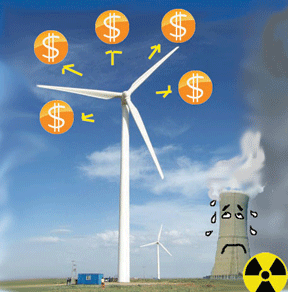 A mix of solar, wind and batteries threatens the future of nuclear power, Stars and Stripes By WILL WADE | Bloomberg September 28, 2019
The natural gas boom is killing America’s nuclear industry. Wind and solar may finish the job…….
Battery prices have plunged 85% from 2010 through 2018, and huge storage plants are planned in California and Arizona. Meanwhile, science is advancing on new technology — including chemical alternatives to lithium-ion systems — with the potential to supply power for 100 hours straight, sun or no sun.
“All signs point to the acceleration of renewable energy that can out-compete nuclear and fossil fuels,” said Jodie Van Horn, director of the Sierra Club’s Ready for 100 campaign, a group seeking a grid powered solely by renewables.
The drive for grids that are 100% emissions-free is being pushed by a growing number of U.S. states citing increasingly aggressive time frames. In July, New York mandated that 70% of the state’s power come from renewables by 2030, and 100% by 2040. Seven other states, including California, have similar mandates, and Virginia’s governor this month announced an executive order calling for 100% clean energy there by 2050. ….
By 2050, BNEF expects renewables to account for 48% of the U.S. power system, paired with multiple types of supplemental, peaking plants that can supply electricity when needed…… Meanwhile, over the same period, nuclear will wane, as high costs force most reactors to just shut down.
The U.S. isn’t the only place where the nuclear industry is struggling. Some nations that rely heavily on the technology, including France and Sweden, are reducing nuclear’s load as old reactors retire, and diversifying into cheaper solar and wind power. ……
The first modular nuclear reactors in the U.S. aren’t set to go into service until 2026, and the salt technologies are still largely in the research stage. At the same time, installed capacity of nuclear in the U.S. is forecast to fall to 6 gigawatts by 2050, down from 101 gigawatts now, according to BloombergNEF. ……. https://www.stripes.com/news/us/a-mix-of-solar-wind-and-batteries-threatens-the-future-of-nuclear-power-1.600949
A rude concrete sign indicates a deadly truth about nuclear radiation and cancer

|
Nuclear tomb leaking radioactive waste into oceans has ‘rude message’ beneath crumbling shell https://www.thesun.co.uk/tech/9986929/nuclear-tomb-radioactive-waste-message-shell/
Harry Pettit, Senior Digital Technology and Science Reporter 23 Sep 2019, A CONCRETE tomb that’s haemorrhaging radioactive waste into the world’s oceans has a very rude hidden message beneath its shell. 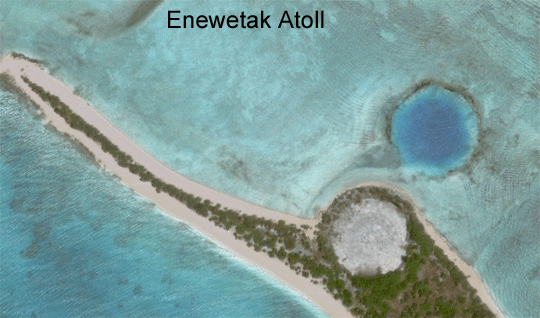 The men who built the dome in the 1970s sculpted a hand flipping the middle finger, which they buried inside the structure before it was sealed and left to crumble on a remote Pacific island. The Enewetak atoll in the South Pacific was used by the US government to test 30 megatons of atomic weapons – equivalent to 2,000 Hiroshima bombs – between 1948 and 1958. After 43 nuclear detonations, thousands of people were sent to clean the islands, shifting 3million cubic feet of contaminated soil and debris into a blast crater. He said: “The dome is a monumental size, so we wanted to put something inside there, but this was during the Cold War so the idea of an official time capsule wasn’t going to work. “So… a rubber glove? Well, we had plenty of those so that worked.” But if Mr Griego and his comrades left their mark on the island, it also left its mark on them. Our members were dying,” he said. “Dying of cancer. Given the damage wrought by the dome, the middle-finger message turned out to be more apt than anyone realised at the time. “The Runit salute turned out to be the right message in several ways,” said Paul, 62.
“One message is what’s happened to the men that were actually tasked to build this dome? What happens now to the Marshallese, the islanders? “What happens now to the Pacific Ocean, to the rest of the world? The dome is leaking and it has been leaking from the beginning.” The US government does not recognise those who worked to clean Enewetak as atomic veterans, so they cannot receive radiation exposure compensation from the Department of Veterans Affairs. |
|
Exasperation in South Korea as US-North Korea nuclear talks are failing
US-North Korea nuclear talks are sputtering. South Korea is furious. “The US position has been really harmful,” said a senior adviser to South Korean President Moon Jae-in. Vox, By Alex Ward@AlexWardVoxalex.ward@vox.com Sep 23, 2019, SEOUL — The Trump administration likes to say that all is going well with its effort to rid North Korea of its nuclear weapons. As long as Pyongyang doesn’t test long-range missiles or the bomb, negotiations remain mostly on track, President Donald Trump consistently claims.
But one country is clearly bristling at America’s management of the North Korea problem: South Korea.
That became immediately clear during my trip to Seoul this week, just days before South Korean President Moon Jae-in plans to meet with Trump at the United Nations. After chats with multiple government officials and experts, the sense in the capital is that the US proceeded with its own North Korea agenda without much thought for its staunch ally’s positions.
“We’re not at the negotiating table,” a top South Korean official told me on the condition of anonymity. “That bothers me.”
That’s not only making it harder for Washington to strike a nuclear deal with Pyongyang, these people say, but could also potentially doom Moon’s top project: improving inter-Korean ties……… https://www.vox.com/2019/9/23/20875380/south-korea-north-korea-usa-nuclear-negotiations-moon-unga
Shadowy sources, dark money, funding Chinese conspiracy ads against Ohio’s nuclear referendum
 Who’s behind the Chinese conspiracy ads against Ohio’s nuclear referendum? Ohio law lets political action groups keep funders secret during drive to let voters get a say on nuclear subsidies. Energy News Network, Kathiann M. Kowalski -23 Sept 19 The video ad starts like a horror film trailer.
“They” are “coming for our energy jobs. The Chinese government is quietly invading our American electric grid.”
Troops march in Tiananmen Square and Chinese President Xi Jinping appears as the announcer’s deep voice speaks.
“Don’t sign the petition allowing China to control Ohio’s power.”
The ads have circulated in recent weeks along with a massive print and mail campaign, all attempting to undercut a potential referendum on FirstEnergy power plant subsidies.
The ads imply that signing the petition would give voters’ personal information to the Chinese government — a conspiracy theory that has been substantially debunked.
Yet questions remain about where the money is coming from to fund both the petition drive for a public vote on FirstEnergy’s subsidies and the inflammatory campaign against it by a group called Ohioans for Energy Security.
“The group operates largely in the shadows in terms of their funding,” Dave Anderson, policy and communications manager for the Energy and Policy Institute, said of Ohioans for Energy Security.
Here’s what’s known so far — and what’s not known.
Ohioans for Energy Security is aggressively campaigning against a petition effort to put the state’s nuclear bailout law to a public vote.
The ads aim to prevent a referendum on a new law, House Bill 6, which will add charges to electric customers’ bills to subsidize nuclear and coal plants while gutting the state’s clean energy standards.
Ohio lawmakers passed the law in July, and a group called Ohioans Against Corporate Bailouts began working on a referendum initiative soon after. Ohioans’ right to seek a referendum on legislation is guaranteed by Article II of the state’s Constitution.
On Aug. 30, the group got a go-ahead from the Ohio secretary of state to start collecting signatures for the referendum petition. Supporters need to collect approximately 266,000 signatures to get the issue on the ballot next year.
Even before that approval came, Ohioans for Energy Security began its aggressive ads aiming to keep voters from getting a say on the bill’s coal and nuclear bailouts.
And less than a week later, FirstEnergy’s bankrupt generation subsidiary, FirstEnergy Solutions, filed a lawsuit asking the Ohio Supreme Court to stop the referendum petition effort. FirstEnergy Solutions stands to lose roughly $900 million in subsidies for its nuclear plants if voters eventually reject HB 6.
Ohio campaign finance laws let Ohioans for Energy Security keep its funding sources secret during the petition drive.
It’s not clear who’s behind Ohioans for Energy Security, and the group isn’t required to disclose the funders for any of its anti-referendum ads during the petition drive. The group has filed incorporation papers with the Ohio Secretary of State, which serve to limit its legal liability under state law.
Those papers, filed on July 30, show attorney Donald Brey as the sole “authorized representative.” Patrick Pickett signed on behalf of statutory agent IW Agent, LLC. Pickett and Brey are both partners at the Isaac Wiles law firm in Columbus, which shares its business address with IW Agent.
The group’s lawyers won’t answer questions about its funding.
Brey, Pickett and their partner Mark Weaver did not answer the Energy News Network’s questions about who pays for the firm’s services for Ohioans for Energy Security. The lawyers likewise declined to identify the officers, directors and shareholders of the corporation.
The firm’s lawyers “cannot ethically discuss information within the attorney-client privilege,” Weaver replied via email……..
Public records reveal associations between the anti-referendum group’s spokesperson and another group with connections to FirstEnergy Solutions.
Public relations for Ohioans for Energy Security are being handled by Carlo LoParo at LoParo Public Relations in Columbus. LoParo did not respond to questions from Energy News Network about the identity of the funders for Ohioans for Energy Security and his client contacts for that organization.
LoParo has also acted as spokesperson for the Ohio Clean Energy Jobs Alliance. The group’s website describes it as a “coalition of Ohio community leaders and organizations committed to preserving the jobs, economic benefits, carbon-free energy and electricity grid reliability” of nuclear energy. The group ran ads in favor of the nuclear and coal subsidy bill, House Bill 6, when it was pending in the legislature.
“Powered by FirstEnergy Solutions,” says a note at the bottom of the alliance’s home page, though it does not provide details about what that means.
LoParo has told the Energy and Policy Institute that the Dewey Square Group lobbying firm had acted “on behalf of FES [FirstEnergy Solutions] and the Ohio Clean Energy Jobs Alliance to advocate for keeping the state’s nuclear plants open.” And bankruptcy case filings show charges by consultants for FirstEnergy Solutions supporting the launch of the alliance and coordinating with it………
FirstEnergy Solutions won’t say if it’s funding Ohioans for Energy Security………
Ohioans for Energy Security used one of the same contractors that Generation Now used for its ads pushing for passage of the nuclear subsidy bill………
Generation Now is also reported to have made substantial “dark money” contributions to elect Ohio Speaker of the House Larry Householder and others sympathetic to nuclear subsidies. At least one donor to that group is the International Union of Operating Engineers, Local 18, based in Cleveland. Some of the union’s members likely work at FirstEnergy Solutions plants.
It’s unclear who else is funding Generation Now The union’s $295,000 in 2019 spending for the group is less than a sixth of the more than $1.9 million the group reportedly spent on ads supporting HB 6. The group is not required to disclose its funders.
The group has been paying people to hover near folks seeking to collect signatures for the referendum petition. Those “field staffers” are sometimes referred to as “blockers,” because their presence can discourage voters from listening to those who seek to explain a referendum.
Referendum supporters’ funding is also a secret, but may be revealed later…….
Donald Trump keen to build a military partnership with Australia’s PM ‘man of titanium’
 Donald Trump suggests China ‘a threat to the world’ while praising Scott Morrison as a ‘man of titanium’ US president signalled he would raise with Morrison a military contribution in Iran but then indicated he did not do so, Guardian, Katharine Murphy Political editor
 Morrison, as a “man of titanium”.
Following a ceremonial welcome for Morrison on Friday Washington time attended by more than 4,000 guests, Trump praised Morrison’s personal fortitude, describing him as “a man of real, real strength, and a great guy”.
The American president signalled he would raise with Morrison a possible military contribution in Iran beyond the current freedom of navigation commitment in the Strait of Hormuz, but later in the day indicated he had not, in fact, raised the issue during a bilateral meeting at the White House.
The Australian prime minister made a point of praising the president’s restraint in relation to Iran to date and made no commitment beyond saying the government would consider any request from the administration on its merits. …….
Trump said he was interested in building a coalition for military action with Australian participation, but then told reporters at a subsequent press conference Iran wasn’t discussed, and Morrison then described Australia’s possible participation as “moot”…….. https://www.theguardian.com/australia-news/2019/sep/21/donald-trump-suggests-china-a-threat-to-the-world-while-praising-scott-morrison-as-a-man-of-titanium
Shutdown of Three Mile Island’s infamous nuclear plant symbolises the end of the nuclear energy era
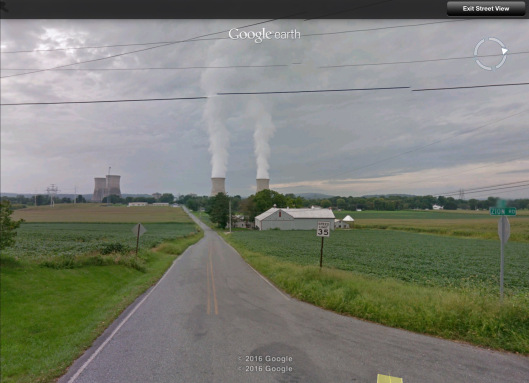 Three Mile Island’s infamous nuclear plant shuts down after 45 years https://www.engadget.com/2019/09/21/three-mile-island-nuclear-plant-shuts-down/
This doesn’t mark the end of the overall story, however, as it’ll take decades to clean up. Some of the teardown will take place quickly. Staff will remove the reactor’s fuel supply in the next few weeks and store it in the used fuel pool. It’ll take much longer to fully decommission the reactor, however. Exelon estimated that the plant won’t be fully clear of radioactive material until 2078, or more than a century after it entered service. Unit 2 is expected to close in 2036.
Unit 1 has been relatively safe, with the only notable incident being an air pressure change that briefly exposed 20 employees to a mild amount of radiation. However, the reactor has long lived in the shadow of Unit 2, whose partial meltdown exposed nearly 2 million people to radiation. There don’t appear to have been any publicly disclosed health effects, but the incident led to stricter oversight and, along with the Chernobyl disaster, defined the public perception of nuclear energy.
Exelon wasn’t shy in trying to pin the blame on local government. It claimed that Pennsylvania law “does not support the continued operation” of the reactor, and that rules “fail to evenly value clean energy resources” while dirty power sources could “pollute for free.” It doesn’t think nuclear is getting a fair shake compared to renewables and other clean energy sources, in other words. It has also complained about low natural gas prices that make Unit 1 difficult to run.
It’s not certain just what happens next, but the odds aren’t high for a revival. While nuclear is relatively clean, the rises of both renewables and natural gas have reduced the demand for it. Like it or not, the industry has moved on — the closure is a symbol of that transition.
Who is secretly funding campaign to bail out Ohio’s nuclear reactors?

Voters need to know who’s behind nuclear campaign, groups argue, https://www.toledoblade.com/local/politics/2019/09/19/voters-need-to-know-who-s-behind-nuclear-campaign-groups-argue/stories/20190919150 JIM PROVANCE,
COLUMBUS — Holes in Ohio’s campaign finance law allow corporations to secretly fund campaigns battling over Ohio’s new nuclear bailout, which undermines direct democracy and intimidates voters, government watchdog groups said on Thursday.
They called on lawmakers to update the state’s campaign finance law to prevent such groups from hiding behind nebulous nonprofit and limited liability corporations to shield the identities of the deep pockets behind them.
“It’s fear-mongering,” said Jen Miller, director of the League of Women Voters of Ohio. “It’s this idea that somehow China wants our information. … They probably wouldn’t make those kinds of statements if they would be held accountable by their shareholders or by the public if we knew who they were.”
The U.S. Supreme Court held in its 2010 Citizens United decision that corporations may exercise political speech through money and blocked states from limiting that speech. But the court left the door open for government to require public disclosure of those putting up the cash.Ohio talked about doing that but never followed through.
Most of the criticism on Thursday focused on Ohioans for Energy Security, the group trying to thwart efforts by petitioners to put House Bill 6 on the November, 2020, election ballot in hopes voters will reject it.
As tracked by Columbus-based Medium Buying, the group has purchased nearly $3.4 million in TV, cable, and radio airtime through Friday as it seeks to convince would-be petition signers that the Chinese are behind the repeal effort. Through these ads and direct mail, they’ve also said signing the petitions would amount to turning over personal information to the Chinese government.
“We’re asking for a light to be shown on all the money,” said Catherine Turcer, executive director of Common Cause Ohio. “… We’re really interested in understanding the political landscape and to be able to follow the money no matter who spends it.”
House Bill 6 is set to go into effect Oct. 21. It would surcharge consumers on their electricity bills to create a $170 million-a-year fund through 2026. Of that, $150 million would go to support FirstEnergy Solutions’ Davis-Besse nuclear plant near Oak Harbor and Perry plant east of Cleveland.
The law also separately would impose statewide surcharges through 2030 to support two 1950s-era coal-fired power plants owned by a multiutility corporation. Those plants are in southern Ohio and southeast Indiana.
There is no official campaign yet. Ohioans Against Corporate Bailouts, the entity hoping to ask voters to repeal House Bill 6, has until Oct. 21 to file at least 265,774 valid signatures of registered voters to put the law on hold at least through the 2020 vote.
That group will have to file its first report 30 days after the filing of signatures detailing its petition circulation activities, but it remains to be seen how specific that filing will be in terms of individual names and amounts.
Nothing would prevent either side from voluntarily disclosing their donors.
“We will exercise our First Amendment rights as any citizen is allowed to do,” said Carlo LoParo, spokesman for Ohioans for Energy Security. “When the law requires us to disclose, we will disclose, just like the other side.
“… They’re not letting you know that it’s a handful of natural gas companies … ” he said. “When the law requires them to disclose, they will disclose. When the law requires us to disclose, we will certainly disclose.”
The group maintains that a bank tied to the government of China is financially backing natural gas operations in Ohio and, therefore, the petition effort.
On the other side, the conjecture has been that FirstEnergy Solutions or its investors is behind the campaign.
“We are left assuming the worst about FirstEnergy Solutions, but we don’t actually know,” Ms. Turcer said. “It could be FirstEnergy Solutions. We should not be in a time period where we receive something in the mail about elections and we don’t actually understand what it’s about.”
Radioactive debris to stay above vital aquifer in Idaho for 20 years more?
Agency could keep Three Mile Island nuclear debris in Idaho, https://abcnews.go.com/Technology/wireStory/agency-mile-island-nuclear-debris-idaho-65652583 ByKEITH RIDLER, ASSOCIATED PRESS BOISE, Idaho — Sep 16, 2019,
Nuclear waste stored in underground containers at the Idaho National Laboratory near Idaho Falls, Idaho. Federal authorities want to store the partially melted core from one of the United States worst nuclear accident for another 20 years in Idaho.
The U.S. Nuclear Regulatory Commission said Monday, Sept. 16, 2019 it’s considering a request from the U.S. Department of Energy to renew a license to store the radioactive debris from the Three Mile Island nuclear power plant. The core of a reactor south of Harrisburg, Pa., partially melted in 1979.
The partially melted reactor core from the worst nuclear accident in U.S. history could remain in Idaho for another 20 years if regulators finalize a license extension sought by the U.S. Energy Department, officials said Monday.
The core from Three Mile Island in Pennsylvania partially melted in 1979, an event that changed the way Americans view nuclear technology.
The U.S. Nuclear Regulatory Commission has determined there would be no significant impact from extending the license to store the core at the 890-square-mile (2,305-square-kilometer) site that includes Idaho National Laboratory.
“No significant radiological or non-radiological impacts are expected from continued normal operations,” the commission said about its finding.
The agency would also have to complete a safety evaluation report before renewing the license. Commission spokesman David McIntyre said that will likely happen in the next several days.
Holly Harris, executive director of the Idaho-based nuclear watchdog group Snake River Alliance, wasn’t immediately available to comment.
The Energy Department site sits atop the Eastern Snake Plain Aquifer, a Lake Erie-size underground body of water that supplies cities and farms in the region with water.
The new license would be good through 2039, four years past a deadline the Energy Department initially set with Idaho to remove the radioactive waste.
State and federal officials say the waste could still be shipped out of Idaho ahead of the 2035 deadline and would not affect the 1995 agreement that contains penalties for missed deadlines.
Idaho is already fining the Energy Department for missing a deadline involving radioactive liquid waste stored at the site.
It’s not clear where the Three Mile Island waste could be moved, as the U.S. doesn’t have a designated repository.
The U.S. Energy Information Administration says there’s some 77,000 tons (70,000 metric tons) of spent nuclear fuel stored at commercial nuclear sites around the country because there’s no place else to put it.
The Department of Energy said no additional material would be added to the waste storage site in Idaho.
The previous license expired in March. It said the maximum amount of Three Mile Island debris that could be stored at the Idaho site was 183,000 pounds (83,000 kilograms) of damaged nuclear fuel assemblies and 308,000 pounds (140,000 kilograms) of material removed from the reactor vessel.
Court battles between Idaho and the federal government culminated with the 1995 agreement requiring the Energy Department to clean up the Idaho site as well as prevent the area from becoming the nation’s nuclear waste dump.
Exelon Generation, the company that owns the remaining nuclear power plant at Three Mile Island, has said it will shut down the facility by the end of this month.
The company blamed economic challenges and what it said are market flaws that fail to recognize the value of nuclear plants.
Agency keeps Three Mile Island nuclear debris in Idaho By KEITH RIDLER, ASSOCIATED PRESS
BOISE, Idaho — Sep 16, 2019,
The Energy Department site sits atop the Eastern Snake Plain Aquifer, a Lake Erie-size underground body of water that supplies cities and farms in the region with water.
The new license would be good through 2039, four years past a deadline the Energy Department initially set with Idaho to remove the radioactive waste.
State and federal officials say the waste could still be shipped out of Idaho ahead of the 2035 deadline and would not affect the 1995 agreement that contains penalties for missed deadlines.
Idaho is already fining the Energy Department for missing a deadline involving radioactive liquid waste stored at the site.
It’s not clear where the Three Mile Island waste could be moved, as the U.S. doesn’t have a designated repository.
The U.S. Energy Information Administration says there’s some 77,000 tons (70,000 metric tons) of spent nuclear fuel stored at commercial nuclear sites around the country because there’s no place else to put it.
The Department of Energy said no additional material would be added to the waste storage site in Idaho.
The previous license expired in March. It said the maximum amount of Three Mile Island debris that could be stored at the Idaho site was 183,000 pounds (83,000 kilograms) of damaged nuclear fuel assemblies and 308,000 pounds (140,000 kilograms) of material removed from the reactor vessel.
Court battles between Idaho and the federal government culminated with the 1995 agreement requiring the Energy Department to clean up the Idaho site as well as prevent the area from becoming the nation’s nuclear waste dump.
Exelon Generation, the company that owns the remaining nuclear power plant at Three Mile Island, has said it will shut down the facility by the end of this month.
The company blamed economic challenges and what it said are market flaws that fail to recognize the value of nuclear plants.
THE BIG LIE AS USUAL
“No significant radiological or non-radiological impacts are expected from continued normal operations,” the commission said about its finding. THE WASTE IS IMPROPERLY STORED IN BARRELS OVER ONE OF THE LARGEST AQUIFERS IN THE NW USA
Donald Trump talks gibberish about nuclear weapons then announces trip to Mars
 Jimmy McCloskey, Metro UK 20 Sep 2019 Donald Trump spouted a stream of gibberish about the US’s nuclear arsenal at a press conference Friday. The President of the United States told reporters at the White House: ‘Nobody can beat us militarily. No-one can even come close. ‘Our nuclear was getting very tired..Now we have it in, as we would say, tippy-top shape. ‘Tippy top. We have new and we have renovated and it’s incredible. We all should pray we never have to use it.’ Trump was speaking in response to questions about the US’s military capability amid increasing tensions between America and Iran…….
Embarrassing for Australia, Trump suggests they join USA in possibly nuclear war with Iran
 Scott Morrison scrambles to contain political mushroom cloud after Trump raises nuclear option with Iran
The Australian press pack was hyperventilating when the US president made the suggestion Australia might be asked to join a coalition of the willing. Then collective amnesia set in, Guardian Katharine Murphy Political editor @murpharoo 21 Sep 2019 It seemed appropriate, albeit entirely surreal, to be inducted into the vagaries of the Trumpiverse by bearing witness, in the Oval Office, to the American president suddenly raising the spectre of using nuclear weapons against Iran.
Friday’s program in Washington ran like clockwork while everybody had a script. But once we’d cleared the pomp and circumstance of the ceremonial welcome for Scott Morrison on the South Lawn of the White House, once the Australian press pack tumbled out of the sparkling spring sunshine into the Oval Office – we discovered Trump in an expansive mood……..
The president then volunteered he intended to have a quiet word to Scott Morrison over the course of their meetings on Friday, Washington time, about potential military options in Iran, and whether Australia might be persuaded to join a new coalition of the willing. ….
Morrison maintained his best poker face as the president informed the hyperventilating press pack “I always like a coalition”…..
Before we could process the information that Australia might be off to war in Iran, things spiralled. The unheralded military action could be – wait for it – nuclear.
Trump noted America had renovated the arsenal and acquired new nuclear capability, and the rest of the military was “all brand new”……..
With vexed options now tumbling out of Trump’s mouth at a clip, it did seem prudent to check in with the prime minister at this point. What was his position on Australia joining military action in Iran?……
The politically vexed question about whether Australia would do more than protect freedom of navigation in the Strait of Hormuz was therefore moot. If any request was forthcoming, Australia would consider it on its merits, through the prism of national interest, Morrison said, before gathering his host, smiling at the cameras, and exiting, stage right. https://www.theguardian.com/australia-news/2019/sep/21/scott-morrison-scrambles-to-contain-political-mushroom-cloud-after-trump-raises-nuclear-option-with-iran
Pro-Nuke Holocaust Denier Cory Booker Must Not Be President
 Harvey Wassermann, 21 Sept 19, Senator Cory Booker has become a Pro-Nuke Holocaust Denier and must not be president or vice.
Cory Booker Compares Anti-Nuclear Democrats To Republican Climate Deniers
Huffington Post, 20 Sep 19 “…….The remark ― one of the most pointed critiques of the anti-nuclear position in the Democratic primary so far ― grazes a particularly sensitive nerve in the climate policy debate.The United States hasn’t licensed a new reactor in a quarter century. Yet nuclear power is deeply unpopular. In 2016, Gallup found a majority of Americans opposed nuclear energy for the first time since the pollster began surveying the question in 1994. If the 2011 meltdown in Fukushima, Japan, stoked fear in a generation too young to recall 1979’s Three Mile Island accident, HBO’s new hit miniseries “Chernobyl” exposed viewers to the horrors of radioactive contamination. ……
In a presidential election, Nevada, where voters who cast ballots in a decisive early primary staunchly oppose storing nuclear waste in the desert, raises the stakes. ……..
Now consider the climate platforms top Democratic presidential candidates proposed…. Sen. Elizabeth Warren (D-Mass.) pledged to start “weaning ourselves off nuclear energy” with the goal of shutting down existing plants by 2035.
Sen. Bernie Sanders (I-Vt.) took an even firmer stance against nuclear power. He led the charge to shut down the Vermont Yankee Nuclear Power Station, which closed in late 2014, and proposed a bill last year to start decommissioning plants across the country. …….
a heating planet raises some of nuclear power’s biggest risks. Nuclear reactors require 720 gallons of cooling water per megawatt-hour of electricity they produce ― a concern as water resources grow scarcer on a hotter planet, as HuffPost previously reported. The threat of violence increases in a heated world with depleted resources and unprecedented numbers of refugees, raising concerns of nuclear sabotage in terrorist attacks or war.
“From transportation, to storage, to waste that remains lethal for more than 100,000 years, nuclear plants pose numerous threats to our families and our communities,” said John Coequyt, the Sierra Club’s global climate policy director. “Meanwhile, clean energy from solar and wind is outcompeting dirty fuels and only getting cheaper, while new nuclear plants are outrageously expensive, over budget by billions, and economically failing.”
Former Nuclear Regulatory Commission Chairman Gregory Jaczko warned that even mini-reactors will mean more accidents.
“Every day almost you see a new story, talking about how we’re not going to solve the problem of climate change without nuclear reactors,” Jaczko told WBUR this week. “And when I see those things I scratch my head and wonder if they’re talking about the same industry I’ve been familiar with, because I don’t see how nuclear power plants are going to solve that problem.”
Building new plants will be costly, and it’s not clear such an investment is a better deal than renewables that continue to grow cheaper. And Democratic presidential candidates, despite stark differences on new nuclear plants, are less clear on more pressing, wonky questions, said Jesse Jenkins, an energy systems engineer and professor at Princeton University. Those likely include whether candidates support state or federal subsidies to keep financially distressed nuclear plants open, or if they’d extend licenses up to 60 years on stations deemed safe. ….. https://www.huffingtonpost.com.au/entry/cory-booker-nuclear_n_5d8299bae4b0957256b0ad04
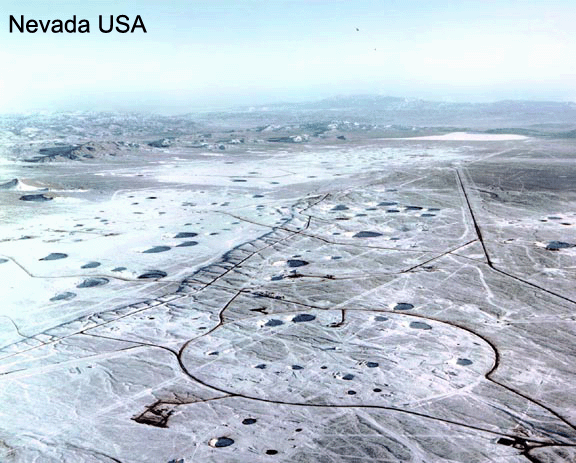
America’s 1,032 Nuclear Weapons Tests, and the tons of problems they caused
 Little-Known Fact: America Tested 1,032 Nuclear Weapons on Its Own Soil https://nationalinterest.org/blog/buzz/little-known-fact-america-tested-1032-nuclear-weapons-its-own-soil-81706
That’s a lot of nukes.
1 This Month
26 September – International Day for the Total Elimination of Nuclear Weapons





PLEASE OPPOSE HR 8255 AND S.3639 – bills would accelerate satellite deployment, with no environmental review or safeguards – https://ncstd5li.quorum.us/campaign/169331/
To see nuclear-related stories in greater depth and intensity – go to https://nuclearinformation.wordpress.com
-
Archives
- September 2026 (305)
- August 2026 (330)
- July 2026 (355)
- June 2026 (287)
- May 2026 (306)
- April 2026 (356)
- March 2026 (251)
- February 2026 (267)
- January 2026 (308)
- December 2025 (358)
- November 2025 (359)
- October 2025 (375)
-
Categories
- 1
- 1 NUCLEAR ISSUES
- business and costs
- climate change
- culture and arts
- ENERGY
- environment
- health
- history
- indigenous issues
- Legal
- marketing of nuclear
- media
- opposition to nuclear
- PERSONAL STORIES
- politics
- politics international
- Religion and ethics
- safety
- secrets,lies and civil liberties
- spinbuster
- technology
- Uranium
- wastes
- weapons and war
- Women
- 2 WORLD
- ACTION
- AFRICA
- Atrocities
- AUSTRALIA
- Christina's notes
- Christina's themes
- culture and arts
- Events
- Fuk 2022
- Fuk 2023
- Fukushima 2017
- Fukushima 2018
- fukushima 2019
- Fukushima 2020
- Fukushima 2021
- general
- global warming
- Humour (God we need it)
- Nuclear
- RARE EARTHS
- Reference
- resources – print
- Resources -audiovicual
- Weekly Newsletter
- World
- World Nuclear
- YouTube
-
RSS
Entries RSS
Comments RSS

