CNN journalist Christiane Amanpour expresses ‘concern’ over the future of the network, citing ‘idealogical realignment at CBS

Dominick Mastrangelo, Thu, May 7, 2026 , https://www.yahoo.com/news/articles/amanpour-expresses-concern-over-future-171317075.html?ncid=redditnewsus&guccounter=1&guce_referrer=aHR0cHM6Ly93d3cucmVkZGl0LmNvbS8&guce_referrer_sig=AQAAAHVoY-FvEsZDNw98FelEskBLQG1bup54CvssULXm_j7NIF2G4lS4nTZgIgRg7TW1unhwmBehMPDJ92nP0Ge8HQEiYxCZaEHey9RdUVWhQUvjBXQhW4CBjRKIFsNBA-a6eqQwTBIVcFc-wbaf2WviF1SKDvhT-D8aQ0WSKJvWMiua
CNN journalist Christiane Amanpour voiced discomfort with the possibility of Paramount Skydance taking over her outlet if the cable channel’s parent company is allowed to merge with the David Ellison-led media conglomerate.
“Clearly I’m concerned, and I’m not sure how much I’m allowed to say about a corporate thing that’s underway, but I am obviously as a person as a journalist with a record, concerned,” Amanpour said during a journalism summit this week. “And I’m concerned based on what’s happened to the other things that he’s taken over already, like CBS News, right? I mean do I have to list what’s happening there?”
Amanpour also bemoaned what she called the “ideological realignment of CBS and the destruction potentially of ’60 Minutes.’”
The journalist’s comments were first highlighted by Mediaite.
Paramount Skydance is seeking to purchase Warner Bros. Discovery, which owns CNN, a network President Trump has sparred with for years. He said in recent months that he wishes to see the network operate under new ownership.
The president on Wednesday marked the death of CNN founder Ted Turner by saying the news outlet he founded has been “destroyed” by what Trump called the channel’s “woke” coverage.
The president on Wednesday marked the death of CNN founder Ted Turner by saying the news outlet he founded has been “destroyed” by what Trump called the channel’s “woke” coverage.
David Ellison, a media mogul that is seen as an ally of the president, has retooled CBS News in recent months to cater to what he has called a more “diverse” audience, a move seen by many as a rightward shift at the network.
“I would to think we would have the very basic which is editorial independence,” Amanpour said. “And I don’t think I need to say more about that.”
Will the Trump administration’s ‘nuclear campus’ plan break the US nuclear waste gridlock?

The Energy Department’s compressed timeline risks inviting hastily assembled nuclear development plans that may appear viable on paper but lack the stable funding streams, operational specificity, and negotiated community agreements required to succeed.
By bundling spent fuel siting with advanced reactor deployment, the Energy Department’s nuclear campus plan exposes nuclear waste policy to the broader politics of nuclear deregulation.
Bulletin, By Vincent Ialenti | Analysis | May 6, 2026
Imagine a vast industrial landscape taking shape at the edge of a rural community in your region. Survey stakes trace the outlines of future access roads, rail spurs, and transmission corridors. Earthmovers sit beside graded pads where nuclear reactors, fuel fabrication lines, and waste-handling systems are expected to be built. The site is expansive—a terrain engineered to co-locate several stages of the nuclear fuel cycle: uranium enrichment, advanced reactors, reprocessing, and waste disposal. The projections arrive early, years before the infrastructure does. Plans circulate in briefing decks and glossy pamphlets. And the numbers are impressive: 50,000 direct jobs, up to 150,000 more across supply chains and regional services, 10,000 new housing units, and billions in projected annual wages.
In late January, the Energy Department moved to translate this vision into policy when it invited states to express interest in hosting what it calls “Nuclear Lifecycle Innovation Campuses.” The model draws on industrial clustering strategies used in sectors such as semiconductor manufacturing and petrochemicals. Through voluntary federal-state partnerships, states are asked to compete for the campuses as engines of economic development, workforce training, and infrastructure investment.
But the proposal also serves a second purpose. It reframes a longstanding political obstacle: securing a host for the deep geological disposal of spent fuel from US nuclear power plants.
By bundling nuclear waste management within a larger economic development package, the Energy Department is inviting states to compete for nuclear campuses that include facilities long considered politically untenable on their own. A state willing to include a deep geologic repository in its proposal could allow the Trump administration to claim victory on a policy impasse that has persisted for more than four decades—even as questions of geological suitability, facility financing, and host community consent remain unresolved.
The federal-state partnership approach responds to state-level resistance, which has been an Achilles’ heel of US nuclear waste policy. In 2010, the Energy Department halted the Yucca Mountain repository after sustained opposition from Nevada officials. Soon after, the Skull Valley Private Fuel Storage project was stymied by litigation and resistance from Utah leadership. Most recently, Holtec abandoned its New Mexico interim storage project in 2025 following a 2023 state law barring spent fuel storage without explicit state consent. And despite the Interim Storage Partners’ project in Texas securing a legal victory last June when the Supreme Court ruled that the state lacked standing to challenge its Nuclear Regulatory Commission (NRC) license, it continues to face opposition and has yet to translate that ruling into forward progress.
The Trump administration’s nuclear campus plan attempts to lower political barriers like these. But it harbors significant structural vulnerabilities. The history of the defunct Yucca Mountain repository shows how fragile nuclear consent can be. A single misstep in the siting process or safety perception can trigger litigation, political backlash, cascading mistrust, and delays or even the cancellation of projects. Embedding the US nuclear waste program in a financially uncertain, logistically underspecified, fast-tracked campus plan risks further eroding public confidence in the federal government’s ability to sustain a durable, long-horizon spent nuclear fuel strategy.
Fast timelines, uncertain financing. The Trump administration’s nuclear campus plan operates on an unusually aggressive timeline. The solicitation gave states just over two months to identify specific sites and provide supporting details on geology, community engagement, and transportation access. It also expressed a preference for states willing to proceed on “more ambitious timelines,” asking them to identify pathways for regulatory streamlining and expedited permitting. The Energy Department envisions facilities coming online as early as 2027. This ambition is complicated by the initiative’s unresolved financial structure.
A geological repository would, in principle, draw on the US Nuclear Waste Fund, the reactor-operator fee-based account established for long-term storage and permanent disposal of commercial spent fuel. However, the Energy Department asks states to look to the private sector for funding most of the other nuclear campus facilities. The solicitation gave states just over two months to propose financing plans built around private capital—venture firms, technology companies, nuclear industry partners, or private equity—alongside state and local contributions. Federal support is limited to near-term coordination, cost-sharing, technical assistance, and loan guarantees to de-risk early investments.
The Energy Department’s compressed timeline risks inviting hastily assembled nuclear development plans that may appear viable on paper but lack the stable funding streams, operational specificity, and negotiated community agreements required to succeed. Including spent fuel siting in such a fragile arrangement introduces a legitimacy risk to the nation’s nuclear waste program. Prospective host states might reasonably question whether a 25-page solicitation—covering the entire nuclear fuel cycle—constitutes a credible multi-generational development framework or, rather, an overextended political vision vulnerable to market volatility.
The nuclear campus initiative also arrives amid a wave of deregulatory pressure.
In May 2025, the Trump administration directed the NRC to revise its rules to accelerate nuclear licensing timelines, raising questions about the agency’s independence. National policy directives emphasize fixed deadlines for reactor licensing decisions and reduced staff for advisory review. Oversight of nuclear waste has also weakened. In July 2025, the White House dismissed seven members of the Nuclear Waste Technical Review Board, leaving the body with a single sitting member. More recently, the Energy Department expanded National Environmental Policy Act exclusions for advanced nuclear reactors, allowing some projects to proceed without full environmental review. In February, an NPR investigation reported that the Energy Department revised reactor safety rules—reportedly cutting roughly 750 pages of requirements, including protections for groundwater, security, and oversight—for reactors on its property.
By bundling spent fuel siting with advanced reactor deployment, the Energy Department’s nuclear campus plan exposes nuclear waste policy to the broader politics of nuclear deregulation. Prospective host communities may question whether pressures on regulatory independence are being adequately weighed in state proposals—and whether core health, safety, and environmental protections will remain intact.
Policy whiplash and the limits of public trust. The nuclear campus plan is the latest move in a multi-decade saga of nuclear waste policy reversals. After the Obama administration cut funding for the Yucca Mountain repository in 2009, the Blue Ribbon Commission on America’s Nuclear Future proposed a new siting strategy grounded in voluntary participation and community consent—an approach that had proven effective in Finland, Sweden, and Canada. A consent-based siting model was launched by President Barack Obama, shelved by President Donald Trump, revived by President Joe Biden, and is now sidelined again under Trump’s second administration. Each change of administration introduced new visions before prior commitments had time to mature. The cumulative effect of these recurrent policy resets has been to signal that federal assurances may be short-term and provisional rather than long-term and binding. A prospective host community might reasonably ask: Will the Energy Department’s nuclear campus vision endure beyond the current administration—or is it another turn in a cycle of partisan whiplash?
………………………………………………………………………………………………….From acceleration to endurance. The nuclear campus plan wedges a long-term strategy for managing the nation’s spent fuel into a near-term push for accelerated reactor deployment. This creates three core legitimacy risks: that fast-tracked timelines will exacerbate financial and logistical uncertainty; that deregulatory pressures will undermine public safety perceptions; and that recurrent policy resets will weaken the Energy Department’s credibility in issuing long-term assurances to prospective host communities. This third risk is perhaps the most consequential. Without institutional structures capable of enduring beyond political cycles, the effort risks becoming just another episode in the long-running pattern of stop-start partisan reversals that has defined US nuclear waste governance for decades.
……………………………………………………….In a polarized US political environment, bipartisan enthusiasm for nuclear power is a rare point of convergence. Nuclear energy is increasingly framed as a solution for climate mitigation, grid reliability, national security, economic growth, and the electricity demands of artificial intelligence data centers. But if the nuclear campus plan becomes a quiet pathway for states to advance communities as hosts for nuclear waste repositories—without the level of geological prescreening, institutional trust, and durable local consent that underpinned progress in Finland, Sweden, and Canada—the United States risks reintroducing volatility into nuclear waste siting while allowing federal officials to claim premature progress on a problem that remains politically unresolved. https://thebulletin.org/2026/05/will-the-trump-administrations-nuclear-campus-plan-break-the-us-nuclear-waste-gridlock/?utm_source=ActiveCampaign&utm_medium=email&utm_content=What%20the%20Pentagon%20s%20missing%20on%20its%20%20critical%20technologies%20%20list&utm_campaign=20260507%20Thursday%20Newsletter
Infant mortality rates in San Luis Obispo County in proximity to the Diablo Canyon Nuclear Power Plant.

Radiation and Public Health Project (RPHP) Joseph J. Mangano MPH MBA, April 29, 2026
EXECUTIVE SUMMARY
The two Diablo Canyon nuclear reactors in San Luis Obispo County CA began operations in 1984
and 1985. They have generated enormous amounts of highly radioactive waste. Most is stored at
the site, but some is routinely released into the environment – and into humans through breathing,
food, and water. However, no studies on health effects to the local population have been done.
Exposure to radiation is especially harmful to the fetus and infant. This report analyzes trends and
current patterns of newborn and infant health in San Luis Obispo County, compared to the state of
California. Results show that county rates have shifted from below to above the state:
Infant Deaths. Before Diablo Canyon opened (1968-1984), the county death rate under one year
was 16% below the state. Most recently (2010-2024), the county was 1% above the state, including
11% and 23% higher for white non-Hispanics and white Hispanics.
Premature Births. In the earliest period available (1995-1999), the county rate of premature births
(<36 weeks gestation) was 21% below the state. Most recently (2020-2024), the rate was 3% above
the state (8% and 31% higher for white non-Hispanics and white Hispanics).
Birth Defects. In the period 2016-2024, the county rate of 12 types of birth defects was 114%
greater than (more than double) the state, 3rd highest among the 35 largest California counties.
Other Newborn Health Measures. In addition, the county also has higher current (2016-2024) rates
of common newborn risk factors, including those requiring assisted ventilation, those with low
five-minute Apgar scores (a measure of infant health), and newborns transferred to another facility.
Child Cancer. Child cancer is believed to often be an adverse outcome that began in pregnancy.
Early in Diablo Canyon’s operation (1988-1992), county cancer incidence 0-19 was 26% below
the state; in the 30 years since then (1993-2022), the county rate was just 2% below the state.
No explanation for these findings is apparent, as risk factors in the county are not elevated.
Compared to the state, the county has low rates of minorities, uninsured, foreign born, and
languages other than English spoken at home; and similar rates of income, education, and poverty.
The county rate of the most common maternal birth risk factors are below the state
(overweight/obese mothers, mothers <20 or >35, mothers on WIC or Medicaid, and previous
Cesarean section).
Further review of county health patterns is warranted to assess what role exposures to radioactivity
from Diablo Canyon has played in these trends. Results should be made available to officials and
the public. No major decision on the future of the plant should be made without a thorough
understanding of the impact exposures have had on local health………………………………………………………………………………………………………………………………………………………………………………………………………………………………https://radiation.org/wp-content/uploads/2026/04/Diablo-Canyon-report-November-2025.pdf
Epic Nonsense: Trump Shelves Project Freedom

8 May 2026 Dr Binoy Kampmark , https://theaimn.net/epic-nonsense-trump-shelves-project-freedom/
The waxwork figures of the Pentagon recently glowed with excitement with the announcement that the US military would be finally called upon to reopen the Strait of Hormuz. With the ceasefire between Teheran and Washington barely holding, President Donald Trump, as far as his attention span would allow, gingerly put Operation Epic Fury to the side in favour of a new mission. The effort to protect and navigate stranded and blocked vessels with US armed might would be dubbed Project Freedom.
As with everything in this cerebrally cloudy and foolish conflict, descriptions and names are untethered to a discernible reality. Was Project Freedom separate from the blockade of Iran? Yes, said certain administration officials. Was it an annex to Operation Epic Fury? No one quite knew.
Some details were provided on May 5 by the US Secretary of War, Pete Hegseth, at a press briefing. “To be clear [Project Freedom] is separate and distinct from Operation Epic Fury. Project Freedom is defensive in nature, focused in scope and temporary in duration, with one mission: protecting innocent commercial shipping from Iranian aggression.” Iran had been “the clear aggressor” in the Strait, “harassing civilian vessels, threatening mariners from every nation indiscriminately and weaponizing a critical chokepoint for its own financial benefit, or at least trying to.” No mention, naturally, on why Iran had resorted to such measures in the first place.
Much of Hegseth’s press address was a bleat, a complaint that the Iranians had simply not played by the rules, rules happily broken by the Trump administration and their Israeli allies when they felt necessary. Iran had attempted to “impose a tolling system,” using “a form of international extortion.” Project Freedom was the celebrated antidote. “Two US commercial ships, along with American destroyers, have already transited the strait, showing the lane is clear.”
The account untethered to reality followed on cue. Iran had been “embarrassed” by the successful transit of these two vessels. “They say they control the strait. They do not. So, American ships led the way, commercial and military shouldering the initial risk from the front, as Americans always do. And right now, hundreds more ships from nations around the world are lining up to transit.” With lavish immodesty, the Secretary noted that US Central Command (CENTCOM) had, along with partner nations, “been in active communication with hundreds of ships, shipping companies and insurers.” The US had provided a “direct gift” to the world in the form of “a powerful red, white and blue dome over the strait.”
With the counterfeit, grubby appeal of an advertiser’s pitch, Hegseth went on to declare Project Freedom “humanitarian” in nature. “By breaking Iran’s illegal stranglehold, we’re protecting the lives and livelihoods of sailors from dozens of countries, securing global energy routes and preventing shortages that hit the world’s poorest people the hardest.”
Chairman of the Joint Chiefs of Staff Gen. Dan Caine was also on hand to explain that CENTCOM had “established an enhanced security area on the southern side of the strait that is now protected by US land, naval and air assets to help defeat further Iranian aggression against commercial shipping.” He noted that Iranian fast boats and attack drones had been defeated. And how could they not be, given the presence of “more than 100 fighters, attack aircraft and other manned and unmanned aircraft, synchronized by the 82nd Airborne Division” engaged in the air for 24 hours a day guarding “the enhanced security area and its approaches.”
With twenty-four hours, this elaborate, exaggerated, purplish vision of American deliverance from Iranian control to an anxious world had collapsed. On May 6, Trump announced that he would be halting Project Freedom. Another round of proposals had been placed on the carousel of confusing diplomacy that might negate the need to resume bombing under Operation Epic Fury. Claiming that Pakistan and other specified countries had wished so, and given “the fact that Great Progress has been made toward a Complete and Final Agreement with the Representatives of Iran,” the blockade would remain in place but “Project Freedom (The Movement of Ships through the Strait of Hormuz) will be paused for a short period of time to see whether or not the Agreement can be finalized and signed.”
Later that day, Trump posted another message. “Assuming Iran agrees to give what has been agreed to, which is, perhaps, a big assumption,” he declared on Truth Social, “the already legendary Epic Fury will be at an end, and the highly effective Blockade will allow the Hormuz Strait to be OPEN TO ALL, including Iran.” The inevitable, clownish threat followed: “If they don’t agree, the bombing starts, and it will be, sadly, at a much higher level and intensity than it was before.”
The rapid demise of Project Freedom, more aborted than halted, had less to do with the emergence of a new desire to pursue negotiations so much as logistical inconvenience. The Gulf States, by and large, have not been impressed by the impulsive measure, given the potential resumption of hostilities. Tehran was always going to blunt US efforts to break the blockade of the Strait, a point demonstrated by attacks on the United Arab Emirates on May 4 that left an oil refinery in the eastern emirate of Fujairah ablaze and three Indian nationals wounded.
According to a report from NBC News, the Kingdom of Saudi Arabia was disgruntled enough by the American initiative in the Strait to inform Washington that it would deny the US military any use of the Prince Sultan Airbase to enforce the mission or permit US aircraft to use Saudi airspace to that end. This was despite a call taking place between Trump and the Saudi Crown Prince Mohammed bin Salman.
An unnamed Saudi source was cited as saying that Saudi Arabia was “very supportive of the diplomatic efforts” led by Pakistan in aiding Iran and the US terminate the conflict, while a US official put it in simple terms as to why Project Freedom could only dissipate in impotence: “Because of geography, you need cooperation from regional partners to utilize their airspace along their borders.”
From the embers of the Trump administration’s latest bungle emerged a one-page memorandum of understanding Washington has reportedly drawn up for further discussions with Tehran. It reportedly contains 14 points, covering, for instance, a declaration ending the war and the commencement of a 30-day period of negotiations on a detailed agreement that would see Iran reopen the Strait over that duration. This would be complemented by the lifting of the US naval blockade. Restrictions on Iran’s nuclear program and the lifting of US sanctions also feature. Failing all that, the blockade or a resumption of military operations could take place. How chillingly close this is to those remarks of T. S. Eliot in the Four Quartets: “What we call the beginning is often the end/And to make and end is to make a beginning. The end is where we start from.” This war was a beginning, and an end, we never needed.
Korean A-Bomb Victims U.S. Speaking Tour & NPT Engagement Highlights
The Korean Atomic Bomb Victims U.S. Speaking Tour was successfully held from April 20 to May 2, 2026
First- and second-generation Korean atomic bomb survivors visited major cities across the United States in connection with the 11th Review Conference of the Treaty on the Non-Proliferation of Nuclear Weapons (NPT), where they shared their long-overlooked experiences and called for an official apology and compensation for the 1945 atomic bombings. Through powerful testimonies, the speakers highlighted the reality that, although victims exist, responsibility has yet to be fully acknowledged. Their accounts underscored the ongoing, intergenerational suffering that has continued for more than 80 years since the bombings of Hiroshima and Nagasaki.
From April 20 to May 2, 2026, first- and second-generation Korean atomic bomb survivors carried out a nationwide speaking tour across the United States. Held in conjunction with the 11th NPT Review Conference, the tour brought long-overlooked histories of Korean victims into international nuclear discourse.
Throughout the tour, survivors raised international awareness about the more than 70,000 Korean victims of the atomic bombings—many of whose stories have remained largely unheard globally. They also emphasized that Korean survivors have neither disappeared from history nor remained silent, but have continuously struggled for recognition and redress.
The tour was jointly organized by SPARK (Solidarity for Peace and Reunification of Korea), the International Organizing Committee of the A-Bomb Tribunal, and Korean atomic bomb victims. It brought renewed attention to the need for accountability, including an official apology and reparations from the United States for the historical injustice and prolonged suffering endured by Korean survivors.
As part of the program, the delegation visited major cities including Seattle, San Francisco, Sacramento, Los Angeles, Washington, D.C., and New York, with events held at institutions such as San Francisco State University, California State University, Sacramento, UCLA, and CUNY John Jay College of Criminal Justice. They also engaged with local civil society organizations and Korean American communities in each city, delivering testimonies on the enduring impacts of nuclear violence and their lifelong efforts toward justice and compensation.
Through this speaking tour, the issue of Korean atomic bomb victims was brought more prominently to the attention of the international community, and significant support, interest, and participation were secured for the upcoming International People’s Tribunal. The success of the tour was made possible by the generous moral and material support of partners in each region, and in particular by the dedicated efforts of the members of the International Organizing Committee.
Building on this momentum, organizers called on global civil society to participate in the upcoming International People’s Tribunal on the 1945 Atomic Bombings (A-Bomb Tribunal), scheduled to be held in Seoul from November 13 to 15, 2026.
Selected photos from each event are included below. [on original]
Trump’s New Iran Negotiator Is Israel Lobbyist Who Denounced Negotiations With Iran
Max Blumenthal, May 5, 2026, https://thegrayzone.com/2026/05/05/trumps-iran-negotiator-israel-lobbyist/
Tapped to advise Steve Witkoff on Iran, Nick Stewart previously condemned dealing with any of Iran’s elected leaders. His presence consolidates military conflict as the Trump administration’s only option.
The latest addition to the Trump administration’s Iran negotiation team, Nick Stewart, has declared his absolute opposition to negotiating with the Islamic Republic of Iran. According to Stewart, “it’s important that we disabuse people of that notion” that anyone among Iran’s current leadership could serve as an “honest broker.”
Stewart aruged that even the reformist President Masoud Pezeshkian must be treated as an inveterate enemy because he is “a part of the theocratic, tyrannical, authoritarian government of Iran.” He insisted that Pezeshkian “is not a reformer and we shouldn’t buy into that narrative, because what it does is it throws us off our guard.”
Stewart made these comments while chairing a panel for the pro-war Vandenberg Coalition in Washington DC on October 4, 2024. He was seated beside Cameron Khansarinia, the Secretariat of self-proclaimed “Crown Prince” Reza Pahlavi, neoconservative ideologue and former Special Advisor for Iran Elliot Abrams, and Behnam Ben Taleblu, an operative at the Foundation for the Defense of Democracies (FDD).
At the time, Stewart functioned as FDD’s top Capitol Hill lobbyist.
When it was founded in 2001, FDD was named EMET, which is Hebrew for “truth.” The think tank described its mission as working to “enhance Israel’s image in North America and the public’s understanding of issues affecting Israeli-Arab relations.”
In 2017, a top Israeli military-intelligence official cited FDD as a partner in a covert Israeli campaign to spy on Americans involved in Palestine solidarity activism. Under Trump, the outfit has dictated the administration’s Iran policy to the point that the White House plagiarized its justification for attacking Iran from a document posted on FDD’s website.
Stewart was reportedly selected by Jared Kushner to advise Steve Witkoff, a real estate mogul and Trump golf buddy who serves as the ironically titled Special Envoy for Peace Missions. Kushner Witkoff’s demonstrable ignorance of Iranian affairs, reflexive deference to Israel and crude profiteering helped inspire Iran’s rejection of the last round of negotiations. With Stewart on their team, it should be obvious to Tehran that there is no honest broker in Washington.
The mainstream media is finally beginning to echo Americans’ outrage at Israeli slaughter
Over the past two years, Israel has lost the support of the American public and is now losing one of its last bulwarks in the political arena — prominent voices in the mainstream media.
By Philip Weiss April 29, 2026, https://mondoweiss.net/2026/04/the-mainstream-media-is-finally-beginning-to-echo-americans-outrage-at-israeli-slaughter/
The ‘Cronkite moment’ during the Vietnam War was the night in 1968 when CBS anchor Walter Cronkite said the U.S. was stuck in a “stalemate” and that the only honorable path was to negotiate a withdrawal. President Johnson concluded that he’d lost Middle America and soon decided not to run for reelection.
Israel lost Middle America at least a year ago, according to opinion polls, and it is at last losing what is more important to its support, prominent mainstream voices, the Cronkites of our era.
On April 23, Geoff Bennett of the PBS NewsHour did the unthinkable. He sharply questioned the Israeli ambassador to the U.N. over Israel’s (wanton) killings of civilians and journalists in Lebanon.
“How many civilian deaths per Hezbollah target is acceptable? Is it five? Is it 10? Is it 300? Or is there no ceiling at all?” Bennet said.
And this, too: “What military objective is served by killing reporters?”
Ambassador Danny Danon did what any self-respecting spokesperson for Israel does in such a spot . . . he accused Geoff Bennett of antisemitism. He said the charges were a lie and a “blood libel.” But Bennett did what no broadcaster does, and fought back.
“I take issue with that, sir,” he said and cited Committee to Protect Journalists figures on 15 reporters and media workers killed in Lebanon.
The NewsHour surely anticipates criticism of Bennett’s refusal to accept Israeli propaganda (a sharp departure from the Dana Bashes and Jake Tappers of the world). So it has headlined the story, “Israel’s U.N. ambassador says IDF is the ‘most moral military in the world.’” Giving Danon a victory, though Danon is peeved.
Trump attacks Pope Leo again ahead of Marco Rubio’s Vatican visit

by Gerard O’Connell, May 5, 2026, https://www.americamagazine.org/vatican-dispatch/2026/05/05/trump-pope-leo-marco-rubio/?utm_source=ActiveCampaign&utm_medium=email&utm_content=Trump%20attacks%20Pope%20Leo%20again%20ahead%20of%20Marco%20Rubio%20s%20Vatican%20visit&utm_campaign=Daily%205%205%2026
On the eve of U.S. Secretary of State Marco Rubio’s visit to the Vatican on May 7—a visit widely seen in Rome as an attempt to restore more tranquil relations with the White House—President Donald J. Trump publicly attacked Pope Leo, alleging that “he’s endangering a lot of Catholics and a lot of people” and falsely claiming yet again that for the pontiff, “it’s O.K. for Iran to have a nuclear weapon.”
His latest attack came on “The Hugh Hewitt Show” when the host told the president, who is going to China on May 14-15, that he wanted the pope to talk about Jimmy Lai, the imprisoned Hong Kong Catholic businessman and democracy activist, and for Mr. Trump “to bring him home.” Mr. Trump responded: “The pope would rather talk about the fact that it’s O.K. for Iran to have a nuclear weapon. I don’t think that’s very good. I think he’s endangering a lot of Catholics and a lot of people, but I guess, if it’s up to the pope, he thinks it’s just fine for Iran to have a nuclear weapon.” Mr. Hewitt commented, “He’s from Chicago; he’s got to learn a few things.”
Before returning to Rome from Castel Gandolfo on Tuesday, Pope Leo responded to journalists about President Trump’s attack but without mentioning his name.
“The church’s mission is to preach the Gospel and peace. If anyone wants to criticize me for proclaiming the Gospel, let them do so,” the pope said.
“I have spoken about this from the very moment I was elected, and now we are nearing the anniversary. I said [then], “Peace be with you.”
“The church’s mission is to preach the Gospel, to preach peace,” he repeated.
“If anyone wants to criticize me for proclaiming the Gospel, let them do so with the truth,” he said. Then alluding to the fact that Trump had accused him of being in favor of Iran having nuclear weapons—a false charge—Pope Leo said: “For years, the church has spoken out against all nuclear weapons, so there is no doubt about that. And so I simply hope to be heard for the sake of the value of God’s words.”
For his part, Mr. Rubio downplayed the rift between President Trump and Pope Leo over Iran, saying that Mr. Trump’s recent criticisms were rooted in his opposition to Iran potentially obtaining a nuclear weapon, which he said could be used against millions of Catholics and other Christians. Mr. Rubio said the whole world should be opposed to that.
Mr. Trump “doesn’t understand why anybody—leave aside the pope, the president and I, for that matter—[I] think most people cannot understand why anyone would think that it’s a good idea for Iran to ever have a nuclear weapon,” Mr. Rubio told reporters at the White House.
President Trump openly denigrated Pope Leo for the first time on Truth Social shortly after the airing of a segment on CBS’s “60 Minutes” on the evening of April 12, which featured three American cardinals—Blase Cupich, Robert McElroy and Joseph Tobin—who came out strongly against the war by Israel and the United States against Iran, calling it ‘unjust.”
Mr. Trump did not strike out against the cardinals; instead, he publicly disparaged Leo, decrying the pope as “weak on crime” and “terrible on foreign policy.” His attack came hours before Leo set out on a visit to four African countries on the morning of April 13.
On the plane to Algeria, in response to journalists’ questions, Pope Leo said, “I have no fear neither of the Trump administration nor speaking out loudly of the message of the Gospel, which is what I believe I am here to do, what the church is here to do.”
On another occasion, Mr. Trump falsely accused Leo of being in favor of a nuclear-armed Iran, ignoring the fact that the American-born pope, like his predecessors, is for the total abolition of nuclear weapons. Pope Francis declared that not only is the use of nuclear arms immoral but also the possession of such weapons. Today, nine states have nuclear weapons: the United States, Russia, China, France, the United Kingdom, India, Pakistan, North Korea and Israel.
When President Trump threatened to wipe out the “whole civilization” of Iran, Pope Leo on April 7 denounced this threat against the Iranian people as “truly unacceptable” and called on the citizens of the countries involved in the war in Iran “to contact the authorities, political leaders, congressmen—to ask them, tell them, to work for peace and to reject war always.” Moreover, during his visit to Africa, he stated that he “cannot be in favor of war” and said he was not interested in engaging in a debate with Mr. Trump.
Mr. Rubio, a Catholic of Cuban descent, will be received by Pope Leo in a private audience on May 7. The Vatican confirmed this on May 4 and said the meeting would begin at 11:30 a.m. and end at noon. Mr. Rubio and Vice President JD Vance first met Leo on May 19, the day after the formal inauguration of the Petrine ministry of the first American pope. On that occasion, Mr. Vance handed the pope a letter from President Trump inviting him to visit the United States.
Mr. Rubio is the first high-level official from the Trump administration to meet the pope since that May 19 meeting, and there have been major differences between the Holy See and the U.S. administration on domestic and foreign policy issues since then, many of which the pope alluded to in his Jan. 9 speech to the diplomatic corps accredited to the Holy See.
Those tensions are wide-ranging and extend from major differences over the Trump administration’s sidelining of multilateralism, its breaches of international law, the mass deportation of migrants, the gutting of the U.S. Agency for International Development, the wars in the Middle East, the crisis between the Trump administration and the European Union over Ukraine and Iran and much else.
In addition, there is the quite extraordinary fact that President Trump has not spoken by phone with the pope since Leo’s election on May 8, 2025, almost exactly one year ago. But he has invited the pope’s brother Louis, whom the president described as “all MAGA,” to the White House. Moreover, he even claimed that then-Cardinal Robert Prevost was elected pope only because Donald J. Trump was president.
The billion-dollar boondoggle: how Vogtle became the US’s monument to nuclear folly

by Paul Hockenos, 29 Apr 2026, https://energytransition.org/2026/04/the-billion-dollar-boondoggle-how-vogtle-became-the-uss-monument-to-nuclear-folly/#more-30303
In the quiet scrubland of Waynesboro, Georgia, two enormous concrete domes rise from the landscape. Vogtle Units 3 and 4, the first new nuclear reactors built in the US in more than 30 years, were once touted as the rebirth of US American nuclear ambition. Instead, they have become a monument to mismanagement and cost overruns – conclusive evidence that nuclear power is a nonstarter. Paul Hockenos reports.
The story of Vogtle is a cautionary tale illustrating that nuclear power cannot be delivered cheaply, quickly and reliably in democratic societies with up-to-scratch regulatory systems. Time and again, from South Korea’s reactors at Shin Kori and Shin Wolsong to Finland’s Olkiluoto-3 and France’s Flamanville EPR, on-the-ground experience has proven otherwise. Vogtle belongs squarely in that lineage, but with a uniquely US American twist: the financial burden has been shifted almost entirely onto the backs of ordinary consumers.
A promise of renaissance
The Georgia Public Service Commission approved the project in 2009: two Westinghouse AP1000 reactors, at a cost of USD 14 billion in total, online by 2016 and 2017. Clean, reliable emissions-free baseload power – an answer to climate change that didn’t depend on fickle solar output or fossil gas.
But by the time the reactors finally limped into commercial service – Unit 3 in July 2023 and Unit 4 in April 2024 – the price tag had swollen to more than USD 36.8 billion, cementing Vogtle’s place as the most expensive power plant ever built in human history. Not even the notorious cost spirals of European nuclear megaprojects come close: Finland’s Olkiluoto-3 ballooned to €11 billion, meaning that Vogtle surpassed that threefold.
This is not simply a cost overrun but rather a systemic indictment of the nuclear construction model: slow, labour intensive, technologically rigid and utterly incompatible with modern energy economics.
Ratepayers foot the bill
The primary victims of this financial misadventure are Georgia Power’s 2.7 million customers, many of whom were compelled to subsidize the reactors long before they produced a single kilowatt-hour of electricity. Thanks to a legislative instrument called Construction Work in Progress, households were effectively forced to act as involuntary venture capitalists, paying roughly USD 1,000 per household in advance charges.
Georgia Power collected USD 17 billion in profits during the construction period, while shareholder losses were capped at around USD 3 billion. Ratepayers, meanwhile, will carry billions in future costs for decades. This is why they pay the highest power bills in the US.
Now that the reactors are online, the financial pressure has only intensified. Residential electricity rates have jumped roughly 24 per cent, with new hikes expected. Analysts estimate that electricity from the new units is five times more expensive than equivalent capacity from solar plus battery storage – an astonishing figure in a region with some of the best solar potential in the US.
A cascade of failures
To understand how Vogtle spiralled into a USD-22-billion cost-overrun fiasco, one must examine the full sequence of missteps – a textbook example of how nuclear megaprojects fail globally.
One of the most consequential errors occurred before construction even began. Westinghouse launched the project without a completed reactor design, a mistake so fundamental it borders on negligence. This error echoed Europe’s nuclear struggles at Olkiluoto and Flamanville, where partially completed designs led to cascading construction problems. In 2017, Westinghouse – burdened by the Vogtle AP1000 debacle – filed for bankruptcy.
That collapse forced Vogtle’s owners to take over the direct management of the project, a role for which they were ill-prepared. What followed was a sprawling mess of renegotiated contracts and design revisions. Independent monitors documented that Georgia Power repeatedly provided ‘materially inaccurate cost estimates’, undermining any possibility of regulatory oversight. Nevertheless, the Public Service Commission allowed construction to continue and rejected its own staff’s recommendations to cancel the project – decisions that are costing Georgians billions.
Then came the workforce crisis. Because the US had not built a nuclear reactor in decades, the skilled labour pipeline had atrophied. Vogtle thus became a crash-course training ground for thousands of inexperienced workers. Attrition among electricians reached 50 per cent. Component failure rates hit 80 per cent at times, necessitating extensive and costly do-overs.
The result is damning: a project lost in its own complexity, burdened by the weight of an entire industry that had forgotten how to build what it claimed to champion.
What Georgia could have had instead
What makes Vogtle’s story especially tragic is not merely what Georgians must now pay, but what they could have had. The nearly USD 37 billion could have financed a diversified portfolio of renewable energy: solar farms, battery storage and energy efficiency upgrades that would have delivered more capacity at lower cost and in far less time.
Renewable energy has evolved into something antithetical to nuclear power: decentralized, modular and increasingly affordable systems that can be scaled rapidly without the all-or-nothing risks of nuclear megaprojects. Just about everywhere in the world, solar and wind are being installed in record volumes precisely because they are nimble, predictable and financially transparent. Nuclear, by contrast, requires vast upfront capital, long construction timelines and political intervention to remain viable.
Georgia, with its abundant sunshine and growing distributed-energy ecosystem, could have led the US South into a new era of affordable clean power. Instead, its utility regulators locked the state into a nuclear future that its customers regret.
The lessons of Vogtle
Vogtle Units 3 and 4 were marketed as a blueprint for America’s nuclear future. In reality, they have demonstrated that the economics of traditional nuclear construction in the US are fundamentally broken. Not broken at the margins, but broken at the core – structurally, financially and technologically.
This project, like so many others, depended not on engineering brilliance but on regulatory leniency, optimistic accounting and public subsidy. Its failures are not the product of unfortunate circumstance, but of a model that no longer fits the realities of modern energy infrastructure.
The legacy of Vogtle is thus a warning to policymakers, regulators and utility executives: nuclear power, in its large-scale conventional form, cannot compete in the contemporary energy economy – not on cost, not on time and not without burdening the very people it claims to serve.
For ratepayers, Vogtle is a generational misfortune. For the nuclear industry, it is another nail in the coffin of the ‘renaissance’ that never arrives. And for everyone concerned about climate change, it is a reminder that the clean energy transition cannot afford fantasies, wishful thinking or vanity megaprojects.
One would think the lessons of Vogtle incontrovertible. But in May 2024, the Biden administration’s energy secretary Jennifer Granholm attended a ribbon-cutting ceremony for the recently connected units. Her conclusions were very different: she predicted that 198 more such large-scale reactors will join the Vogtle units, which she considered a success story.
What Georgia has built is not a triumph of American ingenuity but rather a fraud that should speak the final word on nuclear power in the US.
Sachs on U.S. Power in Freefall: “The Most Dangerous Country in the World”
May 4, 2026 , https://scheerpost.com/2026/05/04/sachs-on-u-s-power-in-freefall-the-most-dangerous-country-in-the-world/
The global economy is no longer wobbling — it’s splintering. In a sweeping, unsparing conversation, economist Jeffrey Sachs describes a world pushed to the edge by Washington’s wars with Iran and Russia, its economic confrontation with China, and its attempt to reassert dominance across the Western Hemisphere. The pillars that held the global system together for decades — stable trade routes, energy flows, technological exchange, and financial integration — are being weaponized or dismantled outright. Europe, Sachs argues, has “cut itself off from its main natural resource provider” and is now “completely adrift economically,” while Asia accelerates toward deeper integration and long‑term advantage. The United States, meanwhile, is “irrational, poorly led, and desperate to keep control over what it no longer controls,” creating a world that is both fragmented and profoundly unstable.
The global economy is entering a period of rupture, not turbulence. That is the central warning from economist Jeffrey Sachs, who argues that Washington’s simultaneous confrontations with Iran, Russia, and China — combined with its efforts to dominate the Western Hemisphere — have pushed the international system to a breaking point. What once looked like temporary disruptions now resemble structural fractures.
Sachs begins with the U.S.–China relationship, which he says is “never going to be what it was 10 years ago,” noting that the era of “dynamic… mutual investments in both directions” is over. The same is true for Europe’s ties to Russia, which he describes as “damaged perhaps to the point of no return in our generation.” These ruptures are not cyclical; they are foundational.
A Fragmented World Takes Shape
According to Sachs, the world is reorganizing into regional blocs because long‑distance trade has become too risky. Asia is deepening its internal economic ties, Africa is likely to follow, and Europe — having severed its energy lifeline to Russia — is “completely adrift economically.” The continent, he argues, is now dependent on an “unstable, nasty and disdainful United States,” a strategic position that leaves it weaker than at any point since the end of World War II.
These shifts are not abstract. They are already reshaping global markets, supply chains, and political alignments. And Sachs warns that the situation could deteriorate rapidly if the United States “resumes the war with Iran,” a scenario he puts at “50% or higher,” with “devastating” consequences for the global economy.
Washington’s New Economic Doctrine: Hegemony First
Sachs traces the current crisis to a profound shift in U.S. thinking. For decades, economics was understood as a tool for mutual benefit — a view rooted in classical ideas about open trade. But as China rose and the U.S. share of global output declined, Washington’s foreign‑policy establishment reframed economics as an instrument of geopolitical control.
He describes how “international relations people… view the world not as win‑win but as win‑lose,” and how economic policy has been reoriented toward “preserving American hegemony.” This shift, he argues, has produced a 20‑year campaign to weaponize trade, technology, and finance — from semiconductor restrictions to sanctions to the freezing of sovereign assets.
The result is a world in which the basic scaffolding of globalization is being dismantled. Sachs rejects the claim that globalization “failed,” insisting instead that it “provided the basis for worldwide economic progress,” especially in developing economies. What failed, he says, was Washington’s expectation that it could remain permanently dominant.
Europe’s Strategic Blindness
Europe, in Sachs’s view, is the biggest loser in this new order. He argues that the continent “played along completely with the U.S.” in severing ties with Russia, despite decades of American pressure to prevent closer German‑Russian integration.
The result is a self‑inflicted wound: shuttered industries, soaring energy costs, and a political class that “bought into a completely failed economic and geopolitical strategy.” Sachs sees no path to recovery until Europe produces new leadership capable of recognizing geographic and economic realities.
The Return of Blockades and Piracy
One of the most alarming trends Sachs identifies is the resurgence of maritime coercion. He notes that Trump recently boasted that the U.S. is “essentially pirates now,” a statement that aligns with years of tanker seizures, sanctions‑driven blockades, and naval pressure campaigns.
Sachs calls this “shocking,” pointing out that freedom of navigation has been a bedrock principle of international order. He warns that if Europe participates in efforts to “contain” Russian shipping, “there will be war between Europe and Russia and Europe will be devastated.”
The United States, he argues, lacks both the naval capacity and the geopolitical support to sustain blockades against major powers. China, in particular, now possesses a “formidable navy” and a rapidly advancing military that makes U.S. dominance in Asia increasingly untenable.
A Dangerous Gap Between Ambition and Reality
Sachs’s most sobering claim is that the United States has become “the most dangerous country in the world” — not because of its strength, but because of the widening gap between its ambitions and its actual capabilities.
He describes a political class that is “irrational, very poorly led, rather desperate to keep control over what it no longer controls,” and a public that overwhelmingly believes the country is on the wrong track.
The danger, he argues, lies in the attempt to enforce global dominance through military and economic coercion at a moment when the U.S. lacks the power to achieve those aims. This mismatch creates instability, escalation risks, and the potential for catastrophic miscalculation.
Asia Ascendant
In contrast, Sachs sees Asia — particularly China — as the likely long‑term winner of the global realignment. Regional integration is accelerating, technological capacity is expanding, and the U.S. has limited leverage to disrupt these trends. “The closer one gets to Asia,” he says, “the less relevant the United States becomes.”
A World in Transition
The picture Sachs paints is stark: a fragmented world, a declining West, and a United States whose pursuit of hegemony is destabilizing the very system it once built. Whether the coming years bring a managed transition or a series of crises may depend on whether Washington can accept a multipolar world — or whether it continues to fight a losing battle to preserve the unipolar moment.
Pentagon strikes deals with top AI companies

Anthropic, which the US Department of War designated a “supply-chain risk” earlier this year, was not part of the agreement
2 May, 2026, https://www.rt.com/news/639359-pentagon-ai-spacex-anthropic/
The Pentagon has said that it has reached deals with major artificial intelligence firms to integrate their advanced AI capabilities into the agency’s classified networks.
The US Department of War has been actively negotiating with the industry’s leaders since the start of the year as it is trying to expand the application of AI in military operations and diversify the range of companies that provide the technology.
It is going ahead with the push despite concerns among experts regarding the ability of the AI to reliably operate within the existing laws of war and its possible use to invade the privacy of civilians in peacetime.
Agreements have been struck with SpaceX, OpenAI, Google, NVIDIA, Reflection, Microsoft, Amazon Web Services and Oracle to deploy their AI systems for “lawful operational use,” the Pentagon said in a statement on Friday.
Artificial intelligence will be integrated into the Department of War’s Impact Level 6 and Impact Level 7 networks to “streamline data synthesis, elevate situational understanding, and augment warfighter decision-making in complex operational environments,” the statement read.
The US Department of War’s official AI platform, GenAI.mil, has been used by over 1.3 million personnel in the last five months, “generating tens of millions of prompts and deploying hundreds of thousands of agents,” it said. According to the Pentagon, the technology has allowed the execution of certain tasks to be sped up “from months to days.”
Separately, the US Navy has awarded San Francisco-based AI company Domino Data Lab a $100 million contract to aid in combating Iranian mines in the Strait of Hormuz, which has been effectively blocked since the early days of the US-Israeli war on Iran.
“The Navy is paying for the platform that lets it train, govern, and field that AI at a speed required for contested waters,” Domino CEO Thomas Robinson told Reuters in an interview on Friday. Washington is betting on the speed of AI in analyzing a wealth of data from multiple sensor types to rapidly improve mine detection in US underwater drones, the outlet said.
The Pentagon’s recent deals with AI companies conspicuously excluded Anthropic, which had a falling out with the Pentagon earlier this year after it refused to loosen safeguards for its technology. The company argued that its AI could be used for domestic surveillance or the deployment of automatic weapons without human oversight.
The Department of War responded by designated Anthropic a “supply-chain risk,” a rare label typically reserved for entities linked to Washington’s foreign adversaries, effectively sidelining the firm from any future contracts.
US Secretary of War Pete Hegseth branded Anthropic CEO Dario Amodei an “ideological lunatic” during a US Senate hearing earlier this week. Hegseth compared the company’s reluctance to agree to Pentagon’s terms to “Boeing giving us airplanes and telling us who we can shoot at.”
Anthropic is currently challenging the Pentagon in court to have the “supply-chain risk” label dropped.
PATRICK LAWRENCE: Trump’s Trap, Trump’s Sanity.
The U.S. president has lost the war he started with Iran — or at the very least he has no chance of winning it — but accepting defeat and repairing the damage of the error is simply beyond his reach.
By Patrick Lawrence, Consortium News, May 2, 2026, https://consortiumnews.com/2026/05/02/patrick-lawrence-trumps-trap-trumps-sanity/
You have to hand it to Sara Jacobs, the California Democrat and the youngest member of the Golden State’s House delegation.
She has an O.K.–plus voting record — at least by Capitol Hill standards — as a member of the Armed Services and Foreign Affairs Committees, but this is not why you have to hand it to Sara Jacobs.
You have to hand it to Sara Jacobs because she has just forced the question of Donald Trump’s lapsing sanity into an open debate in the U.S. Congress.
Jacobs accomplished this during the very heated grilling of Pete Hegseth during his testimony in Armed Services hearings on Wednesday.
The defense secretary was a belligerently incoherent mess, but we already knew he was a hopeless Dummkopf, and his appearance on the Hill — his first since the U.S.–Israeli attacks on Iran began Feb. 28 — is merely par for his course.
Jacobs stole the show with her opening question when her time came. Here is a video of her five minutes with the microphone, and here is the query that may find some small place in the annals of the Trump II regime when they are written:
“Mr. Secretary, you are with the president a lot, and it pains me even to have to ask this about our president, but my constituents’ lives are at stake: Do you believe the president is mentally stable enough to be the commander-in-chief?”
Sara Jacobs, you go girl.
Oil, Empire, and the Price of War: How Energy Became the Ultimate Weapon
May 2, 2026 , Joshua Scheer, https://scheerpost.com/2026/05/02/oil-empire-and-the-price-of-war-how-energy-became-the-ultimate-weapon/
This war isn’t just being fought with missiles—it’s being waged through oil markets, currencies, and corporate balance sheets. And while the world watches bombs fall, something quieter—and far more consequential—is happening: a global energy system is being weaponized in real time.
This on The Geopolitical Economy Report with Ben Norton. Ben digs into the role oil plays at the center of the war on Iran—and how the United States turned itself into the world’s top oil producer to weaponize that power globally. He breaks down the push to sideline OPEC, the UAE’s dramatic exit, and the political fiction of American “energy independence.”
Oil Was Never Just Fuel — It Was Always the Weapon
One of the clearest lessons of the war on Iran isn’t merely military. It’s structural. Oil is not just a commodity. It is power. It is leverage. It is the bloodstream of the global economy—and increasingly, the preferred instrument of empire.
For decades, the global system has revolved around the petrodollar, a quiet but foundational arrangement ensuring that most of the world’s oil is bought and sold in U.S. dollars. Even today, an estimated 80% of global oil transactions still run through that system. But the architecture is showing cracks. Sanctioned nations such as Russia, Iran, and Venezuela have begun trading outside the dollar, challenging the financial scaffolding that has long underpinned U.S. dominance.
Yet the story is not simply one of decline. Because while the dollar faces pressure, the United States has quietly secured something arguably more consequential: control over production itself.
In just over a decade, the U.S. transformed from a major importer into the largest oil producer on Earth, responsible for roughly 14–15% of global output. The shale boom didn’t just reshape domestic energy markets—it rewired the geopolitical landscape. Washington no longer merely polices the system; it helps shape it directly. And in wartime, that shift becomes decisive.
Crisis for the World, Windfall for Big Oil
As the conflict with Iran escalated, global oil prices surged—nearly doubling in 2026. For billions of people, that spike translates into inflation, food insecurity, and economic instability. For poorer nations, it is nothing short of devastating.
But for U.S. and Western oil corporations, the crisis has been a windfall. Profits have soared, with some companies reporting earnings double those of the previous year. As supply chains fracture and traditional exporters are destabilized or cut off, American firms have stepped in—expanding exports to Europe and Asia and filling the void left by war.
The pattern is unmistakable: global pain, concentrated gain.
The Strait That Can Shake the World
At the center of this crisis sits one of the most strategically vital chokepoints on Earth: the Strait of Hormuz. Before the war, roughly 20% of the world’s traded oil passed through this narrow corridor each day. When Iran moved to disrupt it, the message was not subtle—it was existential.
Shut the strait, and the global economy trembles.
This is what modern warfare looks like: not just territory and airspace, but shipping lanes, pipelines, and market flows. Control the flow of oil, and you control the tempo of the world economy.
Breaking OPEC, Rewriting Power
Another quiet earthquake has reshaped the landscape: the United Arab Emirates’ withdrawal from OPEC. On paper, it looks bureaucratic. But historically, OPEC represented something radical—a collective attempt by Global South nations to control their own resources and wrest power from Western oil giants.
Weakening OPEC weakens that collective leverage. And it strengthens something else.
Washington has never opposed cartels in principle—it has opposed cartels it doesn’t control. The long‑term objective has been consistent: ensure that corporations aligned with U.S. power, not sovereign states, set the terms of the global energy market.
The Myth of “Energy Independence”
The familiar talking point insists that the U.S. is “energy independent,” insulated from global chaos. It isn’t.
Oil is priced globally. When prices spike, everyone pays—regardless of where the oil originates. The U.S. still imports millions of barrels per day, and its infrastructure depends on specific grades of crude it does not produce in sufficient quantities. “Independence” is political messaging, not economic reality.
From Oil Shock to Food Crisis
And here is where the crisis becomes catastrophic. Oil is not just fuel—it is fertilizer, transport, and the backbone of modern agriculture. As energy prices surge and supply chains fracture, farmers worldwide are already facing shortages.
The likely result is grimly predictable: rising food prices, shrinking harvests, and widespread hunger. This is not speculation. It is the logical downstream effect of an energy shock of this scale.
The Real Takeaway
This war is not contained. It is not regional. It is not temporary. It is systemic.
It is reshaping how power works—who controls energy, who sets prices, and who pays the cost. And as always, the burden falls downward: onto workers, onto poorer nations, onto the global majority.
Meanwhile, at the top, the machinery hums. Profits rise. Influence expands. The line between state policy and corporate interest blurs even further.
Oil was never just fuel. It was always the weapon. And now, it is being used exactly as intended.
American Press Freedom on the Brink
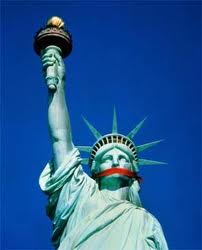
April 30, 2026, Clayton Weimers, https://www.projectcensored.org/american-press-freedom-on-the-brink/
As World Press Freedom Day (May 3) nears, it’s a good time to step back and assess how journalists and news outlets are faring in our current media climate.
President Donald Trump came back to the White House and picked up right where he left off, insulting and attacking the press on an almost daily basis, suing media outlets, and taking a number of concrete actions to restrict press freedom. Against this backdrop, Reporters Without Borders (RSF) will release its 2026 World Press Freedom Index on April 30.
Every year, RSF scores and ranks 180 countries and territories based on their level of press freedom. The Index evaluates five indicators: political context, legal framework, economic context, sociocultural context, and safety. The United States has declined in each of these indicators and steadily fallen on the Index over the past decade, dropping in rank from 49th in 2015 to 57th in 2025.
It may be tempting to blame Trump entirely for the perilous state of journalism in the country, but that steady decline in press freedom over the past decade spans multiple administrations, with both parties holding power in Washington. Such a prolonged decline points to structural deficiencies that cannot be attributed to a single issue, person, or administration.
Media ownership has become increasingly consolidated among a few media moguls, as outlets have also faced major revenue losses.
Local news is also vanishing, and millions of Americans, especially in rural and low-income areas, now live in “news deserts.”
Time and again, Congress has missed opportunities to enact meaningful press freedom protections, such as the PRESS Act, while local and state governments have chipped away at press freedom.
Violence against journalists has risen to stubbornly high levels, according to the US Press Freedom Tracker. And in the last decade, eight journalists in the US were killed for their journalism or while working.
And through this tumultuous period, public trust in news has plummeted.
Now, on top of that overall troubling context, a White House openly hostile to journalism is exacerbating an already fraught situation. Since returning to power, Trump, along with his advisors and allies, has dealt devastating blows to journalism, setting dangerous precedents and inflicting enduring harm.
From limiting journalists’ access to government buildings to cutting public media funding to targeting and threatening disfavored media outlets, the administration has regularly violated press freedom.
While these individual incidents are scandalous, and often unconstitutional, it’s easy for them to be washed away into the constant churn of the news cycle. Put them all together, though, and one conclusion is unavoidable: Trump is waging an all-out war on press freedom and journalism.
Trump promised to be a dictator on just “day one” of his term, but the totality of his anti-press campaign signals that the self-proclaimed “Peace President” is sinking to the depths of authoritarian regimes. His war on press freedom affects all five indicators RSF measures to compile the Index: political, legal, economic, sociocultural, and safety.
Political context
On his first day in office, Trump issued an executive order “ending federal censorship,” effectively eliminating government monitoring of misinformation and disinformation.
Federal Communications Commission Chairman Brendan Carr has also weaponized the independent agency to investigate news outlets with coverage that the presidential administration disagrees with.
The administration removed thousands of US government pages that hosted information ranging from vaccines to climate change, vital resources for journalists and the general public alike.
Reporters have been barred from, or had their access severely restricted at the State Department, Air Force One, the Pentagon, and even a section of the White House previously known as “Upper Press.”
Legal framework
In addition to the president’s numerous lawsuits against media outlets, his administration earlier this year raided the home of Washington Post journalist Hannah Natanson and confiscated her personal and professional devices, a truly dangerous and unprecedented assault that puts thousands of Natanson’s sources at risk and is likely to scare off future sources from speaking with journalists. Journalists like Don Lemon and Georgia Fort have been arrested and threatened with criminal charges while doing their work.
Economic context
Trump led the charge to eliminate federal funding for public media. He’s also inserted himself into media company mergers and acquisitions, putting his thumb on the scale to ensure his political allies take control of American media outlets—a move eerily reminiscent of Viktor Orbán in Hungary and even Vladimir Putin in Russia.
Sociocultural context
Trump’s near-daily attacks and insults against journalists have set an example for others, with journalists now facing online and public harassment while doing their job. The bar for attacks against journalists is undeniably lower today thanks to Trump. RSF’s 2024 investigation into the state of press freedom in swing states found journalists reporting alarming instances of direct threats to their safety by local politicians. Threats against journalists by elected officials that once seemed inconceivable have become de rigueur.
Safety
Journalists faced a spike in physical violence by law enforcement and federal agents while doing their work. This was most evident as journalists covered widespread protests against the administration’s sweeping crackdown on immigration in Minnesota’s Twin Cities, Los Angeles, and Chicago.
Press freedom around the world is in trouble, as RSF’s Index has shown in recent years. Notably, the Trump effect extends beyond US borders. The American retreat from foreign aid led to the withdrawal of millions of dollars that supported independent media in developing economies around the world. In one striking example, a safety training session for journalists in the Amazon was abruptly canceled because of the USAID shutdown.
Authoritarian leaders are further emboldened to attack the press with the knowledge that the United States is no longer championing press freedom. When Serbian authorities raided the offices of the country’s largest fact-checker, they cited X posts by Elon Musk in his capacity as the leader of DOGE (Department of Government Efficiency) as evidence of the media organization’s crimes. That evidence? Accepting a USAID grant.
This is a moment of crisis for American media. During the twentieth century, press freedom—and free expression more broadly—saw a gradual, if uneven, expansion. Now we’re heading in the other direction for the first time in generations, and RSF isn’t the only organization that’s noticed. The Varieties of Democracy Institute’s 2026 Democracy Report found that US freedom of expression had declined to World War II levels. Freedom House also docked the United States in its latest global report, with freedom of expression cited as a leading factor in democratic backsliding.
We can’t lay all the blame for the state of American press freedom at the president’s feet, but Trump has taken a troubling situation and turned it into a full-blown crisis that we must urgently solve. Our very democracy is at stake.
Clayton Weimers is a recognized leader in press freedom who serves as North America Director for Reporters Without Borders (RSF). He and his team defend press freedom across the English-speaking Americas and advance RSF’s global priorities to advocate for journalists and everyone’s right to information. His writing on press freedom has appeared in publications such as the Guardian, Newsweek, The Hill, and The Independent. He originally joined RSF’s DC team as Deputy Director for Advocacy after a career in political campaigns. He has degrees from the University of Chicago and Pitzer College and a borderline unhealthy relationship with the Chicago Cubs and Everton Football Club.
Key US science panels are being axed — and others are becoming less open
A Nature analysis shows that the Trump administration has terminated more than 100 advisory committees to science agencies — and reduced the transparency and independence of those that remain.
Last August, the DOE terminated six FACA panels that provided advice in areas such as high-energy physics, scientific computing, and biological and environmental research. The DOE has since consolidated these discipline-specific panels into one overarching body called the Office of Science Advisory Committee (SCAC).
“How good is the advice coming from a committee of people that probably only have passing knowledge of some of the areas?”
By Max Kozlov, Alexandra Witze & Dan Garisto, https://www.nature.com/articles/d41586-026-01301-5
President Donald Trump and his administration downsized US science by historic margins last year as it reduced the workforce at federal research agencies by tens of thousands of people and terminated thousands of research grants. But another set of cutbacks in federal science has drawn less attention.
Across the government, the administration terminated more than 100 independent advisory panels, comprising university scientists and other outside experts who help to guide national science priorities.
The cuts — driven by a February 2025 executive order aimed at shrinking federal bureaucracy — target committees that agencies rely on to assess biomedical and environmental policy, provide guidance on setting research priorities and ensure transparency in how the government makes science-based decisions.
The scope of these committee terminations is unprecedented, a Nature analysis finds (see ‘Cancelled committees’). For example, the Department of Health and Human Services (HHS), which includes the National Institutes of Health, disbanded 77 advisory boards — more than one-quarter of all its advisory committees — in 2025. By contrast, in fiscal year 2024, the agency terminated just two committees.
A similar pattern of committee closures played out at other agencies such as the National Science Foundation (NSF) and the Department of Energy (DOE). At NASA, more than half of the advisory boards were disbanded.
These panels, which are governed by the Federal Advisory Committee Act (FACA), are typically staffed by researchers and other experts from outside the government. Some of those that were closed in fiscal year 2025 had been advising on topics such as organ transplantation, HIV prevention, high-energy-physics research and planetary science.
The February 2025 executive order’s stated purpose was to “minimize Government waste and abuse, reduce inflation, and promote American freedom and innovation”. And some scientists and agency employees said there can be sound reasons to streamline FACA committees by combining some or eliminating ones that no longer serve a purpose. But many researchers say that the scale of the administration’s efforts greatly reduces the amount and quality of advice that the government receives from the scientific community and businesses, as well as organizations that represent people with diseases such as Alzheimer’s
Researchers who spoke to Nature say that by terminating such a large number of scientific advisory committees and not replacing the vast majority of them, the administration is cutting off federal agencies from independent outside expertise. At the same time, it limits the flow of information from the government to the scientific community and the public.
“That two-way street, I think, was invaluable,” says Juan Meza, an applied mathematician at the University of California, Merced, who formerly served on two panels at the NSF and the DOE that have been disbanded. “We could act as ambassadors in both directions,” he says.
The terminations aren’t the only changes to advisory committees that the administration rolled out last year. Nature found that the US government has sharply reduced the number of open FACA meetings — by more than 50% for some agencies — at which the public could observe deliberations and provide input. Some agencies substantially reduced the number of public reports they issued.
And in some other cases — including the prominent example of the Advisory Committee on Immunization Practices (ACIP) that makes recommendations on vaccines — the federal government has drastically changed the composition of the committees, removing people who disagree with its stance and installing ones who agree. Last week, the Trump administration abruptly fired all 22 members of the board that advises and oversees the NSF. As a rationale for the terminations, a White House spokesperson pointed to the 2021 Supreme Court case United States v. Arthrex, Inc., which it says “raised constitutional questions” about the board’s membership and the fact that its members are not confirmed by the Senate. The spokesperson said the White House aims to update the law so that the board can “perform its duties as Congress intended”.
Researchers say that the elimination of panels and other changes seemingly contradict the Trump administration’s promise, outlined in an executive order on ‘gold-standard science’ on 23 May last year, to improve transparency in federally funded science and in science-related decisions taken by federal agencies.
“The fewer of these advisory panels there are, it inherently diminishes the transparency of the entire operation,” says Carrie Wolinetz, who previously administered several advisory panels as the former head of the NIH’s science-policy office.
The White House rebutted these claims. Spokesperson Kush Desai says that, during the COVID-19 pandemic, the “federal government’s glut of redundant, taxpayer-funded advisory committees did little to meaningfully inform policymaking for the benefit of the American people”. “The Trump Administration is eliminating the bureaucratic bloat and taking a hands-on approach to ensure that policymaking is driven by Gold Standard Science.”
Biomedicine behind closed doors
The 77 committee terminations at the HHS in 2025 represent a sharp departure from historical levels. Since 1997 — the full extent of publicly available FACA data — annual terminations have exceeded ten only once.
In 2025, the number of open HHS committee meetings also decreased, Nature found. In the ten years before 2025, the average number of committee meetings open to the public was 255. But in 2025, there were just 91 (see ‘Closed science’).
There are many more closed meetings at the HHS in any given year because most of the FACA committees assess research grants, a process that is kept confidential. But in 2025, the ratio of open to closed meetings dropped from an average of over 9% for the previous ten years to 4%, representing a shift towards closed meetings even outside the grant-review process
Among the disbanded groups was one charged in 2023 with making recommendations on research into long COVID and treatment for millions of people with the condition in the United States. The committee was a unique bridge between patients, federal science agencies and policymakers, says Ian Simon, the former head of the HHS Office of Long COVID Research and Practice, which was eliminated amid the government downsizing last year.
The committee was “designed to give patients a significant voice equal to those of researchers and physicians”, Simon says, and its closure is a blow to research. “It is very hard to see how these actions will advance the work that’s needed to understand long COVID and other infectious chronic conditions.”
Other panels terminated by the HHS include the Advisory Committee on Organ Transplantation, which advised the agency on policies regarding organ donation, procurement and equitable allocation, and the Dietary Guidelines Advisory Committee, tasked with reviewing current nutritional science to inform the federal government’s dietary recommendations. The federal government subsequently issued new dietary guidelines in January without the committee’s input, a move that sparked controversy among some nutrition experts who argued that aspects of the revisions bypassed the scientific consensus.
The downsizing of HHS advisory committees is starker than the 2025 termination numbers suggest: some of the FACA committees are also meeting less often than in typical years or have not met at all since Trump took office again.
For example, the NIH leadership has historically relied on the Advisory Committee to the Director and the congressionally mandated Scientific Management Review Board — both of which have not been officially terminated — to navigate major agency reorganizations or funding shifts, says Wolinetz.
But the NIH leadership did not convene either of these panels last year as the agency cut thousands of projects on disfavoured topics and reduced the autonomy of each of its institutes by centralizing peer review and other administrative functions.
Wolinetz says that it’s smart to consider, on a semi-regular basis, whether each committee is still serving its purpose and justifying its taxpayer cost; some panels can become obsolete “vestiges”, she says.
But by terminating so many committees and not consulting others, Wolinetz says the federal government loses a crucial mechanism for ensuring that its decision-making is transparent and subject to scrutiny, including by the public. Advisory committees act as a “locus of public engagement that federal agencies can’t do on their own” about issues the government is grappling with, she says. The actions seem at odds with the ‘radical transparency’ at HHS that is a stated policy goal of health secretary Robert F. Kennedy Jr, she says.
She also worries about cases in which the Trump administration has not terminated committees — but instead drastically changed them.
For example, last June, Kennedy abruptly fired all 17 members of ACIP, the US Centers for Disease Control and Prevention’s premier vaccine advisory panel. Claiming that the panel was plagued by conflicts of interest and acted as a “rubber stamp” for the pharmaceutical industry, Kennedy reconstituted the committee with appointees whom, he argued, would bring outsider scrutiny. However, scientists and medical organizations contend that some of the new members have a history of promoting vaccine scepticism, a position long held by Kennedy.
The American Academy of Pediatrics (AAP) sued the HHS over its changes to ACIP. In March, a federal judge temporary halted the installation of Kennedy’s picks for ACIP, ruling that the selections probably violated federal law requiring that such panels be fairly balanced in terms of expertise and viewpoints. The HHS later revised ACIP’s charter to broaden its scope and focus on the risks of vaccines.
Kennedy also overhauled the HHS’s Interagency Autism Coordinating Committee, terminating its existing members and appointing a slate of new ones. The new slate has drawn criticism from some autism researchers who argue that it includes people who are aligned with Kennedy’s disproven claims that autism is a preventable condition linked to vaccines and environmental toxins.
These reconstituted committees were not “formulated in the traditional highly vetted manner” outlined in each panel’s charter, Wolinetz says. Instead, they seem to be “constituted to support particular predetermined points of view” and are being “used to certify policy actions the administration wants to take”, she adds.
Emily Hilliard, an HHS spokesperson, told Nature that the agency’s actions were in accordance with a White House order to terminate unnecessary advisory committees, adding that “these previous committees allowed the United States to remain the sickest developed nation despite spending $4.5 trillion annually on health care, driving unsustainable debt and worsening health outcomes.” The HHS will continue to convene committees as necessary, she added.
The HHS did not respond to requests for comment about other issues, such as criticisms of the way the agency changed the composition of the vaccine and autism panels.
Loss at the NSF
The NSF, which is the premier US funder of fundamental research across all areas of science and engineering, also sharply restricted its advice pipeline last year by terminating 14 of its 52 advisory committees. These had provided the agency with advice in areas such as engineering, cybersecurity and geosciences. (All but one of the panels that review grant applications for the NSF remain active.)
Meza served on one of these terminated bodies, the Advisory Committee for Mathematics and Physical Sciences, and was also an NSF programme officer from 2018 until he left in 2022. He says that such panels can provide valuable information to agencies; for example, the committee he served on informed the NSF that the research community had concerns about the lack of support for mid-sized laboratories. Heeding the advice, the NSF established the Mid-scale Research Infrastructure opportunity in 2016 to support what it called “a ‘sweet spot’ for science and engineering that has been challenging to fund through traditional NSF programs”.
The NSF declined to comment on the criticisms about the changes in its advisory committees.
Consolidation at DOE
Last August, the DOE terminated six FACA panels that provided advice in areas such as high-energy physics, scientific computing, and biological and environmental research. The DOE has since consolidated these discipline-specific panels into one overarching body called the Office of Science Advisory Committee (SCAC).
Meza, who served on the terminated Advanced Scientific Computing Advisory Committee, worries about the loss of specific expertise. “How good is the advice coming from a committee of people that probably only have passing knowledge of some of the areas?” he asks.
Persis Drell, chair of the SCAC and a physicist at Stanford University in California, acknowledges the worries researchers have raised. “In a time of turbulent change, I totally understand all of the concerns that are in the community,” she says. Drell adds that she hopes to reassure the scientific community that the SCAC is listening and is serious about helping science at the DOE. “I have two goals: one of them is to ensure that we have a strong basic science foundation and the other is that we are able to make progress on the strategic pillars that the administration has put forward,” she says.
There are many more closed meetings at the HHS in any given year because most of the FACA committees assess research grants, a process that is kept confidential. But in 2025, the ratio of open to closed meetings dropped from an average of over 9% for the previous ten years to 4%, representing a shift towards closed meetings even outside the grant-review process.
Among the disbanded groups was one charged in 2023 with making recommendations on research into long COVID and treatment for millions of people with the condition in the United States. The committee was a unique bridge between patients, federal science agencies and policymakers, says Ian Simon, the former head of the HHS Office of Long COVID Research and Practice, which was eliminated amid the government downsizing last year.
The committee was “designed to give patients a significant voice equal to those of researchers and physicians”, Simon says, and its closure is a blow to research. “It is very hard to see how these actions will advance the work that’s needed to understand long COVID and other infectious chronic conditions.”
Other panels terminated by the HHS include the Advisory Committee on Organ Transplantation, which advised the agency on policies regarding organ donation, procurement and equitable allocation, and the Dietary Guidelines Advisory Committee, tasked with reviewing current nutritional science to inform the federal government’s dietary recommendations. The federal government subsequently issued new dietary guidelines in January without the committee’s input, a move that sparked controversy among some nutrition experts who argued that aspects of the revisions bypassed the scientific consensus.
The downsizing of HHS advisory committees is starker than the 2025 termination numbers suggest: some of the FACA committees are also meeting less often than in typical years or have not met at all since Trump took office again.
For example, the NIH leadership has historically relied on the Advisory Committee to the Director and the congressionally mandated Scientific Management Review Board — both of which have not been officially terminated — to navigate major agency reorganizations or funding shifts, says Wolinetz.
But the NIH leadership did not convene either of these panels last year as the agency cut thousands of projects on disfavoured topics and reduced the autonomy of each of its institutes by centralizing peer review and other administrative functions.
Wolinetz says that it’s smart to consider, on a semi-regular basis, whether each committee is still serving its purpose and justifying its taxpayer cost; some panels can become obsolete “vestiges”, she says.
But by terminating so many committees and not consulting others, Wolinetz says the federal government loses a crucial mechanism for ensuring that its decision-making is transparent and subject to scrutiny, including by the public. Advisory committees act as a “locus of public engagement that federal agencies can’t do on their own” about issues the government is grappling with, she says. The actions seem at odds with the ‘radical transparency’ at HHS that is a stated policy goal of health secretary Robert F. Kennedy Jr, she says.
She also worries about cases in which the Trump administration has not terminated committees — but instead drastically changed them.
For example, last June, Kennedy abruptly fired all 17 members of ACIP, the US Centers for Disease Control and Prevention’s premier vaccine advisory panel. Claiming that the panel was plagued by conflicts of interest and acted as a “rubber stamp” for the pharmaceutical industry, Kennedy reconstituted the committee with appointees whom, he argued, would bring outsider scrutiny. However, scientists and medical organizations contend that some of the new members have a history of promoting vaccine scepticism, a position long held by Kennedy.
The American Academy of Pediatrics (AAP) sued the HHS over its changes to ACIP. In March, a federal judge temporary halted the installation of Kennedy’s picks for ACIP, ruling that the selections probably violated federal law requiring that such panels be fairly balanced in terms of expertise and viewpoints. The HHS later revised ACIP’s charter to broaden its scope and focus on the risks of vaccines.
Kennedy also overhauled the HHS’s Interagency Autism Coordinating Committee, terminating its existing members and appointing a slate of new ones. The new slate has drawn criticism from some autism researchers who argue that it includes people who are aligned with Kennedy’s disproven claims that autism is a preventable condition linked to vaccines and environmental toxins.
These reconstituted committees were not “formulated in the traditional highly vetted manner” outlined in each panel’s charter, Wolinetz says. Instead, they seem to be “constituted to support particular predetermined points of view” and are being “used to certify policy actions the administration wants to take”, she adds.
Emily Hilliard, an HHS spokesperson, told Nature that the agency’s actions were in accordance with a White House order to terminate unnecessary advisory committees, adding that “these previous committees allowed the United States to remain the sickest developed nation despite spending $4.5 trillion annually on health care, driving unsustainable debt and worsening health outcomes.” The HHS will continue to convene committees as necessary, she added.
The HHS did not respond to requests for comment about other issues, such as criticisms of the way the agency changed the composition of the vaccine and autism panels.
Loss at the NSF
The NSF, which is the premier US funder of fundamental research across all areas of science and engineering, also sharply restricted its advice pipeline last year by terminating 14 of its 52 advisory committees. These had provided the agency with advice in areas such as engineering, cybersecurity and geosciences. (All but one of the panels that review grant applications for the NSF remain active.)
Meza served on one of these terminated bodies, the Advisory Committee for Mathematics and Physical Sciences, and was also an NSF programme officer from 2018 until he left in 2022. He says that such panels can provide valuable information to agencies; for example, the committee he served on informed the NSF that the research community had concerns about the lack of support for mid-sized laboratories. Heeding the advice, the NSF established the Mid-scale Research Infrastructure opportunity in 2016 to support what it called “a ‘sweet spot’ for science and engineering that has been challenging to fund through traditional NSF programs”.
The NSF declined to comment on the criticisms about the changes in its advisory committees.
Consolidation at DOE
Last August, the DOE terminated six FACA panels that provided advice in areas such as high-energy physics, scientific computing, and biological and environmental research. The DOE has since consolidated these discipline-specific panels into one overarching body called the Office of Science Advisory Committee (SCAC).
Meza, who served on the terminated Advanced Scientific Computing Advisory Committee, worries about the loss of specific expertise. “How good is the advice coming from a committee of people that probably only have passing knowledge of some of the areas?” he asks.
Persis Drell, chair of the SCAC and a physicist at Stanford University in California, acknowledges the worries researchers have raised. “In a time of turbulent change, I totally understand all of the concerns that are in the community,” she says. Drell adds that she hopes to reassure the scientific community that the SCAC is listening and is serious about helping science at the DOE. “I have two goals: one of them is to ensure that we have a strong basic science foundation and the other is that we are able to make progress on the strategic pillars that the administration has put forward,” she says.
1 This Month





PLEASE OPPOSE HR 8255 AND S.3639 – bills would accelerate satellite deployment, with no environmental review or safeguards – https://ncstd5li.quorum.us/campaign/169331/
To see nuclear-related stories in greater depth and intensity – go to https://nuclearinformation.wordpress.com
-
Archives
- October 2026 (67)
- September 2026 (339)
- August 2026 (330)
- July 2026 (355)
- June 2026 (287)
- May 2026 (306)
- April 2026 (356)
- March 2026 (251)
- February 2026 (267)
- January 2026 (308)
- December 2025 (358)
- November 2025 (359)
-
Categories
- 1
- 1 NUCLEAR ISSUES
- business and costs
- climate change
- culture and arts
- ENERGY
- environment
- health
- history
- indigenous issues
- Legal
- marketing of nuclear
- media
- opposition to nuclear
- PERSONAL STORIES
- politics
- politics international
- Religion and ethics
- safety
- secrets,lies and civil liberties
- spinbuster
- technology
- Uranium
- wastes
- weapons and war
- Women
- 2 WORLD
- ACTION
- AFRICA
- Atrocities
- AUSTRALIA
- Christina's notes
- Christina's themes
- culture and arts
- Events
- Fuk 2022
- Fuk 2023
- Fukushima 2017
- Fukushima 2018
- fukushima 2019
- Fukushima 2020
- Fukushima 2021
- general
- global warming
- Humour (God we need it)
- Nuclear
- RARE EARTHS
- Reference
- resources – print
- Resources -audiovicual
- Weekly Newsletter
- World
- World Nuclear
- YouTube
-
RSS
Entries RSS
Comments RSS

