Time to stop the bailout of America’s insanely expensive nuclear industry
The “problem” is obvious: the cost of operating and maintaining old nukes is skyrocketing. So is the cost of building new ones. The last two under construction in the US – in Georgia – have already doubled in cost (approaching $30 billion) and are still not open. If they ever do open (God help us!!!) the electricity they’d produce would be far more expensive than the wind turbines and solar panels that will surround them.
Stop the Insane Nuke Bailout, By Harvey Wasserman, Reader Supported News, 21 August 21
 uried deep in Joe Biden’s various infrastructure deals is a bailout every bit as insane as the original decision to stay in Afghanistan – up to $50 billion in handouts to keep old nuke reactors operating … at least until they blow up.
The cost of our arrogant lunacy in Afghanistan was thousands of lives and maybe $2 trillion.
The cost of the inevitable explosion at one or more of these crumbling jalopy nukes could be millions of lives and trillions in both destroyed property and an irradiated ecosphere.
Throughout the globe, the Solartopian technologies of wind, solar, batteries, and efficiency are skyrocketing in production while their prices plummet. But Biden’s proposed bailout would take a huge amount of capital away from clean, job producing renewables and put it into expensive, dangerous, obsolete reactors.
Richard Nixon in 1974 – amidst the Arab oil embargo – promised there’d be a thousand “Peaceful Atom” nukes in the US by the year 2000. In that year there were 104. Today there are 93, with the number still dropping – but not fast enough.
Every day these fast-deteriorating reactors become more likely to explode. Under the Price-Anderson Act of 1957, their owners are exempted from liability if their negligence lets a reactor carpet the American landscape with deadly radiation.
Because they’re not on the hook for the apocalypse they might cause, reactor owners have no particular incentive to expensively maintain these nukes as they sink into decrepitude. And thus the taxpayer and the individual citizen (YOU!) must absorb the cost of the meltdowns/explosions we all know are coming.
The rationale for the bailout is that aging atomic reactors – even ones long since amortized – cannot compete with the onslaught of renewables, batteries and efficiency. Allegedly, in our “free market capitalist” country, we all must compete. But when major corporate assets like nuke reactors can’t, apparently they must be bailed out.
The “problem” is obvious: the cost of operating and maintaining old nukes is skyrocketing. So is the cost of building new ones. The last two under construction in the US – in Georgia – have already doubled in cost (approaching $30 billion) and are still not open. If they ever do open (God help us!!!) the electricity they’d produce would be far more expensive than the wind turbines and solar panels that will surround them.
Indeed, from 2009 to 2019, the price for solar photovoltaic electricity dropped by 89%. For on-shore wind, it went down by 70%……….
The lengths to which the corporate dinosaurs will go to preserve these old reactors is astounding. The owners of two extremely decrepit and dangerous nukes on Lake Erie helped funnel a $61 million bribe to the Speaker of the Ohio House in exchange for a $1 billion ratepayer bailout (since repealed). Disgraced governor Andrew Cuomo helped shut two extremely dangerous old nukes at Indian Point, near Manhattan, but forced through $7.6 billion in handouts for four falling-apart upstate reactors, at least one of which the owner wanted to shut. Connecticut, New Jersey, Illinois and other states are in various stages of bailout madness.
But now Biden wants to take the disease federal. The reactors he wants to save for $50 billion cannot compete with new wind or solar. They may temporarily sustain an aging, fast-retiring workforce. But they’ll create no new training or safe longterm employment for a rising Solartopian generation………….. https://readersupportednews.org/opinion2/277-75/71091-rsn-stop-the-insane-nuke-bailout
NRC respond’s to New Mexico’s legal bid to stop Holtec’s planned nuclear waste dump
NRC: Court lacks authority in New Mexico lawsuit against nuclear waste site, Adrian Hedden, Carlsbad Current-Argus 20 Aug 21. A proposal to build a temporary nuclear waste storage site near Carlsbad and Hobbs drew a lawsuit against the Nuclear Regulatory Commission (NRC), the agency tasked with permitting the facility, from the State of New Mexico which sought to block the project.
In a Monday filing, the NRC asked the U.S. District Court for the District of New Mexico to dismiss the State’s lawsuit due to lack of jurisdiction.
The State alleged in the suit that the NRC acted illegally in issuing an environmental impact statement (EIS) for the Holtec project that found the site would have minimal environmental impact and recommended a permit be granted.
Citing the Nuclear Waste Policy Act (NWPA), New Mexico Attorney General Hector Balderas argued federal law stipulated a permanent repository be available before an interim storage site, like Holtec’s, could be permitted.
But the NRC argued that in the State’s suit, Balderas ignored the NRC’s authority to issue licenses for nuclear facilities as designated in the Atomic Energy Act (AEA), that allows challenges to licenses applications be raised in the U.S Court of Appeals which New Mexico failed to do.
The NRC argued U.S. District Court was the wrong venue for New Mexico to appeal the decision under the AEA and that the case should be before the U.S. Court of Appeals………..
State leaders cited the alleged risk the project, proposed by Holtec International, would pose to the environment and public safety should it be allowed to operate, along with concerns that it could become permanent as no such repository existed and potential incidents when transporting the waste into New Mexico.
Holtec first applied for a license from the NRC in 2017 to build the facility that would ultimately store up to 100,000 spent nuclear fuel rods on the surface at a location near the Eddy-Lea county line while a permanent repository was developed.
Such a repository does not yet exist, so the Holtec site would see the high-level nuclear waste brought into the remote area in southeast New Mexico via rail from nuclear power plants and facilities across the country to be held temporarily at the site known as consolidated interim storage facility (CISF).
A similar project was also amidst an NRC licensing process in Andrews, Texas, near the New Mexico-Texas state line for another company Interim Storage partners which so far received favorable reviews from the agency with a final decision expected later this year.
Upon announcing the lawsuit against the NRC to block Holtec’s project Balderas sought an injunction to block the licensing process.
He said the project would bring an unnecessary risk to the local communities near the site and along its transportation routes, along with economic drivers like oil and gas extraction and agriculture in the region.
“I am taking legal action because I want to mitigate dangers to our environment and to other energy sectors,” Balderas said. “It is fundamentally unfair for our residents to bear the risks of open ended uncertainty https://www.currentargus.com/story/news/local/2021/08/20/nrc-court-lacks-authority-new-mexico-lawsuit-against-nuclear-waste-site/8185804002/
The military-industrial complex had a successful Afghanistan war – better still than Vietnam. The next will be better, and by remote warfare.
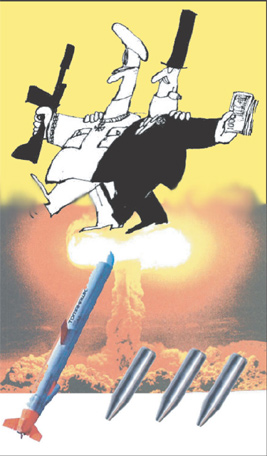
For the military-industrial complex it (Vietnam) was a successful war. And they learned lessons from it.
For them the war ended too early. Profits fell.
In the words of George Orwell in the book 1984, “The war is not meant to be won, it is meant to be continuous.”
Moreover, it is meant to be far away and beyond the attention of the citizenry.
The military-industrial complex keeps learning and profiting. Now it’s remote warfare instead of boots on the ground.
Successes in Afghanistan and Vietnam, Crispin Hull, http://www.crispinhull.com.au/2021/08/20/afghan-and-vietnam-successes/?utm_source=mailpoet&utm_medium=email&utm_campaign=crispin-hull-column-16-nov-2019_99
When US Secretary of State Antony Blinken said this is “not Saigon”, everyone rightly scoffed. It was a mirror image right down to near identical photos of US helicopters evacuating the embassy in Kabul just as in Saigon 46 years earlier – another delusional re-run of a failed US foreign policy. When will they ever learn?
But there is another way of looking at this. Vietnam, Afghanistan and Iraq were highly successful missions. If just depends on whose eyes you are looking through.
The big mistake is to imagine that the US mission in these countries was to ensure peace, liberty, democracy and prosperity for their people.
Some US entities learned a lot from Vietnam and applied it in Afghanistan and Iraq.
This might sound a little off the planet, but we must go back to 1961 to get a clearer picture and quote Republican President Dwight Eisenhower’s farewell address:
“Until the latest of our world conflicts [World War II], the United States had no armaments industry. [Now] we have been compelled to create a permanent armaments industry of vast proportions . . . .
“Now this conjunction of an immense military establishment and a large arms industry is new in the American experience. The total influence – economic, political, even spiritual – is felt in every city, every Statehouse, every office of the Federal government. We recognize the imperative need for this development. Yet, we must not fail to comprehend its grave implications. Our toil, resources, and livelihood are all involved. So is the very structure of our society.
“In the councils of government, we must guard against the acquisition of unwarranted influence, whether sought or unsought, by the military-industrial complex. The potential for the disastrous rise of misplaced power exists and will persist. We must never let the weight of this combination endanger our liberties or democratic processes. We should take nothing for granted.
Only an alert and knowledgeable citizenry can compel the proper meshing of the huge industrial and military machinery of defense with our peaceful methods and goals, so that security and liberty may prosper together.”
Alas, those in the “councils of government” did not heed the warning. To the contrary, they fell under the spell of the military-industrial complex. Subsequent Presidents, up to but not including Trump, have done its bidding and enriched the management and shareholders of the weapons makers and the vast array of suppliers of equipment, food, clothes and shelter to the military.
Those Presidents were all supporters of big military spending. Meanwhile, the corporations with labyrinthal efficiency set up their manufacturing and supply chains in as many congressional districts as they could. They plied their influence in the Washington beltway. None in the councils of government dared defy them.
The military-industrial complex and those elected in both parties and those in the bureaucracy symbiotically egged each other on to ramp up the US military presence in Vietnam.
The US spent $US1 trillion in today’s money in Vietnam. A great deal of that went in profits to US corporations. Only 17 per cent went to nation-building in Vietnam, and much of that went to US contractors.
For the military-industrial complex it was a successful war. And they learned lessons from it.
For them the war ended too early. Profits fell.
The main lessons for them were that Vietnam was a television war. The cameras went everywhere. It also required conscription. Those two things undermine public apathy. And public apathy is essential for the prosecution of a profitable war.
TV and conscription made for, in Eisenhower’s words, “an alert and knowledgeable citizenry”. So, for the military-industrial complex, the Vietnam war was a dismally short war.
In the words of George Orwell in the book 1984, “The war is not meant to be won, it is meant to be continuous.”
Moreover, it is meant to be far away and beyond the attention of the citizenry.
Next time round, journalists would be embedded with (and controlled by) the military. There would be no conscription. There would be proud mothers and daughters, not angry ones. And the rest of the population would be oblivious, apathetic, inattentive and unknowledgeable.
The military-industrial complex had a very successful 20-year war in Afghanistan, greatly profiting from the $2 trillion the US spent there, and a similarly successful stint in Iraq.
The money did not go to the Vietnamese, the Iraqis or Afghans. It went to the likes of Lockheed and Halliburton.
The only President since Eisenhower to see and seek to stamp out the influence of the military-industrial complex was Trump.
Like Eisenhower, Trump did not come from the political establishment. He saw the wars as a waste of money and vowed to end them. When Obama tried to do the same in 2009, the military-industrial complex conned him into a “surge” of 17,000 more US troops.
Trump ended the Afghan war. It was about the only good thing he did in his presidency. It was never going to go smoothly. The military-industrial complex even conned President Joe Biden into believing that all the money it had wasted on training an Afghan army and police force would enable them to hold off the Taliban for a reasonable time for an evacuation. But there was nothing there.
At these times we shake our head and look at the “cost” and wonder how it took so long to get out. We should look at it the other way. Who profited from the wars and why did the US (and Australia) take such a short time to go in?
The military-industrial complex keeps learning and profiting. Now it’s remote warfare instead of boots on the ground.
The citizenry must get alert to this. It should demand that the US stop its arms exports and prosecution of continuous war. And Australia’s citizenry do likewise.
Covid Defense Act – new Bill to prioritise U.S. health, vaccine spending over weapons spending !

New Bill Proposes Cutting Pentagon Spending to Fund Vaccines for Poor Nations, Common Dreams “We can’t bomb our way out of a global pandemic,” said Rep. Mark Pocan, the sponsor of the legislation, “Shifting funds from weaponry and military contractors to producing Covid vaccines will save hundreds of thousands—if not millions—of lives around the world.”
JAKE JOHNSON, August 20, 2021 Congressman Mark Pocan of Wisconsin introduced legislation this week that would cut billions of dollars from the Pentagon’s massive budget and invest those funds in global coronavirus vaccination efforts, which are badly lagging as rich countries continue to hoard doses and rush ahead with booster shots.
The Covid Defense Act proposes transferring $9.6 billion in U.S. military spending to Covax—a global vaccination initiative led by the World Health Organization—to assist with the procurement of doses for the people of low-income nations. Thus far, just 1.3% of people in poor countries have received at least one vaccine dose.
In a press release, Pocan’s office said that the funding—which represents just 1.3% of the $740.5 billion in U.S. military spending approved for 2021—”could lead to an additional 1.8 billion Covid vaccine doses for lower-income countries in 2021 and early 2022.” If passed, Pocan’s office said, the new legislation could provide vaccine access to another 30% of the world’s poorest and most vulnerable populations……….. https://www.commondreams.org/news/2021/08/20/new-bill-proposes-cutting-pentagon-spending-fund-vaccines-poor-nations
Pentagon Poised To Unveil, Demonstrate Classified Space Weapon

Pentagon Poised To Unveil, Demonstrate Classified Space Weapon
The push to declassify an existing space weapon is being spearheaded by Gen. John Hyten, the vice chairman of the joint chiefs of staff. Breaking Defense, Theresa Hitchens, 20 Aug 21
Directed energy anti-satellite weapons for the future. (Lockheed Martin)
WASHINGTON: For months, top officials at the Defense Department have been working toward declassifying the existence of a secret space weapon program and providing a real-world demonstration of its capabilities, Breaking Defense has learned.
The effort — which sources say is being championed by Gen. John Hyten, the vice-chairman of the joint chiefs of staff — is close enough to completion that there was a belief the anti-satellite technology might have been revealed at this year’s National Space Symposium, which kicks off next week.ampioned
However, the crisis in Afghanistan appears to have put that on hold for now. Pulling the trigger on declassifying such a sensitive technology requires concurrence of the Director of National Intelligence, Avril Haines, and a thumbs up from President Joe Biden, sources explain; with all arms of the national security apparatus pointed towards Kabul, that is almost certainly not going to happen next week. And until POTUS says yes, nothing is for certain, of course.
The system in question long has been cloaked in the blackest of black secrecy veils — developed as a so-called Special Access Program known only to a very few, very senior US government leaders. While exactly what capability could be unveiled is unclear, insiders say the reveal is likely to include a real-world demonstration of an active defense capability to degrade or destroy a target satellite and/or spacecraft.
At least, that is what has been on the table since last year — when officials in the Trump administration viewed revealing the technology as a capstone to the creation of Space Command and Space Force. The plan apparently had been to announce it at the 2020 Space Symposium, which was cancelled due to the COVID-19 pandemic; the arrival of the Biden administration also led to a reevaluation of moving forward with the reveal.
Expert speculation on what could be used for the demonstration ranges from a terrestrially-based mobile laser used for blinding adversary reconnaissance sats to on-board, proximity triggered radio-frequency jammers on certain military satellites, to a high-powered microwave system that can zap electronics carried on maneuverable bodyguard satellites. However, experts and former officials interviewed by Breaking Defense say it probably does not involve a ground-based kinetic interceptor, a capability the US already demonstrated in the 2008 Burnt Frost satellite shoot-down.
Requests for comment to the offices of Hyten, Haines, and SPACECOM were not returned by deadline.
Many military space leaders believe that Space Force and Space Command must publicly demonstrate to Moscow and Beijing not just an ability to take out any space-based counterspace systems they may be developing or deploying, but also to attack the satellites they, like the US, rely upon for communications, positioning, navigation and timing (PNT), and intelligence, surveillance and reconnaissance (ISR).
Notably, the second-in-command of the Space Force recently foreshadowed movement in the long-running debate about declassification of all things related to national security space — a multifaceted and complex debate which has pitted advocates against upholders of the traditional culture of secrecy within DoD and the Intelligence Community.
“It is absolutely a true problem,” Gen. DT Thompson, deputy Space Force commander, responded to a question about over-classification during a July 28 Mitchell Institute event. “I wish we owned our own destiny in that regard, but we don’t — it’s part of a broader activity and we just have to work through that. What I will say is, I think we’re on the verge of a couple of significant steps.”
The Transparency Dilemma
In fact, Thompson’s comments represented only one of several comments, quietly dropped in speeches or interviews, from top military space officials pushing for declassification of high-end systems, following several years of a steadily intensifying drumbeat on the issue. A who’s-who list of top officers, DoD civilian leaders, and key members of Congress have for years been arguing that over-classification is harming the ability to convey the growing threat of foreign counterspace to lawmakers, the public and allied/partner nations — as well as the ability to cooperate with industry and foreign partners to mitigate those threats…………………
The central dilemma isn’t hard to understand, but the devil is in the details of solving it…………………… more https://breakingdefense.com/2021/08/pentagon-posed-to-unveil-classified-space-weapon/?utm_campaign=Breaking%20News&utm_medium=email&_hsmi=151302334&_hsenc=p2ANqtz-_WjJRXNH7oSN8eQo0iMMC52dIbrytHkcSOFjM1_zECxrz5zqaTLiWTN0lmaYIYa35tfuqxon2uOPfvbhS1zFeBwuIlrg&utm_content=151302334&utm_source=hs_email
Big winners from the Afghan war -the weapons-making corporations.

Progressive Critics Say Investors in US Weapon-Makers Only Clear Winners of Afghan War
“The military-industrial complex got exactly what it wanted out of this war.” https://www.commondreams.org/news/2021/08/17/progressive-critics-say-investors-us-weapon-makers-only-clear-winners-afghan-war
As the hawks who have been lying about the U.S. invasion and occupation of Afghanistan for two decades continue to peddle fantasies in the midst of a Taliban takeover and American evacuation of Kabul, progressive critics on Tuesday reminded the world who has benefited from the “endless war.”
“Entrenching U.S. forces in Afghanistan was the military-industrial complex’s business plan for 20+ years,” declared the Washington, D.C.-based advocacy group Public Citizen.
“Hawks and defense contractors co-opted the needs of the Afghan people in order to line their own pockets,” the group added. “Never has it been more important to end war profiteering.”
In a Tuesday morning tweet, Public Citizen highlighted returns on defense stocks over the past 20 years—as calculated in a “jaw-dropping” analysis by The Intercept—and asserted that “the military-industrial complex got exactly what it wanted out of this war.”

The Intercept‘s Jon Schwarz examined returns on stocks of the five biggest defense contractors: Boeing, Raytheon, Lockheed Martin, Northrop Grumman, and General Dynamics
defense stocks outperformed the stock market overall by 58% during the Afghanistan War.
.
Schwarz found that a $10,000 investment in stock evenly split across those five companies on the day in 2001 that then-President Georg W. Bush signed the authorization preceding the U.S. invasion would be worth $97,295 this week, not adjusted for inflation, taxes, or fees.
According to The Intercept:
This is a far greater return than was available in the overall stock market over the same period. $10,000 invested in an S&P 500 index fund on September 18, 2001, would now be worth $61,613.
That is, defense stocks outperformed the stock market overall by 58% during the Afghanistan War.
“These numbers suggest that it is incorrect to conclude that the Taliban’s immediate takeover of Afghanistan upon the U.S.’s departure means that the Afghanistan War was a failure,” Schwarz added. “On the contrary, from the perspective of some of the most powerful people in the U.S., it may have been an extraordinary success. Notably, the boards of directors of all five defense contractors include retired top-level military officers.”
“War profiteering isn’t new,” journalist Dina Sayedahmed said in response to the reporting, “but seeing the numbers on it is staggering.”
Progressive political commentator and podcast host Krystal Ball used Schwarz’s findings to counter a key argument that’s been widely used to justify nearly 20 years of war.
“This is what it was really all about people,” she tweeted of the defense contractors’ returns. “Anyone who believes we were in Afghanistan to help women and girls is a liar or a fool.”
Jack Mirkinson wrote Monday for Discourse Blog that “it is unquestionably heartbreaking to think about what the Taliban might inflict on women and girls, but let us dispense with this fantasy that the U.S. has been in Afghanistan to support women, or to build democracy, or to strengthen Afghan institutions, or any of the other lines that are deployed whenever someone has the temerity to suggest that endless war and occupation is a harmful thing.”
“We did not go into Afghanistan to support its people, and we did not stay in Afghanistan to support its people,” he added. “It is astonishing, given what we know about the monsters that the U.S. has propped up time and time again around the world, that the myth persists that we do anything out of our love for human rights. We went in and we stayed in for the same reason: the American empire is a force that must remain in perpetual motion.”
As Common Dreams reported Monday, while the Taliban has retaken control, anti-war advocates have argued diplomacy is the only path to long-term peace, with Project South’s Azadeh Shahshahani emphasizing that “the only ones who benefited from the U.S. war on Afghanistan were war-profiteering politicians and corporations while countless lives were destroyed.”
Responding to Shahshahani’s tweet about who has benefited from two decades of bloodshed, Zack Kopplin of the Government Accountability Project wrote, “Adding war-profiteering generals to the mix too.”
Another former Westinghouse top executive faces criminal charges over failed South Carolina multi $billion nuclear power project

4th person charged in South Carolina nuclear project failure, https://apnews.com/article/business-south-carolina-5389136fd3675a311d1a83d68542d0f9 COLUMBIA, S.C. (AP) — A fourth business executive faces criminal charges stemming from a federal investigation into a failed multibillion-dollar project to build two nuclear reactors in South Carolina, authorities announced Wednesday.
Jeffrey A. Benjamin was a former senior vice president for Westinghouse Electric Co., the lead contractor to build two new reactors at the V.C. Summer plant. South Carolina Electric & Gas Co. parent company SCANA Corp. and state-owned utility company Santee Cooper spent nearly $10 billion on the project before halting construction in 2017 following Westinghouse’s bankruptcy.
He now faces multiple felony counts of fraud, according to an indictment.
Benjamin, who supervised all nuclear projects for Westinghouse, received information throughout 2016 and 2017 that the two V.C. Summer reactors were behind schedule and over budget, prosecutors said.
But he repeatedly told SCANA and Santee Cooper that the project was on schedule, hiding the construction’s true timeline from the utility companies, the indictment alleges.
He was fired from Westinghouse in March 2017, shortly before the company filed for bankruptcy.
The collapse of the V.C. Summer project spawned multiple lawsuits, some by ratepayers who said company executives knew the project was doomed and misled consumers and regulators as they petitioned for a series of rate hikes. The failure cost ratepayers and investors billions and left nearly 6,000 people jobless.
Benjamin could face up to twenty years in prison and a $5,000,000 fine if convicted.
Three top-level executives have already pleaded guilty in the multi-year federal fraud investigation, and all are awaiting sentencing as they cooperate with investigators.
Former SCANA Corp. Executive Vice President Stephen Byrne agreed last summer to tell investigators everything he knows about the lies and deception SCANA and its subsidiary South Carolina Electric & Gas used to keep regulators approving rate increases and maintain support from investors.
Kevin Marsh, SCANA’s former CEO, signed a plea deal on felony fraud charges in November.
And Carl Churchman, another Westinghouse official, pleaded guilty in June to lying to federal authorities.
America’s nuclear waste non-policy – a treacherous betrayal of future citizens

In “Deep Time: The End of an Engagement” (Issues, Spring 2021), Başak Saraç-Lesavre describes in succinct and painful detail the flawed US policy for managing nuclear waste. She weaves through a series of missteps, false starts, and dead-ends that have stymied steady progress and helped toengender our present state—which she describes as “deadlocked.”
Her description and critique are not meant to showcase political blunders, but to caution that the present stasis is, in effect, a potentially treacherous policy decision. The acceptance of essentially doing nothing and consigning the waste to a decentralized or centralized storage configuration is in fact a decision and a de facto policy.
To make the situation worse, this status quo was not reached mindfully, but is the result of mangled planning, political reboots, and the present lack of a viable end-state option. Although there may be some merit to accepting a truly interim phase of storing nuclear waste prior to an enduring disposal solution, the interim plan must be tied to a final solution.
As decreed in the Nuclear Waste Policy Act, and reinforced by the Blue Ribbon Commission on America’s Nuclear Future, centralized interim storage was to be the bridge to somewhere. But the bridge is now looking like the destination,and it would be naive not to view it as another disincentive to an already anemic will to live up to the initial intent.
Issues (accessed) 17th Aug 2021
Boys fight over nuclear space toys. Jeff Bezos sues NASA over its contract with Elon Musk
 | |||

Moon race moguls: Bezos sues US government over SpaceX lunar lander contract, The Age, By Christian Davenport, August 17, 2021 Washington: Jeff Bezos’ Blue Origin space company is suing NASA to force it to fund a second spacecraft to ferry astronauts to and from the moon.
The suit, filed in the Court of Federal Claims on Tuesday AEST, seeks to allow the space company to win a slice of the lucrative $US2.9 billion ($3.96 billion) Human Landing System contract awarded solely to Elon Musk’s SpaceX.
It comes about two weeks after the US Government Accountability Office rebuffed Blue Origin’s protest of that decision.
In a statement, the company said it was “an attempt to remedy the flaws in the acquisition process found in NASA’s Human Landing System. We firmly believe that the issues identified in this procurement and its outcomes must be addressed to restore fairness, create competition, and ensure a safe return to the Moon for America.”
The contract is one of the most significant NASA programs in some time and has been a target for Blue Origin for years. In 2017, before there was even a formal request for proposals, the company pitched NASA on a lunar lander for cargo.
Blue Origin subsequently teamed up with Lockheed Martin, Northrop Grumman and Draper, traditional players in the American defence business, to bid for the program. And last year NASA awarded the Blue Origin-led team the biggest award in the initial phase of contracts.
But in April, NASA selected a single winner, SpaceX, to develop the spacecraft for what would be the first human landing on the moon since the last Apollo mission, in 1972. Given the funding for the initial round, the award was considered a major upset…..
Since then, Blue Origin has tried every lever at its disposal – lobbying Congress, filing the suits and waging a public relations war – to overturn the SpaceX award.
Blue Origin has claimed that SpaceX’s Starship spacecraft that would become the lunar lander is an “immensely complex and high risk” path for NASA to take since it would involve as many as 16 flights to fully fuel the spacecraft for a lunar landing.
Many in the space community have bristled at that bare-knuckles approach, especially since it was aimed at SpaceX……………. https://www.theage.com.au/world/middle-east/moon-race-moguls-bezos-sues-us-government-over-spacex-lunar-lander-contract-20210817-p58jfb.html
President Biden Can Reduce Nuclear Dangers Without Congress
How President Biden Can Reduce Nuclear Dangers Without Congress https://breakingdefense.com/2021/08/how-president-biden-can-reduce-nuclear-dangers-without-congress/
“Biden is sending a clear message: he will take on nuclear issues only as long as they do not undermine his top legislative priorities,” write Tom Collina and Doreen Horschig. By TOM Z. COLLINA and DOREEN HORSCHIG
| With razor-thin majorities in Congress, it is no surprise that the Biden administration has had to set strict priorities for its legislative agenda. The administration’s focus on pandemic relief, infrastructure, voting rights and climate leaves little room to negotiate on other pressing issues. The good news is there’s one top-tier issue on which President Biden can make significant progress without arm-twisting legislators: reducing the risk of nuclear war.The Biden team sees the crucial need to address nuclear threats, and has already taken major steps: it extended the 2010 arms control treaty with Russia, New START, and agreed to talks on additional reductions; it is negotiating in Vienna to revive the 2015 nuclear deal to keep Iran away from the bomb; and it has begun a comprehensive review of US nuclear policy, called the Nuclear Posture Review (NPR). Notably, none of these steps requires congressional approval, at least not yet. Instead, in areas where Hill support is needed now, the administration has gone out of its way to avoid fights. For example, Biden’s Pentagon budget supports all the new and unnecessary nuclear weapons proposed by the Trump administration. Biden is sending a clear message: he will take on nuclear issues only as long as they do not undermine his top legislative priorities. This approach fails to recognize that preventing nuclear war is not just another political issue. Nuclear weapons are the only threat humanity faces that could end civilization as we know it in a day (climate change will take much longer, though with the same potential impact). Spending billions of dollars on new weapons the United States doesn’t need, like the new $264 billion intercontinental ballistic missile, will only feed an arms race with Russia and China — even if it helps win votes for a bipartisan infrastructure deal. Better roads will not be of much help if the world slides into nuclear catastrophe. Yet even under President Biden’s constrained approach, he can set far-reaching nuclear weapons policies using his extensive executive authority. Presidents enjoy greater control over nuclear policy than almost any other area of government — and Biden should use it.For example, as part of the NPR process, the President can make good on his pledge to limit the role of nuclear weapons. As vice president, Biden said: “I strongly believe we [the United States] have made enough progress that deterring — and if necessary, retaliating against — a nuclear attack should be the sole purpose of the US nuclear arsenal.”Such a “sole purpose” declaration would be a welcome and important shift away from current policy that allows nuclear weapons to be used to deter other types of lesser threats, such as biological or conventional attacks. US conventional superiority can be used in these cases. In particular, Biden should end the Trump policy of threatening the use of nuclear weapons in response to cyberattacks. As damaging as cyber strikes can be, threatening to retaliate with nukes increases the risk of nuclear war, weakens deterrence, and would violate international law in nearly all scenarios. Biden should make it harder to use the most devastating weapons ever created. A sole purpose policy would limit nuclear weapons to one job only: preventing their use by others.Such a policy should include two other important elements: that the United States will not use its nuclear weapons in a preemptive strike (before an adversary launches a suspected attack) or on warning of attack (before a reported attack arrives). These launches would dangerously increase the risk of starting nuclear war by mistake in response to bad intelligence or a false alarm. The United States has made both types of mistakes before and could do so again.Skeptics state that a US sole purpose policy would undermine the confidence of allies in extended deterrence. But extended deterrence is not based on meeting all threats with nuclear war. The United States should deter conventional attacks with conventional weapons and nuclear attacks with nuclear weapons. The Biden administration can find ways to reassure allies without giving them veto power over US policy .A second concern of critics is that the United States could not make sole purpose credible as adversaries and allies alike would not trust such a declaratory policy. Critics have a point, which is why to show that it practices what it preaches, the United States would have to make doctrinal and operational changes. These including adopting a less threatening nuclear posture, eliminating first-strike postures, preemptive capabilities, and other destabilizing warfighting strategies. This would signal restraint in alert levels of deployed systems, targeting, and launch-on-warning. Joe Biden, as a senator, vice president and presidential candidate, has consistently promoted a more limited role for nuclear weapons. Now that he has the power of the presidency, he must follow through—and he can without undermining his crucial congressional agenda. Now is the time for bold action, and Biden has the chance to create a lasting legacy on nuclear matters.Tom Z. Collina is director of policy at Ploughshares Fund. He is co-author of The Button: The New Nuclear Arms Race and Presidential Power from Truman to Trump. Doreen Horschig, PhD is the current Roger L. Hale Fellow at the Ploughshares Fund, a global security foundation. She studies nuclear policy, specifically norms contestation, public opinion, and counter-proliferation.  ReplyForward ReplyForward |
Whistleblowers Like Daniel Hale are Vital Checks on Government
Whistleblowers Like Daniel Hale are Vital Checks on Government https://portside.org/2021-08-17/whistleblowers-daniel-hale-are-vital-checks-government
Daniel Hale provided his fellow citizens a service. We owe it to him—and people like him—to encourage and protect whistleblowers.
August 17, 2021 Abigail R Hall and Nathan P Goodman LOS ANGELES DAILY NEWS lmost four years—that’s how long Air Force veteran Daniel Hale will spend in prison thanks to a recent court decision. He pled guilty on a single charge related to disclosing classified documents related to the U.S. government’s drone assassination program.
Hale joins a long list of whistleblowers that have been charged and incarcerated under the Espionage Act. Passed in 1917 shortly after the U.S. entered WWI, the act prohibited any activity that could “injure” the United States.
While one could understand penalizing the distribution of things like troop movements, the Espionage Act has become a favorite weapon against whistleblowers in the intelligence community. Whistleblowing—when an insider reveals wrongdoings in an organization—is a vital check on government.
In an ideal world, government serves the best interests of the citizenry. Checks and balances exist to hold elected officials and public employees accountable. Congress can cut an agency’s budget if it fails to do its job, citizens can vote an unscrupulous politician out of office, etc.
But government doesn’t work this way. The checks and balances placed on government may be weak or altogether ineffective. Ideally, elected officials, public servants, and voters all know the same information and are aware of what the other groups know. In this case, we’d say information is “symmetric.” In reality, however, information in politics is highly “asymmetric.” Public employees know more about their actions than elected officials do. Elected officials know things about government actions that voters do not know. This creates room for opportunism, waste, fraud, and abuse.
This is particularly the case in the national security state, where officials can declare information classified or otherwise maintain a monopoly over information. This intensifies the problem of asymmetric information and makes it difficult—if not impossible—for citizens and other oversight bodies to check the behavior of government officials.
Whistleblowers expose government malfeasance.
Daniel Hale and the U.S. drone assassination program illustrates these concepts well. Public officials portrayed drone strikes as “surgical” in their accuracy, claiming that the program had all but eliminated collateral damage in the form of civilian deaths. Since security state officials were the only ones with access to the true data, those meant to act as the checks and balances were unable to assess the veracity of these claims.
That is until Hale’s disclosures were published. “The Drone Papers,” exposed the reality of the drone program. Contrary to claims of “surgical precision,” during one five-month period in Afghanistan, nearly 90 percent of those killed in strikes were not the intended targets. Hale also exposed that any military-aged male in a strike zone was deemed an “enemy” unless it could be proven otherwise.
He also exposed the “kill chain,” the process by which officials selected targets for drone assassination. Relying on signals intelligence, metadata, and government watchlists, information on prospective targets was condensed into a “baseball card.” Officials, serving as judge, jury, and executioner, decided who would be killed with minimal oversight.
Hale’s revelations illustrated other abuses as well. In one unclassified document, he showed that the government’s “No Fly List,” was not based on credible security threats, but instead on arbitrary and illogical “criteria.” Numerous Americans, particularly Muslim Americans, had their freedom of movement restricted without any sort of process. Hale’s revelations allowed many of the individuals on the No Fly List to mount effective legal challenges.
Many are quick to argue that people like Daniel Hale should have used the “proper” channels to express their concerns. But this is easier said than done. Many of the laws designed to protect whistleblowers do not apply to the security state. Those that do, like the Presidential Policy Directive 19, signed by President Obama in 2012, apply to intelligence community employees—but not contractors. Daniel Hale and other whistleblowers, like Edward Snowden, were both contractors and, therefore, would not have been protected under current law. But there are other problems. Though not accessible to the public, the Office of the Inspector General of the Intelligence Community analyzed 190 cases of alleged retaliation against whistleblowers at six different intelligence agencies. In just a single case did agencies “internal reviewers” find in favor of the whistleblower.
Whistleblowers perform a vital service. As insiders with an understanding of day-to-day intelligence operations, they can determine what is appropriate and what is abuse better than your average citizen. They can release important information that may otherwise be kept secret for the personal gain of government officials.
It’s time to get serious about protecting whistleblowers. Amending the Espionage Act to allow for better legal defenses is a start. Expanding protections to intelligence contractors and true external review of retaliation claims is another.
Daniel Hale provided his fellow citizens a service. We owe it to him—and people like him—to encourage and protect whistleblowers.
Abigail R Hall is an Associate Professor of Economics at Bellarmine University in Louisville, Kentucky. She is the coauthor of “Manufacturing Militarism: U.S. Government Propaganda in the War on Terror.” Nathan P. Goodman is a recent PhD graduate from George Mason University and will soon become a Postdoctoral Fellow in the Department of Economics at New York University.
Small nuclear reactors – questionable on safety, on toxic wastes, and on costs.
Nuclear Energy 101: What Exactly Are Small Modular Reactors? Bridget Reed Morawski EcoWatch Aug. 18, 2021 ”’……………………… While advanced reactor designs like small modular reactors are applauded by some for their potential to dramatically lower the costs and siting requirements for nuclear energy facilities, not everyone is throwing their support behind the technologies.
Edwin Lyman of the Union of Concerned Scientists counts himself among the SMR skeptics. As the non-profits’ nuclear power safety director, Lyman doesn’t believe that small modular reactor developers have “made the safety case that they don’t need a large structure,” even if the federal nuclear regulation agency “seems to be going along with their approach.”
………. Greg Rzentkowski, the IAEA’s nuclear installation safety division director, notes on the forum’s website that “SMRs are in general less dependent on safety systems, operational measures and human intervention than existing reactors,” adding that “the usual regulatory approach, which is based on overlapping safety provisions to compensate for potential mechanical and human failures, may not be appropriate and new ideas should be considered.”
Lyman doesn’t believe that the regulatory approach should be altered for new designs.
“I would say that any of these concepts aren’t necessarily safer and a big part of overall safety is not simply intrinsic aspects of the design, but also what is the set of safety requirements that you impose on that [design]?” said Lyman.
In Lyman’s opinion, “if the [U.S. Nuclear Regulatory Commission] grants exemptions and allows small modular reactors to take credit for these inherent safety features to reduce other aspects of operation that add layers of safety […] the overall outcome may be no better or even worse.” He explained that owners of conventional reactors are required by the NRC to draw up emergency evacuation plans that cover a 10-mile zone around the plant, for example, but that developers argue they don’t need such a plan for small reactors.
“But if they’re wrong, if there’s some unexamined accident sequence that can lead to a worse event than they contemplate, then you don’t have that extra layer of safety by being able to evacuate people,” he said.
The topic of nuclear waste disposal is among Lyman’s other concerns about small modular reactors. Although these smaller reactors may require fewer refuelings, he says that “it doesn’t matter what kind of reactor you have, there is no long-term strategy for nuclear waste disposal in this country, and most other countries in the world.” He added that more research needs to be done on storing certain small modular reactor fuel types in the long-term.
Some SMR developers also point to the added sustainability factor that comes from their recycling of nuclear waste. However, Lyman says “there’s no such thing as a reactor that consumes radioactive waste; what they’re really talking about is reprocessing spent fuel,” another term for nuclear waste.
As Lyman wrote in a March 2021 report, “any nuclear fuel cycle that utilizes reprocessing and recycling of spent fuel poses significantly greater nuclear proliferation and terrorism risks than” reactors that don’t reprocess such waste. Reprocessing “provides far greater opportunities for diversion or theft of plutonium and other nuclear-weapon usable materials.”
Lyman also questions the claims that small modular reactors are lower cost, saying that “it’s a situation where these reactors might be more affordable, but not more economical.” Procuring kilowatts of power from a small modular reactor might be cheaper in terms of how much money the overall facility costs but not in terms of how much it costs to produce a kilowatt of power compared to a much larger facility.
Think about it like your last trip to the grocery store: a single can of soda might have cost $1.50, but an entire 12-pack was priced at $10. That single soda might have a lower price than the entire pack, but you’re also getting a lot less soda per dollar spent. Similarly, Lyman believes the price per unit of electricity generated by a fleet of small modular reactors can’t actually be lower than the cost of a group of larger nuclear reactors generating the same amount of power.
Either way, small modular reactor development has attracted investment dollars from the federal government and private companies alike. Bill Gates, for example, is the main financier behind TerraPower, which plans to locate small modular reactors at the site of a former Wyoming coal plant in partnership with PacifiCorp, an investor-owned utility that operates in the intermountain west.
A competing company, the Oregon-based small modular nuclear reactor developer NuScale, has received roughly $192 million so far this year alone from private companies and investors. In 2020, the U.S. Department of Energy announced an up to $1.4 billion cost-share agreement with NuScale for a demonstration project in Idaho. At the time, Rita Baranwal, the DOE’s then-assistant secretary for nuclear energy, called the project “instrumental in the deployment of SMRs around the world.” https://www.ecowatch.com/nuclear-energy-101-2654710991.html
Exelon Prepares to Shutter Illinois Nuclear Plants

Exelon is a profitable corporation: the latest SEC filings show its CEO, Chris Crane, was compensated to the tune of more than $14 million.
the Illinois Chamber of Commerce is skeptical of another Exelon bailout.
“We become very concerned when a profitable company seeks to lock in profits through the Illinois General Assembly, when those profits are going to be paid for by ratepayers,” said Alec Messina with the chamber’s Energy Council.
And critics of nuclear energy say Exelon’s threats are akin to ransom.
Exelon Prepares to Shutter Illinois Nuclear Plants, wttw, August 17, 2021 Illinois legislators may be back in Springfield soon for another summer special session, to try once again to pass a massive energy package that thus far has proven elusive.
The result – be it passage of a new law, or a continued stalemate — will impact everything from Illinois’ role in climate change to your energy bill.
But the stakes are particularly high in one northern Illinois town.
Byron, Illinois – about 11 miles outside of Rockford — has had various identities since its founding in 1849. It’s been home to canning plants, railroad stops and a milk depot.
Mayor John Rickard says all of those have come and gone. But since 1985, Byron has had a new identity: It’s home to a pair of nuclear generators…………….
“We’re preparing right now to shut down these reactors forever,” Hanson said. “That means shutting the plant down, turning the turbines off, the generators off, shutting down the reactor.”……..
Property taxes from the nuclear plant comprise a whopping 74% of the district’s budget — some $19 million that would be difficult, if not impossible, to replace.
The next few weeks will determine whether it’s a reality Byron will have to face.
Exelon executives say they have no choice, and they’re preparing employees at the station for that possibility…….
The Chicago-based corporation has 21 reactors at a dozen sites nationwide. Nearly half are in Illinois.
Exelon is a profitable corporation: the latest SEC filings show its CEO, Chris Crane, was compensated to the tune of more than $14 million.
But due in part to energy market particulars and cheap natural gas prices, Exelon says its Byron and Dresden stations are losing money.
It’s not just Exelon that says so. The state commissioned a study and found that while they could be profitable in the future, “Byron and Dresden do face real risk of becoming uneconomic in the near term.”
Exelon is moving to close them (in energy parlance, “retire” the plants, decades ahead of their scheduled retirement) unless the Illinois legislature comes through.
A proposal floated in the statehouse would have ratepayers — as in, anyone who uses and pays for electricity in Illinois — pay a subsidy to keep them open. It would take the form of an extra charge on your electric bill, worth nearly $700 million, that Exelon would use to keep the plants open for at least the next five years.
It’s a big ask, especially considering what happened last July, when Exelon subsidiary Commonwealth Edison was charged with bribery.
Former Illinois House Speaker Michael Madigan — repeatedly referenced in court documents as “Public Official A” — has denied any knowledge of a bribery scheme but helped steer through legislation that helped ComEd.
Exelon benefitted too, by way of a law that currently has electricity customers paying a subsidy for two of its other Illinois plants, in Clinton and the Quad Cities……..
the Illinois Chamber of Commerce is skeptical of another Exelon bailout.
“We become very concerned when a profitable company seeks to lock in profits through the Illinois General Assembly, when those profits are going to be paid for by ratepayers,” said Alec Messina with the chamber’s Energy Council.
And critics of nuclear energy say Exelon’s threats are akin to ransom.
“Exelon first started what we’ve dubbed the nuclear hostage crisis. It’s a pattern where a utility will for whatever reasons threaten closure, which gets the workers very upset, then the local community whose tax base depends on it gets upset, they pressure their legislators, and then the legislators grant bailouts,” said Dave Kraft, head of the Nuclear Energy Information Service.
Kraft said rather than continuing to support nuclear energy, Illinois needs to redouble its commitment to wind and solar……….
Shareholders of Georgia Power Co now at greater risk for Vogtle nuclear station’s escalating costs?
Shareholders of Georgia Power Co. may be at more risk of shouldering the
utility’s share of cost overruns for the two new nuclear reactors being
built at Plant Vogtle. The Georgia Public Service Commission on Tuesday
approved an agreement between the unit of Atlanta-based Southern Co. and
commission staff that says the commission won’t agree that any expenses
above a $7.3 billion cap imposed in 2017 are “reasonable” until the end
of the project. “Since the company has exceeded the approved revised
capital cost of $7.3 billion, it is no longer appropriate for the
commission to verify and approve the dollars invested in the project,”
states the agreement approved by all five commissioners.
News & Observer 17th Aug 2021
https://www.newsobserver.com/news/business/article253546369.html
What were the USA’s costs for the Afghanistan war ?

The Costs of War, WATSON INSTITUTE FOR INTERNATIONAL AND PUBLIC AFFAIRS
Since invading Afghanistan in 2001, the United States has spent $2.26 trillion on the war, which includes operations in both Afghanistan and Pakistan. Note that this total does not include funds that the United States government is obligated to spend on lifetime care for American veterans of this war, nor does it include future interest payments on money borrowed to fund the war.
| The Costs of War Project also estimates that 241,000 people have died as a direct result of this war. These figures do not include deaths caused by disease, loss of access to food, water, infrastructure, and/or other indirect consequences of the war. |
The figures for Afghanistan are part of the larger costs of the U.S. post-9/11 wars, which extend to Iraq, Syria, Yemen, Somalia and elsewhere. The numbers are approximations based on the reporting of several data sources.
-
Archives
- October 2026 (104)
- September 2026 (339)
- August 2026 (330)
- July 2026 (355)
- June 2026 (287)
- May 2026 (306)
- April 2026 (356)
- March 2026 (251)
- February 2026 (267)
- January 2026 (308)
- December 2025 (358)
- November 2025 (359)
-
Categories
- 1
- 1 NUCLEAR ISSUES
- business and costs
- climate change
- culture and arts
- ENERGY
- environment
- health
- history
- indigenous issues
- Legal
- marketing of nuclear
- media
- opposition to nuclear
- PERSONAL STORIES
- politics
- politics international
- Religion and ethics
- safety
- secrets,lies and civil liberties
- spinbuster
- technology
- Uranium
- wastes
- weapons and war
- Women
- 2 WORLD
- ACTION
- AFRICA
- Atrocities
- AUSTRALIA
- Christina's notes
- Christina's themes
- culture and arts
- Events
- Fuk 2022
- Fuk 2023
- Fukushima 2017
- Fukushima 2018
- fukushima 2019
- Fukushima 2020
- Fukushima 2021
- general
- global warming
- Humour (God we need it)
- Nuclear
- RARE EARTHS
- Reference
- resources – print
- Resources -audiovicual
- Weekly Newsletter
- World
- World Nuclear
- YouTube
-
RSS
Entries RSS
Comments RSS

