President Hassan Rouhani has urged U.S. President Joe Biden to return America to the nuclear deal
|
Iran’s President: Nuclear ball in US court, The West, AAP Wed, 20 January 2021 Iranian President Hassan Rouhani has urged US President-elect Joe Biden to return to a 2015 nuclear deal and lift crippling sanctions on the Islamic Republic,
Biden, who takes office on Wednesday, has said the United States will rejoin the pact that includes restrictions on Iran’s nuclear work if Tehran resumes strict compliance.
“The ball is in the US court now,” Rouhani said in a televised cabinet meeting. “If Washington returns to Iran’s 2015 nuclear deal, we will also fully respect our commitments under the pact. “Today, we expect the incoming US administration to return to the rule of law and commit themselves and if they can, in the next four years, to remove all the black spots of the previous four years.”…… https://thewest.com.au/politics/irans-president-nuclear-ball-in-us-court-ng-s-2046145 |
|
|
International Physicians for the Prevention of Nuclear War comment on “The great evasion”

Two related events—the 75th anniversary of the January 24, 1946 UN General Assembly Resolution 1 (which established a commission to plan for the abolition of nuclear weapons) and the January 22, 2021 entry into force of the UN Treaty on the Prohibition of Nuclear Weapons (designed to finally implement that goal)—should be a cause for worldwide celebration.
In fact, however, they are a cause for shame. The nine nuclear powers have refused to sign the treaty and, instead, today continue to engage in a nuclear arms race and to threaten nuclear war—a war capable of destroying virtually all life on earth.
A similarly reckless pattern characterized the nuclear arms race that emerged out of World War II. But an upsurge of popular protest and wise diplomacy led to nuclear arms control and disarmament treaties, as well as unilateral actions, that dramatically reduced nuclear arsenals. It also made nuclear war increasingly unthinkable.
Unfortunately, however, as the nuclear danger receded, the nuclear disarmament campaign ebbed. As a result, government officials, no longer constrained by popular pressure, began to revert to their traditional ways, based on the assumption that nuclear weapons promoted national “strength.” India and Pakistan became nuclear powers. North Korea developed nuclear weapons. In the United States, the administration of George W. Bush withdrew from the ABM Treaty and pressed hard to begin building “mini-nukes.”
Ascending to the presidency, Barack Obama made a dramatic attempt to rally the planet behind the goal of building a nuclear-free world. But neither Republican nor Russian leaders liked the idea, and the best he could deliver was the last of the major nuclear disarmament agreements, the New START Treaty. And even that came at a heavy price—an agreement with Senate Republicans, whose support was necessary for treaty ratification, to back a major U.S. nuclear weapons “modernization” program.
After Donald Trump entered the White House, nuclear arms control and disarmament were no longer on the agenda—for the United States or for the world. Trump not only failed to generate any new international constraints on nuclear weapons, but withdrew the United States from the Intermediate Range Nuclear Forces (INF) Treaty, the Iran nuclear agreement, and the Open Skies Treaty and allowed the New START Treaty to lapse without renewal. Nor did the other nuclear powers show much interest in retaining these agreements. Indeed, the Russian government, after a brief, perfunctory protest at Trump’s destruction of the INF Treaty—a treaty that it had long privately deplored—immediately ordered the development of the once-prohibited missiles. The Chinese government said that, although it favored maintaining the treaty for the United States and Russia, it would not accept treaty limits on its own weapons.
Meanwhile, all nine nuclear powers, instead of reducing the existential danger to the world from their possession of 13,400 nuclear weapons (91 percent of which are held by Russia and the United States), are busily “modernizing” their nuclear forces and planning to retain them into the indefinite future. In December 2019, the Russian governmentannounced the deployment of the world’s first hypersonic nuclear-capable missiles, which President Vladimir Putin boasted could bypass missile defense systems and hit almost any point on the planet. Indeed, the Russian president touted several new Russian nuclear weapons systems as ahead of their time. “Our equipment must be better than the world’s best if we want to come out as the winners,” he explained.
Trump, always determined to emerge a “winner,” had publicly stated in December 2016: “Let it be an arms race. We will outmatch them at every pass and outlast them all.” Consequently, expanding the earlier U.S. nuclear “modernization” plan to a $2 trillion extravaganza, he set the course for the upgrading of older U.S. nuclear weapons and the development and deployment of a vast array of new ones. These include the development of a new intercontinental ballistic missile (at a cost of $264 billion) and the production and deployment of a new submarine-launched ballistic missile warhead that will make starting a nuclear war easier.
The new nuclear weapons are designed to not only win the arms race, but to intimidate other nations and even “win” a nuclear war. Early in his administration, Trump publicly threatened to obliterate both North Korea and Iran through a nuclear onslaught. Similarly, North Korea’s Kim Jong-un has repeatedly threatened a nuclear attack upon the United States. Furthermore, the U.S. government has been engaging recently in a game of “nuclear chicken” with China and Russia, dispatching fleets of nuclear bombers and nuclear warships dangerously close to their borders. Such provocative action is in line with the Trump administration’s 2018 Nuclear Posture Review, which expanded possibilities for displays of nuclear “resolve” and the first use of nuclear weapons. Subsequently, the Russian government also lowered its threshold for initiating a nuclear war.
The incoming Biden administration has the opportunity and, apparently, the inclination to challenge this irresponsible behavior. As a long-time supporter of nuclear arms control and disarmament agreements—as well as a sharp critic of the Trump administration’s nuclear policies during the 2020 presidential campaign—the new president will probably advance measures dealing with nuclear issues that differ significantly from those of his predecessor. Although his ability to secure U.S. ratification of new treaties will be severely limited by Senate Republicans, he can (and probably will) use executive action to rejoin the Iran nuclear agreement, re-sign the Open Skies Treaty, block the U.S. production and deployment of particularly destabilizing nuclear weapons, and reduce the budget for nuclear “modernization.” He might even declare a no first use policy, unilaterally reduce the U.S. nuclear arsenal, and show some respect for the Treaty on the Prohibition of Nuclear Weapons.
Of course, this won’t be enough. But it would provide a start toward terminating the nuclear powers’ disgraceful evasion of their responsibility to safeguard human survival.
[Dr. Lawrence Wittner (https://www.lawrenceswittner.com/ ) is Professor of History Emeritus at SUNY/Albany and the author of Confronting the Bomb (Stanford University Press).]
First a comment on military smrs – then the enthusiastic article about them
 spikedpsycho169, 18 Jan 21, Small reactors on a battlefield where the enemy now has suicide drones, rpg’s and homemade rockets. What could possibly go wrong.? Other than electricity, reactors have little use on a field of combat. Some advocate the production of liquid fuels using in situ resources like ammonia, methanol, etc made using ambient materials like air/water. That requires temperatures above 600-800 degrees celsius, Which no reactor currently operates.
White House Accelerates Development Of Mini Nuclear Reactors For Space And The Battlefield
The order looks to accelerate and integrate the development of highly mobile nuclear reactors for space and the terrestrial battlefield. BY BRETT TINGLEY JANUARY 16, 2021
President Trump issued an Executive Order on January 12 that aims to promote small, modular nuclear reactors for defense and space exploration applications. According to a press statement issued by the White House, the order will “further revitalize the United States nuclear energy sector, reinvigorate America’s space exploration program, and produce diverse energy options for national defense needs.”
The order instructs NASA’s administrator to prepare a report within 180 days that will define NASA’s requirements and foreseeable issues for developing a nuclear energy system for human and robotic exploratory missions through 2040. The order also calls for a “Common Technology Roadmap” between NASA and the Departments of Energy, Defense, Commerce, and State for implementing new reactor technologies. The full text of the Executive Order can be read at WhiteHouse.gov ………
Section 4 of the Executive Order goes into further detail about the DoD’s energy needs, and outlines the role the Department of Defense will play in this new initiative to develop mobile nuclear reactors …….
The Executive Order also outlines a Common Technology Roadmap that “describes potential development programs and that coordinates, to the extent practicable, terrestrial-based advanced nuclear reactor and space-based nuclear power and propulsion efforts” between the Departments of Energy, Defense, Commerce, State, and NASA. This roadmap will also require “assessments of foreign nations’ space nuclear power and propulsion technological capabilities.” Naturally, one of the most pressing concerns with any nuclear technology is national security, and thus the order also instructs the DoD to work together with NASA and other agencies to identify security issues associated with any potential space-based nuclear systems.
With this new Executive Order, the White House seeks to propel the United States to the forefront of all of the work being conducted in compact reactor research. While the wording in the statement focuses more on space exploration, the Department of Defense’s involvement is highly important. Since space environments are similar in that resupply is a tricky, if not impossible, endeavor, NASA could help jump-start the DoD’s mobile nuclear program even further if both are really working on it collaboratively, although the requirements will be somewhat different. “There’s sometimes a risk of forcing too much commonality,” a White House official told SpaceNews.com. “What this executive order does is ensure that there is a deliberate look at what those opportunities may be.”
If realized, the Executive Order’s accompanying statement reads, this initiative could lead to a “transportable small modular reactor for a mission other than naval propulsion for the first time in half a century.”
Contact the author: Brett@TheDrive.com https://www.thedrive.com/the-war-zone/38687/white-house-accelerates-development-of-mini-nuclear-reactors-for-space-and-the-battlefield
The media’s false concept of “balance”
|
Even After January 6, Some Media Can’t Kick Their Addiction to False Balance, Fair,
JULIE HOLLAR 18 Jan, 21, In the wake of the unprecedented events of January 6, many in corporate media—on both the editorial and reporting sides—have displayed a new and refreshing ability to apply accurate labels to people and their behaviors (“sedition,” “incitement,” “white nationalists,” etc.) and to apportion blame based on reality, not a wished-for fantasy of balance.
That false concept of balance, which FAIR has criticized for years (e.g., 9/30/04, 9/17/20), is finally coming under greater scrutiny. As Washington Post media critic Margaret Sullivan (1/17/21) recently wrote: “When one side consistently engages in bad-faith falsehoods, it’s downright destructive to give them equal time.” Considering that Trump has few allies left within the establishment—even many big businesses have publicly turned against him—perhaps it’s easier for journalists to cast off their commitment to false balance. But it’s far from inevitable. ……..https://fair.org/home/even-after-january-6-some-media-cant-kick-their-addiction-to-false-balance/ |
|
|
America’s Committee to Defend Australian citizen Julian Assange
|
A project of the Courage Foundation, the Assange Defense Committee is a national coalition fighting to free WikiLeaks founder Julian Assange. Comprising human rights defenders, press freedom advocates, civil liberties lawyers, and supporters across the United States, the Committee organizes public rallies, provides essential resources, and raises awareness about the unprecedented prosecution against Julian Assange and the threat it poses to the freedom of the press around the world. In supporting journalists’ right to publish, the Assange Defense Committee is upholding the public’s right to know what its government is doing in its name. Co-chairsThe Committee calls for Julian Assange’s immediate release, charges to be dropped, safe passage to the secure location of his choosing, and compensation for the psychological torture and arbitrary detention he has endured. Noam Chomsky Alice Walker Daniel Ellsberg Advisory BoardLeading journalists, lawyers, whistleblowers, and human rights defenders advising the Assange Defense Committee. See our supporters page for high-profile individuals and organizations who are standing up for Assange’s right to publish and your right to know………https://assangedefense.org/about/?fbclid=IwAR06__azOpLuMwwwNxlVcH2I3u7ZThlGnLHiVkhGmuX_HO-d4EDCo0N_fb0 |
|

Biden works a weakened U.S. hand to negotiate way back into Iran nuclear deal
President Donald Trump worked to blow up the multinational deal to contain Iran’s nuclear program during his four years in office, gutting the diplomatic achievement of predecessor Barack Obama in favour of what Trump called a maximum pressure campaign against Iran.
Down to Trump’s last days in office, accusations, threats and still more sanctions by Trump and Secretary of State Mike Pompeo, and Iran’s decision to spur uranium enrichment and seize a South Korean tanker, are helping to keep alive worries that regional conflict will erupt. Iran on Friday staged drills, hurling volleys of ballistic missiles and smashing drones into targets, further raising pressure on the incoming American president over a nuclear accord.
Even before the Capitol riot this month, upheaval at home threatened to weaken the U.S. hand internationally, including in the Middle East’s nuclear standoff. Political divisions are fierce, thousands are dying in the pandemic and unemployment remains high.
Biden and his team will face allies and adversaries wondering how much attention and resolution the U.S. can bring to bear on the Iran nuclear issue or any other foreign concern, and whether any commitment by Biden will be reversed by his successor.
“His ability to move the needle is … I think hampered by the doubt about America’s capacity and by the skepticism and worry about what comes after Biden,” said Vali Nasr, a professor at Johns Hopkins University School of Advanced International Studies. Nasr was an adviser on Afghanistan during the first Obama administration.
Biden’s pick for deputy secretary of state, Wendy Sherman, acknowledged the difficulties in an interview with a Boston news show last month before her nomination.
“We’re going to work hard at this, because we have lost credibility, we are seen as weaker” after Trump, said Sherman, who was Barack Obama’s lead U.S. negotiator for the 2015 Iran nuclear agreement. She was speaking of U.S. foreign objectives overall, including the Iran deal.
Biden’s first priority for renewed talks is getting both Iran and the United States back in compliance with the nuclear deal, which offered Iran relief from sanctions in exchange for Iran accepting limits on its nuclear material and gear…………….https://globalnews.ca/news/7583615/biden-us-iran-nuclear-deal/
How the Treaty on the Prohibition of Nuclear Weapons Impacts the United States
 How the Treaty on the Prohibition of Nuclear Weapons Impacts the
 United States, and Why the United States Must Embrace its Entry into Force, Columbia SIPA Journal of International Affairs, ALICIA SANDERS-ZAKRE AND SETH SHELDEN, JAN 15, 2021 The United Nations Treaty on the Prohibition of Nuclear Weapons (TPNW) will enter into force on January 22, 2021, two days following the inauguration of Joseph Biden as the 46th president of the United States. Despite the TPNW’s widespread support throughout the world, the United States has attempted to thwart the treaty’s progress at every step, boycotting the negotiations from the start and urging other countries to withdraw as the treaty neared its entry into force. These efforts have proven unsuccessful. This article explores the implications of the entry into force of the TPNW, with special attention to the United States and how the new Biden administration can play a more constructive role in the international treaty regime.
With the TPNW, nuclear weapons will be subject to a global ban treaty for the first time, at last aligning nuclear weapons with other weapons of mass destruction, all already the subject of treaty-based prohibitions. The TPNW provides a framework to verifiably eliminate nuclear weapons and requires its States Parties, i.e., states that have ratified or acceded to the treaty, to assist victims and remediate environments affected by nuclear weapons use and testing. The treaty was negotiated in recognition of the increasing likelihood of use of nuclear weapons, whether intentionally or accidentally, and the catastrophic humanitarian consequences that would result from any such use.
The United States has aggressively attempted to thwart the TPNW despite support for the treaty from more than two-thirds of the world’s states. These efforts have been unsuccessful. If President-elect Biden truly intends “to prove to the world that the United States is prepared to lead again—not just with the example of our power but also with the power of our example,” his administration must reverse the U.S. position on the TPNW.
Past United States Approach to TPNW
Before treaty negotiations had begun, in a 2016 nonpaper the United States urged NATO members to vote against proceeding with the initiative, claiming that such a treaty would “undermine…long-standing strategic stability.” Despite U.S. urging, the resolution to proceed with negotiations was adopted in December 2016 with clear global support. After Donald Trump assumed the presidency, the United States intensified its opposition, publicly dismissing and ridiculing the TPNW while privately pressuring countries not to support it. On the first day of treaty negotiations, U.S. Ambassador to the UN, Nikki Haley, hosted a press conference outside the room where negotiations were to take place, criticizing the pursuit of a prohibition treaty and questioning if nations participating were “looking out for their people.”
In October 2020, as the treaty approached the threshold of 50 ratifications for its entry into force, the United States sent a letter to countries that had joined the TPNW, restating its “opposition to the potential repercussions” of the treaty and encouraging states to withdraw their instruments of ratification. Once the treaty reached 50 States Parties, U.S. Assistant Secretary of State Christopher Ford retweeted his remarks from 2018 in which he had called the treaty “harmful to international peace and security.” China, France, Russia, the United Kingdom, and the United States have consistently issued joint statements disparaging the treaty at various international fora, including the International Atomic Energy Agency (IAEA) General Conference, the United Nations General Assembly, and Nuclear Non-Proliferation Treaty (NPT) meetings.
U.S. opposition to the TPNW is predicated on the falsehood that nuclear weapons provide security, as well as mischaracterizations about the treaty itself. Despite legal obligations and decades of commitments to bring about a world without nuclear weapons, in truth the United States relies steadfastly upon deterrence doctrines that are incompatible with these obligations and commitments, and it views any threat to the legitimacy of nuclear weapons as a threat to its national security. In clutching to deterrence doctrines, despite recognition—even from conservatives and libertarians—that nuclear weapons offer no military or practical value, U.S. policymakers undoubtedly are influenced also by the trillion dollar industry supporting its nuclear weapon arsenal. They thus have advanced spurious claims about the TPNW’s failings, arguing that the treaty will undermine the NPT, weaken IAEA safeguards, and only impact democracies, all of which are untrue.
These false assertions have been debunked in numerous more thorough examinations, so it suffices to say that the majority of countries do not share U.S. and like-minded states’ concerns about the TPNW
…………Nuclear-armed states aggressively denouncing an initiative with global support impairs unity in other international fora needed to advance other nuclear disarmament, nonproliferation, and risk reduction measures.
Implications of Entry Into Force
U.S. denouncements of the TPNW also ignore the significant impact of this treaty internationally, and on the United States itself. When the TPNW enters into force, States Parties will immediately need to adhere to the treaty’s Article 1 prohibitions, prohibiting them from developing, testing, producing, manufacturing, acquiring, transferring, possessing, stockpiling, using, or threatening to use nuclear weapons, or allowing nuclear weapons to be stationed in their territories. It also prohibits States Parties from assisting, encouraging, or inducing anyone to engage in these activities.
Under Articles 6 and 7 of the TPNW, States Parties also are obligated to assist victims of and remediate environments contaminated by nuclear weapon use and testing. These “positive obligations” break new ground in international nuclear weapons law. States with affected victims and contaminated lands under their jurisdiction have the primary responsibility for providing assistance, in a nod to state sovereignty and practical facilitation. However, Article 7 requires all States Parties to cooperate in implementing the treaty and, particularly for those in a position to do so, to assist affected states. ………..more https://jia.sipa.columbia.edu/online-articles/how-treaty-prohibition-nuclear-weapons-impacts-united-states-and-why-united-states
Donald Trump and the ”nuclear football” on January 20
 Independent 16th Jan 2021, Donald Trump will get to take the nuclear football with him when he leaves Washington DC on his final day in office – but the codes will be deactivated at the stroke of noon.
Mr Trump will be accompanied by the 45-pound briefcase when he flies to Florida on the morning of Joe Biden’s inauguration, as he is reportedly expected to do. But the nuclear codes that accompany it will stop working as soon as Mr Biden is sworn in as his successor 1,000 miles away on Wednesday.
Catholics welcome Treaty on Prohibition of Nuclear Weapons
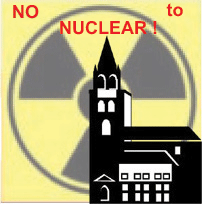 Catholic advocates welcome treaty banning nuclear weapons coming into force, Crux, Dennis SadowskiJan 17, 2021, CATHOLIC NEWS SERVICE
CLEVELAND — A Holy See-supported treaty banning the possession of nuclear weapons that is coming into force is buoying efforts by nations and nonprofit and church organizations working to abolish such armaments.
The Treaty on the Prohibition of Nuclear Weapons comes into force Jan. 22, three months after the 50th nation ratified the historic document.
Nuclear abolition supporters said the treaty puts the world’s nine nuclear powers on notice that momentum to dismantle arsenals of the world’s most destructive weapons is building.
We have an opportunity to move in a different direction now. We have to convince the nuclear states to take this seriously, to take this as an opportunity to move to a new conversation in the nuclear age,” said Marie Dennis, the Washington-based senior adviser to Pax Christi International’s secretary general.
The treaty resulted from months of negotiations at the United Nations in 2017 led by non-nuclear countries. Dennis described the effort as an example of the Catholic social teaching principle of participation.
“People around the world who live in countries that are not part of the nuclear weapons countries or under the nuclear umbrella have realized more and more clearly that the whole world would be devastated by an exchange of nuclear weapons and the people of the world decided to do something about it,” she explained.
The Holy See was a key participant in the process that led to drafting the treaty, providing encouragement and advice to negotiators, said Jesuit Father Drew Christiansen, a nuclear weapons expert who is professor of ethics and global development at Georgetown University.
He credited Pope Francis for the Vatican’s work on the pact. “I think it’s part of Francis’s agenda to get this out there,” he said. “As Francis begins to elaborate more about this teaching on arms and warfare, he’ll speak out more on this issue.”
The Holy See was the among the first to ratify the treaty, which was approved by 122 U.N. members. Netherlands was the only country to vote against it while Singapore abstained.
The nuclear nations and those under the U.S. nuclear umbrella opposed the measure and played little if any role in negotiations. In addition to the U.S., the countries possessing nuclear weapons are Russia, China, United Kingdom, France, Israel, India, Pakistan and North Korea.
Data from various sources, including the U.S. Department of State and the Stockholm International Peace Research Institute, show that the nine countries hold an estimated 13,440 nuclear weapons. …….. https://cruxnow.com/church-in-the-usa/2021/01/catholic-advocates-welcome-treaty-banning-nuclear-weapons-coming-into-force/
Biden nominates Iran nuclear deal negotiator to State Department
Biden nominates Iran nuclear deal negotiator to State Department
Wendy Sherman, Joe Biden’s nominee for deputy secretary of state, was key US negotiator of 2015 Iran nuclear accord.
United States President-elect Joe Biden has nominated a key negotiator of the 2015 Iran nuclear agreement to be the US’s next deputy secretary of state, the second-highest position at the State Department.
In a statement on Saturday, Biden unveiled a string of State Department nominees, including longstanding diplomat Wendy Sherman to be deputy secretary of state……https://www.aljazeera.com/news/2021/1/16/biden-nominates-iran-nuclear-deal-negotiator-to-state-department
Far-right extremists and nuclear terrorism
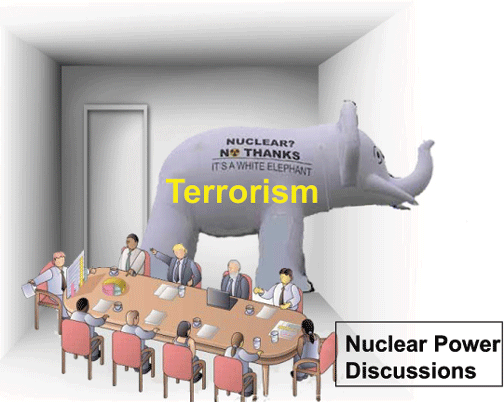
 A threat to confront: far-right extremists and nuclear terrorism, Bulletin of the Atomic Scientists By Rebecca L. Earnhardt, Brendan Hyatt, Nickolas Roth | January 14, 2021 Last March, neo-Nazi Timothy Wilson was killed during a shootout as he was planning to bomb a hospital treating COVID-19 patients. Like other neo-Nazis, Wilson viewed the pandemic and increased unrest among the American public as an opportunity to popularize Nazi ideas, spark further chaos, and accelerate societal collapse.[1] This past week, Ashli Babbitt was shot and killed while storming the US Capitol as part of a right-wing uprising; several years earlier, she was an employee of the Calvert Cliffs nuclear plant, exhibiting violent behavior during this period. [2] Acts of violence by far-right extremists are on the rise in the United States. Until now, most of these incidents have lacked sophistication, but a critical question for national security experts is whether US far-right extremist groups that espouse violence can carry out something catastrophic. A threat to confront: far-right extremists and nuclear terrorism, Bulletin of the Atomic Scientists By Rebecca L. Earnhardt, Brendan Hyatt, Nickolas Roth | January 14, 2021 Last March, neo-Nazi Timothy Wilson was killed during a shootout as he was planning to bomb a hospital treating COVID-19 patients. Like other neo-Nazis, Wilson viewed the pandemic and increased unrest among the American public as an opportunity to popularize Nazi ideas, spark further chaos, and accelerate societal collapse.[1] This past week, Ashli Babbitt was shot and killed while storming the US Capitol as part of a right-wing uprising; several years earlier, she was an employee of the Calvert Cliffs nuclear plant, exhibiting violent behavior during this period. [2] Acts of violence by far-right extremists are on the rise in the United States. Until now, most of these incidents have lacked sophistication, but a critical question for national security experts is whether US far-right extremist groups that espouse violence can carry out something catastrophic.
Every president serving in the last two decades has said that nuclear terrorism is a significant national security threat. Analysis of this threat has been, for good reason, mostly focused on foreign extremist groups, but recent events raise questions of whether there should be greater focus in the United States on far-right, domestic extremist threats. These extremists represent a unique danger because of their prevalence in federal institutions such as the military and the potential that they might infiltrate nuclear facilities, where they could access sensitive information and nuclear materials. The far-right extremist nuclear terrorism threat, which has some history, is amplified today by an ideology focused on accelerating the collapse of society and a documented interest in pursuing nuclear terrorism. Officials need to act decisively to better understand and mitigate this threat. Far-right narratives of nuclear terror. The intersection between violent far-right extremist ideology and catastrophic terrorism goes back decades. In The Turner Diaries, a 1978 novel labeled the “bible of the racist right,” the protagonists use acts of nuclear terror in service of the creation of a “white world.” Protagonists bomb nuclear installations, seize nuclear weapons, target missiles at New York City and Tel Aviv, and ultimately destroy the Pentagon in a suicidal nuclear attack.[3] The International Centre for Counterterrorism ties the Diaries to “at least 200 murders and at least 40 terrorist attacks/hate crimes” in the last 40 years.[4] This includes Timothy McVeigh’s 1995 bombing of the Alfred P. Murrah Federal Building in Oklahoma City, resulting in the deaths of 168 people.[5] McVeigh, however, is not the only far-right terrorist to be inspired by the Diaries. In 2011, violent far-right extremist Anders Breivik’s terror attacks killed 77 people in Norway. Dozens of pages in his 1,500-page “manifesto” discuss the execution of different acts of nuclear terrorism.[6] An increasingly active generation of violent far-right extremist groups and actors have adopted an especially dangerous ideology that is compatible with an act of nuclear terror: accelerationism.[7] Violent far-right extremists who adopt accelerationism view societal collapse as inevitable and seek to hasten that collapse in service of “total revolution”—the complete destruction of the existing system of governance.[8] Violent far-right extremists who adopt accelerationism hope to set off a series of violent chain events, with violence begetting more violence, destabilizing society.[9] Indiscriminate, highly destructive acts of terror—like a nuclear attack—are therefore perfect tools to sow chaos and accelerate this societal collapse. In Siege, one of the defining theoretical works of violent far-right accelerationism, author and accelerationist leader James Mason writes that, “[White supremacists] will be the single survivor in a war against the System, a TOTAL WAR against the System.”[10] In a recent act of violent far-right extremist terrorism, Brenton Tarrant, the Australian perpetrator of the 2019 terrorist attack on Christchurch masjidain in New Zealand, wrote about accelerationism in his manifesto.[11] Groups with nuclear interests. Inspired by the ideas of accelerationism, the modern breed of violent far-right extremism is becoming more destructive, and nuclear weapons certainly fit into this profile of catastrophic violence. The intention to bring about a cataclysmic clash of civilizations bears resemblance to better known terrorist organizations like Al Qaeda and Aum Shinrikyo, both of which have pursued nuclear weapons. As director of intelligence and counterintelligence at the US Department of Energy, Rolf Mowatt-Larssen, once observed, “Osama bin Ladin has signaled a specific purpose for using WMD in al Qaeda’s quest to destroy the global status quo, and to create conditions more conducive to the overthrow of apostate regimes throughout the Islamic world.”[12] Like Al-Qaeda, violent far-right extremists support the creation of a new society that is in line with their own ideology. One of the most notable and violent far-right extremist groups that have adopted accelerationism and operate in the United States is the Atomwaffen Division (AWD).[13] The organization’s name translates from German to “the nuclear weapons division,” indicating that its members have an explicit interest in nuclear terrorism. Brandon Russel, a former Florida National Guard member and an AWD co-founder, is one case of an aspiring nuclear terrorist. A heavily armed Russel and a fellow AWD member were recently arrested while in route to the Turkey Point nuclear power plant. During the investigation officials found that Russel lived in an apartment with two AWD co-conspirators; in the apartment was a prominently placed copy of the Turner Diaries and a framed photo of Oklahoma City Bomber Timothy McVeigh. The trio stockpiled weapons and explosives with the intent to blow up, among other targets, a nuclear power plant. In their apartment, police found pipe bomb components, traces of the explosive hexamethylene triperoxide diamine, and detonators. Police also detected two radioactive materials—thorium and americium—in his bedroom.[14] AWD was not the first far-right extremist in America to consider using radioactive or nuclear materials in a terrorist attack. Several previously documented attempts by violent far-right extremists to commit acts of radiological terror indicate a longstanding interest among far-right actors in highly destructive, non-conventional acts of terror.[15] In 2004, National Socialist Movement member Demetrius Van Crocker attempted to build a dirty bomb to blow up a courthouse.[16] In 2008, James Cummings, a white supremacist, obtained four 1-gallon containers of a mix of depleted uranium and thorium-232. He planned to use these materials to assemble a dirty bomb.[17] In 2013, a member of the Ku Klux Klan who worked at General Electric carried out research on radiation dispersal devices, learning what level of emission was required to kill humans.[18] Could they really pull it off? While some violent far-right extremists are clearly motivated to carry out catastrophic terrorist attacks, a question remains: Do they possess the means and opportunity to conduct an act of nuclear terrorism? There is no public evidence violent far-right extremist groups have obtained the resources or exhibited the requisite operational sophistication to carry out an act of nuclear terrorism. Many of the plots involving far-right extremists and nuclear terrorism have been poorly conceived and were unlikely to succeed. These incidents, however, likely do not provide a complete picture of the threat, because publicly accessible information on the capability of these groups is limited, creating ambiguity about their general capabilities………. The most concerning evidence that violent far-right extremists might have access to nuclear weapons or weapons-useable material lies in their presence in the US military and other parts of the federal government. The presence of white supremacists in the military is well-known and well-documented. ……….. https://thebulletin.org/2021/01/a-threat-to-confront-far-right-extremists-and-nuclear-terrorism/
|
|
Trump’s behavior demonstrates that Biden must change US nuclear policy
|
Trump’s behavior demonstrates that Biden must change US nuclear policy,
|
While this arrangement appears especially risky now, giving any one person the authority to order the use of nuclear weapons is inherently risky and completely unnecessary. Any use of nuclear weapons would be devastating and should require both a presidential order and the agreement of two other officials.
Unlike decades ago, when sole authority was first established, there is a straightforward way to include other officials in a launch decision. President-elect Joe Biden should make this long-overdue change once in office by limiting his own authority to order a nuclear attack……………….
President Biden should move quickly to implement these two policy changes — requiring the assent of two other officials to any nuclear launch order and eliminating the option of using nuclear weapons first. Doing so would make the world safer and demonstrate that the United States is committed to reducing the risk of nuclear use and to moving away from its reliance on nuclear weapons. https://www.defensenews.com/opinion/commentary/2021/01/14/trumps-behavior-demonstrates-that-biden-must-change-us-nuclear-policy/
A clean return to the Iran nuclear deal should be Biden’s first option
A clean return to the Iran nuclear deal should be Biden’s first option Bulletin of the Atomic Scientist By Eric Brewer | January 11, 2021 Of all the international agreements President-elect Joe Biden has pledged to rejoin upon taking office, perhaps none is more controversial than the Iran nuclear deal, also known as the Joint Comprehensive Plan of Action. Although the deal was containing Iran’s program until Trump withdrew in mid-2018—a move that led Iran to ramp up its nuclear activities—some are now arguing that returning to the deal isn’t a good idea or is too difficult given developments over the last four years.
This is unfortunate. Returning to the deal is not only viable but also presents the best chance of preventing an Iranian bomb. It is the best path toward building on the agreement and addressing some of the shortfalls that critics deride. Moreover, with a bit of planning, the Biden team could address several key concerns about the US return.
Arguments against rejoining the deal: Sorting the good from the bad. Some of the arguments and policy prescriptions offered by skeptics of returning to the deal are not realistic and should be dismissed. For example, some favor increasing pressure on Iran until that country’s leaders make more concessions on nuclear and non-nuclear activities. But no amount of pressure alone will cause Iran to abandon its ballistic missile program entirely or cease its support to terrorist groups, militias, and other malign non-state actors. Those policies are central to Iran’s concepts of national security and defense and ending them would require dramatic changes to the region and Iran’s threat perceptions, at a minimum.
The past four years has demonstrated that extreme pressure and unrealistic demands only cause Iran to increase its nuclear program and regional aggression.
But other critiques of returning to the deal have some merit and deserve consideration. A well-planned attempt at a “clean return”—in which the United States and Iran follow a series of agreed steps that bring them back into compliance to the deal’s original terms—would address many of them.
These objections can be broken down into three categories—strategy, process, and politics.
Objections to strategy. Some argue that it makes little sense to rejoin the deal because restrictions on Iran have already expired or would expire in the next few years, and that giving Iran significant sanctions relief would yield important leverage that could help secure a follow-on deal.
In fact, rejoining the agreement would put the United States in a stronger position to address both of these concerns. By returning, Washington would immediately cease to be the problematic actor—global attention would shift back toward Iran. This would make it easier for the United States to work with the international community to limit the fallout from the expired conventional arms embargo and to plan for the lifting of restrictions on Iran’s missile program, slated to occur in October 2023. A Biden team would then have the remainder of its first term to make progress toward a new deal (or deals) that addresses Iran’s nuclear and non-nuclear activities—long before the most important sunsets kick in. (The limits on enrichment levels and Iran’s stockpile of uranium, which are key to maintaining longer breakout timelines, don’t expire until 2031 and many of the monitoring provisions last even longer).
The United States still has ample incentives it can offer Iran in negotiations for a follow-on deal. These range from further assistance for Iran’s civil nuclear program, to relaxing the US trade embargo, to taking steps to help Iran actually reap the economic benefits of sanctions relief. (Recall that Iranian officials were quite dissatisfied that the removal of sanctions under the deal did not translate into the economic gains they expected or advertised.) And if and when talks expand to include missile and other regional issues, this will likely involve other players in the region that can put additional incentives on the table .
Concerns about process. Another set of concerns focuses on the process of returning to the agreement. Skeptics claim there simply just isn’t enough time. Biden will be inaugurated January 20, and Iranian President Hassan Rouhani will be out of office less than six months later, likely replaced by a more hardline successor. Potentially further complicating a swift return by both sides, Iran has hinted that it may insist on US compensation for its withdrawal from the deal; and it will expect Washington to remove sanctions first before dialing back its program.
True, the United States and Iran would have to act quickly to agree on the process by which both come back into compliance, but there are reasons to believe it might work. Both sides want to get it done. Iranian officials have been fairly consistent that they would be willing to return to compliance if the United States does the same………… https://thebulletin.org/2021/01/a-clean-return-to-the-iran-nuclear-deal-should-be-bidens-first-option/?utm_source=Newsletter&utm_medium=Email&utm_campaign=MondayNewsletter01112021&utm_content=NuclearRisk_IranReturn_01112021
Wall St is growing wary of Southern Co.’s promises to carry out Vogtle nuclear project economically

Wall Street braces for further delays, cost overruns at Vogtle nuke project, S and P Global, Darren Sweeney, 15 Jan 21,
| Wall Street is growing wary of Southern Co.’s promise to meet the regulatory approved in-service dates for the new Alvin W. Vogtle nuclear reactors in Georgia.
Southern subsidiary Georgia Power Co. has announced plans to “adjust key milestones” on the construction of Unit 3 at the nuclear plant expansion in response to an increase in COVID-19 cases. “Since October, the site has seen a significant increase in COVID-19 cases, consistent with the broader regional and national rise in cases,” Georgia Power said in a Jan. 11 news release. “This increase, combined with other productivity challenges, continues to impact construction production and the pace of testing activity completion.”……. Mizuho Securities USA LLC said it anticipates a seven-month delay from the Georgia Public Service Commission’s approved in-service dates for the units and a “$2.0 billion total project cost overrun.” “While the company continues to target a regulatory in-service date of November 2021 for Unit 3, they are running short of time in the calendar,” Mizuho analyst Paul Fremont wrote in a Jan. 13 research report. “For prior nuclear projects, it has taken roughly one year between the start of hot functional testing … to commercial operation of the plant. Based on these standards, Georgia Power’s previous schedule of beginning [hot functional testing] in January 2021 and commercial operation in November 2021 already looked aggressive.” Prior to Georgia Power’s update, Scotia Capital (USA) Inc. analyst Andrew Weisel noted that the Vogtle project “brings one-of-a-kind execution risks” for Southern. ….. “The company does not mention construction cost revisions in its press release, but we believe that the inability to meet production goals will likely result in an increase in the cost estimate to complete the project,” Fremont wrote. The analyst said he anticipates Southern will announce additional construction costs and update the schedule during a February earnings call. The independent Vogtle Monitoring Group said in a June 2020 filing with the Georgia PSC that Georgia Power and Southern Nuclear were “highly unlikely” to meet the regulatory approved in-service dates for Vogtle units 3 and 4………….. https://www.spglobal.com/marketintelligence/en/news-insights/blog/q3-us-solar-and-wind-power-by-the-numbers |
Nuclear Icebreakers Are Not An Option for U.S. Coast Guard
The call from the Trump administration to look at the potential for building nuclear-powered icebreakers coincided with the Pentagon’s ongoing shift to a National Defense Strategy that emphasizes high-end conflict with nations like Russia and China. ………… https://news.usni.org/2021/01/13/schultz-nuclear-icebreakers-are-not-an-option-for-coast-guard
1 This Month
26 April – Chernobyl: Inside the Meltdown airs on National Geographic on Sunday 26th April from 4pm
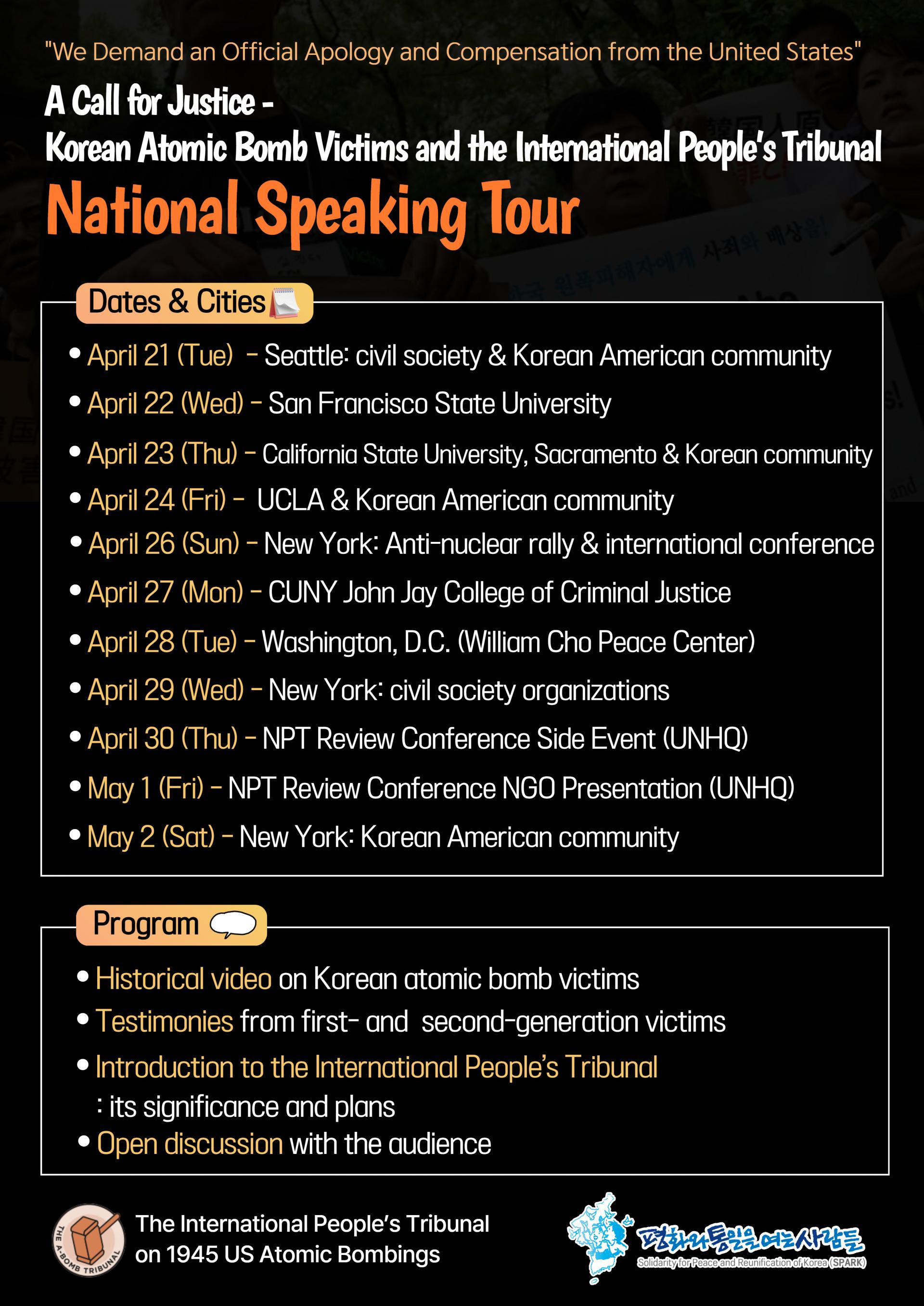

29 April – Nuclear Expert Webinar #1 – Radiation Impacts on Families with Mary Olson and Cindy Folkers
- 12:15 PM MT – 1:45 PM MT
- Location: Virtual – REGISTER TODAY

4 May -West Suburban Peace Coalition to discuss Iran war at May Educational Forum
Monday, May 4, 7:00 – 8:00 PM Central Standard Time
Title: : How Trump’s Narrative Tries to Shape the Reality of the War on Iran.
Contact Walt Zlotow, zlotow@hotmail.com 630 442 3045 for further information
14 May – online event From Bombs to Data Centres: the Face of Nuclear Colonialism

Pine Ridge Uranium is the real threat, not Tehran- Tell Burgum: Stop the Extraction.
Chernobyl: The Lost Tapes – A good documentary on Chernobyl on SBS available On Demand for the next 3 weeks– https://www.sbs.com.au/ondemand/tv-program/chernobyl-the-lost-tapes/2352741955560
To see nuclear-related stories in greater depth and intensity – go to https://nuclearinformation.wordpress.com
-
Archives
- April 2026 (356)
- March 2026 (251)
- February 2026 (268)
- January 2026 (308)
- December 2025 (358)
- November 2025 (359)
- October 2025 (376)
- September 2025 (257)
- August 2025 (319)
- July 2025 (230)
- June 2025 (348)
- May 2025 (261)
-
Categories
- 1
- 1 NUCLEAR ISSUES
- business and costs
- climate change
- culture and arts
- ENERGY
- environment
- health
- history
- indigenous issues
- Legal
- marketing of nuclear
- media
- opposition to nuclear
- PERSONAL STORIES
- politics
- politics international
- Religion and ethics
- safety
- secrets,lies and civil liberties
- spinbuster
- technology
- Uranium
- wastes
- weapons and war
- Women
- 2 WORLD
- ACTION
- AFRICA
- Atrocities
- AUSTRALIA
- Christina's notes
- Christina's themes
- culture and arts
- Events
- Fuk 2022
- Fuk 2023
- Fukushima 2017
- Fukushima 2018
- fukushima 2019
- Fukushima 2020
- Fukushima 2021
- general
- global warming
- Humour (God we need it)
- Nuclear
- RARE EARTHS
- Reference
- resources – print
- Resources -audiovicual
- Weekly Newsletter
- World
- World Nuclear
- YouTube
-
RSS
Entries RSS
Comments RSS
 nuclear-news