NuScale’s small modular nuclear reactor – ”too late, too expensive, too risky and too uncertain” – Institute for Energy Economics and Financial Analysis

A small modular reactor (SMR) that NuScale has been developing since the turn of the century is “too late, too expensive, too risky and too uncertain,” according to an analysis of the project by the Institute for Energy Economics and Financial Analysis.
The first-of-its-kind SMR is a serious financial threat to the member communities of the Utah Associated
Municipal Power System that have signed up for a share of its power and to any other communities and utilities thinking about doing so. NuScale has optimistically targeted the cost of power from the new plant at $58 per megawatt-hour (MWh), although some estimates predict costs for the power from new SMRs could reach $200/MWh.
IEEFA 17th Feb 2022
Those yearning for regime change in Russia rarely consider what might come next
George Kennan and the Russian future The late US diplomat saw that those yearning for regime change in Russia rarely considered what might come next, Asia Times, By JAMES CARDEN, MARCH 29, 2022

US President Joe Biden’s ill-advised and reportedly ad-libbed call for regime change in Russia last week implicitly raised the question what kind of government Washington has in mind should President Vladimir Putin be deposed or voluntary step down ahead of Russia’s 2024 presidential election.
Biden’s line of what might charitably be called “thinking” has long tempted American policymakers. Writing in 1951, the diplomat George F Kennan observed:
“The very virulence with which Americans reject the outlook and practice of those who now hold power in the Kremlin implies in the strongest possible way the belief in, and desire for, an alternative – for some other Russian outlook and some other set of practices in Russia to take the place of those we know today.
“Yet it may be permitted to ask whether there is any clear image in our minds of what that outlook and those practices might be and of the ways by which Americans might promote progress toward them.”
These are the opening lines to Kennan’s Foreign Affairs essay “America and the Russian Future,” an indispensable corrective to the kinds of magical thinking that mark Washington’s current approach toward Russia and the world.
The planning for regime change in Russia has been under way for at least a decade. In an e-mail congratulating a State Department aide on her promotion to the White House national security staff, then-secretary of state Hillary Clinton wrote, “… we need you at the White House to help plan and execute our Russian strategy post-Putin.”
Biden’s speech last weekend at the Warsaw Castle gave a clue as to what he and the US foreign-policy establishment have in mind “post-Putin.” In Biden’s telling, “Over the last 30 years, the forces of autocracy have revived all across the globe.” And Russia, which “has strangled democracy” at home, now seeks to do so elsewhere.
Biden’s speech attempted to recast the war in Ukraine as part of a larger battle “between democracy and autocracy, between liberty and repression, between a rules-based order and one governed by brute force.”………………………………………………….
Washington’s attempt to remake Russia socially, economically and politically in the 1990s quite inadvertently resulted in the Russia we are confronted with today.
So why does Washington insist on believing that its attempts to reshape Russia from the outside will somehow, someday work out?
Kennan himself was under no such illusions:
“Of one thing we may be sure: No great and enduring change in the spirit and practice of government in Russia will ever come about primarily through foreign inspiration or advice. To be genuine, to be enduring and to be worth the hopeful welcome of other peoples such a change would have to flow from the initiative and efforts of the Russians themselves.”
The sooner President Biden and his advisers come around to the late George Kennan’s way of thinking regarding the desirability of regime change, the better. https://asiatimes.com/2022/03/george-kennan-and-the-russian-future/
USA’s Air Force transforming away from ”unnecessary” aircraft towards more nuclear weapons
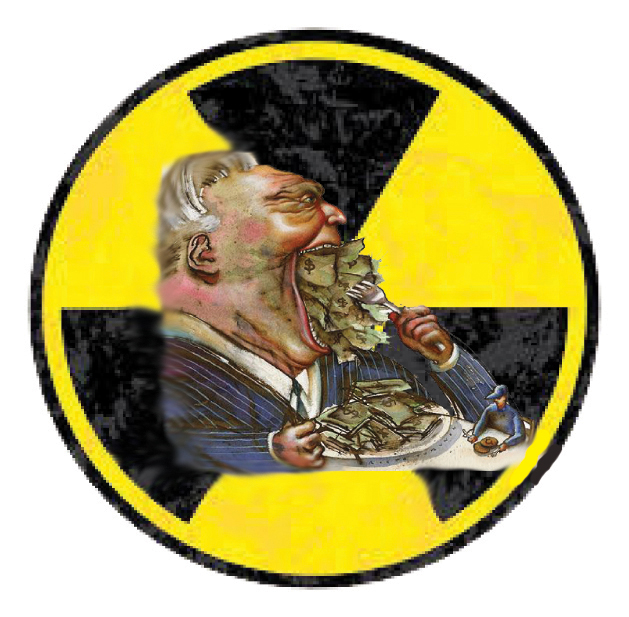
More Nuclear, Less Ground Attack in Biden’s Air Force Budget Request
The 2023 spending proposal calls for retiring 150 planes, shifting funds, and reconfiguring for possible war with China or Russia. Defense One MARCUS WEISGERBER and TARA COPP | MARCH 28, 2022
U.S. Air Force leaders want to shed hundreds of “unnecessary” aircraft and drones and spend more on nuclear and high-tech weapons they say are better suited for a war with China or Russia.
They lay out their proposal in the service’s $169 billion 2023 spending request, which is $13.2 billion higher than last year’s request.
The weapons they prioritize—nuclear and long-range strike—reflect an unsteady year in which China launched a hypersonic missile around the globe and Russia put its own nuclear forces on heightened alert while invading Ukraine.
The Air Force’s budget request is “more about transformation now than it is about evolutionary change. What drives that is the threat. We need to move aggressively,” Air Force Secretary Frank Kendall told reporters before the budget rollout.
To do so, the service is asking for approval to retire 150 aircraft, including eight E-8 JSTARS radar planes, 21 A-10 attack planes, 33 F-22 training jets, 15 E-3 Sentry AWACS-carrying radar planes, 13 KC-135 aerial refueling tankers, 10 C-130H cargo aircraft and 50 T-1 trainers. The Air Force will also reduce its total uniformed personnel number by 4,900 airmen as a result of the cuts, Kendall said. …………………….. In research-and-development, the service is requesting an additional $2.5 billion for the air and land legs of the nuclear triad; a little more than $1 billion of that increase is for ground based strategic deterrent Minuteman III replacement missiles. It also seeks $929 million for the long range standoff weapon, up from $609 billion last year, and $577 million for hypersonic prototyping of the Air-launched Rapid Response Weapon and hypersonic attack cruise missile.
The Air Force is also asking for an additional $1.7 billion for initial production of an unknown number of the next generation B-21 stealth bomber……………………. https://www.defenseone.com/policy/2022/03/more-nuclear-less-ground-attack-bidens-air-force-budget-request/363683/
43rd anniversary of the Three Mile Island nuclear accident
Today marks the 43rd anniversary of Three Mile Island nuclear accident https://lancasteronline.com/news/local/today-marks-the-43rd-anniversary-of-three-mile-island-nuclear-accident/article_eeb55904-ae9d-11ec-8e5a-07c5df9c0e70.html LANCASTERONLINE | Staff 28 Mar 22
Today marked the 43rd anniversary of the accident at the Three Mile Island nuclear plant, the nation’s worst nuclear accident.
A combination of human error and malfunctioning controls resulted in a partial meltdown of the Unit 2 reactor and caused tens of thousands of Central Pennsylvania residents to be evacuated or to flee the area for several days in 1979.
Unit 2 never was reopened and has been placed in monitored storage until the Unit 1 reactor is closed and decommissioned.
In 2017, Exelon announced preliminary plans to close the facility unless a buyer was found; after no sale was reached, Unit 1 was officially shut down in December of 2019. Decommissioning is expected to last until 2079.
Space Force Gets Roughly 40% Increase in Biden Request

Space Force Gets Roughly 40% Increase in Biden Request
A constellation of satellites will track ground vehicles, improve launch trajectories, and better nuclear command-and-control.TARA COPP | MARCH 28, 2022
The Space Force is requesting $24.5 billion in the 2023 budget, roughly 40 percent more than in last year’s request. Officials said the jump reflects the urgency to launch and defend satellites that can spot a hypersonic missile, track a moving truck, assure U.S. nuclear command and control, and more. ………
The budget request also includes $566 million for the Space Force’s evolved strategic SATCOM program, which ensures survivable strategic communications for the presidential fleet and DOD’s nuclear command and control aircraft.
“Our general posture has been to assume essentially impunity in space,” Kendall said. “We could put up expensive systems in small numbers, not worrying too much about [them] getting attacked—that era is over.”……………….. https://www.defenseone.com/policy/2022/03/space-force-gets-40-increase-biden-request/363687/
Washington Should Think Twice Before Launching a New Cold War
Heightened rhetoric about Russia and China seeking to undermine American influence will only reinforce Washington’s support for repressive regimes. The consequences of that could, in turn, prove to be potentially disastrous: a growing chorus of pundits and policymakers has suggested that Russia’s invasion of Ukraine marks the beginning of a new Cold War. If so, that means trillions of additional dollars for the Pentagon in the years to come coupled with a more aggressive military posture in every corner of the world. March 27, 2022 William D. Hartung, Nick Cleveland-Stout, Taylor Giorno TOM DISPATCH
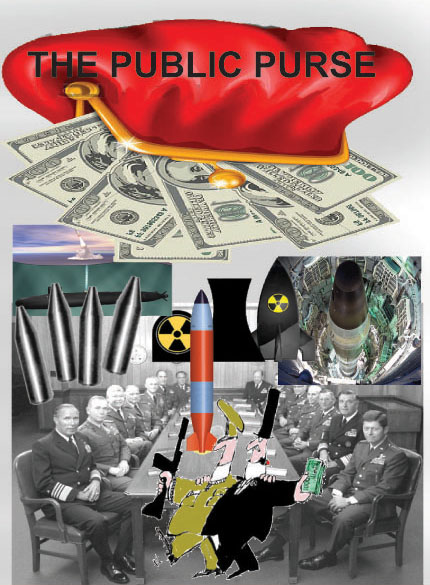
Before this country succumbs to calls for a return to Cold War-style Pentagon spending, it’s important to note that the United States is already spending substantially more than it did at the height of the Korean and Vietnam Wars or, in fact, any other moment in that first Cold War. Even before the invasion of Ukraine began, the Biden administration’s proposed Pentagon budget (as well as related work like nuclear-warhead development at the Department of Energy) was already guaranteed to soar even higher than that, perhaps to $800 billion or more for 2023.
Some supporters of higher Pentagon spending have, in fact, been promoting figures as awe inspiring as they are absurd. Rich Lowry, the editor of the conservative National Review, is advocating a trillion-dollar military budget, while Matthew Kroenig of the Atlantic Council called for the United States to prepare to win simultaneous wars against Russia and China. He even suggested that Congress “could go so far as to double its defense spending” without straining our resources. That would translate into a proposed annual defense budget of perhaps $1.6 trillion. Neither of those astronomical figures is likely to be implemented soon, but that they’re being talked about at all is indicative of where the Washington debate on Pentagon spending is heading in the wake of the Ukraine disaster.
Ex-government officials are pressing for similarly staggering military budgets. As former Reagan-era State Department official and Iran-Contra operative Elliott Abrams argued in a recent Foreign Affairs piece titled “The New Cold War”: “It should be crystal clear now that a larger percentage of GDP [gross domestic product] will need to be spent on defense.” Similarly, in a Washington Post op-ed, former Defense Secretary Robert Gates insisted that “we need a larger, more advanced military in every branch, taking full advantage of new technologies to fight in new ways.” No matter that the U.S. already outspends China by a three-to-one margin and Russia by 10-to-one.
Truth be told, current levels of Pentagon spending could easily accommodate even a robust program of arming Ukraine as well as a shift of yet more U.S. troops to Eastern Europe. However, as hawkish voices exploit the Russian invasion to justify higher military budgets, don’t expect that sort of information to get much traction. At least for now, cries for more are going to drown out realistic views on the subject.
Beyond the danger of breaking the budget and siphoning off resources urgently needed to address pressing challenges like pandemics, climate change, and racial and economic injustice, a new Cold War could have devastating consequences. Under such a rubric, the U.S. would undoubtedly launch yet more military initiatives, while embracing unsavory allies in the name of fending off Russian and Chinese influence.
The first Cold War, of course, reached far beyond Europe, as Washington promoted right-wing authoritarian regimes and insurgencies globally at the cost of millions of lives. Such brutal military misadventures included Washington’s role in coups in Iran, Guatemala, and Chile; the war in Vietnam; and support for repressive governments and proxy forces in Afghanistan, Angola, Central America, and Indonesia. All of those were justified by exaggerated — even at times fabricated — charges of Soviet involvement in such countries and the supposed need to defend “the free world,” a Cold War term President Biden all-too-ominously revived in his recent State of the Union address (assumedly, yet another sign of things to come).
Indeed, his framing of the current global struggle as one between “democracies and autocracies” has a distinctly Cold War ring to it and, like the term “free world,” it’s riddled with contradictions. After all, from Egypt to Saudi Arabia, the United Arab Emirates to the Philippines, all too many autocracies and repressive regimes already receive ample amounts of U.S. weaponry and military training — no matter that they continue to pursue reckless wars or systematically violate the human rights of their own people. Washington’s support is always premised on the role such regimes supposedly play in fighting against or containing the threats of the moment, whether Iran, China, Russia, or some other country.
Count on one thing: the heightened rhetoric about Russia and China seeking to undermine American influence will only reinforce Washington’s support for repressive regimes. The consequences of that could, in turn, prove to be potentially disastrous.
Before Washington embarks on a new Cold War, it’s time to remind ourselves of the global consequences of the last one.
Cold War I: The Coups
……… In 1954, the Eisenhower administration launched a coup that overthrew the Guatemalan government of President Jacobo Arbenz. His “crime”: attempting to redistribute to poor peasants some of the lands owned by major landlords, including the U.S.-based United Fruit Company. Arbenz’s internal reforms were falsely labeled communism-in-the-making and a case of Soviet influence creeping into the Western Hemisphere……In 1954, the Eisenhower administration launched a coup that overthrew the Guatemalan government of President Jacobo Arbenz. His “crime”: attempting to redistribute to poor peasants some of the lands owned by major landlords, including the U.S.-based United Fruit Company. Arbenz’s internal reforms were falsely labeled communism-in-the-making and a case of Soviet influence creeping into the Western Hemisphere.
In 1973, Richard Nixon and Henry Kissinger followed Eisenhower’s playbook by fomenting a coup that overthrew the democratically elected socialist government of Chilean President Salvador Allende, installing the vicious dictatorship of General Augusto Pinochet………..
Vietnam and Its Legacy
The most devastating Cold War example of a war justified on anti-communist grounds was certainly the disastrous U.S. intervention in Vietnam. ……………………………..
The defeat in Vietnam helped spawn what was called the Nixon Doctrine, which eschewed large-scale intervention in favor of the arming of American surrogates like the Shah of Iran and the Suharto regime in Indonesia. ………………….
Chief among this country’s blunders of that previous Cold War era was its response to the Soviet invasion of Afghanistan, a policy that still haunts America today……………………..
most of the Cold War policies outlined above, even though carried out under the rubric of promoting “freedom” in “the free world,” would undermine democracy in a disastrous fashion.
A New Cold War?
Cold War II, if it comes to pass, is unlikely to simply follow the pattern of Cold War I either in Europe or other parts of the world. Still, the damage done by the “good versus evil” worldview that animated Washington’s policies during the Cold War years should be a cautionary tale. The risk is high that the emerging era could be marked by persistent U.S. intervention or interference in Africa, Asia, and Latin America in the name of staving off Russian and Chinese influence in a world where Washington’s disastrous war on terrorism has never quite ended.
The United States already has more than 200,000 troops stationed abroad, 750 military bases scattered on every continent except Antarctica, and continuing counterterrorism operations in 85 countries. The end of U.S. military involvement in Afghanistan and the dramatic scaling back of American operations in Iraq and Syria should have marked the beginning of a sharp reduction in the U.S. military presence in the Middle East and elsewhere. Washington’s reaction to the Russian invasion of Ukraine may now stand in the way of just such a much-needed military retrenchment.
The “us versus them” rhetoric and global military maneuvering likely to play out in the years to come threaten to divert attention and resources from the biggest risks to humanity, including the existential threat posed by climate change. It also may divert attention from a country — ours — that is threatening to come apart at the seams. To choose this moment to launch a new Cold War should be considered folly of the first order, not to speak of an inability to learn from history. https://portside.org/2022-03-27/washington-should-think-twice-launching-new-cold-war
The entire world views it as I do; all except Kamikaze Joe and his puppeteers.. — The Goomba Gazette

The following are excerpts from CNN; one of the staunchest supporters of Kamikaze Joe. When the far left media starts getting on his ass, I would conclude the problem is absolutely severe. CNN Has Biden shaken international confidence in his so-far strong leadership in bringing the NATO alliance together in a united front against Moscow?
The entire world views it as I do; all except Kamikaze Joe and his puppeteers.. — The Goomba Gazette
- And will Putin be able to exploit disquiet over Biden’s comments in European capitals?
- Did the President’s comment dangerously escalate already high tensions in the worst confrontation between the West and Russia in decades?
- Will the notion that Biden hopes to topple Putin — even if the US says it’s not true — harden the embattled Russian leader’s resolve against negotiations or cause him to further escalate an already merciless war against civilians?
- Has Biden’s now stinging rhetoric about Putin effectively ruled out any future direct diplomacy or meetings between the world’s top nuclear powers — and could it endanger global peace if they can’t communicate in a future crisis that threatens humanity?
- Or will Biden’s human reaction to spending time with Ukrainian refugees soon be overtaken by the daily unfolding horror of the war or come to be seen as a strong moral stand that changed the way the world views the Russian leader? After all, ex-President Ronald Reagan’s call for then-Soviet leader Mikhail Gorbachev to “tear down this wall” in Berlin was initially opposed by some of his own aides as too provocative.
- And finally, since Moscow already sees extraordinarily tough Western sanctions as economic warfare and given Putin’s deeply conspiratorial view of the West and its role in vanquishing the Soviet Union, can a few loose presidential words that rile up everyone in Washington really make things any worse?Because the United States has put itself into very precarious position electing this senile fool to the leader of the country, because of his disastrous decision making and uncontrollable disparaging remarks, it is imminent but there has to be a change………………
In the last few months Kamikaze has made some very disparaging remarks about Putin. Although they may be true, this is not path to a diplomatic solution.
What is the current nuclear arms pact between Russia and the US?
What is the current nuclear arms pact between Russia and the US? News Nation now, Sydney Kalich MAR 28, 2022
— In the aftermath of the Cold War, the U.S. and Russia had agreed to multiple non-nuclear proliferation agreements.
Out of eight nuclear arms control agreements between Russia and the U.S., only one is still in effect. That is the new Strategic Arms Reduction Treaty or “New START.”
The treaty limits nuclear warheads to 1,550 and limits the number of launchers and delivery systems. President Joe Biden and Russian President Vladimir Putin extended this deal in February of last year. It will be in effect until 2026.
But New START doesn’t cover the thousands of battlefield nuclear weapons. Those are less deadly nuclear weapons that could still kill thousands of people.
Notably, Ukraine actually had its own nuclear missiles until 1994 when the country agreed to give all its weapons to Russia in exchange for security assurances, which leaders say were violated by the 2014 invasion of Crimea.
This comes as top NATO leaders say any chemical attack by Russia on Ukraine would change the course of the war, but they are not saying whether NATO would take military action.
Russia and Ukraine are set to meet for peace talks Tuesday. Ukraine could declare neutrality and offer security guarantees to Russia to secure peace “without delay,” President Volodymyr Zelenskyy said ……. https://www.newsnationnow.com/morninginamerica/current-nuclear-arms-pact/
Biden administration shuts down Trump-era nuclear cruise missile program
Biden administration kills Trump-era nuclear cruise missile program
After conducting the upcoming Nuclear Posture Review, the Biden administration has chosen to end the sea-launched cruise missile program, a senior Pentagon official said. Breaking Defense
By VALERIE INSINNAon March 28, 2022 WASHINGTON: In a rare political win for non-proliferation advocates, the Biden administration has cancelled the Sea-Launched Cruise Missile-Nuclear program, one of the two new nuclear weapons greenlit by the Trump administration.
The Pentagon’s fiscal year 2023 budget request, released today, zeroes out funding planned for the so-called SLCM-N program, according to a senior defense official who spoke to reporters about the spending proposal.
“Really this decision came out of the Nuclear Posture Review,” the official said. “There was direction from the president to reduce the role of nuclear weapons in our defense strategy. That [decision to cancel SLCM-N] was a component.”
The determination is the latest in a back-and-forth spanning multiple administrations about the utility of a nuclear-armed cruise missile that could be launched from destroyers or Virginia-class attack submarines that typically use conventional weapons.
The Obama administration’s 2010 Nuclear Posture Review called on the Navy to sunset the nuclear-version of its Tomahawk cruise missile, which was retired by 2013, according to the Federation of American Scientists.………………………..
Despite the cancellation of SLCM-N, funding for other nuclear programs flourished in the FY23 request.
| When asked about the fate of the W76-2, the senior defense official responded that there is “no change there,” hinting that the upcoming Nuclear Posture Review — due to be released in the coming weeks — will continue to support the low-yield warhead.According to a department fact sheet on the budget, the Pentagon requested a total of $34.4 billion across the nuclear enterprise for FY23, including $4.8 billion for nuclear command, control and communications.The Navy requested $6.3 billion for the Columbia-class submarine, its leg of the nuclear triad. Meanwhile, the Air Force is also modernizing its two components of the triad, asking $5 billion for the B-21 bomber program and $3.6 billion for the Ground Based Strategic Deterrent program that will replace Minuteman III intercontinental missiles https://breakingdefense.com/2022/03/biden-administration-kills-trump-era-nuclear-cruise-missile-program |
Nearly half of Americans concerned about nuclear war amid Russia-Ukraine invasion
Nearly half of Americans concerned about nuclear war amid Russia-Ukraine invasion
by: The Associated Press via Nexstar Media Wire
Mar 28, 2022 WASHINGTON (AP) — Russia’s war on Ukraine has most Americans at least somewhat worried that the U.S. will be drawn directly into the conflict and could be targeted with nuclear weapons, with a new poll reflecting a level of anxiety that has echoes of the Cold War era.
Close to half of Americans say they are very concerned that Russia would directly target the U.S. with nuclear weapons, and an additional three in 10 are somewhat concerned about that, according to the new poll from The Associated Press-NORC Center for Public Affairs Research. Russian President Vladimir Putin placed his country’s nuclear forces on high alert shortly after the Feb. 24 invasion.
Roughly nine in 10 Americans are at least somewhat concerned that Putin might use a nuclear weapon against Ukraine, including about six in 10 who are very concerned……… https://www.wfxrtv.com/news/russia-ukraine-conflict/nearly-half-of-americans-concerned-about-nuclear-war-amid-russia-ukraine-invasion/
Caitlin Johnstone – yes, it’s a proxy war

NATO is a “sphere of influence”. It’s an extension of US imperial power. One of many.
You don’t get to unilaterally create a global dynamic and then cry when other countries respond accordingly. It’s like the US making international law meaningless by continually flouting it with zero consequences and then claiming another country violated international law.
Yes It’s A Proxy War: Notes From The Edge Of The Narrative Matrix https://caitlinjohnstone.substack.com/p/yes-its-a-proxy-war-notes-from-the?s=w Caitlin Johnstone, Mar 27
To be clear, evidence is mounting that this is a proxy war deliberately instigated and perpetuated by the US empire with the goal of ousting Putin. Which means that, despite all the narrative window dressing and spin, this war is just more US regime change interventionism.
Saddam Hussein was not a nice person, and he did bad things. This doesn’t change the fact that Bush’s regime change war was a tremendous evil which unleashed unforgivable horrors, and that it was done because Saddam became inconvenient for the US empire. The same is happening here.
As a result of deliberately provoking this war, the US empire has:
- Manufactured international consent for unprecedented economic warfare geared toward ousting Putin
- Drawn Moscow into another Afghanistan-like military quagmire
- Guaranteed immense profits for the war industry
- Cut in on Russia’s fossil fuel business
- Made Europe further subservient to US interests
People say “This is not a proxy war! How dare you call this a proxy war?”
Pouring billions of dollars worth of weaponry into a foreign nation to be used by CIA-trained fighters with the direct ongoing assistance of US military intelligence is in fact the exact thing that a proxy war is. That is what those words mean.
Continue readingRe-Visiting Russiagate In Light Of The Ukraine War
Caitlin Johnstone, Substack, 28 Mar 22,
The president of the United States has confirmed what Consortium News and others have been reporting since the beginnings of Russsiagate in 2016, that the ultimate U.S. aim is to overthrow the government of Vladimir Putin.
“For God’s sake, this man cannot remain in power,” Biden said on Saturday at the Royal Castle in Warsaw.
It’s hard to believe that the last president spent his term pouring weapons into Ukraine, shredding treaties with Russia and ramping up cold war escalations against Moscow which helped lead us directly to the extraordinarily dangerous situation we now find ourselves in, and yet mainstream liberals spent his entire administration screaming that he was a Kremlin puppet.
A lot of anti-empire commentary is rightly going into criticizing how the Obama administration paved the way to this conflict in Ukraine with its role in the 2014 coup and support for Kyiv’s war against Donbass separatists. But what’s getting lost in all this, largely because Trumpites have been using their mainstream numbers to loudly amplify criticisms of the role of the Obama and Biden administrations in this mess, is what happened between those two presidencies which was just as crucial in getting us here.
Though it’s been scrubbed from mainstream liberal history, it was actually the Trump administration that began the US policy of arming Ukraine in the first place. Obama had refused forceful demands from neocons and liberal hawks to do so because he feared it would provoke an attack by Russia.
In a 2015 article titled “Defying Obama, Many in Congress Press to Arm Ukraine“, The New York Times reported that “So far, the Obama administration has refused to provide lethal aid, fearing that it would only escalate the bloodshed and give President Vladimir V. Putin of Russia a pretext for further incursions.”
It wasn’t until the Trump presidency that those weapons began pouring into Ukraine, and boy howdy are we looking at some “further incursions” now. This change occurred either because Trump was a fully willing participant in the agenda to ramp up aggressions against Moscow, or because he was politically pressured into playing along with that agenda by the collusion narrative which had its origins at every step in the US intelligence cartel, or because of some combination of the two.
In all the world-shaping news stories we’ve been experiencing lately, it’s easy to forget how the narrative that the Kremlin had infiltrated the highest levels of the US government dominated news coverage and political discourse for years on end. But in light of the fact that today’s major headlines now revolve around that exact same foreign government, this fact is probably worth revisiting.
The most important thing to understand about the Trump-Russia collusion narrative is that it began with western intelligence agencies, was sustained by western intelligence agencies, and in the end resulted in cold war escalations against a government long targeted by western intelligence agencies. It was the US intelligence cartel who initiated the still completely unproven and severely plot hole-riddled claim that Russia interfered in the 2016 election to benefit Trump. It was a “former” MI6 operative who produced the notorious and completely discredited Steele Dossier which birthed the narrative that Trump colluded with the Kremlin to steal the 2016 election. It was the FBI who spied on the Trump campaign claiming it was investigating possible ties to Russia. It was the US intelligence cartel which produced, and then later walked back, the narrative that Russia was paying Taliban-linked fighters to kill allied occupiers in Afghanistan which was leveraged by Democrats to demand Trump escalate further against Putin. It was even a CIA officer who just so happened to be in the right place at the right time that kicked off the flimsy impeachment narrative that Trump had suspended arms deliveries to Ukraine……………………
Day after day mainstream liberals were promised major revelations which would lead to the entire Trump family being dragged from the White House in chains, and day after day those promises failed to deliver. But what did happen during that time was a mountain of US cold war escalations against Moscow, a very good illustration of the immense difference between narrative and fact………………………..
And now here we are. Joe Lauria has an excellent new article out for Consortium News titled “Biden Confirms Why the US Needed This War” which lays out the evidence that the Ukraine invasion was deliberately provoked to facilitate the longstanding agenda to oust Putin and “ultimately restore a Yeltsin-like puppet to Moscow.” The US could easily have prevented this war with a little bit of diplomacy and a few low-cost concessions, but instead it chose to provoke a war that could then be used to manufacture international consensus for unprecedented acts of economic warfare against Russia with the goal of effecting regime change.
The U.S. got its war in Ukraine. Without it, Washington could not attempt to destroy Russia’s economy, orchestrate worldwide condemnation and lead an insurgency to bleed Russia, all part of an attempt to bring down its government. Joe Biden has now left no doubt that it’s true.
The president of the United States has confirmed what Consortium News and others have been reporting since the beginnings of Russsiagate in 2016, that the ultimate U.S. aim is to overthrow the government of Vladimir Putin.
“For God’s sake, this man cannot remain in power,” Biden said on Saturday at the Royal Castle in Warsaw.
This was all planned years in advance. Long before Biden’s presidency, and long before Trump’s. It is not a coincidence that we spent years being bombarded with anti-Russia propaganda in the lead-up to a massive confrontation with that same government. There’s no connection between the discredited allegation that Trump was a secret Kremlin agent and Putin’s decision to invade Ukraine, yet the mainstream anti-Russia hysteria manufactured by the former is flowing seamlessly into mainstream opposition of the latter.
This is because this was all planned well in advance. We’re where we’re at now because the US empire brought us here intentionally. https://caitlinjohnstone.substack.com/p/re-visiting-russiagate-in-light-of?token=eyJ1c2VyX2lkIjoyNTU2MjE3LCJwb3N0X2lkIjo1MTE0MTM1NSwiXyI6IlBCbmJRIiwiaWF0IjoxNjQ4NDM3MzgwLCJleHAiOjE2NDg0NDA5ODAsImlzcyI6InB1Yi04MjEyNCIsInN1YiI6InBvc3QtcmVhY3Rpb24ifQ.sV_DF9_RZoNSYBEyBYnmKKu9W2xB_fClLi6qcluyOv4&s=r
Biden keeping up the big spend on nuclear weapons

Biden steers away from big change to US nuclear weapons policy
Washington’s ‘posture review’ maintains deliberate ambiguity over when arms might be used, Ft.com Demetri Sevastopulo in Alice Springd\s 25 Mar 22,
President Joe Biden has decided against making a major change to US nuclear weapons policy following pressure from European and Asian allies not to undermine their security amid the nuclear threat from Russia and China.
After a months-long review that had sparked anxiety from France to Japan, Biden this week decided on a declaratory policy that the “fundamental purpose” of nuclear weapons was to deter, or respond to, a nuclear attack on the US or its allies, according to three people familiar with the decision.
US allies last year expressed concern following speculation that Biden might declare that the “sole purpose” of nuclear weapons was to prevent or respond to a nuclear attack. They said such a change — which Biden supported before becoming president — would weaken the extended deterrence that the US provides to allies around the world with its nuclear umbrella. Critics also argued the potential shift would embolden Russia.
Please use the sharing tools found via the share button at the top or side of articles. Copying articles to share with others is a breach of FT.com T&Cs and Copyright Policy. Email licensing@ft.com to buy additional rights. Subscribers may share up to 10 or 20 articles per month using the gift article service. More information can be found here.
https://www.ft.com/content/4c72b45d-37ac-431f-838c-cf8704cad6c3
One senior US official said the allies’ views played a big role in influencing Biden. She said the president had strong views on nuclear risk reduction and might have been considering a larger change in declaratory policy but that he received a lot of input from allied capitals that resulted in the outcome, which was also influenced by the threat from Moscow and growing concerns about China’s expanding nuclear arsenal.
The outcome will be outlined in the administration’s “Nuclear Posture Review”, which is designed to determine what kind of nuclear weapons the US should have and provide guidance about scenarios for possible use.
The NPR will also say that the US would only use nuclear weapons in “extreme circumstances” — echoing language that was included in nuclear reviews conducted by both the Obama and Trump administrations. But the Trump administration arguably lowered the threshold for possible use by saying that “extreme circumstances” could include a non-nuclear attack.
…………………………………………………….US policy on the situations under which nuclear weapons would be used has been intentionally vague for decades to keep adversaries guessing. The US official said the NPR would contain a level of strategic ambiguity.
Arms control advocates wanted Biden to shift to a “no first use” policy or “sole purpose” formulation that they argued would reduce the risk of nuclear war. But critics countered that providing more clarity about when the US would use nuclear weapons would just embolden adversaries.
Jeffrey Lewis, a nuclear weapons expert at Middlebury Institute of International Studies, said Biden had largely kept existing nuclear posture intact. He said the Obama and Trump administrations had used language about the “fundamental role” of nuclear weapons in their posture reviews.
“If this is the biggest change in the Nuclear Posture Review, I want my tax money back,” Lewis said. “The phrase reflects a longstanding, bipartisan tradition of trying to have it both ways. US officials want to give the impression that our nuclear weapons are for deterrence while also holding open the option of using them first ……………………….
https://www.ft.com/content/4c72b45d-37ac-431f-838c-cf8704cad6c3
With threats of nuclear war and climate disaster growing, America’s ‘bunker fantasy’ is woefully inadequate
With threats of nuclear war and climate disaster growing, America’s ‘bunker fantasy’ is woefully inadequate
The Conversation March 25, 2022 David L. Pike
Professor of Literature, American University At the end of the Academy Award-nominated film “Don’t Look Up,” with a meteor hurtling toward Earth, the movie’s three scientist-protagonists gather with family and friends for a last supper around a dinner table in central Michigan.
Having exhausted their efforts at action, they eat the food they’ve prepared and purchased, give thanks and pray before “dying neighborly” – to borrow a phrase coined by poet and writer Langston Hughes in 1965.
“Dying neighborly” was something of a common refrain in the small number of stories told by those writers and artists in the 1960s and 1980s who recognized the dangers of nuclear war but were unwilling or unable to accept the only measure recommended by the government: to buy or build your own shelter and pretend that you’d survive.
These stories didn’t get as much attention or acclaim as “Don’t Look Up.” But they continue to influence how the climate emergency or nuclear war is depicted in books and films today.
Shelter or die?
Faced with a Congress unwilling to fund large-scale sheltering measures, the Kennedy administration decided instead to encourage the private development of the individual shelter industry and to establish dedicated spaces within existing public structures.
Although in Europe and elsewhere, vast public shelters were built, the community bomb shelter was almost universally rejected in the U.S. as communistic. As a result, sheltering was available primarily to the military, government officials and those who could afford it. The practicality and the morality of private shelters were debated publicly. The morality or survivability of nuclear war itself seldom was………………………..
The opposite of dying neighborly was the mainstream debate over the right to shoot someone you didn’t want intruding into your private shelter.
| This debate was dramatized in a 1961 episode of “The Twilight Zone,” in which desperate neighbors storm the entrance to the basement shelter of the only suburban family with enough foresight to build one.Yet as musician Bob Dylan recalled of the mostly working-class region of Minnesota where he was raised, nobody was much interested in building shelters because, “It could turn neighbor against neighbor and friend against friend.”…………. Until culture finds effective ways of telling other stories than the one I call the “bunker fantasy,” it will be difficult to sustain effective action in response to the climate emergency or the persistent threat of nuclear war………………………..https://theconversation.com/with-threats-of-nuclear-war-and-climate-disaster-growing-americas-bunker-fantasy-is-woefully-inadequate-179625 |
No chance of a fair trial for Julian Assange in America

Daniel Ellsberg: “It is outrageous that Biden has continued to pursue Julian Assange’s prosecution”, il Fatto Quotidiano, 23v Mar 22,
”…………………………………………….. Julian Assange was charged with Espionage Act violations. Did you expect that the United States, for the first time in its history, would charge a journalist for publishing truthful information in the public interest?
DANIEL ELLSBERG. The lawyers who were following this at the American Civil Liberties Union (ACLU), were predicting that Donald Trump would prosecute journalists. No president had done that yet, it’s a blatant violation of the First Amendment. It’s obviously unconstitutional, which of course doesn’t slow down Trump, and it is outrageous that Biden has continued to pursue that prosecution. He should have withdrawn the appeal Trump made for extradition of Julian, for prosecution. Biden could just drop it any time, he could do it the next hour. It was very arguably unconstitutional even in my case: I was the first to be indicted under those charges, for leaking, but I had been a former official. I was a source, not a journalist – they don’t regard sources as journalists. You could argue either side in my case, as to whether it was constitutional. In Julian’s [case] there is no argument on the other side: it’s obviously unconstitutional, in America, under our First Amendment. Obama had considered indicting Julian, but had backed off for that very reason, that if they went after Julian on those grounds, they would have no excuse for not going after the New York Times. And they didn’t want to take that on, in part because the New York Times is extremely useful to them, to successive administrations. It basically supports the empire, and doesn’t object to endless amounts of money for so-called defense. It’s a very useful outlet for them, even though it occasionally prints things they would rather not have out.
Why do you think the Biden administration doesn’t drop the case?
ELLSBERG. Biden, when he was vice president, at the very beginning, in 2010, called Julian Assange a high-tech terrorist, which is absurd. He is very much against leaks, and actually all presidents get very angry at leaks that they don’t want out, but they recoil from the prospect of clearly unconstitutional action. Trump didn’t, and Biden should have, but he hasn’t so far. It’s still not too late for him to correct that, but I don’t expect that he will. He shows so much animus toward Julian, that I don’t expect it. I don’t know why entirely, by the way. In general, in foreign policy, he has not shown anything progressive or favorable. In domestic policy, in many ways he has acted better than almost anyone expected, but on foreign policy, there is nothing to be said for him: it’s the same as Obama’s, which was not good, and pretty much the same as Trump’s.
According to Yahoo! News, the CIA tried to poison Julian Assange or kidnap him. If the United States can extradite him, do you expect a fair trial?
ELLSBERG. A fair trial? Oh, there’s no chance for him to have a fair trial, any more than any of the other people charged and convicted under the Espionage Act, or even me. I am the only one who, in a way, ‘got away with it’, in the sense of not being put in prison for life or for a long time by the administration, and that was because of a very unusual set of events, but they’re the same as we’ve learned about Julian. Just as they were considering kidnapping him from the Ecuadorian embassy, possibly killing him, possibly poisoning, but also even considering shoot-outs of various kinds that would get him, I [too] had thirteen men, twelve or thirteen, brought from Miami, CIA assets, one of them at least a CIA agent right at that time, but they had all worked for the CIA in the Bay of Pigs. They were brought up with orders to ‘incapacitate Daniel Ellsberg, totally’. When I asked the prosecutor: ‘What did that mean? Kill me?’, he said: ‘Well, the words were ‘incapacitate you totally’, but you know, those who work for the CIA never use the word ‘kill’. But they were killers, those people had been involved in efforts to assassinate Castro, and even Trujillo. They didn’t [kill me]. Again, I escaped that fate, because at the last moment they thought they were being set up to be caught, so I was lucky, over and over again. None of the other people indicted have been lucky, they all have been convicted essentially, in many cases by plea bargains, because they have been threatened with much greater sentences. Life [sentences] for treason or espionage, and they have accepted smaller charges, but that still kept them in prison for years, in many cases……………
So you think there is no chance at all of a fair trial for Julian Assange…
ELLSBERG. Because under the Espionage Act, the defendant has no chance to tell the Jury why they did what they did, or what they were hoping to achieve, what the benefits to the public were hoped to be and in some cases were realised, and what harm there really was, which was usually nothing, to the national security. That is aside from the fact, as you mentioned, that in his case, as in mine, there were crimes against him: conspiracies to harm him, totally, criminally, as was true in my case. But in my case, when it came out, the case was dropped…………..
in the case of Julian Assange, the revelations that the CIA tried, had plans to kill him didn’t make the judge drop the case…
ELLSBERG. She didn’t really consider them, seriously, which seems shocking. I mean, British law is different from American, in the sense: they don’t have a First Amendment………………… in Britain – their Act is much tougher against free speech and against the press there. So maybe the judge couldn’t take that seriously, being British. But the idea of illegally overhearing a defendant’s discussions with his attorneys, and with his doctors, and everything he said with every visitor – I visited him twice in the Ecuadorian embassy, and I am sure it was recorded – that, obviously, even in Britain [he smiles], or anywhere else, should lead to the dropping of the case, except in a clear-cut police society, let’s say, like East Germany used to be, for example.
……………….. If Julian Assange is extradited and prosecuted in America, I would say, with the mood now, since 9/11, with these last twenty years, he might well be convicted, although he shouldn’t be. The First Amendment would then be eliminated. What that means is: not only sources, but journalists would then have to fear being prosecuted and convicted for doing their job in questioning the government, putting out information the top government doesn’t want. This is a government that we know conducts aggressive wars, criminal aggressive wars, as in Iraq, absolutely, clear-cut aggression, and has very, very little concern for the people of those areas, as they are showing in Afghanistan, right now…………..
In short: it’s a government that needs to be exposed, and it won’t be very much if…if Julian’s case is a real turning point here, then we will essentially have a press like that of Stalin’s Russia.
1 This Month





PLEASE OPPOSE HR 8255 AND S.3639 – bills would accelerate satellite deployment, with no environmental review or safeguards – https://ncstd5li.quorum.us/campaign/169331/
To see nuclear-related stories in greater depth and intensity – go to https://nuclearinformation.wordpress.com
-
Archives
- October 2026 (91)
- September 2026 (339)
- August 2026 (330)
- July 2026 (355)
- June 2026 (287)
- May 2026 (306)
- April 2026 (356)
- March 2026 (251)
- February 2026 (267)
- January 2026 (308)
- December 2025 (358)
- November 2025 (359)
-
Categories
- 1
- 1 NUCLEAR ISSUES
- business and costs
- climate change
- culture and arts
- ENERGY
- environment
- health
- history
- indigenous issues
- Legal
- marketing of nuclear
- media
- opposition to nuclear
- PERSONAL STORIES
- politics
- politics international
- Religion and ethics
- safety
- secrets,lies and civil liberties
- spinbuster
- technology
- Uranium
- wastes
- weapons and war
- Women
- 2 WORLD
- ACTION
- AFRICA
- Atrocities
- AUSTRALIA
- Christina's notes
- Christina's themes
- culture and arts
- Events
- Fuk 2022
- Fuk 2023
- Fukushima 2017
- Fukushima 2018
- fukushima 2019
- Fukushima 2020
- Fukushima 2021
- general
- global warming
- Humour (God we need it)
- Nuclear
- RARE EARTHS
- Reference
- resources – print
- Resources -audiovicual
- Weekly Newsletter
- World
- World Nuclear
- YouTube
-
RSS
Entries RSS
Comments RSS

