The U.S. Must Take Responsibility for Nuclear Fallout in the Marshall Islands

One conclusion from our work is clear: absent a renewed effort to clean radiation from Bikini, it does not seem likely that people forced from their homes will be able to safely return until the radiation naturally diminishes. This is a process that could take decades if not thousands of years.
The U.S. Must Take Responsibility for Nuclear Fallout in the Marshall Islands, Congress needs to fund independent research on radioactive contamination and how to clean it up https://www.scientificamerican.com/article/the-u-s-must-take-responsibility-for-nuclear-fallout-in-the-marshall-islands/, By Hart Rapaport, Ivana Nikolić Hughes on April 4, 2022
In many ways, Russia’s aggression against Ukraine has resurfaced our global nuclear history. Fighting continues near nuclear power plants, including Chernobyl, the site of one of the largest nuclear energy accidents in history, invoking fear of their accidental or intentional weaponization. Russia’s placement of its nuclear weapon arsenal on high alert has unearthed anxieties and memories of the Cold War.
As governments across the world consider their own roles in lessening the risk of nuclear war, the United States cannot excuse itself. We can (and should) talk about stemming a future nuclear impact, but equally important is reckoning with our past. Not only is this reckoning a stark reminder of the dangers of nuclear weapons, but it is also a matter of justice.
Between 1946 and 1958, the U.S. nuclear testing program drenched the Marshall Islands with enough nuclear firepower to equal the energy yield of 7,000 Hiroshima bombs. Cancer rates have doubled in some places, displaced people have waited decades to return to their homes, and radiation still plagues the land and waters of this Pacific-island nation.
The U.S. must prioritize the restoration of these islands and the resettlement of its people as a matter of human rights and environmental justice. We are among the few independent researchers who have studied the radiological conditions on these islands. We call on our government to commit to the kind of research program that will help to uncover the full scope of the existing contamination and how best to mitigate it. What the U.S. has done so far is simply not enough, especially as the Marshall Islands are still a close American ally. We owe them that much.
The weapons tests most gravely affected four atolls in the north of the nation: Bikini, Enewetak, Rongelap and Utirik. Testing imposed substantial radiation on these islands, endangering human and other life. In the first two cases, members of the U.S. military resettled communities prior to testing that took place on those atolls, while people on Rongelap and Utirik left after fallout from tests conducted on Bikini, such as the infamous Bravo test, reached them. Today, only Enewetak and Utirik have substantial permanent populations (even while radioactivity remains close at hand for Enewetak residents), while refugees from Bikini and Rongelap, scattered across Majuro, Kili and other islands, in addition to the U.S., have waited for decades to return to their homes.

But the nuclear story of the Marshall Islands is not just one of bygone actions. If the U.S. doesn’t better manage this situation, we could have another radioactive incident on our hands. The structural integrity of the Runit Dome, a concrete shell covering over 100,000 cubic yards of nuclear waste on an island of Enewetak Atoll, is at risk because of rising sea levels. Leakage from the dome—already occurring—is likely to increase and higher tides threaten to break the structure open in the coming decades.
To better understand the effect of nuclear testing on the islands, scientists from the Department of Energy have conducted a wide range of studies, most often on environmental contamination. Members of the military have taken action based on these findings, most notably cleaning up parts of Enewetak Atoll. However, we believe that the DOE’s work has missed critical pieces of the puzzle. For example, its scientists have consistently relied upon simulations rather than direct values of background gamma radiation, the simplest of the measurements one can make. Such a failure has contributed to the mistrust by the Marshallese towards the DOE and its findings, which was borne out of the fact that it was the department’s predecessor, the Atomic Energy Commission, that harmed them in the first place.
We are a member (Rapaport) and the director (Nikolić Hughes) of Columbia University’s K=1 Project, Center for Nuclear Studies. For several years now, our group has gone to the Marshall Islands to research the fallout of this nuclear testing. We have published our findings to ensure that independent, reliable information exists to advise Marshallese communities and leaders so that they can help chart a path forward.
Considerable contamination remains. On islands such as Bikini, the average background gamma radiation is double the maximum value stipulated by an agreement between the governments of the Marshall Islands and United States. This is even without taking into account other pathways that could lead to radiation exposure for the Marshallese. Moreover, our findings, based on gathered data, run contrary to the DOE’s, which rely on simulations that predict far lower radiation levels.
One conclusion from our work is clear: absent a renewed effort to clean radiation from Bikini, it does not seem likely that people forced from their homes will be able to safely return until the radiation naturally diminishes. This is a process that could take decades if not thousands of years. For Rongelap, further research is needed to understand the large amount of background gamma radiation on one of the northern islands, called Naen, as well as the presence of plutonium isotopes in the soil. Although Rongelap was not used as a testing site, it may be that cleanup efforts will be needed there as well, given its proximity to the detonations.

But, beyond plutonium and uranium, what other radioisotopes are at play here? One is strontium-90, which can cause cancer in bones and bone marrow, as well as leukemia. It has long been a source of health concerns at other sites of nuclear disasters like Chernobyl and Fukushima. Despite international research interest, U.S. government scientists have largely ignored the effects of strontium-90 in the Marshall Islands. The DOE’s recent report to Congress, for example, mentioned strontium-90 only once. Their recently published data are similarly lacking in an examination of this dangerous nuclear isotope.
In a recent study, we tested sediment from two bomb craters in the northern Marshall Islands, and found consistently high values of strontium-90. Though the presence of this radioisotope in sediment does not neatly translate into contamination in soil or food, the finding does suggest the possibility of danger to ecosystems and people.
The scientific community needs to reexamine the general dismissal of strontium-90, given our findings. More than that, we need a full picture of the extant contamination on these islands, which will require categorical, regularly updated surveys beyond those that have been conducted by the U.S. government. A full understanding of potential dangers to humans, plants and animals would be a first step toward alleviating health impacts and resettling people following appropriate measures.
Unfortunately, a commitment from the United States to both ends of this equation—research and action—does not exist. We call on the federal government to do what it did in the 1970s in Enewetak Atoll. This atoll, home to hundreds of people, was where scientists first tested the hydrogen bomb in 1952. The U.S.-led cleanup was successful; contamination levels in parts of the atoll are now largely below international health guidelines.
Similar success is possible elsewhere in the Marshall Islands. Here’s a playbook for how this could happen. Congress should appropriate funds, and a research agency should initiate a call for proposals to fund independent research (through an agency like the NSF) with three aims:
(1) to further understand the current radiological conditions on Enewetak, Rongelap and elsewhere;
(2) to explore innovations for future cleanup activity on Bikini and possibly elsewhere; researchers and policy makers should look to other nuclear cleanups for methods and technologies that could be employed in the Marshall Islands;
(3) to train Marshallese scientists, such as those working with the nation’s National Nuclear Commission. This point is particularly critical in rebuilding the trust in science and scientists that the U.S. lost in conducting the testing in the first place.
On top of that, we need to modernize cleanup protocols first written in the 1970s to take into consideration the complexity of the radioactive waste involved and the enormous progress in technology developments that has been achieved some 50 years later.
Wherever nuclear weapons have been used, lives were irrevocably altered. By using the collective work of dozens of researchers, rather than a small group of scientists from the DOE, the world will benefit. Given that other countries engaged in nuclear testing—whether in other Pacific islands or elsewhere—what the U.S. learns about the Marshall Islands can inform remediation efforts the world over. The Marshallese people and other affected communities have been telling us for decades just how dangerous nuclear weapons are. Let’s acknowledge and address their sacrifices and heed their warning before it is too late.
Hart Rapaport is a researcher at Columbia University’s K=1 Project, Center for Nuclear Studies.
Ivana Nikolić Hughes is a senior lecturer in chemistry at Columbia University and the director of Frontiers of Science, a required course for Columbia College students. Ivana is also the director of the K=1 Project, Center for Nuclear Studies.
Nuclear is not the key to energy independence
Nuclear is not ‘key to energy independence’, https://www.centralmaine.com/2022/04/03/nuclear-is-not-key-to-energy-independence/ Jim Perkins The headline on the opinion piece by conservative activist Jim Fossel (March 20) extolled nuclear power as “key to energy independence.” In his text, Fossel dealt only with rosy promises that go back to the days of Walt Disney’s “Our Friend the Atom.”
Fossel did not mention any of the challenges nuclear power faces: not the environmental concerns, not the economic realities, not safety experience highlighted in this country by one stuck valve rendering a brand-new billion-dollar plant in Pennsylvania a smoldering heap nor major catastrophes in Ukraine and Japan. He did not address short and long-lived contamination by nuclear wastes, from mining, then milling, through to the unresolved issues of site contamination and eventual (maybe) ultimate disposal of high-level “spent” fuel.
He didn’t address nuclear proliferation concerns: see North Korea, Israel, South Africa and Iran for examples of blurring the civilian/military distinction.
He brought up support by governments of the world for some renewable energy projects, but ignored totally the government roles underpinning every nuclear program in the world.
Centrally, Fossel was holding out “energy independence” as a goal for all. A Google search might have shown him where he could find the world’s large reserves and significant production of uranium. As with petroleum, the U.S. has some of its own, but leading the pack are these five: Kazakhstan; France (with production operations in Canada, Africa, the U.S. and Kazakhstan); a nominally “Canadian” company called Uranium One which is owned and controlled by Rosatom, the Russian state corporation; China; and Uzbekistan.
Trading dependence on one unstable and dangerous resource for another is hardly progress. A conservative perspective should make that obvious.
USA cancels ICBM missile test due to Russia nuclear tensions
By Phil Stewart and Idrees Ali, WASHINGTON, April 1 (Reuters) , 3 Apr 22, – The U.S. military has canceled a test of its Minuteman III intercontinental ballistic missile that it had initially aimed only to delay in a bid to lower nuclear tensions with Russia during the war in Ukraine, the Air Force told Reuters on Friday.
The Pentagon first announced a delay of the test on March 2 after Russia said it was putting its nuclear forces on high alert. Washington said at the time it was important both the United States and Russia “bear in mind the risk of miscalculation and take steps to reduce those risks.”………….. https://www.reuters.com/business/aerospace-defense/exclusive-us-cancels-icbm-test-due-russia-nuclear-tensions-2022-04-01/
Two sailors reportedly injured in accident on docked nuclear submarine
Two sailors reportedly injured in accident on docked nuclear submarine, New York Post, https://nypost.com/2022/04/03/two-sailors-injured-during-test-on-docked-nuclear-submarine/ By Sam Raskin, April 3, 2022
Two Navy sailors were injured Saturday during a “routine” test on a nuclear submarine docked in a naval shipyard in Washington State, according to reports.
The USS Louisiana ballistic missile submarine “experienced a problem in the forward crew access compartment while conducting a routine compartment air test,” a rep for the Puget Sound Naval Shipyard and Intermediate Maintenance Facility told CNN.
“The boat’s nuclear propulsion space was not affected,” said the spokesperson, Anna Taylor.
The malfunction caused a loud sound, a dislodged scaffolding enclosure and “other equipment,” Taylor told The Kitsap Sun.
Residents heard loud explosions about 12 p.m. Saturday in the area, the outlet reported.
The two sailors reportedly suffered non-life-threatening injuries and were taken to a medical facility. Their exact condition is not known.
Five other sailors were evaluated by Navy medical personnel but they did not need treatment, according to the spokesperson. The test at the 560-foot USS Louisiana — located in Bremerton on Washingtons’ Kitsap Peninsula since 1997 — was suspended after the incident.
Progressive Lawmakers in US and Japan Demand No-First-Use Policy on Nukes
Progressive Lawmakers in US and Japan Demand No-First-Use Policy on Nukes Andrea Germanos, Common DreamsTRUTHOUT, April 3, 2022 ,
Dozens of progressive lawmakers in the United States and Japan are urging President Joe Biden to make a “sensible” shift and commit the U.S. to a policy of no-first-use of nuclear weapons “at any time or under any circumstances.”
The demand, which is also directed at Japanese Prime Minister Fumio Kishida, came in a letter dated Friday.
The effort was led by lawmakers including Congressional Progressive Caucus chair U.S. Rep. Pramila Jayapal (D-Wash.) and U.S. Sen. Bernie Sanders (I-Vt.) as well as Progressive Caucus of Japan chair and Diet House of Representatives member Masaharu Nakagawa.
………. Biden last month signed off on his administration’s Nuclear Posture Review, a policy which, to the disappointment of nonproliferation advocates, walks back his 2020 campaign promise of no-first-use. The NPR, according to U.S. officials, instead leaves open the possible use of nuclear weapons in response to non-nuclear warfare.
But, the lawmakers stressed in their letter, “it is never too late to commit to a no-first-use policy.”
Addressing the “nuclear umbrella” security alliance between the two nations, the letter states: “A no-first-use policy would not weaken the U.S. ability to protect Japan and itself from a nuclear attack. That protection is based on the promise of U.S. nuclear retaliation, not on the ability to strike first. In fact, a no-first-use policy would increase protection against a nuclear attack by reducing doubt, miscalculation, and the possibility of an accidental nuclear launch.”
Additionally, “a U.S. declaration stating that it would never start a nuclear war, supported by Japan, would breathe new life into international efforts to reduce and eventually eliminate the danger of nuclear war,” the lawmakers assert. “This is especially important at a time when tensions between the nuclear-weapons-possessing states, especially between the United States and China, are increasing.”………………. https://truthout.org/articles/progressive-lawmakers-in-us-and-japan-demand-no-first-use-policy-on-nukes/?eType=EmailBlastContent&eId=5334fde3-bc8a-46eb-8ce3-25388edd0656
Caitlin Johnstone: The Target is China

One thing that does seem clear is that the only way the empire has any chance of stopping the rise of China is by maneuvers that will be both highly disruptive and existentially dangerous for the entire world. If you think things are crazy now, just you wait until the imperial crosshairs move to Beijing.
On the empire’s grand chessboard, Russia is the queen piece, but China is the king
https://consortiumnews.com/2022/04/01/caitlin-johnstone-the-target-is-china/ April 1, 2022 The Pentagon’s current strategy document clearly identifies Enemy No. 1. And it’s not Russia. By Caitlin Johnstone, CaitlinJohnstone.com
The Pentagon has produced its latest National Defense Strategy (NDS), a report made every four years to provide the public and the government with a broad overview of the U.S. war machine’s planning, posturing, developments and areas of focus.
You might assume with all the aggressive brinkmanship between Moscow and the U.S. power alliance this year that Russia would feature as Enemy No. 1 in the 2022 NDS, but you would be assuming incorrectly. The U.S. “Defense” Department reserves that slot for the same nation that’s occupied it for many years now: China.
Antiwar’s Dave DeCamp writes the following:
“The full NDS is still classified, but the Pentagon released a fact sheet on the document that says it “will act urgently to sustain and strengthen deterrence, with the People’s Republic of China (PRC) as our most consequential strategic competitor and the pacing challenge for the Department.”
The fact sheet outlines four priorities for the Pentagon:
-Defending the homeland, paced to the growing multi-domain threat posed by the PRC
-Deterring strategic attacks against the United States, Allies, and partners
-Deterring aggression, while being prepared to prevail in conflict when necessary, prioritizing the PRC challenge in the Indo-Pacific, then the Russia challenge in Europe
-Building a resilient Joint Force and defense ecosystem”
“The Pentagon says that while China is the focus, Russia poses ‘acute threats’ because of its invasion of Ukraine,” DeCamp writes, showing the empire’s view of Moscow as a second-tier enemy.
Ahead of a meeting with China’s Foreign Minister Wang Yi, Russian Foreign Minister Sergei Lavrov has made some comments which clearly illustrate the U.S.-centralized empire’s actual problem with Moscow.
“We, together with you, and with our sympathisers will move towards a multipolar, just, democratic world order,” Lavrov said to the Chinese government on Wednesday.
And that right there, ladies and gentlemen, is the real reason we’ve been hearing so much hysterical shrieking about Russia these last five or six years. It’s never been about Russian hackers. Nor about a Kremlin pee tape. Nor about Trump Tower. Nor about GRU bounties in Afghanistan. Nor about Manafort, Flynn, Bannon, Papadopoulos or any other Russiagate Surname of the Week. It’s not even actually about Ukraine. Those have all been narrative-shaping constructs manipulated by the U.S. intelligence cartel to manufacture support for a final showdown against Russia and China to prevent the emergence of a multipolar world.
The U.S. government has had a policy in place since the fall of the Soviet Union to prevent the rise of any powers which could challenge its imperial agendas for the world. During the (first) Cold War the strategy promoted by empire managers like Henry Kissinger was to court China out of necessity to pull it away from the U.S.S.R., which was when we saw business ties between China and the U.S. lead to immense profits for certain individuals in both nations and the influx of wealth which now has China on track to surpass the U.S. as an economic superpower.
Once the U.S.S.R. ended, so too did the need to remain on friendly terms with China, and subsequent decades saw a sharp pivot into a much more adversarial relationship with Beijing.
In what history may one day view as the U.S. empire’s greatest strategic blunder, empire managers forecasted the acquisition of post-soviet Russia as an imperial lackey state which could be weaponized against the new Enemy No. 1 in China. Instead, the exact opposite happened.
Former Secretary of State Hillary Clinton told the Bloomberg New Economy Forum last year that she’d “heard for years that Russia would become more willing to move toward the west, more willing to engage in a positive way with Europe, the U.K., the U.S., because of problems on its border, because of the rise of China.” But that’s not what occurred.
“We haven’t seen that,” Clinton said. “Instead what we’ve seen is a concerted effort by Putin maybe to hug China more.”
The empire’s expectation that Moscow would come groveling to the imperial throne on its own meant that no real effort was expended trying to establish goodwill and win over its friendship. NATO just kept on expanding and the empire got increasingly aggressive and belligerent in its games of global conquest.
This error has led to the strategist’s ultimate nightmare of having to fight for global domination against two separate powers at once. Because empire architects incorrectly predicted that Moscow would end up fearing Beijing more than it fears Washington, the tandem between China’s economic power and Russia’s military power that experts have been pointing to for years has only gotten more and more intimate.
And now here we are with Russian and Chinese officials openly discussing their plans to create a multipolar world while Chinese pundits crack jokes about the U.S. empire’s transparent ploys to turn Beijing against Moscow over the Ukraine invasion:
On the empire’s grand chessboard, Russia is the queen piece, but China is the king. Just as with chess it helps to take out your opponent’s strongest piece to more easily pursue checkmate, the U.S. empire would be well advised to try and topple China’s nuclear superpower friend and, as Consortium News Editor-in-Chief Joe Lauria recently put it, “ultimately restore a Yeltsin-like puppet to Moscow.”
Basically, all we’re looking at in the major international news stories of our time is the rise of a multipolar world crashing headlong into an empire which has espoused the belief that unipolar domination must be retained at all cost, even if it means flirting with the possibility of a very fast and radioactive third world war.
This is the Hail Mary pass of the U.S. hegemon; its last-ditch effort to secure control before forever losing any chance at it. Many anti-imperialist pundits I read regularly seem quite confident that this effort will fail, while I personally think those forecasts may be a bit premature. The way the chess pieces are moving it definitely does look like there’s a plan in place, and I don’t think they’d be orchestrating that plan if they didn’t believe it had a chance to succeed.
One thing that does seem clear is that the only way the empire has any chance of stopping the rise of China is by maneuvers that will be both highly disruptive and existentially dangerous for the entire world. If you think things are crazy now, just you wait until the imperial crosshairs move to Beijing.
Biden’s Reckless Words Underscore the Dangers of the U.S.’s Use of Ukraine As a Proxy War
The U.S. is, by definition, waging a proxy war against Russia, using Ukrainians as their instrument, with the goal of not ending the war but prolonging it.
UK officials similarly told him that “the U.K.’s No. 1 option is for the conflict to be extended and thereby bleed Putin.”
As grave of a threat as deliberate war is, unintended escalation from miscommunication and misperception can be as bad. Biden is the perfect vessel for such risks. Glenn Greenwald, 28 Mar 22,
The central question for Americans from the start of the war in Ukraine was what role, if any, should the U.S. government play in that war? A necessarily related question: if the U.S. is going to involve itself in this war, what objectives should drive that involvement?
Prior to the U.S.’s jumping directly into this war, those questions were never meaningfully considered. Instead, the emotions deliberately stoked by the relentless media attention to the horrors of this war — horrors which, contrary to the West’s media propaganda, are common to all wars, including its own — left little to no space for public discussion of those questions. The only acceptable modes of expression in U.S. discourse were to pronounce that the Russian invasion was unjustified, and, using parlance which the 2011 version of Chris Hayes correctly dismissed as adolescent, that Putin is a “bad guy.” Those denunciation rituals, no matter how cathartic and applause-inducing, supplied no useful information about what actions the U.S. should or should not take when it came to this increasingly dangerous conflict.
That was the purpose of so severely restricting discourse to those simple moral claims: to allow policymakers in Washington free rein to do whatever they wanted in the name of stopping Putin without being questioned. Indeed, as so often happens when war breaks out, anyone questioning U.S. political leaders instantly had their patriotism and loyalty impugned (unless one was complaining that the U.S. should become more involved in the conflict than it already was, a form of pro-war “dissent” that is always permissible in American discourse).
With these discourse rules firmly implanted, those who attempted to invoke former President Obama’s own arguments about a conflict between Russia and Ukraine — namely, that “Ukraine is a core Russian interest but not an American one” and therefore the U.S. should not risk confrontation with Moscow over it — were widely maligned as Kremlin assets if not agents. Others who urged the U.S. to try to avert war through diplomacy — by, for instance, formally vowing that NATO membership would not be offered to Ukraine and that Kyiv would remain neutral in the new Cold War pursued by the West with Moscow — faced the same set of accusations about their loyalty and patriotism.
Most taboo of all was any discussion of the heavy involvement of the U.S. in Ukraine beginning in 2014 up to the invasion: from micro-managing Ukrainian politics, to arming its military, to placing military advisers and intelligence officers on the ground to train its soldiers how to fight (something Biden announced he was considering last November) — all of which amounted to a form of de facto NATO expansion without the formal membership.
And that leaves to the side the still-unanswered yet supremely repressed question of what Undersecretary of State Victoria Nuland referred to as the Ukrainians’ “biological research facilities” so dangerous and beyond current Russian bio-research capabilities that she gravely feared they would “fall into Russian hands.”
As a result of the media’s embracing of moral righteousness in lieu of debating these crucial geopolitical questions, the U.S. government has consistently and aggressively escalated its participation in this war with barely any questioning let alone opposition. U.S. officials are boastfully leading the effort to collapse the Russian economy. Along with its NATO allies, the U.S. has flooded Ukraine with billions of dollars of sophisticated weaponry, with at least some of those arms ending up in the hands of actual neo-Nazi battalions integrated into the Ukrainian government and military.
It is providing surveillance technology in the form of drones and its own intelligence to enable Ukrainian targeting of Russian forces. President Biden threatened Russia with a response “in kind” if Russia were to use chemical weapons. Meanwhile, reports The New York Times, “C.I.A. officers are helping to ensure that crates of weapons are delivered into the hands of vetted Ukrainian military units.”
The U.S. is, by definition, waging a proxy war against Russia, using Ukrainians as their instrument, with the goal of not ending the war but prolonging it. So obvious is this fact about U.S. objectives that even The New York Times last Sunday explicitly reported that the the Biden administration “seeks to help Ukraine lock Russia in a quagmire” (albeit with care not to escalate into a nuclear exchange). Indeed, even “some American officials assert that as a matter of international law, the provision of weaponry and intelligence to the Ukrainian Army has made the United States a cobelligerent,” though this is “an argument that some legal experts dispute.” Surveying all this evidence as well as discussions with his own U.S. and British sources, Niall Ferguson, writing in Bloomberg, proclaimed: “I conclude that the U.S. intends to keep this war going.” UK officials similarly told him that “the U.K.’s No. 1 option is for the conflict to be extended and thereby bleed Putin.”
In sum, the Biden administration is doing exactly that which former President Obama warned in 2016 should never be done: risking war between the world’s two largest nuclear powers over Ukraine. Yet if any pathology defines the last five years of U.S. mainstream discourse, it is that any claim that undercuts the interests of U.S. liberal elites — no matter how true — is dismissed as “Russian disinformation.”
As we witnessed most vividly in the run-up to the 2020 election — when that label was unquestioningly yet falsely applied by the union of the CIA, corporate media and Big Tech to the laptop archive revealing Joe Biden’s political and financial activities in Ukraine and China — any facts which establishment power centers want to demonize or suppress are reflexively labelled “Russian disinformation.” Hence, the DNC propaganda arm Media Matters now lists as “pro-Russian propaganda” the indisputable fact that the U.S. is not defending Ukraine but rather exploiting and sacrificing it to fight a proxy war with Moscow. The more true a claim is, the more likely it is to receive this designation in U.S. establishment discourse.
That there are few if any risks graver or more reckless than a direct U.S./Russia military confrontation should be too obvious to require explanation……………………………..
Speaking to U.S. troops in Poland on Friday, a visibly exhausted and rambling President Biden — after extensive travel, time-zone hopping, protracted meetings and speeches — appeared to tell U.S. troops that they were on their way to see first-hand the resistance of Ukrainians, meaning they were headed into Ukraine:
It seems clear that this was not some planned decision to have the U.S. president casually announce his intention to send U.S. troops to fight Russians in Ukraine. This was, instead, an old man, more tired, unpredictable and incoherent than usual due to intense overseas travel, accidentally mumbling out various phrases that could be and almost certainly were highly alarming to Moscow and other countries.
………………………. “Major nuclear actors are on the cusp of a new arms race, one that will be very expensive and will increase the likelihood of accidents and misperceptions.”
That Biden’s “gaffe” about U.S. troops headed into Ukraine could generate exactly this sort of “misperception” seems self-evident. So do the grave dangers from Biden’s sudden yet emphatic declaration on Saturday that Putin “cannot remain in power” — the classic language of declared U.S. policy of regime change:
That clear declaration of regime change as the U.S. goal for Putin was quickly walked back by Biden’s aides, who absurdly claimed he only meant that Putin cannot remain in power in Ukraine and other parts of Eastern Europe, not that he can no longer govern Russia. But this episode marked at least the third time in the past couple weeks that White House officials had to walk back Biden’s comments, following his clear decree that U.S. troops would soon be back in Ukraine and his prior warning that the U.S. would use chemical weapons against Russia if they used them first.
That Biden seems to be stumbling and bumbling rather than following scripted recklessness seems likely in some of these cases but not all. The White House’s vehement denial, in the wake of Biden’s speech, that regime change in Russia is its goal was contradicted by Ferguson’s reporting in Bloomberg last week:
Reading this carefully, I conclude that the U.S. intends to keep this war going….I have evidence from other sources to corroborate this. “The only end game now,” a senior administration official was heard to say at a private event earlier this month, “is the end of Putin regime”…..I gather that senior British figures are talking in similar terms. There is a belief that “the U.K.’s No. 1 option is for the conflict to be extended and thereby bleed Putin.” Again and again, I hear such language. It helps explain, among other things, the lack of any diplomatic effort by the U.S. to secure a cease-fire. It also explains the readiness of President Joe Biden to call Putin a war criminal………………………….
How does growing U.S. involvement in this war benefit the people of the United States, particularly as they were already — before this war — weighed down by the dual burdens of pandemic-based economic depravations and rapidly escalating inflation?
These are precisely the questions that a healthy nation discusses and examines before jumping head-first into a major war. But these were precisely the questions declared to be unpatriotic, proof of one’s status as a traitor or pro-Russia propagandist, as the hallmark of being pro-Putin. These are the standard tactics used to squash dissent or questioning when war breaks out. That neocons, who perfected these smear tactics, are back in the saddle as discourse and policy leaders — due to their six-year project of ingratiating themselves back into American liberalism with performative anti-Trump agitprop — makes it inevitable that such sleazy attacks will prevail………… https://greenwald.substack.com/p/bidens-reckless-words-underscore?s=r&fbclid=IwAR3OXdwN5Y7GJq3e250Wc5OdDbPqwlIP0cUtvaLYtp096YeJOJa8w4whkXY
Depicting Putin as ‘Madman’ Eliminates Need for Diplomacy

The Western media caricature of Putin as a psychopathic leader acting on irrational and idiosyncratic beliefs is a convenient propaganda narrative that excuses US officials from taking diplomacy seriously—at the expense of Ukrainian lives and nuclear brinkmanship
FAIR, JOSHUA CHO, 30 Mar 22, Even before Russia invaded Ukraine, Western media have depicted Russian President Vladimir Putin as an irrational—perhaps mentally ill—leader who cannot be reasoned or bargained with. Such portrayals have only intensified as the Ukraine crisis came to dominate the news agenda.
The implications underlying these media debates and speculations about Putin’s psyche are immense. If one believes that Putin is a “madman,” the implication is that meaningful diplomatic negotiations with Russia are impossible, pushing military options to the forefront as the means of resolving the Ukraine situation.
If Putin is not a rational actor, the implication is that no kind of diplomacy could have prevented the Russian invasion, and therefore no other country besides Russia shares blame for ongoing violence. (See FAIR.org, 3/4/22.) Yet another implication is that if Putin’s defects made Russia’s invasion unavoidable, then regime change may be necessary to resolve the conflict.
‘Increasingly insane’
Western media have for years been debating whether Putin is insane (Extra!, 5/14; FAIR.org, 2/12/15) or merely pretending to be—speculation that has only intensified in recent weeks:
- Guardian (2/24/22): “Decision to Invade Ukraine Raises Questions Over Putin’s ‘Sense of Reality’”
- Daily Beast (3/1/22): “The Russian People May Be Starting to Think Putin Is Insane”
- Vanity Fair (3/1/22): “Report: An ‘Increasingly Frustrated’ Putin, a Madman With Nuclear Weapons, Is Lashing Out at His Inner Circle”
- New York (3/4/22): “Putin’s War Looks Increasingly Insane”
The Guardian report (2/24/22) cited concerns raised in European official circles about Putin’s mental state:
They worry about a 69-year-old man whose tendency towards insularity has been amplified by his precautions against Covid, leaving him surrounded by an ever-shrinking coterie of fearful obedient courtiers. He appears increasingly uncoupled from the contemporary world, preferring to burrow deep into history and a personal quest for greatness.
Even when other media analysts argued that Putin’s alleged mental illness was merely a ruse to wrest concessions from the west, this was not presented as a rationale for negotiating with him, but rather as a reason to reject de-escalation and diplomacy. Forbes (3/1/22)……….
‘Detached from reality’
In the Daily Beast (3/1/22), Amy Knight, a historian of Russia and the USSR, displayed a remarkable ability to read Putin’s mind, discerning the real motivations of someone she describes as possibly “detached from reality…………………..
Reason is not going to work’
Other Western media headlines offered quite specific, though varying, evaluations of Putin’s mental state from a distance. ……..
Atlantic (4/15/14): “Vladimir Putin, Narcissist?”Independent (2/1/15): “President Putin Is a Dangerous Psychopath—Reason Is Not Going to Work With Him”USA Today (2/4/15): “Pentagon 2008 Study Claims Putin Has Asperger’s Syndrome”Sun (2/28/22): “Vladimir Putin Is Egocentric, Narcissistic & Exhibits Key Traits of a Psychopath”Fox News (3/2/22): “Russian President Vladimir Putin Has Features of a Psychopath: Expert”
These diagnoses from afar have been going on for a long time…………………………………………………..
As of this writing, Secretary of State Antony Blinken hasn’t attempted any conversations with his counterpart, Russian Foreign Minister Sergei Lavrov, while Russian military commanders are declining calls from the Pentagon, likely due to the US sharing military intelligence with the Ukrainian government. This silence on both the diplomatic and military fronts risks further escalation instead of a quick negotiated end to the war.
The Western media caricature of Putin as a psychopathic leader acting on irrational and idiosyncratic beliefs is a convenient propaganda narrative that excuses US officials from taking diplomacy seriously—at the expense of Ukrainian lives and nuclear brinkmanship (Antiwar.com, 3/10/22). Recent negotiations between Russia and Ukraine in Istanbul were hailed by both parties as constructive, with Russia vowing to reduce military activity around Kyiv and northern Ukraine as a result (NPR, 3/29/22). It’s important not to let US officials subvert peace negotiations between the two parties on the evidence-free grounds that negotiations with Russia are pointless. https://fair.org/home/depicting-putin-as-madman-eliminates-need-for-diplomacy/—
THE MADNESS OF THE RESURGENT US COLD WAR ON RUSSIA

- By Nicolas J. S. Davies, Popular Resistance, March 29, 2022
The war in Ukraine has placed U.S. and NATO policy toward Russia under a spotlight, highlighting how the United States and its allies have expanded NATO right up to Russia’s borders, backed a coup and now a proxy war in Ukraine, imposed waves of economic sanctions, and launched a debilitating trillion-dollar arms race. The explicit goal is to pressure, weaken and ultimately eliminate Russia, or a Russia-China partnership, as a strategic competitor to U.S. imperial power.
The United States and NATO have used similar forms of force and coercion against many countries. In every case they have been catastrophic for the people directly impacted, whether they achieved their political aims or not.
Wars and violent regime changes in Kosovo, Iraq, Haiti and Libya have left them mired in endless corruption, poverty and chaos. Failed proxy wars in Somalia, Syria and Yemen have spawned endless war and humanitarian disasters. U.S. sanctions against Cuba, Iran, North Korea and Venezuela have impoverished their people but failed to change their governments.
Meanwhile, U.S.-backed coups in Chile, Bolivia and Honduras have sooner or later been reversed by grassroots movements to restore democratic, socialist government. The Taliban are governing Afghanistan again after a 20-year war to expel a U.S. and NATO army of occupation, for which the sore losers are now starving millions of Afghans.
But the risks and consequences of the U.S. Cold War on Russia are of a different order. The purpose of any war is to defeat your enemy. But how can you defeat an enemy that is explicitly committed to respond to the prospect of existential defeat by destroying the whole world?
This is in fact part of the military doctrine of the United States and Russia, who together possess over 90% of the world’s nuclear weapons. If either of them faces existential defeat, they are prepared to destroy human civilization in a nuclear holocaust that will kill Americans, Russians and neutrals alike.
In June 2020, Russian President Vladimir Putin signed a decree stating, “The Russian Federation reserves the right to use nuclear weapons in response to the use of nuclear weapons or other weapons of mass destruction against it and/or its allies… and also in the case of aggression against the Russian Federation with the use of conventional weapons, when the very existence of the state is put under threat.”
U.S. nuclear weapons policy is no more reassuring. A decades-long campaign for a U.S. “no first use” nuclear weapons policy still falls on deaf ears in Washington.
The 2018 U.S. Nuclear Posture Review (NPR) promised that the United States would not use nuclear weapons against a non-nuclear state. But in a war with another nuclear-armed country, it said, “The United States would only consider the use of nuclear weapons in extreme circumstances to defend the vital interests of the United States or its allies and partners.”
The 2018 NPR broadened the definition of “extreme circumstances” to cover “significant non-nuclear attacks,” which it said would “include, but are not limited to, attacks on the U.S., allies or partner civilian population or infrastructure, and attacks on U.S. or allied nuclear forces, their command and control, or warning and attack assessment.” The critical phrase, “but are not limited to,” removes any restriction at all on a U.S. nuclear first strike……………………………………….
The danger that hawks in the State Department and Congress may convince President Biden to escalate the U.S. role in the war prompted the Pentagon to leak details of the Defense Intelligence Agency’s (DIA) assessments of Russia’s conduct of the war to Newsweek’s William Arkin.
Senior DIA officers told Arkin that Russia has dropped fewer bombs and missiles on Ukraine in a month than U.S. forces dropped on Iraq in the first day of bombing in 2003, and that they see no evidence of Russia directly targeting civilians. Like U.S. “precision” weapons, Russian weapons are probably only about 80% accurate, so hundreds of stray bombs and missiles are killing and wounding civilians and hitting civilian infrastructure, as they do just as horrifically in every U.S. war.
The DIA analysts believe Russia is holding back from a more devastating war because what it really wants is not to destroy Ukrainian cities but to negotiate a diplomatic agreement to ensure a neutral, non-aligned Ukraine.
But the Pentagon appears to be so worried by the impact of highly effective Western and Ukrainian war propaganda that it has released secret intelligence to Newsweek to try to restore a measure of reality to the media’s portrayal of the war, before political pressure for NATO escalation leads to a nuclear war.
Since the United States and the U.S.S.R. blundered into their nuclear suicide pact in the 1950s, it has come to be known as Mutual Assured Destruction, or MAD.
As the Cold War evolved, they cooperated to reduce the risk of mutual assured destruction through arms control treaties, a hotline between Moscow and Washington, and regular contacts between U.S. and Soviet officials.
But the United States has now withdrawn from many of those arms control treaties and safeguard mechanisms. The risk of nuclear war is as great today as it has ever been, as the Bulletin of the Atomic Scientists warns year after year in its annual Doomsday Clock statement. The Bulletin has also published detailed analyses of how specific technological advances in U.S. nuclear weapons design and strategy are increasing the risk of nuclear war…………………………………
It is the epitome of official insanity that U.S., NATO and Russian leaders have resurrected this Cold War, which the whole world celebrated the end of, allowing plans for mass suicide and human extinction to once again masquerade as responsible defense policy.
While Russia bears full responsibility for invading Ukraine and for all the death and destruction of this war, this crisis did not come out of nowhere. The United States and its allies must reexamine their own roles in resurrecting the Cold War that spawned this crisis, if we are ever to return to a safer world for people everywhere.
Tragically, instead of expiring on its sell-by date in the 1990s along with the Warsaw Pact, NATO has transformed itself into an aggressive global military alliance, a fig-leaf for U.S. imperialism, and a forum for dangerous, self-fulfilling threat analysis, to justify its continued existence, endless expansion and crimes of aggression on three continents, in Kosovo, Afghanistan and Libya.
If this insanity indeed drives us to mass extinction, it will be no consolation to the scattered and dying survivors that their leaders succeeded in destroying their enemies’ country too. They will simply curse leaders on all sides for their blindness and stupidity. The propaganda by which each side demonized the other will be only a cruel irony once its end result is seen to be the destruction of everything leaders on all sides claimed to be defending………………………………
A top priority must be to dismantle the nuclear Doomsday machine we have inadvertently collaborated to build and maintain for 70 years, along with the obsolete and dangerous NATO military alliance. We cannot let the “unwarranted influence” and “misplaced power” of the Military-Industrial Complex keep leading us into ever more dangerous military crises until one of them spins out of control and destroys us all.
Nicolas J. S. Davies is an independent journalist, a researcher for CODEPINK and the author of Blood On Our Hands: the Invasion and Destruction of Iraq. https://popularresistance.org/the-madness-of-the-resurgent-us-cold-war-on-russia/
NuScale’s small modular nuclear reactor – ”too late, too expensive, too risky and too uncertain” – Institute for Energy Economics and Financial Analysis

A small modular reactor (SMR) that NuScale has been developing since the turn of the century is “too late, too expensive, too risky and too uncertain,” according to an analysis of the project by the Institute for Energy Economics and Financial Analysis.
The first-of-its-kind SMR is a serious financial threat to the member communities of the Utah Associated
Municipal Power System that have signed up for a share of its power and to any other communities and utilities thinking about doing so. NuScale has optimistically targeted the cost of power from the new plant at $58 per megawatt-hour (MWh), although some estimates predict costs for the power from new SMRs could reach $200/MWh.
IEEFA 17th Feb 2022
Those yearning for regime change in Russia rarely consider what might come next
George Kennan and the Russian future The late US diplomat saw that those yearning for regime change in Russia rarely considered what might come next, Asia Times, By JAMES CARDEN, MARCH 29, 2022

US President Joe Biden’s ill-advised and reportedly ad-libbed call for regime change in Russia last week implicitly raised the question what kind of government Washington has in mind should President Vladimir Putin be deposed or voluntary step down ahead of Russia’s 2024 presidential election.
Biden’s line of what might charitably be called “thinking” has long tempted American policymakers. Writing in 1951, the diplomat George F Kennan observed:
“The very virulence with which Americans reject the outlook and practice of those who now hold power in the Kremlin implies in the strongest possible way the belief in, and desire for, an alternative – for some other Russian outlook and some other set of practices in Russia to take the place of those we know today.
“Yet it may be permitted to ask whether there is any clear image in our minds of what that outlook and those practices might be and of the ways by which Americans might promote progress toward them.”
These are the opening lines to Kennan’s Foreign Affairs essay “America and the Russian Future,” an indispensable corrective to the kinds of magical thinking that mark Washington’s current approach toward Russia and the world.
The planning for regime change in Russia has been under way for at least a decade. In an e-mail congratulating a State Department aide on her promotion to the White House national security staff, then-secretary of state Hillary Clinton wrote, “… we need you at the White House to help plan and execute our Russian strategy post-Putin.”
Biden’s speech last weekend at the Warsaw Castle gave a clue as to what he and the US foreign-policy establishment have in mind “post-Putin.” In Biden’s telling, “Over the last 30 years, the forces of autocracy have revived all across the globe.” And Russia, which “has strangled democracy” at home, now seeks to do so elsewhere.
Biden’s speech attempted to recast the war in Ukraine as part of a larger battle “between democracy and autocracy, between liberty and repression, between a rules-based order and one governed by brute force.”………………………………………………….
Washington’s attempt to remake Russia socially, economically and politically in the 1990s quite inadvertently resulted in the Russia we are confronted with today.
So why does Washington insist on believing that its attempts to reshape Russia from the outside will somehow, someday work out?
Kennan himself was under no such illusions:
“Of one thing we may be sure: No great and enduring change in the spirit and practice of government in Russia will ever come about primarily through foreign inspiration or advice. To be genuine, to be enduring and to be worth the hopeful welcome of other peoples such a change would have to flow from the initiative and efforts of the Russians themselves.”
The sooner President Biden and his advisers come around to the late George Kennan’s way of thinking regarding the desirability of regime change, the better. https://asiatimes.com/2022/03/george-kennan-and-the-russian-future/
USA’s Air Force transforming away from ”unnecessary” aircraft towards more nuclear weapons
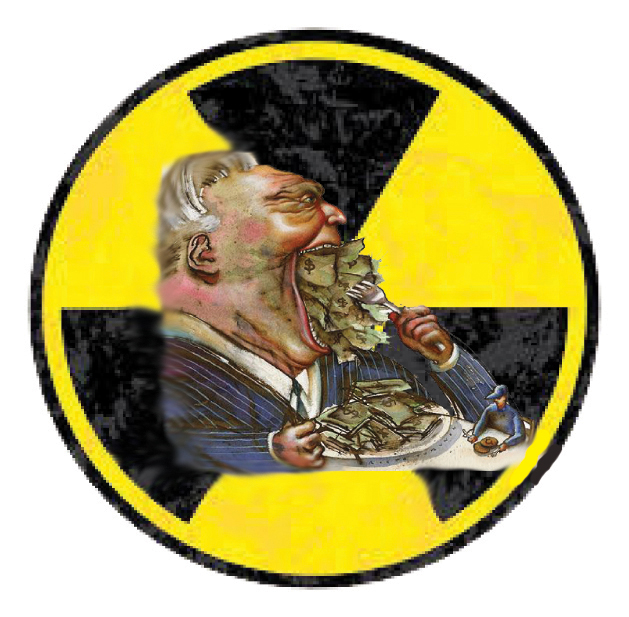
More Nuclear, Less Ground Attack in Biden’s Air Force Budget Request
The 2023 spending proposal calls for retiring 150 planes, shifting funds, and reconfiguring for possible war with China or Russia. Defense One MARCUS WEISGERBER and TARA COPP | MARCH 28, 2022
U.S. Air Force leaders want to shed hundreds of “unnecessary” aircraft and drones and spend more on nuclear and high-tech weapons they say are better suited for a war with China or Russia.
They lay out their proposal in the service’s $169 billion 2023 spending request, which is $13.2 billion higher than last year’s request.
The weapons they prioritize—nuclear and long-range strike—reflect an unsteady year in which China launched a hypersonic missile around the globe and Russia put its own nuclear forces on heightened alert while invading Ukraine.
The Air Force’s budget request is “more about transformation now than it is about evolutionary change. What drives that is the threat. We need to move aggressively,” Air Force Secretary Frank Kendall told reporters before the budget rollout.
To do so, the service is asking for approval to retire 150 aircraft, including eight E-8 JSTARS radar planes, 21 A-10 attack planes, 33 F-22 training jets, 15 E-3 Sentry AWACS-carrying radar planes, 13 KC-135 aerial refueling tankers, 10 C-130H cargo aircraft and 50 T-1 trainers. The Air Force will also reduce its total uniformed personnel number by 4,900 airmen as a result of the cuts, Kendall said. …………………….. In research-and-development, the service is requesting an additional $2.5 billion for the air and land legs of the nuclear triad; a little more than $1 billion of that increase is for ground based strategic deterrent Minuteman III replacement missiles. It also seeks $929 million for the long range standoff weapon, up from $609 billion last year, and $577 million for hypersonic prototyping of the Air-launched Rapid Response Weapon and hypersonic attack cruise missile.
The Air Force is also asking for an additional $1.7 billion for initial production of an unknown number of the next generation B-21 stealth bomber……………………. https://www.defenseone.com/policy/2022/03/more-nuclear-less-ground-attack-bidens-air-force-budget-request/363683/
43rd anniversary of the Three Mile Island nuclear accident
Today marks the 43rd anniversary of Three Mile Island nuclear accident https://lancasteronline.com/news/local/today-marks-the-43rd-anniversary-of-three-mile-island-nuclear-accident/article_eeb55904-ae9d-11ec-8e5a-07c5df9c0e70.html LANCASTERONLINE | Staff 28 Mar 22
Today marked the 43rd anniversary of the accident at the Three Mile Island nuclear plant, the nation’s worst nuclear accident.
A combination of human error and malfunctioning controls resulted in a partial meltdown of the Unit 2 reactor and caused tens of thousands of Central Pennsylvania residents to be evacuated or to flee the area for several days in 1979.
Unit 2 never was reopened and has been placed in monitored storage until the Unit 1 reactor is closed and decommissioned.
In 2017, Exelon announced preliminary plans to close the facility unless a buyer was found; after no sale was reached, Unit 1 was officially shut down in December of 2019. Decommissioning is expected to last until 2079.
Space Force Gets Roughly 40% Increase in Biden Request

Space Force Gets Roughly 40% Increase in Biden Request
A constellation of satellites will track ground vehicles, improve launch trajectories, and better nuclear command-and-control.TARA COPP | MARCH 28, 2022
The Space Force is requesting $24.5 billion in the 2023 budget, roughly 40 percent more than in last year’s request. Officials said the jump reflects the urgency to launch and defend satellites that can spot a hypersonic missile, track a moving truck, assure U.S. nuclear command and control, and more. ………
The budget request also includes $566 million for the Space Force’s evolved strategic SATCOM program, which ensures survivable strategic communications for the presidential fleet and DOD’s nuclear command and control aircraft.
“Our general posture has been to assume essentially impunity in space,” Kendall said. “We could put up expensive systems in small numbers, not worrying too much about [them] getting attacked—that era is over.”……………….. https://www.defenseone.com/policy/2022/03/space-force-gets-40-increase-biden-request/363687/
Washington Should Think Twice Before Launching a New Cold War
Heightened rhetoric about Russia and China seeking to undermine American influence will only reinforce Washington’s support for repressive regimes. The consequences of that could, in turn, prove to be potentially disastrous: a growing chorus of pundits and policymakers has suggested that Russia’s invasion of Ukraine marks the beginning of a new Cold War. If so, that means trillions of additional dollars for the Pentagon in the years to come coupled with a more aggressive military posture in every corner of the world. March 27, 2022 William D. Hartung, Nick Cleveland-Stout, Taylor Giorno TOM DISPATCH
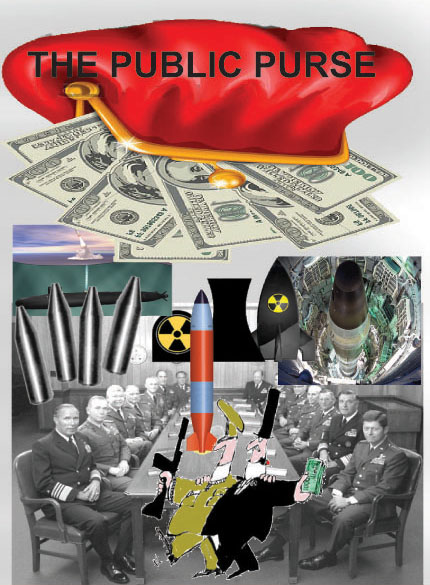
Before this country succumbs to calls for a return to Cold War-style Pentagon spending, it’s important to note that the United States is already spending substantially more than it did at the height of the Korean and Vietnam Wars or, in fact, any other moment in that first Cold War. Even before the invasion of Ukraine began, the Biden administration’s proposed Pentagon budget (as well as related work like nuclear-warhead development at the Department of Energy) was already guaranteed to soar even higher than that, perhaps to $800 billion or more for 2023.
Some supporters of higher Pentagon spending have, in fact, been promoting figures as awe inspiring as they are absurd. Rich Lowry, the editor of the conservative National Review, is advocating a trillion-dollar military budget, while Matthew Kroenig of the Atlantic Council called for the United States to prepare to win simultaneous wars against Russia and China. He even suggested that Congress “could go so far as to double its defense spending” without straining our resources. That would translate into a proposed annual defense budget of perhaps $1.6 trillion. Neither of those astronomical figures is likely to be implemented soon, but that they’re being talked about at all is indicative of where the Washington debate on Pentagon spending is heading in the wake of the Ukraine disaster.
Ex-government officials are pressing for similarly staggering military budgets. As former Reagan-era State Department official and Iran-Contra operative Elliott Abrams argued in a recent Foreign Affairs piece titled “The New Cold War”: “It should be crystal clear now that a larger percentage of GDP [gross domestic product] will need to be spent on defense.” Similarly, in a Washington Post op-ed, former Defense Secretary Robert Gates insisted that “we need a larger, more advanced military in every branch, taking full advantage of new technologies to fight in new ways.” No matter that the U.S. already outspends China by a three-to-one margin and Russia by 10-to-one.
Truth be told, current levels of Pentagon spending could easily accommodate even a robust program of arming Ukraine as well as a shift of yet more U.S. troops to Eastern Europe. However, as hawkish voices exploit the Russian invasion to justify higher military budgets, don’t expect that sort of information to get much traction. At least for now, cries for more are going to drown out realistic views on the subject.
Beyond the danger of breaking the budget and siphoning off resources urgently needed to address pressing challenges like pandemics, climate change, and racial and economic injustice, a new Cold War could have devastating consequences. Under such a rubric, the U.S. would undoubtedly launch yet more military initiatives, while embracing unsavory allies in the name of fending off Russian and Chinese influence.
The first Cold War, of course, reached far beyond Europe, as Washington promoted right-wing authoritarian regimes and insurgencies globally at the cost of millions of lives. Such brutal military misadventures included Washington’s role in coups in Iran, Guatemala, and Chile; the war in Vietnam; and support for repressive governments and proxy forces in Afghanistan, Angola, Central America, and Indonesia. All of those were justified by exaggerated — even at times fabricated — charges of Soviet involvement in such countries and the supposed need to defend “the free world,” a Cold War term President Biden all-too-ominously revived in his recent State of the Union address (assumedly, yet another sign of things to come).
Indeed, his framing of the current global struggle as one between “democracies and autocracies” has a distinctly Cold War ring to it and, like the term “free world,” it’s riddled with contradictions. After all, from Egypt to Saudi Arabia, the United Arab Emirates to the Philippines, all too many autocracies and repressive regimes already receive ample amounts of U.S. weaponry and military training — no matter that they continue to pursue reckless wars or systematically violate the human rights of their own people. Washington’s support is always premised on the role such regimes supposedly play in fighting against or containing the threats of the moment, whether Iran, China, Russia, or some other country.
Count on one thing: the heightened rhetoric about Russia and China seeking to undermine American influence will only reinforce Washington’s support for repressive regimes. The consequences of that could, in turn, prove to be potentially disastrous.
Before Washington embarks on a new Cold War, it’s time to remind ourselves of the global consequences of the last one.
Cold War I: The Coups
……… In 1954, the Eisenhower administration launched a coup that overthrew the Guatemalan government of President Jacobo Arbenz. His “crime”: attempting to redistribute to poor peasants some of the lands owned by major landlords, including the U.S.-based United Fruit Company. Arbenz’s internal reforms were falsely labeled communism-in-the-making and a case of Soviet influence creeping into the Western Hemisphere……In 1954, the Eisenhower administration launched a coup that overthrew the Guatemalan government of President Jacobo Arbenz. His “crime”: attempting to redistribute to poor peasants some of the lands owned by major landlords, including the U.S.-based United Fruit Company. Arbenz’s internal reforms were falsely labeled communism-in-the-making and a case of Soviet influence creeping into the Western Hemisphere.
In 1973, Richard Nixon and Henry Kissinger followed Eisenhower’s playbook by fomenting a coup that overthrew the democratically elected socialist government of Chilean President Salvador Allende, installing the vicious dictatorship of General Augusto Pinochet………..
Vietnam and Its Legacy
The most devastating Cold War example of a war justified on anti-communist grounds was certainly the disastrous U.S. intervention in Vietnam. ……………………………..
The defeat in Vietnam helped spawn what was called the Nixon Doctrine, which eschewed large-scale intervention in favor of the arming of American surrogates like the Shah of Iran and the Suharto regime in Indonesia. ………………….
Chief among this country’s blunders of that previous Cold War era was its response to the Soviet invasion of Afghanistan, a policy that still haunts America today……………………..
most of the Cold War policies outlined above, even though carried out under the rubric of promoting “freedom” in “the free world,” would undermine democracy in a disastrous fashion.
A New Cold War?
Cold War II, if it comes to pass, is unlikely to simply follow the pattern of Cold War I either in Europe or other parts of the world. Still, the damage done by the “good versus evil” worldview that animated Washington’s policies during the Cold War years should be a cautionary tale. The risk is high that the emerging era could be marked by persistent U.S. intervention or interference in Africa, Asia, and Latin America in the name of staving off Russian and Chinese influence in a world where Washington’s disastrous war on terrorism has never quite ended.
The United States already has more than 200,000 troops stationed abroad, 750 military bases scattered on every continent except Antarctica, and continuing counterterrorism operations in 85 countries. The end of U.S. military involvement in Afghanistan and the dramatic scaling back of American operations in Iraq and Syria should have marked the beginning of a sharp reduction in the U.S. military presence in the Middle East and elsewhere. Washington’s reaction to the Russian invasion of Ukraine may now stand in the way of just such a much-needed military retrenchment.
The “us versus them” rhetoric and global military maneuvering likely to play out in the years to come threaten to divert attention and resources from the biggest risks to humanity, including the existential threat posed by climate change. It also may divert attention from a country — ours — that is threatening to come apart at the seams. To choose this moment to launch a new Cold War should be considered folly of the first order, not to speak of an inability to learn from history. https://portside.org/2022-03-27/washington-should-think-twice-launching-new-cold-war
1 This Month


PLEASE OPPOSE HR 8255 AND S.3639 – bills would accelerate satellite deployment, with no environmental review or safeguards – https://ncstd5li.quorum.us/campaign/169331/
To see nuclear-related stories in greater depth and intensity – go to https://nuclearinformation.wordpress.com
-
Archives
- September 2026 (194)
- August 2026 (330)
- July 2026 (355)
- June 2026 (287)
- May 2026 (306)
- April 2026 (356)
- March 2026 (251)
- February 2026 (267)
- January 2026 (308)
- December 2025 (358)
- November 2025 (359)
- October 2025 (375)
-
Categories
- 1
- 1 NUCLEAR ISSUES
- business and costs
- climate change
- culture and arts
- ENERGY
- environment
- health
- history
- indigenous issues
- Legal
- marketing of nuclear
- media
- opposition to nuclear
- PERSONAL STORIES
- politics
- politics international
- Religion and ethics
- safety
- secrets,lies and civil liberties
- spinbuster
- technology
- Uranium
- wastes
- weapons and war
- Women
- 2 WORLD
- ACTION
- AFRICA
- Atrocities
- AUSTRALIA
- Christina's notes
- Christina's themes
- culture and arts
- Events
- Fuk 2022
- Fuk 2023
- Fukushima 2017
- Fukushima 2018
- fukushima 2019
- Fukushima 2020
- Fukushima 2021
- general
- global warming
- Humour (God we need it)
- Nuclear
- RARE EARTHS
- Reference
- resources – print
- Resources -audiovicual
- Weekly Newsletter
- World
- World Nuclear
- YouTube
-
RSS
Entries RSS
Comments RSS
 nuclear-news