US regulators approve small nuclear reactors – BUT – costs, delays, too late for climate help
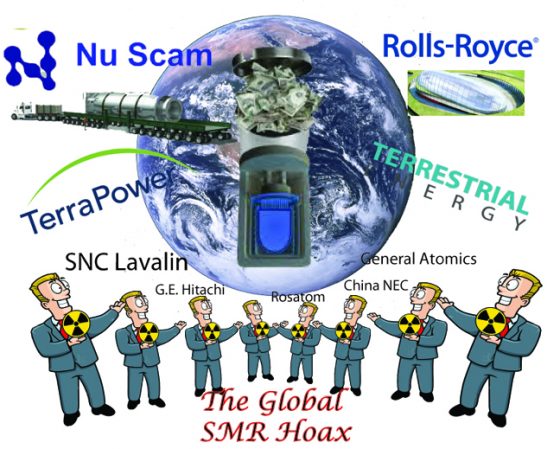
The First Small Modular Nuclear Reactor Was Just Approved by US Regulators, Singularity Hub, By Edd Gent-August 5, 2022
…………………………………… questions have been raised about whether SMRs will really live up to their billing as a cheaper, safer alternative to traditional nuclear power plants. A study published in Proceedings of the National Academy of Sciences in May found that contrary to the claims of SMR makers, these smaller reactors are actually likely to produce more radioactive waste than conventional plants.
In an article in Counterpunch, nuclear power expert M.V. Ramana also points out that the cost of renewable energy like wind and solar is already lower than that of nuclear, and continuing to fall rapidly. In contrast, nuclear power has actually become more expensive over the years.
SMRs could cost more than bigger nuclear plants, he adds, because they don’t have the same economy of scale. In theory this could be offset through mass manufacture, but only if companies receive orders in the hundreds. Tellingly, some utilities have already backed out of NuScale’s first project over cost concerns.
Perhaps even more importantly, notes Ramana, SMRs are unlikely to be ready in time to contribute to the climate fight. Projects aren’t expected to come online until the end of the decade, by which time the IPCC says we already need to have made drastic emissions reductions.
The technology has some powerful boosters though, not least President Joe Biden, who recently touted NuScale’s “groundbreaking American technology” while announcing a grant for an SMR plant the company will build in Romania. Engineering giant Rolls-Royce also recently announced a shortlist for the location of its future SMR factory, which will be used to build 16 SMRs for the UK government by 2050.
Whether SMRs can deliver on their promise remains to be seen, but given the scope of the climate challenge facing us, exploring all available options seems wise. https://singularityhub.com/2022/08/05/the-first-small-modular-nuclear-reactor-design-was-just-approved-by-us-regulators/
Nuclear energy for Colorado? The cost is one very big obstacle

Post Independent, Allen Best 6 Aug 22, A nuclear reactor might be a nice addition to the economy of Craig, the community in northwestern Colorado. But can Colorado afford nuclear power?
……………….Sen. Bob Rankin in the last legislative session tried to get fellow legislators to appropriate $500,000 (amended to $250,000) to study the potential for nuclear.
…………Conspicuously absent was support from the administration of Gov. Jared Polis. The bill failed 3-2 on a party-line vote.
Nuclear has a nagging problem, though. It’s expensive. Advocates rarely mention this. Costs of Georgia’s Plant Vogtle, the only U.S. nuclear power plant under construction, have ballooned from $14 billion to now $30 billion-plus. In South Carolina, investors pulled the plug on a nuclear power plant after spending $9 billion. It has become among the very costliest of energy sources, only slightly less than rooftop solar, according to Lazard, the financial analyst.
Modular nuclear reactors have been promoted as a way to shave costs. Specific projects have been conceived in both Idaho and Wyoming. Bill Gates is an investor in the latter. Maybe they will overcome this cost problem. We won’t really know for another 10, maybe 15 years.
State Sen. Chris Hansen remains skeptical. He has expertise unsurpassed among legislators. He set out to become a nuclear engineer after first laying eyes on a reactor when a high school junior from the farm country of Kansas. He got his degree but had already turned his attention to economics. He went on to earn degrees from the Massachusetts Institute of Technology and, from Oxford, a Ph.D. in resource economics.
Nuclear, he told a county commissioner from Sterling in 2019, when I first heard him answer this question, simply does not compete in cost. Last week, when we talked, he offered more detail.
“I think those technologies will have to prove themselves,” he said of modular nuclear reactors. “Right now, in the best-case scenario it looks like they will deliver electricity at $60 to $70 per megawatt-hour. Wind and solar are coming in at less than $20.”
……….. Hansen suggests that reliability [of rennewables] may more economically be provided by less expensive alternatives. For example, he has pushed transmission and passed legislation to create organized markets that will allow electricity to be moved across broader geographic areas in response to consumer demands. Colorado is currently an island with limited bridges to other areas………… https://www.postindependent.com/opinion/allen-best-nuclear-energy-has-obstacles-too/
NYC: Anti-Nuclear Protest at U.S. Mission to United Nations
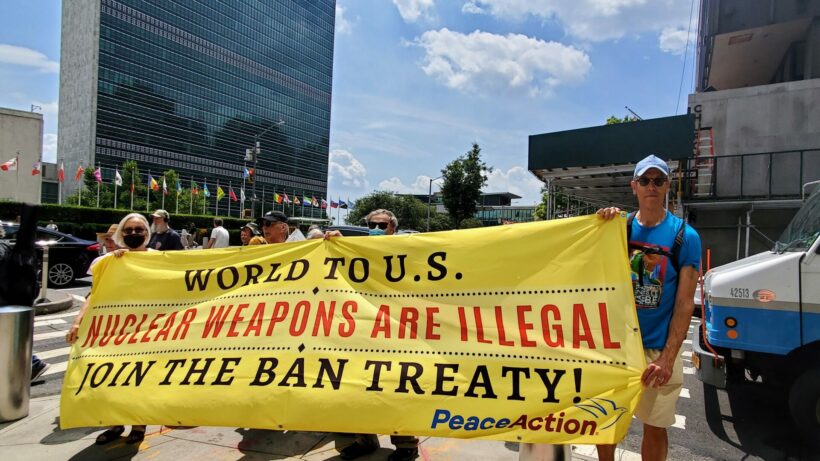
https://www.pressenza.com/2022/08/nyc-anti-nuclear-protest-at-u-s-mission-to-united-nations/ 03.08.22 – US, United States – Pressenza New York
Today, on day two of the four-week 1970 Non-Proliferation Treaty Review Conference, several hundred people marched to the US Mission from the Isaiah Wall across the street from the United Nations, passing by the Wall’s quote from the Prophet Isaaiah,
Report by Alice Slater
“He shall judge between the nations, and shall arbitrate for many peoples; they shall beat their swords into plowshares and their spears into pruning hooks; nation shall not lift up sword against nation, neither shall they learn war anymore.”
Singing peace and anti-war songs, to “lay down their swords and shields” with dramatic interventions and a multitude of posters with slogans calling for nuclear abolition in every possible way, the indomitable peace activists from every continent joined together to press the governments in the coming weeks, who promised in 1970 to make “good faith efforts” for nuclear disarmament, to “lay down their swords and shields” and make their promised “good faith” commitments to restore their tattered promises to finally ban the bomb.
Despite the 2017 enactment of the Treaty for the Prohibition of Nuclear Weapons that closed the NPT loopholes, finally saying that nuclear weapons are illegal in every way, including use, threat to use, sharing, shipping, and manufacturing– the race goes on with all the major powers expanding their arsenals and spending trillions of dollars and millions of IQ points confronting each other with their evil nuclear deterrents. Meanwhile, Mother Earth desperately needs extraordinary global cooperation to prevent a catastrophic climate collapse, a nuclear cataclysm and spreading lethal plagues. We are at a turning point, and this NPT might be the last time that people can bring their governments to their senses, instructing them to step back from the catastrophic cliff edge, towards which we are perilously and thoughtlessly careening.
Report by Anthony Donovan
When I look at the UN from the U.S. Mission today, I think of a wonderful mentor and champion for nuclear disarmament, Amb. Zenon Rossides of Cyprus. I interviewed him in 1983. He’d been challenging the nuclear countries since taking to the UN podium in 1960, to focus on common and collective security, not with nuclear arms. “Listen to the scientists!” He’d often exclaim.
I’d like to echo his public words when speaking about the negotiations for the NPT and other nuclear treaties
“The negotiations are a stagnant pretense, deceiving the people that something is being done about the nuclear arms race, a galloping reality.”
He would often also repeat
“It is not the power of weapons,
but the power of Spirit
That can save the world.”
He met and felt very close to Pres. John F. Kennedy. He said JFK was determined to end nuclear weapons and that the Herculean effort and great success of his Test Ban Treaty was meant to only be the first step toward total abolition.
My word for today’s action, when things look so dire, and heading evermore in the wrong direction, is…… community. A courageous community that sustains life, and joy.
Alice Slater is an Advisor to the Nuclear Age Peace Foundation and serves on the Coordinating Committee of World Beyond War worldbeyondwar.org
Anthony Donovan. A political campaigner and activist from the age of 12, ending up in jail three times for Vietnam War nonviolent civil disobedience.
Washington Is Making the Same Blunder Regarding Taiwan That It Did in Ukraine

y Ted Galen Carpenter Posted on
Tensions between the United States and the People’s Republic of China (PRC) are rising sharply over the Taiwan issue. House Speaker Nancy Pelosi’s stated intention to include a stop in Taipei to meet with Taiwanese officials during her forthcoming trip to East Asia is the latest source of trouble. Pelosi apparently escalated that provocation further by inviting other prominent members of Congress to join her in that stop. Her actions have caused even the staunchly pro-Taiwan Biden administration to quietly press her to change her plans. Conversely, congressional hawks are urging Pelosi not to back down.
The reason for the administration’s caution are readily apparent. Beijing has reacted with unusually intense anger to the prospective visit…………………………
For 4 decades after Washington shifted diplomatic relations from Taipei to Beijing in 1979 and passed the Taiwan Relations Act to govern reduced, informal relations with Taiwan, US administrations were careful to limit visits to the island to low-level officials.
That restraint diminished dramatically during Donald Trump’s presidency, when Congress authorized and the administration approved meetings by National Security Advisor John Bolton and other Cabinet-level officials with their Taiwanese counterparts. Those trips were part of a new policy of much stronger US diplomatic and military support for Taiwan – a course of action that the Biden administration has continued, despite insisting that the United States still adheres to a “one-China” policy.
………. The Biden administration needs to take the PRC’s warnings more seriously. In many ways, Washington’s determination to press ahead with greater support for Taiwan as part of an overall containment policy directed against China is reminiscent of the blunders US officials made with respect to NATO expansion, especially the campaign to incorporate Ukraine, and Washington’s tone-deaf response to Moscow’s escalating complaints.
Biden administration policymakers dismissed the Kremlin’s repeated warnings that trying to make Ukraine a NATO military asset would cross a red line with respect to Russia’s security interests. They discovered belatedly that Russian President Vladimir Putin was not about to cower and accept US diktats simply because the United States insisted that Ukraine had a “right” to join NATO. Nor did he accept Washington’s accelerating campaign to make Ukraine a de facto US military and intelligence ally perched on Russia’s border.
The outcome of Washington’s approach has been horrifyingly bloody and tragic for the people of Ukraine. Even more worrisome, the administration’s policies have led to an extremely dangerous confrontation between NATO and a nuclear-armed Russia, with the United States and NATO cynically using Ukraine as a pawn in a proxy war against Moscow.
Washington risks making a comparable blunder in its dealings with China. The administration must implement a quiet retreat regarding its growing political and military ties to Taipei and adopt a less confrontational approach to Beijing. Moreover, that change needs to go well beyond merely discouraging Pelosi’s provocative visit to Taipei. It has become increasingly obvious to PRC leaders that the United States is pursuing a full-blown anti-China containment policy, with Taiwan as the point of the spear, in a desperate effort to preserve Washington’s fading strategic primacy in East Asia. It is highly unlikely that Beijing will passively accept such an intrusive US presence in China’s core security sphere over the long term. As the PRC’s economic and military power continues to grow, Beijing’s resistance to Washington’s hegemonic efforts will escalate.
US arrogance and inflexibility helped lead to the current tragedy in Ukraine. Policymakers blew through red warning light after red warning light from the Kremlin. A similar approach seems to be taking place in Washington’s relations with Beijing, and it threatens to produce a similar ugly outcome in East Asia over the Taiwan issue.
Ted Galen Carpenter, a senior fellow in defense and foreign policy studies at the Cato Institute, is the author of 13 books and more than 1,100 articles on international affairs. His latest book is Unreliable Watchdog: The News Media and U.S. Foreign Policy (forthcoming, September 2022).
Senator Manchin Democrats Bill to give $30 billion lifeline to save America’s moribund nuclear industry

Manchin Deal Tosses $30 Billion Lifeline to US Nuclear Reactors,
- Tax credit for nuclear power included in Senate spending bill
- Incentive could save as much as 38% of fleet, analyst says
Bloomberg, By Ari Natter, August 4, 2022
Struggling nuclear reactors would get a $30 billion lifeline under the Democrats’ climate change and tax bill that could save dozens of nuclear power plants from an early retirement.
Included in the $433 billion Inflation Reduction Act, which is slated for a Senate vote as soon as this week, is a 10-year production tax credit for nuclear energy producers that could be a boon for reactor operators such as Southern Co., Constellation Energy Corp., Public Service Enterprise Group Inc. and Energy Harbor Corp.
The proposed $15 per megawatt-hour credit for existing nuclear plants — which provide about 19% of the nation’s electricity — will help an industry that has undergone a wave of closures. Reactors have high operating costs and are increasingly struggling to compete with cheaper electricity produced using natural gas and renewables.
Between 22% and 38% of the nation’s nuclear fleet of 93 reactors is at risk of retiring in the 2030s, depending on natural gas prices, according to an analysis by Rhodium Group…………………………
It remains to be seen whether the Inflation Reduction Act, which represents a compromise between Manchin and Senate Majority Leader Chuck Schumer, will be backed by the full Democratic caucus in the 50-50 Senate. It would also have to pass the House, where progressives sought a much more expansive plan. https://www.bloomberg.com/news/articles/2022-08-03/machin-deal-tosses-30-billion-lifeline-to-us-nuclear-reactors
Prairie Island Indian Community planning to set up large renewable energy project, keen to be rid of nuclear power plant and nuclear wastes
Prairie Island Indian Community nuclear concern powers net zero carbon emissions plan,
Catharine Richert, Prairie Island Indian Community, Welch, Minn., August 1, 2022 , Growing up on the Prairie Island Indian Community reservation, Calais Lone Elk had a plan — a set of steps burned in her mind and logged with her school to help her find her family in the event of an explosion at the nearby nuclear power plant.
“If you went to school and something happened out here, where do you meet your parents? Where do you reconnect with your family? Because you can’t come back here,” she said. “Those are things that I don’t think are normal.”
Lone Elk is 37 now, and still constantly reviewing her escape plan for an emergency at the nearby power plant.
It sits just 700 yards away from her community of 100 homes, its powerlines lining backyards and main thoroughfares.
For Lone Elk and others living in Prairie Island, concerns about the nuclear power plant’s safety are a source of low-grade daily stress. Despite official assurances, many people believe it’s bad for their health to be living so close.
“We all have a plan, whether we voice it or not. We all have an idea of what we have to do or what we need to do. And we all know that we have to go up-wind of that nuclear plant,” Lone Elk said
But it’s also a physical reminder of the environmental injustices endured by Native people for generations, said tribal council vice president Shelley Buck.
“Since this plant was created, our energy history here has been focused on the power plant and the nuclear waste that is stored right next door to us,” she said.
Today, the Prairie Island Community is seeking to disentangle itself from a power plant it never wanted. It’s created a $46 million plan to produce net zero carbon emissions within the next decade.
Buck said it’s an ambitious step toward being a sovereign nation that’s energy sovereign, too.
“To do a big project like net zero really helps us change that narrative into something positive showing how energy can be used as a positive force,” she said. “By offsetting or eliminating the carbon that we produce, it’s a positive for everybody.”
Why not go big?’
Prairie Island members are descendants of the Mdewakanton Band of Eastern Dakota. They made their home in southern Minnesota, but lost that land in 1851 in the Treaty of Traverse des Sioux.
It wasn’t until 1934 that the land on the banks of the Mississippi just north of Red Wing became a federally recognized reservation.
The Prairie Island power plant was issued its first operating license in 1974, and it was renewed in 2011. Initially, tribal members say the plant was described to them as a steam power plant. It’s one of two nuclear power plants, the second in Monticello, that Xcel says are critical to its plans of producing carbon-free electricity by 2050, and is considered safe by the U.S. Nuclear Regulatory Commission.
In the early 1990s, Xcel Energy asked the Minnesota Pollution Control Agency permission to store nuclear waste there — at least temporarily until a permanent repository at Yucca Mountain opened, a plan that has since stalled due to local opposition.
As a child, Mikhail Childs remembers his father protesting the prospect of storing nuclear waste so close to the reservation.
“Some of the earliest memories I have are of protestors standing in the road, blocking semi-trucks hauling nuclear waste,” he said. “The way [my dad] explained it to me was that all this land we reside on is sacred … We believe that in our creation story, the creation took place just miles down the river.”
But here’s the twist, and it’s an important one: Through all these years of living with a nuclear power plant next door, Prairie Island hasn’t been powered by the energy generated there, said Buck. The community just recently started getting natural gas from Xcel.
It’s a logistical detail that she said prevented the tribal community from being eligible for the Renewable Development Fund, a pot of state money financed by Xcel customers for renewable energy projects for Xcel service areas, she said.
Then in 2020, a legislative change allowed Prairie Island to tap $46 million from the fund for the project.
While the tribe had toyed with doing wind power and other renewable projects in the past, a large amount of funding created the opportunity to do more.
“Why not go big?” said Buck.
One goal, different solutions
And by big, Buck is referring to a plan that aims to eliminate 20 million pounds of carbon annually through a raft of renewable energy and efficiency upgrades. Prairie Island’s Treasure Island Resort and Casino is the largest energy user on the reservation.
The plan involves multiple ways of achieving that goal, said Andrea Thompson, who has been hired by the tribe as the project’s energy program manager. …………………………………..
Their plan involves constructing a 10-to-15 acre solar array that aims to reduce carbon emissions by more than 550,000 pounds annually, phasing out natural gas in favor of geothermal energy and electrification, and promoting zero-emission and energy efficiency residential upgrades………………………….. more https://www.dailymail.co.uk/sciencetech/article-11069613/Global-warming-trigger-nuclear-war-financial-crisis-extinction-level-pandemic-2070.htm
Beatty Nevada Nuclear waste explosions, in the desert.
Terry Southard 2 Aug 22,
Explosions of nuclear waste from pieces of decommissioned San onofre reactor, by San diego.The pieces of the reactor and the other waste from the San Diego, San Onofre reactor decommissioning, started blowing up in the desert outside beatty Nevada. Later the San onofre nuclear waste was dug up and transfered, to a nuclear waste facility outside salt lake city Utah. The explosions, were caused by the decay heat and pyrophoricty of the radionuclides, in the waste and that had accumulated on the reactor pieces.
We simply, don’t get to learn from the mainstream media, about these radioactive hazards.
New Mexico was on fire this summer. 800 thousand acres burned. So much nuclear waste and fallout, in New Mexico, from bomb building and testing. I would not be surprised, if there is a major uptick in lung cancers, and other cancers, in New Mexico in the next 5 years . Nuke bombs exploded under rivers in New Mexico, project gas buggy. Uranium waste catastrophes. Nuclear waste dumps in many places. Largest plutonium core operation in the world at Los Alamos, by Santa fe. Wipp plutonium dump, by Clovis.
These explosions were caused by parts of the decommisioned, highly radioactive pieces of the San onofre reactor, buried in Nevada for a few years. They had to dqqig them up, after the explosions and, moved them to utah. You would have thought, peopke in Utah, would have known better.
Steppenwolf just stick yur head into the sand, pretend that all is grand and everything will be ok
This will happen at other shoddy nuclear waste operations in the usa. Typically under-regulated, and under supervised by cheap and mismanaged, foreign owned nuclear waste management companies. Give them an inch and, they take a mile. They bribe state legislators and start taking in nuclear waste, from other countries. Countries like Japan and Estonia. That happened at the white mesa nuke waste operation, by blanding, utah. I think there is greater risk of wildfires, in the white mesa area, from the pryophoric effects of radionuclide dust from white mesa, blowing into surrounding areas.. There was a truck full of nuke waste owned by energy fuels, by Salt Lake City, that caught fire in 2018. The white mesa, energy fuel operation is trucking in nuke waste, from all over the world.
Radionuclides generate their own heat and can start fires on their own even in small amounts, like the plutonium did at rocky flats. That is why the US Armed forces, uses depleted uranium in bombs, bullets and, other munitions.
https://en.wikipedia.org/wiki/Rocky_Flats_Plant
https://www.osti.gov/biblio/515622
Wildfires and cancer
https://www.thelancet.com/journals/lanplh/article/PIIS2542-5196(22)00067-5/fulltext
More wildfires and cancer
https://www.upi.com/Health_News/2022/05/17/wildfires-cancer-risk-study/5531652723109/
Wildfires are increasing cancer rates in the World.
https://thescotfree.com/opinion/incident-at-santa-susana-a-meltdown-a-fire-and-a-cover-up/
Nuclear waste isn’t an isolated problem with nuclear power…
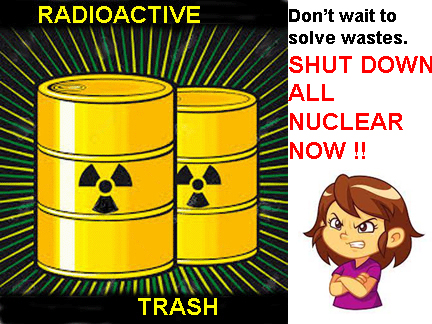
Until ALL the reactors in America (and globally) are closed, “solving” the nuclear waste problem only helps to keep the reactors operating!
https://acehoffman.blogspot.com/2022/07/nuclear-waste-isnt-isolated-problem.html Ace Hoffman Carlsbad, CA July 31, 2022 Prior to SanO’s shutdown, few SoCal residents, including most activists, worried not so much about the waste, only about shut-down.
We know the waste is a problem, but even for us, here in Southern California, Diablo Canyon Nuclear Power Plant being open is STILL a far more likely cause of our own problems, let alone California’s and America’s. DCNPP should be closed *immediately*, not in two or three years, and should certainly not have its license extended under any circumstance. I would estimate that right now, DCNPP is at least a hundred to a thousand times more likely to be the cause of our having to move, or suffering health effects, than San Onofre’s waste is. An operating reactor is incredibly more dangerous than ten year old spent fuel.
Read up on how far Chernobyl radiation spread in Kate Brown’s Manual for Survival. We can use the problem with San Onofre’s waste to push for closure of DCNPP. Once DCNPP is permanently closed, the entire state will finally (hopefully) be interested in solving the waste problem. Until ALL the reactors in America (and globally) are closed, “solving” the nuclear waste problem only helps to keep the reactors operating!
Nuclear waste scattered throughout the country is a major problem for many reasons, including terrorism, accidental airplane strikes, earthquakes, tsunamis etc. etc.
Transporting nuclear waste multiple times is also a major problem for many reasons, including accidents, terrorism, human error, etc.. It should be moved at most only once, if possible.
Neutralization of the Pu and U isotopes is possible on-site. It’s even a patented process! Read up on it in case you missed my report (see link, below). The industry doesn’t like the idea because they want to reprocess the waste. That’s ALSO why the industry is pushing so hard for one central location.
Moving nuclear waste through highly populated areas is a major problem which the U.S. government is well aware of. That is the reason they wanted to build a direct route from San Onofre to Yucca Mountain.
As a 20% owner of Palo Verde Nuclear Power Plant in Arizona, Southern California Edison (SCE) could either move the waste there (except for the problems mentioned above, plus the fact that AZ doesn’t want our waste, only their own). SCE could at least pull out of PVNPP entirely if AZ won’t take the waste.
There are many bridges, close to or even more than 100 feet high, between San Clemente and the Chocolate Mountains location that Roger J. is recommending. Moving 123 canisters over those bridges is extremely risky since the containers are NOT designed to withstand a drop of that height. It’s unlikely, IMO, that they can even survive the claimed drop heights of a few dozen feet. I drove over the Mianus River Bridge in Connecticut twice daily, when it “suddenly” collapsed, killing three people. Bridge collapses DO happen. And maintenance is shoddy at best. I HEARD the Mianus River Bridge screech in the days before the pin fully sheered off. Residents had been calling the (ir-)responsible state agencies about the noise for weeks prior to the collapse.
Joe Biden offers to negotiate a new arms control framework with Russia to replace New START
 |
By: Srishti Singh Sisodia, Washington, US Aug 01, 2022,
United States President Joe Biden said that Washington has expressed its readiness to open talks with Moscow, the Russian state-controlled news television network RT reported on Monday (August 1). The report mentioned that the negotiation is apparently “a new arms control framework” with Russia to potentially replace the New START (Strategic Arms Reduction Treaty).
As quoted by the RT website, Biden said: “Today, my Administration is ready to expeditiously negotiate a new arms control framework to replace New START when it expires in 2026. But negotiation requires a willing partner operating in good faith.”
Dead fish near SC nuclear fuel site were an early warning. Then came the spills and accidents
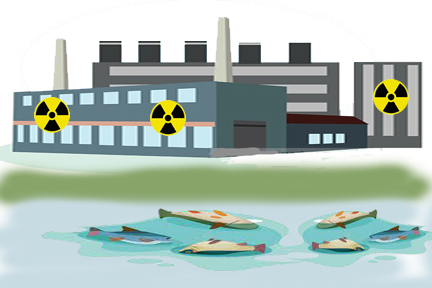
The State, BY SAMMY FRETWELL, JULY 30, 2022
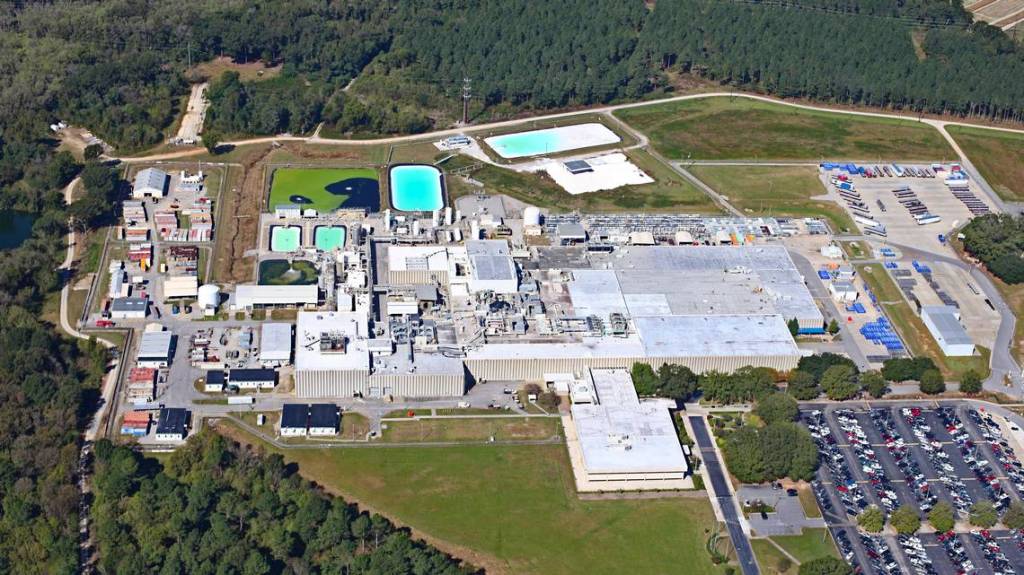
Dead fish floated in a small pond near a nuclear fuel factory one day in 1980, raising concerns about the Columbia plant’s danger to the surrounding environment. A cocktail of contaminants had been documented in groundwater, which seeps into creeks and ponds, and it appeared that one of these pollutants — ammonia — had contributed to the fish kill in Gator Pond, according to environmental studies. It was a disturbing discovery that foreshadowed a variety of environmental and safety troubles the Westinghouse nuclear fuel plant would deal with over the next 40 years.
Since 1980, more than 40 environmental and safety problems have been tied to the Westinghouse plant, ranging from groundwater pollution to nuclear safety violations that endangered plant workers, according to a review of news accounts and public records by The State. Despite those issues, the U.S. Nuclear Regulatory Commission approved a final environmental study Friday that said the future environmental impact of the plant would be small to moderate. The NRC recommended a new license for the plant to operate for an additional 40 years, a decision that greases the skids for final license approval this fall.
John Grego, who is with the Friends of Congaree Swamp organization that supports Congaree National Park, said the fuel factory has had too many troubles of all kinds through the years. “The variety of problems is what troubles me, that this occurred in so many aspects of their culture,’’ Grego said. “It just seems to suggest systemic problems with the safety culture at Westinghouse. You had these long-standing problems that weren’t remediated, problems that weren’t reported.’’
Some of the pollution tied to Westinghouse was not known to the public or government regulators for years, which has incensed some Lower Richland residents who live near the plant. Some residents of the predominantly African-American community have said they were left out of the loop for too long.
Only in recent years, when a flurry of safety issues at the plant arose, did many people learn about past pollution. A key community concern is whether water pollution from the plant could one-day contaminate their drinking water wells. State regulators said mechanisms are now in place to hold Westinghouse more accountable, while resolving past environmental problems. The company struck a binding agreement with the state Department of Health and Environmental Control in 2019 to investigate and clean up pollution on the property. The company also is nearing completion of an investigative study of the site’s environmental problems, according to a statement Friday from DHEC.
……………………… Congaree Riverkeeper Bill Stangler was skeptical. Stangler said he is not confident Westinghouse will improve the operation, despite recent assurances and agreements with state regulators to clean up and do a better job. The plant is located near the Congaree River. “They have a long track record of problems at that facility that would raise anyone’s eyebrows,’’ Stangler said. “It’s concerning if you have an interest in the environment; it’s concerning if you are someone who lives in the surrounding area. Time after time we have seen that they haven’t followed the rules, and they have had problems.’’
………………………
Troubles at Westinghouse began in the 1970s, not long after the plant opened, when a wastewater pond leaked. But problems continued steadily after the 1980 fish kill, sometimes little known to the public. After the company reported a leak of uranium through a hole in the plant floor in 2018, federal and state regulators learned that the company had spilled toxins into the ground in 2008 and in 2011 without telling them or the public. The company said it was not required to report the spills. Contaminants such as fluoride, uranium, solvents and ammonia have been found in groundwater on the Westinghouse site. Technetium, a nuclear pollutant, also has been discovered on the soggy property, but no one has yet pinpointed the cause of the pollution.
Some of the biggest troubles at Westinghouse have revolved around nuclear safety inside the plant. The company has run into trouble through the years for failing to make sure nuclear materials it manages didn’t trigger small bursts of radiation, which can endanger workers. Records show the NRC has expressed concerns multiple times with Westinghouse over the issue, known as criticality safety
……………………… Government records also show that people working at the plant falsified records, including as recently as 2009. In some cases, employees have been injured or threatened by nuclear accidents.
…………………. News accounts and government records also show that Westinghouse has, at times, had trouble handling and keeping track of nuclear material it is responsible for…………………………………………. https://www.thestate.com/news/local/environment/article263945551.html
Westinghouse Nuclear Fuel Fabrication plant – a detailed history of troubles.

Dead fish near SC nuclear fuel site were an early warning. Then came the spills and accidents, The State, BY SAMMY FRETWELL, JULY 30, 2022
“……………………………………………………. 1980: State regulators learn of a fish kill near the Westinghouse wastewater plant. They found elevated levels of fluoride and ammonia-nitrogen in groundwater and surface water. It was later determined that the pollution came from the plant wastewater area. 1980: Twenty plant workers evacuated from Westinghouse after a small leak of uranium hexafluoride gas.
1982: Westinghouse unable to find 9.5 pounds of slightly enriched uranium, according to an NRC report. 1983: State regulators fine Westinghouse $6,000 for illegally shipping flammable material that caused a fire at Barnwell County’s low-level nuclear waste dump. 1988: Radioactivity found in monitoring wells is thought to have come from prior leaks of industrial wastewater. Low concentrations of Uranium 235, 234 and 238 found.
1989: EPA investigators find an array of pollutants in groundwater at the Westinghouse site, some higher than safe drinking water levels. Vinyl Chloride and TCE, both of which can cause cancer, were found to exceed the drinking water standard. 1989: Twenty five dead deer discovered at the Westinghouse property, some of them in an area where wastewater was being discharged near the Congaree River. The deer reportedly died from nitrate poisoning, but public records reviewed by The State do not show an exact cause. 1992: Trichloroethene (TCE), cis-1,2-dichloroethene (CIS 1,2 DCE) and tetrachloroethene (PCE), are detected at amounts above the federal maximum contaminant level for safe drinking water. The high levels were found near the plant’s oil house.
1993: NRC fines Westinghouse $18,750 after alleging that the company failed to perform a criticality safety analysis and failed to conduct safety tests. 1994: Radioactive leak exposes 55 workers to uranium hexafluoride and shuts down the Westinghouse plant. 1997: The plant loses two low-enriched fuel rods. The NRC says five violations of NRC requirements occurred. Safety was not compromised, but problems “are indicative of inadequate management attention.’’
1998: Company fined $13,750 after NRC notes the “loss of criticality control,’’ a problem that could have led to an accident. The agency says a problem had gone uncorrected. 2000: NRC hits Westinghouse with a violation notice because an operator “willfully violated criticality safety procedures when preparing to mix a batch of powder.’’ 2000: Uranyl nitrate spills at the Westinghouse plant, causing a cleanup. When the cleanup began, workers found the spill was worse than originally thought.
2001: NRC hits Westinghouse with a violation for transporting 3 cylinders of licensed material with elevated radiation levels. 2001: Westinghouse fails to follow criticality safety rules at a uranium recovery area dissolver elevator, violation notice says. Containers were not stacked far enough apart, reducing safety. Westinghouse didn’t do enough to fix the problem. 2001: NRC issues a violation notice to Westinghouse after raising concerns about criticality safety, including failing to keep uranium powder mixing hoods properly separated.
2001: NRC hits Westinghouse with violation after criticality safety controls failed to work on the ammonium diurnate process lines. 2002: NRC letter tells Westinghouse that its criticality safety control efforts need improvement. NRC Regional Administrator Luis Reyes says the last two safety reviews have urged improvement for criticality safety. Letter notes concern about nuclear transportation program. 2002: NRC notice of investigation says a contractor for Westinghouse falsified records about the receipt and processing of materials. That resulted in a small amount of nuclear material being improperly shipped to nuclear site in Tennessee. 2004: NRC again raises concerns about criticality safety, the practice of making sure a nuclear chain reaction does not occur. Efforts to improve compliance with procedures and “implement criticality safety controls were not fully effective,’’ letter from regional administrator Luis Reyes says.
2004: NRC letter hits Westinghouse with a $24,000 fine. The company failed to maintain criticality controls as required. Ash in the company’s incinerator exceeded concentration limits for uranium. The Level 2 violation is, at the time, the most serious ever noted at the plant. 2008: Broken pipe spills radioactive material into the soil in the same area as a later 2011 leak, but Westinghouse doesn’t tell state or federal regulators for years. 2008: The NRC sanctions Westinghouse for losing sixteen sample vials of uranium hexafluoride. The company didn’t properly document and control the transfer of the vials and failed to secure them from “unauthorized removal.’’ 2008: Westinghouse hit with a violation notice after a worker disabled an alarm and bypassed a safety significant interlock.
2009: Westinghouse fires a contract foreman after federal regulators found that he had falsified records. Westinghouse also was cited by the NRC. The foreman certified that employees were trained in safety procedures, when they had not completed training.
2009: Westinghouse loses 25 pounds of pellets that were to be used in making nuclear fuel rods. NRC downplays danger but says Westinghouse should have kept better track of the nuclear material.
2010: NRC levies $17,500 fine against Westinghouse after uranium-bearing wastewater spilled inside the plant.
2011: Uranium leaks into ground beneath the Westinghouse plant, but federal inspectors weren’t told about it for years. NRC officials said they only learned about the spill in 2017.
2012: Worker exposed to uranium-containing acid and whisked to a hospital by emergency medical crews. The worker was treated for pain and released.
2012: Westinghouse fails to follow through on a report to improve the facility so it could better withstand an earthquake, NRC says. Recommendations had been made nine years previously.
2015: Three workers are injured when steam erupted from a wash tank. The workers are taken to a Columbia area hospital for treatment and later sent to the burn center in Augusta, which specializes in treating severe burns.
2016: A buildup of uranium that could have led to a small burst of radiation forces Westinghouse to shut down part of the fuel plant and temporarily lay off 170 workers, about one-tenth of its work force at the plant. The uranium found in the scrubber area is nearly three times the legal limit.
2017: Westinghouse worker exposed to a solution toxic enough to cause chemical burns when the solution sprayed him. 2018: Uranium leaks into the ground through a hole in the Westinghouse plant floor. An acid solution had eaten into the floor. Soil was contaminated.
2018. The NRC says Westinghouse allowed workers to walk across a protecting liner for years, which likely weakened the liner and contributed to a hole in the floor that allowed uranium solution to leak out.
2019: Fire breaks out in a drum laden with mop heads, rags and other cleaning equipment.
2019: State and federal authorities report that water had leaked through a rusty shipping container and onto barrels of uranium-tainted trash. Contaminants then leaked into the soil below the shipping container floor.
2019: Westinghouse sends three workers to the hospital after they complained of an unusual taste in their mouths while doing maintenance on equipment that contains hydrofluoric acid.
2019: Two contaminated barrels are shipped from the Westinghouse plant to Washington State after workers in South Carolina failed to properly examine the containers for signs of radioactive contamination.
2020. The NRC issues violation against Westinghouse, this time after questions arose about nuclear safety. The issue centered on improper security of tamper seals, used to keep nuclear material from being stolen.
2020. NRC reports finding 13 pinhole leaks in a protective liner.
2020: South Carolina officials raise concerns about earthquakes at Westinghouse.
Sources: NRC records and news reports from The State. https://www.thestate.com/news/local/environment/article263945551.html
SC nuclear fuel plant gets 40-year operating license – a ”license to pollute”
“It has been clear from the start of the license renewal process that the NRC was going to do what Westinghouse requested in spite of a long list of incidents at the facility and even an admission by the NRC that release of contaminants in the future was reasonably foreseeable,”
The State, BY SAMMY FRETWELL, JULY 29, 2022 ”…………………….. Federal regulators approved an environmental study that recommends the Westinghouse nuclear fuel factory southeast of Columbia receive a new 40-year license, virtually assuring that the license will be issued this fall. The U.S. Nuclear Regulatory Commission had considered issuing only a 20-year license because of the safety mishaps and pollution that have occurred at the Westinghouse plant on Bluff Road. But in a federal notice Friday, the NRC said its staff had reviewed a list of environmental issues associated with Westinghouse and determined the new license was warranted.
Westinghouse has tried for eight years to gain a new operating license for the plant, which sits on a 1,156-acre site in eastern Richland County about four miles from Congaree National Park. Groundwater contamination and spills of nuclear material are among the environmental problems Westinghouse has had, particularly in recent years — and neighbors have voiced displeasure with how the factory has operated in the predominantly Black community. Federal agencies, including the U.S. Department of the Interior and the U.S. Environmental Protection Agency, added weight to the chorus of concerns, saying last year the license should not be approved unless an array of environmental problems were resolved. The Interior Department even recommended a 20-year license, instead of 40, in part because of multiple leaks and spills that have polluted the ground and groundwater. The department oversees Congaree National Park.
Westinghouse’s troubles were pronounced enough that the NRC took the unusual step of conducting two major environmental studies to determine how the plant’s future operation might affect the environment. A first environmental study, which initially recommended continued operation, was deemed inadequate. The second study that was approved Friday, known as an Environmental Impact Statement, looked more deeply at the potential effect the plant would have on the surrounding environment if it continues to operate during the next 40 years.
The question has been whether the license should be for 40 years, as Westinghouse has said it should be, or for a lesser amount of time because of the environmental and safety concerns, many of which have surfaced in the past five years. Some environmentalists and people who live near the plant have said the license should be for 10 or 20 years —if issued at all. Westinghouse has said it is working to make improvements, and records indicate it has had fewer mishaps in the past two years. The company said it is happy with the NRC’s decision…………..
The NRC’s next step is to issue a safety review before the final licensing decision is made, the agency said. In a news release, the NRC said the final environmental study found that the plant would have only small to moderate impacts on the environment if the license is renewed. The department said the impacts in issuing a 20-year license would be similar to the impacts from issuing a 40-year license. The NRC last issued a license for Westinghouse in 2007. The biggest environmental impacts from continuing to operate the plant would be on groundwater and surface water, the final environmental impact statement said. Past operation of the plant has had a “noticeable effect’’ on groundwater quality, as well as the quality of surface water, such as creeks and ponds. Uranium, for instance, exceeds federal standards in the mud of Mill Creek, the report said. Even so, groundwater contamination is not forecast to spread offsite, the report said…………………………
Virginia Sanders, a Lower Richland environmental activist and Sierra Club official, said the plant’s continued existence threatens the environment, particularly as more intense rains related to the changing climate pound the Columbia area. The concern is pollution from the site could wash into the surrounding community. “That plant is over 50 years old. That plant should never have been put there in the first place,’’ Sanders said. “Anything in Lower Richland is on low land. And with the number of flooding events on the East Coast and other climate change events, that plant should not be operating there. I’m just waiting for the day when a catastrophe happens.’’
Tom Clements, a nuclear safety watchdog from Columbia, said he’s disappointed in Friday’s decision, but not surprised. He called on the NRC to reconsider its decision. “It has been clear from the start of the license renewal process that the NRC was going to do what Westinghouse requested in spite of a long list of incidents at the facility and even an admission by the NRC that release of contaminants in the future was reasonably foreseeable,” he said in an email to The State. “The 40-year license extension guarantees the risk of accidents and releases that will impact the environment and possibly human health over 40 years. Unfortunately, I now anticipate that careful behavior shown by Westinghouse during the period of the EIS preparation will be relaxed as Westinghouse is essentially now being given a license to pollute.’’
The Westinghouse plant’s environmental and safety challenges emerged within years of the plant opening in 1969. Many of the problems have centered on the company’s failure to handle materials so that they would not create small nuclear accidents that could endanger workers. Many of those concerns can be traced to the early 1980s. The problems continued until 2020. Since 1980, federal and state regulators have discovered more than 40 different environmental and safety problems at the plant, according to newspaper clippings and government records reviewed by The State.. In some cases, the NRC repeatedly told the company to make improvements, but Westinghouse did not move quickly enough to suit the agency. Two of the biggest incidents in the past 20 years involved the buildup of uranium, a nuclear material, in plant equipment — deficiencies that could have endangered workers. The NRC fined Westinghouse $24,000 in 2004 after learning uranium had accumulated in an incinerator to unsafe levels over eight years. The company had assumed the uranium levels were safe, but the problem was discovered in 2004 by an employee. The excess uranium could have caused a nuclear accident that could have injured or killed workers. In 2016, Westinghouse discovered that uranium had accumulated in an air pollution control device — known as a scrubber — to levels that were three times higher than a federal safety standard. Under pressure to explain why the buildup occurred, Westinghouse’s internal inspectors told the NRC that the company had not done enough to ensure employees knew enough about safety in the air scrubber. The company inspectors also said Westinghouse didn’t have strong enough procedures to keep uranium from building up and had a “less than questioning’’ attitude about procedures to prevent a nuclear accident. Two years later, a leak of uranium through a hole in the plant floor brought a barrage of complaints about Westinghouse, a major problem that led to the discovery that some groundwater pollution on the site had been known by the company for years but never reported to federal or state regulators. https://www.thestate.com/news/local/environment/article263833217.html
Western states join New Mexico in resisting nuclear waste storage without state consent
Adrian Hedden, Carlsbad Current-Argus, 29 July 22
A group of governors from across the American West signaled their disapproval of storing spent nuclear fuel in their states without their consent, as two companies plan to do so in New Mexico and Texas despite opposition voiced by both states.
In southeast New Mexico, Holtec International proposed building a temporary storage site near Carlsbad and Hobbs known as a consolidated interim storage facility (CISF) to hold up to 100,000 metric tons of high-level nuclear waste transported from reactors around the country………………………………………………………………………………………………….
the governors of Texas and New Mexico – one Republican and one Democrat – stood staunchly opposed to the projects, arguing they could imperil nearby fossil fuel and agriculture operations.
A bipartisan group of congresspeople from Texas and New Mexico also questioned the projects, introducing legislative bills that would bar such activities by the federal government without the state consent.
The Western Governor’s Association recently passed a resolution demanding the federal government require host states to support CISF projects before they can be built.
The resolution, passed June 30, argued no CISFs should be sited, built or operated within a state without written consent from that state’s governor………………………………
Republican Texas Gov. Greg Abbott made similar statements regarding the project in his state, and Texas lawmakers passed a bill last year against the proposals.
“No consolidated facility for nuclear waste, whether interim or permanent, or privately or federally owned and operated, shall be located within the geographic boundaries of a western state or U.S. territory without the written consent of the current Governor in whose state or territory the facility is to be located,” read the resolution from the Western Governors Association.
It also called on the federal government to devise regulations that include state consent when siting and licensing facilities to store nuclear waste.
https://www.currentargus.com/story/news/2022/07/29/western-states-new-mexico-resisting-nuclear-waste-storage-texas-radiation-federal-fuel-energy-holtec/65382940007/
Nuclear Waste Cleanup: Hanford Site Cleanup Costs Continue to Rise, but Opportunities Exist to Save Tens of Billions of Dollars
https://www.gao.gov/products/gao-22-105809 GAO-22-105809Published: Jul 29, 2022.
Fast Facts
One of the largest, most expensive cleanup projects in the world is at the Department of Energy’s Hanford Site in Washington State. This report describes the status of DOE’s efforts to clean up 54 million gallons of hazardous and radioactive waste stored at the site.
We found that DOE’s plans for addressing the waste assume significant funding increases in the next 10 years.
This report notes that our prior recommendations could save tens of billions of dollars and reduce certain risks if implemented. For example, Congress could consider clarifying DOE’s authority to manage and dispose of some of this waste in a less costly way.
Highlights
What GAO Found
We found that the Department of Energy (DOE) continues to face cost increases and delays in its efforts to address 54 million gallons of radioactive waste stored in tanks at the Hanford Site in Washington State. We also found that Congress and DOE could take steps now that could potentially save tens of billions of dollars in cleanup costs for this waste.
Why GAO Did This Study
The Hanford Site is home to one of the largest and most expensive environmental cleanup projects in the world. After decades of research and production of weapons-grade nuclear materials at the 586-square-mile campus ceased in the late 1980s, DOE began cleanup of hazardous and radioactive waste created as a byproduct of producing nuclear weapons. This waste must be retrieved and treated—or immobilized—before disposal, according to legal requirements and agreements made with federal and state environmental regulators. The Waste Treatment and Immobilization Plant is DOE’s current planned approach to treating Hanford’s tank waste.
Senate Report 117-39 includes a provision for us to continue periodic briefings on the treatment of waste at the Hanford Site. This report describes the status of DOE’s cleanup efforts at the Hanford Site, focusing particularly on the approaches, costs, and alternatives for the tank waste cleanup mission.
For more information, contact Nathan Anderson at (202) 512-3841 or andersonn@gao.gov.
Westinghouse could get a 40 year license renewal for its nuclear fuel fabrication plant , despite safety concerns
https://www.wltx.com/article/money/business/nuclear-regulatory-commission-renewal-westinghouse-license-40-years-hopkins/101-13b2c22b-241b-40c2-880b-8a6f3e46487bNuclear Regulatory Commission recommends renewal of Westinghouse license for another 40 years
Author: WLTX, July 29, 2022,
RICHLAND COUNTY, S.C. — A Richland County facility that manufactures nuclear fuel assemblies used in power plants could be getting a 40-year license renewal.
The possibility follows the recent release by the Nuclear Regulatory Commission (NRC) of its final environmental impact statement regarding Westinghouse Electric Co.’s Columbia Fuel Fabrication Facility (CFFF). The facility is located off Bluff Road in Hopkins…………………….
If the license is not renewed, CFFF would continue to operate under its current license until it expires on September 30, 2027. After that date, if the license is not renewed, CFFF would begin a decommissioning process that would include any site remediation required.
The proposed renewal has already met pushback from Savannah River Site Watch (SRS Watch).
“The 40-year license extension guarantees the risk of accidents and releases that will impact the environment and possibly human health over 40 years,” SRS Watch director Tom Clements said in a release. “The NRC should reconsider its 40-year license recommendation and in the formal decision on the license period that is soon to come a 20-year license, at most, should be issued.”
In July 2018, CFFF reported a leak where uranyl nitrate and hydrofluoric acid seeped into the soil under the nuclear fuel facility. Westinghouse officials said at the time no groundwater was contaminated at the site.
In August 2021, Westinghouse agreed to contribute $21.25 million to South Carolina’s Low-Income Home Energy Assistance Program after federal charges were filed against the company for its involvement in the failed expansion of the V.C. Summer Nuclear Plant in Jenkinsville, South Carolina. Westinghouse eventually paid $2.168 billion in settlements after abandoning construction at the site………
The 40-year renewal option is an ongoing process. The NRC must still provide the Environmental Protection Agency (EPA) with a final environmental impact statement. After the EPA publishes a notice it has received the statement in the Federal Register, the NRC must wait at least 30 days before issuing a license decision. The NRC will then publish its final safety evaluation report detailing its technical review of the Westinghouse license renewal application.
1 This Month





PLEASE OPPOSE HR 8255 AND S.3639 – bills would accelerate satellite deployment, with no environmental review or safeguards – https://ncstd5li.quorum.us/campaign/169331/
To see nuclear-related stories in greater depth and intensity – go to https://nuclearinformation.wordpress.com
-
Archives
- October 2026 (81)
- September 2026 (339)
- August 2026 (330)
- July 2026 (355)
- June 2026 (287)
- May 2026 (306)
- April 2026 (356)
- March 2026 (251)
- February 2026 (267)
- January 2026 (308)
- December 2025 (358)
- November 2025 (359)
-
Categories
- 1
- 1 NUCLEAR ISSUES
- business and costs
- climate change
- culture and arts
- ENERGY
- environment
- health
- history
- indigenous issues
- Legal
- marketing of nuclear
- media
- opposition to nuclear
- PERSONAL STORIES
- politics
- politics international
- Religion and ethics
- safety
- secrets,lies and civil liberties
- spinbuster
- technology
- Uranium
- wastes
- weapons and war
- Women
- 2 WORLD
- ACTION
- AFRICA
- Atrocities
- AUSTRALIA
- Christina's notes
- Christina's themes
- culture and arts
- Events
- Fuk 2022
- Fuk 2023
- Fukushima 2017
- Fukushima 2018
- fukushima 2019
- Fukushima 2020
- Fukushima 2021
- general
- global warming
- Humour (God we need it)
- Nuclear
- RARE EARTHS
- Reference
- resources – print
- Resources -audiovicual
- Weekly Newsletter
- World
- World Nuclear
- YouTube
-
RSS
Entries RSS
Comments RSS

