Caitlin Johnstone: US Rejects Moscow’s Offer to Talk
“It is time for the United States to supplement its military support for Ukraine with a diplomatic track to manage this crisis before it spirals out of control“
“Would that open the way to negotiations, diplomacy? Can’t be sure. There’s only one way to find out. That’s to try. If you don’t try, of course it won’t happen.”
It’s inexcusable that these direct peace negotiations are not already underway. The recent escalation of this war makes peace talks more necessary, not less
https://consortiumnews.com/2022/10/13/caitlin-johnstone-us-rejects-moscows-offer-to-talk/ By Caitlin Johnstone CaitlinJohnstone.com 14 Oct 22
Russian Foreign Minister Sergei Lavrov said on Tuesday that Moscow was open to talks with the U.S. or with Turkey on ending the war in Ukraine, claiming that U.S. officials are lying when they say Russia has been refusing peace talks.
Reuters reports:
“Lavrov said officials, including White House national security spokesman John Kirby, had said the United States was open to talks but that Russia had refused.”
“This is a lie,” Lavrov said. “We have not received any serious offers to make contact.”
Lavrov’s claim was given more weight when U.S. State Department Spokesman Ned Price dismissed the offer for peace talks shortly after it was extended, citing Russia’s recent missile strikes on Kyiv.
We see this as posturing,” Price said at a Tuesday press briefing.
“We do not see this as a constructive, legitimate offer to engage in the dialogue and diplomacy that is absolutely necessary to see an end to this brutal war of aggression against the people and the state, the Government of Ukraine.”
This is inexcusable. At a time when our world is at its most perilous moment since the Cuban Missile Crisis according to many experts as well as the president of the United States, the U.S. government has no business making the decision not to sit down with Russian officials and work toward de-escalation and peace.
They have no business making that call on behalf of every terrestrial organism on this planet whose life is being risked in these games of nuclear brinkmanship. The fact that this war has escalated with missile strikes on the Ukrainian capital makes peace talks more necessary, not less.
This rejection is made all the more outrageous by new information from The Washington Post that the U.S. government does not believe Ukraine can win this war and refuses to encourage it to negotiate with Moscow.
“Privately, U.S. officials say neither Russia nor Ukraine is capable of winning the war outright, but they have ruled out the idea of pushing or even nudging Ukraine to the negotiating table,” WaPo reports. “They say they do not know what the end of the war looks like, or how it might end or when, insisting that is up to Kyiv.”
These two points taken together lend even more credibility an argument I’ve been making from the very beginning of this war: that the U.S. does not want peace in Ukraine, but rather seeks to create a costly military quagmire for Moscow just as U.S. officials have confessed to trying to do in Afghanistan and in Syria.
Which would explain why U.S. Secretary of Defense Lloyd Austin said the U.S. goal in Ukraine is actually to “weaken” Russia, and also why the empire appears to have actively torpedoed a peace deal between Ukraine and Russia in the early days of the conflict.
This proxy war has no exit strategy. And that is entirely by design.
Many have been calling for the U.S. to abandon its policy of actively sustaining this war while avoiding peace talks.
“President Biden’s language, we’re about at the top of the language scale, if you will,” former Joint Chiefs of Staff Chairman Mike Mullen told ABC’s This Week on Sunday regarding the president’s recent remark that this conflict could lead to “Armageddon.”
“I think we need to back off that a little bit and do everything we possibly can to try to get to the table to resolve this thing,” Mullen said, adding, “As is typical in any war, it has got to end and usually there are negotiations associated with that. The sooner the better as far as I’m concerned.”
“One thing the United States can do is… drop the position, the official position, that the war must go on to weaken Russia severely, meaning no negotiations,” Noam Chomsky argued in a recent appearance on Democracy Now.
“Would that open the way to negotiations, diplomacy? Can’t be sure. There’s only one way to find out. That’s to try. If you don’t try, of course it won’t happen.”
“It is time for the United States to supplement its military support for Ukraine with a diplomatic track to manage this crisis before it spirals out of control,” said the Quincy Institute’s George Beebe following the Monday missile strikes on Kyiv, calling it “a major escalation in the war” that was bound to “bring the world closer to a direct military collision between Russia and the United States.”
“The Americans have to come to an agreement with the Russians. And then the war will be over,” Hungarian Prime Minister Viktor Orban said at an event on Tuesday, adding that “anyone who thinks that this war will be concluded through Russian-Ukrainian negotiations is not living in this world.”
Russia reacts to Azov neo-Nazi’s platform at prestigious US university

Stanford University’s own Center for International Security and Cooperation (CISC) describes the Ukrainian organization as “a far-right nationalist network of military, paramilitary, and political organizations.” It says it is known for the “recruitment of far-right foreign fighters from the US, Russia, and Europe, as well as extensive transnational ties with other far-right organizations.”
https://www.rt.com/russia/564642-azov-delegation-stanford-university/– 15 Oct 22,
Members of the notorious far-right Ukrainian movement held an event addressing students at Stanford.
Russia’s ambassador to the US has rebuked the prestigious Stanford University for hosting an event which featured fighters from the controversial Ukrainian Azov Battalion, a unit in which some members openly espouse neo-Nazi ideology.
“It would appear that in its maniacal drive to tarnish and cancel Russia, the US is prepared to glorify Nazism,” Anatoly Antonov told the media on Thursday.
On October 1, the university hosted several Azov representatives, including two former POWs recently released by Russia, according to images posted on social media and media reports. Michael McFaul, the former US ambassador to Russia and a vocal critic of Moscow, was also in attendance.
The Stanford Daily, the university’s student-run newspaper, claimed that Azov’s far-right connections were “historic” and based on online allegations. It also repeated claims by one of the guests, co-founder Giorgi Kuparashvili, that the group’s insignia is not derived from the Nazi Wolfsangel symbol but rather spells ‘N’ and ‘I’ for “national idea.”
The regiment has been rebranding over the years. In 2015, it phased out another Nazi symbol, the Black Sun, from its official logo, and is now reportedly in the process of replacing the Wolfsangel with three sword on patches.
Members of the group, including military service members, have a well-documented record of far-right ideology and links to similar-minded organizations around the world. Stanford University’s own Center for International Security and Cooperation (CISC) describes the Ukrainian organization as “a far-right nationalist network of military, paramilitary, and political organizations.” It says it is known for the “recruitment of far-right foreign fighters from the US, Russia, and Europe, as well as extensive transnational ties with other far-right organizations.”
The appearance at one of the most prestigious schools was just one of many stops of the group’s members in the US lately. A description of one of the previous events held in New Jersey said the organizers wanted to “dispel the Russian agitprop that the Azov regiment is Nazi” and raise funds for them. The term “neo-Nazi” was previously applied to the Ukrainian group by major Western news outlets, such as the New York Times.
Elon Musk Demands Pentagon Foot Starlink-Ukraine Bill After Being Told To ‘F**k Off’

Starlink is essential to the Ukrainian military, and one would suspect that the Pentagon would pick up the tab if US’ proxy war against Russia wants to be successful.
https://www.zerohedge.com/geopolitical/musk-cant-fund-starlink-ukraine-spacex-letter-reveals-request-pentagon-funding BY TYLER DURDEN, 15 Oct 22, Elon Musk’s SpaceX has been generous in providing free Starlink satellite internet terminals for Ukraine’s military to boost communication channels as the war enters its eighth month.
Musk recently tweeted the Ukrainian “operation has cost SpaceX $80 million and will exceed $100 million by the end of the year.” But those charitable donations of more than 20,000 Starlink terminals (and counting…) have just come to an abrupt end. CNN obtained a new letter that SpaceX sent the Pentagon, warning about the need for funding to maintain the service in the war-torn country, which costs upwards of $20 million per month (and most of it has been footed by SpaceX).
The letter continued with the need for the Pentagon to take over Starlink’s expenses. In the next 12 months, Starlink forecasted the service would cost upwards of $400 million.
“We are not in a position to further donate terminals to Ukraine, or fund the existing terminals for an indefinite period of time,” SpaceX’s director of government sales wrote in the letter.
Musk on Friday confirmed the letter as he responded to a Kyiv Post journalist on Twitter, saying he only followed the advice of a Ukrainian diplomat who told him to “F*** off.”
Musk also said: “Starlink is still losing money … goal is “not to go bankrupt.”
The letter comes after reports of widespread Starlink outages across Ukraine. The Financial Times reported that Ukrainian troops had experienced issues with their terminals.
CNN said, “sources familiar with the outages said they suddenly affected the entire frontline as it stood on September 30.” Starlink has been the primary communication link on the battlefield since Russia bombed the country’s infrastructure.
SpaceX’s request for funding or it would stop providing free access comes after Musk tweeteed about a controversial peace plan.
Starlink is essential to the Ukrainian military, and one would suspect that the Pentagon would pick up the tab if US’ proxy war against Russia wants to be successful.
US Government Secretly Injected Humans With Plutonium

“Secrets” from the past keep coming to light, but this definitely takes the cake, How the government experimented with plutonium on humans
HISTORY OF YESTERDAY, by Andrei Tapalaga | Oct 14, 2022
he U.S. government had always experimented on its own people with various vaccines, weaponry, or other dangerous materials during the early 20th century. However, one of the most shocking instances that not many people are aware of is the time such innocent citizens were injected with plutonium to see what would happen if a human assimilated such radioactive material.
It all started with the famous and infamous Manhattan Project and with the people working on it. In the effort of building the first atomic bomb, scientists had to understand how radioactive material would affect a human being, this is why they carried out various experiments on labor workers that were part of the project, in most instances without their consent.

he U.S. government had always experimented on its own people with various vaccines, weaponry, or other dangerous materials during the early 20th century. However, one of the most shocking instances that not many people are aware of is the time such innocent citizens were injected with plutonium to see what would happen if a human assimilated such radioactive material.
It all started with the famous and infamous Manhattan Project and with the people working on it. In the effort of building the first atomic bomb, scientists had to understand how radioactive material would affect a human being, this is why they carried out various experiments on labor workers that were part of the project, in most instances without their consent.
A new resource
Plutonium was first introduced on December 14, 1940, by Dr. Glenn T. Seaborg, Joseph W. Kennedy, Edwin M. McMillan, and Arthur C. Wahl by deuteron bombardment of uranium in the 60-inch cyclotron at the University of California, Berkeley. The potential that these new nuclear resources had was incredible but very difficult to control. Experts within the field didn’t yet understand how harmful this material was, that is why they suggested further investigation before being used to produce anything.
An article explaining the discovery was prepared by the team and sent to the Physical Review to be published in March 1941, but the paper was withdrawn after the subsequent discovery that an isotope of the new element, plutonium-239, could undergo fission and be used as fuel for an atomic bomb……………….
The Manhattan project was mainly focused on building atomic weaponry, but a small portion was also dedicated to the effect this new resource had on humans. Historians talking about the Manhattan project never focus on this part, but one has in very small detail. Historian Eileen Welsome had written in her book “The Plutonium Files: America’s Secret Medical Experiments in the Cold War”(published 2010) the sort of experiments that have been done on U.S. citizens.
Injecting Plutonium into people
Some of the negative effects of this radioactive material were already known, but little caution was taken by those working with plutonium. The constant exposure of some scientists had led to medical implications. A lot of plutonium was carried around which led to a large scale of contamination within public zones.
In order for scientists to know for sure what they are working with, they started new research which planned to find out the negative health effects it can have. They started slowly, using rats to study the toxicity level of the plutonium radiation. The results were quite biased and unreliable, therefore in 1945, they started experimenting on humans.
As not much was known in the world of science about plutonium, the U.S. government decided to keep everything secret by not even telling those tested on about the experiment or what they are tested on. A total of 18 people between the ages of 4 and 69 were injected with plutonium between 1945 to 1947. Every single person injected was shortly diagnosed with a terminal illness!
One of the subjects was Albert Stevens, a painter from Ohio who was in his early 50s. In his late 40s, he was diagnosed with cancer and that is why he visited this new center which he was told was treating cancer. He was told by the medics that he had no chance to survive, but there was a possible cure. The “cure” which they gave him was a huge dose of plutonium (he was never told what was in the syringe).
After some time when the next set of medical analyses were done, the scientists actually thought that the plutonium removed all the cancerous cells, but in fact, Albert never had cancer, just a very bad gastric ulcer. Albert lived until 1966 when he died at the age of 79 from heart disease. It is believed that heart disease was caused by a high dose of plutonium. His corpse was incinerated and the ashes were taken by the scientists for further research………. https://historyofyesterday.com/us-government-secretly-injected-humans-with-plutonium/—
Nuclear Power Isn’t Clean — It Creates Hellish Wastelands of Radioactive Sewage


If you want to remove plutonium from a radioactive wasteland, what do you do so that it doesn’t create another radioactive wasteland? And what does that say about the 90,000 tons of high-level waste sitting at more than 50 U.S. commercial reactor sites?
If you want to remove plutonium from a radioactive wasteland, what do you do so that it doesn’t create another radioactive wasteland? And what does that say about the 90,000 tons of high-level waste sitting at more than 50 U.S. commercial reactor sites?
Harvey Wasserman, Truthout October 12, 2022,
Joshua Frank’s brilliant Atomic Days, from Haymarket Books, takes us deep into the horrific clogged bowels of the failed technology that is nuclear power.
Frank’s excursion into the radioactive wasteland of the Hanford Nuclear Reservation, in eastern Washington State’s Columbia River Valley, is the ultimate real-world nightmare.
Unfortunately, it serves as a wailing siren for what faces us with the atomic wastes from our commercial reactors, now joined at the toxic hip to the global weapons industry.
“Like a ceaseless conveyer belt,” Frank writes, “Hanford generated plutonium for nearly four long decades, reaching maximum production during the height of the Cold War.”
It is now, he says “a sprawling wasteland of radioactive and chemic sewage … the costliest environmental remediation project the world has ever seen and, arguably, the most contaminated place on the entire planet.”
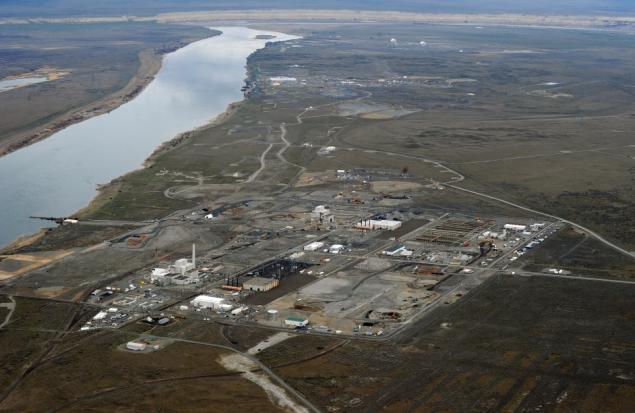
Current cost estimates to clean up the place, says Frank, “could run anywhere between $316 and $662 billion.”
But that depends on a few definitions, including the most critical: What does it mean to “clean up” a hellhole like Hanford? If you want to remove plutonium from a radioactive wasteland, what do you do so that it doesn’t create another radioactive wasteland? And what does that say about the 90,000 tons of high-level waste sitting at more than 50 U.S. commercial reactor sites?
To put it in perspective, we spend $2.6 billion each year just to preserve Hanford as it is. The clean-up estimate, according to Frank, has roughly tripled in the past six years, leaving us to believe that in another six years it could easily be over $6 trillion.
The environmental consequences are colossal. As Frank abundantly documents, Hanford is an unfathomable mess. Giant tanks are leaking. Plutonium and other apocalyptic substances are rapidly migrating toward the Columbia River, which could be permanently poisoned, along with much more. Local residents have been poisoned with “permissible permanent concentration” of lethal isotopes on vegetables, livestock, and in the air and drinking water.
Such exposures have even included a deliberate experiment known as the “Green Run” in which Hanford operatives “purposely released dangerous amounts of radioactive iodine.”
Such emissions are especially damaging to embryos, fetuses and small children, whose thyroids can be easily destroyed (as we are now seeing at Fukushima). But back then the U.S. Army Corps of Engineers wanted to know how fallout would flow in wind currents.
The product was a “death mile” stretching from the Columbia River basin to the ocean, filled with casualties of radioactive poisoning.
After decades of devastating leaks from defective storage tanks, the Los Angeles Times reported that more radioactivity was stored at Hanford “than would be released during an entire nuclear war.”
Thousands of such tanks at Fukushima may soon be given a governmental green light to dump their poisons in the Pacific, with potentially apocalyptic results.
At Hanford, “the waste was so hot it would boil … for decades to come,” i.e., right up to the present day, writes Frank.
Despite official denials, Frank documents a terrifying range of catastrophic leaks into the soil, water tables and streams throughout the reservation. By 1985, he writes, “despite $7 billion spent over the previous ten years, no progress had been made in ridding the aging tanks” of their deadly offal.
To this day “Hanford remains the most complex environmental mess in the United States,” riddled with problems that provide huge profits for corporations that land clean-up contracts and then fail to deliver, exceeding the complexity even of the infamous waste dump at West Valley, New York, and the highly radioactive fallout zone at Santa Susana, California, just north of Los Angeles.
But Hanford’s not alone. Frank also takes us to Chelyabinsk, the site of a Soviet era disaster, and to another wasteland around Kyshtym. Like the 1000-square-mile “dead zone” around Chernobyl, Hanford is full of areas where human life is perilous at best. ………………………………………………….. more https://truthout.org/articles/nuclear-power-isnt-clean-it-creates-hellish-wastelands-of-radioactive-sewage/
Joshua Frank’s book Atomic Days shows the nuclear industry’s only real role – it is essential for the USA’s ‘permanent war economy’

As the atomic energy business is increasingly priced out of the electricity market by wind, solar, batteries, and increased efficiency and conservation, we will likely see the nuclear power industry increasingly admitting to what it always was — a necessary servant of the nuclear weapons industry.

Nuclear Power Isn’t Clean — It Creates Hellish Wastelands of Radioactive Sewage, Harvey Wasserman, Truthout October 12, 2022,
“……………………………..To put the nuclear power industry in a larger context, Frank guides us through the “permanent war economy” birthed during WWII, and discusses Franklin Roosevelt’s ambivalent relations with the “Malefactors of Great Wealth” who often stood in the way of making the U.S. the “Arsenal of Democracy,” and who once even plotted to kill him.
With the decision to build an A-Bomb, the giant Bechtel Corporation used the 120-square-mile reservation at Hanford to produce 103.5 metric tons of plutonium, perhaps the deadliest substance known to humanity.
But there was no effective solution for what might happen to the place in the aftermath. The Waste Treatment Plant meant to “vitrify” rad wastes into glass began construction in 2002, with plans to open in 2011. It has become, in both cost and area, “the largest single construction operation taking place anywhere in the United States,” now with an estimated price tag of $41 billion and a projected opening in 2036.
With “a string of bungled jobs under its belt,” Bechtel’s failed “Big Dig” in Boston — a much-vaunted tunnel from Logan Airport to downtown — reflected its work at Hanford when a collapse killed a 39-year-old woman and resulted in $357.1 million settlement exempting management from criminal prosecution.
As the U.S.’s fourth-largest privately held company, Bechtel spending $1.8 million on D.C. lobbying in 2019-20 was par for the course. The payback, Frank writes, comes in the tragic diseases suffered by Hanford workers like Abe Garza and Lawrence Rouse, usually amid terse, well-funded official denials. Researchers like Karen Wetterhahn and veterans like Victor Skaar have joined Vietnam victims of Agent Orange in being victimized by exposures they were repeatedly assured were “safe.” Whistleblowers like Ed Bricker were even subjected to intense spying and sabotage by close associates he was deceived into accepting as friends.
Meanwhile activists like Russell Jim of the Yakama Tribe began to force “an immeasurable amount of transparency” around the Hanford disaster. Their decades of hardcore community organizing came with a growing demand for accountability that has changed the political atmosphere surrounding the cleanup.
The debate has carried into the use of commercial atomic power.
Because of Hanford’s nuclear presence, five atomic reactors were constructed in Washington State, promising electricity that would be “too cheap to meter.”
But like the soaring costs of plutonium production and clean-up, the Washington Public Power System plunged into the biggest public bankruptcy in U.S. history, due to massive delays and cost overruns. Only one of the nukes now operates.
Sadly, some self-proclaimed climate activists have fallen into the atomic pit, arguing that in the face of the acute threat of climate change, nuclear power should be pursued as a way to lower emissions.
But they all ignore the big lesson Joshua Frank teaches us about Hanford: All the rhetoric in the world can’t cover for the physical realities of dealing with atomic radiation. And atomic fires burning at 571 degrees Fahrenheit will never cool the planet. The mines, the mills, the fuel fabrication, the reactors themselves, the waste dumps, all that horrendous multitrillion-dollar paraphernalia — they together comprise the most lethal and expensive technological failure in human history.

Many reactor promoters have long vehemently denied any connection between their “peaceful atom” and the scourge of war, but anti-nuclear activists have exposed the falsity of those claims. For example, the Campaign for Nuclear Disarmament, a British advocacy organization that opposes both nuclear weapons and the building of new nuclear power facilities, writes:
The civil nuclear power industry grew out of the atomic bomb programme in the 1940s and the 1950s. In Britain, the civil nuclear power programme was deliberately used as a cover for military activities…. The development of both the nuclear weapons and nuclear power industries is mutually beneficial. Scientists from Sussex University confirmed this once again in 2017, stating that the government is using the Hinkley Point C nuclear power station to subsidise Trident, Britain’s nuclear weapons system.
As the atomic energy business is increasingly priced out of the electricity market by wind, solar, batteries, and increased efficiency and conservation, we will likely see the nuclear power industry increasingly admitting to what it always was — a necessary servant of the nuclear weapons industry.
Fittingly, the only future for atomic reactors will be as a bottomless pit for ecological suicide and massive public subsidies — exactly like Hanford.
Indeed, for readers truly interested in the future of atomic energy, take a good look at how it plays in Joshua Frank’s Atomic Days. Then ask how soon we can cover the whole damn place with solar panels. https://truthout.org/articles/nuclear-power-isnt-clean-it-creates-hellish-wastelands-of-radioactive-sewage/
Georgia nuclear plant’s cost now forecast to top $30 billion
https://www.gpb.org/news/2022/05/09/georgia-nuclear-plants-cost-now-forecast-top-30-billion?fbclid=IwAR3OXo4tKdYJgJPMQxXjl_l4VnbN1cFZkTtiYE7KZ-NEPngOb5_FnB_GpRY May 9, 2022 Associated Press,
A nuclear power plant being built in Georgia is now projected to cost its owners more than $30 billion.
A financial report from one of the owners on Friday clearly pushed the cost of Plant Vogtle near Augusta past that milestone, bringing its total cost to $30.34 billion.
That amount doesn’t count the $3.68 billion that original contractor Westinghouse paid to the owners after going bankrupt, which would bring total spending to more than $34 billion.
Vogtle is the only nuclear plant under construction in the United States, and its costs could deter other utilities from building such plants, even though they generate electricity without releasing climate-changing carbon emissions.
The latest increase in the budget, by the Municipal Electric Authority of Georgia, wasn’t a surprise after lead owner Georgia Power Co. announced delays and $920 million in overruns on March 3. Georgia Power’s costs only cover the 45.7% of the plant it owns, meaning that the cooperatives and municipal utilities that own the majority of the two-reactor project later update their financial projections as well.
MEAG, which owns 22.7% of Vogtle and provides power to city-owned utilities, raised its total cost forecast, including capital spending and borrowing costs, to $7.8 billion from the previous level of $7.5 billion.
Oglethorpe Power Corp., which provides power to 38 cooperatives in Georgia, owns 30% of Vogtle. In March bumped up its cost projects by $250 million to $8.5 billion.
The city of Dalton, which owns 1.6%, estimated its cost at $240 million in 2021. It hasn’t released a public update.
The municipal utility in Jacksonville, Florida, as well as some other municipal utilities and cooperatives in Florida and Alabama are obligated to buy power from the plant.
When approved in 2012, the third and fourth reactors were estimated to cost $14 billion, with the first electricity being generated in 2016. Now the third reactor is set to begin operation in March 2023, and the fourth reactor is set to begin operation in December 2023.
Atlanta-based Southern Co., which owns Georgia Power, has been charging increasing shares of its cost overruns as shareholder losses, saying it’s unlikely that the Georgia Public Service Commission will approve adding amounts to the bills of Georgia Power’s 2.6 million customers. But Oglethorpe, MEAG and Dalton don’t have shareholders, meaning customers are fully exposed to overruns.
Georgia Power’s customers, as well as some Oglethorpe customers, are already paying the costs of Vogtle.
To protect themselves, the other owners signed an agreement with Georgia Power in 2018 specifying that if costs reach a certain point, the other owners can choose to freeze their costs at that level. In exchange for paying more of the costs, Georgia Power would own a larger share of the reactors.
Oglethorpe wants to freeze its costs at $8.1 billion, selling 2% of the reactor to Georgia Power in exchange for Georgia Power paying $400 million more in costs. MEAG also said Friday it wants to freeze its costs, but didn’t say how much it sought to shift to Georgia Power.
Southern has acknowledged it will have to pay at least $440 million more to cover what would have been other owners’ costs, and has said another $460 million is in dispute.
Georgia Power is disputing the cost threshold at which it must shoulder more of the burden and saying it shouldn’t have to pay the other owners’ share of extra costs stemming from COVID-19. The owners are in talks aimed at resolving their disagreements.
“Cost sharing is imminent, however, until the parties reach agreement, Oglethorpe will continue to pay its full share of the construction costs as billed by Georgia Power, but will do so under contractual protest,” Oglethorpe CEO Mike Smith said in March.
All the owners did vote to continue construction on Feb. 25. Also, the owners report that the U.S. Nuclear Regulatory Commission in March completed a follow-up inspection of wiring problems at the third reactor and signed off that problems it identified in November had been fixed, returning the reactor to its less intensive baseline inspection regime.
“Pure-play” clean-energy” Brookfield Renewable Partners goes dirty as it partners with Cameco and the nuclear industry

Brookfield Renewable operates one of the world’s largest publicly traded, pure-play renewable power platforms.
Westinghouse Electric, a US nuclear power company, is being bought by a
private equity-backed consortium in a $7.9bn deal four years after it
emerged from bankruptcy, as the war in Ukraine spurs fresh interest in an
industry that had fallen out of investor favour.
Brookfield Renewable Partners, one of the world’s largest clean energy investors, and Cameco,
a supplier of uranium fuel, are buying the company in a bet that climate
and energy security concerns will revive the nuclear sector’s fortunes.
They will purchase the group, which makes technology used in about half the
world’s roughly 440 nuclear reactors, from a separate division of
Brookfield Asset Management that runs its private equity investments. The
sale of Westinghouse represents a large windfall for Brookfield’s private
equity business. It invested $1bn in equity to acquire Westinghouse after
Toshiba, its former owner, put it into bankruptcy in 2017 amid large cost
overruns at projects in Georgia and South Carolina. It will receive roughly
$5.5bn through the sale and dividends.
FT 11th Oct 2022
https://www.ft.com/content/46df2aa9-0963-47a6-881c-f715a18a8527
US lawmakers propose halting arms sales to Saudi Arabia
Despite promising to make the kingdom a ‘pariah,’ the Biden government has approved billions in weapon sales to Riyadh
The Cradle, By News Desk- October 10 2022,
Lawmakers from the US Democratic party, Richard Blumenthal and Ro Khanna, have proposed legislation to put an end to US arms sales to Saudi Arabia as a response to the decision by OPEC+ to cut production output levels.
According to the two lawmakers, Riyadh’s support for Moscow, as it is seen by Washington, calls for a “far-reaching review of the US-Saudi relationship.”
In an opinion piece co-written by Blumenthal and Khanna, released by US media outlet Politico on 9 October, they wrote: “The Saudi decision was a pointed blow to the US, but the US also has a way to respond: It can promptly pause the massive transfer of American warfare technology into the eager hands of the Saudi.”
Although US President Joe Biden previously vowed to make the kingdom a “pariah,” US arms have continued to make their way into Saudi hands, helping fuel Riyadh’s war against Yemen. Right after taking office, Biden approved $650 million in air-to-air missiles to Saudi Arabia.
On 2 August, Biden approved and notified Congress of a possible multibillion-dollar weapons sale to both Saudi Arabia and the UAE, totaling as much as $5.3 billion. If the legislation to halt sales to the kingdom passes, the US stands to lose billions of dollars, making it unlikely that such a decision would be ratified…………………..more https://thecradle.co/Article/news/16681
Chris Hedges: the corporate state, the CIA, and the lynching of Julian Assange
Chris Hedges: The Puppets and the Puppet Masters
The judicial proceedings against Julian Assange give a faux legality to the state persecution of the most important and courageous journalist of our generation.
This is the talk given by Chris Hedges outside the Department of Justice in Washington, D.C. on Saturday October 8 at a rally that called on the U.S. to revoke its extradition request for Julian Assange.
https://scheerpost.com/2022/10/09/chris-hedges-the-puppets-and-the-puppet-masters/ By Chris Hedges / Original to ScheerPost, 9 Oct 22,
WASHINGTON, D.C. — Merrick Garland and those who work in the Department of Justice are the puppets, not the puppet masters. They are the façade, the fiction, that the longstanding persecution of Julian Assange has something to do with justice. Like the High Court in London, they carry out an elaborate judicial pantomime. They debate arcane legal nuances to distract from the Dickensian farce where a man who has not committed a crime, who is not a U.S. citizen, can be extradited under the Espionage Act and sentenced to life in prison for the most courageous and consequential journalism of our generation.
The engine driving the lynching of Julian is not here on Pennsylvania Avenue. It is in Langley, Virginia, located at a complex we will never be allowed to surround – the Central Intelligence Agency. It is driven by a secretive inner state, one where we do not count in the mad pursuit of empire and ruthless exploitation. Because the machine of this modern leviathan was exposed by Julian and WikiLeaks, the machine demands revenge.
The United States has undergone a corporate coup d’etat in slow motion. It is no longer a functioning democracy. The real centers of power, in the corporate, military and national security sectors, were humiliated and embarrassed by WikiLeaks. Their war crimes, lies, conspiracies to crush the democratic aspirations of the vulnerable and the poor, and rampant corruption, here and around the globe, were laid bare in troves of leaked documents.
We cannot fight on behalf of Julian unless we are clear about whom we are fighting against. It is far worse than a corrupt judiciary. The global billionaire class, who have orchestrated a social inequality rivaled by pharaonic Egypt, has internally seized all of the levers of power and made us the most spied upon, monitored, watched and photographed population in human history. When the government watches you 24-hours a day, you cannot use the word liberty. This is the relationship between a master and a slave. Julian was long a target, of course, but when WikiLeaks published the documents known as Vault 7, which exposed the hacking tools the CIA uses to monitor our phones, televisions and even cars, he — and journalism itself — was condemned to crucifixion. The object is to shut down any investigations into the inner workings of power that might hold the ruling class accountable for its crimes, eradicate public opinion and replace it with the cant fed to the mob.
I spent two decades as a foreign correspondent on the outer reaches of empire in Latin America, Africa, the Middle East and the Balkans. I am acutely aware of the savagery of empire, how the brutal tools of repression are first tested on those Frantz Fanon called “the wretched of the earth.” Wholesale surveillance. Torture. Coups. Black sites. Black propaganda. Militarized police. Militarized drones. Assassinations. Wars. Once perfected on people of color overseas, these tools migrate back to the homeland. By hollowing out our country from the inside through deindustrialization, austerity, deregulation, wage stagnation, the abolition of unions, massive expenditures on war and intelligence, a refusal to address the climate emergency and a virtual tax boycott for the richest individuals and corporations, these predators intend to keep us in bondage, victims of a corporate neo-feudalism. And they have perfected their instruments of Orwellian control. The tyranny imposed on others is imposed on us.
From its inception, the CIA carried out assassinations, coups, torture, and illegal spying and abuse, including that of U.S. citizens, activities exposed in 1975 by the Church Committee hearings in the Senate and the Pike Committee hearings in the House. All these crimes, especially after the attacks of 9/11, have returned with a vengeance. The CIA is a rogue and unaccountable paramilitary organization with its own armed units and drone program, death squads and a vast archipelago of global black sites where kidnapped victims are tortured and disappeared.
The U.S. allocates a secret black budget of about $50 billion a year to hide multiple types of clandestine projects carried out by the National Security Agency, the CIA and other intelligence agencies, usually beyond the scrutiny of Congress. The CIA has a well-oiled apparatus to kidnap, torture and assassinate targets around the globe, which is why, since it had already set up a system of 24-hour video surveillance of Julian in the Ecuadorean Embassy in London, it quite naturally discussed kidnapping and assassinating him. That is its business. Senator Frank Church — after examining the heavily redacted CIA documents released to his committee — defined the CIA’s “covert activity” as “a semantic disguise for murder, coercion, blackmail, bribery, the spreading of lies and consorting with known torturers and international terrorists.”

All despotisms mask state persecution with sham court proceedings. The show trials and troikas in Stalin’s Soviet Union. The raving Nazi judges in fascist Germany. The Denunciation rallies in Mao’s China. State crime is cloaked in a faux legality, a judicial farce.
If Julian is extradited and sentenced and, given the Lubyanka-like proclivities of the Eastern District of Virginia, this is a near certainty, it means that those of us who have published classified material, as I did when I worked for The New York Times, will become criminals. It means that an iron curtain will be pulled down to mask abuses of power. It means that the state, which, through Special Administrative Measures, or SAMs, anti-terrorism laws and the Espionage Act that have created our homegrown version of Stalin’s Article 58, can imprison anyone anywhere in the world who dares commit the crime of telling the truth.
We are here to fight for Julian. But we are also here to fight against powerful subterranean forces that, in demanding Julian’s extradition and life imprisonment, have declared war on journalism.
We are here to fight for Julian. But we are also here to fight for the restoration of the rule of law and democracy.
We are here to fight for Julian. But we are also here to dismantle the wholesale Stasi-like state surveillance erected across the West.
We are here to fight for Julian. But we are also here to overthrow — and let me repeat that word for the benefit of those in the FBI and Homeland Security who have come here to monitor us — overthrow the corporate state and create a government of the people, by the people and for the people, that will cherish, rather than persecute, the best among us.
You can see my interview with Julian’s father, John Shipton, here.
NOTE TO SCHEERPOST READERS FROM CHRIS HEDGES: There is now no way left for me to continue to write a weekly column for ScheerPost and produce my weekly television show without your help. The walls are closing in, with startling rapidity, on independent journalism, with the elites, including the Democratic Party elites, clamoring for more and more censorship. Bob Scheer, who runs ScheerPost on a shoestring budget, and I will not waver in our commitment to independent and honest journalism, and we will never put ScheerPost behind a paywall, charge a subscription for it, sell your data or accept advertising. Please, if you can, sign up at chrishedges.substack.com so I can continue to post my now weekly Monday column on ScheerPost and produce my weekly television show, The Chris Hedges Report.
Biden must deal on Ukraine
https://www.news-gazette.com/opinion/letters-editor/letter-to-the-editor-biden-must-deal-on-ukraine/article_be32d819-6aa1-5751-b55a-f8881c4d13f0.html FRANCIS A. BOYLE 9 Oct 22 Having lived through the Cuban Missile Crisis myself, right now, we are witnessing a slow-motion Cuban Missile Crisis in reverse over Ukraine.
The key to resolving the Cuban Missile Crisis was that President John F. Kennedy opened up back-channel negotiations with Soviet Premier Nikita Khrushchev in order to come up with a compromise solution that barely avoided a nuclear war.
So far, the Biden administration has publicly ruled out direct negotiations with the Putin government over the Ukraine war, though there could be back-channel negotiations going on right now that I am not aware of — let’s hope there are.
As I see it, the main problem here is that Biden is no JFK. It is really up to the American people to pressure the Biden administration to open direct negotiations over the war in Ukraine with the Russian government before the war degenerates out of control as almost happened during the original Cuban Missile Crisis.
‘Now, All of You Are Azov’: ‘openly neo-Nazi’ Ukrainian delegation meets Congress, tours US
Earlier this year, Stanford’s Center for International Security and Cooperation (CISAC) published a detailed report on the “Azov Movement… a far-right nationalist network.”
Earlier this year, Stanford’s Center for International Security and Cooperation (CISAC) published a detailed report on the “Azov Movement… a far-right nationalist network.”
https://thegrayzone.com/2022/10/05/azov-neo-nazi-ukrainian-congress/ MOSS ROBESON·OCTOBER 5, 2022
After meeting with at least 50 members of Congress, soldiers of the neo-Nazi Azov Regiment toured the US to auction off swastika-inspired patches and lobby for an end to restrictions on US arms and training.
This article was originally published by Moss Robeson’s Ukes, Kooks and Spooks blog and lightly edited by The Grayzone.
Read part one of Robeson’s series on Azov’s US tour here.
This September, a delegation of the Ukrainian neo-Nazi-led Azov movement arrived in the United States, at a time when myth making about the far-right network’s “depoliticization” had reached a fever pitch. By this time, the New York Times had ceased referring to Azov as “openly neo-Nazi,” and was referring to the ultra-nationalist organization as “celebrated.”
Since news broke of Azov’s US tour, more information has come to light about the ultra-nationalist organization’s outreach in the country, including efforts by Azov to reverse Congress’ ban on supplying it with arms and training.
Continue readingJoe Biden warned of nuclear ‘Armageddon’ amid Russia’s threats. The White House isn’t so sure
The US president recently made unusually direct comments about the dangers of his Russian counterpart Vladimir Putin’s thinly veiled threats to use nuclear weapons. But the White House says they didn’t reflect new intelligence.
The United States sees no sign of Russian preparations to use a nuclear weapon in the near future, the White House said Friday after President Joe Biden warned that the world risks “Armageddon.”
“We have not seen any reason to adjust our own strategic nuclear posture, nor do we have indications that Russia is preparing imminently to use nuclear weapons,” Press Secretary Karine Jean-Pierre told reporters aboard Air Force One.
Asked if Mr Biden’s alarming comment —
made late Thursday while criticising Russian President Vladimir Putin
— reflected new intelligence, she said “no.”…………………………………….. https://www.sbs.com.au/news/article/joe-biden-warned-of-nuclear-armageddon-amid-russias-threats-the-white-house-isnt-so-sure/1up40bgek
US purchases $290 million of drug for use in radiological and nuclear emergencies
The Hill, BY JULIA MUELLER – 10/06/22,
he Department of Health and Human Services (HHS) says it has spent $290 million on a drug to treat radiation sickness in the event of a nuclear emergency.
The HHS Administration for Strategic Preparedness and Response announced in a Tuesday release that it bought the drug Nplate from Amgen USA Inc. “as part of long-standing, ongoing efforts to be better prepared to save lives following radiological and nuclear emergencies.”………………..
The new purchase follows growing international concern over the potential use of nuclear weapons in Russia’s war on Ukraine. …….https://thehill.com/policy/healthcare/3676691-us-purchases-290-million-of-drug-for-use-in-radiological-and-nuclear-emergencies/
Does Russia sell nearly $1 billion in uranium to the U.S. a year?

If you can follow all this – well good luck to you!
https://www.washingtonpost.com/politics/2022/04/20/does-russia-sell-nearly-1-billion-uranium-us-year/ Analysis by Glenn KesslerThe Fact Checker, April 20, 2022 ,
“We are still sending about $100 million every month to Russia to buy uranium.”
— Sen. John Barrasso (R-Wyo.), interviewed on Fox News, April 13
“In 2021 Russian imports [of uranium] cost almost $1 billion, money that helped underwrite Mr. Putin’s war machine.”
— Barrasso, in an opinion article in the Wall Street Journal, April 12
The Biden administration has imposed sweeping sanctions on Russia since Moscow’s invasion of Ukraine, including eliminating preferential trading privileges and banning imports of Russian oil, liquefied natural gas and coal. So we were surprised to hear these numbers from Barrasso — that Russia received nearly $1 billion for uranium products in 2021 and is on track to earn $1.2 billion this year. The uranium is generally used as fuel to generate electricity in nuclear power plants.
Barrasso, the senior Republican on the Senate Energy and Natural Resources Committee, represents Wyoming, which has uranium mines that would benefit from a ban on Russian uranium. In fact, the domestic uranium mining industry has all but come to a halt, with production falling to an all-time low in 2019, as nuclear energy increasingly has relied on imports. That constituency might have made Barrasso a suspect source, though we have found that he does not routinely make up his numbers.
The Facts
Continue reading1 This Month





PLEASE OPPOSE HR 8255 AND S.3639 – bills would accelerate satellite deployment, with no environmental review or safeguards – https://ncstd5li.quorum.us/campaign/169331/
To see nuclear-related stories in greater depth and intensity – go to https://nuclearinformation.wordpress.com
-
Archives
- October 2026 (81)
- September 2026 (339)
- August 2026 (330)
- July 2026 (355)
- June 2026 (287)
- May 2026 (306)
- April 2026 (356)
- March 2026 (251)
- February 2026 (267)
- January 2026 (308)
- December 2025 (358)
- November 2025 (359)
-
Categories
- 1
- 1 NUCLEAR ISSUES
- business and costs
- climate change
- culture and arts
- ENERGY
- environment
- health
- history
- indigenous issues
- Legal
- marketing of nuclear
- media
- opposition to nuclear
- PERSONAL STORIES
- politics
- politics international
- Religion and ethics
- safety
- secrets,lies and civil liberties
- spinbuster
- technology
- Uranium
- wastes
- weapons and war
- Women
- 2 WORLD
- ACTION
- AFRICA
- Atrocities
- AUSTRALIA
- Christina's notes
- Christina's themes
- culture and arts
- Events
- Fuk 2022
- Fuk 2023
- Fukushima 2017
- Fukushima 2018
- fukushima 2019
- Fukushima 2020
- Fukushima 2021
- general
- global warming
- Humour (God we need it)
- Nuclear
- RARE EARTHS
- Reference
- resources – print
- Resources -audiovicual
- Weekly Newsletter
- World
- World Nuclear
- YouTube
-
RSS
Entries RSS
Comments RSS

