THE BIGGEST LIE – ADDICTED TO WAR – WHAT MOST AMERICAN PEOPLE DON’T KNOW and DON’T WANT TO KNOW
The mainstream media will never tell the truth about this, as they are owned by the very people and corporations who make huge profits from U.S. wars.

THE BIG LIE is so big and so complete in the United States. It’s like mass hypnosis. Like mass brainwashing. ……… Most Americans are taught to believe that we are The Good Guys. And once again, most people are not taught about the true nature of U.S. foreign policy
THE BIG LIE is so big and so complete in the United States. It’s like mass hypnosis. Like mass brainwashing. ……… Most Americans are taught to believe that we are The Good Guys. And once again, most people are not taught about the true nature of U.S. foreign policy
https://www.addictedtowar.com/the-big-lie, By Frank Dorrel – Publisher of ADDICTED To WAR: www.addictedtowar.com, 31 Oct 22,
What Is This BIG LIE – I Am Talking About? ………………..
Well, it’s not Donald Trump claiming that he won the 2020 election for President……….
I’m not talking about Climate Change/Global Warming.…. now heating faster than expected
I’m not talking about Systemic Racism in the United States.………. this terrible situation.
I’m not talking about The Prison Industrial Complex………… this sad story is not really a secret
I’m not talking about Poverty and Homelessness…………. very sad situation happening to millions of American people.
I’m not talking about COVID, the pandemic that has caused the deaths of hundreds of thousands of American people in the last two years
THE BIG LIE
The BIG LIE I am talking about has to do with U.S. foreign policy and U.S. wars, both overt and covert. We are not told the truth about them or that the U.S. is a Global Empire that controls much of the World through force and power and threatens Third World countries, who are not willing to do as we say. Most American people do not know these things. Most do not believe these things are true. And most people are not willing to take a closer look at all of this.
I suggest you go to my website to see what I am talking about. Go to the Film Page: www.addictedtowar.com/films and watch as many of these important anti-war films as you can. They are all on YouTube and can be watched for free. Take as long as you need. I do not think you will find another list like this anywhere on the Internet. I have watched all of these films at least two or more times. Every one of them is very well done. Altogether, they reveal THE BIG LIE. These films are never aired on television. Not even on PBS.
Go to the Talks and Interviews Page: www.addictedtowar.com/talks-interviews – and watch and listen to as many of them as you can. The very first talk is by Martin Luther King Jr. It’s titled – BEYOND VIETNAM: A Time To Break Silence. Once again, take your time to watch these talks by these activists. They reveal the horrors our country has been committing all of these years with its many wars against innocent poor people around the World.
THE BIG LIE
I am talking about is what Martin Luther King Jr. said in his BEYOND VIETNAM Speech: “The Greatest Purveyor of Violence in The World Today, My Own Government.” The Military, the Oil Companies, the Corporations, the Weapon Makers, the Bankers, the Mainstream Media & the Politicians, also known as The Military-Industrial-Complex. They make war for profit and also to control the resources of the World. And WE, the PEOPLE are LIED to about this. One of their biggest weapons is propaganda. And they really know how to use it. It is a global battle of the rich versus the poor. And war is, for the most part, racist. We bomb, invade and kill mostly people of color.
Read this article by James Lucas titled: THE UNITED STATES HAS KILLED MORE THAN 20 MILLION PEOPLE IN 37 NATIONS SINCE WWII: https://popularresistance.org/us-has-killed-more-than-20-million-in-37-nations-since-wwii
Read this article by Professor Larry Mosqueda of Evergreen State College titled: SHOCKED and HORRIFIED, written on September 15th, 2001: www.globalissues.org/article/257/shocked-and-horrified
The mainstream media will never tell the truth about this, as they are owned by the very people and corporations who make huge profits from U.S. wars. Most people in the government will not talk about or look at this. If they were to do so, they would become outcasts and pariahs, shunned by others in the government. And for the most part, people in the military will not look at or talk about these things. However, some have spoken out. And many of them are listed on my site. The one group that does look at this issue is the Anti-War Movement. We are part of the alternative media in this country. You can see who some of these organizations are by going to: www.addictedtowar.com/sources-and-websites . CovertAction DEMOCRACY NOW, is on this list.
There is an anti-war movement in this country. But it’s just not big enough to make much of a difference. Most people are not taught about these things in their schools, in their churches, or by their parents. And they won’t learn about THE BIG LIE by watching the mainstream news on television or by reading the mainstream newspapers.
HOW DID I LEARN ABOUT THE TRUE NATURE OF U.S. FOREIGN POLICY?
I first started learning about all of this when I discovered KPFK 90.7 FM Radio in 1980. KPFK is part of the Pacifica Network: https://pacificanetwork.org – consisting of five radio stations in this country. They are KPFA in Berkeley, KPFK in Los Angeles, WBAI in New York, WPFW in Washington DC and KPFT in Houston. The first Pacifica station was KPFA in Berkeley. It was started in 1949 by Lou Hill, a man who refused to go to World War II. He wanted to have a station that was against war, dealt with social injustice and had no commercial sponsors so that the truth could be told. I discovered KPFK by chance. No one told me about it.
Read more: THE BIGGEST LIE – ADDICTED TO WAR – WHAT MOST AMERICAN PEOPLE DON’T KNOW and DON’T WANT TO KNOWI had a job as a driver for the University of Southern California. I drove about 200 miles a day. One day in 1980, I was turning the FM channels and heard Alan Watts talking on KPFK. He was an amazing storyteller, a philosopher of sorts, and very interesting to listen to. He was already dead when I started listening to him. So every Monday at 2:00 PM, I put on KPFK. Then one Monday, I left the station on and heard Noam Chomsky talking about U.S.-supported death squads in El Salvador.
That was the beginning for me. From that time on, I listened to KPFK as much as possible. I discovered many other truth-tellers on KPFK, talking about U.S. foreign policy, who you would never hear on the mainstream media. People like Howard Zinn, Ramsey Clark, Michael Parenti, Daniel Ellsberg, John Stockwell, Philip Agee, S. Brian Willson, Roy Bourgeois, Medea Benjamin, Kathy Kelly & many others. Then I discovered Blase Bonpane, who had his own weekly program on KPFK called WORLD FOCUS.
I began listening to Blase every week. Soon he became my mentor. The more I learned about what the U.S. had been doing with its foreign policy, the more upset I got. During the listener-sponsored fund-drives, I would order books and talks by these truth-tellers. Whenever they came to Los Angeles to speak, I would go to listen to them in person. I joined the Veterans For Peace group in Los Angeles and would go to their meetings. It was there that I met Tony Russo and learned so much about what he called THE U.S. WAR IN VIETNAM. Tony had been partners with Daniel Ellsberg in revealing The Pentagon Papers.
At that time, I was learning about what was happening in Nicaragua, with the U.S. supporting the Contra’s and the history of U.S. interventions there. The more I learned, the worse it got. I had no idea that my country, the United States, had been doing so many terrible things to innocent poor people all over the World. I went to hear John Stockwell at least three times. He had been a marine and was the CIA Station Chief in Angola. The stories he told about the atrocities the CIA had been committing around the World were absolutely chilling. You can hear him giving an amazing talk in 1989 here: www.youtube.com/watch?v=bmYZ_kWHk3Q .
It was on KPFK that I first heard about S. Brian Willson, as he and three other veterans began their VETERANS FAST FOR LIFE on the Capitol Steps in Washington DC in 1986. They were protesting U.S. foreign policy in Central America; in Nicaragua,
El Salvador and Guatemala. They fasted for something like 40 days and got a lot of attention all over the country through the Pacifica Network and the anti-war movement. I sent them a $100 donation and a letter of support. And I went on a march supporting these four veterans, S. Brian Willson, Charlie Liteky, Duncan Murphy and George Mizo – in Downtown Los Angeles and marched with a big crowd, right behind Jackson Browne and Kris Kristofferson.
On September 1st, 1987, I heard Blase Bonpane say on KPFK that Brian Willson had been run over at The Concord Naval Weapons Station in Northern California by a train that was carrying weapons to be shipped to Central America and used to kill innocent people there. Brian lost both legs but survived the attack. One year later, he came to Los Angeles to give a talk, which I heard about on KPFK. I went to hear him and my life was changed forever. To this day, I have never heard anyone speak quite like Brian did that night. He was so clear with his message against the U.S. war in Vietnam. I’ll never forget one thing he said: “How could I have gone 10,000 miles across the ocean to take part in killing people I did not know anything about”. Brian had been a believer in that war. He was a conservative republican, an anti-communist and an All-American young man. But he had his epiphany when he witnessed a fishing village in Vietnam that we had bombed & napalmed. He was sent to inspect the success of this mission. He saw maybe 100 people, all of them dead or dying. No soldiers. No weapons. Only women, children and a few older men. He went to four other villages that week and observed the same thing. We were killing villagers and reporting that they were V.C. or Viet Cong. Brian started to speak out against what he had witnessed and soon he was sent back to the States. Some years later, he became a full-time anti-war activist. Brian’s mantra is: We Are Not Worth More. They Are Not Worth Less.
Everything that Brian writes about on his website is well worth reading: www.brianwillson.com . You can watch Brian at: www.youtube.com/watch?v=mZ_cO1wC0yI – An excellent film about Brian titled: “PAYING THE PRICE FOR PEACE: The Story of S. Brian Willson” – can be rented or bought at: www.addictedtowar.com/about-paying-the-price . I was the associate producer on this amazing film. Brian is the last segment in my film: “What I’ve Learned About U.S. Foreign Policy: The War Against The 3rd World.” If you have never seen my film, please take the time to watch it: www.youtube.com/watch?v=0gMGhrkoncA . And once again, watch the films on The Film Page and the talks on The Talks & Interviews Page. In doing so, you could earn what would be like the equivalent of a PH.D in: The True History of U.S. Foreign Policy.
There is also the Book Page, which lists over 90 excellent books you can read, most on the topic of U.S. Foreign Policy: www.addictedtowar.com/books .
HOW DO THEY GET AWAY WITH ALL OF THIS? WHY MOST PEOPLE CAN’T SEE THESE TRUTHS?
Here is why I believe that most Americans cannot and will not see these truths that I have been talking about. THE BIG LIE is so big and so complete in the United States. It’s like mass hypnosis. Like mass brainwashing. Like something out of Orwell’s book 1984. I believe the biggest tool for brainwashing is the television set that we watch. Most Americans are taught to believe that we are The Good Guys. And once again, most people are not taught about the true nature of U.S. foreign policy in their schools, in their churches or by their parents. And they won’t learn about THE BIG LIE by watching the mainstream news on television or by reading the mainstream newspapers.
I Think The Following Is A Very Important Point In All of This!
Many people have lived a pretty good life here in the United States. They have had a lot of freedom and have been given a lot of opportunity to do what they want, to go for their own special dreams. Not everyone gets there, but at least, many have had that chance. This doesn’t necessarily happen if you are Black or Latinx or Native American or poor. And many people have had various problems fitting in our society and end up unhappy and discontented. But this is America. The Land of The Free and The Home of The Brave. There are so many things here that people appreciate. This is certainly true in my case. And many people have come here from other countries in order to have a better life. And ironically, many of these people have come from some of the very countries we have attacked and invaded. We have had it good here compared to them.
But do these facts make it OK to have a foreign policy that has literally killed millions of innocent people and ruined the lives of many millions more, all for lies?
We are told that our military goes into other countries to help the people and bring freedom and democracy. But of course, that is not what has been happening with our foreign policy. How do you help people when you invade them, drop bombs on them, send in drones to kill them, place sanctions on them and support dictators who oppress them. Most Americans do not want to believe or accept that our country has been doing these horrendous things and still is. And the policies of the U.S. also has ruined the lives of millions more people all over the World. This is not what most American’s believe. It’s much easier being ignorant than it is to realize that this is happening and has been happening all along.
For those of us who have come to understand these things, it is not easy, as we learn that others do not want us to tell them about this or to try to educate them about this. And since the vast majority of Americans do not know or believe these things, it’s very easy to dismiss those of us who do, calling us crazy or conspiracy theorists, without ever looking at the evidence we have to show them. I cannot tell you how many friends I have had in my life who are no longer my friends. Many will not call me back or respond to emails I have sent them about this. It is an amazing thing to experience. After over 40 years of being an activist, I do understand why people do not want to know. It’s just too painful to know. It’s simply easier not to know. Life can be hard. Life can be difficult. And it certainly is now with all that we are dealing with. But life is so much easier not having to deal with the information I have been talking about. However, by denying these truths, we unknowingly support the deaths and destruction of millions.
I do want to say that most of the people who have been involved, in one way or another, in carrying out these barbarous acts committed by the U.S. are not necessarily lying. For the most part, they are simply following orders. The soldiers follow orders. The politicians go along with what they are told. And the reporters in the mainstream media don’t really do true journalism. They get their stories from the State Department, the CIA or other government sources. They don’t investigate on their own to see if these stories are really true or not. The victims of U.S. foreign policy are in other countries, out of sight, out of mind. And the people I have just mentioned will not look at the information we in the anti-war movement try to give them. So the terrible, horrible and unbelievable things our country does happens because we live THE BIG LIE here in the United States.
I want to close with something important that Blase Bonpane said back in 2009. He said:
“The reason he did his anti-war work was because he wanted to stop his country (United States) from killing millions of innocent people all over the world”.
What Blase said is the very same reason why I have been doing my anti-war work all of these years. Blase was loved and respected by so many people. He died in 2019.
And I also want to thank all of the Truth-Tellers and Anti-War Activists I have mentioned in this article and who are on my website – for being my teachers, and for continuing to do this important work. The question is how can we reach enough people to change from being a war-like country to a Peace-Like country? Peace means that we help people in other countries and in our own country. We do not invade them, we do not bomb them, we do not starve them and we do not kill them.
You can read the 2004 edition of ADDICTED To WAR: www.addictedtowar.com/read-book . The 2015 edition can be purchased here: www.addictedtowar.com/store . ADDICTED To WAR is a book that most everyone (12 years and older) can read and understand. Hundreds of high school teachers and college professors have used it in their classrooms. We need to have more teachers and professors using it. When I was in high school, a book like ADDICTED To WAR could never have been used in class at all. I have read it every year since we first published it in 2002. I always think what a fantastic, one-of-a-kind book ADDICTED To WAR is.
In 2000, I put together my film compilation titled: “WHAT I’VE LEARNED ABOUT U.S. FOREIGN POLICY: The War Against The Third World.” I updated it in 2015, adding three new segments.
It can be seen here: www.youtube.com/watch?v=0gMGhrkoncA – If you have not seen it, please do.
Publisher: ADDICTED To WAR
Associate Producer: PAYING THE PRICE FOR PEACE: The Story of S. Brian Willson
Producer: What I’ve Learned About U.S. Foreign Policy:
Member: Veterans For Peace
310-838-8131
All at Once Mainstream Pundits Push for WW III
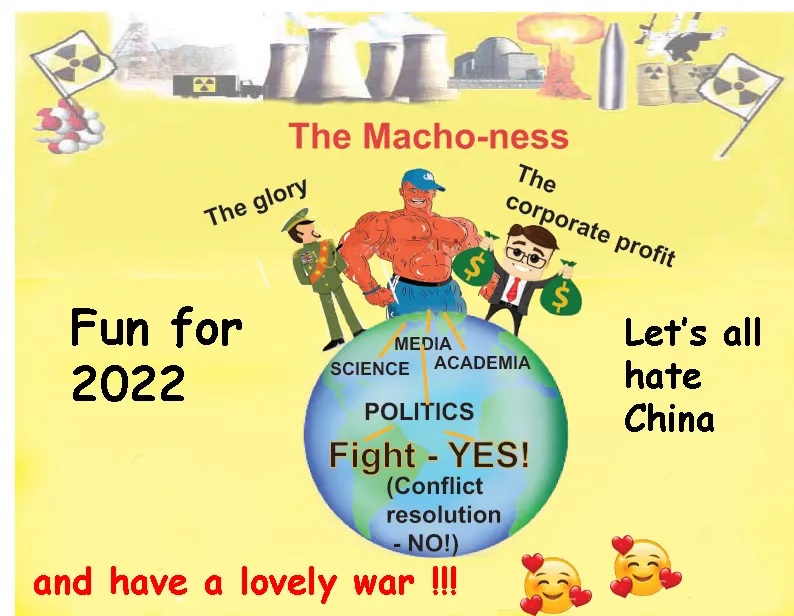
When they’re not arguing that World War Three is coming and we must all prepare to fight it and win, they’re arguing that a global conflict is already upon us and we must begin acting like it, as in last month’s New Yorker piece “What if We’re Already Fighting the Third World War with Russia?”
These Beltway swamp monster pontifications are directed not just at the general public but at government policymakers and strategists as well, and it should disturb us all that their audiences are being encouraged to view a global conflict of unspeakable horror like it’s some kind of natural disaster that people don’t have any control over.
Every measure should be taken to avoid a world war in the nuclear age. If it looks like that’s where we’re headed, the answer is not to ramp up weapons production and create entire industries dedicated to making it happen, the answer is diplomacy, de-escalation and detente.
https://consortiumnews.com/2022/10/28/all-at-once-mainstream-pundits-push-for-ww-iii/ October 28, 2022, Caitlin Johnstone says it should disturb everyone in the nuclear age that writers at influential publications frame the rise of a multipolar world as something that must inevitably bring on unspeakable violence and human suffering.
Mainstream punditry in the latter half of 2022 is rife with op-eds arguing that the U.S. needs to vastly increase military spending because a world war is about to erupt, and they frame it as something that happens to the U.S. as though its own actions would have nothing to do with it.
As though it would not be the direct result of the U.S.-centralized empire continually accelerating towards that horrific event while refusing every possible diplomatic off-ramp due to its inability to relinquish its goal of total unipolar, planetary domination.
The latest example of this trend is an article titled “Could America Win a New World War? — What It Would Take to Defeat Both China and Russia” published by Foreign Affairs, a magazine that is owned and operated by the supremely influential think tank the Council on Foreign Relations.
“The United States and its allies must plan for how to simultaneously win wars in Asia and Europe, as unpalatable as the prospect may seem,” writes Thomas G. Mahnken, adding that in some ways “the United States and its allies will have an advantage in any simultaneous war” on those two continents.
Mahnken doesn’t claim a world war against Russia and China would be a walk in the park; he also argues that in order to win such a war the U.S. will need to — you guessed it — drastically increase its military spending.
“The United States clearly needs to increase its defense manufacturing capacity and speed,” Mahnken writes. “In the short term, that involves adding shifts to existing factories. With more time, it involves expanding factories and opening new production lines. To do both, Congress will have to act now to allocate more money to increase manufacturing.”
But exploding U.S. weapons spending is still inadequate, Mahnken argues, saying that “the United States should work with its allies to increase their military production and the size of their weapons and munitions stockpiles” as well.
Mahnken says this world war could be sparked “if China initiated a military operation to take Taiwan, forcing the United States and its allies to respond,” as though there would be no other options on the table besides launching into nuclear-age World War Three to defend an island next to the Chinese mainland that calls itself the Republic of China.
He writes that “Moscow, meanwhile, could decide that with the United States bogged down in the western Pacific, it could get away with invading more of Europe,” demonstrating the bizarre Schrödinger’s cat Western propaganda paradox that Putin is always simultaneously (A) getting destroyed and humiliated in Ukraine and (B) on the cusp of waging hot war with NATO.
Again, this is just the latest in an increasingly common genre of mainstream Western punditry.
In “The skeptics are wrong: The U.S. can confront both China and Russia,” The Washington Post’s Josh Rogin wags his finger at Democrats who think aggressions against Russia should be prioritized and Republicans who think that military and financial attention should be devoted to China, arguing por que no los dos? (Why not both?}
In “Could The U.S. Military Fight Russia And China At The Same Time?“, 19FortyFive’s Robert Farley answers in the affirmative, writing that “the immense fighting power of the U.S. armed forces would not be inordinately strained by the need to wage war in both theaters” concluding that “the United States can fight both Russia and China at once… for a while, and with the help of some friends.”
In “Can the U.S. Take on China, Iran and Russia All at Once?” Bloomberg’s Hal Brands answers that it would be very difficult and recommends escalating in Ukraine and Taiwan and selling Israel more advanced weaponry to get a step ahead of Russia, China and Iran respectively.
In “International Relations Theory Suggests Great-Power War Is Coming,” the Atlantic Council’s Matthew Kroenig writes for Foreign Policy that a global democracies-versus-autocracies showdown is coming “with the United States and its status quo-oriented democratic allies in NATO, Japan, South Korea, and Australia on one side and the revisionist autocracies of China, Russia, and Iran on the other,” and that aspiring foreign policy experts should adjust their expectations accordingly.
When they’re not arguing that World War Three is coming and we must all prepare to fight it and win, they’re arguing that a global conflict is already upon us and we must begin acting like it, as in last month’s New Yorker piece “What if We’re Already Fighting the Third World War with Russia?”
These Beltway swamp monster pontifications are directed not just at the general public but at government policymakers and strategists as well, and it should disturb us all that their audiences are being encouraged to view a global conflict of unspeakable horror like it’s some kind of natural disaster that people don’t have any control over.
Every measure should be taken to avoid a world war in the nuclear age. If it looks like that’s where we’re headed, the answer is not to ramp up weapons production and create entire industries dedicated to making it happen, the answer is diplomacy, de-escalation and detente.
These pundits frame the rise of a multipolar world as something that must inevitably be accompanied by an explosion of violence and human suffering, when in reality we’d only wind up there as a result of decisions that were made by thinking human beings on both sides.
It doesn’t have to be this way. There’s no omnipotent deity decreeing from on high that we must live in a world where governments brandish Armageddon weapons at each other and humanity must either submit to Washington or resign itself to cataclysmic violence of planetary consequence. We could just have a world where the peoples of all nations get along with each other and work together toward the common good rather than working to dominate and subjugate each other.
As Jeffrey Sachs recently put it, “The single biggest mistake of President Biden was to say ‘the greatest struggle of the world is between democracies and autocracies’. The real struggle of the world is to live together and overcome our common crises of environment and inequality.”
We could have a world where our energy and resources go toward increasing human thriving and learning to collaborate with this fragile biosphere we evolved in. Where all our scientific innovation is directed toward making this planet a better place to live instead of channeling it into getting rich and finding new ways to explode human bodies.
Where our old models of competition and exploitation give way to systems of collaboration and care. Where poverty, toil and misery gradually move from accepted norms of human existence to dimly remembered historical record.
Instead we’re getting a world where we’re being hammered harder and harder with propaganda encouraging us to accept global conflict as an unavoidable reality, where politicians who voice even the mildest support for diplomacy are shouted down and demonized until they bow to the gods of war, where nuclear brinkmanship is framed as safety and de-escalation is branded as reckless endangerment.
We don’t have to submit to this. We don’t have to keep sleepwalking into dystopia and Armageddon to the beat of manipulative sociopaths. There are a whole lot more of us than there are of them, and we’ve got a whole lot more at stake here than they do.
We can have a healthy world. We’ve just got to want it badly enough. They work so hard to manufacture our consent because, ultimately, they absolutely do require it.
A failure to review America’s nuclear posture
By Joe Cirincione | October 28, 2022
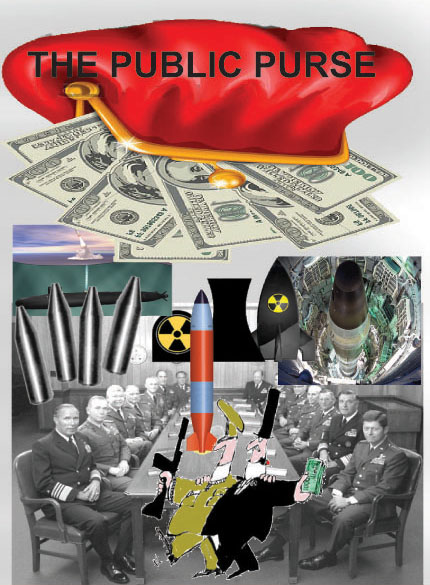
The question is complicated by a process that gives those most interested in continuing nuclear programs the authority to write the policy governing these weapons.
The Pentagon controls the pen
https://thebulletin.org/2022/10/a-failure-to-review-americas-nuclear-posture/?utm_source=Newsletter&utm_medium=Email&utm_campaign=MondayNewsletter10312022&utm_content=NuclearRisk_FailureToReview_10282022#post-heading—By Joe Cirincione | October 28, 2022,
President Joe Biden has passed on his best chance to operationalize his stated goal of reducing the role in US security policy of America’s more than 5,400 nuclear weapons with the public release on October 27 of the Nuclear Posture Review (NPR).
Biden is now the 14th president over eight decades to attempt to reconcile the risks that derive from nuclear deployments with the demands of deterrence. He has discovered how difficult this can be.
Biden’s NPR adjusts nuclear policy and programs at the margins while making no significant changes to the Pentagon’s budgets and deployments. It endorsed dozens of nuclear-weapons programs that will cost an estimated $634 billion over this decade, according to a May 2021 assessment from the Congressional Budget Office. Including in that estimate missile defense programs, weapons programs added after the Congress report and expected inflation could bring the cost to almost $1 trillion per decade for several decades to come.
This includes proceeding with a new land-based, long-range missile rushed toward production in the last months of the Trump administration without examining less expensive and less dangerous alternatives to its production. That project alone could cost $264 billion overall.
This failure is not unique to Biden. Every president in the nuclear age has struggled to control the weapons supposedly under his sole authority. Primarily this is because US nuclear posture is not a rational response to an external threat environment. It is driven by those who see nuclear superiority as a tool of global power, those who use nuclear security as a wedge issue in partisan politics, and by those powerful arms corporations that realize vast profits from manufacturing, marketing, and maintaining these deadly arsenals
The question is complicated by a process that gives those most interested in continuing nuclear programs the authority to write the policy governing these weapons. The Pentagon controls the pen. Biden appears to have concluded that it is too costly in political terms to fight for his views, which included repeated statements that the United States has no need to ever use a nuclear weapon first. He has let the Pentagon dictate his strategy rather than challenge a bureaucracy resisting any alteration of current programs and doctrine.
Elsewhere, I have detailed how a safer, more rational nuclear policy could have included, among other steps, reducing the number of deployed strategic warheads by one-third, to about 1,000, taking nuclear-armed missiles off hair-trigger alert, embracing no first use or sole purpose doctrines, and requiring an additional senior official to authorize launch. Pacts such as AUKUS that encourage the spread of nuclear weapons technology must also be rethought.
But consideration of these and other steps were effective excluded early in the process when the Defense Department fired then-Deputy Assistant Secretary of Defense Leanor Tomero, whom Biden had placed in charge of nuclear and missile defense policy and who had been pressing, following Biden’s presidential guidance, for consideration of some of the alternatives. According to knowledgeable sources, Pentagon staff complained to Republican staff on the Senate Armed Services Committee that Tomero wasn’t sufficiently supportive of “nuclear modernization” – the euphemism for the mountain of contracts that drive the nuclear posture.
Tomero was an early casualty of an entrenched nuclear bureaucracy fiercely protective of its contracts, secrecy, and privilege . As American University Professor Sharon Weiner wrote: “The nuclear weapons establishment will limit choice by presenting everything as an interlocking set of military requirements instead of multiple options for meeting deterrence goals.” She was right.
As Weiner predicted and the NPR reflects, “These options will likely allow, at best, only narrow deviations from the status quo.”
President Bill Clinton was the first to issue an NPR in 1994; Biden should be the last. Policy should flow from the White House to executing departments, not the reverse. Let this be the end of a flawed, inadequate, and dangerous nuclear posture review process.
Western military-industrial corporate-media show only the NATO-USA war-mongering side of the news
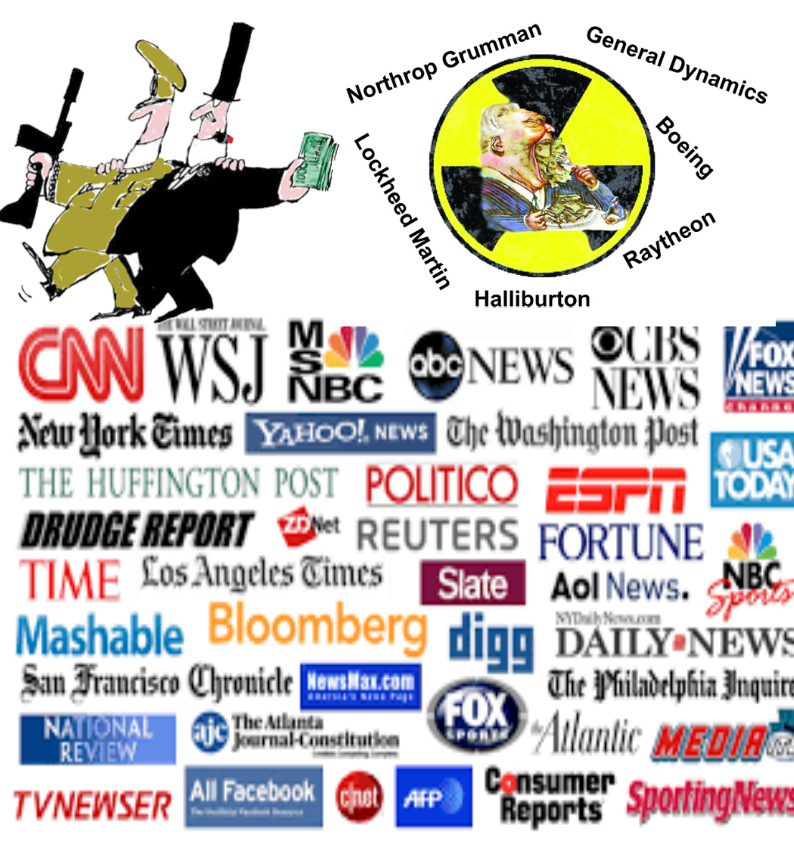

it’s long been sickeningly obvious that our mainstream media show one side of the story: the NATO, Washington, imperial, war-mongering side.
The Military-Industrial Media Complex Strikes Again https://www.counterpunch.org/2022/10/28/the-military-industrial-media-complex-strikes-again/ BY EVE OTTENBERG 28 Oct 22, Tens of thousands protested against the skyrocketing cost of living and against Macron in France October 16, led by left-wing politician Jean Luc Melenchon, but there were few front page or top-of-the hour headlines in the U.S. Huge protests occurred in Rome the same day to demand an end to Italy’s involvement in NATO, but no coverage on the west side of the Atlantic. Thousands protesting in Paris October 22 against NATO, but little notice in North America. Massive protests against NATO and inflation due to sanctions on Russian energy in France, Germany and Austria in September, but little news of it here in the heart of the empire. German police beat citizens protesting energy shortages and record-high inflation, both due to Russia sanctions, the week of October 17, but that was not covered in the USA. Seventy thousand Czechs protested in Prague September 3 against NATO involvement in Ukraine, demanding gas from Russia (before some mysterious imperial somebody with means and motive blew up Nordstream 1 and 2, probably to nip the political effects of those protests in the bud) and ending the war, but that got little coverage in U.S. corporate media.
Ever get the sense there are things our media hides from us? Hmm. Ever wonder why enormous protests against the policies of the Exceptional Empire and its attack dog, NATO, seem, um, to be downplayed? Ever think our corporate news outlets behave more like the propaganda arm of our neoconservative state department and military than a free press? Well, if so, you may be onto something.
Lots of Europeans are unhappy about NATO, the Ukraine war, sanctions on Russia and the wild inflation and deindustrialization – which will result in gargantuan unemployment – those sanctions caused. As their living standards sink like stones, Europeans know who is to blame, namely their supposedly great ally across the Atlantic, and many have soured on their so-called alliance with the hegemon. But Washington doesn’t seem to care. Let the Europeans go broke and protest. The important thing is not reporting this news to the American people, who, if they heard about it, might get a subversive inkling that their government had not behaved in an entirely honorable manner.
Meanwhile lies swarm everywhere. Some unintentional, others not. Most recently we have U.S. joint chiefs of staff chairman Mark Milley claiming that if Ukraine falls, the current world order will collapse. Sadly, this is hogwash. What will collapse are the tumescent egos of U.S. and European politicos and military men. Not surprisingly, they conflate that with the world order. But there are other, far more sinister reasons to make such garishly incendiary pronouncements, namely to prepare the American population for the unthinkable – and it is unthinkable, because if the U.S. attacks Russia with nukes, both the U.S. and Russia will be annihilated. Will Biden and his generals get a nuclear war? Unclear. But what’s clear as day is that Americans travel like lemmings to their doom, thanks to the fibs of their rulers and media.
Somehow all the big news gets blacked out. Like China dumping $100 billion worth of U.S. treasuries and what that means if this becomes a trend (I’ll tell you what it means: we’re $30 trillion in debt and we can’t pay, so when we cart SUVs full of cash to the supermarket, we’ll make those Weimar wheelbarrows look petite). Or how sanctions on Russian energy backfired and caused ruinous inflation in Europe, pretty awful inflation here in the U.S. and pushed the whole west toward recession…or maybe ultimately depression. Or how Biden’s ever more reckless sanctions on China could wind up bankrupting us all. China is, after all the chief U.S. trading partner. Sanction China, as Biden recently did to its chip and semiconductor sector, and prices for everything explode upwards.
But money isn’t everything. What about Biden’s devil-may-care attitude toward continued human life on this planet, which he endangers every time he opens his mouth to bloviate that the U.S. will throw its military into the fray, should Taiwan and China go to war? True, Biden’s bellicose pronunciamentos do make the news – he is, after all, the ruler of one of the most violent empires in human history – but details of their global life-and-death implications, namely that they could kill us all? Not so much.
No, this news is not of interest to the editorial bigwigs who tell us what to think. They’re too busy stuffing our heads with bubble gum for the brain like rubbish about Tik Tok, or celebrity drivel or anything else deeply stupid enough to cretinize viewers and readers, so they won’t notice that their utility bills doubled in recent months, or their grocery bills shot up many percentage points, or the world is closer to being incinerated in a nuclear apocalypse than it has ever been.
But they notice anyway. And even though they may lack the finely tuned mental framework to fit it all together, thanks to their news consumption habits, lots of people have begun to glimpse that Washington’s idiocy could get them blown up tout de suite and meanwhile is bleeding them dry and will very soon be bleeding them drier. Hence the public’s growing reluctance to keep handing Ukraine, the most corrupt country in Europe, blank checks. The GOP even climbed onto the bandwagon and announced it won’t fund this misbegotten war if it regains congress. I, for one, will be astonished if Republicans have the backbone to keep that promise. Anyway, Biden plans to preempt this oath by forking over more billions to Kiev now. This will not, ahem, help the Dems, which is probably what Republicans count on. But then Biden gets to look like he’s a man of principle (the show must go on), while the rest of us go broke and calculate our distance from atomic ground zero. Americans struggle with utility bills, grocery and gas prices, medical and educational debt. They don’t need to fund defense contractors to the tune of billions of dollars so Ukrainians and Russians can kill each other halfway around the world. And they certainly don’t need a war that has humanity teetering on the brink of nuclear Armageddon.
In an unexpected dribble of good news, on October 24 the Washington Post reported that some 30 members of the progressive caucus urged Biden to get diplomacy to end the war rolling. The next day, they sniveled and recanted. This was the first time any Dems had the guts not to cheerlead for more bloodshed and more war on Moscow. What caused this initial sea change, I don’t know. But it was good news. Better late than never, it seemed. It appeared to mean some on the so-called left in Washington had finally come to their senses and just might not behave as disgracefully as so many European socialists did once World War I started, when they abandoned their erstwhile pacifism. For a long time, honestly, it has looked like that was the inheritance Dem progressives wanted to claim, an inheritance not just of shame and mass murder, but, were the Ukraine war to morph into World War III, human extinction.
For less than a day the sun of reason and goodness shone down. Briefly, the people who consider themselves of the left decided this danger of humanity’s mass execution was worth speaking out about and that diplomacy for peace is the only sane route out of the fiasco. But then, the next day they chickened out of bucking their party’s bloodlust. Even their timid gesture was too much to ask. These people are not leftists. They are cowards. They are a disgrace to the left. If anyone in the progressive caucus ever speaks out for diplomacy again, I’ll be very impressed.
Speaking of being impressed, how about that Washington Post actually playing this story big, about progressives calling for diplomacy, instead of burying it? That was unexpected, to say the least. Because it’s long been sickeningly obvious that our mainstream media show one side of the story: the NATO, Washington, imperial, war-mongering side. And it’s been doing that, shamelessly, for a generation. (It did that earlier too, but with a bit of actual embarrassment, whenever it got called out.) Remember Iraq’s infamous weapons of mass destruction? The editors who hyped that lie for months on end went on to bigger and better things, and so did the politicians – Biden even became president! – while an entire country, Iraq, was bombed to smithereens, based largely on mendacious reporting and political chicanery and now, decades later, has simply
swirled down the drain.
And who can forget the frenzy whipped up to justify NATO’s criminal 1999 bombing of Serbia? Nowadays Biden and NATO chief Jens Stoltenberg would have you believe NATO is a “defensive” organization. What it did to Serbia should have tossed that mistake in the trash long ago. Instead, the error persists (not accidentally). When Russia reacted to the chance of Ukraine joining NATO and thus the presence of a hostile bomb-happy axis on its borders, western rulers protested that NATO is “defensive.”
So also clamor our media, prevaricating just as they do every time they mention the U.S. defense department, which should ditch that moniker and return to the previous, more honest “war department.”
You know things are bad when absurd chuckleheads like former Italian prime minister Silvio Berlusconi are the ones almost nailing reality on the head. He did that October 20 with his remarks that Ukraine provoked Russia into its invasion. It could be argued that Kiev did so by slaughtering 14,000 Russian-speakers in the Donbass since 2014 and then, last winter, massing huge numbers of troops on that region’s border, in preparation for what Moscow took to be a genocide.
But actually, Ukraine’s supposed instigation had lotsa help. It would have been more accurate for Berlusconi to say that Ukraine’s puppet master, the U.S., provoked Moscow with its nonstop incitement by expanding NATO eastward since the Soviet Union’s fall, as numerous American experts and diplomats – from cold war brain-trust luminary George Kennan to former ambassador to the USSR Jack Matlock to CIA chief William Burns to great powers expert John Mearsheimer, and others – had warned, and more recently egged Moscow to attack with a 2014 Kiev coup and the eight years of violent nonsense that followed, and that Washington did so with premeditation to rupture the economic relationship between Russia and Europe; but nonetheless Berlusconi landed his verbal dart on the board with the bullseye. And when you have to go to Berlusconi for informed commentary, you’re in trouble, because he recently chose his side in the Italian government and it was the fascist one. So now things are so bad that fascists are among the people objecting to imperial propaganda. Fun times.
But we have the same disastrous mess here in the U.S., where the next presidential election could shape up to be a choice between Trump’s fascism or Biden’s nuclear war. Choice? Ho, ho. That’s no choice. That’s death on the installment plan or instant death. Either way it’s disastrous for ordinary people, because Trumpism either ends what civilization we have in America, which has a dire, global because imperial impact, or Bidenism directly ends civilization on earth.
At the start of the Ukraine war, Biden promised not to launch World War III. He broke that promise, by flooding Ukraine with weapons, CIA operatives and some special forces. To call this reckless is an understatement. Biden’s refusal to use his considerable weight to promote peace negotiations killed thousands of Ukrainians and Russians, will likely kill many more, and also endangers the lives of billions of other people, worldwide – 5.3 billion from nuclear-winter-induced starvation, who would suffer a slow, agonizing death. And I’m not talking about the canard that Russia may use a low-yield nuclear device on the battlefield. I’m talking about Moscow and Washington determining that they really are in a hot war and the long-range, high-yield nuclear missiles that could then begin to fly.
Biden’s sole task is to prevent this. His desire to be seen as the new FDR, as a friend of the unions, as some sort of social democrat, mean nothing if he can’t deescalate this war with Moscow. If Biden wants any legacy other than that of earth’s destroyer, leaving humanity a cold, charred, radioactive planet, he will stop his war-mongering garbage at once and throw his definitive, presidential heft behind peace negotiations with Moscow. And Washington must be an in-person party to those negotiations. Absent that, anything else he does goes down in history, if there even is a history, as a waste.
Eve Ottenberg is a novelist and journalist. Her latest book is Hope Deferred. She can be reached at her website.
Dennis Kucinich: Where Are the Pro-Peace Democrats?
https://www.antiwar.com/blog/2022/10/30/dennis-kucinich-where-are-the-pro-peace-demby Aaron Maté Posted on From The Grayzone: Pushback with Aaron Maté
Dennis Kucinich on the Congressional Progressive Caucus’ Ukraine letter debacle and how to revive the US peace movement at a time when elected progressives are afraid to take a stand against war.
Dennis Kucinich, who led Congressional opposition to the Iraq war, reacts to the Congressional Progressive Caucus retracting a letter calling for diplomacy with Russia. “If we don’t believe in diplomacy,” Kucinich asks, “then where do we go as a country?”.
Dennis Kucinich is a former Congressmember (D-Ohio) and former Mayor of Cleveland.
Talk World Radio: Dennis Kucinich: Democrats Should Not Make Support for War a Test of Party Loyalty
Cuban missile crisis, 60 years on: new papers reveal how close the world came to nuclear disaster
In 1962, a Soviet submarine commander nearly ordered a nuclear launch, newly translated accounts show, with modern parallels over Ukraine all too clear
Guardian, Julian Borger in Washington 27 Oct 2022
The commander of a nuclear-armed Soviet submarine panicked and came close to launching a nuclear torpedo during the Cuban missile crisis 60 years ago, after being blinded and disoriented by aggressive US tactics, according to newly translated documents.
Many nuclear historians agree that 27 October 1962, known as “Black Saturday”, was the closest the world came to nuclear catastrophe, as US forces enforced a blockade of Cuba to stop deliveries of Soviet missiles. On the same day a U-2 spy plane was shot down over the island, and another went missing over Siberia when the pilot lost his way.
Six decades on from the “world’s most dangerous day”, last week’s revelation that a Russian warplane fired a missile near a British Rivet Joint surveillance plane over the Black Sea has once more heightened concerns that miscalculation or accident could trigger uncontrolled escalation.
In October 1962, the US sent its anti-submarine forces to hunt down Soviet submarines trying to slip through the “quarantine” imposed on Cuba. The most perilous moment came when one of those submarines, B-59, was forced to surface late at night in the Sargasso Sea to recharge its batteries and found itself surrounded by US destroyers and anti-submarine planes circling overhead.
In a newly translated account, one of the senior officers on board, Captain Second Class Vasily Arkhipov, described the scene……………………………………………………………
In his account, Arkhipov played down his role and how close the B-59 submarine commander, Savitsky, came to launching the submarine’s one nuclear-tipped torpedo. However, Svetlana Savranskaya, the director of the National Security Archive’s Russian programmes, interviewed another submarine commander from the same brigade, Ryurik Ketov, who said Savitsky was convinced they were under attack and that the war with the US had started.
The commander panicked, calling for an “urgent dive” and for the number one torpedo with the nuclear warhead to be prepared. However, because the signalling officer was in the way, Savitsky could not immediately get down the narrow stairway through the conning tower, and during those few moments of hesitation, Arkhipov realised that the US forces were signalling rather than attacking, and deliberately firing off to the side of the submarine.
“He called to Savitsky and said: ‘calm down, look they are signalling, not attacking, let’s signal back.’ Savitsky turned back, saw the situation, ordered the signalling officer to signal back,” Savranskaya said. She added that two other officers would have had to confirm any order from Savitsky before the nuclear torpedo could have been launched.
Tom Blanton, the director of the National Security Archive, said the aggressive tactics used by the American submarine hunters contributed to the close shave…………………………………………….
Saved ‘primarily because of luck’
The B-59 incident was just one of a cascade of crises that day. A U-2 went missing over Siberia when the pilot lost his bearings, blinded by the aurora borealis and misled by compass malfunction close to the north pole.
Some F-102 interceptor jets were scrambled to protect the U-2, but the joint chiefs of staff who gave the order for their launch were not aware they had been armed with nuclear missiles as a matter of course once the alert level was raised to Defcon 2.
Minutes later, the joint chiefs heard that another U-2 had been shot down over Cuba and assumed it was a deliberate escalation by Moscow. In fact, the order had been given independently by two Soviet generals in Cuba. The joint chiefs were also unaware that there were 80 nuclear warheads on the missiles already in Cuba when they gave their recommendation for the US to carry out airstrikes and then an invasion of Cuba.
The recommendation was overruled by president John Kennedy, as negotiations with Soviet representatives, some of them in a Washington Chinese restaurant, were making progress, leading ultimately to the withdrawal of Soviet missiles from Cuba while US missiles were pulled back from Turkey.
Tom Collina, the director of policy at the Ploughshares Fund, a disarmament advocacy group, said Black Saturday “reminds us that the reason we’ve gotten out of things like that in the past is primarily because of luck”.
“We had some good management, we had some good thinkers,” Collina, co-author of The Button, a book on the nuclear arms race, said. “But basically, we got lucky in the closest situations where we could have gotten involved in nuclear war.”……………………………..
“The lesson we should have learned in 1962 is that humans are fallible, and we should not combine crises with fallible humans with nuclear weapons,” Collina said. “Yet here we are again.” https://www.theguardian.com/world/2022/oct/27/cuban-missile-crisis-60-years-on-new-papers-reveal-how-close-the-world-came-to-nuclear-disaster
Biden to scrap Trump missile project but critics attack US ‘nuclear overkill’
Arms control advocates say changes from Trump era outlined in Nuclear Posture Review do not go far enough
Guardian, Julian Borger , 28 Oct 22,
The Biden administration has confirmed it will cancel a submarine-launched nuclear cruise missile programme begun by Donald Trump, as part of its review of nuclear policy.
The administration will also retire a gravity bomb, the B83-1, from its arsenal as part of its Nuclear Posture Review (NPR), but arms control advocates argued the changes from the Trump era did not go far enough.
The administration is retaining another weapon variant introduced by Trump, a low-yield warhead called the W76-2, intended to deter an adversary like Russia using a low-yield weapon. The Democratic party manifesto in 2020 had called the W76-2 “unnecessary, wasteful, and indefensible”……………………..
Jon Wolfsthal, who was special assistant to Barack Obama on arms control and nonproliferation issues, expressed disappointment in the Biden NPR.
“The world is a dangerous place and our allies and we still rely on nuclear deterrence but this document ignores the role the US can play to make nukes less usable, less likely,” Wolfsthal said on Twitter……………………………………
In response to the NPR, Jessica Sleight, partner for policy at Global Zero, a disarmament advocacy group, said: “Contrary to President Biden’s stated intentions to reduce the role of nuclear weapons, this Nuclear Posture Review continues decades of nuclear overkill, doubles down on needless weapons programs, and fails to advance overdue reforms to policy and posture that would make the United States, its allies, and the world safer.” https://www.theguardian.com/world/2022/oct/27/biden-trump-missile-nuclear-posture-review
Rising Sea Levels Spell Disaster For America’s Coastal Nuclear Plants
By Haley Zaremba – Oct 25, 2022,
- The Biden administration is pushing for a revitalization of America’s nuclear industry.
- Seven of the country’s coastal nuclear plants are at risk as sea levels rise.
- Mitigation measures are needed to protect America’s aging nuclear infrastructure.
……………………………….. The Turkey Point nuclear power plant, located between the Florida Everglades and Biscayne National Park, has been active for fifty years. While mathematical modeling shows that the aging plant is still safe to operate, many local residents live in fear of what will happen when the next hurricane pummels the southern coast of Florida – and the one after that, and the one after that. After seeing what a natural disaster did to Japan’s Fukushima power plant in 2011, anxiety about storm surges crashing into nuclear plants – and very old ones, at that – are justified.
……………. The National Oceanic and Atmospheric Administration (NOAA) projects that the area where Turkey Point is located will experience a full foot of sea level rise by 2050 and three feet of annual flooding. This would mean that the plant’s cooling systems and access roads would flood as well. What’s more, according to a 2020 study by scientists from Johns Hopkins University, Turkey Point is just one of seven coastal nuclear facilities that are vulnerable to sea level rise.
Serious and swift mitigation plans are clearly needed to make sure that aging nuclear infrastructure can safely stand up to storm surges and extreme weather events, which are a matter of “when,” not “if.”……………………. https://oilprice.com/Alternative-Energy/Nuclear-Power/Rising-Sea-Levels-Spell-Disaster-For-Americas-Coastal-Nuclear-Plants.html
Progressives retract Ukraine letter to Biden after uproar
By FARNOUSH AMIRI and SEUNG MIN KIM, 26 Oct 22
WASHINGTON (AP) — A group of progressive Democrats in Congress said Tuesday it had retracted a letter to the White House urging President Joe Biden to engage in direct diplomatic talks with Russia after it triggered an uproar among Democrats and raised questions about the strength of the party’s support for Ukraine.
In a statement, Rep. Pramila Jayapal, the chair of the Progressive Caucus, said the caucus was withdrawing the letter it sent less than 24 hours prior. It was signed by 30 members of the party’s liberal flank.
“The letter was drafted several months ago, but unfortunately was released by staff without vetting,” the Washington Democrat wrote in a statement. As chair of the caucus, Jayapal said she took responsibility for this.
The unusual retraction capped a tense 24-hour period for Democrats. Many reacted angrily to the appearance of flagging support for the president’s Ukraine strategy, coming just weeks before a midterm election where their majorities in Congress are at risk.
The back-and-forth spotlighted the fragile nature of Biden’s relationship with the progressive wing of his party, raising stark questions about their ability to work together not only on Ukraine funding — which seems secure, for now — but on more pressing issues that are top priorities for liberals.
The letter had called for Biden to pair the unprecedented economic and military support for Ukraine with a “proactive diplomatic push, redoubling efforts to seek a realistic framework for a cease fire.”
“The alternative to diplomacy is protracted war, with both its attendant certainties and catastrophic and unknowable risks,” the letter read.
Jayapal said the letter was unfairly conflated with recent comments from Minority Leader Kevin McCarthy, R-Calif., who warned that Republicans will not write a “blank check” for Ukraine if they win back the House majority in November.
Progressives retract Ukraine letter to Biden after uproar
By FARNOUSH AMIRI and SEUNG MIN KIMyesterday

FILE – Rep. Pramila Jayapal, D-Wash., chair of the House Progressive Caucus, attends an event at the Capitol in Washington, July 28, 2022. A group of progressive Democrats in Congress said Tuesday it had retracted a letter to the White House urging President Joe Biden to engage in direct diplomatic talks with Russia after it triggered an uproar among Democrats and raised questions about the strength of the party’s support for Ukraine. (AP Photo/J. Scott Applewhite, File)
WASHINGTON (AP) — A group of progressive Democrats in Congress said Tuesday it had retracted a letter to the White House urging President Joe Biden to engage in direct diplomatic talks with Russia after it triggered an uproar among Democrats and raised questions about the strength of the party’s support for Ukraine.
In a statement, Rep. Pramila Jayapal, the chair of the Progressive Caucus, said the caucus was withdrawing the letter it sent less than 24 hours prior. It was signed by 30 members of the party’s liberal flank.
“The letter was drafted several months ago, but unfortunately was released by staff without vetting,” the Washington Democrat wrote in a statement. As chair of the caucus, Jayapal said she took responsibility for this.
The unusual retraction capped a tense 24-hour period for Democrats. Many reacted angrily to the appearance of flagging support for the president’s Ukraine strategy, coming just weeks before a midterm election where their majorities in Congress are at risk.
ADVERTISEMENT
The back-and-forth spotlighted the fragile nature of Biden’s relationship with the progressive wing of his party, raising stark questions about their ability to work together not only on Ukraine funding — which seems secure, for now — but on more pressing issues that are top priorities for liberals.
RUSSIA-UKRAINE WAR
UN steps up satellite tracking of damage to Ukraine cultureRussia, NATO hold nuclear drills as Ukraine villages poundedLive Updates | Russia-Ukraine-WarPutin monitors practice launches by Russia’s nuclear forces
The letter had called for Biden to pair the unprecedented economic and military support for Ukraine with a “proactive diplomatic push, redoubling efforts to seek a realistic framework for a cease fire.”
“The alternative to diplomacy is protracted war, with both its attendant certainties and catastrophic and unknowable risks,” the letter read.
Jayapal said the letter was unfairly conflated with recent comments from Minority Leader Kevin McCarthy, R-Calif., who warned that Republicans will not write a “blank check” for Ukraine if they win back the House majority in November.
“The proximity of these statements created the unfortunate appearance that Democrats, who have strongly and unanimously supported and voted for every package of military, strategic, and economic assistance to the Ukrainian people, are somehow aligned with Republicans who seek to pull the plug on American support” for Ukraine, Jayapal said.
Yet Jayapal did not disavow the substance of the letter or the push for Biden to engage in diplomacy. Members of the caucus have been calling for a diplomatic solution since Russian President Vladimir Putin’s forces invaded Ukraine on Feb. 24.
The text of the letter had been circulating since at least June, but only a handful of lawmakers signed on at the time, according to two Democrats familiar with the matter who were granted anonymity to discuss internal party deliberations.
Some Democrats who signed the letter months ago said they no longer support it………………………
Despite the retraction and messy behind-the-scenes process, some Democratic lawmakers said they still backed the sentiments behind the letter, arguing that it is the prerogative of Congress to debate the issue as it continues to approve billions of dollars in aid to Ukraine…………………….
Since the war began, Congress has approved tens of billions in emergency security and humanitarian assistance for Ukraine, while the Biden administration has shipped billions worth of weapons and equipment from military inventories.
Last month, lawmakers approved about $12.3 billion in Ukraine-related aid as part of a bill that finances the federal government through Dec. 16. The money included aid for the Ukrainian military as well as money to help the country’s government provide basic services to its citizens.
That comes on top of more than $50 billion provided in two previous bills………………………………….. more https://apnews.com/article/russia-ukraine-biden-europe-congress-government-and-politics-e474bfd7439a57e7923aa1d1b43c8682—
Worthless House Progressives Retract Mild Peace Advocacy Under Pressure From Warmongers
https://caitlinjohnstone.substack.com/p/worthless-house-progressives-retract 26 Oct 22, The Congressional Progressive Caucus has retracted an extremely mild, toothless letter its members had written to President Biden politely asking him to consider adding a little diplomacy into the mix to help end the conflict in Ukraine. The retraction followed a deluge of public outrage against their slight deviation from the official imperial narrative.
If you actually read the original letter signed by House progressives including Alexandria Ocasio-Cortez, Ilhan Omar, Ayanna Pressley, Rashida Tlaib, Jamaal Bowman and Ro Khanna, you will quickly see that it’s as innocuous and anodyne as any statement could possibly be while still containing words. It opens with effusive praise for Biden’s interventionism in Ukraine and condemns the Russian government unequivocally throughout, offering only the humble suggestion that he “pair the military and economic support the United States has provided to Ukraine with a proactive diplomatic push, redoubling efforts to seek a realistic framework for a ceasefire.” Its authors make it abundantly clear that they support making sure such diplomacy is agreeable to Ukraine at every step of the way.
This impotent nothing salad was bizarrely spun by The Washington Post as a call on Biden to “dramatically shift his strategy on the Ukraine war,” despite nothing that could be remotely construed as “dramatic” existing anywhere in the body of the text. The letter received backlash from warmongers in both parties, including from House Speaker Nancy Pelosi. It was personally slammed by Bernie Sanders, the pope of American progressivism. Trolls and warmongers swarmed the social media notifications of every account which posted the letter in an official capacity, mindlessly bleating the words “appeasement” and “Chamberlain” in unison.
In a statement on the retraction of the letter, CPC chair Pramila Jayapal says she accepts responsibility for the publication of the offending act of peacemongering while in the same breath blaming its publication on her staff.
“The letter was drafted several months ago, but unfortunately was released by staff without vetting. As Chair of the Caucus, I accept responsibility for this,” Jayapal said.
“Every war ends with diplomacy, and this one will too after Ukrainian victory,” the statement reads, ignoring mainstream reports that US officials quietly believe Ukraine stands no chance at outright victory in this war. “The letter sent yesterday, although restating that basic principle, has been conflated with GOP opposition to support for the Ukrainians’ just defense of their national sovereignty. As such, it is a distraction at this time and we withdraw the letter.”
Empire critics were quick to highlight the obsequious nature of this retraction.
“For progressives, I didn’t think it could get more pathetic than voting for a disastrous proxy war that the US provoked and prolonged, handing billions to arms makers in the process. In retracting their tepid call for diplomacy and blaming staffers for it, they somehow surpassed it,” tweeted Aaron Maté.
“Certainly speaks to the insanely hawkish atmosphere in Washington that pressured the progressive caucus to withdrawal a totally reasonable, responsible and necessary call for diplomacy in a conflict that risks escalating to nuclear armageddon,” tweeted Rania Khalek.
“Imagine being elected to Congress based on promises of challenging ‘the establishment’ or whatever, then being so petrified of anger from bipartisan DC establishment mavens that you can’t even wait 24 hours before meekly retracting the only mild dissent you’ve expressed,” tweeted Glenn Greenwald.
I don’t know what pressures were the ultimate deciding factor in the CPC’s decision to retract its feeble advocacy for a bit more diplomacy, or how much of that pressure was brought to bear behind the scenes by bigger political monsters in the Beltway swamp, but ultimately it doesn’t matter. The important take-home from this lesson, once again, is that progressive Democrats are worse than worthless at opposing the mechanisms of oligarchy and empire.
In fact if you look at their actions it’s not even really accurate to describe them as “progressive Democrats” as though they are a faction that has meaningful differences with the rest of that party. Aside from the occasional empty soundbyte about healthcare or debt forgiveness, they’re not doing anything to advance progressive agendas which make American lives better, and they’re certainly doing nothing to impede the expansion of the US war machine.
The progressive Democrat is a myth, like the good billionaire or the righteous American war. “The Squad” is nothing more than the social media-savvy branch of the Democratic establishment. The United States has two warmongering oligarchic parties, and a tremendous amount of narrative management goes into manipulating, cajoling and coercing Americans into staying psychologically plugged in to that fraudulent political paradigm.
This comes at the same time the defense minister of Romania was forced to resign for saying peace talks were necessary to achieve peace in Ukraine. It just reveals so much about where we’re at and where we’re headed that the most incendiary and outrageous thing you can say in our society is that we should probably attempt to diplomatically de-escalate hostilities between nuclear superpowers. The fact that the Overton window of acceptable political discourse has already been dragged that far in the direction of warmongering insanity prevents peace from ever having any space to get a word in edgewise.
Cocooning the past. Plutonium reactor in Eastern Washington encased in steel to protect the river
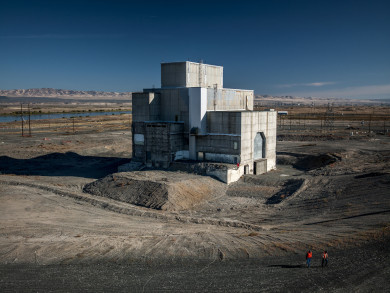
Beginning in 1943, the site was used to produce plutonium for the “Fat Man” bomb that was dropped on Nagasaki, Japan that brought an end to World War II. After a short lull, plutonium production was ramped up in 1947 and continued until 1987 when the last reactor ceased operation. Weapons production processes left solid and liquid radioactive wastes that posed a risk to the local environment including the Columbia River. In 1989, the U. S. Department of Energy (DOE), Environmental Protection Agency (EPA), and Washington State Department of Ecology began clean up of Hanford.
Tri City Herald, BY ANNETTE CARY OCTOBER 26, 2022
A reactor at the Hanford site has been “cocooned” for the first time in a decade. The addition of a new steel enclosure for the 1950s reactor is an “iconic change to the landscape” at the nuclear reservation along the Columbia River and helps protect the river, said John Eschenberg, president of Department of Energy contractor Central Plateau Cleanup Co. Eight of the nine plutonium production reactors that line the Columbia River in Eastern Washington are being put in temporary storage for up to 75 years to allow radiation in their core to decay to lower levels before a permanent solution is attempted.
The newest cocoon, with its straight sides and sloping roof, creates a new look for the Hanford skyline, much different from the other cocooned reactors which retain much of the original shape of the reactors. Completion of the cocoon over the K East Reactor leaves just one more to be cocooned at Hanford.
The K East Reactor was number seven, with its twin, the K West Reactor, not expected to be cocooned until about 2030. The ninth reactor, B Reactor, will remain unsealed and open for tours as part of the Manhattan Project Historical National Park. From World War II through the Cold War Hanford produced about two-thirds of the plutonium for the nation’s nuclear weapons program.
Production stopped with the end of the Cold War, and now the nation is spending for than $2.5 billion a year on environmental cleanup work at the 580-square-mile nuclear reservation by Richland.
For the K East Reactor a new form of temporary storage was used that Hanford officials expect to save money and better protect the reactor as it waits for final disposition in the coming decades.
No decision has been made on the final plan for disposing of Hanford’s defunct reactors, but allowing radiation to decay will provide safer conditions for workers then. In Hanford’s traditional cocooning, reactors are torn down to little more than their radioactive core, any openings are sealed up and the roof is replaced. NEW TYPE OF REACTOR COCOON But for the K East Reactor, a new, free-standing structure 123 feet tall and nearly 154 feet wide was built over the reactor for the first time.
The new method of cocooning should better protect the nearly 80-year-old concrete of the reactor from wind, sand and cycles of freezing and thawing that take a toll on Hanford structures, Eschenberg said. It also should reduce the need for roof maintenance.
Although the new steel enclosure was designed to last 75 years, Eschenberg said final disposition of the reactor is not likely to be done that late. No decision has been made on what final disposition will be.
Every five years Hanford workers will enter the reactor to check on its condition. New lighting installed within the reactor and between the steel cocoon and the original reactor walls will help make that easier as workers check the condition of the concrete, look for any rodents or other animals, and make sure there has not been any intrusion of water.
………………………………………………… DECADES OF CLEANUP BEFORE COCOONING The initial work at the K East Reactor to allow cocooning of the reactor, which operated from 1955 to 1971, started decades ago. The water basins at the K West and K East reactors were used to store uranium fuel irradiated at N Reactor but not processed to remove plutonium at the end of the Cold War.
The fuel was removed from the two basins, each holding 1.2 million gallons of water, in a 10-year project completed in 2004.
But the fuel had decayed after decades underwater, leaving a highly radioactive sludge that was not all contained and shipped to dry storage at Hanford’s T Plant until 2019, after first being consolidated at the K West Reactor.
Water next was drained from the K East Reactor basin, which is work not yet done at the K West Reactor. The dry K East Reactor basin was filled with grout that was then cut into pieces and removed, requiring the site to be backfilled.
A village of support structures had to be demolished, including the reactor’s powerhouse and fuel oil storage. In addition, sediment basins used for reactor cooling water had to be cleaned up.
Tens of thousands of tons of contaminated soil and debris, including underground piping and utilities, were removed, with most of it taken to a huge lined landfill in central Hanford for disposal.
Most of the soil contamination was from chromium, which was used as a corrosion inhibitor in reactor cooling water. Groundwater contaminated with chromium is pumped up, cleaned and returned to the ground before it enters the Columbia River, about 300 yards from the K Reactors. …………………………… more https://www.tri-cityherald.com/news/local/hanford/article267895437.html
Kucinich Says Call for Diplomacy to end Ukraine-Russia War Must be Heard; Silencing of Congressional Progressive Caucus Casts Democrats as the “War Party”
https://worldbeyondwar.org/kucinich-says-call-for-diplomacy-to-end-ukraine-russia-war-must-be-heard-silencing-of-congressional-progressive-caucus-casts-dems-as-the-war-party/By Dennis Kucinich, World BEYOND War, October 26, 2022
CLEVELAND (Oct. 26) Weds – – Dennis J. Kucinich, former Congressman and former Democratic Presidential candidate today called upon Congressional Democrats to “rethink their opposition to diplomacy” as a means to end the war between Russia and Ukraine.
During his eight terms in congress, Kucinich led Democratic members’ efforts against the US-sponsored wars in Afghanistan, Iraq, Libya, Syria and worked to end the war in the Balkans and to divert war against Iran.
“War is ultimately a failure of political leadership. Diplomacy is difficult. It requires intelligence, skill and patience. The only way wars end is at the negotiating table,” Kucinich said.
Kucinich spoke in response to the recent retraction by the Congressional Progressive Caucus of the letter, signed by 30 Members of Congress, which called upon the Administration to aggressively seek diplomacy to end the most recent conflict which began with Russia’s invasion on February 24 of this year and which has resulted in over 15,000 deaths of Ukrainian civilians, and the deaths of tens of thousands of soldiers from both Ukraine and Russia.
“The Caucus’ letter, far from being sympathetic to Russia, sought to end the suffering of the Ukrainian people, while preserving their independence. The letter revealed an understanding of the risks of wider war, even a nuclear war, unless diplomacy is pursued,” Kucinich said.
Kucinich reminded Members of Congress that President Jimmy Carter used US diplomacy to achieve the Camp David Accords on September 17, 1978, with Israeli Prime Minister Menachem Begin and Egyptian President Anwar Sadat. US diplomacy brought about the Dayton Accords of November 21, 1995, which ended war in the Balkans. US Senator George Mitchell of Maine negotiated with multiple parties to bring about the Good Friday Agreement on April 10, 1998, which ended 30 years of deadly conflict in Northern Ireland, known as “The Troubles.”
“Remember the words from John F. Kennedy’s January 20, 1961, Inaugural Address: ‘Let us never negotiate out of fear. Let us never fear to negotiate.’ It was that type of thinking which produced negotiations between the US and the Soviet Union which averted a nuclear war during the Cuban Missile Crisis, October 16, 1962 – October 29, 1962.
Kucinich said that the obvious strong-arming and silencing of Caucus members who want a negotiated settlement in Ukraine casts the Democratic Party as a “Party of War,” he said. “It’s time for the Party to rethink Democratic opposition to diplomacy.”
“Democrats must not make support for the war, and its expansion, a test of party loyalty. We owe it to the people of Ukraine, Russia, the United States and the world to help negotiate a settlement to end this war which has already had severe global consequences, created energy and food scarcity and propelled sharp price increases,” he said.
US aid to Ukraine in 2022 currently stands in excess of $60 billion.
Spokane poised to declare city a nuclear free zone
https://www.thecentersquare.com/washington/spokane-poised-to-declare-city-a-nuclear-free-zone/article_08df369e-53ba-11ed-b3bc-dfdc7a56a890.html By RaeLynn Ricarte | The Center Square 25 Oct 22, (The Center Square) – The Spokane City Council was poised Monday to declare the municipality a nuclear free zone, which would prohibit local resources or facilities from being used to manufacture weapons.
The proposal to add a new chapter to city code has been brought forward by Council President Breean Beggs and Councilor Karen Stratton.
Beggs was asked by The Center Square on Monday whether the ordinance was being considered due to escalating fears about nuclear weapons being deployed in the Ukraine and Russian war.
“This has been in the works far longer than Russia’s invasion of Ukraine (several years), but that crisis does underline the dangers,” Beggs said in a statement.
The draft ordinance outlines that the “nuclear arms race has been accelerating for more than three-quarters of a century, draining the world’s resources and presenting humanity with the ever-mounting threat of nuclear holocaust.”
Because there is no adequate method to protect Spokane residents in the event of a nuclear war, which destroys most higher life forms on the planet, Stratton and Beggs want protection rules in place for local residents and businesses.
They also contend that resources used to develop new nuclear weapons are taken away from other human needs, including jobs, housing, education, health care, public transportation and services for youth, the elderly and disabled.
“The United States already has a sufficient stockpile of nuclear weapons to defend itself and destroy the world several times over,” states the proposed ordinance.
As a leading producer of these weapons, Beggs and Stratton say the U.S. should take the lead in the process of a global slowdown of the arms race and the negotiated elimination “of the threat of a pending holocaust.”
“An emphatic expression of the feelings on the part of private residents and local governments can help initiate such steps by the U.S. and the other nuclear weapons powers,” states the proposal. “Spokane is on record in support of a bilateral nuclear weapons freeze and has expressed its opposition to civil-defense crisis relocation planning for nuclear war.”
Because the governments of nuclear nations have failed to adequately reduce or eliminate the risk of nuclear attack, the people and their local representatives must take action, states the ordinance. It notes that nearby Fairchild Air Force Base no longer utilizes nuclear weapons.
If adopted, the new code prohibits work on nuclear weapons, or manufacture of any component, within the city limits.
If city officials determine that a good or service cannot reasonably be obtained from any source other than a nuclear weapons producer, a waiver to the ordinance may be sought. Documented evidence must be provided that the sought-after resource is vital to the health or safety of residents or employees of the city.
The ordinance would allow city residents to seek a court injunction against any perceived violation. If successful, the plaintiff is to be reimbursed attorney fees and court costs.
According to the agenda, the ordinance will not infringe on First Amendment rights, attempt to constrain Congress, or prevent the city council or mayor from addressing an emergency that poses a clear and present danger to the community.
Meetings scheduled on compensation for Utah’s ‘downwinders’ affected by nuclear testing
https://www.thespectrum.com/story/news/2022/10/24/meetings-scheduled-compensation-utahs-nuclear-downwinders/10588294002/ David DeMille, St. George Spectrum & Daily News,
Southern Utah’s thousands of “downwinders” — people whose families suffered high rates of cancer attributed to U.S. nuclear weapons testing in the Nevada desert in the 1950s and ’60s — could be eligible for federal compensation.
An estimated 60,000 people were exposed to radioactive fallout in southern Utah during the testing programs that took place at the Nevada Test Site, where nuclear weapons were tested and much of the radiation was sent “downwind” to the east via the prevailing winds.
For years, the federal government has issued money to those affected via the Radiation Exposure Compensation Act, which was set to expire this summer but was extended by Congress for another two years.
Qualifying downwinders, or spouses and/or children of deceased loved ones, may apply for up to $50,000 in compensation.
To help residents learn more about the program and whether they may be eligible for some of the compensation funds, St. George area medical officials are set to host a series of meetings this week in rural communities. Representatives from Intermountain Healthcare are also taking questions via phone from anyone interested.
The act allows qualifying downwinders to receive a one-time payout of $50,000, said Becky Barlow, project director and nurse practitioner at the Radiation Exposure Screening and Education Program (RESEP) Clinic at Intermountain St. George Regional Hospital. Test site workers can apply for $75,000, and certain uranium workers can apply for $100,000.
“We are pleased that the president and Congress would continue to support downwinders and uranium workers that were unknowingly exposed because of nuclear testing or jobs in uranium mining and refinement,” Barlow said.
Applications and information are available by calling 435-251-4760.
The Radiation Exposure Compensation Act was first passed in 1990 as an alternative to costly litigation to ensure the federal government met its financial responsibilities to workers who became sick as a result of the radiation hazards of their jobs. Coverage was broadened a decade later.
There was some question about whether the program might end this year, but the two-year extension takes it through summer 2024. It also covers some different cancers and includes different stipulations, so people who were denied in past attempts might be eligible under the new rules.
If possible, the Department of Justice prefers to award the money directly to the person impacted by the testing. However, if that person is already deceased, their legal spouse can apply for the money, and in some cases the person’s children or grandchildren can also apply.
“If you had a family member impacted and you don’t know if they filed, you can contact us to check,” Barlow said.
Anyone with questions regarding the Radiation Exposure Compensation Act, or in need of screenings, should call 435-251-4670.
David DeMille writes about southwestern Utah for The Spectrum & Daily News, a USA TODAY Network newsroom based in St. George. Follow him at @SpectrumDeMille or contact him at ddemille@thespectrum.com.
1 This Month





PLEASE OPPOSE HR 8255 AND S.3639 – bills would accelerate satellite deployment, with no environmental review or safeguards – https://ncstd5li.quorum.us/campaign/169331/
To see nuclear-related stories in greater depth and intensity – go to https://nuclearinformation.wordpress.com
-
Archives
- October 2026 (81)
- September 2026 (339)
- August 2026 (330)
- July 2026 (355)
- June 2026 (287)
- May 2026 (306)
- April 2026 (356)
- March 2026 (251)
- February 2026 (267)
- January 2026 (308)
- December 2025 (358)
- November 2025 (359)
-
Categories
- 1
- 1 NUCLEAR ISSUES
- business and costs
- climate change
- culture and arts
- ENERGY
- environment
- health
- history
- indigenous issues
- Legal
- marketing of nuclear
- media
- opposition to nuclear
- PERSONAL STORIES
- politics
- politics international
- Religion and ethics
- safety
- secrets,lies and civil liberties
- spinbuster
- technology
- Uranium
- wastes
- weapons and war
- Women
- 2 WORLD
- ACTION
- AFRICA
- Atrocities
- AUSTRALIA
- Christina's notes
- Christina's themes
- culture and arts
- Events
- Fuk 2022
- Fuk 2023
- Fukushima 2017
- Fukushima 2018
- fukushima 2019
- Fukushima 2020
- Fukushima 2021
- general
- global warming
- Humour (God we need it)
- Nuclear
- RARE EARTHS
- Reference
- resources – print
- Resources -audiovicual
- Weekly Newsletter
- World
- World Nuclear
- YouTube
-
RSS
Entries RSS
Comments RSS

