Bill Gates’ TerraPower Finally Has a Permit for a Nuclear Reactor, but No Reliable Way to Fuel It.

“HALEU is not currently available from domestic suppliers, and gaps in supply could delay the deployment of advanced reactors,” the HALEU Availability Program website says. Filling the gap will involve “downblending”—or converting highly concentrated weapons-grade uranium into relatively low-concentration HALEU. This literally means dismantling warheads, melting the uranium, and rejiggering the concentration of the crucial fissile isotope.
Gizmodo, By Mike Pearl, 5th March 2026
By unanimous vote, TerraPower, a Nuclear Power company founded and chaired by Bill Gates, just reached a major milestone by receiving the most important federal permit: clearance to build a commercial nuclear reactor in Kemmerer, Wyoming, scheduled to start operating in 2031. This places TerraPower at the front of the pack when it comes to small, cutting-edge nuclear reactors for generating power in the U.S.
Unfortunately, there’s currently no way to fuel this reactor.
The plant has already been under-construction since 2024, and a spokesman for TerraPower named Andy Hallmark confirmed to me that only the “nonnuclear sections of the plant” were being built at the time.
But while TerraPower’s Natrium sodium-cooled fast reactor can now at least be constructed, it won’t put power into the Wyoming energy grid without high-assay, low-enriched uranium (HALEU), which is only made in commercial quantities by a company called Techsnabexport, which is a subsidiary of another company called Rosatom, which is owned by the Russian state.
This has been presenting a problem ever since 2022 when Russia invaded mainland Ukraine. At that point, “it became very clear, for a whole set of reasons — moral reasons as well as commercial reasons — that using Russian fuel is no longer an option for us,” TerraPower spokesman Jeff Navin told WyoFile.
But Hallmark told me in 2024 that alternative suppliers “are expected to develop similar capacity as demand grows,” and that Terrapower believes a solution will materialize in time for the project to stay on track.
The US government has been prioritizing and cheerleading this project (along with similar projects), and has an alternative plan, which the Department of Energy calls the HALEU Availability Program.
“HALEU is not currently available from domestic suppliers, and gaps in supply could delay the deployment of advanced reactors,” the HALEU Availability Program website says. Filling the gap will involve “downblending”—or converting highly concentrated weapons-grade uranium into relatively low-concentration HALEU. This literally means dismantling warheads, melting the uranium, and rejiggering the concentration of the crucial fissile isotope.
It is, of course, unsustainable for commercial power plants to be fueled by the guts of the aging U.S. nuclear stockpile, and a real supply chain for HALEU has to exist if TerraPower’s plant is actually going to operate.
In the short term, TerraPower needs enough fuel from early sources like downblending to load its reactor for the first time, and then it can focus on staying online. One report says it needs about 150 metric tons of the fuel to run from 2028 through 2037—roughly 15 metric tons per year on average.
But according to Reuters, there’s only one U.S. company actually attempting to make HALEU by enriching uranium rather than downblending: Ohio’s Centrus Energy. But Centrus was projecting 900 kilograms per year in 2024—by my rough math that’s about 6% of what Terrapower’s Kemmerer plant will need per year. To stay Centrus needs to ramp-up quickly is an understatement.
Needless to say, Terrapower is racing to find alternatives, which include companies like South Africa’s ASP Isotopes, Inc. with whom it launched a “strategic agreement” in 2024. As of last month, ASP was hoping to build a HALEU plant soon.
At any rate, TerraPower’s Kemmerer plant can be built now, and that construction can now include its reactor. There’s not enough fuel for that reactor—unless of course the war in Ukraine ends, and Russia-U.S. relations get patched up in a hurry—but there are still five years between now and then, and a whole lot is riding on this. Generating nuclear fuel has always forced people to move mountains. Why should this plant be any different?
Gizmodo reached out to TerraPower for a statement, or additional information about any as-yet unreported sources of HALEU. We will update if we hear back.
00
.00
US Argues ‘Emergency’ of Iran War Means Israel Needs 20,000+ More Bombs Without Congressional Approval

This is the first time that the second Trump administration has formally declared an emergency, allowed under the Arms Export Control Act, to bypass Congress to sell arms to Israel. The administration has bypassed the informal approval process in Congress three times to sell arms or send weapons aid to Israel, but previously has not declared an emergency
‘Who cares about Israel’s genocide, apartheid, and aggression?” asked one human rights expert.
Jon Queally, Mar 07, 2026, https://www.commondreams.org/news/us-bombs-for-israel-iran-lebanon
The US State Department is hiding behind the war against Iran that was started by US President Donald Trump last week to justify an emergency order to ship more than 20,000 bombs—estimated at a value of $660 million—to Israel, skirting a pending approval process for the sale by Congress.
In a statement issued quietly on Friday night, the State Department said 12,000 BLU-110A/B general purpose, 1,000-pound bombs had been determined for approval, noting that Secretary of State Marco Rubio has “provided detailed justification that an emergency exists that requires the immediate sale to the Government of Israel of the above defense articles and defense services is in the national security interests of the United States, thereby waiving the Congressional review requirements under Section 36(b) of the Arms Export Control Act.”
Not included in the statement, according to the New York Times, were additional parts of the sale that “include 10,000 bombs of 500 pounds each and 5,000 small-diameter bombs.”
“This is an emergency of the Trump administration’s own creation.” —Rep. Gregory Meeks (D-N.Y.)
According to the Times:
The State Department did not mention these details in the announcement, but two current US officials and a former, Josh Paul, who worked on weapons transfers at the State Department, said they were part of the emergency sale. The current officials spoke on the condition of anonymity to discuss sensitive arms transactions.
This is the first time that the second Trump administration has formally declared an emergency, allowed under the Arms Export Control Act, to bypass Congress to sell arms to Israel. The administration has bypassed the informal approval process in Congress three times to sell arms or send weapons aid to Israel, but previously has not declared an emergency.
The push for the “emergency” arms sale comes as Israel pummels Lebanon with airstrikes, forcing an estimate 500,000 people or more in southern regions outside of Beirut to flee their homes. It also coincides with Israeli forces hitting targets in Iran alongside the US in what experts say is a wholly illegal attack on that country.
Rep. Gregory W. Meeks (D-N.Y.), ranking member of the House Foreign Affairs Committee, denounced the move by the Rubio in a Friday statement.
“Today’s invocation of the Arms Export Control Act’s emergency authority to bypass congressional review for two munitions cases to Israel exposes a stark contradiction at the heart of this administration’s case for war,” said Meeks. “The Trump administration has repeatedly insisted it was fully prepared for this war. Rushing to invoke emergency authority to circumvent Congress tells a different story. This is an emergency of the Trump administration’s own creation.”
Others also questioned the emergency sale, especially given Israel’s record of genocide in Gaza over the last two years and its pivotal role in pushing the Trump administration toward a war of choice with Iran.
Meeks, in his statement, argued that key questions about Trump’s war in Iran remain unanswered.
“What is the endgame? What preparations have been made to protect American citizens in the region? And how much will this war cost the American people?” asked Meeks. “The administration has provided no credible answers. The American people deserve answers, and Congress must demand them.”
Marco spills the beans…’Bibi made us do it’

Walt Zlotow, Mar 04, 2026, Walt Zlotow West Suburban Peace Coalition Glen Ellyn IL, https://substack.com/home/post/p-189862460
In 4 days of immoral, criminal war on Iran, the Trump administration changes the rationale every day, indeed almost every hour.
The most preposterous comes from supreme American warmonger Marco Rubio who masquerades as Secretary of State while every fiber of his damaged soul plots endless war.
“It was abundantly clear that if Iran came under attack by anyone, the United States, Israel, or anyone, they were going to respond and respond against the United States. If we stood and waited for that attack to come first, before we hit them, we would have suffered much higher casualties. And so the president made the very wise decision. We knew that there was going to be an Israeli action, we knew that that would precipitate an attack against American forces,”
Rubio could not have been more disingenuous. He’s pretending we’re a neutral observer that will be involved if Israel attacks and must attack first to avoid US casualties. . He knows full well the US and Israel have been plotting together to destroy Iran for decades. He’s spent the last year as Secretary of State involved in that war plotting. The US wants to extend its dominance over the entire Middle East while Israel wants to eliminate its only hegemonic rival in the region. Together the US, Israeli tag team seeks to accomplish both imperialistic goals.
The combined attack February 28 was a replay on steroids of the smaller combined preemptive attack last June. Since it didn’t accomplish regime change and Iran’s destruction, Netanyahu and Trump decided to launch an all out war to the death. This time Americans are dying along with Israelis, and the shutdown of oil production and transit may send America spiraling into a major recession.
Since few Americans are buying into this madness, rejecting one Trump justification after another, Rubio came to the rescue. ‘I’ve got it’ he proclaimed. ‘We’ll tell the public that we had to attack because it was the only way to save American lives after Israel attacks Iran. We’re simply playing defense.’
Rubio’s logic would be hilarious if not for the fact that it guarantees US body bags coming home as a result of Rubio’s self-licking ice cream cone.
Cardinals McElroy and Cupich denounce Iran war: ‘War now has become a spectator sport.’
“Our government is treating the suffering of the Iranian people as a backdrop for our own entertainment,”
by Edward DesciakMarch 9, 2026, https://www.americamagazine.org/politics-society/dispatches/2026/03/09/cardinal-mcelroy-cupich-iran-war/?utm_source=ActiveCampaign&utm_medium=email&utm_content=Cardinals%20McElroy%20and%20Cupich%20denounce%20Iran%20war%3A%20%20War%20now%20has%20become%20a%20spectator%20sport&utm_campaign=Daily%203%209%2026
Following the United States and Israel’s overnight missile barrage of Iran on Feb. 28 and the widening war across the Middle East, a number of U.S. bishops have spoken out in opposition to the war.
They underscored an urgent need for peace and a return to diplomacy, denounced as unjust American and Israeli military aggression and expressed deep concern for the millions in the region affected by the armed conflict.
“At this present moment, the U.S. decision to go to war against Iran fails to meet the just war threshold for a morally legitimate war,” Cardinal Robert McElroy of the Archdiocese of Washington, D.C., said.
In an interview with the Catholic Standard on March 9, he explained that the U.S. offensive operations failed to meet at least three criteria of just war theory—the Catholic framework for evaluating the morality of military action—including the requirements for just cause, right intention and clarity that “the benefits of this war will outweigh the harm which will be done,” made impossible by the unpredictability of the region
Cardinal McElroy said: “Almost everyone rightly believes that the Khamenei regime has been for decades a brutal and repressive government that has spread terrorism throughout the world and should be replaced. But there is immense concern that this war will spiral out of control and embroil the United States in ever greater depth.”
The cardinal, who has also voiced opposition to the Trump administration’s mass deportation policy, mentioned particular concern for the military families he has spoken with who are worried about their loved ones’ safety.
“We must all work together to forbid this expansionism to lead us into an ongoing morass in Iran,” he said, expressing his “deepest concern” for the “deterioration of moral norms” in the United States and the world, signified by the growing willingness to turn to preventative war over diplomacy as a legitimate means of foreign policy.
Cardinal McElroy’s responses echoed comments from Cardinal Blase Cupich of the Archdiocese of Chicago, who criticized the war and the Trump administration’s mix of militarism and entertainment in a statement on March 7.
Cardinal Cupich cited a post from the official White House X account captioned “JUSTICE THE AMERICAN WAY” that spliced clips from popular action movies, cartoons and TV shows “with actual strike footage from their war on Iran.”
It was one of many edits the White House has posted over the last few days in which the account has similarly spliced together video footage of the war with NFL and MLB highlights and video game references.
“A real war with real death and real suffering being treated like it’s a video game—it’s sickening,” Cardinal Cupich said. “This horrifying portrayal demonstrates that we now live in an era when the distance between the battlefield and the living room has been drastically reduced.”
He noted that the social media post dishonored the six U.S. soldiers who had been killed at that point during the war (the death of another service member was confirmed on March 8) as well as the hundreds of others who have died across the Middle East, “including the scores of children who made the fatal mistake of going to school” the day a U.S. missile struck a naval base next to an elementary school in Iran, killing 175 people.
“The moral crisis we are facing is not just a matter of the war itself, but also how we the observers, view violence, for war now has become a spectator sport or strategy game,” Cardinal Cupich wrote, referencing a particularly macabre scandal involving the popular prediction market site Kalshi, where Americans can now gamble on matters of life and death. The company is the respondent in a $54 million class action lawsuit after it declined to pay out wagers on whether Iran’s Supreme Leader Ali Khamenei would be ousted by March 1, citing a “death carveout.”
Cardinal Cupich also urged the American people not to “become addicted to the ‘spectacle’ of explosions.”
“Our government is treating the suffering of the Iranian people as a backdrop for our own entertainment,” he wrote, “as if it’s just another piece of content to be swiped through while we’re waiting in line at the grocery store.”
“I know that the American people are better than this. We have the good sense to know that what is happening is not entertainment but war, and that Iran is a nation of people, not a video game others play to entertain us,” he concluded.
The cardinals joined the president of the U.S. Conference of Catholic Bishops, Archbishop Paul Coakley, who followed Pope Leo XIV’s lead and released a statement on March 1 condemning the hostilities: “We ask for a halt to the spiral of violence, and a return to multilateral diplomatic engagement that seeks to uphold the ‘well-being of peoples, who yearn for peaceful existence founded on justice.’”
Archbishop Coakley added: “I invite Catholics and all people of goodwill to continue our ardent prayers for peace in the Middle East, for the safety of our troops and the innocent, that leaders may seek dialogue over destruction, and pursue the common good over the tragedy of war.”
The Archdiocese of New York’s new archbishop, Ronald Hicks, also commented on the Iran crisis in a brief interview for 1010 WINS on March 5, calling for prayers and diplomacy. “We have to give some special prayers for our men and women in uniform and pray for their protection, too, and everyone involved,” he said. “It is absolutely heartbreaking.”
In US/Israeli war on Iran, all roads point to rise in global nuclear weapons.

Trump and Netanyahu are already boasting of success. But the war is not going to plan for any of the parties involved
Paul Rogers, 6 March 2026, https://www.opendemocracy.net/en/us-iran-israel-war-lead-to-nuclear-weapons-donald-trump-netanyahu/
One week in, there is little prospect of an early end to the Israeli war with Iran and even less of preventing a regional escalation. Given Binyamin Netanyahu’s success in bringing Donald Trump’s United States on board as Israel’s partner in a widening war, he may feel satisfied with progress so far. In reality, though, the conflict is not going according to plan for any of the three states involved.
Netanyahu’s intended outcome was straightforward regime termination in Tehran, with the assassination of the supreme leader and most of Iran’s senior war leaders. A public uprising would then have followed, ending the power of the theocrats.
Israel and the US could then have brought sufficient force to terminate Iran’s nuclear and ballistic missile program and cut back its conventional forces, starting with the abolition of the Iranian Revolutionary Guard Corps (IRGC).
Finally, the removal of the US’s punishing economic sanctions on Iran would have been agreed, allowing some civil recovery for the country – although this would, of course, have been contingent on the new leaders agreeing to oil and gas deals that would prove punitive for Iran and lucrative for the US, likely ensuring Trump’s continued support for Israel.
The Israeli war aims may have been clear, but it is impossible to say for sure what the White House wanted.
A muddle of reasons and statements of intent for bombing Iran have been given by Trump, his secretary of state, Marco Rubio and self-styled secretary of war, Pete Hegseth, who last year sought to rebrand from the ‘secretary of defense’ title that has been used by successive post-holders since the end of the Second World War. While Washington initially embraced Israel’s desire for total regime termination through an uprising, that aim has disappeared from its recent statements. Now it seems that crushing Iran’s military capabilities, starting with its nuclear ambitions, is the US order of the day.
For Iran’s theocratic leadership, the primary war aim was survival in the face of the massive power of the Israeli/US war machine, which would itself have been quite an achievement. Indeed, Iran’s supreme leader, Ayatollah Khamenei, barely survived the first hour or so of the war before being killed in a missile strike.
The unexpected has since become clear: Khamenei is gone, but Iran’s leadership system is likely to survive for now. His successor will probably be his son, Ayatollah Mojtaba Khamenei, who will quite possibly be as hard-line as his father. Israeli defence minister Israel Katz has declared that whoever is chosen as Iran’s next supreme leader will be “a target for elimination” – a clear indication that for Netanyahu and the Israeli Defence Forces, there is no turning back.
If regime survival is one of the surprises of the conflict, the other is Iran’s continuing ability to fire barrages of armed drones and ballistic missiles, which has been the least expected element of the war so far.
By last July, the IDF and the US believed they had massively damaged Iran’s air defences, with Trump boasting of “spectacular military success” in a press conference. On top of this, the past week has seen the determined and intensive targeting of Iran’s missile systems by the combined power of the IDF and US armed forces. Yet to the genuine surprise of many Western political and military analysts, Iran can still launch its missiles.
Three elements of this survival offer a clue as to what comes next.
One is that the regime in Tehran is likely to continue to survive. Look to Gaza, where Hamas is still active despite the massive destruction that Israel has inflicted over the past two and a half years. This, as I noted in last week’s column, is largely down to its quite extraordinary network of tunnels dug mostly by hand and reinforced with concrete walls. The network, which extends to around the distance from London to Edinburgh, has around 5,700 shafts, as well as electricity, ventilation and communication facilities.
In Iran, the IRGC now looks to have been similarly active in extensively preparing for war. It has built numerous and widely dispersed underground ‘missile cities’ – deep tunnel complexes built into mountains for making and storing armed drones and other weapons – as well as producing undersea armed drones for use against the US Navy, especially if it tries to guide tankers through the Strait of Hormuz.
The second element follows on. There are indications that the IRGC appears to be using its older and least advanced missiles and drones first, aiming to deplete Israeli and US stocks of their anti-missile defences. Quite apart from anything else, this means Israel and the US are depleting their high-cost weaponry to “catch” incoming missiles, while Iran saves its most recently developed drones and ballistic missiles – with greater reach and more power for destruction, as well as improved accuracy and reliability – for later in the war.
Finally, there is the decision to opt for economic warfare against Western interests in many Gulf states. This involves the closure of the Strait of Hormuz, alongside attacks on oil and gas processing plants and distribution systems, as well as tourist infrastructure across the Gulf, with a luxury hotel in Dubai reportedly hit by a retaliatory strike.
This puts states such as Saudi Arabia, Kuwait and the United Arab Emirates in a difficult position as to how to respond. To react forcefully by joining the war against Iran may be the natural response, but this has consequences. It means allying with an Israel that has killed at least 80,000 Palestinian Arabs in Gaza and enacted violence in the occupied West Bank to make life fraught with difficulty and increasingly dangerous.
This war is barely a week old but is having a worldwide impact and, despite Trump’s bluster, is already problematic for the US. The killing of at least 165 people, many of them children, at the Shajareh Tayyebeh Girls School in Minab is just one example of this, while another may be significant in a different way.
On Wednesday, a US Navy submarine torpedoed an Iranian frigate, the IRIS Dena, killing at least 87 crew members. The Dena had recently left a series of exercises organised by the Indian Navy in the Bay of Bengal, and its sinking was reported with great glee by Hegseth, who told reporters: “Yesterday, in the Indian Ocean, an American submarine sunk an Iranian warship that thought it was safe in international waters. Instead, it was sunk by a torpedo. Quiet death. The first sinking of an enemy ship by a torpedo since World War II.”
Earlier in the press conference, Hesgeth had used the same celebratory and boastful tone to discuss what he framed as early US success. “We are only four days into this, and the results have been incredible. Historic, really,” he said. “Only the United States of America could lead this – only us. But when you add the Israeli Defence Forces, a devastatingly capable force, the combination is sheer destruction for our radical Islamist Iranian adversaries. They are toast, and they know it. Or at least, soon enough, they will know it. America is winning – decisively, devastatingly, and without mercy.”
The US war secretary’s speech betrayed the sense of impunity in Trump’s White House, confirming that members of his administration are certain in their own minds that in this war, Israel and the US can do what they like.
The consequences of this war are impossible to say for sure, but all roads appear to lead to increased uptake of nuclear weaponry, leaving the world an even less safe and stable place. If Israel and the US fail to terminate the Iranian regime and if any significant part of the IRGC survives, the very first thing it will do is to go to the ends of the earth to put together a crude nuclear device. Across the wider region, any state that sees two nuclear-armed regimes seeking to destroy a non-nuclear regime will see a need to go nuclear itself.
Senator Joins Police to Eject Antiwar Marine From Hearing, Breaking His Arm
“America does not want to send its sons and daughters to war for Israel,” McGinnis said as he protested the hearing. “This is wrong.”
Police and Sheehy tried to force the protester out of the room as he yelled, “no one wants to fight for Israel.”
By Sharon Zhang , Truthout, March 5, 2026, https://truthout.org/articles/senator-joins-police-to-eject-anti-war-marine-from-hearing-breaking-his-arm/
Republican senator joined Capitol Police as they violently ejected an anti-war protester and U.S. Marine veteran from an Armed Services subcommittee hearing on Wednesday, appearing to break his arm as the group tried to wrestle him out of the chamber.
Video of the incident shows Sen. Tim Sheehy, a Republican from Montana, rushing over to help police as they try to tug and push the protester out of the chamber, as the protester yells, “no one wants to fight for Israel.” The protester appears to be wearing a U.S. Marine Corps dress uniform.
The protester, Green Party candidate Brian McGinnis, has his hand stuck in the door frame, with his arm hooked around the adjacent open door panel as several police try to force him out of the room. Sheehy lifts up McGinnis’s leg as police officers grab his torso and tug.
As Sheehy is moving over to dislodge the protester’s hand and tug on his arm, McGinnis’s forearm can be seen appearing to snap in half. There is a loud cracking sound, and bystanders begin to yell at the police to stop. Shortly after, officers let up on their tugging, and begin to work to dislodge McGinnis’s hand, as Sheehy returns to the front of the room.
“The senator broke his hand. A sitting U.S. senator just broke the hand of a Marine,” one person yells. One bystander asks McGinnis, “is your hand ok?”
“No, it’s not,” McGinnis responds. McGinnis is running for Senate in North Carolina, and is a Marine who fought in Iraq, according to his campaign website.
Police arrested McGinnis and have charged him with three counts of assault on a police officer, and three counts of resisting arrest and crowding, obstructing, and incommoding for his demonstration.
In a statement posted on McGinnis’s X account, his family expressed gratitude for the well wishes. “We are taking a necessary step back from the public eye to allow him to focus fully on his recovery in private,” the statement said.
The protest occurred during a hearing by the Senate Armed Services Subcommittee on Readiness and Management Support, held to hear testimony from military officials on the readiness of various military branches for combat. The hearing was scheduled before the U.S. and Israel launched their war on Iran on February 28.
“America does not want to send its sons and daughters to war for Israel,” McGinnis said as he protested the hearing. “This is wrong.”
Sheehy called McGinnis an “unhinged protester,” and claimed on social media that he was trying to “help out and deescalate the situation,” ignoring that he helped lift McGinnis off the ground, potentially helping to break his arm.
“This gentleman came to the Capitol looking for a confrontation, and he got one,” Sheehy said, though McGinnis was merely protesting the hearing.
In a video posted to social media ahead of his protest, McGinnis said that he was in D.C. to “speak out against the Senate and ask them why they’re going to send our men and women to harm’s way.”
“Anyone who feels disillusioned and betrayed, you’re not alone. Join us in demanding accountability for this betrayal,” he said. “Free Palestine, free America.”
A War for Oil: Economist Michael Hudson on U.S. Quest to Control the World’s Oil Trade
We speak with economist Michael Hudson, who details how President Trump opted to attack Iran despite progress at indirect U.S.-Iran negotiations. “The whole reason that America has attacked Iran has nothing to do with its getting an atom bomb,” but instead the aim was U.S. control of oil, says Hudson. The Trump administration may have been after the ability to “turn off the power” to countries that don’t follow U.S. foreign policy, he says.
Transcript……………………………………………………………………………………………………………………………….. https://scheerpost.com/2026/03/04/a-war-for-oil-economist-michael-hudson-on-u-s-quest-to-control-the-worlds-oil-trade/
Loony Bin Rationales: The Continuing War on Iran
6 March 2026 Dr Binoy Kampmark, https://theaimn.net/loony-bin-rationales-the-continuing-war-on-iran/
Villainous lunacy is abundant these days as the bombing of Iran by Israel and the United States continues. The rationale for this illegal pre-emptive war that not only lacks legitimacy but should land its perpetrators in the docks of the International Criminal Court, continues to get increasingly muddled. With US President Donald Trump now given to giving press conferences on the conflict, loony bin mutterings are becoming increasingly the norm.
A common assumption behind these attacks is Israel’s firm, unremitting stranglehold on the US President. Combined with the considerable influence of what John Mearsheimer and Stephen Walt called the “Israeli Lobby,” American foreign policy in the Middle East has been tenanted by Israeli interests. And Israel has shown itself to be a particularly bruising tenant in this regard.
While the central rationale is both fantastic and mendacious – namely, the destruction of a nuclear capability that had been, in any case, apparently obliterated last June – the view that Iran was going to unilaterally strike either Israel, the United States, its allies or all of the above, is fascinatingly absurd.
In a classified briefing with Republican and Democratic lawmakers on Capitol Hill on March 2, senior administration officials put forth the position that Israel had already planned to strike Iran, with or without US support. Present were Secretary of State Marco Rubio, the increasingly deranged Secretary of Defense Pete Hegseth, CIA Director John Ratcliffe and the Chair of the Joint Chiefs of Staff Gen. Dan Caine. Prior to the briefing, Rubio put forth the view that “there was going to be an Israeli action. We knew that that would precipitate an attack against American forces, and we knew that if we didn’t pre-emptively go after them before they launched those attacks, we would suffer high casualties.” Israeli impulsiveness proved the heaviest of tails in wagging the dimmest of dogs.
This less than convincing explanation worried Virginia Democratic Senator Mark Warner, who serves as vice chair of the Senate Intelligence Committee. “This is still a war of choice that has been acknowledged by others that it was dictated by Israel’s goals and timeline.” He questioned whether American lives should be put at risk when an alleged imminent threat was directed at an ally. “Israel is a great ally of America. I stand firmly with Israel. But I believe at the end of the day when we are talking about putting American soldiers in harm’s way and we have American casualties and expectations of more, there needs to be the proof of an imminent threat to American interests. I still don’t think that standard has been met.” Had Iran actually posed an imminent threat to the US, “better planning” should have been in place.
An even clearer statement of the foolish rationale was allegedly put to conservative broadcaster and commentator Tucker Carlson by Trump himself, suggesting that Israel had essentially painted him into the smallest of corners. Carlson, according to The New York Times, had attempted no fewer than three times in meetings at the Oval Office to argue why the US should not go to war with Iran. Reasons for not doing so included risks to US military personnel, the soaring effects of war on energy prices and concern about how Washington’s Arab partners would react. He surmised that it was Prime Minister Benjamin Netanyahu’s desire to strike Iran that was the sole reason the president was considering a military effort. It would be prudent, suggested Carlson, if the Israeli PM was restrained in his bellicosity.
Carlson has also personally expressed the view that the war took place “because Israel wanted it to happen. This is Israel’s war. This is not the United States War.” It had been launched on a freight of “lies” and orchestrated by Netanyahu’s beguiling approach. “The point is regional hegemony.” Israel wanted “to control the Middle East” and “sow chaos and disorder” in the Gulf.
Another right-wing commentator, Megyn Kelly, reiterated what had been a central, even canonical line of MAGA: “No one should have to die for a foreign country.” The four service members (there were actually six) who had given their lives for the US “died for Iran or for Israel.” The war was clearly Israel’s and based on a fictional threat. “Does it make any sense to you that Iran was planning pre-emptive strikes against us? Obviously, it doesn’t.”
Trump was dismissive of both Carlson and Kelly, slipping into that habit common to megalomaniacs humming before a mirror: he referred to himself in the third person. “I think MAGA is Trump – not the other two.” The movement wished “to see our country thrive and be safe, and MAGA loves what I’m doing.” Carlson’ could “say whatever he wants. It has no impact on me.”
Israel, however, did and does, though Trump, in what can only be regarded as piffling nonsense, is now promoting the view that Israel was the second hitter, with the US taking the bold lead. “We were having negotiations with these lunatics, and it was my opinion that they were going to attack first,” he reasoned at a bilateral meeting with Germany’s Chancellor Friedrich Merz. As he “didn’t want that to happen,” Trump thought he “might have forced Israel’s hand, but Israel was ready and we were ready.”
Hegseth, in another mad, uneven display before the press, also laid the entire blame for the war on Iran itself. “We didn’t start this war, but under President Trump, we are finishing it.” Not that the facts even mattered. International law did not exist. “No stupid rules of engagement, no national-building quagmire, no democracy building exercise, no politically correct wars.” (What do politically correct wars look like?) He sums up the jungle attitude to conflict, a deranged, semi-literate Tarzan whose views would sit well with the state machinery of Nazi Germany, one that showed the world how best to avoid international protocols and violate the laws of war in the name of streaky fantasy and monstrous ego.
Trump Says He Must Have a Say in Picking Iran’s New Leader
by Dave DeCamp | March 5, 2026, https://news.antiwar.com/2026/03/05/trump-says-he-must-have-a-say-in-picking-irans-new-leader/
President Trump said in an interview with Axios on Thursday that he must have a say on who is chosen as Iran’s next leader following the killing of Iranian Supreme Leader Ayatollah Ali Khamenei, contradicting other administration officials who say the US’s goal is not regime change.
Trump made clear to Axios reporter Brak Ravid that Khamenei’s son, Mojtaba Khamenei, who has reportedly emerged as a frontrunner to replace his father, wouldn’t be acceptable to the US.
“They are wasting their time. Khamenei’s son is a lightweight. I have to be involved in the appointment, like with Delcy [Rodriguez] in Venezuela,” the president said, referring to Venezuelan Acting President Delcy Rodriguez.
The US didn’t choose Rodriguez as Nicolas Maduro’s replacement, but she was the next in line as the vice president and has been willing to work with the US to stave off another attack. A much different dynamic is unfolding in Iran as the killing of Khamenei has not slowed Iran’s military response, and the country’s leadership shows no sign of backing down despite the massive US-Israeli bombing campaign, which has killed over 1,000 civilians.
Trump said that he wouldn’t accept any leader who continues Khamenei’s policies because it would result in the US launching another war within five years. “Khamenei’s son is unacceptable to me. We want someone that will bring harmony and peace to Iran,” he said.
Earlier this week, Trump said that all of the people he had in mind to replace Khamenei have been killed and acknowledged that in the end, Iran’s next leader could be “as bad” as Khamenei.
“The worst case would be we do this, and then somebody takes over who’s as bad as the previous person,” he said. “That could happen. We don’t want that to happen. It would probably be the worst — you go through this and then in five years, you realize you put somebody in who was no better.”
Natural Resources Defense Council supports restart of NextEra’s Duane Arnold nuclear station, a known danger.
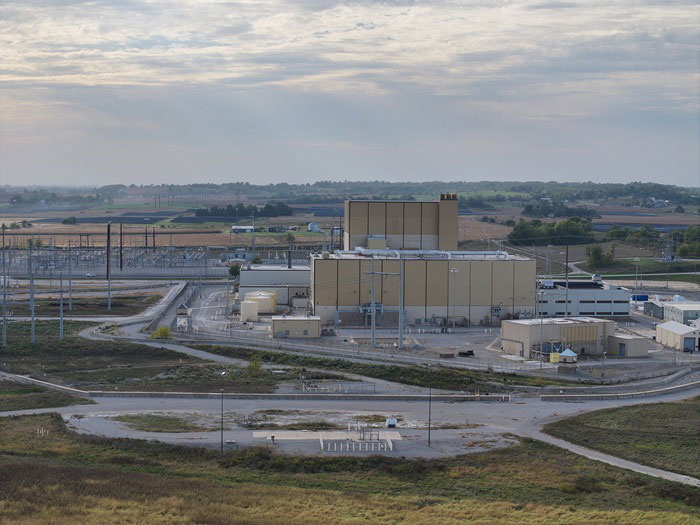
March 5, 2026, https://beyondnuclear.org/nrdc-lends-support-to-restart-closed-reactor/
Natural Resources Defense Council supports the proposed restart of Iowa’s permanently closed Duane Arnold nuclear power station on assurances of adequate public safety upgrades to a Fukushima-style reactor from the US Nuclear Regulatory Commission
In a disappointing reversal of its previously critical stance toward nuclear power and especially the dangerously flawed 1960s vintage GE Mark I boiling water reactor, a major green group now appears to be supporting the restart of exactly that reactor model. The Natural Resources Defense Council’s stated in a blog “Rising Demand, Real Choices” that it had submitted comments to the Nuclear Regulatory Commission supporting the restart of the permanently closed and decommissioning GE Mark I Duane Arnold nuclear reactor in Iowa. NRDC “filed comments today at the Nuclear Regulatory Commission supporting an early step in the reactor’s restart: the transfer of the plant’s license to NextEra.” Duane Arnold is nearly identical to the three reactors that melted down in Japan in March 2011.
NRDC nuances its advocacy for the restart with, “To be clear, NRDC’s long-held concerns regarding nuclear energy—including issues related to siting, cost, safety risks, waste management, water use, mining supply chain issues, and community impacts—remain unchanged and must be addressed. The Duane Arnold plant will have to prove it can operate safely and responsibly.”
Let the record reflect, “easier said than done” as this nation’s nuclear regulatory agencies, from the beginning, with the Atomic Energy Commission (AEC) first licensing Duane Arnold on November 24, 1974, knowing full well in 1972 that the undersized design of the GE Mark I boiling water reactor containment would very likely fail under the tremendous overpressurization and explosive hydrogen gas generated under severe nuclear accident conditions and their top safety official encouraged development to be halted. That scientifically confirmed warning was not only ignored but suppressed for years by AEC fears that the halt of construction and cancellations would derail the government plan for a massive nuclear power build up. Duane Arnold was one of the those obfuscated start-ups.
Since then, the US Nuclear Regulatory Commission (NRC) is identified as a captured regulator and an expert at stonewalling reactor safety concerns from fire protection for safe reactor shutdown to ignoring currently projected climate change impacts on severe nuclear accident risks and frequency.
The NRC relicensed Duane Arnold on December 16, 2010, with an initial extension of 20 years to February 21, 2034 with the built-in containment vulnerability. Eighty-five days later, the Fukushima nuclear accident demonstrated a 100% containment failure rate under overpressurization from hydrogen gas detonations for the three units at that were at full power. NRC wrangled for years with the weak, undersized containment vulnerability only to allow the fundamental design flaw to remain unchecked to date.
Duane Arnold is presently utility certified to the NRC as “permanently” closed and defueled reactor for the purpose of decommissioning in SAFSTOR mode or “deferred dismantling”. The 615 megawatts electric Mark I boiling water reactor is owned by three utility entities; the majority owner, NextEra Energy Resources (70% interest) and two minority owners, Central Iowa Power Cooperative (CIPCO with 20% interest) and Corn Belt Power Cooperative (10% interest). The utilities have submitted an application to the NRC to consolidate a 100% ownership transfer to NextEra as sole owner and a plan to reverse the decommissioning certification to instead seek NRC approval for a likely to exceed $1.6 billion rehabilitation, refueling and restart effort by 2029. Google has signed with NextEra for a Power Purchase Agreement as the primary electricity customer for an expanded AI infrastructure, cloud computing and energy guzzling data centers. Post-consolidation, CIPCO, at 0%, will purchase Duane Arnold surplus electricity and Corn Belt Power Cooperative, at 0%, will sell its share to NextEra.
In Beyond Nuclear’s view, as well as many public safety, environmental protection and safe energy advocates, the immediate, permanent closure, decommissioning and environmental cleanup of Duane Arnold and all GE Mark I boiling water reactors are warranted in the ever extending aftermath of the Fukushima Daiichi’s multiple hydrogen explosions. The subsequent reactor core meltdowns breached the universally flawed GE Mark I containment design and construction, releasing harmful radiation downwind into the atmosphere and recurring radioactive batch releases from the wreckage of the three melted reactor cores into the Pacific Ocean that persist today.
The uneconomical, aging and dangerously flawed Duane Arnold nuclear power station was first announced by NextEra Energy Resources in a Federal Register Notice of its intent to the NRC on March 2, 2020 to permanently close and defuel the reactor by October 30, 2020.
Then, on August 10, 2020, a fierce “derecho” with severe thunderstorms, a deluge of rain and straight line winds reaching up to 140 mph swept across the hundreds of miles of prairie knocking out vast stretches of the electric grid including all six offsite power lines to 100% of Duane Arnold’s safety systems causing the reactor to SCRAM. Onsite back up generators restored critical reactor cooling systems but the badly damaged site included the collapse of the reactor’s cooling towers. NextEra’s subsequent damage assessment concluded, “[O]ur evaluation found that replacing those towers before the site’s previously-scheduled decommissioning on Oct. 30, 2020, was not feasible.” NextEra elected to immediately set the date for permanent closure of Duane Arnold, a Fukushima-style reactor, a notorious General Electric Mark I boiling water reactor even in 1972 under warnings from the Atomic Energy Commission safety officials that it was not safe.
We are now coming up on the 15th commemoration of the triple meltdown of Japan’s Fukushima Daiichi reactors caused by a combination of natural disasters that overwhelmed the significantly flawed and identified vulnerable design problem built into every GE Mark I reactors containments. These containments are now demonstrated to have a 100% failure rate under severe accident conditions as were all three Fukushima reactors at full power on March 11, 2011 experiencing devastating hydrogen gas explosions and widespread radioactive releases. This widespread radioactive contamination of the biosphere (land and sea) from the fallout persists to date and indefinitely into the future.
Where Fukushima’s radioactive releases largely blew out over the Pacific Ocean, a radioactive breach from the volumetrically undersized Mark I reactor containment system in the event of a severe over-pressurization accident, will instead spread out over US populations sickening those caught in the fallout, contaminating farms, pastures and agriculture, and similarly dislocating local, commercial and industrial economies.
If restarted, as NRDC supports, Duane Arnold initial 20-year license renewal (40 to 60 years) will expire on February 21, 2034. And well before that date, NextEra will most assuredly file an application to extend the operating license of a still fundamentally flawed and vulnerable reactor with an additional 20 year subsequent license renewal application (60 to 80 years) out to February 21, 2054, presently without a hard look at a changing climate that might already have been central to it closure.
Beyond Nuclear and the Sierra Club presently have a “petition for judicial review” pending ruling from an October 30, 2025 oral argument in the US Court of Appeals for the District of Columbia Circuit, Beyond Nuclear and Sierra Club v. US NRC. The petitioners through legal counsel have raised a purely legal issue of whether the US NRC, as a matter of law, can refuse to evaluate climate change change impacts (derechos, increasingly severe hurricanes, flooding, sea level rise, etc.) on the risk and frequency of severe nuclear accidents. The NRC is illegally entrenched in refusing to perform a lawfully required environment impact statement that fully evaluates the impact of climate change, saying only that such an evaluation is “out of scope” of reactor licensing.
NRC buckles to White House and licenses dangerous TerraPower reactor

5 Mar 2026, , https://beyondnuclear.org/nrc-buckles-to-white-house-and-licenses-dangerous-terrapower-react
Nuclear Regulatory Commission license of dangerous new reactor risks lives
Beyond Nuclear decries NRC decision to put public safety aside and buckle to Trump orders to license a Gates reactor known as “Cowboy Chernobyl”
Last September, the then three sitting commissioners at the US Nuclear Regulatory Commission insisted during a Senate hearing they would put safety first when considering the approval of new reactor projects.
Senators had raised fears that new executive orders issued by the White House last May that demanded fast-tracking new reactor projects, could jeopardize the commissioners’ judgement. The Senators also asked if the commissioners feared losing their jobs if they refused to license a reactor they viewed as dangerous. Two said they did.
“This week we learned that the now five members of the NRC commission are all too willing to capitulate to Trump’s rubber stamp orders, protect their jobs and sacrifice public safety in order to license a new reactor design that is known to be extremely dangerous,” said Paul Gunter, director of the reactor oversight project at Beyond Nuclear. The two new commissioners are nuclear industry insiders chosen by the White House.
Gunter’s remarks came after the NRC commissioners voted unanimously this week to grant a construction license to the Bill Gates company TerraPower’s 345-megawatt sodium-cooled small modular reactor, designated for a site in Kemmerer, Wyoming.
“It appears that the White House influence is working,” Gunter said. “But pressuring regulators to cut safety corners and fast-track a technology as inherently dangerous as nuclear power is gambling with the lives of thousands and possibly millions of people.”
Dr. Edwin Lyman, a physicist at the Union of Concerned Scientists, warned last December after NRC staff approved the TerraPower design, that the “fast” reactor, known as the Natrium, is deeply flawed and highly vulnerable to a serious accident.
“Make no mistake, this type of reactor has major safety flaws compared to conventional nuclear reactors.” Lyman said. “The potential for rapid power excursions and the lack of a real containment make the Kemmerer plant a true ‘Cowboy Chernobyl.’”
“The White House, through its executive orders and by exerting control over the NRC, has embarked on a dangerous dismantling of essential safety regulations,” Gunter said.
The new reactor rush puts the US on a path to another nuclear disaster while wasting precious time and billions of taxpayer dollars better spent on implementing a rapid and widespread renewable energy program. This would answer the country’s energy needs faster and without the extreme risks and ever soaring costs posed by nuclear power technology,” Gunter concluded.
In Iran, Israel’s morbid military cult now has the US fully in its grip
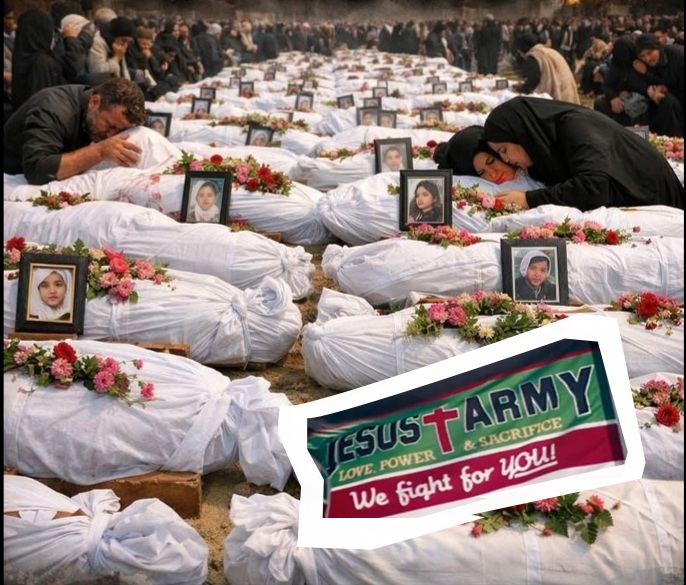
In this catastrophic war of choice, it is Tehran fighting a rearguard action to restore geopolitical sanity. If Iran loses, god only knows where Israel and the US will drag the world next
Jonathan Cook, Mar 06, 2026
The admission this week by US secretary of state Marco Rubio, echoed by Mike Johnson, Speaker of the House of Representatives, that Israel forced Washington’s hand in attacking Iran has rightly caused consternation.
Breathing life into something that would normally be treated as an antisemitic trope, Rubio argued that the Trump administration had been left with no choice but to attack Iran because, had it not, Israel would have launched an attack anyway, exposing US soldiers to retaliation.
Rubio stated: “The president made the very wise decision: We knew that there was going to be an Israeli action, we knew that that would precipitate an attack against American forces, and we knew that if we didn’t preemptively go after them before they launched those attacks, we would suffer higher casualties.”
Rubio was using the term “preemptively” in a highly irregular and misleading way.
In international law, aggression is an illegal application of force – the “supreme international crime”, according to the 1950 principles set out by the Nuremberg war crimes tribunal. But there is a potential mitigating factor if the attacking state can show it was acting pre-emptively: that is, it was acting to prevent a plausible, immediate and severe threat of attack.
Rubio, however, was not suggesting that the US acted “preemptively” against a threat from Iran. He meant Washington had acted preemptively to stop its ally, Israel, from setting off a chain of military events that would lead to US soldiers being harmed.
Had the Trump administration really been acting preemptively in these circumstances, the US should have attacked Israel, not Iran.
Paper tiger
But Rubio’s comment begged a further question: Why didn’t Washington simply tell Israel it was forbidden from starting a war against Iran without US approval?
After all, Israel would be incapable of mounting any kind of attack on Iran without the critical support provided by the US.
Israel has had to rely on help from US military bases dotted around the region, as well as the Arab states that host those bases.
The attack would have been quite inconceivable without the backup of a massive armada of US war ships sent to the region by Trump.
Israel can withstand Iranian retaliation only because it gets a degree of protection from missile interception systems provided and funded by the US.
And on top of all that, Israel is regional hegemon only because it gets massive subsidies from the US – worth many billions of dollars a year – to preserve it as one of the strongest militaries in the world.
In other words, Israel would have found it impossible to wage war on Iran alone. It is a paper tiger without the US.
Rubio’s comment suggested one of two possibilities: either that the US, with the strongest military in world history, is under the thumb of the tiny state of Israel; or that Trump has made his own military, the strongest-ever, servile to Israel.
Whichever it is, it is hard to square with Trump’s repeated assertion that he is putting America First.
This point is so glaringly obvious it is presumably the reason why Rubio was forced to walk back his comments the next day. Meanwhile, Trump hurriedly suggested it was he who had forced Israel’s hand to attack Iran, not the other way round.
Geopolitical insanity
The more likely truth is not that Israel forced Trump’s hand. It is that he was seduced by Israeli prime minister Benjamin Netanyahu’s false claim that an attack on Iran would be a cakewalk – if they struck at a moment when they could be sure of killing Iran’s supreme leader, Ali Khamenei.
Such a decapitation strike, Trump was led to believe, would be a repeat of his Venezuela “success”, when he kidnapped President Nicolas Maduro from Caracas to bring him to trial in New York.
In Venezuela, the flagrant flouting of international law by the US was intended to be the equivalent of pointing a loaded shotgun at the head of Maduro’s replacement, Delcy Rodriguez. Do as we say, or the new president gets it from both barrels.
Netanyahu knew exactly how to sell Trump, still giddy on the noxious fumes of this lawbreaking venture, the idea that he could repeat the exercise in Iran. The ayatollah’s successor would similarly be putty in his hands.
Which is why, in this catastrophic war of choice by the US and Israel, it is Tehran fighting a rearguard action to restore a little geopolitical sanity. If Iran loses, or the US succeeds without paying a fearsome price, god only knows where Israel and Washington will drag the world next.
The world’s fate, in a real sense, is in Tehran’s hands.
Israelisation’ of the US
What the joint attack on Iran demonstrates most clearly is how much Netanyahu has succeeded over the past quarter of a century in “Israelising” Washington and the Pentagon.
The US has always waged illegal wars of aggression. It has always been more gangster than global policeman. But just because Washington was run by ruthless criminals, it did not mean it was incapable of getting still more deranged, still more psychopathic.
That is what Netanyahu has been working on. And Trump is now giving full rein to the Israelisation of the US. The clues are everywhere.
On Wednesday secretary of war Pete Hegseth – the traditional title of “secretary of defence” presumably sounded too law-abiding – dropped any pretence of being the good guy.
He insisted US forces were acting “without mercy” and that the Iranian regime “are toast”. The US would deliver “death and destruction all day long”.
The previous day he had set out the game plan: “No stupid rules of engagement, no nation-building quagmire, no democracy building exercise, no politically correct wars.”………………………………………………………………………………………………………………………………………………………………………………………………………………………………………
The word of God
Central to these beliefs is the gathering of Jews, as God’s Chosen People, into the Land of Israel – a much larger area than that covered by the modern state of Israel.
For Christian fundamentalists such as Hegseth and a growing number of US commanders, Israel is the catalyst for the End Times.
For very obvious reasons, Israel has been nuturing its ties with the huge numbers of Christian fundamentalists in the US. They are politically active – their vote secured the presidency for Trump – and they treat Israel as a critically important domestic issue rather than a foreign policy matter. https://jonathancook.substack.com/p/in-iran-israels-morbid-military-cult
Good grief…Jesus freaks taking over military indoctrination

Walt Zlotow, West Suburban Peace Coalition Glen Ellyn IL, 6 Mar 26.
As a non-theist I both respect freedom of religion and demand separation of church and state.
Most violations of the latter concern relatively minor infractions such as school prayer or posting the 10 Commandments in the public square.
Never in my life could I imagine our government promoting America’s grotesque, criminal war on Iran by telling military personnel in all the services that this war is God’s plan to cause Armageddon and mark his return to Earth,”
This was not one-off insanity by a rogue military leader. The
Military Religious Freedom Foundation (MRFF) reports over 100 complaints from 30 military installations about their commanders’ instructions. One NCO complained their commander “urged us to tell our troop this was all part of God’s divine plan and supported it with numerous citations from the Book of Revelation referring to Armageddon and the imminent return of Jesus Christ.”
While Christian nationalism has simmered on the back burner of the military for decades, under fanatical Christian Nationalist and War Secretary Pete Hegseth, it’s now official US military policy. Hegseth is egged on by irreligious President Trump, who cynically uses Christian nationalism to justify his warfare in the Middle East on behalf of Israel.
You do not have to be a non-theist to oppose this religious madness Trump and Hegseth infect our military with to promote endless war in the name of God. You just have to be a decent, morally centered person.
The US War Machine Is Run By Deranged Armageddon Cultists
Caitlin Johnstone, Mar 06, 2026, https://www.caitlinjohnst.one/p/the-us-war-machine-is-run-by-deranged?utm_source=post-email-title&publication_id=82124&post_id=189993154&utm_campaign=email-post-title&isFreemail=true&r=1ise1&triedRedirect=true&utm_medium=email
Secretary of War Pete Hegseth gave one of his signature “I don’t have a small penis” tirades at the Pentagon on Wednesday, ranting and raving about the big, powerful, masculine war machinery that’s currently raining death and destruction upon the people of Iran.
“We will fly all day, all night, day and night finding, fixing and finishing the missiles and defense industrial base of the Iranian military, finding and fixing their leaders and their military leaders, flying over Tehran, flying over Iran, flying over their capital, flying over the IRGC,
Iranian leaders looking up and seeing only US and Israeli air power every minute of every day until we decide it’s over,” Hegseth bloviated, saying there will be “B-2s, B-52s, B-1s, Predator drones, fighters controlling the skies, picking targets, death and destruction from the sky all day long.”
“This was never meant to be a fair fight, and it is not a fair fight. We are punching them while they’re down, which is exactly how it should be,” the War Secretary spouted.
This would be the same Pete Hegseth who was mentioned in a recent article by Jonathan Larsen titled “U.S. Troops Were Told Iran War Is for ‘Armageddon,’ Return of Jesus”, which reports that US military commanders are telling American soldiers that they are on a mission from God to fulfill a biblical prophecy and bring about the end of the world.
“Defense Secretary Pete Hegseth has enshrined evangelical Christianity at the uppermost levels of the U.S. military, airing monthly prayer meetings throughout the Pentagon,” Larsen reports, saying that “Last year, the Pentagon confirmed to me that Hegseth attends a weekly White House Bible study. It’s led by a preacher who says God commands America to support Israel.”
Larsen reports that the Military Religious Freedom Foundation has been inundated with complaints from every branch of the US military that troops are being told by their leaders that President Trump has been “anointed by Jesus to light the signal fire in Iran to cause Armageddon and mark his return to Earth,” and similar statements.
Then you’ve got House Speaker Mike Johnson spouting religious war rhetoric, claiming Iranians have been led to evil by a “misguided religion”.
“The largest state sponsor of terrorism, Iran and its proxies, have killed more Americans than any other terrorist regime on Earth,” said Johnson on Wednesday. “They are dedicated to it. They have been, and they say the quiet parts out loud. They wanted to wipe Israel off the face of the Earth, and they’d like to take us out as well. We’re the great Satan in their analogy and their misguided religion.”
So as if we didn’t have enough problems to deal with, it turns out the world is ruled by a nuclear-armed Armageddon cult.
The US empire is the most evil, destructive and dangerous power structure on this planet. It is operated by psychopaths and guided by demented religious zealotry. These freaks wouldn’t be believable as villains in a children’s cartoon show.
These are the people claiming to have the moral authority to decide who should be the leader of a sovereign nation on the other side of the planet. These are the powerful individuals whose choices are determining the path our species will take into the future.
They are everything they accuse Iran of being. They are dangerous religious fanatics. They cannot be trusted with nuclear weapons. They are the tyrants. They are the monsters.
This is unsustainable. These guys gotta go. The US empire must fall. Humanity depends on it.
Golden Dome to Rio Rancho: Public Infrastructure, Private Weapons, Public Consequences

The build out continues without public hearings or environmental review
Elaine Cimino, Substack, Feb 26, 2026
What’s Happening Nationally
The U.S. Department of Defense is accelerating development of a next-generation missile defense architecture referred to as “Golden Dome.” It is framed in national defense strategy as a layered homeland shield designed to counter emerging threats, including hypersonic weapons.
Modern missile defense is not just about ground interceptors. It requires:
- Hypersonic propulsion systems
- Advanced thermal shielding
- Rapid manufacturing capacity
- Space-based tracking and sensor networks
- Scalable industrial production
This is not theoretical. Federal strategy and procurement planning show an expansion of missile tracking systems and accelerated contractor engagement across the defense sector.
When the Pentagon scales a program like this, the supply chain scales with it.
Missile production is not a single building. It is a network of chemical processing, propulsion casting, electronics assembly, static testing, and heavy logistics. When one node expands, infrastructure expands with it. This when the supply chain externalizes costs to communities.
What’s Happening Locally
Project Ranger is an “advanced manufacturing” project.
It is contractually defined as a:
“hypersonic systems test and manufacturing facility.”
3609_PPA_Castelion_LEDA_(10.17.…
At the same time, the City and County approved public funding specifically to expand Paseo del Volcán to benefit this Project.
3609_SandCo_Ranger_LEDA_City_IG…
The agreements also acknowledge that audit and inspection provisions are subject to Department of Defense and national security constraints.
3609_PPA_Castelion_LEDA_(10.17.…
Those are not abstract references. They place this facility squarely within the national defense ecosystem.
Public road expansion + hypersonics manufacturing + DoD-related oversight constraints is not a coincidence. It is infrastructure alignment.
Why That Matters
Defense corridors do not appear overnight. They form through a predictable sequence:
- A federal defense initiative accelerates.
- Contractors expand production capacity.
- Local governments subsidize access roads, land, and utilities.
- Environmental and cumulative impact questions lag behind infrastructure commitments.
That sequence is visible here.
When public funds expand a major corridor to serve a hypersonics manufacturing site, that is not simply “economic development.” It is regional integration into a national defense supply chain.
The Public Interest Questions.
We want transparency, scope, and full disclosure.
A hypersonic test and manufacturing facility
3609_PPA_Castelion_LEDA_(10.17.…
enabled by publicly funded road expansion
3609_SandCo_Ranger_LEDA_City_IG…
raises foreseeable impacts that must be openly evaluated:
- Industrial water demand
- Hazardous materials transport
- Air emissions and plume modeling
- Outbound waste streams
- Long-term infrastructure maintenance costs
- Cumulative regional build-out effects
If the project is positioned within a rapidly expanding missile defense program, then induced growth and scaling pressures are foreseeable.
Treating the road expansion as separate from the facility ignores the integrated purpose described in the agreements.
Bottom Line
The documents do not describe a small standalone factory.
They describe a hypersonics test and manufacturing facility….
Project Ranger is part of a larger defense build-out, whether local officials frame it that way or not. When national missile defense accelerates, local communities become supply-chain territory. Rio Rancho deserves a full accounting of what that means…………………………..
When national missile-defense acceleration intersects with local public subsidies, the burden does not fall on billionaires or defense contractors. It falls on residents:
- Water withdrawals and contamination risk
- Air emissions and particulate exposure
- Hazardous materials transport through residential corridors
- Fire risk in a drought-stressed landscape
- Increased infrastructure maintenance costs
- Rising insurance premiums
- Rising bond obligations
- Rising utility rates
- Decreased property value stability
This is the real “skyrocket” — the cost to households………………………………………………………….. https://elainecimino652909.substack.com/p/golden-dome-to-rio-rancho-public?r=281p2&utm_medium=ios&shareImageVariant=split&triedRedirect=true
1 This Month


Tell the Ukrainian Government to Drop Prosecution of Peace Activist Yurii Sheliazhenko

Petition to revoke the licensing of the Near Surface Nuclear Disposal Facility (NSDF) at Chalk River. https://www.ourcommons.ca/petitions/en/Petition/Details?Petition=e-7247


of the week – STOP SMALL MODULAR REACTORS IN CANADA
To see nuclear-related stories in greater depth and intensity – go to https://nuclearinformation.wordpress.com
-
Archives
- March 2026 (183)
- February 2026 (268)
- January 2026 (308)
- December 2025 (358)
- November 2025 (359)
- October 2025 (376)
- September 2025 (258)
- August 2025 (319)
- July 2025 (230)
- June 2025 (348)
- May 2025 (261)
- April 2025 (305)
-
Categories
- 1
- 1 NUCLEAR ISSUES
- business and costs
- climate change
- culture and arts
- ENERGY
- environment
- health
- history
- indigenous issues
- Legal
- marketing of nuclear
- media
- opposition to nuclear
- PERSONAL STORIES
- politics
- politics international
- Religion and ethics
- safety
- secrets,lies and civil liberties
- spinbuster
- technology
- Uranium
- wastes
- weapons and war
- Women
- 2 WORLD
- ACTION
- AFRICA
- Atrocities
- AUSTRALIA
- Christina's notes
- Christina's themes
- culture and arts
- Events
- Fuk 2022
- Fuk 2023
- Fukushima 2017
- Fukushima 2018
- fukushima 2019
- Fukushima 2020
- Fukushima 2021
- general
- global warming
- Humour (God we need it)
- Nuclear
- RARE EARTHS
- Reference
- resources – print
- Resources -audiovicual
- Weekly Newsletter
- World
- World Nuclear
- YouTube
-
RSS
Entries RSS
Comments RSS
 nuclear-news