Bill Gates’ Natrium project stalled, lacks Russian fuel – call for tax-payer funding for nuclear fuel development
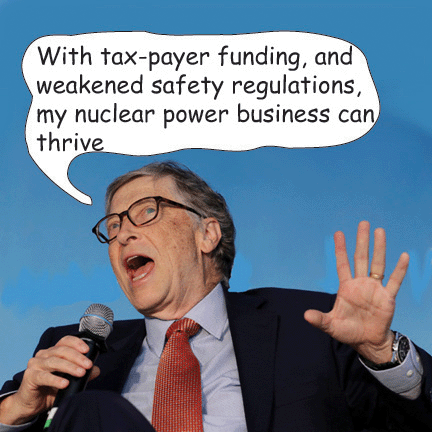
Russia’s war has stalled a next-gen US nuclear reactor backed by Bill Gates – because it’s lost its sole supplier of uranium
Markets Insider, George Glover , Dec 19, 2022,
- TerraPower has delayed a demo of its flagship nuclear reactor project in Wyoming by at least two years.
- The nuclear innovation company said it’s unable to get uranium fuel from any source other than Russia.
- TerraPower has received backing from Bill Gates and the US DOE for its advanced nuclear plant design.
……………..Its CEO Chris Levesque said the war has hit supplies of high-assay low-enriched uranium, or HALEU. That means the Natrium nuclear plant that TerraPower is building in Wyoming won’t go into demonstration service in 2028 as planned.
…………. Efforts to get US manufacturers in commercial production and to find alternative suppliers have not worked out, he said.
“Given the lack of fuel availability now, and that there has been no construction started on new fuel enrichment facilities, TerraPower is anticipating a minimum of a two-year delay to being able to bring the Natrium reactor into operation,” Levesque added.
……… Natrium project is expected to cost $4 billion to build, with around half of that funding coming from the US Energy Department.
TerraPower plans to fuel Natrium with HALEU , which has a higher level of enrichment than the 5%-enriched uranium-235 fuel used by American nuclear reactors already in operation.
The company assumed it would use Russian supplies for its first core load because the US doesn’t have the capacity to enrich uranium-235 right now, according to Levesque.
But Russia’s invasion of Ukraine in February cut off the fuel source, after the US, the EU and other western allies imposed sanctions on Moscow.
TerraPower and the Department of Energy are now looking for alternative sources of HALEU – and want lawmakers to approve a $2.1 billion funding package to support low-enriched uranium production in the US, Levesque said. https://markets.businessinsider.com/news/commodities/russia-war-in-ukraine-bill-gates-nuclear-startup-uranium-fuel-2022-12
Propaganda drive: Nuclear Power 2.0 Eyes Opportunity, Steep Climb in Coal Country
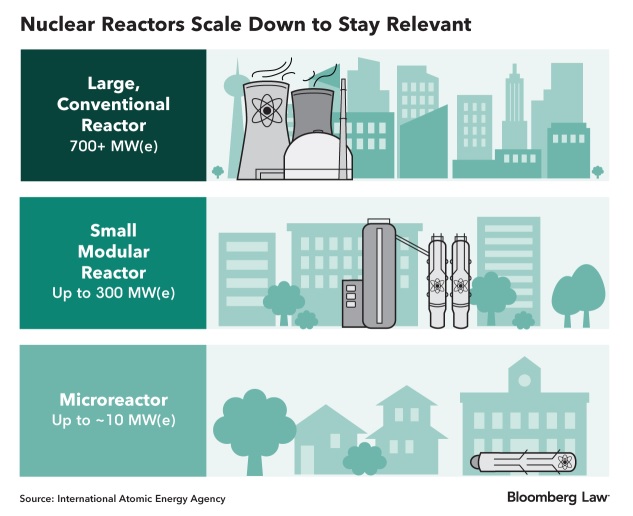
Daniel Moore, Bloomberg Law, 19 Dec 22
The nuclear power industry sees its future in coal country……….
But realizing that vision—now backed by the Biden administration and Congress, with billions earmarked for the plan in last year’s historic infrastructure law—depends on winning over some of the most nuclear-skeptical places in the country. So the Energy Department is on an education mission to gain local support across rural America for what it believes can be a nuclear revival.
“We really, over time, have underestimated the role that social science, political science, sociology, psychology, human geography can all play in our decision-making,” explains Kathryn Huff, the department’s 36-year-old assistant secretary of nuclear energy.
……….. About 80% of nearly 400 operating or shuttered coal power plant sites across the country could be converted to nuclear power plant sites, the Energy Department estimated in September.
………… But in West Virginia, which has no operating nukes, only 38% of residents support building new reactors, according to a public opinion project by the University of Oklahoma and University of Michigan. The state has the second-smallest portion of people who say they see a benefit from nuclear, according to the project, which was funded by the Energy Department and pulled data from 2006 to 2020.
……….. SMRs are key to changing that mindset, with the selling point that they’re not your parent’s nuclear reactors……………………..
A trio of academic studies with 30 researchers will guide the department’s nuclear energy office on community outreach at a DOE-funded test reactor near a shuttered coal plant in Wyoming; a new siting process for temporary nuclear waste storage facilities; and advanced nuclear possibilities in the Arctic, where past nuclear tests have generated deep distrust among indigenous groups.
A trio of academic studies with 30 researchers will guide the department’s nuclear energy office on community outreach at a DOE-funded test reactor near a shuttered coal plant in Wyoming; a new siting process for temporary nuclear waste storage facilities; and advanced nuclear possibilities in the Arctic, where past nuclear tests have generated deep distrust among indigenous groups.
………………… spent nuclear fuel requires on-site storage in bulky steel casks, while a permanent home requires geologic assessments spanning millions of years. And when aging plants do close—as 13 plants have in the last decade—cleanup crews must carefully dismantle the components.
………… The nuclear waste problem is a “gaping hole in the ship of the US nuclear industry,” said Edward McGinnis, who spent almost 30 years at the Energy Department
……. Without a permanent home for waste, “then it’s very difficult to say we should have another generation of nuclear power because we don’t know how to solve the problem of waste from the first generation,” said Tom Isaacs, a nuclear waste expert….
Clean Energy Goal
Lyman from the Union of Concerned Scientists said the number of new local jobs that would come from SMRs are overstated, in part because the largely premanufactured reactors are much smaller and come with lower costs than existing reactors. But he said the unproven plants would still bring potential environmental hazards.
………..Finding markets is crucial for advanced reactors, which hope to roll out by the end of the decade. The department plans to plow as much as $3.2 billion into demonstrating reactors by TerraPower in Wyoming and X-energy in Washington state.
………………………………………….. Environmental groups are sharply split on the issue, said Gary Zuckett, who lobbied for the 1996 West Virginia law that banned nuclear construction until a permanent waste storage facility was established. Zuckett, executive director of West Virginia Citizen Action, considers himself somewhere “in the middle,” as he believes safely operating nuclear plants should stay online to maintain zero-emissions power until more solar and wind can be built.
But communities are concerned about plugging reactors into coal sites, he said.
“I personally don’t see nuclear as our savior,” Zuckett said. “We don’t have a safe, permanent repository for all of this high-level nuclear waste that will be deadly for generations, and so should we really be making more of this?”
Federal incentives could be poured into wind and solar, which are ready to deploy now, said Jim Kotcon, an associate professor at West Virginia University and a leader of the state’s Sierra Club chapter.
“We should adopt the fastest, cheapest, safest and cleanest sources first,” Kotcon said. “Nuclear is none of those.”
……………………………………….. To tackle waste siting, Oklahoma and Michigan researchers hope to define a process for winning consent from communities to host a hypothetical temporary waste site. The DOE is offering $16 million for additional consent-based siting efforts and assessing nearly 1,700 pages of comments in response to a request for information.
The amount of waste SMR generate is the subject of debate—a controversial study in May found small reactors could generate more waste than the industry has led people to believe.
………………………………… Energy Department officials express optimism the appeal to community engagement will work………………………..
The department “will have momentum by the time this administration is done,” Huff said. “It doesn’t matter what political winds shift.”
To contact the reporter on this story: Daniel Moore in Washington at dmoore1@bloombergindustry.com
To contact the editor responsible for this story: Gregory Henderson at ghenderson@bloombergindustry.com https://news.bloomberglaw.com/environment-and-energy/nuclear-power-2-0-eyes-opportunity-steep-climb-in-coal-country
Nuclear Free Local Authorities ‘bitterly disappointed’ government will press ahead with ‘criminal nuclear power tax’
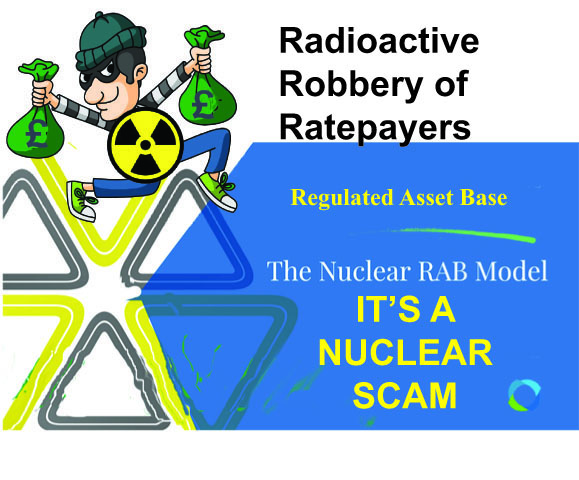
https://www.nuclearpolicy.info/news/nuclear-free-local-authorities-bitterly-disappointed-government-will-press-ahead-with-criminal-nuclear-power-tax/ 19 Dec 22, The UK/Ireland Nuclear Free Local Authorities were bitterly disappointed, but unsurprised, to hear recently British Government confirmation that it has decided to go ahead with the controversial Regulated Asset Base funding model for future nuclear power projects.
The government is proposing to use the RAB model to pay for the cost of constructing a new power plant at Sizewell C in Suffolk and for a fleet of so-called Small Modular Reactors to increase nuclear generating capacity three-fold to 24 GW by 2050 in line with the Energy Security Strategy published by Boris Johnson in April of this year.
To the NFLAs RAB should be renamed ROB as it is akin to daylight robbery. The RAB model de-risks nuclear projects for contractors and operators as, rather than requiring them to find the finance upfront, all electricity customers instead face an additional levy on their bills to meet the cost of building the new plants; all of which, based on historic precedent, will be delivered late and way over budget. The public will also have to meet the costs of any delays, which are likely to be considerable.
Responding to a consultation on the proposals launched by the Department of Business Energy and Industrial Strategy in August, the NFLA called for RAB to be scrapped and for nuclear operators to source money for new construction projects from the private sector, rather than electricity customers.
The NFLA is especially concerned at the unfairness of levying elderly customers who are unlikely to see any ‘benefit’ from the nuclear power generated, given that construction of any new plant is likely to take at least a decade, or levying poorer households, who are already at risk of fuel poverty. The NFLA called for elderly and poorer households to be exempted. The proposal is also particularly iniquitous when applied to Scottish customers, who will be taxed despite the Scottish Government refusing to countenance new nuclear plants for the nation.
The government published its response on 14 December stating that it will go ahead with the proposals, with only a vague and unsubstantiated recognition that ‘support for vulnerable groups would be best tackled holistically
Commenting on the response, NFLA Steering Committee Chair, West Dunbartonshire Councillor Lawrence O’Neill said:
“It is outrageous that British Government ministers want to press ahead with a scheme that imposes a criminal tax to pay for their nuclear delusion on the poorest, oldest and most vulnerable customers, and doubly criminal when imposed on customers living in Scotland where we as a nation certainly do not want to entertain it.
“Nuclear power projects are notorious for coming in late and way over cost, Hinkley Point C being a case in point. RAB simply takes away the risk to prospective nuclear operators of raising initial finance in the commercial lending market and finding the extra money needed to meet cost overruns and delays and transfers it onto electricity consumers who are already struggling to pay overinflated energy bills.
“The most immediate beneficiary EDF Energy will be laughing all the way to the bank as it picks up the subsidy to build Sizewell C collected from British taxpayers then pays the resulting profits from its future operations back to its owner, the French Government”.
Owner of Palisades to reapply for taxpayer funding to reopen nuclear power plant

Riley Beggin, Hannah Mackay, The Detroit News, 19 Dec 22,
Holtec International, the owner of the Palisades nuclear plant near South Haven, will reapply for federal funding in an attempt to revive the shuttered plant.
The company applied for funds through the U.S. Energy Department’s Civil Nuclear Credit Program after the plant was officially shut down in May. It announced in November it had been denied.
The $6 billion program funded by the Bipartisan Infrastructure Law aims to keep existing reactors around the country running. Applicants must demonstrate that they will be closed for economic reasons and that carbon emissions and air pollutants will rise if they are closed.
………….. Holtec acquired the plant from Entergy Nuclear last December and planned to decommission it.
The plan received scrutiny from Attorney General Dana Nessel and several environmental groups, which questioned whether the company had the finances to quickly and safely decommission the plant. The environmental groups also raised concerns it could threaten the Great Lakes if the company decided to ship nuclear waste to a storage facility out of state…………….
In the meantime, Holtec will continue decommissioning the plant, O’Brien added, with a focus on “managing the spent fuel removal from the spent fuel pool to dry cask storage.”
There would be hurdles to reopening. Palisades shut down more than a week early in May as “a conservative decision based on equipment performance,” U.S. Nuclear Regulatory Commission Public Affairs Officer Prema Chandrathil said at the time. The control rod drive mechanism had a degrading seal.
The Nuclear Regulatory Commission transferred Palisades’ license from Entergy to Holtec “for the purpose of decommissioning Palisades” on June 28, the NRC said. All fuel was removed from the reactor on June 13.
Holtec then applied in July for funding under the federal Civil Nuclear Credit Program. To qualify for credits, there must be “reasonable assurance” the reactor can be operated with its current license and pose no significant safety hazards. https://www.detroitnews.com/story/news/local/michigan/2022/12/19/palisades-nuclear-power-plant-to-reapply-for-federal-funding/69740779007/
It’s All About the Bomb. Civilian nuclear power is merely a cover for producing more nuclear weapons.

Presenting civilian nuclear power as the answer to climate change, as clean and safe electrical generation, or as energy “too cheap to meter” is simply a sales pitch. What is actually delivered by a robust nuclear energy fleet is the capacity for nuclear weapons and a nuclear Navy.

It does not matter if nuclear power can really solve climate change, it just has to be seen as an essential part of the solution to attract bright, young talent into what is made to appear as the cutting edge of technology and climate solutions, even though the civilian nuclear power industry worldwide has been in decline since 2002.
Why civilian nuclear power is merely a cover for producing more nuclear weapons. BY ALFRED MEYER , NOVEMBER 25, 2022
“……………………………………………………………………. the United States wanted to be recognized as the leader of the “free world” in the postwar years. In the early 1950s, the military needed to recast nuclear enterprise activities to appear to be peaceful, beneficial parts of our modern life, very distant from the wartime horrors.
…………….In a now famous speech on December 8, 1953, titled “Atoms for Peace,” Eisenhower proposed to the U.N. General Assembly an international program of sharing “peaceful” nuclear materials and know-how for untold bounty, to encourage development of nuclear programs around the world.
……… one should also recognize that the IAEA’s bluntly stated mission is to promote nuclear technology. The first leaders of the IAEA were from the United States, to ensure that U.S. interests were protected.
Nuclear enterprise infrastructure is an outgrowth of World War II. These new endeavors drew international interest in creating the huge nuclear marketplace now in existence. Atoms for Peace—a plan to share nonmilitary nuclear technology with other countries to “win hearts and minds”—placed nuclear materials and reactors in more than forty countries, including Iran. This generated ongoing business for many American nuclear enterprise companies while supporting and expanding the U.S. military’s nuclear infrastructure and capacity in the United States.
Having nuclear activities under the auspices of the United Nations conferred upon them the legitimacy and respect of that international body………………………………….
The generally favorable response to Atoms for Peace was a trifecta for the nuclear enterprise. U.S. nuclear activities were repackaged as the “peaceful” atom and given the patina of social acceptance through United Nations oversight. Eisenhower was lauded as a good leader for sharing the atom with the world, and the U.S. nuclear infrastructure got new business and growth, which supported more U.S. nuclear weapons and nuclear Navy programs.
Atoms for Peace also served geopolitical ends. For instance, one reason the United States provided Iran with a research reactor in 1967 was to saddle that country with significant financial obligations, including paying for ongoing parts, services, and technical support from American companies.
The Atomic Energy Commission was created in 1946 to promote and regulate the development of this new industry. With the commission led by Wall Street banker Lewis Strauss for five critical years, it is not surprising that the scales heavily favored promotion over regulation. Encouraging private investment in these risky reactor projects was assisted by minimizing regulatory safety and operational demands upon the private operators.
But why was it so important for the U.S. government to develop and subsidize civilian nuclear power? Because it allowed the military, in essence, to spin off its nuclear reactor activities to private financing and corporate operations. Like Atoms for Peace, this repackaging of a military activity as a civilian one succeeded in making the endeavor socially acceptable and somewhat self-funding—although government subsidies are still perennially needed to carry on, and taxpayers are still covering the liability insurance costs of the private corporations.
Most importantly, as detailed in a 2017 report by former U.S. Energy Secretary Ernest Moniz, civilian nuclear power is an “essential enabler” of our national security. The Atlantic Council calculates the value of this contribution to national security to be $42.4 billion a year. Businesses contributing to the nuclear Navy’s supply chain are in forty-four U.S. states.
……………. Being the biggest nuclear enterprise on earth encourages the circular, self-sustaining dynamic of the nuclear arms race. The United States is busy modernizing its nuclear weapons infrastructure to be “strong enough” to negotiate the elimination of nuclear weapons. This is presented as official doctrine in the nonproliferation world. In reality, the United States is actually driving the growing international nuclear arms race.
…………… Presenting civilian nuclear power as the answer to climate change, as clean and safe electrical generation, or as energy “too cheap to meter” is simply a sales pitch. What is actually delivered by a robust nuclear energy fleet is the capacity for nuclear weapons and a nuclear Navy.
Over the decades, there have been numerous expert critiques of nuclear power, authoritatively debunking these misleading and false promises, yet these critiques seem to have no effect on the trajectory of the nuclear enterprise. I suggest that these sales pitches are diversionary techniques aimed at sapping our energy.
It does not matter if nuclear power can really solve climate change, it just has to be seen as an essential part of the solution to attract bright, young talent into what is made to appear as the cutting edge of technology and climate solutions, even though the civilian nuclear power industry worldwide has been in decline since 2002.
To protect ourselves from the dangers of the nuclear enterprise, we need to stop the nuclear weapons and nuclear power reactor programs—a tall order, for sure. But if we seek success in our efforts, we are well advised to understand the forces we are engaging with. It is all about nuclear weapons.
The folly of the proxy war in Ukraine and how the military-industrial-complex has become the enemy from within
The Chris Hedges Report 18 Dec 22
There was once a wing of the Democratic Party that stood up to the war industry. J. William Fulbright. George McGovern. Mike Gravel. William Proxmire. But that was decades ago. The new Democrats, especially with the presidency of Bill Clinton, became shills not only for corporate America but the arms industry. No weapons system is too costly. No war, no matter how disastrous, goes unfunded.
The massive military budget, with $858 billion in military spending allocated for Fiscal Year 2023, an increase of $45 billion over the Biden administration’s budget request, and nearly $80 billion over the amount appropriated by Congress for the current fiscal year, keeps growing.
When 30 members of the party’s progressive caucus recently issued a call for Joe Biden to negotiate with Vladimir Putin they were forced by the party leadership and a war mongering media to back down and rescind their letter. What happened to the Democratic Party? Why has it become impossible to question war and the massive expenditures on arms? Why is such questioning political suicide? Why can’t a Democrat ask, especially at a time of economic hardship and huge deficits, how much we are going to divert to the war in Ukraine which has already consumed some $ 60 billion – as much as we spend on the State Department and AID — with no end in sight? Joining me to discuss the extinction of anti-war Democrats in Dennis Kucinich, a former presidential candidate, who served eight terms in the House of Representatives before the Democratic Party gerrymandered his district to ensure his defeat.
TRANSCRIPT

…………Dennis Kucinich:……………………. what’s happened with the Democratic Party, I think as soon as the Democratic Party made a determination, could have been 35, 40 years ago, that they were going to take corporate contributions, that wiped out any distinction between the two parties. Because in Washington, he or she who pays the piper plays the tune, and that’s what’s happened.
So, there isn’t that much of a difference in terms of the two parties when it comes to war except, notably, partisan reasons or not, there were over 50 Republicans who voted against the last tranche of money that went to fuel the war in Ukraine. And I felt that was notable, and of course, the potential speaker of the house should the Republicans win will be Kevin McCarthy, who has made it a point to say that he’s going to look at that funding.
…. Right now, the arms industry is making money hand over fist with the expansion of war. That’s how they make their money.
…….. And so, with respect to the Democratic caucus, this event, a retraction of the letter by a significant caucus within the Democratic Party, is a new benchmark of a slavish obeisance to the status quo within the party, which then supports war. And a majority of Republicans at this point are supporting war. So you have Congress supporting a war, and this is the way it’s been.
…… when the Pentagon budget comes up, there is a parade of various businesses, small and large, who will make appointments with the congressperson or staff and lay out how many jobs are in the district and how important it is to a district business to have this budget passed……….
……… I went to as a member of the government oversight committee in which an inspector general testified there are over $1 trillion worth of accounts in the Pentagon that couldn’t be reconciled. That they had over 1100 different accounting systems, deliberately, I suppose, constructed so as to make obfuscation rule the day.
So, from that moment on, I just said, wait a minute. They’re not keeping track of how this money’s spent. Why in the world should I vote for this budget? So from that point on, right through to the conclusion of a 16-year service in the United States Congress, I didn’t vote for a single budget of the Pentagon or any of the supplemental appropriations to keep wars going because I knew it was a racket
………….. the truth is the members of Congress are always under enormous pressure locally from their constituents, from contractors within their constituency, from the mediated environment, and the party. And so, it’s a rare individual, and I’m not doing this to elevate myself, but it’s a rare individual who will go against that, because you risk, at times, you may risk your political career.
…………………………………….. The truth of the matter is that we’re in a heavily militarized society driven by greed, lust for profit, and wars are being created just to keep fueling that. It moves right into this idea, this old idea of a manifest destiny. And then you leap into the 21st century where there are still people who believe, as in the Project for the New American Century, that it has to be that America must rule the world, that it is our destiny. I mean, that is such old thinking, but that’s where we are.
…..I see the world as one. I think that human unity is the truth that surrounds all of us. And when we start separating ourselves, and we engage in this polarized thinking, polarized thinking is a precursor of war………. I’ve gone away from the orthodoxy which is now part of politics that says, well, keep that war going for whatever reason. We’re going to beat the Russians. We’re going to beat the Chinese. What? We’re beating ourselves.
………. NATO has become now a kind of sock puppet for Western powers, notably my own dear country the United States.
….from 2014 how the US engineered a coup and knocked out the Ukrainian government and put in one that would serve the US interest, which was to nullify the power of the constituency in Eastern Ukraine, which was Russian-speaking.
And they wanted to basically, by any means necessary, keep that out of influencing the policies of the region, which they did. I mean, 14,000, by some estimates, Russian-speaking Ukrainians were killed from 2014 until 2021. Most Americans have no idea about that.
But anyhow, once the US, once the intelligence started to say, hey, we can knock Russia out like that, okay? We’ll crush Russia economically. These sanctions are going to put Russia away. And the EU bought into it. What’s the result? Well, the war goes on. But in the meantime, the sanctions have created a dramatic increase in the cost of energy. Plus they blew up the pipeline. That’s another increase in the cost of energy.
…… This is going to cause a lot of problems with the EU. And NATO is there as a cat’s paw for war……… they’re paying an economic price right now for the misjudgment of the European officials who were coaxed into it by the US.
….. And this ends up being a nightmare. Not only for Europe though, but we’re getting visited with it somewhat here.
……………………. suddenly Ukraine becomes a bloodbath of a chess board where these innocent people are just being used as pawns in a game of nations.
Chris Hedges: Let’s talk about the press, because you spoke about going back to your constituents as an anti-war candidate and feeling blowback. But isn’t that because, essentially, we have a press that has locked out anti-war critics?
Dennis Kucinich…………………………………. And so, I’ve seen this dynamic before. And the media, we have a heavily mediated society, even more so today than 20 years ago. And we also know that the government can have legions of people working computers, sending out messages that praise those who are for the war and attack those who aren’t. We’re living in a hall of mirrors here when it comes to trying to find out what is really going on……………. , I’m also concerned that things could spin out of control, even now with respect to Russia, with respect to China, North Korea. And what a tragedy…………
Chris Hedges: I want to ask about these pimps of war, these shills for war…… now they’re beating the drums, of course, for endless war with Ukraine. It doesn’t matter how mistaken they were in the past, they are perpetuated, their think tanks are perpetuated. They never lose their purchase on the cable talk shows. You’ve dealt with these people. I know some of them, Abrams and others. They are truly human mediocrities. And I would include the generals like Petraeus and others.
Dennis Kucinich: …………. Well, if there ever was a country that was in need of a process of truth and reconciliation, it’s America.
………….. What Gore Vidal calls the United States of Amnesia just takes place, where people forget the mistakes. Not mistakes, the misdeeds of the past. And unless we have some measure of accountability we’re always going to be wearing the stain of war waged against innocent people around the globe.
……………………………… We should also be clear, we’ve lost almost all these wars going back to Vietnam, including Afghanistan and Iraq.
That was Dennis Kucinich, former presidential candidate, served eight terms in the House of Representatives before the Democratic Party pushed him out. I want to thank the Real News Network and its production team: Cameron Granadino, Adam Coley, and Kayla Rivara. You can find me at chrishedges.substack.com. https://chrishedges.substack.com/p/the-chris-hedges-report-show-with-346
Fusion. Really?
BY KARL GROSSMAN, https://www.counterpunch.org/2022/12/16/fusion-really/— 16 Dec 22
There was great hoopla—largely unquestioned by media—with the announcement this week by the U.S. Department of Energy of a “major scientific breakthrough” in the development of fusion energy.
“This is a landmark achievement,” declared Energy Secretary Jennifer Granholm. Her department’s press release said the experiment at Lawrence Livermore National Laboratory in California “produced more energy from fusion than the laser energy used to drive it” and will “provide invaluable insights into the prospects of clean fusion energy.”
“Nuclear fusion technology has been around since the creation of the hydrogen bomb,” noted a CBS News article covering the announcement. “Nuclear fusion has been considered the holy grail of energy creation.” And “now fusion’s moment appears to be finally here,” said the CBS piece
But, as Dr. Daniel Jassby, for 25 years principal research physicist at the Princeton Plasma Physics Lab working on fusion energy research and development, concluded in a 2017 article in the Bulletin of the Atomic Scientists, fusion power “is something to be shunned.”
His article was headed “Fusion reactor: Not what they’re cracked up to be.”
“Fusion reactors have long been touted as the ‘perfect’ energy source,” he wrote. And “humanity is moving much closer” to “achieving that breakthrough moment when the amount of energy coming out of a fusion reactor will sustainably exceed the amount going in, producing net energy.”
“As we move closer to our goal, however,” continued Jassby, “it is time to ask: Is fusion really a ‘perfect’ energy source?” After having worked on nuclear fusion experiments for 25 years at the Princeton Plasma Physics Lab, I began to look at the fusion enterprise more dispassionately in my retirement. I concluded that a fusion reactor would be far from perfect, and in some ways close to the opposite.”
“Unlike what happens” when fusion occurs on the sun, “which uses ordinary hydrogen at enormous density and temperature,” on Earth “fusion reactors that burn neutron-rich isotopes have byproducts that are anything but harmless,” he said.

A key radioactive substance in the fusion process on Earth would be tritium, a radioactive variant of hydrogen.
Thus there would be “four regrettable problems”—“radiation damage to structures; radioactive waste; the need for biological shielding; and the potential for the production of weapons-grade plutonium 239—thus adding to the threat of nuclear weapons proliferation, not lessening it, as fusion proponents would have it,” wrote Jassby.
“In addition, if fusion reactors are indeed feasible…they would share some of the other serious problems that plague fission reactors, including tritium release, daunting coolant demands, and high operating costs. There will also be additional drawbacks that are unique to fusion devices: the use of a fuel (tritium) that is not found in nature and must be replenished by the reactor itself; and unavoidable on-site power drains that drastically reduce the electric power available for sale.”
“The main source of tritium is fission nuclear reactors,” he went on. Tritium is produced as a waste product in conventional nuclear power plants. They are based on the splitting of atoms, fission, while fusion involves fusing of atoms.
“If adopted, deuterium-tritium based fusion would be the only source of electrical power that does not exploit a naturally occurring fuel or convert a natural energy supply such as solar radiation, wind, falling water, or geothermal. Uniquely, the tritium component of fusion fuel must be generated in the fusion reactor itself,” said Jassby.
About nuclear weapons proliferation, “The open or clandestine production of plutonium 239 is possible in a fusion reactor simply by placing natural or depleted uranium oxide at any location where neutrons of any energy are flying about. The ocean of slowing-down neutrons that results from scattering of the streaming fusion neutrons on the reaction vessel permeates every nook and cranny of the reactor interior, including appendages to the reaction vessel.”
As to “additional disadvantages shared with fission reactors,” in a fusion reactor: “Tritium will be dispersed on the surfaces of the reaction vessel, particle injectors, pumping ducts, and other appendages. Corrosion in the heat exchange system, or a breach in the reactor vacuum ducts could result in the release of radioactive tritium into the atmosphere or local water resources. Tritium exchanges with hydrogen to produce tritiated water, which is biologically hazardous.”

“In addition, there are the problems of coolant demands and poor water efficiency,” he went on. “A fusion reactor is a thermal power plant that would place immense demands on water resources for the secondary cooling loop that generates steam, as well as for removing heat from other reactor subsystems such as cryogenic refrigerators and pumps….In fact, a fusion reactor would have the lowest water efficiency of any type of thermal power plant, whether fossil or nuclear. With drought conditions intensifying in sundry regions of the world, many countries could not physically sustain large fusion reactors.”

“And all of the above means that any fusion reactor will face outsized operating costs,” he wrote.
Fusion reactor operation will require personnel whose expertise has previously been required only for work in fission plants—such as security experts for monitoring safeguard issues and specialty workers to dispose of radioactive waste. Additional skilled personnel will be required to operate a fusion reactor’s more complex subsystems including cryogenics, tritium processing, plasma heating equipment, and elaborate diagnostics. Fission reactors in the United States typically require at least 500 permanent employees over four weekly shifts, and fusion reactors will require closer to 1,000. In contrast, only a handful of people are required to operate hydroelectric plants, natural-gas burning plants, wind turbines, solar power plants, and other power sources,” he wrote.
“Multiple recurring expenses include the replacement of radiation-damaged and plasma-eroded components in magnetic confinement fusion, and the fabrication of millions of fuel capsules for each inertial confinement fusion reactor annually. And any type of nuclear plant must allocate funding for end-of-life decommissioning as well as the periodic disposal of radioactive wastes.”
“It is inconceivable that the total operating costs of a fusion reactor would be less than that of a fission reactor, and therefore the capital cost of a viable fusion reactor must be close to zero (or heavily subsidized) in places where the operating costs alone of fission reactors are not competitive with the cost of electricity produced by non-nuclear power, and have resulted in the shutdown of nuclear power plants,” said Jassby.
“To sum up, fusion reactors face some unique problems: a lack of a natural fuel supply (tritium), and large and irreducible electrical energy drains….These impediments—together with the colossal capital outlay and several additional disadvantages shared with fission reactors—will make fusion reactors more demanding to construct and operate, or reach economic practicality, than any other type of electrical energy generator.”
“The harsh realities of fusion belie the claims of its proponents of ‘unlimited, clean, safe and cheap energy.’ Terrestrial fusion energy is not the ideal energy source extolled by its boosters,” declared Jassby.
Earlier this year, raising the issue of a shortage of tritium fuel for fusion reactors, Science, a publication of the American Association for the Advancement of Science, ran an article headed: “OUT OF GAS, A shortage of tritium fuel may leave fusion energy with an empty tank.” This piece, in June, cited the high cost of “rare radioactive isotope tritium…At $30,000 per gram, it’s almost as precious as a diamond, but for fusion researchers the price is worth paying. When tritium is combined at high temperatures with its sibling deuterium, the two gases can burn like the Sun.”

Then there’s regulation of fusion reactors. An article last year in MIT Science Policy Review noted: “Fusion energy has long been touted as an energy source capable of producing large amounts of clean energy…Despite this promise, fusion energy has not come to fruition after six decades of research and development due to continuing scientific and technical challenges. Significant private investment in commercial fusion start-ups signals a renewed interest in the prospects of near-term development of fusion technology. Successfully development of fusion energy, however, will require an appropriate regulatory framework to ensure public safety and economic viability.”
“Risk-informed regulations incorporate risk information from probabilistic safety analyses to ensure that regulation are appropriate for the actual risk of an activity,” said the article. “Despite the benefits of adopting a risk-informed framework for a mature fission industry, use of risk-informed regulations for the licensing of first-generation commercial fusion technology could be detrimental to the goal of economic near-term deployment of fusion. Commercial fusion technology has an insufficient operational and regulatory experience base to support the rapid and effective use of risk-informed regulations.”
Despite the widespread cheerleading by media about last week’s fusion announcement, there were some measured comments in media. Arianna Skibell of Politico wrote a piece headed “Here’s a reality check for nuclear fusion.” She said “there are daunting scientific and engineering hurdles to developing this discovery into machinery that can affordably turn a fusion reaction into electricity for the grid. That puts fusion squarely in the category of ‘maybe one day.’”

“Here are some reasons for tempering expectations that this breakthrough will yield any quick progress in addressing the climate emergency,” said Skibell. “First and foremost, as climate scientists have warned, the world does not have decades to wait until the technology is potentially viable to zero out greenhouse gas emissions.” She quoted University of Pennsylvania climate scientist Michael Mann commenting: “I’d be more excited about an announcement that U.S. is ending fossil fuel subsidies.”
Henry Fountain in his New York Times online column “Climate Forward,” wrote how “the world needs to sharply cut [carbon] emissions soon…So even if fusion power plants become a reality, it likely would not happen in time to help stave off the near-term worsening effects of climate change. It’s far better, many climate scientists and policymakers say, to focus on currently available renewable energy technologies like solar and wind power to help reach these emissions targets.”
“So if fusion isn’t a quick climate fix, could it be a more long-term solution to the world’s energy needs?” he went on. “Perhaps, but cost may be an issue. The National Ignition Facility at Livermore, where the experiment was conducted, was built for $3.5 billion.”
The Lawrence Livermore National Laboratory has a long history with fusion. It is where, under nuclear physicist Edward Teller, who became its director, the hydrogen bomb was developed. Indeed, he has long been described as “the father of the hydrogen bomb.” The hydrogen bomb utilizes fusion while the atomic bomb, which Teller earlier worked on at Los Alamos National Laboratory, utilizes fission. The development of atomic bombs at Los Alamos led to a nuclear offshoot: nuclear power plants utilizing fission.
Karl Grossman, professor of journalism at State University of New York/College at Old Westbury, and is the author of the book, The Wrong Stuff: The Space’s Program’s Nuclear Threat to Our Planet, and the Beyond Nuclear handbook, The U.S. Space Force and the dangers of nuclear power and nuclear war in space. Grossman is an associate of the media watch group Fairness and Accuracy in Reporting (FAIR). He is a contributor to Hopeless: Barack Obama and the Politics of Illusion.
“FUSION NET GAIN” is manufactured ignorance.
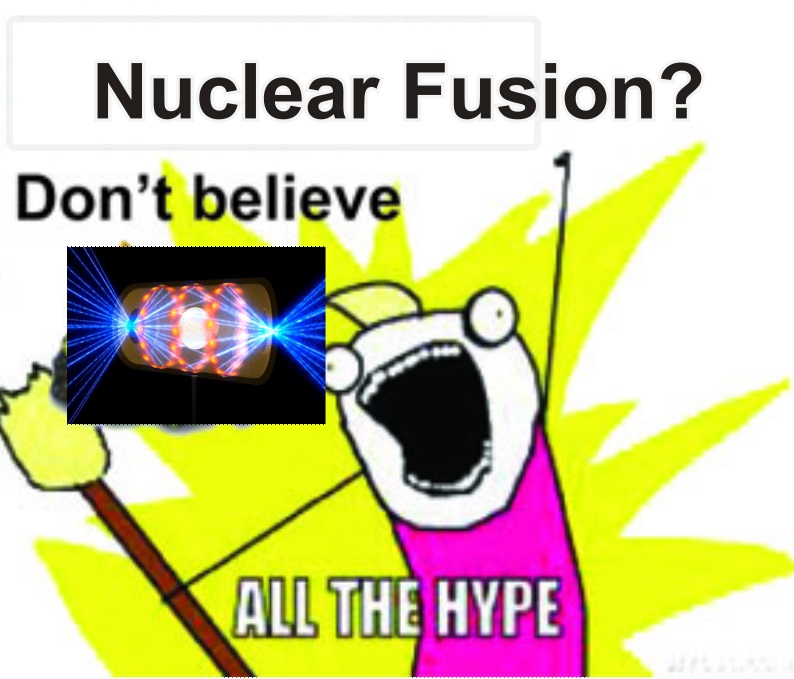
The only thing limitless and free about fusion power is the hype it generates
ARENA ONLINE, DARRIN DURANT, 16 DEC 2022 On 5 December 2022, fusion power researchers at California’s Lawrence Livermore National Laboratory (LLNL) achieved two technical milestones which by 12 December had encouraged a media-fuelled, gigantically unfounded and exaggerated projection about impending cheap, carbon-free, infinite electricity supply. Yes, ‘ignition’—a sustained, lab-controlled fusion reaction—was achieved. So too was ‘gain’, [?really] as the energy released by the fusion reaction was greater than that required by the lasers used to heat and compress a deuterium-tritium fuel pellet.
But we are light years away, at minimum, from fusion power contributing electricity into a grid and in any way helping to resolve the climate crisis. What is going on in all the pretending otherwise?
Almost every word written about ‘net energy gain’ from a fusion reaction is a species of manufactured ignorance generated by managing uncomfortable knowledge, which is complicated by a tension between the desire to trust fusion experts but the knowledge that those experts operate under powerful incentives to engage in hype.
INERTIAL CONFINEMENT
We have been at the doorstep of fusion hype before. In fact, ever since the 1950s fusion power has been just over the horizon. The fusion illusion has become its own cottage industry, with competing fusion research teams over-calling each other in a series of breakthroughs and decisive advances that generate hype, but no electricity.
For instance, on 9 February 2022 the Joint European Torus (JET) fusion reactor in the UK announced that it had produced 59 Megajoules of energy and that this indicated ‘powerplant potential’. Yet JET consumed significantly more power than it produced. Hence I suggested that the claim of a net power gain was a form of hyped science communication in which future promise colonises present limitations.
Researchers at LLNL’s National Ignition Facility (NIF) are the most recent hype-mongers. In fusion research, there are two main approaches: doughnuts and lasers. The ITER tokamak reactor in France is a doughnut-shaped machine that uses high-temperature magnetic confinement to create a stable and continuous plasma in which fusion can occur. By contrast, in the inertial confinement approach, discrete fusion reactions produce bursts of energy. In NIF experiments, a weak laser pulse is created, split, amplified, converted from infrared to ultraviolet energy, and then, in the form of 192 beams, focused onto a capsule containing deuterium and tritium, heating and compressing (fusing) the nuclear fuel to create alpha particles and release neutrons.
In their 13 December announcement of NIF’s experimental result, the US Department of Energy (DOE) advertised the result as a ‘game changer’ and quoted a host of US politicians directly linking the result to commercial fusion power and the goal of a ‘net-zero carbon economy’. Media outlets which really should adopt stricter editorial standards gushed about the result implying ‘limitless, zero-carbon power’ or stating that it ‘changes everything’ and heralds a decisive step towards ‘carbon-free energy’ for ‘everyone’ for ‘millions of years’.
The only thing limitless and free about fusion power is the hype it generates.
Back in reality, the DOE specified that ‘LLNL’s experiment surpassed the fusion threshold by delivering 2.05 megajoules (MJ) of energy to the target, resulting in 3.15 MJ of fusion energy output’. The DOE suggested ‘there is momentum to drive rapid progress towards fusion commercialization’, but what does that 1.10 MJ ‘gain’ in fact mean?
Even science magazines regurgitated the hype, suggesting the fusion reaction released ‘roughly 54% more than the energy that went into the reaction’. Yet when any of these media sources came up for air, typically late into the triumphant narrative, there were somewhat grudging estimates of total energy input, always attributed to some scientists who otherwise had gushed about technological promise. These scientists estimated that the total energy consumed by NIF’s 192 lasers was between 300 megajoules and 500 megajoules. Multiple credulous sources split the difference at 400 megajoules. As one sceptical physicist noted, ‘consuming 400 MJ and producing 3.15 MJ is a net energy loss greater than 99%’, akin to you giving me $400 and me returning to you $3.15, then trying to pump your tyres about how wealthy you just became.
UNCOMFORTABLE KNOWLEDGE
I am not a particle or theoretical physicist, and am admittedly biased by finding nuclear fission as a commercial electricity option to be a kind of technological creationism, and certainly a white elephant for Australia. Moreover, my field of Science and Technology Studies is known more for deconstructing facts than building them up. But as a sociologist of knowledge interested in theorising the positive, ‘partnership’ role experts can play in democratic decision-making, I ask, could experts with specialist knowledge relevant to fusion engineering be doing a better job of reining in the unwarranted hype about fusion net gain?
Specialist commentators on fusion power could do worse than get more comfortable with uncomfortable knowledge. Uncomfortable knowledge is information or understanding that is available but unevenly distributed or acknowledged, inadvertently or strategically obscured or left undone, and actually or potentially disruptive for the goals and interests of select organisations and institutions.
In fusion research, the fact that net energy gain is not the goal of either magnetic confinement or laser inertial confinement is the most salient piece of uncomfortable knowledge. ITER recently withdrew its claim of net energy gain—of 500 MW of fusion power from 50 MW of input power (a Q value of 10)—and now says that ITER is ‘the investigation and demonstration of burning plasmas’, in which the energy of helium nuclei produced by fusion reactions is enough to maintain plasma temperature.
The LLNL team admitted as much as well, describing the NIF result as a ‘proof of concept [not designed] to plug the NIF into the grid’, with other physicists adding that NIF was designed to be a big laser that could ‘give us the data we need for the [nuclear] stockpile research programme’.
Given the hype about limitless clean energy just over the horizon, another type of uncomfortable knowledge involves the judgements about the feasibility of commercial electrical power from fusion. Put differently, rather than being regaled by hyped milestones and heroic assumptions about future developments, why not cold, hard assessments of uncertainties and obstacles?
While it seemed easy to find a dozen experts willing to gush on record about how remarkable it was to spend $3.5 billion to produce an energy output that might boil a few kettles, frank assessments of future prospects are confined to scattered observations by disconnected critics.
But the list of uncertainties includes: how to increase the fusion reaction frequency from 1 per day to maybe 10 per second; how to reduce the cost of the capsule ‘target’ from tens of thousands of dollars to a few cents, especially as production ramps up from one capsule per week to up to one million per week; how to ensure the laser can reliably fire ten times per second, not once per day; whether energy out can increase versus energy in from 1.54x to 30x; how the heat produced by the fusion will be extracted; whether the efficiency of the yield can be increased by least two orders of magnitude; and whether it is possible to breed enough of the tritium fuel for a commercial industry.
Where such uncomfortable knowledge about feasibility is tackled in depth, it is only by critics. One physicist thus suggested commercial feasibility would demand an increase in fusion output of 100,000 per cent, a mastery of exceedingly strict conditions vis a vis temperature, shape of target capsule and vacuum chamber, a solution to the problem that the machine breaks when it works and requires hours to recover, and an overcoming of the low supply of tritium fuel and its prohibitive cost.
A final form of uncomfortable knowledge includes drawbacks, which are typically managed through practices that include denial (avoiding acknowledging information even if others bring it to collective attention), dismissal (manufacturing justifications for rejecting a counter-claim), diversion (distracting via a decoy issue) and displacement (swapping problems).
Two examples will suffice. One is the deuterium-tritium fuel needed for any future fusion reactor. It scarcely exists in nature (a fact met with denial) and must be produced either in heavy water reactors or by breeding it from enriched lithium-6, which is in short supply (met with dismissal), and, no, it is not solved by speculations about extracting the fuel from sea water (a diversion).
A second drawback is that nuclear fusion may be not the perfect energy source for a climate crisis but, as a former fusion physicist put it, is ‘in some ways close to the opposite’. Put succinctly, the fact that neutron streams comprise 80 per cent of fusion energy output in deuterium-tritium reactions makes it an odd electrical energy source. The neutron streams damage the structure of the machine, produce relatively bulky radioactive waste, require biological shielding, and constitute a proliferation risk (Pu-239). The fusion reactor itself has a high parasitic power consumption, a scarce fuel supply, and likely high operating costs due to continual radiation damage…………………………………… more https://arena.org.au/fusion-net-gain-is-manufactured-ignorance/
‘We are all downwinders’: New film discusses Nevada’s nuclear fallout
https://www.reviewjournal.com/entertainment/movies/we-are-all-downwinders-new-film-discusses-nevadas-nuclear-fallout-2695496/ By Taylor Lane Las Vegas Review-Journal, December 16, 2022
“At the end of the day, we are all downwinders.”
That’s the message directors Mark Shapiro and Douglas Brian Miller hope viewers take away from their upcoming film “Downwind,” a documentary on the health consequences of nuclear testing at the Nevada Test Site (now called the Nevada National Security Site).
The test site saw over 900 nuclear detonations between 1951 and 1992, including 100 atmospheric tests that could be seen from as far as Las Vegas, 65 miles south of the test site, and St. George, Utah, which has above-average rates of radioactivity compared to the U.S. average.
The film centers around the areas closest to the blasts in Utah and western Nevada, where communities officials once deemed a “low-use segment of the population” bore the brunt of the fallout — mainly Mormon communities, Native Americans and other rural residents, Shapiro said.
Because of its Utah focus, the filmmakers wanted to debut it in the Beehive State at the Slamdance Film Festival in Park City.PauseUnmute
The film premieres Jan. 23 and will be preceded by a panel featuring Miller and Shapiro, along with downwinder advocates Claudia Peterson and Mary Dickson, Nevada Shoshone Nation Principal Man and spokesperson Ian Zabarte and Scott Williams, a nuclear policy consultant from Heal Utah.
Shapiro and Miller said they became interested in researching nuclear fallout after reflecting on their families’ history of cancer, which is found in higher rates in communities in proximity to the test site.
The two descended down a rabbit hole of research on the widespread impacts of radiation from nuclear testing, and found out radiation is not exclusive to the Southwest.
“Even if you don’t live in St. George, the radiation impacts us globally,” Shapiro said.
Miller said he was awestruck by a map from researcher Richard Miller (no relation) that shows how far the winds blew the radiation across the U.S.
“It blasted the entire country, minus Los Angeles because of the way the wind was blowing. … It just changes your whole mindset of ‘Is this real?’ And then you continue to dig,” Miller said.
Talking with Nevadans
Miller and Shapiro spoke with many Nevadans about their experiences with nuclear fallout, including members of the Western Bands of the Shoshone Nation of Indians such as Zabarte. The test site is on the traditional homelands of the Western Shoshone.
“We wanted to make sure that we had the perspective of Ian and others from the community to talk about the significance of testing on land that they still consider theirs and theirs by treaty,” Shapiro said.
The duo found support from late Review-Journal reporter Keith Rogers, whose career at the newspaper focused on the test site, military issues and the environment. Rogers died in October.
“We looked at him as a significant contributor to this film,” Shapiro said. “(For) both Doug and I, he was like a father figure to us. He really helped guide a lot of the story.”
Rogers is featured in the film, and behind the scenes helped Miller and Shapiro connect with people who work at Atomic Testing Museum and to past test site employees.
The greatest resource Rogers gave the team, Shapiro said, was a U.S. nuclear test booklet from the Department of Energy, which detailed every test ever done at the test site.
“Each one of them has a name, it has a date, it has a location, it has the yield range — some of these bombs were several times larger than the bombs dropped in Hiroshima and Nagasaki,” Shapiro said. “This booklet that he gave me, you see notes from the government saying ‘accidental release of radiation detected off site.’ It almost gives you shivers — it’s the rabbit hole effect.”
The film also stars actor Martin Sheen, who serves as the film’s narrator and has spoken out against nuclear testing, and comedian Lewis Black, who adds humor to a dark story about America’s past and has joked about duck-and-cover drills in his stand-up routines.
“(Black) is a political commentator, and his comedy is a reflection of the time we live in,” Shapiro said.
Holding accountability
Miller hopes the film shows that residents whose lives have been changed by testing should be compensated and that Americans can find ways to prevent testing from happening again, he said.
“We have to make sure that we’re holding our government accountable for what’s happening,” Shapiro said. “While we recognize how much we love living here (in the U.S.), still, there’s accountability.”
For more information on the film, visit backlotdocs.com.
Contact Taylor Lane at tlane@reviewjournal.com. Follow @tmflane on Twitter.

Fusion “breakthrough” is largely irrelevant to the climate crisis
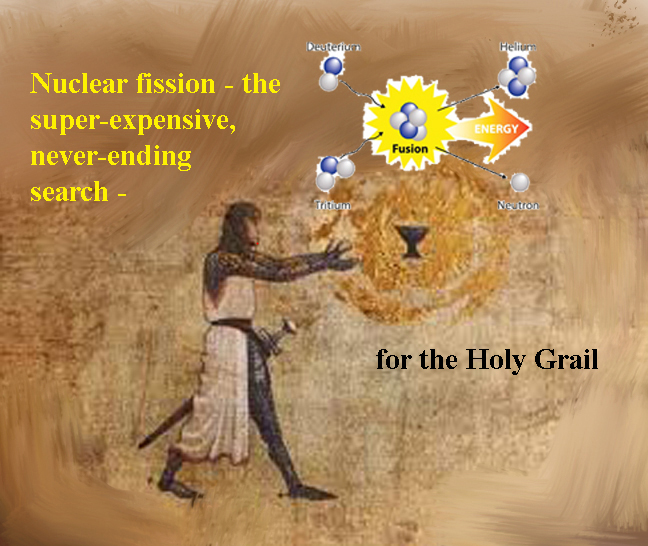
Gordon Edwards 15 Dec 22
Just a short commentary on the “fusion breakthrough” this week.
The experiment took place at the Lawrence Radiation Lab, a pre-eminent weapons Laboratory in California once directed by Edward Teller.
Jubilation is felt because, for the first time in over 60 years of effort costing many billions of dollars, a greater amount of energy came out of an extremely short-lived fusion reaction than the amount of energy needed to trigger it in the first place. The net energy gain was about 50 percent.
It all happened very quickly. “The energy production took less time than it takes light to travel one inch,” said Dr Marvin Adams, at the NNSA. (NNSA = National Nuclear Security Administration)
Here are a few details –
1) In an earlier email (www.ccnr.org/fission_fusion_and_efficiency_2022.pdf )I described the “magnetic confinement” concept, whereby an electromagnetic force field holds a very hot plasma of hydrogen gases inside a doughnut-shaped torus (typical of the Tokamak and its close relatives). In this case, “very hot”. Means about 150 million degrees C.
But the breakthrough that is being bally-hooed now, since Tuesday December 13, is a different kind of process altogether, using a concept called “inertial confinement”.
The experiment involved a small pellet about the size of a peppercorn. This pellet contained, in its interior, a mixture of deuterium and tritium gases, two rare hydrogen isotopes. In the experiment, the pellet’s exterior was blasted by x-rays triggered by a battery of 192 very powerful lasers, all targeted on the inner walls of a cylinder made of gold. The lasers generated x-rays on contact with the goldatoms, and those x-rays were focussed by the curving cylinder walls on the little peppercorn-sized pellet in the middle of the gold cylinder.
The x-rays heated the outer shell of the pellet to more than three million degrees, making the exterior of the pellet explode outwards, and (by Newtons “action-reaction” principle) causing the inner gases to be compressed to a very high density at an extremely high temperature, presumably to over 100 million degrees. It is a high-energy kind of implosion, causing fusion to occur in the very centre. The peppercorn “pops”.
2) The experimenters input 2.05 megajoules of energy to the target, and the result was 3.15 megajoules of fusion energy output – that is over 50% more energy than was put in (for a net gain of 1.1 megajoules). This suggests that the fusion reaction inside the pellet may have triggered other fusion reactions.
How much energy is that? Well, a typical household uses about 100,000 megajoules of energy per year, or an average of 273 megajoules per day. So 1.1 megajoules is not much. But it is greater than the input energy.
The Tokamak project now under construction in France for the ITER project, using magnetic confinement, is hoping to have a net energy gain factorof 10 or more (i.e. 10 times as much energy output as energy input).
Earlier this year, in February 2022, the UK JET laboratory announced thatthey had managed to have a fusion reaction last for five seconds. Thereaction produced 59 megajoules of energy, but without a net gain in energy.
3) Most of the news stories about this event state, erroneously, that fusionreactors will not produce any radioactive wastes. This is untrue.
It is true that fusion reactors will not produce high-level; nuclear waste(irradated nuclear fuel), but It is expected that fusion reactors will release an enormous amount of tritium (radioactive hydrogen) to the environment— far more than is currently released by CANDU reactors, which in turn release 30 to 100 times more tritium than light water fission reactors.
Moreover, because of neutron irradiation, the structural materials in a fusion reactor will beome very radioactive. The decommissioning wastes will remain dangerously radioactive for hundreds of thousands of years.
4) Many experts believe it will take at least 20-30 years to have a prototype fusion reactor in operation, even if things go quite well, and more decades will be required to scale it up to a commercial level. Thus fusion energy will be largely irrelevant to the climate emergency we are now facing as all of the critical decision points will have passed before fusion is available.
And, of course, there are no guarantees even then. As one commentator sardonically remarked, fusion energy is 20 years away,it always has been, and perhaps it always will be.
Fusion breakthrough thrills physicists, but won’t power your home soon.

A nuclear fusion milestone (with frickin’ laser beams!) is a big deal.
Alas, it could be decades before fusion might actually help clean up our
energy system. A reported breakthrough in fusion energy is generating
enormous excitement amongst scientists and the general public alike — but
you might not want to bet on fusion providing usable energy during your
lifetime.
Experimental results set to be announced by the U.S. Department
of Energy on Tuesday are being hyped as potentially heralding a new era of
zero-carbon energy from the power of a controlled fusion reaction, the same
reaction that powers our sun. Lawrence Livermore National Laboratory has
evidence of a net energy gain in a fusion reaction for the first time,
according to people with knowledge of preliminary results from a recent
experiment, as first reported by the Financial Times. The lab confirmed to
the paper that a successful experiment had recently been conducted at its
National Ignition Facility but said analysis of the results was ongoing.
Canary Media 13th Dec 2022
The SECOND suburban husband indicted for smuggling nuclear weapon tech to Russia
- Vadim Yermolenko helped smuggle tech used in nuclear weapons into Russia, according to court documents
- DailyMail.com can reveal his double life after it emerged co-defendant Alexey Brayman runs an online craft store in New Hampshire with his wife
- They are allegedly part of the ‘Serniya Network’, run by Russia’s security service
- Yermolenko lives in a luxury home with his wife, Diana, and their young children
- He allegedly used his wife’s signature to create forged documents for the plot
- The men, who were indicted and appeared in court on Tuesday, have been released after posting bail and will appear in court again in February
By LEWIS PENNOCK FOR DAILYMAIL.COM . 15 December 2022 …………………………… more https://www.dailymail.co.uk/news/article-11538183/SECOND-suburban-husband-indicted-smuggling-nuclear-weapon-tech-Russia.html
Military Groomers Are Increasingly Infiltrating US High Schools

Caitlin Johnstone more https://caitlinjohnstone.substack.com/p/military-groomers-are-increasingly?utm_source=post-email-title&publication_id=82124&post_id=90145807&isFreemail=true&utm_medium=email 3 Dec 22.
Protect your kids.
A New York Times report has found that enrollment in the Junior Reserve Officers’ Training Corps (JROTC), a Pentagon-funded program designed to groom children for military service, is increasingly becoming mandatory in US high schools.
“J.R.O.T.C. programs, taught by military veterans at some 3,500 high schools across the country, are supposed to be elective, and the Pentagon has said that requiring students to take them goes against its guidelines,” the report says. “But The New York Times found that thousands of public school students were being funneled into the classes without ever having chosen them, either as an explicit requirement or by being automatically enrolled.”
“While Pentagon officials have long insisted that J.R.O.T.C. is not a recruiting tool, they have openly discussed expanding the $400 million-a-year program, whose size has already tripled since the 1970s, as a way of drawing more young people into military service. The Army says 44 percent of all soldiers who entered its ranks in recent years came from a school that offered J.R.O.T.C.,” the Times reports.
And before you ask, no, the Pentagon’s grooming program is not being forced on kids in Malibu and the Hamptons.
“A vast majority of the schools with those high enrollment numbers were attended by a large proportion of nonwhite students and those from low-income households,” the Times reports, naming Detroit, Los Angeles, Philadelphia, Oklahoma City, and Mobile, Alabama as cities where high schools are funneling kids into the program en masse.
Defenders of mandatory JROTC enrollment reportedly cite the need to “divert students away from drugs or violence” and “the allure of drugs and gangs” in urban areas, as though corralling them into the single most violent gang on Earth is a deterrence from violence and gangs. Grooming students to go kill foreigners for crude oil is not my idea of a healthy diversion from youthful error, but maybe that’s just me.
This would probably be a good time to remind readers that poverty in the United States is one of the Pentagon’s most effective recruiting tools, with Army officials explicitly acknowledging that young people’s inability to afford a college education on their own is responsible for their success in meeting recruitment goals, and US lawmakers warning that helping people pay off crushing student debt will hurt recruitment. US military recruiters have an established record of targeting poorer schools, because impoverished communities often see military service as their only chance at upward mobility.
The New York Times describes a cult-like environment in these JROTC programs where “parents in some cities say their children are being forced to put on military uniforms, obey a chain of command and recite patriotic declarations in classes they never wanted to take,” with special textbooks which “at times falsify or downplay the failings of the U.S. government.” And if even The New York Times believes you’re falsifying and downplaying the failings of the US government, it’s got to be pretty bad.
Victims of the military grooming program told the Times that they were put in frequent contact with military recruiters who pushed the idea of enlisting to pay for college, with one student saying a male recruiter “still texts me to this day” even well after graduation.
I’m not sure how American parents could possibly read of such things without being intensely creeped out.
Every day I see US conservatives mindlessly bleating about “groomers” in the LGBT community trying to turn children into sexual deviants, claiming kids are being “indoctrinated” in school by learning about gay marriage and respect for trans people, but none of them seem to have any problem with the real-life indoctrination and grooming kids are subjected to by the most murderous and depraved institution in the world.
US Nuclear Bomber Erupts In Flames After Emergency Landing; US Air Force Confirms Mishap With B-2 Spirit
https://eurasiantimes.com/us-nuclear-bomber-erupts-in-flames-after-emergency-landing/—ByAshish Dangwal, December 12, 2022
On December 10, a USAF B-2 Spirit stealth bomber made an emergency landing due to an in-flight emergency at Whiteman Air Force Base in Missouri.
The incident occurred at Whiteman AFB in Missouri, which serves as the primary base for the fleet of only 20 B-2s currently operating. The news first appeared on the internet and was subsequently verified by the US Air Force.
A fire broke out following the landing. However, the damage suffered by the aircraft is still unclear. A base spokesperson confirmed that Whiteman’s fire department suppressed the flames.
The 509th Bomb Wing Public Affairs office said, “A US Air Force B-2 Spirit experienced an in-flight malfunction during routine operations today and was damaged on the runway at Whiteman Air Force Base after it completed an emergency landing.”
Meanwhile, Whiteman Airbase recently released a video displaying the readiness of the B-2 bomber fleet. A few weeks ago, the Air Force also published images of an unprecedented “elephant walk” of eight B-2s taxiing on the runway.
The latest incident looks to be similar to a B-2 emergency landing that took place at the same base in September 2021. The B-2 involved in that incident had its left wing down on the ground after skidding off the runway during an emergency landing.
The ‘Demon Core,’ The 14-Pound Plutonium Sphere That Killed Two Scientists
By Kaleena Fraga | Checked By Erik Hawkins https://allthatsinteresting.com/demon-core December 10, 2022
Physicists Harry Daghlian and Louis Slotin both suffered agonizing deaths after making minor slips of the hand while working on the plutonium orb known as the “demon core” at Los Alamos Laboratory in New Mexico.
To survivors of the nuclear attacks in Hiroshima and Nagasaki during World War II, the nuclear explosions seemed like hell on earth. And though a third plutonium core — meant for use if Japan didn’t surrender — was never dropped, it still managed to kill two scientists. The odd circumstances of their deaths led the core to be nicknamed “demon core.”
Retired to the Los Alamos National Laboratory in New Mexico following the bombings of Hiroshima and Nagaski, demon core killed two scientists exactly nine months apart. Both were conducting similar experiments on the core, and both made eerily similar mistakes that proved fatal.
Before the experiments, scientists had called the core “Rufus.” After the deaths of their colleagues, the core was nicknamed “demon core.” So what exactly happened to the two scientists who died while handling it?
The Heart Of A Nuclear Bomb
In the waning days of World War II, the United States dropped two nuclear bombs on Japan. One fell on Hiroshima on Aug. 6, 1945, and one fell on Nagasaki on August 9. In case Japan didn’t surrender, the U.S. was prepared to drop a third bomb, powered by the plutonium core later called “demon core.”
The core was codenamed “Rufus.” It weighed almost 14 pounds and stretched about 3.5 inches in diameter. And when Japan announced its intention to surrender on August 15, scientists at the Los Alamos National Laboratory were allowed to keep the core for experiments.
As Atlas Obscura explains, the scientists wanted to test the limits of nuclear material. They knew that a nuclear bomb’s core went critical during a nuclear explosion, and wanted to better understand the limit between subcritical material and the much more dangerous radioactive critical state.
But such criticality experiments were dangerous — so dangerous that a physicist named Richard Feynman compared them to provoking a dangerous beast. He quipped in 1944 that the experiments were “like tickling the tail of a sleeping dragon.”
And like an angry dragon roused from slumber, demon core would soon kill two scientists at the Los Alamos National Laboratory when they got too close.
How Demon Core Killed Two Scientists
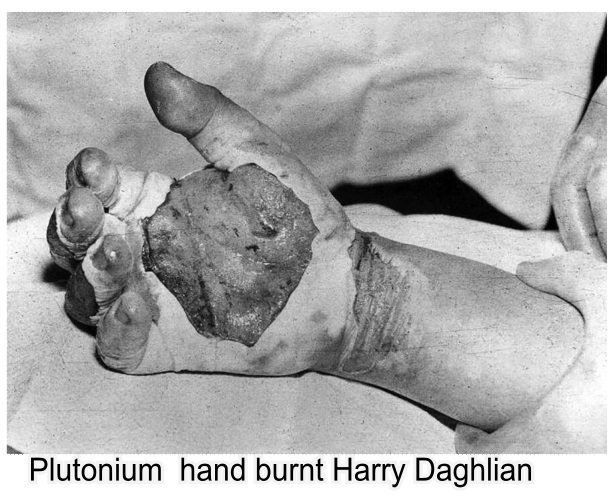
On Aug. 21, 1945, about a week after Japan expressed its intention to surrender, Los Alamos physicist Harry Daghlian conducted a criticality experiment on demon core that would cost him his life. According to Science Alert, he ignored safety protocols and entered the lab alone — accompanied only by a security guard — and got to work.
Daghlian’s experiment involved surrounding the demon core with bricks made of tungsten carbide, which created a sort of boomerang effect for the neutrons shed by the core itself. Daghlian brought the demon core right to the edge of supercriticality but as he tried to remove one of the bricks, he accidentally dropped it on the plutonium sphere. It went supercritical and blasted him with neutron radiation.
Daghlian died 25 days later. Before his death, the physicist suffered from a burnt and blistered hand, nausea, and pain. He eventually fell into a coma and passed away at the age of 24.
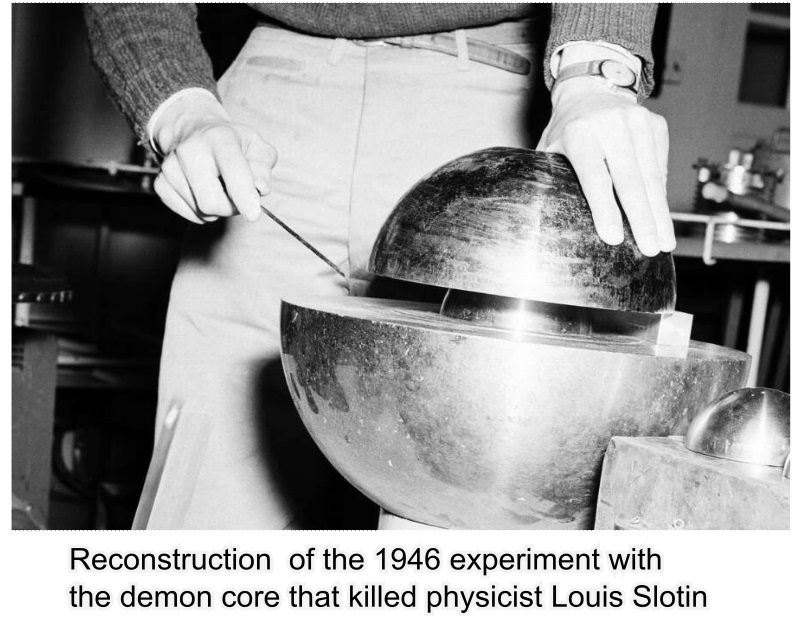
Exactly nine months later, on May 21, 1946, demon core struck again. This time, Canadian physicist Louis Slotin was conducting a similar experiment in which he lowered a beryllium dome over the core to push it toward supercriticality. To ensure that the dome never entirely covered the core, Slotin used a screwdriver to maintain a small opening though, Slotin had been warned about his method before.
But just like the tungsten carbide brick that had slipped out of Daghlian’s hand, Slotin’s screwdriver slipped out of his grip. The dome dropped and as the neutrons bounced back and forth, demon core went supercritical. Blue light and heat consumed Slotin and the seven other people in the lab.
“The blue flash was clearly visible in the room although it (the room) was well illuminated from the windows and possibly the overhead lights,” one of Slotin colleagues, Raemer Schreiber, recalled to the New Yorker. “The total duration of the flash could not have been more than a few tenths of a second. Slotin reacted very quickly in flipping the tamper piece off.”
Slotin may have reacted quickly, but he’d seen what happened to Daghlian. “Well,” he said, according to Schreiber, “that does it.”
Though the other people in the lab survived, Slotin had been doused with a fatal dose of radiation. The physicist’s hand turned blue and blistered, his white blood count plummeted, he suffered from nausea and abdominal pain, and internal radiation burns, and gradually become mentally confused. Nine days later, Slotin died at the age of 35.
Eerily, the core had killed both Daghlian and Slotin in similar ways. Both fatal incidences took place on a Tuesday, on the 21st of a month. Daghlian and Slotin even died in the same hospital room. Thus the core, previously codenamed “Rufus,” was nicknamed “demon core.”
What Happened To Demon Core?
Harry Daghlian and Louis Slotin’s deaths would forever change how scientists interacted with radioactive material. “Hands-on” experiments like the physicists had conducted were promptly banned. From that point on, researchers would handle radioactive material from a distance with remote controls.
So what happened to demon core, the unused heart of the third atomic bomb?
Researchers at Los Alamos National Laboratory had planned to send it to Bikini Atoll, in the Marshall Islands, where it would have been publicly detonated. But the core needed time to cool off after Slotin’s experiment, and when the third test at Bikini Atoll was canceled, plans for demon core changed.
After that, in the summer of 1946, the plutonium core was melted down to be used in the U.S. nuclear stockpile. Since the United States hasn’t, to date, dropped any more nuclear weapons, demon core remains unused.
But it retains a harrowing legacy. Not only was demon core meant to power a third nuclear weapon — a weapon destined to rain destruction and death on Japan — but it also killed two scientists who handled it in similar ways.
1 This Month

of the week – Shut Down Drone Warfare!


Tell the Ukrainian Government to Drop Prosecution of Peace Activist Yurii Sheliazhenko

Petition to revoke the licensing of the Near Surface Nuclear Disposal Facility (NSDF) at Chalk River. https://www.ourcommons.ca/petitions/en/Petition/Details?Petition=e-7247
To see nuclear-related stories in greater depth and intensity – go to https://nuclearinformation.wordpress.com
-
Archives
- April 2026 (114)
- March 2026 (251)
- February 2026 (268)
- January 2026 (308)
- December 2025 (358)
- November 2025 (359)
- October 2025 (376)
- September 2025 (257)
- August 2025 (319)
- July 2025 (230)
- June 2025 (348)
- May 2025 (261)
-
Categories
- 1
- 1 NUCLEAR ISSUES
- business and costs
- climate change
- culture and arts
- ENERGY
- environment
- health
- history
- indigenous issues
- Legal
- marketing of nuclear
- media
- opposition to nuclear
- PERSONAL STORIES
- politics
- politics international
- Religion and ethics
- safety
- secrets,lies and civil liberties
- spinbuster
- technology
- Uranium
- wastes
- weapons and war
- Women
- 2 WORLD
- ACTION
- AFRICA
- Atrocities
- AUSTRALIA
- Christina's notes
- Christina's themes
- culture and arts
- Events
- Fuk 2022
- Fuk 2023
- Fukushima 2017
- Fukushima 2018
- fukushima 2019
- Fukushima 2020
- Fukushima 2021
- general
- global warming
- Humour (God we need it)
- Nuclear
- RARE EARTHS
- Reference
- resources – print
- Resources -audiovicual
- Weekly Newsletter
- World
- World Nuclear
- YouTube
-
RSS
Entries RSS
Comments RSS
 nuclear-news