It’s all about the bomb: why civilian nuclear power is merely a cover for producing more nuclear weapons

Nuclear weapons are a special kind of horror opposed by most rational people around the world.
the IAEA’s bluntly stated mission is to promote nuclear technology.
Like Atoms for Peace, this repackaging of a military activity as a civilian one succeeded in making the endeavor socially acceptable and somewhat self-funding
The nuclear power-nuclear weapons link can only be broken by a ban on both
It’s all about the bomb — Beyond Nuclear International
Why civilian nuclear power is merely a cover for producing more nuclear weapons
By Alfred Meyer, 8 Jan 23,
The Zaporizhzhia Nuclear Power Station in southeastern Ukraine, Europe’s largest nuclear power plant, has the world’s attention right now, and rightly so. For the first time in history, six nuclear reactors and thirty-seven years’ worth of high-level nuclear waste are in the middle of a battlefield in an active war zone—one artillery shell, on site or off, could interrupt the control and cooling of the operational reactor, or the cooling of the waste in storage, leading to a catastrophic release of radiation that could spread throughout the Northern Hemisphere. How in the world can nuclear power reactors be considered clean and safe sources of electricity?
Russia, a nuclear-armed nation that invaded Ukraine on February 24, 2022, has said that it would use nuclear weapons if needed. And strong allies of Ukraine—the United States, the United Kingdom, and France, all NATO members—are also armed with nuclear weapons.
You likely are aware of what has happened in the weeks since this magazine went to press, and whether or not the world is in the midst of another major radioactive disaster, as happened at Fukushima in Japan in 2011, Chernobyl in northern Ukraine in 1986, and Three Mile Island in the United States in 1979. I assume that if you are reading this, nuclear weapons have not been used in the war in Ukraine. So how has the world ended up in such an existentially threatening situation? Why does the nuclear enterprise have the world’s future so tightly in its grip?
The short answer: nuclear weapons. It is all about the bomb.
In 1939, Albert Einstein wrote to President Franklin D. Roosevelt urging him to pursue nuclear research in the United States. It was crucial, Einstein wrote, to counter Germany’s efforts to harness the magic of radioactivity and develop a super weapon. A few years later, the Manhattan Project was born in secrecy in 1942. A sprawling and tightly controlled academic, military, industrial, and governmental infrastructure was built to accommodate an entirely new industry equal in size to the American automobile industry at the time. Secrecy was so thorough that when Vice President Harry Truman ascended to the presidency on April 12, 1945, upon Roosevelt’s sudden death, he was unaware that the atomic bomb program even existed, much less that it was on the verge of testing a plutonium weapon in July.
During World War II, the United States succeeded in developing atomic weapons, while Germany was defeated before it could do so. Even though Japan was essentially defeated by then, Truman, some three months after he learned that the United States did possess the super weapons, chose to use them. Although the firebombing of Tokyo in March 1945 had burned to death more than 100,000 people and left more than a million people homeless, it did not occasion the global outcry that followed the use of the uranium bomb on Hiroshima, on August 6, 1945, and the plutonium bomb on Nagasaki, three days later. Nuclear weapons are a special kind of horror opposed by most rational people around the world.
However, following the use of nuclear weapons in Japan in 1945, there has been significant ongoing public opposition to them. In the earliest days of the United Nations, there were various efforts to abolish or control nuclear weapons. It was clear that they constitute an entirely different type of military threat that includes the likelihood of ending life on earth as we know it. Abolishing nuclear weapons is the way to end this existential threat.
When World War II hero General Dwight D. Eisenhower became President in 1953, the dilemma for the military, and for Eisenhower, was how to grow the atomic bomb programs, in light of negative public opinion toward the nuclear enterprise. At the same time, the United States wanted to be recognized as the leader of the “free world” in the postwar years. In the early 1950s, the military needed to recast nuclear enterprise activities to appear to be peaceful, beneficial parts of our modern life, very distant from the wartime horrors.
In August 1953, Eisenhower was worried about the Soviet Union’s successful test of a sophisticated hydrogen bomb—which signaled to the United States that the nuclear arms race was officially on. Eisenhower considered delivering a type of “fireside chat” to the American public—or perhaps a “mushroom cloud chat”—to level with citizens about the truly horrific existential threat that nuclear weapons posed to the world.
But by December of that year, a different strategy appeared to take effect. In a now famous speech on December 8, 1953, titled “Atoms for Peace,” Eisenhower proposed to the U.N. General Assembly an international program of sharing “peaceful” nuclear materials and know-how for untold bounty, to encourage development of nuclear programs around the world.
The United States also proposed an international agency under the United Nations to promote and oversee nuclear activities, which today is the International Atomic Energy Agency, or IAEA. While acknowledging the IAEA’s important oversight role, such as inspecting the Zaporizhzhia reactors and fuel pools at this perilous time in history, one should also recognize that the IAEA’s bluntly stated mission is to promote nuclear technology. The first leaders of the IAEA were from the United States, to ensure that U.S. interests were protected.
Nuclear enterprise infrastructure is an outgrowth of World War II. These new endeavors drew international interest in creating the huge nuclear marketplace now in existence. Atoms for Peace—a plan to share nonmilitary nuclear technology with other countries to “win hearts and minds”—placed nuclear materials and reactors in more than forty countries, including Iran. This generated ongoing business for many American nuclear enterprise companies while supporting and expanding the U.S. military’s nuclear infrastructure and capacity in the United States.
Having nuclear activities under the auspices of the United Nations conferred upon them the legitimacy and respect of that international body. While Eisenhower was making his “Atoms for Peace” speech at the United Nations, he was in the middle of planning the largest hydrogen bomb test ever in the United States, the fifteen-megaton “Bravo” test, on March 1, 1954, which was more than 1,000 times bigger than the bomb dropped on Hiroshima.
The generally favorable response to Atoms for Peace was a trifecta for the nuclear enterprise. U.S. nuclear activities were repackaged as the “peaceful” atom and given the patina of social acceptance through United Nations oversight. Eisenhower was lauded as a good leader for sharing the atom with the world, and the U.S. nuclear infrastructure got new business and growth, which supported more U.S. nuclear weapons and nuclear Navy programs.
Atoms for Peace also served geopolitical ends. For instance, one reason the United States provided Iran with a research reactor in 1967 was to saddle that country with significant financial obligations, including paying for ongoing parts, services, and technical support from American companies. These financial obligations would then, theoretically, force Iran to sell more oil on the world market, regardless of OPEC actions, a kind of atoms-for-oil program—but only peaceful atoms, mind you!
As Atoms for Peace was taking shape, a major policy change was made via the Atomic Energy Act of 1954. The top-secret, tightly controlled Manhattan Project to build the atomic bomb was a governmental endeavor. Nuclear reactors produce the plutonium needed for atomic bombs. With the passage of this new bill by Congress, the operation of nuclear power reactors by privately owned corporations was allowed.
The Atomic Energy Commission was created in 1946 to promote and regulate the development of this new industry. With the commission led by Wall Street banker Lewis Strauss for five critical years, it is not surprising that the scales heavily favored promotion over regulation. Encouraging private investment in these risky reactor projects was assisted by minimizing regulatory safety and operational demands upon the private operators.
Being the biggest nuclear enterprise on earth encourages the circular, self-sustaining dynamic of the nuclear arms race.
But why was it so important for the U.S. government to develop and subsidize civilian nuclear power? Because it allowed the military, in essence, to spin off its nuclear reactor activities to private financing and corporate operations. Like Atoms for Peace, this repackaging of a military activity as a civilian one succeeded in making the endeavor socially acceptable and somewhat self-funding—although government subsidies are still perennially needed to carry on, and taxpayers are still covering the liability insurance costs of the private corporations. Most importantly, as detailed in a 2017 report by former U.S. Energy Secretary Ernest Moniz, civilian nuclear power is an “essential enabler” of our national security. The Atlantic Council calculates the value of this contribution to national security to be $42.4 billion a year. Businesses contributing to the nuclear Navy’s supply chain are in forty-four U.S. states.
The essential nature of civilian nuclear power for national security would suggest that if the United States has the largest national inventory of civilian nuclear reactors in the world, then it also has the largest nuclear enterprise infrastructure to support nuclear weapons production and a nuclear Navy.
Being the biggest nuclear enterprise on earth encourages the circular, self-sustaining dynamic of the nuclear arms race. The United States is busy modernizing its nuclear weapons infrastructure to be “strong enough” to negotiate the elimination of nuclear weapons. This is presented as official doctrine in the nonproliferation world. In reality, the United States is actually driving the growing international nuclear arms race.
Atoms for Peace and the nuclear enterprise employ particularly successful advertising campaigns, greatly influencing public opinion and shaping our cultural consciousness of the nuclear world.
Presenting civilian nuclear power as the answer to climate change, as clean and safe electrical generation, or as energy “too cheap to meter” is simply a sales pitch. What is actually delivered by a robust nuclear energy fleet is the capacity for nuclear weapons and a nuclear Navy.
Over the decades, there have been numerous expert critiques of nuclear power, authoritatively debunking these misleading and false promises, yet these critiques seem to have no effect on the trajectory of the nuclear enterprise. I suggest that these sales pitches are diversionary techniques aimed at sapping our energy. It does not matter if nuclear power can really solve climate change, it just has to be seen as an essential part of the solution to attract bright, young talent into what is made to appear as the cutting edge of technology and climate solutions, even though the civilian nuclear power industry worldwide has been in decline since 2002.
To protect ourselves from the dangers of the nuclear enterprise, we need to stop the nuclear weapons and nuclear power reactor programs—a tall order, for sure. But if we seek success in our efforts, we are well advised to understand the forces we are engaging with. It is all about nuclear weapons.
Alfred Meyer is a member of Physicians for Social Responsibility and has worked with communities affected by the Chernobyl and Fukushima nuclear catastrophes.
Pentagon pressures NATO allies to boost arms flow to Ukraine

January 8, 2023, Rick Rozoff Interfax-Ukraine January 7, 2023 https://antibellum679354512.wordpress.com/2023/01/08/pentagon-pressures-nato-allies-to-boost-arms-flow-to-ukraine/
USA to seek from its allies to expand military aid to Ukraine – Pentagon
U.S. Secretary of Defense Lloyd Austin, (pictured above) in a phone conversation with his Ukrainian counterpart Oleksiy Reznikov, said the United States will convince its allies of the need to increase military assistance to Kyiv, according to the Pentagon.
Austin reaffirmed its commitment to encouraging allies and partners to provide additional air defense systems, combat vehicles and other critical capabilities to support Ukraine.
Arms flow to Ukraine
Date: January 8, 2023Author: Rick Rozoff0 Comments
Interfax-Ukraine
January 7, 2023
USA to seek from its allies to expand military aid to Ukraine – Pentagon
U.S. Secretary of Defense Lloyd Austin, in a phone conversation with his Ukrainian counterpart Oleksiy Reznikov, said the United States will convince its allies of the need to increase military assistance to Kyiv, according to the Pentagon.
Austin reaffirmed its commitment to encouraging allies and partners to provide additional air defense systems, combat vehicles and other critical capabilities to support Ukraine.
At the same time, the U.S. minister said assistance would be provided “as much as needed.”
The Pentagon also said Austin had already discussed with German Defense Minister Christine Lambrecht ways to increase assistance in the run-up to the meeting of the Ukrainian Defense Contact Group in Ramstein, Germany.
Austin appreciated Germany’s decision to provide Ukraine with a Patriot air defense battery and Marder infantry fighting vehicles.
According to Ukrainian Ambassador to the United States Oksana Markarova on her Facebook page, in addition to a new $3.075 billion U.S. military aid package for Ukraine, Washington provides “$682 million in additional foreign military funding to stimulate and compensate for the transfer of military equipment to Ukraine from allies and partners”.
Ukrainian News
January 7, 2023
Defense Minister Reznikov discusses new military aid to Ukraine with Pentagon head Austin
Defense Minister Oleksii Reznikov announced that he discussed the details of the new U.S. aid package to Ukraine with his American colleague Lloyd Austin.
We discussed the details of the new U.S. security assistance package for Ukraine and the next Ramstein-style meeting with Lloyd Austin,” Reznikov emphasized.
According to the head of the Ministry of Defense of Ukraine, this largest the United States’ aid package gives Ukraine “new opportunities to liberate our territory in the east and south.”
Return to studying baby teeth for radioactivity from nuclear weapons and nuclear facilities

St. Louis baby teeth study sparked nuclear test ban 60 years ago
Now, the baby tooth study from decades ago carries new life in the form of a Harvard study.
by: Joey Schneider, Jan 7, 2023 https://fox2now.com/news/missouri/st-louis-baby-teeth-study-sparked-nuclear-test-ban-60-years-ago/
ST. LOUIS – A famous study involving the baby teeth of St. Louis area children helped lay the foundation for a treaty to ban atmospheric nuclear testing 60 years ago.
A group of scientists, led by physician Louise Reed and St. Louis-area professor Barry Commoner, launched the study in December 1958 through the Greater St. Louis Citizen’s Committee for Nuclear Information. The mission: To determine whether radioactive fallout and nuclear energy had a negative impact on children’s health.
From 1958 to 1970, researchers collected more than 320,000 baby teeth of children from various ages, primarily from those in the St. Louis area.
The study followed a 1956 report from the U.S. Public Health Service, which hinted that St. Louis and other Midwestern cities could have alarming levels of radioactivity in water, air and milk following above-ground nuclear tests around the United States. In the decade leading up to that, officials had moved forward with nearly 100 nuclear tests, some that happened above-ground and spurred concerns of exposure, according to the Arms Control Association.
Preliminary case studies determined that children born in 1963 had levels of strontium 90, a radioactive isotope found in bomb fallout, nearly 50 times higher than children born in 1950. A limited study published by Science Magazine in 1961 presented similar findings.
“The immediate radiation danger moved public opinion, which influenced Congress to pass and President John F. Kennedy to implement the Limited Test Ban Treaty in 1963,” said the Missouri History Museum on the research. “They knew that a by-product of nuclear weapons testing is death-dealing, cancer-causing radiation. Some elemental isotopes last for thousands of years while others decay quickly, but airborne debris drifts for miles from explosions, falling onto food and water.”
Kennedy campaigned for president in strong opposition to nuclear testing, according to the John F. Kennedy Presidential Library. However, he entered his term at the height of the Cold War and faced mounting pressure after the Soviet Union conducted dozens of above-ground nuclear tests. In 1962, he reluctantly announced that the United States would resume atmospheric testing.
As Kennedy attempted to negotiate a ban on such testing, the findings of the St. Louis baby tooth study came to his attention. Negotiations to end atmospheric radioactive testing, the issue at the center of the baby tooth study, intensified midway through 1963.
By July, Kennedy had reached an agreement with the Soviet Union to exclusively conduct nuclear tests underground. By August, government officials from the Soviet Union, the United Kingdom, and the United States gathered in Moscow to sign what is officially known as the “Treaty Banning Nuclear Weapon Tests in the Atmosphere, in Outer Space and Under Water” or “Partial Test Ban Treaty.”
“Let us if we can step back from the shadows of war and seek out the way of peace. And if that journey is 1,000 miles or even more, let history record that we, in this land, at this time, took the first step,” said Kennedy on the agreement in a televised speech on July 26, 1963.
The initial baby tooth study continued through 1970. A research team acquired 85,000 of the tested teeth for a 2001 analysis that concluded 12 children who died of cancer had strontium 90 levels twice as high as others alive during the time of research. Some scientists denounce those findings to this day.
Now, the baby tooth study from decades ago carries new life in the form of a Harvard study. Researchers hope to collect tens of thousands and determine a possible connection between metals and cognitive decline at an older age. Harvard neuroscientist Marc Weisskopf launched the study in 2021, and one survey for the project remains ongoing.
According to a report from DrBicuspid.com, Japanese filmmaker Hideaki Ito is also working on a documentary about the original study and visited St. Louis last year for some groundwork.
Analysis Shows U.S. Wind and Solar Could Outpace Coal and Nuclear Power in 2023
EcoWatch By: Common Dreams, January 8, 2023, By Jake Johnson
A new analysis of federal data shows that wind and solar alone could generate more electricity in the United States than nuclear and coal over the coming year, critical progress toward reducing the country’s reliance on dirty energy.
The SUN DAY Campaign, a nonprofit that promotes sustainable energy development, highlighted a recently released U.S. Energy Information Administration (EIA) review finding that renewable sources as a whole—including solar, wind, biomass, and others—provided 22.6% of U.S. electricity over the first 10 months of 2022, a pace set to beat the agency’s projection for the full year.
“Taken together, during the first ten months of 2022, renewable energy sources comfortably out-produced both coal and nuclear power by 16.62% and 27.39% respectively,” the SUN DAY Campaign noted Tuesday. “However, natural gas continues to dominate with a 39.4% share of total generation.”…………………… more https://www.ecowatch.com/wind-solar-outpace-nuclear-coal.html
Feds push plan to dispose plutonium using nuclear waste repository near Carlsbad
Adrian Hedden, Carlsbad Current-Argus https://www.currentargus.com/story/news/2023/01/05/feds-push-plan-dispose-plutonium-nuke-waste-site-near-carlsbad-waste-isolation-pilot-plant-nuclear/69747932007/
Federal nuclear waste managers said they planned to dispose of 34 metric tons of surplus, weapons-grade plutonium at a nuclear repository in New Mexico after the waste is diluted to a lower level of radioactivity.
The National Nuclear Security Administration (NNSA) proposed in 2020 a “dilute and dispose” method of eliminating the plutonium from the environment, ultimately via emplacement at the Waste Isolation Pilot Plant repository near Carlsbad.
Before that can happen, the NNSA said the waste can be “downblended” to meet requirements at WIPP, which is designed to dispose of transuranic (TRU) waste that can only be of a certain level of radioactivity.
In an environmental impact statement (EIS) released last month, the NNSA said it preferred a plan that would see the plutonium shipped from the Pantex Plant near Amarillo, Texas to Los Alamos National Laboratory in northern New Mexico for processing, then to the Savannah River Site in South Carolina where it would be prepared for final disposal at WIPP.
That means the waste would travel through New Mexico at least twice which drew the ire of watchdog groups in the northern portion of the state, and concern from New Mexico Gov. Michelle Lujan Grisham.
Public comments were being accepted on the proposal until Feb. 14, and four hearings were scheduled: Jan. 19 in North Augusta, South Carolina, Jan. 24 in Carlsbad, Jan. 26 in Los Alamos and a virtual meeting on Jan. 30.
Information on the meetings and how to comment were posted in the Federal Register under citation 87 FR 77096.
New Mexico the nation’s ‘nuclear waste dump?’
Cindy Weehler, co-chair of Santa Fe-based activist group 285 ALL said the EIS called for the federal government to divert from WIPP’s original mission, potentially putting more New Mexicans at risk of exposure to radiation and for longer.
“Surplus plutonium is not the kind of waste that was agreed to when WIPP was defined,” she said. “We insist on an end to the emplacement of waste in New Mexico. We want an end to the weapons-based radioactive waste coming through our neighborhoods.”
The EIS did list alternatives to the preferred plan, potentially seeing the waste processed completely for disposal at either Savanna River or Los Alamos before shipment to WIPP.
This could cut down on transportation, but Weehler said the NNSA’s overall plan was symptomatic of a broader effort to keep WIPP open beyond its previously defined closure date of 2024 and expand the kinds of wastes that can be disposed of at the facility.
“We want an end to the situation where New Mexico is the only nuclear waste dump for all 50 states,” Weehler said. “The concern is that if you increase the number of shipments, the number of years, and you increase the dangerousness of the waste, at some point, somewhere an accident is inevitable.
“That would be catastrophic for the community where it occurs.”
Don Hancock, nuclear waste program manager at Albuquerque-based government watchdog group Southwest Research and Information Center said the plutonium waste was never intended for disposal at WIPP.
He said the federal government should prioritize legacy TRU waste sitting at DOE sites like Los Alamos as was the repository’s original intention.
“Dilute and dispose waste shouldn’t go to WIPP in the first place,” Hancock said. “NNSA wants to prioritize waste that WIPP was not designed for.”
New Mexico, Carlsbad leaders clash over plutonium disposal
In April 2022, Lujan Grisham echoed the concerns in a letter to U.S. Energy Secretary Jennifer Granholm, sharing a petition from 285 ALL that gathered 1,165 signatures in opposition from across the 10 states Weehler said were impacted by the transportation route.
Lujan Grisham wrote that many New Mexicans had “ongoing frustrations” with the federal government not involving New Mexicans in nuclear waste disposal plans that involved the state’s repository – the only such facility in the U.S.
“Specifically, the New Mexicans who signed the petition raised concerns about the transportation of the surplus plutonium waste stream between the DOE’s Savannah River Site in South Carolina and the WIPP,” read the letter to Granholm.
“As Governor, I take these concerns seriously and request that the Department of Energy take action to address the issues raised by New Mexicans.”
But the project was supported by local leaders in Carlsbad, about 30 miles west of the WIPP site, and the city’s Mayor Dale Janway, a frequent supporter of operations at WIPP who argued the program would be conducted safely.
“The proposed action is to dilute surplus plutonium to prevent use and disposing of the resulting CH-TRU waste at WIPP. I support this proposal as a safe, cost-effective solution,” Janway said in a statement.
Before the Bombs Come the Platitudes
By Robert C. Koehler, http://commonwonders.com/before-the-bombs-come-the-platitudes/ 4 January 2023
What is democracy but platitudes and dog whistles? The national direction is quietly predetermined — it’s not up for debate. The president’s role is to sell it to the public; you might say he’s the public-relations director in chief:
“. . . my Administration will seize this decisive decade to advance America’s vital interests, position the United States to outmaneuver our geopolitical competitors, tackle shared challenges, and set our world firmly on a path toward a brighter and more hopeful tomorrow. . . . We will not leave our future vulnerable to the whims of those who do not share our vision for a world that is free, open, prosperous, and secure.”
These are the words of President Biden, in his introduction to the National Security Strategy, which lays out America’s geopolitical plans for the coming decade. Sounds almost plausible, until you ponder the stuff that isn’t up for public discussion, such as, for instance:
The national defense budget, recently set for 2023 at $858 billion and, as ever, larger than the rest of the world’s military budget combined. And, oh yeah, the modernization — the rebuilding — of the nation’s nuclear weapons over the next three decades at an estimated cost of nearly $2 trillion. As Nuclear Watch put it: “It is, in short, a program of nuclear weapons forever.”
And the latter, of course, will go forward despite the fact that in 2017 the countries of the world — well, most of them (the vote in the United Nations was 122-1) — approved the Treaty on the Prohibition of Nuclear Weapons, which flat-out bans the use, development and possession of nuclear weapons. Fifty countries ratified the treaty by January 2021, making it a global reality; two years later, a total of 68 countries have ratified it, with 23 more in the process of doing so. Not only that, as H. Patricia Hynes points out, the mayors of more than 8,000 cities all across the planet are calling for the abolition of nuclear weapons.
I mention this to put Biden’s words in perspective. Does “a brighter and more hopeful tomorrow” ignore the demands of most of the world and include the presence of thousands of nuclear weapons, many still on hair-trigger alert? Does it mean the ever-present possibility of war and the ongoing manufacture and sale of every imaginable weapon of war? Is a near-trillion-dollar annual “defense” budget the primary way we intend to “outmaneuver our geopolitical competitors”?
And here’s another flicker of reality that’s missing from Biden’s words: the non-monetary cost of war, which is to say, the “collateral damage.” For some reason, the president fails to mention how many civilians’ deaths — how many children’s deaths — will be necessary to secure a brighter and more hopeful tomorrow. How many hospitals might it be necessary, for instance, for us to accidentally bomb in coming years, as we bombed the hospital in Kunduz, Afghanistan in 2015, killing 42 people, 24 of whom were patients?
Public relations platitudes do not seem to have room to acknowledge videos of U.S.-inflicted carnage, such as Kathy Kelly’s description of a video of the Kunduz bombing, which showed the president of Doctors Without Borders (a.k.a., Médecins Sans Frontières) walking through the wreckage a short while later and speaking, with “nearly unutterable sadness,” to the family of a child who had just died.
“Doctors had helped the young girl recover,” Kelly writes, “but because war was raging outside the hospital, administrators recommended that the family come the next day. ‘She’s safer here,’ they said.
“The child was among those killed by the U.S. attacks, which recurred at fifteen-minute intervals, for an hour and a half, even though MSF had already issued desperate pleas begging the United States and NATO forces to stop bombing the hospital.”
Those who believe in the necessity of war — such as the president — may well feel shock and sadness when a child, for instance, is unintentionally killed by U.S. military action, but the concept of war comes complete with flowers of regret: It’s the fault of the enemy. And we will not be vulnerable to his whims.
Indeed, the dog whistle in Biden’s brief quote above is the calm acknowledgement of U.S. intention to stand up to the dark forces on the planet, the autocrats, who do not share our vision of freedom for all (except little girls in bombed hospitals). Those who, for whatever reason, believe in the necessity, and even the glory, of war, will feel the pulse of the U.S. military budget coursing through his positive, happy words.
When public relations circumvents reality, an honest discussion is impossible. And Planet Earth is in desperate need of an honest discussion about the elimination of nuclear weapons and, God help us, ultimately transcending war.
As Hynes writes: “If the U.S. could once again replace its masculinist power with creative foreign policy and reach out to Russia and China with the purpose of dismantling nuclear weapons and ending war, life on Earth would have a heightened chance.”
How can this become a country with a creative foreign policy? How can the American public move beyond being spectators and consumers and become actual, literal participants in U.S. foreign policy? Here’s one way: the Merchants of Death War Crimes Tribunal, an online event scheduled for November 10-13, 2023.
As Kelly, one of the organizers, describes it: “The Tribunal intends to collect evidence about crimes against humanity committed by those who develop, store, sell, and use weapons to commit crimes against humanity. Testimony is being sought from people who’ve borne the brunt of modern wars, the survivors of wars in Afghanistan, Iraq, Yemen, Gaza, and Somalia, to name but a few of the places where U.S. weapons have terrified people who’ve meant us no harm.”
Victims of war will be interviewed. Those who wage war, and those who profit from it, will be held accountable to the world. My God, this sounds like real democracy! Is this the level at which truth shatters the platitudes of war?
US and South Korea hold talks on “nuclear sharing”.

the US Council for Foreign Relations highlighted a proposal to establish an Asian Nuclear Planning Group, “mirroring the format of the NATO Nuclear Planning Group, that would provide a platform for South Korea, Japan, and Australia to discuss policies regarding US nuclear forces and the US nuclear planning process.”
What is underway not just in South Korea are high level discussions to integrate US allies throughout the region with the US military as preparations accelerate for a potentially catastrophic war with China that would inevitably involve the use of nuclear weapons.
Peter Symond WSWS 5 Jan 23
The US and South Korea are actively discussing closer collaboration in the deployment and potential use of nuclear weapons, which is part of the far broader US-led military build-up throughout the region. While nominally directed against North Korea, US war preparations including with South Korea are above all aimed at China.
In an interview in the Chosun Ilbo newspaper on Monday, South Korea’s right-wing president, Yoon Suk Yeol, said the discussions had focussed on joint planning and exercises with American nuclear forces. He described the arrangements being discussed as being “as good as nuclear-sharing”—a phrase, he said, that Washington was uncomfortable with……….
When asked at the White House whether joint nuclear military exercises with South Korea were being planned, President Biden flatly declared “no” and made no further comment. However, subsequent comments by American officials make clear that the closer integration of South Korea into US preparations for nuclear war is indeed under way……………………….
The discussions mark a significant escalation in the preparations for nuclear war. While South Korea, a US military ally, was protected by the so-called nuclear umbrella or what is known as “extended deterrence,” Yoon is pushing for a greater South Korean say in the use of nuclear weapons.
In his interview, Yoon declared: “What we call ‘extended deterrence’ means that the United States will take care of everything, so South Korea should not worry about it… But now, it is difficult to convince our people with just this idea.”…………….
Throughout much of the Cold War, the US had hundreds of tactical nuclear weapons in South Korea supposedly to counter a North Korean invasion. The number peaked at 950 during the mid-1960s before declining. In 1991, amid the moves to dissolve the Soviet Union, US President George H.W. Bush announced the return of all tactical nuclear weapons to the US, including those that remained in South Korea.
While Yoon has not publicly repeated his proposals as president, there have already been significant steps to a greater US nuclear presence in South Korea. In a joint press conference last November, US Defense Secretary Lloyd Austin and South Korean Defense Minister Lee Jong-seop announced plans for the de facto permanent stationing of US nuclear-capable assets in South Korea for the first time since 1991………….
As far as Washington is concerned, the North Korean “threat” is a convenient pretext as its nuclear planning is primarily focussed on war with China. Strategically located close to the Chinese mainland, South Korea is deeply integrated into the US strategy for such a conflict. Not only does it house key US military bases and some 28,500 military personnel but it also has a key anti-ballistic missile system—a recently upgraded Terminal High Altitude Area Defense (THAAD) system—critical in any nuclear conflict.
The US is boosting its nuclear weapons capacity throughout the region with the announcement last year that it will effectively station nuclear-capable B-52 bombers at the Tindal air force base in Northern Australia. At the same time, prior to his assassination last July, former Japanese prime minister, Shinzo Abe, initiated a discussion in ruling circles about stationing US nuclear weapons in Japan, despite enormous popular opposition to such a move.
The Biden administration has already taken steps to strengthen its military alliances in the Indo-Pacific by kickstarting the Quadrilateral Security Dialogue or “Quad” with Japan, Australia and India as well as initiating the AUKUS pact with Australia and the United Kingdom, which, in particular, will arm Australia with nuclear-powered attack submarines. At the same time, it has sought to strengthen intelligence sharing between South Korea and Japan, essential in any nuclear conflict.
Broader “nuclear sharing” is also being discussed in US strategic think tanks. A comment published last August by the US Council for Foreign Relations highlighted a proposal to establish an Asian Nuclear Planning Group, “mirroring the format of the NATO Nuclear Planning Group, that would provide a platform for South Korea, Japan, and Australia to discuss policies regarding US nuclear forces and the US nuclear planning process.”
What is underway not just in South Korea are high level discussions to integrate US allies throughout the region with the US military as preparations accelerate for a potentially catastrophic war with China that would inevitably involve the use of nuclear weapons. https://www.wsws.org/en/articles/2023/01/05/tzjb-j05.html
—
Editorial: New Mexico right to ask for accounting of nuclear waste
https://www.abqjournal.com/2561734/nm-right-to-ask-for-accounting-of-nuclear-waste.html BY ALBUQUERQUE JOURNAL EDITORIAL BOARD, JANUARY 4TH, 2023
“I think there’s this mentality that New Mexico can just be the forever home for all the nation’s waste. It’s an exploitative mentality regarding our state.”
— Sen. Jeff Steinborn, D-Las Cruces
It is more than fair, when you house a radioactive waste facility like the Waste Isolation Pilot Plant, to ask how much waste from the nation’s nuclear weapons program still needs a home.
Especially when the nation keeps making more.
In the proposed permit for the federal government to continue storing nuclear waste at WIPP in southeastern New Mexico, the New Mexico Environment Department is seeking a full accounting from the U.S. Energy Department of materials still needing to be cleaned up and shipped to WIPP from laboratories and defense-related sites around the country. It also suggests developing another storage site (Hint: How about the $13.5 billion already spent on Yucca Mountain?). And it puts Congress — the same Congress that just approved spending more to make key plutonium components for the nation’s nuclear arsenal, which will also make more radioactive waste — on notice that if lawmakers expand the type of waste accepted at WIPP, the permit will be revoked.
WIPP currently takes transuranic waste from the weapons program contaminated with radioactive elements heavier than uranium — lab coats, rubber gloves, tools and other contaminated debris.
State Sen. Jeff Steinborn, D-Las Cruces and head of the Legislature’s radioactive and hazardous materials committee, points out our state has been left to deal with contamination from uranium mining, oil and gas development and the use of toxic firefighting chemicals known as PFAS at Air Force bases. With the proposed permit “it’s good to see our state setting boundaries.”
New Mexico has a long history when it comes to dealing with nuclear weapons and radioactive waste — from the Trinity site at White Sands to Urenco in Eunice, Los Alamos National Laboratory to the Holtec storage project with Hobbs and Carlsbad.
We have smart, capable, highly trained individuals who are experts in these fields.
But they are only as good as the information they are provided, and they deserve a full accounting of what they will ultimately have to deal with.
As Steinborn implies, too often our state has been left to deal with the federal government’s mess (we would add a gold mine spill, an Air Force fuel leak and catastrophic prescribed burns to his list).
The permit is now in a 60-day comment period, and the DOE says it is eager to participate. Here’s hoping they are just as eager to be forthright with what they plan to send to the Land of Enchantment.
This editorial first appeared in the Albuquerque Journal. It was written by members of the editorial board and is unsigned as it represents the opinion of the newspaper rather than the writers.
Los Alamos National Laboratory’s record $4.6B budget will still mostly fund nuclear weapons

Sante Fe New Mexican By Scott Wyland Jan 4, 2023
Los Alamos National Laboratory’s record $4.6 billion budget for this fiscal year will give officials an unprecedented amount of money for its nuclear weapons program, which still makes up the bulk of the lab’s spending.
The lab’s hefty funding was part of the U.S. Energy Department’s budget request tucked into the recently passed $1.7 trillion omnibus spending package, which will cover the costs of agencies and programs through this fiscal year, ending in October.
Roughly 70 percent of the lab’s funding is for its nuclear weapons program, which includes research, computer testing and pursuing the goal of producing 30 plutonium bomb cores, or “pits,” per year by 2026.
Plans call for Savannah River Site in South Carolina to make an additional 50 pits by 2035. The combined 80-pit goal was established under the Trump administration and is being carried forth by President Joe Biden……………..
This year’s $858 billion military budget is the largest in memory. And the National Nuclear Security Administration, the Energy Department branch that oversees nuclear weapons, received $22.3 billion, a bump from the $20.7 billion it got last year.
………………….. About $1.6 billion of the lab’s new budget is to modernize plutonium operations to prepare for manufacturing 30 pits, an amount that almost triples the most pits the lab has ever produced in a year.
The plutonium funding is a 60 percent increase from last year’s $1 billion, and about five times the $308 million budgeted three years ago.
In an email, a watchdog group called the lab’s ballooning nuclear weapons budget “a staggering amount of money” that was leveraged through world events, such as the war in Ukraine.
“I think the writing should be on the wall that we have entered a new nuclear arms race,” wrote Geoff Wilson, director of the Center for Defense Information at the Project on Government Oversight. “The nuclear spending floodgates have opened in the name of defending against China and a belligerent Russia, and the labs are defense contractors. This is going to be a boom season for them.”
Producing new pits lays the groundwork to create new warheads, Wilson wrote. He noted the lab is developing the first new warhead since the 1980s, the submarine-launched W93.
What’s worrisome about devising new warheads is the computer simulations now used for testing might be rendered obsolete, leading to explosive nuclear testing — banned since 1992 — being revived, he wrote.
The U.S. has the most powerful arsenal in the world and stands little chance of falling behind adversaries, but amping up its weaponry could drive other countries to do likewise, creating a destabilizing effect globally, Wilson wrote.
“I think everyone should be concerned where this sort of escalation could take us, and whether or not this is really necessary for our security, or just going to fund the defense contractor industry base,” he wrote………………………………………..
the nonweapons programs are a lesser part of the lab’s budget. In several public town halls, lab Director Thom Mason has said the nuclear mission is the primary focus.
One longtime anti-nuclear activist said the race to produce pits at the lab has proved to be more costly and difficult than was initially imagined.
In 2017, the nuclear security agency estimated it would cost about $2 billion total to ramp up pit production, and the costs have already grown to many times that amount, said Greg Mello, executive director of the Los Alamos Study Group.
Mello called the endeavor “a runaway train” that’s unsustainable in the long run and unnecessary.
“It’s a product of successful lobbying,” Mello said. “We don’t need new generations of nuclear weapons.” https://www.santafenewmexican.com/news/local_news/lanls-record-4-6b-budget-will-still-mostly-fund-nuclear-weapons/article_18c59118-8b85-11ed-85d2-dfcab050252f.html
$Billions of tax-payer money to go to kickstarting the “new nuclear reactor” industry’s “inflection point”

“It’s a really great investor environment — both publicly and privately,”
said Ryan Norman, analyst
at energy think-tank Third Way
US nuclear enjoys revival as public and private funding pours in. The US
nuclear industry has hailed 2022 as an “inflection point”, with surging
private investment and unprecedented government support breathing new life
into a sector that fell from favour in recent decades.
New federal legislation enacted in the past 18 months will pump about $40bn into the
sector over the coming decade, according to industry estimates, while
roughly $5bn in private funds has flowed into companies designing new types
of reactor in the past year alone.
“It’s a really great investor environment — both publicly and privately,” said Ryan Norman, analyst
at energy think-tank Third Way. “There’s federal recognition that nuclear
energy technologies have a key role to play in the US energy future,” he
said. “No matter how you cut it, we’re talking about billions of dollars
being poured into these advanced reactor companies.”
FT 1st Jan 2023
https://www.ft.com/content/f3c6f333-bc2e-4694-963a-7084e438905a
Countering nuclear industry propaganda by telling the facts – Joshua Frank’s book “Atomic Days”
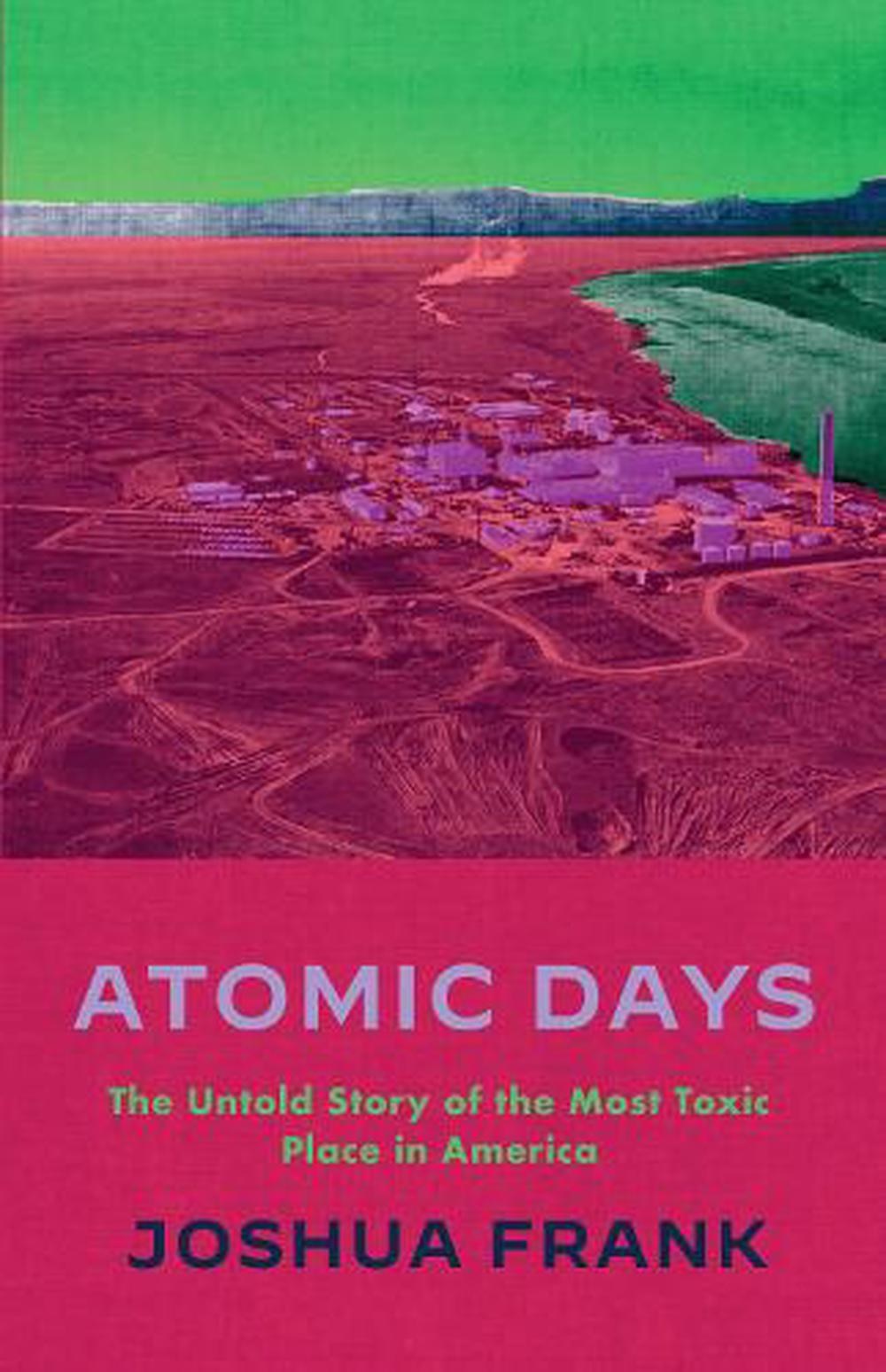
That the world hasn’t been the same since the ignition of the Atomic Age in
the 1940s is certainly an understatement, yet the public’s awareness of how
the nuclear industry operates has always been dismally low. Secrecy has
played a part — especially in relation to bomb-making activities — but
so too has the establishment news media, which focuses on individual events
and sidelines institutional factors.
So an accident is news (if it’s not covered up), but not the regular practices or misguided motivations that
led to it, even though they were ultimately responsible. Also, stories
about nuclear power can be complicated to tell as they involve, first,
technical processes that are arcane to people outside the field, and
second, powerful corporate interests who don’t want them told, and who
confuse and confound the discourse with slick PR.
But raising public awareness of the facts around the nuclear industry is especially important
in this third decade of the 21st century when well-meaning people who are
seeking to reduce carbon emissions out of a legitimate concern for the
climate crisis are proposing to expand the use of nuclear power to replace
fossil fuels.
That this recommendation is no solution at all cannot be
overstated, yet it’s being peddled by respected people with public
platforms. Fortunately for advocates of common sense, Joshua Frank has
brought his investigative skills to bear on the nuclear industry with his
new book, Atomic Days: The Untold Story of the Most Toxic Place in America,
in which he takes a deep dive into the subject of Hanford, that is, of the
Hanford Nuclear Site, in eastern Washington state.
Counterpunch 30th Dec 2022
https://www.counterpunch.org/2022/12/30/the-cold-wars-radioactive-legacy/
Why Did Portland General Electric Want to Build Trojan Nuclear Plant in the First Place?
The mighty atom had just won WWII and was enjoying George W. Bush-right-after-9/11 levels of popularity, while the invention of hippies was still decades away. https://wordpress.com/post/nuclear-news.net/216592 By Marty SmithJanuary 02, 2023
I recall protesting against the now-defunct Trojan nuclear plant in the 1980s. One question I don’t recall anyone asking back then, however: Why did they want to build Trojan in the first place, given that our region already had (and still has) more hydropower than we can use? —Duke Nukem
I share your historical curiosity, Duke—there’s just something about this time of year that makes one want to muse about topics from Portland’s colorful past that can be researched without having to get anybody to return a call during the week between Christmas and New Year’s.
I doubt that anyone under 50 reads this column (which not only doesn’t come as video, but presumes your mastery of this tedious system of archaic glyphs in which it’s encoded), but just in case someone missed it: Portland General Electric—PGE to its friends—began construction of Trojan Nuclear Power Plant near Rainier, Oregon, in 1970 (which, perhaps fittingly, is the same year the Ford Pinto was introduced). The plant came online in 1975 and was slated to operate until 2011. However, it was plagued from the start with equipment failures and bad press, and was finally shuttered for good in 1992.
Why would PGE take on such a fraught endeavor? Well, for starters, they’d first begun exploring the possibility of building a nuclear plant way back in the late 1940s. The mighty atom had just won WWII and was enjoying George W. Bush-right-after-9/11 levels of popularity, while the invention of hippies was still decades away. Nuclear power’s downsides would become more apparent in the years to follow, but they don’t appear to have penetrated PGE’s C-suite in any significant way prior to the 1967 decision to build the plant.
But back to your question: Given that Northwest hydropower is abundant enough to make Oregon’s electricity market the nation’s third cheapest, why build a plant at all? Here’s the thing: All that juicy hydropower is controlled by the Bonneville Power Administration, a public entity. PGE, the private utility, has to buy it from them wholesale and then retail it to us. If, as seemed possible at the time, BPA had decided to cut PGE off in favor of public utilities—perhaps when PGE’s 20-year contract with BPA came up for renewal in 1973—PGE could have been in a world of hurt.
Trojan represented a hedge against such a possibility, as well as an opportunity to grow PGE as a company. Toss in a few million bucks’ worth of federal “Atoms for Peace” emoluments to the industry and, congratulations, you’ve got yourself a nuclear plant. Have fun! (Just be careful not to run into it from behind, especially with a lit cigarette.)
Hot water — radiation in drinking water

Tighter controls called for as radiation contaminates US drinking water
Hot water — Beyond Nuclear International
Radioactive contamination is creeping into drinking water around the U.S.
https://beyondnuclearinternational.org/2023/01/01/hot-water/ By Lynne Peeples, Ensia 1 Jan 2023
When Jeni Knack moved to Simi Valley, California, in 2018, she had no idea that her family’s new home was within 5 miles of a former nuclear and rocket testing laboratory, perched atop a plateau and rife with contamination. Radioactive cesium-137, strontium-90, plutonium-239 and tritium, along with a mix of other toxic chemicals and heavy metals, are known to have been released at the industrial site through various spills, leaks, the use of open-air burn pits and a partial nuclear meltdown.
Once Knack learned about the Santa Susana Field Laboratory and the unusual number of childhood cancer cases in the surrounding community, she couldn’t ignore it. Her family now only drinks water from a 5-gallon (19-liter) jug delivered by Sparkletts water service. In August of 2021, she began sending her then 6-year-old daughter to kindergarten with two bottles of the water and instructions to not refill them at school, which is connected to the same Golden State Water Company that serves her home.
A federal report in 2007 acknowledged that two wells sourced by the water company were at risk of contamination from the site. “The EPA has said we’re at risk,” says Knack. And Golden State, she says, has at times used “possibly a very hefty portion of that well water.” To date, radioactivity above the natural level has not been detected in Golden State’s water.
Concerns across the country
All water contains some level of radiation; the amount and type can vary significantly. Production of nuclear weapons and energy from fissionable material is one potential source. Mining for uranium is another. Radioactive elements can be introduced into water via medical treatments, including radioactive iodine used to treat thyroid disorders. And it can be unearthed during oil and gas drilling, or any industrial activities that involve cracking into bedrock where radioactive elements naturally exist. What’s more, because of their natural presence, these elements can occasionally seep into aquifers even without being provoked.
The nonprofit Environmental Working Group (EWG, a partner in this reporting project) estimates that drinking water for more than 170 million Americans in all 50 states “contains radioactive elements at levels that may increase the risk of cancer.” In their analysis of public water system data collected between 2010 and 2015, EWG focused on six radioactive contaminants, including radium, radon and uranium. They found that California has more residents affected by radiation in their drinking water than anywhere else in the U.S. Yet the state is far from alone. About 80% of Texans are served by water utilities reporting detectable levels of radium. And concerns have echoed across the country — from abandoned uranium mines on Navajo Nation lands, to lingering nuclear waste from the Manhattan Project in Missouri, to contaminants leaching from phosphate mines in Florida.
While ingesting radioactive elements through drinking contaminated water is not the only route of human exposure, it is a major risk pathway, says Daniel Hirsch, a retired University of California, Santa Cruz, professor who has studied the Santa Susana Field Laboratory contamination. “One thing you don’t want to do is to mix radioactivity with water. It’s an easy mechanism to get it inside people,” he says. “When you drink water, you think you excrete it. But the body is made to extract things from what you ingest.”
Strontium-90, for example, is among elements that mimic calcium. So the body is apt to concentrate the contaminant in bones, raising the risk of leukemia. Pregnant women and young kids are especially vulnerable because greater amounts of radiation are deposited in rapidly growing tissue and bones. “This is why pregnant women are never x-rayed,” says Catherine Thomasson, an independent environmental policy consultant based in Portland, Oregon. Cesium can deposit in the pancreas, heart and other tissues, she notes. There, it may continue to emit radioactivity over time, causing disease and damage.
Scientists believe that no amount of radiation is safe. At high levels, the radiation produced by radioactive elements can trigger birth defects, impair development and cause cancer in almost any part of the body. And early life exposure means a long period of time for damage to develop.
Health advocates express concern that the government is not doing enough to protect the public from these and other risks associated with exposure to radioactive contamination in drinking water. The legal limits set by the U.S. Environmental Protection Agency (EPA) for several types of radioactive elements in community water systems have not been updated since 1976. Further, many elements are regulated as a group rather than individually, such as radium-226 plus radium-228. And water system operators, if they are required to monitor for radioactive elements, only need to do so infrequently — say, every six or nine years for certain contaminants.
Meanwhile, private wells generally remain unregulated with regard to the elements, which is particularly concerning because some nuclear power plants are located in rural areas where people depend on private wells. More than one out of every 10 Americans use private wells or tiny water systems that serve fewer than 15 residences.
The Santa Susana Field Laboratory was rural when it was first put to use about 70 years ago. Today, more than 700,000 people live within 10 miles (16 kilometers). Recent wildfires have exacerbated these residents’ concerns. The 2018 Woolsey fire started on the property and burned 80% of its 2,850 acres (1,153 hectares). Over the following three months, the levels of chemical and radioactive contamination running off the site exceeded state safety standards 57 times.
Hirsch highlights several potential avenues for drinking water contamination related to nuclear weapons or energy development. Wind can send contamination off site and deposit it into the soil, for example. Gravity can carry contaminants downhill. And rains can carry contamination via streams and rivers to infiltrate groundwater aquifers. While vegetation absorbs radioactive and chemical contaminants from the soil in which it grows, those pollutants are readily released into the environment during a fire.
While no tests have detected concerning levels of radioactivity in Golden State’s water, advocates and scientists argue that testing for radioactive elements remains inconsistent and incomplete across the country. Federal and state regulations do not require monitoring for all potential radioactive contaminants associated with the known industrial activity on the site. For some of the regulated contaminants, water companies need only test once every several years.
“This is not an isolated matter,” says Hirsch. “We’re sloppy with radioactive materials.”
“We need stricter regulations”
In 2018, around the same time that fires stirred up radioactive elements in and around the Santa Susana Field Laboratory, drinking water concerns arose just outside of Pittsburgh, Pennsylvania. Guy Kruppa, superintendent of the Belle Vernon Municipal Authority, had been noticing major die-offs of the bacteria in his sewage treatment plant. The bugs are critical for breaking down contaminants in the sewage before it is discharged into the Monongahela River. About 1 mile (1.6 kilometers) downstream is a drinking water plant.
Kruppa and his colleagues eventually linked the low bacteria numbers to leachate they accepted from the Westmoreland landfill. The landfill had begun taking waste from nearby fracking sites — material that included bacteria-killing salts and radioactive elements such as radium.
The Belle Vernon Municipal Authority subsequently got a court order to force the landfill to stop sending its leachate — the liquid stuff that flows off a landfill after it rains. “We sealed off the pipe,” Kruppa says.
Today, radiation is no longer discharging from his plant. Yet he remains concerned about where the leachate might now be going and, more broadly, about the weak regulation regarding radioactive waste that could end up in drinking water. The quarterly tests required of his sewage treatment plant, for example, do not include radium. “The old adage is, if you don’t test for it, you’re not going to find it,” adds Kruppa.
Concerns that radioactive elements from fracking could travel into community drinking water sources have been on the rise for at least a decade. A study led by Duke University researchers and published in 2013 found “potential environmental risks of radium bioaccumulation in localized areas of shale gas wastewater disposal.” Kruppa’s actions in 2018 drove widespread media attention to the issue.
In late July 2021, the state of Pennsylvania announced it would begin ordering landfills that accept waste from oil or gas drilling sites to test their leachate for certain radioactive materials associated with fracking. The state’s move was a “good step in the right direction,” says Amy Mall, a senior advocate with the nonprofit Natural Resources Defense Council, which published a report on radioactive waste from oil and gas production in July. “We do need more data. But we don’t think monitoring alone is adequate. We need stricter regulations as well.”
The EPA drinking water standard for radium-226 plus radium-228, the two most widespread isotopes of radium, is 5 picocuries per liter (0.26 gallon). The California Office of Environmental Hazard Assessment’s public health goal, set in 2006 and the basis of EWG’s study, is far more stringent: 0.05 picocuries per liter for radium-226 and just 0.019 picocuries per liter for radium-228. “There is a legal limit for some of these contaminants, like radium and uranium,” says Sydney Evans, a science analyst with EWG. “But, of course, that’s not necessarily what’s considered safe based on the latest research.”
“We don’t regulate for the most vulnerable,” says Arjun Makhijani, president of the nonprofit Institute for Energy and Environmental Research. He points to the first trimester in a pregnancy as among the riskiest windows of development.
The known toxicities of radioactive contaminants, as well as technology available to test for them, have evolved significantly since standards were established in the 1970s. “We have a rule limited by the technology available 40 years ago or more. It’s just a little crazy to me,” says Evans. Hirsch points to a series of reports from the National Academies of Sciences, Engineering, and Medicine on health risks from ionizing radiation. “They just keep finding that the same unit of exposure produces more cancers than had been presumed,” he says. The most recent version, published in 2006, found the risk of cancer due to radiation exposure for some elements to be about 35% higher per unit dose than the 1990 version.
The EPA has begun its fourth review of national primary drinking water regulations, in accordance with the Safe Drinking Water Act. The results are anticipated in 2023. While advocates hope for stricter standards, such changes would add to the difficulties many drinking water providers already face in finding the finances and technology necessary to meet those regulations.
Seeking solutions
The aquifer beneath Winona, Minnesota — which supplies drinking water to residents — naturally contains radium, resulting in challenges for the city water department to minimize levels of the radioactive element.
Tests of Winona’s drinking water have found levels of radium above federal standards. In response to results, in April 2021 city officials cautioned residents that low-dose exposure over many years can raise the risk of cancer. However, they did not advise people to avoid drinking the water.
The city is now looking to ramp up their use of a product called TonkaZorb, which has proven effective in removing radium at other drinking water plants, notes Brent Bunke, who served as the city’s water superintendent during the time of the testing. The product’s active ingredient is manganese, which binds to radium. The resulting clumps are easy to sift out by the sand filter. Local coverage aptly likened it to kitty litter. Bunke notes that the city also plans to replace the filter media in their aging sand filters. Of course, all these efforts are not cheap for the city. “It’s the cost of doing business,” says Bunke.
Winona is far from alone in their battle against ubiquitous radium. And they are unlikely to be the hardest hit. “Communities that are being impacted don’t necessarily have the means to fix it,” says Evans. “And it’s going to be a long-term, ongoing issue.” Over time, municipalities often have to drill deeper into the ground to find adequate water supply — where there tends to be even larger concentrations of radium.
Some are looking upstream for more equitable solutions. Stanford University researchers, for example, have identified a way to predict when and where uranium is released into groundwater aquifers. Dissolved calcium and alkalinity can boost water’s ability to pick up uranium, they found. Because this tends to happen in the top six feet of soil, drinking water managers can make sure that water bypasses that area as it seeps into or is pumped out of the ground.
The focus of this research has been on California’s Central Valley — an agricultural area rich in uranium. “When you start thinking about rural water systems, or you think about water that’s going to be used in agriculture, then your economic constraints become really, really great,” says Scott Fendorf, a professor of earth systems science at Stanford and coauthor on the study. “You can’t afford to do things like reverse osmosis” — a spendy form of filtration technology.
In general, radiation can be very difficult to remove from water. Reverse osmosis can be effective for uranium. Activated carbon can cut concentrations of radon and strontium. Yet standard home or water treatment plant filters are not necessarily going to remove all radioactive contaminants. Scientists and advocates underscore the need for further prevention strategies in the form of greater monitoring and stronger regulations. The push continues across the country, as the issue plagues nearly everywhere — an unfortunate truth that Knack now knows.
Why doesn’t her family simply move? “I’m not saying we won’t. I’m not saying we shouldn’t,” she says. “But I don’t even know where we’d go. It really looks like contaminated sites are not few, but all over the country.”
Small modular reactors will not save the day. The US can get to 100% clean power without new nuclear

We can create a renewable electricity system that is much more resilient to weather extremes and more reliable than what we have today.
https://www.utilitydive.com/news/small-modular-reactor-smr-wind-solar-battery-100-percent-clean-power-electricity/637372/ Nov. 28, 2022, By Arjun Makhijani
There is a widespread view that nuclear energy is necessary for decarbonizing the electricity sector in the United States. It is expressed not only by the nuclear industry, but also by scholars and policy-makers like former Energy Secretary Steven Chu, a Nobel Prize-winning physicist who recently said that the choices we have “…when the wind doesn’t blow and the sun doesn’t shine” are “fossil fuel or nuclear.” I disagree.
Wind and solar are much cheaper than new nuclear plants even when storage is added. The National Renewable Energy Laboratory estimated the cost of unsubsidized utility-scale solar plus battery storage in 2021 was $77 per megawatt-hour — about half the cost of new nuclear as estimated by the Wall Street firm Lazard. (An average New York State household uses a megawatt-hour in about seven weeks.)
Time is the scarcest resource of all for addressing the climate crisis. Nuclear has failed spectacularly on this count as well. Of the 34 new reactor projects announced for the “nuclear renaissance,” only two reactors being built in Georgia are set to come online — years late at more than double the initial cost estimate, a success rate of 6%. Even including the old Watts Bar 2 reactor (start of construction: 1973), which was completed in 2016 (well over budget), raises the success rate to just 9% — still much worse than the mediocre 50-50 record of the first round of nuclear construction in the U.S., when about half of the proposed reactors were ultimately built. The nuclear industry is marching fast — in the wrong direction.
The much-ballyhooed Small Modular Reactors are not going to save the day. NuScale, the most advanced in terms of certification, had announced in 2008 that its first reactor would be on line in 2015-2016; now the date is 2028 and costs have risen. In the same period, wind and solar generation have cumulatively generated electricity equal to more than the amount 300 NuScale SMRs would produce in 15 years. Nuclear is dismally slow, unequal to the climate challenge.
Simply saying that nuclear is “baseload power” is to recite an obsolete mantra. As David Olsen, a member of the Board of Governors of the California Independent System Operator, which runs that state’s electricity grid, has said: “‘Baseload’ refers to an old paradigm that has to go away.”
It is generally agreed that solar, wind and battery storage cannot address the entire decarbonization problem. They can do the job economically and reliably about 95% of the time. Much of the gap would be on winter nights with low wind when most buildings have electrified their heating and electric cars are plugged in. That’s where working with the rhythms of nature comes in.
Spring and autumn will be times of plentiful surplus wind and solar; that essentially free electricity could be used to make hydrogen to power light-duty fuel cells (such as those used in cars) to generate electricity on those cold winter nights. Surplus electricity can also be stored in the ground as cold or heat — artificial geothermal energy — for use during peak summer and winter hours.
Then there is V2G: vehicle-to-grid technology. When Hurricane Ian caused a blackout for millions in Florida, a Ford F-150 Lightning in “vehicle-to-home” mode saved the day for some. Plugged-in cars could have a dual purpose — as a load on the grid, or, for owners who sign up to profit, a supply resource for the grid, even as the charge for the commute next day is safeguarded.
We are also entering an era of smart appliances that can “talk” to the grid; it’s called “demand response.” The Federal Energy Regulatory Commission recognizes it as a resource equivalent to generation when many devices like cars or air conditioners are aggregated. People would get paid to sign up, and on those rare occasions when their heaters are lowered a degree or their clothes washing is postponed by a few hours, they would be paid again. No one would have to sign up; but signing up would make electricity cheaper. We know from experience there will be plenty of takers if the price is right.
All that is more than enough to take care of the 5% gap. No uranium mining, no nuclear waste, no plutonium produced just to keep the lights on.
We can create a renewable electricity system that is much more resilient to weather extremes and more reliable than what we have today. The thinking needs to change, as the Drake Landing Solar Community in Alberta, Canada, where it gets to negative 40 degrees Celsius in the winter, has shown. It provides over 90% of its heating by storing solar energy in the ground before the winter comes. Better than waiting for the nuclear Godot.
Military satellites add to Earth’s orbit, which is already crowded with satellites

Earth’s Orbit Is About to Get More Crowded. Undark, BY SARAH SCOLES, 12.26.2022
The military is launching a fleet of small, interconnected satellites to collect data, track missiles, and aim weapons.
SOMETIME THIS COMING March, a network of 10 small satellites winged with solar panels is scheduled to launch into Earth’s low orbit. Though likely invisible to the naked eye, the satellites will be part of a future herd of hundreds that, according to the Space Development Agency, or SDA, will bolster the United States’ defense capabilities.
The SDA, formed in 2019, is an organization under the United States Space Force, the newly formed military branch that operates and protects American assets in space. And like all good startups, the agency is positioned as a disruptor. It aims to change the way the military acquires and runs its space infrastructure. For instance, the forthcoming satellite network, called the National Defense Space Architecture, will collectively gather and beam information, track missiles, and help aim weapons, among other tasks.
The SDA’s vision both mimics and relies on shifts that started years ago in the commercial sector: groupings of cheap little satellites — often weighing hundreds of pounds, instead of thousands — that together accomplish what fewer big, expensive satellites used to.
Such sets of small satellites are called constellations, and those in low Earth orbit, which circle 1,200 miles or lower above Earth, can send data back and forth quickly. They rely on relatively inexpensive spacecraft that can be replaced and updated regularly. And they are hard to knock out, just like it’s more difficult to shoot down a flock of doves than a large turkey (or sitting duck).
The National Defense Space Architecture’s first spacecraft will launch from Vandenberg Space Force Base, part of the so-called Tranche 0, which will eventually total 28 interlinked satellites. “This tranche is incredibly important as sort of the trailblazer,” said Mike Eppolito, its program director. The launch was originally scheduled for September 2022, then delayed to December because of supply-chain issues, and delayed again until March to fix glitchy power supplies on eight of the satellites.
Now that the military has begun blazing this trail, it will also face the same challenges the commercial sector has recently had to reckon with: crowded orbits, potential collisions, and a sky filled with synthetic electromagnetic signals. Military and intelligence satellites haven’t proliferated at nearly the level of, say, those owned by SpaceX, and astronomers haven’t been paying as much attention to them. But an increased reliance on constellations will result in orbital emissions that can interfere with scientific research, and create an increased potential for collisions.
……………………………………………… Though the Department of Defense had long been interested in the idea of small satellite constellations, it was only when these companies started to link lots of them together — to do the same kinds of jobs that the military had been doing — like taking snapshots of Earth, or providing data connectivity — that the military began to seriously pursue them.
………….. The SDA’s founding vision remains essentially the same. As such, its architecture will consist of multiple layers of satellites, with spacecraft someday in the hundreds. These layers will transport data to share information from different sensors; track missiles; provide an alternative to GPS; and tell weapons where to aim. They will also incorporate data from commercial satellites, said Tournear. The spacecraft being less expensive and more replaceable, the SDA can upgrade them regularly, whereas the older satellites have to wait a decade or more for replacement.
The military can now simply buy that up-to-date technology from companies like Lockheed Martin and York Space Systems……………….
EANWHILE, space-traffic managers and astronomers, already coping with the proliferation of commercial constellations, are figuring out how best to navigate the more-crowded future.
For one thing, the sunlight that reflects off satellites’ surfaces, and the radio waves that satellites often use to transmit data, can show up in telescopes’ sensors back on Earth, marring the signals coming from stars, galaxies, and gases.
According to Jonathan McDowell of the Harvard-Smithsonian Center for Astrophysics, radio and optical astronomers began voicing concerns as far back as the 1980s, but it was only when SpaceX began launching its Starlink satellites that the issue went from annoying to problematic. Since then, astronomers like Meredith Rawls — a research scientist at the University of Washington and a member of a new international group called the Center for the Protection of the Dark and Quiet Sky from Satellite Constellation Interference — have been working to mitigate constellations’ negative effects on science and the sky’s purity. Yet the group doesn’t comment on military satellites and focuses on commercial constellations. Defense spacecraft, Rawls said, are “a total blindspot” for her.
“It’s taken 40 years to come to the point where it is a real problem,” said McDowell, who publishes an approximately monthly report of all space launches. Constellations, he noted, can become “a serious problem when you’re talking about not hundreds or even thousands of satellites, but tens of thousands.”
……………… he and others do worry about potential collisions of satellites and space debris with the addition of military constellations. “Even a relatively small number of satellites whose orbits are secret, it’s problematic,” said McDowell, because managing space traffic requires knowing where it actually is.
Leolabs will keep track of the SDA’s objects, but the more satellites are in orbit, the more likely they are to crash — into each other or into the many pieces of litter already up there. “We can help you almost guarantee that you won’t get hit by a piece of trackable debris,” said McKnight of Leolabs. “Unfortunately, there are hundreds of thousands of objects that are too small for us or anybody to see. They can still kill you.”
That means it’s important for the SDA to build spacecraft that can recover from small smashups (and to have a plan for bringing down spacecraft that don’t survive, so they don’t create more debris). “I know that SDA understands how to do that,” said McKnight.
But they also have to contend as well with large pieces of existing space trash — spent rocket bodies the size of school buses, left over from American and Russian launches during the Cold War. “These clusters of massive derelict objects have a much greater debris-generating potential than any of these constellations do,” said McKnight. The constellations’ members, after all, can generally thrust away from danger. “These are small, very agile, very aware, and highly controlled and responsible satellites,” he continued.
But any crash creates tons of fragments (metal shards, bolts, paint chips, solar-panel shivs) that whiz around space, making other crashes even more likely, and creating tons more fragments. If two old rocket bodies hit each other, for example, a huge cloud of debris could come barreling at SDA satellites just as easily as they could Starlink’s. “They could affect these constellations drastically,” said McKnight.
……………………. Even if the military’s satellites don’t present problems on the level of commercial ones, the Department of Defense at the same time supports private proliferation. “It may not be a question of ‘Oh, the military are going to have massive constellations,’ but ‘the military are going to be customers of all of these massive constellations,’” said McDowell. The Air Force, for instance, just gave SpaceX a $1.9 million contract to test out one year of Starlink connectivity in Europe and Africa. And in early December, SpaceX announced a new business arm called Starshield, which will focus on providing satellite-constellation capabilities — like communications and Earth observation — to the government, for national security missions………………….
1 This Month

of the week – Shut Down Drone Warfare!


Tell the Ukrainian Government to Drop Prosecution of Peace Activist Yurii Sheliazhenko

Petition to revoke the licensing of the Near Surface Nuclear Disposal Facility (NSDF) at Chalk River. https://www.ourcommons.ca/petitions/en/Petition/Details?Petition=e-7247
To see nuclear-related stories in greater depth and intensity – go to https://nuclearinformation.wordpress.com
-
Archives
- April 2026 (114)
- March 2026 (251)
- February 2026 (268)
- January 2026 (308)
- December 2025 (358)
- November 2025 (359)
- October 2025 (376)
- September 2025 (257)
- August 2025 (319)
- July 2025 (230)
- June 2025 (348)
- May 2025 (261)
-
Categories
- 1
- 1 NUCLEAR ISSUES
- business and costs
- climate change
- culture and arts
- ENERGY
- environment
- health
- history
- indigenous issues
- Legal
- marketing of nuclear
- media
- opposition to nuclear
- PERSONAL STORIES
- politics
- politics international
- Religion and ethics
- safety
- secrets,lies and civil liberties
- spinbuster
- technology
- Uranium
- wastes
- weapons and war
- Women
- 2 WORLD
- ACTION
- AFRICA
- Atrocities
- AUSTRALIA
- Christina's notes
- Christina's themes
- culture and arts
- Events
- Fuk 2022
- Fuk 2023
- Fukushima 2017
- Fukushima 2018
- fukushima 2019
- Fukushima 2020
- Fukushima 2021
- general
- global warming
- Humour (God we need it)
- Nuclear
- RARE EARTHS
- Reference
- resources – print
- Resources -audiovicual
- Weekly Newsletter
- World
- World Nuclear
- YouTube
-
RSS
Entries RSS
Comments RSS
 nuclear-news