Southern Co boosts cost estimate, delays timing for nuclear reactors

Feb 16 (Reuters) https://www.reuters.com/business/energy/southern-co-boosts-cost-estimate-delays-timing-nuclear-reactors-2023-02-16/ – U.S. energy company Southern Co (SO.N) on Thursday delayed the timing and boosted cost estimates for its Georgia Power utility’s share of two nuclear reactors being built in Georgia.
The Vogtle plant reactors in Burke County, Georgia, already billions of dollars over budget and years behind schedule, are the only nuclear power units under construction in the United States.
In an investor presentation, Southern forecast Georgia Power costs would rise to $10.593 billion, up from a prior forecast of $10.383 billion in its third quarter results in October.
Southern also pushed back the in service dates for the new reactors to May or June of 2023 for Unit 3 and late in the fourth quarter of 2023 to the end of the first quarter of 2024 for Unit 4.
“After careful consideration and given our experience on Unit 3 and the degree of critical work ahead of us, we are further risk adjusting our Unit 4 schedule,” Southern Co Chief Executive Thomas Fanning said on a call with investors.
Fanning, who will be succeeded by Georgia Power’s CEO Chris Womack in the coming months, said Unit 3 required additional fixes to pipes, a valve and flow through the reactor’s cooling pumps. He added that the company expects testing on Unit 4 to reveal more needed fixes.
“We’re just trying to get anything we can see right now,” Fanning said.
In January, Southern said in a filing with the U.S. Securities Exchange Commission that it expected Unit 3 to enter service during April 2023. In its third quarter earnings, the company said it expected Unit 3 to enter service in the first quarter of 2023 and Unit 4 in the fourth quarter of 2023.
When Georgia approved the Vogtle expansion in 2009, the two 1,117-megawatt Westinghouse AP1000 reactors were expected to cost about $14 billion in total for all owners and enter service in 2016 and 2017.
Some analysts have estimated total costs, including financing, have ballooned to more than $30 billion following delays related to the pandemic, the nuclear accident at Japan’s Fukushima plant in 2011 and the 2017 bankruptcy of Westinghouse, the project’s former contractor.
The Vogtle owners include Georgia Power (45.7%), Oglethorpe Power Corp (30%), Municipal Electric Authority of Georgia (22.7%) and Dalton Utilities (1.6%).
Oglethorpe and Dalton have said they wanted to freeze their spending on the project.
Biden says three aerial ‘objects’ US shot down likely not related to China surveillance
President Biden addressed recent aerial objects during a Thursday press briefing
By Chris Eberhart | Fox News, 17 Feb 23
Three aerial objects that were shot down after the military’s take-down of the Chinese spy balloon aren’t believed to be connected to China or other surveillance operations, President Biden said Thursday.
The intelligence committee is still assessing the three unknown aerial objects. “We don’t yet know what these three objects were, but nothing right now suggests they were related to China’s spy balloon program or that they were surveillance vehicles from any other country,” the president said during Thursday afternoon’s press briefing.
“These three objects were most likely balloons tied to private companies, recreation or research institutions studying weather or conducting other scientific research,” Biden said.
Fighter jets shot down at least four aerial objects, including a Chinese spy balloon that flew across country from Alaska to South Carolina, over an eight-day stretch.
………………. “But make no mistake, if any object presents a threat to the safety security of American people, I will take it down.” Reporters shouted questions at the president, but he left without taking any. https://www.foxnews.com/politics/biden-says-three-objects-shot-down-most-likely-from-private-companies-not-from-china
NASA Gets High on Its Nuclear Supply

Why can’t our species sit down, seek some peace and quiet, and sort out our priorities? Consider race, sex, and class injustices. Consider human trafficking, animal trafficking, and habitat loss. Wars and famines. The steady disintegration of the ice caps that keep the nuclear nations physically apart, and keep Earth itself balanced, and watered with the seasons. Shouldn’t these be our preoccupations? Instead, we’re keen to expand the outsized footprint of human commerce and conflict.
BY LEE HALL https://www.counterpunch.org/2023/02/16/nasa-gets-high-on-its-nuclear-supply/
NASA’s going nuclear. It was decreed before most of us were born. Back in 1955, the Air Force set out to design a nuclear-propelled stage for an intercontinental ballistic missile at the Los Alamos Scientific Laboratory. In 1958, a few months after the Soviets launched Sputnik, Congress held hearings on Outer Space Propulsion by Nuclear Energy. And the Air Force project was reassigned to the newly created National Aeronautics and Space Administration.
NASA was founded as “a defense agency of the United States for the purpose of chapter 17 of title 35 of the United States Code.” Its council—including the U.S. President and Secretaries of State and Defense, and the Chair of the Atomic Energy Commission—would forge “cooperative agreements” with the Army, Navy, Air Force, and Marines.
NASA’s military roots are deep.
Since 1961, NASA has deployed “more than 25 missions carrying a nuclear power system.” Today, the federal Defense Advanced Research Projects Agency (DARPA) is making a nuclear fission reactor and rocket for NASA to test in 2027. The Demonstration Rocket for Agile Cislunar Operations aims to replace chemical propellants with nuclear propulsion systems at least three times as efficient, enabling crewed flights to reach Mars.
Chemical propulsion isn’t totally passé. The demo rocket will be nuclear-powered in space, but chemically launched—to limit the potential for an accidental release of radioactive materials on the ground. NIMBY!
In 1961, John F. Kennedy found the perfect aerospace engineer for the U.S. space mission. In 1962, JFK publicly vowed that U.S. Americans would be first to set foot on the moon.
JFK’s pick, Wernher von Braun, had reached the rank of major in Nazi Germany’s Allgemeine SS paramilitary forces, invented the V-2 rockets. These monstrosities were linked to many thousands of deaths—of civilians, soldiers, and concentration camp prisoners who were forced to build Germany’s vengeance weapons./

Historian Michael J. Neufeld found that von Braun was not in charge of assignments or punishments of concentration camp prisoners, but had been in “direct contact with them and with decisions how to deploy them.” While von Braun wasn’t directly killing people, the ruin and loss of others’ lives in the course of the work didn’t seem to trouble the scientist.
In the United States, von Braun designed TV satellites and early intercontinental ballistic missiles. As part of Hermes, General Electric’s missile-making project for the U.S. Army, von Braun helped refurbish V-2s taken from Germany after the war. And von Braun led the Saturn V rocket project that launched Apollo 11, fulfilling JFK’s promise.
The Wrong Stuff
Such is the story of NASA’s formative years. Today, the agency touts its moon missions through “graphic novels and interactive experiences” for young people. Artemis 3, NASA’s first crewed mission since 1972, will feature female and Black astronauts. Take that, Gil Scott-Heron.
The European Space Administration has floated the concept of an international “village” on the moon. NASA’s Artemis Accords allow extraterrestrial mining. Israel has launched a rocket made by Elon Musk’s SpaceX. The governments of China, India, and Russia all have space stations in the works.
As the space domain becomes more contested and congested, the U.S. military Space Force is on display, maintaining Space Domain Awareness. This adolescent language might be laughable, but for the coiled aggression, obscene spending, and the natural resource depletion behind it. It might be laughable, but for the failure of humanity to ensure everyone is housed and fed on Earth. Let them eat interactive experiences?
But here we go, bringing nuclear rockets to Mars.
The Mars Project was written in 1948, and published in 1953. It contained the first technical specification for a crewed Mars flight. Its author was Wernher von Braun. (Per Twitter, the book prophesied that Elon Musk would be involved in a human Mars landing. If von Braun were looking for a 21st-century protégé, an oft-noted habit of prioritizing production over people could fortify Musk’s candidacy.)
By 1969, von Braun’s designs included nuclear thermal propulsion. Nixon sidelined von Braun’s career. And “nuclear power went out of fashion after the disasters of the 1980s,” says Joshua Frank, author of Atomic Days: The Untold Story of the Most Toxic Place in America.
“People had turned on atomic energy, so the industry was coming up with the most ridiculous ideas about what to do with all of its deadly stuff, and there was talk about dumping radioactive waste in space, or on the moon.”
Could the new boosters of nuclear technology resurrect these ridiculous plans, asks Frank, “in order to sidestep the valid concerns that radioactive waste is a poison that lasts millennia? Fortunately, at least for now, it’s simply not cost-effective to rocket nuclear waste to space. If it were, you can bet Elon Musk would be loading up his space fleet today.”
The resurgence of nuclear space projects raises these and many other questions.
To What End?
Jim Reuter of NASA’s Space Technology Mission Directorate says nuclear thermal propulsion will show our “transportation capability for an Earth-Moon economy.” The economy theme is a popular one. While Toyota develops Lunar Cruisers for NASA crews, Honda has an R&D contract with Japan’s space agency for lunar EVs. Hyundai, Kia, and Boston Robotics are all working on proprietary technologies for lunar robots and vehicles. And so on. A recent Bloomberg article titled Space Startups Are Trying to Make Money Going to the Moon sounds positively moonstruck:
“In the future, private companies could ferry people and cargo to and from the moon, creating a base to conduct science and, eventually, mine resources and even lunar ice as an ingredient to make rocket propellant. It’s a grand vision that could start to take shape this year and eventually lead to a marketplace in which companies could use the lunar environment to turn a profit…”
Anthony Calomino, a NASA research engineer, has said: “It’s important for the United States to remain a primary and dominant player in space. It is the next frontier.”
So, the main reasons for colonizing Space are: (a) because it’s there; (b) fear of missing out; (c) because there’s stuff to extract and profits to be made up there; and (d) because nobody puts a possessive nation of Homo sapiens in the corner.
Curb the Anthropocene
Why can’t our species sit down, seek some peace and quiet, and sort out our priorities? Consider race, sex, and class injustices. Consider human trafficking, animal trafficking, and habitat loss. Wars and famines. The steady disintegration of the ice caps that keep the nuclear nations physically apart, and keep Earth itself balanced, and watered with the seasons. Shouldn’t these be our preoccupations? Instead, we’re keen to expand the outsized footprint of human commerce and conflict.
If living organisms are out there, how will they withstand our acquisitive onslaughts? We lack the standing to colonize other planets. Our penchant for colonizing is, itself, a treacherous flaw. The sensitive among us are beginning to understand, and attempting to remediate, the vast and continuing harm done by the colonial mindset.
Meanwhile, humanity relentlessly drives other species and the climate itself past the brink of breakdown. If there were ever a time to “leave no trace” on nature, it’s now—on Earth and beyond.
Lee Hall holds an LL.M. in environmental law with a focus on climate change, and has taught law as an adjunct at Rutgers–Newark and at Widener–Delaware Law. Lee is an author, public speaker, and creator of the Studio for the Art of Animal Liberation on Patreon.
Why the US seeks War with China by 2025
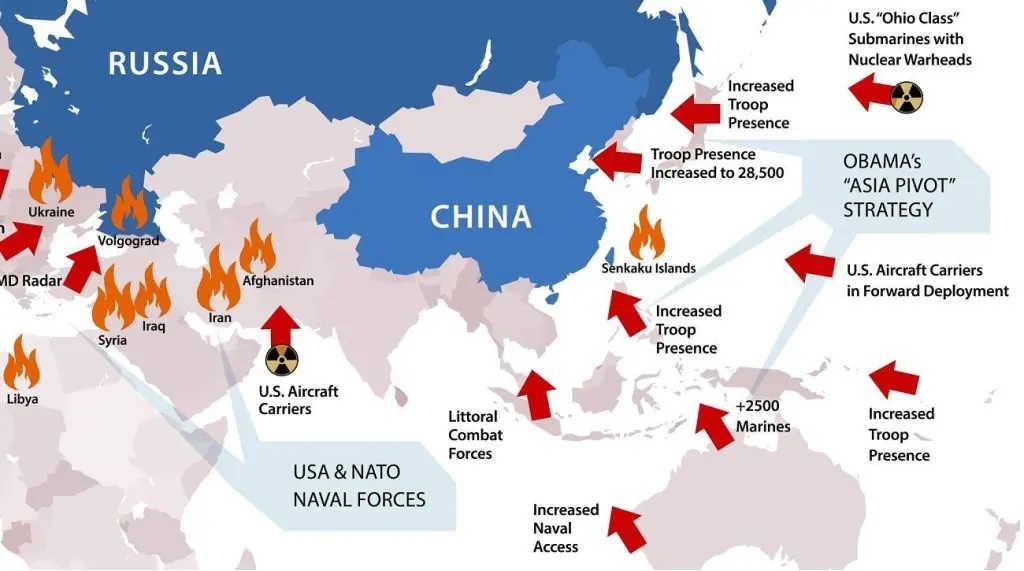
A clash between the United States and China over Taiwan would be the result of the United States willfully going to war with China over a matter the United States officially recognizes as China’s internal political affairs.
The current US State Department’s website regarding “U.S. Relations With Taiwan” admits that officially, “we do not support Taiwan independence.”

The US has also poured billions of dollars’ worth of weapons into Taiwan, just as the US did in Ukraine from 2014 onward. The weapons are clearly intended for a Ukraine-style proxy war with China
.
New Eastern Outlook, : Brian Berletic 8 Feb 23
In recent weeks there has been a build-up of talk regarding a US war with China. Not because of any actual provocation from Beijing, but instead because of a collective resignation to its supposed inevitability.
This is best illustrated by comments made by US Air Force General Michael Minihan. In TIME Magazine’s article, “U.S. General’s Prediction of War With China ‘in 2025’ Risks Turning Worst Fears Into Reality,” General Minihan is quoted as saying:
Worst of all is the small but growing presence of US military activity on Taiwan itself.
Even as the US State Department claims it does not support Taiwan independence, in 2021 Voice of America in its article, “US Nearly Doubled Military Personnel Stationed in Taiwan This Year,” admits that not only are there US troops on Taiwan, the number is increasing.
The article explains:……………………………
“My gut tells me we will fight in 2025.”
The article goes on to claim:
“I hope I am wrong,” Minihan, who heads the Air Force’s Air Mobility Command, wrote in an internal memo, which circulated on social media, to the leadership of its 110,000 members. Chinese President Xi Jinping, he explains, “secured his third term and set his war council in October 2022. Taiwan’s presidential elections are in 2024 and will offer Xi a reason. United States’ presidential elections are in 2024 and will offer Xi a distracted America. Xi’s team, reason, and opportunity are all aligned for 2025.”
Yet nothing General Minihan says explains why the United States itself would conceivably find itself at war with the United States. Instead, General Minihan is more or less admitting that the US will go to war with China over Chinese actions regarding Taiwan. In fact, the article goes on to admit:
Minihan’s comments are merely the most immediate of a worrying, emerging consensus that the U.S. and China are destined to clash over Taiwan, the self-ruling island of 23 million that Beijing claims as its sovereign territory.
A clash between the United States and China over Taiwan would be the result of the United States willfully going to war with China over a matter the United States officially recognizes as China’s internal political affairs.
The current US State Department’s website regarding “U.S. Relations With Taiwan” admits that officially, “we do not support Taiwan independence.”
If the US does not support Taiwan independence then by extension the US acknowledges Taiwan is not independent and therefore Washington, officially, recognizes Beijing’s sovereignty over Taiwan. This is what defines the “One China” policy Washington and virtually every other nation on Earth has agreed to in order to establish diplomatic relations with the People’s Republic of China in Beijing.
At a time when Washington regularly lectures Moscow about “violating sovereignty,” Washington’s stance toward Beijing and Taiwan should be a simple matter of respecting Chinese sovereignty. Yet it is not because of the double-game the United States plays both internationally and with China specifically.
Washington’s Deliberate Provocations
TIME Magazine and other Western media publications attempt to depict Beijing as the aggressor, omitting any discussion of either the “One China” policy or the US State Department’s own official declaration of supposedly upholding it.
Instead, Western audiences are led to believe that Taiwan somehow is independent and that Beijing is “bullying” it. The inevitable clash between the US and China is supposedly driven by America’s desire to “stand up” for Taiwan and its inferred sovereignty. In reality, a potential clash between the US and China would be the result of Washington once again violating the sovereignty of another nation thousands of miles from its own shores.
Washington’s double game of officially recognizing Chinese sovereignty over Taiwan while openly and deliberately trampling that sovereignty is best illustrated by former US Speaker of the House Nancy Pelosi’s visit to Taiwan utilizing an official US Air Force aircraft against the protests of Beijing. Pelosi’s trip to Taiwan is only one of many made by US representatives who openly use visits like this in an attempt to goad Beijing……….
Looking at any map of US military deployments in the “Indo-Pacific” region reveals China as virtually surrounded by the US military by way of South Korea, mainland Japan, Okinawa, and with new basing agreements in the works with Manila, potentially the Philippines as well.
This puts US troops, naval assets, and hundreds of warplanes within striking distance of China, including Taiwan from north, east, and potentially the south.
The US has also poured billions of dollars’ worth of weapons into Taiwan, just as the US did in Ukraine from 2014 onward. The weapons are clearly intended for a Ukraine-style proxy war with China.
Worst of all is the small but growing presence of US military activity on Taiwan itself.
Even as the US State Department claims it does not support Taiwan independence, in 2021 Voice of America in its article, “US Nearly Doubled Military Personnel Stationed in Taiwan This Year,” admits that not only are there US troops on Taiwan, the number is increasing.
The article explains:………………………………….
One could only imagine the reaction in Washington if Beijing and a government in, say San Juan, revealed the presence of Chinese forces in Puerto Rico. Yet as is the case in many instances regarding international relations, American “exceptionalism” not only absolves the US from any penalty for blatant violations of another nation’s sovereignty, it transfers the blame to the nation being targeted itself, in this case, China.
Why US War with China by 2025?
Despite serial provocations, Beijing has exercised exemplary patience and restraint. China has invested heavily in its military and is indeed preparing for conflict with the United States, not because it seeks to wage war with the United States but because the United States has placed its military on China’s doorstep, very clearly seeking war with China.
Taiwan’s full reintegration with the rest of China is inevitable. Already its economy is heavily dependent on access to markets across the rest of China. Harvard University’s Atlas of Economic Complexity reveals that nearly 50% of all exports from Taiwan go to the rest of China. The rest of China also accounts for the largest amount of imports to the island. Many of these imports are crucial inputs for Taiwan’s semiconductor and electronic component production which constitutes, by far, Taiwan’s largest industry.
Only through Washington’s persistent and extensive interference in Taiwan’s local political affairs has gradual reintegration been suspended. Before the US-backed Democratic Progressive Party (DPP) came to power in 2016, the incumbent Kuomintang (KMT) party was on track to sign a trade agreement with the mainland that would have increased already extensive economic integration even further.
Ironically, as the US captured Ukraine politically in 2014, it was also backing opposition protests in Taiwan dubbed the “Sunflower Movement,” paving the way for the DPP’s ascent into power 2 years later. Just like the US-installed client regime in Kiev, the DPP immediately set a course for self-destruction, irrationally rolling back ties with the mainland at the expense of the people living on Taiwan.
More recently, local elections in Taiwan saw the DPP fare poorly, serving as an unofficial referendum rejecting the DPP’s separatist platform, the damage it has consistently done to the local economy, and the instability it has created across the strait with the mainland. However, just as was the case in Ukraine where public sentiment sought peace, Washington and its client regime have every intention of overriding that sentiment in Taiwan, and pushing the island closer still to yet another US-engineered proxy war.
It is clear that it is not China rushing for war with the United States, but precisely the other way around. Time, economics, and proximity favor China. In 10 years, China will be economically and militarily stronger while the US will continue its slow decline. At that point the window of opportunity will have closed for the United States to wage any type of military conflict with China and obtain anything close to resembling “victory.”
Some could argue that the window has already closed.
The Center for Strategic and International Studies (CSIS) recently published the outcome of “wargames” regarding a theoretical Chinese “invasion” of Taiwan in a paper titled, “The First Battle of the Next War: Wargaming a Chinese Invasion of Taiwan.”The paper concludes:
In most scenarios, the United States/Taiwan/Japan defeated a conventional amphibious invasion by China and maintained an autonomous Taiwan. However, this defense came at high cost. The United States and its allies lost dozens of ships, hundreds of aircraft, and tens of thousands of servicemembers. Taiwan saw its economy devastated. Further, the high losses damaged the U.S. global position for many years.
Regarding China, it says:
China also lost heavily, and failure to occupy Taiwan might destabilize Chinese Communist Party rule. Victory is therefore not enough. The United States needs to strengthen deterrence immediately.
In essence, the US will suffer unprecedented military losses and Taiwan itself will be scoured clean of its industry and infrastructure. While CSIS claims that the Chinese amphibious landing was successfully foiled in its wargames thus preserving Taiwan’s political existence, the cost is Taiwan’s physical existence.
Both the CSIS paper together with public comments made by the Pentagon about their own classified wargames indicate disparity between the US and China militarily is narrowing quickly. If there is to be a conflict between the US and China, the sooner it takes place the better chance the US has of achieving a favorable outcome. It is therefore the US racing eagerly toward war, not China. China’s military posture reflects the close proximity of US forces to Chinese territory and their obvious intent to menace China in its own territory, not a China expanding its military capabilities to threaten the United States. In fact, the CSIS paper made a specific note about China’s ability to attack the US “homeland.”
The paper claims:
Because the United States will be striking the Chinese homeland, the base case assumes that the U.S. homeland is not a sanctuary. However, the ability of the Chinese to conduct strikes against the U.S. homeland and thereby affect operations in the Western Pacific is extremely limited. A few special forces might infiltrate and attack a small number of high-value targets but not enough to materially affect military operations in the Western Pacific.
Thus, even in a war between the US and China where the US is conducting strikes on Chinese territory, CSIS admits that China has very limited means to likewise strike at the US. This reveals that US policymakers are not concerned about any real threat China poses to the US, but instead to US “interests” thousands of miles from its own shores and, in fact, within the sovereign territory of China itself.
Potential war between the US and China, if it takes place, will merely be the most recent example of US military aggression in pursuit of global hegemony targeting and attempting to undermine another nation’s sovereignty in violation of international law, not as a means to uphold it. As the US often does, the lead up to this potential war sees the US projecting its own menace toward international law, peace and stability onto the very target of US military aggression, in this case China.
Brian Berletic is a Bangkok-based geopolitical researcher and writer, especially for the online magazine “New Eastern Outlook”.
U.S. military’s newest weapon against China and Russia: Hot air balloon

The Pentagon is quietly transitioning high-altitude balloon projects to the military services.
By LEE HUDSON, 07/05/2022 https://www.politico.com/news/2022/07/05/u-s-militarys-newest-weapon-against-china-and-russia-hot-air-00043860
The Pentagon is working on a new plan to rise above competition from China and Russia: balloons.
The high-altitude inflatables, flying at between 60,000 and 90,000 feet, would be added to the Pentagon’s extensive surveillance network and could eventually be used to track hypersonic weapons.
The idea may sound like science fiction, but Pentagon budget documents signal the technology is moving from DoD’s scientific community to the military services.
“High or very high-altitude platforms have a lot of benefit for their endurance on station, maneuverability and also flexibility for multiple payloads,” said Tom Karako, senior fellow for the International Security Program and Missile Defense Project director at the Center for Strategic and International Studies.
The Pentagon continues to invest in these projects because the military could use the balloons for various missions.
Over the past two years, the Pentagon has spent about $3.8 million on balloon projects, and plans to spend $27.1 million in fiscal year 2023 to continue work on multiple efforts, according to budget documents.
Meanwhile, the Pentagon is working on its own hypersonic weapons program, despite Wednesday’s failure of the latest test.
A bright spot for the U.S. is the balloons may help track and deter hypersonic weapons being developed by China and Russia.
The half billion nuclear kitty litter incident
by Brian Nitz “…………………………. imagine being the person who caused a nuclear accident by ordering the wrong kitty litter?
It happened in February 2014 at a nuclear weapons waste processing facility for the Los Alamos National Laboratory in New Mexico. Anyone involved may be trying hard to forget that it ever happened. The confusion began with a typo in a request for “kitty litter/zeolite clay.” (Zeolites can also be used in energy storage as I wrote here).
At some point this was replaced with kitty litter (clay). This was further transformed into an order for organic cat litter, specifically the sWheat Scoop brand which the manufacturer claims is 100% wheat. Now while the word organic has a folk meaning to environmentalists and hipsters at your local cafe, to chemists it means something more specific……………………………
Don’t try this at home
Green Prophet recently covered the possibilities of using Zeolite for energy storage and this amazing mineral has many more tricks up its sleeve. But while it might seem obvious that anything capable of detoxifying cat pee would be equally effective for nuclear waste disposal, this isn’t necessarily true.
The problem with using 100% organic wheat-based organic kitty litter for your nuclear waste disposal instead of zeolite (non-clay) kitty litter has to do with its reactivity and flammability when confined in a barrel with plutonium, americium, uranium and nitrate-based processing chemicals when compared to zeolite. It doesn’t help that all of this takes place deep underground in an abandoned salt mine where there is much more salt and nuclear waste than there are people to watch it.
So the problem wasn’t discovered until barrel #68660 burst, releasing radiation into a ventilation system. It is believed that several hundred nuclear waste barrels were contaminated with the wrong kind of kitty litter. The cost of the cleanup is said to have been more than half a billion. https://www.greenprophet.com/2023/02/kitty-litter-nuclear/
NewsReal: Alien Balloon Malarkey! Setting The Stage For Proxy War Against China?
What in the name of God is going on in America?
Following last week’s comically bizarre ‘Chinese Spy Balloon Shoot-down’, this weekend the Pentagon declared that it shot down two MORE ‘Chinese balloons’ over Alaska and Canada, and that it scrambled fighter jets to investigate a ‘radar anomaly’ over Montana. (And, since airing, a FOURTH balloon has been downed by the US Air Force over Lake Huron.)
What’s different this week is that the Pentagon isn’t exactly confirming that these latest ‘objects’ are balloons, much less Chinese ‘spy’ ones. In fact, the media and govt spokespeople seem to be deliberately insinuating that these ‘unidentified objects’ are… extraterrestrial in origin!
Ballooning paranoia: The China threat hits the skies
Thankfully, one or two sober notes of reflection have prevailed, even from within the military-intelligence fraternity. The Center for Strategic and International Studies has issued a few self-evident truths. ‘Balloons are not an ideal platform for spying,’ writes James Andrew Lewis, ‘they are big and hard to hide. They go where the winds take them’. Such instruments ‘would be a strange choice for a technologically advanced and sophisticated opponent’.
Independent Australia, By Binoy Kampmark | 13 February 2023
Hysteria over balloons is a strange thing, writes Dr Binoy Kampmark.
HOT AIR balloons first appeared during the Napoleonic era, where they served as delivery weapons for bombs and undertook surveillance tasks. High-altitude balloons were also used by, of all powers, the United States during the 1950s, for reasons of gathering intelligence, though these were shot down by the irritated Soviets.
On 28 January, a device reported to be a “high-altitude surveillance balloon” entered U.S. airspace in Alaska. It then had a brief spell in Canadian airspace before returning to the U.S. via Idaho on 31 January.
On 4 February, with the balloon moving off the coast of South Carolina, a decision was made by the U.S. military to shoot it down using an F-22 Raptor from the First Fighter Wing based at Langley Air Force Base. The Pentagon has revealed that the collection of debris is underway.
In response, the Chinese Foreign Ministry issued a stern note of disapproval, protesting:
‘The US attack on a civilian unmanned airship by force.’
This was ‘a clear overreaction and a serious violation of international practice’. Beijing also issued a note of apology, regretting ‘the unintended entry of the ship into U.S. airspace due to force majeure’.
A U.S. State Department official, while noting the statement of regret, felt compelled to designate:
‘The presence of this balloon in our airspace [as] a clear violation of our sovereignty as well as international law.’
Rumours of a second Chinese balloon flying across Latin America were also confirmed by a spokesperson of the Chinese Foreign Ministry on 6 February, who described it as being “of a civilian nature and is used for flight tests”.The instrument had been impaired by weather in its direction, having “limited self-control capabilities”.
The Pentagon’s press secretary, Brigadier General Pat Ryder, also confirmed the existence of the second balloon, reaching the predictably opposite conclusion to his Chinese counterparts:
“We are seeing reports of a balloon transiting Latin America. We now assess it is another Chinese surveillance balloon.”
This overegged saga has seen much airtime and column space dedicated to those in the pay of the military-defence complex. Little thought was given to the purpose of such a seemingly crude way of collecting military intelligence. Timothy Heath of the Rand Corporation went so far as to extol the merits of such cheeky devices. For one thing, they were hard to detect, making them somehow reliable.
General Glen VanHerck, commander of North American Aerospace Defense Command and U.S. Northern Command, made reference to a number of Chinese spy balloons that supposedly operated with impunity during the Trump Administration. “I will tell you that we did not detect those threats,” he said. This had resulted in a “domain awareness gap that we have to figure out”.
The begging bowl for even larger defence budgets is being pushed around the corridors of power.
Lawyers of international law have also had their say, reaching for their manuals, and shaking their heads gravely. Donald Rothwell of the Australian National University thought that:
‘The incursion of the Chinese balloon tested the boundaries of international law.’
Thankfully, one or two sober notes of reflection have prevailed, even from within the military-intelligence fraternity. The Center for Strategic and International Studies has issued a few self-evident truths. ‘Balloons are not an ideal platform for spying,’ writes James Andrew Lewis, ‘they are big and hard to hide. They go where the winds take them’. Such instruments ‘would be a strange choice for a technologically advanced and sophisticated opponent’.……………………………..
The Chinese explanation has been scoffed at and derisively dismissed. Yet balloons are an almost quotidian feature of scientific and meteorological work, whatever the official explanation offered by Beijing might be. NASA’s own Scientific Balloon Program, for instance, has been most engaged of late.
The organisation was keen to tout its fall 2022 campaign involving six scientific, engineering and student balloon flights in support of 17 missions.
The scale of any one mission be sizeable. ‘Our balloon platforms’, came the description from NASA’s Scientific Balloon chief Debbie Fairbrother, ‘can lift several thousand pounds to the edge of space, allowing for multiple, various scientific instruments, technologies, and education payloads to fly together in one balloon flight’.
The disproportionate nature of Washington’s reaction to Beijing over such balloons also looks rather odd in the face of the vast surveillance technologies it deploys against adversaries and friends.
But politics is not merely the art of the possible but an opportunity for the absurd to find form and voice. On this score, the mouse has clearly terrified the elephant. https://independentaustralia.net/politics/politics-display/ballooning-paranoia-the-china-threat-hits-the-skies,17230
Radioactive releases from the nuclear power sector and implications for child health.
Notes here provided by:
Simon J Daigle, B.Sc., M.Sc., M.Sc(A)
Industrial / Occupational Hygienist, Climatologist,
Environmental Sciences Expert (Air Quality tropospheric Ozone),
Epidemiologist, Citizen scientist
Montreal, Quebec, Canada.
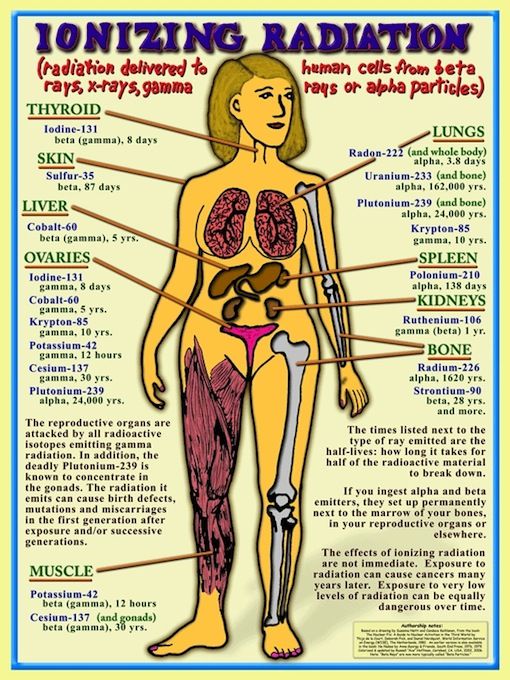
This BMJ article articulated extremely well the challenges of women’s health, pregnancy and radioactive exposures and includes nuclear power and related industries (nuclear waste). The facts below were known for decades and true to this very day and I quote:
“exposure standards in the USA remain based on a Reference Man—a model that does not fully account for sex and age differences.”
“Early in the nuclear weapons era, a ‘permissible dose’ was more aptly recognised as an ‘acceptable injury limit,’ but that language has since been sanitised. Permissible does not mean safe.”
“As noted by the EPA, this gives radiation a ‘privileged pollutant’ status”
The facts above are not only astonishing, in which the general public may either be oblivious or uninformed, but in 2023, these facts remain true and yet the nuclear industry remain “willfully blind” and disingenuous about the real radiation risks, especially to the most vulnerable groups in our population.
British Medical Journal – Paediatrics (Open Access).
A reputable journal! A recent article in the British Medical Journal – Paediatrics (Oct 2022).
Open access to all. A reputable journal!
Radioactive releases from the nuclear power sector and implications for child health (October 2022).
Link: https://bmjpaedsopen.bmj.com/content/6/1/e001326
Selected excerpts:
“Children, women and particularly pregnant women living near nuclear production facilities appear to be at disproportionately higher risk of harm from exposure to these releases. Children in poorer often Non-White and Indigenous communities with fewer resources and reduced access to healthcare are even more vulnerable—an impact compounded by discrimination, socioeconomic and cultural factors.”
“Nevertheless, pregnancy, children and women are under protected by current regulatory standards that are based on ‘allowable’ or ‘permissible’ doses for a ‘Reference Man’.”
“Early in the nuclear weapons era, a ‘permissible dose’ was more aptly recognised as an ‘acceptable injury limit,’ but that language has since been sanitised. Permissible does not mean safe. Reference Man is defined as ‘…a nuclear industry worker 20–30 years of age, [who] weighs 70kg (154 pounds), is 170cm (67 inches) tall…is a Caucasian and is a Western European or North American in habitat and custom’.”
“However, many studies are unable to link these adverse outcomes to radioactivity because the studies’ authors tend to use several faulty assumptions:
- ‘doses will be too low to create an effect’—a beginning assumption ensuring poor hypothesis formation and study design. Therefore, when an effect is found, radioactivity has been predetermined not to have an association with the effect. This exclusion often leads to an inability to find an alternate associated disease agent;
‘small negative findings matter’—In fact, what matters are positive findings or very large negative findings;- ‘statistical non-significance means a lack of association between radiation exposure and disease’ — a usage a number of scientists in various disciplines now call ‘ludicrous’;
- ‘potential bias or confounding factors are reasons to dismiss low dose studies’—In fact, when assessing low dose impacts, researchers should take care not to dismiss studies with these issues and researchers should minimise use of quality score ranking.
“Consequently, we examine and reference studies even if they contain such faulty assumptions because they still indicate increases in certain diseases, such as some leukaemias, known to be caused by radiation exposure. Additionally, few alternative explanations were offered in the conclusions of these studies, meaning radiation exposure might still have been the cause.”
“Current U.S. regulations allow a radiation dose to the public (100 mrem per year) which poses a lifetime cancer risk to the Reference Man model of 1 person in 143. This is despite the EPA’s acceptable risk range for lifetime cancer risk from toxics being 1 person in 1million to 1 person in 10000. As noted by the EPA, this gives radiation a ‘privileged pollutant’ status. Additionally, biokinetic models for radioisotopes are not sex-specific. A male model is still used for females. The models are also not fully age-dependent. Radiation damage models also fail to account for a whole host of childhood and pregnancy damage.”
Highlights (Conclusion)
- Despite the numerous observations globally, linking radiation exposures to increased risks for children, pregnant and non-pregnant women and the well-demonstrated sensitivity to other toxicants during these life stages, exposure standards in the USA remain based on a Reference Man—a model that does not fully account for sex and age differences.
- In addition, faulty research assumptions, unique exposure pathways, systemic inequities and legacy exposures to both heavy metals and radioactivity from mining wastes add to the risks for women and children, especially those in underserved communities.
- Socioeconomic factors that drive higher deprivation of services in non-homogenous low-income communities of colour also put non-White children at higher risk of negative health outcomes when exposed to radioactive releases, than their White counterparts.
- A first and essential step is to acknowledge the connection between radiation, heavy metal and chemical exposures from industries and the negative health impacts observed among children, so that early diagnosis and treatment can be provided.
- Measures should then be taken to protect communities from further exposures, including a prompt phaseout of nuclear power and its supporting industries.
Studies are also urgently needed where there are none, and the findings of independent doctors, scientists and laboratories should be given equal attention and credence as those conducted by industry or government-controlled bodies, whose vested and policy interests could compromise both their methodologies and conclusions.- Finally, in the face of uncertainty, particularly at lower and chronic radiation doses, precaution is paramount.
Notes:
Funding: The authors have not declared a specific grant for this research from any funding agency in the public, commercial or not-for-profit sectors.
Competing interests: None declared.
Patient consent for publication: Not applicable.
Ethics approval: Not applicable.
Provenance and peer review: Commissioned; externally peer reviewed
Rep. Matt Gaetz introduces resolution to end military and financial aid to Ukraine, urge peace deal

in October House Leader Kevin McCarthy was more cautious, saying that Republicans wouldn’t write a “blank check” for Ukraine.
Russia-Ukraine conflict has been ongoing for nearly a year
By Adam Shaw | Fox News 12 Feb 23 https://www.foxnews.com/politics/gaetz-introduces-resolution-end-military-financial-aid-ukraine-urge-peace-deal
Rep. Matt Gaetz, R-Fla., is introducing a resolution in the House on Thursday that calls on the Biden administration to end U.S. military and financial aid to Ukraine — while also urging all involved to secure a peace agreement after nearly a year of war in the region.
The resolution, the “Ukraine Fatigue Resolution” is being introduced by Gaetz and 10 co-sponsors and calls for the U.S. to “end its military and financial aid to Ukraine and urges all combatants to reach a peace agreement.”
The resolution notes that since Russia invaded Ukraine in February 2022, the U.S. has been the top contributor to the Ukrainian war effort, with more than $110 billion in financial, military, and humanitarian aid to the U.S. ally. It includes more than $27.4 billion in security assistance.
In January the U.S. announced additional security assistance, including approval by President Biden of 31 Abrams M1 tanks to Ukraine. On top of that, reports suggest another $2 billion could be in the pipeline.
The resolution lists the enormous amount of equipment that the U.S. has provided to the country since the beginning of the conflict. It also cites Pentagon officials who have said the munitions have “severely depleted United States stockpiles, weakening United States readiness in the event of conflict.”
It also claims that by providing assistance, the U.S. is inadvertently contributing to civilian casualties, and notes U.S. estimates that 40,000 civilians had died in the conflict.
Concern about the continued U.S. funding of the war has grown among a subset o f Republicans as the conflict has dragged on, with lawmakers highlighting issues at home that could use additional funding
Gaetz, a member of the House Armed Services Committee, said the U.S. has been the top contributor to what he called an “everlasting conflict.”
“America is in a state of managed decline, and it will exacerbate if we continue to hemorrhage taxpayer dollars toward a foreign war,” he said. We must suspend all foreign aid for the War in Ukraine and demand that all combatants in this conflict reach a peace agreement immediately.”
The co-sponsors on the resolution include Reps. Andy Biggs, R-Ariz., Lauren Boebert, R-Colo., Paul Gosae, R-Ariz., Marjorie Taylor Greene, R-Ga., Anna Paulina Luna, R-Fla., Thomas Massie, R-Ky., Mary Miller, R-Ill., Barry Moore, R-Ala., Ralph Norman, R-S.C. and Matt Rosendale, R-Mont.
Gaetz had taken aim at both parties for the additional funding for Ukraine earlier this week on the House floor, asking if there was a limit to the funding the U.S. was prepared to provide.
“How much more for Ukraine? Is there any limit?” he asked on the House floor. “Which billionth dollar really kicks in the door? Which redline we set will we not later cross?”
Republican leadership had broadly remained in favor of funding the war effort. Senate GOP Leader Mitch McConnell said in December said that “providing assistance for Ukrainians to defeat the Russians is the No. 1 priority for the United States right now according to most Republicans.”
However, in October House Leader Kevin McCarthy was more cautious, saying that Republicans wouldn’t write a “blank check” for Ukraine.
Another sign of madness? – thermonuclear propulsion technology to power a rocket to Mars.

Decisions on nuclear future are guided by myths.
By Linda Pentz Gunter 12 Feb 23
“…………………………………………………………. a sign of some kind of madness?
A few weeks later, that same presentiment [about the UK government] was re-evoked on reading a headline in the print edition of the Washington Post: US works on nuclear-powered rocket.
This is not an entirely new story, but an update on the plan to use thermonuclear propulsion technology to power a rocket to Mars.
There are so many things wrong with this. The premise is that not using a nuclear reactor to power the rocket will mean it will just be too tediously slow for human passengers to endure — a journey of seven months. With the reactor on board speeding the rocket on its way, the journey to Mars could be cut to what? A mere three and a half months. Not tedious at all!
Never mind that rockets have a nasty habit of sometimes exploding on the launch pad. And never mind that do we REALLY need to spend billions of dollars right now trying to get maybe three astronauts to Mars when we have a planet called Earth that desperately needs every dime and dollar available to save it?
The announcement was replete with the usual illogicalities. Sending astronauts on that seven-month journey to Mars in a traditional rocket was “dangerous” as “the radiation levels on a Mars mission could expose astronauts to radiation levels more than 100 times greater than on Earth.” Much better to send them there on a rocket powered by a nuclear reactor!
There is another agenda afoot here, of course, and it’s a military one and the sinister battle for who controls space.
If you thought shooting down the Chinese spy balloon was exciting, that was child’s play compared to what is planned for NASA’s nuclear reactors in space.
This includes being able to power satellites to become more agile in maneuvering away from “enemy” satellites. Using nuclear propulsion will achieve that, but what other consequences might result from a host of nuclear powered satellites buzzing around in space? It’s no surprise that the Space Force, created for war-fighting in space, is involved in all this.
And of course, apparently taking its cue from the mess we have already created on Earth, NASA wants to place nuclear reactors on the Moon as a power source. But for who or what exactly? Will we plant the US flag there while we are at it and claim a new military and strategic frontier? The signs are ominous.
And what about all the radioactive waste? Will we be boring deep holes in the Moon to bury it, or will we simply jettison it further into deep space? It’s bad enough that the oceans are already our dustbin. Now Space is to be our new nuclear waste frontier.
While all this was going on, evidence from yet more research poured in about how completely unnecessary it is to use nuclear power for anything, now or in the future.
Looking at every kind of power demand including energy consumption, electric vehicles, and commercial transport, then applying solar, wind, nuclear, heat pumps, storage and other technology, nuclear power was repeatedly eliminated from the mix for increasing costs without increasing reliability.
And yet, governments here and in far too many other parts of the world press on inexorably with plans to continue the use of nuclear power or develop new nuclear programs.
Despite all the evidence that this is — to understate it — a Very Bad Idea. https://beyondnuclearinternational.org/2023/02/12/signs-of-madness/
Linda Pentz Gunter is the international specialist at Beyond Nuclear and writes for and curates Beyond Nuclear International.
‘Downwind’: How Did America Create Its Own Nuclear Disaster?
BY PANDORA DEWAN ON 2/9/23 https://www.newsweek.com/downwind-documentary-america-create-nuclear-disaster-1780196
new documentary called Downwind shines a spotlight on the legacy of nuclear testing in the Nevada desert in the 50s and 60s and shares the stories of those whose lives were the most severely impacted.
Between 1951 and 1962, nuclear weapons were tested above ground at the Nevada Test Site, based in the Nevada desert, 65 miles north of Las Vegas. Underground testing continued until the 1990s and, in total, over 900 nuclear weapons tests were carried out at the site, according to the documentary.
Ken Smith, professor of family studies and population science at the University of Utah and executive director of the Wasatch Front Research Data Center, told Newsweek that the people who were most affected by these detonations, known as “downwinders,” were mostly based in Utah, southern Nevada and northern Arizona. “The number of people in that area at the time—[in] the mid-50s to the early 60s—is the concern,” he said.
The testing released plumes of radioactive material into the atmosphere, which was carried hundreds of miles by the wind before falling back down to the ground. This “nuclear fallout” material takes many different forms, but one of the most concerning is iodine-131, which can increase risk of thyroid cancer.
It is impossible to accurately determine the dose of radiation and the resulting risk of this exposure, but a report in 1999 by the National Cancer Institute estimated that nuclear weapons testing at the Nevada site would have yielded between 11,300 to 212,000 excess cases of thyroid cancer over this period.
Exposure to radioactive material is mainly thought to have occurred through the consumption of contaminated milk: when iodine-131 falls down to the earth it can settle on vegetation, which is eaten by cows and goats. Over time, the iodine-131 builds up in the animal’s bodies and accumulates in their milk, which is then consumed by people. Fresh produce and meat may have also contained small amounts of this radioactive material too, but it would have been less concentrated.
Overall, these concentrations are still very small, but some people would have been more vulnerable to this radiation than others. “It’s the children who were the most affected,” Smith said. “This is because they drink more milk and have smaller bodies. Your thyroid accumulates iodine-131, and they have a smaller thyroid.”
The Centers for Disease Control and Prevention (CDC) says that iodine-131 is not the only radioactive material in fallout that affects a person’s health. For example, strontium-90 can affect the bone marrow and lead to an increased risk of leukemia.
Downwind directors Douglas Brian Miller and Mark Shapiro, spoke to people from Utah and Nevada about how this testing had impacted their communities.
One of the people they heard from was Mary Dickson, a writer, playwright and downwinder who grew up in Salt Lake City during this period. She ate locally grown vegetables and drank locally produced milk, never knowing the risks of her exposure. At age 29, she was diagnosed with thyroid cancer.
Dickson survived the disease, but others she knew were less lucky.
In a post for the anti-nuclear campaign group, #stillhere, Dickson said that two of her fellow classmates had died of cancer at 8 and 4 years old, and her own sister is now battling a rare form of stomach cancer.
“Sometimes I feel like I am forever piling up losses,” she said.
On July 10, 2000, Congress established the Radiation Exposure Compensation Act (RECA) which provides monetary compensation for the people who developed cancer in light of this exposure. It was due to expire in 2022 but has been extended for another two years.
To date, RECA has awarded nearly $2.6 billion in benefits to close to 40,000 claimants, as per statistics from the U.S. Department of Justice. However, over 13,000 claims have been rejected, and downwinders can only claim compensation if they lived in Utah, Nevada or Arizona during the period of above-ground testing.
Downwind premiered at the Slamdance Film Festival in Park City, Utah, at the end of January.
That time Northern California had a near nuclear accident
by: Matthew Nobert, Feb 11, 2023 https://fox40.com/news/local-news/sutter-county/that-time-northern-california-had-a-near-nuclear-accident/
KTXL) — The Sacramento region has a rich history of United States Air Force aviation, but on a Tuesday in 1961 that history turned dark as an aircraft armed with nuclear bombs crashed in Sutter County.
Following World War II the United States Air Force was looking to add a modern bomber to its fleet and in 1955 the B-52 Stratofortress began its military service.
Between 1960 and 1968, the USAF would run Operation Chrome Dome, which would have B-52’s armed with nuclear weapons remain continuously airborne on the border of the Soviet Union.
On March 14, 1961, a B-52F-70-BW armed with two nuclear weapons departed Mather Air Force Base, now Mather Airport, when the cabin pressure in the crew compartment began to fail, according to Department of Defense records.
The crew dropped the plane to 10,000 feet but the increased fuel consumption caused “fuel exhaustion” before an air tanker could refuel the B-52.
The crew bailed out at 10,000 feet, but the commander stayed until 4,000 feet in order for the massive bomber to be steered away from a populated area.
The bomber crashed into Sutter County farmland near the intersection of Moroni Road and Drexler Road, about 17.5 miles southwest of Yuba City.
When the bomber crashed, the two nuclear weapons it was carrying were stripped away from the body of the plane, but their explosives did not detonate. No nuclear contamination was detected either.
This recounting of events by the Department of Defense was challenged years later in a 2013 book written by Retired USAF Lt Col Earl McGill, a B-47 and B-52 pilot during the Cold War.
His book “Jet Age Man: SAC B-47 and B-52 Operations in the Early Cold War” recounts the Strategic Air Commands (SAC) Operation Chrome Dome and the events of March 14, 1961.
“Whatever the cause, SAC crews were briefed on every B-52 accident….we were summoned to the alert shack briefing room where we were told that a B-52 returning from a 24-hour CHROME DOME mission ran out of fuel and dumped four Mk-28’s on Northern California,” McGill writes.
McGill’s recounting of the crash also puts into question how safe the nuclear weapons actually were when the plane went down.
“The safety devices barely worked as designed,” McGill writes. “Apparently three weapons chutes did not fully deploy, which prevented detonation. The one that hung up (in a tree), we were briefed, had ‘rung in’, a term we used to indicate ‘armed’….”
McGill’s book was Nominated as Best Military History Book 2013 by Air Power History, published by the US Air Force Historical Foundation.
Northern California was not the only area of the United States or the world that saw crash landings by B-52’s armed with nuclear bombs.
Operation Chrome Dome would come to an end in 1968 after five B-52 crashes in the United States and abroad.
U.S. Test Launches ICBM Into Pacific as Part of Nuclear ‘Deterrence Mission’

US News By Paul D. Shinkman, Feb. 10, 2023
Military officials said the test launch of the Minuteman III intercontinental ballistic missile serves as a reminder that the U.S. can ‘deter twenty-first century threats.’
The U.S. Air Force test-launched an intercontinental ballistic missile into the Pacific Ocean neighborhood of its adversaries in China and North Korea late Thursday at a time of growing international concern that brewing tensions among nuclear powers could escalate into a new arms race………….
The missile’s payload, which for a real strike could carry thermonuclear warheads, flew more than 4,000 miles from Vandenberg Air Force Base on the California coast to the Kwajalein Atoll in the Marshall Islands…..
China has repeatedly warned of the dangers of a new arms race as it blasts U.S. political rhetoric that increasingly views Beijing as the signature threat around which America’s national security infrastructure must organize itself………………. https://www.usnews.com/news/national-news/articles/2023-02-10/u-s-test-launches-icbm-into-pacific-as-part-of-nuclear-deterrence-mission
Elon Musk’s SpaceX Cuts Support for Ukrainian Military but continues work for U.S. military.
Decrying Starlink’s ‘Weaponization,’ SpaceX Cuts Support for Ukrainian Military, Defense One, Patrick Tucker, 10 Feb 23
But Wednesday’s explanation by the Elon Musk-founded company is at odds with its continuing work for the U.S. military.
SpaceX will no longer support certain Ukrainian military operations through its Starlink satellite-communications service, the company’s president said on Wednesday, explaining that the tech was “never meant to be weaponized.” But Gwynne Shotwell’s explanation is at odds with Starlink’s role in recent U.S. Army modernization experiments that seek to fire on targets more quickly………………
On Wednesday, Shotwell said has taken steps to keep Ukraine from using Starlink to control armed drones and perform other military tasks.
“We were really pleased to be able to provide Ukraine connectivity, and help them in their…fight for freedom. It was never intended to be weaponized, however,” the SpaceX president said during an FAA Commercial Space Transportation Conference, according to Breaking Defense.
SpaceX’s work for the U.S. military suggests otherwise. In May 2020, the company signed a cooperative research and development agreement with the Army to look at battlefield applications for the Starlink broadband. Later that year, Starlink played a key role in the service’s inaugural Project Convergence experiment to test new and more interconnected weapons and systems………………………..
In November, Olha Stefanishyna, Ukraine’s deputy prime minister for European and Euro-Atlantic integration, told reporters that Starlink communications were a “signal of life” for Ukrainians, but said the country was growing increasingly concerned about the ever-erratic behavior of the company’s founder, Elon Musk—especially after Musk made attempts to charge the Pentagon for Starlink services he had donated. Ukrainian officials said they are looking for alternatives to SpaceX https://www.defenseone.com/technology/2023/02/spacex-now-says-they-dont-want-starlink-be-weaponized-ukraine/382797/
1 This Month

of the week – Shut Down Drone Warfare!


Tell the Ukrainian Government to Drop Prosecution of Peace Activist Yurii Sheliazhenko

Petition to revoke the licensing of the Near Surface Nuclear Disposal Facility (NSDF) at Chalk River. https://www.ourcommons.ca/petitions/en/Petition/Details?Petition=e-7247
To see nuclear-related stories in greater depth and intensity – go to https://nuclearinformation.wordpress.com
-
Archives
- April 2026 (114)
- March 2026 (251)
- February 2026 (268)
- January 2026 (308)
- December 2025 (358)
- November 2025 (359)
- October 2025 (376)
- September 2025 (257)
- August 2025 (319)
- July 2025 (230)
- June 2025 (348)
- May 2025 (261)
-
Categories
- 1
- 1 NUCLEAR ISSUES
- business and costs
- climate change
- culture and arts
- ENERGY
- environment
- health
- history
- indigenous issues
- Legal
- marketing of nuclear
- media
- opposition to nuclear
- PERSONAL STORIES
- politics
- politics international
- Religion and ethics
- safety
- secrets,lies and civil liberties
- spinbuster
- technology
- Uranium
- wastes
- weapons and war
- Women
- 2 WORLD
- ACTION
- AFRICA
- Atrocities
- AUSTRALIA
- Christina's notes
- Christina's themes
- culture and arts
- Events
- Fuk 2022
- Fuk 2023
- Fukushima 2017
- Fukushima 2018
- fukushima 2019
- Fukushima 2020
- Fukushima 2021
- general
- global warming
- Humour (God we need it)
- Nuclear
- RARE EARTHS
- Reference
- resources – print
- Resources -audiovicual
- Weekly Newsletter
- World
- World Nuclear
- YouTube
-
RSS
Entries RSS
Comments RSS
 nuclear-news