Senators raise concerns over US missing nuclear submarine target

The Hill, BY FILIP TIMOTIJA – 09/06/23
Senators on the Foreign Relations Committee raised concerns that the U.S. fell short of its nuclear submarine target during a Wednesday morning hearing on a trilateral security partnership.
Australia, the United Kingdom and the U.S. struck the defense deal AUKUS in September 2021 and announced an arrangement for Australia to acquire “conventionally-armed, nuclear-powered” submarine capability through the partnership in March 2023. As part of that agreement, Australia agreed to invest approximately $3 billion in the first four years of the agreement into U.S. shipbuilding.
The agreement is intended to help Australia develop nuclear-powered submarines while enabling allies to safely share the relevant technology with each other.
During the hearing, lawmakers questioned whether the U.S. had the bandwidth to sell nuclear submarines to Australia. The U.S. Navy currently has 49 fast-attack submarines, which puts it 17 submarines short of the 66-vessel goal the military branch previously told Congress it needed to reach in order to properly defend the U.S.
“We are grateful that the Australians want to invest $3 billion,” Sen. Pete Ricketts (R-Neb.) said. “What are we gonna have to invest to get to 66 submarines?”……………………………………………………. https://thehill.com/policy/defense/4190727-senators-raise-concerns-over-us-missing-nuclear-submarine-target/
Revisiting John Pilger’s 2016 Warnings About US Warmongering Against Russia And China
CAITLIN JOHNSTONE, SEP 6, 2023 https://www.caitlinjohnst.one/p/revisiting-john-pilgers-2016-warnings?utm_source=post-email-title&publication_id=82124&post_id=136786147&isFreemail=true&r=1ise1&utm_medium=email
In March of 2016 the renowned Australian journalist and filmmaker John Pilger published an article titled “A world war has begun. Break the silence.” which urgently warned of the US empire’s aggressive escalations against Russia and China. Re-reading parts of it in 2023 is like watching someone placing flags next to recently planted seeds that would eventually grow into the towering problems our world now faces.
It’s like listening to a time traveler warning people from the past about a grave mistake they were about to make. Pilger points to US provocations in Ukraine, NATO militarism, and the encirclement of China and warns of the surging risk of nuclear war, noting that nuclear warhead spending “rose higher under Obama than under any American president.”
“In the last eighteen months, the greatest build-up of military forces since World War Two — led by the United States — is taking place along Russia’s western frontier,” Pilger wrote. “Not since Hitler invaded the Soviet Union have foreign troops presented such a demonstrable threat to Russia.”
“Ukraine — once part of the Soviet Union — has become a CIA theme park,” wrote Pilger. “Having orchestrated a coup in Kiev, Washington effectively controls a regime that is next door and hostile to Russia: a regime rotten with Nazis, literally. Prominent parliamentary figures in Ukraine are the political descendants of the notorious OUN and UPA fascists. They openly praise Hitler and call for the persecution and expulsion of the Russian speaking minority.”
“In Latvia, Lithuania and Estonia — next door to Russia — the US military is deploying combat troops, tanks, heavy weapons,” Pilger said. “This extreme provocation of the world’s second nuclear power is met with silence in the West.”
“What makes the prospect of nuclear war even more dangerous is a parallel campaign against China,” Pilger continued. “The United States is encircling China with a network of bases, with ballistic missiles, battle groups, nuclear-armed bombers. This lethal arc extends from Australia to the islands of the Pacific, the Marianas and the Marshalls and Guam, to the Philippines, Thailand, Okinawa, Korea and across Eurasia to Afghanistan and India. America has hung a noose around the neck of China. This is not news. Silence by media; war by media.”
Pilger highlighted the way his home country Australia was being roped into Washington’s war preparations against China, a trend which has since grown much worse as the drums of war grow louder.
“In 2015, in high secrecy, the US and Australia staged the biggest single air-sea military exercise in recent history, known as Talisman Sabre,” he wrote. “Its aim was to rehearse an Air-Sea Battle Plan, blocking sea lanes, such as the Straits of Malacca and the Lombok Straits, that cut off China’s access to oil, gas and other vital raw materials from the Middle East and Africa.”
Pilger wrote all this while preparing to release his excellent film “The Coming War on China”, which would come out later that year. In it, he shows how the US has been surrounding China with war machinery in a way that would be considered an act of war if it was happening near American shorelines, and drives home the seriousness of the prospect of nuclear conflict.
Everything Pilger warned about turned out to be everything he said it was. A war in Ukraine has erupted from the spark of the US-backed coup in 2014 and Russia’s fear of an increasingly expansionist and militaristic NATO, while the US military encirclement of China has been rapidly increasing as hostilities between the two superpowers accelerate toward a breaking point, facilitated in no small part by the continent-sized military base known as Australia. What were only background stories in 2016 now dominate the headlines of today.
I bring this up because I think it’s useful to show that we’ve been on this track toward global conflict between major powers for years, and it’s been unfolding in ways that some saw coming from miles away. Much of Pilger’s work could be called prophetic, but Pilger is no prophet — he’s just a journalist with an ear to the ground who’s been critically scrutinizing the behavior of the empire for decades. He was able to accurately mark the trajectory our world has been on earlier than most, and it has continued along that same trajectory with frightening speed ever since.
If you can see the trajectory that an object is on, you can determine where you need to stand in order to obstruct its path. The fact that we’ve been on a linear trajectory toward global conflict between nuclear-armed states all these years shows that opposing that trajectory is of existential importance for every living organism on this planet. And yet the media still want us focused on celebrity gossip and party politics and Donald Trump.
World war is still closing in on us. We still need to break the silence and oppose it. Our rulers have been steering us in this direction for a long time now, and they’re not going to turn away until we make them.
The deep roots of the Yucca Mountain nuclear waste fight — and why it continues to this day

Sep 05, 2023, By: Paulina Bucka, https://www.ktnv.com/news/the-deep-roots-of-the-yucca-mountain-nuclear-waste-fight-and-why-it-continues-to-this-day?mibextid=2JQ9oc&fbclid=IwAR2n8wFDd8P4EIq0HqFMPy2ASLEGa_caRDfN8zyxddED3YKpB-bNpPAV8H4
YUCCA MOUNTAIN (KTNV) — For Nevada, it’s the question that doesn’t go away.
The fight to stop Yucca Mountain from becoming a nuclear waste repository has gone on for more than three decades now. Despite an official halt to the project in 2010, that fight continues for Nevada’s Congressional delegation and the Western Shoshone people.
For the Western Shoshone, it’s a cause large than themselves — a calling to preserve their identity for generations to come.
“For the Shoshone people, our identity is the land,” said Ian Zabarte, principal man of the Shoshone Nations. “We developed our language in relation to the land — to be able to talk about it, to be able to share it.”
For decades, those ties have been threatened by the radioactive fallout of nuclear testing.
“You used to be able to drink the water from any of the springs around you,” Zabarte said. “Now, you can’t do that any more because of the pollution.”
One hundred miles northwest of the bright lights of Las Vegas, miles past Mercury, Nevada, sits Yucca Mountain — a 60-million-acre formation made up of mostly fractured volcanic tuffs.
It’s almost home to the Western Shoshone Nation people — a home Zabarte says he hopes to see restored to its most natural form within his lifetime.
Some of the big pollution is radioactive fallout from the nuclear weapons testing,” Zabarte said. “We cannot just pick up and leave in the event of the radiation, the fallout — we lose our identity.”
Zabarte has spent his life on the front lines of the fight to keep nuclear waste out of his ancestral home.
“We would walk all the way across the valley to the main gate at the Nevada Test Site doors and have our protests there,” Zabarte said. “I received a letter in 2001 that said I’m at risk of developing silicosis because of the number of hours I spent underground at Yucca Mountain.”
While the U.S. no longer performs nuclear testing, nuclear advances continue, and questions about what happens to the nation’s nuclear waste remain.
“After testing, Nevada was angry enough about what had happened because of nuclear weapons testing that it said, ‘Never again. We’re not going to be the high-level waste dump for this country,'” said Kevin Kamps, a radioactive waste specialist.
Kamps has walked alongside the Shoshone Nation people for decades in protest of nuclear testing and the proposed repository that would have sat roughly 1,000 feet under Yucca Mountain.
“What happened in our state was Nevada never had consent, and in 1982, when the bill was passed that designated Nevada as the nation’s nuclear storage waste disposal area, that didn’t come with any of our consent,” said Rep. Susie Lee, a Democrat representing Nevada’s 3rd Congressional District.
The late U.S. Senate Majority Leader Harry Reid spent his career leading the battle against the project, which began in the 1980s, during President Ronald Reagan’s administration.
President Barack Obama called the Yucca Mountain project “unworkable” in 2010 and made good on his campaign promise to Nevadans to end it and cut funding for the project.
“This was a political cartoon that ran in the Las Vegas Review-Journal back in 2010, and it really celebrated the end of the Yucca Mountain Project, this attempt by the U.S. government to attempt to dump all the country’s high radioactive waste here in Nevada,” Kamps said.
Ten years later, President Donald Trump — a supporter of nuclear energy — initially called for the licensing process of Yucca Mountain to restart. But in 2020, Trump announced that he would reverse his policy and halted his support of the project.
Today, the question still remains: Where should the nation’s nuclear waste be stored? It’s a near-constant fight for members of Nevada’s congressional delegation to this day.
“The fact of the matter is, there are 27 states that have nuclear waste, spent fuel from nuclear reactors, and those states want a solution,” Lee said.
Lee says the bipartisan position from Nevada lawmakers is clear: Nevadans don’t want to see any funding go back into the Yucca Mountain project.
“There will need to be a long-term solution for this,” she said. “I’m working with my counterparts to try and come up with a solution, how we can reprocess that waste, but most importantly, how and where it can be put where there is consent.”
For the Shoshone Nation lineage, the Yucca Mountain fight goes beyond politics. Its members say it’s a race to preserve what’s left of the mountain to leave behind for future generations.
“They say that we are as naive as Native Americans because of our holistic conservation of the land for future generations,” Zabarte said. “They don’t see that as value, that the land is somehow being wasted.
“We’re trying to protect this land so our future generations can live a good quality of life,” he said.
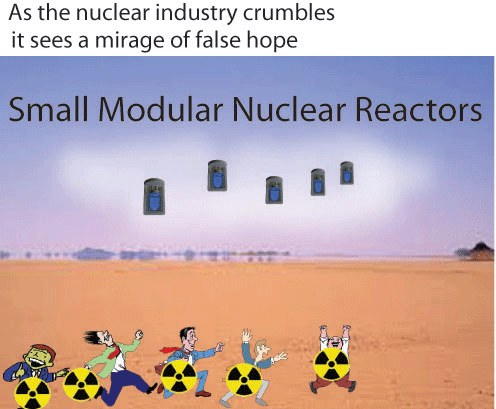
Nuclear energy touted at West Virginia Chamber forum, but key cost, oversight and waste management questions linger
The Herald Dispatch, By Mike Tony 4 Sept 23
West Virginia political and business leaders made clear during last week’s state Chamber of Commerce annual summit they see a significant role for nuclear power in the state’s energy future.
“It’s a promise for our state,” Sen. Shelley Moore Capito, R-W.Va., said of nuclear energy during a summit speech at The Greenbrier resort in White Sulphur Springs Wednesday.
But recent federal reports have observed key cost, waste management and federal oversight questions linger over unconventional — or “advanced” — nuclear technologies that supporters say would be safer and cheaper than existing nuclear reactors.
……………………………………….. Emil Avram, vice president of business development at Virginia-based Dominion Energy, estimated the nuclear facility Dominion is exploring would require an investment of $3 billion to $5 billion per 300- to 400-megawatt facility — and that the company is planning to build up to 18 of those units over the next 25 years.
“So we also have to find sustainable, I’ll call it balance-sheet solutions for our company as we build out this capital-intensive infrastructure,” Avram said.
……………………………………Small modular reactor technology is not yet market-ready. The Department of Energy has approved cost-share awards to develop small modular reactors that can be operational by the end of the decade.
A Congressional Research Service overview of advanced nuclear reactors published in February noted research on small modular reactors suggesting their small size will keep them from achieving economies of scale.
The overview noted a 2018 study by researchers from Carnegie Mellon and Harvard universities and the University of California, San Diego predicting the cost per unit of power of a small modular reactor would very likely be higher than that of a large reactor, even if the smaller reactors may be cheaper to build.
The unit cost of producing electricity from nuclear energy was slightly more than coal and over double that of solar, geothermal, onshore wind or natural gas in the federal Energy Information Administration’s annually published energy outlook for 2022.
In its overview, the Congressional Research Service, a nonpartisan policy analysis agency within the Library of Congress, quoted a 2023 conclusion from the National Academies of Sciences, Engineering, and Medicine that there’s a “learning curve for both small modular reactor construction costs and deployment [that] needs to be understood……………………………………………………
The West Virginia Legislature lifted restrictions on nuclear power plant construction early in the 2022 regular legislative session.
The Senate on July 27 included the Capito and Carper-led nuclear measure, the Accelerating Deployment of Versatile, Advanced Nuclear for Clean Energy (ADVANCE) Act, in the National Defense Authorization Act that passed through the chamber. The National Defense Authorization Act would approve fiscal year 2024 appropriations and establish policies for Department of Defense programs…………………………………………..
A recent federal government watchdog report found the agency charged with protecting public safety and health regarding nuclear energy has important work to do to prepare for an expected influx of advanced nuclear reactor applications.
The Nuclear Regulatory Commission has staffing and licensing review issues that could hinder the agency’s oversight and developers’ ability to deploy advanced nuclear reactors, the Government Accountability Office found in its report released in July.
The office found commission officials and most stakeholders it interviewed indicated the commission faces challenges in hiring and retaining staff needed to review advanced reactors.
Existing commission guidance does not clearly advise agency staff on how to establish and manage licensing review schedules for incomplete applications, the Government Accountability Office found.
Without such guidance, the commission’s reviews of advanced reactor applications may not be clear and predictable, the office warned.
Capito and Rep. Cathy McMorris Rodgers, R-Wash., the top Republican on the House Energy and Commerce Committee, had asked the office last year to assess the commission’s preparedness to review and approve advanced nuclear reactor applications.
the Congressional Research Service noted some advanced reactor technologies have chemical properties that pose safety concerns, including reactivity, toxicity, or corrosiveness of the primary coolant in the case of sodium, lead and molten salts, respectively.
It’s unclear whether future advanced nuclear reactor technologies would improve on past handling of reprocessing wastes, the Congressional Research Service report observed. The service cited a National Academies of Sciences, Engineering, and Medicine report published this year finding that amounts and types of waste that will be generated by advanced reactors are difficult to estimate “at this early stage” of development. https://www.herald-dispatch.com/news/nuclear-energy-touted-at-wv-chamber-forum-but-key-cost-oversight-and-waste-management-questions/article_7941cf2a-19dc-57e7-a44d-30a7672728da.html
Illinois legislators have a lot to learn about nuclear power
Lawmakers in Springfield who are not willing to put much effort into learning fundamental details have no business writing future energy legislation, writes David A. Kraft, director of the Nuclear Energy Information Service.
David A. Kraft, director, Nuclear Energy Information Service, Sept 4, 2023, https://chicago.suntimes.com/2023/9/4/23855690/illinois-legislators-moratorium-nuclear-energy-info-service-small-modular-reactors-pritzker-letters
Rich Miller’s Aug. 25 column about Gov. J.B. Pritzker’s veto of the attempt to repeal the Illinois nuclear construction moratorium provides a valuable picture of the politics behind nuclear legislation (“Pritzker sends mixed messages on moratorium of new Illinois nuclear plants”).
It also demonstrates how important it is for legislators to actually know something about what they’re advocating or voting for. It has been clear throughout all the hearings that Illinois legislators lack the depth of knowledge about proposed nuclear reactors needed before financially binding ratepayers and the Illinois economy to a pro-nuclear future.
Nuclear proponents — particularly sponsoring Sen. Sue Rezin — “hotly dispute,” as Miller wrote, Pritzker’s concerns that drafting (SB 76) that way would “open the door to large-scale nuclear power plants.” The 11th-hour language change advocating “advanced reactors” drove his concern.
However, the governor is 100% correct and nuclear advocates 100% wrong.
A 2023 report by the Congressional Research Service clearly states, “Advanced reactor designs come in a wide range of sizes, from less than 15 MWe to 1,500 MWe or more.” The latter is 400 MWe larger than an Illinois Braidwood reactor.
A simple 30-minute Google search found several other sources report “advanced reactor” sizes ranging from 600 to 1700 MWe.
Legislators not willing to put this much effort into learning such fundamental details have no business writing Illinois’ energy future legislation.
The governor said: “Small Modular Reactors are very beneficial. … They do seem to work very well, and they do seem to be safe, but they’re going to be several years of testing yet ahead.”
Well, no, governor, they do not. Simply because as you also said, they do not yet exist. They are proposed to have safer qualities. But none have been built to demonstrate them yet.
Throughout this process, our organization repeatedly advocated for creating a panel of qualified experts to better research these and other issues. The current level of demonstrated nuclear ignorance validates that suggestion.
What’s Behind Talk of a Possible Plea Deal for Assange?

Were Assange to give up his legal battle and voluntarily go to the U.S. it would achieve two things for Washington:
1). remove the chance of a European Court of Human Rights injunction stopping his extradition should the High Court in London reject his last appeal; and
2). it would give the U.S. an opportunity to “change its mind” once Assange was in its clutches inside the Virginia federal courthouse.
Top U.S. officials are speaking at cross purposes when it comes to Julian Assange. What is really going on? asks Joe Lauria.
By Joe Lauria, Consortium News https://consortiumnews.com/2023/09/03/whats-behind-talk-of-a-possible-plea-deal-for-assange/
It was a little more than perplexing. U.S. Secretary of State Antony Blinken, on Australian soil, left no doubt about how his government feels about one of Australia’s most prominent citizens.
“I understand the concerns and views of Australians,” Blinken said in Brisbane on July 31 with the Australian foreign minister at his side. “I think it’s very important that our friends here understand our concerns about this matter.” He went on:

“What our Department of Justice has already said repeatedly, publicly, is this: Mr. Assange was charged with very serious criminal conduct in the United States in connection with his alleged role in one of the largest compromises of classified information in the history of our country. So I say that only because just as we understand sensitivities here, it’s important that our friends understand sensitivities in the United States.”
In other words, when it comes to Julian Assange, the U.S. elite cares little for what Australians have to say. There are more impolite ways to describe Blinken’s response. Upwards of 88 percent of Australians and both parties in the Australian government have told Washington to free the man. And Blinken essentially told them to stuff it. The U.S. won’t drop the case.
A few days before Blinken spoke, Caroline Kennedy, the U.S. ambassador to Australia and daughter of slain President John F. Kennedy, was also dismissive of Australians’ concerns, telling Australian Broadcasting Corporation Radio:
“I met with Parliamentary supporters of Julian Assange and I’ve listened to their concerns and I understand that this has been raised at the highest levels of our government, but it is an ongoing legal case, so the Department of Justice is really in charge but I’m sure that for Julian Assange it means a lot that he has this kind of support but we’re just going to have to wait to see what happens.”
Asked why she met with the parliamentarians at all, she said: “Well, it’s an important issue, it has, as I’ve said, been raised at the highest levels and I wanted to hear directly from them about their concerns to make sure that we all understood where each other was coming from and I thought it was a very useful conversation.”
Asked whether her meeting with the MPs had shifted her thinking on the Assange case, Kennedy said bluntly: “Not really.” She added that her “personal thinking isn’t really relevant here.”
Blowback
Australia has too often behaved as a doormat to the United States, to the point where Australia is threatening its own security by going along with an aggressive U.S. policy towards China, which poses no threat to Australia.
But this time, Blinken got an earful. Prime Minister Anthony Albanese reiterated that he wanted the Assange case to be dropped. Certain members of Parliament brusquely gave it back to Blinken.
Assange was “not the villain … and if the US wasn’t obsessed with revenge it would drop the extradition charge as soon as possible,” Independent MP Andrew Wilkie told The Guardian‘s Australian edition.
“Antony Blinken’s allegation that Julian Assange risked very serious harm to US national security is patent nonsense,” said Wilkie said.
“Mr Blinken would be well aware of the inquiries in both the US and Australia which found that the relevant WikiLeaks disclosures did not result in harm to anyone,” the MP said. “The only deadly behaviour was by US forces … exposed by WikiLeaks, like the Apache crew who gunned down Iraqi civilians and Reuters journalists” in the infamous Collateral Murder video.
As was shown conclusively by defense witnesses in his September 2020 extradition hearing in London, Assange worked assiduously to redact names of U.S. informants before WikiLeaks publications on Iraq and Afghanistan in 2010. U.S. Gen. Robert Carr testified at the court martial of WikiLeaks‘ source, Chelsea Manning, that no one was harmed by the material’s publication.
Instead, Assange faces 175 years in a U.S. dungeon on charges of violating the Espionage Act, not for stealing U.S. classified material, but for the First Amendment-protected publication of it.
Labor MP Julian Hill, also part of the Bring Julian Assange Home Parliamentary Group, told The Guardian he had “a fundamentally different view of the substance of the matter than secretary Blinken expressed. But I appreciate that at least his remarks are candid and direct.”
“In the same vein, I would say back to the United States: at the very least, take Julian Assange’s health issues seriously and go into court in the United Kingdom and get him the hell out of a maximum security prison where he’s at risk of dying without medical care if he has another stroke,” Hill said.
Damage Control
The fierce Australian reaction to both Blinken and Kennedy’s remarks appears to have taken Washington by surprise, given how accustomed to Canberra’s supine behavior the U.S. has become. Just two weeks after Blinken’s remarks, Kennedy tried to soften the blow by muddying Blinken’s clear waters.
She told The Sydney Morning Herald in a front-page interview published on Aug. 14 that the United States was now, despite Blinken’s unequivocal words, suddenly open to a plea agreement that could free Assange, allowing him to serve a shortened sentence for a lesser crime in his home country.
The newspaper said there could be a “David Hicks-style plea bargain,” a so-called Alford Plea, in which Assange would continue to state his innocence while accepting a lesser charge that would allow him to serve additional time in Australia. The four years Assange has already served on remand at London’s maximum security Belmarsh Prison could perhaps be taken into account.
Kennedy said a decision on such a plea deal was up to the U.S. Justice Department. “So it’s not really a diplomatic issue, but I think that there absolutely could be a resolution,” she told the newspaper.
Kennedy acknowledged Blinken’s harsh comments. “But there is a way to resolve it,” she said. “You can read the [newspapers] just like I can.” It is not quite clear what in the newspapers she was reading.
Blinken is Kennedy’s boss. There is little chance she had spoken out of turn. Blinken allowed her to put out the story that the U.S. is interested in a plea bargain with Assange. But why?
First, the harsh reaction in Australia to Blinken’s words probably had something to do with it. If it was up to the U.S. Justice Department alone to handle the prosecution of Assange, as Kennedy says, why was the Secretary of State saying anything about it at all? Blinken appears to have spoken out of turn himself and sent Kennedy out to reel it back in.
Given the growing opposition to the AUKUS alliance in Australia, including within the ruling Labor Party, perhaps Blinken and the rest of the U.S. security establishment is not taking Australia’s support for granted anymore. Blinken stepped in it and had Kennedy try to clean up the mess.
Second, as suspected by many Assange supporters on social media, Kennedy’s words may have been intended as a kind of ploy, perhaps to lure Assange to the United States to give up his fight against extradition in exchange for leniency.
In its article based on Kennedy’s interview, The Sydney Morning Herald spoke to only one international law expert, a Don Rothwell, of Australian National University in Canberra, who said Assange would have to go to the United States to negotiate a plea. In a second interview on Australian television, Rothwell said Assange would also have to drop his extradition fight.
Of course, neither is true. “Usually American courts don’t act unless a defendant is inside that district and shows up to the court,” U.S. constitutional lawyer Bruce Afran told Consortium News. “However, there’s nothing strictly prohibiting it either. And in a given instance, a plea could be taken internationally. I don’t think there’s anything wrong with that. It’s not barred by any laws. If all parties consent to it, then the court has jurisdiction.” But would the U.S. consent to it?
Were Assange to give up his legal battle and voluntarily go to the U.S. it would achieve two things for Washington: 1). remove the chance of a European Court of Human Rights injunction stopping his extradition should the High Court in London reject his last appeal; and 2). it would give the U.S. an opportunity to “change its mind” once Assange was in its clutches inside the Virginia federal courthouse.
“The U.S. sometimes finds ways to get around these agreements,” Afran said. “The better approach would be that he pleads while in the U.K., we resolve the sentence by either an additional sentence of seven months, such as David Hicks had or a year to be served in the U.K. or in Australia or time served.”
Assange’s brother, Gabriel Shipton, told the Herald his brother going to the U.S. was a “non-starter.” He said: “Julian cannot go to the US under any circumstances.” Assange’s father, John Shipton, told the same to Glenn Greenwald last week.
So the U.S. won’t be getting Assange on its soil voluntarily, and perhaps not very soon either. And maybe it wants it that way. Gabriel Shipton added: “Caroline Kennedy wouldn’t be saying these things if they didn’t want a way out. The Americans want this off their plate.”
Third, the U.S. may be trying to prolong Assange’s ordeal for at least another 14 months past the November 2024 U.S. presidential election. As Greenwald told John Shipton, the last thing President Joe Biden would want in the thick of his reelection campaign next year would be a high-profile criminal trial in which he was seen trying to put a publisher away for life for printing embarrassing U.S. state secrets.
But rather than a way out, as Gabriel Shipton called it, the U.S. may have in mind something more like a Great Postponement.
The postponement could come with the High Court of England and Wales continuing to take its time to give Assange his last hearing — for all of 30 minutes — before it rendered its final judgement, months after that, on his extradition. This could be stretched over 14 months. As Assange is a U.S. campaign issue, the High Court could justify its inaction by saying it wanted to avoid interference in the election.
According to Craig Murray, a former British diplomat and close Assange associate, the United States has not, despite Kennedy’s words last month, so far offered any sort of plea deal to Assange’s legal team. Murray told WBAI radio in New York:
“There have been noises made by the U.S. ambassador to Australia saying that a plea deal is possible. And that’s what the Australian Government have been pushing for as a way to solve it. What I can tell you is that there have been no official approaches from the American government indicating any willingness to soften or ameliorate their posihttps://www.youtube.com/watch?v=fnNjwQNV4Gction. The position of the Biden administration still seems to be that they wish to persecute and destroy Julian and lock him up for life for publishing the truth about war crimes …
So there’s no evidence of any sincerity on behalf of the U.S. government in these noises we’ve been hearing. It seems to be to placate public opinion in Australia, which is over 80% in favor of dropping the charges and allowing Julian to go home to his native country…
The American ambassador has made comments about, oh well, a plea deal might be possible, but this is just rubbish. This is just talk in the air. There’s been no kind of approach or indication from the Justice Department or anything like that at all. It’s just not true. It’s a false statement, in order to placate public opinion in Australia.”
Afran said a plea deal can be initiated by the Assange side as well. Assange lawyer Jennifer Robinson said in May for the first time on behalf of his legal team that they were open to discussion of a plea deal, though she said she knew of no crime Assange had committed to plead guilty to.
The U.S. would have many ways to keep prolonging talks on an Assange initiative, if one came, beyond the U.S. election. After the vote, the Justice Department could then receive Assange in Virginia courtesy of the British courts, if this the strategy the U.S. is pursuing.
Nuclear “lobbying” blurs into bribery

So will Congress continue to stanch the bleeding by authorizing more federal funds through the IRA and other legislation in its determination to squander funds on slow, expensive new reactors that could take decades to arrive? Or could the deep pockets of a US oligarch like Gates present an overwhelming temptation to channel some off-the-books funding his way? Is there any reason to assume that members of the US Congress are any less corruptible than their counterparts in the statehouses of Illinois and Ohio?
As money changes hands on Capitol Hill, is it lobbying or bribery?
By Linda Pentz Gunter, Beyond Nuclear, 3 Sept 23
In part two of our investigation into bribery and corruption in the nuclear power sector, we look at lobbying. Does it cross a fine ethical line of undue influence? And how does it really differ from the crimes committed by nuclear executives and corrupt politicians, as we detailed in our July 2nd article? …………..
The temptation toward nuclear bribery and corruption as we detailed in earlier stories on Ohio, South Carolina and Illinois, and updated on July 2, may prove not to be a unique event. The pattern of struggling nuclear power plant owners is countrywide, as the aging US reactor fleet becomes ever more uneconomical, even as owners seek second 20-year operating license extensions out to 80 years.
After a flurry of nuclear plant closures, mainly in the Northeast and Mid-Atlantic regions, new laws have changed the economic landscape and some plant owners are now making the grab for federal and even state subsidies to keep reactors scheduled for shutdown — or, in the case of Palisades in Michigan, already shut down — running for many more years.
But these subsidies may not be enough. And the owners of old reactors are not the only ones with their hands out.
So-called “new” reactor designs, most of which fall under a category known as Small Modular Reactors (SMRs), are likewise too expensive to fund unaided.

For example, even billionaire Bill Gates asked for and got what was effectively a “matching grant” from Congress for his company, TerraPower, to cover the at least $4 billion cost of his proposed Natrium molten salt fast reactor. The US government has agreed to provide Gates with $1.9 billion for the Natrium, $1.5 billion of which will come out of the bipartisan infrastructure bill that includes $2.5 billion for advanced nuclear reactors.
The Inflation Reduction Act (IRA) already provides various incentives for new reactors, including a $25-per-MWh production tax credit during a new plant’s first 10 years of operation, or a 30 percent investment tax credit for those plants that start operation on or after 2025.
But, as TerraPower CEO Chris Levesque, reminded the press in a November 2021 video call, “One important thing to realize is the first plant always costs more.”

Utah Associated Municipal Power Systems (UAMPS), has discovered precisely that. Of the Salt Lake City-based group of 50 municipal utilities in six Western states, 36 originally forged a deal with the Portland, Oregon-based small modular reactor manufacturer, NuScale, to explore construction of a commercial SMR production plant. But the costs are exploding.
NuScale, the only company to receive a federal design certification license for a small modular reactor so far, first projected a $4.2 billion cost, which it revised in 2020 to $6.1 billion. Today the estimated all-in construction cost stands at $9.3 billion. The plant is to be built at the US Department of Energy’s Idaho National Laboratory site near Idaho Falls.
As prices began to climb from an initially estimated $55/MWh, eight of the public utilities involved pulled out and the proposed nuclear project dropped from 12 modular units to six. By late 2020, the projected completion date had already been extended by three years.
The target power price estimates have since climbed higher, from $58/MWh in 2021 to $89/MWh today. That number factors in an approximate $30/MWh subsidy from the IRA. Without it, the still volatile target price would be $119/MWh.
One municipal representative described NuScale’s cost increase announcement as “a punch to the gut,” while another told his board of directors that the project will “probably fail” the economic competitive test.
So will Congress continue to stanch the bleeding by authorizing more federal funds through the IRA and other legislation in its determination to squander funds on slow, expensive new reactors that could take decades to arrive? Or could the deep pockets of a US oligarch like Gates present an overwhelming temptation to channel some off-the-books funding his way? Is there any reason to assume that members of the US Congress are any less corruptible than their counterparts in the statehouses of Illinois and Ohio?
Energy companies have a long history of powerful lobbying influence on Capitol Hill. In a 2014 paper for Princeton University, authors Martin Gilens and Benjamin I. Page observed that “it is well established that organized groups regularly lobby and fraternize with public officials, move through revolving doors between public and private employment, provide self-serving information to officials, draft legislation, and spend a great deal of money on election campaigns.”
These groups, including lobbyists and executives from major energy companies promoting nuclear power, represent their own business and shareholder interests and rarely, as Gilens and Page noted, “the poor or even the economic interests of ordinary workers”.
With climate change mitigation very much on the agenda at the White House and in Congress, energy companies have ramped up their spending power and influence. This is particularly true of fossil fuel companies, ……………………………
The Chicago-based company, Exelon, operates the most US reactors at 14, and has enjoyed similar open door access, particularly during the Obama administration. Future Chicago mayor, Rahm Emanuel, orchestrated the $16 billion merger of Unicom Corp. and PECO Energy Co. that created Exelon Corp., and later became President Obama’s chief of staff. When offered the job, Emanuel immediately phoned Exelon CEO, John Rowe, for advice. Unsurprisingly, Rowe urged him to take it.
Exelon then enjoyed unprecedented access in Washington, DC, doubtless helped in no small part by John W. Rogers Jr., a top Obama fundraiser and Exelon board member and David Axelrod, Obama’s long- time political strategist and a former Exelon consultant.
In 2022, Exelon fielded 39 lobbyists to work the Congressional beat, according to Open Secrets, which also detailed the involvement of Exelon lobbyists in H.R. 4024, the Zero-Emission Nuclear Power Production Credit Act of 2021, introduced on June 21, 2021 by Democratic Representative Bill Pascrell, Jr. of New Jersey. The Act allows a new business-related tax credit through 2030 for the production of electricity from what it misleadingly describes as “zero-emission” nuclear power.
All of this is perfectly legal, of course, a kind of sanctioned corruption that allows the corporations with the deepest pockets and greatest access to broker the best deals for their interests, mainly those of shareholders, not consumers. This year, TerraPower’s director of external affairs, Jeff Navin, will be back on the Hill like Oliver Twist, asking for yet more to shore up the Natrium project, which currently relies on a fuel only produced in Russia.
But some nuclear company executives — and the compliant politicians who take their money — have seemingly crossed that rather blurry legal boundary between lobbying and bribery and are now facing the consequences.
Former Ohio House speaker, Larry Householder and his fellow conspirators were convicted for taking bribes in exchange for favorable legislation from FirstEnergy, which has paid a heavy fine. On June 29, Householder was handed down the maximum sentence of 20 years in prison. His co-conspirator, Matt Borges, the former Ohio GOP Chairman, was sentenced on June 30 to five years in federal prison.
In South Carolina, the debacle over the canceled new nuclear reactors at V.C. Summer have seen SCANA CEO, Kevin Marsh go to prison for two years, while SCANA COO, Stephen Byrne received a 15-month sentence in March.
Two Westinghouse executives were also charged, although company executive, Jeffrey Benjamin, has walked away, for now, from all charges when the judge in August dismissed the case, agreeing with defense lawyers who argued that negatively affected South Carolina ratepayers were improperly allowed on the grand jury, thereby denying Benjamin an unbiased jury. However, the judge did not prevent prosecutors from seeking another indictment against Benjamin if conducted properly.
In Chicago, former Illinois House Speaker, Mike Madigan and his long-time ally, former legislator and lobbyist, Michael McClain, were indicted on 22 counts in an alleged $3 million criminal enterprise that included racketeering conspiracy, attempted extortion, bribery and other charges.
McClain was tried separately from Madigan, along with former ComEd CEO Anne Pramaggiore, former ComEd lobbyist, John Hooker, and former head of the City Club of Chicago, Jay Doherty. On May 2, all four were found guilty on nine different counts of conspiracy, bribery and falsification of records.
US Attorney for the Southern District of Ohio, David DeVillers, a Trump appointee, may be feeling vindicated by Householder’s 20-year sentence. In July 2020, when DeVilliers arrested the former speaker, he called Householder’s crimes, “likely the largest bribery money-laundering scheme ever perpetrated against the people of the state of Ohio.” And it made him angry.
“We’ve got people dying of overdoses of fentanyl, people stacked up like cord wood at a coroner’s office,” DeVillers said at the press conference announcing the arrests. “And we have to take our resources away from those real victim cases and investigate and prosecute some politicians who just won’t do their damn job.”
Householder created an enterprise, DeVillers said, that “went looking for someone to bribe them”. But where does lobbying end and bribery begin? The fine line between Householder’s orchestration of bribes for bills and the Capitol Hill lobbyists who pay for — and even write — them, is blurry indeed.
Linda Pentz Gunter is the international specialist at Beyond Nuclear and writes for and curates Beyond Nuclear International. https://beyondnuclearinternational.org/2023/09/03/undue-influence/
US Officials Keep Boasting About How Much The Ukraine War Serves US Interests

Last November the imperial war machine-funded think tank Center for European Policy Analysis published an article titled “It’s Costing Peanuts for the US to Defeat Russia,” subtitled “The cost-benefit analysis of US support for Ukraine is incontrovertible. It’s producing wins at almost every level.”
CAITLIN JOHNSTONE, SEP 3, 2023
One of the most glaring plot holes in the official mainstream narrative on Ukraine is the way US officials keep openly boasting that this supposedly unprovoked war which the US is only backing out of the goodness of its heart just so happens to serve US interests tremendously.
In a recent article for the Connecticut Post, Senator Richard Blumenthal assured Americans that “we’re getting our money’s worth on our Ukraine investment.”
“For less than 3 percent of our nation’s military budget, we’ve enabled Ukraine to degrade Russia’s military strength by half,” writes Blumenthal. “We’ve united NATO and caused the Chinese to rethink their invasion plans for Taiwan. We’ve helped restore faith and confidence in American leadership — moral and military. All without a single American service woman or man injured or lost, and without any diversion or misappropriation of American aid.”
As Antiwar’s Dave DeCamp recently observed, this type of “investment” talk about Ukraine has been getting more common. Last weekend Senator Mitt Romney called the war “the best national defense spending I think we’ve ever done.”
“We’re losing no lives in Ukraine, and the Ukrainians are fighting heroically against Russia,” Romney said. “We’re diminishing and devastating the Russian military for a very small amount of money … a weakened Russia is a good thing.”
Last month Senate Minority Leader Mitch McConnell argued that Americans should support the US government’s proxy warfare in Ukraine because “we haven’t lost a single American in this war,” adding that the spending is helping to employ Americans in the military-industrial complex.
“Most of the money that we spend related to Ukraine is actually spent in the US, replenishing weapons, more modern weapons,” McConnell said. “So it’s actually employing people here and improving our own military for what may lie ahead.”
McConnell has been talking about how much this war benefits the US since last year. During a speech back in December the ailing swamp monster argued that “the most basic reasons for continuing to help Ukraine degrade and defeat the Russian invaders are cold, hard, practical American interests.”
……………. As we’ve discussed previously, US empire managers have been talking about how much this war serves US interests ever since it began.
In May of last year Congressman Dan Crenshaw said on Twitter that “investing in the destruction of our adversary’s military, without losing a single American troop, strikes me as a good idea.”…………
Last November the imperial war machine-funded think tank Center for European Policy Analysis published an article titled “It’s Costing Peanuts for the US to Defeat Russia,” subtitled “The cost-benefit analysis of US support for Ukraine is incontrovertible. It’s producing wins at almost every level.”
“US spending of 5.6% of its defense budget to destroy nearly half of Russia’s conventional military capability seems like an absolutely incredible investment,” gushed the article’s author Timothy Ash. “If we divide out the US defense budget to the threats it faces, Russia would perhaps be of the order of $100bn-150bn in spend-to-threat. So spending just $40bn a year, erodes a threat value of $100–150bn, a two-to-three time return. Actually the return is likely to be multiples of this given that defense spending, and threat are annual recurring events.”
And of course the mass media have been all aboard the same messaging. A few weeks ago The Washington Post’s David Ignatius wrote an article explaining why westerners shouldn’t “feel gloomy” about how things are going in Ukraine, writing the following about how much this war is doing to benefit US interests overseas:
“Meanwhile, for the United States and its NATO allies, these 18 months of war have been a strategic windfall, at relatively low cost (other than for the Ukrainians)…………………………..
So on one hand the western political/media class have been hammering us in the face with the message that the invasion of Ukraine was “unprovoked” and that the US and its allies played no antagonistic role in paving the road to this conflict whatsoever, and on the other hand you’ve got all these empire managers enthusing about how much this war benefits US interests.
Those two narratives seem a wee bit contradictory, do they not?
A critical thinker can reconcile this contradiction in one of two ways. First, they can believe that the world’s most powerful and destructive government is just a passive, innocent witness to the violence in Ukraine, and is only benefitting immensely from the war as a complete coincidence. Second, they can believe the US intentionally provoked this war with the understanding that it would benefit from it.
From where I’m sitting, it’s not difficult to determine which of these is more likely. https://www.caitlinjohnst.one/p/us-officials-keep-boasting-about?utm_source=post-email-title&publication_id=82124&post_id=136680185&isFreemail=true&utm_medium=email
An Argument for the Relevance of RFK, Jr.
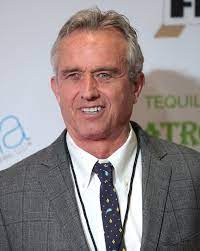
He is showing himself a serious candidate with his measured stance on stopping the Ukraine war
It is clear that despite the relentless propaganda, the U.S. proxy war against Russia in Ukraine is lost, with the failed Ukrainian “spring offensive” meeting its demise due to overwhelming Russian firepower and the futility of Ukraine’s U.S.-ordered suicide charges against impregnable Russian defenses. Biden’s debacle in Ukraine may be added to his humiliating departure from Afghanistan.
byEDITORSeptember 3, 2023
By Ricard C. Cook / Original to ScheerPost
The U.S. today is facing catastrophe with the leading 2024 election candidates of both the Democratic and Republican parties being fatally compromised at a moment when our foreign policy is on the verge of collapse.
I believe that we can assess that President Joe Biden has less than a 25 percent chance of remaining in office until the election only 14 months from now. According to an Associated Press-NORC Center for Public Affairs poll, 77 percent of respondents, including 69 percent of Democrats, say Biden is too old to run for office again. Further, I would make a 50 percent assessment that Biden will face an impeachment inquiry for his alleged financial crimes within three to six months. These developments could force Biden to step down. But Vice President Kamala Harris appears to have a zero percent chance either of guiding the country to safety abroad or becoming the Democratic Party’s 2024 nominee.
We can further assess that ex-President Donald Trump has less than a 10 percent chance of avoiding prison time. But Trump has no credible Republican opponent ready to step in, with Mike Pence having no support, Ron DeSantis slipping, and Vivek Ramaswamy only a curiosity. The other candidates appear to be running for a VP or cabinet position or just publicity.
It is clear that despite the relentless propaganda, the U.S. proxy war against Russia in Ukraine is lost, with the failed Ukrainian “spring offensive” meeting its demise due to overwhelming Russian firepower and the futility of Ukraine’s U.S.-ordered suicide charges against impregnable Russian defenses. Biden’s debacle in Ukraine may be added to his humiliating departure from Afghanistan.
The loss of Ukraine will explode the myth of U.S. full-spectrum dominance and discredit NATO. China can only be emboldened. The Russia-China showcase institution of BRICS just doubled in size, with Saudi Arabia, Iran, and several other countries becoming full members. The loss of the U.S. dollar as the world’s reserve currency is on the way to happening, which will cause the mechanism to disappear by which the U.S. has maintained global military hegemony since World War II. Europe is on the verge of rebellion against U.S. overlordship due to the deindustrialization resulting from the Ukraine war and U.S. culpability in cutting off Europe from Russian energy sources.
…………………………………………………………….. Meanwhile, the Biden administration and Congress continue to pour billions of dollars into Ukraine as they pressure that unfortunate country into losing hundreds of thousands of lives in a war where the main beneficiaries are the holders of stocks and bonds in the U.S. military-industrial complex. Also profiting are members of Congress, starting at the top, who themselves own stock or receive campaign contributions from rich donors or directly from the weapons suppliers.
…………………………………………………………….Who then will be our next president, the individual we will be asking to face this mess?
………………………………………………………………………..The most credible candidate remaining on either side may be Robert F. Kennedy, Jr., whose standing is rising daily. Even though only about 20 percent of Democratic voters favor him over Biden, his numbers will rise dramatically as Biden fades into oblivion
………………………………He is showing himself a serious candidate with his measured stance on stopping the Ukraine war
…………………………………………..I believe we can make an assessment of a 40-50 percent chance at present of Robert F. Kennedy, Jr., winning the Democratic Party nomination. If he does, I would assess his chances of winning the presidency at 90 percent.
USA Nuclear Regulatory Commission ready to remove “barriers” so as to speed up licensing of new untested nuclear reactors.
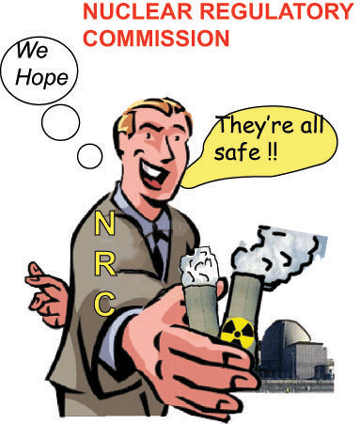
U.S. regulators are ready to review and license the next generation of
nuclear reactors while staying committed to safety, the Nuclear Regulatory
Commission (NRC) says. The NRC is under pressure to show it can move fast
on a new generation of nuclear technology, including small modular reactors
(SMRs) and other previously untested designs, as many in the industry call
for deep reforms at the regulator.
The regulator must be willing to remove
operational and organizational barriers that are in the way of rapid and
efficient licensing and understand that time is of the essence to reduce
emissions and solve energy security issues, critics say.
Reuters 1st Sept 2023
https://www.reuters.com/business/energy/us-regulator-ready-next-generation-nuclear-nrc-2023-09-01/
Top prosecutors back compensation for those sickened by US nuclear weapons testing.
Niagara Gazette, SUSAN MONTOYA BRYAN | Associated Press 4 Sept 23
ALBUQUERQUE, N.M. — New Mexico Attorney General Raúl Torrez and 13 other top prosecutors from around the U.S. are throwing their support behind efforts to compensate people sickened by exposure to radiation during nuclear weapons testing.
The Democratic officials sent a letter Wednesday to congressional leaders, saying “it’s time for the federal government to give back to those who sacrificed so much.”
The letter refers to the estimated half a million people who lived within a 150-mile (240-kilometer) radius of the Trinity Test site in southern New Mexico, where the world’s first atomic bomb was detonated in 1945. It also pointed to thousands of people in Idaho, Colorado, Nevada, Utah, Arizona, Montana and Guam who currently are not eligible under the existing compensation program.
The U.S. Senate voted recently to expand the Radiation Exposure Compensation Act as part of a massive defense spending bill. Supporters are hopeful the U.S. House will include the provisions in its version of the bill, and President Joe Biden has indicated his support.
“We finally have an opportunity to right this historic wrong,” Torrez said in a statement………………………………………………………..
The attorneys general who signed onto Torrez’s letter are from Arizona, Colorado, Connecticut, Delaware, Maryland, Minnesota, Nevada, New York, Pennsylvania, Oregon, Rhode Island, Vermont and the District of Columbia.
The attorneys mentioned the work of a team of researchers who mapped radioactive fallout from nuclear weapons tests in the U.S., starting with the Trinity Test in 1945. The model shows the explosions carried out in New Mexico and Nevada between 1945 and 1962 led to widespread radioactive contamination, with Trinity making a significant contribution to exposure in New Mexico. Fallout reached 46 states as well as parts of Canada and Mexico.
“Without any warning or notification, this one test rained radioactive material across the homes, water, and food of thousands of New Mexicans,” the letter states. “Those communities experienced the same symptoms of heart disease, leukemia, and other cancers as the downwinders in Nevada.”………………………………………….. more https://www.niagara-gazette.com/news/top-prosecutors-back-compensation-for-those-sickened-by-us-nuclear-weapons-testing/article_1458a962-4903-11ee-94c0-7b044542b2ae.html
Tax-payer funding to develop small nuclear reactors? Easy, get Defense and the Air Force to buy them.

The Department of the Air Force, in partnership with the Defense Logistics
Agency Energy, reached a critical milestone Aug. 31, in piloting advanced
nuclear energy technology with the issuance of the Notice of Intent to
Award a contract to Oklo Inc. Oklo Inc. will site, design, construct, own
and operate a micro-reactor facility licensed by the Nuclear Regulatory
Commission at Eielson Air Force Base, Alaska. The notice initiates the
acquisition process to potentially award a 30-year, firm-fixed-price
contract to the vendor after successfully obtaining an NRC license.
US Air Force 31st Aug 2023
The Golden Rule, a sailboat praised by anti-nuclear weapons activists, visits Milwaukee and Racine

WUWM 89.7 FM | By Chuck Quirmbach
A restored sailboat that peace groups say played a big role in ending atmospheric nuclear bomb testing will be in Milwaukee and Racine for the next few days.
The Golden Rule will be outside Discovery World on Milwaukee’s lakefront Sept. 1, then docked nearby in Lakeshore State Park Sept. 2-4, before sailing to Racine and being docked there Sept. 5.
The Golden Rule, a 34-foot wooden ketch, set sail in 1958 to interfere with nuclear testing in the Marshall Islands in the central Pacific Ocean.
The four Quaker peace activists on the boat stopped for supplies in Honolulu, where the crew was arrested and prevented from continuing. Peace activists say the arrests sparked worldwide awareness of the dangers of nuclear radiation.
Other efforts continued, and according to the National Archives, culminated in the signing of the Limited Test Ban Treaty by the United States, Great Britain, and the Soviet Union. After U.S. Senate approval, the treaty that went into effect on October 10, 1963, banned nuclear weapons testing in the atmosphere, in outer space, and under water.
The sailboat, now owned by Veterans for Peace, is nearing the end of a 15-month journey around the central, southern and eastern United States to raise awareness about what the peace movement feels is the growing danger of nuclear war and to build support for the abolition of nuclear weapons.
Many activists are also worried about ongoing U.S. military aid for Ukraine, in its fight against Russia……………………………………………………………………………………..more https://www.wuwm.com/2023-09-01/the-golden-rule-a-sailboat-praised-by-anti-nuclear-weapons-activists-visits-milwaukee-and-racine
Georgia Power customers could see monthly bills rise $9 to pay for the Vogtle nuclear plant
Georgia Power customers could see monthly bills rise $9 to pay for the
Vogtle nuclear plant. Residential customers of Georgia’s largest electrical
utility could see their bills rise $9 more a month to pay for a new nuclear
power plant under a deal announced Wednesday. Georgia Power Co. said
customers would pay $7.56 billion more for Plant Vogtle construction costs
under the agreement with utility regulatory staff.
Daily Mail 31st Aug 2023
New small nuclear reactor company merges with a dubious ‘special purpose acquisition’ company, -reactors for use by USA Air Force in Alaska
Nuclear power’s future is being disrupted. Investor interest in small
modular reactors is growing as demand for electricity is set to soar. Last
month Sam Altman, the (in)famous founder of OpenAI, posted a picture on
social media of an elegant A-frame wooden building in a verdant tropical
setting. It looks like a billionaire’s weekend pad. However, what the
image actually depicts is the putative design of a small modular (nuclear)
reactor invented by Oklo, a company that Altman has chaired since 2015.
And it was posted because Oklo has just merged with a special purpose
acquisition company created by Altman and Michael Klein, the Wall Street
dealmaker, valuing it at $850mn. That will make some observers wince. The
acronym “Spac” became toxic two years ago because the concept was badly
abused during the last credit bubble. Adding “nuclear” into the mix
risks making it doubly radioactive, in the public mind, given past
accidents at the Chernobyl and Fukushima plants (and current Russian
threats to Ukraine’s Zaporizhzhia plant).
Nevertheless, investors and
policymakers should pay attention. On Thursday the United States Air Force
announced plans to use Oklo’s reactor for the Eielson Air Force Base in
Alaska — seemingly the first potential use of commercial SMRs by the
Federal Government on American soil. …………………..
FT 31st Aug 2023
https://www.ft.com/content/0faade4f-d239-47ed-a041-f7a503fef500
1 This Month

of the week – Shut Down Drone Warfare!


Tell the Ukrainian Government to Drop Prosecution of Peace Activist Yurii Sheliazhenko

Petition to revoke the licensing of the Near Surface Nuclear Disposal Facility (NSDF) at Chalk River. https://www.ourcommons.ca/petitions/en/Petition/Details?Petition=e-7247
To see nuclear-related stories in greater depth and intensity – go to https://nuclearinformation.wordpress.com
-
Archives
- April 2026 (91)
- March 2026 (251)
- February 2026 (268)
- January 2026 (308)
- December 2025 (358)
- November 2025 (359)
- October 2025 (376)
- September 2025 (257)
- August 2025 (319)
- July 2025 (230)
- June 2025 (348)
- May 2025 (261)
-
Categories
- 1
- 1 NUCLEAR ISSUES
- business and costs
- climate change
- culture and arts
- ENERGY
- environment
- health
- history
- indigenous issues
- Legal
- marketing of nuclear
- media
- opposition to nuclear
- PERSONAL STORIES
- politics
- politics international
- Religion and ethics
- safety
- secrets,lies and civil liberties
- spinbuster
- technology
- Uranium
- wastes
- weapons and war
- Women
- 2 WORLD
- ACTION
- AFRICA
- Atrocities
- AUSTRALIA
- Christina's notes
- Christina's themes
- culture and arts
- Events
- Fuk 2022
- Fuk 2023
- Fukushima 2017
- Fukushima 2018
- fukushima 2019
- Fukushima 2020
- Fukushima 2021
- general
- global warming
- Humour (God we need it)
- Nuclear
- RARE EARTHS
- Reference
- resources – print
- Resources -audiovicual
- Weekly Newsletter
- World
- World Nuclear
- YouTube
-
RSS
Entries RSS
Comments RSS
 nuclear-news