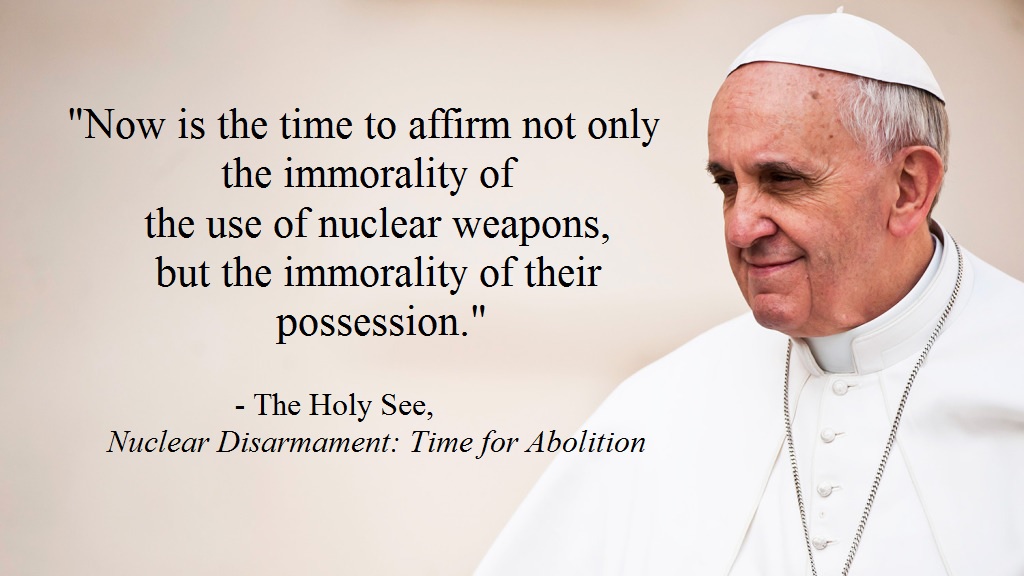
Putin warns the US of Cold War-style missile crisis
Reuters By Guy Faulconbridge and Dmitry Antonov, July 28, 2024
- Summary
- Russia warns United States over missiles in Germany
- Putin says Russia will deploy if plans are implemented
- Putin: United States risks Cold War-style crisis
- U.S. plans to deploy longer range missiles in Germany
MOSCOW, July 28 (Reuters) – Russian President Vladimir Putin on Sunday warned the United States that if Washington deployed long-range missiles in Germany then Russia would station similar missiles in striking distance of the West.
The United States said on July 10 that it would start deploying long-range missiles, opens new tab in Germany from 2026 in preparation for a longer-term deployment that will include SM-6, Tomahawk cruise missiles and developmental hypersonic weapons.
n a speech to sailors from Russia, China, Algeria and India to mark Russian navy day in the former imperial capital of St Petersburg, Putin warned the United States that it risked triggering a Cold War-style missile crisis with the move.
“The flight time to targets on our territory of such missiles, which in the future may be equipped with nuclear warheads, will be about 10 minutes,” Putin said.
“We will take mirror measures to deploy, taking into account the actions of the United States, its satellites in Europe and in other regions of the world.”………………………………………. Https://www.reuters.com/world/putin-warns-united-states-cold-war-style-missile-crisis-2024-07-28/
A $36.8 billion lesson from Georgia- “The most expensive electricity in the world”

In May, the plaintiffs along with four other prominent Georgia consumer groups released a report, Plant Vogtle: The True Cost of Nuclear Power in the United States. The analysis detailed how the U.S. Department of Energy, Georgia Power, and the Georgia Public Service Commission (PSC), conspired to force Georgians into purchasing the most expensive electricity in the world, costing ratepayers $10,784 per kilowatt, compared to $900 to $1,500 per kilowatt (KW) for wind or solar. Recent Georgia Power electricity bills have shown the bill increase to be in the 30-40% range.
Again and again, the Georgia Public Service Commission (PSC) was warned about the astronomical cost of the Vogtle reactors and the financial toll it will bear on Georgians for decades to come.
Ratepayers beware. New nuclear power plants will gouge customers
From Georgia Conservation Voters Education Fund and Georgia WAND
Georgia consumer groups have filed a major lawsuit against the State of Georgia [AF1] in federal court, alleging Georgia lawmakers violated the state’s constitution by unilaterally postponing Georgia Public Service Commission (PSC) elections. According to the lawsuit, the PSC election’s unlawful postponement allowed the sitting commission members to rubberstamp the largest utility rate increases in Georgia history and grant utility companies the authority to charge Georgians for cost-overruns and mishaps. The groups argue that the charges may not have been passed onto consumers if elections were held as regularly scheduled.
House Bill 1312, which Georgia legislators passed in April, delays the election of new PSC members until at least 2025, giving multiple sitting PSC members an extra two years in office. Georgia’s constitution requires that PSC terms shall be six years, and therefore cannot be lengthened without a constitutional amendment. All PSC members have had their office terms extended to eight years, and one nine years as a result.
…………………………………….Brionté McCorkle, plaintiff and executive director of Georgia Conservation Voters Education Fund, said: “Georgians are fighting every month to stay ahead of rising costs for food, housing, and now energy. These aren’t optional costs. They’re things we need to survive. Public Service Commissioners like Tricia Pridemore, Fitz Johnson, and Tim Echols have allowed Georgia Power to take money out of the pockets of hard-working Georgians – and it has to end.”
In May, the plaintiffs along with four other prominent Georgia consumer groups released a report, Plant Vogtle: The True Cost of Nuclear Power in the United States. The analysis detailed how the U.S. Department of Energy, Georgia Power, and the Georgia Public Service Commission (PSC), conspired to force Georgians into purchasing the most expensive electricity in the world, costing ratepayers $10,784 per kilowatt, compared to $900 to $1,500 per kilowatt (KW) for wind or solar. Recent Georgia Power electricity bills have shown the bill increase to be in the 30-40% range.
Additional Key findings in the May Vogtle report included:
- Plant Vogtle allowed Georgia Power to expand its rate base, the assets on which they earn a guaranteed rate of return, by over $11 billion. Yet their share of Vogtle is 1,020 megawatts, making it the most expensive electricity in the world at $10,784/KW. Normal (wind, solar, natural gas) generation prices range from $900 to $1500/KW.
- Vogtle Units 3 & 4 took 15 years to build and cost $36.8 billion, well over twice the projected timeline and cost.
- Vogtle independent construction monitors documented that Georgia Power provided materially false cost estimates for at least ten years, falsehoods used to justify expanding Plant Vogtle. Similar false cost estimates sent South Carolina utility executives to jail for that state’s failed nuclear plant, which started construction at the same time as Plant Vogtle.
Patty Durand, consumer advocate, founder of Cool Planet Solutions and a recent candidate for the Georgia PSC, said:
“Again and again, the Georgia Public Service Commission (PSC) was warned about the astronomical cost of the Vogtle reactors and the financial toll it will bear on Georgians for decades to come. Commissioners repeatedly declined to protect ratepayers from cost overruns and ignored PSC staff recommendations to cancel the project. People went to prison for actions like this in South Carolina, yet we have had no accountability for the same, and worse, behavior here. Instead, the state legislature decided to shield current commissioners from facing voters by delaying PSC elections indefinitely. This is clearly unconstitutional. This is un-American.” https://beyondnuclearinternational.org/2024/07/28/a-36-8-billion-lesson-from-georgia/
War Criminal Benjamin Netanyahu Addresses the US Congress

Lies proliferate and Congress cheers genocide in Gaza
The Unz Review, Philip Giraldi • July 26, 2024
To my surprise, last Thursday morning there was relatively little coverage of the address to the US Congress delivered by Israeli Prime Minister Benjamin Netanyahu last Wednesday afternoon apart from a critical opinion piece that appeared in the New York Times regarding Israel’s war on the Palestinians. The article, by Megan K. Stack, asserted:
“History will cast Mr. Netanyahu’s visit in deservedly ugly tones. He’s not a guest we should aspire to host, but he is a visitor we deserve. Gaza is our war, too, thanks to the indispensable military aid and political cover the US government has lavished on Israel as the death toll climbs… What exploded as a war of retribution against Hamas has looked increasingly like a broader campaign of annihilation — the slaughter of trapped civilians; the excruciating deaths of thousands of children; the destruction of hospitals, schools and much of the civilian infrastructure.”
Polls have shown for months that more Americans disapprove than approve of the Israeli onslaught in Gaza, but Congress and the White House are not interested in the views of the public when they are on the receiving end of hundreds of millions of dollars in “donations” from Jewish billionaires.
Much of the coverage of the Netanyahu appearance in the mainstream media was toothless and even adulatory. It generally reflected what was hailed as Bibi’s “fiery speech” that “did not give an inch” which vowed to continue fighting until “total victory” is achieved. There was some coverage of how Netanyahu went so far as to portray the many thousands of demonstrators, some of whom were pepper-sprayed and arrested, who surrounded the Capitol as “useful idiots paid for by Iran.” The jibe, together with other calls to go to war with Iran, produced cheers and other paroxysms of joy among the leaping and waving Congressmen. Bibi might have been particularly personally aggrieved by Pro-Palestinian protesters successfully having released insects into the Watergate Hotel where he was staying. Online video showed maggots running amok on the dinner table.
The Netanyahu speech was light on serious analysis, but heavy on emotional appeals, repeatedly invoking the assertion that he and the United States, in its “ironclad” support of Israel, are fighting to save “civilization” and that “our enemies are your enemies” and “our victory will be your victory.” Predictably, the Congressmen and guests who filled the chamber bobbed up and down applauding wildly after nearly every sentence, producing 53 standing ovations, far exceeding Netanyahu’s record 29 obtained the last time he addressed Congress in 2015.
Notably some Congressmen with active consciences skipped the event, including Nancy Pelosi, who, after the fact, denounced the address in a post on X:
“Benjamin Netanyahu’s presentation in the House Chamber today was by far the worst presentation of any foreign dignitary invited and honored with the privilege of addressing the Congress of the United States. Many of us who love Israel spent time today listening to Israeli citizens whose families have suffered in the wake of the October 7th Hamas terror attack and kidnappings. These families are asking for a ceasefire deal that will bring the hostages home – and we hope the Prime Minister would spend his time achieving that goal.”
nore https://www.sott.net/article/493515-War-criminal-Benjamin-Netanyahu-addresses-the-US-Congress
A substantial number of progressive and moderate Democrats, possibly as many as 136, also did not attend, suggesting that Netanyahu is not well regarded by many in the Democratic Party. Netanyahu spoke for an hour and the over-the-top reception he received from congress suggested that:
the government’s true loyalty is not to the voters who elected them but rather to a foreign leader who is a war-criminal, implying to some that Bibi is actually de facto the American president and Israel and the US are in practical terms one country, with Israel as the dominant partner in the arrangement.……………………………………………………………………
My particular gripe was over the fact that Netanyahu’s speech was full of uncontested lies and grossly exaggerated assumptions designed to get his audience roaring. The falsehoods were certainly recognizable as such by much of the audience, but Netanyahu was not challenged by anyone save only Representative Rashida Tlaib, a Democrat of Michigan and the sole Palestinian-American member of Congress, who attended the speech while holding up a sign while many of her colleagues applauded Netanyahu’s comments………………………………………………………………….more https://www.sott.net/article/493515-War-criminal-Benjamin-Netanyahu-addresses-the-US-Congress
In Congressional Address, Netanyahu Slams American Protesters and Receives Standing Ovation
The Israeli leader asked for more US military aid and called for a new anti-Iran alliance in the Middle East
anti-war.com by Dave DeCamp July 24, 2024
Israeli Prime Minister Benjamin Netanyahu on Wednesday delivered an address to a joint session of Congress on Wednesday and spent a good portion of his speech attacking Americans who have been protesting Israel’s genocidal campaign in Gaza.
Netanyahu accused the pro-Palestine protesters, which include many Jewish Americans, of being pro-Hamas and “standing with evil” and said they should be “ashamed of themselves.” The majority of the lawmakers in the chamber responded with a standing ovation.
He also repeated unsubstantiated claims that Iran was funding the protests in the US. “They want to disrupt America,” Netanyahu said, referring to Iran. “For all we know, Iran is funding the anti-Israel protests that are going on right now outside this building … well, I have a message for these protesters. When the tyrants of Tehran, who hang gays from cranes and murder women for not covering their hair, are praising, promoting, and funding you, you have officially become Iran’s useful idiots.”…………………………
A small number of Democratic lawmakers did not stand up to applaud Netanyahu during much of his speech, and about half of the Democrats in the House and Senate skipped the address. Rep. Rashida Tlaib (D-MI), the only Palestinian American in Congress, attended and was spotted holding a sign that said “war criminal.”
Former House Speaker Nancy Pelosi (D-CA) didn’t attend and slammed Netanyahu after the address, calling his speech “the worst presentation of any foreign dignitary invited and honored with the privilege of addressing the Congress of the United States.”………………….
Overall, however, Netanyahu received strong support, and Congress gave him a big public relations victory by frequently standing up and applauding him. The address and its reception also demonstrated the strong US support for Israel’s slaughter of Palestinians in Gaza.
In the address, Netanyahu asked for the US to provide even more military aid than it has and called for a new anti-Iran alliance in the Middle East. “I have a name for this new alliance. I think we should call it the Abraham Alliance,” he said.
The Israeli leader also said Israel must maintain indefinite “security control” over Gaza, meaning a long-term military occupation. He thanked the US and Congress for the strong support and thanked President Biden for being a “proud Irish American Zionist.”…………..more https://news.antiwar.com/2024/07/24/netanyahu-slams-american-protesters-in-congressional-address-receives-standing-ovation/
“Nuclear disarmament is a right to life issue” – Catholic Archbishop John C Wester
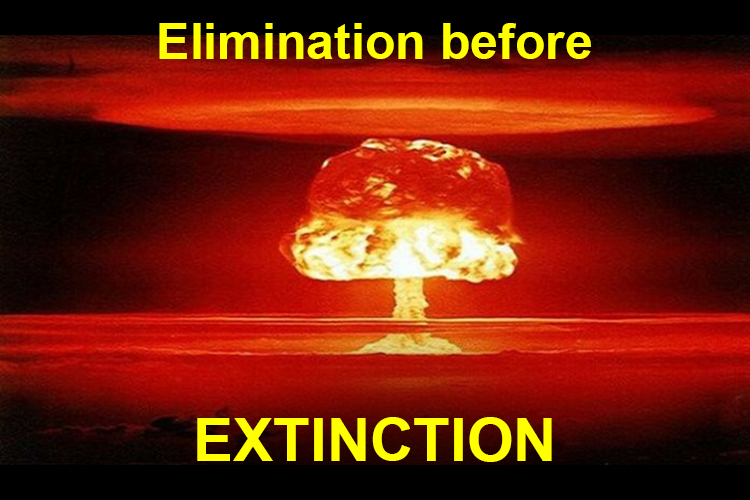
Nuclear weapons were invented here in my Archdiocese. Therefore, I feel a special responsibility to address humanity’s most urgent threat.
“Nuclear disarmament is a right to life issue. No other issue can cause the immediate collapse of civilization. In January 2022 I wrote a pastoral letter in which I traced the Vatican’s evolution from its uneasy conditional acceptance of so-called deterrence to Pope Francis’ declaration that the very possession of nuclear weapons is immoral.
“Therefore, what does this say about expanded plutonium pit production at the Los Alamos Lab? And what does it say about the obscene amounts of money that are being thrown at pit production, often excused as job creation?
“What does this say about the fact that the [NNSA] is pursuing expanded pit production without providing the public the opportunity to review and comment as required by the National Environmental Policy Act? I specifically call upon NNSA to complete a new LANL Site-Wide Environmental Impact Statement.
“In two weeks, I travel to Japan for the 79th atomic bombing anniversaries. The bishops of Santa Fe, Seattle, Hiroshima and Nagasaki have a simple message for world leaders. You utterly failed to begin serious negotiations as required by the 1970 NonProliferation Treaty. In this era, you must demonstrate concrete steps toward multilateral, verifiable nuclear disarmament by the 80th bombing anniversaries a year from now. http://nuclearactive.org/four-archbishops-urge-g7-leaders-to-undertake-concrete-steps-toward-nuclear-disarmament/
“I have a simple message for NNSA and the nuclear weapons labs. You’re very good at creating them. Now show us how smart you are by demonstrating how to get rid of nuclear weapons. Stop this new arms race that threatens all of civilization. Let’s preserve humanity’s potential to manifest God’s divine love toward all beings.
U.S. media downplays and ignores ICJ ruling declaring Israeli occupation illegal
The New York Times and the rest of the U.S. mainstream media downplayed, covered up, and even ignored the historic ICJ opinion declaring the Israeli occupation illegal.
BY JAMES NORTH , https://mondoweiss.net/2024/07/u-s-media-downplays-and-ignores-icj-ruling-declaring-israeli-occupation-illegal/
The International Court of Justice’s landmark opinion that Israel’s “settlements” in the occupied Palestine West Bank violate international law should have been on the front page of the New York Times. Prominently.
But no. Instead, the Times, along with the rest of the U.S. mainstream media, downplayed, covered up, and even ignored the historic July 19 decision.
Let’s start with the Times. The print edition the day after ran the story at the bottom of page 5. Two days later, the report has already disappeared from the paper’s online home page.
This site has long and regularly explained how the New York Times tried to finesse its reporting about Israel’s illegal settlements. Here’s what we said last year: the paper’s tactic has been to “insinuate that there are ‘two sides’ about whether Israel was legally allowed to move hundreds of thousands of Jewish-only ‘settlers’ into the occupied territory.” The paper’s favorite word was “disputed;” some say yes, some say no, you decide.
No longer. The Times can certainly report that Israel disagrees with the Court’s decision and will not respect it. But “disputed” is over.
Here’s another suggestion. In a triumph of Orwellian language, Israel and its supporters have successfully labeled those 700,000 people as “settlers.” We have long argued that the word “colonists” is more accurate. But the court decision suggests a third possibility: “illegal settlers.” The phrase is not an insult, or an example of bias. After July 19, 2024, it’s just a fact.
Other news outlets
By contrast, the Washington Post was the only outlet that did an acceptable job on the news. Here was its headline: ‘Israel should evacuate settlements, pay reparations, ICJ [International Court of Justice] says.’
National Public Radio is notoriously biased in favor of Israel, and its coverage did not disappoint. Here’s the headline to NPR’s 3-minute on-air report: “Drone attack hits Tel Aviv; ICJ rules West Bank Israeli settlements are unlawful.” That drone attack, apparently carried out by Ansar Allah from Yemen, was certainly news — but in what universe is it more important than the World Court’s finding that Israel has been violating international law for nearly five decades, and that the 700,000 Jewish-only “settlers” are living in Palestine illegally, and should evacuate the territory? (NPR did produce a slightly longer report, but it only appeared on its online website.)
What about CNN? Not much there either — so far, a single online report that apparently did not appear on the air. MSNBC? Its site has a 1:37 report, with no indication of how often it was broadcast.
CBS News was the worst. The network, which once employed genuine journalists like Walter Cronkite and Dan Rather, has so far not aired a single report on the court’s decision.
Netanyahu’s Speech Was As American As It Gets

CAITLIN JOHNSTONE, JUL 25, 2024
Benjamin Netanyahu’s speech before Congress was everything you’d expect: packed full of lies and propaganda spin, yet simultaneously very illuminating and revealing.
The Israeli prime minister received no fewer than 58 standing ovations while speaking before both houses of Congress and spewing the most despicable lies you could possibly imagine in his conspicuously American accent. Depending on how politically aware you are, this spectacle could be perceived as either deeply un-American, or as American as it gets.
Netanyahu repeated evidence-free atrocity propaganda about what happened on October 7, falsely asserting that Hamas “burned babies alive” and killed two babies in an attic. He falsely claimed that Hamas “butchered 1,200 people”, pretending it’s not a well-established fact that many of the 1,139 Israeli deaths that day came from both indiscriminate IDF fire and deliberate targeting in implementation of the Hannibal Directive.
He made the completely baseless claim that Iran may be paying the anti-genocide demonstrators outside the Capitol Building during his speech, saying, “When the Tyrants of Tehran, who hang gays from cranes and murder women for not covering their hair, are praising, promoting and funding you, you have officially become Iran’s useful idiots.”
Netanyahu spent minutes ranting and raving about protests in America against his government’s atrocities in Gaza, during which he received a standing ovation from Congress that went on for nearly a minute.
He accused the International Criminal Court of “antisemitism” and “blood libel” for saying that Israel deliberately targets civilians, as though this hasn’t been conclusively established by mountains of evidence like the IDF’s Lavender AI system and statements from doctors describing what can only be deliberate sniper executions of children in Gaza.
He repeated Israel’s evidence-free claim that the only reason people are starving in Gaza is because Hamas is “stealing” all of the aid Israel allows in for itself.
Netanyahu went out of his way to frame Israel’s plight as civilized people against uncivilized barbarians, which only works if you harbor a supremely racist worldview. …………………………………………
This deluge of lies and racist invective received dozens and dozens of standing ovations. The same political class that’s spent the last eight years shrieking about the threat of misinformation, disinformation and foreign propaganda just normalized and applauded a foreign genocidal war criminal as he stood before Congress telling lie after lie after lie.
You couldn’t ask for a better example of everything Washington stands for than this. Both houses of Congress rising to feverishly applaud one of history’s worst genocidal monsters dozens of times as he lies over and over again is a much better representation of what the US government is about than anything you’ll see during the presidential race from now until November.
This is everything Israel is, and this is everything the US empire is. They’re showing you who they are. Believe them. https://www.caitlinjohnst.one/p/netanyahus-speech-was-as-american?utm_source=post-email-title&publication_id=82124&post_id=146981262&utm_campaign=email-post-title&isFreemail=true&r=1ise1&triedRedirect=true&utm_medium=email
Capitol Hill: Netanyahu’s Second Home
The appearance again in Congress of the Israeli prime minister makes it seem as if he is the American president and Israel and the U.S. are one country, writes Corinna Barnard,
By Corinna G. Barnard, Consortium News, 25 July 24
A man whose arrest warrant is being sought by an international court prosecutor for war crimes is making his triumphal return to Washington.
When Benjamin Netanyahu addresses a joint session of Congress on Wednesday for the fourth time, some representatives and senators will boycott the event in protest against the genocidal devastation in Gaza that the Israeli prime minister has, for months, been directing.
But the chamber where he delivers his speech is sure to be filled with ardent admiration bestowing on him the legitimacy he is rapidly losing at home.
Given the grisly crimes against humanity that Netanyahu’s armed forces are committing, and the International Court of Justice’s ruling last week about the illegality of Israel’s occupation of Palestinian territory, the Israeli prime minister’s celebrated appearance on Capitol Hill will evoke images worthy of Federico Fellini’s surrealist Satyricon.
Imagine the rousing applause, the elbow rubbing, the pomp and protocol while the devastation in Gaza grows direr by the day and hour.
Netanyahu arrives on the tailwinds of a historic vote in the Knesset, the Israeli Parliament, on July 17, in which lawmakers voted against Palestinian statehood and in the process, put the kibosh on the long-standing talk by U.S. policymakers about a two-state solution, while rebuffing White House plans for a ceasefire.
The Knesset vote represents a defiant rejection of U.S. influence over Israel’s affairs. But in the U.S. House of Representatives, it’s just the opposite; whatever Israel wants, for now and the foreseeable future, it gets.
How the American public, broadly speaking, feels about this, is hard to say. The numbers of Americans who disapprove of Israel and its conduct move around in polling data like a great unknown beneath the surface of the news.
Sometimes a majority of voters back Israel, sometimes a majority disapprove. But whatever the U.S. public thinks, it doesn’t seem to matter, as far as the election season goes.
Neither of the leading candidates offers anything to stop Israel’s barbaric slaughter. Vice President Kamala Harris, now contending for the Democratic nomination, will follow in the footsteps of President Joe Biden, “aka Genocide Joe,” who was the leading recipient of cumulative pro-Israel funding over the years and continues to arm Israel’s genocide.
The Biden-Harris administration has worked to expand the Trump administration’s so-called Abraham Accords, which were helping Israel sideline the Palestinian cause by removing it as a thorn from Israel’s relations with regional neighbors. Biden himself credited Hamas’ fear of normalized Israel-Saudi relations with motivating the Oct. 7 attacks.
Former U.S. President Donald Trump, for the Republicans, meanwhile, is awash in millions from Zionist mega donor Miriam Adelson, who is hoping to see Trump push for the Israeli annexation of the West Bank.
While in office, Trump, 78, — who has advised Biden to let Israel “finish the job” in Gaza — escalated Palestinian-Israeli tensions. In addition to helping Israel normalize relations with the U.A.E, Bahrain and Sudan, the Trump White House moved the U.S. embassy in Israel from Tel Aviv to the flashpoint of Jerusalem, reportedly to please Sheldon Adelson, before his death in 2021.
Leading independent candidate Robert F. Kennedy Jr. opposes a ceasefire in Gaza, where people, Al Jazeera reports, are now drowning in sewage due to Israel’s wholesale destruction of the territory.
With support for the Israel genocide in Gaza ironclad across all three of those rivals, three third party candidates are staunchly anti-genocide, Green Party presidential candidate Jill Stein, independent candidate Cornel West and Libertarian candidate Chase Oliver……………………………………………………………………….more https://consortiumnews.com/2024/07/22/capitol-hill-netanyahus-second-home/
Congress to world: ‘War criminals welcome here’

“Throughout US history many world leaders of varying political backgrounds and persuasions have been invited to address Congress. But Wednesday will be unique. It will be the first time a war criminal has been given that honor.”
Walt Zlotow, https://heartlandprogressive.blogspot.com/ 25 July 24
July 24, 2024 will go into history as a Day of Infamy for the US Congress.
A bipartisan claque of congresspersons will welcome Israeli war criminal Benjamin Netanyahu to address Congress and a horrified world.
Netanyahu told his government he expects the International Criminal Court may issue warrants for his arrest for the war crime of starvation even before he sullies the sacred US chambers of government.
Netanyahu’s government stands credibly accursed worldwide of breaching the UN Genocide Convention.
Netanyahu has defied for two months the order of the International Court of Justice to end his military campaign of genocidal ethnic cleansing of Gaza.
Netanyahu should be under threat of arrest for war crimes when he steps onto the tarmac in D.C. Instead he’ll be welcomed with open arms…and open pocket books, by the morally compromised congressional delegation disgracing America with Netanyahu’s presence.
But one Senator is pushing back to war criminal Netanyahu’s congressional appearance. Sen. Bernie Sanders (I-VT) told Congress yesterday:
“Throughout US history many world leaders of varying political backgrounds and persuasions have been invited to address Congress. But Wednesday will be unique. It will be the first time a war criminal has been given that honor.”
Senator Sanders will not attend. Neither will Vice President Harris. Hopefully many more congresspersons will follow their lead and stay away. A better expression of congressional revulsion would be if all 535 Senators and Representatives showed up and turned their backs on Netanyahu when he approaches the podium.
Even better? If the ICC warrants against Netanyahu are issued before he speaks…it sure would be cool if they would collectively make a Citizens Arrest for war crimes.
Elon Musk attends Netanyahu’s congressional address as his guest

A day after activating Starlink internet in Gaza, Tesla CEO appears at Israeli PM’s controversial joint session
Nick Robins-Early, Thu 25 Jul 2024
Elon Musk attended Benjamin Netanyahu’s address to Congress on Wednesday as a guest of the embattled Israeli prime minister.
A day earlier, the tech billionaire announced that his Starlink internet service was now active in a Gaza hospital, with the support of Israel’s government.
Netanyahu’s congressional visit was met with thousands of protesters gathering near Capitol Hill to demonstrate against Israeli abuses during its war in Gaza. Lawmakers were divided over whether he should have been invited to speak.
Musk has a history of courting rightwing leaders in countries that have overlapping business interests with his various enterprises. He previously hosted Javier Millei, Argentina’s president, at his Tesla factory and has been a cheerleader for his policies, while also cozying up to Narendra Modi, India’s prime minister, and Jair Bolsonaro, the former Brazilian president.
Musk previously met with Netanyahu during a visit to Israel last year, as the tech leader sought to quell accusations of antisemitism after personally endorsing a post on his social network X, formerly Twitter, that claimed Jews hate white people. Far-right content on the platform has also increased.
Musk’s visit also appears to have helped pave the way for SpaceX to provide its Starlink satellite internet to Gaza, which he announced on Tuesday was now in service at a hospital. The single location, which was supported by Israel and the United Arab Emirates, also reflects the tight controls that Israel has put on communications technology in the area.
In recent weeks, Musk has also thrown his support behind Donald Trump’s election campaign and played a direct role in advising the former president to select JD Vance, Ohio senator, as his running mate.
Although Musk has continued to post conservative content and attacks against the presumptive Democratic nominee Kamala Harris, he appears to have tempered some of his support for Trump following Joe Biden dropping out of the race. Musk pushed back against a report he was set to donate $45m per month to a pro-Trump political action committee.
Musk’s appearance as a guest of Netanyahu further aligns him with the Republican party line, which has thrown its support behind the Israeli leader as many Democrats condemn his actions. A number of progressive Democratic lawmakers declined to attend Netanyahu’s speech, with New York representative Alexandria Ocasio-Cortez denouncing him as a “war criminal.
Kamala Harris Would Continue Genocide in Gaza
SCHEERPOST, JULY 22, 2024 By Caitlin Johnstone / CaitlinJohnstone.com.au
“…………………………………………………Harris differs from Biden only in voice and appearance, and has been an enthusiastic supporter of Biden’s genocidal atrocities in Gaza over the last nine and a half months.
Harris, assuming she wins the nomination, will campaign on the promise of continuing Biden’s incineration of Gaza, continuing Biden’s “ironclad” support for Israel, continuing Biden’s proxy war in Ukraine, continuing Biden’s escalations against Russia and China, continuing Biden’s expansion of the US war machine, continuing Biden’s facilitation of ecocidal capitalism, and continuing Biden’s dehumanizing policies of worldwide exploitation and imperialist extraction. If she gets into the White House the face of the operation will change, but the operation itself will not.
And the same will be true if Trump gets in. Every few years the US empire has this weird little festival where it pretends the government is changing hands and will now begin operating in a way that is meaningfully different from the way it was operating before. But then exploitation continues, the injustice continues, the ecocide continues, the wars continue, the militarism continues, the imperialism continues, the propaganda indoctrination continues, the authoritarianism and oppression continues.
The behavior of the empire is no more changed by getting a new president than a corporation is changed by getting a new secretary at the front desk of its main office. …………………………………. more https://scheerpost.com/2024/07/22/harris-would-continue-genocide-in-gaza/
High hopes and security fears for next-gen nuclear reactors

Fuel for advanced reactors is raising nuclear proliferation concerns.
The Verge, By Justine Calma, a senior science reporter covering energy and the environment with more than a decade of experience. She is also the host of Hell or High Water: When Disaster Hits Home, a podcast from Vox Media and Audible Originals, Jul 20, 2024
Next-generation nuclear reactors are heating up a debate over whether their fuel could be used to make bombs, jeopardizing efforts to prevent the proliferation of nuclear weapons.
Uranium in the fuel could theoretically be used to develop a nuclear weapon. Older reactors use such low concentrations that they don’t really pose a weapons proliferation threat. But advanced reactors would use higher concentrations, making them a potential target of terrorist groups or other countries wanting to take the fuel to develop their own nuclear weapons, some experts warn.
They argue that the US hasn’t prepared enough to hedge against that worst-case scenario and are calling on Congress and the Department of Energy to assess potential security risks with advanced reactor fuel.
Other experts and industry groups still think it’s unfeasible for such a worst-case scenario to materialize. But the issue is starting to come to a head as nuclear reactors become a more attractive energy source, garnering a rare show of bipartisan support in Congress.
……. Earlier this month, President Joe Biden signed bipartisan legislation into law meant to speed the development of next-generation nuclear reactors in the US by streamlining approval processes.
………….The US Nuclear Regulatory Commission (NRC) certified an advanced small modular reactor design for the first time last year. And we’re likely still years away from seeing commercial plants in action. But if the US ever wants to get there, it’ll also have to build up a supply chain for the fuel those advanced reactors would consume. The Inflation Reduction Act includes $700 million to develop that domestic fuel supply.
Today’s reactors generally run on fuel made with a uranium isotope called U-235. Naturally occurring uranium has quite low concentrations of U-235; it has to be “enriched” — usually up to a 5 percent concentration of U-235 for a traditional reactor. Smaller advanced reactors would run on more energy-dense fuel that’s enriched with between 5 to 20 percent U-235, called HALEU (short for high-assay low-enriched uranium).
That higher concentration is what has some experts worried. “If the weapons usability of HALEU is borne out, then even a single reactor would pose serious security concerns,” says a policy analysis penned by a group of nuclear proliferation experts and engineers published in the journal Science last month (including an author credited with being one of the architects of the first hydrogen bomb).
Fuel with a concentration of at least 20 percent is considered highly enriched uranium, which could potentially be used to develop nuclear weapons. With HALEU designs reaching 19.75 percent U-235, the authors argue, it’s time for the US to think hard about how safe the next generation of nuclear reactors would be from malicious intent.
“We need to make sure that we don’t get in front of ourselves here and make sure that all the security and safety provisions are in place first before we go off and start sending [HALEU] all around the country,” says R. Scott Kemp, associate professor of nuclear science and engineering and director of the MIT Laboratory for Nuclear Security and Policy.
That 20 percent threshold goes back to the 1970s, and bad actors ostensibly have more information and computational tools at their disposal to develop weapons, Kemp and his coauthors write in the paper. It might even be possible to craft a bomb with HALEU well under the 20 percent threshold, the paper contends……………………………………………………………………………………..
Aside from asking Congress for an updated security assessment of HALEU, the paper suggests setting a lower enrichment limit for uranium based on new research or ramping up security measures for HALEU to more closely match those for weapons-usable fuels.
…………………………“Unless there’s a really good reason to switch to fuels that pose greater risks of nuclear proliferation, then it’s irresponsible to pursue those,” says Edwin Lyman, director of nuclear power safety at the Union of Concerned Scientists and another author of the paper. Lyman has also raised concerns about the radioactive waste from nuclear reactors over the years. “There is no good reason.” https://www.theverge.com/24201610/next-generation-nuclear-energy-reactors-security-weapons-proliferation-risk
J.D. Vance unlikely to advance peace advancing to Vice Presidency
Walt Zlotow, West Suburban Peace Coalition, Glen Ellyn IL, 21 July 24
Newbie Senator J.D. Vance will become America’s 50th Vice President next January 20 if current polling holds up.
Most criticism of Vance focuses on the 39 year old’s scant experience of just 18 months in government. His memoir ‘Hillbilly Elegy’ fame, billionaire Sugar Daddy support, and idolatry of Trump, vaulted Vance into the Senate and possibly now the Vice Presidency. Succeeding 78 year old President Trump on Inauguration Day before his second term expires is certainly possible.
But little to nothing has been raised about Vance’ mostly reckless views on foreign affairs that imperil prospects for peace during our current, perilous road to war in the Middle and Far East.
Even Vance’s opposition to our senseless proxy war against Russia destroying Ukraine is in furtherance of a bellicose foreign policy. He wants to divert the endless billions squandered on Ukraine’s lost cause to massively increase armaments to Taiwan and other Far East allies to contain China. Just like weaponizing of Ukraine in their Donbas civil war precipitated the Russian invasion, China is not likely to sit around twiddling their thumbs while America encircles them with weapons.
Vance has joined the unhinged GOP chorus threatening to take out Iran for exercising influence in the Middle East. He said we need to “Punch back hard” to put Iran in its place…subservient to US hegemony in the region. That is nuts.
Back home Vance supports GOP policy of sending in the Marines to wipe out the Mexican drug cartels. “I want to empower the president of the United States, whether that’s a Democrat or Republican, to use the power of the U.S. military to go after these drug cartels.” To paraphrase Forrest Gump, ‘Stupid is …when Vance talks on foreign policy’.
But most disturbing of Vance’s foreign policy views is his full support for Israel’s genocidal ethnic cleansing of Palestinians in Gaza. President Biden’s 24,000 tons of bombs are not enough for Vance’s lust to wipe out the Palestinians there. Like his mentor Trump, Vance wants Israel to “finish the job” while criticizing Biden for “micromanaging” the ghoulish slaughter there.
It is not improbable that a Trump victory will eventually find Vance in the Oval Office before the ’28 Election. Lets’ hope that if so, the memoir of a Vance presidency is not ‘Armageddon Elegy’.
‘Near miss’ incident reported at nuclear waste site near Carlsbad
Federal watchdog reports ongoing safety concerns at WIPP
JULY 19, 2024, Adrian Hedden, Carlsbad Current-Argus
Federal nuclear oversight staff reported several safety problems at the Waste Isolation Pilot Plant in a monthly report, despite a “safety stand down” in April that was intended to pause work while WIPP officials retooled various protocols.
The Defense Nuclear Facilities Safety Board (DNSFB) reported “ongoing safety culture challenges” in its June 7 report on WIPP activities as the facility near Carlsbad disposes of transuranic (TRU) nuclear waste from federal facilities around the country.
The monthly report covered observations and incidents from May, noting a “near miss” incident which saw a waste handler improperly using a forklift instead of a crane to reposition weights in the parking lot waste storage area.
The May 20 event saw the waste handler using two forklifts to reposition a “six-ton” calibration weight, read the report, without proper documentation or analysis or the awareness of a shift supervisor.
The forklift sling broke while rotating the weight, read the report, causing it to fall on its side and send a shackle flying “a significant distance” away from the lift and past a spotter.
In another incident, all routine work was paused May 23 to 28 after a bolter contacted an electrical box near WIPP’s exhaust shaft, read the report, causing a bulkhead to lose function, rendering sump pumps inoperable and creating potential exposure to “hazardous energy.”………………………………………………….. more https://www.currentargus.com/2024/07/near-miss-incident-reported-at-nuclear-waste-site-near-carlsbad/
In New Mexico, a Walk Commemorates the Nuclear Disaster Few Outside the Navajo Nation Remember

the Navajo Birth Cohort Study, which since 2010 has been looking at the relationship between uranium exposures, birth outcomes and child development on the Navajo Nation. Among the findings is that mothers were deficient in key nutrients for babies’ developing nervous systems.
The Church Rock spill released more radioactive material than the partial meltdown at Three Mile Island four months earlier. Last week’s walk highlights the continuing cleanup and the ongoing hazards uranium mining poses to tribal lands.
Inside Climate News, By Noel Lyn Smith, July 20, 2024
RED WATER POND ROAD, New Mexico—As Tony Hood walked along New Mexico Highway 566 last Saturday, he thought about where he was 45 years earlier, when an earthen dam broke at the site of a uranium mill operated by the United Nuclear Corp., releasing 94 million gallons of radioactive water and 1,100 tons of uranium waste across portions of New Mexico, Arizona and the Navajo Nation.
Hood was working inside a nearby underground mine owned by the Kerr-McGee Corp. when the dam broke on July 16, 1979. He didn’t learn about the spill until after returning to the surface.
As he walked in this month’s event commemorating the spill, he pointed to the spot where the dam was located.
“I guess they observed there was some cracks in the earthen dam but they didn’t do nothing about it,” he said. “Finally, the dam collapsed, breached.”
The dam failure at the processing mill north of Church Rock, New Mexico, released radioactive liquid that eventually flowed into the Rio Puerco and through areas on the Navajo Nation, nearby Gallup, New Mexico, and, finally, Arizona. Now known as the Church Rock spill, the accident released the most radioactive material in U.S. history—more than the notorious partial meltdown at the Three Mile Island Nuclear Generating Station four months earlier—yet remains largely unknown to the American public.
The nonprofit Red Water Pond Road Community Association tries to remedy that lack of awareness by organizing the annual walk by the site of the spill, during which current and former area residents, supporters and advocates remember what happened that day. They also talk about the aftermath, including what federal and tribal agencies have done and need to do to clean up the communities affected by the accident.
……………………………………………………………………………………………………….. A report in May 2014 by the U.S. Government Accountability Office found that “Navajo people continue to live with the environmental and health effects from mining operations: more than 500 abandoned mines are located across the reservation, some close to homes and communities, and an unknown number of homes and drinking water sources contain radioactive elements.”
Educational materials distributed by the Red Water Pond Road Community Association mention some health studies that residents participated in. One is the Navajo Birth Cohort Study, which since 2010 has been looking at the relationship between uranium exposures, birth outcomes and child development on the Navajo Nation. Among the findings is that mothers were deficient in key nutrients for babies’ developing nervous systems. The association notes that a comprehensive study still needs to be done about the effects of uranium on Navajo health.
“We sacrificed our lives, our bodies to mine that ore,” Hood said…………………………………………………………………………………………………………………………………. Link: https://insideclimatenews.org/news/20072024/new-mexico-walk-commemorates-navajo-nation-nuclear-disaster/
1 This Month
23-25 October – on Zoom – World BEYOND War’s annual global conferenc


Shut down the radiation-damaged Heysham nuclear reactors now
To see nuclear-related stories in greater depth and intensity – go to https://nuclearinformation.wordpress.com

Say No to NASA’s Reckless Nuclear Reactor on the Moon
Say No to NASA’s Reckless Nuclear Reactor on the Moon

-
Archives
- October 2026 (209)
- September 2026 (339)
- August 2026 (330)
- July 2026 (355)
- June 2026 (287)
- May 2026 (306)
- April 2026 (356)
- March 2026 (251)
- February 2026 (267)
- January 2026 (308)
- December 2025 (358)
- November 2025 (359)
-
Categories
- 1
- 1 NUCLEAR ISSUES
- business and costs
- climate change
- culture and arts
- ENERGY
- environment
- health
- history
- indigenous issues
- Legal
- marketing of nuclear
- media
- opposition to nuclear
- PERSONAL STORIES
- politics
- politics international
- Religion and ethics
- safety
- secrets,lies and civil liberties
- spinbuster
- technology
- Uranium
- wastes
- weapons and war
- Women
- 2 WORLD
- ACTION
- AFRICA
- Atrocities
- AUSTRALIA
- Christina's notes
- Christina's themes
- culture and arts
- Events
- Fuk 2022
- Fuk 2023
- Fukushima 2017
- Fukushima 2018
- fukushima 2019
- Fukushima 2020
- Fukushima 2021
- general
- global warming
- Humour (God we need it)
- Nuclear
- RARE EARTHS
- Reference
- resources – print
- Resources -audiovicual
- Weekly Newsletter
- World
- World Nuclear
- YouTube
-
RSS
Entries RSS
Comments RSS