US‑Saudi nuclear deal invites proliferation risks … unless safeguards are written in
A key question remains over the landmark U.S.-Saudi nuclear deal announced
with much fanfare on July 22, 2026: Will it allow a nation long suspected
of having nuclear weapons ambitions to enrich uranium? U.S. President
Donald Trump has already shifted the sands of the agreement, adding a major
caveat requiring Saudi Arabia to normalize relations with Israel first. He
also posted that there would be “no enrichment.” But it is unclear
whether either condition is included in the signed deal, something that has
nonproliferation experts like me worried.
The Conversation 27th July 2026,
https://theconversation.com/us-saudi-nuclear-deal-invites-proliferation-risks-unless-safeguards-are-written-in-288291
‘Earth’s Greatest Enemy’ Delivers A Penetrating Insight Into The Heart Of Our Dystopia
Caitlin Johnstone, Jul 28, 2026, https://www.caitlinjohnst.one/p/earths-greatest-enemy-delivers-a?utm_source=post-email-title&publication_id=82124&post_id=208773412&utm_campaign=email-post-title&isFreemail=true&r=1ise1&triedRedirect=true&utm_medium=email
There’s a powerful new documentary out called Earth’s Greatest Enemy by Abby Martin about the ecocidal abuses of the US war machine, and it addresses the most pressing existential hurdles we face as a species like nothing I’ve seen before.
The film breaks down how the US military has become the single most environmentally destructive institution on our planet by an extremely massive margin, walking the audience through the many ways the Pentagon and its global metastases have been churning out carbon emissions, pouring toxins into the air and water, wiping out precious ecosystems for gratuitous military bases, and pummeling our sea life with sonar and noise pollution, all while gleefully salivating at the prospect of plundering the resources which lay hidden beneath our planet’s rapidly thawing polar ice caps.
Martin skillfully ties the planet-devouring behavior of the US military to the global systems of capitalism and imperialism it was built to uphold. The viewer is left with a crystal clear picture of the ways ecocide, militarism and capitalism are inseparably intertwined, and an understanding that meaningfully opposing any of these malignancies necessarily entails opposing them all. The liberal fiction that one can be pro-environment while also supporting the US military is forcefully exposed for the absurdity that it is.
It’s a jarring film with extremely dark subject matter, but it also manages to be a work of transcendent beauty and optimism. A deep love of humans and all of earth’s creatures shines through in shot after shot, while slick editing and an inspired soundtrack allow the movie to zip along at a lively and entertaining pace. Martin concludes with a galvanizing call to use our outrage to loosen the empire’s already weakening grip on humanity’s collective consciousness, because our entire world depends on it.
Perhaps the most touching aspect of the documentary is the personal element Martin chose to bring in to her overarching narrative. She discusses how she and her husband (antiwar activist Mike Prysner, who co-directed the film) had their lives forever altered when they had kids and experienced a new level of urgency to help give rise to a brighter future. Their family of four becomes a microcosm of humanity’s struggle to liberate itself from the tyranny of the machine to create a better world for our children, and we see Martin’s love for her son and daughter reflected in a great tenderness for the world as a whole.
Anyway, I’ve never felt inclined to write a film review before so I don’t know if I’ve done a good job of encouraging people to watch this thing, but for my own audience I truly cannot recommend Earth’s Greatest Enemy enough. It’s available streaming on Apple TV, Prime Video, and Watermelon Pictures. Screening tour dates and further information can be found on the Earth’s Greatest Enemy website. Be sure to leave a review on Letterboxed or IMDB if you can.
Leaked document reveals White House nuclear waste plan
By Hannah Northey, Francisco “A.J.” Camacho E & E News,| 07/27/2026
The Trump administration is seeking to move past Yucca Mountain as the nation’s sole repository and store waste in willing states.
The White House is pushing Congress to break a decades-long impasse around the handling of nuclear waste and entice states to get on board, according to a document obtained by POLITICO.
The Trump administration is seeking changes to federal law to allow the Department of Energy to partner with states willing to store waste generated at the nation’s nuclear reactors, according to the document laying out “legislative principles.” It has been circulating on Capitol Hill and among nuclear industry leaders.
When asked about the document, a White House official said Monday that the administration “is always looking for ways to advance our civil nuclear energy sector.”
The legislative blueprint comes as President Donald Trump pushes to quadruple America’s production of nuclear power over the next 25 years, despite there being no long-term solution for the waste piling up at active and decommissioned reactors across the country………………………………………………………………………………………….(Subscribers only) https://www.eenews.net/articles/leaked-document-reveals-white-house-nuclear-waste-plan/
The Guardian view on a US-Saudi nuclear agreement: an offer that further erodes international safeguards
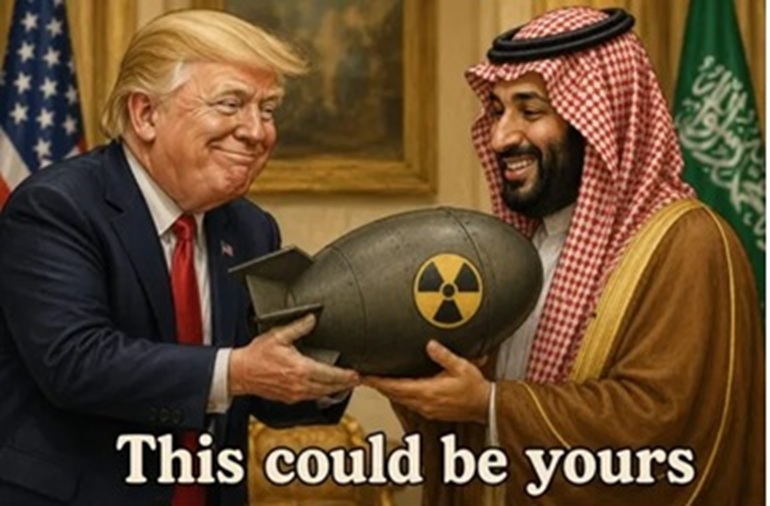
Even if no reactors are built, Donald Trump’s announcement of a double-standards deal with Riyadh has wrought further damage in a new era of proliferation
Even as he threatened to escalate an unlawful war sold in part as preventing Iran from gaining a nuclear weapon, Donald Trump opened the door to proliferation in the region on Wednesday. The US announced that it had signed a deal with Saudi Arabia which would potentially allow the kingdom to enrich uranium in future and to avoid the fullest inspection rights for the international watchdog.
Experts have long warned that a civilian nuclear programme could create a path towards a nuclear-armed Riyadh. Mohammed bin Salman, the Saudi crown prince and de facto leader, has said that if Tehran gets a nuclear weapon, “we will have to get one”. Concerns are magnified by the agreement’s terms. Washington previously argued that the “gold standard” was the United Arab Emirates’ agreement to permanently forgo enrichment and accept full monitoring by the UN’s International Atomic Energy Agency. Weakening it sets a precedent that Russia or China could also cite in nuclear deals in future.
The turmoil that Mr Trump has created in the Middle East is encouraging governments both to hedge their bets and to tool up. The US paused attacks on Iran at the weekend, after 13 successive days of strikes, amid reports that it is concerned about declining interceptor stockpiles, but no exit is in sight. As António Guterres, the UN secretary general, said on Thursday, the region “is teetering on the edge of [the] unimaginable … One crisis feeds another. One escalation triggers the next.”
Gulf states premised their security on American-guaranteed order. But Benjamin Netanyahu’s strike on Hamas leaders in Qatar last year showed that the US shield would not protect them from Israel (itself an undeclared nuclear power). The reckless war on Iran has made US military presence an invitation to damage. Washington may be looking to bind Riyadh closer with a reactor deal, though the billions of dollars involved is probably a bigger incentive for Mr Trump. The crumbling of the region’s internal architecture – most visibly with the UAE’s departure from Opec – adds to the dangers of proliferation. Players are acting less predictably.
The US president threw the Saudi deal into doubt within hours by declaring it contingent on Riyadh recognising Israel. That had long been a precondition for an agreement, but Israel’s war of annihilation in Gaza has shored up the Saudi position that recognition cannot happen without a Palestinian state.
Yet even if no reactors are built, the announcement itself acts as legitimation of and encouragement for the pursuit of nuclear capabilities by others. Negotiations produced an Obama-era nuclear deal with which Tehran complied – until Mr Trump trashed the agreement. His war appears to have produced a more aggressive, risk-taking Iranian regime, as foretold; further military action is more likely to spur than end nuclear threat. The prospect of Riyadh acquiring a bomb is further encouragement.
Look further afield. The last US-Russia nuclear arms control treaty expired in February. China is rapidly expanding its arsenal. Asian and European states which counted on the US nuclear umbrella prior to Mr Trump are discussing acquiring or enhancing their own capabilities. Most of them at least understand that diplomacy, multilateralism and global standards are a better choice than a race for the bomb. Mr Trump does not believe in international institutions. But upholding existing nuclear safeguards would be in US interests too as we enter a new age of proliferation.
Is Trump’s Saudi nuclear deal set to trigger a Middle East arms race?
He failed to articulate a persuasive argument for the Iran war and now a poorly negotiated deal with Riyadh has only compounded the danger writes Foreign Editor David Pratt
Among his many controversial traits, a tendency towards double standards sits high on the list.
If ever confirmation of this were needed, just cast your mind back to April, when US President Donald Trump reiterated that in Iran: “There will be no enrichment of uranium.”
On the face of it, Trump’s message appeared clear cut and, to that end, the
US-Israel war against the Islamic Republic was – along with regime change – aimed at preventing Tehran from possessing an atomic bomb.
But fast-forward just a few months and Trump appears now to have done a deal with Iran’s great rival Saudi Arabia that could, say some experts, put it on a trajectory to enrich its own fuel for nuclear reactors.
So far, so typically Trump, some might argue. But as if such duplicity were not bad enough, Trump then added another characteristic of his fickle decision-making thinking by insisting that the Saudi deal was conditional on Riyadh normalising relations with Israel.
“The Civil Nuclear Deal (There will be no enrichment of material!) being made between the United States Department of Energy and Saudi Arabia, which pertains only to non-military use such as the ones that Iran and UAE (and others) already have, will be approved, but is totally subject to Saudi Arabia joining the very respected and successful Abraham Accords,” Trump posted on his Truth Social platform last Thursday.
Trump’s intervention, insisting that the deal was subject to recognition of Israel, arriving as it did some 16 hours after the initial announcement, appeared to come as late news to the Saudis.
For years now the Gulf kingdom has long insisted that their country will not establish formal relations with Israel until there is a clear path for Palestinian statehood, which Israel’s government staunchly opposes.
It came as late news, too, it would appear,
to US Energy Secretary Chris Wright and his team at the Washington Energy Department who some American media reports suggest jumped the gun in announcing the deal, triggering the social media backlash from Trump.
TRUMP, so the media speculation goes, added on the “normalisation” with Israel condition to teach Wright and his team a lesson for getting ahead of themselves.
Whatever the truth behind such internal bickering, the Saudi deal now appears somewhat in limbo, though should it go ahead as planned, will renew fears that Trump is triggering a Middle East nuclear arms race.
It’s not that there is anything new in US nuclear co-operation deals with countries in the region.
But back when America first made such a deal with the United Arab Emirates (UAE) in 2009, the safeguards and conditions surrounding the deal were, according to US officials at the time, “gold standard”.
For starters, the Emiratis had to forgo domestic uranium enrichment and reprocessing, and sign up to the Additional Protocol, a follow-on to the nuclear Non-Proliferation Treaty (NPT), which provides for tough inspections.
All these conditions were met, leaving the UAE with four reactors that now supply 25% of the country’s electricity.
Saudi Arabia stares down Trump whiplash on nuclear deal

The text of the agreement is not public, but reported details include a 30-year, multibillion-dollar deal giving American companies a central role in developing Saudi Arabia’s nuclear infrastructure.
“at this juncture,” Trump’s demand for Saudi-Israel ties looks likely to delay implementation of the deal.
Saudi Arabia views Israel as the obstacle toward normalization, insisting on a pathway toward a Palestinian state, which Israeli Prime Minister Benjamin Netanyahu has vowed to block.
Comments:by Laura Kelly – 07/27/26, https://thehill.com/policy/international/5992914-saudi-us-nuclear-deal-stalls/
Saudi Arabia is sending no signals it will accept President Trump’s after-the-fact condition that Riyadh establish ties with Israel as part of a nuclear energy deal with the United States. In fact, its leaders haven’t even conceded that the deal signed last week is off.
Normalization between Israel and Saudi Arabia was long a central pillar of a package deal for the U.S. to partner with the kingdom in building its civil nuclear program — negotiated during the first Trump administration and then the Biden administration.
But that demand appeared absent when Secretary of Energy Chris Wright announced Wednesday that the U.S. signed a major deal with Saudi Arabia for American companies to jointly build a civil nuclear program in the oil-rich country.
Mohammed Alhamed, a Saudi geopolitical analyst and president of the consultancy group Saudi Elite, said Trump’s demands about the Abraham Accords “do not change the substance of the agreement.”
“If Saudi recognition of Israel had been a formal condition for the nuclear deal, it would have been negotiated before the agreement was signed and explicitly included in its terms,” he said.
“I believe President Trump was primarily speaking to a domestic political audience by reassuring Israel and its supporters in Washington. That does not necessarily mean Saudi Arabia has changed its position.”
Trump on Friday pushed back on reporting that he was caught off guard by Wright solidifying the nuclear agreement.
“No, nobody got out ahead. I mean, I just say that in order to do it, they have to be a member of the Abraham Accords,” he said in the Oval Office with Wright behind him.
“It was always understood, and Chris knew, and Saudi Arabia knew, that if they didn’t join the Abraham Accords — I’m not going to do the deal.”
The Saudi Embassy in Washington, D.C., declined to comment on the record about the status of the nuclear deal or whether it was considering joining the 2020 deal establishing ties between Israel and Muslim-majority countries.
Michael Ratney, a former U.S. ambassador to Saudi Arabia, said Saudi officials are likely taking a deep breath and withholding any actions that could trigger Trump to further bear down on his demand.
“I think if you’re the Saudis, you’re like, all right, let’s kind of see where this goes. Maybe we’ll gradually start having some conversations … Does Trump really want to kind of scuttle this big deal? Which for Trump, it’s a big deal because it’s theoretically big business for U.S. companies. So do you really want to scuttle that?” he asked.
“I think they’re just going to take a pause, take a deep breath, have some quiet conversations, and see where this lands.”
A key test for Trump is if he transmits the nuclear agreement to Congress in the coming weeks, before Republicans possibly lose majorities in the House and Senate.
Once the agreement is transmitted to Congress, lawmakers have 90 days to either oppose the deal or allow it to proceed. If Trump delays in sending the agreement after September, he’ll almost certainly have to contend with slimmer GOP margins or Democratic majorities.
The text of the agreement is not public, but reported details include a 30-year, multibillion-dollar deal giving American companies a central role in developing Saudi Arabia’s nuclear infrastructure.
“We’ve been pushing the U.S. government for decades to get it done,” said Christopher Guith, senior vice president of the U.S. Chamber of Commerce’s Global Energy Institute.
Guith said, “at this juncture,” Trump’s demand for Saudi-Israel ties looks likely to delay implementation of the deal.
Daniel Shapiro, who served as deputy assistant secretary of Defense for the Middle East under the Biden administration, said Saudi Crown Prince Mohammed bin Salman always viewed a partnership with the U.S. on nuclear energy as the “holy grail,” adding the Saudis are particularly focused on achieving “special exemptions” permitting possible uranium enrichment as a hedge against Iran pursuing a nuclear weapon.
“The crown prince has always said that he would ensure Saudi Arabia matched that capability if Iran got it,” he said.
There are different phases of the deal, including a two-year feasibility study to determine if uranium enrichment should take place in Saudi Arabia, instead of having such nuclear fuel shipped in by the United States. That provision raised flags for former diplomats and nuclear nonproliferation experts as a potential pathway for Riyadh to develop a nuclear weapon. Other reported details raised concern of lax oversight on nuclear safety and nonproliferation.
Riyadh is unlikely to throw out the deal with the U.S. because of Trump’s demands on Israel.
“They hope the agreement moves forward, that Trump will back down from his tweet,” Shapiro said of the president’s Truth Social post.
While Russia and China are alternatives for civil-nuclear cooperation, Saudi Arabia is demonstrating it sees more value in a long-term partnership with the U.S. — despite Trump’s whiplash diplomacy, growing partisanship in the Congress on foreign policy and the immense fallout from the war with Iran.
“The Saudis really want their security anchored in the United States,” said Ratney, who is a senior adviser at the Center for Strategic and International Studies.
“So this is kind of a piece of that — If they’re going to develop nuclear energy, they would like it anchored in a relationship with the United States. That’s just where they’ve always been. … I don’t know that they’re going to see this as a reason to kind of brandish alternatives for their nuclear power.”
Alhamed, the Saudi consultant, said there are clear incentives for both the Trump administration and Riyadh to see the nuclear deal put into play.
“For the United States, the agreement strengthens a decades-long strategic partnership, supports American companies and the U.S. economy, and preserves U.S. influence,” he said.
“For Saudi Arabia, it advances the Kingdom’s long-term energy and economic transformation while reinforcing a trusted partnership with Washington.”
But it’s not clear if Riyadh or Trump are ready to move off their stances toward the Accords.
Saudi Arabia views Israel as the obstacle toward normalization, insisting on a pathway toward a Palestinian state, which Israeli Prime Minister Benjamin Netanyahu has vowed to block. The long-serving Israeli leader is also heading into consequential elections on Oct. 27, where engaging on the issue of resolution with the Palestinians is radioactive for nearly all Israeli politicians.
Israel’s brutal response to Hamas’s Oct. 7, 2023, terrorist attack, increasing violence and deadly clashes between Israelis and Palestinians in the West Bank, and the war in southern Lebanon have made it all but impossible for Riyadh to embrace Israel.
“As the leading Arab and Islamic country, Saudi Arabia carries broader regional responsibilities, making normalization difficult without meaningful progress on Palestinian rights and a credible pathway to a two-state solution,” Alhamed said.
The rise of the military-technology complex
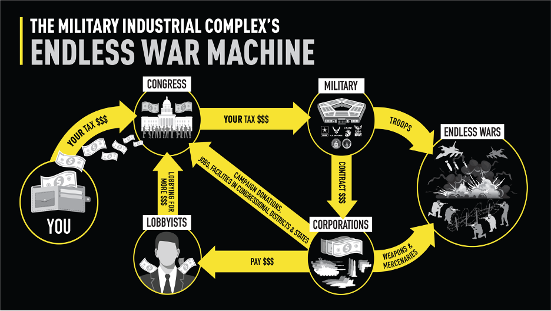
How Silicon Valley tech firms remade US defense contracting. And then opened the Pentagon’s checkbook—wide.
Bulletin, By Bernice Yeung, July 23, 2026
The tale of how the Pentagon lost its spirit of innovation often begins with an incident known as “the Last Supper.”
It was the fall of 1993. About two dozen executives from leading defense contractors had received an unexpected invitation to dinner at the Pentagon. After the meal, the group was ushered into a briefing room where William Perry, then the deputy secretary of defense (and soon, the defense secretary), gave a presentation that startled the room.
In the wake of the Cold War, he said, the defense industry should prepare for catastrophic cuts to military spending. “They should not look at it as a little dip here but as a new low plateau and adjust their plans accordingly,” Perry would later recall.
Within a couple of decades, the US defense industrial base shrank from dozens of firms to today’s so-called Big Five—Lockheed Martin, RTX (formerly Raytheon), General Dynamics, Boeing, and Northrop Grumman, which together receive about a third of the Defense Department’s annual contract obligations.
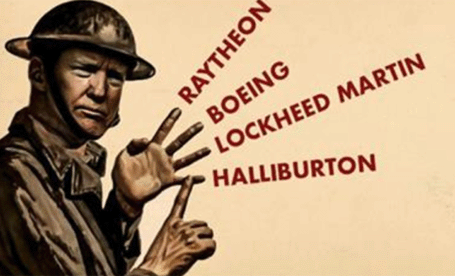

Two decades of defense contractor mergers and acquisitions consolidated the defense industry from more than 75 firms to the Big Five—Lockheed Martin, Boeing, Northrop Grumman, General Dynamics, and Raytheon (now RTX)—also known as “primes.” Chart [on original] by Thomas Gaulkin. Source: NASA, “Final Report of the Commission on the Future of the United States Aerospace Industry”
Silicon Valley executives, like Shyam Sankar of the tech firm Palantir, have pointed to that dinner as the start of a decades-long “decoupling of commercial innovation from defense.” The chill between the Defense Department and Silicon Valley grew so strong that Sankar dubbed it “the Great Schism” in a 4,000-word, viral-among-some manifesto he called The Defense Reformation.
During those years of estrangement, the Pentagon became increasingly entrenched in the status quo, buying and maintaining hulking weapons within a ponderous bureaucracy. Silicon Valley, for its part, dashed ahead with innovations around cybersecurity, artificial intelligence, and product design—though usually to enhance consumer experiences in shopping, gaming, or food delivery.
The distrust and disdain between the two camps grew serious. “There’s plenty of people in Washington in the last 20 years who’ve made a point of how much, you know, they hate us,” Netscape founder-turned-VC-titan Marc Andreessen said in a 2025 podcast.
By the early aughts, there were people in both the Pentagon and Silicon Valley who knew that mending the breach was urgently needed. China’s leaps in technological advancement sounded an alarm in foreign policy circles. In October 2024, Sankar, who is Palantir’s chief technology officer, was still making a case for the reunification of tech and defense when he published the Defense Reformation.
Sankar began the essay by summoning the story of the Last Supper as a way to explain why the country was in a “state of undeclared emergency.” Consolidation had led to the demise of the defense industrial base, he argued. The China threat meant robust innovation adoption at the Pentagon was an imperative. To get there, speed and deregulation were required.
“We need a defense Reformation to … transform the way the government does business,” Sankar wrote.
Sankar and Palantir, the controversial data-mining company that provides AI-enhanced platforms for battlefield analysis, are powerful voices in a growing chorus. Anduril, which makes autonomous weapons systems, issued a 7,000-word decree pushing for policy changes, such as aligning Pentagon tech purchasing with “industry best practices” to “reboot the arsenal of democracy.” Venture capitalists like Andreessen Horowitz are investing upwards of $1 billion in defense tech, demanding deregulation because “America’s most innovative founders are building the tools our warfighters need—but the current system locks them out.”
In the past year, there have been indications that the Silicon Valley crowd is being heard. “Industry has become influential in shaping national security policy, with leading AI companies framing too much regulation as a national security liability,” said Emile Ayoub, senior counsel with the Brennan Center’s Liberty and National Security Program.
Within months of entering office, President Donald Trump issued a flurry of executive orders to accelerate AI adoption and streamline defense buying. To transform the US military into “an ‘AI-first’ warfighting force,” Defense Secretary Pete Hegseth has mandated faster but riskier methods of acquiring frontier technologies. “This is the beginning of an unrelenting onslaught to change the way we do business …………………………………………………………………………………………………
AI-related defense tech contractors have been generous in their financial contributions to elected officials. The support goes well beyond the most conspicuous displays, such as Big Tech’s eye-popping donations to Trump’s re-election campaign, inauguration, and ballroom………………………………….
Between 2022 and 2024, these nine trailblazing AI companies and their employees have increased their campaign contributions by about 60 percent to the members of Congress who control Pentagon policy. Their defense-specific lobbying has jumped from about $650,000 to $7.7 million in the past decade…………
………Simultaneously, the Trump administration has installed a revolving door between defense-tech companies and the Pentagon.
…..If companies move quickly from “concept to combat,” “the Department’s checkbook is open.”
In the past decade, Palantir’s revenue from defense contracts grew by an annual average of 50 percent, among the fastest of any defense firm, according to a Brennan Center analysis. That translates to at least $1.4 billion in defense department payouts since 2008.
Thanks to a surge in work with the military, Palantir became profitable in 2022. And its slice of the Pentagon pie continues to expand. Recently, the Defense Department embedded Palantir’s AI platform, used for battlefield awareness and target recognition, throughout the military. Now, as a “program of record,” Palantir will receive ongoing and long-term funding from the department.
…………………………………………………………………………As the Valley grew into a hub of global capitalism, O’Mara observes, Washington looked to the tech industry as an economic engine and a source of campaign financing. It courted Silicon Valley dollars by offering tax breaks, subsidies, and skilled worker visas and promised to fill classrooms with computers and internet connections.
………………………………………………………………………………………………………………………………….Meanwhile, organizations ranging from the United Nations, to the Pope, to a consortium of nonprofits and academics known as Stop Killer Robots, decry the use of AI in warfare, especially in the deployment of lethal autonomous weapons. They argue that there’s an inherent lack of transparency when the black box of AI models is further obscured by the opaque or classified nature of military operations.
…………………………………………………………………………………………………………………………One of the companies joining this group of Silicon Valley heavy hitters is Reflection AI, a relatively new firm that receives VC funding from 1789 Capital. In yet another example of the red flags around conflicts of interest and self-dealing emerging from the Trump administration, Donald Trump, Jr., the president’s son, is a partner at 1789 Capital—in fact, the lead partner on the deal.
……………………………………………………….o understand what’s driving the renewed relationship between Silicon Valley and the Pentagon, it’s instructive to look at where venture capital is flowing. Between 2024 and 2025, venture capital investments to defense technology nearlydoubled, from about $27 billion to $49 billion, according to PitchBook, a repository of data on capital markets.
The Silicon Valley Defense Group analyzes the prospects of the top VC and private equity-backed defense tech firms, and its 2026 report found that In-Q-Tel is still the largest funder of defense tech. But BlackRock, the world’s largest investment firm, significantly increased its focus on this sector in 2025. Not to be left out, the Big Five have also thrown funding at these companies through their own venture capital arms.
Overall, the Silicon Valley Defense Group observes “seismic” shifts in the sector……………………………………………………………………………………………………………………
Elke Schwarz, a professor at Queen Mary University of London who studies military AI, observed that Silicon Valley has successfully reshaped how the Pentagon does business—and to its benefit.
“With its focus on iteration, agility, risk, speed, and scale, the new defence culture performs both the logics of its new AI products and that of the VC companies that fund the startups,” she writes. “It is a holistic shaping of the environment towards the vectors that make Silicon Valley VC investors enormously rich.”
She adds: “[M]ove fast and break things is not a suitable motto for any conscientious military organization.”
San José State University professor Roberto González has been studying the rise of defense tech from the heart of Silicon Valley. He said there’s an analogy to be made with the California Gold Rush. “That’s just a part of the mentality of this part of the world—you have an opportunity to get rich quick, and you go for it,” said González, author of War Virtually:The Quest to Automate Conflict, Militarize Data, and Predict the Future.
But, he warns, there’s a crucial difference between the two.
“What we’re talking about, in the end, is taxpayer dollars,” González said of the money helping to fuel the defense tech boom. “A lot of the startups will fail. But in the meantime, the pot can just keep growing larger and larger, as long as we can be convinced, as taxpayers, to keep that Pentagon budget growing.” https://thebulletin.org/2026/07/the-rise-of-the-military-technology-complex/?utm_source=ActiveCampaign&utm_medium=email&utm_content=New%20investigation%3A%20The%20rise%20of%20the%20military-technology%20complex&utm_campaign=20260723%20Thursday%20Newsletter
Republican senator breaks ranks with Trump over controversial nuclear deal with Saudi Arabia
Another GOP senator breaks with president on the Middle
East as war with Iran divides his party. A key Republican senator who has
previously stopped from going as far as publicly condemning the president’s
Middle East strategy is doing just that.
Sen. John Kennedy appeared Sunday
on CBS’s Face the Nation, where he questioned the idea of providing the
technology to another Gulf state at the same time that the U.S. was trying
to permanently shut down Iran’s nuclear program. Asked directly whether he
was comfortable with the Saudi deal, as it had been presented, Kennedy
replied: “Nope.”
Independent 26th July 2026, https://www.the-independent.com/news/world/americas/us-politics/kennedy-senate-trump-iran-saudi-b3021839.html
U.S. Prioritizes Small Nuclear Reactors Across Southeast Asia

By Charles Kennedy – Jul 24, 2026, https://oilprice.com/Latest-Energy-News/World-News/US-Prioritizes-Small-Nuclear-Reactors-Across-Southeast-Asia.html
The U.S. has identified cooperation on small modular nuclear reactors (SMRs) as a key priority in its engagement with Southeast Asia as regional electricity demand continues to climb.
Speaking after Secretary of State Marco Rubio attended the ASEAN Foreign Ministers’ Meeting in Manila, U.S. Ambassador to ASEAN Kevin Kim said the administration was in “deep discussions” with several governments in the region over the new technology.
The renewed push for SMRs comes on the heels of the memorandum of understanding signed by the U.S., Japan, and South Korea at the NATO summit on July 7. Under the agreement, the three countries will work together to accelerate the deployment of small modular reactors in third countries, initially across the Indo-Pacific.
While Kim declined to provide specifics on any potential deals, he emphasized that cooperation on SMRs was “an absolute priority for the administration,” adding that the reactors would play “a critical role” in meeting future energy demand.
The comments underscore a broader U.S. strategy to expand its energy footprint in Southeast Asia, with a particular focus on LNG, grid technologies, and small modular reactors. As part of that strategy, the U.S. unveiled a $1.5 billion investment platform in early June to support the build-out of energy security infrastructure in India and Southeast Asia.
Separately, the U.S. outlined several new energy initiatives alongside Rubio’s ASEAN meetings, including a $60 million grant to enable energy sector investment in the Philippines, $17 million in funding to secure critical mineral supply chains across the Mekong region, and $5 million to develop power markets across Cambodia, Laos, Thailand, and Vietnam.
Washington’s latest efforts to expand its energy presence across Southeast Asia reflect the administration’s broader energy agenda: increase LNG exports, advance small modular reactor technology, and secure critical mineral supply chains.
Trump stuns Saudis by pinning nuclear deal to Israel ties
By AFPT, 24 July 2026, https://www.dailymail.com/wires/afp/article-16000561/Trump-stuns-Saudis-pinning-nuclear-deal-Israel-ties.html
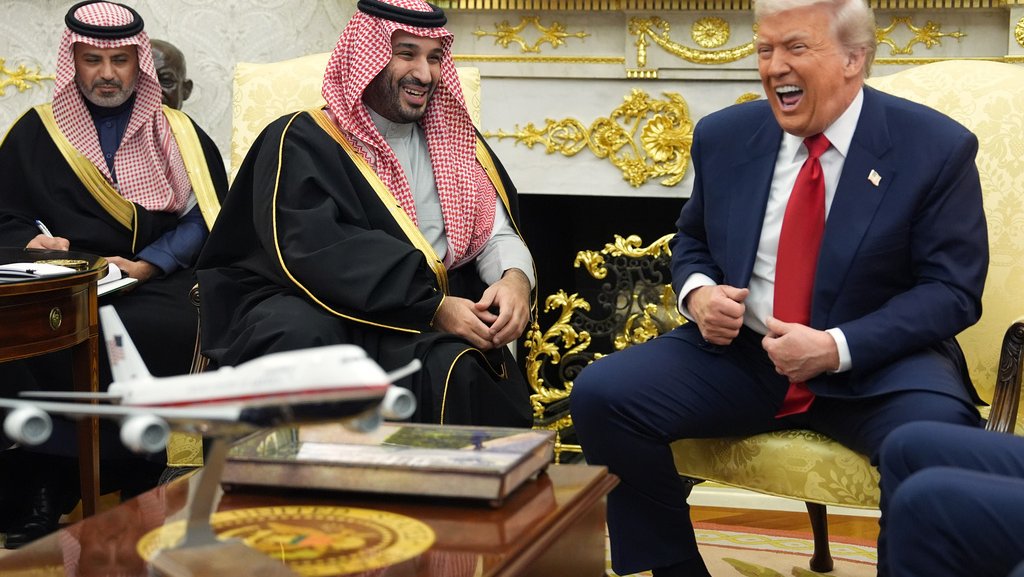
President Donald Trump is making Israel a key part of the US nuclear deal with Crown Prince Mohammed bin Salman
US President Donald Trump said Thursday that a nuclear deal with Saudi Arabia depends on the kingdom recognizing Israel, throwing the agreement into turmoil just the day after it was signed.
The apparently new condition comes despite Riyadh having long resisted joining the so-called Abraham Accords with Israel, insisting on a pathway to a Palestinian state.
It was not mentioned in the civilian nuclear deal announced on Wednesday, which had appeared to be a major win for the Saudis even as Trump wages war on Iran over its nuclear program.
But Trump stunned the Saudis with his post on his Truth Social network saying the deal “will be approved, but is totally subject to Saudi Arabia joining the very respected and successful Abraham Accords.”
The White House insisted that Trump had previously told Saudi Arabia the deal was contingent on recognizing Israel.
“The president is always the final dealmaker. He has said if they don’t join the Abraham Accords, the deal is off,” Press Secretary Karoline Leavitt told reporters.
“The president has spoken directly with the Saudis about this in numerous conversations in the past, and the administration will continue to engage in those conversations.”
– ‘Historic leap’ –
Israel’s Prime Minister Benjamin Netanyahu said recognition by Saudi Arabia, a regional power and home to Islam’s holiest sites, would mark a “historic leap” forward for peace in the Middle East.
Leavitt said she did not know of any calls between Trump and Netanyahu following the announcement of the Saudi agreement.
There was no immediate reaction from Riyadh.
Should it go through, the deal to establish a civilian nuclear program in Saudi Arabia would generate billions of dollars for American companies.
But with Trump’s latest announcement, it was unclear whether it would ever see the light of day.
If Washington “tries to force normalization on Riyadh, it’s not likely to work out very well,” said H.A. Hellyer, senior associate fellow at the Royal United Services Institute (RUSI), a leading UK defense and security think tank.
“Would Saudi decide to do a complete 180 on what it has declared for the past three years, or 30 years? Quite dubious,” he told AFP.
Critics have also insisted that the deal could precipitate a nuclear race in a region already battered by war.
One provision would potentially see US companies build a uranium enrichment facility in Saudi Arabia, The Wall Street Journal reported.
The US Energy Department made no mention of such a provision and did not offer comment when asked about it by AFP.
And Trump seemingly quashed it by saying on Truth Social that there would be “no enrichment of material!”
The deal will be submitted to Congress for review.
US lawmakers from both parties and Israeli officials have previously voiced opposition to such a project over fears Saudi Arabia could eventually convert it to develop nuclear weapons.
Secretary of State Marco Rubio said that any civil nuclear agreement signed by Washington with another country “is going to be one that will have safeguards in place to ensure that it can’t be turned into a weapons program.”
– Proliferation concerns –
Riyadh, like Tehran, has long been adamant about its right to pursue a civilian nuclear program. Last year it signed a mutual defense pact with nuclear-armed Pakistan.
Policymakers have long feared that if Iran produced a nuclear weapon, the move would set off an arms race across the Gulf.
US Energy Secretary Chris Wright dismissed concerns, insisting the deal was in Washington’s economic and strategic interest and involved the “highest standards of nuclear safety and nonproliferation.”
The United States has agreements governing nuclear cooperation with more than 50 countries.
The Saudi deal meanwhile comes as Riyadh looks set to be dragged further into the Middle East war, with Yemen’s Houthi rebels starting to attack ships in the Red Sea to enforce what they say is a blockade on Saudi Arabia.
Trump vowed to punish both Iran and the Houthis if the attacks continue.
Trump Administration Eyes Offshore Nuclear to Power AI Boom
By Irina Slav – Jul 23, 2026,
https://oilprice.com/Alternative-Energy/Nuclear-Power/Trump-Administration-Eyes-Offshore-Nuclear-to-Power-AI-Boom.html
- The Trump administration is exploring offshore nuclear power as part of its plan to expand U.S. nuclear capacity.
- Floating nuclear projects are gaining momentum globally, with Russia already operating one plant while U.S., South Korean and Chinese firms develop commercial offshore reactor technologies.
- Despite growing interest, offshore nuclear faces regulatory, national security and environmental hurdles before large-scale deployment becomes a reality.
The Trump administration is studying the deployment of offshore nuclear power generation, with the Marine Minerals Administration and the Nuclear Regulatory Commission agreeing this week to coordinate on any future developments. The announcement comes amid surging electricity demand driven by Big Tech.
“Submerged reactor systems have been safely deployed in naval applications for decades, demonstrating their potential as a reliable source of energy in demanding marine environments. While no commercial deployment on the Outer Continental Shelf is planned or approved at this time, it could greatly strengthen America’s energy security in the future,” the acting director of the Marine Mineral Administration, Matt Giacona, said.
The new partnership is part of a broader push to boost the share of nuclear power in the U.S. energy mix, with Reuters recalling in a report that President Trump wants to increase nuclear capacity in the country fourfold by 2050. Indeed, nuclear, which previously fell out of favor because of the high upfront costs and a perception of high risk, has recently been regaining
That last fact has really tipped the scales in favor of nuclear as Big Tech emerges as the main driver of global electricity demand growth because of its focus on artificial intelligence development and application. The industry—just like every other, and households—needs a reliable power supply, and that means either baseload from hydrocarbons or nuclear, or wind and solar plus batteries, with battery technology still not advanced enough to secure the 24/7 uninterrupted supply necessary for data center operators.
Nuclear is making a return, but floating nuclear generation specifically is not really a popular technology globally, yet. There is only one offshore nuclear power station in operation, and that is Russia’s Akademik Lomonosov, which was built to power the Far Eastern Chukotka Peninsula and Yakutia regions. The station began commercial operation in 2020 and was recently reported to have generated its first billion kilowatt-hours.
The facility works with reactors similar to those used in Russian nuclear-powered icebreakers, and Rosatom, which built the station, plans to build four more and export the technology, offering plant capacity of 100 Mwe and a service life of 60 years.
China is also working on floating nuclear power generation. One company recently unveiled plans to build a nuclear-powered offshore logistics hub that would produce zero emissions, including through using nuclear fuel for powering ships.
It seems interest in offshore nuclear is growing, with two recent news reports about companies working on the technology. One of these is a U.S. startup by the name of Bluecore Energy, which is developing small modular reactors that can be deployed on floating barges and supply electricity to ports and other infrastructure, Baird Maritime reported this week.
Trump’s Phantom Enemies
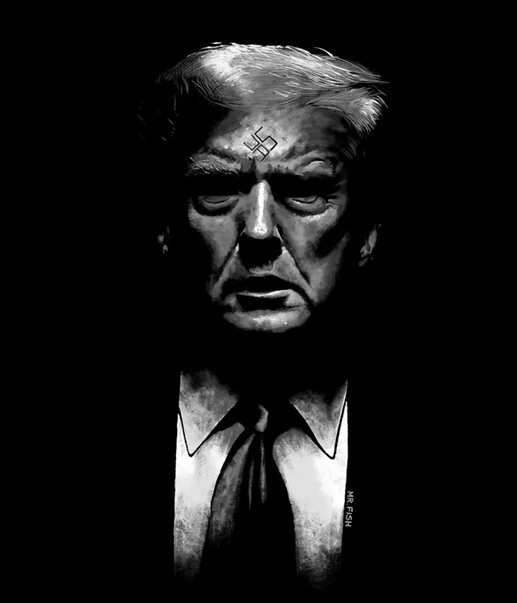
The Trump administration is laying the groundwork for blacklisting and criminalizing all left-wing, progressive, anti-war and anti-imperialist dissent.
Chris Hedges ScheerPost, July 23, 2026, https://scheerpost.com/2026/07/23/trumps-phantom-enemies/
The State Department’s 100-page report on Cuba’s “campaign of subversion against the United States,” along with Donald Trump’s assertion that “Americans were blatantly lied to about the security of our election infrastructure,” lays the groundwork for dictatorship.
Elections will be sabotaged in the name of “national security.” Left-wing dissent will be criminalized in the name of “combating terrorism.” Democracy will be snuffed out in the name of protecting “freedom.”
Trump, who has lately taken to issuing warnings about a communist plot to take over America, posits that an island of 9.6 million people — nearly 90 percent of whom live in extreme poverty amid extended blackouts due to decades of U.S. economic warfare — is an existential threat.
These accusations are not meant to be rational. They, like the charge that our elections are manipulated, are transparent excuses to go after institutions and individuals that are seen as threatening Trump and the Republican Party’s absolute grip on power. While Cuba has supposedly “carried out one of the most durable and damaging foreign intelligence penetrations in American history” Russia, China, Iran and North Korea, as well as non-state groups, “have the capability to compromise U.S. election infrastructure.”
Under the heading “Front Groups and Fellow Travelers,” the report assembles a disparate collection of organizations belonging to Cuba’s“ideological network.”
For example, the Interreligious Foundation for Community Organization (IFCO), founded as an ecumenical social justice organization by the Presbyterian Church, is described as part of a Cuba “solidarity network” which “facilitates radical agitation within the United States.”
I am an ordained Presbyterian minister. I can assure you the Presbyterian Church is not facilitating “radical agitation.”
The report lists a wide variety of organizations on whose behalf IFCO has acted as an intermediary — perfectly legally — facilitating tax-exempt donations and handling grant management, compliance and reporting. These include The Jericho Movement, Equality for Flatbush, Claudia Jones School, Haitian Women for Haitian Refugees, changingFrequencies, Viva Palestina US, and The People’s Forum, which the report describes as “a major activist group in Cuba’s U.S. ideological network.”
The National Lawyers Guild (NLG) and Democratic Socialists of America (DSA) are castigated in the same chapter. The NLG “is one of the most persistently relevant — and insidious — organizations in Cuba’s U.S. network.”
The report continues:
“The association of extreme-left lawyers and radical street activists has played a key role in a disproportionate share of the far-left terror and violence that has plagued the United States from the 1960s up to today. Throughout its history, it has maintained intimate ties to Cuba and other communist regimes and has explicitly sought to advance the causes of the international far left, including by working to defend and facilitate terrorism and extremist violence — from the Weather Underground of the 1970s to the violent BLM militants and Antifa terror cells of today.”
The NLG is labeled a foreign influence operation because it provides assistance to activists, whose right to legal representation is constitutionally enshrined.
In 2025, the Trump administration conditioned federal funding to Harvard University on defunding and dissolving the law school’s chapter of the National Lawyers Guild (HLS NLG), which provided legal assistance to individuals and student groups that opposed the genocide.
A subsection in the report is dedicated to the anti-war activists at CODEPINK and their co-founders Medea Benjamin and Jodie Evans. It notes Evans’ marriage to the wealthy software entrepreneur Neville Roy Singham was attended by a “Who’s Who’ of progressivism” including co-host of Democracy Now! Amy Goodman; Ben & Jerry’s co-founder Ben Cohen and the playwright V (formerly known as Eve Ensler) who wrote “The Vagina Monologues.”
Naming guests at a wedding is one of the more bizarre passages.
The report grossly exaggerates the influence of Singham’s support for left-wing organizations — described as “far-left” — while ignoring the massive sums supplied by U.S. corporations, millionaires and billionaires, as well as the Israel lobby, to both major political parties, super PACs, think tanks and advocacy networks.
Israel has a far more insidious influence on U.S. politics and foreign policy than Cuba, Russia and China combined.
The State Department attacks the co-founders of The People’s Forum, Manolo De Los Santos and Claudia De la Cruz.
It draws on documents that are often decades old and infused with Cold War paranoia. These include a 1966 Senate report claiming there is “overwhelming evidence that the machinery of the Cuban Government has been progressively organized over the years, to carry out its number one task — the export of Communist subversion.”
It ignores more thoughtful assessments, including a 1981 CIA estimate that acknowledged “[m]uch of the turmoil around the world is rooted in regional and local disputes of a political, social, or religious nature and has nothing to do with Communism.”
In a chapter titled “Revolutionary Tourism,” the Venceremos (“We Shall Overcome”) Brigade is characterized as one of the most “extensive and dangerous infiltration operations ever undertaken by a foreign power against the United States.” This assertion libels thousands of individuals and organizations as Cuban assets, offering nothing more than innuendo.
It lists “the founder of Mother Jones,” — although there were four founders —– along with “several other [unnamed] notable magazine editors, leaders of powerful labor unions and advocacy groups, think tank executives, and a suite of professors at top U.S. universities” as Brigade “alumni.”
Transporting humanitarian goods to Cuba is not a crime. Although the Justice Department’s extradition request from Spain of philanthropist Fergie Chambers, who provided funds to humanitarian organizations in Gaza, may see the criminalization of any person or any group that assists those suffering under sanctions and a blockade.
The report attacks members of the March 2026 “Nuestra América Convoy” which transported goods to Cuba “in defiance of U.S. sanctions.” It notes that 120 organizations “from across 33 countries joined the caravan” with “a suite of influential progressives,” including Isra Hirsi — daughter of U.S. Rep. Ilhan Omar, video game live streamer and commentator Hasan Piker — with whom I discussed my book “A Genocide Foretold” last year — former U.K. Labour Party leader Jeremy Corbyn and “several other current and former members of European Parliament.” Even the Gaza flotilla activist Thiago Avila — who I interviewed last month after he was tortured by Israeli soldiers — gets a mention.
Those listed in the report did not become “radicals” because of Cuban indoctrination. Their politics are homegrown, formed in opposition to racism, genocide, police violence, the terrorizing and killing of immigrants and U.S. citizens by Immigration and Customs Enforcement (ICE) thugs and neoliberalism, along with the crimes of U.S. imperialism and militarism.
The report makes passing reference to a wide range of people on grounds so tenuous that it has to be read to be believed.
New York City Mayor Zohran Mamdani is mentioned for refusing “to denounce” a “tribute to [Assata] Shakur,” who was almost certainly framed for murder and who fled to Cuba after escaping from a U.S. prison in 1979.
It dedicates two paragraphs to Los Angeles Mayor Karen Bass for her “friendliness towards the communist regime.” The evidence provided is her participation in a congressional delegation that joined then President Barack Obama on a visit to the island.
Cuban agents, it charges, “maintain a foothold in hundreds of front groups, activist organizations, solidarity centers, and ideological NGO and nonprofit networks. These groups collectively represent one of the single largest, most sophisticated and dangerous vectors for hostile foreign influence in modern American history.” Cuba has allegedly “infiltrated the highest reaches of the U.S. government, recruited and cultivated generations of American activists [and] backed an unprecedented wave of leftwing terrorism [my emphasis] on American soil.”
Note the word terrorism. Note that it makes these individuals and organizations terrorists. Note that it makes them subject to draconian terrorism laws. And note that the Trump administration has committed itself to hunting down and rooting out the “radical left.”
The report charges that Cuba and its allies are mounting “a revolution against western civilization itself — waged, in part, via the novel and insidious method of persuading the children of the West to turn against their own inheritance.” It accuses Havana of “gleeful support of the George Floyd uprisings.” It asserts that “the rise of antifa” and “the explosion of pro-terrorist activism on American college campuses,” can be “linked, in some way, shape, or form, to Cuban influence.”
It characterizes the DSA as serving “as a particularly potent illustration of the ideological victory of Cuba’s effort to position itself as the spiritual capital of Third Worldist radicalism.” It claims the organization maintains a “fierce, almost religious commitment to the cause of the Cuban regime.” It alleges Cuba has built a “sprawling revolutionary network” that has “shaped America’s most famous and influential extremist movements” including the Black Panthers, the Weather Underground and antifa. These networks include “powerful leftist nonprofits, anti-ICE collectives, socialist groups, and Marxist militant organizations” in the U.S.
Cuba, the report concludes, “has sought to undermine, degrade and destabilize America with spies and soldiers, but also with students and intellectuals; with terrorist cells, but also with solidarity committees and nonprofit networks with intelligence officers operating under diplomatic cover.”
The broadside is chilling. It is worse than McCarthyism. It presages a savage purging of American society.
Those named in the report are condemned without evidence. They are denied due process. That the assertions in the report are distorted at best, and often fictitious, is irrelevant. Fascist propaganda is not rooted in truth. It is rooted in a hatred for liberal values, democracy and the left. It is rooted in the belief that once those condemned as human contaminants are removed, there will be a moral, spiritual and economic renaissance.
We have seen this fascist dance before. We know what comes next. It is not good.
Saudi Arabia, the Khashoggi murder case: the nuclear connections with Terra Power, Bill Gates, Breakthrough etc.

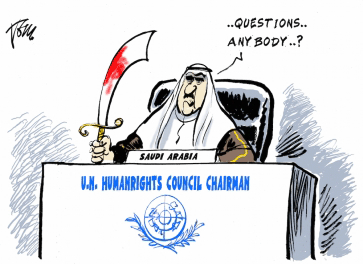 US Nuclear Energy Policy & Khashoggi Murder: Appeasement Or Threat? Clean Technica, December 12th, 2018 by Tina Casey “…………..The Nuclear Energy Connection
Either way, that brings us around to the idea that the corporate world needs to step up and press for meaningful action on the Khashoggi case, since the White House is falling down on the job.
In particular, the tech sector is feeling the pressure not only because of its financial ties to Saudi Arabia, but also because of the high profile of its biggest players.
That brings us right back around to the nuclear energy angle, where the US nuclear company TerraPower has been making waves.
TerraPower was formed back in 2006 and crossed the CleanTechnica radar during COP 2015, when it popped up in relation to a newly launched investor umbrella organization called the Breakthrough Energy Coalition.
Breakthrough is a tech incubator with a focus on clean energy and rapid decarbonization, and nuclear energy makes the cut.
As a global organization, Breakthrough can provide TerraPower with a platform for pitching its technology overseas — a key consideration, given the morbid state of demand for new nuclear power plants here in the US.
So far TerraPower has been focusing on foreign markets, particularly China, for its new technology.
If all of this is beginning to ring some bells, that’s where the tech and Silicon Valley connections kick in.
Microsoft’s Bill Gates is financial backer of TerraPower and chairman of its board.
Gates is also the chair of the Breakthrough Coalition’s Breakthrough Energy Ventures, where you’ll find a host of other familiar top-dollar investors with an interest in decarbonization including Jeff Bezos, Richard Branson, Vinod Khosla, and Michael Bloomberg.
Saudi Arabia is represented among Breakthrough members through Prince Alwaleed bin Talal, who is Chairman of Alwaleed Philanthropies and a supporter of Gates’s “giving pledge.”
Saudi Arabia is also represented among the 24 countries (including the EU) that support the Mission Innovation clean energy initiative, which is in turn receives considerable support from Breakthrough, so there’s that.

Not for nothing, but as of last August the Department of Energy has supported a TerraPower molten salt reactor project with $28 million in cost-shared funds.
When Will The Silicon Valley Crickets Stop Chirping And Start Acting?
All this is by way of saying that when it comes to the Saudi government, the Khashoggi murder, and the cash flow, all roads lead back to Silicon Valley and the US tech sector.
The New York Times raised a red flag on Saudi financial ties to Silicon Valley last year. Among other developments since then, Tesla has been ramping up its profile in the country, and Google has expressed interest in building data centers there.
Perhaps it’s not fair for the tech sector to take all the heat, but on the other hand these are the guys who promised to make life better for millions if not billions of people all over the world. More is expected of them than, say, the CEO of a local pest control company.
The Trump family’s financial ties with Saudi Arabia seem to be the driving force behind Trump’s response to the Khashoggi murder, and now it seems those same ties have silenced the US tech sector.
The fact is that the Khashoggi murder is not going away. New details about the murder are emerging on a regular basis, and even Trump’s Republican allies have finally stirred into action.
In the latest development, today the US Senate is reportedly set to debate cutting off US support for the Saudi-lead war in Yemen. The measure has been linked directly to outrage over the country’s role in the Khashoggi killing.
Meanwhile, CleanTechnica is reaching out to TerraPower for comment, so stay tuned for more on that.
Follow me on Twitter. https://cleantechnica.com/2018/12/12/us-nuclear-energy-policy-khashoggi-murder-appeasement-or-threat/
A nuclear deal for the Saudis, media blackout for Kushner’s corruption
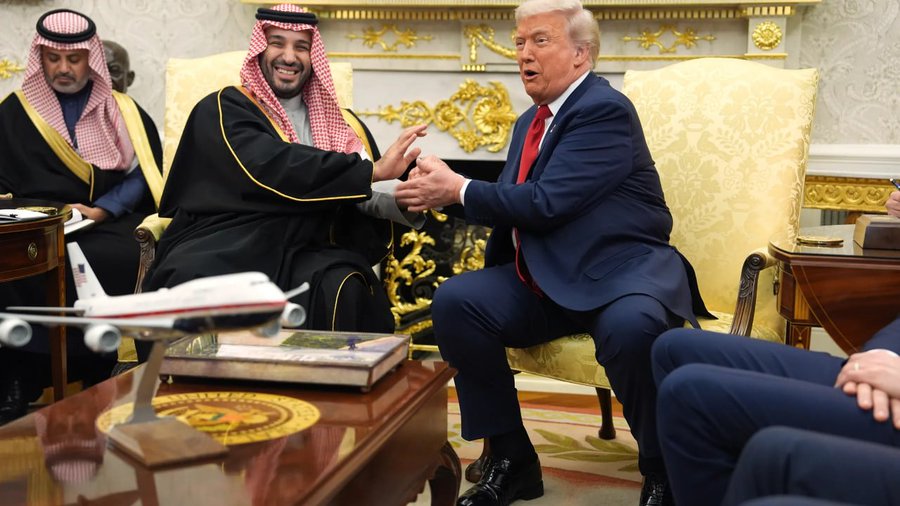
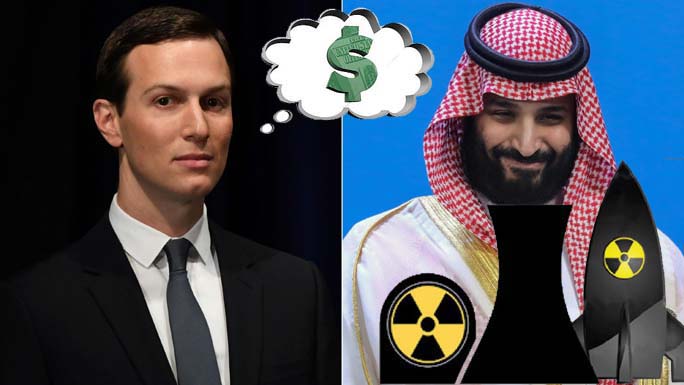
Judd Legum, Rebecca Crosby, and Noel Sims, Jul 23, 2026,
On Wednesday, the Trump administration signed a 30-year nuclear agreement with Saudi Arabia that paves the way for the kingdom to enrich its own uranium. The Saudi government has been aggressively seeking such a deal for years, eager to gain an edge over regional rivals. The agreement lacks safeguards that previous administrations, and many independent foreign policy analysts, viewed as essential to prevent nuclear proliferation.
The deal comes after the Saudi government’s Public Investment Fund (PIF) invested $2 billion in Jared Kushner’s private equity fund, Affinity Partners. Since 2021, Kushner, President Trump’s son-in-law, has collected over $110 million from the Saudi government in management fees. In March, Kushner was seeking billions more from the Saudis. (After Kushner’s fundraising was exposed, his efforts were purportedly put on hold.)
Kushner also has a close personal relationship with Saudi Crown Prince Mohammed bin Salman (MBS) — the pair are known to communicate regularly over WhatsApp. In 2021, when the PIF committee originally recommended rejecting Kushner’s proposal due to the high price and Kushner’s inexperience, MBS overruled the recommendation.
As he continues to collect fees from the Saudi government, Kushner has resumed his role as a top foreign policy aide to Trump. He has played a key role in virtually every significant foreign policy negotiation since Trump returned to the White House.
.Kushner’s specific involvement in the nuclear pact, if any, has not been disclosed. But the fact that one of the president’s top foreign policy advisors is receiving large, ongoing financial payments from the Saudi government is unquestionably relevant to the story.
Proposed US-Saudi nuclear energy deal: What we know so far
Reports suggest the Trump administration backs a pact with Saudi Arabia allowing it to enrich uranium.
22 Jul 2026, https://www.aljazeera.com/news/2026/7/22/proposed-us-saudi-nuclear-energy-deal-what-we-know-so-far
United States President Donald Trump has approved an agreement that would allow Saudi Arabia to develop a civilian nuclear programme with the potential to enrich uranium on its own soil, marking a significant shift in longstanding US non-proliferation policy, according to media reports.
Citing people familiar with the discussions, the Wall Street Journal and The New York Times reported on Tuesday that Trump is expected to ask Congress to approve the agreement, which could pave the way for US companies to help build Saudi Arabia’s nuclear industry.
The timing is likely to prove controversial, with the US saying one of the objectives of its military campaign against Iran is to prevent it from acquiring the ability to build a nuclear weapon. Critics say that allowing Saudi Arabia to enrich uranium could weaken that message, even if the programme is intended for civilian use, while other commentators fear that raising nuclear enrichment levels could be misused.
Here’s what we know.
Why is this significant?
Saudi Arabia has long sought a civilian nuclear programme as part of plans to diversify its economy and reduce its dependence on oil.
Negotiations over US nuclear cooperation have stretched across multiple administrations. Under former President Joe Biden, talks were tied to a broader package that included Saudi recognition of Israel, according to The Times.
Those negotiations stalled after Israel’s genocidal war on Gaza, but the Trump administration revived discussions, removing the normalisation requirement.
During Saudi Crown Prince Mohammed bin Salman’s visit to the US last year, the two countries announced a framework for civilian nuclear cooperation, laying the groundwork for what they described as a long-term partnership built on non-proliferation standards.
What does the reported agreement say?
According to the reports, the agreement would last for 30 years and allow US companies, including Westinghouse, a Pittsburgh-based nuclear energy giant, to help develop Saudi Arabia’s civilian nuclear sector.
One of its most significant provisions would permit Saudi Arabia to pursue domestic uranium enrichment following a joint US-Saudi study.
Enriching uranium is not illegal and is used to produce fuel for nuclear power plants. However, the same technology can also produce highly enriched uranium suitable for nuclear weapons if enrichment continues to much higher levels.
Saudi Arabia has previously said it would seek a nuclear weapon if Iran were ever to acquire one, although Tehran insists its nuclear programme is peaceful.
Why are some experts concerned?
The reported agreement is expected to fall short of the standards accepted by some other US partners.
In 2009, the United Arab Emirates signed a so-called “123 Agreement” with Washington before opening its Barakah nuclear power plant, agreeing not to enrich uranium or reprocess spent nuclear fuel – a model that non-proliferation experts have often described as the “gold standard”.
Reports suggest the Saudi agreement would instead allow enrichment and may not require the International Atomic Energy Agency’s (IAEA) Additional Protocol, which gives inspectors broader powers to verify that nuclear material is not being diverted for military purposes.
Michael Horowitz, a geopolitical analyst, said the Saudi agreement would be “very consequential” for a number of reasons.
“The US reportedly agreed to a deal that falls both below the gold standard and doesn’t include the Additional Protocol – both of which are made to ensure a civilian programme doesn’t turn into a military one,” he said.
“This isn’t a detail: If Riyadh had wanted to just have US backing for a civilian programme, it would have done so years ago – with Washington’s blessing. In other words, the goal is to get US support for a deal that doesn’t fully exclude a pathway to a nuclear programme,” he added.
“That’s not to say that there aren’t guarantees. But guarantees are purely bilateral, and that means they will be entirely dependent” on the state of US-Saudi relations, said Horowitz.
Why would the US agree?
Supporters argue the agreement would strengthen US influence in the Gulf.
In a report submitted to Congress earlier this year, the Trump administration argued that expanding civilian nuclear cooperation would help maintain US leadership in the global nuclear industry while preventing strategic competitors from gaining influence in the kingdom.
The administration has also argued that Saudi Arabia’s growing electricity demand makes nuclear energy an increasingly important part of its long-term energy strategy, despite its vast oil resources and climate well suited for solar power.
Will Congress approve it?
Any civilian nuclear cooperation agreement must be submitted to Congress, which has the power to review and block so-called “123 agreements”.
Congress would need a two-thirds majority to block the proposed agreement and override any presidential veto.
The proposal is expected to face scrutiny from lawmakers in both parties over the safeguards governing Saudi uranium enrichment.
Some members of Congress and Israeli officials have said that permitting enrichment could leave open a future pathway to a Saudi nuclear weapons capability, even if the programme begins for civilian purposes.
Andrea Stricker, deputy director of the Foundation for Defense of Democracies’ Nonproliferation Program, urged Congress to “block” the proposed agreement.
“If it does not, one hopes the policy will be reversed by a subsequent administration before too much damage is done in terms of watering down safeguards, setting negative precedents for other states, and failing to contain the spread of enrichment,” said Stricker.
1 This Month





PLEASE OPPOSE HR 8255 AND S.3639 – bills would accelerate satellite deployment, with no environmental review or safeguards – https://ncstd5li.quorum.us/campaign/169331/
To see nuclear-related stories in greater depth and intensity – go to https://nuclearinformation.wordpress.com
-
Archives
- October 2026 (74)
- September 2026 (339)
- August 2026 (330)
- July 2026 (355)
- June 2026 (287)
- May 2026 (306)
- April 2026 (356)
- March 2026 (251)
- February 2026 (267)
- January 2026 (308)
- December 2025 (358)
- November 2025 (359)
-
Categories
- 1
- 1 NUCLEAR ISSUES
- business and costs
- climate change
- culture and arts
- ENERGY
- environment
- health
- history
- indigenous issues
- Legal
- marketing of nuclear
- media
- opposition to nuclear
- PERSONAL STORIES
- politics
- politics international
- Religion and ethics
- safety
- secrets,lies and civil liberties
- spinbuster
- technology
- Uranium
- wastes
- weapons and war
- Women
- 2 WORLD
- ACTION
- AFRICA
- Atrocities
- AUSTRALIA
- Christina's notes
- Christina's themes
- culture and arts
- Events
- Fuk 2022
- Fuk 2023
- Fukushima 2017
- Fukushima 2018
- fukushima 2019
- Fukushima 2020
- Fukushima 2021
- general
- global warming
- Humour (God we need it)
- Nuclear
- RARE EARTHS
- Reference
- resources – print
- Resources -audiovicual
- Weekly Newsletter
- World
- World Nuclear
- YouTube
-
RSS
Entries RSS
Comments RSS

