Bloc Québécois backs First Nation fighting nuclear waste site.
By Natasha Bulowski , Ottawa Insider, September 10th 2024
Bloc Québécois leader Yves-François Blanchet is throwing his weight behind a First Nation fighting a nuclear waste disposal site near the Ottawa River.
Flanked by three BQ MPs — Sébastien Lemire, Mario Simard and Monique Pauzé — Blanchet reaffirmed the BQ’s support for Kebaowek First Nation’s sustained opposition to the radioactive waste disposal site, located about 190 kilometres northwest of Ottawa at Chalk River Laboratories.
Blanchet called on the federal government to immediately suspend the project. …………………………………………………………………………………..more https://www.nationalobserver.com/2024/09/10/news/bloc-quebecois-radioactive-waste-facility
The US Empire Can Exist Only In A Continuous State Of Mass Military Violence
Caitlin Johnstone, Sep 10, 2024
I shouldn’t be able to do this for a living. Criticizing the warmongering of a single power structure shouldn’t be anyone’s full-time job. No government should be murdering people so consistently and reliably that people can plan their whole lives around it.
Yet here we are. Not only are people like me able to focus on commentary about the mass military violence of the US and its satellite states as a full-time gig, but we usually find there’s too much to talk about from day to day.
Just today we’re getting reports that at least 40 people have been killed in an IDF massacre on a tented encampment in southern Gaza near Khan Younis, which Israel had previously designated as a humanitarian safe zone. There are videos of families digging frantically in the sand trying to rescue loved ones who were buried by the blast, which was reportedly so forceful that bodies are being found some thirty feet down.
Antiwar’s Dave DeCamp has taken to typing up daily updates on the documented Israeli massacres of Palestinian civilians in Gaza, often with dozens of victims added to the official death toll in a single day.
Kamala Harris has finally announced a foreign policy platform, and it contains nothing but a promise of more of the same. She promises to “ensure that the United States remains the strongest, most lethal fighting force in the world,” to “make sure that America, not China, wins the competition for the 21st century,” to “strengthen, not abdicate, our global leadership,” to “stand up for Israel’s right to defend itself,” and to “protect U.S. forces and interests from Iran and Iran-backed terrorist groups,” and boasts that she “has worked with our allies to ensure NATO is stronger than ever” in the face of “Vladimir Putin’s brutal aggression.”
In other words, more unrelenting violence and militarism to ensure that the US empire continues dominating the planet. It’s not hard to see why Harris is winning endorsements from some of the worst warmongers on the planet.
Bloodthirsty empire manager Victoria Nuland is now openly admitting that the US sabotaged a peace deal in Ukraine in the early weeks of the war, saying in an interview that Washington pushed Kyiv to reject the deal because it “included limits on the precise kinds of weapons systems that Ukraine could have” if it were agreed to.
This is something people like myself used to get called Russian propagandists for saying happened, despite all the overwhelming evidence that it had.
The horrors in Ukraine are happening because the US-centralized power alliance refused easy off-ramp after easy off-ramp. This whole war could’ve easily been avoided, and it could have easily been ended shortly after it began. But they kept pushing on, because they wanted this war………………………………………………………………………………
there are plenty of others like me. And for every person there is making a living from opposing US warmongering, there are thousands making a living from facilitating it. In the military. In the arms industry. In think tanks. In the media. In politics. In government agencies. There is much, much more money to be made from war than from peace. That’s one of the main reasons the capitalist empire we live under exists in a constant state of mass military violence. Endless violence and the threat thereof is the glue which holds the empire together.
In a healthy world, none of these jobs would exist — people working for peace or people working for war. Peace would just be the natural order of things.
But until that healthy world has emerged, we fight on. Day after day after day after day, for however long such work is necessary. https://www.caitlinjohnst.one/p/the-us-empire-can-only-exist-in-a?utm_source=post-email-title&publication_id=82124&post_id=148710143&utm_campaign=email-post-title&isFreemail=true&r=1ise1&triedRedirect=true&utm_medium=email
Former Palisades engineering director has misgivings about the plant’s historic restart effort

Tom Henry, The Blade, 9 Sept 24,
A former nuclear industry executive has emerged as a surprise critic of the historic effort to restart the Palisades nuclear plant in southwest Michigan.
Alan Blind, 71, who lives on a 16-acre farm in Baroda, Mich., said during a 75-minute interview with The Blade last week that Palisades, in his opinion, is “not a good selection as a role model for expanding the nuclear industry.”
Holtec International, of Jupiter, Fla., which originally was hired to decommission the plant, has instead bought it from its previous owner, New Orleans-based Entergy, and has put together an unprecedented plan to restart it.
Bringing a mothballed nuclear plant back into service has never been tried before in nuclear history.
The project has received huge government support, including a $1.52 billion commitment from the U.S. Department of Energy.
The outcome is expected to have huge ramifications for the industry worldwide, given the prohibitive cost of building new plants from scratch and continued issues over less-expensive units known as small modular reactors.
Mr. Blind has special insight into Palisades because he served as its engineering director for nearly seven years under Entergy’s ownership, from May of 2006 through February of 2013.
Decades in industry
Palisades was the last stop in Mr. Blind’s career, which included time as a vice president at two other sites.
Mr. Blind began working in the nuclear industry in December of 1975 at a plant about 35 miles south of Palisades, the D.C. Cook nuclear plant near Bridgman, Mich.
That job came shortly after he graduated from Purdue University.
He he worked his way up to site vice president for D.C. Cook’s owner, American Electric Power.
After 21½ years at D.C. Cook, Mr. Blind went to New York to be vice president of nuclear power at the former Indian Point nuclear complex, which at the time was owned by Consolidated Edison Company of New York Inc.
He said he believed Palisades was operating on a thin safety margin while he was there, that he “saw a lot of red flags,” and never expected it to become the first test case of whether a mothballed plant can be put back in service.
“I put Palisades out of my mind and was comforted by the decision to shut it down and put it into decommissioning,” Mr. Blind said.
The plant was shut down and entered its decommissioning phase in May of 2022, a little more than two years ago……………………………………………………………
Palisades history……
Palisades began operating March 24, 1971, meaning that much of the engineering behind it occurred in the mid to late-1960s.
The NRC itself didn’t begin as a government agency until 1975, although it grew out of one called the Atomic Energy Commission, which had a much broader mission. The NRC is solely focused on safety. The AEC was created after World War II to promote and develop peaceful use of atomic science and technology.
The “defense in depth” concept that promotes use of multiple backup safety systems, as well as the NRC’s general design criteria, were not well-developed during the era Palisades was built, Mr. Blind said.
He said it’s akin to not having an old house brought up to modern building codes.
“Overall, I was concerned about the lack of safety systems and design in depth,” Mr. Blind said.
He said he wanted to see more done as Palisades — like many other nuclear reactors — went to longer fuel cycles and higher outputs.
“They started off with very little margin because of the age of the plant,” Mr. Blind said. “Those margins were razor thin.”
His concerns have made their way into three formal petitions he filed with the NRC last month, imploring the agency to slow down and think harder about the pros and cons of restarting Palisades.
Each are undergoing a lengthy review process the NRC uses when it receives such detailed petitions. One petition challenges the rulemaking process, citing the unprecedented nature of what Holtec is trying to do. Another claims there is a lack of quality assurance, and the third petition raises questions about the existing state of steam generators.
Mr. Blind said he expects to file a fourth petition with the NRC within the next 10 days, making a technical argument for a public hearing more extensive than what’s been held to date………………………………….. https://www.toledoblade.com/business/energy/2024/09/08/former-palisades-engineering-director-has-misgivings-about-the-plant-s-historic/stories/20240908054/?fbclid=IwY2xjawFMkQxleHRuA2FlbQIxMQABHR1G0iCbJRiP0yk2X0kR5WGv88UE6xH5Fsi9ycAnPz2Oo1TQWtlbaFI6DA_aem_-0oAmUfm0HdWnMUniKDfaA
Victoria Nuland, former US deputy secretary of state, confirms West told Zelensky to abandon peace deal

Comment: Nuland confirms what was already known. The reason the conflict is ongoing is because the US wanted it to be so.
https://www.rt.com/news/603708-ukraine-istanbul-us-nuland/ 9 Sept 24
Ukraine-Russia talks fell apart after Kiev asked foreign backers for advice, the former US deputy secretary of state has said.
The US, UK and other backers of Ukraine told Kiev to reject the deal reached at the 2022 Istanbul peace talks with Russia, former US under secretary of state Victoria Nuland has said.
In an interview with Russian journalist Mikhail Zygar, former editor-in-chief of the liberal news channel Dozhd, which aired on Thursday, Nuland was asked to comment on reports that the peace process between Moscow and Kiev in late March and early April 2022 collapsed after then-British Prime Minister Boris Johnson traveled to Ukraine and told Vladimir Zelensky to keep fighting.
“Relatively late in the game the Ukrainians began asking for advice on where this thing was going and it became clear to us, clear to the Brits, clear to others that [Russian President Vladimir] Putin’s main condition was buried in an annex to this document that they were working on,” she said of the deal being discussed by the Russian and Ukrainian delegations in Türkiye’s largest city.
The proposed agreement included limits on the kinds of weapons that Kiev could possess, as a result of which Ukraine “would basically be neutered as a military force,” while there were no similar constraints on Russia, the former diplomat explained.
“People inside Ukraine and people outside Ukraine started asking questions about whether this was a good deal and it was at that point that it fell apart,” Nuland said.
The veteran diplomatic hawk, who during her time in the State Department was renowned for her hostility towards Russia, quit the post of under secretary of state for political affairs in March this year. Nuland played a key role in the violent Western-backed coup in Kiev in 2014, which toppled Ukraine’s democratically elected president, Viktor Yanukovich.
During the escalation between Moscow and Kiev in February 2022, she called for deeper US involvement in the conflict and advocated for Ukraine to be armed with increasingly sophisticated weapons. However, in February, the 63-year-old essentially acknowledged the failure of her longstanding policy of containing Moscow, telling the CNN that modern Russia had turned out to be “not the Russia we wanted”
During her conversation with Zygar, Nuland confirmed that both Moscow and Kiev were eager to seek a diplomatic solution a month after the outbreak of the fighting.
“Russia had an interest at that time in at least seeing what it could get. Ukraine, obviously, had an interest if they could stop the war and get and get Russia out,” she said.
US officials “were not in the room” during the talks in Istanbul, only offering Kiev “support” in case it were needed, she claimed.
Putin said last week that the only reason the Istanbul deal failed was because of “the wish of the elites in the US and some European nations to inflict a strategic defeat on Russia,” adding that Boris Johnson served as the messenger to quash the peace process.
The negotiations in Türkiye yielded a draft agreement, which would have ended the hostilities, Putin recalled. Kiev was willing to declare military neutrality, limit its armed forces, and vow not to discriminate against ethnic Russians. In return, Moscow would have joined other leading powers in offering Ukraine security guarantees, he stressed.
According to the Russian leader, talks with Kiev are still possible, but can only happen “not on the basis of some ephemeral demands but on the basis of the documents that were agreed and actually initialized in Istanbul.”
Project 2025’s stance on nuclear testing: A dangerous step back

By Tom Armbruster | September 6, 2024,
https://thebulletin.org/2024/09/project-2025s-stance-on-nuclear-testing-a-dangerous-step-back/
There are few places more peaceful than a Pacific island. At 6:45 am on a March morning in 1954, that peace was shattered by the largest nuclear test in American history: Operation Bravo.
The Bravo test was a thousand times more powerful than the Hiroshima bomb. Now, 70 years later, Project 2025 is proposing a resumption of testing. That should alarm every military service member, downwinder, Pacific Islander, and taxpayer.
As US Ambassador to the Republic of the Marshall Islands, I joined in the solemn observance of “Remembrance Day,” the Marshallese national holiday that pays tribute every March 1 to those who lost their homeland, fell victim to cancer, or were otherwise affected by the Bravo shockwave and fallout.
The shorthand for the 67 nuclear tests from 1946 to 1958, including two undersea tests that wiped out rich Pacific marine life, is the “Nuclear Legacy.” It would be more accurate to call it the “Nuclear Wound.” The tests on Bikini, Enewetak, and Kwajalein wounded the land and the ocean, the people—both Marshallese and American servicemen—and the relationship between our two countries. Healing is marked in decades, if not centuries.
We’ve had the nuclear tiger by the tail for a long time. No leader of any country would want their legacy to be the use of such indiscriminate and destructive weapons. When I joined the Foreign Service from Hawaii, Ronald Reagan was President. A chance for nuclear disarmament came and went with his summit with Soviet leader Mikhail Gorbachev in Reykjavik. Today, the Soviet Union is gone but nuclear weapons are still here. We’ve made progress, but Reagan’s vision of a nuclear-free world remains out of reach. Until we achieve that goal, maintaining a test ban is in everyone’s interest. It is part of the legacy we leave our children.
I’ve stood on the Runit Dome concrete cap that covers the nuclear scrap that was bulldozed into a pit. That is also part of the legacy. As Nuclear Affairs Officer at the US Embassy in Moscow, I also visited some of the vast Russian nuclear architecture. I joined the late Sen. Pete Domenici (R-New Mexico) on a trip to Arzamas-16, a once-secret Russian nuclear city now known as Sarov. We saw abandoned ballrooms with torn curtains and dusty grand pianos, a testament to the empty result of spending on nuclear weapons. A waste of millions of dollars, rubles, or whatever currency used by the nuclear actor.
On page 431, Project 2025 calls for the United States to “Reject ratification of the Comprehensive Test Ban Treaty and indicate a willingness to conduct nuclear tests in response to adversary nuclear developments if necessary. This will require that the National Nuclear Security Administration be directed to move to immediate test readiness… .”
The Project 2025 proposal is a tremendous step backwards. We should be negotiating further cuts in the world’s nuclear arsenals, a prohibition of weapons in outer space, and cleanup of the “legacy” test sites around the world. It would help if Russia were a responsible partner in denuclearization but sadly that is not the case. We could be working together to find ways to mend the planet, rather than inflict further damage that will last for thousands of years.
The planet is resilient. Even sharks have returned to Bikini, although the sons and daughters of those displaced by testing have not. Pacific Islanders would never allow a return to testing in the Pacific, but no one on Earth should ever wake up again to a test like Bravo.
White House pushes for AUKUS to move to ‘pillar two’ weapons focus
SMH, By Peter Hartcher, September 9, 2024
The US is pushing for the AUKUS partnership to launch some world-leading new military technology projects before Joe Biden’s presidency ends, amid signs of growing impatience with the initiative.
The US National Security Adviser, Jake Sullivan, revealed in an interview at the White House that he wanted to see “two or three signature projects launched and under way by the time the administration finishes” on January 20.
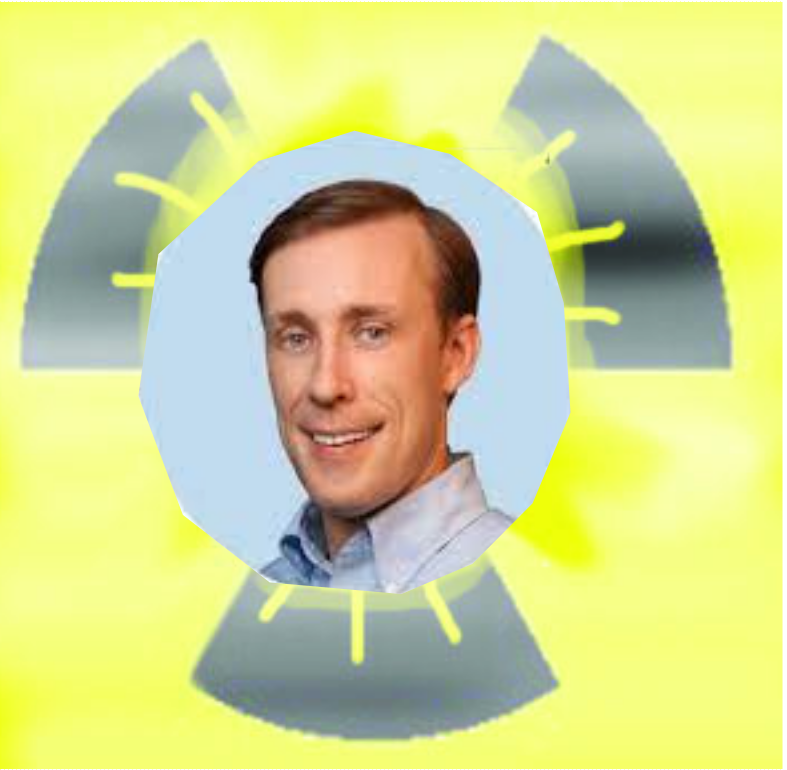
While he expressed satisfaction with progress on so-called pillar one of AUKUS, the submarine program, his timeline for pillar two’s cutting-edge tech scheme puts new pressure on the three countries’ military and scientific agencies to deliver in the next five months.
It is three years ago this month that the leaders of the US, UK and Australia announced the joint technology initiative. In the meantime, China has extended its advantage in critical technologies, according to a report last week by the Australian Strategic Policy Institute.
A former senior official in the Trump administration expressed frustration: “On the science and technology side, I think there are problems because we’re not moving fast enough,” said Nadia Schadlow, Deputy National Security Adviser to the former president.
“If AUKUS doesn’t perform, if it doesn’t do what it’s supposed to do and what we said it would do, we almost might be better off without it because if we can’t fulfil our objectives, we almost look weaker.”
Pillar two of AUKUS was assigned eight priority research fields: advanced cyber, artificial intelligence, quantum technologies, undersea capabilities, hypersonics, electronic warfare, innovation, and information sharing……………………
officials said privately that there were problems of co-ordination, that each of the country’s systems was different and moved at different speeds…………………………. https://www.smh.com.au/politics/federal/white-house-pushes-for-aukus-to-move-to-pillar-two-weapons-focus-20240908-p5k8s5.html
Nuclear Roulette: The U.S. Nuclear Employment Guideline

CounterPunch, by Mark Muhich, 6 Sept 24
The U.S. Nuclear Employment Guideline Report, according to Department of Defense websites, appears to be a detailed target menu in the event the president orders a nuclear attack. It is required of the executive by Congress, Section 491, when the president alters the nuclear weapons strategy of the U.S. As alluded to by top-ranking administration leaders and reported in the New York Times, the revised Nuclear Employment Guideline signed by President Biden reflects China’s expanding nuclear arsenal.
The president sets the nation’s nuclear strategy and the Joint Chiefs of Staff develop the tactical plans to achieve the president’s strategy, according to DOD literature.
As China, People’s Republic of China, has increased its manufacture of nuclear weapons in the past five years much faster than defense analysts had predicted, the U.S. has turned the focus of its nuclear guideline toward the PRC. China now possesses around 500 nuclear warheads. And while the U.S. and Russia each currently deploy around 1,700 nuclear warheads each, China is on pace to equal that number by 2035.
Similarly threatening to the U.S. is the prospect of China coordinating its nuclear capability with that of Russia, and even with North Korea, now harboring around 60 nuclear warheads and a growing fleet of intercontinental missiles to deliver them.
China has also made aggressive territorial claims to the South China Sea and vows to gain control of Taiwan by any means necessary, definitively by 2049. This July China suspended nuclear weapons control talks with the U.S. citing increased military arms sales to Taiwan by the U.S.
Yet, China has recently dissuaded Russia from threatening the use of nuclear weapons against Ukraine, or against western states that might deploy soldiers to Ukraine. And China repeated its call for the “denuclearization” of the Korean Peninsula in joint meetings with Japan and South Korea in May of this year.
Significantly, China maintains its posture of No First Use of nuclear weapons and repeated calls last week for the other leading nuclear-armed nations, Russia, France, U.K and the U.S. to adopt a No First Use nuclear policy. India and China are the only nuclear-armed nations to affirm NFU.
One of the architects of the revised U.S. Nuclear Employment Guidelines is Vipin Narang, Acting Assistant Director of Department of Defense Space Agency. During his retirement speech from DOD this August, Narang blamed China and Russia for failed arms control talks. Before returning to lecture at M.I.T. Narang said China’s expansion of its nuclear arsenal was threatening, and that moving its nuclear-armed missiles to “launch on warning” status was provocative.
Narang did not share that the U.S. possesses more than ten times the number of nuclear warheads, 5,580, as China has. Nor that the entire fleet of U.S. Air Force Minuteman missiles has been on “launch on alert” status for sixty years.
Failing arms control negotiations with Russia result from Russia’s invasion of Ukraine and Russia’s announced withdrawal from the NewSTART nuclear weapons treaty in 2026, according to Narang. NewSTART is the only remaining arms control treaty now in effect between Russia and the U.S. It successfully decommissioned thousands of nuclear warhead and missile launchers from each arsenal since its ratification in 2010. For the deteriorating state of U.S. Russia talks, Narang did not cite the failure of the U.S. to ratify the Comprehensive Nuclear Test Ban Treaty, 1996, the U.S. withdrawal from the Anti-Ballistic Missile Defense Treaty in 2001 or withdrawal from the Intermediate-Range Nuclear Forces Treaty, INF in 2019.
Narang’s bleak address to his DOD colleagues warned them to “prepare for a world where constraints on nuclear weapons arsenals disappear entirely”……………………………………………………………….
Missing from Narang’s calculus, is the decision many countries have already made to forgo nuclear arsenal all together. Indeed, the majority of nation-states, pursuant of their own security, have rejected the deployment of nuclear weapons on their soil. The majority of humankind regard nuclear weapons as inherently destabilizing and dangerous and of no military value.
When 193 countries voted for the Non-Proliferation of Nuclear Weapons Treaty, NPT, in 1970, they agreed not only to halt the spread of nuclear weapons but to reduce nuclear weapons stockpiles, and “cease the nuclear arms race”. The NPT places the onus on the nuclear powers to eliminate all nuclear weapons at an “early date”. All nuclear weapons would eventually come under the control of an international agency as agreed in the NPT’s Article VI.
The international control of military arms and especially nuclear weapons was the lifelong goal of Albert Einstein…………………………………………………………………………..
Even more consequential is the growing effort begun in the United Nations General Assembly to outlaw nuclear weapons, the Treaty on the Prohibition of Nuclear Weapons, TPNW. Endorsed by 122 countries in the United Nations General Assembly in 2017 is now ratified or acceded to by 70 countries, banning nuclear weapons from their jurisdictions.
As the U.S. and the other nuclear powers drift further and further from the goal of nuclear disarmament, they double down on their nuclear arsenals and invest in new platforms to deliver their nuclear payloads. Is it too late to build credible assurances that these awful weapons will never be used? It will never be too late to eschew these horrible weapons, unless or until some brilliant leader orders a nuclear attack.
……………………………………………………………………………………………… “Nuclear weapons are totally irrational”, said Ronald Reagan, they are “totally inhumane, good for nothing but killing people, possible destruction of life on Earth and civilization.” There is no theory that will change the brutal absurdity of nuclear weapons nor transform them into logical agents of peace and security.
In Thomas Schelling’s application of game theory to nuclear weapons the object of deterrence is to convince the adversary not to use their weapons and vice versa. If nuclear deterrence is the stated goal of the U.S. nuclear posture, then adopting a No First Use of nuclear weapon either by treaty or unilaterally is the clear choice. China and India have done so for decades. No First Use makes perfect sense. Repelling conventional assaults should not be part of the nuclear employment equation. Nuclear weapons are not just more powerful conventional weapons. If they are ever used in war again the consequences are unpredictable and beyond any risk assessment.
It is past time to end the U.S.’ “nuclear ambiguity”. Take the nuclear option off the table. Abide by the Non-Proliferation Treaty; refuse to renew the nuclear arms race. We cannot win security or freedom in a game of nuclear roulette. But we can and will lose everything if we continue to bet on nuclear weapons. What folly. https://www.counterpunch.org/2024/09/06/nuclear-roulette-the-u-s-nuclear-employment-guideline/
Seismic Showdown Coming at Diablo Canyon

Environmental groups have successfully petitioned for “enforcement action” by the US Nuclear Regulatory Commission (NRC) to conduct a review of the earthquake risks and the potential nuclear accident threat with the continued operation of California’s two-unit Diablo Canyon nuclear power plant near San Luis Obispo.
The March 4, 2024 petition was filed to the NRC Commissioners’ Office calling for the revocation of the nuke’s operating license by Mothers For Peace, the Environmental Working Group and Friends of the Earth. The May 15, 2024 initial assessment by an impaneled NRC Petition Review Board (under 10 CFR 2.206) was that the petition should be denied because it did not present significant new information. Enough information was provided however that the Board offered the Petitioners the opportunity for a pre-hearing meeting to supplement their request.
On July 17, 2024, the Petitioners’ presented their seismic expert, Dr. Peter Bird, Professor Emeritus of Geosciences at UCLA, who in testimony to the NRC argued that Pacific Gas & Electric’s (PG&E) most recent publicly-cited seismic risk analysis was seriously deficient. Dr. Bird’s testimony finds that PG&E’s 2018 Seismic Probabilistic Risk Assessment for Diablo Canyon’s “seismic core damage frequency” (SCDF) is currently estimated to be 3×10⁻⁵, when it should be 1.4×10⁻³ per year.
Dr. Bird warns that PG&E has significantly underestimated the earthquake-related nuclear accident frequency because of flawed assumptions that the Diablo Canyon meltdown risk chiefly comes from strike-slip earthquakes. Dr. Bird charges that PG&E’s analysis disregards the more recent January 1, 2024 earthquake in Japan. He asserts that the earthquake centered on the Noto Peninsula (7.5 Magnitude) is a dramatic demonstration and analogous to the significant risk contribution from the “thrust fault” earthquake potential underneath the Diablo Canyon reactor site and in the adjacent Irish Hills.
Based on Dr. Bird’s supplemental information and testimony, the NRC Petition Review Board announced on August 27, 2024 that it reconsidered its preliminary judgment and “As provided by 10 CFR 2.206, we will take action on your request within a reasonable time.”
Netanyahu to Biden…’We can’t complete the genocidal ethnic cleaning of Gaza without you’

Walt Zlotow, West Suburban Peace Coalition, Glen Ellyn IL 6 Sept 24
President Biden, with Democratic nominee Kamala Harris in total agreement, proclaims US support of Israeli defense is “ironclad.” What is truly ironclad is US enabling Israel’s genocidal ethnic cleansing that would collapse if Biden simply stopped the weapons gravy train.
That gravy train has sent Israel over 50,000 tons of weapons since the October 7th Hamas attack provoked Israel’s all out genocidal ethnic cleansing of Gaza. Biden recently signed a $17 billion gift of genocide weapons on top of the $3.8 billion Israel receives every year under a 10 year giveaway President Obama authorized 8 years ago this month.
An Israeli Air Force official just admitted Israel cannot keep up their genocidal offensive for more than a couple of months without US weapons. This is especially critical to Israel’s Air Force which gets all its planes and much of its bombs, missiles and intelligence equipment from Uncle Sam.
Based on that, Biden could have ended the genocide by last January if he’d only cut off all weapons once it was clear Netanyahu was using the October 7 Hamas attack to remove all Palestinians from Gaza. Such action by Biden might have returned over 100 Israeli hostages to their loved ones by early January, if not in time for a New Year’s Eve celebration.
Biden and Harris might as well campaign as the Genocide Twins instead of their disgusting posturing that they’re working for a ceasefire. They know Netanyahu must keep the genocide going to remain in office instead of prison, and complete the removal of 2,300,000 Palestinians from Gaza. Releasing Israeli hostages on only third on his to-do list.
Kamala is cursed by siding with her boss’s pact with the Genocide Devil in Gaza. Her feet are set in cement from 11 months of refusing to break with Biden on genocide support. Foreign policy will never pass her lips unless pressed by an increasingly dubious press. All she can mutter is ‘Our defense of Israel is ironclad and we will not change course.’
Kamala Harris would rather be president than end the worst genocide in this century. Nothing but her moral cowardice is preventing her from breaking with Biden and demanding an immediate halt to every US weapon racing to engulf Gaza in endless death and destruction. If she ever has trouble sleeping, she should count dead Palestinian moms and kids instead of sheep. She will never run out.
USING UKRAINE SINCE 1948

By Joe Lauria, Consortium News., June 11, 2024, https://popularresistance.org/using-ukraine-since-1948/

The U.S. Has Staged Operations With Extremists From Ukraine To Undermine Russia For Nearly 8 Decades.
It’s led us to the doorstep of nuclear annihilation.
The United States has for nearly 80 years seen Ukraine as the staging ground for its once covert and increasingly overt war with Russia.
After years of warnings, and after talk since 2008 of Ukraine joining NATO, Russia fought back two years ago. With neither side backing down, Ukraine is increasingly becoming a flashpoint that could lead to nuclear war.
The West thinks Russia is bluffing.
But its doctrine states that if Russia feels its existence is threatened it could resort to nuclear arms. Instead of taking these warnings seriously, NATO is recklessly opening corridors for a ground war against Russia in Ukraine; France says it’s putting together a coalition of nations to enter the war, despite Russia saying French or any other NATO force would be fair game.
In Paris the other day Joe Biden said Russia wants to conquer all of Europe but can’t even take Khariv. It is this kind of inflammatory nonsense, combined with allowing Ukraine to fire NATO weapons into Russian territory, that is imperiling us all.
The danger started building up many years ago but it is now reaching a climax.
The U.S. relationship with Ukraine, and its extremists, to undermine Russia began after the Second World War. During the war, units of the Organization of Ukrainian Nationalists (OUN-B) took part in the Holocaust, killing at least 100,000 Jews and Poles.
Mykola Lebed, a top aide to Stepan Bandera, the leader of the fascist OUN-B, was recruited by the C.I.A. after the war, according to a 2010 study by the U.S. National Archives.
Lebed was the “foreign minister” of a Banderite government in exile, but he later broke with Bandera for acting as a dictator. The U.S. Army Counterintelligence Corps termed Bandera “extremely dangerous” yet said he was “looked upon as the spiritual and national hero of all Ukrainians….”
Instead of Bandera, the C.I.A. was interested in Lebed, despite his fascist background. They set him up in an office in New York City from which he directed sabotage and propaganda operations on the agency’s behalf inside Ukraine against the Soviet Union.
The U.S. government study says:
CIA operations with these Ukrainians began in 1948 under the cryptonym CARTEL, soon changed to AERODYNAMIC. …
Lebed relocated to New York and acquired permanent resident status, then U.S. citizenship. It kept him safe from assassination, allowed him to speak to Ukrainian émigré groups, and permitted him to return to the United States after operational trips to Europe.
Once in the United States, Lebed was the CIA’s chief contact for AERODYNAMIC. CIA handlers pointed to his ‘cunning character,’ his ‘relations with the Gestapo and … Gestapo training,’ [and] the fact that he was ‘a very ruthless operator.’
The C.I.A. worked with Lebed on sabotage and pro-Ukrainian nationalist propaganda operations inside Ukraine until Ukraine’s independence in 1991.
“Mykola Lebed’s relationship with the CIA lasted the entire length of the Cold War,” the study says. “While most CIA operations involving wartime perpetrators backfired, Lebed’s operations augmented the fundamental instability of the Soviet Union.”
Continued Until And Beyond Ukrainian Independence
The U.S. thus covertly kept Ukrainian fascist ideas alive inside Ukraine until at least Ukrainian independence was achieved.
Mykola Lebed, Bandera’s wartime chief in Ukraine, died in 1998.
He is buried in New Jersey, and his papers are located at the Ukrainian Research Institute at Harvard University, the U.S. National Archives study says.
The Successor Organization To The OUN-B In The United States Did Not Die With Him, However. &Nbsp;It Had Been Renamed The Ukrainian Congress Committee Of America (UCCA), According To IBT.
“By the mid-1980s, the Reagan administration was honeycombed with UCCA members. Reagan personally welcomed [Yaroslav] Stetsko, the Banderist leader who oversaw the massacre of 7,000 Jews in Lviv, in the White House in 1983,” IBT reported. “Following the demise of [Viktor] Yanukovich’s regime [in 2014], the UCCA helped organise rallies in cities across the US in support of the EuroMaidan protests,” it reported.
That is a direct link between the U.S.-backed 2014 Maidan coup against a democratically-elected Ukrainian government and WWII-era Ukrainian fascism.
Since 2014, the U.S. pushed for an attack on the Russian speakers in eastern Ukraine who had rejected the coup, and NATO began training and equipping Ukrainian troops. Combined with talk since 2008 of Ukraine joining NATO, Russia reacted after years of warning.
More than two years after Russia’s intervention, with Ukraine clearly losing the war, Western leaders will do just about anything to save their political skins, as they’ve staked too much on winning in Ukraine. Don’t listen to them. They need a West in denial of the dangers facing us.
As President John F. Kennedy said in his 1963 American University speech:
“Above all, while defending our own vital interests, nuclear powers must avert those confrontations which bring an adversary to a choice of either a humiliating retreat or a nuclear war. To adopt that kind of course in the nuclear age would be evidence only of the bankruptcy of our policy–or of a collective death-wish for the world.”
The world may wake up when it’s too late — after nuclear missiles have already started flying.
‘Dangerously hot’ weather roasts US west as brutal summer continues

California, Nevada and Arizona swelter in what could be the most intense heatwave of an already blazing season.
. Excessive heat warnings were in effect across parts of southern
California, Arizona and Nevada, affecting tens of millions of people. The
harsh weather was predicted to peak beginning on Wednesday and lasting into
the weekend. The city of Los Angeles could see temperatures approaching
100F (37.7C), with locations further inland hitting nearly 110F (43.3C) or
higher, according to a forecast from the National Weather Service (NWS).
Guardian 4th Sept 2024
https://www.theguardian.com/us-news/article/2024/sep/04/us-west-heatwave-summer
Small Modular Nuclear Reactors (SMRs) in Canada

While civil society opposition to SMRs is broad and substantial in Canada, ultimately the exorbitant cost of SMRs will be their undoing. Conclusive analysis shows that SMRs cannot compete economically with wind, solar and storage systems.
SMRs will last as long as governments are willing to pour public funds into them, and SMRs will start to disappear after the money tap is turned off. Already the nuclear hype in Canada is turning back to big reactors.
WISE/NIRS Nuclear Monitor, August 29, 2024 | Issue #918, By Brennain Lloyd and Susan O’Donnell
Introduction: CANDUs versus SMRs
Canada developed the CANDU reactor, fueled with natural uranium mined in Canada and cooled and moderated with heavy water. All 19 operating power reactors in Canada – 18 in Ontario on the Great Lakes and one in New Brunswick on the Bay of Fundy – are CANDU designs with outputs ranging from about 500 to 900 MWe.
It’s been more than 30 years since the last CANDU was completed and connected to the grid in Canada. Attempts to build new ones were halted over high projected costs, and CANDU exports have dried up. To keep itself alive, in 2018 the nuclear industry launched a “roadmap” to develop smaller reactors and kick-start new nuclear export opportunities.
From 2020 to 2023, the Canadian government funded six so-called “Small Modular Nuclear Reactor” (SMR) designs. Only one – Terrestrial Energy’s Integral Molten Salt Reactor (IMSR) design – is Canadian.
The six designs are not only unlike the CANDU but also different from each other. The fuels range from low-enriched uranium, TRISO particles and HALEU (High-Assay, Low-Enriched Uranium) to plutonium-based fuel, and the different cooling systems include high-temperature gas, molten salt, liquid sodium metal and heat pipes. One design – Moltex – requires a separate reprocessing unit to extract plutonium from used CANDU fuel to make fuel for its proposed SMR.
Only one of the grid-scale SMR designs seems plausible to be built – the GE Hitachi 300 MWe boiling water reactor (BWRX-300) being developed at the Darlington nuclear site on Lake Ontario. This design uses low-enriched uranium fuel and is cooled by ordinary water. The Darlington site owner, the public utility Ontario Power Generation (OPG), is planning to build four of them.
Canada gave OPG a $970 million “low-interest” loan to help develop the BWRX-300 design. The other five SMR designs received considerably less federal funding, from $7 million to $50.5 million each, and most SMR proponents have been struggling to source matching funds. One design, Westinghouse’s off-grid eVinci micro-reactor, had early development costs funded by the U.S. military and now seems to have independent funding.
The Canadian Nuclear Laboratories (CNL) at Chalk River received more than $1.2 billion in 2023. CNL is operated by a private-sector consortium with two U.S. companies involved in the nuclear weapons industry and the Canadian firm Atkins-Réalis (formerly SNC Lavalin) which is also involved in almost every SMR project in Canada. CNL and Atomic Energy of Canada Limited are building an “Advanced Nuclear Materials Research Centre” at Chalk River, one of the largest nuclear facilities ever built in Canada, that will conduct research on SMRs.
Canada recently released a report suggesting that SMRs will be in almost all provinces by 2035, although most provincial electrical utilities have expressed no interest, and only Ontario, New Brunswick, Saskatchewan and Alberta are promoting SMRs. Alberta says it wants SMRs to reduce the GHG emissions generated in tar sands extraction.
SMR “project creep”
Proponents of most of the SMR designs keep changing the description of their projects. This is not unique to Canada, but is certainly apparent in Canada, and the regulator, the Canadian Nuclear Safety Commission (CNSC), aids and abets that practise for those SMRs in the review stream.
In the case of the BWRX-300 proposed for the Darlington site, the CNSC not only accepted a 2009 environmental assessment for very different reactors as a stand-in for the BWRX-300 but also is carrying out the current review as if for a single reactor. The nuclear regulator made this decision despite Ontario Power Generation very publicly stating its intent to construct four reactors in rapid succession at the Darlington site.
The proposed “Micro Modular Reactor” (MMR) for the Chalk River site in Ontario is another example of “project creep” and demonstrates just how flexible “scope of project” is in the domain of the CNSC.
Earlier this year, CNSC staff released a document outlining communications from the MMR proponent, Global First Power, describing significant project changes. The proponent wants to triple power output, and to operate with fuel enrichment levels from 9.75% (LEU+) up to 19.75%.
Global First Power also wants a shift from no need to refuel in a 20-year operating life to provision for on-site refueling and defueling with periods varying from three to 13.5 years. They also want to double their facility design life from 20 years to 40 years.
Despite all these significant changes to key elements of the design, the CNSC staff concluded that the Global First Power MMR project remained within scope of its initial (very different) description.
Another example of SMR project creep is in New Brunswick. In June 2023, the provincial utility NB Power applied to the CNSC for a licence to clear a site for the ARC-100 design at the Point Lepreau nuclear site on the Bay of Fundy. The design for the sodium-cooled reactor requires HALEU fuel, which is scarce because of sanctions imposed on Russia, the sole supplier.
News reports have suggested the ARC-100 design might need to change because changing the fuel means changing the design. Meanwhile the ARC company CEO left suddenly, and staff received layoff notices. Despite these obvious problems, the application under CNSC review and a provincial environmental assessment underway with the CNSC are continuing with the original design.
SMRs complicate radioactive waste management

One of the (many) false promises floated about SMRs is that they will alleviate the significant challenges of managing radioactive wastes. This is patently false. Some of this misleading rhetoric stems from the notion of “recycling” and claims by some SMR promoters that their particular design of reactor will use high-level radioactive wastes as “fuel” for their reactor.
But the reality is that the introduction of so-called “next generation” designs of reactors in Canada will only complicate the already complex set of problems related to the caretaking of these extremely hazardous materials.
……………………………………………..The shift from natural uranium to enriched uranium in commercial power reactors in Canada will fundamentally change the nature and characteristics of the spent fuel waste and will take away one of the nuclear industry’s favourite pitch points for the CANDU design: that there is no potential for criticality after the fuel is removed from the reactor.
The new potential for the irradiated enriched fuel wastes to “go critical” is only one of the many problems being overlooked by both government and industry.
Another very obvious shift is in the dimensions of the fuel, from the relatively uniform dimensions of CANDU fuel to the widely divergent shapes and sizes of fuel being depicted for the various small modular reactor designs.
The CANDU fuel bundles are approximately 50 cm long and 10 cm in diameter. In contrast, the fuel waste dimensions are significantly different for SMRs. For example, the BWRX-300 fuel bundles are much larger, the casks much heavier, and the reactor will generate higher level activity wastes. These differences will require different approaches and designs for interim and long-term dry storage of used fuel.
SMR wastes not considered in Canada’s repository design
As a fleet, small modular reactors will generate more waste per energy unit than the larger conventional reactors that preceded them. But in Canada they will also require redesign of the “concept” plan currently being promoted for the long-term dispositioning of the used fuel to a deep geological repository (DGR).
Since 2002 an association of the nuclear power companies, operating as the Nuclear Waste Management Organization (NWMO), have been pursuing a single site to bury and then abandon all of Canada’s high-level nuclear waste.
Their siting process, launched in 2010, caught the interest of 22 municipalities that allowed themselves to be studied for the “$16-24 billion national infrastructure project.” Hundreds of millions of dollars later – with tens of millions going directly into the coffers of the participating municipalities – the NWMO is now down to two candidate sites in Ontario.
The NWMO say they will make their final selection by the end of 2024. But even at this late date they have produced only “conceptual” descriptions of their repository project, including for key components such as the packaging plant where the fuel waste would be transferred into that final container, and the DGR itself. But all of the conceptual work is premised on the characteristics and dimensions of the CANDU fuel bundle.
The process lines of the used fuel packaging plant, the final container, and the spacing requirements for the repository will all need to be redone for different SMR wastes with their very different dimensions and characteristics.
While it could be said that the NWMO design progress has been surprisingly slow given their target of selecting a site this year and beginning the regulatory and licensing process next year, it will be back to square one if their proposed DGR is to accommodate SMR wastes.
There is, however, a strong possibility that the regulator, the CNSC, will allow the NWMO to skate through at least the first license phase with large information gaps, as the CNSC is doing with the plan to construct four BWRX-300s at the Darlington site.
As mentioned in the example of “project creep,” earlier this year the CNSC announced it would accept an environmental assessment approval of a generic 2009 reactor proposal instead of requiring that the BWRX-300 be subject to an impact assessment. This was despite the marked differences between the technologies assessed in 2009 and the BWRX-300 technology.
These differences will impact the management of the project’s radioactive waste. For example, the BWRX-300 public dose rates are estimated to be 10 x higher for one accident scenario (pool fire) and 54% higher in a dry storage container accident, the waste contains different proportions of radionuclides than the waste that was assessed in 2009, radio-iodine and carbon-14 emissions will be higher, alpha and beta-gamma activity per cubic metre of waste will be higher and the BWRX-300 will generate higher activity spent fuel.
Despite the NWMO having successfully wooed two small municipalities, there is broad opposition to the transportation, burial and abandonment of all of Canada’s high-level radioactive wastes in a single location, either in the headwaters of two major watersheds in northern Ontario or the rich farm lands of southwestern Ontario.
This opposition is amplified by concerns about SMR wastes and the NWMO’s open ticket to add other operations to their DGR site. Of particular concern are the potential for the NWMO to add an SMR to power their repository site or even to add a reprocessing plant at the site to extract plutonium from the used fuel. The Canadian government’s refusal to include an explicit ban on commercial reprocessing in the 2022 review of the national radioactive waste policy heightened the latter concern.
Who/what is behind the SMR push in Canada?
Although proponents claim that SMRs will contribute to climate action, critics are sceptical. It is doubtful that any SMR will be built in time to contribute to Canada’s target to decarbonize the electricity grid by 2035, and independent research found that SMRs will cost substantially more than alternative sources of grid energy.
The high cost and lengthy development timelines of SMRs, the questionable claims of climate action, as well as the significant challenges related to SMR wastes, raises an obvious question: who is pushing SMRs and why?
A central reason is a political imperative to keep the Canadian nuclear industry alive. The industry is small in Canada, but nuclear power looms large in the political imagination. Canada sees itself as a global leader in the peaceful use of nuclear energy.
Without a nuclear weapons industry, Canada needs nuclear exports to keep its domestic industry alive and ensure Canada’s membership in the international nuclear club. Earlier this year, Canada released an action plan to get nuclear projects built faster and ensure that “’nuclear energy remains a strategic asset to Canada now and into the future.”
Since the start of the nuclear age, Canada has spent a disproportionate amount of research funding on nuclear reactor development. Politicians see the CANDU design as a success, despite its costly legacy and lackluster exports. The CANDU reactors in Canada have all required significant public subsidies, and the CANDUs sold for export have been heavily subsidized by Canada as well.
Selling more CANDUs outside Canada is unlikely in the foreseeable future. But Canada wants a nuclear industry, and that requires choosing and aggressively marketing at least one nuclear reactor design. Despite being a U.S. design, the G.E. Hitachi BWRX-300 is the chosen favourite in Canada. The reactor, in early development at the Darlington site, is being promoted globally by Ontario Power Generation as part of an international collaboration with GE Hitachi Nuclear Energy, the Tennessee Valley Authority, and Synthos Green Energy.
What’s the future for SMRs in Canada?
Since the nuclear industry and its government partner Natural Resources Canada (NRCan) launched their SMR roadmap in 2018, the political and business hype for SMRs has been intense. The SMR buzz is meant to attract private sector investment, but so far that strategy is failing.
Almost everyone understands now that SMRs, like the CANDUs, are expensive projects that will need continuous massive public subsidies. To date, taxpayers have provided just over $1.2 billion in direct subsidies to SMR proponents in Canada, not nearly as much as the industry will need to develop an SMR fleet in the country.
A broad coalition of groups – from climate activists to Indigenous organizations and other groups protecting lands and waters from radioactive waste – have been pushing back against public funding for SMRs. A 2020 statement signed by 130 groups called SMRs “dirty, dangerous distractions” from real climate action. In March this year, 130 groups in Canada also signed the international declaration against new nuclear energy development launched in Brussels at the Nuclear Summit organized by the International Atomic Energy Agency.
While civil society opposition to SMRs is broad and substantial in Canada, ultimately the exorbitant cost of SMRs will be their undoing. Conclusive analysis shows that SMRs cannot compete economically with wind, solar and storage systems.
SMRs will last as long as governments are willing to pour public funds into them, and SMRs will start to disappear after the money tap is turned off. Already the nuclear hype in Canada is turning back to big reactors.
The Bruce Nuclear Generating Station on Lake Huron in Ontario, with eight CANDU reactors, is already the largest operating nuclear plant in the world. Bruce Power recently began the formal process to develop four new big reactors at the site, to generate another 4,800 megawatts of electricity. It remains to be seen if the sticker shock for the proposed big nuclear reactors will, like it has for SMRs, scare off investors.
Although more than six years of SMR promotion in Canada has produced almost no private investor interest, the SMR buzz remains strong. The SMR star may be fading but the SMR story is far from over.
Brennain Lloyd is the coordinator of Northwatch in Ontario. Susan O’Donnell is the lead researcher for the CEDAR project at St. Thomas University in New Brunswick and a spokesperson for CRED-NB. https://crednb.ca/small-modular-nuclear-reactors-smrs-in-canada/
Israeli Official: Without US Aid, Israel Couldn’t Sustain Gaza Operations for More Than a Few Months
The US has sent over 50,000 tons of weapons to Israel since the genocidal war began and increased shipments over the past month
by Dave DeCamp September 3, 2024 , https://news.antiwar.com/2024/09/03/israeli-official-without-us-aid-israel-couldnt-sustain-gaza-operations-for-more-than-a-few-months/
A senior Israeli Air Force official has told Haaretz that without US military aid, Israel would not have been able to sustain military operations in Gaza for more than a few months, demonstrating how crucial US support is for the genocidal slaughter of Palestinians.
The support is especially crucial for the Israeli Air Force. The report said the US provides the IAF with “all of its fighter planes and some of its bombs, missiles and intelligence equipment.” The US also helps Israel develop “joint weapons systems for all three layers of air defense.”
Since October 7, the US has shipped Israel over 50,000 tons of weapons and other military equipment. Weapons shipments have increased over the past month, with flight tracking data showing that August was the busiest month for US deliveries since October 2023.
President Biden also signed a bill into law that included $17 billion in additional military aid for Israel on top of the $3.8 billion it receives in annual military assistance. The administration recently approved $20 billion in new arms deals for Israel, which includes a new fleet of F-15 fighter jets.
The official speaking to Haaretz said the IAF is crafting a recommendation to increase the domestic production of bombs, missiles, and other ammunition to reduce reliance on the US. But any changes would take years to implement, meaning Israel will continue to be almost entirely reliant on US support.
Israel’s reliance on the US gives the Biden administration enormous leverage over the Israeli government. The administration has refused to use that power to force a ceasefire despite claims that US officials are working for one.
Developing a plan B for nuclear power in Washington, to cope with global heating

Modern Power Systems Tracey Honney September 3, 2024
elieving that waterways used as cooling sources for nuclear power plants could get warmer due to climate change, climate scientists and nuclear engineering specialists at the US Department of Energy’s Argonne National Laboratory are joining forces to develop a plan B for nuclear power in Richland, Washington.
The plan is to use Gateway for Accelerated Innovation in Nuclear (GAIN) funding from DOE to work with Energy Northwest to inform the design and selection of future nuclear reactor cooling systems and assess their impacts on electricity cost………………………………….
Vilim notes that the most economic and best source of cooling is a local, flowing waterway, such as a lake or a river, used to provide “wet” cooling. That’s the approach employed at Washington’s nuclear power plant, the Columbia generating station in Richland. The Columbia generating station provides roughly 8% of the state’s electricity. It relies on a steady, cool flow of water from the Columbia River.
However, when considering construction of future nuclear power plants, Energy Northwest thought it prudent to develop a contingency plan if the river conditions change. Despite the relatively wet climate of its most populous city, Seattle, Washington state is quite temperate and arid east of the Cascade mountain range. There, Washington state is characterised by hot summers and cool winters. If changing climate models indicate that hotter, drier days lie ahead, more aridity will affect the volume, flow and temperature of the Columbia River.
………………………………….“One of the biggest changes in the USA is going to be how precipitation like rain, snow and other precipitation events happen,” Kotamarthi said. “We may have really intense events with large amounts of rainfall in a very short time, followed by periods of no rain. These flash floods and flash droughts will make managing water a completely different task.” https://www.modernpowersystems.com/analysis/developing-a-plan-b-for-nuclear-power-in-washington/
A Looming Nuclear Catastrophe

Unfortunately, we’re in an election season with both candidates battling over who would create a more lethal military force and increase military spending, The campaign thus far has featured no reference to arms control and disarmament.
by Melvin Goodman, 30 Aug 24, https://www.counterpunch.org/2024/08/30/a-looming-nuclear-catastrophe-2/
“Escalation dominance defines a situation in which a nation has the military capabilities that can contain or defeat an adversary at all levels of violence with the possible exception of the highest.”
– Reagan Administration’s Commission on Integrated Long-Term Strategy, “Discriminate Deterrence,” 1988.
There is no greater strategic madness than the belief that nuclear superiority must be maintained at each rung of the nuclear ladder in order to maintain deterrence. U.S. weapons technology was a major driver of escalation dominance throughout the 1950s and 1960s along with the belief that the Soviet Union would move to a level of nuclear conflict that the United States could not counter. “Dr. Strangelove or How I Stopped Worrying and Learned to Love the Bomb” parodied these fears, and the arms control and disarmament developments of the 1970s and 1980s helped to defuse them. Sadly, the Biden administration has taken a step that suggests a return to escalation dominance, which will spiral a Pentagon budget that will soon reach $1 trillion per year.
“Dr. Strangelove” remains the greatest of movie satires for a host of reasons, not least that it hews so closely to the real-life absurdities of two saber-rattling superpowers—the United States and the Soviet Union—escalating an arms race that could only end in mutual annihilation. Now we have a third superpower—China—that is expanding its nuclear arsenal, and the Biden administration has approved a highly classified nuclear strategic plan—the Nuclear Employment Guidance—that seeks to prepare the United States for possible coordinated nuclear challenges from Russia, China, and North Korea. According to David Sanger in the New York Times, the document is so highly classified that “there are no electronic copies, only a small number of hard copies distributed to a few national security officials and Pentagon commanders.
The importance of escalation dominance in the Cold War was driven by such Cold Warriors as Paul Nitze, who argued that a Soviet nuclear attack would enable the Kremlin to hold the American population hostage and to dictate the terms of peace. Nitze added that the Soviet Union’s “effective civil defense program” would keep Soviet casualties to two to four percent of their population, a cost that Moscow would be willing to pay to achieve “dominance.” These absurd notions encouraged the Kennedy administration in the early 1960s to advise U.S. families to build bomb shelters as protection from atomic fallout in the event of a nuclear exchange with the Soviet Union. President John F. Kennedy said the government would provide such protection for every American; in the 1980s, President Ronald Reagan guaranteed protection in the form of his Star Wars missile defense.
Only the United States has spent billions of dollars in the pursuit of a missile defense shield over the entire country. I wrote about this 25 years ago in a book titled “The Phantom Defense: America’s Pursuit of the Star Wars Illusion.” Now, European leaders are talking about a “European Air Shield,” and the Heritage Foundation—Donald Trump’s think tank—favors a missile defense system that would destroy over 100 incoming missiles. Trump’s flawed reference to the success of Israel’s Iron Dome defensive system is also illusory because it intercepts small short-range rockets fired by militants in the region and not ballistic missiles.
The next president will inherit a nuclear landscape that is more threatening and volatile than any other since the dangers of the Cuban missile crisis more than 60 years ago. China is expanding its nuclear arsenal; Russia is threatening the use of nuclear weapons against Ukraine and warning about World War III; Iran’s nuclear program is expanding rapidly in size and sophistication; and North Korea reportedly has a nuclear arsenal that rivals three nuclear states that never joined the Non-Proliferation Treaty: Israel, India, and Pakistan.
The close ties between China, Russia, Iran, and North Korea are feeding Washington’s nuclear paranoia. Washington’s failure to hold substantive discussions with these four countries makes the potential for conflict more real. Our obsession with terrorists obtaining nuclear weapons adds to the exaggeration of the threat and our distorted strategic spending. The fact that Donald Trump may return to the White House, where he once boasted about the size of his nuclear button and promised to return America’s nuclear arsenal to the “top of the pack,” adds to nuclear uncertainty
Russia and China are willing to enter discussions on nuclear matters with the United States, but only as part of a larger strategic discussion on the tensions and challenges that confront Washington’s bilateral policies with both Moscow and Beijing. President Biden’s administration has refused to enter such an expanded dialogue, which is a major failure in its national security strategy. It is essential for the three major nuclear powers to discuss arms control, risk reduction, and the importance of nonproliferation; the United States is primarily responsible for the failure to begin a dialogue. Instead, Biden and his national security team have been preoccupied with ways to interfere in the broader China-Russia relationship, which has never been stronger. In fact, it has been Washington’s opposition to Sino-Russian relations that has led Moscow and Beijing to bolster their ties.
The United States has been lacking serious disarmament specialists at the highest levels of the government since the Obama administration when John Kerry was secretary of state and Rose Gottemoeller was undersecretary for arms control and international security and assistant secretary of state for verification, compliance, and implementation. Kerry and Gottemoeller were fighting an uphill battle because of President Bill Clinton’s decision in 1997 to abolish the Arms Control and Disarmament Agency, which seriously weakened the entire arms control community in the United States. ACDA’s demise as an independent voice for arms control weakened national security by narrowing arms control options for presidential decision making.
Unfortunately, we’re in an election season with both candidates battling over who would create a more lethal military force and increase military spending, The campaign thus far has featured no reference to arms control and disarmament. The United States is already responsible for half of the global spending on the military, and is the world’s only country that has power projection capabilities that involve every corner of the globe. Our nuclear inventory contains more warheads than there are strategic targets, and this is certainly true for the other nuclear powers around the world. There is no greater shared irresponsibility in the international community than the secret decisions that led to the overkill capabilities in the nuclear inventories of the nine nuclear powers. It will take a serious act of statesmanship to stop the fear-mongering delusions that could once again shape our nuclear weapons policy.
Melvin A. Goodman is a senior fellow at the Center for International Policy and a professor of government at Johns Hopkins University. A former CIA analyst, Goodman is the author of Failure of Intelligence: The Decline and Fall of the CIA and National Insecurity: The Cost of American Militarism. and A Whistleblower at the CIA. His most recent books are “American Carnage: The Wars of Donald Trump” (Opus Publishing, 2019) and “Containing the National Security State” (Opus Publishing, 2021). Goodman is the national security columnist for counterpunch.org.
1 This Month

of the week – Shut Down Drone Warfare!


Tell the Ukrainian Government to Drop Prosecution of Peace Activist Yurii Sheliazhenko

Petition to revoke the licensing of the Near Surface Nuclear Disposal Facility (NSDF) at Chalk River. https://www.ourcommons.ca/petitions/en/Petition/Details?Petition=e-7247
To see nuclear-related stories in greater depth and intensity – go to https://nuclearinformation.wordpress.com
-
Archives
- April 2026 (114)
- March 2026 (251)
- February 2026 (268)
- January 2026 (308)
- December 2025 (358)
- November 2025 (359)
- October 2025 (376)
- September 2025 (257)
- August 2025 (319)
- July 2025 (230)
- June 2025 (348)
- May 2025 (261)
-
Categories
- 1
- 1 NUCLEAR ISSUES
- business and costs
- climate change
- culture and arts
- ENERGY
- environment
- health
- history
- indigenous issues
- Legal
- marketing of nuclear
- media
- opposition to nuclear
- PERSONAL STORIES
- politics
- politics international
- Religion and ethics
- safety
- secrets,lies and civil liberties
- spinbuster
- technology
- Uranium
- wastes
- weapons and war
- Women
- 2 WORLD
- ACTION
- AFRICA
- Atrocities
- AUSTRALIA
- Christina's notes
- Christina's themes
- culture and arts
- Events
- Fuk 2022
- Fuk 2023
- Fukushima 2017
- Fukushima 2018
- fukushima 2019
- Fukushima 2020
- Fukushima 2021
- general
- global warming
- Humour (God we need it)
- Nuclear
- RARE EARTHS
- Reference
- resources – print
- Resources -audiovicual
- Weekly Newsletter
- World
- World Nuclear
- YouTube
-
RSS
Entries RSS
Comments RSS
 nuclear-news