The Madness of Antony Blinken

it would be a NATO attack on Russia, dressed up as a Ukrainian one. It would mean the U.S. and Britain were at war with Moscow, something Blinken seems to want and said was going to happen.
Blinken has emerged as the undisputed leader of who George H.W. Bush called the “crazies in the basement.”
Two years after the Pentagon shot down his ploy for a no-fly zone against Russia in Ukraine, the U.S. “top diplomat” has been at it again pushing an even more insane idea, writes Joe Lauria.
By Joe Lauria, Consortium News, https://consortiumnews.com/2024/09/20/the-madness-of-antony-blinken/
On March 7, 2022, two weeks after Moscow entered the civil war in Ukraine, U.S. Secretary of State Antony Blinken told CBS News from Moldova that the U.S. would give NATO-member Poland a “green light” to send Mig-29 fighter jets to Ukraine to enforce a no-fly zone against Russian aircraft.
U.S. House Speaker Nancy Pelosi and Senate Majority Leader Chuck Schumer then also backed the no-fly zone. But within days the Pentagon shot down the idea as it engaged in a consequential battle with the State Department and members of Congress to prevent a direct NATO military confrontation with Russia that could unleash history’s most unimaginable horrors.
A no-fly zone “could result in significant Russian reaction that might increase the prospects of a military escalation with NATO,” according to then Pentagon spokesman John Kirby.
President Joe Biden was caught in the middle of the fray. Pressure on the White House from some members of Congress and the press corps was unrelenting to recklessly bring NATO directly into the war.
Biden ultimately sided with the Defense Department, and he couldn’t be more explicit why. He opposed a NATO no-fly zone over Ukraine fighting Russian aircraft, he said, because “that’s called World War III, okay? Let’s get it straight here, guys. We will not fight the third world war in Ukraine.”
U.S. Defense Secretary Lloyd Austin backed him up:
President Biden’s been clear that U.S. troops won’t fight Russia in Ukraine, and if you establish a no-fly zone, certainly in order to enforce that no-fly zone, you’ll have to engage Russian aircraft. And again, that would put us at war with Russia.”
(The administration plan was, and apparently still is, to bring down the Russian government through a proxy counteroffensive and an economic and information war, not a direct military one.)
Blinken, who stepped out of line to speak above the heads of the president and the Pentagon, lost that round. It’s surprising he kept his job. But he survived and now he’s come back for more.
Relentless
Blinken’s recklessness emerged yet again last week when he peddled a story — eagerly picked up by The Guardian and The New York Times — that Biden would approve a British request to fire its Storm Shadow missiles deep into Russia.
The Guardian story on Sept. 11 said:
“The US secretary of state, Antony Blinken, gave his strongest hint yet that the White House is about to lift its restrictions on Ukraine using long-range weapons supplied by the west on key military targets inside Russia, with a decision understood to have already been made in private.”
Speaking in Kyiv alongside the UK foreign secretary, David Lammy, Blinken said the US had ‘from day one’ been willing to adapt its policy as the situation on the battlefield in Ukraine changed. ‘We will continue to do this,’ he emphasised.”
To fire British Storm Shadows, Ukraine would have to depend on British technical soldiers on the ground in Ukraine to actually launch them and on U.S. geolocation technology. German Chancellor Olaf Scholz revealed those British soldiers are already in Ukraine
In other words, it would be a NATO attack on Russia, dressed up as a Ukrainian one. It would mean the U.S. and Britain were at war with Moscow, something Blinken seems to want and said was going to happen.
The next day Russian President Vladimir Putin warned that launching such missiles into Russia “will mean that NATO countries — the United States and European countries — are at war with Russia. And if this is the case, then, bearing in mind the change in the essence of the conflict, we will make appropriate decisions in response to the threats that will be posed to us.”
Nevertheless, The New York Times ran a story on the same day with the headline: “Biden Poised to Approve Ukraine’s Use of Long-Range Western Weapons in Russia.”
The Guardian added:
“British government sources indicated that a decision had already been made to allow Ukraine to use Storm Shadow cruise missiles on targets inside Russia, although it is not expected to be publicly announced on Friday when Starmer meets Biden in Washington DC.”
Blinken’s words evidently raised British Prime Minister Keir Starmer‘s hopes that he would satisfy his desire to strike Russia with his nation’s arsenal of long-range missiles, despite Putin saying that meant direct war with NATO.
Blinken and the British are trying to lead us to the brink.
Sanity in Arlington
Except that the Pentagon, the purveyor of the most monstrous violence in world history, has pulled the world back from it.
For at least the second time — publicly known — the Department of War secured peace from neocon recklessness fronted by Blinken.
Starmer was sent back on his chartered British Airways flight from the White House meeting licking his wounds. He’d evidently been led by Blinken to believe that it was a done deal: the U.S. would let Britain attack Russia with its long-range missiles using U.S. technology — even if the U.S. wouldn’t allow its own long-range ATACMS to be used.
The Times of London reported that Biden withholding approval “surprised British officials who had listened closely to hints from Antony Blinken, the US secretary of state, that America was edging towards authorising Storm Shadow, an Anglo-French weapon which relies on American GPS guidance systems.”
Starmer’s mania to strike Russia illustrates the British elite’s continuing pathological hatred of Russia, extending back centuries, compared to a perhaps more tempered, though determined, American geostrategic rivalry with Moscow.
Biden’s Limits With the Neocons
Biden has proven himself a supreme warmonger, his advocacy for the illegal invasion of Iraq and his complicity in the genocide in Gaza as the most egregious examples.
Like the two presidents before him, Biden allowed neocons to worm themselves into positions of power in his administration. But the extent to which Biden himself is a neocon, as opposed to a traditional warmonger, is subject to question.
As a creature of Washington of more than half a century, he seems to respect the military’s judgement about military matters and, on his good days, understands that even America has limits.
Barack Obama let Hillary Clinton, the “Queen of Warmongers,” bring Neocon Queen Victoria Nuland into his administration. Donald Trump let neocons John Bolton and Mike Pompeo into his. And Biden has Blinken (and for a time Nuland too.)
Instead of banishing these people, they are allowed to linger and drag the U.S. into evermore perilous failures: Iraq, Afghanistan, Gaza and Ukraine, leaving behind a mountain of squandered dollars and an ocean of blood.
As a careerist, Blinken said what he had to say to get to where he is. Obama in 2015 wisely decided against arming Ukraine after the Nuland and Biden-led 2014 coup because he did not want to antagonize Russia, for whom he said Ukraine was a vital interest, while it was not for the U.S. Obama also feared U.S. arms would fall into the hands of “thugs” — meaning neo-Nazi Azov types, whom Obama was well aware of.
Blinken at the time was Obama’s deputy secretary of state. To support the president’s position, he told a conference in Berlin:
“If you’re playing on the military terrain in Ukraine, you’re playing to Russia’s strength, because Russia is right next door. It has a huge amount of military equipment and military force right on the border. Anything we did as countries in terms of military support for Ukraine is likely to be matched and then doubled and tripled and quadrupled by Russia.”
But once he was freed of the restraints of Obama, he joined Biden’s aggressive Ukraine policy at the top of the State Department. From that position, and with a power vacuum in the White House because of Biden’s dementia, Blinken has been openly pushing the neocon agenda, laid out plainly in the 2000 report of the Project for a New American Century.
And what is that agenda? In another age, before it became a dirty word, it would have been proudly proclaimed as imperialism. It contains all of the hubris and sense of invincibility and impunity of any empire in history.
PNAC plainly promulgates that no power or alliance of powers will be allowed to rise up to stand in the way of the neocons’ mad quest to harness American power to achieve world domination. An alliance of powers such as that of China, Russia and the BRICS countries, which has only accelerated in opposition to unhinged, neoconservative adventurism.
No matter the many disasters piling up, notably Iraq, Palestine and now Ukraine, the neocons are undeterred and unrestrained. It’s about power and murder but it is made palatable to themselves with flowery language about America saving the world for democracy.
Their belief in their own supremacy, cloaked in an American flag, remains fanatic, no matter the death and destruction they cause. They do not understand that American power has limits and to test that, they risk everything.
In 2019, Blinken teamed up with arch-neoconservative Robert Kagan to write a Washington Post op-ed arguing for more aggressive use of U.S. power abroad and against U.S. domestic trends towards non-interventionism.
With Kagan’s wife Nuland out of the Biden Administration and National Security Advisor Jake Sullivan crucially siding with the realists, Blinken has emerged as the undisputed leader of who George H.W. Bush called the “crazies in the basement.”
That was 30 years ago. The neocons are in the penthouse now and only the restraint of the Pentagon and Sullivan’s persuasion brought Biden back from the brink.
Microsoft’s Three Mile Island deal: How big tech is snatching up nuclear power
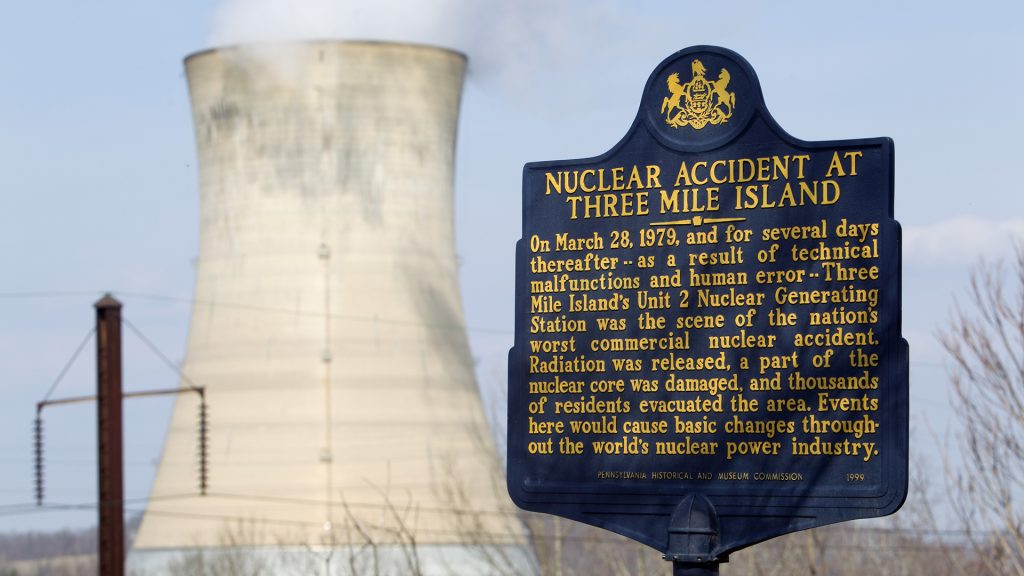
The company paid for access to all the power made by the previously defunct nuclear plant
By Theara Coleman, The Week US, 24 September 2024
With artificial intelligence putting a damper on its clean energy goals, Microsoft is turning to nuclear power in a first-of-its-kind exclusive deal with a nuclear plant. The massive amount of energy needed to power artificial intelligence has contributed to a resurgence of interest in nuclear power, a turn for an industry on its way out over the last decade. But with Big Tech closing in on nuclear plants, some wonder what will be left for everyone else.
The symbolism of the deal
Three Mile Island, the dormant Pennsylvania nuclear plant at the center of the Microsoft deal, became “shorthand for the risks posed by nuclear energy after one of the plant’s two reactors partly melted down in 1979,” said The New York Times. The other reactor operated safely for years before ultimately closing down for economic reasons five years ago. With the Microsoft deal, a “revival is at hand.” Because of artificial intelligence, the tech giant needs massive amounts of electricity for its growing number of data centers, and the company has agreed to use as much power as possible from the plant over the next 20 years. The plant’s owner, Constellation Energy, promises to spend $1.6 billion refurbishing the reactor, hoping to restart it by 2028 with regulatory approval. The deal marks the first time “Microsoft has secured a dedicated, 100% nuclear facility for its use,” the Times said.
“The symbolism is enormous,” Joseph Dominguez, the chief executive of Constellation, said to the Times. Even though Three Mile Island “was the site of the industry’s greatest failure,” it can now be a “place of rebirth.”…………………………………………………………….
Unfortunately, tech’s bullish approach to securing nuclear power has some experts worried there will not be enough to go around. The owners of nearly a third of the country’s nuclear power plants were in talks with tech companies to meet the demands of the AI boom, The Wall Street Journal said. These deliberations could potentially “remove stable power generation from the grid while reliability concerns are rising across much of the U.S,” and the electricity demand is driven up by new tech like AI, the outlet said. Instead of helping to add new green energy solutions to meet their “soaring power needs,” tech companies would be “effectively diverting existing electricity resources.” That could raise prices for other customers and “hold back emission-cutting goals,” said the Journal.
Amazon Web Services closed a similar deal earlier this year, acquiring a data center campus connected to Talen Energy Corp.’s nuclear power plant on the Susquehanna River in Pennsylvania for $650 million. The arrangement raised concerns among clean energy advocates and regulators, specifically the the state’s consumer advocate, Patrick Cicero, who said he was worried about cost and reliability if big companies snatch up all the plants. “Never before could anyone say to a nuclear-power plant, we’ll take all the energy you can give us,” Cicero said to the Journal.
https://theweek.com/tech/microsoft-three-mile-island-nuclear-power-big-tech
Cold War II: US Congress passes 25 anti-China laws in 1 week, funds propaganda campaign
By Ben Norton
https://geopoliticaleconomy.com/2024/09/22/us-congress-25-anti-china-laws-week-fund-propaganda/
In what it called “China Week”, the US House of Representatives approved 25 anti-Chinese laws over a few days, in bipartisan votes. Cold War Two fervor is reaching fever pitch in Washington.
The US House of Representatives approved 25 anti-China laws in just one week in September: a clear sign that Washington’s new cold war is quickly heating up.
The hawkish House Select Committee on the Chinese Communist Party proudly described these days as “China Week”, boasting that much of the legislation had “overwhelming bipartisan” support.
NBC News noted that “many of the measures passed with bipartisan support at a time when viewing [China] primarily as a geopolitical rival is one of the few issues both Republicans and Democrats can agree on”.
Cold War Two fervor is reaching fever pitch in the United States. CIA Director William Burns has referred to China as the “bigge[st] long-term threat”. The last two US secretaries of state, Democrat Antony Blinken and Republican Mike Pompeo, gave speeches specifically dedicated to demonizing China.
In an article in the Financial Times in 2023, centrist British columnist Gideon Rachman recalled that, “Visiting Washington last week, it was striking how commonplace talk of war between the US and China has become”.
“Many influential people seem to think that a US-China war is not only possible but probable”, Rachman wrote, adding that “US officials are now looking at the cold war — not as a warning, but as a potential model”.
Among the bills passed during September 2024’s “China Week” was the “Countering the PRC Malign Influence Fund Authorization Act”, which would give $1.63 billion to the State Department and USAID over five years ($325 million each year from 2023 through 2027) in order to fund organizations that spread anti-China propaganda around the world.
Anti-interventionist think tank the Quincy Institute for Responsible Statecraft noted that this massive funding for anti-China propaganda would amount to roughly twice the annual operating expenses of CNN.
Other bills approved in “China Week” include legislation that threatens the Hong Kong Economic and Trade Office, targets Chinese officials and their family members over Taiwan, seeks to strengthen US influence in the Pacific region, deepens ties to Japan and South Korea, expands blacklists of Chinese companies, and hopes to weaken the renminbi.
Many of the bills would facilitate the imposition of further unilateral US sanctions on entities not only from China, but also from Russia, Iran, the DPRK (North Korea), Cuba, and Venezuela. (The United States has already imposed sanctions on one-third of all countries on Earth, including 60% of poor nations.)
The so-called “End Chinese Dominance of Electric Vehicles in America Act” portrays Chinese EVs as a supposed threat, and would restrict them. However, it fails to mention that, as the New York Times put it, “few Chinese electric cars are sold in U.S.” An April 2024 report by the US International Trade Commission found that Chinese vehicles made up a mere 2% of EV imports into the US from 2018 to 2023. Despite this, just a month later, President Joe Biden announced 100% tariffs on Chinese EVs.
Other bills passed during “China Week” target Chinese drones, batteries, biotechnology, routers and modems, telecommunications infrastructure, and media outlets.
Approved legislation would also block scientific cooperation with China, while banning the sale of US farmland to nationals of China, Russia, Iran, and the DPRK (North Korea).
An especially redundant bill adopted by the House would withhold funding to US universities that host Confucius Institutes – organizations that teach foreign students about Chinese languages and culture. This measure went through despite the fact that, as was reported in 2023 by the US Government Accountability Office (GAO), “In 2018, Congress restricted federal funding to schools with institutes; nearly all of the institutes have since closed”.
All of this legislation passed during “China Week” must subsequently be approved by the Senate and signed by the president before it officially becomes law.
Negotiate with Moscow to end the Ukraine war and prevent nuclear devastation.
The Hill, by Robert F. Kennedy Jr. and Donald Trump Jr., opinion contributors – 09/17/24
The New York Times reported Thursday that the Biden administration is considering allowing Ukraine to use NATO-provided long-range precision weapons against targets deep inside Russia. Such a decision would put the world at greater risk of nuclear conflagration than at any time since the Cuban missile crisis.
At a time when American leaders should be focused on finding a diplomatic off-ramp to a war that should never have been allowed to take place, the Biden-Harris administration is instead pursuing a policy that Russia says it will interpret as an act of war. In the words of Vladimir Putin, long-range strikes in Russia “will mean that NATO countries — the United States and European countries — are at war with Russia.”
Some American analysts believe Putin is bluffing, and favor calling his bluff………………………
These analysts are mistaking restraint for weakness. In essence, they are advocating a strategy of brinksmanship. Each escalation — from HIMARS to cluster munitions to Abrams tanks to F-16s to ATACMS — draws the world closer to the brink of Armageddon. Their logic seems to be that if you goad a bear five times and it doesn’t respond, it is safe to goad him even harder a sixth time.
Such a strategy might be reasonable if the bear had no teeth. The hawks in the Biden administration seem to have forgotten that Russia is a nuclear power. They have forgotten the wisdom of John F. Kennedy, who said in 1963, “Nuclear powers must avert those confrontations which bring an adversary to a choice of either a humiliating retreat or a nuclear war.”………………………………………………………………………… more https://thehill.com/opinion/international/4882868-negotiate-with-moscow-to-end-the-ukraine-war-and-prevent-nuclear-devastation/
Microsoft deal propels Three Mile Island restart, with key permits still needed
By Reuters, September 21, 2024
Sept 20 (Reuters) – Constellation Energy (CEG.O), opens new tab and Microsoft (MSFT.O), opens new tab have signed a power deal to help resurrect a unit of the Three Mile Island nuclear plant in Pennsylvania in what would be the first-ever restart of its kind, the companies said on Friday.
Key regulatory permits for the plant’s new life, however, haven’t been filed, regulators say.
Big tech has led to a sudden surge in U.S. electricity demand for data centers needed to expand technologies like artificial intelligence and cloud computing. ……………………………………..
Power from the plant would be used to offset Microsoft’s data center electricity use, the companies said.
A relaunch of Three Mile Island, which had a separate unit suffer a partial-meltdown in 1979 in one of the biggest industrial accidents in the country’s history, still requires federal, state and local approvals.
Constellation has yet to file an application with federal nuclear regulators to restart the plant.
“It’s up to Constellation to lay out its rationale for justifying restart, so we’re prepared to engage with the company on next steps,” said Nuclear Regulatory Commission (NRC) spokesperson Scott Burnell.
Constellation said it expected the NRC review process to be completed in 2027.
BILLION DOLLAR BET
The deal would help enable a revival of Unit 1 of the five-decades-old facility in Pennsylvania that was retired in 2019 due to economic reasons. Unit 2, which had the meltdown, will not be restarted. https://www.reuters.com/markets/deals/constellation-inks-power-supply-deal-with-microsoft-2024-09-20/
US Military Policy Is Stoking the Risk of Nuclear War on Korean Peninsula
As Trump and Harris bicker over North Korea, the US military lays plans that could bring nuclear tensions to a brink.
By Ju-Hyun Park , Truthout, September 19, 2024
U.S. politicians can’t stop talking about Kim Jong Un. The two major party conventions have come and gone, with both presidential candidates mentioning the North Korean leader by name. At the Republican National Convention (RNC), Donald Trump claimed Kim had endorsed him, adding, “He misses me.” Just weeks later at the Democratic National Convention (DNC), Kamala Harris alluded to her opponent’s claims, declaring before an enraptured audience that the “tyrant” Kim is “rooting for Trump.”
Neither candidate told the truth. The North Korea’s state news agency was swift to respond to Trump back in June, clarifying the position of the government with characteristically pointed remarks: “No matter what administration takes office in the U.S., the political climate, which is confused by the infighting of the two parties, does not change and, accordingly, we do not care about this.”
The fact-free treatment of North Korea by both parties is a sign of how the electoral cycle has reduced the Korean crisis to a political football. This is especially dangerous in a time when the risk of war in Korea is at its highest in decades. Significantly, neither Republicans nor Democrats seem interested in a public discussion about the concrete situation in Korea, or the major escalations the U.S. is undertaking there.
While the news cameras and the eyes of the electorate were trained on the DNC in Chicago, the U.S. military executed one of the largest war games on Earth in Korea: Ulchi Freedom Shield (UFS). UFS is the latest name for an annual series of military exercises conducted by the Combined Forces Command, the command structure under which the military of South Korea answers to U.S. generals. (The U.S. has had operational wartime command of South Korea’s armed forces since 1950.) Originating in 1976, UFS and its predecessors routinely deploy tens of thousands of troops, along with U.S. “strategic assets” such as aircraft carriers, heavy bombers and nuclear submarines.
This is a major, and widely misunderstood, component of the unfinished Korean War — that for over half a century, some of the largest military maneuvers on Earth are conducted on an annual basis in Korea within sight of the border bisecting the peninsula. Although the U.S. and Republic of Korea (ROK), South Korea’s official name, insist these exercises are defensive, many of them rehearse the invasion and occupation of North Korea.
These “war games,” by their very nature, look identical to the first steps of a real invasion. This year’s UFS featured a whopping 48 individual war drills, deploying 19,000 South Korean troops, 200 military aircraft and an unknown number of U.S. soldiers. What’s more, this year’s war games took place in the context of another significant escalation: emergent plans to potentially redeploy U.S. nuclear weapons to Korea.
Killing Peace
The Korean War was concluded with a ceasefire rather than a permanent peace treaty, making it the longest war in U.S. history. For over 50 years, relations between North and South Korea were structured through the paradigm of independent, peaceful reunification — a mutual commitment to nonviolently end both the Korean War and the division of the Korean people. And since the late 1980s, relations between the U.S. and North Korea were also based on the framework of denuclearization. Both of these diplomatic paradigms have now crumbled.
………………………………………………………………………………………………………………………………………… more https://truthout.org/articles/us-military-policy-is-stoking-the-risk-of-nuclear-war-on-korean-peninsula/
MIT Coalition for Palestine Announces Major Divestment Win

09/17/2024, https://nlgmass.org/mit-coalition-for-palestine-announces-major-divestment-win/
The MIT Coalition For Palestine announces a major divestment win for its Scientists Against Genocide (SAGE) movement : MIT has ended the MISTI-Israel Lockheed Martin Fund. This is the first known shutdown of an American-Israeli weapons manufacturer partnership at a U.S. university since the war on Gaza has begun, and MIT has chosen to end this partnership despite renewing its other MISTI projects. The Fund had been a project by MIT International Science and Technology Initiative Israel (MISTI-Israel) to connect students and researchers at MIT to the global arms manufacturer’s Israeli offices.
Lockheed Martin has unquestionably profited from the genocide in Gaza, supplying the Israeli government with Hellfire missiles, attack aircraft, and heavy artillery directly used in destroying Palestinian lives, homes, and society, as well as enabling torture camps and a regime of apartheid. This win is a testament to the sustained pressure from activists, including MIT labor’s refusal to abet the apartheid state via contributing to its weapons research. NLG is proud to have supported and represented MIT SAGE via legal representation and legal observation, especially when they were under threat of police violence and unlawful arrests during the encampment of Apr-May 2024.
Israeli forces continue to escalate in their terror, and MIT maintains ongoing, direct research funding links to the Israeli military supply chain. MIT Coalition for Palestine will continue to fight and resist against the genocidal regime: the NLG will continue to support that fight. No science for apartheid, and free Palestine
Selling War: How Raytheon and Boeing Fund the Push for NATO’s Nuclear Expansion

World Beyond War, By Alan Macleod, Mint Press, September 20, 2024
To “counter Russia’s nuclear blackmail,” the Atlantic Council confidently asserted, “NATO must adapt its nuclear sharing program.” This includes moving B-61 atomic bombs to Eastern Europe and building a network of medium-range missile bases across the continent. The think tank praised Washington’s recent decision to send Tomahawk and SM-6 missiles to Germany as a “good start” but insisted that it “does not impose a high enough price” on Russia.
What the Atlantic Council does not divulge at any time is that not only would this drastically increase the likelihood of a catastrophic nuclear war, but that the weapons they specifically recommend come directly from manufacturers that fund them in the first place.
The B-61 bombs are assembled by Boeing, who, according to its most recent financial reports, gave tens of thousands of dollars to the organization. And the Tomahawk and SM-6 are produced by Raytheon, who recently supplied the Atlantic Council with a six-figure sum.
Thus, their recommendations not only put the world at risk but also directly benefit their funders.
Unfortunately, this gigantic conflict of interest that affects us all is par for the course among foreign policy think tanks. A MintPress News investigation into the funding sources of U.S. foreign policy think tanks has found that they are sponsored to the tune of millions of dollars every year by weapons contractors. Arms manufacturing companies donated at least $7.8 million last year to the top fifty U.S. think tanks, who, in turn, pump out reports demanding more war and higher military spending, which significantly increase their sponsors’ profits. The only losers in this closed, circular system are the American public, saddled with higher taxes, and the tens of millions of people around the world who are victims of the U.S. war machine.
The think tanks receiving the most tainted cash were, in order, the Atlantic Council, CSIS, CNAS, the Hudson Institute, and the Council on Foreign Relations, while the weapons manufacturers most active on K-Street were Northrop Grumman, Lockheed Martin, and General Atomics.
These think tanks directly affect conflicts around the world. CSIS, for example, are among the loudest advocates for arming Ukraine, Taiwan and Israel, even as the latter carries out a genocide in Palestine. A recent report lays out a shopping list of U.S. weapons that would help the Israeli military, including Excalibur artillery projectiles, JDAM bomb guidance systems, and Javelin missiles. Those weapons are manufactured by Raytheon, Boeing, and Lockheed Martin, respectively, all of whom are among CSIS’ top funders.
U.S. arms are being used daily to carry out illegal and deadly attacks against civilian populations in Palestine, Lebanon, and Syria, making arms manufacturers directly complicit in war crimes.
One example of this is the recent Israeli bombing of the Al Mawasi humanitarian zone in Gaza. Israel dropped three one-ton MK-84 bombs on the camp, killing at least 19 people. Dozens more are still missing.
According to the UN, MK-84 bomb blasts rupture lungs, tear limbs and heads from bodies, and burst sinus cavities up to hundreds of meters away.
The MK-84 bombs were produced in the U.S. by General Dynamics and sent to Israel with Washington’s blessing. General Dynamics has made huge profits from the slaughter; the D.C.-based arms manufacturer’s stock price has jumped by 42% since October 7.
Conflicts and Conflicts of Interest
Think tanks are an essential part of K-Street, the collective term for the assembly of lobbyists, trade associations and other organizations that attempt to alter government policy……………………………………………………………………………………
There is obviously a massive conflict of interest if groups advising the U.S. government on military policy are awash with cash from the arms industry. This study attempts to quantify that conflict of interest. It analyzed the top 50 most influential foreign policy think tanks in the U.S., according to the University of Pennsylvania’s Global Go to Think Tank Index, and tracked the funding of these 50 organizations to ascertain how much money each received from the weapons industry. A comprehensive funding spreadsheet containing all the numbers used in this study can be found here.
Figures were taken from each group’s websites, funding lists, and financial declarations for the last financial year available. In total, the arms industry donated at least $7.8 million to those think tanks.
This, however, is certainly a significant underestimate for several reasons. ……………………………….
Tanks and Think Tanks
The results were both worrying and unsurprising, as this study found that giant arms manufacturers quietly bankrolled many of the largest and most influential groups advising the U.S. government on its foreign policy. The Atlantic Council alone is funded by 22 weapons companies, totaling at least $2.69 million last year. Even a group like the Carnegie Endowment for Peace, established in 1910 as an organization dedicated to reducing global conflict, is sponsored by corporations making weapons of war, including Boeing and Leonardo, who donate tens of thousands of dollars annually.
The five think tanks that received the most funding from the arms industry are: The Atlantic Council, $2.69 million; Center for Strategic and International Studies (CSIS), $2.46 million; Center for a New American Security (CNAS), $950,000; Hudson Institute, $635,000; and the Council on Foreign Relations, $300,000.
At least 36 weapons manufacturers provided funding to major American think tanks. The most “generous” among them were Northrop Grumman, $1.07 million; Lockheed Martin, $838,000; General Atomics, $510,000; Leonardo S.p.A., $485,000; and Mitsubishi, $443,000.
When presented with these findings, peace activist David Swanson, author of “War is a Lie,” appeared disgusted but not surprised. Swanson described the role of arms industry-funded think tanks as such:
They have to build up through endless repetition and through debates that remain within their bizarre parameters the idea that wars are won, that wars are defensive, that nuclear weapons deter wars, that enemies cannot be spoken with, that weapons spending is a public service that nations should do to the maximum extent possible while stripping funding away from human needs, and similar outrageous pieces of nonsense.”
He Who Pays the Piper
It is no coincidence that the groups receiving the most weapons industry money are home to some of the most hawkish, pro-war voices to be found anywhere. The arms industry, like all corporations, does not donate out of the goodness of their hearts but is instead looking for a return on their investments.
Influential think tanks like CSIS are certainly giving their benefactors bang for their buck, consistently agitating for more military spending and more war around the world, whatever the consequences.
………………………..European countries, CSIS also insisted, must “pull their weight” in NATO, transforming their societies into ones every bit as militarized as the U.S., for the sake of “global democracy.”
Meanwhile, writing in The Atlantic, Eliot A. Cohen, CSIS’ Arleigh A. Burke Chair in Strategy, demanded an escalation in the West’s involvement in Ukraine. “We need to see masses of Russians fleeing, deserting, shooting their officers, taken captive, or dead. The Russian defeat must be an unmistakably big, bloody shambles,” he wrote, adding that “To that end, with the utmost urgency, the West should give everything that Ukraine could possibly use.”
This included long-range missiles and F-16 and F-35 fighter jets.
What neither Cohen nor the Atlantic noted, however, was that the weapons he demanded to be bought and sent to Ukraine are made by General Dynamics and Lockheed Martin, groups that directly fund CSIS……………………….
the relentless pro-war voices were hardly limited to CSIS. In fact, every think tank taking substantial arms industry cash maintained a notably hawkish stance. The Atlantic Council, for instance, policed European nations’ NATO spending in an attempt to pressure them to purchase more arms and has advocated that the U.S. create a new “Indo-Pacific intelligence coalition” that would ramp up tensions with China. CNAS, meanwhile, has claimed that the U.S.’ supposedly muted response to “Chinese provocations” has eroded its “credibility” on the world stage.
Speaking on what think tanks have achieved, Swanson told MintPress:
They’ve normalized the idea of measuring war spending as a percentage of an economy, and the idea that there is no such thing as too much of it. They’ve normalized the idea of only one solution to all problems, even problems created by that one solution, namely war. [And] they present endlessly endlessly endlessly ‘defensive alliance NATO’ with not a soul noticing that NATO’s wars have all been blatantly aggressive.”
The American public is generally skeptical of war. Surveys show that two-thirds of the country wants Washington and Ukraine to directly engage in diplomacy with Russia, even if that means conceding Ukrainian territory. Most Americans are against sending more U.S. troops to the Middle East as well, even if it were only to “defend Israel.”
They hold these positions despite what they are constantly told in the media. A study by the Quincy Institute found that, when discussing Ukraine, 85% of all think tanks quoted in major outlets like the New York Times, Washington Post and The Wall Street Journal received funding from the military-industrial complex. Most prominent among these were CSIS and the Atlantic Council.
Making a Killing from Killing
In his hit 1970 song, “War,” Edwin Starr claimed that the practice was a “friend only to the undertaker.” But war has also been excellent news for weapons contractors. In the past five years, General Dynamics’ stock price has jumped by 103%, Lockheed Martin’s by 107%, and Northrop Grumman’s by 110%.
Arms industry shareholders have seen massive returns on investment, thanks to the actions of a nation addicted to conflict. The United States has been engaged in warfare for 231 of its 248 years as an independent country. According to a report by the Congressional Research Service, a U.S. government institution, America has launched 469 foreign military interventions between 1798 and 2022 and 251 since 1991 alone. This has included special operations, targeted assassinations of foreign leaders, military coups, and outright invasions and occupations of other countries.
More than half of all discretionary Federal spending goes to the military, whose budget is closing in on $1 trillion annually. American military spending rivals that of all other nations combined. The United States also maintains a network of around 1,000 bases around the world, including nearly 400 in a ring encircling China.
This feeds the insatiable appetites of weapons manufacturers, who, therefore, have even more money to spend buying influence and lobbying the government for more war and antagonistic policies that benefit them.
Part of their strategy is funding think tanks in Washington, D.C. For the likes of Lockheed Martin and Raytheon, it is a no-brainer, an astute business investment. A few hundred thousand dollars per year spent bankrolling think tanks like CSIS, CNAS or the Atlantic Council translates into billions of dollars worth of more orders for tanks, ships and aircraft.
By 2016, the United States was bombing seven countries simultaneously. And yet, militarism and the danger to the planet have only increased since then. The U.S. is currently gearing up for potential wars against both Russia and China – two of the largest and most populous states on the planet, and both ones with large stockpiles of atomic weapons. A war with either would risk Armageddon.
This is all great news for the military-industrial-complex, however, who are making a killing. And that is why it is imperative that they be stopped; it is literally a life-and-death issue for all of us.
Feature photo | The North Atlantic Council meeting begins to fill during the meeting of Defence Ministerials at NATO Headquarters, Brussels, Belgium, February 12, 2020. Photo |DVIDS
Alan MacLeod is Senior Staff Writer for MintPress News. After completing his PhD in 2017 he published two books: Bad News From Venezuela: Twenty Years of Fake News and Misreporting and Propaganda in the Information Age: Still Manufacturing Consent, as well as a number of academic articles. He has also contributed to FAIR.org, The Guardian, Salon, The Grayzone, Jacobin Magazine, and Common Dreams.
https://worldbeyondwar.org/selling-war-how-raytheon-and-boeing-fund-the-push-for-natos-nuclear-expansion/
Three Mile Island nuclear reactor to restart to power Microsoft AI operations
Three Mile Island will also be renamed the Crane Clean! Energy Center
Pennsylvania plant was site of most serious nuclear meltdown and radiation leak in US history in 1979
Guardian, Richard Luscombe, 21 Sept 24
A nuclear reactor at the notorious Three Mile Island site in Pennsylvania is to be activated for the first time in five years after its owners, Constellation Energy, struck a deal to provide power to Microsoft’s proliferating artificial intelligence operations.
The plant was the location of the most serious nuclear meltdown and radiation leak in US history, in March 1979 when the loss of water coolant through a faulty valve caused the Unit 2 reactor to overheat. More than four decades later, the reactor is still in a decommissioning phase.
Constellation closed the adjacent but unconnected Unit 1 reactor in 2019 for economic reasons, but will bring it back to life after signing a 20-year power purchase agreement to supply Microsoft’s energy-hungry data centers, the company announced on Friday……………
As part of the agreement, Three Mile Island will also be renamed the Crane Clean Energy Center to recognize Chris Crane, the former chief executive of Constellation’s parent company………………….
Significant investment will be required to restore the plant, including replacing or refurbishing the turbine, generator, main power transformer and cooling and control systems, Dominguez said.
There will also be a comprehensive safety and environmental review by the US Nuclear Regulatory Commission before it issues a permit for the restart of the reactor, which is scheduled to be online sometime in 2028. Constellation said it would seek licenses that will extend plant operations to at least 2054.
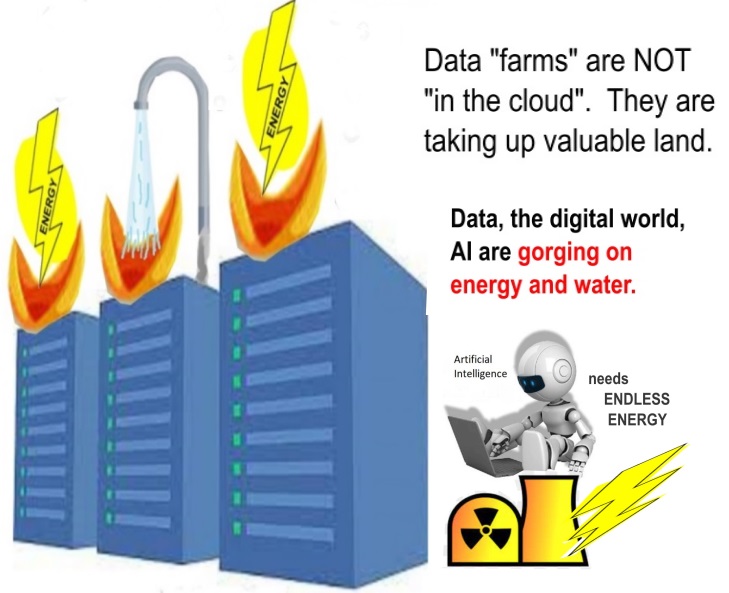
Tech giants including Microsoft, Google, Amazon, Meta and Apple are consuming ever-greater amounts of energy to power the boom in artificial intelligence. According to Goldman Sachs, demand will grow 160% by 2030, when data centers are expected to account for 8% of the power generated in the US.
With the spike in demand, however, comes rising concerns over the impact on the environment. An analysis by the Guardian published this week found that data center emissions of four of the biggest tech companies, Google, Microsoft, Meta and Apple, are probably about 662% – or 7.62 times – higher than officially reported. https://www.theguardian.com/environment/2024/sep/20/three-mile-island-nuclear-plant-reopen-microsoft
US Navy chief unveils plan to be ready for possible war with China by 2027
The announcement of the goals comes as US leaders are treading a fine line, pledging a commitment to the defence of Taiwan while also working to keep communication open with Beijing to deter greater conflict.
Beijing regards Taiwan as part of China to be reunited, by force if necessary. Most countries, including the US, do not recognise Taiwan as an independent state.
But Washington opposes any attempt to take the island by force and is legally bound to support Taiwan’s military defence capability.
Admiral Lisa Franchetti says lessons from combat in the Red Sea and Ukraine’s Black Sea fight can help the US prepare for an attack on Taiwan
SCMP, Associated Press, 19 Sep 2024
The US Navy is taking lessons from its combat in the Red Sea over the past year and what Ukraine has done to hold off the Russians in the Black Sea to help US military leaders prepare the service for a potential future conflict with China.
From drones and unmanned surface vessels to the more advanced operation of shipboard guns, the US Navy is expanding its combat skills and broadening training. It is also working to overcome recruiting struggles so it can have the sailors it needs to fight the next war.
Admiral Lisa Franchetti, chief of naval operations, is laying out a series of goals, including several that will be highly challenging to meet, in a new navigation plan she described in an interview. The objective is to be ready to face what the Pentagon calls its key national security challenge – China.
“I’m very focused on 2027. It’s the year that President Xi [Jinping] told his forces to be ready to invade Taiwan,” Franchetti said. “We need to be more ready.”
The new plan, released on Wednesday, includes what she considers seven priority goals, ranging from removing delays in ship depot maintenance to improving US Navy infrastructure, recruiting and the use of drones and autonomous systems.
One significant challenge is to have 80 per cent of the force be ready enough at any given time to deploy for combat if needed – something she acknowledged is a “stretch goal”. The key, she said, is to get to a level of combat readiness where “if the nation calls us, we can push the ‘go’ button and we can surge our forces to be able to meet the call”.
The announcement of the goals comes as US leaders are treading a fine line, pledging a commitment to the defence of Taiwan while also working to keep communication open with Beijing to deter greater conflict.
Beijing regards Taiwan as part of China to be reunited, by force if necessary. Most countries, including the US, do not recognise Taiwan as an independent state.
But Washington opposes any attempt to take the island by force and is legally bound to support Taiwan’s military defence capability.
An important element in any Asia-Pacific conflict will be the need to control the seas. Franchetti said the US can learn from how the Ukrainians have used drones, air strikes and long-range unmanned vessels to limit Russian ship activity in the western Black Sea and keep access open to critical ports.
“If you look at the Ukrainian success in really keeping the Russian Black Sea fleet pushed all the way over into the east, that’s all about sea denial and that’s very important,” Franchetti said. She added that Ukraine has been innovating on the battlefield by using existing systems, such as drones, in different ways.
The US Navy’s months-long battle with the Iran-backed Houthi rebels in Yemen has provided other lessons…………………………………………………………………. https://www.scmp.com/news/world/united-states-canada/article/3279048/us-navy-chief-unveils-plan-be-ready-possible-war-china-2027
Patrick Lawrence: The ‘War Party’ Makes Its Plans
The stipulation Biden and Blinken now purport to insist upon is that they will not assent to letting Kiev use weapons provided by the U.S. — which seems to be different from weapons made by the U.S.—against targets in the Russian interior.
These proposals, if confirmed as Zelensky makes his next trip to Washington, all align in one direction: The Kiev regime’s running theme remains dragging the West further into the war rather as the Netanyahu regime in Israel is forever trying to do the same in West Asia. Zelensky, the Israeli prime minister, Biden: The world’s problem right now, or one of them, is that none of these people can afford to lose the wars their hubris led them to start.
SCHEERPOST, September 18, 2024 , By Patrick Lawrence
The Biden White House and the Democratic Party machine trying to advance Kamala Harris from No. 2 in the regime to No. 1 gets more interesting by the week, I have to say. The Harris campaign has at last, two months after the party’s elites and financiers railroaded her candidacy past any semblance of a democratic process, published a platform it calls A New Way Forward, and I will get to this in due course. I am less interested now in words posted on a website than in two recent developments we ought to consider together even if no one has yet thought to do so.
Slowly and very surely, it becomes clear by way of these weekly turns how a new Democratic regime, should Harris win on Nov. 5, proposes to manage the imperium’s business. And however many foolish voters may be illusioned otherwise, if Harris takes the White House her business will be neither more nor less than managing the imperium—the wars, the provocations, the illegal sanctions and other collective punishments, the terrorist clients in Israel, the neo–Nazis in Kiev.
Last Wednesday, Sept. 4, Liz Cheney surprised Washington and, I suppose, most of the rest of us when she announced she would support Harris’s run for the presidency. The onetime Wyoming congresswoman, a coup-cultivating warmonger who remains among the hawkiest of right-wing foreign-policy hawks, was not the first Republican to jump across the aisle this political season, and she was also not the last: Two days later, Liz’s pop did the same. Dick Cheney, of course, needs no introduction.
Instantly, the Harris campaign declared its delight in having the support of these courageous patriots, as the organization called them in its official statements.
A week after all this high-caliber politicking, President Biden convened in the Oval Office with Keir Starmer, the new British prime minister, to consider Ukraine’s proposal to fire Western-supplied missiles at targets well inside Russian territory. The Brits are ready to oblige the Kiev regime, as are the French, but everyone—London, Paris, Kiev—needs Biden’s permission to widen the war in this fashion.
At the moment, Biden and Secretary of State Blinken are in their “Well, maybe” phase, and we are meant to be on the edges of our seats wondering whether they will assent to these plans. But haven’t we seen this movie before and don’t we know how it ends? Wasn’t it, “Maybe we will send HIMARS rocket systems,” “Maybe M–1 tanks,” “Maybe Patriot missiles,” “Maybe F–16s”? Even before the Biden–Starmer encounter last week, Blinken and David Lammy, the British foreign secretary, during a visit to Kiev for talks with Volodymyr Zelensky, were already dropping heavy hints that Biden will once again acquiesce to the plans the Ukrainian president and the British PM were choreographed to present to him.
The stipulation Biden and Blinken now purport to insist upon is that they will not assent to letting Kiev use weapons provided by the U.S. — which seems to be different from weapons made by the U.S.—against targets in the Russian interior. This is no more than one of those hair-splits in which the Biden White House trades when it wants to look thoughtful and cautious but is neither. Will someone tell me what damn difference it will make to Russia if Moscow takes a hit from a missile sent from Britain, France or the United States?
These people are convening to plan the Western powers’ reckless escalation of a proxy war they have no way of winning and know they have no way of winning. Desperation is as desperation does: This is my simple read of these deliberations.
Between the war-planning and the shifting political loyalties, what have we witnessed over these past couple of weeks? This is our question. …………………………………………………………………
There is a lot of politics in the Democrats’ exuberant greeting of the Cheneys, of course. Harris’s people want to make the most of divisions among Republicans, and, in the case of Liz Cheney, to exploit the animus that has arisen between her and Donald Trump. But we must look more closely than this fully to understand this political ballet. Liz Cheney once had a public spat with Rand Paul over who was “Trumpier.” Dick Cheney is guilty of more war crimes, crimes against humanity and war-profiteering than Donald Trump could dream of in his sweetest dreams.
No mention of this as we think about these two political defections? I have read or heard of none from within the Harris hive.
Stephen Cohen used to joke, except that he wasn’t joking, that there is one party in Washington and it is rightly called the War Party. ……………………..
Read A New Way Forward, a 13–page document. The one and a half pages given to national security and foreign affairs amount to a screed dedicated to Russophobia, Sinophobia, NATOphilia and “the most lethal fighting force in the world,” which seems to be Harris’s idea of a diplomatic corps. This is how Steve Cohen’s War Party thinks and what it sounds like. As a statement of intent, the Harris–Walz platform is entirely accommodating of the Biden White House’s very likely decision to escalate the Ukraine conflict to the point of risking the World War III Biden pretends not to want. …………………………………………………………..
Among the Biden regime’s purported concerns as it considers authorizing Ukraine to widen the war is what difference attacks on the Russian interior would make. The White House and the Pentagon want to see a plan, it has been reported. It is a good question, asking about the point of this kind of escalation, but I am not sure an answer matters much to those who sit at the table in the White House cabinet room. As I have argued severally in this space, the Biden regime has foolishly cast this war as one between democracy and autocracy. Accordingly, it can afford to risk all manner of precipitous escalations, but it cannot afford to lose.
Entering stage right, possibly on cue, Volodymyr Zelensky now says he wants to show Biden, and subsequently Harris and Trump, his “plan for victory over Russia.” The Washington Post reported last Friday this will consist of very few parts. “All the points depend on the decision of Biden,” the Ukrainian president said at a recent forum in Kiev.
As The Post noted, Zelensky is to date shy of revealing these points, but there are reports, well short of confirmed, that there are three of them. The first is the missile authorization, the second is an assurance that NATO will deploy air-defense systems to protect western Ukraine, and the third—get a load of this—is a guarantee that NATO will dispatch ground troops to rear areas of the conflict so that the Armed Forces of Ukraine can deploy more of its own troops to the front.
These proposals, if confirmed as Zelensky makes his next trip to Washington, all align in one direction: The Kiev regime’s running theme remains dragging the West further into the war rather as the Netanyahu regime in Israel is forever trying to do the same in West Asia. Zelensky, the Israeli prime minister, Biden: The world’s problem right now, or one of them, is that none of these people can afford to lose the wars their hubris led them to start.
The Anglos and the Americans are likely to make an official announcement about the use of long-range missiles against Russia after the U.N. General Assembly concludes its business on Sept. 28. Starmer has recently indicated as much. In the best outcome we will find that Putin has rattled Washington and London such that they will step back from this latest plan to escalate. It is possible. But the U.S. and the other NATO powers have not done much stepping back to date, we are well to remind ourselves. …………………………………………………….
The Americans and the Brits can be said to be playing, unserious as they are, but the Russians are not. https://scheerpost.com/2024/09/18/patrick-lawrence-the-war-party-makes-its-plans/
The challenge of long-lived alpha emitters in the Chalk River legacy wastes
Concerned Citizens of Renfrew County and Area, January 22, 2024 (revised September 17, 2024)
Why is so little Chalk River waste suitable for near surface disposal?
Extensive research work at the Chalk River Laboratories on nuclear reactor fuels, and in the early days, on materials for nuclear weapons, produced waste with large quantities of long-lived alpha emitters. This waste is difficult to manage and can even become increasingly radioactive over time.
According to the International Atomic Energy Agency, because of the presence of long-lived alpha emitters, waste from nuclear research facilities is generally classified as intermediate level, and even in some cases, as high level. This waste cannot be put in a near surface disposal facility because its radioactivity will not decay to harmless levels during the period that the facility remains under institutional control.
Alpha emitters decay by throwing off an alpha particle, the equivalent of a helium nucleus, with two protons and two neutrons. The external penetrating power of an alpha particle is low, but alpha emitters have extremely serious health effects if ingested or inhaled. They can lodge in your lungs and cause cancer.
Research at Chalk River and all other nuclear laboratories is ultimately based on three long-lived alpha emitters — thorium-232, uranium-235, and uranium-238. These are the “naturally occurring” or “primordial” radionuclides. They were created by large stars and then incorporated into the Earth and the solar system when they formed some 4.5 billion years ago. The waste inventory proposed by Canadian Nuclear Laboratories for the Near Surface Disposal Facility (NSDF) includes over six tons each of thorium-232 and uranium-238……………………………………………………..
Hazards increase when uranium and thorium are mined and concentrated from ores and used in their pure form. Marie Curie, who spent much of her career isolating radium and polonium from uranium, died of radiation-induced leukemia at age 66. She was buried in a lead-lined tomb because her corpse emitted so much radiation.
When thorium-232, uranium-235, and uranium-238 are irradiated in a reactor, as at Chalk River, they absorb neutrons and produce significant quantities of new, man-made, long-lived alpha-emitters. Irradiated uranium-238 absorbs a neutron and temporarily forms uranium-239. Uranium-239 transmutes to neptunium-239, which quickly transmutes to long-lived plutonium-239, with a half-life of 24,000 years.
Plutonium-239 is “fissile” – it can readily support a chain reaction. It is what the early Chalk River researchers produced for the manufacture of U.S. nuclear weapons, by separating the plutonium from irradiated reactor fuel. They also used the separated plutonium to make “mixed oxide” (MOX) reactor fuel, mixing it with fresh uranium………………………………………….
Detecting alpha emitters in mixed waste is expensive and challenging. Putting inadequately characterized waste in the NSDF would invalidate its safety case.
Unfortunately, the NSDF Project lacks adequate waste characterization procedures. If the project is allowed to proceed, workers and future Ottawa valley residents could be exposed to unknown quantities of long-lived alpha emitters and suffer the serious health effects associated with them. https://concernedcitizens.net/2024/09/17/the-challenge-of-long-lived-alpha-emitters-in-the-chalk-river-legacy-wastes/
Biden, Harris sacrificing endless thousands of Ukrainians to retain presidency November 5.

Walt Zlotow, West Suburban Peace Coaliton, Glen Ellyn IL, 16 Sept 24

President Biden sent Secretary of State Antony Blinken to Kyiv last week to reassure Ukrainian President Zelensky that Ukraine can prevail against Russia with endless US billions in weapons. He also stated that Ukraine will eventually achieve NATO membership.
Blinken was lying to Zelensky. He, along with President Biden and Democratic nominee Kamala Harris, know full well the US proxy war against Russia in Ukraine is lost. Indeed, it was certain to be lost the day it started over two and a half years ago. It could not be won without direct US/NATO involvement, regardless of how many hundreds of billions we squander supplying Ukraine with weapons. Direct involvement was ruled out because it likely means WWIII. US weapons are worthless because Ukraine is running out of soldiers to use them.
The US essentially green-lighted the invasion believing US weaponry would allow Ukraine to weaken, even defeat Russia, a long sought US foreign policy goal to keep them out of the European political economy.
The result has been a catastrophe for Ukraine, now a shattered country. It spells the end of continued US domination of Europe that offered no seat at the table for Russia.
The Biden/Harris administration must now take the sensible, moral action of forcing Ukraine to sue for peace. Allowing Ukraine to bleed out with further destruction to its economy, infrastructure, demographics and hundreds thousands more casualties is a grotesque policy to pursue.
But Biden and Harris are committed to their declaration this is a holy way of autocracy v. freedom. They are loathe to allow any settlement which allows Russia to achieve their war aims of no NATO membership for Ukraine and independence for Donbas, with security for Ukraine going forward.
It’s even more improbable for them to do that with the election just 7 weeks away. Admitting defeat after squandering over $150 billion simply destroying Ukraine to allow a Russian victory will bring an avalanche of criticism from national security state warhawks. It would rip away the false notion that this was a just war to protect US national security interests. It could cost Harris the election.
So Biden and Harris continue to prevent and cover up Ukraine’s impending collapse till after Election Day. They continue to fling tens of billions in weaponry into Ukraine which will either be destroyed by overwhelming Russian firepower or sit idle unused.
Biden and Harris have made a pact with the Devil over Ukraine. Tens of thousands of Ukrainians must die to keep the Democrats from losing a war shortly before an election. A war that never should have been fought and that signals the impending demise of US unilateral control of the world.
During his first year, President Biden lost the 20 year long Afghan war. Losing 2 senseless wars in one term is a lost war too far to remain in power. Biden and Harris’ message to Ukraine? ‘Keep dying Ukrainians. We’ll figure something out after November 5’.
Tritium into the air?

“You get layers and layers and layers and layers of denial.”
Venting plans at Los Alamos have received scant attention, writes Alicia Inez Guzmán of Searchlight New Mexico
Beyond Nuclear International, 16 Sept 24
Last fall, the international community rose up in defense of the Pacific Ocean. Seafood and salt purveyors, public policy professors, scientists and environmentalists, all lambasted Japan’s release of radioactive wastewater from the disastrously damaged Fukushima Daiichi nuclear plant into the sea.
At the heart of the contention was tritium, an element that, by mass, is 150,000 times more radioactive than the plutonium used in the cores of nuclear weapons. Odorless and colorless, tritium — the radioactive form of hydrogen — combines with oxygen to form water. Just one teaspoon is enough to contaminate 100 billion gallons more water up to the U.S. drinking water standard, according to Arjun Makhijani, an expert on nuclear fusion and author of the monograph, “Exploring Tritium Dangers.”
What didn’t make international headlines — but was quietly taking place on the other side of the world — was Los Alamos National Laboratory’s own plans to vent the same radioactive substance into northern New Mexico’s mountain air. Japan’s releases would take place over three decades. LANL’s would include up to three times more tritium — and take place in a matter of days.
There is no hard timeline for the release, but if the plans are approved by the Environmental Protection Agency, LANL is looking at a period with “sufficiently warm weather,” a spokesperson from the National Nuclear Security Administration wrote by email. That could mean as soon as this summer.
Those controversial plans date back to 2016, when LANL discovered that a potentially explosive amount of hydrogen and oxygen was building up in four containers of tritium waste stored in a decades-old nuclear dump called Area G. The safest and most technically viable solution, the lab decided — and the best way to protect workers — would be to release the pressure and, with it, thousands of curies of tritium into the air.
When advocates caught wind of the venting in March 2020, Covid was in its earliest and most unnerving phase. Pueblo leaders, advocates and environmentalists wrote impassioned letters to the lab and the EPA, demanding that they change or, at the very least, postpone the release until after the pandemic. At the same time, Tewa Women United, a nonprofit founded by Indigenous women from northern New Mexico, issued its first online petition, focusing on tritium’s ability to cross the placental barrier and possibly harm pregnant women and their fetuses. Only after a maelstrom of opposition did the lab pause its plans and begin briefing local tribes and other concerned members of the community.
“We see this as a generational health issue,” said Kayleigh Warren, Tewa Women United’s food and seed sovereignty coordinator. “Just like all the issues of radioactive exposure are generational health issues.”
Last fall, the lab again sought the EPA’s consent. A second petition from Tewa Women United followed. Eight months later, the federal agency’s decision is still pending.
The NNSA, which oversees the health of America’s nuclear weapons stockpile from within the Department of Energy, declined Searchlight New Mexico’s requests for an interview.
The crux of the issue comes down to what is and isn’t known about the state of the containers’ contents. Computer modeling suggests they are pressurized and flammable, but the actual explosive risk has not been measured, the lab has conceded.
Critics have requested that the contents be sampled first to determine whether there is any explosive risk and whether venting is even needed. The EPA says that sampling would require going through the same red tape as venting. The lab, for its part, plans to sample and vent the contents in one fell swoop.
But why, critics wonder, are these containers in this state in the first place? Were they knowingly over packed and left for years to grow into ticking time bombs?…………………………………………………………………………………………………………………………………..
……………..Tritium 101
Plutonium and uranium are familiar to most people, if by name only. But few know anything at all about tritium — a radioactive isotope of hydrogen that is used to make watch dials and EXIT signs glow bright neon. Tritium’s other, lesser-known use is as a “boost gas,” which, when inserted into the hollow core of a plutonium pit, amplifies a nuclear weapon’s yield. Globally, hundreds of atmospheric weapons tests dispersed tritium into the atmosphere, steeping rain, sea, and groundwater with the element and, ultimately, lacing sediment worldwide.
Tritium is widely produced at nuclear reactors and is today tested, handled and routinely released at Los Alamos National Laboratory
Criticisms of this venting have always centered on two of the element’s key characteristics: First, it travels “tens to hundreds of miles,” according to lab documents. Second, when tritium is in the form of water, it becomes omnipresent and easy for bodies to absorb.
“Tritium is unique in this,” wrote Makhijani. “It makes water, the stuff of life, most of the mass of living beings, radioactive.”
Years of LANL reports depict tritium’s ubiquity in the lands and ecosystem within its bounds, a palimpsest of radioactive decay. This is measured in curies, a basic unit that counts the rate of decay second by second.
The lab’s first environmental impact statement, published in 1979, estimated that it had buried close to 262,000 curies of tritium at Area G and released tens of thousands more into the air from various stacks over the decades. The lab had two major accidental releases of tritium around the same time — 22,000 curies in the summer of 1976 and nearly 31,000 curies in the fall of 1977.
Today, trees have taken it into their root systems on Area G’s southeast edge. Rodents scurrying in and out of waste shafts are riddled with the substance, owing to tritium vapors from years past. A barn owl ate those rodents and had 740 times more tritium concentration in its body than the U.S. drinking water standard, the common reference value for indicating tritium contamination. The lab’s honeybee colonies — kept to determine how radioactive contaminants are absorbed — produced tritiated honey up to 380 times more concentrated than the drinking water standard, reports show.
The EPA set the current standard for radioactive emissions at DOE facilities in 1989, but that didn’t stop the lab from releasing thousands of curies of tritium into the air shortly afterward. In 1991, the EPA issued a notice of non-compliance to the lab for not calculating how much of a radiation dose the public received. Another notice followed in 1992.
Concerned Citizens for Nuclear Safety filed a lawsuit two years later alleging that the DOE hadn’t properly monitored radioactive emissions, as required by the Clean Air Act. At the time, a former lab safety officer, Luke Bartlein, observed what he described in an affidavit as a “pattern and practice of deception at LANL with respect to the radionuclide air monitoring system.” It was routine for lab staffers and management to vent glove boxes and other materials contaminated with tritium outside so that the contamination would deliberately “not register” on the stack monitors, he recounted, leading to false emissions reports.
The lab settled in 1997; a consent decree followed and would stay in effect until 2003. The lab says it has maintained low annual emissions ever since……………………………………………………………………………………………………………..
Tewa Women United and others now worry that the region’s famously fitful winds will carry tritium, a consummate shapeshifter, to corners far beyond the lab’s bounds.
The movement will be invisible. First, tritium will transform moisture in the air. Then, that moisture will quickly contaminate other “open water surfaces and biota downwind, including food growing in the area and food in open-air markets, and humans themselves,” according to Ian Fairlie, a London-based radiation consultant for the European Parliament.
A fraction of that tritium can linger in the body, if ingested. In pregnant women, tritium can then stage another imperceptible passage across the placental barrier, concentrating 60 percent more of the element in the fetus than in the mother, according to Makhijani. Radiation exposure can lead to early failed pregnancies and neurological damage in the first weeks of gestation.
While the Nuclear Regulatory Commission has radiation exposure limits for pregnant women in the workplace, there are no specific radiation protections for pregnant women in the public — or their fetuses.
In 1999, Makhijani and more than 100 scientists, activists and physicians across the country and worldwide signed a letter to the National Academy of Sciences. Their ask? To evaluate how radionuclides that cross the placental boundary, including tritium, impact the fetus, a request Makhijani renewed in 2022.
As he put it, tritium — the “most ubiquitous pollutant from both nuclear power and nuclear weapons” — has largely escaped regulatory and scientific scrutiny when it comes to matters of pregnancy.
Cindy Folkers, the radiation and health hazard specialist at Beyond Nuclear, a national advocacy organization, believes the reason is rooted in the radiation establishment’s fear of liability. “You get layers and layers and layers and layers of denial.”
The scant research that does exist comes from pregnant women who survived atomic bombs in Hiroshima and Nagasaki. In 1986, the International Commission on Radiation Protection concluded that exposing a fetus to ionizing radiation, the kind that tritium emits, has a “damaging effect…upon the development of the embryonic and fetal brain.” The area most at risk of harm, it went on, is the forebrain, which controls complex and fundamental functions like thinking and processing information, eating, sleeping and reproduction.
Ionizing radiation damages the cell in two ways. On the one hand, it breaks apart the building blocks from which humans are made, causing rifts in DNA. On the other, it fundamentally changes the chemistry of the cell, breaking apart its water molecules and upsetting its metabolism.
That’s what makes it different from, say, an X-ray, Folkers said. “A machine can be shut off,” but “a radioactive particle that’s inside your body will continue irradiating you.” For a pregnant woman, this adds up to “cumulative biological damage,” the kind that cuts across generations.
“We’re dealing with a life cycle,” Folkers said. “And females are an integral part of that life cycle. Not only are they more damaged by radioactivity, and their risks are higher for cancer, but they are also carrying in them the future generations. So when you’re dealing with a female baby who’s developing in the womb, you are dealing with that child’s children at the very least.”
In other words, a mother is like a Russian nesting doll. She holds a fetus and that fetus, if a female, holds all future eggs. Exposure to her is exposure to future generations.
Alicia Inez Guzmán was raised in the northern New Mexican village of Truchas and has written about histories of place, identity and land use in New Mexico. She brings this knowledge to her current role at Searchlight, where she focuses on nuclear issues and the impacts of the nuclear industry. https://beyondnuclearinternational.org/2024/09/16/tritium-into-the-air/
Ukrainian Tipping Points – UPDATE 4: US Blocks Long-Range Missile Attacks Until After Elections?
Russian and Eurasian Politics, by Gordonhahn, September 16, 2024, https://gordonhahn.com/2024/09/16/ukrainian-tipping-points-update-4-us-blocks-long-range-missile-attacks-until-after-elections/
As I expected in my original article (included further below), the, the political wing kicked down the road until after the elections the escalation against Russia that would have occurred by allowing Kiev to hit the country with US long-range missiles.
The US has refrained from removing its prohibition on Ukraine’s use of US ATACM or JSSSAM long-range missiles against targets deep inside Russia’s pre-2014 territory. Against all military and political logic, the UK lobbied hard during its prime minister’s visit to Washington and had approved use of its Storm Shadow missiles for such use (https://ctrana.news/news/471905-london-razreshil-ukraine-bit-po-rossii.html).
The US is operating under military and political logic. The Biden administration demanded that Ukrainian President Volodomyr Zelenskiy present a list of potential Russian targets to the White House, after the Pentagon questioned the military utility of such attacks (https://ctrana.news/news/471904-ssha-trebujut-ot-kieva-stratehiju-dalnobojnykh-udarov-po-rf.html).
Politically, as I noted, it is not in the Biden administration’s and Democratic party’s interest to have a crisis of a status of the Cuban Missile Crisis or have have Ukrainian forces suffer a grave collapse before the November 5 presidential elections.
This precluded any lifting of the prohibition before then, but afterwards things could change, and there those such as US Secretary of State Anthony Blinken and other neocons will be pressing hard to work out a reversal of this sane decision.
It appears that Russian President Vladimir Putin’s warning that such attacks would require NATO country officers’ involvement and thus would mean that NATO is directly fighting Russia and so Moscow would regard itself to be in a state of war with the country or countries’ the missiles of which were used played a role in the US’s decision to back down. The political configuration after the election could overcome the hesitation Putin induced among top US decision makers.
1 This Month

of the week – Shut Down Drone Warfare!


Tell the Ukrainian Government to Drop Prosecution of Peace Activist Yurii Sheliazhenko

Petition to revoke the licensing of the Near Surface Nuclear Disposal Facility (NSDF) at Chalk River. https://www.ourcommons.ca/petitions/en/Petition/Details?Petition=e-7247
To see nuclear-related stories in greater depth and intensity – go to https://nuclearinformation.wordpress.com
-
Archives
- April 2026 (114)
- March 2026 (251)
- February 2026 (268)
- January 2026 (308)
- December 2025 (358)
- November 2025 (359)
- October 2025 (376)
- September 2025 (257)
- August 2025 (319)
- July 2025 (230)
- June 2025 (348)
- May 2025 (261)
-
Categories
- 1
- 1 NUCLEAR ISSUES
- business and costs
- climate change
- culture and arts
- ENERGY
- environment
- health
- history
- indigenous issues
- Legal
- marketing of nuclear
- media
- opposition to nuclear
- PERSONAL STORIES
- politics
- politics international
- Religion and ethics
- safety
- secrets,lies and civil liberties
- spinbuster
- technology
- Uranium
- wastes
- weapons and war
- Women
- 2 WORLD
- ACTION
- AFRICA
- Atrocities
- AUSTRALIA
- Christina's notes
- Christina's themes
- culture and arts
- Events
- Fuk 2022
- Fuk 2023
- Fukushima 2017
- Fukushima 2018
- fukushima 2019
- Fukushima 2020
- Fukushima 2021
- general
- global warming
- Humour (God we need it)
- Nuclear
- RARE EARTHS
- Reference
- resources – print
- Resources -audiovicual
- Weekly Newsletter
- World
- World Nuclear
- YouTube
-
RSS
Entries RSS
Comments RSS
 nuclear-news