Nuclear Waste Storage Site in Texas Draws Supreme Court Review

by Bloomberg, Greg Stohr, Saturday, October 05, 2024 https://www.rigzone.com/news/wire/nuclear_waste_storage_site_in_texas_draws_supreme_court_review-05-oct-2024-178321-article/
The US Supreme Court will consider reviving a plan to store as much as 40,000 tons of highly radioactive waste at a temporary west Texas site, accepting a case that could be a turning point after decades of wrangling over spent fuel from the nation’s commercial reactors.
Agreeing to hear appeals from the Biden administration and the joint venture that would build and run the facility, the justices said they will review a federal appeals court ruling that the Nuclear Regulatory Commission lacked authority to issue a crucial license.
The above-ground site outside the town of Andrews in the Permian Basin oil field would be the first of its kind, designed to take waste from commercial reactors around the country until a long-running fight over a permanent storage location is resolved.
The plan has the backing of the nuclear power industry. It’s opposed by Texas Governor Greg Abbott and a coalition of landowners and oil and gas operators who call the planned facility a public-health hazard.
In its appeal, the Biden administration said the 5th US Circuit Court of Appeals upended more than 40 years of NRC practice by concluding the Atomic Energy Act didn’t authorize the license. The decision put the 5th Circuit, perhaps the country’s most conservative federal appeals court, in conflict with other appellate panels.
The ruling “disrupts the nuclear-power industry by categorically prohibiting the commission from approving offsite storage of spent fuel, despite the agency’s longstanding issuance of such licenses,” Solicitor General Elizabeth Prelogar argued. She also contends that Texas and other opponents lack the legal right to challenge the decision in court.
Texas Attorney General Ken Paxton urged the justices not to hear the case. He said federal law expressly requires the nation’s nuclear waste to be stored at Yucca Mountain, Nevada, where efforts to build a facility have been scuttled by local opposition.
“Congress specified that the nation would dispose of its nuclear waste at a government-owned facility at Yucca Mountain,” Paxton argued. “By no means can the commission solve its Yucca Mountain problem by disregarding clear statutory language.”
Fasken Land and Minerals Ltd., which owns hundreds of thousands of acres in the Permian Basin, told the justices that the NCR has never authorized a comparable facility, saying that existing temporary storage sites are either owned by the government, located on the sites of decommissioned reactors or in one case set up a half-mile from a working reactor.
The company that would run the site, Interim Storage Partners LLC, joined the federal government in urging Supreme Court review. Interim is a joint venture owned by a unit of Orano SA and J.F. Lehman & Co.’s Waste Control Specialists LLC. The joint venture envisions having nuclear waste shipped by rail from around the country and sealed in concrete casks.
The business-backed Nuclear Energy Institute said the 5th Circuit ruling “will have far-reaching and destabilizing consequences for the nuclear industry if allowed to remain standing.” The group told the justices in court papers that the Texas facility would save the industry more than $600 million as compared to continued onsite storage.
The fight is likely to determine the fate of Holtec International Corp.’s separate planned facility in New Mexico. The 5th Circuit blocked that project in March, pointed to its earlier decision in the Texas case.
The Supreme Court will hear arguments, likely early next year, and rule by early July.
The cases are Nuclear Regulatory Commission v. Texas, 23-1300, and Interim Storage Partners v. Texas, 23-1312.
Refurbished Three Mile Island Payment Structure Is Not Quite What It Seems

In May Constellation applied for a $1.6 billion federal loan guarantee — which coincidentally is precisely the amount of money it plans to invest to restart the shuttered reactor. According to the Washington Post, the taxpayer-backed loan could give Microsoft and Constellation Energy a major boost in their unprecedented bid to steer all the power from a US nuclear plant to a single company.
A loan guarantee would allow Constellation to shift much of the risk of reopening Three Mile Island to taxpayers.
Clean Technica, 4 Oct 24, Steve Hanley
Two weeks ago, the news was filled with reports that Reactor 1 at the Three Mile Island nuclear generating station, which was shut down in 2019, will be refurbished and put back into service for another 20 years or more. Its sole customer will be Microsoft, which needs a lot of electricity to operate its data centers. Reactor 2 is the one that melted down in 1979. It is in the process of being dismantled.
The Three Mile Island facility is currently owned by Constellation Energy, the largest operator of nuclear power plants in America. It told the New York Times it plans to spend $1.6 billion to refurbish Reactor 1 and restart it by 2028, pending regulatory approval. “The symbolism is enormous,” said Joseph Dominguez, chief executive of Constellation. “This was the site of the industry’s greatest failure, and now it can be a place of rebirth.”
Economic Benefits Of Three Mile Island
Local residents and politicians welcome the return of Three Mile Island, which will employ about 600 people when it restarts. “This will transform the local economy and presents a rare opportunity to power our economy with reliable clean energy that we can count on,” said Tom Mehaffie, a Republican state representative whose district includes the plant. “This is a rare and valuable opportunity to invest in clean, carbon-free and affordable power — on the heels of the hottest year in Earth’s history.” A recent poll found that 57% of Pennsylvania residents supported reopening Three Mile Island “as long as it does not include new taxes or increased electricity rates.”
Dominguez was especially proud to announce that Constellation would pay to refurbish the Three Mile Island facility entirely out of its own pocket, and Microsoft would be on the hook for buying electricity from the plant for 20 years. “We’re not asking for a penny from the state or from utility customers,” he said.
There is a lot to unpack here. The demand for electricity is exploding, thanks to cryptomining and AI. Data centers are sucking up vast amounts of electricity, much of it from renewables. That means there is precious little electricity left over to cool our homes and business, power our electric cars, or meet the needs of industries trying to decarbonize their activities. Supplying the crypto and AI sectors with renewable energy threatens to slow or reverse the transition to clean energy for the rest of society. At some point, we may need to ask ourselves just how much crypto and AI we really need.
A $1.6 Billion Federal Loan Guarantee
What Joseph Dominguez failed to mention when he proclaimed that Constellation was not asking for a penny from the state or from utility customers to restart Three Mile Island was that in May it applied for a $1.6 billion federal loan guarantee — which coincidentally is precisely the amount of money it plans to invest to restart the shuttered reactor. According to the Washington Post, the taxpayer-backed loan could give Microsoft and Constellation Energy a major boost in their unprecedented bid to steer all the power from a US nuclear plant to a single company. Microsoft is one of many large tech companies scouring the nation for zero emissions power for its data centers and one of the leaders in the field of artificial intelligence.
The plan to restart the shuttered reactor on Three Mile Island has already generated controversy as energy experts debate the merits of providing separate federal subsidies for the project in the form of tax credits. Constellation’s pursuit of the $1.6 billion federal loan guarantee, which has not been previously disclosed, is likely to intensify that debate. The loan guarantee request has cleared an initial review. It has now reached the stage where the specific terms of a deal would ordinarily start to be negotiated, according to the Washington Post. A loan guarantee would allow Constellation to shift much of the risk of reopening Three Mile Island to taxpayers. The federal government, in this case, would pledge to cover up to $1.6 billion if there is a default. The guarantees are typically used by developers to lower the cost of project financing, as lenders are willing to offer more favorable terms when there is federal backing.
Borrowing Costs For Three Mile Island
In this case, the loan guarantee could save Constellation up to $122 million in borrowing costs for restarting Three Mile Island, John Parsons, an energy economist at the Massachusetts Institute of Technology, told the Post. It would come on top of the federal tax credits on the sale of the power — passed in the Inflation Reduction Act of 2022 — which could be worth nearly $200 million annually for Constellation and Microsoft. Over 20 years, that comes to a tidy sum — $4 billion to be exact. Technology companies already benefit from similar tax credits when they purchase energy from a solar or wind farm, but nuclear power plants generate electricity at a higher cost, making the scale of the subsidy larger. Microsoft and Constellation have not released any details about how much the electricity from Three Mile Island will cost.
The Energy Department declined to comment on the application, but Constellation told the Post it has not decided whether to accept the loan guarantee if one is offered, but claimed that any financial risk for taxpayers would be negligible. “Rest assured that to the extent we may seek a loan, Constellation will guarantee full repayment,” said a statement from the company. “Any notion that taxpayers are taking on risk here is fanciful given that any loan will be backstopped by Constellation’s entire $80-billion-plus value.” If that is so, then why the need for the federal loan guarantee in the first place?
The biggest risk to taxpayers would be if the project were to fail after a significant amount of money is spent trying to get Three Mile Island operational. Such setbacks are common when new nuclear plants are being built. The last new nuclear reactors to go online near Augusta, Georgia, were seven years late and $17 billion over budget. Constellation says it is confident Three Mile Island won’t face such setbacks because the company is restarting an existing unit rather than building a new one from the ground up. Some may view that as wishful thinking, or as my old Irish grandmother liked to say, “There’s many a slip twixt the cup and the lip.”
…………………… Another Kink In The Program
To hear Microsoft and Constellation tell it, every electron generated by the rejuvenated Three Mile Island plant would be used to power Microsoft data centers. That’s not quite how it will work out in practice, however. The electricity from the restarted nuclear reactor will not be connected directly to Microsoft’s data centers. Instead it will flow into the broader power grid that serves 13 states and D.C. As the purchaser of the clean energy, Microsoft can use it to erase — on paper — the emissions from burning gas or coal to produce electricity that does flow into its data centers. Microsoft is among several large tech firms using such accounting methods to brand their data centers climate friendly. CleanTechnica readers are savvy enough to recognize there is great potential for all of this euphoria over Three Mile island to become little more than another corporate greenwashing scheme, one paid for in large part by federal taxpayers.
Some critics question if Constellation is presenting an overly optimistic assessment of how quickly and cheaply a nuclear plant can be restarted. The company said last month that $1.6 billion would cover the full cost of reopening Three Mile Island by 2028. “We have one Big Tech company trying to do something that is not aligned with how the markets should be working, and they want to do it on the backs of ratepayers and taxpayers,” said Evan Caron, co-founder of Montauk Climate, which invests in clean energy technologies.
If there are any cost overruns or delays, Microsoft would probably have the option of abandoning the deal and Constellation would need to find another buyer willing to pay a premium for Three Mile Island power, he said. “This has real risk. I think the likelihood of that plant coming back online by 2028 is low to zero,” Caron said………………….
The Takeaway
There is nothing overtly wrong with the plan to restart Three Mile Island, but when the details are examined, there certainly are some reasons to be skeptical. First, when the company bragged it was putting its own money unto the project, it should have been upfront about the federal loan guarantee. Second, when Microsoft bragged it was increasing the supply of renewable energy to its data centers, it should have been upfront about how the process will actually work. In point of fact, none of the electricity from Three Mile Island may ever be used to power a Microsoft data center. There are carbon offsets and accounting shenanigans at work here, which open the door to chicanery or what some might call “creative accounting.” more https://cleantechnica.com/2024/10/04/refurbished-three-mile-island-payment-structure-is-not-quite-what-it-seems/?fbclid=IwY2xjawFvCNVleHRuA2FlbQIxMQABHcU7hX-pedORjEJ_lcT_tU0Hsy_C2HBPk6pbnMqSpjCnc7SnZtgJeCxCcQ_aem__L52Lun4mpFIcwhpVmUUpw
Inside the State Department’s Weapons Pipeline to Israel
Leaked cables and emails show how the agency’s top officers dismissed internal evidence of Israelis misusing American-made bombs and worked around the clock to rush more out while the Gaza death toll mounted.
ProPublica, by Brett Murphy, Oct. 4, 2024
In late January, as the death toll in Gaza climbed to 25,000 and droves of Palestinians fled their razed cities in search of safety, Israel’s military asked for 3,000 more bombs from the American government. U.S. Ambassador to Israel Jack Lew, along with other top diplomats in the Jerusalem embassy, sent a cable to Washington urging State Department leaders to approve the sale, saying there was no potential the Israel Defense Forces would misuse the weapons.
The cable did not mention the Biden administration’s public concerns over the growing civilian casualties, nor did it address well-documented reports that Israel had dropped 2,000-pound bombs on crowded areas of Gaza weeks earlier, collapsing apartment buildings and killing hundreds of Palestinians, many of whom were children. Lew was aware of the issues. Officials say his own staff had repeatedly highlighted attacks where large numbers of civilians died. Homes of the embassy’s own Palestinian employees had been targeted by Israeli airstrikes.
Still, Lew and his senior leadership argued that Israel could be trusted with this new shipment of bombs, known as GBU-39s, which are smaller and more precise. Israel’s air force, they asserted, had a “decades-long proven track record” of avoiding killing civilians when using the American-made bomb and had “demonstrated an ability and willingness to employ it in [a] manner that minimizes collateral damage.”
While that request was pending, the Israelis proved those assertions wrong. In the months that followed, the Israeli military repeatedly dropped GBU-39s it already possessed on shelters and refugee camps that it said were being occupied by Hamas soldiers, killing scores of Palestinians. Then, in early August, the IDF bombed a school and mosque where civilians were sheltering. At least 93 died. Children’s bodies were so mutilated their parents had trouble identifying them.
Weapons analysts identified shrapnel from GBU-39 bombs among the rubble.
In the months before and since, an array of State Department officials urged that Israel be completely or partially cut off from weapons sales under laws that prohibit arming countries with a pattern or clear risk of violations. Top State Department political appointees repeatedly rejected those appeals.
……………………………….“But it is a question of making judgments,” Blinken said of his agency’s efforts to minimize harm. “We started with the premise on October 7 that Israel had the right to defend itself, and more than the right to defend itself, the right to try to ensure that October 7 would never happen again.”
The embassy’s endorsement and Blinken’s statements reflect what many at the State Department have understood to be their mission for nearly a year. As one former official who served at the embassy put it, the unwritten policy was to “protect Israel from scrutiny” and facilitate the arms flow no matter how many human rights abuses are reported. “We can’t admit that’s a problem,” this former official said.
The embassy has even historically resisted accepting funds from the State Department’s Middle East bureau earmarked for investigating human rights issues throughout Israel because embassy leaders didn’t want to insinuate that Israel might have such problems, according to Mike Casey, a former U.S. diplomat in Jerusalem. “In most places our goal is to address human rights violations,” Casey added. “We don’t have that in Jerusalem.”
Last week, ProPublica detailed how the government’s two foremost authorities on humanitarian assistance — the U.S. Agency for International Development and the State Department’s refugees bureau — concluded in the spring that Israel had deliberately blocked deliveries of food and medicine into Gaza and that weapons sales should be halted. But Blinken rejected those findings as well and, weeks later, told Congress that the State Department had concluded that Israel was not blocking aid.
The episodes uncovered by ProPublica, which have not been previously detailed, offer an inside look at how and why the highest ranking policymakers in the U.S. government have continued to approve sales of American weapons to Israel in the face of a mounting civilian death toll and evidence of almost daily human rights abuses. This article draws from a trove of internal cables, email threads, memos, meeting minutes and other State Department records, as well as interviews with current and former officials throughout the agency, most of whom spoke on the condition of anonymity because they were not authorized to speak publicly.
The records and interviews also show that the pressure to keep the arms pipeline moving also comes from the U.S. military contractors who make the weapons. Lobbyists for those companies have routinely pressed lawmakers and State Department officials behind the scenes to approve shipments both to Israel and other controversial allies in the region, including Saudi Arabia. When one company executive pushed his former subordinate at the department for a valuable sale, the government official reminded him that strategizing over the deal might violate federal lobbying laws, emails show.
The Biden administration’s repeated willingness to give the IDF a pass has only emboldened the Israelis, experts told ProPublica………………………………………………………………………………………………………………….
Weapons sales are a pillar of American foreign policy in the Middle East. Historically, the U.S. gives more money to Israel for weapons than it does to any other country. Israel spends most of those American tax dollars to buy weapons and equipment made by U.S. arms manufacturers……………………………………………………………………
There is little sign that either party is prepared to curtail U.S. weapons shipments. ………………………………………………………………………………………
The U.S. gives the Israeli government about $3.8 billion every year and much more during wartime to help maintain its military edge in the region. Congress and the executive branch have imposed legal guardrails on how Israel and other countries can use the weapons they buy with U.S. money. The State Department must review and approve most of those large foreign military sales and is required to cut off a country if there is a pattern or clear risk of breaking international humanitarian law, …………………
the bulk of that review is conducted by the State Department’s arms transfers section, known as the Bureau of Political-Military Affairs, with input from other bureaus. For Israel and NATO allies, if the sale is worth at least $100 million for weapons or $25 million for equipment, Congress also gets final approval. If lawmakers try to block a sale, which is rare, the president can sidestep with a veto.
For years, Josh Paul, a career official in the State Department’s arms transfers bureau, reviewed arms sales to Israel and other countries in the Middle East. Over time, he became one of the agency’s most well-versed experts in arms sales.
Even before Israel’s retaliation for Oct. 7, he had been concerned with Israel’s conduct. On multiple occasions, he said, he believed the law required the government to withhold weapons transfers. In May 2021, he refused to approve a sale of fighter jets to the Israeli Air Force. “At a time the IAF are blowing up civilian apartment blocks in Gaza,” Paul wrote in an email, “I cannot clear on this case.” The following February, he wouldn’t sign off on another sale after Amnesty International published a report accusing Israeli authorities of apartheid.
In both cases, Paul later told ProPublica, his immediate superiors signed off on the sales over his objections……………………………………………………………
Paul resigned in protest over arms shipments to Israel last October, less than two weeks after the Hamas attack. It was the Biden administration’s first major public departure since the start of the war. By then, local authorities said Israeli military operations had killed at least 3,300 Palestinians in Gaza.
Internally, other experts began to worry the Israelis were violating human rights almost from the onset of the war as well……………………………………………………
. In late December, just before Christmas, staff in the arms transfers bureau walked into their Washington, D.C., office and found something unusual waiting for them: cases of wine from a winery in the Negev Desert, along with personalized letters on each bottle.
The gifts were courtesy of the Israeli embassy………………………………………………
One month later, Lew delivered his endorsement of Israel’s request for the 3,000 precision GBU-39 bombs, which would be paid for with both U.S. and Israeli funds. Lew is a major figure in Democratic circles, having served in various administrations. He was President Barack Obama’s chief of staff and then became his treasury secretary. He has also been a top executive at Citigroup and a major private equity firm.
The U.S. defense attaché to Israel, Rear Adm. Frank Schlereth, signed off on the January cable as well. In addition to its assurances about the IDF, the memo cited the Israeli military’s close ties with the American military: Israeli air crews attend U.S. training schools to learn about collateral damage and use American-made computer systems to plan missions and “predict what effects their munitions will have on intended targets,” the officials wrote.
In the early stages of the war, Israel used American-made unguided “dumb” bombs, some likely weighing as much as 2,000 pounds, which many experts criticized as indiscriminate. But at the time of the embassy’s assessment, Amnesty International had documented evidence that the Israelis had also been dropping the GBU-39s, manufactured by Boeing to have a smaller blast radius, on civilians. Months before Oct. 7, a May 2023 attack left 10 civilians dead. Then, in a strike in early January this year, 18 civilians, including 10 children, were killed. Amnesty International investigators found GBU-39 fragments at both sites. (Boeing declined to comment and referred ProPublica to the government.)
At the time, State Department experts were also cataloging the effect the war has had on American credibility throughout the region. Hala Rharrit, a career diplomat based in the Middle East, was required to send daily reports analyzing Arab media coverage to the agency’s senior leaders. Her emails described the collateral damage from airstrikes in Gaza, often including graphic images of dead and wounded Palestinians alongside U.S. bomb fragments in the rubble.
“Arab media continues to share countless images and videos documenting mass killings and hunger, while affirming that Israel is committing war crimes and genocide and needs to be held accountable,” she reported in one early January email alongside a photograph of a dead toddler. “These images and videos of carnage, particularly of children getting repeatedly injured and killed, are traumatizing and angering the Arab world in unprecedented ways.”
Rharrit, who later resigned in protest, told ProPublica those images alone should have prompted U.S. government investigations and factored into arms requests from the Israelis. She said the State Department has “willfully violated the laws” by failing to act on the information she and others had documented. “They can’t say they didn’t know,” Rharrit added……………………………………………………..
In Israel’s New York consulate, weapons procurement officers occupy two floors, processing hundreds of sales each year. One former Israeli officer who worked there said he tried to purchase as many weapons as possible while his American counterparts tried just as hard to sell them. “It’s a business,” he said.
Behind the scenes, if government officials take too long to process a sale, lobbyists for powerful corporations have stepped in to apply pressure and move the deal along, ProPublica found.
Some of those lobbyists formerly held powerful positions as regulators in the State Department. In recent years, at least six high-ranking officials in the agency’s arms transfers bureau left their posts and joined lobbying firms and military contractors…………………………………………….more https://www.propublica.org/article/israel-gaza-america-biden-administration-weapons-bombs-state-department
“Hit Iran’s Nuclear Sites First”: Donald Trump’s Advice To Israel

The former president, speaking at a campaign event in North Carolina, referred to a question posed to Democratic President Joe Biden this week about the possibility of Israel targeting Iran’s nuclear program.
Agence France-Presse, Oct 05, 2024, https://www.ndtv.com/world-news/donald-trump-says-israel-should-hit-irans-nuclear-facilities-6719212
Washington:
Republican White House hopeful Donald Trump said Friday he believes Israel should strike Iran’s nuclear facilities in response to the Islamic republic’s recent missile barrage.
The former president, speaking at a campaign event in North Carolina, referred to a question posed to Democratic President Joe Biden this week about the possibility of Israel targeting Iran’s nuclear program.
“They asked him, what do you think about Iran, would you hit Iran? And he goes, ‘As long as they don’t hit the nuclear stuff.’ That’s the thing you want to hit, right?” Trump told a town hall style event in Fayetteville, near a major US military base.
Biden was asked on Wednesday whether he would support strikes against Iranian nuclear sites and the US president told reporters: “The answer is no.”
“I think he’s got that one wrong,” Trump said Friday, in response to a participant’s question about the issue. “Isn’t that what you’re supposed to hit? I mean, it’s the biggest risk we have, nuclear weapons,” he said.
“When they asked him that question, the answer should have been, hit the nuclear first, and worry about the rest later,” Trump added.
“If they’re going to do it, they’re going to do it. But we’ll find out whatever their plans are.”
Biden on Wednesday expressed his opposition to such strikes against Iran’s nuclear facilities, in response to the firing of nearly 200 Iranian missiles towards Israel.
We’ll be discussing with the Israelis what they’re going to do,” he said, adding that all G7 members agree Israel has “a right to respond, but they should respond in proportion.”
Trump, locked in a tooth-and-nail presidential election battle with US Vice President Kamala Harris, the Democratic nominee, has spoken little about the recent escalation in tensions in the Middle East.
He issued a scathing statement this week, holding Biden and Harris responsible for the crisis.
Corrosion exceeds estimates at Michigan nuclear plant US wants to restart, regulator says

By Timothy Gardner, October 3, 2024, WASHINGTON, Oct 2 (Reuters) –
Holtec, the company wanting to reopen the Palisades nuclear reactor in Michigan, found corrosion cracking in steam generators “far exceeded” estimates, the U.S. nuclear power regulator said in a document published on Wednesday.
President Joe Biden’s administration this week finalized a $1.52 billion conditional loan guarantee to the Palisades plant. It is part of an effort to support nuclear energy, which generates virtually emissions-free power, to curb climate change and to help satisfy rising electricity demand from artificial intelligence, electric vehicles and digital currency.
Palisades, which shut under a different owner in 2022, is seeking to be the first modern U.S. nuclear power plant to reopen after being fully shut.
A summary of an early September call between the U.S. Nuclear Regulatory Commission and Holtec published on Wednesday said indications of stress corrosion cracking in tubes in both of Palisade’s steam generators “far exceeded estimates based on previous operating history.” It found 1,163 steam generator tubes had indications of the stress cracking. There are more than 16,000 tubes in the units.
Steam generators are sensitive components that require meticulous maintenance and are among the most expensive units at a nuclear power station.
Holtec wants to return the plant to operation late next year. Patrick O’Brien, a company spokesperson, said the results of the inspections “were not entirely unpredicted” as the standard system “layup process”, or procedure for maintaining the units, was not followed when the plant went into shutdown…………………….
Holtec still needs permits from the NRC. “Holtec must ensure the generators will meet NRC requirements if the agency authorizes returning Palisades to operational status,” an NRC spokesperson said.
The NRC said last month that preliminary results from inspections “identified a large number of steam generator tubes with indications that require further analysis and/or repair.”
Steam generator issues can pose problems for nuclear power plants. Parts of the San Onofre Nuclear Generating Station in California were shut in 2012 after steam generators that had a design flaw leaked. Problems with new generators led to the closure of the plant in 2013. https://www.reuters.com/business/energy/us-report-says-corrosion-michigan-nuclear-plant-above-estimates-2024-10-02/
Construction of Ontario nuclear reactor should move forward despite incomplete design, ! regulator says

https://www.theglobeandmail.com/business/article-though-its-design-is-incomplete-nuclear-safety-regulator-says-the/ Matthew McClearn, 4 Oct 24
Canada’s nuclear safety regulator has recommended that the country’s first new power reactor in decades should receive the go-ahead to begin construction, even though its design is not yet complete.
At a hearing Wednesday, staff from Ontario Power Generation argued that the Canadian Nuclear Safety Commission should grant a licence to construct a 327-megawatt nuclear reactor known as the BWRX-300 at OPG’s Darlington Nuclear Generating Station in Clarington, Ont., about 70 kilometres east of Toronto.
he application received unequivocal support from the CNSC’s staff, despite the fact that several safety questions remain unresolved.
“The level of design information needed for CNSC staff to recommend a licence to construct is not the final design, but the information must be sufficient to ensure that the regulations have been met,” Sarah Eaton, the CNSC’s director-general ofits Directorate of Advanced Reactor Technologies, said before the commission.
It would be the first small modular reactor built in a G7 country and among the first globally – although its output would exceedthe informal 300-megawatt cutoff for SMRs.
The BWRX-300 is currently being developed by U.S. vendor GE Hitachi Nuclear Energy. Someaspects of its design are based on the Economic Simplified Boiling Water Reactor (ESBWR), which was licensed by the U.S. Nuclear Regulatory Commission in 2014 but never built. The CNSC said the 1,600-megawattESBWR underwent significant testing that is “mostly applicable” to its smaller cousin.
OPG, which submitted its application two years ago, is seeking a 10-year licence andplans to build three additional BWRX-300s at Darlington.
A second part of the CNSC hearing, scheduled for January, will hear interventions from the public, including Indigenous communities. OPG has already partly prepared the site – building roads and moving earth – under an earlier licence granted by the CNSC.
David Tyndall, OPG’s vice-president of new nuclear engineering, said the reactor’s design had advanced sufficiently to meet Canada’s regulatory requirements.
One significant unresolved issue, though, is its emergency shutdown systems.
Typically, reactors are required to have two independent shutdown systems. The BWRX-300would have 57 control rods that could be inserted rapidly into its coreby high-pressure water in an emergency to halt reactivity. Should that hydraulic method fail, electric motors would drive them in instead.
Mr. Tyndall assured the commission that the BWRX-300 was designedin such a way that all safety systems “are guaranteed to be fully independent and redundant, which ensureshigh reliability and fail-safe operation.”
CNSC staff, however, questioned whether the shut-off systems were truly independent because both systems rely on the same control rods. That remained unresolved at Wednesday’s hearing.
To address unresolved issues, CNSC staff proposed that the commission impose three “regulatory hold points” during the reactor’s construction at which work would halt until OPG provided sufficient information to satisfy CNSC staff. Ramzi Jammal, the commission’s executive vice-president and chief regulatory operations officer, would administer the hold points.
Throughout an assessmentrunning more than 1,000 pages, published by the CNSC this summer, staff repeatedly noted missing information in OPG’s submission that they vowed to review once it becomes available.
“In many cases, there is a discussion about a topic, and it’s noted that the design is not complete,” commissioner Jerry Hopwood observed at the hearing.
“It’s not entirely clear to what extent the design has been completed in such a way that the conclusions that support a licence to construct are then justified.”
M.V. Ramana, a professor at the University of British Columbia’s School of Public Policy and Global Affairs who specializes in nuclear power, said the CNSC doesn’t have enough information to answer key safety questions necessary to grant a construction licence. He added that, as the first of its kind, the Darlington SMR’s design is likely to require further significant changes during construction.
“What it does tell me is that OPG really has rushed through this,” he said. “It may be that they don’t feel they know enough about the design and are waiting for information from GE Hitachi, or that OPG is under its own self-imposed deadline to submit this application by a certain date.”
Prof. Ramana said the CNSC’s role as a safety regulatoris in conflict with statements its leadership has made in recent years promoting SMRs.
“The CNSC has acted as a cheerleader for small modular reactors,” he said. “This is completely at odds with what a good regulator ought to be doing.”
Biden Says US and Israel Are Discussing Strikes on Iranian Oil Facilities
The president previously said he wouldn’t support strikes on nuclear facilities
by Dave DeCamp October 3, 2024, https://news.antiwar.com/2024/10/03/biden-says-us-and-israel-are-discussing-strikes-on-iranian-oil-facilities/#gsc.tab=0
President Biden said Thursday that the US and Israel were discussing the possibility of striking Iran’s oil facilities in retaliation for the Iranian missile barrage that targeted Israel on Tuesday, which was a response to multiple Israeli escalations.
When asked by a reporter if he would support Israeli strikes on Iranian oil sites, Biden said, “We’re discussing that. I think that would be a little… anyway.” The comments sent oil prices spiking.
Striking Iran’s oil facilities is supported by the ultra-hawkish Sen. Lindsey Graham (R-SC). “These oil refineries need to be hit and hit hard because that is the source of cash for the regime to perpetrate their terror,” Graham said in a statement on Tuesday.
On Wednesday, Biden said he wouldn’t support Israeli strikes on Iranian nuclear sites, but the US is vowing to ensure Tehran faces “severe consequences.” Israeli officials have told Axios that they plan to hit Iran hard and believe their attack could lead to a major regional war.
Options being considered besides striking oil facilities are targeting Iran’s air defenses or carrying out a targeted assassination inside Iran. Israeli officials have said that if Iran responds to their next attack, then any option is on the table, including strikes on nuclear facilities.
Israel is coordinating its plans to attack Iran with the US because it wants the US to come to its defense in the event of another significant Iranian attack. If Israel wants to carry out a significant strike inside Iran, it may also need support from the US military.
Iran fired about 180 ballistic missiles at Israel in response to the Israeli assassination of Hamas political chief Ismail Haniyeh in Tehran and the Israeli killing of Hezbollah Secretary-General Hassan Nasrallah and Abbas Nilforoushan, an IRGC commander who was killed alongside Nasrallah.
US Supreme Court to hear nuclear waste storage dispute

By Nate Raymond, October 5, 2024, https://www.reuters.com/legal/us-supreme-court-hear-nuclear-waste-storage-dispute-2024-10-04/
- Summary
- Biden administration appeals lower court ruling
- Nuclear waste storage facility planned for Texas
- U.S. agency sued by Texas, New Mexico, oil interests
Oct 4 (Reuters) – The U.S. Supreme Court agreed on Friday to decide whether the Nuclear Regulatory Commission has the authority to license nuclear waste storage facilities following a judicial ruling that upended decades of practice by declaring it does not.
The justices took up appeals by President Joe Biden’s administration and a company that was awarded a license by the NRC to build a waste storage facility in western Texas of the lower court’s ruling. The license was challenged by the states of Texas and New Mexico, as well as oil industry interests.
The Supreme Court will hear arguments in the case in its new term, which begins on Monday, and a decision is expected by the end of June.
The Supreme Court, which has a 6-3 conservative majority, has shown skepticism toward the authority of federal regulatory agencies in several major rulings in recent years.
The NRC, the federal agency tasked with regulating nuclear energy in the United States, issued the license in 2021 to Interim Storage Partners, a joint venture of France-based Orano and Dallas-based Waste Control Specialists.
While two other federal appeals courts rejected legal challenges to the license, the New Orleans-based 5th U.S. Circuit Court of Appeals ruled in favor of the plaintiffs and decided that the NRC lacked authority under a federal law called the Atomic Energy Act of 1954 to issue the license at all.
The administration has said the ruling would disrupt the nuclear energy sector.
The NRC has issued licenses like the one at issue in this case for the temporary storage of spent fuel produced by nuclear reactors since 1980 in recognition that the nuclear-power industry would need more space for the off-site storage of the radioactive waste.
It did so pursuant to its authority under the Atomic Energy Act to issue licenses to possess nuclear material. Such sites have continued to be licensed, with a proposal to permanently store the nation’s radioactive waste at Yucca Mountain north of Las Vegas stalled following decades of opposition in Nevada.
In the 5th Circuit ruling against the license, Judge James Ho, an appointee of Republican former President Donald Trump, cited a different law, the Nuclear Waste Policy Act, that was amended in 1987 to designate Yucca as the sole permanent storage site for such radioactive waste.
Interim Storage Partners planned to operate its nuclear storage facility in Andrews County, Texas. The plan drew opposition from oil- and gas-related organizations because the facility would be operated within the Permian Basin, the highest-producing oil field in the country.
Texas and New Mexico were joined in the litigation challenging the license by Fasken Land and Minerals, a Texas-based oil and gas extraction organization, and a nonprofit group called the Permian Basin Coalition Of Land And Royalty Owners And Operators.
The plaintiffs argued that allowing the proposed facility to be built posed environmental risks to watersheds covering nearly all of New Mexico and Texas, and that a radiation leak could be economically disastrous for oil and gas operations.
“For years, the Nuclear Regulatory Commission and two private corporations have attempted to force Texas and New Mexico into accepting stockpiled radioactive waste,” Monica Perales, an attorney for Fasken Oil & Ranch, said on Friday.
The commission “lacks the authority to issue licenses for consolidated interim storage of spent nuclear fuel in a region hundreds and even thousands of miles away from the reactors that generated the waste,” Perales added.
Biden says he would not back Israeli strike on Iran’s nuclear sites
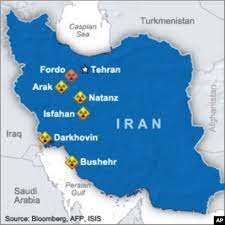
Any Israeli response to Iran’s missile barrage should be ‘proportional’, says the US president.
By Al Jazeera Staff, 2 Oct 2024 https://www.aljazeera.com/news/2024/10/2/biden-says-he-would-not-back-israeli-strike-on-irans-nuclear-sites
United States President Joe Biden has voiced opposition to any strikes on Iran’s nuclear sites in response to Tehran’s missile attack on Israel.
When asked by reporters on Wednesday whether he would back such retaliation, Biden stated “the answer is no”.
Biden’s comments come a day after Iran fired some 180 ballistic missiles at Israel, its second attack on the country since April. Iran’s most recent attacks on Israeli military sites have come in response to the assassination of key Iran-allied figures, including Hamas leader Ismail Haniyeh and Hezbollah leader Hassan Nasrallah.
Israel’s Prime Minister Benjamin Netanyahu vowed Iran would “pay” for the strike, which reportedly did not cause any serious casualties in Israel but killed one Palestinian in the occupied West Bank.
Analysts warned Israel may seize the chance to launch attacks on Iran’s nuclear facilities, a target its leaders have long eyed.
“The risk of an [Israeli] attack on the nuclear programme is particularly high because Iran’s defensive shield Hezbollah is on its knees,” Ali Vaez, the Iran Project director at the International Crisis Group think tank, told Al Jazeera.
“US forces are already in the region shielding Israel, and for Israel, this is potentially a once-in-a-generation opportunity to take care of a major threat that it has perceived from Iran over the past few decades,” he said.
Former Israeli Prime Minister Naftali Bennett explicitly called for such an attack in a post on X, saying Israel must “act now to destroy Iran’s nuclear program”.
“We have the justification. We have the tools”, Bennett said.
Biden calls for ‘proportional’ response
In the wake of Iran’s attack, Biden emphasised that the US is “fully supportive of Israel”.
Other US officials warned Iran would face “severe consequences”, with State Department spokesman Matthew Miller telling reporters he was not “ruling anything out”.
On Wednesday, after Biden spoke with allied leaders, he said he would not support an attack on Iran’s nuclear facility. Any Israeli response to Iran, he told reporters, should be “proportional”, a position shared by all nations part of the G7 grouping, including Canada, France, Germany, Italy, Japan and the United Kingdom.
The White House also said Biden and G7 leaders spoke about coordinating a new round of sanctions against Iran.
Whole Middle East at risk
Iranian President Masoud Pezeshkian said that the attack was warranted, but that Tehran did not seek war with Israel.
Iran’s armed forces warned that Israel would face “vast destruction” if it retaliated.
The escalation between two of the Middle East’s strongest militaries – while war continues to rage in Gaza and Lebanon – has stoked fears of an even broader conflict in the region.
“The idea of Iran and Israel going after each other under the auspices of the United States will burn everyone in the Middle East and beyond,” said Al Jazeera’s senior political analyst Marwan Bishara.
Donald Trump encourages Israel to strike Iran’s nuclear sites
During a rally in North Carolina, Republican presidential nominee Donald Trump took the opposite approach to Joe Biden, encouraging Israel to strike Iran’s nuclear sites.
“They ask him (Joe Biden) what do you think about Iran? Would you hit Iran? And he goes as long as they don’t hit the nuclear stuff – that’s the thing you want to hit,” Mr Trump said.
“I think he’s got that one wrong – isn’t that what you’re supposed to hit?”
Hey Australia, Ontario is no model for energy and climate policy
Energy and climate strategy should prioritize options with lowest economic, environmental, technological and safety risks. Ontario’s does the opposite.
by Mark Winfield October 4, 2024, https://policyoptions.irpp.org/magazines/october-2024/ontario-energy/
Over the past few weeks, word has begun to reach Ontario of a series of stories in the Australian media in which the province is being held up as a model for climate and energy policy Down Under.
It seems that Peter Dutton, the leader of the federal opposition Liberal (the conservative party in Australian politics), has been promoting Ontario’s nuclear heavy energy plans as a pathway for Australia.
For those in the province familiar with the ongoing saga of its energy and electricity policies, the reactions to the notion of Ontario being an example of energy and electricity policymaking have ranged from “bizarre” to “you couldn’t make this up.”
Poor maintenance and operating practices led to the near-overnight shutdown of the province’s seven oldest reactors in 1997, leading to a dramatic rise in the role of coal-fired generation and its associated emissions of greenhouse gases (GHGs) and smog precursors. The refurbishment of the “laid-up” reactors themselves went badly. Two ended in write-offs, and the others ran billions over budget and years behind schedule, accounting for a large portion of the near doubling of electricity rates in the province between the mid-2000s and 2020.
Towards a $100-billion nuclear binge?
Only two other provinces followed Ontario’s lead on nuclear. Quebec built two reactors and New Brunswick one, each of them completed in the 1970s or the early 1980s. The Gentilly-1 facility in Quebec was barely ever operational and closed in 1977. The Gentilly-2 facility was shut down in 2012, and assessed as uneconomic, particularly in light of Ontario’s experiences in attempting to refurbish its own. The construction and then refurbishment of the Point Lepreau facility has repeatedly pushed New Brunswick Power to the brink of bankruptcy.
The current government of Ontario, led by Conservative Premier Doug Ford, has seemed determined to ignore the nuclear experiences of these provinces, and its own history of failed nuclear megaprojects. The government’s July 2023 energy plan includes the refurbishment of six reactors at the Bruce nuclear power facility (owned by OPG), and four reactors at the OPG’s Darlington facility. It subsequently added the refurbishment of four more reactors at OPG’s Pickering B facility, an option that had previously been assessed as unnecessary and uneconomic. The plant had originally been scheduled to close in 2018. There are also proposals for four new reactors totaling 4,800 MW in capacity at Bruce and four new 300MW reactors at Darlington. (The current capacity is 6,550 MW at Bruce, and 3,512 MW at Darlington.)
The total costs of these plans are unknown at this point, but an overall estimate in excess of $100 billion would not be unrealistic:
- $13 billion for the refurbishment at Darlington;
- approximately $20 billion for the refurbishment at Bruce;
- $15 billion for Pickering B (based on Darlington costs and plant age for both this case and Bruce);
- about $50 billion for the new build at Bruce, based on previous new build proposals;
- and the Darlington new build (unknown, but likely $10 billion or more).
Even this 100$-billion figure would assume that things go according to plan, which rarely happens with nuclear construction and refurbishment projects.
The government’s ambitious nuclear plans have not been subject to any form of external review or regulatory oversight in terms of costs, economic and environmental rationality, or the availability of lower-cost and lower-risk pathways for meeting the province’s electricity needs. Rather, the system now runs entirely on the basis of ministerial directives that agencies in the sector, including the putative regulator, the Ontario Energy Board, are mandated to implement.
The province’s politically driven policy environment is very advantageous to nuclear proponents. When previous nuclear expansion proposals had been subject to meaningful public review, the plans collapsed in the face of soaring cost estimates and unrealistic demand projections. This was the case in the early 1980s with the Royal Commission on Electric Power Planning – aka the Porter commission, at the turn of the 1990s with the Ontario Hydro demand and supply plan environmental assessment, and in the late 2000s, with the Ontario Power Authority’s integrated power system plan review.
A halt to renewable energy
There is a second dimension to Ontario’s electricity plans that also should not be overlooked. Upon arriving in office the Ford government promptly terminated all efforts at renewable energy development, including having completed wind turbine projects quite literally ripped out of the ground at a cost of hundreds of millions of dollars. It then scrapped the province’s energy efficiency strategy for being too effective at reducing demand. Repeated offers of low-cost electricity from the hydropower-rich neighbouring province of Quebec were ignored. The results of studies by the province’s own electricity system operator on energy efficiency potential and the possible contributions of distributed generation, like building and facility-level solar photovoltaics (PV) and storage, have been largely disregarded.
These choices have left the province with no apparent option but to rely on natural gas-fired generation to replace nuclear facilities that are being refurbished or retired. With existing facilities dramatically ramping up their output, and new facilities being added, GHG and other emissions from gas-fired generation have more than tripled since 2017, and are projected to continue to increase dramatically over the next years. On its current trajectory, gas-fired generation will constitute a quarter of the province’s electricity supply, the same portion provided by coal-fired plants before their phase-out, completed in 2013. The province has recently announced a re-engagement around renewable energy, but the seriousness of this interest has been subject to considerable doubt.
Given all of this, it would be difficult to see Ontario as a model for Australia or any other jurisdiction to follow in designing its energy and climate strategy. The province has no meaningful energy planning and review process. Its current nuclear and gas-focussed pathway seems destined to embed high energy costs and high emissions for decades to come. And it will leave a growing legacy of radioactive wastes that will require management of timescales hundreds of millennia.
A rational and transparent process would prioritize the options with the lowest economic, environmental, technological and safety risks. Higher-risk options, like new nuclear, should only be considered where it can be demonstrated that the lower-risk options have been fully optimized and developed in the planning process. Ontario’s current path goes in the opposite direction. To follow its example would be a serious mistake.
Trial in New Hampshire of protesters against Elbit Systems – supplier of weapons for Israel.
(the above video is actually from a few months ago when Bruce (alone) was arraigned.
Here’s a link to the video about this week’s trial of all the Elbit 8: https://www.wmur.com/article/protesters-guilty-elbit-systems-merrimack-100124/62474455)
Space for Peace – Organizing Notes, Thursday, 3 Oct 24 Bruce Gagnon – Bruce Gagnon is coordinator of the Global Network Against Weapons & Nuclear Power in Space.
On Monday eight of us stood trial before a judge in a New Hampshire District Court. The nature of our charges (Trespass and Resisting Arrest) under N.H. law do not allow a jury trial.
The first several hours of the trial were dominated by local, county and state police officers testifying about the nature of the March 22 action by our protest group that blocked the entrance of Elbit Systems. The early morning blockage, prior to workers arriving, lasted about five hours before cops (from various N.H. police departments) cleared the protest.
(Elbit makes weapons for Israel’s genocidal attacks on Palestine, Lebanon and others. Elbit has weapons facilities in dozens of nations around the world. This is likely done to create jobs in the host country in hopes of ‘buying international support’ for Israel’s colonial apartheid system.)
After lunch the defense team began our case. The judge would not allow the full testimony of one expert witness who tried to make the case about the rights and impacts of protest movements
Then came the testimony of an Iraqi immigrant young doctor who attended medical school in New Hampshire and now works in Portland, Maine. Yusuf was arrested with us at Elbit and spoke beautifully about the human toll of Israeli’s genocidal attacks on the Palestinian people – thus his reason for joining the action. Surprisingly the judge let him talk so Yusuf was able to make many strong moral statements.
I testified next and talked about my role that day as police liaison. I described how I had previously taken this role at large protests in Portland and at the BIW naval shipyard (the destroyers built there are attacking Yemen in support of Israel). I noted that the Portland Chief of Police thanked me for playing that role in a protest where arrests were made. Sadly the Merrimack police had no interest in communication with me once I introduced myself. I was quickly arrested, hours before the others were.
………………………………………………………………………………………………………. I closed by saying that I know that the Nuremberg Law Principles have been adopted as international law. This legal framework resulted from Hitler’s WW2 army having committed genocide against the Jewish people across Europe. Nuremberg proclaims that all citizens have the legal right and duty to intervene to prevent such crimes when they are happening before our eyes. Still on the witness stand, I turned to the judge and said ‘Even this court is required to honor Nuremberg Law’. The judge didn’t buy this offer to join the resistance against US-UK-Israel-NATO war crimes.
Another of our expert witnesses (Lisa Savage was to talk about what Elbit does at the Merrimack facility) was pulled when the judge made it clear that he didn’t wish to listen to another expert witness.
Once the closing statements were done, by the state prosecutor and our defense lawyer, the judge took a 15 minute break. When he returned to the courtroom the verdicts were announced. He held all of us guilty of trespass and declared that three of us were not guilty of Resisting Arrest (RA) but the other five were. I was one of the three that beat the RA rap.
We will have a sentencing meeting with the judge via zoom-type tech on October 7. We are facing considerable fines to cover costs of Merrimack police on the day of the protest event.
Since I was the first arrested (early in the protest) I sat in a cop car hands cuffed behind my back for two hours listening to the police radio and heard calls for the ‘bomb squad’, paddy-wagons to take protesters away and reports of more police arriving from other nearby cities. During my testimony I described how I counted at least 50 cops and our attorney asked what they did. I answered that they stood around enjoying the ‘show’ and often laughing. One local reporter in Merrimack once told me that he’d worked for his media outlet for 20 years, ‘but had never seen anything like this [protest] before’. ……………………………………
https://space4peace.blogspot.com/2024/10/elbit-systems-protest-trial-in-new.html
Hurricane Helene sends a warning
https://beyondnuclearinternational.org/2024/10/01/hurricane-helene-sends-a-warning/
A nuclear plant, fortunately closed, was inundated, but we may not get so lucky next time, writes Linda Pentz Gunter
As no one can have failed to notice, our country has been ravaged once again by violent weather extremes, most recently by Hurricane Helene, which left areas in the south submerged and destroyed, and led to a significant number of deaths.
The press has routinely been describing the extreme flooding, especially in places such as North Carolina, as “Biblical. But, as my partner and colleague at Beyond Nuclear Paul Gunter points out, it is nothing of the sort. As should be obvious by now, our ever more frequent climatic disasters are entirely human-caused.
Acts of God, whether you are a believer or not, have absolutely nothing to do with it.
Try telling that to our political leaders. No matter who wins in November, we are looking at drilling (Trump) or fracking (Harris) or possibly both. And, of course, more nuclear power!
The fact that all of these will obviously make the climate crisis far worse far faster does not pass these people by. They know it. But they push both fossil and fissile energy anyway, submitting willingly to the bidding of their corporate paymasters who would rather celebrate near-term greed and gain than leave a livable world to their children and grandchildren.
This means we are led by climate criminals who go not only unpunished, but who are routinely re-elected.
The push for license extensions for our aging reactor fleet is particularly heinous. The lapdog nuclear regulator, the US Nuclear Regulatory Commission, has been exposed by the Government Accountability Office in a damning report as entirely uninterested in how the ravages of the climate crisis might jeopardize the safety of nuclear power plants.
“NRC doesn’t fully consider potential increases in risk from climate change,” wrote the GAO. “For example, NRC mostly uses historical data to identify and assess safety risks, rather than data from future climate projections.”
Instead, the NRC is intent on colluding with the nuclear industry to sell us nuclear power as some sort of answer to the climate crisis.
Apart from the fact that nuclear power is too expensive and too slow, as we have argued here countless times, it is actually a hazard under climate chaos conditions. And we got the perfect demonstration of this from Hurricane Helene.
First of all, because of the extreme radiological risks, some nuclear power plants in the path of the hurricane were shut down as a preemptive precaution including Hatch in Georgia. This makes them completely useless in the wake of the storm’s onslaught when people are desperate for electricity.
Then take the case of the Crystal River nuclear power plant on Florida’s Gulf Coast. Floodwaters swamped the site. Fortunately the plant has been shuttered since 2013 but all of the high-level irradiated radioactive fuel waste is still stored there.
“The whole site was flooded, including buildings, sumps, and lift stations. Industrial Wastewater Pond #5 was observed overflowing to the ground due to the surge,” read a report filed by plant owner, Duke Energy.
Given the present enthusiasm for extending the licenses of the still operating US nuclear reactor fleet — and they are talking about out to 80 or even 100 years for reactors that were never designed or intended to run that long — Crystal River might easily still have been operating.
Under today’s rush to relicense — and even reopen the country’s most dangerously degraded reactors including Palisades in Michigan — it probably would be.
Did nuclear waste escape as a result of the Crystal River nuclear site flood?
“We are still in the process of obtaining access and assessing the damage, but due to the nature of this event we anticipate difficulty with estimating the total discharge amount of wastewater, and impacts are unknown at this time,” wrote Duke in its report.
In other words, we may never know.
The implication of a nuclear plant inundated by a massive storm surge does not have to be imagined. We saw it at the Fukushima Daiichi nuclear plant in Japan on March 11, 2011, when a 50-foot tsunami swept over the inadequate sea wall and knocked out the backup onsite power after the earlier earthquake had already severed the offsite power connection.
Meanwhile, Crystal River owner Duke is the very same company that is trying to secure a license extension for its three Oconee reactors in South Carolina that sit downstream from not one but two dams!
The three reactors are sited 300 feet below the water level in Lake Jocassee behind Jocassee Dam and five feet below the water level in the immediately adjacent Lake Keowee.

What could possibly go wrong? Nothing, argues Duke, for whom the idea of a dam overtopping or breaking, sending a wall of water directly at the plant — effectively an inland tsunami — just isn’t a credible possibility.
Out of our scope, declares the NRC, which contends it cannot include an assessment of likely climate change impacts on Oconee operations within its environmental review for license renewal.
Beyond Nuclear and the South Carolina chapter of the Sierra Club have been fighting this through legal channels and will continue to do so.
After last week, you might expect such a blinkered view of current — never mind future — climatic conditions to change. But it won’t.
Retrofitting an old nuclear plant to adequately protect it against the impacts of a climate crisis never prepared for, costs money.
The Anishinaabe community fighting nuclear waste dumping, one step at a time‘
‘There’s more fresh water in this part of the country than there is in the Great Lakes, and they want to destroy that’
Ricochet, Crystal Greene, September 23 2024
Every September long weekend for the past five years, Indigenous and non-Indigenous allies have walked together along the TransCanada Highway 17 to peacefully protest the proposed dumping of nuclear waste on Treaty 3 lands in northwestern Ontario.
Among the walkers at the annual Walk Against Nuclear Waste was an Anishinaabe grandmother, who started the walk in hopes that more people will “wake up” to what’s at stake with the possibility of a deep geological repository (DGR) that would contain all of Canada’s high-level nuclear waste within their watershed.
“This is my last year and I feel like I’m gonna miss it, but it was a good awareness. I’m okay with that,” Darlene Necan, told Ricochet Media as vehicles zoomed by on TransCanada Highway 17, many beeping their horns in support throughout the roadside interview.
On September 1, two groups left from Ignace and Wabigoon at the same time. Over two days the group of about 30 participants walked about 40 kilometres from each direction.
They all met up at a rest stop near Revell Lake, the site where the Nuclear Waste Management Organization has done exploration drilling for the potential $26-billion DGR, which would sit at headwaters of the Wabigoon River and Turtle River watersheds. The underground facility would be used to bury and abandon millions of bundles of spent fuel from Canadian nuclear power plants.
“We cannot foresee the future, but what if it does happen? What if there’s a leak?” Necan said. “The creator gifted us this beautiful land for all of us to live, but who are these people to come here and economically destroy it? Money is never going to last.”
Necan, 65, is also known for asserting Anishinaabe title by building a cabin on her traditional territory at Savant Lake, Ontario, without permits, after she grew tired of waiting for housing from her band, Ojibway Nation of Saugeen #258. She was charged under the Public Lands Act with construction on so-called Crown land.
It’s no surprise that she took on the responsibility to alert others about the NWMO’s plan to transport, bury and abandon the waste.
There is a strong sense of urgency as the NWMO is set to finalize its chosen waste site, narrowed down from a list of 22 locations in Canada, a process that began in 2010.
By the end of the year, NWMO will choose either the Revell Lake site, near where the walk ended, or a Bruce County site in southwestern Ontario.
Rather than having the radioactive waste shipped by truck or train for the next 50 plus years —which they foresee is an accident waiting to happen — walkers say they want to see the waste all kept where it originated from, and for Canada to stop producing nuclear energy altogether.
The NWMO is an industry-funded organization made up of representatives from Canada’s nuclear power industry who’ve been looking for a way to deal with the approximately 100,000 tonnes of waste they’ve produced that will be radioactive for tens of thousands of years.
In a report to the Standing Committee on Environmental and Sustainable Development, a northwestern Ontario coalition “We the Nuclear Free North” describes the flaws and weaknesses of the DGR project along with the serious risks expressed by experts.
“Numerous experts in the fields of geology, chemistry and physics warn of the insufficiency of current scientific knowledge to guide a project of the nature and magnitude of the NWMO’s proposed plan,” the coalition wrote .
Their report broke down NWMO’s “conceptual” plan.
The waste would be transported by truck and received at a fuel packaging plant where it would be placed into containers.
The water used during the process to decontaminate the devices used for the waste in-transit would become contaminated with radionuclides and moved into a tailings pond, and be contained as a low-to-medium level radioactive liquid waste.
The waste in containers would be lowered to the DGR underground storage facility, made up of rooms blasted out of precambrian rock, 500 to 1000 metres below the Earth’s surface.
Since there is no way for the high-level radioactive nuclear fuel to deactivate, except for time, it would continue to generate heat, years after being stored. It could lead to pressure build-up, causing fractures in the DGR walls, where the groundwater would seep in and mix with water-soluble radionuclides.
Eventually, the free-moving contaminated water would reach the two watersheds, through cracks in the DGR, and a sump pump would need to be used to bring liquid to a surface tailings pond.
Another risk to hosting a DGR in the Revell Lake area are low magnitude earthquakes that have been documented by Environment Canada. A quake could fracture the DGR and increase flow of water into the facility and send contaminated water into the watersheds…………………………………………………………. more https://ricochet.media/indigenous/the-anishinaabe-community-fighting-nuclear-waste-dumping-one-step-at-a-time/
1 This Month

of the week – Shut Down Drone Warfare!


Tell the Ukrainian Government to Drop Prosecution of Peace Activist Yurii Sheliazhenko

Petition to revoke the licensing of the Near Surface Nuclear Disposal Facility (NSDF) at Chalk River. https://www.ourcommons.ca/petitions/en/Petition/Details?Petition=e-7247
To see nuclear-related stories in greater depth and intensity – go to https://nuclearinformation.wordpress.com
-
Archives
- April 2026 (68)
- March 2026 (251)
- February 2026 (268)
- January 2026 (308)
- December 2025 (358)
- November 2025 (359)
- October 2025 (376)
- September 2025 (257)
- August 2025 (319)
- July 2025 (230)
- June 2025 (348)
- May 2025 (261)
-
Categories
- 1
- 1 NUCLEAR ISSUES
- business and costs
- climate change
- culture and arts
- ENERGY
- environment
- health
- history
- indigenous issues
- Legal
- marketing of nuclear
- media
- opposition to nuclear
- PERSONAL STORIES
- politics
- politics international
- Religion and ethics
- safety
- secrets,lies and civil liberties
- spinbuster
- technology
- Uranium
- wastes
- weapons and war
- Women
- 2 WORLD
- ACTION
- AFRICA
- Atrocities
- AUSTRALIA
- Christina's notes
- Christina's themes
- culture and arts
- Events
- Fuk 2022
- Fuk 2023
- Fukushima 2017
- Fukushima 2018
- fukushima 2019
- Fukushima 2020
- Fukushima 2021
- general
- global warming
- Humour (God we need it)
- Nuclear
- RARE EARTHS
- Reference
- resources – print
- Resources -audiovicual
- Weekly Newsletter
- World
- World Nuclear
- YouTube
-
RSS
Entries RSS
Comments RSS
 nuclear-news