Why NuScale Power Stock Slumped Today

By Rich Smith – Dec 2, 2024
https://www.fool.com/investing/2024/12/02/why-nuscale-power-stock-slumped-today/
Key Points
GE Vernova is much bigger, with much more cash, and already profitable.
CNBC reported on GE Vernova’s ambitions to dominate the building of small modular reactors.
NuScale Power is a pioneer in this industry, but its business is small and unprofitable.
Will GE Vernova crush NuScale’s nuclear dreams?
NuScale Power Corporation (SMR -0.08%) stock fell 3% through 11:25 a.m. ET — and it has General Electric to blame for it.
NuScale develops small modular nuclear reactors designed to be cheaper and faster to build than traditional nuclear power plants. And as it’s fond of pointing out, NuScale is “the first and only SMR to have its design certified by the U.S. Nuclear Regulatory Commission.” But leaders aren’t necessarily winners, and as CNBC reports this morning, NuScale faces serious competition from a much bigger nuclear player, GE Vernova (GEV 3.56%), the former energy arm of General Electric.
GE Vernova’s threat to NuScale
NuScale and GE Vernova both aim to develop small modular reactors, but “small” is a relative term. If a standard nuclear power plant produces 1,000 megawatts of electricity, Vernova’s BWRX-300 reactor aims to cut that output to 300 megawatts (which is still substantial, enough to power a small city of 200,000 homes), while NuScale’s Voygr reactor goes even smaller with a 77-megawatt output.
In other respects, the two companies are more direct competitors. Both Vernova and NuScale advertise their ability to deploy multiple modules of their basic SMR in a single location, to amp up total power production capacity.

Both target a global market, with GE Vernova “aiming to deploy small nuclear reactors across the developed world over the next decade,” according to CNBC.
Is NuScale Power stock a sell?
What really sets the two companies apart, though, is their financial capacity to deliver on their promises. While valued at $3 billion in market cap, NuScale boasts less than $10 million in annual revenue and is losing $80 million a year. Analysts don’t expect the company to turn profitable before 2030 at the earliest.
GE Vernova is a $92 billion behemoth earning more than $1.2 billion a year and growing its profits at 40% a year. Just the cash alone on Vernova’s balance sheet is worth twice the price of NuScale’s stock. In any direct contest, I know which stock I’d bet on to win — and unfortunately, it’s not NuScale.,
The First Seven Billionaires Trump Has Tapped for Top Jobs
Out of America’s 800 billionaires, president-elect Trump has so far plucked seven for top spots in his administration.
by Sarah Anderson, December 03, 2024, https://inequality.org/great-divide/billionaires-trump-has-tapped-for-top-jobs/
President-elect Donald Trump has selected an unprecedented total of seven reported billionaires for senior positions in his administration. Including himself, that makes eight.
This figure could continue to grow as Trump fully staffs up. After all, he has nearly 800 additional U.S. billionaires to choose from.
Here’s a quick rundown of the “original seven” members of the nine-figure club on Trump’s employee wish list:
Elon Musk
Position: Co-leader of a new Department of Government Efficiency, a presidential advisory commission tasked with slashing spending and regulations
Estimated net worth: $330 billion
Source of wealth: SpaceX, Tesla, and other businesses
2024 campaign donations: $200 million
Warren Stephens
Position: Ambassador to the UK
Estimated net worth: $3.4 billion
Source of wealth: CEO of private Arkansas-based investment bank Stephens Inc.
2024 campaign donations: $22.7 million (includes $2 million-plus for Nikki Haley’s failed bid for the Republican presidential nomination)
Linda McMahon
tion: Education Secretary
Estimated net worth: $2.5 billion (with her husband, Vince McMahon)
Source of wealth: World Wrestling Entertainment (WWE)
2024 campaign donations: $24 million
Howard Lutnick
Position: Commerce Secretary
Estimated net worth: $2 billion
Source of wealth: majority ownership of investment bank Cantor Fitzgerald
2024 campaign donations: $13.1 million in PAC donations and also hosted a $15 million fundraising event at his home in the Hamptons
Vivek Ramaswamy
Position: Co-leader of the planned Department of Government Efficiency
Estimated net worth: $1.1 billion
Source of wealth: founder of pharmaceutical firm Roivant Sciences
2024 campaign donations: $25,000 (He’d just blown $30.7 million of his own funds on his failed presidential bid.
Doug Burgum
Position: Secretary of the Interior
Estimated net worth: undisclosed. Several media have identified him as a billionaire, while Forbes analysts say he’s worth “at least” $100 million and likely much more if you consider trusts for his adult children
Source of wealth: sold Great Plains Software, which creates accounting packages for small and medium-size businesses, for $1.1 billion in Microsoft stock in 2001
2024 campaign donations: $8,000 (He’d spent $13.9 million of his own funds on his failed presidential bid. This includes the cost of giving $20 gift cards to more than 40,000 donors who gave his campaign at least $1. That expensive but crafty maneuver succeeded in drumming up enough donors to qualify for participation in the presidential debate)
Scott Bessent
Position: Treasury Secretary
Estimated net worth: undisclosed
Source of wealth: Wall Street investments, including as founder of hedge fund Key Square Group
2024 campaign donations: $3.2 million
‘Great British Nuclear Fantasy’ Mirrors SMR Hype in Canada

While Canada touts small modular nuclear reactors and U.S. investors run for cover, the United Kingdom will waste billions watching the industry slowly crumble, writes veteran journalist Paul Brown.
Paul Brown, Dec 01, 2024, https://energymixweekender.substack.com/p/great-british-nuclear-fantasy-mirrors
According to the United Kingdom’s Labour government, the country is forging ahead with large nuclear stations and a competition to build a new generation of small modular reactors.
Great British Nuclear, a special organization created by the last Conservative administration and continued by Labour, is charged with finding sites for new large reactors and getting a production line running to produce the best small modular reactors. These will be mass produced in as yet non-existent factories.
The state of play in the UK mirrors the unbridled hype in Canada, with provinces like Ontario putting nuclear ahead of more affordable, more genuinely green energy options and the industry brazenly hiring departing provincial cabinet ministers to guide its lobbying efforts. That’s in spite of independent analysts declaring SMRs a “Hail Mary” unlikely to succeed and pointing out that, in contrast to the private power market in the U.S., Canada’s mostly public utilities make it easier for SMR proponents to avoid transparency on costs—and let taxpayers/ratepayers assume the risk if things go wrong.
The UK government is cheered on by both the country’s trade unions and the right-wing press which otherwise spends much time attacking the renewables industry and pouring scorn on Labour’s drive to reach net zero.
However, two distinguished academics who have much spent of their careers studying the electricity industry have produced a comprehensive study that says this latest nuclear “renaissance” won’t happen. Better for the country to cut its losses now and cancel the program than continue to waste billions more pounds letting the nuclear industry crumble slowly, they say.
Prof. Stephen Thomas, emeritus professor of energy policy at Greenwich University in London and Prof. Andy Blowers, emeritus professor of social studies at the Open University, pull no punches. Their report is titled: “It is time to expose the Great British Nuclear Fantasy once and for all.”
Currently, the French electricity giant EDF is building two 1,600-megawatt European pressurized water reactors at Hinkley Point in Somerset. The project is 13 years later than EDF’s original schedule, and the cost has escalated from £18 billion when contracts were signed in 2016 to £35 billion in 2024 (and that is in 2015 prices). The first of the two reactor’s start-up date has this year been postponed until 2030 at the earliest.
With this flagship project costing so much, EDF, already deeply in debt, has declined to finance the second planned twin reactors of the same design at Sizewell C in Suffolk. Site preparation work for this station is under way and the British government has sunk £8 billion into the project already without yet making a final investment decision, even though it was promised earlier this year. This is because the government cannot yet find the private capital required to build the reactors. The two professors say the government should cut its losses now and pull the plug on the project.
Even more pointless according to the two academics is the small modular reactor competition which has four companies, Rolls Royce, Westinghouse, Holtec, and GE Hitachi, putting forward designs. All have the same basic idea, which is to build the reactors in factories and assemble them at sites all over Britain. This, they claim, would be more efficient than building large reactors, and therefore produce cheaper electricity.
The government has said it is prepared to spend £20 billion through 2038 to get these up and running. But the report points out that none of the designs have been completed, let alone tested, so there is no evidence that the claims for them can be justified. They point out nuclear power has “a long history of over-promising and not delivering.”
“Rigorous regulatory and planning processes are essential but are necessarily time-consuming, expensive, and place significant hurdles in the way of an accelerated nuclear program,” the report states. “Some projects may fail to gain site licences or planning permission and all will face substantial delays to the commencement of development.”
The report also points to climate change as a potential problem, since nearly all the potential sites are on coastlines vulnerable to sea level rise and storm surges.
“Despite the sound and fury, the Great British Nuclear project is bound to fail,” Blowers and Thomas conclude.
“No amount of political commitment can overcome the lack of investors, the absence of credible builders and operators, or available technologies, let alone secure regulatory assessment and approval,” they write. “Moreover, in an era of climate change, there will be few potentially suitable sites to host new nuclear power stations for indefinite, indeed unknowable, operating, decommissioning, and waste management lifetimes.”
The two authors acknowledge that “abandoning Sizewell C and the SMR competition will lead to howls of anguish from interest groups such as the nuclear industry and trade unions with a strong presence in the sector. It will also require compensation payments to be made to organizations affected. However, the scale of these payments will be tiny in comparison with the cost of not abandoning them.”
So “it is our hope that sanity and rationality may prevail and lead to a future energy policy shorn of the burden of new nuclear and on a pathway to sustainable energy in the pursuit of net zero.”
Biden to Zelensky: ‘Our $210 billion not enough…send 18 year olds to die in our Russian proxy war

Walt Zlotow, West Suburban Peace Coalition, Glen Ellyn IL, 2 Dec 24
In 34 months of Russian war in Ukraine provoked by US NATO expansion, the US has squandered $185 billion of our precious treasure to keep Ukraine men dying by hundreds of thousands in a lost US foreign misadventure.
But as President Biden heads for the White House exits, he’s demanding and will get another $25 billion from Congress, making the total cost pushing a quarter trillion dollars.
Not a single military or administration strategist believes that will make any difference in American’s unwinnable proxy war. Even Biden’s National Security Advisor Jake Sullivan fessed up “Our view has been that there’s not one weapon system that makes a difference in this battle. It’s about manpower, and Ukraine needs to do more, in our view, to firm up its lines in terms of the number of forces it has on the front lines.”
Biden concurred and now demands Zelensky lower the draft age from 25 to 18. Zelensky lowered the draft age last April from 27 to 25, also at US, urging, but it has done nothing to stem the inexorable Russian advancement fueled by overwhelming manpower. Why? Upwards of 200,000 Ukrainian soldiers have deserted. They are voting against senseles war with their feet.
After squandering $185 billion of US treasure and a half million Ukrainian men, Biden wants more, more, more of both.
Biden could toss a trillion dollars and another half million young Ukrainian cannon fodder into the US proxy war without a prayer of victory on America’s terms.
But a worse fate awaits all of us. By allowing Ukraine to fire long range US missiles into Russia, Biden is risking nuclear war. If that occurs, all discussion about a squandered quarter trillion on weapons and another half million dead Ukrainian youth will be moot.
Listening to indigenous views
Our new study highlights Indigenous nations’ opposition to nuclear projects, write Susan O’Donnell and Robert Atwin, by beyondnuclearinternational, https://beyondnuclearinternational.org/2024/12/01/listening-to-indigenous-views/

The global nuclear industry has been in decline for almost three decades. Almost every year, more reactors shut down than start up. This year, nuclear energy’s share of global commercial gross electricity generation is less than half it was in 1996.
One reason for the industry’s decline is the high cost of nuclear energy compared to the low cost of alternative sources of energy generation. Another reason is the risk and lack of permanent solutions to the long-lived radioactive waste produced by nuclear reactors. Around the world, Indigenous people are disproportionately affected by radioactive pollution and are at the forefront of resistance to nuclear waste dumps.
A new study released in New Brunswick this week analyzed statements about nuclear energy and radioactive waste by Indigenous communities in New Brunswick, Quebec and Ontario, the only provinces with nuclear power reactors. The 18 power reactors in Ontario and the one in New Brunswick, as well as the one in Quebec shut down in 2012, have all produced hundreds of tons of radioactive waste.
The study found that overall, Indigenous nations and communities do not support the production of more nuclear waste or the transport and storage of nuclear waste on their homelands. They have made their opposition known through dozens of public statements and more than 100 submissions to the regulator, the Canadian Nuclear Safety Commission.
At the same time, the federal government positions nuclear energy as a strategic asset to Canada now and into the future. The government recently launched a policy to get nuclear projects approved more quickly, with fewer regulations. The government’s position has created an obvious conflict with Indigenous rights-holders.
Radioactivity cannot be turned off – that’s what makes nuclear waste so dangerous. Indigenous opposition to nuclear waste is rooted in values that respect the Earth and the need to keep life safe for generations into the future. The radioactivity from high-level waste can take millennia to decay and if exposed, can damage living tissue in a range of ways and alter gene structure.
The new study analyzed 30 public statements about nuclear energy and radioactive waste and reviewed submissions to the Canadian Nuclear Safety Commission (CNSC) by Indigenous nations and communities. The report also discusses the status in Canada of the United Nations Declaration on the Rights of Indigenous Peoples.
The report, Indigenous Views on Nuclear Energy and Radioactive Waste, states that Indigenous nations understand that producing and storing nuclear waste on their territories without their free, prior and informed consent is a violation of their Indigenous rights.
Also released this week with the report is a video, Askomiw Ksanaqak (Forever Dangerous): Indigenous Nations Resist Nuclear Colonialism.
The study report and the video were co-published by the Passamaquoddy Recognition Group and the CEDAR project (Contesting Energy Discourses through Action Research) at St. Thomas University in Fredericton.
The CEDAR project’s Indigenous partners – Chief Hugh Akagi of the Peskotomuhkati Nation in Canada and Chief Ron Tremblay of the Wolastoq Grand Council – each wrote a foreword to the report. Both Indigenous leaders are opposed to the production of radioactive waste at the Point Lepreau nuclear site on the Bay of Fundy and have not consented to plans by NB Power to develop at least two experimental nuclear reactors at the site that, if built, would produce more and different forms of radioactive waste.
In his foreword, Chief Akagi explains that the existing waste at Point Lepreau should be “properly stored and looked after for the thousands of years it will take until the waste is no longer dangerous.” He stands behind the five principles of the Joint Declaration between the Anishinabek Nation and the Iroquois Caucus on the Transport and Abandonment of Radioactive Waste: no abandonment; monitored and retrievable storage; better containment, more packaging; away from major water bodies; no imports or exports.
Chief Tremblay in his foreword raises the importance of respecting the treaty relationship and the need to protect the Earth. “We believe that the Earth is our Mother, and that she has been violated, she has been hurt, she has been raped, she has been damaged for far, far too long,” he writes.
CEDAR is a five-year project studying energy transitions in Canada with a focus on New Brunswick. One project objective is to support marginalized voices in discussions about the energy transitions. The new report was co-produced to amplify Indigenous voices concerned with the nuclear industry and its waste.
The report’s analysis highlights that colonialism is ongoing in Canada. The report suggests that Indigenous voices are being ignored for the benefit of the nuclear industry, meaning the federal government remains complicit in the violation of Indigenous rights.
Susan O’Donnell and Robert Atwin are co-authors, with Abby Bartlett, of the new report. Susan is an adjunct research professor and lead investigator of the CEDAR project at St. Thomas University. Robert is a research assistant at the Passamaquoddy Recognition Group and a member of Oromocto First Nation.
The Technology for Autonomous Weapons Exists. What Now?
The hypothetical escalation that could result relates to another kind of weapon of mass destruction: the nuclear weapon. Some countries interested in autonomy are the same ones that have atomic arsenals. If two nuclear states are in a conflict, and start using autonomous weapons, “it just takes one algorithmic error, or one miscommunication within the same military, to cause an escalating scenario,” said Hehir. And escalation could lead to nuclear catastrophe.
In the future, humans may not be the only arbiters of who lives and dies in war, as weapons gain decision-making power.
UNDARK, By Sarah Scoles, 11.26.2024
One bluebird day in 2021, employees of Fortem Technologies traveled to a flat piece of Utah desert. The land was a good spot to try the company’s new innovation: an attachment for the DroneHunter — which, as the name halfway implies, is a drone that hunts other drones.
As the experiment began, DroneHunter, a sleek black and white rotored aircraft 2 feet tall and with a wingspan as wide as a grown man is tall, started receiving radar data on the ground which indicated an airplane-shaped drone was in the air — one that, in a different circumstance, might carry ammunition meant to harm humans.
“DroneHunter, go hunting,” said an unsettling AI voice, in a video of the event posted on YouTube. Its rotors spun up, and the view lifted above the desiccated ground.
The radar system automatically tracked the target drone, and software directed its chase, no driver required. Within seconds, the two aircrafts faced each other head-on. A net shot out of DroneHunter, wrapping itself around its enemy like something from Spiderman. A connected parachute — the new piece of technology, designed to down bigger aircraft — ballooned from the end of the net, lowering its prey to Earth.
Target: defeated, with no human required outside of authorizing the hunt. “We found that, without exception, our customers want a human in that loop,” said Adam Robertson, co-founder and chief technology officer at Fortem, a drone-focused defense company based in Pleasant Grove, Utah.
While Fortem is still a relatively small company, its counter-drone technology is already in use on the battlefield in Ukraine, and it represents a species of system that the U.S. Department of Defense is investing in: small, relatively inexpensive systems that can act independently once a human gives the okay. The United States doesn’t currently use fully autonomous weapons, meaning ones that make their own decisions about human life and death.
With many users requiring involvement of a human operator, Fortem’s DroneHunter would not quite meet the International Committee of the Red Cross’s definition of autonomous weapon — “any weapons that select and apply force to targets without human intervention,” perhaps the closest to a standard explanation that exists in this still-loose field — but it’s one small step removed from that capability, although it doesn’t target humans.
How autonomous and semi-autonomous technology will operate in the future is up in the air, and the U.S. government will have to decide what limitations to place on its development and use. Those decisions may come sooner rather than later—as the technology advances, global conflicts continue to rage, and other countries are faced with similar choices—meaning that the incoming Trump administration may add to or change existing American policy. But experts say autonomous innovations have the potential to fundamentally change how war is waged: In the future, humans may not be the only arbiters of who lives and dies, with decisions instead in the hands of algorithms.
For some experts, that’s a net-positive: It could reduce casualties and soldiers’ stress. But others claim that it could instead result in more indiscriminate death, with no direct accountability, as well as escalating conflicts between nuclear-armed nations. Peter Asaro, spokesperson for an anti-autonomy advocacy organization called Stop Killer Robots and vice chair of the International Committee for Robot Arms Control, worries about the innovations’ ultimate appearance on the battlefield. “How these systems actually wind up being used is not necessarily how they’re built,” he said.
Many American startups like Fortem aim to ultimately sell their technology to the U.S. Department of Defense because the U.S. has the best-funded military in the world — and so, ample money for contracts — and because it’s relatively simple to sell weapons to one’s own country, or to an ally. Selling their products to other nations does require some administrative work. For instance, in the case of the DroneHunters deployed in Ukraine, Fortem made an agreement with the country directly. The export of the technology, though, had to go through the U.S. Department of State, which is in charge of enforcing policies on what technology can be sold to whom abroad.
The company also markets the DroneHunter commercially — to, say, a cargo-ship operators who want to be safe in contested waters, or stadium owners who want to determine whether a drone flying near the big game belongs to a potential terrorist threat, or a kid who wants to take pictures.
Because Fortem’s technology doesn’t target people and maintains a human as part of the decision-making process, the ethical questions aren’t necessarily about life and death.
In a situation that involves humans, whether an autonomous weapon could accurately tell civilian from combatant, every time all the time, is still an open question. As is whether military leaders would program the weapons to act conservatively, and whether that programming would remain regardless of whose hands a weapon fell into.
A weapon’s makers, after all, aren’t always in control of their creation once it’s out in the world — something the Manhattan Project scientists, many of whom had reservations about the use of nuclear weapons after they developed the atomic bomb, learned the hard way.
………………………………………………………………………………………………………………………………………….. escalation could come from robots’ errors. Autonomous systems based on machine learning may develop false or misleading patterns.
…………………………………………………………………….The hypothetical escalation that could result relates to another kind of weapon of mass destruction: the nuclear weapon. Some countries interested in autonomy are the same ones that have atomic arsenals. If two nuclear states are in a conflict, and start using autonomous weapons, “it just takes one algorithmic error, or one miscommunication within the same military, to cause an escalating scenario,” said Hehir. And escalation could lead to nuclear catastrophe.
……………………………………………………………………………………………………………………..Hehir and the Future of Life Institute are working toward international agreements to regulate autonomous arms. The Future of Life Institute and the Campaign to Stop Killer Robots have been lobbying and presenting to the U.N. Future of Life has, for instance, largely pushed for inclusion of autonomous weapons in the Convention on Certain Conventional Weapons — an international agreement that entered into force in 1983 to restrict or ban particular kinds of weapons. But that path appears to have petered out. “This is a road to nowhere,” said Hehir. “No new international law has emerged from there for over 20 years.”
And so advocacy groups like hers have moved toward trying for an autonomy-specific treaty — like the ones that exist for chemical, biological, and nuclear weapons. This fall, that was a topic for the UN’s General Assembly.
Hehir and Future of Life aren’t advocating for a total ban on all autonomous weapons. “One arm will be prohibitions of the most unpredictable systems that target humans,” she said. “The other arm will be regulating those that can be used safely, with meaningful human control,” she said.
……………………………………… with the current lack of international regulation, nation-states are going ahead with their existing plans. And companies within their borders, like Fortem, are continuing to work on autonomous tech that may not be fully autonomous or lethal at the moment but could be in the future. …………………
Sarah Scoles is a science journalist based in Colorado, and a senior contributor to Undark. She is the author of “Making Contact,” “They Are Already Here,” and “Countdown: The Blinding Future of 21st Century Nuclear Weapons.” https://undark.org/2024/11/26/unleashed-autonomous-weapons/?utm_source=Undark%3A+News+%26+Updates&utm_campaign=c63b00e0ff-RSS_EMAIL_CAMPAIGN&utm_medium=email&utm_term=0_5cee408d66-185e4e09de-176033209
South Bruce spared, but Ignace selected for Canadian nuclear waste dump
Nuclear Free Local Authorities, 29th November 2024
The Nuclear Waste Management Organisation – Canada’s equivalent to Britain’s Nuclear Waste Services – announced yesterday that they have selected Ignace in Ontario as their site for a Deep Geological Repository (DGR) into which Canada’s radioactive waste will be dumped.
The NWMO was established by the nuclear industry in 2002 charged with the disposal of the nation’s intermediate- and high-level radioactive waste.
The second candidate city of South Bruce, Ontario has been spared.
Both municipalities have recently held online public polls in which narrow, and contestable, results approved continued participation in the project. On 18 November, the Indigenous Wabigoon Lake Ojibway Nation, in whose Traditional Lands the DGR will be sited, also voted to continue their involvement in the process, which the NWMO took as a green light to select of Ignace. [i]
However, cynics might say one factor in the NWMO’s selection was the disparity in the money offer made to both municipalities for hosting the dump – Ignace was only promised $170 million over 81 years, whilst South Bruce stood to receive $418 million over 138.
The NFLAs, with other British activists opposed to nuclear waste dumps, have worked with Canadian colleagues in both municipalities and we are of course delighted for the people of South Bruce, but sad for those opposed to the plan in Ignace.
29th November 2024
South Bruce spared, but Ignace selected for Canadian nuclear waste dump
The Nuclear Waste Management Organisation – Canada’s equivalent to Britain’s Nuclear Waste Services – announced yesterday that they have selected Ignace in Ontario as their site for a Deep Geological Repository (DGR) into which Canada’s radioactive waste will be dumped.
The NWMO was established by the nuclear industry in 2002 charged with the disposal of the nation’s intermediate- and high-level radioactive waste.
The second candidate city of South Bruce, Ontario has been spared.
Both municipalities have recently held online public polls in which narrow, and contestable, results approved continued participation in the project. On 18 November, the Indigenous Wabigoon Lake Ojibway Nation, in whose Traditional Lands the DGR will be sited, also voted to continue their involvement in the process, which the NWMO took as a green light to select of Ignace. [i]
However, cynics might say one factor in the NWMO’s selection was the disparity in the money offer made to both municipalities for hosting the dump – Ignace was only promised $170 million over 81 years, whilst South Bruce stood to receive $418 million over 138.
The NFLAs, with other British activists opposed to nuclear waste dumps, have worked with Canadian colleagues in both municipalities and we are of course delighted for the people of South Bruce, but sad for those opposed to the plan in Ignace.
We, the Nuclear Free North, a campaign group has issued a statement condemning the lack of validity of the selection process, citing the fact that Ignace is not a willing community and asserting that the Indigenous vote did not represent specific consent for the project to go ahead. The statement appears below. [on original]……………………………………… more https://www.nuclearpolicy.info/news/south-bruce-spared-but-ignace-selected-for-canadian-nuclear-waste-dump/?fbclid=IwY2xjawG4gNxleHRuA2FlbQIxMAABHZkzDLWOe6FmGY3lN1ERTX5hB05PLvbrI4k9fdn3iTiAWPvxUq-VMQaXKg_aem_NRkVOPIrb11UCVLX85-G1g
The Nuclear Waste Management Organization (NWMO) Siting Process Fails to Achieve its Goal.

Nuclear Company Announces Site Selection Despite Major Missing Piece: a Willing Host
WE THE NUCLEAR FREE NORTH. November 29, 2024
| Wabigoon, Ontario – First Nations and opposition groups are denouncing the Nuclear Waste Management Organization’s announcement that they have selected the Revell site in northwestern Ontario as their preferred location for a deep geological repository for all of Canada’s high-level nuclear fuel waste. “The NWMO announcement demonstrates the fickleness of the NWMO’s site selection process. It has allowed the NWMO to manufacture something they are calling consent, without actually gaining consent”, commented Charles Faust, a volunteer with We the Nuclear Free North and spokesperson for Nuclear Free Thunder Bay. “They were looking for consent for their project – the transportation, processing and burial of all of Canada’s high-level waste in the heart of Treaty 3 Territory. The closest they could get from Wabigoon Lake Ojibway Nation was consent to continue in the site characterization process. It’s a small victory which they are going to play big.” |
NWMO announced Thursday that they had selected Wabigoon Lake Ojibway Nation (WLON) and the Township of Ignace as the host communities for the future site for Canada’s deep geological repository for used nuclear fuel.
The two communities had been courted by the NWMO for over a decade as the nuclear waste company sought a declaration of “willingness” to have the Revell site used as a processing and burial site for the highly radioactive waste generated by nuclear power reactors. The Revell site is approximately equidistant between Ignace and Dryden and 20 km upstream from Wabigoon Lake Ojibway Nation, in the headwaters of both the Wabigoon and the Turtle-Rainy River watersheds.
NWMO has repeatedly said they would only proceed with an “informed and willing host”, which would have to make a “compelling demonstration of willingness”. In a statement released by Wabigoon Lake Ojibway Nation on November 18th following a community vote, WLON stated clearly that the referendum was to determine if WLON would progress into a site characterization process for NWMO’s project, and that “the yes vote does not signify approval of the project”.
Broad opposition to the project has been expressed by First Nations, municipalities and community organizations, including in a resolution passed by Grand Council Treaty #3 in October which affirmed an earlier declaration that made clear that a deep geological repository for nuclear waste would not be developed at any point in Treaty #3 Territory.
Opposition is expected to continue to grow following yesterday’s announcement, leading up to the start of a federal impact assessment process, which the NWMO says will get underway in 2028.
White House Pressing Ukraine To Draft 18-Year-Olds for War

National Security Advisor Jake Sullivan recently hinted that the US was pressuring Ukraine to expand conscription, saying Ukraine’s biggest problem in the war was the lack of manpower.
The pressure from the US comes as polling shows the majority of Ukrainians want peace talks to end the war,
by Dave DeCamp November 27, 2024 , https://news.antiwar.com/2024/11/27/white-house-pressing-ukraine-to-draft-18-year-olds-for-war/
The White House is pressuring Ukraine to increase the size of its military by lowering the minimum age of conscription from 25 to 18, The Associated Press reported on Wednesday.
A senior Biden administration official said the outgoing administration wants Ukraine to start drafting 18-year-olds to expand the current pool of fighting-age males. The pressure from the US comes as polling shows the majority of Ukrainians want peace talks with Russia to end the war.
National Security Advisor Jake Sullivan recently hinted that the US was pressuring Ukraine to expand conscription, saying Ukraine’s biggest problem in the war was the lack of manpower.
“Our view has been that there’s not one weapon system that makes a difference in this battle. It’s about manpower, and Ukraine needs to do more, in our view, to firm up its lines in terms of the number of forces it has on the front lines,” Sullivan said on PBS News Hour last week.
Last month, Serhiy Leshchenko, an aide to Ukrainian President Volodymyr Zelensky, said Ukraine was under pressure from US politicians to lower the conscription age. “American politicians from both parties are putting pressure on President Zelensky to explain why there is no mobilization of those aged 18 to 25 in Ukraine,” he said.
Zelensky signed a mobilization bill into law back in April that lowered the conscription age from 27 to 25. A few weeks before the mobilization bill became law, Zelensky received a visit from US Sen. Lindsey Graham (R-SC), who complained that not enough young Ukrainian med were being sent to the frontline.
“I would hope that those eligible to serve in the Ukrainian military would join. I can’t believe it’s at 27,” Graham said. “You’re in a fight for your life, so you should be serving — not at 25 or 27. We need more people in the line.”
The Biden administration’s push for Ukraine to draft younger men comes as it is doing everything it can to escalate the proxy war before President-elect Donald Trump is inaugurated on January 20. President Biden is seeking another $24 billion to spend on the conflict even though it’s clear there’s no path to a Ukrainian military victory.
Biden administration advancing $680m arms sale to Israel, source says

November 27, 2024, https://www.middleeastmonitor.com/20241127-biden-administration-advancing-680m-arms-sale-to-israel-source-says/
The Biden administration is pushing ahead with a $680 million arms sales package to Israel, a US official familiar with the plan said on Wednesday, even as a US-brokered ceasefire in Lebanon between Israel and Hezbollah has come into effect, Reuters reports.
The package, which was first reported by the Financial Times, includes thousands of joint direct attack munition kits (JDAM) and hundreds of small-diameter bombs, according to the official, speaking on condition of anonymity.
The news comes less than a day after the ceasefire agreement ended the deadliest confrontation in years between Israel and the Hezbollah group, but Israel is still fighting its other arch foe, the Palestinian group, Hamas, in the Gaza Strip.
However, the package has been in the works for several months. It was first previewed to the congressional committees in September then submitted for review in October, the official said.
The package follows a $20 billion sale in August of fighter jets and other military equipment to Israel.
Reuters reported in June that Washington, Israel’s biggest ally and weapons supplier, has sent Israel more than 10,000 highly destructive 2,000-pound bombs and thousands of Hellfire missiles since the start of the Gaza war in October 2023.
The conversations about the latest arms package had been going on even as a group of progressive US senators, including Bernie Sanders introduced resolutions to block the sale of some US weapons to Israel over concerns about the human rights catastrophe faced by Palestinians in Gaza.
The legislation was shot down in the Senate.
Biden, whose term ends in January, has strongly backed Israel since Hamas-led gunmen attacked in October 2023, killing 1,200 people and taking more than 250 hostages, according to Israeli tallies.
However, since then, it has been revealed by Haaretz that helicopters and tanks of the Israeli army had, in fact, killed many of the 1,139 soldiers and civilians claimed by Israel to have been killed by the Palestinian Resistance.
Most of Gaza’s population of 2.3 million people has been displaced and the enclave is at risk of famine, more than a year into Israel’s war against Hamas in the Palestinian enclave. Gaza health officials say more than 43,922 Palestinians have been killed in Israel’s offensive.
The Antisemitism Awareness Act Is the Death Knell for Free Speech
Mike Whitney • November 21, 2024, The Unz Review
Freedom of speech is the principal pillar of a free government; when this support is taken away, the constitution of a free society is dissolved, and tyranny is erected on its ruins….Ben Franklin.
The Antisemitism Awareness Act is a wrecking ball designed to pulverize the First Amendment. While the alleged intention of the bill is to make Jewish students feel safer on campus, the real purpose is to put an end to the anti-genocide demonstrations that have broken out across the country and to prevent the criticism of Israel. The proposed bill invokes a dodgy legal mechanism to derail the protests and to silence Israel’s critics. By using a broad and ambiguous definition of antisemitism, the bill compels university administrators to crackdown on free speech invoking sketchy claims of discrimination. Political analyst Paul Craig Roberts summed it up like this: “if universities …don’t suppress student protests against Israel’s massacre of civilians in Gaza and Lebanon they will lose their accreditation and federal financial support.” In short, universities are being encouraged to quash the free expression of political ideas to preserve their federal funding. This helps to illustrate how Zionist lobbyists are now engaged in a full-throated assault on constitutionally protected civil liberties, namely free speech.
The bill—which already passed the House with a sizable majority—shows how the charge of antisemitism can be used as a coercive political tool to silence Israel’s critics. That is why civil liberties organizations—like the ACLU, PEN America, the Alliance Defending Freedom and even Jewish groups like Bend the Arc and T’ruah—strongly oppose the bill based on free speech grounds. Even so, this attack on constitutionally protected rights has a good chance of passing the senate due to the arm twisting of powerful interest groups that have their tentacles wrapped tightly around both houses of congress. Here’s a brief summary from political analyst Guy Christensen:
The House just passed the Antisemitism Awareness Act which will shut down college protests against Israel and silence all future criticism of the state of Israel. The law literally redefines antisemitism as criticizing the state of Israel and makes it a violation of Title 6 to do so. The purpose of this is to allow politicians to pull federal funding from colleges who don’t stop these college protests and let their students continue to criticize Israel.
We must speak out against the Antisemitism Awareness Act. This is insanity. These people are full-on Zionists trying to silence free speech here in America, trying to silence criticism of the oppression of the Palestinians, criticism of the state of Israel that murdered 14,000 children.
Like I said, the guy who wrote the bill, Mike Lawler, is funded by AIPAC $180,000 (he said to NBC News when talking about this bill.) When you hear “River to the sea, Palestine will be free” that is calling for the eradication of the Jews in the state of Israel. (They are) Literally trying to make it illegal to criticize Israel.
If you don’t know how Title 6 works, all federally funded programs and institutions must follow it or they won’t receive any more federal funding. This includes US colleges and K through 12 schools who are very strict about following Title 6 because they need that funding. They can’t go without it. So, if we let this become law, it would force US colleges to shut down all these protests immediately.
This contends for the most outrageous bill for Israel the government has ever tried to pass. I will not vote or say a kind word about any politician who voted in favor of this bill…. (your representative ) care more about Israel than they care about your free speech. What they are doing is incredibly dangerous. Zionists are scared because American public opinion is changing. Students across the country are protesting against Israel. You know they’re scared because this is one of the boldest things they’ve ever tried to do…..AIPAC and the pro-Israel lobby is behind all of this. Ban AIPAC Stop the Antisemitism Awareness Act. We have to protect our free speech and our right to protest against evil. YourFavoriteGuy@guychristensen_
Not surprisingly, President Donald Trump—whose campaign was given $100 million by a strident Zionist donor—confirmed that he will aggressively implement the blatantly unconstitutional law by cancelling the funding of any college that tolerates the anti-genocide protests. He further stated that he will prosecute the universities for, what he calls, “violations of the civil rights law.” In other words, it is not the tens of thousands of Palestinian civilians that have been killed by Israel who are the victims, but the Jewish university students who feel “unsafe.” (Note—Trump refers to the protestors views as “antisemitic propaganda”)…………………………………………………………………………………………………………………………………………………more https://www.unz.com/mwhitney/the-antisemitism-awareness-act-is-the-death-knell-for-free-speech/
Donald Trump’s quick trip to absolute dictatorship

November 27, 2024: The AIM Network. Noel Wauchope, https://theaimn.com/donald-trumps-quick-trip-to-absolute-dictatorship/
Comparisons are odious, particularly between Donald Trump and Adolf Hitler. I must be plain from the start, that these individuals have had completely different aims and ideology.
The comparisons I’m making here are just about methods of gaining absolute power. And here, I think, there are parallels. And we can learn, from Hitler, how Trump could well go about attaining dictatorship status – way faster than people realise.
Trump and Hitler do have this in common – a reckless ruthlessness about destroying institutions and crossing boundaries. And both had earlier associations with street violence – Hitler with his Brown Shirts, and the Beer Hall Putsch, and Trump, less obviously, with the Proud Boys and the Capitol attack on January 6th 2021.
Hitler became dictator by very quickly using legitimate political mechanisms, and Trump will be able to do the same.
Hitler, moving towards purging his movement of the Brown Shirts, gained much public support, and business interests saw him as a force to stop street violence, and a protector and support of property and business. Meanwhile, largely thanks to the genius of Joseph Goebbels, Hitler’s propaganda machine flourished, exploiting the latest technology, – radio, and aircraft – “Hitler over Germany”. By 1933 the German economy was recovering, and Hitler’s success in elections did in fact drop, but his National Socialist Party still held a third of the seats in the Reichstag.
Here’s where it got interesting, and it all took just 7 and a half weeks.
30 January 1933 – Hitler was appointed Chancellor. The role of the Chancellor, while being symbolically like the role of the British Prime Minister, was in fact, quite limited. The real power was in the President. President von Hindenburg, bowing to pressure, was persuaded that Hitler could indeed be controlled, by giving him the status of Chancellor.
-Advertisement-
27 February 1933 – the German parliament (Reichstag) building burned down. Without going into the discussion on who caused the fire – it was the trigger for Hitler to persuade von Hindenburg to issue the Reichstag Fire Decree – Emergency Decree for the Protection of the German People, on 28 February, declaring a state of emergency, and abolishing most civil liberties, including the rights to speak, assemble, protest, and due process.
23 March 1933, Hitler proposed the Enabling Law to the Reichstag. This new law, passed on 24 March, gave Chancellor Hitler the power to rule by decree rather than passing laws through the Reichstag and the President. He was now effectively the dictator.
We could go on from there – listing Hitler’s dictatorial actions – National Socialists the only party permitted, trade unions disbanded. Any autonomous states lost those powers – officials appointed as state governors – and much, much more.
July 1934 – Hitler becomes “Fuehrer” – the finishing touch. With the death of President von Hindenburg, Hitler abolishes the now powerless position of “President”.
What has all this got to do with Trump?
Admittedly, the burning down of the Reichstag was a key factor, and we’re not expecting Capitol Hill to burn down. But the thing is that Hitler was at least a super-opportunist, even if the Nazis did not purposely cause this event. If it hadn’t been this event, probably something else could be triggered for a “state of emergency”. So, it would also be very beneficial to Trump- and save a lot of time, if some suitable “event” were to justify Trump, (also a super-opportunist) to declare emergency powers.
In the meantime, Trump is already working on removing the powers of the Department of Justice, and has various avenues open for him to take quick executive action. The President can issue executive orders. There are checks and balances, but these rely on the Supreme Court, and the Congress. So, Trump, with a majority in Congress has freedom – ‘I have an Article 2 where I have the right to do whatever I want as president’.
Trump’s plan for a radical reorganization of the executive branch starts with ending “the post-Watergate norm of Justice Department independence from White House political control.”
Trump will be very careful about which officials he appoints – due to constitutional “checks and balances”. He’d need to pick a compliant Acting Attorney General. The obstacles to be eliminated include an independent Justice Department, independent leadership in administrative agencies and an independent civil service. Trump’s plan would substitute loyalty to him for loyalty to the Constitution.” In 2020 Trump called for the “termination of … the Constitution.”
In the USA, theoretically, there are constraints on the President’s power. But, as in Germany in the 1930s, the leader has already arranged for the administration and every government department to be run by his sycophants.
Also, as in Hitler’s Germany, Trump has extraordinary influence over media, especially social media. Hitler had the brilliance of Goebbels to swamp the public with his lies and spin. Trump is almost one better – he does it all himself.
So – there are similarities between Hitler and Trump in the way to gain absolute power. There’s the opportunism, the clique of dedicated sycophants, the inspired exploitation of new technology, of new media, the reckless crossing of normal boundaries, and the background of violence, (with the potential for violence again).
The differences between them are striking. Hitler had a coherent almost mystical theory – involving war – to gain world domination for the master “Aryan” race, and to eliminate the Jews and other “Untermenschen”. To a large extent, Hitler’s close associates shared that dream, even if jostling for power between each other– Goebbels, Hess, Himmler, Goering, Speer, von Ribbentrop, Heydrich, Bormann. They more or less held to Hitler’s philosophy, and feared Hitler if they stepped out of line. Quite a few, though not all, stayed with Hitler until the very bitter end.
I can’t see Trump’s associates having that kind of dedication. From his previous presidency, there is a long list of former allies who turned against him.
Donald Trump seems to have no coherent theory or aim – other than to be super-powerful and rich, and take revenge on his opponents. He admires dictators, hates China, doesn’t like war, and fears nuclear bombs. If Trump has any philosophy at all, apart from him being at the top, it would be for a world economy dominated by American business. War is not Trump’s chosen method to win, but building up weaponry, and the threat of war – a sort of global bullying is his favoured method.
Trump’s top associates are currently dedicated to him – but are closely connected to billionaires, and not necessarily sharing philosophies. There’s Elon Musk, obsessed with the control of space, and the colonisation of Mars, John Bauer who devised the case for presidential absolute immunity from prosecution, Stephen Miller determinedly anti-immigrant, Fox News employee Pete Hegseth, Robert F. Kennedy Jr. sceptic of public health, Dave Weldon, anti-abortion doctor. What they do seem to have in common is big egos, and rather questionable qualifications for the jobs that they’ll be getting.
So, unlike Hitler, Trump doesn’t seem to have a team dedicated to a single-minded cause. In the short run, things might look good for the new Republican administration, and even for the American public. Dictatorships can do that, for a bit – as the workers found, in the early years of the Hitler administration, and of the Mussolini one in Italy. But it’s anybody’s guess how the new Trump dictatorship will finally work out.
What Project 2025 Would Do to the Environment – and How We Will Respond

The policy playbook from the Heritage Foundation would strip away our rights to clean air, clean water, and a healthy planet.
By Earthjustice November 12, 2024, https://earthjustice.org/article/what-project-2025-would-do-to-the-environment-and-how-we-will-respond
When Donald Trump takes office for the second time in January, we expect his administration to dramatically dismantle environmental protections. We see the shape of what’s coming not just from battling his first administration, but because of the blueprint laid out in Project 2025.
Project 2025 is 900 pages, and 150 of them are about how to destroy the environment. This deregulatory agenda, written by former Trump government officials and Heritage Foundation staff, would strip away our rights to clean air, clean water, and a healthy planet.
Earthjustice is built for moments like this. We’re the legal arm of the environmental movement, with more than 200 attorneys wielding the power of the law to defend the planet and its people. We filed more lawsuits on behalf of clients against the last Trump administration to protect the environment than any other organization – and we won 85% of our cases.
We’ve shown that we can take on the Trump administration’s worst ideas and win.
We’ve studied the proposed tactics in Project 2025, including undermining government staff who are charged with safeguarding health and environmental protections. We are prepared to defend the environment and communities from what comes next, no matter how long it takes. Here are some of the Project 2025 recommendations we’re most concerned about:
Taking a hatchet to bedrock environmental laws
What Project 2025 says:
- Gut the Endangered Species Act (ESA): Project 2025 would rewrite the most successful legal tool we have for protecting wildlife in ways that would harm imperiled species. It specifically calls for removing protections from gray wolves and Yellowstone grizzlies.
- No need for national monuments: Another proposal would repeal the Antiquities Act, which would strip the president of the ability to protect priceless public lands and waters as national monuments.
- Weaken the Clean Air Act: Project 2025 would nix the part of the law that requires the Environmental Protection Agency (EPA) to set health-based air quality standards.
- Less say for communities in environmental decisions: The plan would undermine key portions of the National Environmental Policy Act (NEPA), which ensures you have a voice in major projects built near you.
Why we’re prepared:
- Defending endangered species: The Trump administration went after both Yellowstone grizzlies and the Endangered Species Act itself. Both times, Earthjustice went straight to court. One of our cases spared the grizzlies from planned trophy hunts, and the Biden administration subsequently reversed some damaging changes to the ESA.
- Defending national monuments: When the Trump administration gutted Bears Ears and Grand Staircase-Escalante National Monuments in Utah, Earthjustice immediately sued. Protections for the monuments have now been restored. We also helped defend the monuments from a later legal challenge by the state of Utah that attacked the Antiquities Act itself.
- Defending NEPA: This summer, when 21 state attorneys-general sued to block important updates to NEPA, we intervened to fight back. The updates will ensure that critical infrastructure needed for the clean energy transition is built quickly and equitably and is resilient to climate change.
More mining and fossil fuel development on public lands
What Project 2025 says:
- Prioritize oil and gas: Project 2025 tells the agencies that manage federal lands and waters to maximize corporate oil and gas extraction. It calls for approving more pipelines like Keystone XL and Dakota Access.
- Willow? Make it bigger: The agenda explicitly aims to expand the Willow Project, which is already the largest proposed oil and gas undertaking on U.S. public lands.
- Target iconic landscapes: The project also calls for drilling in Alaska’s Arctic National Wildlife Refuge and mining in Minnesota’s Boundary Waters wilderness, among other irreplaceable natural treasure
Why we’re prepared:
- Fighting on all fronts: Under the Trump administration, Earthjustice challenged an aggressive extractive agenda at every turn. Our victories included winning protections for 128 million acres of ocean and hundreds of thousands of acres of sage-grouse habitat threatened by oil and gas development.
- We’ve defended many of the places Project 2025 targets:
- We have been defending the Arctic National Wildlife Refuge from fossil fuel development since the 1980s, and we celebrated last year when the government canceled a set of illegal oil leases
- Our litigation and advocacy has helped secure a 20-year mining ban in the Boundary Waters.
- Currently, we are fighting the Willow Project in court.
- Undermining science and the regulation of toxic chemicals
- What Project 2025 says:
- Trust the chemical companies: Project 2025 tells the EPA to be more open to industry science and to stop funding major research into toxic chemical exposure.
- Make it harder to regulate chemicals: The plan calls for the EPA to meet an absurdly high standard of proof that a chemical is hazardous before deciding to regulate it. This would give chemical companies greater freedom to put toxic substances into our air, water, and products.
- Forever chemicals are fine: Project 2025 would walk back the determination that PFAS — the “forever chemicals” linked to reproductive harms, developmental delays, and increased risk of cancer — are a hazardous substance.
Why we’re prepared:
- Fighting for the full use of the law: The government has the authority to protect us from harmful chemicals under a critical law called the Toxic Substances Control Act, or TSCA. Earthjustice is fighting to force the Biden administration to use this law more effectively.
- Pushing for transparency: When the Trump administration EPA understated the risks of deadly chemicals, Earthjustice sued under TSCA.
- Taking on PFAS: Earthjustice has fought for an array of protections against PFAS. We have helped protect communities from PFAS incineration, defended the public’s right to know about PFAS releases, pushed for stronger state laws regulating PFAS in water, and more.
Ending government efforts to address the climate crisis
What Project 2025 says:
- The plan’s authors are climate skeptics: The document refers pointedly to “the perceived threat of climate change.”
- Climate solutions? Don’t need ‘em: Project 2025 calls for undoing many of the clean energy investments in the Inflation Reduction Act, the largest climate solutions bill in history. It also supports Congressional efforts to repeal the law entirely.
- Shut down climate research: The plan would get rid of more than a dozen government offices and agencies that study climate change.
Why we’re prepared:
- Confronting government with climate reality: We have fought every administration in recent decades to include climate change impacts in various decisions. Earlier this century, we joined in a suit that became a landmark Supreme Court ruling, Massachusetts v. EPA, which found that carbon emissions are air pollutants and consequently the EPA must set limits on such pollution. We will defend the necessity to combat climate change — but further delays will hurt us all. An analysis from Energy Innovation found that enacting Project 2025 would increase carbon emissions by 2.7 billion tons by 2030 — equivalent to the annual emissions of India. These policies would cost households $32 billion in higher energy costs, result in 1.7 million lost jobs, and decrease the U.S. GDP $320 billion per year by 2030.
- Fighting for science: Earthjustice has previously defended the critical role of scientific experts within the government. In 2020, we won a lawsuit challenging the Trump administration’s illegal decision to remove independent science advisors from the EPA.
Eliminating environmental justice programs
What Project 2025 says:
- Environmental justice is not the government’s problem: Project 2025 questions whether the government should address the ways that communities of color and low-income communities are disproportionately exposed to dangerous pollution.
- Get rid of staff who work on these issues: The plan calls for disbanding offices with the Department of Justice and the EPA that focus on environmental justice.
Why we’re prepared:
- An environmental justice first: In 2021, after years of pushing by Earthjustice and our partners, the Justice Department opened its first-ever environmental justice investigation, looking into whether an Alabama county was managing sewage in a way that disproportionately harmed Black communities.
- Raising our voice: We helped advocate for billions of dollars of funding from the Inflation Reduction Act to go to the communities that need it most.
What You Can Do
- Take action: Join Earthjustice to fight back against Project 2025
From Genocide Joe to Omnicide Joe
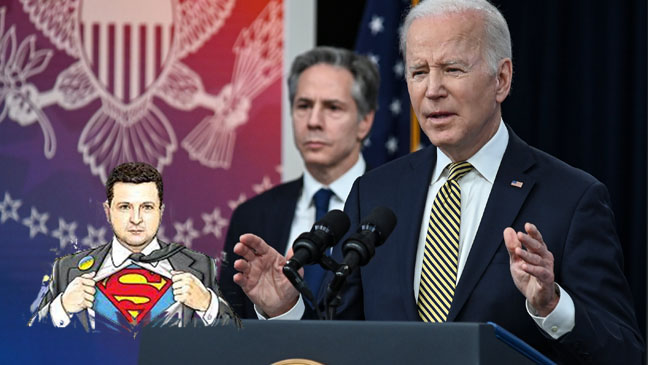
Instead of fulfilling his 2020 campaign promise to adopt a U.S. policy of no-first-use of nuclear weapons, two years ago Biden signed off on the Nuclear Posture Review policy document that explicitly declares the opposite. Last year, under the euphemism of “modernization,” the U.S. government spent $51 billion — more than every other nuclear-armed country combined — updating and sustaining its nuclear arsenal, gaining profligate momentum in a process that’s set to continue for decades to come.
the Biden administration has said it did not want to cross its own red lines—and then has repeatedly proceeded to do so.
Biden’s recent green light for Ukraine to launch longer-range missiles into Russia is another jump toward nuclear warfare.
Norman Solomon 25 Nov 24, https://www.commondreams.org/opinion/genocide-joe
Whether heralded or reviled, Biden’s supposed restraint during the Ukraine war has steadily faded, with more and more dangerous escalation in its place.
President Biden has never wavered from approving huge arms shipments to Israel during more than 13 months of mass murder and deliberate starvation of Palestinian civilians in Gaza. Biden’s crucial role earned him the name “Genocide Joe.”
That nickname might seem shrill, but it’s valid. Although Biden will not be brought to justice for serving as a key accomplice to the horrific crimes against humanity that continue in Gaza, the label sticks—and candid historians will condemn him as a direct enabler of genocide.
Biden could also qualify for another nickname, which according to Google was never published before this article: “Omnicide Joe.”
In contrast to the Genocide Joe sobriquet, which events have already proven apt, Omnicide Joe is a bit anticipatory. That’s inevitable, because if the cascading effects of his foreign policy end up as key factors in nuclear annihilation, historians will not be around to assess his culpability for omnicide—defined as “the destruction of all life or all human life.”
That definition scarcely overstates what scientists tell us would result from an exchange of nuclear weapons. Researchers have discovered that “nuclear winter” would quickly set in across the globe, blotting out sunlight and wiping out agriculture, with a human survival rate of perhaps 1 or 2 percent.
With everything—literally everything—at stake, you might think that averting thermonuclear war between the world’s two nuclear superpowers, Russia and the United States, would be high on a president’s to-do list. But that hardly has been the case with Joe Biden since he first pulled up a chair at the Oval Office desk.
In fact, Biden has done a lot during the first years of this decade to inflame the realistic fears of nuclear war. His immediate predecessor Donald Trump pulled the U.S. out of two vital treaties — Intermediate-Range Nuclear Forces and Open Skies — and Biden did nothing to reinstate them. Likewise, Trump killed the Iran nuclear deal negotiated during the Obama administration, and Biden let it stay dead.
Instead of fulfilling his 2020 campaign promise to adopt a U.S. policy of no-first-use of nuclear weapons, two years ago Biden signed off on the Nuclear Posture Review policy document that explicitly declares the opposite. Last year, under the euphemism of “modernization,” the U.S. government spent $51 billion — more than every other nuclear-armed country combined — updating and sustaining its nuclear arsenal, gaining profligate momentum in a process that’s set to continue for decades to come.
Before and after Russia’s invasion of Ukraine in late February 2022, Biden showed a distinct lack of interest in actual diplomacy to prevent the war or to end it. Three days before the invasion, writing in the Financial Times, Jeffrey Sachs pointed out: “Biden has said repeatedly that the U.S. is open to diplomacy with Russia, but on the issue that Moscow has most emphasized—NATO enlargement—there has been no American diplomacy at all. [Russian President Vladimir] Putin has repeatedly demanded that the U.S. forswear NATO’s enlargement into Ukraine, while Biden has repeatedly asserted that membership of the alliance is Ukraine’s choice.”
While Russia’s invasion and horrible war in Ukraine should be condemned, Biden has compounded Putin’s crimes by giving much higher priority to Washington’s cold-war mania than to negotiation for peace—or to mitigation of escalating risks of nuclear war.
From the outset, Biden scarcely acknowledged that the survival of humanity was put at higher risk by the Ukraine war. In his first State of the Union speech, a week after the invasion, Biden devoted much of his oratory to the Ukraine conflict without saying a word about the heightened danger that it might trigger the use of nuclear weapons.
During the next three months, the White House posted more than 60 presidential statements, documents and communiques about the war in Ukraine. They all shared with his State of the Union address a stunning characteristic — the complete absence of any mention of nuclear weapons or nuclear war dangers—even though many experts gauged those dangers as being the worst they’d been since the 1962 Cuban Missile Crisis.
With occasional muted references to not wanting a U.S. military clash with nuclear-armed Russia, during the last 33 months the Biden administration has said it did not want to cross its own red lines—and then has repeatedly proceeded to do so.
A week ago superhawk John Bolton, a former national security advisor to President Trump, summarized the process on CNN while bemoaning that Biden’s reckless escalation hasn’t been even more reckless: “It’s been one long public debate after another, going back to ‘Shall we supply ATACMS [ballistic missiles] to the Ukrainians at all?’ First it’s no, then there’s a debate, then there’s yes. ‘Should we supply the Ukrainians Abrams tanks?’ First it’s no, then there’s a long debate, then it’s yes. ‘Should we supply the Ukrainians with F-16s?’ First it’s no, then there’s a long debate, and it’s yes. Now, ‘Can we allow the Ukrainians to use ATACMS inside Russia?’ After a long debate, now it’s yes.”
Whether heralded or reviled, Biden’s supposed restraint during the Ukraine war has steadily faded, with more and more dangerous escalation in its place.
Biden’s recent green light for Ukraine to launch longer-range missiles into Russia is another jump toward nuclear warfare. As a Quincy Institute analyst wrote, “the stakes, and escalatory risks, have steadily crept up.” In an ominous direction, “this needlessly escalatory step has put Russia and NATO one step closer to a direct confrontation—the window to avert catastrophic miscalculation is now that much narrower.”
Like Biden and Secretary of State Antony Blinken as well as the Democratic and Republican phalanx of Ukraine war cheerleaders on Capitol Hill, Bolton doesn’t mention that recent polling shows strong support among Ukrainian people for negotiations to put a stop to the war. “An average of 52 percent of Ukrainians would like to see their country negotiate an end to the war as soon as possible,” Gallup reported last week, compared to only 38 percent who say “their country should keep fighting until victory.”
Biden and other war boosters have continued to scorn, as capitulation and accommodation to aggression, what so much of the Ukrainian population now says it wants—a negotiated settlement. Instead, top administration officials and laptop-warrior pundits in the press corps are eager to tout their own mettle by insisting that Ukrainians and Russians must keep killing and dying.
Elites in Washington continue to posture as courageous defenders of freedom with military escalation in Ukraine, where hundreds of thousands have already died. Meanwhile, dangers of nuclear war increase.
Last week, Putin “lowered the threshold for a nuclear strike in response to a broader range of conventional attacks,” Reuters reported, “and Moscow said Ukraine had struck deep inside Russia with U.S.-made ATACMS missiles…. Russia had been warning the West for months that if Washington allowed Ukraine to fire U.S., British and French missiles deep into Russia, Moscow would consider those NATO members to be directly involved in the war in Ukraine.”
For President Biden, the verdict of Genocide Joe is already in. But if, despite pleas for sanity, he turns out to fully deserve the name Omnicide Joe, none of us will be around to read about it.
Ironic Dependency: Russian Uranium and the US Energy Market

November 27, 2024, by: Dr Binoy Kampmark, https://theaimn.com/ironic-dependency-russian-uranium-and-the-us-energy-market/
Be careful who you condemn and ostracise. They just might be supplying you with a special need. While the United States security establishment deems Russia the devil incarnate helped along by aspiring, mischief–making China, that devil continues supplying the US energy market with enriched uranium.
This dependency has irked the self-sufficiency patriots in Washington, especially those keen to break Russia’s firm hold in this field. That, more than any bleeding-heart sentimentality for Ukrainian suffering at the hands of the Russian Army, has taken precedence. For that reason, US lawmakers sought a ban on Russian uranium that would come into effect by January 1, 2028, by which time domestic uranium enrichment and conversion is meant to have reached sustainable levels.
The May 2024 Prohibiting Russian Uranium Imports Act, signed by President Joe Biden as law H.R.1042, specifically bans unirradiated low-enriched uranium produced in Russia or by any Russian entity from being imported into the US. It also bars the importation of unirradiated low-enriched uranium that has been swapped for the banned uranium or otherwise obtained in circumstances designed to bypass the restrictions.
At the time, Secretary of Energy Jennifer M. Granholm struck a note of hollering triumphalism. “Our nation’s clean energy future will not rely on Russian imports,” she declared. “We are making investments to build out a secure nuclear fuel supply chain here in the United States. That means American jobs supporting the Biden-Harris Administration’s commitment to a clean, safe, and secure energy economy.”
This does not get away from current circumstances, which see Russia’s provision of some 27% of enrichment service purchases for US utilities. The Russian state-owned company Rosatom is alone responsible for arranging imports of low-enriched uranium into the US market at some 3 million SWU (Separative Work Units) annually. Alexander Uranov, who heads the Russian analytical service Atominfo Center, puts this figure into perspective: that amount would be the equivalent of the annual uranium consumption rate of 20 large reactors.
Given this reliance, some legroom has been given to those in the industry by means of import waivers. H.R.1042 grants the Department of Energy the power to waive the ban in cases where there is no alternative viable source of low-enriched uranium available to enable the continued operation of a nuclear reactor or US nuclear energy company and in cases where importing the uranium would be in the national interest.
The utility Constellation, which is the largest operator of US nuclear reactors, along with the US enrichment trader, Centrus, have received waivers. The latter also has on its book of supply, the Russian state-owned company Tenex, its largest provider of low-enriched uranium as part of a 2011 contract.
No doubt knowing such a state of play, Moscow announced this month that it would temporarily ban the export of low-enriched uranium to the US as an amendment to Government Decree No 313 (March 9, 2022). The decree covers imports “to the United States or under foreign trade contracts concluded with persons registered in the jurisdiction of the United States.”
According to the Russian government, such a decision was made “on the instructions of the President in response to the restriction imposed by the United States for 2024-2027, and from 2028 – a ban on the import of Russian uranium products.” Vladimir Putin had accordingly given instructions in September “to analyse the possibility of restricting supplies to foreign markets of strategic raw materials.” The Russian state nuclear corporation Rosatom confirmed that the ban was a “tit-for-tat response to actions of the US authorities” and would not affect the delivery of Russian uranium to other countries.
In a Russian government post on Telegram, the ban is qualified. To make matters less severe, there will be, for instance, one-time licenses issued by the Russian Federal Service for Technical and Export Control. This is of cold comfort to the likes of Centrus, given that most of its revenue is derived from importing the enriched uranium before then reselling it. On being notified by Tenex that its general license to export the uranium to the US had been rescinded, the scramble was on to seek a specific export license for remaining shipments in 2024 and those scheduled to take place in 2025.
In a filing with the US Securities and Exchange Commission, Centrus warned that any failure by Tenex “to secure export licences for our pending or future orders […] would affect our ability to meet our delivery obligations to our customers and would have a material adverse effect on our business, results in operations, and competitive position.” While Tenex had contacted Centrus of its plans to secure the required export licenses in a timely manner, a sense of pessimism was hard to dispel as “there is no certainty whether such licenses will be issued by the Russian authorities and if issued, whether they will be issued in a timely manner.” The sheer, sweet irony of it all.
1 This Month

of the week – Shut Down Drone Warfare!


Tell the Ukrainian Government to Drop Prosecution of Peace Activist Yurii Sheliazhenko

Petition to revoke the licensing of the Near Surface Nuclear Disposal Facility (NSDF) at Chalk River. https://www.ourcommons.ca/petitions/en/Petition/Details?Petition=e-7247
To see nuclear-related stories in greater depth and intensity – go to https://nuclearinformation.wordpress.com
-
Archives
- April 2026 (68)
- March 2026 (251)
- February 2026 (268)
- January 2026 (308)
- December 2025 (358)
- November 2025 (359)
- October 2025 (376)
- September 2025 (257)
- August 2025 (319)
- July 2025 (230)
- June 2025 (348)
- May 2025 (261)
-
Categories
- 1
- 1 NUCLEAR ISSUES
- business and costs
- climate change
- culture and arts
- ENERGY
- environment
- health
- history
- indigenous issues
- Legal
- marketing of nuclear
- media
- opposition to nuclear
- PERSONAL STORIES
- politics
- politics international
- Religion and ethics
- safety
- secrets,lies and civil liberties
- spinbuster
- technology
- Uranium
- wastes
- weapons and war
- Women
- 2 WORLD
- ACTION
- AFRICA
- Atrocities
- AUSTRALIA
- Christina's notes
- Christina's themes
- culture and arts
- Events
- Fuk 2022
- Fuk 2023
- Fukushima 2017
- Fukushima 2018
- fukushima 2019
- Fukushima 2020
- Fukushima 2021
- general
- global warming
- Humour (God we need it)
- Nuclear
- RARE EARTHS
- Reference
- resources – print
- Resources -audiovicual
- Weekly Newsletter
- World
- World Nuclear
- YouTube
-
RSS
Entries RSS
Comments RSS
 nuclear-news