U.S. advances microreactor program for military sites
Nuclear Newswire, Apr 15, 2025,
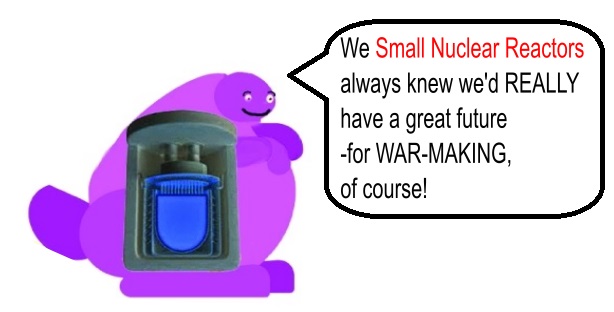
The Defense Innovation Unit announced April 10 next steps in the Advanced Nuclear Power for Installations (ANPI) program, launched in 2024 to deploy microreactor nuclear systems for increased power reliability at select military locations.
The ANPI program is a collaboration between DIU, which is under the Department of Defense, and the Departments of the Army and the Air Force, with the goals of working to design, license, build, and operate one or more microreactor nuclear power plants for the armed forces………………..
The DIU released the names of eight companies eligible to receive Other Transaction awards to provide commercially available dual use microreactor technology at various DOD installations:
- Antares Nuclear
- BWXT Advanced Technologies
- General Atomics Electromagnetic Systems
- Kairos Power
- Oklo
- Radiant Industries Incorporated
- Westinghouse Government Services
- X-energy
“Projecting power abroad demands ensuring power at home and this program aims to deliver that, ensuring that our defense leaders can remain focused on lethality,” ………………………………………………………………… https://www.ans.org/news/2025-04-14/article-6931/us-advances-microreactor-program-for-military-sites/
Nuclear Energy Means Climate Action Delay: O’Donnell and Winfield

Susan O’Donnell and Mark Winfield, https://www.theenergymix.com/nuclear-energy-means-climate-action-delay-odonnell-and-winfield/ 16 Apr 25
What is the best way for utilities to delay the transition from fossil fuels? Propose to build nuclear reactors.
Electricity utilities wanting to “decarbonize” have several options for replacing the fossil fuel (coal, oil and gas) plants on their grids: aim to increase energy efficiency and productivity; add new renewable energy and storage resources; consider adding carbon capture and storage (CCS); or propose to build new nuclear reactors.
By objective measures, building new nuclear power plants will cost more, take longer to deploy, and introduce catastrophic accident risks—relative to improving energy productivity, expanding renewables with energy storage, and developing distributed energy resources. CCS suffers from limits of appropriate geology, reduced plant efficiency, and high costs.
However, if the goal is to keep fossil fuel-fired plants operating as long as possible, promising to build more nuclear energy has definite appeal.
Reactor design, planning, and build times are notoriously long—usually measured in decades—with well-established patterns of significant “unexpected” delays. Delaying while waiting for the promised new nuclear builds or reactor refurbishments maintains the status quo, effectively kicking actual climate action well down the road.
The two Canadian provinces with operating nuclear power reactors, Ontario and New Brunswick, provide case studies in this strategy. Both provinces are investing in significant new fossil gas generating infrastructure while waiting for new reactor designs to be developed and then built.
In Ontario, greenhouse gas emissions from the electricity sector have already risen dramatically as fossil gas plants are run to replace out-of-service nuclear reactors, and the province proposes to add more gas-fired generating capacity to its system. After a nearly decade-long hiatus, it only recently proposed a feeble reengagement with renewable energy. New nuclear reactor builds at Darlington, Bruce, and now Wesleyville, with timelines stretching well into the 2030s and 40s, remain the centrepiece of its energy (and supposed) climate strategy.
New Brunswick’s NB Power plans to add 600 MW of new nuclear power at its Point Lepreau nuclear site on the Bay of Fundy. Calls to build renewables instead have been rebuffed. In 2018, the province invited two nuclear start-up companies to set up in Saint John and apply for federal funding. Despite generous support from federal and provincial taxpayers, the companies have been unable to attract matching private funds. The NB Power CEO recently said she is “unsure” if the ARC-100, the reactor design promoted in 2018 as the closest to commercialization, will be ready by “the late 2030s.”
Meanwhile, the government recently announced support for building a large fossil gas plant, the biggest power project in the province in more than a decade.
The reality is that the new nuclear reactors being pushed by proponents are largely “PowerPoint reactors”—unproven and unbuilt designs. The BWRX-300 reactor that Ontario Power Generation (OPG) is proposing for its Darlington site, for example, lacks a fully-developed design, including key elements like safety systems. The Canadian Nuclear Safety Commission (CNSC) still gave OPG a licence to build it, while the U.S. Nuclear Regulatory Commission is still reviewing the design and asking for more information.
Recent analyses from the U.S. Tennessee Valley Authority also suggest the cost of the reactors will be far higher than OPG has claimed, and the timeline to construction and completion by 2030 seems less and less likely.
The new Monark design for a CANDU reactor that AtkinsRéalis (formerly SNC Lavalin) is proposing for the Bruce Power nuclear site is even further behind the BWRX-300 in development. According to the CNSC, the Monark is at a “familiarization and planning” stage, with no date set for even the first, preliminary stage of the design review.
The Monark’s main competitor is the AP-1000 reactor by Westinghouse. In 2002, the company submitted the AP-1000 design for formal review by the U.S. Nuclear Regulatory Commission. Two reactors came online in 2023 and 2024 at the Vogtle plant in Georgia, more than two decades later and twice the original timeline. Prior to the Vogtle project, the last reactor to come online in the U.S. took more than five decades from the start of construction to supplying power to the grid.
The final cost of the recent Vogtle project, at US$36.8 billion, was more than twice the original budget. If the same cost profile is applied to Ontario’s nuclear expansion projects, the total bill to Ontario electricity ratepayers and taxpayers could exceed $350 billion.
Promising to build more nuclear power is a political path to climate action delay and a distraction from a sustainable and decarbonized energy system transition. There is a reason why the International Energy Agency predicts that despite new nuclear reactor builds, nuclear energy will provide only eight percent of electricity supplies globally by 2050. In the meantime, while renewables development continues to accelerate globally, Canadian utilities, detoured by nuclear and CCS ambitions, double down on fossil gas and drift further and further behind in the global energy revolution.
Dr. Susan O’Donnell is adjunct research professor and lead investigator of the CEDAR project at St. Thomas University in Fredericton. Dr. Mark Winfield is a professor at the Faculty of Environmental and Urban Change at York University in Toronto, and co-chair of the faculty’s Sustainable Energy Initiative.
.
Gender Stunts in Space: Blue Origin’s Female Celebrity Envoys
April 15, 2025 Dr Binoy Kampmark, https://theaimn.net/gender-stunts-in-space-blue-origins-female-celebrity-envoys/
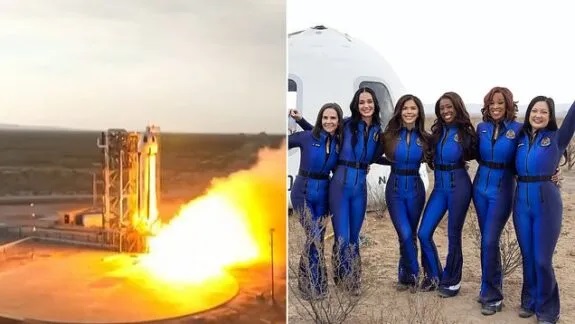
Indulgent, vain and profligate, the all-female venture into space on the self-piloted New Shepard (NS-31) operated by Jeff Bezos’ Blue Origin was space capitalism and celebrity shallowness on full show, masquerading as profound, moving and useful.
The crew consisted of bioastronautics research scientist and civil rights activist Amanda Nguyen, CBS Mornings co-host Gayle King, pop entertainer Katy Perry, film producer Kerianne Flynn, former NASA scientist and entrepreneur Aisha Bowe and Lauren Sánchez, fiancée of Jeff Bezos. The journey took 11 minutes and reached the Kármán line at approximately 96 kilometres above the earth.
Blue Origin had advertised the enterprise as an incentive to draw girls to pursue careers in science, technology, engineering and mathematics (STEM). It also shamelessly played on the background of some of the crew, with Nguyen promoted as “the first Vietnamese and south-east Asian female astronaut” whose presence would “highlight science as a tool for peace” and also project a potent “symbol of reconciliation between the US and Vietnam.”
Phil Joyce, Senior Vice President of New Shepard, thought it a “privilege to witness this crew of trailblazers depart the capsule today.” Each woman was “a storyteller” who would “use their voices – individually and together – to channel their life-changing experience today into creating lasting impact that will inspire people across our planet for generations.”
What was more accurately on show were celebrity space marketers on an expensive jaunt, showing us all that women can play the space capitalism game as well, albeit as the suborbital version of a catwalk or fashion show. Far from pushing some variant of feminism in the frontier of space, with scientific rewards for girls the world over, we got the eclipsing, if not a wholesale junking, of female astronauts and their monumental expertise.
It hardly compared, at any stretch or by any quantum of measure, with the achievement of Russian cosmonaut, Valentina Tereshkova, who piloted a Vostok 6 into earth’s orbit lasting 70 hours over six decades prior. To have Sánchez claiming to be “so proud of this crew”, tears cued for effect, gave the impression that they had shown technical expertise and skill when neither was required. It was far better to have deep pockets fronting the appropriate deposit, along with the necessary safe return, over which they had virtually no control over.
Dr Kai-Uwe Schrogl, special advisor for political affairs at the European Space Agency, offered a necessarily cold corrective. “A celebrity isn’t an envoy of humankind – they go into space for their own reasons,” he told BBC News. “These flights are significant and exciting, but I think maybe they can also be a source of frustration for space scientists.” How silly of those scientists, who regard space flight as an extension of “science, knowledge and the interests of humanity.”
The Guardian was also awake to the motivations of the Bezos project. “The pseudo progressiveness of this celebrity space mission, coupled with Bezos’s conduct in his other businesses, should mean we are under no illusion what purpose these flights serve.” With Richard Branson’s Virgin Galactic and Elon Musk’s SpaceX, the space tourism market, marked by its bratty oligarchs, is becoming competitive. In an effort to corner the market, attractive gimmicks are in high demand.
The cringingly superficial nature of the exercise was evident in various comments on the fashion aspect of the suits worn by the crew. Here was branding, and the sort that could be taken to space. As Sánchez stated: “Usually, you know, these suits are made for a man. Then they get tailored to fit a woman. I think the suits are elegant, but they also bring a little spice to space.” Blue Origin had capitalised on NASA’s own failings in 2019, which saw the abandoning of an all-female spacewalk for lacking appropriately fitting spacesuits.
On their return, the female cast performed their contractual undertakings to bore the press with deadly clichés and meaningless observations, reducing space travel to an exercise for the trivial. “Earth looked so quiet,” remarked Sánchez. “It was quiet, but really alive.” King, after getting on her knees to kiss the earth, merely wanted “to have a moment with the ground, just appreciate the ground for just a second.” (Surely she has had longer than that.) Perry, on her return after singing What a Wonderful World during the trip, overflowed with inanities. She felt “super connected to life”, as well as being “so connected to love.”
On the ground were other celebrities, delighted to offer their cliché-clotted thoughts. “I didn’t realise how emotional it would be, it’s hard to explain,” reflected Khloé Kardashian. “I have all this adrenaline and I’m just standing here.” From a family of celebrities that merely exist as celebrities and nothing else, she had some advice: “Dream big, wish for the stars – and one day, you could maybe be amongst them.”
Amanda Hess, reflecting on the mission in The New York Times, tried to put her finger on what it all meant. “The message is that a little girl can grow up to be whatever she wishes: a rocket scientist or a pop star, a television journalist or a billionaire’s fiancée who is empowered to pursue her various ambitions and whims in the face of tremendous costs.” Just not an astronaut.
How and where is nuclear waste stored in the US?

Gerald Frankel , Distinguished Professor of Materials Science and Engineering, The Ohio State University, April 14, 2025, https://theconversation.com/how-and-where-is-nuclear-waste-stored-in-the-us-252475
Around the U.S., about 90,000 tons of nuclear waste is stored at over 100 sites in 39 states, in a range of different structures and containers.
For decades, the nation has been trying to send it all to one secure location.
A 1987 federal law named Yucca Mountain, in Nevada, as a permanent disposal site for nuclear waste – but political and legal challenges led to construction delays. Work on the site had barely started before Congress ended the project’s funding altogether in 2011.
The 94 nuclear reactors currently operating at 54 power plants continue to generate more radioactive waste. Public and commercial interest in nuclear power is rising because of concerns regarding emissions from fossil fuel power plants and the possibility of new applications for smaller-scale nuclear plants to power data centers and manufacturing. This renewed interest gives new urgency to the effort to find a place to put the waste.
In March 2025, the U.S. Supreme Court heard arguments related to the effort to find a temporary storage location for the nation’s nuclear waste – a ruling is expected by late June. No matter the outcome, the decades-long struggle to find a permanent place to dispose of nuclear waste will probably continue for many years to come.
I am a scholar who specializes in corrosion; one focus of my work has been containing nuclear waste during temporary storage and permanent disposal. There are generally two forms of significantly radioactive waste in the U.S.: waste from making nuclear weapons during the Cold War, and waste from generating electricity at nuclear power plants. There are also small amounts of other radioactive waste, such as that associated with medical treatments.
Waste from weapons manufacturing
Remnants of the chemical processing of radioactive material needed to manufacture nuclear weapons, often called “defense waste,” will eventually be melted along with glass, with the resulting material poured into stainless steel containers. These canisters are 10 feet tall and 2 feet in diameter, weighing approximately 5,000 pounds when filled.
For now, though, most of it is stored in underground steel tanks, primarily at Hanford, Washington, and Savannah River, South Carolina, key sites in U.S. nuclear weapons development. At Savannah River, some of the waste has already been processed with glass, but much of it remains untreated.
At both of those locations, some of the radioactive waste has already leaked into the soil beneath the tanks, though officials have said there is no danger to human health. Most of the current efforts to contain the waste focus on protecting the tanks from corrosion and cracking to prevent further leakage.
Waste from electricity generation
The vast majority of nuclear waste in the U.S. is spent nuclear fuel from commercial nuclear power plants.
Before it is used, nuclear fuel exists as uranium oxide pellets that are sealed within zirconium tubes, which are themselves bundled together. These bundles of fuel rods are about 12 to 16 feet long and about 5 to 8 inches in diameter. In a nuclear reactor, the fission reactions fueled by the uranium in those rods emit heat that is used to create hot water or steam to drive turbines and generate electricity.
After about three to five years, the fission reactions in a given bundle of fuel slow down significantly, even though the material remains highly radioactive. The spent fuel bundles are removed from the reactor and moved elsewhere on the power plant’s property, where they are placed into a massive pool of water to cool them down.
After about five years, the fuel bundles are removed, dried and sealed in welded stainless steel canisters. These canisters are still radioactive and thermally hot, so they are stored outdoors in concrete vaults that sit on concrete pads, also on the power plant’s property. These vaults have vents to ensure air flows past the canisters to continue cooling them.
As of December 2024, there were over 315,000 bundles of spent nuclear fuel rods in the U.S., and over 3,800 dry storage casks in concrete vaults above ground, located at current and former power plants across the country.
Even reactors that have been decommissioned and demolished still have concrete vaults storing radioactive waste, which must be secured and maintained by the power company that owned the nuclear plant.
The threat of water
One threat to these storage methods is corrosion.
Because they need water to both transfer nuclear energy into electricity and to cool the reactor, nuclear power plants are always located alongside sources of water.
In the U.S., nine are within two miles of the ocean, which poses a particular threat to the waste containers. As waves break on the coastline, saltwater is sprayed into the air as particles. When those salt and water particles settle on metal surfaces, they can cause corrosion, which is why it’s common to see heavily corroded structures near the ocean.
At nuclear waste storage locations near the ocean, that salt spray can settle on the steel canisters. Generally, stainless steel is resistant to corrosion, which you can see in the shiny pots and pans in many Americans’ kitchens. But in certain circumstances, localized pits and cracks can form on stainless steel surfaces.
In recent years, the U.S. Department of Energy has funded research, including my own, into the potential dangers of this type of corrosion. The general findings are that stainless steel canisters could pit or crack when stored near a seashore. But a radioactive leak would require not only corrosion of the container but also of the zirconium rods and of the fuel inside them. So it is unlikely that this type of corrosion would result in the release of radioactivity.
A long way off
A more permanent solution is likely years, or decades, away.
Not only must a long-term site be geologically suitable to store nuclear waste for thousands of years, but it must also be politically palatable to the American people. In addition, there will be many challenges associated with transporting the waste, in its containers, by road or rail, from reactors across the country to wherever that permanent site ultimately is.
Perhaps there will be a temporary site whose location passes muster with the Supreme Court. But in the meantime, the waste will stay where it is.
A nuclear play in New Brunswick is facing a fragile outlook.

14 Apr 25
- What’s happening: The British owner of New Brunswick’s small modular reactor startup has entered insolvency, throwing its assets on the auction block.
- Why it matters now: The Canadian subsidiary says it’s forging ahead, but with delays, money troubles and fading momentum, Ottawa’s nuclear play is wobbling.
- The broader view: It’s a gut check for Canada’s SMR strategy – and a reminder of how fragile government-backed innovation can be when the scaffolding cracks.
Trump’s Iran talks can succeed if the administration embraces reality rather than myth

What is routinely absent from the conversation is that one of the people who agrees, at least for the moment, that Iran must not have a nuclear weapon is Ayatollah Ali Khamenei. The fatwa (ruling under Islamic law) he issued dates back to at least 2003 and as much as a decade before that.
The talks between Iran and the U.S. set to begin today have a chance to succeed if the Trump administration grounds its policy in the realities of Iran’s nuclear program, not fearmongering promoted by Israel and its allies.
By Mitchell Plitnick April 12, 2025, Mitchell Plitnick, https://mondoweiss.net/2025/04/trumps-iran-talks-can-succeed-if-the-administration-embraces-reality-rather-than-myth/
Mitchell Plitnick is the president of ReThinking Foreign Policy. He is the co-author, with Marc Lamont Hill, of Except for Palestine: The Limits of Progressive Politics. Mitchell’s previous positions include vice president at the Foundation for Middle East Peace, Director of the US Office of B’Tselem, and Co-Director of Jewish Voice for Peace. You can find him on Twitter @MJPlitnick.
Iran and the United States are set to meet indirectly on today in Oman, in the hopes of finding a way to resolve their confrontations over Iran’s nuclear program without a resort to an “Israeli-led” attack on Iran.
There are a lot of details to parse if these discussions are to bear fruit. It will be important to see whether each side—though most of the concern here really lays with the American side—is willing, at least in the context of these talks, to deal with realities over propaganda and pragmatism over sloganeering.
These talks are different from earlier ones. High-level officials from Donald Trump’s administration are leading these talks. Trump’s schizophrenic approach to policy makes negotiations volatile but also leaves open possibilities for breakthroughs.
Netanyahu sidelined
Israeli Prime Minister Benjamin Netanyahu’s visit to Washington earlier this week clearly indicated the potential here.
Netanyahu came with the proper fealty to Trump, kissing the proverbial ring. He desperately needed a boost from Trump as protests and scandals swirled around him in Israel. He also needed Trump to back his aggressive stance against Iran, a crucial point in ensuring the perpetual state of active war that Netanyahu needs to forestall elections next year and to continue to delay his trials in court and investigations of his administration’s failures.
He got none of it. Only hours before Netanyahu was to meet with Trump, he was told that Trump was going to hold talks with Iran to avert war. The large press conference that was scheduled for the two leaders was quickly reduced to a small group of hand-picked “journalists.”
At that mini-conference, Netanyahu was clearly discomfited by Trump’s mention of negotiations with Iran. It got worse for him as Trump mildly rebuked Netanyahu on his reluctance to engage with Türkiye over both countries (illegal) presences in Syria. It’s worth noting how quickly Israel and Türkiye started productive talks after that.
There was a clear message that Trump was sending, although he didn’t use the same kind of language that got one of his negotiators into trouble a few weeks ago: Israel is not going to drive this process. The United States is.
More precisely, Netanyahu is not going to drive the process; Trump is. Trump later clarified Israel’s role. After saying that the U.S. will use a military option against Iran if necessary, Trump said, “Israel will obviously be very much involved in that — it’ll be the leader of that. But nobody leads us. We do what we want to do.”
Trump will allow the Israeli military to take the lead, and the risks, while he expects that the U.S. will be a full partner in the planning and strategizing of an attack, and offer the needed support while not risking backlash from Trump’s own base should American military personnel be injured or killed in another “foreign war.”
So Netanyahu is now reduced to trying to sabotage a diplomatic process that is out of his hands in the hope of provoking a military confrontation that he will not be able to drive but merely partner in. After four years of Joe Biden needlessly acquiescing to every Israeli desire, this is an unwelcome change for Netanyahu.
It is ironic that the Democratic administration, which claimed to defend the “rules-based order,” and claimed to respect established political traditions domestically, routinely broke U.S. law and quite possibly delivered the death blow to both the “rules-based” post-Cold War order and to the international legal system; while Trump’s Republican administration, which has openly defied the rule of law, has moved quickly and decisively into brutal authoritarianism and blatant racism, is restraining Israels’ relentless push for a regional war, at least for the moment.
A fictional crisis
Yet, on the whole, and in their effects on the ground, Trump’s policies have not been much different materially in Gaza, or even with Iran, from Biden’s. And one of those similarities is the ongoing denial of the fictional basis of the Iranian “nuclear threat.”
That “Iran must not be allowed to obtain a nuclear weapon” is a mantra we hear every day, and also a point that most people agree with, even if, for some of us, it is not so much about “allowing” Iran a nuke, as it is that no one should have these awful weapons and the last thing we need is another country, friend or foe, possessing them.
What is routinely absent from the conversation is that one of the people who agrees, at least for the moment, that Iran must not have a nuclear weapon is Ayatollah Ali Khamenei. The fatwa (ruling under Islamic law) he issued dates back to at least 2003 and as much as a decade before that.
There are, of course, those who think the fatwa is just words and others who believe it to be deception. So, if further proof is needed, the United States has provided it.
The United States intelligence services confirmed in 2007 that Iran had formally abandoned the pursuit of nuclear weapons technology in 2003.
That intelligence assessment has been repeatedly confirmed ever since, most recently by Trump’s own Director of National Intelligence Tulsi Gabbard in testimony before Congress. “The IC (Intelligence Community) continues to assess that Iran is not building a nuclear weapon and Supreme Leader Khamenei has not authorized the nuclear weapons program he suspended in 2003,” she said.
It can’t be any clearer. Gabbard is here representing eighteen different American intelligence agencies. There has been no pushback from that entire community on her statement.
Of course, there is no shortage of bad faith actors who will say that all of this doesn’t matter because Iran is evil and so every bad thing anyone thinks about them must be true.
Those forces feed off the fact that Iran has enriched uranium to near-weapons grade and always, without fail, decline to mention that they have only done that because the United States abrogated the 2015 Iran nuclear deal (called the JCPOA) and reinstated crippling sanctions and that Iran’s only way to retaliate at all was to also take the steps that were denied it by the JCPOA.3
Again, we need to recall that it was Donald Trump who, for no reason other than his wish to reverse any positive step by his then-immediate predecessor Barack Obama, tore up the JCPOA. He did this despite the statement by his own top aides, such as then-Defense Secretary Jim Mattis, who told a House of Representatives hearing, “I believe that they fundamentally are (in compliance). There have been certainly some areas where they were not temporarily in that regard, but overall our intelligence community believes that they have been compliant, and the IAEA also says so.”
Six months later, Mattis said it again, even while Trump was getting ready to scrap the deal. He told a Senate Armed Services Committee hearing, “I’ve read (the JCPOA) now three times … and I will say that it is written almost with an assumption that Iran would try to cheat…So the verification, what is in there, is actually pretty robust as far as our intrusive ability” to inspect and supervise the Iranian nuclear facilities and program.
This isn’t just about getting history right. This is the perspective that Iran is bringing to the talks, one that is confirmed by Trump’s own people when they are forced to speak the truth rather than just say whatever their boss wants them to say.
This perspective was never brought to the Biden administration’s dealings with Iran, despite Biden having been fully immersed in the JCPOA talks as Obama’s vice president.
If Trump wants to avoid the military conflict that he has already primed American military forces in the region for, his negotiators need to appreciate the reality that the only steps Iran has taken toward a nuclear weapon since 2003 are entirely due to the U.S.’ refusal to live up to the deal it pushed for and got in 2015.
Netanyahu’s Libya option
Another reality Trump needs to recognize is the message that has been sent to countries that surrender their nuclear deterrent.
Ukraine is an obvious current example. Of the many ways the West betrayed Ukraine’s trust after the collapse of the Soviet Union, a big one is the neglect of Ukrainian security, particularly between 1995 and 2014, that was promised to Kyiv in exchange for their agreement to give up the Soviet nuclear weapons they possessed.
That didn’t work out well for Gaddafi or Libya, and the state itself remains divided and unstable to this day.
This explains some of what Gabbard was talking about when, later in her recent testimony, she said, “In the past year, we have seen an erosion of a decades-long taboo in Iran on discussing nuclear weapons in public, likely emboldening nuclear weapons advocates within Iran’s decision-making apparatus.”
If Iran should agree, as it did in 2015, to surrender its entire nuclear weapons program, does the same fate await it as those of Libya and Ukraine? Given that its enemies, the U.S. and Israel, both have nuclear arsenals as well as massive stores of both conventional weapons and WMDs and have wreaked unimaginable destruction around the world and in the Middle East specifically, it is a real concern, and one that the country, both in the public and governmental discourses, would be irresponsible not to discuss and consider.
This must inform the American approach to the talks in Oman. Benjamin Netanyahu is one person who knows that.
To save face, and to give the impression that what he says is going to matter to Trump, Netanyahu spoke to the issue of U.S.-Iran talks after he left Washington. He said, “Iran will not have nuclear weapons. This can be done by agreement, but only if the agreement is a Libya-style agreement (where international and American agencies) go in, blow up the facilities, dismantle all the equipment, under American supervision with American execution. That is good.”
Netanyahu wants Iran’s entire nuclear program destroyed, including the civilian aspect. That’s a non-starter for Iran. While nuclear power accounts for only a small portion of Iran’s electricity use, it is expected to grow in coming years as even more of its oil will be exported in an attempt to rebuild its shattered economy.
Anti-Iran hawks are going to push the “Libya option.” Iran, for its part, will need to find the space to agree to the sort of intrusive inspections it allowed in 2015, at least, and probably some other concessions for Trump to show off. They very likely know that. And if the U.S. wants that agreement, it will need to commit to ending sanctions more reliably than it did in 2015.
That path is reasonable, it is a win for Iran, and Trump can sell it as a triumph. It’s there for the taking, but only if Trump does something well outside of both his and, for the most part, the U.S.’s comfort zone: act in good faith and grounded in reality rather than myth.
Saudi Arabia, US on ‘pathway’ to civil nuclear agreement, US Energy Secretary says

The United States and Saudi Arabia will sign a preliminary agreement to cooperate over the kingdom’s ambitions to develop a civil nuclear industry, U.S. Energy Secretary Chris Wright told reporters in the Saudi capital
Riyadh on Sunday.
Wright, who had met with Saudi Energy Minister Prince
Abdulaziz bin Salman earlier on Sunday, said Riyadh and Washington were on a “a pathway” to reaching an agreement to work together to develop a Saudi
civil nuclear programme.
Reuters 13th April 2025 https://www.reuters.com/world/saudi-arabia-us-pathway-civil-nuclear-agreement-us-energy-secretary-says-2025-04-13/
California Nuclear Plant Integrates AI for Efficiency
Oil Price By Haley Zaremba – Apr 13, 2025,
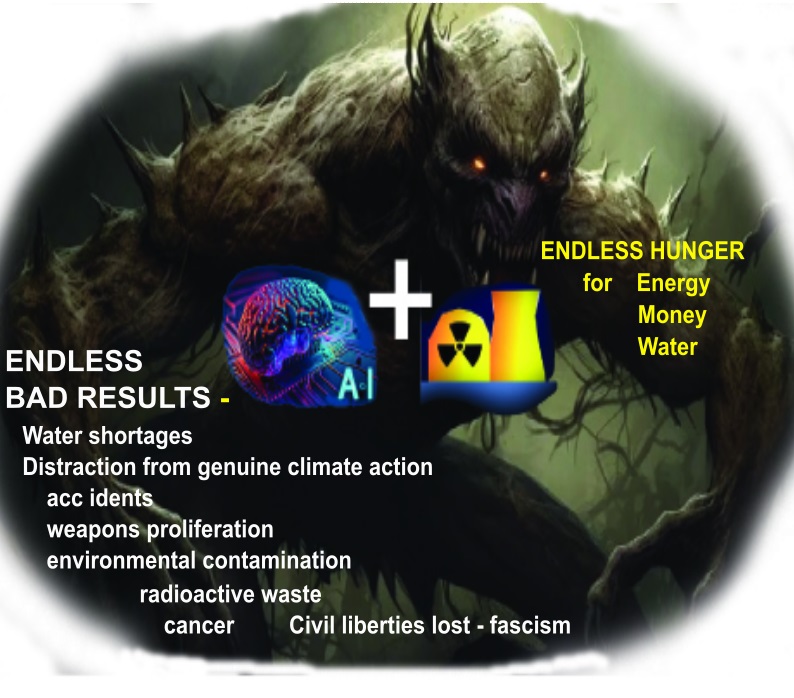
- The Diablo Canyon nuclear power plant in California is utilizing AI technology to improve the efficiency of its document retrieval processes, aiming to reduce the time and resources spent on managing technical documentation.
- While the initial use of AI is limited to document retrieval, there are concerns among lawmakers and watchdogs regarding the potential for broader automation and the safety implications within a nuclear setting.
- The convergence of nuclear energy and AI is being driven by the increasing energy demands of data centers, with tech leaders and the federal government exploring the symbiotic relationship between these technologies for future energy solutions.
……………………………………………………………………………………………………………………lawmakers are very concerned about what the introduction of artificial intelligence into nuclear power production could mean for the future, and are pushing for more concrete guardrails. However, under the Trump administration, such parameters may not be forthcoming. Trump has already walked back a Biden-era ??executive order outlining goals for AI regulation, which the current administration sees as anti-innovation.
While there is little risk in the use of AI for document retrieval, there is concern about what comes next.
“The idea that you could just use generative AI for one specific kind of task at the nuclear power plant and then call it a day, I don’t really trust that it would stop there,” Tamara Kneese, the director of tech policy nonprofit Data & Society’s Climate, Technology, and Justice program, was recently quoted by Cal Matters. “And trusting PG&E to safely use generative AI in a nuclear setting is something that is deserving of more scrutiny.”
Nuclear energy and AI have become increasingly entangled as the runaway energy demand growth of data centers has threatened domestic energy security as well as Silicon Valley’s decarbonization goals. Tech bigwigs like Bill Gates and Sam Altman have increasingly touted nuclear energy as a carbon-free solution to meeting AI’s fast-growing energy demand, and have even envisioned a symbiotic relationship between nuclear and AI, wherein machine learning can help plan and design more efficient and cost-effective next-gen power plants.
The federal government has also pushed this angle. The U.S. Department of Energy recently identified 16 federal sites that ??are “uniquely positioned for rapid data center construction, including in-place energy infrastructure with the ability to fast-track permitting for new energy generation such as nuclear.” https://oilprice.com/Alternative-Energy/Nuclear-Power/California-Nuclear-Plant-Integrates-AI-for-Efficiency.html
Moltex Canada pushes on with nuclear project as U.K. parent struggles
Matthew McClearn, Globe and Mail, Toronto, 14 Apr 25
The British owner of New Brunswick small modular nuclear reactor developer Moltex Energy Canada Inc. is up for sale as part of a U.K. insolvency proceeding.
Moltex Energy Ltd., a private company based in Stratford-upon-Avon, announced last month the appointment of two insolvency practitioners from accounting firm Azets Holdings Ltd. to manageitsaffairs. Azets hired appraisers Hilco Valuation Services to solicit offers for its assets, which are due May 7.
It’s the latest complication fortaxpayer-sponsored efforts to construct small modular reactors, or SMRs, in New Brunswick.
Moltex’s wholly owned Canadian subsidiary is one of two vendors partnered with New Brunswick Power to build reactors at Point Lepreau Nuclear Generating Station. Moltex Canada’s is known as the Stable Salt Reactor-Wasteburner (SSR-W), and it’s also developing a plant to reprocess spent nuclear fuel. The second company, ARC Clean Technology, is working on another reactor called the ARC-100.
Both were originally promised by 2030. But developing a novel nuclear reactor is a painstaking, resource-intensive process that can require hundreds of employees, billions of dollars and decades of effort. New Brunswick and the federal government backed startups with only one or two dozen employees, and they’ve struggled to raise funds privately.
Moltex’s British holding company was founded in 2014 by Ian Scott, who previously worked in the biological-sciences field including as a senior scientist at Unilever PLC. (A co-founder, John Durham, stepped down as a director in October.) According to its latest financial report, published in January, it employed two people during the year ended March 31, 2024, and lost £630,000 (about $1.1-million). For several years its reports raised uncertainty about its ability to continue as a going concern.
Britain’s administration process is similar to proceedings under Canada’s Companies’ Creditors Arrangement Act; according to the British government, it’s intended to provide “breathing space” while a rescue package or sale of assets is executed.
According to Moltex Energy Ltd.’s financial statements, its shareholders had provided its equity throughout its history; it carried no long-term debt. The company reported in 2023 that its future depended on raising external capital; it had enough cash flow to survive through December, 2025, albeit “there would need to be cuts.”
Rory O’Sullivan, chief executive officer of Moltex Energy Canada, was also a director of the parent company for much of the past several years. He said the British company’s shareholders would not approve the Canadian subsidiary’s fundraising efforts, effectively stalling them.
“The key here is we needed to get someone else in control of Moltex Energy Ltd. so that we could have a competitive sale process,” Mr. O’Sullivan said…………………………..
New Brunswick’s government attracted Moltex and ARC to establish offices in the province in 2018. The two companies have each estimated that it would cost around $500-million to develop their respective technologies…………………………
As for ARC, its CEO and other employees suddenly departed last summer; ARC has published no announcements on its website since then. The ARC-100 is undergoing a prelicensing review by the Canadian Nuclear Safety Commission. Spokesperson Sandra Donnelly said the company will complete its design by 2027 to support an application for a construction licence.
NB Power’s CEO, Lori Clark, presented SMRs as playing a crucial role in her utility’s plans to achieve “net zero” emissions. More recently, however, she acknowledged that neither project is likely to follow its original schedule, and the utility is now considering other reactors for construction at Point Lepreau.
Spokesperson Dominique Couture wrote in a statement that NB Power has been working on an environmental impact assessment for the ARC-100 during the past year. And it assisted Moltex’s development efforts for reprocessing spent fuel.
All this is far less than what the federal government envisioned in the SMR Roadmap, a 2018 document developed with extensive input from the nuclear industry. It promised demonstration projects across the country; successive federal budgets allocated hundreds of millions of dollars to support them.
Canadian Nuclear Laboratories was to have an SMR called the Micro Modular Reactor up and running at its Chalk River facility by 2026. But its partner in that project, Ultra Safe Nuclear Corp., initiated a court-supervised sale process under Chapter 11 of the U.S. Bankruptcy Code in October. Another partner, Ontario Power Generation, pulled out last year.
Of the demonstration projects contemplated in the SMR Roadmap, only one appears to be on track: OPG’s proposal to build a “grid-scale” SMR at its Darlington Station. This month it received a construction licence from the CNSC to build its first reactor, a BWRX-300 designed by U.S. vendor GE-Hitachi Nuclear Energy. If completed on schedule by 2028, it would be the first SMR in any G7 country. https://www.theglobeandmail.com/business/article-moltex-canada-pushes-on-with-nuclear-project-as-uk-parent-struggles/#comments
Iran says ‘indirect talks’ have taken place with US over nuclear programme – with more to follow

The talks come after US President Donald Trump warned Iran it would be in “great danger” if a deal wasn’t reached between the two countries.
Sky News 1 13 April 2025
The discussions on Saturday took place in Muscat, Oman, with the host nation’s officials mediating between representatives of Iran and the US, who were seated in separate rooms, according to Esmail Baghaei, a spokesperson for Iran’s foreign ministry.
After the meeting, Oman’s foreign minister Sayyid Badr Albusaidi thanked Iran’s foreign minister Abbas Araghchi and US Middle East envoy Steve Witkoff for joining the negotiations aimed at “global peace, security and stability”, in an X post.
“We will continue to work together and put further efforts to assist in arriving at this goal,” he added.
‘Very positive’ and ‘constructive’
Iranian state media claimed the US and Iranian officials “briefly spoke in the presence of the Omani foreign minister” at the end of the talks – a claim Mr Araghchi echoed in a statement on Telegram.
He said the talks took place in a “constructive atmosphere based on mutual respect” and that they would continue next week.
Speaking on board Air Force One on Saturday US President Donald Trump said the “talks are going okay”……………………………………………………..
Reuters news agency said an Omani source told it the talks were focused on de-escalating regional tensions, prisoner exchanges and limited agreements to ease sanctions in exchange for controlling Iran’s nuclear programme.
‘Great danger’ if talks fail
Donald Trump has insisted Tehran cannot get nuclear weapons.
He said on Monday the talks would be direct, but Tehran officials insisted it would be conducted through an intermediary.
Mr Trump also warned Iran would be in “great danger” if negotiations fail…………….
He added Iran “cannot have a nuclear weapon, and if the talks aren’t successful, I actually think it will be a very bad day for Iran”.
The comments came after Mr Trump’s previous warnings of possible military action against Iran if there is no deal over its nuclear programme. https://news.sky.com/story/iran-says-indirect-talks-taking-place-with-us-over-nuclear-programme-13347051
Inside the New Mexico lab where the U.S. is moving into the most terrifying chapter of the nuclear arms race

By JAMES REINL, 13 Apr 25, https://www.dailymail.co.uk/news/article-14597065/activity-new-mexico-lab-nuclear-arms-race.html
It weighs just 824lbs, but packs enough plutonium to vaporize a city center and kill and maim three million people in the blink of an eye.
Scarier still, production of America’s new B61-13 gravity bomb is seven months ahead of schedule, as scientists speed up work at their laboratory in the New Mexico desert.
The timeline was moved up due to the ‘critical challenge and urgent need’ for a new nuclear deterrent. It is 24 times more powerful than the atom bomb that levelled Hiroshima, Japan, in 1945.

00:33
02:24
Read More
They speak of an ‘urgent need’ for the new super-nuke, as everywhere from Russia to China, North Korea and even Britain boost their stockpiles of warheads.
Nuclear arms watchers say that, while overall global inventories have fallen since the Cold War, the number of warheads deployed for combat readiness is on the rise once again.
For some, this new nuclear arms race is scarier than when America and the Soviet Union built enough nukes to wipe out mankind many times over in the years after World War II.
That’s down to the wide array of states that possess the weapons now — which includes India, Pakistan, and, reputedly, Israel — and as a multipolar balance of power emerges.
As the US Trump administration slights its allies in Europe and Asia, the club of nine nuclear powers looks set to expand, perhaps quickly, and grow even more unwieldy.
In recent months, officials from Germany to Poland, South Korea, Japan, and Saudi Arabia have broken the nuclear taboo and spoken about acquiring nukes, or related technology.
Meanwhile, Iran’s religious hardliners have been spinning their uranium centrifuges in secret for years.
Joseph Cirincione, a national security analyst who advised the State Department in the Obama administration, warns of a ‘nuclear nightmare’ of more European nations going fissile.
‘Should they proceed, the spread of nuclear weapons would not be limited to Europe or our allies,’ says Cirincione.
‘The nuclear reaction chain could quickly spread to Asia, where Japan, South Korea and Taiwan face similar worries about the reliability of their defense agreements with America.’
This is all happening as US President Donald Trump slaps tariffs on nuclear-armed China, and many other big economies, in a trade war that’s raised tensions and roiled stock markets.
Scientists at Sandia National Laboratories in New Mexico recently said they were kickstarting development of the B61-13, a nuclear ‘gravity bomb’ that was originally slated to go into production for the US Air Force in 2026.
Gravity bombs are literally what they sound like, a bomb dropped from a warplane that lets gravity do all the work.
It would be dropped by the stealth B-21 Raider, and have a yield of as much as 360 kilotons, or 360,000 tons of TNT.
It would create a blast radius of roughly 190,000 feet, the length of two Manhattans.
If dropped over a city like Beijing, the B61-13 would likely leave some 788,000 people dead and 2.2 million injured.
Anything within a half-mile radius of the detonation site would be vaporized by the ensuing fireball, and the blast would demolish buildings and kill nearly everyone else within a mile.
Read More
Inside Trump’s bold plan to save America from a nuclear apocalypse… and what happens if it fails
Those within a two-mile radius of the blast site would also suffer from high levels of radiation that would likely kill them within a month.
Another 15 percent of the survivors would likely perish from cancer years down the line.
Currently, the US has some 5,044 nuclear warheads in its arsenal, with Russia being the only country that has more.
Together, they possess about 88 percent of all the world’s nuclear weapons.
The Federation of American Scientists says the US and Russia are bringing down the total number of nuclear weapons globally by dismantling their old, retired warheads.
But the number of warheads in global military stockpiles is actually increasing, says the group of atomic researchers.
Five nuclear-armed states — China, Pakistan, India, Israel, and North Korea — have all raised their nuclear stockpiles by more than 700 warheads these past 40 years.
Meanwhile, Russia’s invasion of Ukraine in 2023, and subsequent Western military aid to Kiev, stoked fears of a nuclear escalation.
Russian President Vladimir Putin in November lowered the threshold for Moscow’s use of its nuclear weapons.
Alarmed by this, the Bulletin of the Atomic Scientists in January moved their ‘Doomsday Clock’ closer to midnight than ever before.
The metaphorical timepiece is now at just 89 seconds before midnight — the theoretical point of annihilation.
Fears of a nuclear war come as such groups as the US National Nuclear Security Administration (NNSA) say work on a treaty to permanently ban nuclear testing has stalled, and Russia and China are adding buildings at their nuclear sites.
In February, the US government announced plans to restart its nuclear testing programs in secret underground facilities.
Fears of a nuclear war come as such groups as the US National Nuclear Security Administration (NNSA) say work on a treaty to permanently ban nuclear testing has stalled, and Russia and China are adding buildings at their nuclear sites.
In February, the US government announced plans to restart its nuclear testing programs in secret underground facilities.
In any case, the rise of China, which has some 600 nuclear warheads and is building more, complicates any negotiation process, as the nuclear arms race has more than two main players.
Former Russian president Dmitry Medvedev warned that more countries would get nuclear weapons in the coming years.
He blamed the West for pushing the world towards the brink of World War Three by waging a proxy war against Russia in Ukraine.
Trump has said the ‘power of nuclear weapons is crazy’ and supports a global effort to ‘denuclearize’ and has revived talks with Iran aimed at ending its bootleg nuclear program.
Iranian Foreign Minister Abbas Araqchi and US special envoy Steve Witkoff will meet in Oman on Saturday, after Trump threatened to bomb the Islamic Republic if discussions failed.
Yet Cirincione and others say the Trump administration is inadvertently making a global nuclear arms race more likely.
That’s because it is frosty toward long-standing US allies in Europe and Asia, including through the so-called ‘nuclear umbrella’ — a promise of nuclear protection in return for allies not seeking atomic weapons themselves.
From Berlin to Tokyo, alarm bells are ringing that Washington, the anchor of the Western security apparatus across Europe and Asia, is no longer a reliable guarantor of the ultimate deterrence offered by nuclear arms.
The clearest statement of nuclear intent has come from Donald Tusk, Poland‘s prime minister, who last month said the ‘profound change in American geopolitics’ has nudged Warsaw to seek ‘opportunities related to nuclear weapons.’
‘This is a serious race: a race for security, not for war,’ Tusk told Polish lawmakers.
Likewise, Friedrich Merz, the man who is set to be Germany’s next chancellor, said in February that it was time for Berlin to explore a ‘nuclear sharing’ deal with Britain and France.
Senior figures in South Korea, Japan, and Saudi Arabia, have also made statements about acquiring nuclear arms or technology.
Likewise, Taiwan, Turkey and Egypt, have declared no interest in acquiring a deterrent, but could well change tack if they lived in a neighborhood of nuclear states.
For many defense analysts, there is perhaps the greatest threat of proliferation beyond the nine nuclear states since the end of the Cold War.
‘Whether he meant it or not, Trump has sent a message that the US nuclear umbrella might one day be folded,’ a Western security source said last month.
‘Once a South Korea or a Germany signals that they’re going for the bomb, it will be hard indeed to stop others following suit.’
Texas Budget Throws a Lot of Tax Dollars at Unproven Nuclear Technology

The initial $750 million tax dollars invested could swell to $2 billion
Public Citizen 11th April 2025
AUSTIN, Texas – The Texas House of Representatives gave initial approval early Friday to a state supplemental budget that includes $750 million in taxpayer giveaways to developers of advanced nuclear reactors, putting what could ultimately become a $2 billion bet on unproven technology.
The appropriation is part of House Bill 500 – a supplemental budget bill for the 2026-27 biennium – and directed toward the Texas Nuclear Power Fund. This new program would be created by another bill pending before the Legislature.
The initial $750 million in funds could become a $2 billion cost to taxpayers because of the program’s completion bonuses.
“Lawmakers have various strategies to choose from to fix the grid stability problems exposed by 2021’s Winter Storm Uri,” said Adrian Shelley, Texas director of Public Citizen. “With this budget’s subsidies for unproven nuclear technology, lawmakers are again going with the pricier, much harder-to-implement option that its proponents admit will take years to pay off. It’s a promise that comes with a giant “if” and wastes valuable time in the race to fix the grid’s predicted demand and supply issues.”
Gov. Greg Abbott prioritized nuclear energy at the start of the legislative session. In response, legislators proposed the Texas Nuclear Power Fund to incentivize the development of so-called small modular reactors (SMR). However, the technology is not cost-competitive with other forms of power generation, including wind, solar and fossil fuels. The only publicly traded company in the United States trying to build SMRs has canceled six proposals in Idaho after cost overruns of 250%………..
https://www.citizen.org/news/texas-budget-throws-a-lot-of-tax-dollars-at-unproven-nuclear-technology/
Trump declares he would ‘absolutely’ bomb Iran if it refuses to give up its bid for nuclear weapons

The Iran nuclear deal, which Trump scuttled after it was put in place under Barack Obama, was negotiated through multi-party talks.
On Tuesday Trump ridiculed fears of climate change, then pivoted to the Iran threat, which he called much more grave
Says Israel would be ‘very much involved’
By GEOFF EARLE, DEPUTY U.S. POLITICAL EDITOR, 10 April 25 https://www.dailymail.co.uk/news/article-14589765/donald-trump-bomb-iran-nuclear-weapons.html
President Donald Trump openly discussed military action against Iran just days before talks are set to begin on its nuclear program.
He upped his threats a day after he used colorful language to warn against ‘nuclear heat’ while saying Iran must relinquish nuclear ambitions.
A reporter asked Trump to specify his comment Tuesday that it would be ‘very dangerous’ for Iran if nuclear talks are unsuccessful.
Well they can’t have a nuclear weapon,’ Trump said. Pressed on if he meant military action, Trump responded: ‘Oh if necessary? Absolutely, yeah.’
Asked if he had a deadline with Iran, Trump responded, ‘Yeah, I do,’ but declined to say what it was.
But he said this weekend – with talks set to commence in Oman Saturday – was not the deadline. ‘We have a little time, but we don’t have much time,’ the president said.
‘Because we’re not going to let them have a nuclear weapon, can’t let them have a nuclear – and we’re gonna let them thrive. I want them to thrive. I want Iran to be great. The only thing they can’t have is a nuclear weapon.
‘I’m not asking for much. I just … they can’t have a nuclear weapon,’ Trump said.
‘But with Iran, yeah, if we, if it requires military, we’re gonna have military. Israel will obviously be very much involved in that. He’ll be the leader of that. But nobody leads us. We do what we want to do.
In his final cryptic comment, he added: ‘When you start talks, you know they’re going along well or not. And I would say the conclusion would be when I think they’re not going along well. So that’s just a feeling.’
Trump has pledged it is ‘not after a nuclear bomb’ and even expressed interest to direct U.S. investment.
Trump’s comments came on a day he did a sudden U-turn and imposed a 90-day pause on his ‘reciprocal’ tariffs, while maintaining a 10 percent across the board tariff and hiking the tariff on China to 125 percent.
The episode revealed both Trump’s willingness to throw the global system into turmoil to achieve his goals, and his willingness to backtrack amid fears of a recession and trillions worth of market losses. He also signed orders directing the Justice Department to investigate Miles Taylor, who wrote a critical book under the pen name ‘Anonymous’ during his first term, and former cyber security official Chris Krebs, who vouched for the security of the 2020 elections during the COVID pandemic.
Satellite images have revealed the deployment of six nuclear-capable B-2 bombers on Diego Garcia, a British-owned naval base that has been critical during U.S. military campaigns.
Trump on Monday said the U.S. would hold top level ‘direct’ talks with Iran – while brandishing new threats and repeating demands that Iran could not be allowed to have a nuclear weapon.
‘We’re having direct talks with Iran. And they’ve started,’ Trump told reporters while seated in the Oval Office next to Israeli PM Benjamin Netanyahu, himself a top Iran hawk.
The talks are set to take place in Oman, but Iran’s foreign minister, Abbas Araqchi, said the talks would be ‘indirect,’ amid longstanding tensions between the two nations.
The U.S. has avoided such direct talks for years. The Iran nuclear deal, which Trump scuttled after it was put in place under Barack Obama, was negotiated through multi-party talks.
‘I think everybody agrees that doing a deal would be preferable to doing the obvious. And the obvious is not something that I want to be involved with, or frankly, that Israel wants to be involved with, if they can avoid it,’ he added. ‘So we are going to see if we can avoid it, but it’s getting to be very dangerous territory, and hopefully those talks will be successful.’
‘And I think it would be in Iran’s best interests if they are successful.’
On Tuesday Trump ridiculed fears of climate change, then pivoted to the Iran threat, which he called much more grave
‘We were going to be gone, we’re all going to be gone – the environment. No, what they have to worry about is the nuclear – nuclear heat. They don’t have to worry about environmental heat. They have to worry about nuclear heat,’ Trump said on an event where he called for deregulating the coal industry.
‘And if we’re smart, we’re working on that right now with others, having to do with Iran and some other countries,’ Trump said.
‘But that’s the that’s the heat you’re gonna have to worry about. You don’t have to worry about the air is getting warmer. The ocean will rise … within the next 500 to 600 years, giving you a little bit more waterfront property. They say this is going to these guys can handle that. The nuclear we have a bigger problem with, right?’ Trump said.
Iran claims its nuclear program is peaceful, but U.S. intelligence has long warned it was close to being capable of producing nuclear weapons.
To Secure U.S. Energy Dominance, the Department of Defense Selects Eligible Companies for the Advanced Nuclear Power for Installations Program
Defense Innovation Unit 10th April 2025 Mountain View, CA
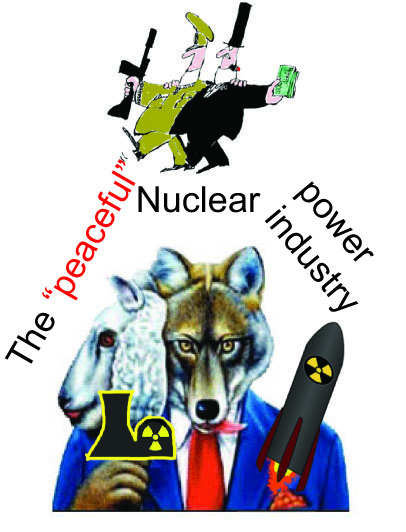
– To ensure U.S. energy dominance, the Defense Innovation Unit (DIU), with the Department of the Army and the Department of the Air Force, launched the Advanced Nuclear Power for Installations (ANPI) program. First announced in summer 2024, the program will allow for the design and build of fixed on-site microreactor nuclear power systems on select military installations to support global operations across land, air, sea, space, and cyberspace. The Department of Defense team selected eight companies to be eligible to demonstrate the ability to deliver compliant, safe, secure, and reliable nuclear power.
The companies are now eligible to receive Other Transaction (OT) awards to provide commercially available dual use microreactor technology at various DOD installations. Selected companies for the ANPI program include:
- Antares Nuclear, Inc
- BWXT Advanced Technologies LLC
- General Atomics Electromagnetic Systems
- Kairos Power, LLC
- Oklo Inc.
- Radiant Industries Incorporated
- Westinghouse Government Services
- X-Energy, LLC
“Projecting power abroad demands ensuring power at home and this program aims to deliver that, ensuring that our defense leaders can remain focused on lethality,” said Dr. Andrew Higier, Energy Portfolio Director at DIU. “Microreactors on installations are a critical first step in delivering energy dominance to the Force. Tapping into the commercial sector’s rapid advancements in this area is critical due to the significant private investment in this space over the last few years. The U.S. and the DoD must maintain the advantage and leverage the best of breed nuclear technology for our national security.”
The ANPI project directly supports Executive Order (E.O.) 14156 – Declaring a National Energy Emergency and E.O. 14154 – Unleashing American Energy
……………………………………… In addition to DIU, Army, Air Force, ANPI receives support from the Department of Energy; the NRC; Idaho National Laboratory with Oak Ridge National Laboratory; Los Alamos National Laboratory; Argonne National Laboratory; Pacific Northwest National Laboratory; Sandia National Laboratory; and the Office of Nuclear Energy. https://www.diu.mil/latest/DOD-selects-eligible-companies-for-the-Advanced-Nuclear-Power-for-Installations-Program
Walt Zlotow: Trump, Hegseth off by nearly 1 trillion on national security budget
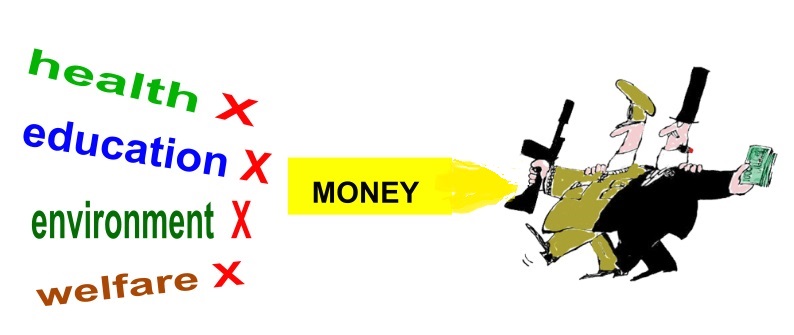
Walt Zlotow, West Suburban Peace Coalition, Glen Ellyn IL 11 Apr 25 https://theaimn.net/trump-hegseth-off-by-nearly-1-trillion-on-national-security-budget/
Defense Secretary Pete Hegseth is applauding Trump’s boast to push through America’s first trillion dollar defense budget.
“Thank you Mr. President! COMING SOON: the first TRILLION dollar [Defense Department] budget.” Hegseth was echoing boss Trump who chortled “Nobody’s seen anything like it. We have to build out military, and we’re very cost-conscious, but the military is something we have to build, and we have to be strong,”
Trump’s defense policy and these quotes epitomize America’s decline as a peaceful, caring nation. Spending that trillion on militarism and warfare worldwide while Trump’s oligarchs are slashing a trillion from the social safety net is putting America into a death spiral from which it may never recover.
But they should really be high-fiving a national security budget that will be approaching $2 trillion based on Trump’s defense agenda.
That’s because the current defense budget under the National Defense Authorization Act of $900 billion just funds the Pentagon. When factoring in the Department of Veterans Affairs, special operations, Homeland Security and the national security share of US debt interest, the total for Fiscal ‘25 national security approaches $1.8 trillion. Regarding special ops, Trump’s failed month long Yemen bombing to stop their resistance to US enabled Israeli genocide in Gaza has already passed a billion bucks.
Current wars US supports in Ukraine, Gaza, Yemen, Somalia, Syria, Iraq and possible upcoming wars in Iran and China, don’t come cheap. Add in cost of over 750 bases in 80 countries hosting over 150,000 military personnel puts the approaching $2 trillion dollar cost in perspective.
Spending all that treasure on national offense (nope, not defense), becomes problematical when Trump is pushing thru trillion dollar tax cuts for his oligarch buddies.
What to do? Of Course, send in oligarch clown Musk to cut a trillion or more from everything that makes life livable for Joe Sixpack.
It is no surprise Trump plans to ravage the social safety net to spend $2 trillion on worldwide military adventurism while giving $4.5 trillion in tax cuts over 10 years mainly to those who don’t need them.
But do Trump and Hegseth have to brag about it?
1 This Month
To see nuclear-related stories in greater depth and intensity – go to https://nuclearinformation.wordpress.com/

29 Jan. Thursday 7-8 p.m. Webinar – World’s Largest Nuclear Station in Port Hope, ON?

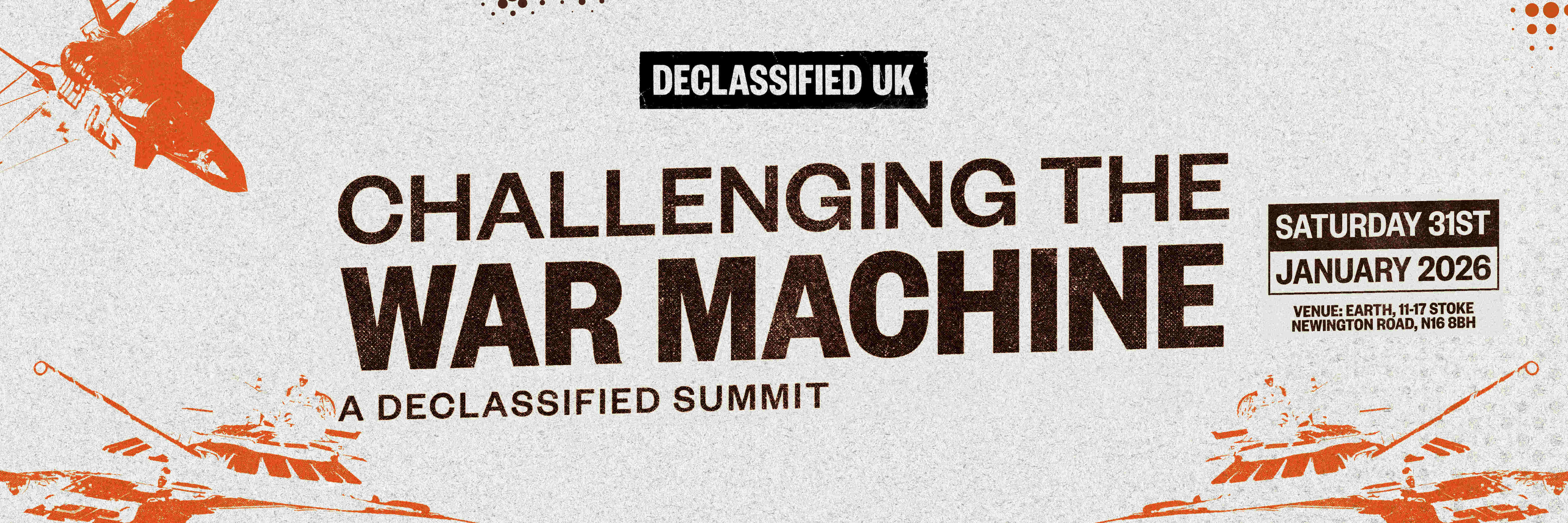
31st January – Challenging the War Machine – a DECLASSIFIED UK SUMMIT


Website of the Week
Now until to February 10, 2026 Radioactive waste storage in France: the debate is finally open! How to participate?
-
Archives
- January 2026 (271)
- December 2025 (358)
- November 2025 (359)
- October 2025 (376)
- September 2025 (258)
- August 2025 (319)
- July 2025 (230)
- June 2025 (348)
- May 2025 (261)
- April 2025 (305)
- March 2025 (319)
- February 2025 (234)
-
Categories
- 1
- 1 NUCLEAR ISSUES
- business and costs
- climate change
- culture and arts
- ENERGY
- environment
- health
- history
- indigenous issues
- Legal
- marketing of nuclear
- media
- opposition to nuclear
- PERSONAL STORIES
- politics
- politics international
- Religion and ethics
- safety
- secrets,lies and civil liberties
- spinbuster
- technology
- Uranium
- wastes
- weapons and war
- Women
- 2 WORLD
- ACTION
- AFRICA
- Atrocities
- AUSTRALIA
- Christina's notes
- Christina's themes
- culture and arts
- Events
- Fuk 2022
- Fuk 2023
- Fukushima 2017
- Fukushima 2018
- fukushima 2019
- Fukushima 2020
- Fukushima 2021
- general
- global warming
- Humour (God we need it)
- Nuclear
- RARE EARTHS
- Reference
- resources – print
- Resources -audiovicual
- Weekly Newsletter
- World
- World Nuclear
- YouTube
-
RSS
Entries RSS
Comments RSS
 nuclear-news
