The BBC (8/11/25) wrote, “More than 61,000 people have been killed in Gaza since the Israeli militaryoperation began, according to the territory’s Hamas-runhealth ministry.” Western media have taken it upon themselves to seemingly rename the Gaza Health Ministry (GHM) in order to cast doubt on the extent of Israel’s atrocities.
Israel’s targeted assassination of six Palestinian media members in the Gaza Strip on August 10 sent shockwaves through the journalism community. Though the murder of journalists has been a common tool of the Israeli’s government’s suppression of information coming out of Gaza, the loss of Al Jazeera‘s Anas al-Sharif was particularly harrowing.
Many of us had been moved by al-Sharif’s heart-wrenching coverage, from watching him remove his press vest in relief when a ceasefire was announced (1/19/25), to seeing a languid al-Sharif reporting on the famine (7/21/25) as people fainted around him. “Keep going, Anas, don’t stop,” said a voice off-camera. “You are our voice.”
Three of the victims were al-Sharif’s colleagues at Al Jazeera, one of the few media outlets that was able to keep journalists reporting in Gaza despite Israel’s blockade. As millions around the world grieved not just for al-Sharif but for his colleagues Mohammed Qreiqeh, Mohammed Noufal and Ibrahim Zaher, and freelancers Moamen Aliwa and Mohammad al-Khaldi, we were also gravely concerned about the vacuum their murders created of on-the-ground coverage of the genocide.
Establishment media, however, used these courageous journalists’ murders as an opportunity to continue parroting the same Zionist talking points that contributed to manufacturing consent for their killings. FAIR looked at 15 different news outlets’ initial coverage of the murders: the New York Times, Los Angeles Times, Washington Post, Wall Street Journal, Financial Times, ABC, CBS, NBC, CNN, Fox, BBC, Politico, Newsweek, Associated Press and Reuters.
We found that they overwhelmingly centered Israel’s narrative, attempted to delegitimize pro-Palestinian sources, and failed to contextualize the killings within the larger context of the genocide.
Four of the 15 articles (New York Times, 8/10/25; NBC,8/10/25; Fox, 8/11/25; Wall Street Journal, 8/11/25) mentioned the allegations in either the headline or subhead. “Israel Kills Al Jazeera Journalists in Airstrike, Claiming One Worked for Hamas,” was NBC‘s headline, with Israel’s smear that al-Sharif “posed as a journalist” in the subhead. Fox offered “Israel Says Al Jazeera Journalist Killed in Airstrike Was Head of Hamas ‘Terrorist Cell.’”
Reuters’ original headline (8/11/25) was “Israel Kills Al Jazeera Journalist It Says Was Hamas Leader,” only later changed to “Israel Strike Kills Al Jazeera Journalists in Gaza.”
Al-Sharif had been targeted and smeared by the Israeli Defense Forces for months prior to his murder, and had written a statement in anticipation of his killing. “If these words reach you, know that Israel has succeeded in killing me and silencing my voice,” he wrote. He asked the world to continue fighting for justice in Palestine: “Do not forget Gaza.”
Six of the articles (ABC, 8/11/25; BBC, 8/11/25; New York Times, 8/10/25; NBC, 8/10/25; Fox, 8/11/25; Wall Street Journal, 8/11/25) completely omitted references to or quotes from al-Sharif’s final statement. Of those six articles, the New York Times, BBC, NBC and Fox did include quotes from Israeli government representatives—perplexingly choosing to prioritize the voices of al-Sharif’s killers over his own.
Coverage by the Wall Street Journal and New YorkTimes devoted the most space to advancing Israel’s pretext for the killings. The Journal’s Anat Peled dedicated the first three paragraphs of her article to detailing al-Sharif’s supposed Hamas affiliation. Ephrat Livni of the Times also spent three paragraphs on the bogus allegations, allowing only one paragraph for a rebuttal from Al Jazeera and CPJ.
Every article except the ones from the New York Times (8/10/25) and Fox (8/11/25) cited the historically high number of Palestinian journalists that have been killed since October 7, 2023. The death toll currently stands at 192, according to the CPJ. However, only four articles (ABC, 8/11/25; CNN, 8/10/25; Politico, 8/11/25; Wall Street Journal, 8/11/25) listed Israel as the primary perpetrator of these murders. More typically, the AP (8/11/25) wrote that “at least 192 journalists have been killed since Israel’s war in Gaza began,” leaving the identities of both these journalists and their killers unmentioned.
Six (ABC, 8/11/25; BBC, 8/11/25; Newsweek, 8/10/25; Fox, 8/11/25; CBS, 8/11/25; Wall Street Journal, 8/11/25; LA Times, 8/11/25) of the 15 articles failed to mention Prime Minister Benjamin Netanyahu, and none mentioned the International Criminal Court’s arrest warrant against him for war crimes and crimes against humanity, including murder and intentionally directing attacks against a civilian population.
Critically, only two articles (Wall Street Journal, 8/11/25; Washington Post, 8/11/25) even noted the fact that the other five slain journalists had not been accused of belonging to Hamas. With this omission, the other outlets accepted and transmitted to audiences Israel’s premise that any number of bystanders can legitimately be killed in order to target a supposed Hamas member.
Unnecessary qualifiers
A common practice for Western media has been the use of unnecessary qualifiers to delegitimize information that comes from Palestinian sources. The coverage of al-Sharif’s assassination was no exception.
The BBC (8/11/25) wrote, “More than 61,000 people have been killed in Gaza since the Israeli military operation began, according to the territory’s Hamas-run health ministry.” Western media have taken it upon themselves to seemingly rename the Gaza Health Ministry (GHM) in order to cast doubt on the extent of Israel’s atrocities. They rarely note that a Lancet study (2/8/25) has found that the death toll could be up to 40% higher than what the GHM is reporting. The New York Times (8/10/25) and Reuters (8/11/25) also utilized “Hamas-run” to describe figures from the Gazan government.
These outlets also showed a clear bias as to how they characterize casualties. The New York Times (8/10/25), when reporting on the death toll in Gaza, wrote that the GHM doesn’t “distinguish between civilians and combatants.” Later on, the Times reported on Israeli deaths—and failed to distinguish between Israeli civilian and combatant deaths.
The implication is that some Palestinian deaths might be considered to be of lesser importance, or even justified, based on victims’ potential “combatant” status. Israeli deaths, meanwhile, are to be counted simply as human beings. The Washington Post (8/11/25) exhibited the same double standard in its reporting.
NBC (8/10/25) wrote, “Many of the targets of [the October 7] attacks were civilians, including people attending a music festival.” When reporting Palestinian deaths, NBC made no mention that over half of those killed by Israel have been women, children and the elderly. A more recent investigation found that civilians make up 83% of deaths, according to the IDF’s own data. The report also didn’t describe what Palestinian victims might have been doing when they were killed, such as the almost 1,400 who have been shot while seeking aid.
In addition to the usual rhetoric, eight of the 15 articles cast doubt on Al Jazeera by repeatedly mentioning its ownership by the Qatari government. (Qatar, like Israel, is one of 20 countries worldwide officially designated as a “major non-NATO ally” by the United States.) Three of the articles (New York Times, 8/10/25; Wall Street Journal, 8/11/25; LA Times, 8/11/25) mention the Israeli government’s adversarial relationship with Al Jazeera, with the New York Times and the Journal dedicating several paragraphs to the outlet’s alleged ties to Hamas as the presumed basis for the conflict, rather than Al Jazeera‘s critical coverage of Israeli actions.
False equivalences
Only three of the articles use the word “famine” (Financial Times, 8/10/25; CNN, 8/10/25; Newsweek, 8/10/25), and only the Financial Times mentions the word outside of quotes. Reuters (8/11/25) and the Wall Street Journal (8/11/25) called the situation “a hunger crisis” and “a humanitarian crisis that has pushed many Palestinians toward starvation,” respectively.
Media outlets continue to push the narrative that this so-called conflict began less than two years ago, as when NBC (8/10/25) wrote, “Israel launched the offensive in Gaza, targeting Hamas, after the Hamas-led terror attacks against Israel on October 7, 2023.”
Though the rate of killing greatly escalated after the October 7 operation, Israeli violence against Palestinians goes back to before the founding of the state, as many historians have carefully explained. In the decades immediately prior to the Hamas operation, the Israeli human rights group B’tselem counts more than 10,000 Palestinians killed by Israeli forces between September 2000 and September 2023—most of them noncombatants, over 2,400 of them children under 18. (Over the same period, some 1,300 Israelis—civilians and military—were killed by Palestinians.)
The Financial Times (8/10/25) described the ongoing genocide as “triggered” by the October 7 attacks, as if the al-Aqsa Flood operation were a random act of violence unrelated to the apartheid system that Israel imposes on Palestinians. The BBC (8/11/25) described Israeli violence as a “response to the Hamas-led attack,” completely erasing Israel’s history of occupation and ethnic cleansing of Palestinians that long precedes the existence of Hamas. Obscuring this sort of context is part of the motivation for Israel’s systematic murder of Palestinian journalists, including al-Sharif and his colleagues.
Re: [Nuclear Waste Watch] US FDA guidance on health impacts of cesium exposure.
Indonesia has only research reactors. If the cs137 contamination came from these small reactors what about all the large reactors such as CANDUs that have continual measured stack releases of beta gamma particulate that would contain cs137 that is volatile?
CANDUs emit large amounts of carbon 14 that has been measured at elevated levels in tree rings around Pickering. Cs137 would also be expected to be in tree rings wood. Wood is used as shipping containers and many other uses such as furniture and interior housing lumber and wood.
Both carbon 14 and cs147 are known to off gass. C14 is particularly a problem being a beta emitter that would never be measured. Cs137 is a gamma emitter that is easily measured with a Geiger counter. Carbon 14 off gassing has been documented in the Bruce low and intermediate level waste facility but is not routinely measured.
Huge amounts of carbon 14 has been deposited around reactors for years. Carbon14 accumulates in the biosphere. With a half life of 5730 years it’s all still around gradually building up in the environment. The stack releases allowed for reactors are based on airborne exposure only. The carbon 14 is greatly dispersed in the air but settles out and deposits in the environment. Gradual bioaccumulation is ignored in regulations for emission standards.
The Trump administration’s decision to halt all visitor visas for Palestinians from Gaza, which came after pressure from right-wing activists, will be a death sentence for children who require life-saving medical treatment.
The U.S. State Department’s decision this weekend to halt all visitor visas for people from Gaza, which includes the medical-humanitarian visas that have brought injured children to American hospitals, will cost Palestinian lives. Officials say this process will be subject to a “full and thorough review”. For a child with infected burns or a deep trauma wound, a pause is a verdict on their life. The freeze did not arise from new intelligence or any novel identification of problems in the temporary visitor visa pathway. It followed a social-media panic with the circulation of mischaracterized videos of injured children arriving under the care of a U.S. nonprofit being labeled as a “security threat,” rhetoric amplified by political allies. The State Department then announced it was stopping visas while it re-examines procedures.
The racism and misinformation at the heart of that panic deserve naming. Some have labeled the process of evacuating children with amputations and burns as being potentially linked to terrorism and even characterized their joyful cries as “jihadi chants.” That is textbook dehumanization: take a population of wounded kids and code them as a threat to justify exclusion. Many have commented on the chain reaction from such posts to the administrative action. The line from a viral smear to a federal policy that blocks chemotherapy, skin grafts, or prosthetics for children should shame us, and the speed with which it occurred.
It also wildly overstates the scale of what has actually happened. In total, many of the NGOs running these U.S. transfers report a few dozen total children to date, not a “flood”. Individual city stories have been about twos and threes: a pair treated in Dallas; several children welcomed in Boston. This is the opposite of a large-scale pipeline; it’s a narrow, highly vetted corridor that exists because Gaza’s health system has been shattered.
To understand how few make it here, you have to understand the pathway. First, a physician in Gaza refers a child for care that no longer exists at home. The case goes to a Ministry of Health committee, then to the World Health Organization (WHO) for medical triage. Only after a receiving hospital issues a formal acceptance, often after weeks of back-and-forth with surgeons, translated records, and imaging, does the family usually even begin the paper chase: passports, exit permissions from the Israeli military’s Coordinator for Government Activities in the Territories (COGAT), Jordanian clearances when the bridge route is used, U.S. visa appointments, and finally a WHO-escorted convoy. Each step is a separate queue with its own failures and reversals; a single “not yet” in any queue can kill the case.
The numbers give us a picture of why this corridor matters. According to WHO and OCHA, as of mid-August more than 14,800 people in Gaza need urgent medical evacuation outside the Strip. Since October 2023, about 7,560 patients, including roughly 5,248 children, have been medically evacuated abroad, with most of those transfers occurring before Israel’s closure of Rafah last year made departures far rarer and slower – in fact, a 92% decrease was recorded in successful evacuations thereafter. On August 13, the WHO managed to move 38 patients, 32 of them children, to care options in Belgium, Italy, and Türkiye. Such operations are far smaller than the need. Pausing the U.S. share of that global effort may look like a minor adjustment from Washington, yet for an injured child in Gaza, it reads as a door slammed shut – and possibly a death sentence.
American hospitals have long accepted international charity cases. Pediatric centers have taken on many cases from around the world, because these are areas where some U.S. teams are among the best in the world and where outcomes can be life-changing and transformative. Now, it is only anti-Palestinian racism and Islamophobia that are preventing U.S. hospitals from playing a similar role with children from Gaza. Other countries and regions have been accepting far more cases than the United States. Since October 2023, the top five referral destinations have been Egypt, the United Arab Emirates, Qatar, Turkey, and EU countries. The cases include children with trauma wounds, patients with cancer, congenital anomalies, cardiovascular issues, and even ophthalmology-related needs.
Behind every statistic is a child and a clock. We have seen and heard of many such cases. For example, Fatima (anonymized name for safety), a child with multiple burn injuries, cleared one hurdle after another: hospital acceptance in the U.S., COGAT approval, a slot on a convoy list. Starvation and infection outpaced the paperwork.
She died just days ago, after being pushed from one evacuation list date to another as her body gave way. Another girl whose cases moved with unusual speed from referral to hospital acceptance to even getting family clearances was now seeking an expedited passport to submit her DS-160s when the U.S. freeze hit. Try explaining to her mother that a stranger’s tweet now stands between her child and a reconstructive surgeon.
And yet, these are not isolated incidents or tragedies. Gaza’s health system has been bombed, besieged, and starved into dysfunction. Key Palestinian medical specialists have been killed or abducted by the Israeli military, and hospitals where care could have been provided have been repeatedly attacked. That is why children who could once be treated locally now need referrals abroad for prosthetics, complex orthopedics, neurosurgery, oncologic care, and skin reconstruction. The pathway is not some loophole, rather it is one of the only viable medical options for these children. Prior to the current genocide, 50-100 patients were leaving Gaza daily for medical treatment abroad.
The pathway is, in fact, fraught with ethical dilemmas. Children are frequently separated from their caregivers or loved ones, and families are separated or torn apart as some relatives are denied exit approval (often men) by Israel, leaving others to stay behind. We have met such families and children who have come to the U.S., have heard from their stories and the trauma they have endured – the physical scars and the psychological ones – and the ones that cannot even be named.
What should happen now is simple. First, immediately reinstate the processing of medical-humanitarian visas for children and their companions. Second, we should push towards affirming the right of return for these children – many families fear never being able to return to Gaza after accepting treatment abroad, with some even choosing to stay in Gaza out of such fears. Third, restoration of medical corridors for Palestinian patients in Gaza to occupied East Jerusalem and the wider occupied West Bank, so that they do not need to leave their country and homeland just for treatment if it is available. Finally, stop letting demagogues dictate whether a Palestinian child gets to live. The moral bar here is not high.
How sad it is that the government in Washington can be spurred by a bad-faith tweet to close a lifeline for children, any shred of decency as Americans should compel us to open it.
President Donald Trump wants a Nobel Peace Prize, and his efforts toward peace in Ukraine, if successful, could possibly help him earn one—but only if he also ends US complicity in the ongoing genocide in Gaza. Under Trump, as under former President Joe Biden, the US has served as Israel’s partner in mass murder, annexation, starvation, and the escalating torment of millions of Palestinians. The genocide can, and will, stop if Trump wills it. So far he has not.
Israel is committing genocide—everyone knows it, even its staunchest defenders. The Israeli human rights organization B’Tselem has recently made a poignant acknowledgment of “Our Genocide.” In Foreign Affairs, former U.S. Ambassador to Israel Jack Lew recently admitted that extremist parties in Netanyahu’s government openly aim to starve Palestinians in Gaza. Lew frames his piece as praise for the former Biden administration (and for himself) for their supposedly valiant efforts to prevent mass starvation by pressuring Israel to allow minimal food entry, while blaming Trump for easing that pressure.
Yet the actual importance of the piece is that an ardent Zionist insider certifies the genocidal agenda sustaining Netanyahu’s rule. Lew recounts that in the aftermath of October 7, Israelis frequently pledged that “not a drop of water, not a drop of milk, and not a drop of fuel will go from Israel to Gaza,” a stance that still shapes Israel’s cabinet policy. The International Court of Justice (ICJ) can use Lew’s article as confirmation of Israel’s genocidal intent.
The genocide in Gaza, coupled with the annexation in the West Bank, aims to fulfill the Likud vision of a Greater Israel that exercises territorial control between the Sea and Jordan. This will destroy any possibility of a Palestinian state, and any possibility of peace. Indeed, Bezalel Smotrich, the extremist minister of finance and minister in the ministry of defense, recently vowed to “permanently bury the idea of a Palestinian state” while the Knesset has recently called for annexation of the occupied West Bank.
The US aids and protects Israel every day in these horrific crimes against the Palestinian people. The US provides billions of dollars in military support, goes to war alongside Israel, and offers diplomatic cover for Israel’s crimes against humanity. The vacuous mantra that “Israel has the right to defend itself” is the US pat excuse for Israel’s mass murder and starvation of innocent civilians.
Generations of historians, psychologists, sociologists, philosophers, and inquiring minds will ask how the descendants and co‑religionists of the Jews murdered by Hitler’s genocidal regime came to become genocidaires. Two factors, deeply intertwined, come to the fore.
First, the Nazi Holocaust lent credence among Jews to the Zionist claim that only a state with overwhelming military power and ready to use it can protect the Jewish people. For these militarists, every Arab country opposed to Israel’s ongoing occupation of Palestine became a dire foe to be crushed by war. This is Netanyahu’s doctrine of violence, which was first unveiled in the Clean Break strategy, and which has produced nonstop Israeli mobilization and war, and a society now gripped by implacable hatred even of innocent women and children in Palestine, Lebanon, and Syria. Netanyahu has dragged the US into countless devastating and futile wars out of Netanyahu’s blindness to the reality that only diplomacy, not war, can achieve Israel’s security.
Second, this non-stop resort to violence reignited a dormant strain of Biblical Judaism, notably based on the Book of Joshua, which presents God’s covenant with Abraham as justification for genocides committed in conquering the Promised Land. Ancient zealotry of this kind, and the belief that God would redeem his chosen people through violence, fueled suicidal revolts against the Roman Empire between 66 and 135 AD. Whether the genocides in the Book of Joshua ever occurred (probably not ) is beside the point. For today’s zealots, the license to commit genocide is vivid, immediate, and biblically ordained.
Aware of the danger of self-destructive zealotry, the rabbis who shaped the Babylonian Talmud proscribed Jews from attempting to return en masse to the promised land (Ketubot 111a). They taught that Jews should live in their own communities and fulfill God’s commandments where they are, rather than seeking to recapture a land from which they had been exiled following decades of suicidal revolt.
Whatever the fundamental reasons for Israel’s murderous turn, Israel’s survival among nations is at risk today as it has become a pariah state. For the first time in history, Israel’s Western allies have repudiated Israel’s violent ways. France, the United Kingdom, Australia, and Canada have each pledged to formally recognize the State of Palestine at the upcoming UN General Assembly in September. These countries will finally join the will of the overwhelming global majority in recognizing that the two-state solution, enshrined in international law, is the true guarantor of peace.
The majority of the American people, are rightly revulsed by Israel’s brutality and are also turning their support massively to the Palestinian cause. In a new Reuters poll released today, 58% of Americans now believe that the UN should recognize the State of Palestine, against just 32% who oppose that. American politicians will surely note the change, at Israel’s peril, unless the two-state solution is rapidly implemented. (Logical arguments can also be given for a peaceful one-state, bi-national solution, but this alternative has essentially no backing among UN member states and no basis in the international law regarding the Israel-Palestine conflict that has developed over more than seven decades.)
This Israeli government will not change course on its own. Only the Trump administration can end the genocide through a comprehensive settlement agreed by the world’s nations at the UN Security Council and UN General Assembly. The solution is to stop the genocide, make peace, and salvage Israel’s standing in the world by creating a Palestinian state alongside Israel on the June 4, 1967 borders.
Trump must force Israel to see reality: that Israel cannot continue to rule over the Palestinian people, murder them, starve them, and ethnically cleanse them. For decades, the entire Arab and Islamic world has supported the two-state solution, and advocated to normalize relations with Israel and guarantee security for the entire region. This solution is in full accordance with international law, and was again espoused clearly by the UN General Assembly in the NY Declaration last month at the conclusion of the United Nations High-Level International Conference on the Peaceful Settlement of the Question of Palestine and the Implementation of the Two-State Solution (July 29, 2025).
Trump has come to understand that to save Ukraine, he must force it to see reality: that NATO cannot expand to Ukraine as that would directly threaten Russia’s own security. In the same way, Trump must force Israel to see reality: that Israel cannot continue to rule over the Palestinian people, murder them, starve them, and ethnically cleanse them. The two-state solution thereby saves both Palestine and Israel.
An immediate UN Security Council vote to grant Palestine permanent membership in the UN next month would put an end to Israel’s zealous delusions of permanent control over Palestine, as well as its reckless territorial ambitions in Lebanon and Syria. The focus of the crisis would then shift to immediate and practical issues: how to disarm non-state actors within the framework of the new state and regional peace, how to enable mutual security for Israel and Palestine, how to empower the Palestinians to govern effectively, how to finance the reconstruction, and how to provide urgent humanitarian assistance to a starving population.
Trump can make this happen at the UN in September. The US, and only the US, has vetoed the permanent membership of Palestine in the UN. The other members of the UN Security Council have already signalled their support. Peace in the Middle East is possible now—and there is no time to lose.
This week’s so-called public meeting about the proposed venting of radioactive tritium into the air from Los Alamos National Laboratory (LANL) showed once again how LANL silences communities while fast-tracking nuclear weapons projects.
In-person attendees were allowed three minutes to speak. Over 100 online participants—including many land-based community members who were not able to travel to the meeting in Los Alamos for health, distance or work reasons—were blindsided to find they were barred from giving verbal comments and limited to submitting just one emailed question. LANL gave no prior notice of this change.
The stakes could not be higher. Tritium —used in nuclear weapons development — is a radioactive gas that travels quickly through air, water, soil, and food. It can cause cancer, genetic damage, and health impacts across generations. LANL insists venting is the only safe path forward—but their own “independent” technical review – one of four requirements ordered by the New Mexico Environment Department before it would review LANL’s request – exposed that claim as problematic.
Why waste money on an unproven, enormously expensive, extremely toxic nuclear power plant, with no place in the nation accepting the eventual radioactive waste, in a spot with hundreds of thousands of neighbors and 100 million visiting passengers a year?
Airport shelves $1.5 million study of “modular” nuclear power after local district uproar.
If you have a snazzy new idea for miniature nuclear power plants in the middle of Denver International Airport that could be forced to store their spent nuclear waste onsite for centuries, maybe check with the neighbors first?
Denver’s mayor and airport chief touted a whiz-bang, $1.5 million exploratory study of small, “modular” nuclear power plants buried underground somewhere on DIA property to fuel decades of economic and passenger growth. The rah-rah news conference happened to be on a Wednesday that was also the 80th anniversary of the nuclear bombing of Hiroshima.
By that Friday, the study was back on the shelf, not to be revisited until city and airport officials completed some of the explaining they needed to do for local city council members and residents, who said they’d never been consulted on the (big) (radioactive) idea.
“I’m proud to say that community advocacy still works, but you really have to be within the community,” said City Council member Stacie Gilmore, whose northeast District 11 includes DIA. “People are paying attention, and they don’t trust the airport, and they don’t trust this administration, unfortunately.”
Gilmore said her constituents’ objections and questions were the same as those of reporters and environmental justice advocates who queried DIA chief Phil Washington and Mayor Mike Johnston at the Aug. 6 news conference launching the study: Why waste money on an unproven, enormously expensive, extremely toxic nuclear power plant, with no place in the nation accepting the eventual radioactive waste, in a spot with hundreds of thousands of neighbors and 100 million visiting passengers a year?
Especially at a time when Johnston is having to fire hundreds of current Denver city employees to make up for a major budget deficit? The airport can argue its funding for the study comes from airline and other fees, not city tax money, but still, opponents said … the optics?
“The optics are really crazy,” Gilmore said Tuesday. The date of the nuclear-curious news conference did not escape the notice of Gilmore, who has family members with parents who were in Japan when the first A-bomb dropped. “And it was just tone deaf to anything about the community, or the close proximity to Rocky Mountain Arsenal National Wildlife Refuge and its Superfund site,” Gilmore said. …………………………………………………………………………
Clean energy advocates said that none of the new generation of small modular reactors are actually plugged in and working yet, and that only a small handful of new nuclear power units have been approved nationwide since the 1970s. Cost overruns are the norm with nuclear, they add, and all existing nuclear power plants in the U.S. must store their highly radioactive spent nuclear fuel onsite because no federal repository has been opened. ………………………………… https://coloradosun.com/2025/08/20/dia-nuclear-power-study-shelved/
It’s so revealing how Israelis keep begging Trump to end the killing in Gaza, because they understand that the US president has the power to force Israel to stop. It seems like Israelis understand this far better than Americans do.
Six former Israeli hostages and the widow of a slain hostage have released a video pleading with President Trump in English to support a comprehensive deal to make peace in Gaza so that the remaining hostages can be freed.
“You have the power to make history, to be the president of peace, the one who ended the war, ended the suffering, and brought every hostage home, including my little brother,” implores one of the hostages.
“President Trump, please act now before it’s too late for them, too,” pleads the widow.
This is not the first time Israelis have begged Trump to force an end to the slaughter. Earlier this month more than 600 former senior Israeli security officials from Mossad and Shin Bet sent Trump a letter urging him to compel Netanyahu to make peace in Gaza. They did this because they understand something that many Americans do not: that the US president has always had the power to end the Gaza holocaust.
It’s crazy how many times I’ve encountered Americans telling me that this is “Israel’s war” and there’s nothing the president can do to end it. It was mostly Democrats doing this back when Biden was president and I was slamming Genocide Joe for continuing this mass atrocity, and now that Trump is in office it’s his supporters who show up in my comments section white knighting for the president.
“It’s not our war and we should stay out of it,” they sometimes claim, mistakenly thinking that critics of the US-backed genocide are asking for some kind of US intervention.
But the call isn’t for the US to intervene, it’s for the US to stop intervening. To end the US interventionism that has been underway for two years. The Gaza holocaust can be ended by the US simply ceasing to add wood to the fire.
Israeli military insiders have been saying again and again that the onslaught in Gaza would not be possible without US support.
A senior Israeli air force official told Haaretz last year that “without the Americans’ supply of weapons to the Israel Defense Forces, especially the air force, Israel would have had a hard time sustaining its war for more than a few months.”
In November 2023 retired Israeli Major General Yitzhak Brick told Jewish News Syndicate that, “All of our missiles, the ammunition, the precision-guided bombs, all the airplanes and bombs, it’s all from the US. The minute they turn off the tap, you can’t keep fighting. You have no capability. … Everyone understands that we can’t fight this war without the United States. Period.”
“The entire Israel Air Force relies completely on American aircraft: fighter planes, transport planes, refueler planes and helicopters. All of Israel’s air power is based on the American commitment to defend Israel. We have no other reliable source for essential supplies of equipment, munitions and advanced weapons that Israel cannot manufacture on its own. In recent months, hundreds of American transport planes have landed at IAF bases carrying thousands of tons of advanced, vital military equipment and munitions.”
The Israelis clearly understand that they’ve been entirely dependent on the US for the IDF’s acts of butchery in Gaza this entire time, and they clearly understand that the US president has the ability to turn off the tap whenever he wants.
And now they are begging the president to do so with increasing urgency, because it’s been made clear to them that their own government isn’t going to stop until it is forced to stop. They can’t stop the gunman, so they’re turning to the man who’s feeding him the ammo.
It would be good if Americans understood this as well. Trump is committing genocide in Gaza, just as surely as Netanyahu is, and he could end it at any time. The fact that he still has not chosen to do so makes him one of the most evil people on earth.
The 80th anniversary of the harrowing Hiroshima and Nagasaki bombings in 1945 was earlier this month. As you know, since then the spread of nuclear weapons has largely occurred under the guise of ‘peaceful use’ reactors and uranium, for which Canada has been deeply complicit.
Despite this, Canada is now helping to underwrite the development of a new wave of reactors intended for domestic use and export. All will produce plutonium, embed proliferation risks (such as India’s use of a Candu to build its first bomb in 1974), and magnify the dangers of a global ‘plutonium economy’ which advocates are shamelessly promoting as a solution to the climate crisis.
Below is a link to a historical essay which will be a new chapter of “Atomic Accomplice”. I hope it will serve as a warning against such reckless pending public policy. It documents the secret, virtually unreported atomic weapons linkages between Canada and Israel during several decades – in which both countries mutually courted catastrophe while pursuing global reactor sales or atomic weaponry.
This essay contains much alarming (but accurate) material. The pending risks of vastly increased plutonium use warrant circulating. The 80th anniversary of the harrowing Hiroshima and Nagasaki bombings in 1945 was earlier this month. As you know, since then the spread of nuclear weapons has largely occurred under the guise of ‘peaceful use’ reactors and uranium, for which Canada has been deeply complicit.
Despite this, Canada is now helping to underwrite the development of a new wave of reactors intended for domestic use and export. All will produce plutonium, embed proliferation risks (such as India’s use of a Candu to build its first bomb in 1974), and magnify the dangers of a global ‘plutonium economy’ which advocates are shamelessly promoting as a solution to the climate crisis.
Attached is a historical essay which will be a new chapter of “Atomic Accomplice”. I hope it will serve as a warning against such reckless pending public policy. It documents the secret, virtually unreported atomic weapons linkages between Canada and Israel during several decades – in which both countries mutually courted catastrophe while pursuing global reactor sales or atomic weaponry.
“It was determined by all that the best way to end the horrific war between Russia and Ukraine is to go directly to a Peace Agreement, which would end the war, and not a mere Ceasefire Agreement, which often times do not hold up.”
The Dwarfs had to slink away. Will they, at long last, tell Zelensky they cannot back up their rhetoric with the needed arms and financial support?
I shall not make the de-rigueur disclaimer lest anyone infer that I think President Donald Trump is Snow White. Nor do I feel a need to assure readers that I am not “in Putin’s pocket.” In the tradition of a “current intelligence” analyst, I shall simply “call ‘em like I see ‘em.” And there are lots of dots to put together.
It has been clear since the Alaska summit that Trump and Russian President Vladimir Putin have come to an overall agreement on Ukraine and that it is now being fleshed out in plain sight. And both are acutely aware of the many forces wishing to sabotage moves toward a negotiated settlement.
They have agreed to call it “Biden’s war” and then to conduct themselves as though they have bigger fish to fry – first and foremost improving U.S.-Russia relations.
Why have so many observers been unable to grasp the significance of this key sentence in the first paragraph of the readout from the Aug. 6 Putin-Witkoff meeting – the meeting that set these hopeful events in train?
“Once again, it was noted that Russia-US relations could be placed on a totally different, mutually beneficial footing, which would be in stark contrast with the way these relations have evolved in recent years.” (Emphasis added.)
(Pardon the pedantry, but it is not widely known that the Kremlin’s Russian-to-English translator erred in using the subjunctive could. The word in the Russian readout is stronger; it means can – the indicative, not the subjunctive mood.) This is, well, indicative.
The shared, overriding objective to improve bilateral ties came through clearly both at the summit on Friday and at the “March of the Gnomes” on Monday when seven European leaders arrived at the White House to back Volodymyr Zelensky (no offense to garden gnomes – or dwarfs).
Enroute Alaska
On Air Force One, Trump told Fox’s Bret Baier, “I won’t be happy if I walk away without some form of a ceasefire.” Nyet, was Putin’s answer.
Perhaps the president thought he could work his persuasive powers on Putin one-on-one and change his mind. More likely, Trump knew his gambit had zero prospect of success, and merely wanted to be able to tell the foot-draggers later that he had thrown one last Hail Mary pass, but in vain.
Just a few hours later Trump wrote on truthsocial:
“It was determined by all that the best way to end the horrific war between Russia and Ukraine is to go directly to a Peace Agreement, which would end the war, and not a mere Ceasefire Agreement, which often times do not hold up.”
The New York Times and other media were quick to point out that Trump was “siding with Putin.”
Maps … and Charts
While Putin used the Alaska summit to make clear Russia’s core interests on Ukraine and to argue that he had no option other than to invade, it is a safe bet that he also showed Trump a map depicting the “order of battle;” that is, the disposition of forces along the contact line and in reserve.
This morning Trump hinted that Russia should be allowed to hold onto the territory it has occupied in Ukraine, a concept so far anathema to Zelensky and most of the European leaders.
THE Map
“The Ukrainian soldiers were brave as hell because it’s fighting a force that’s much, much bigger and clearly much more powerful,” Trump said of the Russian military … “And you know, it’s not like they’ve stopped. If you, I assume you’ve all seen the map, you know, a big chunk of territory is taken, and that territory has been taken.
“Now they’re talking about Donbas. But Donbas, right now, as you know, is 79 percent owned and controlled by Russia,” Trump added. “So they understand that.”
Zelensky and the Seven Dwarfs
The Dwarfs had to slink away. Will they, at long last, tell Zelensky they cannot back up their rhetoric with the needed arms and financial support? It will take a while, but in the end they will have to do so.
The end is near.
Ray McGovern works with Tell the Word, a publishing arm of the ecumenical Church of the Saviour in inner-city Washington. His 27 years as a C.I.A. analyst included leading the Soviet Foreign Policy Branch and conducting the morning briefings of the President’s Daily Brief. In retirement he co-founded Veteran Intelligence Professionals for Sanity (VIPS).
Enabling Israeli theft of US nuclear material, spying on America
Angleton’s role in enabling Israel’s wanton theft of nuclear material from an American facility is one of the more shocking episodes in the US-Israeli relationship.……………………………………………..
Veteran CIA counterintelligence chief James Angleton secretly oversaw a top-level spy ring involving Jewish émigrés and Israeli operatives without “any clearances” from Congress or Langley itself, according to recently declassified documents published as part of the Trump administration’s pledge to disclose all available information on the assassination of President John F. Kennedy.
The files provide a fresh and often disturbing look at a spy described by historian Jefferson Morley as “a leading architect of America’s strategic relationship with Israel,” detailing Angleton’s role in transforming the Mossad into a fearsome agency with global reach, while assisting Israel’s theft of US nuclear material and protecting Zionist terrorists.
Angleton established the Jewish emigre spying network in the aftermath of WWII, with the apparent goal of infiltrating the Soviet Union. But as the files show, the spymaster considered his “most important” task to be maintaining the supply of Jewish immigrants flowing from the Soviet Union towards the burgeoning Israeli state.
According to Angelton, his Jewish assets were responsible for 22,000 reports on the USSR, generating several intelligence masterstrokes. Chief among them was the publication of Soviet Prime Minister Nikita Kruschev’s famous 1956 secret speech denouncing Stalin, which the spymaster boasted “practically created revolutions in Hungary and Poland.” Elsewhere, Angleton bragged that his arrangement with Israel had produced “500 Polish intelligence officers who were Jewish” who “knew more about Polish intelligence than the Poles.”
Other passages appear to show Angleton taking credit for securing the “release” of several Zionist terrorists affiliated with the Irgun militia before they could be convicted for bombing the British embassy in Rome. Though the group had been captured by Italian authorities, the newly-disclosed files indicate the terror cell was freed on the orders of the CIA.
The information was originally divulged in 1975 to senators serving on the Church Committee, which probed widespread abuses by US intelligence in the decades prior. Congress was particularly interested in claims by New York Times foreign correspondent Tad Szulc, who testified under oath that Angleton had personally informed him that the US provided technical information on nuclear devices to Israel in the late 1950s. The new documents show that Angleton was deceptive under questioning, and evaded questions on Israel’s nuclear espionage efforts on the record.
Additional unsealed FBI documents, which refer to Israel’s Mossad as Angleton’s “primary source” of information, confirm that the CIA’s head of counterintelligence relied heavily on Tel Aviv to solidify his position within the Agency – and also add to the growing body of evidence that Angleton may not have been operating with US interests in mind throughout his 21-year tenure.
Other newly declassified files from the FBI have shown that Angleton maintained a wildly lopsided relationship with the Bureau, which saw federal agents deferring to the CIA counterintelligence chief after they caught him surveilling the correspondence of huge numbers of Americans. The files show Angleton openly admitting he would have been fired if Langley caught wind of his leaks to the Bureau.
A side-by-side analysis of the now-unredacted Church Committee files compared with their previously-released versions from 2018 demonstrates that even after 70 years, Washington felt compelled to conceal details of its real relationship with Israel’s founders. Over a dozen references to “Israel,” “Tel Aviv,” or descriptions of figures as “Jewish,” which were scrubbed from the 2018 release, can now be viewed on the National Archives site.
The documents reveal that Angleton repeatedly lied to multiple Congressional bodies, including the Church Committee, which investigated CIA abuses, and the House Select Committee on Assassinations, which probed the murders of John F. Kennedy and Martin Luther King, Jr. Angleton was similarly evasive when interrogated over Israel’s nuclear weapons program, and about CIA knowledge or complicity in the scheme.
Those documents also reveal that Angleton’s CIA counterintelligence staff ordered Lee Harvey Oswald’s removal from federal watchlists six weeks before Kennedy’s assassination, despite his classification as a high security risk. The surveillance of Oswald was personally overseen by a member of Angleton’s intelligence network of Jewish emigres, Reuben Efron, a CIA spy from Lithuania. Angleton had placed Efron in charge of an Agency program called HT/Lingual which intercepted and read correspondences between Oswald and his family. ………………………………………………………………………………………………………………………………………………………………..
Enabling Israeli theft of US nuclear material, spying on America
Angleton’s role in enabling Israel’s wanton theft of nuclear material from an American facility is one of the more shocking episodes in the US-Israeli relationship. The scene of the crime was the Nuclear Materials and Equipment Corporation, or NUMEC, a uranium processing facility in Apollo, Pennsylvania owned by a Zionist financier named David Lowenthal. In 1965, Zalman Shapiro, a fellow Zionist hired by Lowenthal to run the plant, illegally diverted hundreds of kilograms of nuclear fissile material to Israel. Posing as a scientist, the notorious Mossad spy Rafi Eitan visited NUMEC three years later to continue the heist.
As Jefferson Morley documented in his biography of Angleton, “The Ghost,” the late CIA counterintelligence chief made sure the CIA looked the other way as Israel constructed its first nuclear weapon out of the stolen fissile material. According to Morley, “Angleton, it is fair to say, thought collaboration with Israel was more important than U.S. non-proliferation policy.”
A 1977 investigation by the US Government Accountability Office found that the CIA withheld information about the NUMEC nuclear theft from the FBI and Department of Energy, and “found that certain key individuals had not been contacted by the FBI almost 2 years into the FBI’s current investigation.”
The latest batch of Church Committee files add new detail about Angleton’s compromising of US national security to benefit Israel, and his attempts to cover up his betrayal.
During his testimony before the Committee, Angleton was pressed about media reports alleging that he and his counterintelligence unit provided Israel with technical support for constructing nuclear weapons. He strenuously denied the charges, insisting the CIA had never played any role in providing Tel Aviv with nuclear materials. However, when questioned about whether “Israeli intelligence efforts” were ever conducted in the US “aimed at acquiring… nuclear technology,” Angleton equivocated………………………………………………………………………………………………………………….. https://thegrayzone.com/2025/08/15/cias-angleton-israeli-spy-ring-files/
Walmart has recalled some of its shrimp products in the US after radioactive material was detected in a shipment of seafood.
The US Food and Drug Administration (FDA) warned the public not to eat frozen shrimp sold under Walmart’s Great Value label, as it could have been exposed to a dangerous isotope in shipping containers.
One sample of breaded shrimp tested positive for the substance, the FDA said, but this positive sample “did not enter US commerce”.
Consumers in 13 US states where the shrimp products are sold have been advised to throw any recently bought products among three batches……………………………………
The recalled shrimp was sold at Walmart locations in Alabama, Arkansas, Florida, Georgia, Kentucky, Louisiana, Missouri, Mississippi, Ohio, Oklahoma, Pennsylvania, Texas and West Virginia, and shoppers in those states were advised to be cautious.
It came from an Indonesian supplier that has since had a number of shipping containers denied entry to the US, the FDA said.
One shipment tested positive for Caesium-137, the radioactive form of the periodic element Caesium.
The amount contained in the tested shipment held by the FDA was not enough to pose acute harm to consumers, exposure over time could pose an elevated risk of cancer by damaging living cells in the body, said officials from the agency.
Caesium-137 is made through nuclear reactions and is present in trace amounts in soil, food and air worldwide. It is one of the principal sources of radiation around Chernobyl in Ukraine and Fukushima in Japan.
The troupe arrived to “daddy’s” DC office for their official dressing down. If nothing else, we must marvel at the fact that the meeting produced some of the most remarkable political optics, perhaps, in history:
Has there ever been anything like this? The entire pantheon of the European ruling class reduced to sniveling children in their school principal’s office. No one can deny that Trump has succeeded in veritably ‘breaking Europe over his knee’. There is no coming back from this turning point moment, the optics simply cannot be redeemed.
But even snide ridicule aside, objectively speaking, we must point to how absolutely defeated and low-energy the delegation looked……………
Hands in pockets, looks of mild confusion or disinterest, vacant eyes, and that bizarre ‘dead-space’ atmosphere like a “TV tuned to a dead station” (hat tip Mr. Gibson). It’s clear that no one wants to be there, and everyone knows the artificial charade looks and feels forced. The real punchline comes at the 1:00 mark where it becomes eminently obvious the entire hollow exercise is nothing more than an ego-stroke for the cunning Ringmaster himself, as he bids his abject pupils to veer their gaze at the carefully-situated artwork presiding over the gilded humiliation ritual.
Volumes could be written on the implications of such a low point in European influence. But we’ll suffice with concluding that it’s clear the matter of the Ukrainian conflict’s resolution is of such existential importance to the behind-the-scenes cabal which writes the Euro-puppets’ orders, that this cabal is willing to risk everything, including politically sacrificing its “compradors” posing as elected leaders.
It’s pointless to even granularize it, but there were many small moments of humiliation in the meeting: from Trump’s seeming non-recognition of Finland’s president—unable to find him despite his sitting directly across from him—to Trump humbling Ursula, who came armed with a prescripted spiel about Russians kidnapping Ukrainian children; Trump slapped her silent by pointing out they had convened to talk about something else entirely, i.e. your propaganda is irrelevant and unwanted here.
It should also be noted that Trump did not greet a single one of the European messengers personally as they arrived, having a chaperone escort them like children from the White House playground instead. It was in sharp contrast to the pomp and ceremony of the Putin visit. This, of course, is by design, with Trump effectively showing the craven European compradors their subordinate place as part of his slow restructuring of the world order; Trump respects only power—mealy and servile leaders repulse him and earn his boot-print on their foreheads.
So what did the meeting actually accomplish, other than raising Trump’s prestige and smothering inconvenient media narratives from the news cycle?
What we saw was another rehash of the same routine as in Alaska: talks are held, major “progress” announced, yet no concrete details or evidence is provided. In this case, the big achievement is said to be the agreement on a meeting between Putin and Zelensky, followed by a “trilat” as Trump calls it. The problem is, there is zero evidence the Russian side has agreed to any such thing.
Firstly, press outlets blared that Trump “phoned Putin” in the midst of his meeting with the Europeans—Trump himself promptly shot this down:
I post this example to again illustrate just how much disinfo noise is clogging the airwaves around this issue. And this contextualizes the remainder of the analysis, surrounding what Russia may or may not have agreed to. You see, just as easily as mainstream outlets lied about Trump’s call, they may be doing so about the now-circulating claims that Putin has “agreed to” meet with Zelensky.
The Russians have been playing things extremely close to their chests, even more than usual. It appears they have adopted a strategy of deliberate strategic ambiguity in order to give Trump the license he needs to play his game against the Europeans—and Ukraine—while the Russians sit back and watch.
In this case, in confirming Trump’s attempt to get Putin and Zelensky to sit down together, Putin aide Ushakov very subtly modified the language to state that Putin and Trump discussed raising the level of “negotiators” and mentioned the possibility of Russia studying this proposal—as I wrote on X:
An interestingly evasive word-salad as non-answer in customary “Politburo-speak”. He doesn’t really confirm anything other than Trump and Putin discussed “raising the level of negotiators” between Russia and Ukraine (specifically omitting what level that would be). And in fact, he didn’t even say raising the level itself was discussed but rather the possibility of “studying” this proposal. It seems Russia for now continues to play strategic ambiguity to give Trump the arm space he needs to “work” on the Europeans and Zelensky.
In this case, in confirming Trump’s attempt to get Putin and Zelensky to sit down together, Putin aide Ushakov very subtly modified the language to state that Putin and Trump discussed raising the level of “negotiators” and mentioned the possibility of Russia studying this proposal—as I wrote on X:
An interestingly evasive word-salad as non-answer in customary “Politburo-speak”. He doesn’t really confirm anything other than Trump and Putin discussed “raising the level of negotiators” between Russia and Ukraine (specifically omitting what level that would be). And in fact, he didn’t even say raising the level itself was discussed but rather the possibility of “studying” this proposal. It seems Russia for now continues to play strategic ambiguity to give Trump the arm space he needs to “work” on the Europeans and Zelensky.
President Trump said on Monday that he was working on arranging a meeting between Russian President Vladimir Putin and Ukrainian President Volodymyr Zelensky, comments that came after a day of hosting the Ukrainian leader and several European officials at the White House.
“At the conclusion of the meetings, I called President Putin, and began the arrangements for a meeting, at a location to be determined, between President Putin and President Zelensky,” the president wrote on Truth Social.
Trump said that once Putin and Zelensky meet, he would join them for a three-way talk. “After that meeting takes place, we will have a Trilat, which would be the two Presidents, plus myself,” he wrote.
Yury Ushakov, an aide to Putin, said that during the call with Trump, the Russian leader “expressed support for direct negotiations between the delegations of Russia and Ukraine.”
Trump said that one topic of discussion with Zelensky and European leaders on Monday was the potential security guarantees Ukraine would receive from Western nations as part of a peace deal, which will likely be a major sticking point in negotiations with Russia.
“During the meeting we discussed Security Guarantees for Ukraine, which Guarantees would be provided by the various European Countries, with a coordination with the United States of America,” he said.
European leaders, led by British Prime Minister Keir Starmer and French President Emmanuel Macron, are calling for a troop deployment to Ukraine to uphold any potential peace deal. When asked if the US would send troops to Ukraine, Trump didn’t rule out the idea.
But Russia has made clear that it’s strongly opposed to the idea of the deployment of troops from NATO countries to Ukraine, a position it reiterated on Monday. “We reiterate our repeatedly expressed position that we deny any scenarios that envisage the deployment of a military contingent to Ukraine with the participation of Nato states, which could lead to an uncontrollable escalation of the conflict with unpredictable consequences,” said Russian Foreign Ministry spokeswoman Maria Zakharova.
The other major sticking point is the issue of territory. Russia has reportedly offered to end the war if Ukraine withdraws from the Donbas region and the lines are frozen in the southern Kherson and Zaporizhzhia oblasts, but Zelensky continues to publicly reject the idea of ceding territory.
Zelensky has received strong backing from the European leaders who joined him in Washington and held talks with them to coordinate their position ahead of the meetings with Trump. According to a press release from Zelensky’s office, he and the Europeans “stressed their firm support for Ukraine’s sovereignty and territorial integrity and the unacceptability of changing internationally recognized state borders by force.”
The statement said they also “welcomed the readiness of the United States to participate in guaranteeing security for Ukraine” and that “one of the key issues in the negotiations with President Trump will be the joint participation of the United States and Europe in creating the future security architecture for Ukraine and, consequently, for the entire European continent.”
Zelensky was joined in Washington by Starmer, Macron, German Chancellor Friedrich Merz, Italian Prime Minister Giorgia Meloni, Finnish President Alexander Stubb, European Commission President Ursula von der Leyen, and NATO Secretary-General Mark Rutte.
It’s clear that both Trump and Putin are playing a long game. Trump wants to get rid of the pesky two-bit actor in Kiev – but without applying old school US coup/regime-change tactics. In his mind, the only thing that really registers is future, possible, mega trade deals on Russian mineral wealth and the development of the Arctic.
the US seeks a meek Europe subjugated to the strategy of tension, otherwise there’s no EU military surge, buying billions worth of over-priced American weapons with money it doesn’t have.
Alaska was not only about Ukraine. Alaska was mostly about the world’s top two nuclear powers attempting to rebuild trust and apply the brakes on an out-of-control train in a mad high-speed rail dash towards nuclear confrontation.
There were no assurances, given the volatile character of US President Donald Trump, who conceived the high-visibility meeting with his Russian counterpart Vladimir Putin. But a new paradigm may be in the works nonetheless. Russia has essentially been de facto recognized by the US as a peer power. That implies, at the very least, the return of high-level diplomacy where it is most needed.
Meanwhile, Europe is dispatching a line-up of impotent leaders to Washington to kowtow in front of the Emperor. The EU’s destiny is sealed: into the dustbin of geopolitical irrelevance.
What has been jointly decided by Trump, personally, and Putin, even before Moscow proposed charged-with-meaning Alaska as the summit venue, remains secret. There will be no leaks about the full content.
Yet it’s quite significant that Trump himself rated Alaska as a 10 out of 10.
The key takeaways, relayed by sources in Moscow with direct access to the Russian delegation, all the way to the 3-3 format (it was initially designed to be a 5-5, but other key members, such as Finance Minister Anton Siluanov, did provide their input), emphasize that:
“It was firmly put [by Putin] to stop all direct US weapon deliveries to Ukraine as a vital step towards the solution. Americans accepted the fact that it is necessary to dramatically decrease lethal shipments.”
After that happens, the ball swings to Europe’s court. The sources specify, in detail:
“Out of the $80 billion Ukrainian budget, Ukraine itself provides less than around $20 billion. The National Bank of Ukraine says that they collect $62 billion in taxes alone, which is a hoax; with a population around 20 million, much more than one million of irreversible battlefield losses, a decimated industry and less than 70 percent of pre-Maidan territory under control that is simply impossible.”
So Europe – as in the NATO/EU combo – has a serious dilemma: ‘Either support Ukraine financially, or militarily. But not both at the same time. Otherwise, the EU itself will collapse even faster.’
Now compare all of the above with arguably the key passage in one of Trump’s Truth Social posts: “It was determined by allthat the best way to end the horrific war between Russia and Ukraine is to go directly to a Peace Agreement, which would end the war, and not a mere Ceasefire Agreement, which often times do not hold up.”
Add to it the essential sauce provided by former Russian president Dmitri Medvedev:
“The President of Russia personally and in detail presented to the US President our conditions for ending the conflict in Ukraine (…) Most importantly: both sides directly placed responsibility for achieving future results in negotiations on ending hostilities on Kiev and Europe.”
Talk about superpower convergence. The devil, of course, will be in the details.
BRICS on the table in Alaska
In Alaska, Vladimir Putin was representing not only the Russian Federation, but BRICS as a whole. Even before the meeting with his US counterpart was announced to the world, Putin spoke on the phone with Chinese President Xi Jinping. After all, it’s the Russia–China partnership that is writing the geostrategic script of this chapter of the New Great Game.
Moreover, top BRICS leaders have been on a flurry of interconnected phone calls, leading to forge, in Brazil’s President Luiz Inacio “Lula” da Silva’s assessment, a concerted BRICS front to counteract the Trump Tariff Wars. The Empire of Chaos, the Trump 2.0 version, is in a Hybrid War against BRICS, especially the Top Five: Russia, China, India, Brazil, and Iran.
So Putin did achieve a minor victory in Alaska. Trump: “Tariffs on Russian oil buyers not needed for now (…) I may have to think about it in two to three weeks.”
Even considering the predictable volatility, the pursuit of high-level dialogue with the US opens to the Russians a window to directly advance the interests of BRICS peers – including, for instance, Egypt and the UAE, blocked from further economic integration across Eurasia by the sanctions/tariff onslaught and the accompanying rampant Russophobia.
None of the above, unfortunately, applies to Iran: The Zionist axis has an iron grip on every nook and cranny of Washington’s policies vis-à-vis the Islamic Republic.
It’s clear that both Trump and Putin are playing a long game. Trump wants to get rid of the pesky two-bit actor in Kiev – but without applying old school US coup/regime-change tactics. In his mind, the only thing that really registers is future, possible, mega trade deals on Russian mineral wealth and the development of the Arctic.
Putin also needs to manage domestic critics who won’t forgive any concessions. The desperate western media spin that he would offer freezing the front in Zaporozhye and Kherson in exchange for getting all of the Donetsk Republic is nonsense. That would go against the constitution of the Russian Federation.
In addition, Putin needs to manage how US business would be allowed to enter two areas that are at the heart of federal priorities, and a matter of national security: the development of the Arctic and the Russian Far East. All that will be discussed in detail two weeks from now, at the Eastern Economic Forum in Vladivostok.
Once again, follow the money: Both oligarchies – in the US and Russia – want to go back to profitable business, pronto.
Lipstick on a defeated pig
Putin, bolstered by Foreign Minister Sergey Lavrov – the undisputed Man of the Match, with his CCCP fashion statement – finally had ample time, 150 minutes, to spell out, in detail, the underlying causes of Russia’s Special Military Operation (SMO) and lay out the rationale for long-term peace: Ukraine neutrality; neo-nazi militias and parties banned and dismantled; no more NATO expansion.
Geopolitically, whatever may evolve from Alaska does not invalidate the fact that Moscow and Washington at least did manage to buy some strategic breathing space. That might yield even a new shot toward respect for both powers’ spheres of influence.
So it’s no wonder the Atlanticist front, from Europe’s old money to the bling bling novices, is freaking out because Ukraine is a giant money laundering mechanism for Eurotrash politicos. The Kafkaesque EU machine has already bankrupted EU member-states and EU taxpayers – but anyway, that’s not Trump’s problem.
Across Global Majority latitudes, Alaska displayed the fraying of Atlanticism in no uncertain terms – revealing that the US seeks a meek Europe subjugated to the strategy of tension, otherwise there’s no EU military surge, buying billions worth of over-priced American weapons with money it doesn’t have.
The Putin–Trump meeting dropped some important veils. It revealed that Washington views Russia as a peer power, and that Europe is little more than a useful American tool.
At the same time, despite covetous US oligarchic private designs on Russian business, what Washington’s puppet masters truly want is to break up Eurasia integration, and by implication every multilateral organization – BRICS, SCO – driven to design a new, multinodal world order.
Of course, a NATO surrender – even as it is being strategically defeated, all across the spectrum – remains anathema. Trump, at best, is applying lipstick on a pig, trying to craft, with trademark fanfare, what could be sold as a Deep State exit strategy, toward the next Forever War.
Putin, the Russian Security Council, BRICS, and the Global Majority, for that matter, harbor no illusions.
While we are now witnessing in real-time the brutal unravelling of Donnelly’s monstrous plot, Anglo-American designs of using Ukraine as a beachhead for all-out war with Moscow date back far further.
Washington’s questto ignite local insurrection, and in turn the USSR’s ultimate collapse.
“Inhabitants of Donbass strongly resisted Ukrainian nationalists and at one point created a separate republic, independent of the rest of Ukraine. In the following years, they defended Soviet rule and Russian interests, often attacking the Ukrainian nationalistswith more zeal than the Russian leaders themselves. During the German occupation in the Second World War, there was not a single recorded case of support for the Ukrainian nationalists or Germans.”
On August 7th, US polling giant Gallup published the remarkable results of a survey of Ukrainians. Public support for Kiev “fighting until victory” has plummeted to a record low “across all segments” of the population, “regardless of region or demographic group.” In a “nearly complete reversal from public opinion in 2022,” 69% of citizens “favor a negotiated end to the war as soon as possible.” Just 24% wish to keep fighting. However, vanishingly few believe the proxy war will end anytime soon.
The reasons for Ukrainian pessimism on this point are unstated, but an obvious explanation is the intransigence of President Volodymyr Zelensky, encouraged by his overseas backers – Britain in particular. London’s reverie of breaking up Russia into readily-exploitable chunks dates back centuries, and became turbocharged in the wake of the February 2014 Maidan coup. In July that year, a precise blueprint for the current proxy conflict was published by the Institute for Statecraft, a NATO/MI6 cutout founded by veteran British military intelligence apparatchik Chris Donnelly.
In response to the Donbass civil war, Statecraft advocated targeting Moscow with a variety of “anti-subversive measures”. This included “economic boycott, breach of diplomatic relations,” as well as “propaganda and counter-propaganda, pressure on neutrals.” The objective was to produce “armed conflict of the old-fashioned sort” with Russia, which “Britain and the West could win.” While we are now witnessing in real-time the brutal unravelling of Donnelly’s monstrous plot, Anglo-American designs of using Ukraine as a beachhead for all-out war with Moscow date back far further.
In August 1957, the CIA secretly drew up elaborate plans for an invasion of Ukraine by US special forces. It was hoped neighbourhood anti-Communist agitators would be mobilized as footsoldiers to assist in the effort. A detailed 200-page report, Resistance Factors and Special Forces Areas, set out demographic, economic, geographical, historical and political factors throughout the then-Soviet Socialist Republic that could facilitate, or impede, Washington’s quest to ignite local insurrection, and in turn the USSR’s ultimate collapse.
The mission was forecast to be a delicate and difficult balancing act, as much of Ukraine’s population held “few grievances” against Russians or Communist rule, which could be exploited to foment an armed uprising. Just as problematically, “the long history of union between Russia and Ukraine, which stretches in an almost unbroken line from 1654 to the present day,” resulted in “many Ukrainians” having “adopted the Russian way of life”. Problematically, there was thus a pronounced lack of “resistance to Soviet rule” among the population.
The “great influence” of Russian culture over Ukrainians, “many influential positions” in local government being held “by Russians or Ukrainians sympathetic to [Communist] rule, and “relative similarity” of their “languages, customs, and backgrounds”, meant there were “fewer points of conflict between the Ukrainians and Russians” than in Warsaw Pact nations. Throughout those satellite states, the CIA had to varying success already recruited clandestine networks of “freedom fighters” as anti-Communist Fifth Columnists. Yet, the Agency remained keen to identify potential “resistance” actors in Ukraine:
“Some Ukrainians are apparently only slightly aware of the differences which set them apart from Russians and feel little national antagonism. Nevertheless, important grievances exist, and among other Ukrainians there is opposition to Soviet authority which often has assumed a nationalist form. Under favorable conditions, these people might be expected to assist American Special Forces in fighting against the regime.”
‘Nationalist Activity’
A CIA map split Ukraine into 12 separate zones, ranked on “resistance” potential, and how “favorable population attitudes [are] toward the Soviet regime.” South and eastern regions, particularly Crimea and Donbass, rated poorly. Their populations were judged “strongly loyal” to Moscow, having never “displayed nationalist feelings or indicated any hostility to the regime,” while viewing themselves as “a Russian island in the Ukrainian sea.” In fact, as the study recorded, during and after World War I, when Germany created a fascist puppet state in Ukraine:
“Inhabitants of Donbass strongly resisted Ukrainian nationalists and at one point created a separate republic, independent of the rest of Ukraine. In the following years, they defended Soviet rule and Russian interests, often attacking the Ukrainian nationalists with more zeal than the Russian leaders themselves. During the German occupation in the Second World War, there was not a single recorded case of support for the Ukrainian nationalists or Germans.”
Still, invading and occupying Crimea was considered of paramount importance. On top of its strategic significance, the peninsula’s landscape was forecast as ideal for guerrilla warfare. The terrain offered “excellent opportunities for concealment and evasion,” the CIA report noted. While “troops operating in these sectors must be specially trained and equipped,” it was forecast the local Tatar population, “which fought so fiercely” against the Soviets in World War II, “would probably be willing to help” invading US forces.
Areas of western Ukraine, including former regions of Poland such as Lviv, Rivne, Transcarpathia and Volyn, which were heavily under control of “Ukrainian insurgents” – adherents of MI6-supported Stepan Bandera – during World War II, were judged most fruitful “resistance” launchpads. There, “nationalist activity was extensive” during World War II, with armed militias opposing “pro-Soviet partisans with some success.” Conveniently too, mass extermination of Jews, Poles and Russians by Banderites in these regions meant there was virtually no non-ethnic Ukrainian population left.
Furthermore, in the post-war period, “resistance to Soviet rule” had been “expressed on a great scale” in western Ukraine. Despite “extensive deportations”, “many nationalists” resided in Lviv et al, and “nationalist cells” created by Bandera’s “task forces” were dotted around the Republic. For example, anti-Communist “partisan bands” had taken up residence in the Carpathian Mountains. The review concluded, “it is in this region [US] Special Forces could expect considerable support from the local Ukrainian population, including active participation in measures directed against the Soviet regime.”
It was also determined that “Ukrainian nationalist, anti-Soviet sentiment” in Kiev was “apparently moderately strong,” and elements of the population “might be expected to provide active assistance to Special Forces.” The capital’s “large Ukrainian population” was reportedly “little affected by Russian influence,” and during the Russian Revolution “provided greater support than any other region for Ukrainian, nationalist, anti-Soviet forces.” Resultantly, “uncertainty about the attitudes of the local population” prompted Moscow to designate Kharkov the Ukrainian SSR’s capital, which it remained until 1934.
The CIA document further offered highly detailed assessments of Ukrainian territory, based on their utility for warfare. For example, “generally forbidding” Polesia – near Belarus – was noted to be “almost impossible” to traverse during spring. Conversely, winter provided “most favorable to movement, depending on the depth to which the ground freezes.” Overall, the area had “proved its worth as an excellent refuge and evasion area by supporting large-scale guerilla activities in the past.” Meanwhile, “swampy valleys of the Dnieper and Desna rivers” were of particular interest:
“The area is densely forested in its north-western part, where there are excellent opportunities for concealment and manoeuvre…There are extensive swamps, interspersed with patches of forest, which also provide good hiding places for the Special Forces. Conditions in the Volyno-Podolskaya Highlands are less suitable, although small groups may find temporary shelter in the sparse forests.”
‘Strongly Anti-Nationalist’
The CIA’s invasion plan never formally came to pass. Yet, areas of Ukraine forecast by the Agency to be most welcoming of US special forces were precisely where support for the Maidan coup was highest. Moreover, in a largely unknown chapter of the Maidan saga, fascist Right Sector militants were bussed en masse to Crimea prior to Moscow’s seizure of the peninsula. Had they succeeded in overrunning the territory, Right Sector would’ve fulfilled the CIA’s objective, as outlined in Resistance Factors and Special Forces Areas.
Given what transpired elsewhere in Ukraine following February 2014, other sections of the CIA report take on a distinctly eerie character. For instance, despite its strategic position facing the Black Sea, the Agency warned against attempting to foment anti-Soviet rebellion in Odessa. The agency noted the city is “the most cosmopolitan area in Ukraine, with a heterogeneous population including significant numbers of Greeks, Moldovans and Bulgarians, as well as Russians and Jews.” As such:
“Odessa…has developed a less nationalistic character. Historically, it has been considered more Russian than Ukrainian territory. There was little evidence of nationalist or anti-Russian sentiment here during the Second World War, and the city…was in fact controlled by a strongly anti-nationalist local administration [during the conflict].”
Odessa became a key battleground between pro- and anti-Maidan elements, from the moment the protests erupted in November 2013. By March the next year, Russophone Ukrainians had occupied the city’s historic Kulykove Pole Square, and were calling for a referendum on the establishment of an “Odessa Autonomous Republic”. Tensions came to a head on May 2nd, when fascist football ultras – who subsequently formed Azov Battalion – stormed Odessa and forced dozens of anti-Maidan activists into Trade Unions House, before setting it ablaze.
In all, 42 people were killed and hundreds injured, while Odessa’s anti-Maidan movement was comprehensively neutralised. In March this year, the European Court of Human Rights issued a damning ruling against Kiev over the massacre. It concluded local police and fire services “deliberately” failed to respond appropriately to the inferno, and authorities insulated culpable officials and perpetrators from prosecution despite possessing incontrovertible evidence. Lethal “negligence” by officials on the day, and ever after, was found to go far “beyond an error of judgment or carelessness.”
The ECHR was apparently unwilling to consider the incineration of anti-Maidan activists was an intentional and premeditated act of mass murder, conceived and directed by Kiev’s US-installed fascist government. However, the findings of a Ukrainian parliamentary commission point ineluctably towards this conclusion. Whether, in turn, the Odessa massacre was intended to trigger Russian intervention in Ukraine, thus precipitating “armed conflict of the old-fashioned sort” with Moscow that “Britain and the West could win” is a matter of speculation – although the Institute for Statecraft was present in the country at the time.

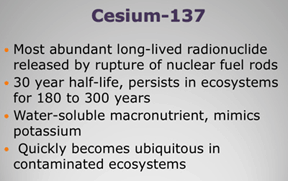
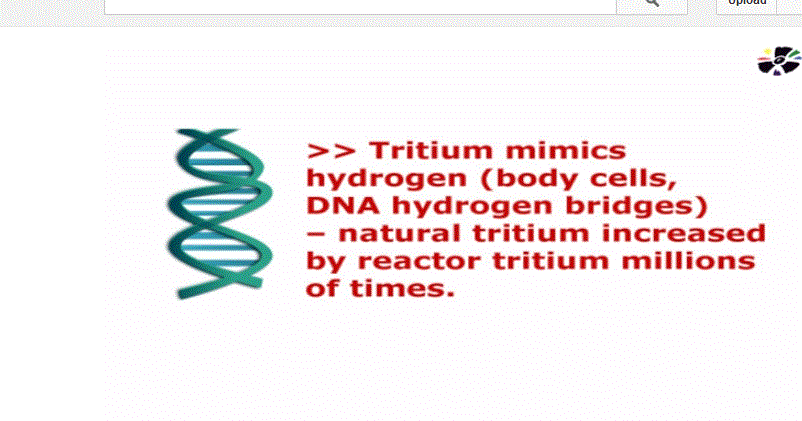

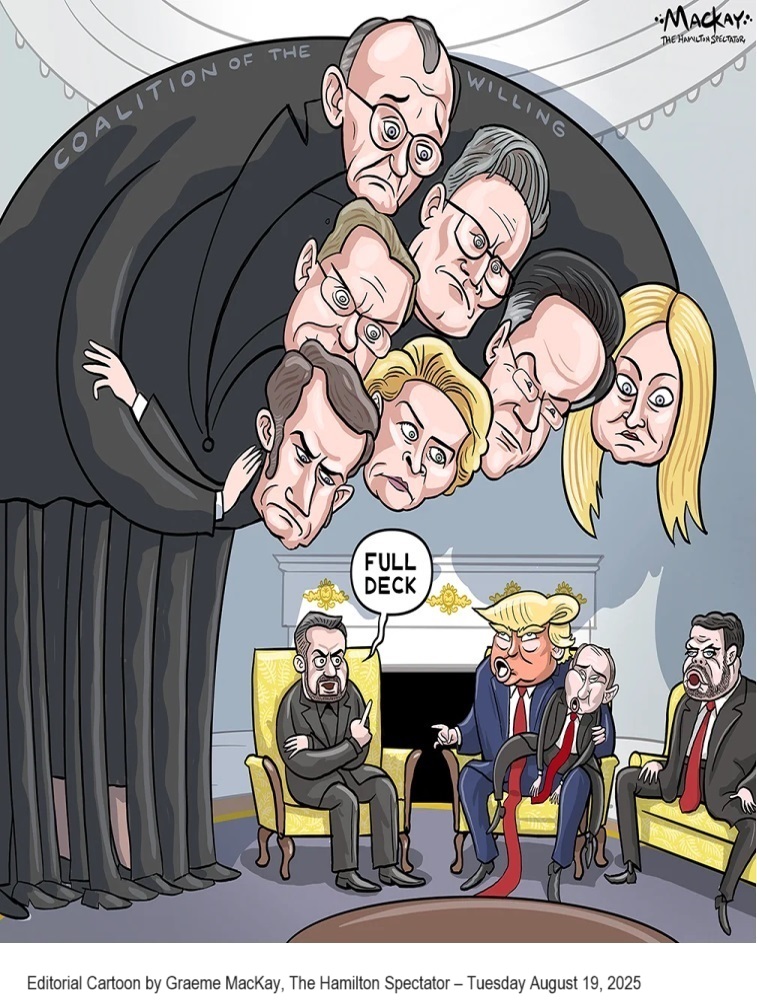
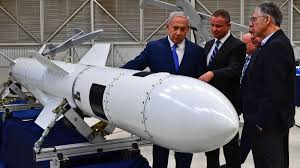
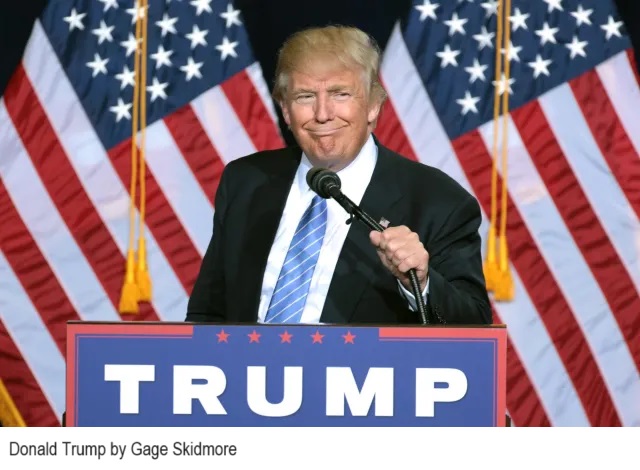
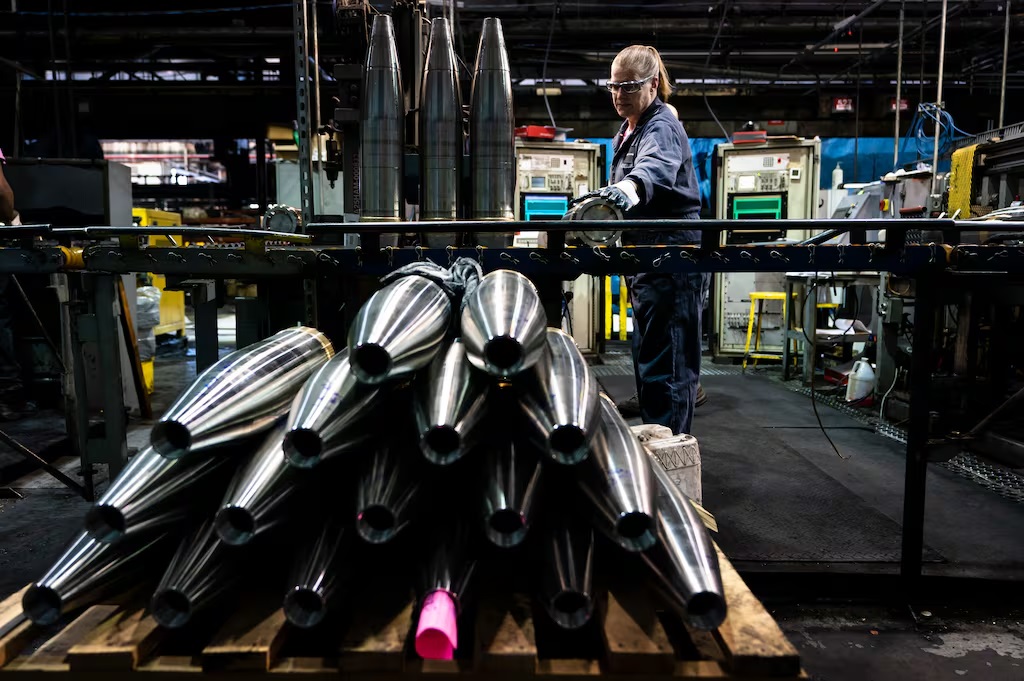





 nuclear-news