Political witch hunts and blacklists: Donald Trump and the new era of McCarthyism
September 19, 2025 , Shannon Brincat, Senior Lecturer in Politics and International Relations, University of the Sunshine Coast, Frank Mols, Senior Lecturer in Political Science, The University of Queensland, Gail Crimmins, Associate professor, University of the Sunshine Coast, https://theconversation.com/political-witch-hunts-and-blacklists-donald-trump-and-the-new-era-of-mccarthyism-265389?utm_medium=email&utm_campaign=The%20Weekender%20-%2019th%20September%202025&utm_content=The%20Weekender%20-%2019th%20September%202025+CID_d7a6e5ec27e543170fba8540bf95d6ea&utm_source=campaign_monitor&utm_term=Political%20witch%20hunts%20and%20blacklists%20Donald%20Trump%20and%20the%20new%20era%20of%20McCarthyism
A modern-day political inquisition is unfolding in “digital town squares” across the United States. The slain far-right activist Charlie Kirk has become a focal point for a coordinated campaign of silencing critics that chillingly echoes one of the darkest chapters in American history.
Individuals who have publicly criticised Kirk or made perceived insensitive comments regarding his death are being threatened, fired or doxed.
Teachers and professors have been fired or disciplined, one for posting that Kirk was racist, misogynistic and a neo-Nazi, another for calling Kirk a “hate-spreading Nazi”.
Journalists have also lost their jobs after making comments about Kirk’s assassination, as has the late-night television host Jimmy Kimmel.
A website called “Expose Charlie’s Murderers” had been posting the names, locations and employers of people saying critical things about Kirk before it was reportedly taken down. Vice President JD Vance has pushed for this public response, urging supporters to “call them out … hell, call their employer”.
This is far-right “cancel culture”, the likes of which the US hasn’t seen since the McCarthy era in the 1950s.
The birth of McCarthyism
The McCarthy era may well have faded in our collective memory, but it’s important to understand how it unfolded and the impact it had on America. As the philosopher George Santayana once said, “Those who cannot remember the past are condemned to repeat it.”
Since the 1950s, “McCarthyism” has become shorthand for the practice of making unsubstantiated accusations of disloyalty against political opponents, often through fear-mongering and public humiliation.
The term gets its name from Senator Joseph McCarthy, a Republican who was the leading architect of a ruthless witch hunt in the US to root out alleged Communists and subversives across American institutions.
The campaign included both public and private persecutions from the late 1940s to early 1950s, involving hearings before the House Un-American Activities Committee and the Senate’s Permanent Subcommittee on Investigations.
Millions of federal employees had to fill out loyalty investigation forms during this time, while hundreds of employees were either fired or not hired. Hundreds of Hollywood figures were also blacklisted.
The campaign also involved the parallel targeting of the LGBTQI+ community working in government – known as the Lavender Scare.
And similar to doxing today, witnesses in government hearings were asked to provide the names of communist sympathisers, and investigators gave lists of prospective witnesses to the media. Major corporations told employees who invoked the Fifth Amendment and refused to testify they would be fired.
The greatest toll of McCarthyism was perhaps on public discourse. A deep chill settled over US politics, with people afraid to voice any opinion that could be construed as dissenting.
When the congressional records were finally unsealed in the early 2000s, the Permanent Subcommittee on Investigations said the hearings “are a part of our national past that we can neither afford to forget nor permit to reoccur”.
Another witch hunt under Trump
Today, however, a similar campaign is being waged by the Trump administration and others on the right, who are stoking fears of the “the enemy within”.
This new campaign to blacklist government critics is following a similar pattern to the McCarthy era, but is spreading much more quickly, thanks to social media, and is arguably targeting far more regular Americans.
Even before Kirk’s killing, there were worrying signs of a McCarthyist revival in the early days of the second Trump administration.
After Trump ordered the dismantling of public Diversity, Equity and Inclusion (DEI) programs, civil institutions, universities, corporations and law firms were pressured to do the same. Some were threatened with investigation or freezing of federal funds.
In Texas, a teacher was accused of guiding Immigration and Customs Enforcement (ICE) squads to suspected non-citizens at a high school. A group called the Canary Mission identified pro-Palestinian green-card holders for deportation. And just this week, the University of California at Berkeley admitted to handing over the names of staff accused of antisemitism.
Supporters of the push to expose those criticising Kirk have framed their actions as protecting the country from “un-American”, woke ideologies. This narrative only deepens polarisation by simplifying everything into a Manichean world view: the “good people” versus the corrupt “leftist elite”.
The fact the political assassination of Democratic lawmaker Melissa Hortman did not garner the same reaction from the right reveals a gross double standard at play.
Another double standard: attempts to silence anyone criticising Kirk’s divisive ideology, while being permissive of his more odious claims. For example, he once called George Floyd, a Black man killed by police, a “scumbag”.
In the current climate, empathy is not a “made-up, new age term”, as Kirk once said, but appears to be highly selective.
This brings an increased danger, too. When neighbours become enemies and dialogue is shut down, the possibilities for conflict and violence are exacerbated.
Many are openly discussing the parallels with the rise of fascism in Germany, and even the possibility of another civil war.
A sense of decency?
The parallels between McCarthyism and Trumpism are stark and unsettling. In both eras, dissent has been conflated with disloyalty.
How far could this go? Like the McCarthy era, it partly depends on the public reaction to Trump’s tactics.
McCarthy’s influence began to wane when he charged the army with being soft on communism in 1954. The hearings, broadcast to the nation, did not go well. At one point, the army’s lawyer delivered a line that would become infamous:
Until this moment, Senator, I think I never really gauged your cruelty or your recklessness […] Have you no sense of decency?
Without concerted, collective societal pushback against this new McCarthyism and a return to democratic norms, we risk a further coarsening of public life.
The lifeblood of democracy is dialogue; its safeguard is dissent. To abandon these tenets is to pave the road towards authoritarianism.
The Department of War Is Back!
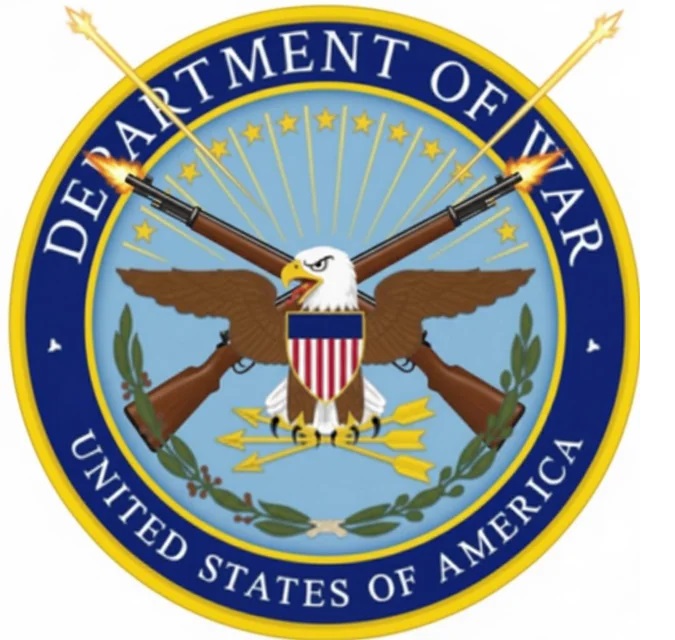
But Victoryless Culture Remains.
William J. Astore, 17 Sept 25, https://tomdispatch.com/the-department-of-war-is-back/
My fellow Americans, my critical voice has finally been heard inside the Oval Office. No, not my voice against the $1.7 trillion this country is planning to spend on new nuclear weapons. No, not my call to cut the Pentagon budget in half. No, not my imprecations against militarism in America. It was a quip of mine that the Department of Defense (DoD) should return to its roots as the War Department, since the U.S. hasn’t known a moment’s peace since before the 9/11 attacks, locked as it’s been into a permanent state of global war, whether against “terror” or for its imperial agendas (or both)
A rebranded Department of War, President Trump recently suggested, simply sounds tougher (and more Trumpian) than “defense.” As is his wont, he blurted out a hard truth as he stated that America must have an offensive military. There was, however, no mention of war bonds or war taxes to pay for such a military. And no mention of a wartime draft or any other meaningful sacrifice by most Americans.
Will the US Continue to Aid, Abet, and Arm Genocide in Gaza?
Every leader should move now to end our complicity.
Katrina vanden Heuvel, 16 Sept 25, https://www.thenation.com/article/world/israel-genocide-complicity-gaza-palestine/
he United States is aiding and abetting genocide in Gaza. This horror has the support —like so many of our most disastrous foreign debacles from Vietnam to Iraq—of both political parties.
As more and more children die of starvation and the famine deepens, as the Netanyahu government begins its attack on Gaza City, moving to occupy all of Gaza, as Israeli soldiers and bulldozers systematically level city after city in Gaza, the criminal horror is reaching its obscene goal: the ethnic cleansing of Palestinians from Gaza (and, if Netanyahu’s ministers have their way, all of the occupied West Bank).
While all signatories to the Genocide Convention have the right—and indeed the duty—to intervene to halt this slaughter, only two countries have the power to actually stop the genocide: the Israeli government that is committing it and the US government that is aiding, abetting, and arming it. The US could stop this criminal assault by ending its support for Israel, cutting off the flow of arms, ammunition, bombs, and military coordination and demanding and helping to organize immediate, emergency humanitarian relief. To do any less makes us complicit in the ongoing crime.
Across the world—and within Israel itself—some brave leaders have demanded an end to the horror.
David Grossman, Israel’s leading literary and moral voice, says that for many years he has refused to use the word genocide, but now he must—“with immense pain and with a broken heart.”
Two leading Israeli human rights groups—B’Tselem and Physicians for Human Rights Israel—released a report on “Our Genocide,” detailing the unfathomable violence and concluding that there is “no doubt” that since October 2023, the Israeli regime has been responsible for carrying out genocide against the Palestinians in the Gaza strip.” Physicians for Human Rights Israel provided a medical-legal analysis documenting Israel’s deliberate destruction of the healthcare system in Gaza, as well as other systems critical for the survival of the Palestinian civilian population.
The special rapporteur of the United Nations has reported on the companies and countries profiting from the “economy of genocide.”
Back In January 2024, the International Court of Justice ruled that there was a plausible risk that Israel’s actions amounted to genocidal acts—long before the systematic starvation became apparent. The International Criminal Court has issued arrest warrants for Israeli Prime Minister Benjamin Netanyahu, then–Defense Minister Yoav Gallant, and a former Hamas commander on the suspicion of war crimes and crimes against humanity.
A growing number of countries have suspended all or part of their arms shipments to Israel, including Germany, Italy, Spain, the Netherlands, Belgium, and Canada. Last month, in a resolution passed by 86 percent of its members, the oldest and largest association of genocide scholars concluded that Israel’s nearly two-year military campaign in Gaza meets “the legal definition of genocide,” The resolution, by the International Association of Genocide Scholars, added to a growing chorus from human rights organizations and academics concluding that Israel is committing genocide by “killing members of the group” and “deliberately inflicting on the group conditions of life calculated to bring about its physical destruction in whole or in part,” according to Emily Sample, a member of the association’s executive board.
Across the world, citizens of conscience demonstrate in greater and greater numbers, demanding an end to the horror.
And in the United States where the responsibility and the complicity are the greatest?
Courageous Jewish scholars like Omer Bartov and writers like Peter Beinart have spoken out early against the calamity.
More than 1,000 rabbis have called for Israel to allow humanitarian aid, stating “we cannot condone the mass killings of civilians…or the use of starvation as a weapon of war
After months of looking the other way, more and more of the mainstream US media are beginning to awake to the humanitarian catastrophe that is being inflicted on the Palestinians.
But among those who could actually bring the horror to an end, courage is in short supply.
Only 13 members of Congress have been willing to state the obvious: that Israel is committing genocide. House minority whip Katherine Clark declared that the “genocide and destruction” in Gaza needs to end—only to walk back her comments a few days later.
The Senate Resolution submitted by Senator Bernie Sanders to block some weapons sales to Israel received not one Republican vote. Instead, Republicans line up behind Donald Trump, who muses about beachfront properties in Gaza and tells Israel to hurry up and finish the job.
A Gallup poll showed only 8 percent of Democrats support Israel’s military action in Gaza. The Sanders Resolutions received support from a majority of the Senate Democratic caucus, yet those still refusing to stand up include Senator Charles Schumer, the Democratic leader in the Senate, as well as Senator Corey Booker, who styles himself as a voice for human rights.
This is no longer a policy debate. This is now an urgent question of basic humanity. Will the United States continue to arm genocide in Gaza? Will legislators continue to support an unconscionable crime against humanity—or act to end it? As more Palestinians starve to death, as more doctors and aid workers and journalists are murdered, as needed food and water continues to be withheld, as families are huddled into smaller and smaller open-air camps, no amount of censorship, doubletalk, lies, or excuses can hide the true horror.
There is no excuse for inaction. There is no escape from responsibility. Each legislator, official, and officer will have to look in the mirror. Complicity in this crime will destroy their reputations. Growing numbers of their constituents, their neighbors, even their own children will demand to know why they chose complicity rather than courage.
Popular
- Charlie Kirk’s Legacy Deserves No MourningCharlie Kirk’s Legacy Deserves No MourningElizabeth Spiers
- Kafka-land at UC BerkeleyKafka-land at UC BerkeleyJudith Butler
- Jimmy Kimmel’s Bosses Sold Us All OutJimmy Kimmel’s Bosses Sold Us All OutJeet Heer
- The Call Is Out for Mass, Simultaneous Strikes in 4 YearsThe Call Is Out for Mass, Simultaneous Strikes in 4 YearsSarah Lazare
Israel is committing genocide in Gaza.
America is aiding, abetting, and arming that genocide.
Every American should stand up to protest the horror being committed in our names.
Every leader should move now to end our complicity.
Every American should stand up to protest the horror being committed in our names.
Every leader should move now to end our complicity.
Trump not Commander in Chief…he’s Violence Inciter in Chief.

Walt Zlotow, Glen Ellyn IL 16 Sept 25
45 men have served as president. Everyone had a base of voters they geared their presidency toward to remain politically viable and enact their agenda. But all pledged fealty to serving all the people throughout their presidency without regard to political affiliation. All but one that is.
Donald Trump has served every one of his 1,700 days over 5 years ignoring his opposition. Worse, he relentless demonizes them, inciting threats and actual violence unprecedented in American history.
It began with his very first words campaigning for the 2016 election. He glided down the escalator at Trump Tower charging undocumented from Mexico are murderers and rapists, the worst of the worst.
That set the tone for his entire administration. Knowing he was likely to lose reelection, he pivoted to a treasonous assault on the electoral system that put a target on every election official, judge and worker not affiliated with the Trump base. Worse, he inspired, indeed orchestrated, a violent riot to overturn the 2020 election in which he was crushed by over 7 million votes. Also crushed were over 100 patriotic law enforcement injured by a ravenous mob doing Trump’s bidding. One died and 4 committed suicide shortly thereafter from Trump’s riot trauma.
His second term has continued apace. He’s sent his masked immigration storm troopers into American workplaces rounding up undocumented workers serving the economy. Why? Because he can’t round up enough law breaking undocumented on the street to satisfy his vengeful base.
When right wing influencer Charlie Kirk was gunned down Trump immediately blamed the ‘extreme left’, his favorite target for retribution. A number of his high profile supporters called for war against his imaginary enemy. Trump said nothing against this madness that will near certainly result in reprisal violence. Democratic office holders, media influencers and election personnel are all reassessing their security endangered by the very man responsible for their safety.
Trump’s love affair inciting demonization, if not outright violence against the ‘other’, is an aberration in American presidential history.
Someday Trump will leave the presidency he has shockingly betrayed. The only remaining question is how many will fall victim, whether threatened or assaulted, to the madness Trump has unleashed.
US Bombs Another Boat Near Venezuela.
President Trump claimed without evidence that the boat was running drugs and that the strike killed three ‘terrorists’
by Dave DeCamp | September 15, 2025 , https://news.antiwar.com/2025/09/15/us-bombs-another-boat-near-venezuela/
The US military on Monday bombed a boat near Venezuela and killed three people, according to a statement released by President Trump on Truth Social.
President Trump claimed without providing evidence that the boat was carrying drugs and that the three people who were killed were “narcoterrorists.” He made similar claims about the first US military strike on a boat near Venezuela that occurred on September 2, which he said killed 11 “narcoterrorists.”
The president also posted a video that purported to show the Monday strike. It showed what appeared to be a boat that was drifting at sea, followed by an explosion.
“This morning, on my Orders, US Military Forces conducted a SECOND Kinetic Strike against positively identified, extraordinarily violent drug trafficking cartels and narcoterrorists in the SOUTHCOM area of responsibility,” Trump said. “The Strike occurred while these confirmed narcoterrorists from Venezuela were in International Waters transporting illegal narcotics (A DEADLY WEAPON POISONING AMERICANS!) headed to the US.”
The president also signaled that more US strikes on boats in the region were coming. “BE WARNED — IF YOU ARE TRANSPORTING DRUGS THAT CAN KILL AMERICANS, WE ARE HUNTING YOU!” he wrote.
The second US bombing in the region came after the Venezuelan government said that personnel from a US warship boarded a Venezuelan tuna boat that was in Venezuelan waters. Venezuelan Foreign Minister Yván Gil said 18 armed US troops were on the vessel for 8 hours, a claim that hasn’t been confirmed by the US military.
“Those who give the order to carry out such provocations are seeking an incident that would justify a military escalation in the Caribbean,” Gil said.
While Trump and other US officials claim the military action and pressure on Venezuela’s government is about drug trafficking and a response to overdose deaths in the US, fentanyl doesn’t come from or through Venezuela, and the majority of the cocaine that is transported to the US comes through the Pacific, not the Caribbean. Gil said that the real purpose of the US operations was for the US to “persist in their failed policy” of regime change in Venezuela.
The Venezuela policy is being largely driven by US Secretary of State Marco Rubio, who has long pushed for regime change in Venezuela. Venezuelan President Nicolas Maduro on Monday called out Rubio in response to the US boarding the tuna boat, calling him a “lord of death and war.”
Why a national cancer study near US reactors must be conducted before any new expansion of nuclear power.

Nuclear power reactors were introduced in
the United States during the 1950s. Despite concerns about potential health
hazards posed by routine radioactive emissions into the environment, few
research articles have been published in professional journals. The only
national study of cancer near reactors was conducted by federal researchers
in the 1980s and found no association between proximity to reactors and
cancer risk.
But since then, articles on individual nuclear facilities have
documented elevated cancer rates in local populations. Current proposals to
expand US nuclear power, along with concerns about protracted exposures
near aging reactors, make it imperative that an objective, current national
study of cancer near existing reactors be conducted.
Bulletin of Atomic Scientists 12th Sept 2025, https://thebulletin.org/2025/09/why-a-national-cancer-study-near-us-reactors-must-be-conducted-before-any-new-expansion-of-nuclear-power/
UK hands over its nuclear safety conditions to Trump’s administration?

It is both ironic and worrying to read that the
government is proposing to blindly accept assessments by US safety
regulators in its panic to build new nuclear reactors (“Deal with US to
fast-track mini nuclear reactors”, news, Sep 15).
The public voted in
2016 to leave the European Union in order to increase sovereignty over
important decisions for this country, and to enable government decisions to
be made more accountably and closer to home. The irony is that less than
ten years later the government has decided to hand over crucial nuclear
safety decisions to the Trump administration.
The worry is that the US
Nuclear Regulatory Commission has conflicting roles as both a regulator and
a sales organisation promoting US nuclear technology. Its approval process
has been described as rubber-stamping, and it has widely been criticised
for the influence that the nuclear industry has in its decisions.
The organisation is facing cuts in its workforce from the Trump government, and the president will be appointing new commissioners to the NRC who share his own views on safety and environmental protections. It is hard to comprehend how this proposal will maintain safety standards or encourage communities that suddenly face having a new nuclear reactor built in their locality to welcome such development. The move is purely a leg-up for the US nuclear industry, and has nothing to do with the interests of the British public.
The Times 16th Sept 2025. https://www.thetimes.com/comment/letters-to-editor/article/times-letters-public-disapproval-trump-state-visit-7rs33trdn
Trump masters the art of “dobbing” on an Australian journalist.

By Vince Hooper | 20 September 2025, https://independentaustralia.net/politics/politics-display/trump-masters-the-art-of-dobbing-on-an-australian-journalist,20177
Trump turned a simple conflict-of-interest question into a schoolyard spat — threatening to “tell on” a journo to Australia’s Prime Minister, writes Vince Hooper.
IT TAKES A CERTAIN theatre of the absurd to transform a routine White House press gaggle into a diplomatic sideshow. Yet that is precisely what happened when an Australian Broadcasting Corporation journalist, researching U.S. President Donald Trump’s family business interests, asked a straightforward question about whether it is appropriate for a sitting president to be engaged in so many business activities.
The question was sober and reasonable: a matter of conflicts of interest, wealth accumulation, and transparency in public office. Trump’s response, however, veered quickly into the surreal. He first insisted that his children were running the business empire, then abruptly shifted the ground.
Instead of grappling with the premise, he went after the journalist’s nationality, declaring:
“The Australians, you’re hurting Australia.”
And then came the kicker — Trump promised to personally inform Prime Minister Anthony Albanese about the journalist’s behaviour, as if geopolitics had suddenly collapsed into a schoolyard spat where the ultimate threat was tattling to the headmaster. The art of dobbing.
At one level, the episode is comic, a reminder of Trump’s instinct for spectacle and grievance. But beneath the absurdity lies something darker: a consistent refusal to treat journalistic inquiry as a legitimate part of democracy. Instead, accountability is reframed as disloyalty. The president of the United States, confronted with a basic question about conflicts of interest, responded not with explanation but with a kind of diplomatic intimidation.
This is part of a longer pattern. From his first term to his second, Trump has cast journalists as enemies rather than interlocutors. The “war on the media” is not rhetorical garnish but central to his political style. In this worldview, truth-seekers are painted as traitors, tough questions are reframed as acts of sabotage, and now even foreign allies are enlisted as props in his domestic culture wars. By claiming that the ABC reporter was “hurting Australia,” Trump implied that the act of pressing a leader for clarity was somehow an attack on his allies themselves.
What is most revealing is how quickly Trump personalised diplomacy. The U.S.–Australia relationship is built on strategic alignment, trade, military cooperation, and shared democratic values. It is not dictated by whether a reporter poses a question he finds confrontational. Yet in his rhetoric, the fate of nations collapsed into the thin skin of one man. This habit of reducing statecraft to personal loyalty tests is not merely undignified; it is dangerous. If bilateral alliances can be bent around one leader’s grievances, they risk becoming unstable, transactional, and unpredictable.
Trump turned a simple conflict-of-interest question into a schoolyard spat — threatening to “tell on” a journo to Australia’s Prime Minister, writes Vince Hooper.
IT TAKES A CERTAIN theatre of the absurd to transform a routine White House press gaggle into a diplomatic sideshow. Yet that is precisely what happened when an Australian Broadcasting Corporation journalist, researching U.S. President Donald Trump’s family business interests, asked a straightforward question about whether it is appropriate for a sitting president to be engaged in so many business activities.
The question was sober and reasonable: a matter of conflicts of interest, wealth accumulation, and transparency in public office. Trump’s response, however, veered quickly into the surreal. He first insisted that his children were running the business empire, then abruptly shifted the ground.
Instead of grappling with the premise, he went after the journalist’s nationality, declaring:
“The Australians, you’re hurting Australia.”
And then came the kicker — Trump promised to personally inform Prime Minister Anthony Albanese about the journalist’s behaviour, as if geopolitics had suddenly collapsed into a schoolyard spat where the ultimate threat was tattling to the headmaster. The art of dobbing.
At one level, the episode is comic, a reminder of Trump’s instinct for spectacle and grievance. But beneath the absurdity lies something darker: a consistent refusal to treat journalistic inquiry as a legitimate part of democracy. Instead, accountability is reframed as disloyalty. The president of the United States, confronted with a basic question about conflicts of interest, responded not with explanation but with a kind of diplomatic intimidation.
This is part of a longer pattern. From his first term to his second, Trump has cast journalists as enemies rather than interlocutors. The “war on the media” is not rhetorical garnish but central to his political style. In this worldview, truth-seekers are painted as traitors, tough questions are reframed as acts of sabotage, and now even foreign allies are enlisted as props in his domestic culture wars. By claiming that the ABC reporter was “hurting Australia,” Trump implied that the act of pressing a leader for clarity was somehow an attack on his allies themselves.
What is most revealing is how quickly Trump personalised diplomacy. The U.S.–Australia relationship is built on strategic alignment, trade, military cooperation, and shared democratic values. It is not dictated by whether a reporter poses a question he finds confrontational. Yet in his rhetoric, the fate of nations collapsed into the thin skin of one man. This habit of reducing statecraft to personal loyalty tests is not merely undignified; it is dangerous. If bilateral alliances can be bent around one leader’s grievances, they risk becoming unstable, transactional, and unpredictable.
Compare this to other democratic leaders. Joe Biden, for all his gaffes, generally responds to press scrutiny with irritation at worst, never with the threat of raising the matter in a diplomatic call. Anthony Albanese himself fields barbed questions from Australian journalists on policy, integrity, and leadership without implying that the act of questioning undermines Australia’s alliances. Even populist figures like Britain’s ex-PM Boris Johnson or India’s Narendra Modi, while often prickly, have not suggested that reporters risk harming national security simply by doing their jobs. Trump stands almost alone in converting a press query into a matter of international loyalty.
In the end, Trump’s outburst says less about Australia than about America. It was not Australia’s reputation on trial, nor the alliance, nor the ABC reporter’s patriotism. It was the president’s tolerance for accountability — and that, once again, proved to be vanishingly thin and fake.
Vince Hooper is a proud Australian/British citizen and professor of finance and discipline head at SP Jain School of Global Management with campuses in London, Dubai, Mumbai, Singapore and Sydney.
U.S. Nuclear Reactors will NOT Build a Strong Canada
Ontario Clean Air Alliance -Angela Bischoff, Director, Sept 17, 2025
Prime Minister Carney’s directive to the Major Projects Office to fast-track Doug Ford’s plan to build U.S. nuclear reactors in Ontario will: raise electricity rates, jeopardize national security and delay action on climate change.
New U.S. GE-Hitachi nuclear reactors are the highest-cost option to meet Ontario’s electricity needs – costing 2 to 8 times more than new solar and wind power. As a result, these U.S. reactors will make life less affordable for Ontario’s hard-working families; and they will make Ontario’s industries less competitive.
Building GE-Hitachi reactors will also jeopardize our national security by making Ontario dependent on enriched uranium imports from the U.S. – imports which President Trump could cut off at a moment’s notice.
Finally, building new nuclear reactors is the slowest option to phase-out gas power and protect our climate. Under Doug Ford’s nuclear & gas plan, 25% of our electricity will be produced by burning gas in 2030 – up from only 4% in 2017. To add insult to injury, more than 70% of Ontario’s gas supply is imported from the U.S.
With wildfires burning around the world, we need to invest in the options that can reduce our climate-damaging emissions ASAP, not decades from now. We simply can’t afford to wait 10 to 20 years for new reactors to be built, when solar and wind can be built within months to three years. Combined with batteries, wind and solar can keep our lights on at a fraction of the cost of new nuclear reactors.
Instead of subsidizing the research and development costs for a U.S. multinational’s first-of-their-kind, experimental new nuclear reactors, we should be investing in options that will build a stronger, more prosperous and more secure Canada.
Here is what Prime Minister Carney should do.
1. Rescind his request for the Major Project Office (MPO) to fast-track the building of U.S. nuclear reactors in Ontario.
2. Rescind the Canada Infrastructure Bank’s $970 million loan for the building of GE-Hitachi’s first new nuclear reactor.
3. Direct the MPO to fast-track roof top and parking lot solar in Ontario.
4. Direct the MPO to fast-track cutting the red tape that is blocking the development of Great Lakes offshore wind power.
5. Direct the MPO to fast-track the expansion of the inter-provincial electricity transmission links between Manitoba and Ontario and Ontario and Quebec to increase our ability to import low-cost water, wind and solar power from Manitoba, Quebec and the Maritimes.
The dangerous new Washington consensus for more nuclear weapons
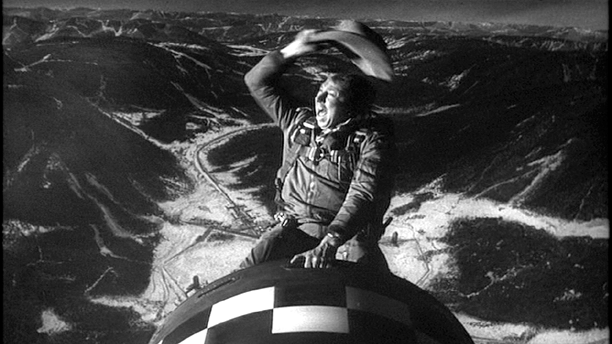
What are all these nuclear weapons for? What would happen if we used them? Or a fraction of them? How many would die? Would our nation survive? What would be the impact on global climate?
These are topics that are assiduously avoided by nuclear weapons proponents,
“We’re going to go on offense, not just on defense. Maximum lethality, not tepid legality. Violent effect, not politically correct.”
By Joe Cirincione | September 9, 2025
Two former Biden administration defense officials warn of a “Category 5 hurricane of nuclear threats” rapidly approaching. Their solution? Build more nuclear weapons.
The officials, Vipin Narang and Pranay Vaddi, develop their strategy in a July 17 article in Foreign Affairs. From their perches at the Department of Defense and the National Security Council, they helped guide President Joe Biden’s nuclear policies that kept—and even increased—the weapons programs and budgets inherited from the first Trump administration. Now, they say, we need more.
Much more.
Attempting to chart a course for “how to survive the new nuclear age,” they instead repeat the oldest strategic mistake of the nuclear age: seeking security through numbers.
Eighty years ago, before the bombings of Hiroshima and Nagasaki, a team of Manhattan Project scientists led by James Franck and Eugene Rabinowitz (who would later found The Bulletin of the Atomic Scientists) warned that the United States could not rely on its current advantage in atomic weaponry. Nuclear research would not remain an American monopoly for long. Staying ahead in production, they said, also gave a false sense of security: “The accumulation of a larger number of bigger and better atomic bombs… will not make us safe from sudden attack.”
They were ignored. During its first nuclear build-up, the United States sprinted from two atomic weapons in 1945 to 20,000 atomic and thermonuclear weapons by 1960, over twenty times the number of weapons held by the Soviet Union. It didn’t matter. We were ahead but afraid, with false fears of “missile gaps” dominating security debates.
Twenty years later, with the US arsenal at 24,000 warheads and the Soviets with 30,000, Ronald Reagan was swept into office with the backing of the Committee on the Present Danger and their fears that a “window of vulnerability” was opening that would allow the Soviets to launch a deadly first strike unless we vastly increased our forces. Committee members filled top defense posts and began the second nuclear build-up with new weapons and the false promise of missile defense shields. The “launch on warning” policy they adopted on an “interim basis” to protect US ICBMs from Russian attack still haunts us today, argues Princeton professor Frank von Hippel. This policy has contributed to several close calls when missiles were almost mistakenly launched.
Narang and Vaddi channel these past prophets of doom. The authors cite nuclear programs in North Korea, Pakistan, and Iran as justification for increasing the size of the US arsenal, largely ignoring diplomatic efforts that in the past effectively contained some of these programs and prevented others.
They also cite the interest of US allies in Europe and Asia in considering their own national nuclear programs as a proliferation risk that can only be addressed by “more, different, and better nuclear capabilities” and “more advanced missile defense… to intercept small or residual adversary nuclear forces.” They argue that if confronted by nuclear threats in Europe in the near future, “the United States might need to respond with nuclear use, and potentially with a larger nuclear exchange if it is unable to reestablish nuclear deterrence in Europe.”…………………………….
They fully endorse the third nuclear build up now underway, with an estimated cost of $2 trillion and rising. But it is not enough. “Washington needs to deploy not only more warheads but also more systems than originally planned under the modernization program,” they urge.
It is true that China’s force may grow, but as experts at the Federation of American Scientists point out, these projections are based on some questionable assumptions, including that future growth will follow recent growth on a straight line, that all the ICBM silos that we observe will be filled by new missiles, that China will be able to produce enough plutonium for all these new warheads, and that all the new warheads will be operational and deployed—which they currently are not.
Secondly, the authors understate the current US nuclear arsenal, which is more than 3,700 operational warheads, not 1,500. The United States currently has about 1,770 nuclear weapons deployed. (The New START treaty counts only 1,550 because it assumes each US bomber is loaded with only one weapon rather than the 8 to 20 they can carry.)
But that is only the deployed force. Approximately 1,930 nuclear warheads are held in reserve, ready to be deployed if needed. Finally, there are 1,477 retired but still intact warheads awaiting dismantlement—making for a total of more than 5,177 warheads in all, including those deployed, those on reserve, and those which are formally retired but intact. So, even if China does produce 1,500 weapons in ten years, it will still have only one-third the US force.
The real problem with the authors’ analysis, however, is not threat exaggeration or funny numbers. It is the war-fighting doctrine that it openly embraces.
What are all these nuclear weapons for? What would happen if we used them? Or a fraction of them? How many would die? Would our nation survive? What would be the impact on global climate?
These are topics that are assiduously avoided by nuclear weapons proponents, whether they be the corporations that realize large profits from the now $100 billion annual nuclear budget, or by the academics and policy operatives who provide the strategic justification for the indefinite continuation of the nuclear balance of terror.
Thus, the authors say “Congress will need to back an accelerated effort to overhaul the U.S. arsenal with significant funding and give the project urgent priority” because in addition to the standard rational that the United States must maintain a large nuclear arsenal “able to survive a first strike and impose assured destruction on its attacker in retaliation,” they argue the US must have weapons and policies “to meaningfully limit the amount of damage the attacker can inflict on the United States and its allies. To do this, the United States must maintain the capability to destroy as many of the attacker’s nuclear weapons as practicable before or after they are launched.”
This “damage limitation” strategy is key to the argument for larger forces. The authors seem to favor using US nuclear weapons first, to destroy the enemy’s weapons “before” they are launched, as well as believing without evidence that there could be a national missile defense system so effective that it could destroy missiles “after” their launch.
Former dean of the Georgetown University School of Foreign Affairs Robert Gallucci writes in his brief rebuttal to the authors: “One is left to wonder how the pursuit of all the ‘counterforce’ capability required of the second part of the strategy—an extraordinary characterization of the traditional goal of ‘damage limitation’ laid out in past U.S. nuclear posture reviews—can be distinguished from the pursuit of a disarming, preemptive, ‘first strike’ capability.”
Indeed, that is precisely what may be motivating the Chinese increases that the authors claim as the justification for an urgent US build-up. Narang and Vaddi do not discuss the impact on other nations of the massive US investment in offensive and defensive nuclear systems over the past ten years, or its withdrawal form the Anti-Ballistic Missile Treaty in 2002 that began the deterioration of the arms control regime.
From the Chinese perspective, however, the new, more capable and proliferated offensive nuclear weapons (especially those close to their borders) must indeed appear to be first-strike weapons, particularly when combined with a massive proposed national missile defense system erected to intercept any missiles not destroyed by an initial barrage of the United States.
China expert Fiona Cunningham of the University of Pennsylvania believes that it is very possible that “China is reacting to the continued development of some of the U.S. capabilities that could hold its nuclear arsenal at risk.” These include national missile defense, “its development of conventional strike capabilities that might be able to degrade its nuclear forces,” and the “idea that you would try and attack an adversary’s nuclear forces before they end up being launched.”
The Trump administration’s decision to “go on the offense” will further exacerbate these concerns. As the newly renamed Secretary of War, Pete Hegseth, said: “We’re going to go on offense, not just on defense. Maximum lethality, not tepid legality. Violent effect, not politically correct.”
The Chinese increase in forces may indeed be malevolent. But it also looks very similar to what one would do if trying to create exactly the kind of survivable force the authors say the United States must have for a credible deterrent. As Cunningham notes, “We should expect that if adversary capabilities change, then Chinese nuclear forces are going to change in tandem.”
The authors may intend to pave new ground, to develop a strategy for the “new nuclear age,” but they end up mirroring the failed policies of the past. In many ways, their article echoes the 1980 Foreign Policy article by nuclear hawks Colin Gray and Keith Payne, “Victory is Possible.” In support of that era’s nuclear modernization, they argued that “the United States must possess the ability to wage nuclear war rationally.” They, too, thought arms control was unattainable and out-of-date with current threats. They, too, thought “parity or essential equivalence is incompatible with extended deterrence.” They, too, claimed that “war-fighting… is an extension of the American theory of deterrence.”
Gray and Payne said that a war that resulted in 20 million dead Americans could still save 200 million or more. Narang and Vaddi are not as cavalier, but at the core, they are embracing the idea that the ability to fight and win a nuclear war is essential for national security.
The worst news is that they are not alone. Their views may be the dominant views in Washington now, in both parties. Cloaked in ominous strategic rhetoric, ignoring inconvenient truths, and backed by a formidable nuclear weapons lobby and massive budgets, these ideas are the new consensus. Without a vibrant, persistent pushback, these policies will not only prevail in the current Trump administration but in future governments as well. https://thebulletin.org/2025/09/the-dangerous-new-washington-consensus-for-more-nuclear-weapons/
Israel bombed Qatar to assassinate Hamas’s lead ceasefire negotiators
Amid ongoing ceasefire talks, Israel attempted to assassinate the Hamas negotiating team in an airstrike on the Doha office of its lead negotiator, senior Hamas leader Khalil al-Hayya. Hamas officials say the negotiating team survived the attack.
By Qassam Muaddi September 9, 2025 , https://mondoweiss.net/2025/09/israel-bombed-qatar-to-assassinate-hamass-lead-ceasefire-negotiators/
Amid ongoing ceasefire talks, Israel attempted to assassinate the Hamas negotiating team in an airstrike on the Doha office of its lead negotiator, senior Hamas leader Khalil al-Hayya. Hamas officials say the negotiating team survived the attack.
By Qassam Muaddi September 9, 2025
Israel attempted to assassinate top Hamas leaders in Qatar on Tuesday, after large explosions were heard in the capital city of Doha, and smoke columns rose from the building targeted in the attack. A joint statement by the Israeli army and Israel’s internal intelligence agency confirmed that it was targeting Hamas’s senior leadership in a “precise strike.” The statement added that the targeted leaders were “directly responsible” for the October 7 attack and that “measures were taken in order to mitigate harm to civilians.”
Israeli media said that the strike targeted the office of the lead Hamas negotiator in the ongoing ceasefire talks, Khalil al-Hayya, in addition to other members of the negotiating team. Hamas politburo member Suheil al-Hindi told Al Jazeera on Tuesday evening that the negotiating team led by al-Hayya had survived “the cowardly assassination attempt.” Al-Hindi also told the Qatari news network that Hamas “will not raise the white flag.”
Al Jazeera reported that five “lower-ranked members were killed.”
The Israeli strike occurred as the Hamas negotiating team met to discuss the latest ceasefire proposal presented by U.S. President Donald Trump, al-Hindi told Al Jazeera.
The Qatari Foreign Ministry strongly condemned the attack, calling it “criminal” and “cowardly.” The Ministry added that Qatar “will not tolerate” attacks that “threaten the safety of Qatar’s citizens and residents.”
An unnamed White House official told AFP that the U.S. was notified in advance of Israel’s planned attack in Qatar.
The office of Israeli Prime Minister Benjamin Netanyahu said in a statement that the attack was a “wholly independent Israeli operation.”
“Israel initiated it, Israel conducted it, and Israel takes full responsibility,” the statement added.
The Israeli PM and Israeli Defense Minister, Israel Katz, said in a joint statement that they had given the green light to attack the Hamas leadership following a shooting attack in Jerusalem yesterday that left six Israelis dead. Hamas’s armed wing, the Qassam Brigades, had claimed responsibility for the shooting, which was carried out by two Palestinians from the West Bank towns of Qatanna and Qebeibeh.
UN Secretary General Antonio Guterres condemned the Israeli attack on the Qatari capital as a “flagrant violation of sovereignty.”
Targeting negotiators during ceasefire negotiations
The Israeli attack comes after Trump had put forward a proposal for a 60-day ceasefire that would see the release of all Israeli captives in the first 48 hours of the agreement. In exchange, negotiations to permanently end the war on Gaza would commence, with personal guarantees from the U.S. President that Israel would engage in the negotiations “in good faith.”
Trump’s proposal would also see Hamas relinquish control over Gaza and give up its arms. Hamas has repeatedly said that it is willing to relinquish control over the Strip and allow for an independent technocratic government to rule in its stead, but has maintained that disarming remains a “red line” for the group.
A previous ceasefire proposal last August was accepted by Hamas and awaited Israel’s approval, but Israel did not respond before Trump presented his most recent proposal.
The August proposal had included a 60-day ceasefire in which Israeli captives would be released in exchange for the release of 1,700 Palestinian prisoners, the entry of humanitarian aid, and the withdrawal of the Israeli army to specified areas at the edges of the Strip.
Continuous assassinations across the region
Last month, Israel killed 12 top officials in the Yemeni government, including Yemen’s Prime Minister, Ahmad al-Rahawi.
Since October 7, Israel has assassinated several top Hamas leaders in exile across the region, including Hamas’s previous politburo chief Ismail Haniyeh in Tehran, and senior Hamas politburo member Saleh Aruri in Beirut.
Israel has also assassinated several top commanders of the al-Qassam Brigades, including its longtime commander, Muhammad al-Deif. Two weeks ago, Hamas confirmed the death of Deif’s successor, Muhammad Sinwar, the brother of Hamas’s slain Gaza leader Yahya Sinwar, who was killed by accident in October 2024 when he was struck by a tank shell during combat in Rafah.
At the end of August, Israel claimed to have assassinated Abu Obeida, the military spokesperson of the Qassam Brigades, in a strike on a residential building in Gaza City. Hamas has neither confirmed nor denied Abu Obeida’s fate.
Attempt to derail ceasefire negotiations ahead of Gaza City invasion
The attack on Doha comes as Israel continues to advance its offensive against Gaza City, levelling several high-rise buildings housing thousands of refugees, who were forced to leave the towers after receiving evacuation orders from the Israeli army. In recent weeks, the Israeli army’s offensive has flattened entire neighborhoods in eastern Gaza City, including the Shuja’iyya, Sabra, and Zeitoun neighborhoods.
The Israeli army has also dropped leaflets over the city ordering its entire population to evacuate to the overcrowded Mawasi area on the coast of Khan Younis in southern Gaza. The Israeli army says its occupation of the city will last for at least a year.
The Palestinian Civil Defense said that if the invasion of the city proceeds as announced, it expects a daily casualty count of around 300 Palestinians.
US Considers Bombing Venezuela as It Deploys F-35 Fighter Jets to Puerto Rico
ANTIWar.com, by Dave DeCamp | September 7, 2025
The Trump administration is considering multiple options for launching military strikes against alleged drug cartels in Venezuela, including hitting targets that could weaken Venezuelan President Nicolas Maduro, as it is deploying F-35 fighter jets to Puerto Rico, CNN has reported.
US officials told CNN that the US bombing of a boat near Venezuela last week was just the beginning of a much larger effort against drug trafficking that could lead to the ouster of Maduro. US officials claim the pressure on Venezuela and Maduro is about drug trafficking and a response to overdose deaths in the US, but fentanyl doesn’t come from or through Venezuela, and the majority of the cocaine that is transported to the US comes through the Pacific, not the Caribbean……………………
The US deployed F-35s to Puerto Rico after it claimed that two Venezuelan F-16 fighter jets flew over a US Navy vessel. The Department of Defense, now known as the Department of War, said in a press release that the Venezuelan flight was “provocative” despite the fact that the US deployed a large number of naval vessels near Venezuela’s coast…………………….https://news.antiwar.com/2025/09/07/us-considers-bombing-venezuela-as-it-deploys-f-35-fighter-jets-to-puerto-rico/
A killing at sea marks America’s descent into lawless power

The people on board were not given the chance to surrender. No evidence was presented. No rules of engagement were cited. The administration claimed authority to kill on suspicion alone. A vessel in international waters is not a lawful target simply because officials say so.
International law does not permit such action.
The peremptory strike on a speedboat is a warning to all who serve. Remember your oath.
Jon Duffy, September 8, 2025, https://www.defenseone.com/ideas/2025/09/killing-sea-americas-descent-lawless-power/407949/?oref=defense_one_breaking_nl&utm_source=Sailthru&utm_medium=email&utm_campaign=Defense%20One%20Breaking%20News:%209/9%20killing&utm_content=C&utm_term=newsletter_d1_alert
The United States has crossed a dangerous line.
Last week, an American military platform destroyed a small vessel in the Caribbean, killing 11 people the Trump administration claims were drug traffickers. It was not an interception. It was not a boarding with Coast Guard legal authority. It was a strike—ordered from Washington, executed in international waters, and justified with little more than “trust us.” Defense Secretary Pete Hegseth told Fox that officials “knew exactly who was in that boat” and “exactly what they were doing.” He offered no evidence.
This was not a counterdrug operation. It was not law enforcement. It was killing without process. And it was, to all appearances, against the letter and the spirit of the law.
For decades, the U.S. military and Coast Guard have intercepted drug shipments in the Caribbean and Eastern Pacific under a careful legal framework: Coast Guard officers would tactically control Navy ships, invoke law enforcement authority, stop vessels, and detain crews for prosecution. The goal is not execution; it is interdiction within international law.
This week’s strike ripped up that framework. The people on board were not given the chance to surrender. No evidence was presented. No rules of engagement were cited. The administration claimed authority to kill on suspicion alone.
International law does not permit such action. A vessel in international waters is not a lawful target simply because officials say so. Contending that narcotics pose a long-term danger to Americans is at best a weak policy argument, not a legal justification for force. Unless this boat posed an imminent threat of attack—which no one has claimed—blowing it out of the water is not self-defense. It is killing at sea. A government that ignores these distinctions is not fighting cartels. It is discarding the rule of law.
Beyond the gross violations of the law and the Constitution lies an enormous strategic danger. By redefining traffickers as legitimate military targets, the administration has plunged the United States into another war without limits.
Who is the enemy? “Cartels,” we are told. But cartels are not armies. They are networks that span countries and blend with civilians. Declaring war on them is like declaring war on poverty or terrorism—a plunge into an endless campaign that cannot be “won.”
Where is the battlefield? The Caribbean? Venezuela? Central America? Overnight, officials shifted their story about the destroyed vessel’s destination: first, it was “probably headed to Trinidad or some other country in the Caribbean,” then it was among “imminent threats to the United States.” If geography is that malleable, there is no limit to where the next strike may fall.
And what is the objective? To “blow up and get rid of them,” in the words of Secretary of State Marco Rubio. That is not strategy; it is bravado. We have tried it before, in Iraq, Afghanistan, Yemen. Killing “high-value targets” didn’t end the war on terror.
The U.S. is drifting into an undeclared war of assassination across half a hemisphere, led by unaccountable officials who equate explosions with effectiveness.
Even more dangerous is the backdrop: the Supreme Court’s ruling that presidents are immune from prosecution for “official acts.” Experts warned this would give the commander-in-chief license to commit murder. The majority waved those fears away. Now the president has ordered killings in international waters.
Eleven people are dead, not through due process but by fiat. The defense secretary boasts about it on television. And the president will face no consequences.
This is no longer abstract. The law has been rewritten in real time: a president can kill, and there is no recourse. That is not strength. That is authoritarianism.
What does this mean for the principle of civilian control, when those who wield it face no consequence for abuse? What does it mean for our military, when they are ordered to carry out missions that violate the standards they have sworn to uphold?
What happens abroad does not stay abroad. A government that stretches legal authority overseas will not hesitate to do the same at home. The same commander-in-chief who ordered a strike on a boat in international waters has already ordered National Guard troops into American cities over the objections of local leaders. The logic is identical: redefine the threat, erase legal distinctions, and justify force as the first tool. Today it is “traffickers” in the Caribbean. Tomorrow it will be “criminals” in Chicago or “radicals” in Atlanta.
This strike is not only about 11 lives lost at sea. It is about the precedent set when the military is unmoored from law, and when silence from senior leaders normalizes the abuse.
The cost will not be measured in a destroyed boat. It will be measured in the corrosion of law, strategy, and trust. Legally, the U.S. has abandoned the framework that distinguished interdiction from assassination. Constitutionally, presidential immunity has been laid bare: the commander-in-chief of the most destructive military power in history has been placed beyond the reach of law. Strategically, we have entered another endless war against a concept, not an enemy. Internally, the erosion of boundaries abroad feeds the erosion of boundaries at home.
The laws of war, the principles of proportionality, the training drilled into every officer—all run counter to what happened in the Caribbean. Yet silence has prevailed. And silence is acquiescence. Each concession ratifies the misuse of force until it becomes routine. That is how institutions corrode. That is how democracies die.
The strike in the Caribbean is not the action of a strong nation. It is a warning. This is about whether the U.S. military remains an institution of law and principle, or whether it becomes an obedient weapon in the hands of a lawless president.
A republic that allows its leaders to kill without law, to wage war without strategy, and to deploy troops without limit is a republic in deep peril. Congress will not stop it. The courts will not stop it. That leaves those sworn not to a man, but to the Constitution.
The oath is clear: unlawful orders—foreign or domestic—must be disobeyed. To stand silent as the military is misused is not restraint. It is betrayal.
Jon Duffy is a retired Navy captain. His active duty career included command at sea and national security roles. He writes about leadership and democracy.
The future of Gaza as seen from the White House

the Gaza Strip would be “administered by the United States for at least 10 years while it is transformed into a glittering tourist resort and a center for high-tech manufacturing and technology.”
The future Gaza project, according to its real estate developers (the three professionals Jared Kushner, Donald Trump, and Steve Witkoff), is worthy of Dubai. Many transnational corporations have already joined forces.
by Thierry Meyssan, Voltaire Network | Paris (France) | 3 September 2025, https://www.voltairenet.org/article222723.html
This possible operation is in line with the vision of the “Jacksonians.” In 1830, President Andrew Jackson (1829-1837) enacted the Indian Removal Act. To end the Indian wars, he proposed assigning them reservations rather than continuing to massacre them. The transfer of the Indians was particularly deadly for the Cherokees (the “Trail of Tears” episode), but they accepted this form of peace, while almost all other Indian tribes rejected it. Two centuries later, only the Cherokee tribe has become wealthy and integrated, while all the other tribes have been marginalized. Without a doubt, Jackson’s method succeeded in ending the genocide of the Indians, but at what cost?
Trump’s plan, currently in development, is just as shocking to Palestinians as Jackson’s was to the Cherokee, but it offers a solution where no one else has. Will Palestinians, who have been fighting for generations to assert their rights, be satisfied with this? International law states that no people can be expelled from their own land. The United Nations General Assembly has consistently guaranteed the right of return for those who were forcibly expelled in 1948—UN General Assembly Resolution 194 (December 11, 1948) and UN Security Council Resolution 237 (June 14, 1967). Seven years ago, Palestinian civilians organized the “March of Return.” The Israel Defense Forces (IDF) fired on a peaceful crowd, killing at least 120 people and wounding 4,000. It is obviously illusory to believe that such a people will easily rally to this project.
So the participants at the White House meeting considered paying $23,000 per person to any family willing to go into exile. Contacts have already been made with Libya, Ethiopia, South Sudan, Indonesia, and Somaliland, although none of these states has confirmed this. The Trump team is considering voluntarily relocating a quarter of the Gaza population in this way.
According to the Financial Times, the Tony Blair Institute for Global Change (TIT) and the Boston Consulting Group (BCG) held joint working meetings on the Gaza Riviera project, known as The Gaza Reconstitution, Economic Acceleration and Transformation Trust (GREAT* Trust). It was during these preparatory meetings that the Gaza Humanitarian Foundation (GHF) project was born. During the summer, this Swiss-registered foundation distributed humanitarian aid in Gaza instead of the occupying authority, the United Nations, the International Red Cross, and various humanitarian associations. This certainly bypassed Hamas, but it also led to the IDF killing nearly a thousand civilians who had come to seek food aid. The GHF scandal was unanimously condemned, including by prominent Israeli Jews. In practice, the GHF was created by the Mikveh Yisrael Forum, bringing together Yotam HaCohen, strategic advisor to Benjamin Netanyahu and son of former General Gershon HaCohen, Liran Tankman, a former intelligence officer who switched to high-tech, and Michael Eisenberg, an Israeli-American venture capitalist. Most of the leaders of the Mikveh Yisrael Forum have joined the Coordinator of Government Activities in the Territories (COGAT), Ghassan Alian, convinced that the Netanyahu government is doing nothing to help the people of Gaza and that it is up to the Israelis to take action.
TRIAL International, a Swiss-based NGO, has filed two legal submissions asking the Swiss authorities to investigate the GHF’s compliance with Swiss law and international humanitarian law. The central issue raised by TRIAL International is whether humanitarian organizations can use private military companies. From the outset, GHF’s executive director, former US Marine Jake Wood, resigned. The “Foundation” then enlisted the services of Philip F. Reilly and his company Safe Reach Solutions. However, Reilly is a former soldier in the 7th Special Forces Group, which focused on counter-narcotics missions in Latin America. He became head of the CIA’s paramilitary branch, then known as the Special Activities Division but renamed the Special Activities Center. He was head of the CIA’s Afghan station around 2008 and 2009, as well as head of operations for the agency’s Counterterrorism Mission Center, which led the agency’s highly controversial drone strike program during the War on Terror. He then joined the private sector as senior vice president of special operations for the private military company Constellis, owner of the mercenary company formerly known as Blackwater. Finally, he worked for another private army, Orbis. While it is true that the IDF did not kill the Palestinian civilians who came to look for food, Philip F. Reilly’s men did.
The future Gaza project, according to its real estate developers (the three professionals Jared Kushner, Donald Trump, and Steve Witkoff), is worthy of Dubai. Many transnational corporations have already joined forces.
President Donald Trump, who had rebuffed Benjamin Netanyahu when he came to ask him to annex Gaza, is now preparing to take control of the Palestinian territory. While Tel Aviv is preparing to annex the entire Mandate of Palestine and, on the contrary, Egypt and Jordan are preparing to hand over the keys to the Palestinian Authority, a vast $100 billion real estate operation is being planned
In August 27, President Donald Trump convened a meeting at the White House to gather suggestions for the future of Gaza. In attendance were JD Vance, Vice President; Steve Witkoff, Special Envoy; Marco Rubio, Secretary of State; Jared Kushner, former advisor during the first term; Tony Blair, former British Prime Minister; and Ron Dermer, Israeli Minister of Strategic Affairs.
No statement was released after this consultation. However, according to the Washington Post, the Gaza Strip would be “administered by the United States for at least 10 years while it is transformed into a glittering tourist resort and a center for high-tech manufacturing and technology.” A colossal $100 million would be invested there.
To facilitate the regrouping of Gazans, Benjamin Netanyahu’s revisionist Zionist government has given instructions to create a tent city for 600,000 people in Rafah. They would have food and hospitals, but would not be able to leave.
Bezalel Smotrich, Minister of Finance, said at a conference on Jewish settlement in the occupied West Bank on May 14: “Civilians will be sent south to a humanitarian zone, and from there they will begin to leave in large numbers for third countries.”
The Prime Minister himself finally made the decision on August 13 on i24News in Hebrew. He claimed a “historic and spiritual mission,” assuring that he is ‘very’ attached to the vision of a “Greater Israel.” At 75, he publicly claims to be a follower of his father’s mentor, Vladimir Jabotinsky, the founder of “revisionist Zionism.”
At the same time, on July 23, the Knesset passed a non-binding law by 71 votes to 13, calling on the government to annex the West Bank before new permanent members of the UN Security Council fully recognize the State of Palestine.
In addition, the IDF reports that 618 settler attacks were recorded in the West Bank in 2024, compared to 404 in the first half of 2025.
Republican Mike Johnson, Speaker of the US House of Representatives, has expressed his support for annexation. He visited the Ariel settlement in early August 2025 and said he believed that “Judea and Samaria” belonged to the Jewish people and expressed his support for the extension of Israeli sovereignty over the West Bank. This was the first time that a US figure of this stature had visited Israeli settlements in the West Bank. The Trump administration is currently keeping a cautious distance from this movement, especially as it is focusing all its efforts on strengthening the Abraham Accords with Arab states.
According to a December 2024 survey by the Institute for National Security Studies, 34% of the Israeli public rejects the annexation of Palestinian territories, 21% supports annexing the current settlements, and 21% supports annexing everything.
For their part, Egypt and Jordan, unwilling to believe this, continue to train hundreds of young Palestinians loyal to Fatah to form a 10,000-strong private security force to put the Palestinian Authority in power in Gaza. Meanwhile, Saudi Arabia and France plan to fully recognize the State of Palestine at the UN General Assembly, which is preparing to proclaim its independence.
Main sources :………………………………….
The Military-Industrial Complex
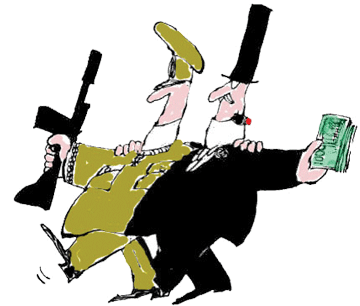
How the permanent armaments industry keeps the United States of America engaged in endless conflict
Grant Klusmann, Sep 10, 2025, https://ddgeopolitics.substack.com/p/the-military-industrial-complex?utm_source=post-email-title&publication_id=1769298&post_id=173240478&utm_campaign=email-post-title&isFreemail=true&r=1ise1&triedRedirect=true&utm_medium=email
“This conjunction of an immense military establishment and a large arms industry is new in the American experience. The total influence-economic, political, even spiritual-is felt in every city, every state house, every office of the federal government. We recognize the imperative need for this development. Yet we must not fail to comprehend its grave implications. Our toil, resources, and livelihood are all involved; so is the very structure of our society.”
These were the words of then-President Dwight D. Eisenhower in his 1961 farewell address in which he warned the American people of the perils of the military-industrial complex. Such a relationship between the military and defense industry increased the incentives for endless war. As Eisenhower campaigned on ending combat operations on the Korean peninsula and favored an overall cautious foreign policy, it would not come as a surprise then that Eisenhower would be concerned by the heightened influence held by the armaments industry.
The military-industrial complex is a relationship in which lawmakers are motivated by campaign contributions from the defense industry to provide funding to the Department of Defense for military spending, and the defense industry profits from their lobbying due to the Department of Defense paying various defense firms for the production of military hardware and other services. Such a state of affairs incentivizes an interventionist foreign policy due to conflict generating demand for the equipment produced by the defense industry. Throughout the second half of the twentieth century and the first two decades of the twenty-first century, there had been no shortage of conflicts that were motivated, at least in part, by the military-industrial complex.
The Vietnam War, which the United States entered into over a false flag in which the American government accused North Vietnamese forces of launching two unprovoked attacks on the U.S.S. Maddox, saw President Johnson’s personal wealth increase due to his investing in the kinds of products required to wage war. In 1992, President George H.W. Bush ordered American forces to Somalia under the guise of humanitarianism to justify maintaining the size and expenditures of the post-Cold War military establishment. Nearly a decade later, America would engage in a global campaign across the Greater Middle East in which the objectives and the enemy were left poorly defined, seemingly to drag the conflict out so the defense industry could make as large a profit as possible.
What’s more, is that the military-industrial complex continues to guide our foreign policy in the present. As it stands, the defense establishment and their allies in corporate media are in the process of manufacturing a new ideological bogeyman to justify defense spending. With tensions rising with Russia, China, and Iran, there is a real danger that the powers that be may lie our nation into yet another forever war to justify their wages.
1 This Month

of the week – Shut Down Drone Warfare!


Tell the Ukrainian Government to Drop Prosecution of Peace Activist Yurii Sheliazhenko

Petition to revoke the licensing of the Near Surface Nuclear Disposal Facility (NSDF) at Chalk River. https://www.ourcommons.ca/petitions/en/Petition/Details?Petition=e-7247
To see nuclear-related stories in greater depth and intensity – go to https://nuclearinformation.wordpress.com
-
Archives
- April 2026 (114)
- March 2026 (251)
- February 2026 (268)
- January 2026 (308)
- December 2025 (358)
- November 2025 (359)
- October 2025 (376)
- September 2025 (257)
- August 2025 (319)
- July 2025 (230)
- June 2025 (348)
- May 2025 (261)
-
Categories
- 1
- 1 NUCLEAR ISSUES
- business and costs
- climate change
- culture and arts
- ENERGY
- environment
- health
- history
- indigenous issues
- Legal
- marketing of nuclear
- media
- opposition to nuclear
- PERSONAL STORIES
- politics
- politics international
- Religion and ethics
- safety
- secrets,lies and civil liberties
- spinbuster
- technology
- Uranium
- wastes
- weapons and war
- Women
- 2 WORLD
- ACTION
- AFRICA
- Atrocities
- AUSTRALIA
- Christina's notes
- Christina's themes
- culture and arts
- Events
- Fuk 2022
- Fuk 2023
- Fukushima 2017
- Fukushima 2018
- fukushima 2019
- Fukushima 2020
- Fukushima 2021
- general
- global warming
- Humour (God we need it)
- Nuclear
- RARE EARTHS
- Reference
- resources – print
- Resources -audiovicual
- Weekly Newsletter
- World
- World Nuclear
- YouTube
-
RSS
Entries RSS
Comments RSS
 nuclear-news