USA’s intercontinental ballistic missiles- epitome of nuclear corruption
 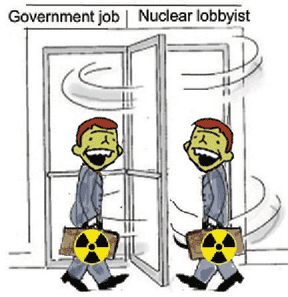  Why Are We Rebuilding the ‘Nuclear Sponge’? https://nationalinterest.org/feature/why-are-we-rebuilding-%E2%80%98nuclear-sponge%E2%80%99-94371
Welcome to the “nuclear sponge.” A bizarre idea that has outlived its questionable Cold War-era usefulness, the nuclear sponge is the United States’ collection of land-based intercontinental ballistic missiles intended to “soak up” a nuclear attack. by Tom Z. Collina Akshai Vikram 6 Nov 19, The media is abuzz about the epic battle between corporate titans Northrop Grumman and Boeing over who will win the $100 billion contract to build a new nuclear-armed ballistic missile. For those who are keeping score, it looks like Northrop will win a sole-source contract, which would be a disaster for taxpayers.
But media coverage of the Clash of the Titans is missing the real story. This is not about contractor wars or sweet-heart deals. This is about the integrity of our government: why, thirty years after the end of the Cold War, are we rebuilding nuclear weapons that we do not need? Why are we spending national treasure to buy weapons that make us less safe?
What if we told you that residents of Colorado, Montana, Nebraska, North Dakota, and Wyoming are being used as bait in a nuclear war with Russia? Surely, no sane person would accept or offer such terms. However, if you live anywhere near these states, you already have a nuclear target on your back. Welcome to the “nuclear sponge.” A bizarre idea that has outlived its questionable Cold War-era usefulness, the nuclear sponge is the United States’ collection of land-based intercontinental ballistic missiles (ICBMs) intended to “soak up” a nuclear attack. Before the development of nuclear-armed submarines that can hide their locations at sea, ICBMs were the crux of American nuclear strategy. Today, however, their only purpose is to draw fire away from other targets (like New York and San Francisco) in the (suicidal and thus highly unlikely) event of a first strike by Russia. The Air Force does not plan to launch the missiles in a war, but to have them draw a nuclear attack to the Upper Midwest.
We’re not making this up—that’s what former Defense Secretary Jim Mattis told Congress. However, sacrificing the Upper Midwest not only undervalues the people who live there but would not actually spare the residents of other states. A major nuclear war with Russia would doom the entire nation. It would little matter whether one resides in Manhattan or Montana.
Why then are we rebuilding the nuclear sponge? The answer, as House Armed Services Committee Chair Adam Smith (R-CA) recently highlighted, has much more to do with parochial interests and money than national security. When asked at a recent press conference why states would want to host the missiles, and thereby put themselves at risk, Smith said, only partly in jest, “They’re fond of their missiles. Apparently, they want to be targeted in a nuclear first strike.” And then, more seriously, he said “They want the jobs . . . no matter the circumstances. And that’s not rational. It’s parochial.”
 With current ICBMs getting older, the Trump administration has greenlit a new cohort of missiles as part of an almost $2 trillion nuclear rebuild plan over the next thirty years. The price tag for the new ICBM alone is potentially $140 billion. That contract is currently slated to go to Northrop Grumman, even as it fights off a Federal Trade Commission investigation for unfair competition, which may cost taxpayers “billions.” Northrop Grumman and others have hijacked the nuclear-security agenda of the United States through the usual Washington channels: lobbying and
 campaign contributions. In the 2018 election cycle, Northrop spent $5.6 million in campaign contributions. In fact, Northrop spends more than any other defense contractor on lobbying and is just behind Amazon and Facebook. Defense contractors have grown even more powerful with a willing ally in the White House. Simply put, the Trump administration has filled its top national-security ranks with people holding extensive ties to major defense contractors.  Mattis worked for General Dynamics and received speaking fees from Northrop Grumman. The current defense secretary, Mark Esper, worked for Raytheon. Ex-White House Chief of Staff John Kelly worked for DynCorp; former Deputy Defense Secretary Mike Shanahan’s employment history at Boeing goes back over thirty years. Meanwhile, Undersecretary of Defense for Policy John Rood worked for Lockheed Martin as did former Secretary of the Air Force Heather Wilson. In fact, that’s where she skirted lobbying restrictions. This list goes on. Programs such as a new ICBM are strategically unnecessary, economically unsustainable, and morally abhorrent. The missiles would be destroyed in a first strike (Russia knows where they are; you can find them on Google Maps) and serve no purpose except to “absorb” blows in a war whose fallout would kill most Americans anyway. Some jobs are created—but far more jobs could be created if the money was spent in other ways. In 2019, there are surely better ways to employ people than to have them guard Cold War relics. As Smith observed after visiting bases that host nuclear weapons, “what struck me was that the job is unbelievably boring.” Maybe that’s why substance abuse continues to plague these sites, with service members literally falling asleep on duty. Clearly, our nuclear policy needs a reboot. As Sen. Elizabeth Warren(D-MA) has said “Take any big problem we have in America today and you don’t have to dig very deep to see the same system at work . . . despite our being the strongest and wealthiest country in the history of the world, our democracy is paralyzed. And why? Because giant corporations have bought off our government.” Warren was talking about climate change, guns, and healthcare, but her remarks hold just as true for nuclear weapons. The next president must tackle corruption in nuclear policy aggressively—by throwing away the nuclear sponge. Tom Collina is Policy Director and Akshai Vikram is a Hale Fellow at Ploughshares Fund, a global security foundation in Washington DC. |
|
Senator Elizabeth Warren questions Holtec Exemption from Emergency Planning Requirements at the Pilgrim Nuclear Power Station
 Senator Warren Statement on Holtec Exemption from Emergency Planning Requirements at the Pilgrim Nuclear Power Station, https://www.warren.senate.gov/newsroom/press-releases/senator-warren-statement-on-holtec-exemption-from-emergency-planning-requirements-at-the-pilgrim-nuclear-power-station 4 Nov 19, Boston, MA – United States Senator Elizabeth Warren (D-Mass.) released the following statement today following news federal regulators at the Nuclear Regulatory Commission (NRC) plan to exempt Holtec International from emergency planning regulations as the firm works to decommission the Pilgrim Nuclear Power Station: “I’m disappointed to learn Holtec will be exempt from important emergency preparation and planning safeguards as it decommissions the Pilgrim Nuclear Power Station,” said Senator Warren. “The Southeastern Massachusetts community has rightly continued to raise important questions about the plant’s decommissioning and they deserve answers, not more strong-arming.”
In October 2018, Senator Warren raised concerns about safety and lack of public input during Pilgrim’s shutdown last year and raised similar concerns regarding communications with local residents in her statement. In August 2019, she called for community concerns to be addressed before Pilgrim was allowed to change hands from Entergy Nuclear Operations, Inc. to Holtec.
|
|
U.S. Nuclear Plants Vulnerable to Terrorist Drones – NRC says “not our problem”
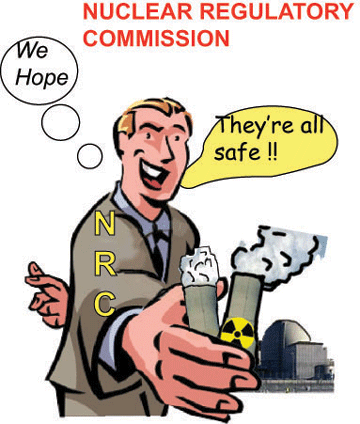 NRC Decision Leaves U.S. Nuclear Plants Vulnerable to Terrorist Drones, https://www.ucsusa.org/about/news/nrc-decision-leaves-nuclear-plants-vulnerable-terrorist-drones WASHINGTON (November 4, 2019)—After a two-year review, the Nuclear Regulatory Commission (NRC) has declined to require owners of U.S. nuclear power reactors and some nuclear material processing plants to defend against unmanned aerial vehicles, commonly known as drones. As a result, commercial nuclear facilities will remain unprepared to cope with the additional capabilities that these rapidly evolving technologies could provide to terrorist groups seeking to sabotage nuclear reactors or steal weapon materials, according to the Union of Concerned Scientists (UCS). The decision was disclosed in an unclassified summary document posted on the NRC’s public document server on October 30.“The NRC’s irresponsible decision ignores the wide spectrum of threats that drones pose to nuclear facilities and is out of step with policies adopted by the Department of Energy and other government agencies,” said physicist Edwin Lyman, acting director of the UCS Nuclear Safety Project. “Congress should demand that the NRC require nuclear facility owners to update their security plans to protect against these emerging threats.”
The NRC requires nuclear power reactor owners to protect their facilities against attacks by terrorists assumed to have a defined set of capabilities known as the “design basis threat.” After the September 11, 2001, attacks on the World Trade Center in New York and the Pentagon outside of Washington, D.C., the NRC considered but ultimately rejected requiring nuclear plants to defend against attacks by jets or other types of aircraft.
The NRC argued that protecting nuclear facilities from aircraft is the responsibility of the Transportation Security Administration and other federal agencies. Rapid advancements in drone technology since then, however, have introduced new ways in which terrorists could use readily available aerial systems to defeat nuclear plant security measures that are designed only to defend against ground-based assaults and vehicles. Drones have been misused to spy on the U.S.-Mexican border, smuggle contraband into prisons, and—most recently—to attack oil processing facilities in Saudi Arabia. Drones are difficult to detect and defeat without specialized equipment.
According to an April 2019 report by the Department of Energy (DOE) inspector general, “the increasing availability and improved capabilities of small [drones] enhances the potential for use in illicit operations, including surveillance, disruption, and weaponization.” The report recommended that the DOE “use the appropriate process to update security controls based on the most recent information available concerning [drone] capabilities.” In response, the agency is revising its design basis threat policy, but the details of its revision—like the original design basis threat policy—are classified. By contrast, the NRC’s own threat assessment resulted a recommendation of no action.
The NRC summary claims that drones would not be able to exploit security vulnerabilities at nuclear reactors or other facilities or provide any surveillance capabilities beyond what potential adversaries are already assumed to have. It is true that small payload drones would not likely to be able to cause major damage by themselves to safety structures and equipment. But there are many ways in which drones could assist ground-based attackers, including delivering more weapons, explosives and other equipment to a nuclear facility’s protected areas than an attacking force could carry. Drones also could create disturbances to confuse plant security forces and disrupt their response, as well as provide real-time aerial surveillance as an attack progresses. “Many companies are developing technologies to protect critical infrastructure from drone attacks through early detection, tracking, and jamming,” said Lyman. “If the NRC were to add drones to the design basis threat, nuclear plant owners would likely to have to purchase such systems. Laws would also have to be changed to allow private facilities to disrupt hostile drone flights. But plant owners are loath to spend more on safety and security at a time when many of their facilities are struggling to compete with cheap natural gas, wind and solar. “The NRC seems more interested in keeping the cost of nuclear plant security low than protecting Americans from terrorist sabotage that could cause a reactor meltdown,” he added. “The agency needs to remember that it works for the public, not the industry it regulates.” |
|
Pilgrim Nuclear Power Station to Shrink Emergency Planning Zone
 FEMA and some states dispute the Nuclear Regulatory Commission staff’s premise that “all hazards planning” would be enough to address a nuclear accident. Planning experts recommend the planning zone remain in place. Government Technology Emergency Managdement, BY CHRISTINE LEGERE, CAPE COD TIMES, HYANNIS, MASS. / NOVEMBER 5, 2019
(TNS) — Despite opposition from the region’s legislators and even the Federal Emergency Management Agency, the Nuclear Regulatory Commission has voted to allow the owners of Pilgrim Nuclear Power Station to shrink the plant’s emergency planning zone from the current 10-mile radius down to its own property line. Pilgrim’s reactor ceased operation May 31. The NRC will allow elimination of the zone, which encompasses sections of Plymouth, Kingston, Carver, Marshfield and Duxbury, come April. And with that elimination will come the loss of about $2 million in annual funding for those towns, to be put toward safety training, staffing, equipment and expenses. “The exemption saves Holtec money at the cost of public safety,” Mary Lampert, president of Pilgrim Watch, said. “NRC rationalizes its decision to grant the exemption on a false assumption. They incorrectly claim that the risk of a rapidly occurring offsite radiological release is significantly lower at a nuclear power reactor that has permanently ceased operations and removed fuel from the reactor vessel. Wrong. There is far more radiation in the spent fuel pool than in the reactorcore when Pilgrim is operating.”……. A single NRC member voted against the exemption, citing a number of issues of concern, including increased possibility of an earthquake in the region. The earthquake risks at the Pilgrim site are greater than previously understood, Commissioner Jeff Baran wrote in a statement explaining his vote. In May 2014, as part of the post-Fukushima seismic hazard reevaluation, the NRC published updated ground motion response spectra for Pilgrim, Baran said. “The results revealed the potential for an earthquake at Pilgrim significantly stronger than the safe shutdown earthquake the plant was designed to handle,” Baran wrote. “In fact, the gap between the previously understood seismic risk and the updated seismic risk was larger at Pilgrim than at any other nuclear power plant in the country.” Baran said the Federal Emergency Management Agency, along with several states including Massachusetts, have disputed the NRC staff’s premise that so-called “all hazards planning” would be sufficient to address a spent nuclear fuel accident. “FEMA notes that it is ‘unrealistic’ to ‘scale up non-existent plans’ and that the resulting ‘lack of necessary equipment and shortage of trained emergency personnel could have unfortunate consequences,'” Baran wrote, citing an August letter to the NRC from Michael Casey, director of FEMA’s technical hazards division. …… , emergency planning experts have recommended the planning zone remain in place until all spent fuel on a reactor site is stored in dry casks. About 3,000 radioactive spent fuel rods remain in a massive pool at Pilgrim. U.S. Sen. Edward Markey, D-Mass, blasted the NRC’s decision to exempt Pilgrim from emergency planning requirements……… To date, every nuclear plant in the U.S. that has decommissioned has requested an exemption from the emergency planning requirements, and in every instance the NRC has granted it…….. https://www.govtech.com/em/disaster/-Pilgrim-Nuclear-Power-Station-to-shrink-emergency-planning-zone.html |
|
Climate change driving California’s wildfires to worse levels
California wildfires: Climate change driving ‘horror and the terror’ of devastating blazes, say scientists
Fires are not new, but their severity is, The Independent, Andrew Buncombe, Seattle @AndrewBuncombe 3 Nov 19,
The words from California’s former governor could barely have been more stark.
“I said it was the new normal a few years ago,’’ says Jerry Brown. “This is serious, but this is only the beginning. This is only a taste of the horror and the terror that will occur in decades.”
As firefighters in California continue to confront a three-week spate of blazes that has reached across the state, attention has also turned to why this year’s wildfires have been so severe. The reason, according to scientists, is climate change.
“It’s warmer weather, more evaporation, and drier conditions. They just burn more,” says Park Williams, a bioclimatologist at Columbia University. The words from California’s former governor could barely have been more stark.
“I said it was the new normal a few years ago,’’ says Jerry Brown. “This is serious, but this is only the beginning. This is only a taste of the horror and the terror that will occur in decades.”
As firefighters in California continue to confront a three-week spate of blazes that has reached across the state, attention has also turned to why this year’s wildfires have been so severe. The reason, according to scientists, is climate change.
“It’s warmer weather, more evaporation, and drier conditions. They just burn more,” says Park Williams, a bioclimatologist at Columbia University. “And we expect this trend to continue. We can’t say if it will happen every year – there are natural variations as well. But we know that when things are drier, a larger area burns.”
Speaking from New York, Williams adds: “We’ve always had the fires. But things are now two or three degrees hotter. That’s enough to make a major difference.”
As Donald Trump continues to refuse to acknowledge the existence of man-made climate change, and as Jay Inslee, the only Democrat running for president on a ticket to address climate change, dropped out of the race this autumn, residents of California and other western states are trying to figure out how to confront the challenge, not just this year but in the years and decades ahead.
The editorial writers at the Los Angeles Times have echoed the words of the former governor, who spoke to Politico, by declaring: “Climate change has set California on fire. Are you paying attention?”
“Nobody can honestly say this is a surprise, given the devastating fires of recent years. Yet it feels surprising all the same. How did things get so bad in California, so quickly,” they write. “The answer is climate change. It is here and our communities are not ready for it.”……..
Michael Mann, a climate expert and professor of Earth sciences at Penn State University, says in the American west climate change has increased the risk of fire weather fivefold and doubled how much land has burned. Wildfire frequency, he says, has quadrupled since the 1980s……..
Asked how such fires could be countered, he replies: “As long as we continue to emit carbon into the atmosphere, and create warmer, drier conditions in California, there is little question that we’ll see a worsening of wildfires.
“The only true solution is to stop burning fossil fuels, generating greenhouse gases, and warming the planet.”
Last year, the world’s leading climate scientists said the world had barely a dozen years to act to make massive changes to global energy infrastructure to limit global warming to moderate levels. “There is no documented historic precedent,” said the United Nations’ Intergovernmental Panel on Climate Change……. https://www.independent.co.uk/news/world/americas/california-wildfire-climate-change-evacuation-santa-ana-winds-devil-diablo-a9181886.html
The first New Deal inspires the Living New Deal Project

THE FIRST “NEW DEAL” CAN HELP US AGAIN, Radio Ecoshock , October  30, 2019,
Huge crowds of young people are rebelling against climate extinction. They have been promised a “Green New Deal” for 11 years. Opponents say a Green New Deal isn’t possible and government planning is always evil. This is partly what caused Gray Brechin to create the Living New Deal Project. But he was also looking for good news in our past ability to act together – to help his own sanity in the face of our rush toward catastrophe.
I think we need citizens to document their surroundings, so we can remember changes. Things change so fast we lose our memory. Or is it because the machine and the media compete to replace our memory with something that benefits the oligarchy?
Gray Brechin chronicles, literally from the San Francisco Chronicle newspaper “the murder of the public sector” – which is going on every day. There are signs and victims of that war against the public good. We privatize things and then make them too expensive for the common person.
Brechin is creating a new memory bank, with maps of what can be done when a government and a people are ready to be doers. His map of New Deal accomplishments shows the basis of American highways, power systems, public buildings, refurbished National Parks and so much more. Maybe President Roosevelt’s New Deal from 90 years ago can help America with the Green New Deal she needs so badly now.
I encourage people to visit the interactive map of more than 15,000 sites across America built by the New Deal. Find it at livingnewdeal.org. And check out Gray’s master work “Imperial San Francisco: Urban Power, Earthly Ruin”.

Over 60 organisations across the nation oppose USA’s bailout of the nuclear industry
 Groups oppose “massive new subsidy” for nuclear industry in tax extenders, https://foe.org/news/groups-oppose-massive-new-subsidy-nuclear-industry-tax-extenders/. October 30, 2019 WASHINGTON, D.C. – A coalition of over 60 local, state and national environmental groups today voiced their disapproval of a proposed bailout of the nation’s nuclear power industry.In a letter sent to the House Ways and Means and Senate Finance Committees, the groups called on Congressional tax writers to oppose an industry-backed proposal to subsidize existing reactors with a new 30 percent tax credit. Specifically, the letter urges that this tax credit be excluded from a potential extenders package expected this Fall.
A recent analysis indicates that the nuclear industry proposal would cost the treasury $23 billion in lost revenue. Separately, the indirect cost to ratepayers would be $33 billion over 20 years, as regular consumers shoulder the burden of aging, uneconomic reactors.
“Sticking taxpayers with an astronomical bill to bailout the failing nuclear industry is simply unconscionable,” said Lukas Ross, senior policy analyst at Friends of the Earth. “Nuclear power doesn’t deserve another subsidy. This dirty tax credit has no place in a clean energy package.”
“We have a chance right now to expand and extend tax incentives for clean renewable energy like wind and solar and even more nascent industries like energy storage, offshore wind, and electric vehicles,” said Matthew Davis, the League of Conservation Voters’ legislative director. “The nuclear industry already gets billions in subsidies, and has for decades, and we cannot take our eyes off the ball of advancing renewable energy for a 100% clean energy future.”
“Taxpayer subsidies for nuclear power make as much sense as trying to revive the whale-oil industry,” said Grant Smith, senior energy policy advisor at the Environmental Working group. “After six decades of throwing hundreds of billions of dollars at a fundamentally flawed and dangerous technology, we should have learned our lesson. Instead, the government should be investing in clean, safe, money-saving renewable energy.”
“Creating a new subsidy for old nuclear reactors is wasteful and counterproductive,” said Tim Judson, executive director of the Nuclear Information and Resource Service. “Wind and solar are now the most cost-effective electricity sources, yet nuclear power has only gotten more and more expensive over the decades. It’s time to stop shoveling taxpayer dollars into a nuclear pit, and put our money to work building the clean, safe, healthy energy economy this country needs.”
The national signers include: Friends of the Earth, National Resources Defense Council, Sierra Club, League of Conservation Voters, Clean Water Action, Food and Water Watch Action, Environmental Working Group, Greenpeace, Center for Biological Diversity, Environment America and Nuclear Information and Resource Service.
Contacts: Patrick Davis, Friends of the Earth, (202) 222-0744, pdavis@foe.org
Greta Thunberg and Leonardo Di Caprio join forces in climate crusade

|
Greta Thunberg, Leonardo DiCaprio unite in climate crusade, SBS News, 3 Nov 19 The Hollywood star said the pair has made a commitment to support one another in their fight for climate action.
UPDATEDUPDATED 1 DAY AGO
BY CHARLOTTE LAM Two of the world’s biggest voices in the fight for climate action have joined forces, sending fans into meltdown.
Hollywood A-lister Leonard DiCaprio met Swedish teen activist Greta Thunberg in California, capturing the moment on DiCaprio’s Instagram. He posted that the pair have joined forces “in hopes of securing a brighter future for our planet”. DiCaprio, who recently pledged $7 million to preserve the Amazon rainforest yet is widely criticised for his use of private jets, said he was honoured to meet the young climate activist. “There are few times in human history where voices are amplified at such pivotal moments and in such transformational ways but Greta Thunberg has become a leader of our time,” he wrote on Instagram. …… DiCaprio said he hoped the 16-year-old’s message was a wake-up call to leaders everywhere that “the time for inaction is over”. “It is because of Greta, and young activists everywhere that I am optimistic about what the future holds,” he wrote on Instagram. HTTPS://WWW.SBS.COM.AU/NEWS/GRETA-THUNBERG-LEONARDO-DICAPRIO-UNITE-IN-CLIMATE-CRUSADE |
|
Wyoming’s Governor Gordon OK with the idea of nuclear waste dump
|
Gov. Gordon open to nuclear waste storage
https://www.sfchronicle.com/news/article/Gov-Gordon-open-to-nuclear-waste-storage-14805930.php
Nov. 3, 2019 CHEYENNE, Wyo. (AP) — Gov. Mark Gordon says he is open to Wyoming pursuing a nuclear waste storage facility though he doesn’t personally believe it’s the best industry for the state.
Gordon told the Wyoming Tribune Eagle’s editorial board last week that if a good reason can be found for such an industry in Wyoming and it has adequate safeguards, he’s not going to stand in its way. The governor says he will wait to see what the state Legislature finds in its studies of the idea before making a decision. |
|
U.S. renews support for foreign companies working with Iran’s nuclear program
U.S. renews support for foreign companies working with Iran’s nuclear program CBS News, 1 Nov Washington — The Trump administration is keeping alive one of the last remaining components of the 2015 Iran nuclear deal by extending sanctions waivers that allow foreign companies to work with Iran’s civilian nuclear program without U.S. penalties.
The waivers had been due to expire Tuesday but were extended by Secretary of State Mike Pompeo for another 90 days. The extensions were not announced until Thursday.
Pompeo has been a champion of President Trump’s maximum pressure campaign on Iran.
State Department spokeswoman Morgan Ortagus said the move “will help preserve oversight of Iran’s civil nuclear program, reduce proliferation risks, constrain Iran’s ability to shorten its ‘breakout time’ to a nuclear weapon, and prevent the regime from reconstituting sites for proliferation-sensitive purposes.”
Pompeo also announced new sanctions on Iran’s construction sector, which he determines to be under the control of the Iranian Revolutionary Guard Corps. The IRGC was designated earlier this year as a “foreign terrorist organization.”
Mr. Trump withdrew last year from the nuclear deal and has steadily ramped up sanctions on Iran that had been eased under the agreement. But the so-called “civilian nuclear cooperation” waivers will permit European, Russian and Chinese companies to continue to work at Iranian civilian nuclear facilities……https://www.cbsnews.com/news/u-s-renews-support-for-foreign-companies-working-with-irans-nuclear-program/
Judge declines to stop fuel transfer at San Onofre nuclear plant,
Judge declines to stop fuel transfer at San Onofre nuclear plant,
Environmentalists sought interruption following violations by plant owner Edison, San Diego Union Tribune, By JEFF MCDONALD, NOV. 2, 2019
In a ruling Thursday, Judge Timothy B. Taylor said majority plant owner Southern California Edison was in compliance with a 2017 settlement agreement that requires the utility to make “commercially reasonable” efforts to move the waste……..https://www.sandiegouniontribune.com/news/watchdog/story/2019-11-02/judges-declines-to-stop-fuel-transfer-at-san-onofre-nuclear-plant
Safety of Los Angeles Nuclear Laboratory needs independent verification
Why should anyone trust LANL on nuclear safety? https://www.abqjournal.com/1386419/why-should-anyone-trust-lanl-on-nuclear-safety-ex-new-mexicans-should-reject-the-trust-us-approach-until-the-lab-can-be-verified-as-safe.html BY JAY COUGHLAN, November 3rd, 2019 In his October 20 opinion piece “Safety underpins LANL operator’s commitment to NM,” lab Director Thom Mason declares that “Our commitment to safety is inseparable from our commitment to the community,” as if the Lab is some kind of feel-good neighbor while it gears up to expand the production of plutonium pits, the radioactive cores of nuclear weapons. The essence of Mason’s argument is to trust that LANL will improve nuclear safety.
First of all, the public wouldn’t know about the lab’s long track record of nuclear safety infractions if it weren’t for the independent Defense Nuclear Facilities Safety Board. But the Department of Energy is trying to kill the messenger by seriously restricting Safety Board access to nuclear facilities, in direct conflict with the DNSFB’s enabling congressional legislation. That does not engender confidence in Mason’s ‘trust us’ approach. (See LANL’s dismal nuclear safety history at https://publicintegrity.org/topics/national-security/nuclear-negligence/.)
Nor should the history of nuclear weapons programs in New Mexico and across the nation engender public trust. After all, it was New Mexicans who experienced the world’s first fallout with the 1945 Trinity Test, causing increased infant mortality and an unknown number of cancers for which our fellow state citizens have never been compensated (see <https://thebulletin.org/2019/07/trinity-the-most-significant-hazard-of-the-entire-manhattan-project/>.)
Ask the downwinders of nuclear weapons tests at the Marshal Islands and the Nevada Test Site whether the government should be trusted. Why should LANL be trusted, when it used to claim that groundwater contamination was impossible, but today we know it is contaminated with chromium, perchlorates, high explosives, etc.?
More recently, how can the public trust LANL when it sent an improperly prepared radioactive waste barrel that ruptured and closed the Waste Isolation Pilot Plant for three years, contaminating 21 workers with plutonium and costing the American taxpayer $3 billion to reopen?
Mason promotes this feel-good ‘trust us’ approach to help clear the way for expanded plutonium pit production. Seventy percent of LANL’s ~$2.6 billion annual budget is already for core nuclear weapons research and production programs, and increasing each year. So-called cleanup remains flat at around $200 million per year (one-tenth of the nuclear weapons budget), with plans to leave the vast majority of radioactive and toxic wastes permanently buried above our groundwater. Funding for renewable energy research is approximately 2/1,000ths of the nuclear weapons budget, while the Lab has no dedicated budget line item to address climate change.
The irony is that not only is expanded plutonium pit production not needed, but also it may actually degrade our national security. There is no pit production scheduled to maintain the safety and reliability of the existing nuclear weapons stockpile. Instead, future production will be for speculative new nuclear weapons with heavily modified pit designs. The problem is that these future pits cannot be full-scale tested, or alternatively could push the U.S. back into nuclear weapons testing, which would have severe international proliferation consequences. Independent experts have found that pits last at least a century (the oldest are currently 40 years old). At least 15,000 existing pits are already stored at DOE’s Pantex Plant near Amarillo, Texas. So why make new pits? One answer is that it will help enrich the LANL contractor, namely Triad National Security LLC, which Thom Mason heads up.
President Ronald Reagan famously declared, “Trust, but verify!” If Mason really wants the public to trust LANL while expanding nuclear weapons production, he should strongly and explicitly support verification by the Defense Nuclear Facilities Safety Board that all is safe at the Lab. He should buck DOE and pressure it to rescind its order restricting Safety Board access to already troubled nuclear facilities that will face greater risks with increased plutonium pit production. Until then, New Mexicans should reject Mason’s ‘trust us’ approach to nuclear safety at LANL until such time as it is independently verified to be safe.
Jay Coghlan of Santa Fe is head of Nuclear Watch New Mexico
Exelon wants tax-payer subsidies for nuclear reactors – threatens to close 4, otherwise.
 Exelon threatens to close four nuclear plants in Illinois if Springfield doesn’t act https://www.thecentersquare.com/illinois/exelon-threatens-to-close-four-nuclear-plants-in-illinois-if/article_b4d2cc7e-fbff-11e9-9619-ab5ee6984f21.html, By Cole Lauterbach | The Center Square, Oct 31, 2019
Exelon’s CEO said Thursday that four of the company’s nuclear facilities in Illinois could be shuttered if state lawmakers don’t take action to make them more profitable.
Exelon President and CEO Christopher Crane said in an earnings call Thursday that the company “can’t sit here for years and bleed cash and build up debt” by keeping four of our nuclear plants operating in the absence of legislation from Springfield that would make those plants more profitable.”
The company had previously said the Byron, Braidwood and Dresden plants were in danger of being shuttered. On Thursday, the company said the LaSalle plant also was at risk of closure.
“Some are more dire than others at this point and we need to move forward with the legislation to prevent the loss for the state from an environmental perspective and an economic perspective,” Crane said.
The four Illinois plants represent a significant portion of Exelon’s nuclear fleet.
At issue is the interaction between federal regulators and Exelon’s Illinois-based facilities that get green-energy credits, allowing those facilities to sell energy on the wholesale market at more competitive rates than other energy providers, such as coal plants.
Crane’s comments came two weeks after one of the company’s former executives, Exelon Utilities CEO Anne Prammagiore, abruptly retired and the corporation disclosed that it had been served with multiple subpoenas in connection to a federal probe involving state Sen. Martin Sandoval and the company’s lobbying practices. This week, Prammagiore also resigned as chair of the Federal Reserve Bank of Chicago, according to media reports.
A veteran legislator told Crain’s Chicago Business last week that it would be difficult for Exelon to get much done in Springfield until lawmakers know more about the federal investigations.
Two of Exelon’s nuclear facilities benefit from legislation that Crane said kept them open, which included rate increases on consumers.
Wyoming legislators and their secret vote about nuclear waste dump
|
Secret Wyoming nuke dump vote merits public outrage, https://www.wyofile.com/secret-wyoming-nuke-dump-vote-merits-public-outrage/ July 23, 2019 by Kerry Drake 16 Seven Republican legislators pulled a skunk out of a hat with a secret vote to once again explore storing nuclear waste in Wyoming. This must be the “Wyoming way” so many state lawmakers boast about when describing how they do the people’s work.
The plan to store spent nuclear fuel rods at old uranium mines in the Gas Hills and Shirley Basin was hatched by Sen. Jim Anderson (R-Casper) and Rep. Mike Greear (R-Worland), co-chairmen of the Joint Minerals, Business and Economic Development Committee. The Legislative Management Council did not assign the topic to their committee or any other before the Legislature adjourned in March. There was no discussion of the topic in an open meeting, no posted notice that it was up for consideration and zero public input. Hiring the state out as a nuclear waste dump appeared in no legislative documents prior to the Management Council’s July 8 email vote to approve study of the matter. The only reason anyone knows that we’re spending taxpayer dollars to study this hairbrained scheme is because WyoFile requested a record of all recent email votes by the Management Council. House Speaker Steve Harshman and Senate President Drew Perkins, both Casper Republicans, didn’t talk about the proposed interim topic or announce the vote to the public. They just went along and passed it. House Majority Leader Eric Barlow (R-Gillette) joined five Democrats who opposed the measure. Anderson told WyoFile reporter Angus Thuermer Jr., who broke the story about the vote, that “temporarily” storing the spent nuclear fuel rods here could bring in up to a billion dollars a year from the federal government. Wyoming could have been making a haul off nuclear waste for decades, Anderson added, if “environmental terrorists” hadn’t stopped the so-called Monitored Retrievable Storage site in Fremont County. Then-Gov. Mike Sullivan, responding to polls that showed four-fifths of Wyomingites opposed the project, wisely halted it in 1992. “I think they’ll be back terrorizing us again,” Anderson told Thuermer. It’s nice to know what he thinks of opponents to a project he tried to hide. Oh, there will be protests all right. Now that the public knows what’s been going on behind their backs, people will be able to decide for themselves who is truly concerned with trying to protect Wyoming’s priceless environment and who is trying to make billions of quick bucks putting it at risk. Is it too much to ask for legislators to give us a break on this issue and bury it instead of highly radioactive nuclear waste? It’s long worn out its welcome. |
|
Beware of secrecy over Russian Nuclear explosion, and of American nuclear dangers
Nuclear Shutdown News chronicles the decline and fall of the nuclear power industry and highlights the efforts of those working to create a nuclear free world.
Last Summer’s “Mysterious” Nuclear Explosion
As this year winds down a nuclear weapons explosion last summer still begs for our attention.
What does this incident, half way around the world in another country, have to do with the nuclear power plants in this country?
Let’s remember though, the “Atoms For Peace” program wherein the federal government encouraged (and heavily subsidized) the development of civilian nuclear reactors to produce electricity. The idea was to try to overshadow the images of the nuclear holocaust in Hiroshima and Nagasaki caused by the US.
So it is far from ironic that the nuclear explosion in question occurred on August 8, the 74th anniversary of Nagasaki’s immolation.
Novaga Gazeta also reported that an anonymous hospital worker said that “traces of Cesium 137 (which remains dangerously radioactive for 300 years) were detected in the emergency room area an hour after the patients were brought in.” Doctors and nurses had only face masks for protection, and nothing but soap solutions to decontaminate the ER.
The nearby city of Serevdinsk’s 183,000 residents were initially told to evacuate because of the radiation released by the explosion, but then the evac order was abruptly canceled. Instead they were told to stay inside and close their windows.
Authorities later claimed the disaster wasn’t as bad as the 1986 nuclear disaster in the Ukraine at Chernobyl in 1986, then ruled by the USSR.
More Fallout
Later in August it emerged that there may have been two nuclear explosions, and that actually seven people had died in the blasts.
The debacle supposedly happened while testing a new type of long range Russian nuclear powered cruise missile. Or, as unnamed US intelligence sources claimed, as reported by CNBC on August 28, it may have occurred while trying to recover one such missile from the bottom of the White Sea.
Post Script Many people are not aware that US nuclear power reactors regularly release radiation into our air and water in order to operate. You may have heard about this at the Three Mile Island plant in 1979 in Pennsylvania (whose remaining reactor just shut down) or the Millstone nuke in my home state of Connecticut.
Although this happens all the time at the nation’s 90-some nuclear plants, the public is usually not informed of these potentially carcinogenic releases. As with nuclear weapons operations, US nuclear power doings are largely carried on in secret.
After all, we wouldn’t want the enemy to find out, would we? Except, all too often, the”enemy” is us!
Sources: Fox News, foxnews.com; Moscow Times, moscowtimes.com; CNBC, cbnbc.com; Nuvaya Gazeta, nugayagazeta.ru.
1 This Month

Read the Public Inquiry Report, the Commissioners’ report, Surrendering Australia: The AUKUS Deception is available to download for free at aukuspublicinquiry.com. Or just watch the replay of the National Press Club Luncheon.


19 November – Webinar – The Reality of Reprocessing
Time: 11:00 AM Pacific Time (US & Canada) / 2:00 PM Eastern / 7:00 PM UK / 8:00 PM CET
Register for the Zoom Event Here



Shut down the radiation-damaged Heysham nuclear reactors now
To see nuclear-related stories in greater depth and intensity – go to https://nuclearinformation.wordpress.com

Say No to NASA’s Reckless Nuclear Reactor on the Moon
Say No to NASA’s Reckless Nuclear Reactor on the Moon
-
Archives
- November 2026 (109)
- October 2026 (302)
- September 2026 (339)
- August 2026 (330)
- July 2026 (355)
- June 2026 (287)
- May 2026 (306)
- April 2026 (356)
- March 2026 (251)
- February 2026 (267)
- January 2026 (308)
- December 2025 (358)
-
Categories
- 1
- 1 NUCLEAR ISSUES
- business and costs
- climate change
- culture and arts
- ENERGY
- environment
- health
- history
- indigenous issues
- Legal
- marketing of nuclear
- media
- opposition to nuclear
- PERSONAL STORIES
- politics
- politics international
- Religion and ethics
- safety
- secrets,lies and civil liberties
- spinbuster
- technology
- Uranium
- wastes
- weapons and war
- Women
- 2 WORLD
- ACTION
- AFRICA
- Atrocities
- AUSTRALIA
- Christina's notes
- Christina's themes
- culture and arts
- Events
- Fuk 2022
- Fuk 2023
- Fukushima 2017
- Fukushima 2018
- fukushima 2019
- Fukushima 2020
- Fukushima 2021
- general
- global warming
- Humour (God we need it)
- Nuclear
- RARE EARTHS
- Reference
- resources – print
- Resources -audiovicual
- Weekly Newsletter
- World
- World Nuclear
- YouTube
-
RSS
Entries RSS
Comments RSS

