Trump’s military escalation against Venezuela repeats the Iraq War blueprint
With the suspension of dialogue between the US and Venezuela, the sighting of US B-52 bombers in Venezuelan airspace, and the further lethal US strikes in the Caribbean, the US seems to be accelerating its drive towards war with Venezuela
Peoples Dispatch October 15, 2025 by Manolo De Los Santos
The mood in the Caribbean grows increasingly tense, as the United States intensifies its military threats. Beneath the deceptive shroud of the “war on drugs,” the United States is actively executing a blueprint for military intervention in Venezuela, employing lethal force and projecting power in a manner that legal institutions and regional leaders have condemned as a profound threat to international order. This aggression is not a law enforcement operation; it is the negation of law, a neocolonial revival of the Monroe Doctrine, designed to shatter the sovereignty of Venezuela, seize control of the world’s largest oil reserves, and install a compliant regime.
A license to kill: the precedent of state murder
A chilling adoption of extrajudicial violence has marked the current escalation. The Trump administration has ordered unilateral military strikes against private vessels near the Venezuelan coast, allegedly to stop drug trafficking. To launch these alarming attacks, the US military has deployed a massive naval force of warships, drones, and special operations forces.
These strikes have resulted in the summary execution of at least 27 people as of recent reports. The most recent lethal strike in the Caribbean resulted in the “elimination” of 6 more people. This is not law enforcement; it is extrajudicial murder and a campaign that now stands as part of a war plan against Venezuela. The administration has characterized the victims, without credible proof, as drug traffickers and “terrorists,” a claim that, even if true, provides no legal authority for the US president to execute whomever it decides.
Legal and human rights organizations have been unequivocal in their condemnation of this profound and dangerous policy, which replaces established law enforcement procedures with premeditated lethal force. The New York City Bar Association (NYCBA), a key voice on international legal ethics, has strongly denounced these actions. The NYCBA stated explicitly that “Because the recent attacks on Venezuelan vessels and their crews were unauthorized by US law and in violation of binding international law, they were illegal summary executions – murders.” They further argued that these actions violate the fundamental international principle that “No one shall be arbitrarily deprived of his life” under the International Covenant on Civil and Political Rights.
The US government possesses ample legal authority for the Coast Guard to interdict and search vessels suspected of carrying narcotics, followed by prosecution in US courts according to due process requirements. However, in the case of the Venezuelan vessels, the Coast Guard’s Congressionally authorized police function was bypassed; instead, the crews were simply targeted and executed by overwhelming military force. Regional leaders, including Colombian President Gustavo Petro, have condemned the extrajudicial killings, highlighting the profound anxiety across Latin America over a return to unilateral US military action under the cover of anti-narcotics policy.
Escalation: B-52s and the threat of war
Beyond the lethal strikes, the US government has engaged in significant military posturing that amounts to a direct challenge to Venezuelan sovereignty. The sighting of US B-52 bombers in Venezuelan airspace, flying in close range, is a significant escalation. This warmongering has nothing to do with the “war on drugs” and everything to do with regime change to plunder Venezuela’s oil. This reckless push for war is a criminal act of international aggression.
The Trump Administration’s unilateral drone strikes in the Caribbean, combined with the White House’s termination of all negotiations with Venezuela, appear as a precursor for a full-scale regime change operation. This is a critical moment. We must sound the alarm: there is a risk of a new, catastrophic conflict in the region.
The US government’s own officials continue to escalate the crisis with bellicose rhetoric and actions. Secretary of State Marco Rubio, a key architect of the regime-change policy, has consistently refused to rule out a military option, asserting that the Maduro regime has become a “threat to the region and even to the United States.”
Venezuela’s response has been one of principled defense of its sovereignty. Ambassador to the UN, Samuel Moncada has repeatedly sounded the alarm on the global stage, arguing that the US military deployment in the Caribbean is a massive propaganda operation that seeks “excuses to fabricate a conflict” to seize the country’s oil wealth. Moncada affirmed that, “The United States believes that the Caribbean belongs to it because it has been using the expansionist Monroe Doctrine for over 100 years, which is nothing more than a remnant of colonialism.”
President Nicolás Maduro has called on Washington to resume dialogue, stating, “Our diplomacy isn’t the diplomacy of cannons, of threats, because the world cannot be the world of 100 years ago,” while simultaneously mobilizing national defense exercises to ensure the country is prepared for any direct assault. The NYCBA warned that attacks against Venezuelan vessels and reported threats against the Venezuelan government violate the nation’s obligations under the United Nations Charter, with the risk of escalating to open hostilities.
Parallels with the Iraq War: oil, ideology, and deception
The current situation is chillingly reminiscent of the lead-up to the 2003 invasion of Iraq. In that case, the Bush administration justified unilateral action on the basis of “weapons of mass destruction,” but this was a pretext. The true objectives were not limited to oil, but also included achieving profound ideological and political goals – overthrowing a government to reshape Middle Eastern politics and assert dominance………………………………………………………………………………………………………………..https://peoplesdispatch.org/2025/10/15/trumps-military-escalation-against-venezuela-repeats-the-iraq-war-blueprint/
Nuclear stocks mixed after U.S. Army launches program to deploy small reactors.

Spencer Kimball CNBC, Wed, Oct 15 2025
Key Points
- The U.S. Army on Tuesday launched a program to build micro nuclear reactors.
- Investors have speculated heavily on the fortunes of NuScale, Oklo and Nano Nuclear despite the fact that none of the companies have deployed a reactor yet.
Nuclear stocks traded mixed Wednesday after the U.S. Army launched a program to deploy small reactors…………..
The U.S. Army on Tuesday unveiled a program to build micro nuclear reactors in partnership with the Defense Innovation Unit. The microreactors will be commercially owned and operated with the goal of helping developers scale up their businesses, according to the Army.
The Army launched the “Janus Program” in response to President Donald Trump’s May executive orders that aim to speed the deployment of advanced reactors. Trump ordered the Defense Department to have a reactor operating at a domestic military installation no later than Sept. 30, 2028.
Investors have speculated heavily on the fortunes of NuScale, Oklo and Nano Nuclear despite the fact that none of the companies have deployed a reactor yet. Oklo and Nano Nuclear have not generated any revenue…..
Artificial intelligence power demand and Trump’s executive orders have fueled a wave of market enthusiasm about nuclear power. Goldman Sachs recently told investors to exercise caution on Oklo.
https://www.cnbc.com/2025/10/15/army-nuclear-reactor-trump-oklo-nuscale-nano-centrus.html
The Trumpanyahu Administration Is Already Sabotaging The Ceasefire
Caitlin Johnstone Oct 15, 2025, https://www.caitlinjohnst.one/p/the-trumpanyahu-administration-is?utm_source=post-email-title&publication_id=82124&post_id=176195807&utm_campaign=email-post-title&isFreemail=true&r=1ise1&triedRedirect=true&utm_medium=email
I don’t know who first coined the saying that an Israeli ceasefire means “you cease and we fire,” but it proves reliably accurate time after time.
The IDF reportedly killed nine Palestinians trying to return to their homes today under the usual justification that they were traveling in some kind of unauthorized area in ways that made the troops feel threatened, blah blah. They did this all the time during the previous “ceasefire” at the beginning of the year, using the exact same excuses.
Just as we speculated the other day might happen, Israel has announced that it is going to cut the aid it allows into Gaza in half and cut off fuel and gas shipments because Hamas hasn’t returned the bodies of all the dead Israeli hostages. Israel was fully aware when it signed the agreement that Hamas would not be able to deliver the bodies of all the hostages right away due to the rubble and chaos caused by the Israeli bombing campaign in Gaza.
On October 9, CNN published an article titled “Israel assesses Hamas may not be able to return all remaining dead hostages” which reported that “the Israeli government is aware that Hamas may not know the location of, or is unable to retrieve, the remains of some of the 28 remaining deceased hostages.”
The Red Cross says that finding all the bodies of the hostages will be a “massive challenge” in all the rubble created by Israeli airstrikes in the areas where hostages were being kept.
Drop Site News’ Jeremy Scahill explains that “During Gaza negotiations, Israel understood it would take time to recover all bodies of deceased captives. A specific mechanism for recovering the bodies was agreed. Now Israel is pretending that didn’t happen so it can violate the deal and cut the agreed aid shipments in half.”
Mondoweiss reported last week that Hebrew-language Israeli media had been saying that a “secret clause” in the ceasefire agreement would allow Israel to resume its onslaught if the bodies of the dead hostages were not returned within a 72-hour window.
So it looks like this was planned from the beginning. Create obligations that Israel knew Hamas would be unable to fulfill, then use it as an excuse to resume the slaughter.
And President Trump appears to be going right along with it, posting on Truth Social that “A big burden has been lifted, but the job IS NOT DONE. THE DEAD HAVE NOT BEEN RETURNED, AS PROMISED!”
“We were told they had 26, 24 dead hostages… and it seems as though they don’t have that, because we’re talking about a much lesser number,” Trump told the press on Tuesday, saying, “I want them back.”
Trump also told the press that Hamas is going to have to be forcibly disarmed, which amounts to an open admission that this entire “ceasefire” show is a sham.
“If they don’t disarm, we will disarm them, and it will happen quickly and perhaps violently,” Trump said on Tuesday.
This statement matches recent comments from Benjamin Netanyahu saying that Hamas will be disarmed “the easy way” or “the hard way”.
The president and prime minister are making it clear that in order for the ceasefire negotiations to proceed to a lasting peace, Hamas is going to have to completely surrender and Israel is going to have to be handed total victory. They’re branding it as a ceasefire deal when it’s actually a total surrender deal, and Hamas has made it explicitly clear that it is not surrendering.
As Drop Site News explains, “In reality, senior Hamas, Islamic Jihad and figures from other resistance factions have repeatedly rejected disarmament throughout negotiations, including in multiple interviews with Drop Site over the past year.”
A big part of the confusion around the ceasefire in public discourse today is that there are two contradictory ideas going around about what the ceasefire is and what it means. Israel supporters think “ceasefire” means “total victory and complete surrender by Hamas,” while everyone else thinks “ceasefire” means ceasefire.
That’s why you see Israel supporters celebrating the deal while Palestine supporters are much more apprehensive. Palestine supporters understand that a ceasefire and a surrender are two different things, and see Trump and Netanyahu stating that Hamas is going to have to completely disarm if “ceasefire” negotiations are going to move toward a lasting peace. They understand that the unyielding mutually exclusive positions of the Trumpanyahu administration and of Hamas are likely to come to a head in ways that result in the reignition of the Gaza holocaust.
So for all the applause and fuss that has been made about the ceasefire, as things stand right now it doesn’t look like much has changed. From the very beginning of this genocide it has been the officially stated position of the US and Israel that the killing will not end until Hamas lays down its arms and surrenders, and that is still their position today. There’s a much-needed pause in the slaughter, sure, but the Trumpanyahu team is making it explicitly clear that it is going to ramp up again under the justification of Hamas refusing to disarm.
And that’s assuming negotiations even make it that far; Israel is already doing everything it can to sabotage the ceasefire by murdering Palestinians and greatly reducing the amount of aid it promised.
Unless something significant changes about all this fairly soon, even this feeble reduction in Israel’s Gaza atrocities cannot be expected to hold.
Media Refuse To Sign Up As Propagandists For Trump’s Pentagon.
The Atlantic, Associated Press, Breaking Defense, CNN, Defense One, The Financial Times, The Guardian, The Hill, The New York Times, NPR, Newsmax, Politico, Reuters, Task & Purpose, The Wall Street Journal, The Washington Examiner, The Washington Post, and The Washington Times all announced that they would not agree to the policy. (Media outlets had until 5 p.m. on October 14 or else they would likely lose access to the Pentagon.)
Kevin Gosztola, The Dissenter, Oct 14, 2025
Nearly all media organizations refused to sign a censorship policy at the Pentagon that imposes greater control over credentialed reporters and the information that they publish.
The policy, championed by Pentagon Secretary Pete Hegseth, was first proposed in mid-September. It resulted in an immediate backlash because the policy required reporters to pledge not to share any military information, including unclassified information, unless that information is officially approved for release.
On October 6, the Pentagon revised the policy [PDF]. It changed to “military members” must seek approval from an “appropriate authorizing official” before releasing information to the press. However, the department added, “Any solicitation of [military] personnel to commit criminal acts would not be considered protected activity under the 1st Amendment.”
The Atlantic, Associated Press, Breaking Defense, CNN, Defense One, The Financial Times, The Guardian, The Hill, The New York Times, NPR, Newsmax, Politico, Reuters, Task & Purpose, The Wall Street Journal, The Washington Examiner, The Washington Post, and The Washington Times all announced that they would not agree to the policy. (Media outlets had until 5 p.m. on October 14 or else they would likely lose access to the Pentagon.) ……………………………………………………………………………………………………………………………………………………………………… https://thedissenter.org/media-refuse-to-sign-up-as-propagandists-for-trumps-pentagon/
Holtec Backs Down, Reveals Achilles’ Heel For U.S. Nuclear Resurgence
Forbes, ByIan Dexter Palmer, Ph.D, 14 Oct, 2025
Highlights.
- Holtec International has shuttered their plans to store nuclear waste in the Permian basin of south-east New Mexico.
- President Trump, by executive order, has decided nuclear energy will be a big part of the U.S. energy future.
- Next-gen nuclear reactors, SMRs, have been spotlighted by the Secretary of Energy to help solve the electrical power surge needed for data centers and AI.
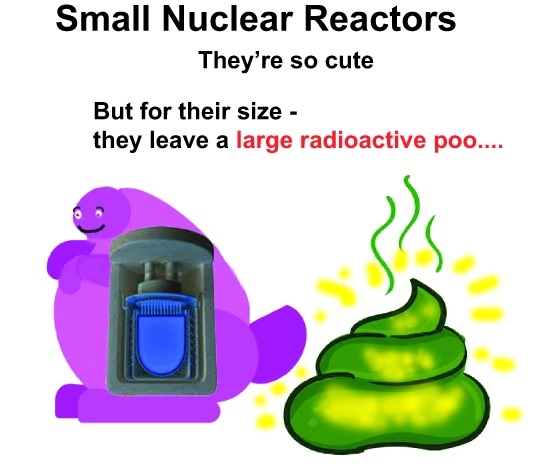
- But research has shown that SMRs create 2 to 30 times greater volumes of nuclear waste.
- The cost of new nuclear reactors, whether traditional reactors or SMRs, is substantially higher than renewable energies.
- Oklo is a front-runner in the SMR race, and its stock has skyrocketed. In August, it was selected for three projects under DOE’s Reactor Pilot Program.
Holtec International has shuttered their plans to store nuclear waste in the Permian basin of south-east New Mexico. The planned site would have contained 50 canisters of spent nuclear fuel for 40 years, as a temporary storage site, which is laughable as Holtec planned to scale up to 10,000 canisters eventually.
President Trump, by executive order, has decided nuclear energy will be a big part of the U.S. energy future. After languishing for decades, President Biden assigned substantial funds to nuclear, as part of his push toward carbon-free sources. But there is an Achilles’ heel to nuclear—the waste is radioactive, and has to be disposed of very carefully. This is not just waste from traditional nuclear reactors, like Three-Mile Island, but also from small nuclear reactors (SMRs), that can be as small as a three-story building, and which can be made in a factory, and stacked to scale up energy supply. There is an ubiquitous threat in the U.S., real or perceived, of being exposed to nuclear radiation, either from nuclear accidents or from storage of nuclear waste.
Holtec Project Canceled.
In 2023, the governor of NM, Michelle Lujan Grisham, signed a state bill into law that banned state agencies from signing nuclear storage permits. There are reasons for this. NM has a history of debilitating health effects from nuclear radiation, from the first atom bomb explosion south of Albuquerque, to workers who mined uranium in western parts of the state.
But there are other liabilities. A second is earthquakes in the Permian basin induced by injection of waste water from oil well operations. These are increasing in numbers and there have been several magnitude 5 quakes. Planning to build a storage facility for nuclear waster in the middle of hundreds of oil wells and their earthquakes should be a no-brainer.
A third liability is the promise the Holtec facility would be temporary, until the U.S. finds a permanent site. ………………………………………………………………………………………………………………….. https://www.forbes.com/sites/ianpalmer/2025/10/14/holtec-backs-down-reveals-achilles-heel-for-us-nuclear-resurgence/
Trump Keeps Admitting That He Is Bought And Owned By The World’s Richest Israeli
Caitlin Johnstone, Oct 14, 2025, https://www.caitlinjohnst.one/p/trump-keeps-admitting-that-he-is?utm_source=post-email-title&publication_id=82124&post_id=176098622&utm_campaign=email-post-title&isFreemail=true&r=1ise1&triedRedirect=true&utm_medium=email
It’s bizarre how little mainstream attention is given to the fact that the president of the United States has repeatedly confessed to being bought and owned by the world’s richest Israeli, especially given how intensely fixated his political opposition was on the possibility that he was compromised by a foreign government during his first term.
During a speech before the Israeli parliament on Monday, President Trump once again publicly admitted that he has implemented Israel-friendly policies at the behest of Israeli-American billionaire Miriam Adelson and her late husband Sheldon, this time adding that he believes Adelson favors Israel over the United States.
Here’s a transcript of Trump’s remarks:
“As president, I terminated the disastrous Iran nuclear deal, and ultimately, I terminated Iran’s nuclear program with things called B2 bombers. It was swift and it was accurate, and it was a military beauty. I authorized the spending of billions of dollars, which went to Israel’s defense, as you know. And after years of broken promises from many other American presidents — you know that they kept promising — I never understood it until I got there. There was a lot of pressure put on these presidents. It was put on me, too, but I didn’t yield to the pressure. But every president for decades said, ‘We’re going to do it.’ The difference is I kept my promise and officially recognized the capital of Israel and moved the American Embassy to Jerusalem.
“Isn’t that right Miriam? Look at Miriam. She’s back there. Stand up. Miriam and Sheldon [Adelson] would come into the office and call me. They’d call me — I think they had more trips to the White House than anybody else, I guess. Look at her sitting there so innocently — got $60 billion in the bank, $60 billion. And she loves, and she, I think she said, ‘No, more.’ And she loves Israel, but she loves it. And they would come in. And her husband was a very aggressive man, but I loved him. It was a very aggressive, very supportive of me. And he’d call up, ‘Can I come over and see you? I’d say ‘Sheldon, I’m the president of the United States. It doesn’t work that way.’ He’d come in. But they were very responsible for so much, including getting me thinking about Golan Heights, which is probably one of the greatest things ever happened. Miriam, stand up, please She really is, I mean, she loves this country. She loves this country. Her and her husband are so incredible. We miss him so dearly. But I actually asked her, I’m going to get her in trouble with this. But I actually asked her once, I said, ‘So Miriam, I know you love Israel. What do you love more? The United States or Israel?’ She refused to answer. That means — that might mean Israel, I must say, we love you. Thank you, darling, for being here. That’s a great honor. Great honor. She’s a wonderful woman. She is a great woman.”
Sheldon Adelson reportedly gave Trump and the Republicans over $424 million in campaign funding from 2016 up until his death in 2021. His widow Miriam continued her husband’s legacy and poured a further $100 million into Trump’s 2024 presidential campaign.
On the 2024 campaign trail Trump also admitted to being controlled by Adelson cash. Here’s a transcript of those remarks:
“Just as I promised, I recognize Israel’s eternal capital and opened the American embassy in Jerusalem. Jerusalem became the capital. I also recognized Israeli sovereignty over the Golan Heights.
“You know, Miriam and Sheldon would come into the White House probably almost more than anybody outside of people that work there. And they were always after — and as soon as I’d give them something — always for Israel. As soon as I’d give them something, they’d want something else. I’d say, ‘Give me a couple of weeks, will you, please?’ But I gave them the Golan Heights, and they never even asked for it.
“You know, for 72 years they’ve been trying to do the Golan Heights, right? And even Sheldon didn’t have the nerve. But I said, ‘You know what?’ I said to David Friedman, ‘Give me a quick lesson, like five minutes or less on the Golan Heights.’ And he did. And I said, ‘Let’s do it.’ We got it done in about 15 minutes, right?”
Legitimizing Israel’s illegal annexation of the Golan Heights and moving the US embassy from Tel Aviv to Jerusalem were two of the most controversial moves Trump made in Israel’s favor during his first term, which have now been eclipsed by his backing the genocide in Gaza and his bombings of Iran and Yemen.
And here is his, openly admitting that his billionaire Zionist megadonors have been using the access their donations bought them to push him to take drastic action in favor of Israel.
Just imagine for a second if someone had leaked documents to the press proving that Trump and received extensive financial backing from a Russian oligarch to whom he doled out favors of immense geopolitical consequence. It would be the biggest scandal in the history of American politics, bar none. But because it’s an Israeli oligarch, he can admit to it openly and repeatedly without anyone batting an eye.
During Trump’s first term his political rivals spent years pushing a bogus conspiracy theory that he was controlled by Vladimir Putin, despite his having spent that entire term aggressively ramping up cold war hostilities against Russia. Entire political punditry careers were birthed trying to create a scandal out of a narrative that could be plainly seen as false just by looking at the movements of the US war machine and Washington’s actions against Moscow.
But here’s Trump openly admitting to bending over backwards to give an Israeli oligarch whatever she wants because she gave his campaign huge sums of money, while pouring weapons into Israel to facilitate its mass atrocities and engaging in acts of war on Israel’s behalf. And it barely makes a blip in mainstream western politics or media.
This is because mainstream western politics and media understand that we are living in an unofficial oligarchic empire to which both the US and Israel belong. They never acknowledge it, they never talk about it, but all high-level politicians, pundits and operatives in the western world understand that they serve a globe-spanning power structure run by a loose alliance of plutocrats and empire managers. They understand that states like Israel are a part of said power structure, while states like Russia, China and Iran are not. So they spend their time normalizing the corruption and abuses of imperial member states while facilitating the empire’s efforts to attack and undermine the states which have successfully resisted being absorbed into the imperial power umbrella.
I’ve said it before and I’ll say it again, the only thing I like about Donald Trump is his infantile tendency to say the quiet part out loud. He advances the same kinds of abuses as his predecessors who were no less corrupt and controlled, but he exposes the underlying mechanics of those abuses in ways that more refined presidents never would.
Democratic lawmakers request probe into Jared Kushner after Reuters Saudi report
By Aram Roston and Alexandra Ulmer, October 25, 2024
- Summary
- Wyden and Raskin request special counsel to investigate Kushner
- Concerns over Kushner’s influence on U.S. foreign policy and potential conflicts of interest
WASHINGTON, Oct 24 (Reuters) – The Democratic chair of the U.S. Senate Finance Committee and a prominent Democratic congressman asked the U.S. attorney general on Thursday to appoint a special counsel to investigate whether Jared Kushner, former President Donald Trump’s son-in-law, was functioning as an unregistered foreign agent for Saudi Arabia, according to a letter from the lawmakers.
The letter from U.S. Senator Ron Wyden and U.S. Representative Jamie Raskin cited an Oct. 4 Reuters report that revealed that Kushner on multiple occasions had discussed U.S.-Saudi diplomacy concerning Israel with Saudi Arabia’s de facto ruler, Crown Prince Mohammed bin Salman, since leaving government.
“This revelation is deeply disturbing, as Mr. Kushner appears to be influencing U.S. foreign policy by acting as a political consultant to the Saudi government while also accepting their money,” Wyden and Raskin wrote in the eight-page letter to Attorney General Merrick Garland. The letter has not been previously reported.
“Mr. Kushner’s proximity to President Trump and the potential for political interference warrants the appointment of a Special Counsel,” the letter added.
Saudi Arabia has invested $2 billion into a private equity fund, Affinity Partners, that Kushner, who was a top adviser on the Middle East during Trump’s administration, founded in 2021 after leaving government, according to congressional investigators………………………
The Department of Justice acknowledged receipt of the letter but declined further comment.
The Saudi Arabian embassy did not immediately respond to requests for comment.
Saudi Arabia’s investments in Kushner’s fund have been criticized by ethics experts, Democrats in Congress and some Republicans, who have expressed concern that Saudi Arabia’s stake can look like a payoff since Kushner worked on Saudi issues before leaving Trump’s White House.
“There is substantial reason to believe,” the letter wrote, “that the Saudi government’s decision to engage Affinity for investment advice is a fig leaf for funneling money directly to Mr. Kushner and his wife, Ivanka Trump.”……………………………………..https://www.reuters.com/world/us/democratic-lawmakers-request-probe-into-trump-son-in-law-after-reuters-saudi-2024-10-24/
URGENT ACTION NEEDED to Help Protect the Defense Nuclear Facilities Safety Board!
Nuclear Watch, Jay Coghlan, Executive Director, Scott Kovac, Research Director, Sophie Stroud, Digital Content Manager and Youth Specialist, 13 Oct 25
| The government is still shut down (unfortunately). But it does mean there’s still time to ask Congress to get a provision in the pending Continuing Resolution to keep the government running that will help save the Defense Nuclear Facilities Safety Board (DNFSB). |
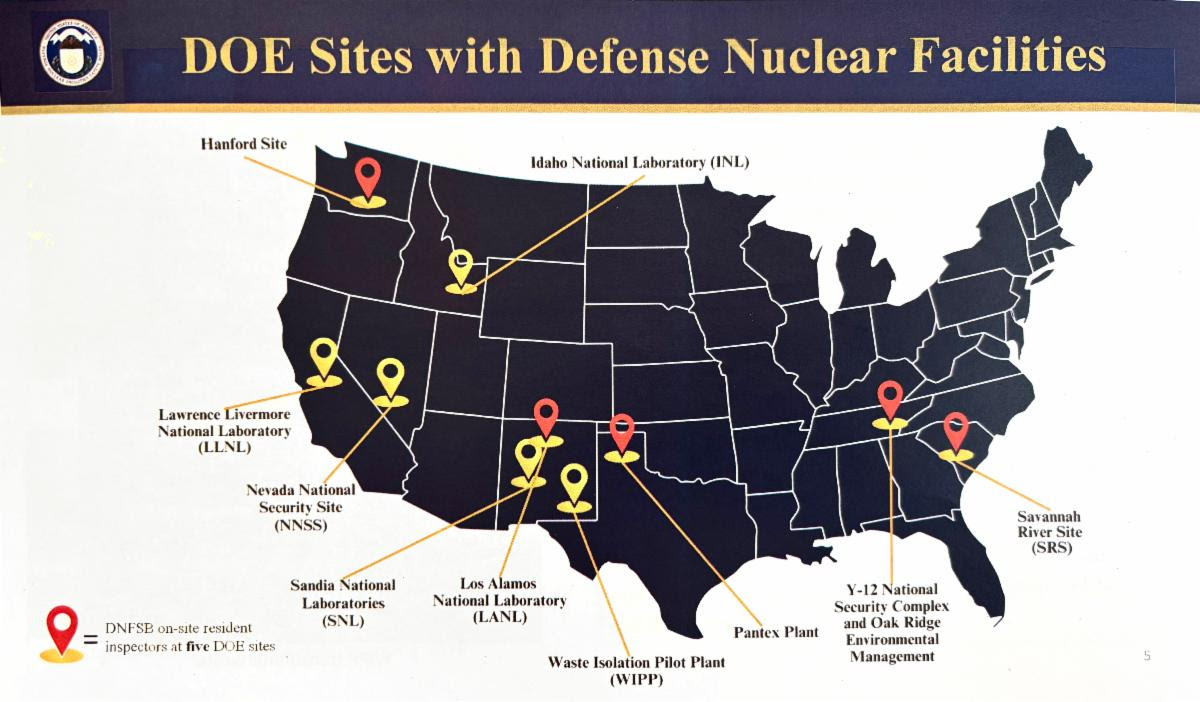
Background: The Defense Nuclear Facilities Safety Board is an independent agency within the executive branch of the Federal Government. The DNFSB is chartered with the responsibility to provide recommendations and advice to the Secretary of Energy regarding public health and safety issues at Department of Energy (DOE) nuclear weapons facilities, including with the health and safety of employees, contractors, and nearby communities (for more see www.dnfsb.gov).
Congress established the Board in 1988 in response to increasing reports of nuclear safety risks impacting workers and the public. Since early this year, the Board has been reduced to just two Members out of five, with a temporary one-year statutory bridge to constitute a quorum that is drawing to a close. In addition, the current Acting Chairman’s term expires this October 18, ending the Board’s functioning quorum. Without it, the DNFSB cannot effectively carry out its critical nuclear safety oversight mission. The public would simply not know about the DOE’s chronic nuclear safety problems without the Board. This is critically important today given expanding production of nuclear weapons.
| Specific request: There should be a provision in any Continuing Resolution for FY 2026 that would temporarily extend the authority of the Defense Nuclear Facilities Safety Board by allowing the Acting Chair to serve until the end of January 2027. The overriding purpose is to enable the Safety Board to fully continue operations and provide more time for the President to nominate, and the Senate to confirm, new Safety Board Members. |
| Congress must take action to protect nuclear safety by preserving DNFSB’s quorum! |
Contact Senator Martin Heinrich through his official website, his Washington, D.C. office, or any of his New Mexico State offices:…………………………………………………………
Contact Senator Ben Ray Luján through his official website, his Washington, D.C. office, or any of his New Mexico State offices:………………………………………………….
Contact Senator John Thune through his official website, his Washington, D.C. office, or any of his South Dakota State offices:…………………………………………….
Contact Senator Chuck Schumer through his official website, his Washington, D.C. office, or any of his New York State offices:……………………………………………. https://nukewatch.org/action-item/urgent-action-needed-to-help-protect-the-defense-nuclear-facilities-safety-board/
Worlds Extinguished: Hostage Returns, Central Casting and the Gaza Ceasefire
14 October 2025 Dr Binoy Kampmark, https://theaimn.net/worlds-extinguished-hostage-returns-central-casting-and-the-gaza-ceasefire/
Depending on which source you consult, the twenty-point peace plan of President Donald Trump for securing peace in Gaza shows much exultance and extravagant omission. The exultance was initially focused on the return of the hostages. It then shifted to the broader strategic goals of the various parties. Commentary on this point, even as the living Israeli hostages convalescence after their exchange for Palestinian detainees, sidesteps the Palestinian people, those fly in the ointment irritants who never seem to exit the political scene.
The peace plan, in effect, is being executed to eliminate Hamas and any semblance of a Palestinian militant movement in favour of an Israel-Arab-US axis of preferment and normalisation. Doing so puts a firm lid on Palestinian sovereignty and statehood in favour of sounder relations between Israel and the Arab states.
Consider, for instance, the views from the American Jewish Committee in their October 10 assessment. “President Trump’s unconventional approach created new diplomatic realities and forced Israel and key Arab states to align in new ways.” The peace plan was “the most credible framework to date for advancing Israeli-Arab peace, creating new opportunities for regional engagement, and countering Hamas’ ideology through a united alliance of Israel and Arab nations committed to peace, security, and prosperity.” Clearly, Palestinians are, if not footnotes, then invisible ink lines in such arrangements.
This attitude is also echoed in remarks made by the US Vice President, J.D. Vance. Palestinian subservience is assumed in any new proposed arrangement which prioritises Israeli security and a collective of overseeing nation states that will guard against any mischief in the Strip. “The President convinced the entire Muslim world really, both the Gulf Arab states, but as far as South-East Asia as Indonesia, to really step up and provide ground troops so that Gaza could be secured in safety.”
Egyptian Foreign Minister Badr Abdelatty gave some sense of what is expected. “We are going to support and commit troops within specific parameters,” he told CBS. A UN Security Council mandate would be required, along with clear specifications for what the mission of the troops on the ground would be, “which will be peacekeeping and providing training to Palestinian police.”
Trump’s near cinematic appearance on October 13 in the compact, claustrophobic Knesset after the handover of the hostages set the scene for Israeli grandstanding, staged mawkishness and denial. Netanyahu was in typical form, accusing Israel’s friends of blood libel stupidity for recognising Palestine; in doing so, they had effectively committed acts of antisemitism, buying “into Hamas’s false propaganda.” Massacring and starving those in the Gaza Strip warranted no mention, but disarming Hamas and demilitarising the enclave did. With praise for both himself and Trump, Netanyahu spoke of jointly forging “a path to bring the remaining hostages home and end the war. End a war in a way that ensures the disarming of Hamas, the demilitarisation of Gaza, and that Gaza would never again pose a threat to Israel.”
He also thanked Trump for “fully” backing the decision to make the last murderous assault into Gaza City. This “military pressure” provided momentum that eventually saw Hamas capitulate. The US President then “succeeded in doing something that no one believed was possible. You brought most of the Arab world, you did, you brought most of the world behind your proposal to free the hostages and end the war.”
Opposition leader Yair Lapid, for his part, explicitly denied any genocide or “intentional starvation” of the Palestinians, then proceeded to overlook them in calling on “all the nations of the Islamic world” to engage Israel.
Trump’s own speech was meandering, personal and free of complex turns. He spoke about his envoy Steve Witkoff as a Henry Kissinger who did not leak, an emissary of singular genius. An interruption by Hadash lawmakers Ayman Odeh and Ofer Cassif, both demanding that Palestine be recognised, did not faze him. And then came mention of theUkraine War, and Russian President Vladimir Putin and more adulatory remarks for the US delegates who have paid homage to the US God King. They were all part of “central casting.”
Not a sliver of reference to the Palestinian cause for sovereignty made an appearance, which continues to moan under the strategic expediency of it all, the residents of Gaza doomed to indefinite invigilation at the hands of Trump’s “Board of Peace.” More to the point, he was happy to admit providing weapons at the request of “Bibi” at a moment’s notice. The US made “the best weapons in the world, and we’ve given a lot to Israel, … and you used them well.” But the slaughter could not continue, and the Israeli PM would be remembered “far more” for accepting the peace agreement. “The timing for this is brilliant. I said, ‘Bibi you’re going to be remembered for this far more than if you kept this thing going, going, going, kill, kill, kill.’”
The Palestinians, granted brief respite from military violence, will be desperately wary. When Lapid mentioned that Trump had “saved far more than one life, and life is an entire world,” it can also be assumed that killing one life kills a world. Some 68,000 Palestinian worlds (a conservative estimate) were extinguished by the munitions and weapons of Israel and its backers. As humanitarian workers return to Gaza, they see the horrors of a lunarscape of devastation. If only Trump had considered paying a visit to that particular part of earth.
‘Solar for All’ should mean just that.

by beyondnuclearinternational, https://beyondnuclearinternational.org/2025/10/12/solar-for-all-should-mean-just-that/
An EPA decision to cancel a solar grant to tribal nations is a hard hit, writes Cody Two Bears
The EPA’s decision to cancel its Solar for All grant to our coalition of tribal nations is more than a policy reversal—it’s a gut punch to communities that believed they were finally being seen.
Our coalition of 14 tribal governments spanning North Dakota, South Dakota, Montana, Wisconsin, and Wyoming came together around a once-in-a-generation opportunity: to deploy $100 million in solar infrastructure to more than 3,500 tribal homes, while training Native youth and veterans in a clean energy workforce that could serve their own communities.
That promise is now gone. And we are not alone.
This past month, dozens of other states, cities, and communities—red and blue alike learned that their own Solar for All awards contracts will be terminated. Across the country, tens of thousands of low-income households are being told that the solar systems they were promised won’t be installed. That the jobs and training they applied for may not materialize. That another chance to turn energy burden into energy security has slipped away.
In Indian Country, the pain is particularly deep. We’ve been here before. Our communities are used to being promised opportunities that never arrive. But that doesn’t make this one hurt any less.
Solar for All wasn’t just about installing solar. It was about building a future that Native communities have been fighting for—one where we control our own energy, reduce crushing utility bills, and create jobs that allow our youth to stay and serve their people.
It was about growing Native-owned solar businesses, launching the first tribally led operations and maintenance teams in the Northern Plains, and helping each other stand up community-driven energy programs built to last.
Our coalition’s plan would have installed thousands of solar and battery systems and saved Native households over $300 million over the next 25 years. Those savings matter.
Many tribal households already pay double or even triple what the average U.S. household pays for energy. And just like the rest of the country, we’re bracing for steep increases in electricity rates in the years ahead. In communities where winter electric heating bills can exceed $600, solar isn’t just smart policy—it’s a matter of survival. We knew this wouldn’t be easy. But we showed up anyway. Tribal councils passed resolutions. Apprenticeship programs were designed. Community outreach had already begun. In some communities, program managers had been hired and work was underway.
Now, much of that momentum has been lost.
To say we’re disappointed is an understatement. But we’re not giving up. As tribal nations, we have always walked a harder path—but never without purpose. We remain grounded in our values: self-determination, stewardship, and the belief that our communities deserve to lead in this transition—not be left behind by it.
And we will lead. Solar for All gave us a platform to organize, build relationships, and design solutions tailored to our communities. We are keeping that vision alive—with or without this federal funding. But we won’t pretend this isn’t a major setback.
And we want to be clear: we are doing this anyway.
Because no matter what anyone says about solar, we have the laws of physics and economics on our side. The sun will keep shining. Panels will keep getting cheaper. And every kilowatt we produce locally is one less dollar sent off the reservation. The long-term math is in our favor—and we’re building for that future, even when the politics fall short.
Now is the time for philanthropic partners, private investors, and aligned institutions to step forward and help us carry this work forward. We have the plans, the partnerships, and the people. What we need is support—and the courage from others to believe in this vision, even when Washington doesn’t follow through.
Tribes don’t need handouts. We need the means to build what we’ve already envisioned.
Solar for All was supposed to be just that—for all. For red states and blue, for tribal communities and rural towns, for people who’ve too often been left behind in the energy transition. With its cancellation, a lot of doors just slammed shut.
But we’ll keep knocking. Because this is what leadership looks like in Indian Country: standing up, standing together, and staying the course—especially when the promises are broken.
Cody Two Bears is the Founder and CEO of Indigenized Energy and a member of the Standing Rock Sioux Tribe. He is a nationally recognized leader in the movement for tribal energy sovereignty, combining Indigenous knowledge with Western science to bring renewable energy solutions to Native communities. In response to the 2016 #NoDAPL movement, Cody launched Indigenized Energy and led the development of North Dakota’s largest solar project on Standing Rock. A shorter version of this article was published as a letter to the editor in The Washington Post.
They Fought Amazon’s $3.6B AI Data Center.
13 Oct 2025 Breaking PointsJames Li interviews organizers from No Desert Data Center Coalition on their fight against big corporate data centers in Arizona. https://www.youtube.com/watch?v=8ZoHBXREnTk
Mainers: you have a chance to nip this Wiscasset data center idea in the bud

12 Oct 25
Scroll down for details on the next hearing, which will be October 21.
All these data centers are being fast-tracked to secure global fascism. I don’t even distinguish anymore between military or domestic control. It’s the same foe (Silicon Valley) with the same infrastructure: AI, data centers, nuclear power, mining, land theft, water theft, skyrocketing power bills, etc.
They can’t do AI and create a fascist surveillance planet with automated warfare unless they have these data centers. Stopping data centers is the most effective way of thwarting militarism in the 21st century. AI fascism is NOT a done deal (until they get the data centers up, get rid of physical cash, and make sure we continue scrolling on the internet.)
Here’s how to nip this in the bud:
When they wanted to build a space port in Hawaii and the company was in the early stages of building community trust (like the stage this data center is now in), we showed up in full force with a PA system and guitar and songs about how we didn’t want the spaceport. I also passed out hundreds of information sheets that talked about the devastation that the spaceport would bring. Basically, WE OWNED THE SPACE. It scared the shit out of them and they never came back. Hell, they didn’t want to deal with rowdies like us! See if you can get a gang together to do the same at the Oct. 21 hearing!
Westport, Wiscasset Residents Share Dissent on Possible Data Center
October 11, 2025 , Ali Juell
In a continuation of debate on a potential data center, the Wiscasset Select Board heard several public comments related to the possible development at their Tuesday, Oct. 7 meeting.
Wiscasset town officials told the county commissioners they were in early talks to turn the former Maine Yankee site on Old Ferry Road into a data center at a Sept. 16 commissioners meeting. At the time, Wiscasset Economic Development Director Aaron Chrostowsky said the project could strengthen Wiscasset’s tax base and provide jobs for construction and tech workers.
During the Oct. 7 meeting, Westport Island and Wiscasset residents expressed concerns about a data center’s potential long-term impacts to the environment and community.
“I would ask yourselves not only what is good for Wiscasset but … what’s good for Midcoast Maine,” Westport island resident Parkinson Pino said at the meeting.
Before opening the floor for public comment, Wiscasset Select Board Chair Sarah Whitfield said no formal proposal for a data center has been submitted. She said the town and the project assessor are asking questions of each other to ensure there is a complete understanding of the possible development.
If a completed application does come to the table, she said there will be ample opportunity for public involvement and input.
“We will absolutely do our due diligence,” Whitfield said. “Everything from environmental concerns to traffic to sound, light, water community, all of that will be addressed … if this moves forward, and we don’t even know if it will.”
Attendees raised a number of concerns such as the power demands, water capacity, and environmental effects brought on by a data center. Above all, people said they hope Wiscasset will consider the impacts of the data center both within and beyond town lines.
“There are questions here that could have huge consequences not just for Wiscasset but for Westport, Edgecomb, Georgetown, Boothbay, and Southport,” Westport Island resident Sam Godin said, calling on the board to keep the public informed if the process continues.
Comparing the data center to the Maine Yankee nuclear plant, Pino said the town should consider the potential aftermath of buying into corporate interest in the site.
“There are many consequences with this technology,” he said. “I would be very concerned about making sure you know as much as you can know about that (proposal).”
The next Wiscasset Select Board meeting is at 6 p.m. on Tuesday, Oct. 21 in the meeting room at the town municipal building. For more information, go to wiscasset.gov or call 882-8200.
‘It’s going to be really bad’: Fears over AI bubble bursting grow in Silicon Valley
“We’re creating a new man-made ecological disaster: enormous data centres in remote places like deserts, that will be rusting away and leaching bad things into the environment, with no one left to hold accountable because the builders and investors will be long gone,”
He’s especially concerned now given the magnitude of money on the table as compared to the dot-com boom. There’s so much more to lose.
“When [the bubble] breaks, it’s going to be really bad,
BBC, Lily Jamali, Technology correspondent, San Francisco 11 Oct 25
At OpenAI’s DevDaythis week, OpenAI boss Sam Altman did what American tech bosses rarely do these days: he actually answered questions from reporters.
“I know it’s tempting to write the bubble story,” Mr Altman told me as he sat flanked by his top lieutenants. “In fact, there are many parts of AI that I think are kind of bubbly right now.”
In Silicon Valley, the debate over whether AI companies are overvalued has taken on a new urgency.
Sceptics are privately – and some now publicly – asking whether the rapid rise in the value of AI tech companies may be, at least in part, the result of what they call “financial engineering”.
In other words – there are fears these companies are overvalued.
Mr Altman said he expected investors would make some bad calls and silly start-ups would walk away with crazy money.
But with OpenAI, he told me, “there’s something real happening here”.
Not everyone is convinced.
In recent days, warnings of an AI bubble have come from the Bank of England, the International Monetary Fund, as well as JP Morgan boss Jamie Dimon who told the BBC “the level of uncertainty should be higher in most people’s minds”.
And here, in what is often considered the tech capital of the world, concerns are growing.
At a panel discussion at Silicon Valley’s Computer History Museum this week, early AI entrepreneur Jerry Kaplan told a packed audience he has lived through four bubbles.
He’s especially concerned now given the magnitude of money on the table as compared to the dot-com boom. There’s so much more to lose.
“When [the bubble] breaks, it’s going to be really bad, and not just for people in AI,” he said.
“It’s going to drag down the rest of the economy.”………………….
AI-related enterprises have accounted for 80% of the stunning gains in the American stock market this year – and Gartner estimates global spending on AI will likely reach a whopping $1.5tn (£1.1tn) before 2025 is out.
Tangled web of deals
OpenAI, which brought AI into the consumer mainstream with ChatGPT in 2022, is at the centre of the tangled web of deals drawing scrutiny…………………………………………………
Then there’s tech giant Microsoft, which is heavily invested, and cloud computing behemoth Oracle has a $300bn deal with OpenAI, too.
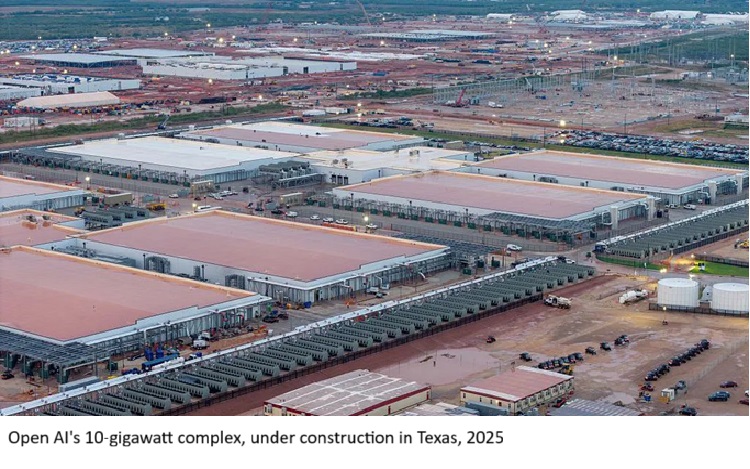
OpenAI’s Stargate project in Abilene, Texas, funded with the help of Oracle and Japanese conglomerate SoftBank and announced at the White House during President Donald Trump’s first week in office, grows ever larger every few months………………………………………
And as these increasingly complex financing arrangements get more and more common, the experts here in Silicon Valley say they may be clouding perceptions on AI demand.
Some people aren’t mincing their words about it either, calling the deals “circular financing” or even “vendor financing” – where a company invests in or lends to its own customers so they can continue making purchases.
“Yes, the investment loans are unprecedented,” Mr Altman told me on Monday……………………………………………….
OpenAI’s revenue is growing quickly, but it has never turned a profit.
And it is hardly a good sign that the people I’ve spoken to keep bringing up Nortel – the Canadian telecom equipment-maker that borrowed prolifically to help finance deals for their customers (and thereby artificially boost demand for their wares)………………………..
Telltale signs
Mr Kaplan says he seesa couple of telltale signs the AI sector – and therefore the wider economy – could be in trouble.
In frothy times, he says, companies announce major initiatives and product plans that they don’t yet have the capital for.
Meanwhile, retail investors clamour to get in on the start-up action.
The surge in AMD stock this week could indicate investors are trying to get a piece of the ChatGPT wealth machine – and while all this is playing out, real physical infrastructure aimed at satisfying the seemingly insatiable hunger for more AI development is being built.
“We’re creating a new man-made ecological disaster: enormous data centres in remote places like deserts, that will be rusting away and leaching bad things into the environment, with no one left to hold accountable because the builders and investors will be long gone,” Mr Kaplan said. ……………………………………….
There are plenty of believers in AI’s potential to transform society.
The question is whether the money to fund the ambitions of the foremost companies in the sector may be drying up………………………………https://www.bbc.com/news/articles/cz69qy760weo
From AI to TikTok to TV, This Pro-Israel Billionaire Is Expanding Power in US
One of Trump’s advisers once called megabillionaire Larry Ellison a “shadow president of the United States.”
By Derek Seidman , Truthout, October 11, 2025
arry Ellison’s name isn’t always mentioned alongside more public-facing megabillionaires like Elon Musk, Jeff Bezos, or Mark Zuckerberg. But as he vaults to the top of the U.S. power elite after a string of high-profile corporate deals, that’s about to change.
Ellison, the founder of the tech giant Oracle, is quickly emerging as the new face of oligarchic power in the U.S. Oracle has become an AI powerhouse at the same time Ellison and his son David have acquired Paramount and its vast media empire. With Donald Trump’s recent executive order, Ellison and Oracle will also now oversee TikTok’s algorithms, shaping a platform that reaches 150 million U.S. users.
What’s more alarming than Ellison’s sheer wealth — in September, he briefly surpassed Musk as the world’s richest person — is that he’s building his concentrated power and control in collaboration with the Trumpian project of attacking so-called “wokeness,” all while supercharging the corporate expansion of artificial intelligence and tech surveillance.
Moreover, Ellison is a vocal supporter of the Israeli military and a close confidant of Prime Minister Benjamin Netanyahu. As Israel looks to repair its image after two years of overseeing a genocide in Gaza, it’ll have a powerful booster in Ellison and his new media kingdom.
The Making of a Megabillionaire
Larry Ellison founded Oracle in 1977 and was its CEO for nearly four decades. The firm ascended by providing database software for business and government agencies. Oracle’s first customer was the CIA, and the company is named after a CIA project.
Over time, Oracle has swelled into a business empire focused on cloud services and, increasingly, artificial intelligence.
Today, Ellison is worth more than $350 billion. He owns more than 40 percent of Oracle’s stock and still serves as the corporation’s executive chairman and chief technology officer. Ellison was also on Tesla’s board of directors from 2018 to 2022 and holds a 1.4 percent stake in the company that’s worth billions…………………………………..
Trump-Tied AI Deals
But far more than wealth and luxury, Ellison has power. Notably, he’s forged a close relationship with Donald Trump, with one Trump adviser calling him a “shadow president of the United States.”
While Ellison hasn’t directly donated to Trump, he personally hosted a major 2020 Trump fundraiser. Ellison also joined a November 2020 call “where Trump staffers and supporters discussed strategies for challenging their candidate’s loss at the ballot box,” according to The Washington Post………………………………..
A huge swath of Oracle’s AI business comes from a $300 billion deal with OpenAI, the maker of ChatGPT. Oracle’s partnership with OpenAI was supercharged by Trump’s announcement in January of the Stargate AI joint venture, which The New York Times called an “early trophy” for Trump.
Indeed, Stargate is just one expression of the mutually beneficial alliance that Ellison has forged with Trump. Oracle’s expanding partnership with OpenAI reflects a new primacy for Ellison within the AI boom that is increasingly driving the entire U.S. economy.
Media Mogul
This should raise alarm bells, especially since Ellison has openly celebrated AI’s ability to surveil people, pronouncing in 2024 that “citizens will be on their best behavior because we are constantly recording and reporting everything that’s going on.”
Ellison’s alliance with Trump is also transforming him into an unrivaled media mogul…………………………………………………………………………………..
The Ellisons’ quest for media dominance doesn’t end with Paramount. They’re reportedly eying Warner Brothers, the iconic movie studio and owner of CNN and HBO. Such an acquisition, which would need the Trump administration’s approval, would create a media empire transcending even Rupert Murdoch’s conglomerate.
And then came the TikTok deal…………………………………………………………………………………..
For Ellison, all his new acquisitions present the opportunity to forge a truly novel corporate mega-empire that will dominate the U.S. media and attention economy, injecting his agenda like a thread across an AI-powered chain of news outlets, streaming sites, film studios, and social media outlets.
“We Love the Country of Israel”
“These are very smart people, and none of this is accidental,” noted one business professor.
All of this is very good for Benjamin Netanyahu and Israel’s vast influence operation.
Ellison is a staunch backer of Israel. He is one of the top donors to the Friends of the Israel Defense Forces (FIDF), a U.S. nonprofit that effectively subsidizes the Israeli military. Ellison has given the FIDF at least $26.6 million.
“I feel a deep emotional connection to the State of Israel and the Israeli people,” Ellison said at the 2014 FIDF gala. “We love the country of Israel and we’ll do everything we can to support the country of Israel,” he added, with his “we” seeming to refer to Oracle.
Ellison is also extremely close to Netanyahu, who has been accused of war crimes and crimes against humanity by the International Criminal Court over Israel’s genocide in Gaza………………………………………………………..
Ellison is also a backer of former U.K. Prime Minister Tony Blair and has given or pledged at least $348 million to Blair’s Institute for Global Change. Blair could be part of Trump’s “Board of Peace” in Gaza if the current ceasefire deal holds.
…………………………………………………… Netanyahu recently called TikTok “the most important purchase going on right now,” adding that “weapons change over time,” and the most important ones today “are on social media.”
Now Oracle, led by Netanyahu’s friend and staunch ally Larry Ellison, is overseeing TikTok’s U.S. algorithms.
There are already clear signs of Ellison’s intent to take his new media empire in a pro-Israel direction, including his hiring of Weiss as CBS News’s editor-in-chief. The billionaire-courting Weiss is a staunch Zionist whose Free Press has stoked “genocide denial” with an “investigation” into “preexisting health conditions” of starving Palestinian children, notes The Intercept.
Modern-Day Robber Baron
Like the robber barons of the late 19th-century U.S., Ellison is consolidating his control over a vast corporate empire that dominates major sectors, from cloud storage and AI data centers, to iconic movie studios, mass news channels, and social media.
And clearly, Ellison is bringing his politics with him: Trump-aligned, anti-“woke,” and staunchly pro-Israel.
“Everything is consolidating,” media historian Michael Socolow told The New York Times. “What makes these deals different is that they are across multiple platforms.”
“To have the opportunity to establish an editorial line across TikTok, CBS News and CNN — that’s a new world,” Socolow added. https://truthout.org/articles/from-ai-to-tiktok-to-tv-this-pro-israel-billionaire-is-expanding-power-in-us/?utm_source=Truthout&utm_campaign=314e14bc07-EMAIL_CAMPAIGN_2025_10_11_06_41&utm_medium=email&utm_term=0_bbb541a1db-314e14bc07-650192793
1 This Month

of the week – Shut Down Drone Warfare!


Tell the Ukrainian Government to Drop Prosecution of Peace Activist Yurii Sheliazhenko

Petition to revoke the licensing of the Near Surface Nuclear Disposal Facility (NSDF) at Chalk River. https://www.ourcommons.ca/petitions/en/Petition/Details?Petition=e-7247
To see nuclear-related stories in greater depth and intensity – go to https://nuclearinformation.wordpress.com
-
Archives
- April 2026 (103)
- March 2026 (251)
- February 2026 (268)
- January 2026 (308)
- December 2025 (358)
- November 2025 (359)
- October 2025 (376)
- September 2025 (257)
- August 2025 (319)
- July 2025 (230)
- June 2025 (348)
- May 2025 (261)
-
Categories
- 1
- 1 NUCLEAR ISSUES
- business and costs
- climate change
- culture and arts
- ENERGY
- environment
- health
- history
- indigenous issues
- Legal
- marketing of nuclear
- media
- opposition to nuclear
- PERSONAL STORIES
- politics
- politics international
- Religion and ethics
- safety
- secrets,lies and civil liberties
- spinbuster
- technology
- Uranium
- wastes
- weapons and war
- Women
- 2 WORLD
- ACTION
- AFRICA
- Atrocities
- AUSTRALIA
- Christina's notes
- Christina's themes
- culture and arts
- Events
- Fuk 2022
- Fuk 2023
- Fukushima 2017
- Fukushima 2018
- fukushima 2019
- Fukushima 2020
- Fukushima 2021
- general
- global warming
- Humour (God we need it)
- Nuclear
- RARE EARTHS
- Reference
- resources – print
- Resources -audiovicual
- Weekly Newsletter
- World
- World Nuclear
- YouTube
-
RSS
Entries RSS
Comments RSS
 nuclear-news