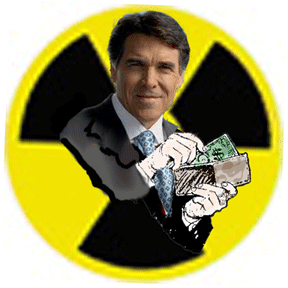
Rick Perry, as Energy Secretary, “solved” nuclear waste problem by reclassifying high level waste as low level
|
Perry’s Odd Definition of Progress on Nuclear Waste https://www.nrdc.org/experts/caroline-reiser/perrys-odd-definition-progress-nuclear-waste, October 22, 2019 Caroline Reiser
After months of suspense, Energy Secretary Rick Perry finally confirmed he will resign, boasting in a farewell tweet that under his leadership the Department of Energy “made environmental progress unseen for decades cleaning up the legacy of the Manhattan Project.” —What’s that now? Where exactly are the “numerous” legacy sites that Perry claims the Department tackled? All the Department of Energy has done under Perry is weaken standards and renege on promises by finding ways to abandon the world’s most toxic chemical and radioactive waste in place. To give a brief history of the legacy Perry is referring to, the Manhattan Project is the name of the World War II era research and development effort that led to the first several nuclear weapons, including those used to destroy Hiroshima and Nagasaki. In the atomic arms race of the Cold War, the Department of Energy and its predecessor agencies continued to design, test, and manufacture nuclear weapons but on a vaster scale—ultimately manufacturing over 30,000 nuclear weapons. Making nuclear weapons is not a clean business. Every country that has built a nuclear arsenal has harmed its own people and environment in the process. Nuclear production created a so-called “legacy” of profoundly contaminated radiological and chemical waste sites. There are dozens of these legacy waste sites across the United States; the largest three are the Idaho National Engineering and Environmental Laboratory, the South Carolina Savannah River Site, and the Washington Hanford site (which many consider one of the most contaminated sites in the Western Hemisphere). To give you a picture of the scale in terms of size and danger, the Hanford site hosts 177 tanks. The tanks range from 55,000 gallons to more than a million gallons of radioactive and chemical waste each. That’s from about 20 semi-trucks full to about two Olympic sized swimming pools. And even brief exposure to a small portion of that waste can be deadly. So what happened at these sites under Perry? Not much. The most far-reaching action the Department of Energy took under Secretary Perry was to give itself permission to “reclassify” highly toxic radioactive waste. The Department’s new stance is that it can magically decide that certain High-Level Waste is now Low-Level Waste without oversight from the Environmental Protection Agency, states, or tribes. With this authority, the Department of Energy no longer has to permanently isolate from the environment High-Level Waste, but instead can abandon hundreds of gallons of the most toxic waste at sites like Hanford. So really the only way Perry could be said to have cleaned up this toxic waste is by “recategorizing” it as something less dangerous than it is, and then (metaphorically) washing his hands of it. The Perry-led Department of Energy will also be remembered for breaking promises. In addition to the promises the Department is breaking by reclassifying High-Level Waste, the Department is also breaking promises to clean up smaller sites as well. For example, the Santa Susana Field Laboratory sits in the golden hills of California, right on the outskirts of Los Angeles’s urban sprawl. In 2010, the Energy Department agreed to clean up the site to what’s called “background levels,” meaning the normal levels of radiation one could expect to find at the site before industry intervened. But the Perry Energy Department decided this agreement didn’t matter – it now plans to leave in place the vast majority of the contamination and to act without consent from California. Both Washington and California are pushing back against the Department of Energy’s broken promises. And it’s clear that if the Department gets away with it at these sites, it will do the exact same thing at other sites across the country. So, for Secretary Perry’s tweet to be true, he must have a strange definition of “progress.” Maybe he means progress in abandoning the Department of Energy’s obligation to clean up the mess it made. Maybe he means progress in speeding up transferring the responsibility of managing highly toxic sites back to states, tribes, and local communities. Maybe he means progress in cutting corners to favor cost over health and safety. All I can say is that I hope the next Secretary and I have a more similar idea of what progress looks like. The Department of Energy can do better. President Trump has already nominated Dan Broulliette as a replacement for Perry. If Broulliette wants to make actual progress on America’s nuclear waste legacies, he needs to stop wasting time trying to get away with doing less – do the work and do it right. Given the track record of the last few years, there’s ample reason for skepticism. But I would love to be proven wrong. |
|
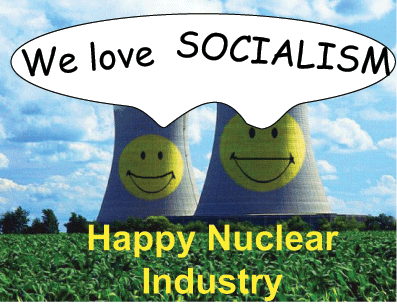
Uninsurable – and for good reason – nuclear power
|
Nuclear energy is too costly and risky; better alternatives exist https://www.jhnewsandguide.com/opinion/columnists/common_ground/nuclear-energy-is-too-costly-and-risky-better-alternatives-exist/article_71a11439-581d-572f-87c7-88dad34ddf74.html Common Ground / By Paul W. Hansen , 23 Oct 19 In last week’s Guest Shot the director of the Idaho National Lab (INL) Mark Peters wrote to open a dialogue with News&Guide readers about nuclear energy. I want to take him up on his offer. First, what we agree on. Nuclear energy produces about 20% of the nation’s electricity, which is about 8% of our total energy use. Overall, we need to produce and use energy that minimizes greenhouse gases. Looking at the troubled history, poor economics, attendant risk and unsolved problem of nuclear waste disposal, I think there are much better alternatives for producing carbon free energy. Today, there are 97 nuclear reactors in 29 states that produce electricity. Thirty-four reactors have been shut down. More orders for nuclear plants have been canceled than plants have been built. Only one plant has come online in the last 25 years. Early claims that nuclear power would be “too cheap to meter” proved false. Despite extensive public subsidies, nuclear plants across America have faced significant cost overruns. For example, the Washington Public Power Supply System defaulted on $2.25 billion in municipal bonds when cost overruns on two units caused the cancellation of two other units. The Shoreham Nuclear Power Plant on Long Island was completed in 1985, but never operated when an evacuation plan could not be implemented. The plant was decommissioned. The $6 billion cost of the unused plant was passed on to Long Island residents. Attempts to build new nuclear plants have been even more challenging. During the 1980s, the cost of Plant Vogtle’s first two nuclear units near Augusta, Georgia, jumped from an estimated $660 million to $8.87 billion. Regardless, 20 years later Georgia Power wanted to build the “next generation” of nuclear power plants. In August 2008, it was estimated that Plant Vogtle reactors 3 and 4 would cost $14.3 billion and begin operations in 2017. Today, updated estimates put the cost at $28 billion with an operation date of November 2022. The project is projected to be $14 billion over budget and more than 5 years behind schedule. The builder of the reactors, Westinghouse, has declared bankruptcy. In 2017, a similar two-unit plant in South Carolina, the V.C. Summer plant, was abandoned — costing about $5 billion. Concerns over the transportation and storage of highly radioactive spent nuclear fuel have prevented any nuclear waste repositories from being developed in the U.S. Spent fuel rods are stored onsite at nuclear plants. When uranium fuel is used up, usually after about 18 months, the spent rods are generally moved to deep pools of circulating water to cool down for about 10 years. The radioactive material is then transferred to metal casks. The waste remains dangerously radioactive for about 10,000 years. There is no plan for permanent disposal of this waste. This brings me to my biggest concern — the fact that those in our society whose business it is to determine risk will not insure nuclear power. If you own a home, look at your homeowner’s insurance policy. You are not covered in the event of a nuclear accident. No one is. The nuclear industry exists only due to the liability limitations granted by Congress in the Price Anderson Act. Price Anderson requires the nuclear industry to fund an account of $12.6 billion. Any liability above that is supposed to be covered by taxpayers. Then there are the issues of long-term decommissioning costs, nuclear accidents or terrorists. In Chernobyl and Fukushima, nuclear accidents have left large areas uninhabitable. What if the 9/11 terrorists had managed to crash those planes into the Indian Point Nuclear Power Plant north of New York City? While the reactor containment vessel might have survived the impact, the spent fuel rod pools may not have, leaving much of the New York metropolitan area uninhabitable. Nuclear energy has not worked out as planned. Far more carbon-free power can be generated at far less cost and risk by renewable energy and energy efficiency programs. |
|
Columbia nuclear fuel factory in trouble again, with safety problems
The Westinghouse nuclear plant discovered last week that it had a device in place that was not adequate to prevent uranium from leaking into chemical supply drums at the site, federal records show.
That’s potentially significant because the drums were in a “non-favorable’’ position, which under certain circumstances could increase chances of a radiation burst inside the 1,000-employee plant.
The Nuclear Regulatory Commission is looking into the matter, reported by Westinghouse to the agency Oct. 16. Westinghouse shut down part of the plant where the improper equipment was found, a spokesman for the NRC said this week………
The nuclear fuel factory, one of only three of its kind in the country, has a long history of incidents, including events in which some workers were exposed to radiation or injured. But concerns have intensified in recent years among people who live in eastern Richland County, near the plant.
Since 2016, the facility has run afoul of federal regulators for allowing uranium to build up in an air pollution control device, leaking uranium through a hole in the plant floor and failing to notify authorities of historic leaks on the property. This past summer, federal officials learned that water had dripped through a rusty shipping container onto a barrel of nuclear waste, causing a leak into the ground. Officials also learned about a small fire this summer that erupted in a container that held nuclear material.
Groundwater beneath the site is polluted with an array of toxins, including nitrate, solvents and nuclear materials, dating as far back as the 1980s. Neighbors near the plant are leery, with some saying they don’t trust Westinghouse to safeguard the environment. The company has pledged to do better.
Westinghouse’s plant supplies fuel rods for atomic power plants across the country. Located between Interstate 77 and Congaree National Park, the 550,000-square-foot factory has been a key part of the Columbia economy since opening in 1969. The plant employs about 1,000 people. Operators are now seeking to renew a federal license, as well as state discharge permits. https://www.thestate.com/news/local/environment/article236495448.html
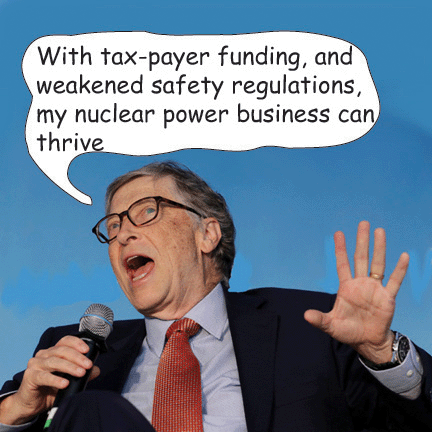
Bill Gates still hoping for tax-payer funding for his small nuclear reactor project
Bill Gates’ Nuclear Reactor Hits a Roadblock,
Engineering.com , October 21, 2019 Bill Gates is optimistic about the future—and the role of nuclear energy as an environmentally friendly energy source—but he faces significant obstacles along the way.
His company, TerraPower, is working on new technologies to revolutionize nuclear power. One of them is a traveling wave reactor (TWR). ………
One major problem with a TWR power plant is the price. It will cost about $3 billion to build a demonstration reactor. Even Bill Gates isn’t rich enough to fund it himself. TerraPower had signed a promising agreement with China to build a demonstration reactor, but the project has been shuttered due to China-U.S. trade tensions. The company is now lobbying Congress for a public-private partnership to fund the reactor. ……
Kings Bay Plowshares 7 face criminal charges and long jail senetences

|
Taking Next Steps Toward Nuclear Abolition. https://truthout.org/articles/taking-next-steps-toward-nuclear-abolition/, BY Kathy Kelly, Voices for Creative Nonviolence, October 21, 2019 My friend Marianne Goldscheider, who is 87, suffered a broken hip in July, 2018 and then, in June 2019, it happened again. When she broke her hip the first time, she was running, with her son, on a football field. After the second break, when she fell in her kitchen, she was in so much pain that she recalls her only desire as she was placed on a stretcher: “I just wanted ‘the right pill.’” Marianne says her Catholic friends, who live nearby in the New York Catholic Worker community, persuaded her not to give up. They’ve long admired her tenacity, and over the years many have learned from her history as a survivor of the Nazi regime who was forced to flee Germany. Recalling her entry to the United States, Marianne jokes she may have been one of the only displaced persons who arrived in the United States carrying her skis. Yet she also carried deep anxieties, the “angst,” she says, of her generation. She still wonders about German people in the military and the aristocracy who knew where Hitler was headed and, yet, didn’t try to stop him. “When and how,” she wonders, “do human beings get beyond all reasoning?”
Marianne is deeply disturbed by the extraordinary danger of maintaining nuclear weapons arsenals and believes such weapons threaten planetary survival. She worries that, similar to the 1930s, citizens of countries possessing nuclear weapons sleepwalk toward utter disaster. On April 4, 2018, several of Marianne’s close friends from the New York Catholic Worker community became part of the Kings Bay Plowshares 7 by entering the U.S. Navy Nuclear Submarine base in King’s Bay, GA and performing a traditional Plowshares action. Guided by lines from Scripture urging people to “beat their swords into plowshares and their spears into pruning hooks,” they prayed, reflected and then symbolically disarmed the Trident nuclear submarine site. The Kings Bay is home port to six nuclear armed Trident ballistic missile submarines with the combined explosive power of over 1825 Hiroshima bombs. One of the banners they hung read “The Ultimate Logic of Trident is Omnicide.” Referring to this sign, Daniel Ellsberg, who leaked the Pentagon Papers in 1971, said the banner “is exactly right.” In an October 18 endorsement, he called their actions “necessary to avert a much greater evil.” In late September, the Catholic Bishops of Canada, alarmed over the increasing danger nuclear weapons pose, urged the Government of Canada to sign the Treaty on the Prohibition of Nuclear Weapons, adopted at the UN in 2017. The Canadian bishops issued their statement on September 26, the United Nations International Day for the Total Elimination of Nuclear Weapons. In it, they note the Vatican has already signed and ratified the Treaty. “The ashes of World War I and the centenary of its armistice,” wrote Pope Francis, “should teach us that future acts of aggression are not deterred by the law of fear, but rather by the power of calm reason that encourages dialogue and mutual understanding as a means of resolving differences.” The seven defendants, in everyday life, practice nonviolence while serving people who are often the least cared for in our society. Like Marianne, I have known each defendant for close to four decades. They have risked their lives, safety and health in numerous actions of civil disobedience. When imprisoned, they write and speak of the cruel abuse of human beings and the racist, primitive nature of the United States prison-industrial complex. They’ve also chosen to visit or live in war zones, providing witness on behalf of people trapped under bombardment. They live simply, share resources and strive to help build a better world. Nevertheless, beginning Monday, they will face serious criminal charges and potentially harsh sentences for their action at Kings Bay. Marianne anxiously awaits their trial. “Why,” she asks, “isn’t there more coverage?” One of the defendants, Rev. Steve Kelly, SJ, a Jesuit priest, referred to himself in a recent letter as “a tenuous voice in the wilderness.” He further explained that he is among the wilderness of the incarcerated, “two and a quarter million folks comprising the human warehouses in the empire.” Steve has been imprisoned in the Glynn County jail since April 4, 2018. His letter continues:
Late in the afternoon of October 18, Judge Woods issued her long-awaited orders regarding testimony allowed in court. She will not allow testimony about the illegality of nuclear weapons, the necessity of civil disobedience, or individual motivations and personal faith. Fortunately, the many dozens of people filling the Brunswick, GA courtroom on October 21 will help communicate the essential evidence that won’t be shared within the court. In alternative settings, such as over meals, during a Festival of Hope, and as part of a Citizens Tribunal, they’ll discuss and eventually share reasons that motivated our friends to perform the Kings Bay Plowshares 7 action. A recent op-ed in The New York Times suggests the Kings Bay Plowshares 7 message is entering public discourse. The defendants have clarified that the U.S. nuclear weapon arsenal robs resources desperately needed for food, shelter, health care and education. The New York Times notes if we could reach a total nuclear weapons ban, we could save roughly $43 billion each year on weapons, delivery systems and upgrades. “That’s roughly the same amount we’ve allocated in federal hurricane aid for Puerto Rico.” Marianne laments the way in which nuclear weapons are revered as a modern idol deserving of great sacrifice. She is rightfully wary of social and cultural developments that consider such reverence normal. She and I commiserate about recovering from hip fractures, (I’ve been on the mend for the past month), but we both know that Steve Kelly’s invitation deserves our greatest attention. Tiny postcards are the only means of correspondence allowed to or from the Glynn County jail. On one of these, Steve wrote a message to a large gathering in New York celebrating the Kings Bay Plowshares 7 action. “I am encouraged by your presence,” he wrote, “to ask that this small effort of ours not be the last word in nuclear abolition.” |
|
US Energy Secretary Perry turns New Nuclear Salesman to Europe
|
Messianic Perry preaches nuclear to sceptical Europeans, By Frédéric Simon | EURACTIV.com 21 Oct 19, Small nuclear reactors can help “vulnerable nations take control of their destinies,” the US energy secretary said in Brussels today (21 October), claiming that small off-grid nuclear plants can bring electricity to poor nations and “disperse the darkness” around the globe.
Countries with nuclear power “can’t be controlled by other countries wielding energy as a geopolitical weapon”, US Secretary of State Rick Perry said in Brussels as he addressed a forum of policymakers and industry representatives from both sides of the Atlantic. Nuclear power helps “vulnerable nations take control of their destinies,” Perry claimed, arguing that “energy security also bolsters national security”. Perry attended the first EU-US high-level forum on small modular reactors. His remarks on energy independence were chiefly aimed at Eastern European countries, which have repeatedly complained about Russian interference in national politics, using gas as a lever. Nuclear is a divise topic in Europe. While countries like France opted for it decades ago, others like Germany and Austria are strongly opposed. “Nuclear energy is neither safe and sustainable nor cost-effective,” said German State Secretary for Energy, Andreas Feicht, during a recent meeting of EU energy ministers, firmly rejecting suggestions that EU money might be used to extend the lifetime of existing nuclear plants. But Perry’s message was broader, and was also addressed at developing nations whom he said could benefit from small off-grid nuclear plants………. |
|
Facing a nasty pro nuclear campaign, Ohio’s anti nuclear group hope for a federal court decision to delay nuclear bailout
Anti-nuclear bailout group fails to make deadline for referendum https://www.cincinnati.com/story/news/politics/elections/2019/10/21/anti-nuclear-bailout-effort-miss-deadline-submit-signatures/4052255002/ Jessie Balmert, Cincinnati Enquirer Oct. 21, 2019 COLUMBUS – Opponents of Ohio’s $1 billion bailout of two nuclear plants say they didn’t gather enough signatures to block the law by the Monday deadline.
Their only hope: a federal court decision that could give them more time to collect signatures.
Ohioans Against Corporate Bailouts spokesman Gene Pierce wouldn’t say how many signatures the group collected, but it wasn’t enough to put the issue before voters in November 2020.
Ballot groups often collect more than the required number in anticipation of some being tossed out because of duplicates, illegible signatures and other problems.
That means House Bill 6 will take effect at midnight. The law imposes a new fee of 85 cents per month for residential customers on Ohioans’ electric bills starting in 2021.
Those fees are expected to raise about $150 million a year for FirstEnergy Solutions’ plants – money the company says it needs to keep the doors open. Another $20 million from those fees will pay for solar energy companies.
The runup to Monday’s deadline has been one of the nastiest campaigns in recent Ohio history. The nuclear plants’ owner, FirstEnergy Solutions, and its allies deployed a variety of tactics to block the referendum from making the ballot ranging from anti-Chinese advertisements to petition signature blockers.
“Nuclear bailout supporters of House Bill 6 have stooped to unprecedented and deceitful depths to stop Ohioans from exercising their constitutional rights to put a bailout question on the ballot for voters to decide,” Pierce said in a news release.
Ohioans Against Corporate Bailouts had to submit at least 265,774 valid signatures from at least 44 of Ohio’s 88 counties to put the bill to a vote next year. The group failed to submit those signatures by Monday’s deadline.
The group has asked a federal court judge for more time to collect signatures because initial steps in the process, such as collecting 1,000 valid signatures and having ballot language approved as accurate, ate into its 90-day window.
A hearing on that request is set for Tuesday afternoon. U.S. District Court Judge Edmund Sargus will make a decision after hearing arguments from both sides.
On Monday, Ohioans for Energy Security submitted signatures to Rep. Jamie Callender, R-Concord Township, calling for a ban on foreign control of the state’s energy grid. Callender said he hopes to put that issue before voters.
“That’s kind of scary that someone who didn’t like America, who didn’t like our way of life could cause a lot of damage and a lot of havoc by randomly shutting down a plant that they had controlling interest in,” Callender said. “It could bring the grid down.”
The operators of Ohio’s electric grid say they are “vigilant” about the grid’s security. The federal government can block projects if foreign investment poses a national security risk.
For example, President Trump has halted two foreign acquisitions, citing national security concerns, since 2017: Lattice Semiconductor Corporation by a Chinese investment firm and telecom company Qualcomm by Singapore-based Broadcom.
Columbus bureau chief Jackie Borchardt contributed reporting.
High levels of uranium in some Navajo women and infants near old uranium mining sites
 US official: Research finds uranium in Navajo women, babies, https://apnews.com/334124280ace4b36beb6b8d58c328ae3?fbclid=IwAR2UqarRiUTIPwnRCA_DGkjKuahfFO4T_l9iFrXxb1P8qL5AnmrTc1m61W8By MARY HUDETZ, October 8, 2019, ALBUQUERQUE, N.M. (AP) — About a quarter of Navajo women and some infants who were part of a federally funded study on uranium exposure had high levels of the radioactive metal in their systems, decades after mining for Cold War weaponry ended on their reservation, a U.S. health official Monday.
The early findings from the University of New Mexico study were shared during a congressional field hearing in Albuquerque. Dr. Loretta Christensen — the chief medical officer on the Navajo Nation for Indian Health Service, a partner in the research — said 781 women were screened during an initial phase of the study that ended last year.
Among them, 26% had concentrations of uranium that exceeded levels found in the highest 5% of the U.S. population, and newborns with equally high concentrations continued to be exposed to uranium during their first year, she said.
The research is continuing as authorities work to clear uranium mining sites across the Navajo Nation.
“It forces us to own up to the known detriments associated with a nuclear-forward society,” said U.S. Rep. Deb Haaland, who is an enrolled member of Laguna Pueblo, a tribe whose jurisdiction lies west of Albuquerque.
The hearing held in Albuquerque by U.S. Sen. Tom Udall, Haaland and U.S. Rep. Ben Ray Lujan, all Democrats from New Mexico, sought to underscore the atomic age’s impact on Native American communities.
The three are pushing for legislation that would expand radiation compensation to residents in their state, including post-1971 uranium workers and residents who lived downwind from the Trinity Test site in southern New Mexico.
The state’s history has long been intertwined with the development of the nation’s nuclear arsenal, from uranium mining and the first atomic blast to the Manhattan project conducted through work in the once-secret city of Los Alamos. The federal Radiation Exposure Compensation Act, however, only covers parts of Nevada, Arizona and Utah that are downwind from a different nuclear test site.
During the hearing, Haaland said one of her own family members had lost his hearing because of radiation exposure. At Laguna Pueblo, home to her tribe, the Jackpile-Paguate Mine was once among the world’s largest open-pit uranium mines. It closed several decades ago, but cleanup has yet to be completed.
“They need funds,” Haaland said. “They job was not completed.”
David Gray, a deputy regional administrator for the U.S. Environmental Protection Agency, said the mine illustrates uranium mining and milling’s lingering effects on Indian Country.
On the Navajo Nation, he said, the EPA has identified more than 200 abandoned uranium mines where it wants to complete investigation and clean up under an upcoming five-year plan, using settlements and other agreements to pay for the work that has taken decades.
Udall, who chaired the hearing, acknowledged federal officials had shown progress but that the pace of cleanup has proven frustrating for some community members.
“They feel an urgency,” Udall said. “They feel that things need to happen today.”
In her testimony, Christensen described how Navajo residents in the past had used milling waste in home construction, resulting in contaminated walls and floors.
From the end of World War II to the mid-1980s, millions of tons of uranium ore were extracted from the Navajo Nation, leaving gray streaks across the desert landscape, as well as a legacy of disease and death.
While no large-scale studies have connected cancer to radiation exposure from uranium waste, many have been blamed it for cancer and other illnesses.
By the late 1970s, when the mines began closing around the reservation, miners were dying of lung cancer, emphysema or other radiation-related ailments.
“The government is so unjust with us,” said Leslie Begay, a former uranium miner who lives in Window Rock, an Arizona town that sits near the New Mexico border and serves as the Navajo Nation capital. “The government doesn’t recognize that we built their freedom.”
Begay, who said he has lung problems, attended the hearing with an oxygen tank in tow. The hearing held in the Southwest was especially meaningful for him after traveling in the past to Washington to advocate for himself and others, he said.
Associated Press reporter Felicia Fonseca in Flagstaff, Arizona, contributed to this report.
USA campaign in Count the Nuclear Weapons Money global movement

|
Four New Mexico Count the Nuclear Weapons Money Events, http://nuclearactive.org/ October 17th, 2019 In less than seven days, CCNS will join with other peace, disarmament, climate and social justice activists across New Mexico to count out one trillion dollars in one million dollar bills at four planned events in Taos, Santa Fe, Socorro, and Los Alamos as part of the global Count the Nuclear Weapons Money campaign. One trillion dollars is the amount proposed for the U.S. nuclear weapons budget over ten years.
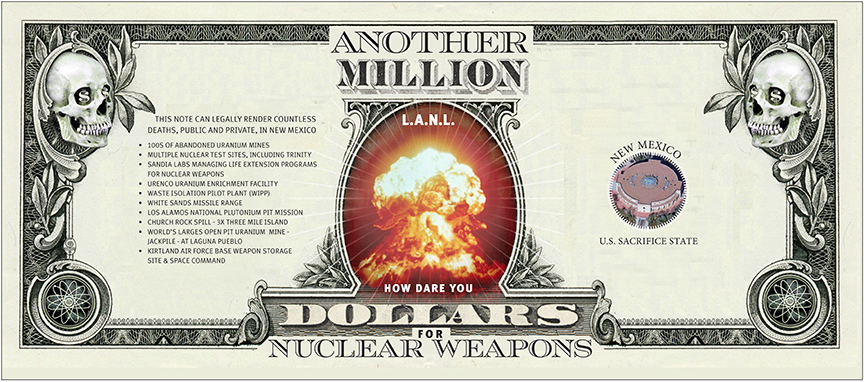 The campaign’s goal is to demonstrate the scale of a one trillion dollar investment and how it could be devoted to peace and humanitarian needs, rather than the threat of nuclear annihilation. The scale will be profound in terms of time, the number of bills, the number of people counting the money by hand, and the impact of seeing people around the world counting the money. The events will be live-streamed so people can learn what benefits this money could bring if re-directed to climate protection, just transitions, and sustainable development goals.
The campaign will begin on Thursday, October 24th and continue through Wednesday October 30th, during the United Nations’ Disarmament Week. Volunteers are needed! To sign up, contact CCNS at ccns@nuclearactive.org or by phone at 505 986-1973. On Thursday, October 24th, New Mexico’s Opening Ceremony will take place in Taos from 3 to 5 pm. It will coincide with the Opening Ceremony in New York City. For more information and to volunteer, please contact Suzie at (575) 770-2629. On Friday, October 25th, we will gather at the State Capitol to bring attention to two existential threats – the climate crisis and nuclear weapons. There will be a counting event and an opportunity to present a letter to Governor Michelle Lujan Grisham. On Saturday, October 26th, we will gather in the Socorro Plaza Gazebo from 2 to 4 pm to count 2.4 billion dollars – the amount provided to Downwinders and Uranium Workers under the Radiation Exposure Compensation Act since 2000. Despite being overexposed to radiation from the first atomic test at the Trinity Site on July 16, 1945, the Trinity Downwinders have never been included in the compensation program. https://www.trinitydownwinders.com/home On Monday, October 28th, we will gather in Los Alamos from 2:30 to 4:30 pm to count 13 billion dollars, the amount proposed to modernize the nuclear weapons complex at Los Alamos National Laboratory. The event will coincide with colleagues counting outside of major banking institutions invested in nuclear weapons work. Participants will urge divestment. For more information and to volunteer to count the money, please contact CCNS at (505) 986-1973. To learn more about the Campaign, go to http://www.nuclearweaponsmoney.org/count-the-money/ |
|
Missouri Commission Wants Legislators To Scrap Nuclear Plant-Funding Law, St
Missouri Commission Wants Legislators To Scrap Nuclear Plant-Funding Law, St Louis Public Radio By SHAHLA FARZAN • OCT 17, 2019 The Missouri Air Conservation Commission is asking state legislators to repeal a decades-old law that controls how companies fund new nuclear power plants.
The Construction Work in Progress law, passed by Missouri voters in 1976, prohibits utility companies from charging customers to cover the cost of building power plants until the facilities are up and running.
The commission unanimously passed a resolution Thursday calling the law an “intractable roadblock” for nuclear power in Missouri. Opponents say the governor-appointed commission is overstepping its bounds.
Ed Smith, policy director for the Missouri Coalition for the Environment, said he was “in shock” after the vote.
“We have people who are unelected telling elected people how to set energy policy for the state of Missouri,” said Smith, who submitted a letter in opposition to the resolution. “That is best left in the legislative arena, not for the commissioners to pick and choose winners.”
Commissioner Ron Boyer introduced the resolution on Aug. 29, six weeks after he wrote an op-ed for the Missouri Farm Bureau in support of nuclear power. …….
Smith said the commission is ignoring the financial risks of building new nuclear power plants. He cited the failed V.C. Summer nuclear project near Jenkinsville, South Carolina, which cost ratepayers $2 billion and resulted in an FBI investigation.
“Not only is nuclear a dangerous power source, it’s dangerous to consumers when plants are being built,” he said.
Geoff Marke, chief economist for the Missouri Office of Public Counsel, submitted a memo to the commission Oct. 16 calling a repeal of the law “wholly unnecessary,” arguing it would shift the financial risk of building new power plants onto the shoulders of ratepayers…….. https://news.stlpublicradio.org/post/missouri-commission-wants-legislators-scrap-nuclear-plant-funding-law#stream/0
How America was prepared to kill billions with nuclear weapons on Russia and China
America Would Have Killed Billions Nuking Russia and China in Nuclear War https://nationalinterest.org/blog/buzz/america-would-have-killed-billions-nuking-russia-and-china-nuclear-war-89731
A very real cold war horror story.
But it turns out that had global nuclear war erupted during the early 1960s, it would have been the Russians and Chinese who would have reverted to living like the Flintstones.
The report included questions and answers regarding the various nuclear targeting options. These ranged from attacks on enemy nuclear and conventional forces while minimizing collateral damage to enemy cities, to attacking cities as well as military forces on purpose. This latter option would have been “in order to destroy the will and ability of the Sino-Soviet Bloc to wage war, remove the enemy from the category of a major industrial power, and assure a post-war balance of power favorable to the United States.”
The answer was that Pentagon war plans already included the destruction of cities as a way to destroy the urban and industrial backbone. “This should result in greater population casualties in that a larger portion of the urban population may be placed at risk.”
This was because of China’s rural society at the time. “Thus, the attack of a large number of place names [towns] would destroy only a small fraction of the total population of China. The rate of return for a [nuclear] weapon expended diminishes after accounting for the 30 top priority cities.”
Note that while annihilating one-third of China’s population was deemed uneconomical, the U.S. military took it for granted that the Soviet Union and China would be destroyed as viable societies.
Interestingly, Russia and China would be reduced to the level of Conan the Barbarian—but not Albania. “Should there be capability to withhold all attacks in Albania, Bulgaria and Romania?” asks the document.
The answer was that “the capability should exist to withhold attacks against Soviet satellites (either individually or collectively).” Other documents state that potential nuclear targets included the Sino-Soviet bloc—but not Yugoslavia.
Michael Peck is a contributing writer for the National Interest. He can be found on Twitter and Facebook. This first appeared in September 2018.
USA has 90 old nuclear reactors unreinforced and unsupervised
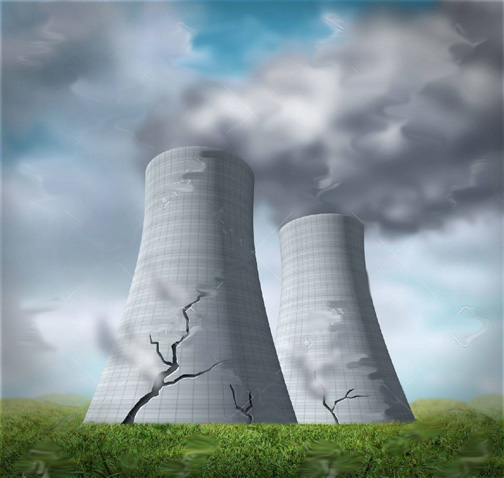 Dr W. 20 Oct 19, Anyone of dozens of reactors, in america could explode in the next year because they are embrittled deteriorating , more than 20 or 30 yers old and completely unsupervised.
Waterford in La was damaged by massive flooding from the Midwest USA and 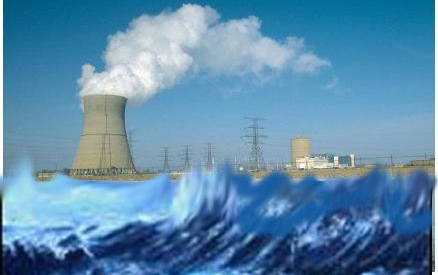 the last Hurricane.
8 reactors in Florida, Tennessee and Georgia could go with the Tropical storm currently pounding them, since hurricane Michael.
 Diablo Canyon was severely damaged by a 7.0 earthquake in southern california in the last few months. It was damaged, embrittled and crumbling before that.
STP has no backuup . It has a cracked fuel pool.
Brunswick in carolina has damaged containment multiple leaks and no access to aome areas, after hurricane maria.
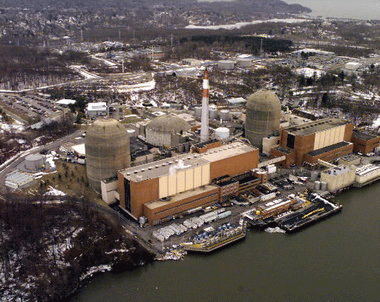 Indian point is at the brink of melltdown by New York City because it is so old and it has had so many transformer fires. It continues to leak tritium like a sieve by New York City.
Davis Besse, Fermi, Oyster Creek all have holes in their containtment.
All 90 shitty old reactors unreinforced and unsupervised under fuko the clown, and the brain damaged coked-out fairy Rick Perry. The other 6 in flood and earthquake zones along with th 90 other, very old death machines. Fuko is refusing to cleanup santa susana and hanford now. Fuko is responsible for Davis Besse fuko is allowing radioactive food to come from Japan. Fuko is responsible for the nuclear catastrophes at santa susana and idaho nuclear laboratory, in the past two years . Fuko is responsible for the nuclear explosion in russia recently by abrogating nuclear arms treaties and massively escalating nuclear arms proliferations and a new nuclear arms race.. Fuko is responsible for upcoming nuclear catastrophe in the USA in the next 6 months.
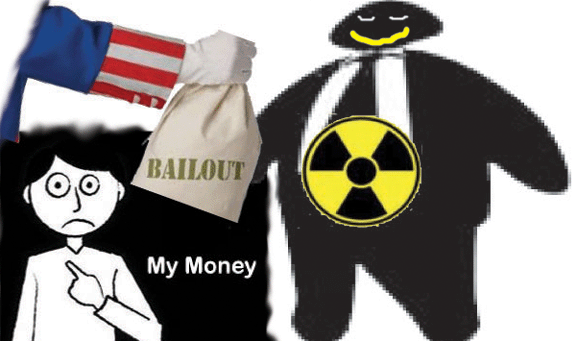
Final push for anti-nuclear signatures before Ohio’s nuclear bailout referendum

|
Anti-Nuclear Bailout Group Making Final Push For Signatures Before Monday’s Deadline https://www.statenews.org/post/anti-nuclear-bailout-group-making-final-push-signatures-mondays-deadline
By ANDY CHOW 18 Oct 19, Petitioners are giving one last push into the drive that would put Ohio’s nuclear bailout law before voters. The referendum effort must file enough valid signatures, 265,774, by Monday afternoon in order to qualify for next year’s ballot.
Opponents of the law say it’s a corporate bailout for FirstEnergy Solutions. They’re also against the coal subsidies and the cuts to green energy policies. That’s why they want to put the law on the ballot for a potential repeal. Among those opponent organizers is Rachael Belz, executive director of Ohio Citizen Action, which advocates for community involvement and corporate responsibility. Belz says they’re planning an all-out blitz to gather last-minute signatures around the state. “I feel optimistic. We’re gonna push as hard as we can up until the last minutes to make sure that this gets on the ballot,” says Belz Pro-nuclear bailout groups will continue to have their own canvassers out trying to get people not to sign the petition along with ads against the referendum. There are other looming issues. The anti-bailout group leading the charge, Ohioans Against Corporate Bailouts, has filed a lawsuit in federal court asking a judge to extend their time. The group argues a requirement for them to file paperwork about their petitioners made them vulnerable against their opposition. Ohioans Against Corporate Bailouts also says in the lawsuit that it took too long for the Ohio Attorney General’s Office to approve the petition language, so they’re asking for an additional 90 days. Pro-nuclear bailout groups have filed a case in the Ohio Supreme Court arguing that the new bailout law creates a tax, and is therefore immune to a referendum attempt. |
|
Nuclear shill Rick Perry switching from DOE Secretary to Small Nuclear Reactor Salesman
Perry to Resign as DOE Secretary, With Nuclear Weapon Programs on 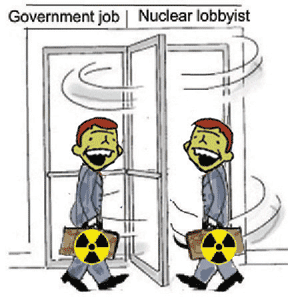 Autopilot, OCTOBER 18, 2019, BY DAN LEONE,Rick Perry on Thursday announced his resignation as the Donald Trump administration’s first secretary of energy after more than two-and-a-half years on the job. In a published letter to President Donald Trump, Perry said he would resign “later this year”…(subscribers only) https://www.exchangemonitor.com/perry-resign-doe-secretary-nuclear-weapon-programs-autopilot/
Energy Wire 17th Oct 2019, Energy Secretary Rick Perry will head back to Europe next week as part of an effort to boost the U.S. advanced nuclear industry’s ability to export its technologies across the globe.
https://www.eenews.net/energywire/2019/10/17/stories/1061299145
Anti nuclear activism revival in Washington

 Fear of a new nuclear arms race revives hotbed of anti-nuclear action, President Trump’s plans for escalation kick off a new chapter in Washington’s long history with nuclear proliferation and resistance. CrossCut, by Kevin Knodell. October 18, 2019, As worries of nuclear war resurface and new concerns about the health impacts of America’s atomic arsenal emerge, Washington state’s long-lived but largely dormant anti-nuclear movement is again raising its voice.
On Sept. 29, Washington Physicians for Social Responsibility held a town hall on Washington’s history with nuclear weapons that brought together anti-war, environmental and Indigenous rights activists. Activists marched on the Federal Building in Seattle the following day to protest Trump’s nuclear policies.
“We’re a little more alarmed than in the past, so we’re working hard to affect Congress and also working to build a movement of people,” said Dr. Joe Berkson with Washington Physicians for Social Responsibility. “The issue is the new nuclear arms race. There’s an expansion, the current administration wants to expand into new nuclear weapons and redo the whole nuclear weapons arsenal for a large amount of money, and we are opposed to that.”
On Sept. 29, Washington Physicians for Social Responsibility held a town hall on Washington’s history with nuclear weapons that brought together anti-war, environmental and Indigenous rights activists. Activists marched on the Federal Building in Seattle the following day to protest Trump’s nuclear policies.
“We’re a little more alarmed than in the past, so we’re working hard to affect Congress and also working to build a movement of people,” said Dr. Joe Berkson with Washington Physicians for Social Responsibility. “The issue is the new nuclear arms race. There’s an expansion, the current administration wants to expand into new nuclear weapons and redo the whole nuclear weapons arsenal for a large amount of money, and we are opposed to that.”
Berkson and others hope to draw on that history to broaden the conversation about nuclear weapons from the abstract fears of nuclear war to the tangible impacts the weapons have had on communities and on the environment. Activists hope to give new life to anti-nuclear activism in Washington.
“We’ve focused a lot of times on the environmental issues but now we’re really looking to hit home with the health issues,” said Twa-le Abrahamson of the Spokane Tribe.
Spokane and Yakama people have dealt with the radioactive contamination from Hanford that has poisoned their lands and, activists say, caused health problems for tribal members living on their reservations.
Abrahamson noted Trump administration has made deep cuts to cleanup efforts at Hanford and moved to roll back regulations on nuclear waste handling.
“We get some impacts on the daily. And our water has been contaminated forever, so forever we’ll have transportation of that waste,” she said. “Nobody talks about that. They want to act like that’s a history, but we have that going through our communities.”
For years, anti-nuclear activists have continuously protested against the U.S. Navy’s ballistic missile submarines stationed at Naval Base Kitsap-Bangor, which some nuclear weapons watchdogs believe houses 1,300 nuclear warheads. Berkson claimed the base, located near Hood Canal, is home to about one-third of America’s nuclear arsenal and is the third-largest cache of nuclear weapons in the world.
But the actual numbers — and locations — of America’s nuclear weapons are hard to nail down.
“It is U.S. government policy that we can neither confirm nor deny the presence or absence of nuclear weapons at any general or specific location” said Sheila Murray, a spokesperson for Navy Region Northwest, noting that for safety and security the information is tightly guarded.
Activists argue that those weapons and other large military facilities make Western Washington an attractive target for strikes by rival nuclear powers. As Trump and North Korean dictator Kim Jong Un traded insults, some Seattleites worried that the city would be in Kim’s crosshairs.
New fears of nuclear conflict have spurred a wave of activism among younger Americans. Jeanelle Sales, a University of Washington student with the campus chapter of Beyond the Bomb, became active after a nuclear false alarm in her home state of Hawaii. The thought that her friends and family could have been caught in the blast terrified her. “It was a major wake up call for me,” she said.
Among the activists’ concerns is the Trump administration’s keen interest in tactical or “low yield” nuclear warheads that are easier to deploy and which produce smaller explosions. The fear among activists is that these weapons could make a nuclear strike much more likely……https://crosscut.com/2019/10/fear-new-nuclear-arms-race-revives-hotbed-anti-nuclear-action
1 This Month

Protect Sazan Island from the Trump family! https://secure.avaaz.org/campaign/en/protect_sazan_island_from_the_trump_family_loc/?bqFCVab&v=174511&cl=22707147157&_checksum=5e9dde668860e8231c33699735e16a1fbf22ab2cb01da50c999fe8732b9775ef&utm_source=email&utm_medium=blast_email&utm_campaign=174511
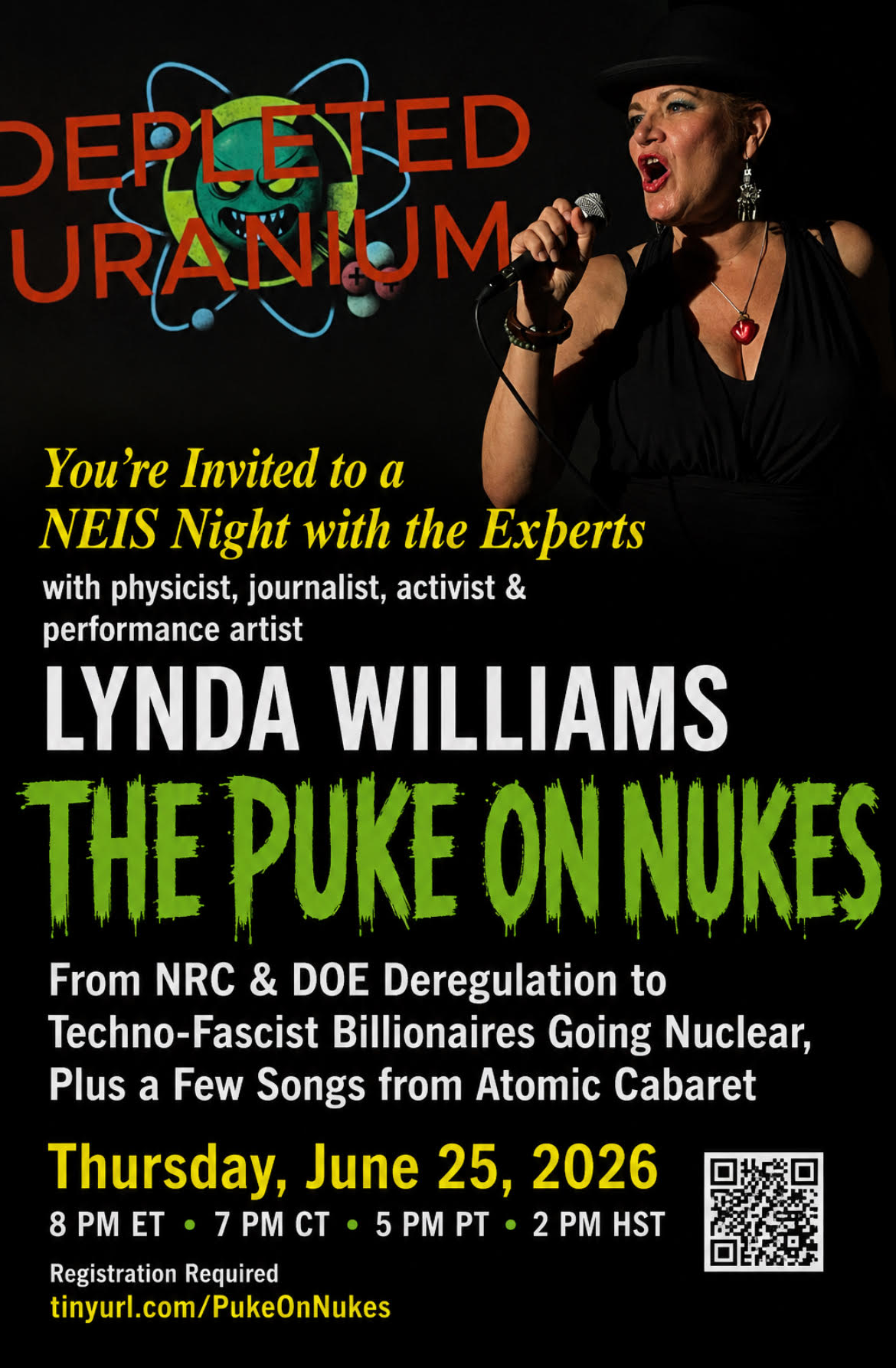
25 June- THE PUKE ON NUKES
Thursday, June 25, 2026
7pm Central Time (8pm ET, 6pm MT, 5pm PT) UTC – 5
From NRC & DOE Deregulation to Techno-Fascist Billionaires Going Nuclear, Plus a Few Songs from Atomic Cabaret REGISTER
26 June – Radiation Trainwreck at the NRC / Join the Protect Better Campaign – https://us02web.zoom.us/meeting/register/4ZlZ5_qLSHGiLSCg8FF6Bg#/registration


Cuba Is Not a Failed State – It Is a Besieged State
PETITION: “Global Appeal to Endorse Palestinian Right of Return of Refugees”
To see nuclear-related stories in greater depth and intensity – go to https://nuclearinformation.wordpress.com
-
Archives
- June 2026 (129)
- May 2026 (306)
- April 2026 (356)
- March 2026 (251)
- February 2026 (268)
- January 2026 (308)
- December 2025 (358)
- November 2025 (359)
- October 2025 (376)
- September 2025 (257)
- August 2025 (319)
- July 2025 (230)
-
Categories
- 1
- 1 NUCLEAR ISSUES
- business and costs
- climate change
- culture and arts
- ENERGY
- environment
- health
- history
- indigenous issues
- Legal
- marketing of nuclear
- media
- opposition to nuclear
- PERSONAL STORIES
- politics
- politics international
- Religion and ethics
- safety
- secrets,lies and civil liberties
- spinbuster
- technology
- Uranium
- wastes
- weapons and war
- Women
- 2 WORLD
- ACTION
- AFRICA
- Atrocities
- AUSTRALIA
- Christina's notes
- Christina's themes
- culture and arts
- Events
- Fuk 2022
- Fuk 2023
- Fukushima 2017
- Fukushima 2018
- fukushima 2019
- Fukushima 2020
- Fukushima 2021
- general
- global warming
- Humour (God we need it)
- Nuclear
- RARE EARTHS
- Reference
- resources – print
- Resources -audiovicual
- Weekly Newsletter
- World
- World Nuclear
- YouTube
-
RSS
Entries RSS
Comments RSS
 nuclear-news