Donald Trump’s ‘new’ 15‑point plan is the biggest sign yet that Washington fears it is losing this war
Iran.. does not need military victory. It only needs to endure, impose costs, and outlast its adversaries. This is the logic of asymmetric conflict: the weaker power wins by not losing, while the stronger one loses when the costs of continuing become unsustainable.
March 26, 2026, Bamo Nouri, Honorary Research Fellow, Department of International Politics, City St George’s, University of London, Inderjeet Parmar, Professor in International Politics, City St George’s, University of London. https://theconversation.com/donald-trumps-new-15-point-plan-is-the-biggest-sign-yet-that-washington-fears-it-is-losing-this-war-279001?utm_medium=email&utm_campaign=The%20Weekender%20-%2028%20March%202026&utm_content=The%20Weekender%20-%2028%20March%202026+CID_09f9907cac66b0e5c3e3ca794f0c8c0c&utm_source=campaign_monitor&utm_term=Donald%20Trumps%20new%2015-point%20plan%20is%20the%20biggest%20sign%20yet%20that%20Washington%20fears%20it%20is%20losing%20this%20war
The language of power often reveals more than it intends. In a rare moment of candour on March 7, the US president, Donald Trump, described the confrontation with Iran as “a big chess game at a very high level … I’m dealing with very smart players … high-level intellect. High, very high-IQ people.”
If Iran is, by Trump’s own admission, a “high-level” opponent, then the sudden revival of a 15-point plan previously rejected by Iran a year ago suggests a disconnect between how the adversary is understood and how it is being approached. It’s a plan already examined in negotiation by Iran and dismissed as unrealistic and coercive. Despite this, the Trump administration is once again framing the “roadmap” as a pathway to de-escalation. Tehran has once again dismissed the gambit as Washington “negotiating with itself” – reinforcing the perception that the US is attempting to impose terms rather than negotiate them.
The US president is right about one thing – Iran is not an opponent that can be easily dismissed or overwhelmed. Trump’s own description is a tacit acknowledgement that this is a far more capable and complex adversary than those the US has faced in past Middle Eastern wars, such as Iraq. And that is why the odds are increasingly stacked against the United States and Israel.
This conflict reflects a familiar but flawed imperial assumption: that overwhelming military force can compensate for strategic misunderstanding. The US and Israel appear to have misjudged not only Iran’s capabilities, but the political, economic and historical terrain on which this war is being fought.
Unlike Iraq, Iran is a deeply embedded and adaptable regional power. It has resilient institutions, networks of influence, and the capacity to impose asymmetric costs across multiple theatres. It knows how to manage maximum pressure.
The most immediate problem is lack of legitimacy. This war has authorisation from neither the United Nations or, in the case of America, the US Congress. Further, US intelligence assessments indicate Iran was not rebuilding its nuclear programme following earlier strikes – contradicting one of Washington’s justifications for war. The resignation of Joe Kent as head of the National Counterterrorism Center on March 17, was even more revealing. In his resignation letter Kent insisted that Iran posed no imminent threat.
This effectively collapses one of the original narratives underpinning the US decision to start the war – a further blow to legitimacy.
A majority of Americans oppose the war, reflecting deep fatigue after Iraq and Afghanistan – hardly ideal conditions for what increasingly looks like another “forever war” in the Middle East. Current polling shows Trump’s Republicans trailing the Democrats ahead of the all-important midterm elections in November.
The war is both militarily uncertain and politically unsustainable. International allied support is also eroding. The United Kingdom — often trumpeted as Washington’s closest partner — has limited itself to defensive coordination, while Germany and France have distanced themselves from offensive operations. European allies also declined a US request to deploy naval forces to secure the strait of Hormuz. This reflects not just disagreement, but a deeper loss of trust in US leadership and strategic judgement.
US influence has long depended on legitimacy as much as force. That reservoir is now rapidly draining. Global confidence is falling, while images of civilian casualties — including over 160 schoolchildren killed in an airstrike on the first day of the war – have shocked international onlookers. Rather than reinforcing leadership, this war is accelerating its erosion.
Israel faces a parallel crisis of legitimacy – one that began in Gaza and has now deepened. The war in Gaza severely damaged its global standing, with sustained civilian casualties and humanitarian devastation drawing unprecedented criticism, even among traditional allies. This confrontation with Iran compounds that decline.
Striking Iran during active negotiations — for the second time — reinforces the perception that escalation is preferred over diplomacy. The issue is no longer just conduct, but credibility.
Strategic failure, narrative defeat
The conduct of the war compounds the problem. The assassinations of Iranian leaders, framed as tactical victories, are strategic failures. They have unified rather than destabilised Iran. Mass pro-regime demonstrations illustrate how external aggression can consolidate internal legitimacy.
The issue is no longer just the conduct of the war, but the credibility of the conflict itself. Regardless of how impressive the US and Israeli military are, it doesn’t compensate for reputational collapse. When building support for a conflict like this – domestically and internationally – legitimacy is a strategic asset. Once eroded across multiple conflicts, it is extraordinarily difficult to rebuild.
Rather than stabilising the system, US actions are fragmenting it. Allies are distancing themselves, adversaries are adapting, and neutral states are hedging.
The most decisive factor may be economic. The war is already destabilising global markets – driving up oil prices, inflation, and volatility at levels that combine the effects of 1970s and Ukraine war oil shocks.
This is a war that cannot be contained geographically nor economically. The deployment of 2,500 US marines to the Middle East (and reports that up to another 3,000 paratroopers will also be sent), reportedly with plans to secure Kharg Island – and with it Iran’s most important oil infrastructure – would be a dangerous escalation.
For Gulf states, the assumption that the US can guarantee security is increasingly questioned. Some states are reportedly now looking to diversify their partnerships and turning toward China and Russia, mirroring post-Iraq shifts, when US failure opened space for alternative powers.
Iran holds the cards
Wars are not won by destroying capabilities alone, but by securing sustainable and legitimate political outcomes. On both counts, the US and Israel are falling short.
Iran, by contrast, does not need military victory. It only needs to endure, impose costs, and outlast its adversaries. This is the logic of asymmetric conflict: the weaker power wins by not losing, while the stronger one loses when the costs of continuing become unsustainable.
This dynamic is already visible. Having escalated rapidly, Trump now appears to be searching for an off-ramp — reviving proposals and signalling openness to negotiation. But he is doing so from a position of diminishing leverage. In contrast, Iran’s ability to threaten energy flows, absorb pressure, and shape the tempo of escalation means it increasingly holds key strategic cards. The longer the war continues, the more that balance tilts.
Empires rarely recognise when they begin to lose. They escalate, double down, and insist victory is near. But by the time the costs become undeniable – economic crisis, political fragmentation, global isolation – it is already too late. The US and Israel may win battles. But they may be losing the war that matters: legitimacy, stability and long-term influence.
And, as history suggests, that loss may not only define the limits of their power, but mark a broader shift in how power itself is judged, constrained, and resisted.
Fox News’ united front in support of Trump’s Iran war may be breaking down.
Host Laura Ingraham warns escalation could produce “cascading problems for the region,” political turmoil for the GOP
by Matt Gertz, MEDIA MATTERS 03/26/26
Four weeks after President Donald Trump launched a poorly conceived war of choice against Iran, the lockstep support for the conflict that has characterized coverage from Fox News’ star hosts is beginning to fray. The power struggle is significant — it is not an exaggeration to suggest the course of the war might hinge on which Fox shows the president is watching.
Trump is clearly approaching a decision point over whether to further escalate the war. U.S. and Israeli forces have done a lot of damage to Iranian military targets, but its regime is intact, still controls its stockpiles of enriched uranium, and has closed the Strait of Hormuz, threatening the global trade in oil, natural gas, and fertilizer. The Pentagon is sending thousands of troops to the region and reportedly prepping options for a “final blow” — some of which would involve deploying U.S. forces on Iranian soil.
When Trump is considering policy options, he often takes guidance from his loyal propagandists at Fox. This Fox-Trump feedback loop has in recent months played a role in the president’s decisions to send White House border czar Tom Homan to oversee immigration enforcement in Minnesota; prioritize the SAVE Act over all other legislation; order the deployment of ICE agents to airports; and start the war against Iran.
Against that backdrop, Fox News host Laura Ingraham warned on Wednesday’s show that further U.S. action could produce devastating unintended consequences and suggested that Trump should refocus his attention on the domestic economy and political situation.
“Iran knows it cannot win militarily, so it’s using the leverage it has by prolonging the conflict,” she said during her monologue at the top of the show. “Now, what do they want to do? They want to inflict maximum economic pain on the region, on the U.S., [on] the global economy as much as possible until they think Trump relents. But the White House doesn’t seem to be blinking.”
The host then aired a clip of White House press secretary Karoline Leavitt warning at her press briefing that day that “President Trump does not bluff, and he is prepared to unleash hell” against Iran.
Ingraham did not seem impressed by Leavitt’s rhetoric.
“Well, the problem is obviously unleashing hell means destroying infrastructure, which itself causes a series of cascading problems for the region, including maybe outside the region — political problems for the president in a midterm election year,” she said.
Her air of skepticism continued throughout the show.
While interviewing Sen. Josh Hawley (R-MO), she noted Pentagon reports of thousands of successful missions but commented, “I mean, this is a devastating blow, yet you know, we’re still there.”
“It’s not even a month old, obviously,” she continued, before asking, “But are you concerned about the public and people? Again, very short attention spans, very impatient for victory, as is President Trump, I might add. But in an election year, it’s easy to say politics don’t matter, but at some point politics do come into play.”
And in a third segment, she highlighted the disastrous polling on the Iran war, commenting, “It looks like people are pretty impatient. The American people are sending a message to President Trump that it’s time to put the focus back on the home front.”
Ingraham is inching toward the type of dissent that has been virtually absent from Fox’s coverage of the war, even as the broader right-wing media has split. Her colleagues have played key roles in convincing Trump to attack in the first place and are pushing for risky escalations. Ingraham herself briefly quibbled with Trump’s handling of an apparent U.S. strike that leveled an Iranian school, killing scores of children, but had supported the war itself, which she declared three weeks ago that Trump had already won.
But if Ingraham is getting cold feet and trying to convince Trump not to escalate a war the public has soured on, she remains an outlier at the network. Indeed, if the president tuned in for the two hours following Ingraham’s program, he saw her prime-time colleagues Jesse Watters and Sean Hannity argue not only that the war is going well and that Trump will inevitably lead the U.S. to victory, but that anyone who disagrees must want America to lose the war because they hate the president.
Watters began his show with a 10-minute monologue whose thesis was that “the Iranian regime is losing leverage fast as we continue to carry out thousands of sorties over enemy airspace.” After detailing various tactical victories, he touted a potential escalation………………………………………………. https://www.mediamatters.org/us-iran-relations/fox-news-united-front-support-trumps-iran-war-may-be-breaking-down
US/Israel War against International Law
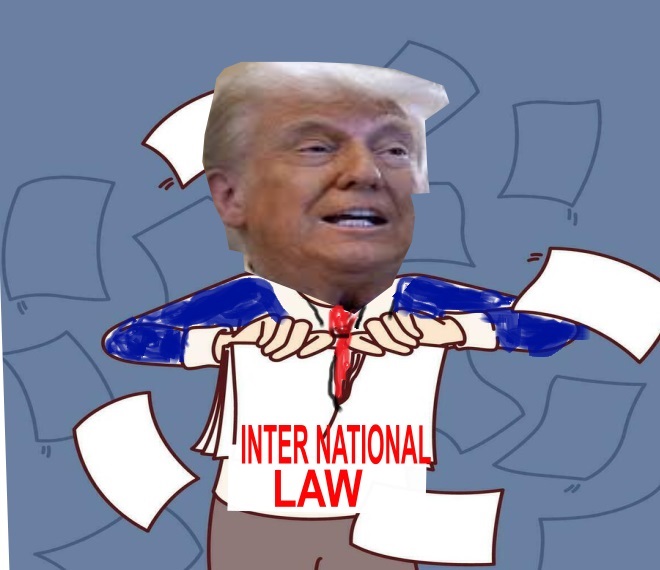
24 March 2026 AIMN Editorial, By Dr Dan Steinbock, https://theaimn.net/us-israel-war-against-international-law/
As the US/Israeli strikes against Iran violate the foundations of international law, the economic and human costs will soar.
After three weeks of effective war, the hostilities have caused severe regional spillovers, thousands of deaths, displacements of millions and a massive global energy crisis that continues to expand. If the implications are global, what’s the status of the US/Israeli strikes from the standpoint of international law?
The modern legal order is based on United Nations Charter (1945), Geneva Conventions, Rome Statute (1998) and Customary law from the Nuremberg Trials. The key rules include the prohibition of aggressive war, protection of civilians, individual criminal responsibility for war crimes, crimes against humanity and genocide. Force is allowed only in the case of self-defense and UN Security Council authorization.
The US/Israeli strikes have already violated most of these rules.
War of aggression
Article 2(4) of the UN Charter prohibits UN member states from threatening or using force against the territorial integrity or political independence of any state. It was violated on February 28, when US/Israel launched their joint strikes against Iran.
Typically, the war was launched precisely when and because the peace talks in Oman were advancing toward a successful conclusion.
In the absence of strategic objectives and exit strategy, the U.S. has framed the actions as a campaign to dismantle “the Iranian regime’s security apparatus.”
These efforts go back to the US/Israel 12-Day War against Iran in July 2025, when Masoud Pezeshkian, the new reform-minded Iran president, sought talks to end the conflict with the US and Israel. That was not in line with the “new Middle East” envisioned by PM Netanyahu and his Messianic far-right cabinet.
The UN Charter’s prohibition against force is not absolute, with key exceptions being self-defense (Article 51) and actions approved by the Security Council.
Yet, no such threat existed prior to the US/Israel strikes. And on March 17, 2026, Joe Kent, the Director of the US National Counterterrorism Center, resigned from his position in protest of the ongoing U.S.-led war in Iran. Kent said in no uncertain terms that “Iran posed no imminent threat to our nation.”
This is an illegal war of aggression, instigated by leaders who have been, like Prime Minister Netanyahu, (or should be) charged for war crimes and crimes against humanity.
Preemptive war doctrine
To legitimize the unjustifiable, Washington has resorted to preemptive justifications. In this regard, the US/Israel war against Iran is just the latest link in the 25-year-long effort to sanctify power politics with preventive wars.
Since the Bush Jr. 2002 security doctrine, US administrations have stressed preemption as a central strategic instrument. While Democratic leaders (Obama, Biden) have been more moderate in rhetoric, they have coopted the same ideas.
Relying on force to prevent future threats, preventive war doctrines are often cited as violating international law because they bypass the strict legal requirements for the use of force established in the UN Charter.
Unilateral preventive war is a threat to the principle of state sovereignty, as it allows one nation to judge the “intentions” of another, without objective proof of an upcoming attack. Setting a dangerous precedent, it incentivizes other nations to use similar pretexts for their “preventive” attacks, potentially leading to global instability.
International law allows for preemptive strikes in cases of “imminent” danger. But US strategy improperly expands this to include preventive wars against threats that are not yet fully formed or do not exist – as in the cases of the 2003 Iraq War and the 2025 and 2026 Iran Wars.
Targeted assassinations
The targeted assassination of Iranian leaders is a serious violation of international law, especially when conducted outside of an active, declared war zone. Targeted killings violate the prohibition on the use of force against another state’s territorial integrity and political independence.
Outside of active hostilities, international human rights law (IHRL) applies. Under IHRL, arbitrary deprivation of life is prohibited. Targeted killings are extrajudicial killings for which the acting state is responsible.
In the context of conflict, targeted killings can violate International Humanitarian Law (IHL) principles, including distinction (targeting civilians) and proportionality. Assassinations of state officials often violate the 1973 Convention on the Prevention and Punishment of Crimes Against Persons Under International Protection.
Precedents feature the killing of the famous Iranian general Qasem Soleimani, the right-hand man of the supreme leader of Iran, the late Ali Khamenei. Soleimani was assassinated in a targeted drone strike in Baghdad in January 2020, ordered by President Trump.
From the standpoint of international law, it was an unlawful attack, as was pointed out by Ben Ferencz, the US prosecutor in the Nuremberg trials and pioneer of international law. After Soleimani’s killing, the New York Times printed Ferencz’s letter denouncing the assassination, unnamed in the letter, as an “immoral action [and] a clear violation of national and international law.”
In their first joint strikes against Iran, US and Israel assassinated the 87-year-old Ali Khamenei, the supreme leader of Iran. Demonized in the West, Khamenei supported Iran’s nuclear program for civilian use. Already in the mid-1990s, he famously issuing a fatwa against the acquisition, development and use of nuclear weapons.
The assassination of Khamenei was still another blatant violation of international law. It was also part of the Israeli strategy to eliminate moderate leaders, whose absence is then used as an excuse for replacing peaceful diplomacy with brutal obliteration campaigns.
Crimes against humanity, forced displacement
These crimes are defined in Rome Statute Article 7, as widespread or systematic attack on civilians. Allegations are typical when strikes include targeting civilian infrastructure, economic strangulation, mass displacement, and siege conditions.
A continuity argument – “what we first see in Gaza is now spreading to Iran and, due to spillovers, into the region” – exists because similar patterns can be identified via blockade, disproportionate force, and collective punishment.
The stated efforts at regime change to undermine Iran and fragment the Shi’a state suggest that the boundary between cultural genocide targeting a broad ethnic-religious group and full destabilization is a line drawn in waters.
Allegations of ethnic cleansing, relying on deliberate forced displacement are likely over time. While ethnic cleansing is not a formal treaty crime, it is recognized in jurisprudence. It rests on forced population removal, which is the net effect of the strikes against Iran and a deliberate intention in Israel’s invasion of Lebanon.
Israel’s rapidly expanding buffer zone in southern Lebanon, extending roughly 3 to 14 kilometers north of the Blue Line demarcation, is premised on demographic engineering. In Iran, the objective to fragment the state, instigate inter-ethnic polarization and regional divides is also predicated on identity
At first sight, allegations of ethnic cleansing seemed to be more relevant to Gaza and the West Bank. But with shifting objectives, forced displacement is now an overwhelming reality. The US/Israel strikes have caused displacement of 3.5 million people in Iran and over 1 million in Lebanon, with up to 22,000 killed or wounded in the former and another 3,600 in the latter.
Collective punishment, economic warfare
Combined with illicit strikes, Washington’s decades-long sanctions against Iran, most of which are unilateral, and the underlying warfare is reminiscent of economic warfare premised at collective punishment.
Combinations of economic sanctions and military strikes, particularly when invalid from the standpoint of international law, raise serious issues under humanitarian law and human rights law. In Gaza and in Iran, unilateral sanctions have caused unwarranted mass suffering violating international law.
Ever since the early 1970s, when Beirut was still called the “Paris of the Middle East,” Israel’s wars against Palestinians have destabilized Lebanon’s fragile ethnic mosaic pushing the country to the edge of default. That’s the fate PM Netanyahu would like Iran to share.
In this regard, there is a clear continuity from the Gaza War, carried out by Israel with arms and financing by the US-led West, ICJ provisional measures and ICC arrest warrant debates, to the US/Israel strikes against Iran.
The common denominators feature an inflated self-defense doctrine, weak enforcement of humanitarian law, selective application of international law and ultimately the inevitable US veto in the Security Council.
The more these violations of international law are permitted, the greater will be the costs in economic terms, the more brutal the military destruction and the more lethal the human devastation.
That’s why multilateral cooperation – across all political differences – and the enforcement of international law is so desperately needed today, before it’s too late.
Dr Dan Steinbock is an internationally recognized strategist of the multipolar world and the founder of Difference Group. He has served at the India, China and America Institute (USA), Shanghai Institutes for International Studies (China) and the EU Center (Singapore). For more, see https://www.differencegroup.net
Does SMR Stand for Spending Money Recklessly?
March 23, 2026, Susan O’Donnell, M.V. Ramana, https://www.theenergymix.com/does-smr-stand-for-spending-money-recklessly/
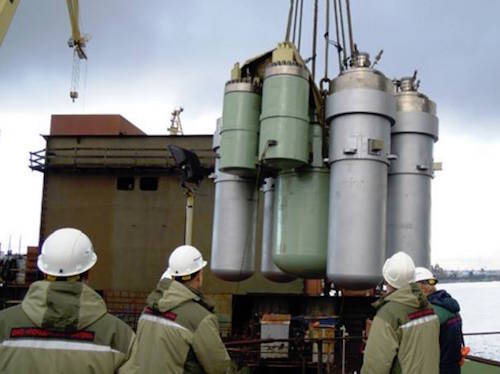
What did Canadians get for the $4.5 billion in public funding spent on small modular nuclear reactor (SMR) activities? Our new report assessing SMR development in Canada found the results underwhelming, to say the least.
Published in 2018, A Call to Action: A Canadian Roadmap for Small Modular Reactors recommended that the federal government fund SMRs and undertake other support measures. The report’s first “expected result” was that “one or more SMR demonstration [projects would be] constructed and in operation by 2026.” Our report in this milestone year covers not only this expected result, but also what the federal government has provided in funding for SMRs in Canada.
For many years, the “Micro Modular Reactor” (MMR) proposed for the Chalk River nuclear site in Ontario was to be this first demonstration. Back in 2019, the project proponents applied to the Canadian Nuclear Safety Commission (CNSC) to prepare the site for construction.
Fast forward to 2024: instead of the reactor built and being prepared to go into service, CNSC announced it had “paused all work” on the MMR project. Later that year, the company leading the project, Ultra Safe Nuclear Corporation, filed for bankruptcy protection in the United States, leaving unpaid debts of more than $16 million. That total included $641,307 to the CNSC and lesser amounts to dozens of Canadian small businesses.
In 2018, the New Brunswick government lured two start-up SMR companies into the province from the U.S. and the United Kingdom—ARC and Moltex—giving each $5 million and help to apply for funding from federal taxpayers. The SMR strategy called for two “advanced” reactor designs, which were not cooled with water, to be built at NB Power’s Point Lepreau nuclear site. Both designs have serious problems that have been documented extensively (for example, in the Bulletin of the Atomic Scientists) .
Over the next five years, the federal government handed over more than $97 million to develop the two SMR designs in New Brunswick, and the provincial government added more than $31 million to the project. Yet in late 2025, New Brunswick’s Energy Minister said the government would no longer wait for the ARC and Moltex designs because the province could not take on the risk of first-of-a-kind reactors. The millions of dollars in subsidies are essentially a write-off, funding highly paid positions at these companies at the public expense.
Of the 10 SMR designs in Canada since 2018, only one is in development. Most of the public subsidy money for SMRs—$4.025 billion—has been spent developing this reactor design, the BWRX-300, to be built at the Darlington nuclear site on Lake Ontario. As of early 2026, workers are digging a deep shaft for the reactor vessel. Sometime this summer, we can expect to see concrete being poured into the ground.
Four billion dollars is a lot of money, but nowhere near enough to pay for the four BWRX-300 reactors planned for the site. Even the first BWRX-300 reactor is expected to cost more—$6.1 billion—and the whole project will run at least $20.9 billion. It final bill could come in far higher, since the vast majority of nuclear power projects have historically overrun initial cost estimates.
The high costs for the SMR compare poorly with other options for electricity generation. For example, estimates by Australia’s Commonwealth Scientific and Industrial Research Organisation (CSIRO) show that each unit of electrical energy from SMRs would be far more expensive that a corresponding unit from solar and wind power plants, even when the cost of storage technologies and other means of accounting for renewable energy’s variability are included.
CSIRO has been undertaking an annual cost estimate in collaboration with the Australian Energy Market Operator and its reports involve extensive consultation with various stakeholders. The research agency’s analysis is informing an active debate under way in Australia to determine if the country should embark on nuclear energy. There is no corresponding effort at rigorously computing the costs of different kinds of generating energy from different technologies by any official research agencies in Canada.
Overall, the report’s analysis found little interest in SMRs among banks and other sources of private capital. When measured in terms of their ability to generate power, SMRs are more expensive than big reactors. Given the high costs, the report suggests that exporting significant quantities of SMRs from Canada is only a slim possibility.
Susan O’Donnell and M.V. Ramana are authors of the report on SMRs in Canada. O’Donnell is Adjunct Research Professor and lead investigator of the CEDAR project at St. Thomas University in Fredericton. Ramana is Professor; Simons Chair in Disarmament, Global and Human Security; and Director pro tem of the School of Public Policy and Global Affairs at the University of British Columbia in Vancouver.
Pentagon Whistleblower Criticizes “Bloodthirst” of Iran War, Says Hegseth Is Enabling War Crimes
26 Mar 2026
As the United States mobilizes thousands more troops for deployment to the Middle East, we speak with retired U.S. Air Force Master Sergeant Wes Bryant, who criticizes the “bloodthirst” of the U.S.-Israeli war against Iran. Bryant led the Pentagon office for civilian harm assessment from 2024 to 2025, before the unit was dissolved under Defense Secretary Pete Hegseth.
The “wholly illegal war” has been “carried out recklessly from the start and with little regard for the innocent,” Bryant tells Democracy Now! “Pete Hegseth has already directed the committing of war crimes. And unfortunately, our senior military leadership is bending the knee and carrying out whatever he tells them to do.”
Democracy Now! is an independent global news hour that airs on over 1,500 TV and radio stations Monday through Friday. Watch our livestream at democracynow.org Mondays to Fridays 8-9 a.m. ET.
Trump White House plagiarized Iran war manifesto from Israel-aligned think tank
Wyatt Reed and Max Blumenthal.The Grayzone, March 20, 2026
The Trump White House plagiarized its justification for attacking Iran from the Foundation for the Defense of Democracies, the main DC outfit promoting war with Tehran. The think tank was originally founded to “enhance Israel’s image,” and partners closely with the Israeli government.
The Trump Administration appeared to plagiarize its official justification for its war on Iran, copying almost word-for-word a document originally produced by the Foundation for the Defense of Democracies (FDD), a pro-war think tank with close ties to Israeli intelligence which was originally founded to “enhance Israel’s image.”
The FDD document was authored by Tzvi Kahn, the former assistant director for policy and government affairs at the American Israel Public Affairs Committee (AIPAC).
A March 2, 2026 statement issued by the White House accusing Tehran of 44 instances of terrorism against American citizens is “virtually identical” to the list published by FDD in June 2025, analyst Stephen McIntyre noted Thursday.
While the White House did make superficial alterations to the text, they largely consisted of appending the label “Iran-backed” to every mention of groups like Hezbollah and Hamas. In the few instances where Trump administration officials bothered to make significant changes to the original FDD list, the edits were almost always made in service of “ratcheting up the underlying allegation,” McIntyre concluded.
Among the most egregious examples was a 1996 attack on the Khobar Towers in Saudi Arabia, which FDD originally said merely that Hezbollah al-Hejaz was “deemed responsible” for. In the White House version, however, the group’s responsibility was “asserted as factual,” explained McIntyre, noting that serious questions about the incident remain unanswered to this day. “Clinton’s Defense Secretary William Perry subsequently wondered (along with many others) whether Khobar Towers should have been attributed to Al Qaeda,” he wrote.
A 2009 investigation by journalist Gareth Porter based on interviews with over a dozen former CIA, FBI and Clinton administration officials demonstrated that the FBI’s inquiry into the Khobar Towers attack was precooked to blame Iran, when Al Qaeda was most likely the culprit. Porter found that Shia citizens of Saudi Arabia had been tortured into confessing to the crime by Saudi secret police.
While the White House declined to join FDD in blaming Iran for the Sept. 11, 2001 terror attacks, it echoed the Israel-oriented organization in blaming Tehran for 603 military deaths in Iraq, which both documents attributed to “Iran-backed militias.” But there are major discrepancies with the figure, which amounts to 60% of the total US combatant deaths attributed to Iran. As McIntyre noted, such a claim is “not made in the State Department annual reports on Global Terrorism.”
At least four of the Americans the Trump administration claims were killed by Iran had served in Israel’s military. These included a US citizen who died while invading Lebanon in 2006 and two Americans in the IDF’s Golani brigade who were killed while invading Gaza in 2014. The fourth American, who was born in Israel and had also served in the Golani brigade, was killed amid violent reprisals against settlers in the West Bank in 2015.
A number of the claims are undermined by the very sources they cite, including a December 2019 incident in which the Trump administration insisted “Iran-backed Kataib Hezbollah terrorists killed an American civilian contractor and wounded several U.S. service members in a rocket attack at K1 Air Base in Kirkuk, Iraq.” But the Reuters article cited by the White House as proof that Iran was responsible made no such claim, explicitly cautioning that “no group has claimed responsibility for the attack.” In reality, Reuters suggested the attack was the work of “Islamic State militants operating in the area [who] have turned to insurgency-style tactics.”…………………………………………………………………………………………………………………….https://thegrayzone.com/2026/03/20/trump-plagiarized-iran-israel-think-tank/
Dramatic high-risk US Delta Force plan to snatch Iran’s nuclear stocks revealed
Chris Hughes Defence and Security Editor, 25 Mar 2026, https://www.mirror.co.uk/news/world-news/dramatic-high-risk-delta-force-36921080
American special forces could be used to smash Iran’s nuclear ambitions as war-chiefs weigh up high-risk mission amid fears of casualties and a repeat of 1980 ‘Op’ Eagle Claw’ disaster
American military chiefs are considering one of the biggest special forces raids ever-launched in a bid to cripple Iran’s nuclear programme.
The massive helicopter-borne insertion of thousands of assault troops supporting a large number of Delta Force specialists could take at least 24 hours to conduct.
It would try to seize 450kg of 60% enriched uranium believed still to be hidden deep beneath one of Tehran’s nuclear facilities and is an immensely high-risk operation.
Although below the ‘weapons grade’ 90% of enriched uranium needed to make a nuclear weapon some US intelligence experts fear Iran could use it in the future.
Two British military sources have told the Mirror the operation plan has been drawn up, although both said it has been assessed as “very high-risk, with high probability of casualties and low probability of absolute mission success since the exact location of the uranium is uncertain.”
After fighting their way into the complex, the elite Delta Force soldiers would secure the site for specialist engineers to drill and blast their way into the underground complex.
The immensely complex operation would involve scores of spy planes and fighter jets helping to secure the approach to the mission targets.
Ground troops would form a vast perimeter around the site to fight off attacks from the IRGC. Plans were drawn up by Joint Special Operations Command which has a poignant link to Iran as it was set up in 1980 following the disastrous Operation Eagle Claw whose aim was to rescue US hostages from Tehran.
Then eight US Navy Sea Stallion helicopters took off from the deck of an American aircraft carrier for a 600-mile trip to rendezvous in the Iranian desert with six C-130 transport aircrafts.
They were hit by a violent wind-driven sand storm common in the desert which damaged the aircrafts and President Carter abandoned the mission.
As the force prepared to depart, a RH-53D helicopter crashed into a C-130 plane carrying extra fuel for refueling, igniting a fire that killed five Airmen and three Marines.
America vowed it would never happen again and sought to bring its special forces and intelligence elites together for better mission planning and execution.
In 1980 JSOC was launched forming combined units from the Army Delta Force, Navy SEAL Team Six, and the Air Force’s 24th Special Tactics Squadron to ensure they could operate seamlessly together, a key failing during the Iran hostage crisis.
One source, from the intelligence community, told the Mirror: “The plan does exist but the risks of failure are very high and it may have been discounted as too difficult.
“However it is known that President Trump is extremely belligerent and not exactly risk-cognisant so there is always the possibility he could still give the go-ahead for it to happen.
“Certainly the US military has given the President options, along with their risk assessment and the uranium seizure is top of his list. Troops movements we are seeing towards the Gulf indicate something bigger than, or as well as, a Strait of Hormuz -specific operation.”
The operational planning includes crack paratroopers entering Iranian airspace in fast-moving Chinook troop carrier helicopters and uniquely-adapted special forces planes for an unusually large number of elite Delta Force special forces soldiers.
A second, military source, told the Mirror: “If it goes ahead this could be the biggest Special Forces operations ever launched, with diversions elsewhere in Iran and major air-raids to cast confusion into the ranks of the Islamic Revolutionary Guard Corps. It has been looked into for some time but it is exceptionally high risk.
“The final word will go to Commander-in-Chief Donald Trump with input from Pete Hegseth, his so-called Secretary of War, who has been extremely enthusiastic about this war. It is a major decision as a lot can go wrong in an operation of this size but US administration may see it as the only way to secure the enriched uranium. The question is whether Trump is prepared to give it the go-ahead.”
Earlier this month the Mirror revealed exclusively how US forces had sent a number of uniquely adapted MC-130J Commando II special forces planes from RAF Mildenhall in Suffolk to the Middle East, indicating a major covert operation was being planned.
The Lockheed Martin US Air Force Special Operations Command planes are for clandestine, low-visibility infiltration, exfiltration, and resupply of special operations forces.
They perform high-speed, low-level air refueling, cargo airdrops, and air to land missions in hostile or sensitive areas. It comes amid reports President Trump has now ordered thousands of elite US paratroopers to the Middle East, perhaps to invade Kharg Island, the oil-exporting hub on which the Iranian economy relies.
Based at Fort Bragg in North Carolina, the Immediate Response Force is a brigade of about 3,000 troops from the 82nd Airborne Division that can deploy anywhere in the world within 18 hours.
But at least 5,000 marines are also en route for the Gulf, supposedly also to support an operation to secure Kharg Island, despite Trump’s claims peace negotiations are underway.
These claims have been vehemently denied by Iran’s foreign ministry. The first of two marine expeditionary units is due to arrive in the Middle East on Friday, comprising the USS Tripoli, an amphibious assault ship carrying 2,200 troops, the USS New Orleans, an amphibious docking ship, F-35B Lightning II stealth fighters and MV-22B Osprey tilt-rotor aircraft.
Our sources told the Mirror the two operations against Kharg Island and the site of the hidden nuclear facility, which we have chosen not to identify, may yet happen simultaneously.
A War Built on Lies, Sold by Lobbyists, with Innocent Children as its Price
23 March 2026 David Tyler, Australian Independent Media
On 27 February 2026, the night before the bombs fell, Oman’s foreign minister, Badr bin Hamad Al Busaidi, announced that a breakthrough had been reached. After months of back-channel diplomacy, Iran had agreed to never stockpile enriched uranium, to full IAEA verification, and to irreversibly downgrade its existing stock to the lowest possible level. Peace, he said, was “within reach”. Technical talks were scheduled to continue in Vienna the following week.
Fourteen hours later, at 7:00 AM Tehran time on 28 February, the first wave of missiles arrived. China had been working to improve Iran’s situational awareness. It did not matter. The attack came without warning. Reports from Arab media, undenied by Tehran, claimed that Esmail Qaani, commander of the IRGC’s Quds Force, had been arrested and executed as a Mossad agent.
Within twelve hours, the United States and Israel had conducted more than 900 strikes. Two hundred Israeli aircraft, the largest combat sortie in its history, dropped over 1,200 bombs on 500 sites across western and central Iran. US Tomahawk missiles, launched from destroyers in the Arabian Sea, hit leadership compounds, missile factories, naval installations, and the National Security Council offices where Ali Khamenei was meeting his senior advisers. They knew he was there. Netanyahu had personally briefed Trump on the location days earlier. Khamenei was above ground, in daylight, when the strike came. He was dead before midday.
Forty-eight hours later, US forces had flown more than 1,700 sorties and struck over 1,250 targets across 29 of Iran’s 31 provinces. The first six days of Operation Epic Fury cost the United States more than $11 billion.
In that same period, Amnesty International confirmed that a US Tomahawk missile struck a girls’ primary school in Minab. Debris bearing the inscription “Made in USA” and the name “Globe Motors, Ohio” was recovered at the site. At least 170 people were killed. Most were children aged seven to twelve.
Then Donald Trump, in the second year of his second term, appeared on Truth Social to claim the war was about freedom.
The Lobbyists and the Lie
The question corporate media has avoided is simple. Who wanted this war, and how did they get it?
The Washington Post reports that Trump acted after sustained lobbying from Israel and Saudi Arabia. Crown Prince Mohammed bin Salman urged him to strike. Netanyahu’s government pressed the case repeatedly. Their interests converged. Israel sought to restore deterrence and reshape a regional order drifting beyond its control. Saudi Arabia saw an opportunity to weaken a rival it had failed to contain by other means. Together, they found a willing president.
The deeper breach was internal. Pentagon briefers told congressional staff on 1 March that Iran was not preparing to attack US forces or bases unless Israel struck first. The intelligence did not support the war. It was set aside. This was not a failure of information. It was a decision to ignore it.
US intelligence had already assessed that Iran was not pursuing nuclear weapons and would not have the capacity to build one before the end of the decade, even if it chose to do so. The IAEA had affirmed it. At the same time, Badr Al Busaidi was moving between delegations, and Iran’s chief negotiator was describing the talks as the most substantive in years. A framework for Vienna was in place. Technical teams were on standby.
Inside the administration, advisers discussed the advantages of letting Israel strike first to create a cleaner pretext for US entry after Iranian retaliation. That is not strategy. It is sequencing. Diplomacy was not the alternative to war. It was its cover.
Behind the push stood the familiar architecture of American intervention. Senator Lindsey Graham. The Foundation for Defense of Democracies. The American Enterprise Institute. Donor networks that have spent decades advocating regime change in Iran. They did not invent the policy. They sustained it, funded it, and waited for a president prepared to act on it.
Trump supplied the rest. On different days he has offered regime change, nuclear prevention, Iranian freedom, mineral security, and the Venezuela model as justification. None align. That is because the rationale followed the decision, not the other way around.
Congress, meanwhile, has largely abdicated its role. War powers have withered into ritual complaint. Democratic leadership has offered little more than procedural discomfort. The constitutional check on executive war-making is now
political theatre, observed and ignored.
Illegal, Immoral and Known to Be Both
The legal position is clear. The UN Charter permits the use of force only with Security Council authorisation or in self-defence against an armed attack. Neither condition applied. Iran had not attacked the United States or Israel. The Security Council had authorised nothing. The strikes began during active negotiations.
Ben Saul, the UN special rapporteur on counterterrorism, called it what it is: a crime of aggression. Oona Hathaway described it as “blatantly illegal”. The European Council on Foreign Relations reported broad consensus among legal scholars that no valid justification exists. This was not a contested case. It was an unambiguous one.
Within the United States, dissent has come from the margins of power. Rashida Tlaib. Alexandria Ocasio-Cortez. Bernie Sanders. They are not describing a grey area. They are describing what the law already recognises.
What the Bombs Actually Did……………………………………………………………………………………………………………………………..
The Catastrophe in Progress
………………………….This is not a regional disruption. It is a global economic shock. Energy prices feed directly into inflation, into transport, into food. The cost of this war will not be confined to the battlefield. It will be paid at petrol stations, in grocery aisles, and in central bank decisions across the world.
………..Senator Thom Tillis has asked the only question that matters. What are we trying to accomplish?
There is no coherent answer because coherence was never the point. This is the Venezuela model applied to a country four times larger, with a military doctrine built to resist precisely this kind of intervention, and a political system shaped by decades of confrontation with the United States. The architects of this war designed Iraq. The pattern is familiar. The outcome will be too. https://theaimn.net/a-war-built-on-lies-sold-by-lobbyists-with-innocent-children-as-its-price/
US moves to approve more than $16 billion in air defense sales to Middle East
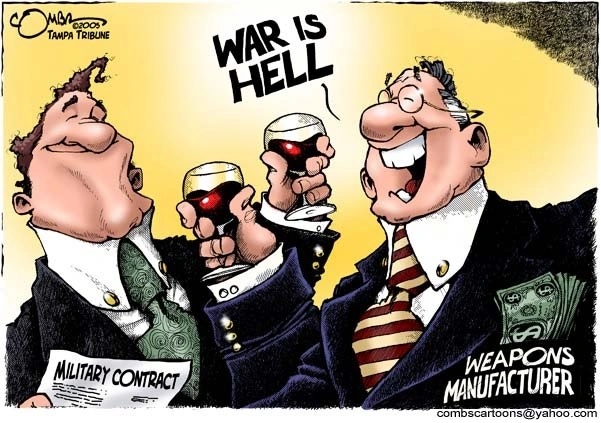
The United States is moving to bolster air defenses across the Middle East, notifying Congress of more than $16.5 billion in potential weapons sales aimed primarily at countering missile and drone threats.
The packages include systems for the United Arab Emirates, Kuwait and Jordan, and range from advanced radar and air defense sensors to counter-drone technology and aircraft munitions, according to several statements released Thursday by the U.S. Department of State.
The notifications come as missile and drone attacks have intensified across the Middle East during the war with Iran, putting pressure on air defense systems used to protect U.S. forces and regional allies.
The State Department said the secretary of state determined that an emergency justified the immediate sale, allowing the administration to bypass the typical congressional review process under the Arms Export Control Act.
Among the proposed sales is a long-range radar for the UAE that is designed to integrate with its Terminal High Altitude Area Defense system, or THAAD, for $4.5 billion.
The UAE package also includes a $2.1 billion fixed-site system designed to counter small drones, as well as $1.22 billion in air-to-air missiles and a $644 million set of F-16 munitions and upgrades to support its fighter aircraft.
Separately, Kuwait would receive $8 billion in lower tier air and missile defense radars designed to detect shorter-range threats, while Jordan’s $70.5 million package focuses on aircraft repair and parts to maintain its existing fleet.
Together, the sales point to a broader effort to build layered air defenses that are capable of detecting and intercepting threats at different ranges.
The demand comes as U.S. air defense systems are being used at a rate analysts worry exceeds the pace at which stockpiles can be replenished.
Ontario’s nuclear push risks another costly policy failure.
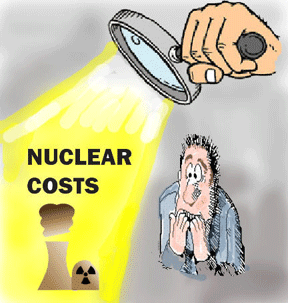
Nuclear power is neither nimble nor affordable and it’s about time the Ontario government stopped posturing otherwise.
Policy Options, Samuel Buckstein , March 20, 2026
Nuclear power is experiencing a resurgence worldwide and Ontario is no exception. The province has a long history with this awesome and terrifying energy technology, and it is once again turning to nuclear power in response to concerns over national sovereignty, economic growth, electrification and decarbonization.
Looking back over Ontario’s troubled history with nuclear energy, it is concerning to see the Ford government stumbling back to the bar for another round of nuclear cool-aid. Yet Ontario’s plan shows little evidence of having done its homework. Contrary to the government’s claims, it is fiscally irresponsible, incapable of delivering the energy the province needs in the time required, and compromises Ontario’s energy security.
When it should be investing in much cheaper and more easily deployed renewables, the province is recklessly doubling down on nuclear despite the evidence against it.
A legacy mired in debt
To understand Ontario’s nuclear trajectory, it is helpful to reflect on its origins. When civilian nuclear power was commercialized after the Second World War, its advocates promised it would be “too cheap to meter.” Buoyed by encouragement and financing from both provincial and federal governments, Ontario Hydro duly invested in a fleet of 20 CANDU reactors at three nuclear power stations over the course of 30 years.
By the turn of the millennium, Ontario Hydro’s nuclear obsession had saddled it with $38.1 billion in debt — $20.9 billion of it stranded (unsupported by assets). This burden was so immense that it toppled the once proud flagship Crown corporation. Ontarians continue to pay for this nuclear hangover today. As of March 2023, ratepayers were still on the hook for $13.8 billion.
Even as late as 1989, with Ontario Hydro already buckling under its crushing debt, the utility was forecasting the need for 10 to 15 new reactors by 2014. Reality proved otherwise, with peak electricity demand in 2014 lower than it had been 25 years earlier.
After a generation of staggering cost overruns and catastrophic international incidents at Three Mile Island, Chernobyl and Fukushima, nuclear power fell out of favour in much of the developed world. Cheaper, more flexible and faster-to-deploy alternatives took its place, first gas and then renewables…………………………………
Lessons from the U.K. and Ukraine
However, Ontario should learn from the United Kingdom, not authoritarian China. The experience of Hinkley Point C, the first new nuclear power plant to be built in the U.K. in more than 20 years, should be a cautionary tale.
At least five years behind schedule and two times over budget, Hinkley Point C will likely be the most expensive nuclear power plant yet. The electricity generated by this colossal waste of rate-payer dollars will cost between two to four times more than renewable energy, which can be brought online in half the time. This is what the provincial government has in store for Ontario.
The scale of Ontario’s plan is immense. In addition to the CANDU refurbishments at Darlington and Bruce, Ontario has announced the refurbishment of Pickering B, one of the oldest and most urban nuclear power stations in the world.
Sovereignty concerns
Ontario has also contracted with GE Vernova Hitachi to build up to four small modular reactors (SMRs) at the Darlington site. It is unclear why the government has committed to building four SMRs before even the first is constructed. The greater concern with this arrangement is GE Vernova Hitachi is a U.S.-controlled company and the fuel supply chain is in the U.S. and France, not Canada…………………………………………………………………………………………………………….
No price tag and no certainty it will pay
Despite these red flags, Ontario’s nuclear ambitions do not stop there. The government is also considering building two new large nuclear power stations at the Bruce site and at a new location near Port Hope. This despite the fact that, like the U.K., the domestic nuclear supply chain has all but vanished. This is precisely the kind of multi-billion-dollar, multi-decade infrastructure lock-in that bankrupted Ontario Hydro.
The government has been silent on how much this plan will cost. No one can predict whether demand will materialize to justify this massive supply expansion, or what electricity prices will be when these reactors finally come online. Committing to decades of investment in such an uncertain environment is sheer folly.
To top it all off, nuclear power is not even operationally flexible. Generation cannot be adjusted rapidly enough to follow demand, and the reactors can only be quickly turned off, but not back on again (it took Ontario more than a day to restore power after the 2003 Great Northeastern Blackout due to neutron poisoning in the reactors).
Renewable options
It does not have to be this way. Much has changed since the last wave of nuclear infatuation. Renewables are now the cheapest source of energy on a levelized basis. While renewables may be intermittent, they are reasonably predictable, and for the first time since the inception of the electricity industry, generation no longer needs to coincide perfectly with consumption. Rapidly falling battery costs have made energy storage a commercially viable reality…………………………………………………………. https://policyoptions.irpp.org/2026/03/ontario-nuclear-energy-costs-risks-renewables/
Switzerland Just Exposed Project Ranger’s Weakness
(Project Ranger, a 1,000-acre hypersonic manufacturing campus in Sandoval County, designed to support high-cadence production of hypersonic strike systems. )
Elaine Cimino, 23 Mar 26
Switzerland’s halt on weapons-related exports to the United States is not symbolic. It is a disruption—and it lands directly on projects like Project Ranger.
This facility is being built on the assumption that a complex, global weapons supply chain will function without interruption. That assumption is now broken.
Advanced weapons manufacturing depends on precision components, machine systems, and specialized inputs that cannot be swapped out overnight. When a country like Switzerland shuts off supply, timelines don’t “adjust”—they fail. Production stalls. Certification resets. Entire sequences of manufacturing have to be reworked.
That means one thing for Rio Rancho:
Project Ranger will not meet its LEDA job timelines as promised as long as the supply chain is disruptied.
LEDA agreements are performance-based. Jobs are supposed to materialize on a defined schedule. That schedule is now tied to a disrupted international supply chain. No amount of local approval, zoning, or political messaging can override that reality.
If the components aren’t there, the jobs aren’t there.
And when the jobs don’t show up on time, the public is left holding the bag.
Because the costs are already locked in.
Rio Rancho has approved development while operating with a water deficit. Return flow credits are not being met. Infrastructure is being expanded. Rates are rising. Nearly 40% of residents are low- or fixed-income—and they are being forced to subsidize a project whose economic return is now uncertain.
Water rates were locked designed for developers and project Ranger build out on the residents dollars.
At the same time, the broader economy is unstable. If the economy contracts—and all indicators say that risk is real—projects dependent on fragile, globalized supply chains are the first to break. Delays compound. Costs escalate. Public subsidies become sunk losses.
This is the predictable outcome of building a local economy around a volatile defense supply system.
And yet, construction continues. Question for how long—Until they stopped cold.
Steel is going up. Concrete is being poured. Commitments are being made in real time, while the underlying conditions that justified those commitments are collapsing. Now from the governor to the Castelion excuses to city dodging questions. Don’t count on the fascist tech bros to let their bomb factory to got to rust.
Switzerland didn’t just halt exports.
It exposed the truth: Project Ranger is not in control of its own timeline.And Rio Rancho is not in control of the consequences. The public pays
Trump’s battle plan for Iran
Bruce Gagnon, Mar 26, 2026, https://brucegagnon177089.substack.com/p/trumps-battle-plan-for-iran?utm_source=post-email-title&publication_id=3720343&post_id=192096004&utm_campaign=email-post-title&isFreemail=true&r=ln98x&triedRedirect=true&utm_medium=email
Europe key to US ops in Iran
Another very interesting piece from the WSJ. These details have been available through OSINT sources but it’s a good roundup showing how key Europe is to US operations against Iran:
- The central command center for US operations against Iran is within Ramstein Air Base in Germany (unsurprising)
- US drone operations are conducted from there as well
- Ramstein is increasingly being used as a hub by the Americans. Military transport aircraft, in particular, land there and took off for the Middle East, including several Boeing C-17 Globemaster III (77.5 tons of load) and Lockheed C-130 aircraft (20 tons).
- American media reported that F-16 fighter jets had been transferred from US Spangdahlem AFB, Germany to the Middle East. According to the trade magazine Air and Space Forces, they are to be used in Iran to combat air defenses. BBC reported that the base is now operating “around the clock.”
- American aircraft stationed in Spain have been relocated to France and Germany after the Spanish government denied the use of the Morón and Rota air bases for attacks on Iran
- Bomber aircraft sorties out of bases in the UK like RAF Fairford
- Refueling operations are based out of Aviano Air Base in Italy and Tubé Air Base in France
- Lajes Air Base in the Azores (Portugal) is serving as a major logistical hub, with dozens of aircraft stationed there at various times during the conflict
- RC-135 Rivet Joint spy planes are operating out of Souda Bay in Crete
- Unspecified “logistics and intelligence assets” are being hosted by Romania
- The piece paints an amusing picture of European attitudes towards this. Keir Starmer’s justification for overcoming his reticence to allow the US to base out of British facilities in the initial wave of strikes is that bomber operations are now “defensive” in nature.
- Merz has said publicly that this “isn’t [Germany’s] war,” but he has no choice but to allow US operations out of German air bases due to pre-existing legal agreements.
- Meloni has spun Italian involvement as minor because only refueling missions are flown out of Aviano. Similarly, French defense minister Vautrin said, “a refueling aircraft is a gas station, not a fighter jet.”
- These technicalities may work on the European public, but it’s difficult to imagine they’ll work on the Iranians.
Let’s focus not on what Trump says, but on what he does.
These are the U.S. military units recently deployed to the Middle East against Iran.
- 160th SOAR (Night Hunters): An elite helicopter unit that secretly inserts and extracts special forces, often at night, using skilled pilots and modified aircraft.
- 75th Airborne Brigade: A light infantry force for rapid raids, airfield seizures, and close-quarters combat missions against high-value targets.
- Delta Force (1st SFOD-D): A top-tier counterterrorism and hostage rescue unit focused on high-risk, precision missions targeting high-value individuals.
- 1st Special Forces Group (1st SFG): Operates primarily in the Asia-Pacific; trains allied forces, conducts unconventional warfare, and supports insurgencies or partner militaries.
- 5th Special Forces Group (5th SFG): Focused on the Middle East; It specializes in counterterrorism, unconventional warfare, and advising local forces.
- US Navy SEALs: Special operations focused on the sea—raids, reconnaissance, direct action, and covert missions from the sea, air, or land.
- But for what mission?
- Islands within or near the Strait of Hormuz—Small but strategically important islands used by Iran to control shipping lanes. US special forces could quickly seize them to reopen the strait.
- An island outside—Iran’s main oil export terminal. Seizing or destroying it would cripple Iranian oil revenues.
- Iranian nuclear facilities or other high-value sites—Potential raids to destroy stockpiles of enriched uranium or related infrastructure.
The war against Iran: Lessons still unlearned
By William Briggs | 26 March 2026, https://independentaustralia.net/life/life-display/the-war-against-iran-lessons-still-unlearned,20853
The dreams of the U.S. President, that it would all be over in days – that the Iranian people would rise against their tyrannical regime – is now a nightmare that Trump has visited upon the world.
The global economy is on the brink of disaster as oil dries up. America and Israel have further isolated themselves from world public opinion and, apart from an ever- shrinking clique of semi-vassal states like Australia, Trump appears to be alone and increasingly dangerous.
The war offers a great many lessons, but while life and history can be great teachers, there seem to be precious few pupils ready to learn those lessons. This applies equally to apologists for U.S. power, to governments of all stripes and to many of those who inhabit the Left and lay claim to Marxist credentials.
The war was never about “liberating” the Iranian people from the right-wing theocracy. It was about securing a compliant regime that would ensure the flow of oil and to make sure that the USA, as a fading imperial power, maintained global hegemony — both politically and economically.
The slogan that accompanied the wars of aggression against Iraq, that tore Libya apart and which laid waste to so much of the Middle East was simply, No Blood for Oil! The years have slipped by, and yet the same foul motivation for despoiling the globe and destroying a people remains.
Our mainstream media know this to be true, even as the “story” turns its focus to the retaliation by Iran and to the oil pressure that the blocking of the Straits of Hormuz entails. The same media focuses on potential oil shortages, and rightly so, but seems less keen to link that invasion to the fact that people are paying stupid prices for petrol and diesel.
Fewer voices can be heard that would remind the people of how the war started and who is responsible. That has become largely the responsibility of the Left — the Marxists, the campaigners against war and imperialism.
This is as it should be, but something is very wrong. Marxism is quite clear that economics is the defining factor and that politics works with and responds to economic demands. The war, then, can only be understood from an economic perspective. But is it being understood in this way? Sadly, no.
Some see it as a political gamble by a beleaguered and dangerously unhinged U.S. President. Some portray it as a means, by Israel, of destroying any potential risk to its domination of the region. Some come a step closer by recognising the strategic desire to weaken China, as it is a principal customer for Iranian oil.
Any and all of these considerations are enough to allow blame to be sheeted home to the USA and Israel, but there is a deeper, more worrying aspect to this. The United States has been and remains the single biggest military force and greatest economic power that the world has seen. It is, as the Marxist Left will say, an imperialist power. It is also a declining power.
For decades, its main preoccupation has been how to hold back the rising tide of its one great rival. China’s rise, accompanied by a global capitalist economy that has run out of ideas and resilience, ensures that wars are either finishing, beginning, or in the planning stage. A failing economic structure is driving the world to the point of no return. The war against Iran is one battle in this endless spiral into decay. The USA, as the central power in the capitalist global economy, is more than willing to destroy entire nations in its quest to keep the sinking ship afloat.
No crime is too much. The U.S. bombing the girls’ school in Iran, the Israeli destruction of oil facilities on the edge of Tehran that have led to acid rain and an unimaginable civilian health disaster, sicken all reasonable people. But those who plan such actions are not among the reasonable.
These acts need to be condemned. Governments need to show at least a modicum of decency. Our Prime Minister needs to stop slinking in the shadows and act. He needs to denounce such actions. He needs to find the courage to say “No!” and to work to secure the natural resources needed to keep Australia functioning. This is unlikely. Our political structures are such that we remain totally subservient to the demands and interests of the USA..
Those whose anger compels them to take to the streets deserve better than the Babel that has become the protest movement. The most recent action in Melbourne, which was dominated by ever more shrill denunciations of Israel, while mention of the USA and its causal responsibility for the war was at best an afterthought. Protest has merit, it is necessary and has purpose. It also needs focus, if it is to have either merit or purpose.
Protest is also about winning the hearts and minds of people. Sound and fury might be a therapy for some, but numbers count and numbers must grow, people must be educated, encouraged to talk to others, to build a movement that can go beyond noise.
Part of that building process must include the raising of collective consciousness. It must be able to show and convince people that this or that crime of the USA, of Israel, of imperialism, is not isolated, or in any way an aberrant thing, but is a symptom of a deeper, structural crisis. It is not enough for the ideologues to make demands that cannot be achieved. The protest movement, the anti-war movement, should aim at providing a vehicle, a voice for those who want something better than news screens full of war stories and a Federal Government pathetically marching to the fifes and drums of a fading U.S. empire.
European Union leaders have been prepared to stand back a little; to say that the war is not their war. It is hard to imagine an Australian government being daring enough to question anything that comes from Washington. As the sun sinks on U.S. hegemony, Australia seems ready to go down with the American ship.
Trump’s $200 billion Iran spending request reveals scale of US war plans.
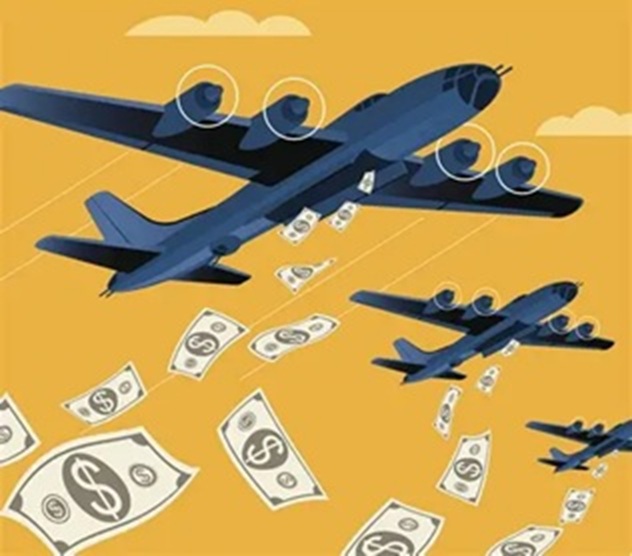
In reality, the administration is planning the most endless of all endless wars—an open-ended invasion aimed at subjugating or destroying a country of 90 million people.
The $200 billion is a supplemental—on top of the $839 billion defense bill Congress already passed for fiscal year 2026, the largest military budget in American history. If approved, direct military spending this year will exceed $1 trillion. US President Donald Trump has called for a $1.5 trillion military budget for fiscal year 2027—a 50 percent increase.
Andre Damon, 19 March 2026, https://www.wsws.org/en/articles/2026/03/20/iuck-m20.html
The Washington Post reported Wednesday that the Trump administration is seeking more than $200 billion to fund the war against Iran.
At a press briefing Thursday, a reporter asked Defense Secretary Pete Hegseth “why a package this large is necessary?” Hegseth not only confirmed the $200 billion figure but suggested it could grow. “I think that number could move,” he said. “It takes money to kill bad guys. So we’re going back to Congress to ensure that we’re properly funded for what’s been done, for what we may have to do in the future.”
And what, exactly, are these unspecified things the administration “may have to do”?
In 2003, when 150,000 American soldiers invaded and occupied Iraq, Congress appropriated $51 billion—a quarter of what the Trump administration is requesting before a single ground soldier has entered Iran. At the height of the 2007-2008 surge, when nearly 170,000 American soldiers occupied the country, the war cost roughly $144 billion a year.
In reality, the $200 billion is not about “what we may have to do in the future” but about what the White House is actively conspiring to do in the present. The budget request comes as the administration prepares a ground invasion of Iran, deploying 5,000 Marines from the Pacific to the Middle East amid demands by the Wall Street Journal and leading Republicans for the seizure of Kharg Island and the Strait of Hormuz.
Reuters reported Wednesday that the Trump administration has discussed sending ground forces to seize Kharg Island, the hub for 90 percent of Iran’s oil exports, and has separately discussed deploying US forces to secure Iran’s stocks of highly enriched uranium. They are operational plans for the invasion and occupation of Iranian territory—and they explain why the administration is demanding more money than was appropriated for any single year of the Iraq invasion.
Just as with the months and years of planning that preceded the US-Israeli attack on Iran, the ground invasion is being prepared behind the backs of the American people, who overwhelmingly oppose the war. Trump called the war an “excursion.” Vice President JD Vance promised it would not become a “quagmire.” At the same briefing where he confirmed the $200 billion request, Hegseth told reporters: “The media wants you to think, just 19 days into this conflict, that we’re somehow spinning toward an endless abyss or a Forever War or a quagmire. Nothing could be further from the truth.”
In reality, the administration is planning the most endless of all endless wars—an open-ended invasion aimed at subjugating or destroying a country of 90 million people.
The administration sees the Iran war as a prelude to an effort to subjugate China, the world’s largest economy by purchasing power parity. As former Republican Congressman Patrick McHenry put it on ABC’s This Week, the wars in Venezuela and Iran are “targets of opportunity to reshape the world.” He added: “Venezuela was in service to American energy dominance. The issue with Iran was a target of opportunity… The results here will mean that, with China, the president’s hand will be enhanced.”
The $200 billion is a supplemental—on top of the $839 billion defense bill Congress already passed for fiscal year 2026, the largest military budget in American history. If approved, direct military spending this year will exceed $1 trillion. US President Donald Trump has called for a $1.5 trillion military budget for fiscal year 2027—a 50 percent increase.
And $200 billion is only what the administration will admit to. In 2002, Bush’s chief economic adviser Lawrence Lindsey was fired for estimating the Iraq war would cost $100 to $200 billion. Defense Secretary Donald Rumsfeld put the figure at “something under $50 billion.” When told outside estimates ran to $300 billion, Rumsfeld replied: “Baloney.” Deputy Defense Secretary Paul Wolfowitz assured Congress that Iraqi oil revenues would pay for reconstruction. The actual cost, including veterans’ care, disability payments and interest on the debt, is now estimated by Brown University’s Costs of War Project at more than $8 trillion.
The waging of continuous wars, combined with the 2008 and 2020 bank bailouts, has produced an explosion of US debt. In 2000, before the Iraq war, the national debt stood at $5.7 trillion. By 2010, after the Iraq surge and the $700 billion TARP bank bailout, it had reached $12.3 trillion. By 2020, after $4.6 trillion in COVID bailouts, it hit $27 trillion. It now stands at $39 trillion—nearly seven times what it was a quarter century ago.
The United States credit rating has been downgraded three times—by Standard & Poor’s in 2011, Fitch in 2023 and Moody’s in 2025—each time because of military spending and the refusal of either party to cut the military budget. The Vietnam War destroyed Lyndon Johnson’s Great Society programs and produced the inflation of the 1970s, which the ruling class broke through the Volcker shock—mass unemployment to crush wages. The Iraq and Afghanistan wars were waged alongside tax cuts for the wealthy and the gutting of public services.
Trump’s “One Big Beautiful Bill,” signed last July, imposed $1 trillion in cuts to Medicaid over the next decade, $536 billion in cuts to Medicare and $186 billion in cuts to food assistance through the Supplemental Nutrition Assistance Program (SNAP)—the largest cut to food aid in American history. The fiscal year 2026 budget slashed domestic spending by 22.6 percent—cutting the Department of Housing and Urban Development (HUD) by 44 percent, the Centers for Disease Control and Prevention (CDC) by 44 percent and the National Institutes of Health (NIH) by $18 billion—while increasing the military budget by 13 percent.
Within 24 hours of the administration confirming it is seeking $200 billion for the war, the Postmaster General testified to Congress that the United States Postal Service (USPS) could run out of cash as soon as October—with just $8.2 billion in reserves, enough to cover 33 days of operations. The USPS employs more than 500,000 workers and holds billions in pension and retirement obligations. The manufactured insolvency is a pretext for raiding those funds—taking workers’ pension money and spending it on the war.
Medicare, Medicaid and Social Security represent trillions more. The ruling class sees these programs as money to be seized. The administration does not see pensions and healthcare as social programs. It sees them as collateral.
Trump has promised the economic pain will be a temporary “blip.” This will not pass in weeks. It will mean a permanent reduction in working-class living standards, just as the Iraq war did.
The struggle to defend Medicare, Medicaid, Social Security, pensions and public services cannot be separated from the struggle against war. They are the same struggle. The $200 billion the administration demands is money taken from the programs working people depend on to survive.
The Democrats have systematically enabled Trump’s wars. In January, as Trump declared that a massive armada was steaming toward Iran, every leading Democrat in Congress voted for the $839 billion military budget—Minority Leader Hakeem Jeffries, Minority Whip Katherine Clark, Senate Minority Leader Chuck Schumer and Minority Whip Dick Durbin all voted in favor. Their criticism of the war has centered on procedural issues, along with demands that US imperialism direct its fire at Russia and China.
Opposition must come from below—from workers in the United States, in Iran, across the Middle East and around the world—organized independently of both capitalist parties, armed with a socialist and internationalist program, and fighting to build the International Committee of the Fourth International (ICFI) as the revolutionary leadership of the working class. The fight against imperialist war is the fight against the capitalist system that produces it.
Nuclear Deregulation – DOGE Goes Nuclear: How Trump Invited Silicon Valley Into America’s Nuclear Power Regulator

ProPublica, by Avi Asher-Schapiro, March 20, 2026
Reporting Highlights
- Fast Nuclear Buildout: The Trump administration is rapidly rewriting rules to support the development of nuclear power plants.
- Aligning With Industry: Staffers from DOGE are revamping rules in ways to ease regulations and provide financial breaks for industry.
- “No Longer Independent”: Nuclear Regulatory Commission veterans say the administration is limiting oversight in dangerous ways.
Last summer, a group of officials from the Department of Energy gathered at the Idaho National Laboratory, a sprawling 890-square-mile complex in the eastern desert of Idaho where the U.S. government built its first rudimentary nuclear power plant in 1951 and continues to test cutting-edge technology.
On the agenda that day: the future of nuclear energy in the Trump era. The meeting was convened by 31-year-old lawyer Seth Cohen. Just five years out of law school, Cohen brought no significant experience in nuclear law or policy; he had just entered government through Elon Musk’s Department of Government Efficiency team.
As Cohen led the group through a technical conversation about licensing nuclear reactor designs, he repeatedly downplayed health and safety concerns. When staff brought up the topic of radiation exposure from nuclear test sites, Cohen broke in.
“They are testing in Utah. … I don’t know, like 70 people live there,” he said.
“But … there’s lots of babies,” one staffer pushed back. Babies, pregnant women and other vulnerable groups are thought to be potentially more susceptible to cancers brought on by low-level radiation exposure, and they are usually afforded greater protections.
“They’ve been downwind before,” another staffer joked.
“This is why we don’t use AI transcription in meetings,” another added.
ProPublica reviewed records of that meeting, providing a rare look at a dramatic shift underway in one of the most sensitive domains of public policy. The Trump administration is upending the way nuclear energy is regulated, driven by a desire to dramatically increase the amount of energy available to power artificial intelligence.
Career experts have been forced out and thousands of pages of regulations are being rewritten at a sprint. A new generation of nuclear energy companies — flush with Silicon Valley cash and boasting strong political connections — wield increasing influence over policy. Figures like Cohen are forcing a “move fast and break things” Silicon Valley ethos on one of the country’s most important regulators.
The Trump administration has been particularly aggressive in its attacks on the Nuclear Regulatory Commission, the bipartisan independent regulator that approves commercial nuclear power plants and monitors their safety. The agency is not a household name. But it’s considered the international gold standard, often influencing safety rules around the world.
The NRC has critics, especially in Silicon Valley, where the often-cautious commission is portrayed as an impediment to innovation. In an early salvo, President Donald Trump fired NRC Commissioner Christopher Hanson last June after Hanson spoke out about the importance of agency independence. It was the first time an NRC commissioner had been fired.
During that Idaho meeting, Cohen shot down any notion of NRC independence in the new era.
“Assume the NRC is going to do whatever we tell the NRC to do,” he said, records reviewed by ProPublica show. In November, Cohen was made chief counsel for nuclear policy at the Department of Energy, where he oversees a broad nuclear portfolio.
The aggressive moves have sent shock waves through the nuclear energy world. Many longtime promoters of the industry say they worry recklessness from the Trump administration could discredit responsible nuclear energy initiatives.
“The regulator is no longer an independent regulator — we do not know whose interests it is serving,” warned Allison Macfarlane, who served as NRC chair during the Obama administration. “The safety culture is under threat.”
A ProPublica analysis of staffing data from the NRC and the Office of Personnel Management shows a rush to the exits: Over 400 people have left the agency since Trump took office. The losses are particularly pronounced in the teams that handle reactor and nuclear materials safety and among veteran staffers with 10 or more years of experience. Meanwhile, hiring of new staff has proceeded at a snail’s pace, with nearly 60 new arrivals in the first year of the Trump administration compared with nearly 350 in the last year of the Biden administration…………………………………………………………………………………………………………………………………………………………………………………………………………………………………………………
Meanwhile, some staff members, other career officials say, are afraid to voice dissenting views for fear of being fired. “It feels like being a lobster in a slowly boiling pot,” one NRC official who has been working on the rule changes told ProPublica, describing the erosion of independence.
………………………………………………………………………………………………………………….. “Nuke Bros” in Silicon Valley
One Trump administration priority has been making it easier for so-called advanced reactor companies to navigate the regulatory process. These firms, mostly backed by Silicon Valley tech and venture money, are often working on designs for much smaller reactors that they hope to mass produce in factories.
“There are two nuclear industries,” said Macfarlane, the former NRC chair. “There are the actual people who use nuclear reactors to produce power and put it on the grid … and then there are the ‘nuke bros’” in Silicon Valley.
………………………………………………………………………………………………………… https://www.propublica.org/article/trump-nuclear-power-nrc-safety-doge-vought
1 This Month

To see nuclear-related stories in greater depth and intensity – go to https://nuclearinformation.wordpress.com
-
Archives
- September 2026 (194)
- August 2026 (330)
- July 2026 (355)
- June 2026 (287)
- May 2026 (306)
- April 2026 (356)
- March 2026 (251)
- February 2026 (267)
- January 2026 (308)
- December 2025 (358)
- November 2025 (359)
- October 2025 (375)
-
Categories
- 1
- 1 NUCLEAR ISSUES
- business and costs
- climate change
- culture and arts
- ENERGY
- environment
- health
- history
- indigenous issues
- Legal
- marketing of nuclear
- media
- opposition to nuclear
- PERSONAL STORIES
- politics
- politics international
- Religion and ethics
- safety
- secrets,lies and civil liberties
- spinbuster
- technology
- Uranium
- wastes
- weapons and war
- Women
- 2 WORLD
- ACTION
- AFRICA
- Atrocities
- AUSTRALIA
- Christina's notes
- Christina's themes
- culture and arts
- Events
- Fuk 2022
- Fuk 2023
- Fukushima 2017
- Fukushima 2018
- fukushima 2019
- Fukushima 2020
- Fukushima 2021
- general
- global warming
- Humour (God we need it)
- Nuclear
- RARE EARTHS
- Reference
- resources – print
- Resources -audiovicual
- Weekly Newsletter
- World
- World Nuclear
- YouTube
-
RSS
Entries RSS
Comments RSS
 nuclear-news