Kremlin welcomes Trump’s comments to extend nuclear arms pact
The Kremlin has welcomed U.S. President Donald Trump’s comments about Russia’s offer to extend the last remaining nuclear arms treaty with the United States, saying it raises hope for keeping the pact alive after it expires in February
ByVLADIMIR ISACHENKOV Associated Press, October 7, 2025, https://abcnews.go.com/International/wireStory/kremlin-welcomes-trumps-comments-putins-offer-extend-new-126253222
MOSCOW — MOSCOW (AP) — The Kremlin on Monday welcomed U.S. President Donald Trump’s comments about Russia’s offer to extend the last remaining nuclear arms treaty with the United States, saying it raises hope for keeping the pact alive after it expires in February.
Last month, Russian President Vladimir Putin declared his readiness to adhere to nuclear arms limits under the 2010 New START arms reduction treaty for one more year, and he urged Washington to follow suit. When asked about the proposal, Trump said Sunday it “sounds like a good idea to me.”
Kremlin spokesman Dmitry Peskov welcomed Trump’s statement, noting that “it gives grounds for optimism that the United States will support President Putin’s initiative.”
While offering to extend the New START agreement, Putin said its expiration would be destabilizing and could fuel proliferation of nuclear weapons. He also argued that maintaining limits on nuclear weapons could also be an important step in “creating an atmosphere conducive to substantive strategic dialogue with the U.S.”
The Russian leader reaffirmed the offer Thursday, noting that Russia and the U.S. could use the one-year extension to work on a possible successor pact.
Such an agreement will involve complex talks that could deal with battlefield nuclear weapons and prospective strategic weapons systems that Russia has developed, Putin said.
“We haven’t forgotten about anything that we have planned, the work is ongoing and it will produce results,” he declared at a forum of international foreign policy experts.
He mentioned the longtime U.S. push for including China in any prospective nuclear arms control pact but emphasized that it’s up to Washington to try to persuade Beijing to do so. China has rejected the idea, arguing that its nuclear arsenals are far smaller than those of the U.S. and Russia.
Putin also argued that the nuclear arsenals of NATO members Britain and France should be included in a prospective agreement.
He noted at the forum that some in the U.S. oppose New START’s extension, and “if they don’t need it, we don’t need it either. We feel confident about our nuclear shield.”
Putin’s offer came at a time of heightened tensions between Russia and the West, with concerns rising that fighting in Ukraine could spread beyond its borders.
The New START, signed by then-U.S. President Barack Obama and his Russian counterpart Dmitry Medvedev, limits each country to no more than 1,550 deployed nuclear warheads and 700 deployed missiles and bombers. The pact also stipulates the need for on-site inspections to verify compliance, although inspections were halted in 2020 due to the COVID-19 pandemic and never resumed.
The treaty was originally supposed to expire in 2021 but was extended for five years.
Arms control advocates long have voiced concern about the treaty’s looming expiration and the lack of dialogue to secure a successor deal, warning of the possibility of a new nuclear arms race and the increased risk of a nuclear conflict.
Trump Swears At Netanyahu As Israel’s Standing in the U.S. Continues to Decline
Dimitri Lascaris. Oct 07, 2025, https://reason2resist.substack.com/p/trump-swears-at-netanyahu-as-israels?utm_source=post-email-title&publication_id=2811845&post_id=175468550&utm_campaign=email-post-title&isFreemail=true&r=1ise1&triedRedirect=true&utm_medium=email
After Trump and Netanyahu presented an ultimatum to the Palestinian resistance on September 30, Hamas issued a statement in which it accepted key parts of the ultimatum but diplomatically rejected other parts.
Hamas also signalled its strong willingness to negotiate the points of contention.
Hamas’s response prompted Trump to demand an end to Israel’s bombing of Gaza, but Netanyahu refused to comply. Israeli forces continue to this day to murder Palestinian civilians in the Gaza Strip.
Meanwhile, Netanyahu reportedly told Trump that Hamas has rejected the Trump ‘peace plan’. Relying on an anonymous source, Axios claims that this prompted a fiery response from Trump.
Despite the theatrics, Hamas and Israeli negotiators have convened in Egypt. New negotiations are said to have begun.
Against this backdrop, the Washington Post just issued a poll showing that Israel’s standing among American Jews continues to plummet.
In the latest episode of Reason2Resist, I argue that, whatever happens in the negotiations in Cairo, Israel has lost the propaganda war, and it is only a matter of time before the U.S. government is forced to rein in its rabid Israeli attack dog.
I also discuss a new, $10 million lawsuit that he and four other Canadian lawyers have filed against Toronto Metropolitan University (TMU). The lawsuit has been filed on behalf of 10 current and former students of the Lincoln Alexander School of Law. They allege that TMU’s administration falsely accused them of antisemitism.
Trump warns of new strikes if Iran revives nuclear work

6 Oct 25, https://www.iranintl.com/en/202510063564
US President Donald Trump warned that Washington would bomb Iran again if it restarts its nuclear program, speaking on Sunday at a ceremony marking the 250th anniversary of the US Navy at Naval Station Norfolk in Virginia.
“We’ll have to take care of that too if they do,” Trump said, referring to Tehran’s potential resumption of nuclear activity. “You want to do that, it’s fine, but we’re going to take care of that and we’re not going to wait so long,” he told sailors gathered at the base.
Trump praised the June 22 US airstrikes on Iran’s nuclear facilities — codenamed Operation Midnight Hammer — as perfectly executed, saying American B-2 bombers and submarine-launched Tomahawk missiles hit every single target.
The operation targeted three key Iranian nuclear sites at Fordow, Natanz, and Isfahan, following an Israeli air campaign that began on June 13 against Iranian military and nuclear-related sites.
“The B2s, what they did. Those beautiful flying wings, what they did, they hit every single target. And just in case, we shot 30 Tomahawks out of a submarine,” Trump said at the event.
Iran had been within a month of developing a nuclear weapon before the strikes, Trump said, adding that US forces had prevented Tehran from crossing that threshold.
“They were going to have a nuclear weapon within a month,” Trump said. “And now they can start the operation all over again, but I hope they don’t because we’ll have to take care of that too if they do, I let them know that.”
Operation was decades in the making
Trump told the audience that B-2 pilots informed him the Pentagon had been planning such an operation for 22 years, saying no previous president had “the guts to do it.”
Trump’s comments come as his administration presses Iran to halt uranium enrichment and curb its ballistic missile program, demands Tehran has repeatedly rejected.
The president’s warning suggests Washington is prepared for further confrontation if Iran resumes nuclear activity, highlighting a renewed phase of military and diplomatic brinkmanship between the two countries.
The case for some non-nuclear subs
by Lieutenant Commander Jim Halsell, U.S. Navy*, Australian Naval Institute, 5 Oct 25
The United States will require more than its existing inventory of nuclear-powered submarines to ensure victory in a conflict with China. The Navy should augment its existing submarine force with a fleet of conventionally powered submarines capable of launching cruise missiles.
By producing smaller, more cost-efficient submarines with the help of allies, the U.S. submarine force could mitigate the relatively low number of nuclear-powered submarines available for a conflict. …………………………………………………………………………………………………………………………….
The problem with the makeup of today’s submarine force is that these deep-diving, fast-driving, nuclear-powered submarines are expensive. These ships are both too expensive to build in sufficient quantity to meet operational requirements and too costly, in terms of dollars and capabilities, to risk losing in combat.
The cost per hull of a new Virginia-class SSN was originally $2.8 billion, but following the incorporation of the Virginia Payload Module in the USS Arizona (SSN-803) and follow-on Block V boats, that cost now exceeds $4 billion.4 In comparison, Japan spent an estimated $536 million per hull for its Sōryū-class submarines, which feature air-independent propulsion (AIP), allowing them to operate for weeks without snorkeling.5 Japan’s newer Taigei-class submarines are being built at an even cheaper $473 million per hull.6
…………………………………………………………………………………………………………….Much of the disparity stems from the prohibitive cost of nuclear propulsion systems. Conventional submarines are cheaper not only to build, but also to maintain, benefiting from simpler refueling logistics and a dramatically lower cost threshold.
………………………………………………………………………………………………………… Allied Collaboration
One of the most compelling opportunities presented by the development of a U.S. conventionally powered submarine would be the chance to design and build it in partnership with key Indo-Pacific allies. Japan, South Korea, and Australia have decades of experience operating and constructing nonnuclear-powered submarines, and they are getting better with each iteration. ……………………………………………………………. https://navalinstitute.com.au/the-case-for-some-non-nuclear-subs/
Hegseth Says Four ‘Narco-Terrorists’ Killed in Latest US Attack on Venezuela Boat
Trump claims attacked boat had enough drugs to kill 25,000-50,000 people
by Jason Ditz | October 3, 2025, https://news.antiwar.com/2025/10/03/hegseth-says-four-narco-terrorists-killed-in-latest-us-attack-on-venezuela-boat/
A day after President Trump informed Congress that the US is in a “non-international armed conflict” with drug cartels, the US carried out yet another strike on a Venezuelan boat in the Caribbean Sea, alleging it was loaded with drugs.
Secretary of War Pete Hegseth announced the attack on social media, claiming the attack on the small boat killed four “narco-terrorists.” President Trump went on to claim, without evidence, that the boat was loaded with enough drugs to kill 25,000 to 50,000 people and was “entering American territory.”
In reality, the boat attacked was off the coast of Venezuela, far from US territorial waters. Secretary Hegseth further claimed that the US had intelligence the four were affiliated with a “designated terrorist organization” but did not specify which nor show the evidence.
The US has attacked multiple Venezuelan boats in recent weeks, with US officials saying the goal of the strikes is regime change in Venezuela as opposed to the war on drugs. Along with the airstrikes of boats, a US destroyer boarded and seized a Venezuelan boat in mid-September, which the Venezuelan government insists was a tuna fishing vessel.
The administration’s strikes are fueling growing opposition within Congress, with ranking Democrat on the Armed Services Committee Sen. Jack Reed (D – RI) saying the strikes were unconstitutional, and Sen. Rand Paul (R – KY) saying that “blowing them up without knowing who’s on the boat is a terrible policy, and it should end.”
Sen. Jim Risch (R – ID), the chair of the Senate Foreign Relations Committee, said that he believes Trump is allowed to attack the boats by virtue of “his general powers under the Constitution.” Many in the Senate, however, argue there is a legal process to be followed, and the unilateral attacking of boats isn’t it.
Sen. Mark Kelly (D – AZ) was concerned in particular about the legality of the strikes under international law, wondering of the officers involved in the strikes “What situation did we, did the White House, just put them in?”
Though President Trump informed Congress after the fact of the strikes by way of claiming a general armed conflict, there is as yet no indication Congressional leadership intends to bring the question of the ongoing US strikes to a vote.
Jason Ditz is Senior Editor for Antiwar.com. He has 20 years of experience in foreign policy research and his work has appeared in The American Conservative, Responsible Statecraft, Forbes, Toronto Star, Minneapolis Star-Tribune, Providence Journal, Washington Times, and the Detroit Free Press.
Trump says Putin’s offer on nuclear arms control ‘sounds like a good idea’
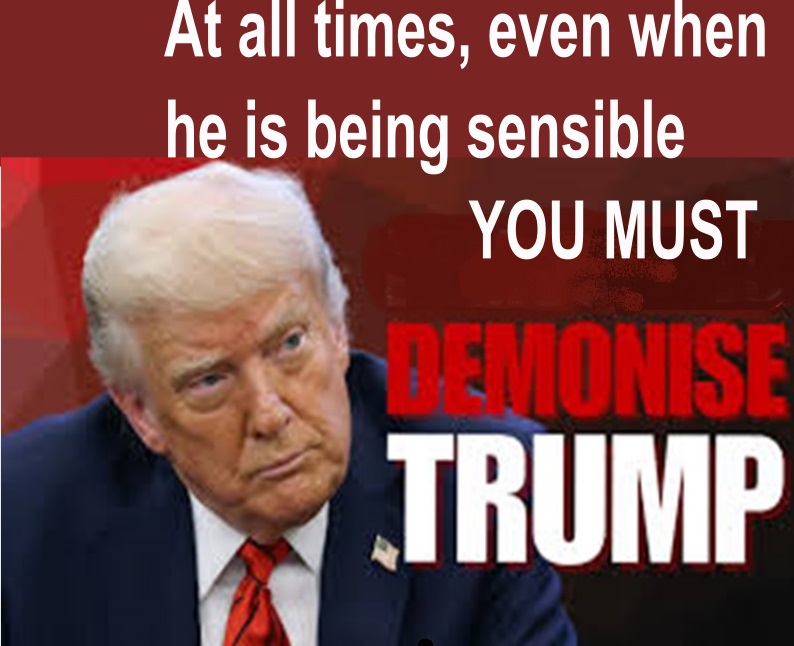
By Andrea Shalal, October 6, 2025, Reporting by Andrea Shalal; Editing by Cynthia Osterman and Chizu Nomiyama, https://www.reuters.com/world/europe/trump-says-putins-offer-nuclear-arms-control-sounds-like-good-idea-2025-10-05/
- Summary
- Putin proposed voluntary limit on nuclear arsenals last month
- US-Russian ties strained despite Trump-Putin summit in August
- Putin warned US against sending long-range missiles to Ukraine
WASHINGTON, Oct 5 (Reuters) – U.S. President Donald Trump on Sunday said Russian President Vladimir Putin’s offer to voluntarily maintain limits on deployed strategic nuclear weapons “sounds like a good idea.”
Putin last month offered to voluntarily maintain limits capping the size of the world’s two biggest nuclear arsenals set out in the 2010 New START accord, which expires in February, if the U.S. does the same.
“Sounds like a good idea to me,” Trump told reporters as he departed the White House, when asked about Putin’s offer.
Russia’s U.N. Ambassador Vassily Nebenzia last week had said Moscow was still waiting for Trump to respond to Putin’s offer to voluntarily maintain the limits on deployed strategic nuclear weapons once a key arms control treaty expires.
Any agreement on continuing to limit nuclear arms would stand in contrast to rising tensions between the United States and Russia since Trump and Putin met in Alaska in mid-August given reported incursions of Russian drones into NATO airspace.
Speaking in a video clip released on Sunday, Putin warned that a decision by the United States to supply long-range Tomahawk missiles to Ukraine for strikes deep into Russia would destroy Moscow’s relationship with Washington.
U.S. Vice President JD Vance said last month that Washington was considering a Ukrainian request to obtain missiles that could strike deep into Russia, including Moscow, though it is unclear if a final decision has been made.
Trump, who has expressed disappointment in Putin for not moving to end the war in Ukraine, was not asked directly on Sunday about the prospect of supplying Tomahawks to Ukraine.
“This will lead to the destruction of our relations, or at least the positive trends that have emerged in these relations,” Putin said in a video clip released on Sunday by Russian state television reporter Pavel Zarubin.
One U.S. official and three other sources told Reuters that the Trump administration’s desire to send long-range Tomahawk missiles to Ukraine may not be viable because current inventories are committed to the U.S. Navy and other uses.
Trump is touring a U.S. Navy aircraft carrier, the George H.W. Bush, off the coast of Virginia on Sunday, and will give a speech on a second carrier, the Harry S. Truman, later.
Tomahawk cruise missiles have a range of 2,500 kilometres (1,550 miles). If Ukraine got the missiles, the Kremlin and all of European Russia would be within target.
45K gallons of radioactive water to be dumped into Hudson River from Indian Point nuclear plant

Shane Galvin Oct. New York Post, 2, 2025,
Roughly 45,000 gallons of radioactive water from a defunct plant north of New York City will be discharged into the Hudson River after a federal court ruling struck down a state environmental law.
US District Judge Kenneth Karas sided with company Holtec International over New York State in a ruling issued last week that reversed the 2023 “Save The Hudson” law which sought to prevent the company from muddying the Hudson’s waters.
Holtec sued the Empire State last year, arguing that only the federal government had the right to regulate discharge of the Indian Point plant’s nuclear waste, which amounted to the 45,000-gallon sum, The New York Times reported……………………………………..
Indian Point, which sits on the Hudson River about 35 miles north of Manhattan, was closed in 2021 after years of public outcry from the local community over environmental concerns…………………… https://nypost.com/2025/10/02/us-news/45k-gallons-of-radioactive-water-to-be-dumped-into-hudson-river-from-indian-point-nuclear-plant/
After Bombing Boats, Trump Tells Congress US Is in ‘Armed Conflict’ With Drug Cartels.
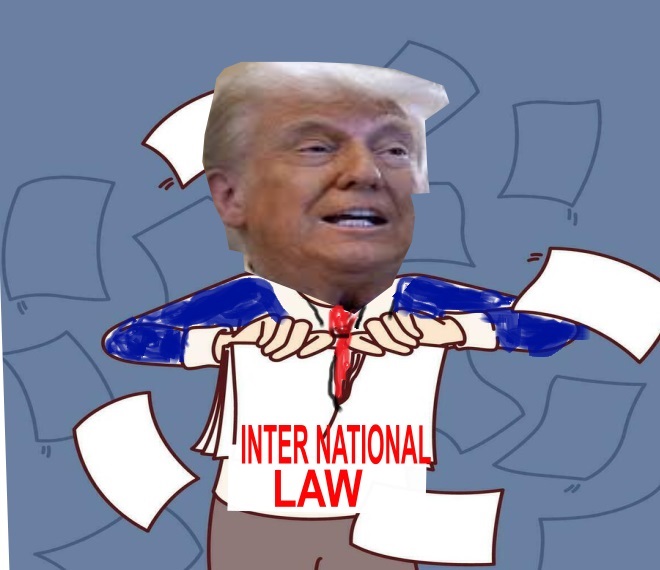
“This is not stretching the envelope,” said a retired judge advocate general lawyer. “This is shredding it. This is tearing it apart.”
October 3, 2025, Jessica Corbett, https://www.commondreams.org/news/trump-venezuela
President Donald Trump’s administration claimed that the United States is in an “armed conflict” with drug cartels in a confidential notice to Congress this week intended to justify his deadly bombings of alleged smuggling boats in the Caribbean.
Democrats in Congress and legal officials have been challenging the legality of the three military strikes Trump announced last month. A woman who identified herself as the wife of one of the at least 17 people extrajudicially killed in the US bombings said her husband was a fisher.
“Congress was notified about the designation by Pentagon officials on Wednesday,” according to The Associated Press, one of several outlets that obtained the notice. The New York Times reported that it “was sent to several congressional committees.”
NewsNation‘s Kellie Meyer posted the full memo on social media: https://x.com/KellieMeyerNews/status/1973817299053269376?ref_src=twsrc%5Etfw%7Ctwcamp%5Etweetembed%7Ctwterm%5E1973817299053269376%7Ctwgr%5Eed7e0a4e5fa28e5d3a356b95835b5dd3057f6b22%7Ctwcon%5Es1_&ref_url=https%3A%2F%2Fwww.commondreams.org%2Fnews%2Ftrump-venezuela
After citing a relevant section from the National Defense Authorization Act for fiscal year 2024, the notice describes decades of law enforcement efforts to stem the flow of illicit narcotics into the United States as “unsuccessful,” and says that cartels “illegally and directly cause the deaths of hundreds of thousands of American citizens each year.”
“The president determined these cartels are nonstate armed groups, designated them as terrorist organizations, and determined that their actions constitute an armed attack against the United States,” the document continues. Trump also “determined that the United States is in a non-international armed conflict with these designated terrorist organizations” and directed the US Department of Defense, which he has dubbed the Department of War, “to conduct operations against them.
“The United States has now reached a critical point where we must use force in self-defense and defense of others against the ongoing attacks by these designated terrorist organizations,” adds the memo, which notes the second strike on September 15.
Lawmakers and legal experts again challenged the administration’s claim that, as the notice put it, Trump directed the bombings under “his constitutional authority as commander in chief and chief executive to conduct foreign relations.”
As the Times reported:
Geoffrey S. Corn, a retired judge advocate general lawyer who was formerly the Army’s senior adviser for law-of-war issues, said drug cartels were not engaged in “hostilities”—the standard for when there is an armed conflict for legal purposes—against the United States because selling a dangerous product is different from an armed attack.
Noting that it is illegal for the military to deliberately target civilians who are not directly participating in hostilities—even suspected criminals—Mr. Corn called the president’s move an “abuse” that crossed a major legal line.
“This is not stretching the envelope,” he said. “This is shredding it. This is tearing it apart.”
New York University School of Law professor Ryan Goodman, who served as special counsel to the general counsel of the Defense Department during the Obama administration, said on social media that Corn was “completely right.”
“Drug cartels not = ‘armed conflict,‘” Goodman added, stressing that the “people killed” in such strikes “are civilians.”
Rutgers University law professor Adil Haque similarly pushed back on social media, saying: “The United States is not in a ‘non-international armed conflict’ with drug cartels. Cartels are not organized as armed groups, nor are they engaged in intense hostilities. These are dangerous criminal organizations and should be confronted using law enforcement tools.”
Members of Congress also publicly weighed in, including Senate Armed Services Committee Ranking Member Jack Reed (D-RI), who said that “every American should be alarmed that President Trump has decided he can wage secret wars against anyone he labels an enemy. Drug cartels must be stopped, but declaring war and ordering lethal military force without Congress or public knowledge—nor legal justification—is unacceptable.”
At least two of the strikes have occurred off the coast of Venezuela, elevating fears of an armed conflict with the country.
“Trump’s actions are illegal, unconstitutional, and dangerous,” Sen. Ed Markey (D-Mass.) said in response to the new memo. ”He is leading us willy-nilly into war with Venezuela. I have ‘determined’ that this is a terrible idea.”
Money to oversee nuclear weapons safety will start running low after 8 days, Energy secretary says

The National Nuclear Security Administration will need to ramp back its work, which ranges from maintaining the weapons arsenal to international non-proliferation efforts.
Politico, By Kelsey Tamborrino, 10/03/2025
Energy Secretary Chris Wright is warning that the agency within the Energy Department that oversees the safety and reliability of the nation’s nuclear weapons stockpile has only enough funding to operate at full strength for about eight more days because of the ongoing government shutdown.
“Eight more days of funding, and then we have to go into some emergency shutdown procedures, putting our country at risk,” Wright said Thursday evening on Fox News, referring to the National Nuclear Security Administration.
Prior to federal cuts imposed earlier this year, NNSA had more than 65,000 federal workers and contractors across the country responsible for a wide range of activities from maintaining the nuclear arsenal to international non-proliferation work and overseeing the U.S. Navy’s nuclear operations.
In its recent shutdown plan, the Energy Department said it would maintain the NNSA’s weapons-focused staff who operate “critical control operations systems,” as well as employees who work on tasks such as stemming the spread of nuclear weapons, but it did not offer figures on how many people that includes…………………………………………………………….
The shutdown poses the second risk this year to the NNSA, after cuts instituted by Elon Musk’s DOGE removed too many people, forcing DOE to call back some terminated workers at the NNSA. Those DOGE appointees were reportedly unaware of the NNSA’s role in overseeing national security………………………………………………………. https://www.politico.com/news/2025/10/03/nuclear-energy-nnsa-00592883
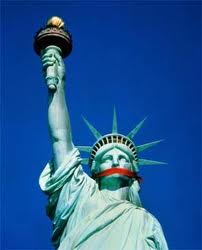
Under Trump, Criticism Is Now Criminal
Jim Naureckas, FAIR, October 3, 2025
After the killing of right-wing influencer Charlie Kirk, President Donald Trump (9/10/25) escalated his war on free speech, calling for criminalizing criticism of himself:
“It’s a long past time for all Americans and the media to confront the fact that violence and murder are the tragic consequence of demonizing those with whom you disagree day after day, year after year, in the most hateful and despicable way possible. For years, those on the radical left have compared wonderful Americans like Charlie to Nazis and the world’s worst mass murderers and criminals.
This kind of rhetoric is directly responsible for the terrorism that we’re seeing in our country today, and it must stop right now. My administration will find each and every one of those who contributed to this atrocity and to other political violence, including the organizations that fund it and support it, as well as those who go after our judges, law enforcement officials, and everyone else who brings order to our country.“
To spell it out: “Demonizing”—which is to say, criticizing—people with whom you disagree is “directly responsible” for Kirk’s death. Note that this is about criticizing people that you disagree with—”you” presumably being one of “those on the radical left”—as Trump has built a wildly lucrative political career out of demonizing those he disagrees with, and he’s not about to stop now. It’s the “wonderful Americans” like Kirk whom you aren’t supposed to criticize.
Trump promises “this kind of rhetoric”—the “radical left” kind—will “stop,” because the government will “find each and every one who contributed to this atrocity.” This includes all those who used their speech to “go after our judges,” cops and “everyone else who brings order.”
This is, in short, a declaration that the idea of free speech is over—despite Trump going on to list “free speech” first among “the American values for which Charlie Kirk lived and died.” Where once you had the right to criticize those who “bring order,” now such reckless rhetoric is punishable as direct support for “terrorism”—a word that under the US legal system authorizes draconian police powers……………………………………………………………………………………………………………………. https://fair.org/home/under-trump-criticism-is-now-criminal/
Can Warriors Stop Endless Wars?
The Role of Veterans in Movements for Peace and Justice
By William D. Hartung. Tom Dispatch, September 30, 2025
Secretary of Defense Pete Hegseth, the former “Fox and Friends” cohost, claims to be obsessed with making the Pentagon and the military services about “the warfighter.” His main approach to doing so is a deeply misguided campaign to reduce “distractions” like commitments to diversity, equity, and inclusion (the dreaded “DEI”). No matter that the purpose of DEI is to combat White supremacist attitudes, misogyny, and anti-gay and anti-trans violence in the ranks.
All such forms of discrimination are, in fact, already present in the U.S. military, and the way to build a cohesive defense force is certainly not by allowing them to run wild and be seen as acceptable or “normal” behavior. The best way to build a stronger, more unified military would, of course, be to make people feel welcome regardless of gender, race, ethnicity, or gender identification. That would, in fact, be the only way to build a military that reflects the nation it’s charged with defending. DEI, after all, is not an irritating slogan. It’s an attempt to right historic wrongs in the service of a more effective military and a more unified populace. And it’s one thing to suggest that current approaches could be made more effective, but quite another to demonize them in the name of forging “better” warfighters.
In short, the Hegseth method is bound to prove destructive. Count on this, in fact: it will only weaken our military, not strengthen it. The result, if Hegseth’s efforts succeed, will indeed be a Whiter, more aggressive armed forces, and quite likely one significantly more loyal to the current occupant of the Oval Office than to the Constitution.
Ex-Warriors for Peace
Thankfully, Hegseth’s vision is not shared by many of the veterans of America’s disastrous post-9/11 wars in Afghanistan, Iraq, and elsewhere. The eye-opening documentary What I Want You to Know presents the views of just such veterans about their service and about the meaning of the conflicts they fought in. Almost to a person (no, not “a man”!), they said the following four things:
– They don’t know why they were sent to the places where they fought
– They did not believe the U.S. could win the war they were sent to fight
– Their government lied to them
– They were forced to do things that will haunt them for the rest of their lives
It took courage for such veterans to go on camera and offer the unvarnished truth about the disastrous wars they helped to fight. They are, of course, far from alone, but as one of the producers of the film told me, many veterans are reluctant to discuss such feelings and insights publicly. Some don’t want to reflect on the idea that the wars they fought in were disastrously misguided and didn’t end in anything resembling an American victory. Others fear political retribution. Still others prefer to keep such conversations among their fellow vets, in large part because they feel that people who haven’t served can’t fully understand what they went through.
It’s little wonder that many vets keep their feelings about their long years in service within a close circle of friends and other veterans. But whether they choose to speak out publicly or not, a striking number of them are now either antiwar or “war skeptical,” questioning whether some of our recent conflicts were faintly worth fighting in the first place.
Don’t misunderstand me on this. There are indeed veterans speaking out against such unnecessary, unjust wars (past or future). Fifteen of them, for instance, contributed chapters to Paths of Dissent, a volume edited by Quincy Institute co-founder Andrew Bacevich and U.S. Army veteran Daniel Sjursen. A description of a 2023 webinar marking the release of the book caught its main theme perfectly:
“[T]hese soldiers vividly describe both their motivations for serving and the disillusionment that made them speak out against the system. Their testimony is crucial for understanding just how the world’s self-proclaimed greatest military power went so badly astray.”
There are also entire organizations, including Veterans for Peace (VFP), Common Defense, and About Face: Veterans Against the War, devoted to ensuring that such endless wars remain over and crafting an American foreign policy grounded in diplomacy and defense rather than in a quest for global military dominance. …………………………………………………………………………………………………………………………………………………………………………………………………………………………..
Isn’t it finally time for a respectful national dialogue about what constitutes an adequate defense and how to balance military preparations with other urgent national needs? Of course, having any such conversation, given the present deep divisions in American society, will be a challenge in its own right. But the alternative is a continuation of some variation of the devastating wars of the post-9/11 period, and such new and perilous conflicts will involve boots on the ground, air strikes, or the endless arming of repressive regimes. https://tomdispatch.com/can-warriors-stop-endless-wars/
The U.S. is now a fascist state. What Trump’s new order on domestic terrorism really means.
Richard J Murphy, 3 Oct 2025
Fascists mean what they say. Donald Trump has now issued NSPM-7, a presidential order that redefines dissent as terrorism and authorises the state to treat opponents as enemies. From Stalin’s Article 58 to the Nazi Malicious Practices Act, history shows what happens when repression becomes law. We need to face facts: the US is very rapidly sliding into full-blown fascism — and the UK could follow.
And that future is dystopian. Dissent is recast as terrorism in Trump’s world. This order makes that idea law, and terrorists are now to be eliminated by the US military, as he told them in a conference when he assembled 700 or more generals and declared that they would now be fighting terrorism in the cities of the USA.
In effect, Trump is saying that there is a civil war to be waged in the USA now against what he calls the domestic terrorist threat, but which doesn’t exist.
The truth is that the USA is now a fascist authoritarian state, and we need to take seriously what he’s saying because, as Chris Hedges put it, “Fascists mean what they say”.
This memo, this order, signed by Trump, starts with the words ’Heinous assassinations and other acts have dramatically increased’. He lists Charlie Kirk’s murder, an attack on the Supreme Court Judge Brett Kavanaugh in 2022 and recent attacks on ICE, the Customs Enforcement Agency in the USA, that is expelling people from the country.
He claims that these are the basis for the terror that he is talking about. But in a country where, frankly, violence is normalised, and death on the streets is not uncommon, to pretend that this is the case is just wrong. He’s trying to build a highly selective, distorted, and self-serving story about left-wing terror, for which there is almost no evidence whatsoever. But as a consequence, he’s criminalising dissent.
Anti-fascism is now defined as terrorism.
Opposition to expulsions by ICE and opposition to patriarchy, or to his idea of empire, is defined as violent revolution. Anti-capitalism, anti-racism, and campaigns for gender equality – all these are branded as extremist. And truth becomes whatever he, as the arbiter of power, declares it to be.
In this situation, the law is inverted. Instead of being a mechanism that defends our freedoms, the law becomes a weapon of repression. This order dictates that the Department of Justice seek to prosecute people who oppose what Trump is trying to do with maximum charges.
There is an instruction that the Internal Revenue Service of the USA, the equivalent of HM Revenue and Customs in the UK, should strip the tax status of suspected groups, and that would include NGOs of the sort that campaign in the UK with regard to human rights, or even universities that teach courses that suggest that people have the right to dissent.
The agencies of the USA are authorised to interrogate and detain people just because they don’t agree with Trump.
Justice in this world becomes a means of persecution, and we’ve been here before, of course. There are massive historical parallels to what Trump is now doing.
Stalin had Article 58 in his penal code. It was a catchall for counter-revolutionary activity, and literally millions of people died as a result of being prosecuted under Article 58. Any form of dissent basically gave rise to their execution.
The same thing happened in Nazi Germany. There was the Malicious Practices Act of 1933, the very first act right at the beginning of the Nazi era that made it illegal to criticise the Nazi government, its leaders or its policies, and which allowed for punishment by arrest and internment in concentration camps like Dachau, which was in suburban Munich.
Trump’s memo – his order – fits exactly the same pattern. It’s vague and sweeping, and it’s designed to criminalise opposition, but without precisely saying what anybody will have done wrong, except to offer dissent.
This is, in effect, a declaration of preemptive war. What the order says is that a new organisation, the National Joint Terrorism Task Force, or the JTTF for short, must disrupt and dismantle networks of opposition to what Trump is trying to achieve. That’s not based on evidence of crimes, but on the basis of people’s associations or their free speech or their ideas. Financial networks, NGOs and universities are all specifically targeted by this. This is the policing of thought.
And behind all this, there is a very obvious ideology. A Christian nationalist worldview drives this agenda.
Those who support LGBTQ+ rights or who are indeed members of the LGBTQ+ community, people who are secular humanists or immigrants, all of them are labelled as deviants. Science and reason are replaced by biblical dogma, and patriotism is twisted into theocratic authoritarianism.
This has a paranoia behind it. Indeed, there is a paranoia that is gripping the elite in America. Narcissists and conspiracists are imagining that there are enemies everywhere to what Trump is proposing to do and what they wish to happen.
Pseudo-democracy is being created. Pseudo-courts, pseudo-media, pseudo-citizens, people who will, in fact, support the lies that maintain the Trump regime, and I rightly call it a regime and not an administration, and these lies replace facts.
Loyalty is replacing law.
Liberal institutions are being hollowed out.
Rights are being reduced to privileges and are being revoked at will, and hope and silence will ensure that the repression spreads.
And all of this happens whilst we try to look the other way. And that is the big threat of this moment.
Alexander Solzhenitsyn wrote in The Gulag Archipelago, “Universal innocence gives rise to the universal failure to act. Maybe they won’t take you. Maybe it will all blow over”, he said.
But it won’t. This is real. Fascists should lay out in advance what they intend to do, and then they do it, and that is what is happening in the USA.
This will happen. People will disappear. This is not a future danger. It’s here and now, and the decree that puts it into place already exists. The bars to freedom are being literally built before our own eyes at this moment, and democracy can’t survive if the opposition to it is redefined as terrorism.
So, where are we? Let’s face the facts. Fascism cannot be reasoned with. It must be confronted. And hope is most definitely not enough. And silence is complicity.
Solidarity and resistance are essential, even though that does inevitably involve risk. Making this video involves risk. If these measures become the norm in the UK as well, I will, of course, be identified as one of the threats.
But we have to defend civil liberties, truth and institutions now and challenge our government to act to do so, or we will follow the path of the USA and head down the direct route to both fascism and everything that follows from it, including the internment camps, which I am sure will be sprouting up soon in the USA and not just for those who are scheduled for deportation because they come from an ethnic minority.
We have to isolate the USA.
We have to call out what’s happening.
We have to say we object.
Our governments must decide whether they can any longer align with a country which is so openly fascist.
We need to come to the point where we say, “This is not acceptable.”
We need to say, “This is a country now built on lies, peddling myths and untruths and oppressing what is real.”
We need to support independent journalism, which there still is in the USA, but which is under enormous threat.
And we need to support those who will stand up for democracy.
We need to demand accountability.
And we need to stand up for what was put in place after World War II, which was the structure of human rights, which our mainstream political parties in the UK, including the Labour Party and the Conservative Party, both now question, even though this structure was put in place as a result of the influence of Winston Churchill, who wanted to make sure that never again would human rights be threatened by fascists. But they are, and our politicians are letting that happen.
We have to take action before the iron bars of fascism slam the door shut. That’s the risk that we face, and our politicians have to rise to the challenge, or we’re all in very deep trouble. The US is already a fascist state. We could be too. That’s what we’re up against.
What do you think? There’s a poll below. Do you think the US has now moved into fascism? Do you think that the UK could follow in the same way? Are you willing to take a stand? Or will you stand by the wayside? We are at a point where we have to decide.
Please think about what you are going to do.
80 years demonizing Russia long enough…time for détente.

In 2019 and 2020 the US withdrew from two critical nuclear treaties with Russia: INF (Intermediate-Range Nuclear Forces) and Open Skies. The third and last, New Start, expires in 4 months with no substantive ongoing negotiations. Why? Because America has abandoned negotiations extending New Start and reinstituting the others during its senseless, failed proxy war to weaken, isolate Russia from the European political economy.
Walt Zlotow, West Suburban Peace Coalition, Glen Ellyn IL , 3 Oct 25,
Last time US and Russia were buddies was 80 years ago at the end of WWII. Russia coughed up over 25 million dead in defeating Nazism in the East. In return for shedding that blood, the US coughed up several billion in military aid that kept the Russian war machine functioning in a Russian economy largely destroyed by Germany.
That friendship was blown up, literally, on August 6, 1945, when the US dropped the first of 2 atomic bombs on Japan. One of several reasons was to inform Russia (than USSR) that as new boss of the world America would brook no interference from a Russia we falsely assumed was bent on expanding communism everywhere on earth.
Had FDR lived there may not have been a Cold War. FDR recognized a prostrate Russia needed a buffer from a third German invasion from the west in the 20th century. He wisely surmised Stalin had no agenda whatsoever to conquer the world. So, he acquiesced in Stalin’s authoritarian control of his neighbors.
Alas, FDR’s death ushered in profoundly inexperienced Harry Truman. Woefully uninformed on foreign affairs, Truman was easy pickings for Russophobes Jimmy Burns, James Forestall, Dean Atchison and others who not only wanted to vanquish communist Russia, but desired a permanent war economy to prevent another Great Depression.
That wasn’t needed as pent-up domestic demand began the fabulous growth of the post WWII middle class. But Truman’s foreign policy handlers convinced him to promulgate the Truman Doctrine in February 1947, opposing communist expansion everywhere on earth even if meant demonizing as ‘communist’ any progressive movement that might make life better for downtrodden peoples.
But Russia never, for a single day between 1945 and the USSR’s implosion 46 years later, represented a serious existential threat to America. That’s because Russia had neither the desire nor the capability to attack America without suffering its utter destruction from an overwhelming American nuclear capability.
Instead, imaginary US obsession with Russia promoting communism in every corner of the earth including America, led to millions of deaths from hot wars such as Korea and Vietnam, and from US support for dictators killing dissidents threatening their regimes in over 20 countries. The million leftists Indonesia’s General Suharto killed with America’s help gave the grisly name to this murderous foreign policy…The Jakarta Method.
So, the Cold War was on till l1991 when the USSR went poof. Time to disband a now obsolete NATO? ‘Ha ha’, said the US national security state. ’We’re just getting started.’ Between 1999 and 2020 NATO expanded from 16 to 30 members, including 2 on Russia’s borders.
Beginning in 2007 Russia, requested, pleaded, begged the US and NATO to cease expansion. A year later the US response was to pledge NATO membership to the one country Russia would never allow in…neighboring and partially Russian cultured Ukraine. It took 14 years for an astonishingly patient Russia to say ‘enough’ and launch its ‘special military operation.’ That will not only prevent Ukraine NATO membership, it will effectively destroy Ukraine as a functioning state. All thanks to deranged anti-Russian US policy.
But America’s clearly lost proxy war against Russia sacrificing Ukraine is not the worst of what should be termed Cold War II. In 2019 and 2020 the US withdrew from two critical nuclear treaties with Russia: INF (Intermediate-Range Nuclear Forces) and Open Skies. The third and last, New Start, expires in 4 months with no substantive ongoing negotiations. Why? Because America has abandoned negotiations extending New Start and reinstituting the others during its senseless, failed proxy war to weaken, isolate Russia from the European political economy. The US has put peoplekind at increased risk of nuclear confrontation due to refusal to negotiate nuclear disarmament.
Eighty years of America’s Russian Derangement Syndrome is 80 years too long. Time to shut down the lost proxy war against Russia by ceasing all aid to Ukraine till they negotiate the war’s end. Time to begin disengagement from European security including NATO. Time to embrace diplomatic relations with Russia to end all sanctions, explore mutually beneficial trade relations, and most importantly, reinstitute and renew nuclear agreements to prevent our collective annihilation rom nuclear war. We can’t wait another 80 years, 80 months, 80 weeks…even another 80 days.
The Ultimate Test of Allegiance
3 October 2025 AIMN Editorial, By Peter Brown, https://theaimn.net/the-ultimate-test-of-allegiance/
Watching American politics from afar, it’s often easy to get lost in the noise and drama. But sometimes, a fundamental issue cuts through the static – one that should alarm every citizen and international onlooker alike. What I see now is a direct challenge to one of the most sacred principles of their republic. To see that foundational principle now being tested is, frankly, chilling.
The bedrock principle of the American military is its oath to “support and defend the Constitution of the United States against all enemies, foreign and domestic.” This sacred commitment is deliberately to an idea, a set of laws, and a nation – not to a person. Yet, they now face the unsettling prospect of a commander-in-chief, Donald Trump, who has consistently demonstrated that his primary demand is personal loyalty.
This creates a terrifying binary choice for the armed forces, with monumental repercussions for the republic.
Scenario One: They Pledge Loyalty to Him
If the military and its leadership were to prioritise loyalty to the president over loyalty to the Constitution, the very foundation of their democracy would crack. The armed forces would be transformed from a guardian of the state into a potential tool of a single leader. Orders that test constitutional boundaries would go unchallenged. The principle of civilian control of the military would remain in letter, but be utterly corrupted in spirit, becoming personal control of the military. The chain of command would exist not to execute the law, but to execute the will of one man.
Scenario Two: They Refuse
If the military holds fast to its constitutional oath, the result would be a crisis of a different kind. A president demanding personal fealty would inevitably view any constitutional resistance as disloyalty. We could see the politically charged dismissal of principled military leaders, creating a “Saturday Night Massacre” scenario within the Pentagon. This would shatter morale, politicise the most respected institution in the country, and create a dangerous rift between a president and the very forces tasked with protecting the nation.
This is not a partisan issue; it is a foundational one. The immense power of the U.S. military must never be contingent on a personality. The terrifying truth of the current moment is that they are forced to contemplate a scenario where the ultimate check and balance – the military’s refusal to follow an unlawful order – could be triggered, with consequences that would ripple through history.
The men and women in uniform swear an oath that ends with “So help me God.” The question they must all ask is: what happens if their commander-in-chief asks them to break it?
U.S. to gift Plutonium-239 to private nuclear industry
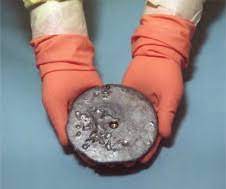
The Trump Administration’s trafficking of nuclear weapons-grade usable plutonium would significantly increase the global proliferation of nation state-sponsored nuclear weapon programs as well as the nuclear weapons material acquisition by thief and purchase for acts of nuclear terrorism.
The Trump Administration’s trafficking of nuclear weapons-grade usable plutonium would significantly increase the global proliferation of nation state-sponsored nuclear weapon programs as well as the nuclear weapons material acquisition by thief and purchase for acts of nuclear terrorism.
October 2, 2025, https://beyondnuclear.org/u-s-to-gift-pu-239-to-private-nuclear-utilities/
Trump Administration’s give away of 20 MT of US plutonium weapons stockpile to private companies threatens nuclear proliferation
According to previously unreleased government documents obtained and reviewed by Politico and addressed in a letter from three Democrat members of Congress to President Donald Trump, The White House is preparing to give away 20 metric tons of weapons-usable plutonium to new nuclear start companies. The Trump deal calls for the equivalent of 2000 nuclear bombs previously slated for permanent disposal as nuclear waste) from the nation’s Cold War era nuclear weapons stockpile to be freed up to help jump start privately-owned U.S. commercial nuclear startup companies. The fledgling nuclear companies would instead use the plutonium fuel in a still unproven and unlicensed new generation of nuclear power plants for domestic power production. The plan includes U.S. startups to reprocess plutonium used in nuclear fuel for international export. The Trump Administration’s trafficking of nuclear weapons-grade usable plutonium would significantly increase the global proliferation of nation state-sponsored nuclear weapon programs as well as the nuclear weapons material acquisition by thief and purchase for acts of nuclear terrorism.
The White House proposal calls for the U.S. Department of Energy (DOE), currently charged with the nation’s nuclear weapons development and nuclear power promotion, to “alter” the military-grade plutonium so it can be used as fuel by civilian startup power companies in new reactor designs. Theses unfinished and yet to be approved designs (such as the sodium cooled metal fuel fast reactors “Aurora” by the Santa Clara, CA start-up Oklo, Inc.’s and Bill Gates’ TerraPower’s “Natrium”) are already being privately marketed for the domestic and international export of fast reactors by companies such as Oklo.
The White House Executive Orders originally issued in May 2025 as part of the President Trump’s national call to “Unleash Nuclear Energy” had directed that the US Department of Energy draw down the from the nation’s plutonium surplus. The current White House plan now additionally includes the military to civilian utility transfer of reserve warhead parts known as “plutonium pits.
The Politico article quotes Oklo’s CEO Jacob DeWitte, “Oklo, wants to take advantage of the plutonium fuel program. Unlike its competitors, Oklo’s fast-neutron reactors can use plutonium as a ‘bridge’ fuel to get around the bottlenecks that exist in obtaining the more desirable grades of uranium.” Those “desirable grades of uranium” fuel are currently only commercially available from the Russia global monopoly on High Assay Low Enriched Uranium (HALEU) which is just less than 20% enriched U-235.
Oklo’s prestigious former board member, Chris Wright, stepped down from the company when he was confirmed to be President Trump’s new Secretary of Energy. Oklo’s Aurora reactor design now under review by the U.S. Nuclear Regulatory Commission is a controversial liquid sodium-cooled metal fueled fast reactor. The fast reactor design is controversial chiefly because it can be retrofitted as a “dual purpose” (military and commercial) reactor to breed more plutonium for nuclear weapons and commercial power generation.
The concept for Oklo’s plan was opposed in a July 25, 2025 letter to Congress signed by 17 scientific experts on global non-proliferation of nuclear weapons. First and foremost, nothing has fundamentally changed to break with the five decades that the United States has opposed from using plutonium fuel in commercial power plants due to security and economic concerns. Their letter further pronounces that authorizing funds for the proposed civilian use of nuclear weapons-usable plutonium as fuel in nuclear power plants will only accelerate the global spread of nuclear weapons in two obvious ways; 1) US companies plan to internationally export plutonium fuel and the plutonium extraction technology, and; 2) the US cannot discourage other countries from further trafficking of weapons-usable plutonium as civilian nuclear fuel if the US is doing it ourselves.
Moreover, pyro-processing or “recycling” to extract plutonium and uranium for reuse as reactor fuel has already proven to be unsustainable economically and will only deepen the already bad economics of nuclear power. The processing is acknowledged as “very costly, due to safety and security concerns, both to extract from nuclear waste and to fabricate into fuel.”
-
Archives
- February 2026 (211)
- January 2026 (308)
- December 2025 (358)
- November 2025 (359)
- October 2025 (376)
- September 2025 (258)
- August 2025 (319)
- July 2025 (230)
- June 2025 (348)
- May 2025 (261)
- April 2025 (305)
- March 2025 (319)
-
Categories
- 1
- 1 NUCLEAR ISSUES
- business and costs
- climate change
- culture and arts
- ENERGY
- environment
- health
- history
- indigenous issues
- Legal
- marketing of nuclear
- media
- opposition to nuclear
- PERSONAL STORIES
- politics
- politics international
- Religion and ethics
- safety
- secrets,lies and civil liberties
- spinbuster
- technology
- Uranium
- wastes
- weapons and war
- Women
- 2 WORLD
- ACTION
- AFRICA
- Atrocities
- AUSTRALIA
- Christina's notes
- Christina's themes
- culture and arts
- Events
- Fuk 2022
- Fuk 2023
- Fukushima 2017
- Fukushima 2018
- fukushima 2019
- Fukushima 2020
- Fukushima 2021
- general
- global warming
- Humour (God we need it)
- Nuclear
- RARE EARTHS
- Reference
- resources – print
- Resources -audiovicual
- Weekly Newsletter
- World
- World Nuclear
- YouTube
-
RSS
Entries RSS
Comments RSS
 nuclear-news