The US Cries About War Crimes While Imprisoning A Journalist For Exposing Its War Crimes

https://caitlinjohnstone.substack.com/p/the-us-cries-about-war-crimes-while?s=w. 20 Apr 22, In what his lawyers have described as a “brief but significant moment in the case,” a British magistrates’ court has signed off on Julian Assange’s extradition to the United States, bringing the WikiLeaks founder one step closer to a US trial under the Espionage Act which threatens press freedoms worldwide.
The extradition case now goes to UK Home Secretary Priti Patel for approval, which will likely be forthcoming as Patel is a reliably loyal empire manager. After that point, Assange’s legal team will be able to launch an appeal.
This is happening at the same time the United States and the United Kingdom are loudly demanding accountability for alleged war crimes by the Russian military in Ukraine, which is interesting because attempting to bring accountability for war crimes is precisely why Julian Assange is in prison.
“He is a war criminal,” President Biden said of Vladimir Putin following allegations of war crimes in Bucha, Ukraine earlier this month. “I think it is a war crime. … He should be held accountable.”
Biden: Putin should face war crimes trial for Bucha killings 4 April 2022
Wikileaks 5 April – 12 years ago today 5 Julian Assange published the Collateral Murder video detailing the gunning down of civilians, children & 2 Reuters journalists. Assange faces a 175 year sentence if extradited for revealing this and other war crimes
This is why the US government is trying to extradite Julian Assange: for revealing the US massacre of civilians, including two Reuters journalists in Iraq
And that’s all I’d like to say here today, really. That this discrepancy is very interesting.
I mean, can we take a moment to deeply appreciate the irony of this? Because it’s so obscene and outrageous it’s actually hard to take in unless you really let it absorb. The most powerful government in the world, which serves as the hub of the most powerful empire that has ever existed, is working to extradite a journalist for exposing its war crimes while simultaneously rending its garments over war crime allegations against another government.
I mean, damn. You would think a power structure that had recently been caught red-handed committing war crimes and is currently in the process of imprisoning a journalist for exposing those war crimes would at least have the sense not to yell too loudly about war crimes for a little while. But this is how confident the empire is in its ability to control the narrative.
Really take it in. Really digest it. The more you think about it, the freakier it gets. Not only is the empire persecuting a journalist for exposing its war crimes while at the same time demanding that others be held accountable for war crimes, it is also attacking the free press for reporting the truth about the powerful while at the very same time engaging in a massive propaganda operation which holds that it is involved in Ukraine to protect its freedom and democracy.
I mean, the gall. The absolute temerity. The balls on this empire, man.
I have said it before and I will say it again: Assange exposed many ugly realities about the powerful in his work with WikiLeaks, but everything that he has managed to expose thereafter simply by forcing them to prosecute him far surpasses the revelations in those publications.
If the highest form of journalism is exposing the darkest secrets of the most powerful people in the world, then Julian Assange is the highest form of journalist.
Big Tech monopolies — Facebook, Google, and Amazon control media in the interests of American militarism

Former Intelligence Officials, Citing Russia, Say Big Tech Monopoly Power is Vital to National Security, Glenn Greenwald, Substack 20 Apr 22,
When the U.S. security state announces that Big Tech’s centralized censorship power must be preserved, we should ask what this reveals about whom this regime serves.
A group of former intelligence and national security officials on Monday issued a jointly signed letter warning that pending legislative attempts to restrict or break up the power of Big Tech monopolies — Facebook, Google, and Amazon — would jeopardize national security because, they argue, their centralized censorship power is crucial to advancing U.S. foreign policy.
The majority of this letter is devoted to repeatedly invoking the grave threat allegedly posed to the U.S. by Russia as illustrated by the invasion of Ukraine, and it repeatedly points to the dangers of Putin and the Kremlin to justify the need to preserve Big Tech’s power in its maximalist form. Any attempts to restrict Big Tech’s monopolistic power would therefore undermine the U.S. fight against Moscow.
While one of their central claims is that Big Tech monopoly power is necessary to combat (i.e., censor) “foreign disinformation,” several of these officials are themselves leading disinformation agents: many were the same former intelligence officials who signed the now-infamous-and-debunked pre-election letter fraudulently claiming that the authentic Hunter Biden emails had the “hallmarks” of Russia disinformation (former Obama Director of National Intelligence James Clapper, former Obama CIA Director Michael Morrell, former Obama CIA/Pentagon chief Leon Panetta). Others who signed this new letter have strong financial ties to the Big Tech corporations whose power they are defending in the name of national security (Morrell, Panetta, former Bush National Security Adviser Fran Townsend)………………….
Why would these former national security and intelligence officials be so devoted to preserving the unfettered power of Big Tech to control and censor the internet? One obvious explanation is the standard one that always runs Washington: several of them have a financial interest in serving Big Tech’s agenda.
Unsurprisingly, Apple CEO Tim Cook has himself pushed the claim that undermining Big Tech’s power in any way would threaten U.S national security. And there is now an army of well-compensated-by-Silicon-Valley former national security officials echoing his message. A well-researched Politico article from September — headlined: “12 former security officials who warned against antitrust crackdown have tech ties” — detailed how many of these former officials who invoke national security claims to protect Big Tech are on the take from the key tech monopolies:………………………………….
Big Tech censorship of political speech is not random. Domestically, it is virtually always devoted to silencing any meaningful dissent from liberal orthodoxy or official pieties on key political controversies. But in terms of foreign policy, the censorship patterns of tech monopolies virtually always align with U.S. foreign policy, and for understandable reasons: Big Tech and the U.S. security state are in a virtually complete union, with all sorts of overlapping, mutual financial interests:
Note that this censorship regime is completely one-sided and, as usual, entirely aligned with U.S. foreign policy. Western news outlets and social media platforms have been flooded with pro-Ukrainian propaganda and outright lies from the start of the war. A New York Times article from early March put it very delicately in its headline: “Fact and Mythmaking Blend in Ukraine’s Information War.” Axios was similarly understated in recognizing this fact: “Ukraine misinformation is spreading — and not just from Russia.”…………….
there is little to no censorship — either by Western states or by Silicon Valley monopolies — of pro-Ukrainian disinformation, propaganda and lies. The censorship goes only in one direction: to silence any voices deemed “pro-Russian,” regardless of whether they spread disinformation….Their crime, like the crime of so many other banished accounts, was not disinformation but skepticism about the US/NATO propaganda campaign………………
It is unsurprising that Silicon Valley monopolies exercise their censorship power in full alignment with the foreign policy interests of the U.S. Government. Many of the key tech monopolies — such as Google and Amazon — routinely seek and obtain highly lucrative contracts with the U.S. security state, including both the CIA and NSA. Their top executives enjoy very close relationships with top Democratic Party officials. And Congressional Democrats have repeatedly hauled tech executives before their various Committees to explicitly threaten them with legal and regulatory reprisals if they do not censor more in accordance with the policy goals and political interests of that party.
Needless to say, the U.S. security state wants to maintain a stranglehold on political discourse in the U.S. and the world more broadly. They want to be able to impose propagandistic narratives without challenge and advocate for militarism without dissent. To accomplish that, they need a small handful of corporations which are subservient to them to hold in their hands as much concentrated power over the internet as possible.
If a free and fair competitive market were to arise whereby social media platforms more devoted to free speech could fairly compete with Google and Facebook— as the various pending bills in Congress are partially designed to foster — then that new diversity of influence, that diffusion of power, would genuinely threaten the ability of the CIA and the Pentagon and the White House to police political discourse and suppress dissent from their policies and assertions. By contrast, by maintaining all power in the hands of the small coterie of tech monopolies which control the internet and which have long proven their loyalty to the U.S. security state, the ability of the U.S. national security state to maintain a closed propaganda system around questions of war and militarism is guaranteed………………………….
New Mexico Governor concerned over plans for plutonium waste being disposed of in Carlsbad.
Adrian Hedden, Carlsbad Current-Argus, 20 Apr 22,
New Mexico Gov. Michelle Lujan Grisham signaled support for an activist group opposing a plan at the Waste Isolation Pilot Plant to dispose of diluted, weapons-grade plutonium in the underground nuclear waste repository near Carlsbad.
Lujan Grisham, in an April 8 letter to U.S. Secretary of Energy Jennifer Granholm, shared a petition circulated by Santa Fe-based group 285 All in opposition of the plan and called on the federal Department of Energy to “take action” to address the concerns.
The plan proposed by the DOE would see 35 metric tons of down-blended plutonium waste sent from the Pantex Plant near Amarillo, Texas to Los Alamos National Laboratory in northern New Mexico for processing.
It would then be sent to the DOE’s Savannah River in South Carolina for final preparation and then to the WIPP site in southeast New Mexico for disposal…………..
Critics of the proposal argued the plan would transport nuclear waste across New Mexico multiple times, and the inclusion of down-blended plutonium would mark an “illegal” expansion of WIPP’s statutorily allowed waste streams.
The petition expressing those fears was signed by 1,146 people in New Mexico and delivered to Lujan Grisham’s office in Santa Fe on March 1.
In her letter to Granholm, Lujan Grisham called on the agency which owns and operates WIPP to consider the concerns raised in the petition. https://www.currentargus.com/story/news/2022/04/20/carlsbad-waste-isolation-pilot-plant-plutonium-disposal-concern-michelle-lujan-grisham/7309367001/
Bechtel and Westinghouse will be big on talk but short on delivery for UK’s nuclear projects – Nuclear Free Local Authorities
The Conservative Welsh Secretary Simon Hart MP has recently visited the
Vogtle nuclear project in Georgia, USA, but the Nuclear Free Local
Authorities believe that Bechtel and Westinghouse will be big on talk but
short on delivery if they are selected as Britain’s commercial partners
to build a new power plant at Wylfa.
If there are two certainties with anynuclear power project, they are that it will be delivered way beyond budgetand that it will be delivered very late. At present, the sole new nuclear
project under construction at Hinkley Point C in Somerset is costing £23
billion and is ten years behind schedule; and operator, French-state owned
EDF Energy, has announced that it will again be revising the final budget
upwards and the end-date backwards, over the summer.
The Vogtle project,
being built by engineering firm Bechtel with two AP-1000 Westinghouse
light-water reactors, has so far cost US $30 billion, ironically around the
same price tag as Hinkley Point C, with this monstrous boondoggle being
bankrolled from the deep pockets of its eventual operator Georgia Power and
backed by US $12 billion in loans from the US Department of Energy. The
other AP-1000 project at VC Summer in South Carolina was abruptly
terminated in July 2017 after limping along for nine years and at a cost of
US $9 billion. This decision contributed to Westinghouse declaring Chapter
11 bankruptcy and subsequently several former Westinghouse officials,
including a Senior Vice-President, have been charged with a range of
serious offences relating to the company’s fraudulent actions.
NFLA 19th April 2022
U.S. Is Set to Launch a $6 Billion Effort to Save Nuclear Plants

Ari Natter, Bloomberg News 18 Apr 22, — The Energy Department is expected to provide details as soon as Monday on a $6 billion program aimed at keeping uneconomical nuclear plants in service, providing a lifeline to an industry that’s seen a raft of early reactor retirements driven by competition from cheaper power sources.
The program, funded through the $550 billion infrastructure bill signed into law last year, will let owners and operators of commercial nuclear reactors apply for credits for plants that are likely to shut down for economic reasons if the closures would lead to higher emissions. The agency is set to issue a guidance document this week detailing the application process.
……………….The program, known officially as the Civil Nuclear Credit Program, could provide a boost to operators including Public Service Enterprise Group Inc., Constellation Energy Corp. and Energy Harbor Corp. U.S. reactors have struggled to survive in the face of competition from cheap natural gas and renewable power. A dozen have already retired early for economic reasons,………
The Energy Department, which will administer the program, plans this week to issue guidance about how to apply for the program and will open a process for certification. The agency expects to issue preliminary credit award decisions following an application period of about 30 days, and “the first award cycle will prioritize and be limited to reactors that are approaching near term closure.” https://www.bnnbloomberg.ca/u-s-is-set-to-launch-a-6-billion-effort-to-save-nuclear-plants-1.1753474
US envoy vows ‘decisive response’ to North Korea missile, nuclear tensions
SEOUL 18 Apr 22, : The US envoy for North Korea said that Washington would act “responsibly and decisively” in response to “escalatory actions” after a series of test missile launches raised concerns that the North was preparing to resume nuclear testing.
US Special Representative Sung Kim and his deputy, Jung Pak, met with South Korean officials, including nuclear envoy Noh Kyu-duk, after arriving in Seoul early on Monday (Apr 18) for a five-day visit……………. https://www.channelnewsasia.com/asia/us-envoy-vows-decisive-response-north-korea-missile-nuclear-tensions-2631726
NuScale: Not new, not needed — Beyond Nuclear International

Costs, delays and competition will likely kill SMR
NuScale: Not new, not needed — Beyond Nuclear International Risks of rising costs, likely delays, and increasing competition cast doubt on long- running development effort
By David Schlissel and Dennis Wamsted
In a new analysis, the Institute for Energy Economics and Financial Analysis looked at NuScale’s proposed Small Modular Reactor, concluding that its costs will be far higher than NuScale predicts and that the reactor is fundamentally not needed. What follows are the Executive Summary and Conclusions sections of the report. The full report can be read and downloaded here.
Executive Summary

The second set of problems with the NuScale proposal are contractual. As the power sale agreement is currently structured, anyone who signs on to buy power from NuScale’s SMR will have to pay the actual costs and expenses of the project, not just the $58 per MWh estimated target price now being promoted by NuScale and UAMPS. And participants would have to continue to do so for decades, even if the price of the electricity from the SMR is much more expensive than NuScale and UAMPS now claim or even if participants don’t receive any power from the project for a significant part of its forecast operating life. These are risks that far outweigh any potential project benefits.
Too late, too expensive, too risky and too uncertain. That, in a nutshell, describes NuScale’s planned small modular reactor (SMR) project, which has been in development since 2000 and will not begin commercial operations before 2029, if ever.
As originally sketched out, the SMR was designed to include 12 independent power modules, using common control, cooling and other equipment in a bid to lower costs. But that sketch clearly was only done in pencil, as it has changed repeatedly during the development process, with uncertain implications for the units’ cost, performance and reliability.
For example, the NuScale power modules were initially based on a design capable of generating 35 megawatts (MW), which grew first to 40MW and then to 45MW. When the company submitted its design application to the Nuclear Regulatory Commission in 2016, the modules’ size was listed at 50MW.
Subsequent revisions have pushed the output to 60MW, before settling at the current 77MW. Similarly, the 12-unit grouping has recently been amended, with the company now saying it will develop a 6-module plant with 462MW of power. NuScale projects that the first module, once forecast for 2016, will come online in 2029 with all six modules online by 2030.
While these basic parameters have changed, the company has insisted its costs are firm, and that the project will be economic.
Based on the track record so far and past trends in nuclear power development, this is highly unlikely. The power from the project will almost certainly cost more than NuScale estimates, making its already tenuous economic claims even less credible.
Worse, at least for NuScale, the electricity system is changing rapidly. Significant amounts of new wind, solar and energy storage have been added to the grid in the past decade, and massive amounts of additional renewable capacity and storage will come online by 2030. This new capacity is going to put significant downward pressure on prices, undercutting the need for expensive round-the-clock power. In addition, new techniques for operating these renewable and storage resources, coupled with energy efficiency, load management and broad efforts to better integrate the western grid, seriously undermine NuScale’s claims that its untested reactor technology will be needed for reliability reasons.
This first-of-a-kind reactor poses serious financial risks for members of the Utah Associated Municipal Power System (UAMPS), currently the lead buyer, and other municipalities and utilities that sign up for a share of the project’s power.
NuScale is marketing the project with unlikely predictions regarding its final power costs, the amount of time it will take to construct and its performance after entering commercial services:
- There is significant likelihood that the project will take far longer to build than currently estimated;
- There is significant likelihood that its final cost of power will be much higher than the current $58 per megawatt-hour claim;
- There is significant likelihood that the reactor will not operate with a 95% capacity factor when it enters commercial service.
As currently structured, those project risks will be borne by the buying entities (participants), not NuScale or Fluor, its lead investor. In other words, potential participants need to understand that they would be responsible for footing the bill for construction delays and cost overruns, as well as being bound by the terms of an expensive, decades-long power purchase contract.
These compelling risks, coupled with the availability of cheaper and readily available renewable and storage resources, further weaken the rationale for the NuScale SMR.
Conclusions
There are serious problems with the proposed NuScale SMR project.
The first set of problems revolve around the company’s optimistic assumptions regarding its untested, first-of-a-kind reactor. NuScale claims it will be able to accomplish a performance trifecta that has never been accomplished:
- Completing construction at the new facility in 36 months or less;
- Keeping construction costs in check and thereby meeting a target power
price of less than $60/MWh; and - Operating the plant with a 95% capacity factor from day one.
As this report has demonstrated, these are unduly optimistic assumptions. Costs and construction times for all recent nuclear projects have vastly exceeded original estimates and there is no reason to assume the NuScale project will be any different. For example, costs at Vogtle, the project most like NuScale in terms of modular development, now are 140% higher than the original forecast and construction is years late with significant uncertainty about a final completion date.
The second set of problems with the NuScale proposal are contractual. As the power sale agreement is currently structured, anyone who signs on to buy power from NuScale’s SMR will have to pay the actual costs and expenses of the project, not just the $58 per MWh estimated target price now being promoted by NuScale and UAMPS. And participants would have to continue to do so for decades, even if the price of the electricity from the SMR is much more expensive than NuScale and UAMPS now claim or even if participants don’t receive any power from the project for a significant part of its forecast operating life. These are risks that far outweigh any potential project benefits.
The second set of problems with the NuScale proposal are contractual. As the power sale agreement is currently structured, anyone who signs on to buy power from NuScale’s SMR will have to pay the actual costs and expenses of the project, not just the $58 per MWh estimated target price now being promoted by NuScale and UAMPS. And participants would have to continue to do so for decades, even if the price of the electricity from the SMR is much more expensive than NuScale and UAMPS now claim or even if participants don’t receive any power from the project for a significant part of its forecast operating life. These are risks that far outweigh any potential project benefits.
The Institute for Energy Economics and Financial Analysis (IEEFA) examines issues related to energy markets, trends and policies. The Institute’s mission is to accelerate the transition to a diverse, sustainable and profitable energy economy. www.ieefa.org. Director of Resource Planning Analysis David Schlissel is a long-time consultant, expert witness, and attorney on engineering and economic issues related to energy. He has testified in more than 100 court proceedings or cases before regulatory bodies. Analyst/Editor Dennis Wamsted has covered energy and environmental policy and technology issues for 30 years. He is the former editor of The Energy Daily, a Washington, D.C.-based newsletter.
The average American tax-payer gave $900 to military contractors last year.
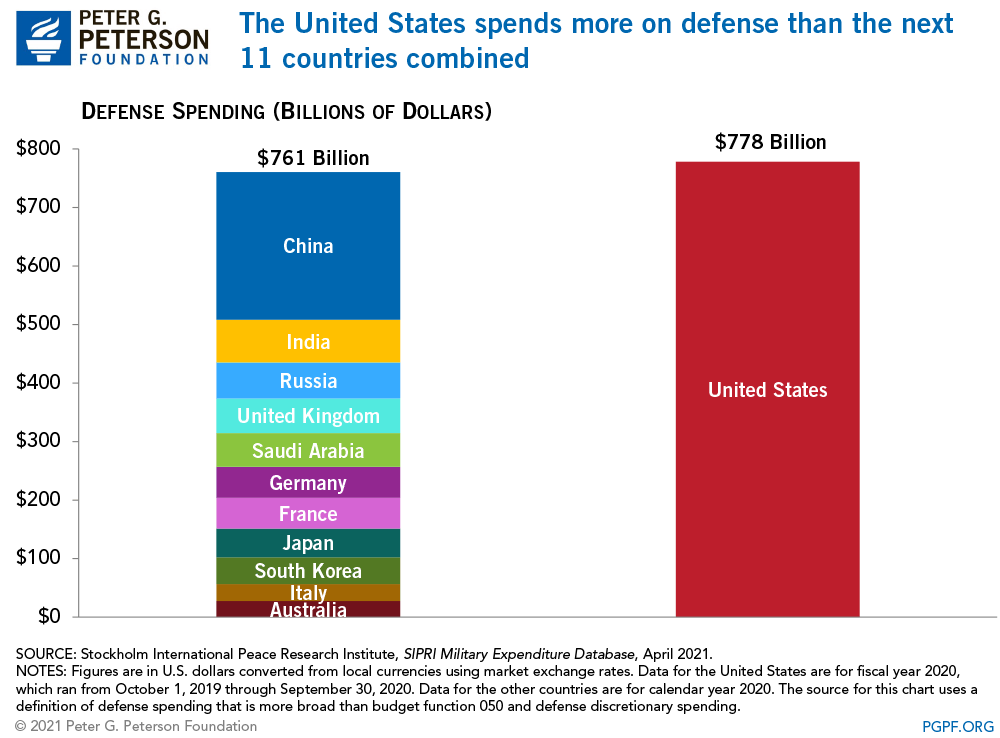
Most serious of all, there’s the problem of U.S. weapons feeding conflicts in ways the Pentagon didn’t foresee, but probably should have.
Compared to the $900 for Pentagon contractors, the average taxpayer contributed only about $27 to the Centers for Disease Control and Prevention, $171 to K-12 education, and barely $5 to renewable energy.
Average US Taxpayer Gave $900 to Military Contractors Last Year, https://truthout.org/articles/average-us-taxpayer-gave-900-to-military-contractors-last-year/?eType=EmailBlastContent&eId=1f951de0-ce82-4df9-b85e-0a76f6faf974
Lindsay Koshgarian, OtherWordsPUBLISHEDApril 17, 2022
ost of us want our tax dollars to be wisely used — especially around tax time.
You’ve probably heard a lot about corporations not paying taxes. Last year, individuals like you contributed six times more in income tax than corporations did.
But have you heard about how many of your tax dollars then end up in corporate pockets? It’s a lot — especially for corporations that contract with the Pentagon. They collect nearly half of all military spending.
The average taxpayer contributed about $2,000 to the military last year, according to a breakdown my colleagues and I prepared for the Institute for Policy Studies. More than $900 of that went to corporate military contractors.
In 2020, the largest Pentagon contractor, Lockheed Martin, took in $75 billion from taxpayers — and paid its CEO more than $23 million.
Unfortunately, this spending isn’t buying us a more secure world.
Last year, Congress added $25 billion the Pentagon didn’t ask for to its already gargantuan budget. Lawmakers even refused to let military leaders retire weapons systems they couldn’t use anymore. The extra money favored top military contractors that gave campaign money to a group of lawmakers, who refused to comment on it.
Then there’s simple price-gouging.
There’s the infamous case of TransDigm, a Pentagon contractor that charged the government $4,361 for a metal pin that should’ve cost $46 — and then refused to share cost data. Congress recently asked TransDigm to repay some of its misbegotten profits, but the Pentagon hasn’t cut off its business.
Somewhere between price-gouging and incompetence lies the F-35 jet fighter, an embarrassment the late Senator John McCain, a Pentagon booster, called “a scandal and a tragedy.”
Among the most expensive weapons systems ever, the F-35 has numerous failings. It’s spontaneously caught fire at least three times — hardly the outcome you’d expect for the top Pentagon contractor’s flagship program. The Pentagon has reduced its request for new F-35s this year by about a third, but Congress may reject that too.
Most serious of all, there’s the problem of U.S. weapons feeding conflicts in ways the Pentagon didn’t foresee, but probably should have.
When U.S. ground troops left Afghanistan, they left behind a huge array of military equipment, from armored vehicles to aircraft, that could now be in Taliban hands. The U.S. also left weapons in Iraq that fell into the hands of ISIS, including guns and an anti-tank missile.
Even weapons we sold to so-called allies like Saudi Arabia have ended up going to people affiliated with groups like al Qaeda.
Military weapons also end up on city streets at home. Over the years, civilian law agencies have received guns, armored vehicles, and even grenade launchers from the military, turning local police into near-military organizations.
Records also show that the Pentagon has lost hundreds of weapons which may have been stolen, including grenade launchers and rocket launchers. Some of these weapons have been used in crimes.
Taxpayers shouldn’t be spending $900 apiece for these outcomes. My team at the Institute for Policy Studies and others have demonstrated ways to cut up to $350 billion per year from the Pentagon budget, including what we spend on weapons contractors, without compromising our safety.
Even better, we could then put some of that money elsewhere.
Compared to the $900 for Pentagon contractors, the average taxpayer contributed only about $27 to the Centers for Disease Control and Prevention, $171 to K-12 education, and barely $5 to renewable energy.
How much more could we get if we invested even a fraction of what we spend on military contractors for these dire needs?
Compared to the $900 for Pentagon contractors, the average taxpayer contributed only about $27 to the Centers for Disease Control and Prevention, $171 to K-12 education, and barely $5 to renewable energy.
How much more could we get if we invested even a fraction of what we spend on military contractors for these dire needs?
Most Americans support shifting Pentagon funds to pay for domestic needs. Instead of making Americans fork over another $900 to corporate military contractors this year, Congress should put our dollars to better use.
After Undermining International Criminal Court, US Now Wants It to Charge Russians,
Marjorie Cohn, Truthout, 17 Apr 22
Athough the United States has tried mightily to undermine the International Criminal Court (ICC) since it became operational in 2002, the U.S. government is now pushing for the ICC to prosecute Russian leaders for war crimes in Ukraine. Apparently, Washington thinks the ICC is reliable enough to try Russians but not to bring U.S. or Israeli officials to justice.
On March 15, the Senate unanimously passed S. Res 546, which “encourages member states to petition the ICC or other appropriate international tribunal to take any appropriate steps to investigate war crimes and crimes against humanity committed by the Russian Armed Forces.”
When he introduced the resolution, Sen. Lindsey Graham (R-South Carolina) said, “This is a proper exercise of jurisdiction. This is what the court was created for.” The United States has refused to join the ICC and consistently tries to undercut the court. Yet a unanimous U.S. Senate voted to utilize the ICC in the Ukraine conflict.
Since February 24, when the Russian Federation launched an armed attack against Ukraine, horrific images of destruction have been ubiquitous. The Office of the UN High Commissioner for Human Rights has documented 3,455 civilian casualties, including 1,417 killed and 2,038 injured as of April 3. Most of those casualties have been caused by explosive weapons with a wide impact area, which includes heavy artillery and multiple launch systems as well as air and missile strikes.
On February 28, Karim Khan, chief prosecutor of the International Criminal Court, opened an investigation into the situation in Ukraine. He said that his preliminary examination found a reasonable basis to believe that alleged war crimes and crimes against humanity had been committed in Ukraine. Khan’s formal investigation will “also encompass any new alleged crimes . . . that are committed by any party to the conflict on any part of the territory of Ukraine.”
As I explained in prior Truthout columns, in spite of U.S.-led NATO’s provocation of Russia over the past several years, the Russian invasion of Ukraine constitutes illegal aggression.
Nevertheless, the ICC does not have jurisdiction to prosecute Russian leaders for the crime of aggression.
The ICC’s Rome Statute Prohibits Aggression
In 1946, the International Military Tribunal at Nuremberg called the waging of aggressive war “essentially an evil thing,” adding that, “to initiate a war of aggression . . . is not only an international crime; it is the supreme international crime differing only from other war crimes in that it contains within itself the accumulated evil of the whole.”
U.S. Supreme Court Justice Robert Jackson, chief prosecutor at the Nuremberg Tribunal, called aggressive war “the greatest menace of our times.” Jackson said, “If certain acts in violation of treaties are crimes, they are crimes whether the United States does them or whether Germany does them, and we are not prepared to lay down a rule of criminal conduct against others which we would not be willing to have invoked against us.”
Aggression is prohibited by the ICC’s Rome Statute. Article 8bis defines the crime of aggression as “the planning, preparation, initiation or execution, by a person in a position effectively to exercise control over or to direct the political or military action of a State, of an act of aggression which, by its character, gravity and scale, constitutes a manifest violation of the Charter of the United Nations.”
Adopting the central prohibition of the UN Charter against the use of aggressive force, Article 8bis defines an act of aggression as “the use of armed force by a State against the sovereignty, territorial integrity or political independence of another State, or in any other manner inconsistent with the Charter of the United Nations.” The charter only allows the use of military force in self-defense or with the consent of the Security Council, neither of which happened before Russia invaded Ukraine.
In order to secure a conviction for aggression, the prosecutor of the ICC must prove that a leader who exercised control over the military or political apparatus of a country ordered an armed attack against another country. An armed attack can include bombing or attacking the armed forces of other country. The attack must be a “manifest” violation of the UN Charter in its character, scale and gravity, which includes only the most serious forms of the illegal use of force. For example, a single gunshot would not qualify but George W. Bush’s illegal invasion of Iraq would………………………………………….
When he introduced the resolution, Sen. Lindsey Graham (R-South Carolina) said, “This is a proper exercise of jurisdiction. This is what the court was created for.” The United States has refused to join the ICC and consistently tries to undercut the court. Yet a unanimous U.S. Senate voted to utilize the ICC in the Ukraine conflict.
Since February 24, when the Russian Federation launched an armed attack against Ukraine, horrific images of destruction have been ubiquitous. The Office of the UN High Commissioner for Human Rights has documented 3,455 civilian casualties, including 1,417 killed and 2,038 injured as of April 3. Most of those casualties have been caused by explosive weapons with a wide impact area, which includes heavy artillery and multiple launch systems as well as air and missile strikes.
On February 28, Karim Khan, chief prosecutor of the International Criminal Court, opened an investigation into the situation in Ukraine. He said that his preliminary examination found a reasonable basis to believe that alleged war crimes and crimes against humanity had been committed in Ukraine. Khan’s formal investigation will “also encompass any new alleged crimes . . . that are committed by any party to the conflict on any part of the territory of Ukraine.”
As I explained in prior Truthout columns, in spite of U.S.-led NATO’s provocation of Russia over the past several years, the Russian invasion of Ukraine constitutes illegal aggression.
Nevertheless, the ICC does not have jurisdiction to prosecute Russian leaders for the crime of aggression……………….
“So, the U.S. wants to help the International Criminal Court prosecute Russian war crimes while barring any possibility the ICC could probe U.S. (or Israeli) war crimes,” observed Reed Brody, a commissioner for the International Commission of Jurists, an international human rights nongovernmental organization.
U.S. hypocrisy is no more apparent than in the first “Whereas” clause of the Senate’s unanimous resolution condemning Russia. It says, “Whereas the United States of America is a beacon for the values of freedom, democracy, and human rights across the globe . . .”
One hundred members of the U.S. Senate affirmed that sentiment in spite of the U.S. wars of aggression in Kosovo, Iraq and Afghanistan, and the commission of U.S war crimes. If the senators truly believe that the ICC is dependable enough to prosecute Russian leaders, they should push Biden to send the Rome Statute to them for advice and consent to ratification. What’s good for the Russian goose should also be good for the U.S. gander. https://truthout.org/articles/after-undermining-international-criminal-court-us-wants-it-to-charge-russians/?eType=EmailBlastContent&eId=1f951de0-ce82-4df9-b85e-0a76f6faf974
Biden’s genocide comment raised concern
SOTT, Carol E. Lee, Josh Lederman, NBC News, Fri, 15 Apr 2022
President Joe Biden’s declaration this week that Russia is committing “genocide” in Ukraine raised concerns among some officials in his own government and has so far not been corroborated by information collected by U.S. intelligence agencies, according to senior administration officials.
At the State Department, which is tasked with making formal determinations of genocide and war crimes through an independent legal process, two officials said that Biden’s seemingly offhand declaration during a domestic policy speech in Iowa on Tuesday made it harder for the agency to credibly do its job.
U.S. intelligence agencies collect information when allegations are made of actions that could amount to genocide, but policymakers are the ones who actually decide whether to declare it. Intelligence reports on Ukraine currently do not support a genocide designation, officials said.
“Genocide includes a goal of destroying an ethnic group or nation and, so far, that is not what we are seeing.”…………..
The question of when to label Russia’s actions in Ukraine “genocide,” particularly the legal threshold for doing so had been discussed inside the White House ever since images of mass graves and civilian torture and assassinations emerged in Bucha, people familiar with the discussions said. Biden had recently begun to make his views clear in private, so White House officials weren’t surprised that he called what’s happening in Ukraine “genocide,” but they were taken aback that he did so offhandedly in a speech in Iowa about inflation, the people said.
The president’s declaration of genocide in Ukraine was the third time in recent weeks that the president has tried to separate what he says are his personal views from official U.S. policy to take a position that he believes is right even though it’s not aligned with the position of his own government.
Biden said Russia was committing war crimes in Ukraine — another symbolically and legally significant moment in which he got ahead of his own administration — a week before the U.S. government completed its legal process and formally made that declaration.
Biden also said Russian President Vladimir Putin should no longer be in power, prompting a scramble by his aides to say that’s not what he meant and stress that U.S. policy is not regime change in Moscow. Biden later said he did mean what he said — that it was his “personal” view — but not U.S. policy.
…………… “These aren’t gaffes,” said one person close to the White House. “He’s doing this very purposefully.”
Responding to questions about Biden’s genocide declaration, White House press secretary Jen Psaki told reporters this week, “The president was calling it like he sees it, and that’s what he does.”
The apparent disconnect between the president and the bureaucracy he oversees is striking given Biden’s extensive experience in foreign policy and government. Biden also has stressed since the 2020 campaign that “the words of a president matter.” And he’s gone out of his way to say he would not try to influence independent Justice Department decisions, but some administration officials see a willingness for him to do just that with other independent legal processes.
Once the president says he believes genocide and war crimes have been committed, administration officials said that puts immense pressure on career government officials to reach the same conclusion. The concern is that if and when the State Department’s Office of Global Criminal Justice reaches those conclusions on its own, the office risks appearing late to the game or like it’s trying to justify Biden’s public comments, the officials said. One of the administration officials said Biden’s comments had put particular pressure on Beth Van Schaack, the U.S. ambassador for global criminal justice, who was confirmed by the Senate last month. On Friday, Schaack met with Ukraine’s prosecutor general, Iryna Venediktova, to compare notes as Venediktvoa’s office investigates alleged Russian war crimes by Russia. Venediktova, like Ukrainian President Volodymyr Zelenskyy, has already accused Russia of genocide in Ukraine.
U.S. intelligence shows that the Russians have been told that Ukrainians in the eastern Donbas region, where fighting is expected to intensify, are Nazis and that the Ukrainian civilians are Nazi sympathizers, raising concerns about genocide, officials said. The Russians also have been told the same about Ukrainians in Mariupol, officials said, with one noting how brutal Moscow’s military campaign has been there.
Genocide is a specific crime defined under international law, and proving it requires showing an intent at high levels to commit genocide.
Biden’s early accusation against Russia, which was welcomed by Zelenskyy, came even ahead of human rights organizations that have often pushed U.S. administrations to declare that a regime has committed genocide.
Human Rights Watch, for instance, so far has not found evidence of a genocidal campaign waged by Russia, according to Tara Sepehri Far, acting deputy director of Human Rights Watch’s Washington office.
“Our research is not matching the definition yet,” said Sepehri Far. “It doesn’t mean it’s not happening.”
Biden has throughout his decades long career at times been quicker than others in the U.S. government to speak out about genocide………………………….. https://www.sott.net/article/466834-Biden-genocide-comment-raised-concern-among-some-U-S-officials
Dissent is dying in America – the backlash is vitriolic
 | |||
AMERICAN DISSENT ON UKRAINE IS DYING IN DARKNESS https://popularresistance.org/american-dissent-on-ukraine-is-dying-in-darkness/ AUDIO
- By Robert Scheer, Scheer Post., April 16, 2022
When It Came To The Ukraine Conflict, Professor Michael J. Brenner Did What He’s Done His Whole Life: Question American Foreign Policy.
This time the backlash was vitriolic.
As the death toll in Russia’s illegal invasion of Ukraine continues to rise, there have only been a handful of Westerners publicly questioning NATO and the West’s role in the conflict. These voices are becoming fewer and further between as a wave of feverish backlash engulfs any dissent on the subject. One of these voices belongs to Professor Michael J. Brenner, a lifelong academic, Professor Emeritus of International Affairs at the University of Pittsburgh and a Fellow of the Center for Transatlantic Relations at SAIS/Johns Hopkins, as well as former Director of the International Relations & Global Studies Program at the University of Texas.
Brenner’s credentials also include having worked at the Foreign Service Institute, the U.S. Department of Defense and Westinghouse, and written several books on American foreign policy. From the vantage point of decades of experience and studies, the intellectual regularly shared his thoughts on topics of interest through a mailing list sent to thousands of readers—that is until the response to his Ukraine analysis made him question why he bothered in the first place.
In an email with the subject line “Quittin’ Time,” Brenner recently declared that, aside from having already said his piece on Ukraine, one of the main reasons he sees for giving up on expressing his opinions on the subject is that “it is manifestly obvious that our society is not capable of conducting an honest, logical, reasonably informed discourse on matters of consequence. Instead, we experience fantasy, fabrication, fatuousness and fulmination.” He goes on to decry President Joe Biden’s alarming comments in Poland when he all but revealed that the U.S. is—and perhaps has always been—interested in a Russian regime change.
On this week’s “Scheer Intelligence,” Brenner tells host Robert Scheer how the recent attacks he received—many of a personal, ad hominem nature—were some of the most vitriolic he’s ever experienced. The two discuss how many media narratives completely leave out that the eastward expansion of NATO, among other Western aggressions against Russia, played an important part in fueling the current humanitarian crisis. Corporate media’s “cartoonish” depiction of Russian president Vladimir Putin, adds Brenner, is not only misleading, but dangerous given the nuclear brinkmanship that has ensued. Listen to the full discussion between Brenner and Scheer as they continue to dissent despite living in an America that is seemingly increasingly hostile to any opinion that strays from the official line.
U.S. Jews Favor Return to Iran Deal
Jews support a return to the Iran deal by 68-32, according to a new survey. And when Jews are asked to name their top two political issues, Israel shows up near the bottom of the list, well behind climate change.
Portside, April 16, 2022, Philip Weiss MONDOWEISS
merican Jews overwhelmingly support the renewal of the Iran deal, and very few American Jews consider Israel a political priority, according to a new survey of American Jewish voters.
Jews support a return to the Iran deal by 68-32, the Jewish Electoral Institute found in a poll of 800 Jews this spring. The proportion is nearly 4-to-1 among Reform Jews (79-21) and women (77-23). And Jews over 65 are for the deal by a larger percentage (72-28) than Jews under 40. Only the orthodox are against the Iran deal, by 85-15! But orthodox make up just 9 percent of the Jewish population.
Now here’s the indifference to Israel question.
Voters were asked to say which two issues they wanted the president to focus on. Israel got clobbered. Only 4 percent listed it as one of their two issues.
When you break it out by denomination, it’s even starker. 1 percent of non-denominational Jews and 2 percent of Reform Jews think Israel should be a priority. And those two groups make up more than two-thirds of American Jews — 31 percent non-denominational, 37 percent Reform. Though 5 percent of Conservative and 18 percent of Orthodox Jews see Israel as a priority.
Other issues are just way more important. 42 percent of nondenominational Jews say climate change should be a top priority; 32 percent say voting rights; 12 percent say crime…………………
The new poll also shows that 93 percent of American Jews are concerned about antisemitism. The Reform number there is 95 percent concerned, the orthodox 96 percent, the non-denominational 89 percent concerned……. https://portside.org/2022-04-16/us-jews-favor-return-iran-deal
Extremely rare brain cancer appearing in people who attended a New Jersey school, close to former nuclear weapons fuel plant

94 former staff and students from Colonia High School in the Woodbridge Township School District have been stricken by the devastating diagnoses in recent years.
While the exact number of former faculty and staff diagnosed with glioblastoma is not precisely known, the cancer is exceedingly rare. According to the American Association of Neurological Surgeons, glioblastoma has an incidence of 3.21 per 100,000
Nearly 100 people at this NJ school got brain tumors — a survivor demands answers, https://nypost.com/2022/04/14/why-nearly-100-people-at-nj-school-got-brain-tumors/?fbclid=IwAR1IItuf3UXbHuJAJr-gByHSGIgbgX1lZYsljrokhDTk6z1Dx77P5UMwrg4
By Andrew Court
A cancer survivor is vowing to untangle the twisted mystery of why almost 100 people associated with a New Jersey high school have developed “extremely” rare malignant brain tumors.
Al Lupiano is among the 94 former staff and students from Colonia High School in the Woodbridge Township School District who have been stricken by the devastating diagnoses in recent years.
“I will not rest until I have answers,” Lupiano, 50, declared in an interview with NJ.com and the Star-Ledger on Thursday. “I will uncover the truth.”
Among the others diagnosed with brain cancer was Lupiano’s younger sister, who passed away from the disease in February at the age of 44.
The devoted brother promised his sister on her deathbed that he would get to the bottom of what was causing the apparent cancer cluster at Colonia High. On Tuesday — after a public push by Lupiano — local officials approved an emergency probe of the school.
“There could be a real problem here, and our residents deserve to know if there are any dangers,” Woodbridge Mayor John McCormac said in a statement. “We’re all concerned, and we all want to get to the bottom of this. This is definitely not normal.”
Starting this weekend, various radiological assessments will be conducted across the school’s 28-acre campus, including the testing of indoor air samples for radon.
Lupiano was diagnosed with a brain tumor back in the late 1990s, at the age of 27. He went on to recover from the disease.
Last year, his wife — who also attended Colonia — was diagnosed with a rare brain tumor. On the exact same day, Lupiano’s younger sister, Angela DeCillis, another alumna of Colonia, learned that she too had brain cancer.
After his sister’s death in February, Lupiano became convinced of a link between the Colonia campus and the brain cancers that he, his wife and his sister had developed. Last month, he started a Facebook group asking locals whether they knew of any other people associated with the school who had been stricken by similar diagnoses.
In less than six weeks, Lupiano says, he has gathered the names of 94 people connected with the school who have developed brain tumors.
The disturbing development became headline news this week after CBS News took it national. A subsequent TikTok video discussing the medical mystery has also racked up more than 2.2 million viral views in just 24 hours.
The vast majority of those who have developed brain tumors “graduated between 1975 and 2000, although outliers have come as recently as a 2014 graduate,” according to the Star-Ledger.
The diagnoses include “several types of primary brain tumors, including cancerous forms like glioblastoma and noncancerous yet debilitating masses such as acoustic neuromas, haemangioblastomas and meningiomas.”
“To find something like this … is a significant discovery,” Dr. Sumul Raval, one of New Jersey’s top neuro-oncologists, told the outlet. “Normally speaking, you don’t get radiation in a high school … unless something is going on in that area that we don’t know,” Raval added, calling for an immediate investigation.
The viral TikTok video discussing the purported cancer cluster was posted Wednesday by popular personality Dr. Joe Whittington.
Whittington — a board-certified MD in California — claimed several of the brain tumors developed by ex-Colonia High staff and students are glioblastoma multiforme — an aggressive cancer which spreads to brain tissue.
While the exact number of former faculty and staff diagnosed with glioblastoma is not precisely known, the cancer is exceedingly rare. According to the American Association of Neurological Surgeons, glioblastoma has an incidence of 3.21 per 100,000.
Meanwhile, the TikTok video sparked panic and a range of conspiracy-theory style comments, with people claiming mold, toxic waste, asbestos and nearby cellphone towers could all be causing the cluster.
Lupiano also spoke with CBS News on Thursday, saying he now believes ionizing radiation must be responsible for the health issues.
“What I find alarming is there’s truly only one environmental link to primary brain tumors, and that’s ionizing radiation,” he declared. “It’s not contaminated water. It’s not air. It’s not something in soil. It’s not something done to us due to bad habits.”
The school was built back in 1967 on acres of empty land, with McCormac telling the news network he is stumped as to what could be causing the cancers.
Lupiano alleges that some contaminated soil was removed from the site when it closed down in 1967 — the same year Colonia High School was built. He now wonders whether some of that soil ended up on the school grounds.CBS2
He has reached out to the state Department of Health, Department of Environmental Protection and the federal Agency for Toxic Substances and Disease Registry for help — which is reportedly still in the “early stages,” according to the CBS News report.
Lupiano told NJ Spotlight News that the school is located less than 12 miles from the Middlesex Sampling Plant — a site that was used, under the direction of the Manhattan Project, to crush, dry, store, package and ship uranium ore for the development of the atomic bomb.
He alleges that some contaminated soil was removed from the site when it closed down in 1967 — the same year Colonia High School was built. Lupiano is wondering whether some of that soil ended up on the school grounds.
Today, Colonia enrolls approximately 1,300 students, with many said to be “anxious” about the possible cancer cluster.
“We are looking at possible things that we can do between the town and school, and they said they will look at anything we come up with,” McCormac said. at top https://nypost.com/2022/04/14/why-nearly-100-people-at-nj-school-got-brain-tumors/?fbclid=IwAR1IItuf3UXbHuJAJr-gByHSGIgbgX1lZYsljrokhDTk6z1Dx77P5UMwrg4
Scientist fired after raising questions about safety at nuclear waste plant
|
4 Investigates: Scientist fired after raising questions about safety at nuclear waste plant https://www.kob.com/albuquerque-news/4-investigates-scientist-fired-after-raising-questions-about-safety-at-nuclear-waste-plant/6445723/
Brittany Costello, April 14, 2022 CARLSBAD, N.M— There are some things we just leave up to the experts – that includes the science and research that goes into the Waste Isolation Pilot Plant in Carlsbad, New Mexico, the only-of-its-kind facility that stores transuranic radioactive waste from around the country.
What if we told you there are questions about the science of its long-term safety? KOB 4 spoke with a former scientist who said he lost his job after raising the red flag.
There’s an expectation, a reputation that follows the name Sandia National Labs. Its advanced scientific work is something many of us take for granted. Not Dr. Charles Oakes, who is a geochemist who used to work for Sandia National Labs in Carlsbad at the Waste Isolation Pilot Plant, also known as WIPP.
Part of his job was to make sure WIPP, and all of the transuranic radioactive waste stored inside, is safe for years to come.
This is a case where they weren’t, not only were they not doing their job, they were claiming they were doing their job but falsifying all the evidence that went into the claims that they were doing the job,” Dr. Charles Oakes said.
From the outside, there’s not much to see at WIPP. That’s because all the waste is stored more than 2,000 feet below ground.
“WIPP is the only facility of its kind in the world, deep geologic repository for nuclear waste,” said Don Hancock, Director of the Nuclear Waste Program a Southwest Research and Information Center.
Hancock has served as a WIPP watchdog even before the first disposal at the Department of Energy site in 1999.
“Essentially what’s in WIPP are elements that are contaminated from the manufacturing of components in nuclear weapons, particularly the plutonium core, the heart of it,” said Hancock. “That includes machinery that includes gloves, and booties, that includes sludges.”
It might sound complex, but the key to safe storage of radioactive material is simple: accurate, reliable science and research. Regulators at the Environmental Protection Agency demand it.
Sandia National Labs is contracted to do it, at a cost of $18-million a year.
It’s so important that, in order for WIIPP to continue accepting waste, every five years, it has to recertify that its projections show the facility will be safe after it’s filled up and closed down.
Safe from that point and 10,000 years beyond it.
“The most common feared way that the radiation will get to the surface is through the flow of water,” said Dr. Oakes. “There are some aquifers in the rock of the repository. One of the fears is that a well will be drilled through the repository or near to this repository and water may flow through the repository and intersect with a well bore.”
Dr. Oakes said his job was to look at how much of that radioactive material would make it to the surface.
“If you do have radioactive material dissolved in the water, will it react with rocks, minerals along the way, and be removed from the water, in which you removed the threat, or will it carry on its merry way dissolved and get to the surface where it can potentially hurt people and the environment,” he said.
During his time at Sandia National Labs, Dr. Oakes said he discovered inaccuracies that called into question WIPP’s long-term safety, what he believed to data errors.
Oakes said he brought it up to his bosses, the Department of Energy and even the EPA.
After he spoke up, Oakes said Sandia labeled him a problem employee and showed him the door.
Oakes is being represented by attorney Timothy White – and Nick Davis of Davis Law. Their goal is to address much more than what they believe to be retaliatory discharge.
“We’re trying to achieve a certain safety standard here and the information that is being used to allegedly show that we’ve achieved that standard, that we should be recertified to manage the WIPP project, is built on bad science leading to fraud,” said White.
KOB 4 wanted to hear from Sandia National Labs. A spokesperson told us they cannot comment on these accusations because of the pending lawsuit.
There are a number of defendants named in the suit: Honeywell International, National Technology and engineering Solutions of Sandia, LLC, Carol Adkins, and Paul Shoemaker.
Attorneys representing the defendants have responded in court. Documents allege Oakes was fired after multiple “inappropriate interactions with colleagues” but they did not go into detail.
Attorneys are also asking a federal judge to dismiss the case.
As far as all of that expansive data is concerned, officials at the Department of Energy, with the WIPP project, said there are quality assurance procedures in place including several independent reviews.
They said a recertification decision is expected later in April or early May.
A call for World-class Cleanup at Chalk River Laboratories
https://concernedcitizens.net/2022/04/14/a-call-for-world-class-cleanup-at-chalk-river-laboratories/ Canada’s $16 billion nuclear waste legacy is in danger of being abandoned in substandard facilities and allowed to leak into our rivers and drinking water. Instead, let’s use our expertise to turn Canada into a world leader in the cleanup and safe storage of radioactive waste.
WORLD-CLASS NUCLEAR WASTE CLEANUP would protect health, drinking water, property values and peace of mind.
What do experts say is needed?
The International Atomic Energy Agency says that radioactive waste facilities must be carefully sited and waste placed below ground to keep radioactive materials out of air and water and protect current and future generations. The IAEA says that siting a facility for long-lived waste in a “stable geological formation” is “fundamentally important.” It says that nuclear reactor entombment should only be used in the case of an emergency, such as a meltdown.
Retired AECL scientists say that IAEA guidance must be followed, that Canada has an obligation to follow the guidelines as a signatory to the Joint Convention on the Safety of Radioactive Waste Management.
First Nations, in a Joint Declaration, endorsed by resolution at the Assembly of First Nations, say that nuclear waste should be managed according to five principles: 1) no abandonment, 2) monitored and retrievable storage 3) better containment, more packaging, 2) away from drinking water and major water bodies and 5) no unnecessary transport (exports and imports)
The Canadian Coalition for Nuclear Responsibility says radioactive waste should be carefully managed in monitored and retrievable condition so that repairs to packaging can be made as needed, to keep the contents out of the biosphere, our air, soil and drinking water. The CCNR suggests that a “rolling stewardship” strategy whereby each generation teaches each subsequent generation how to look after the wastes and keep them out of the biosphere.
Some countries such as Finland have made good progress building facilities to keep radioactive waste out of the biosphere. Finland puts radioactive wastes produced by its four nuclear reactors in bedrock geological facilities 100 meters deep. It has over 25 years of experience with these facilities. They will also house the radioactive remains of the reactors when they are shut down and dismantled.
WORLD-CLASS NUCLEAR WASTE CLEANUP would bring money into the Ottawa Valley economy and support good careers for generations of valley residents.
WORLD-CLASS NUCLEAR WASTE CLEANUP would involve:


WORLD-CLASS NUCLEAR WASTE STORAGE FACILITIES would protect the Ottawa River and future generations.
1 This Month
26 April – Chernobyl: Inside the Meltdown airs on National Geographic on Sunday 26th April from 4pm
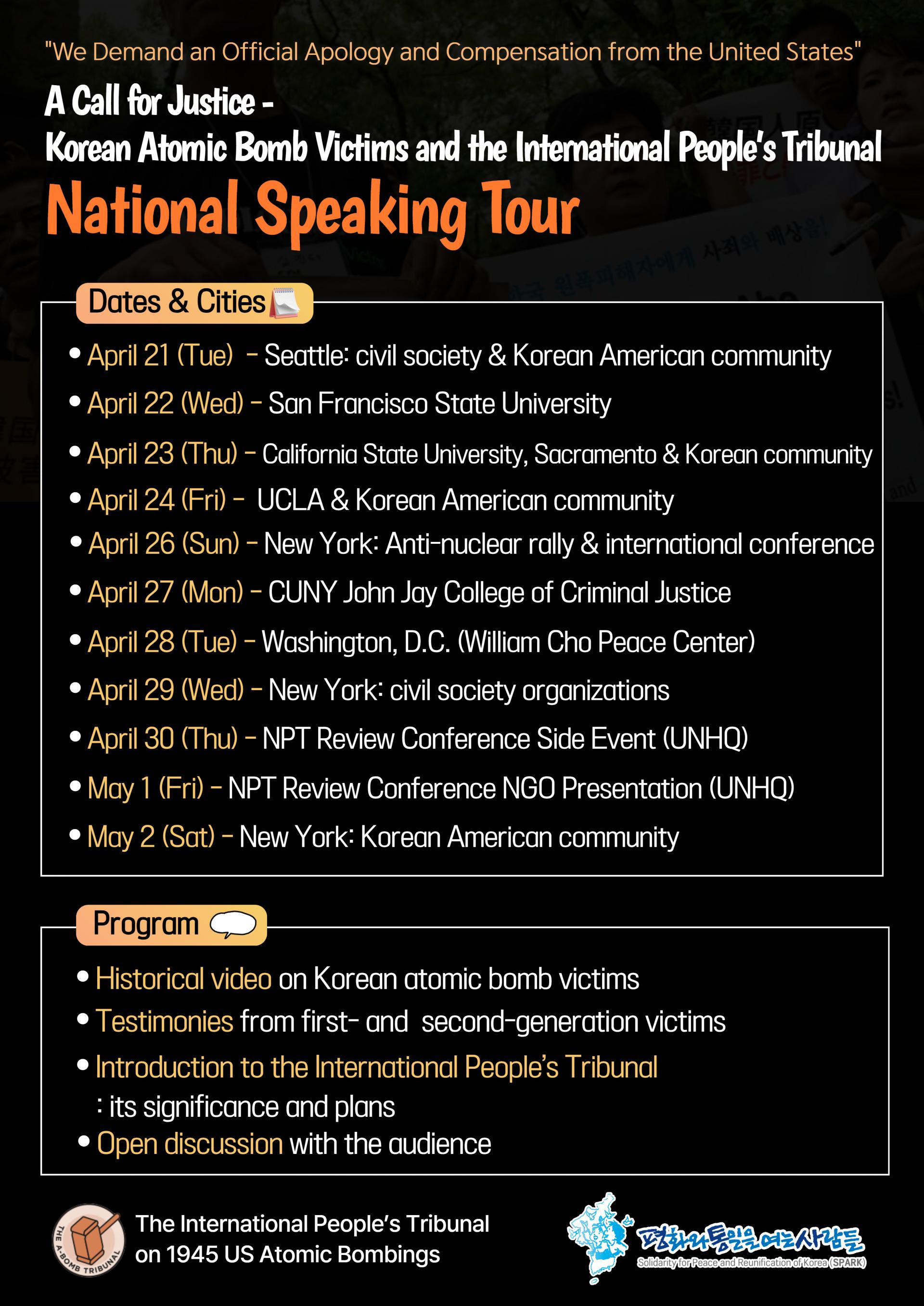

29 April – Nuclear Expert Webinar #1 – Radiation Impacts on Families with Mary Olson and Cindy Folkers
- 12:15 PM MT – 1:45 PM MT
- Location: Virtual – REGISTER TODAY

4 May -West Suburban Peace Coalition to discuss Iran war at May Educational Forum
Monday, May 4, 7:00 – 8:00 PM Central Standard Time
Title: : How Trump’s Narrative Tries to Shape the Reality of the War on Iran.
Contact Walt Zlotow, zlotow@hotmail.com 630 442 3045 for further information
14 May – online event From Bombs to Data Centres: the Face of Nuclear Colonialism

Pine Ridge Uranium is the real threat, not Tehran- Tell Burgum: Stop the Extraction.
Chernobyl: The Lost Tapes – A good documentary on Chernobyl on SBS available On Demand for the next 3 weeks– https://www.sbs.com.au/ondemand/tv-program/chernobyl-the-lost-tapes/2352741955560
To see nuclear-related stories in greater depth and intensity – go to https://nuclearinformation.wordpress.com
-
Archives
- May 2026 (25)
- April 2026 (356)
- March 2026 (251)
- February 2026 (268)
- January 2026 (308)
- December 2025 (358)
- November 2025 (359)
- October 2025 (376)
- September 2025 (257)
- August 2025 (319)
- July 2025 (230)
- June 2025 (348)
-
Categories
- 1
- 1 NUCLEAR ISSUES
- business and costs
- climate change
- culture and arts
- ENERGY
- environment
- health
- history
- indigenous issues
- Legal
- marketing of nuclear
- media
- opposition to nuclear
- PERSONAL STORIES
- politics
- politics international
- Religion and ethics
- safety
- secrets,lies and civil liberties
- spinbuster
- technology
- Uranium
- wastes
- weapons and war
- Women
- 2 WORLD
- ACTION
- AFRICA
- Atrocities
- AUSTRALIA
- Christina's notes
- Christina's themes
- culture and arts
- Events
- Fuk 2022
- Fuk 2023
- Fukushima 2017
- Fukushima 2018
- fukushima 2019
- Fukushima 2020
- Fukushima 2021
- general
- global warming
- Humour (God we need it)
- Nuclear
- RARE EARTHS
- Reference
- resources – print
- Resources -audiovicual
- Weekly Newsletter
- World
- World Nuclear
- YouTube
-
RSS
Entries RSS
Comments RSS
 nuclear-news