Meltdown at Three Mile Island- USA’s closest nuclear close shave
Shortly after 4am on 28 March 1979, a pressure valve failed to close in
the Unit 2 reactor at Three Mile Island, a nuclear power plant on a strip
of land in central Pennsylvania’s Susquehanna River. The technical
malfunction, compounded by human error – control room workers misread
confusing signals and halted the emergency water cooling system – heated
the nuclear core to dangerously high levels.
The film The China Syndrome
was still in theaters, starring Jane Fonda as a television reporter
investigating cover-ups at a nuclear power plant whose meltdown could
release radioactive material deep into the earth, “all the way to
China”. Three Mile Island – still the worst commercial nuclear accident
in US history – was no China Syndrome, but it got terrifyingly close to
catastrophic, Chernobyl-level damage.
As the Netflix docuseries Meltdown:
Three Mile Island recounts, Unit 2 came less than half an hour from fully
melting down – a disaster scenario that would have sickened hundreds of
thousands in the surrounding area. Two days after the accident, an
explosive bubble of hydrogen gas was found in the reactor. The plant’s
operator, Metropolitan Edison, tried to downplay the risk of radioactive
releases, but panic ensued; more than 100,000 people fled the surrounding
area. Plant technicians were eventually able to slowly bleed the gas from
the cooling reactor, avoiding a deadly explosion.
Though workers inside theplant were exposed to dangerous levels of radiation, it remains unknown how
much contamination escaped the facility into the surrounding community. In
its second half, Meltdown, directed by Kief Davidson, homes in on the story
of Rick Parks, a cleanup supervisor turned whistleblower on the Bechtel
Corp, the company hired to conduct the billion-dollar cleanup by
Metropolitan Edison and supervised by the government’s Nuclear Regulatory
Commission (NRC).
“While a lot of people know about the disaster, they
don’t know about what happened in the cleanup phase and how close we were
to another disaster,” Davidson told the Guardian. “We dodged a bullet a
second time, and it was entirely due to the fact that Rick Parks and
[fellow whistleblower] Larry King stood up. “We should know about these
stories,” he added. “We should be able to look at the people who risk
everything in order to save communities from a potential disaster.”
Guardian 5th May 2022
Nuclear War Threat Drives Greater Divide Between U.S., China
NewsWeek, BY JON JACKSON ON 5/6/22 THE ALREADY TENUOUS RELATIONSHIP BETWEEN THE UNITED STATES AND CHINA RISKS FURTHER DETERIORATION FOLLOWING RECENT COMMENTS FROM EACH COUNTRY REGARDING THE THREAT OF NUCLEAR WAR THE OTHER PRESENTS.
Admiral Charles Richard spoke Wednesday during a hearing assembled by the Senate Armed Services strategic forces subcommittee about the escalated nuclear threat posed by China since its ally Russia began its invasion of Ukraine.
“We are facing a crisis deterrence dynamic right now that we have only seen a few times in our nation’s history,” Richard, who is head of the U.S. Strategic Command, said. “The war in Ukraine and China’s nuclear trajectory—their strategic breakout—demonstrates that we have a deterrence and assurance gap based on the threat of limited nuclear employment.”
During a Friday press conference, China’s foreign ministry spokesperson Zhao Lijian was asked about Richard’s remarks.
| China follows a self-defensive nuclear strategy and keeps its nuclear forces at the minimum level required to safeguard national security. We stay committed to no first use of nuclear weapons at any time and under any circumstances, and undertake unequivocally and unconditionally not to use or threaten to use nuclear weapons against non-nuclear-weapon states or nuclear-weapon-free zones,” Zhao said. “This policy remains clear and consistent. China opposes any form of ‘China nuclear threat’ theory.”He further charged that U.S. officials were trying to shift “the blame to others.””Some individuals in the U.S. have been hyping up various versions of the so-called ‘China nuclear threat,'” Zhao said. “As is known to all, the U.S. is the biggest source of nuclear threat in the world”…………………………………….. . https://www.newsweek.com/nuclear-war-threat-drives-greater-divide-between-us-china-1704340 |
Ohio Democratic Party sues Governor over cover-up of records of the nuclear bailout scandal.
Ohio Democratic Party suesDeWine over FirstEnergy, nuclear bailout law records,
The Statehouse News Bureau | By Karen Kasler May 6, 2022 The Ohio Democratic Party has filed a lawsuit against Gov. Mike DeWine’s administration, saying they’re breaking the state’s public records law in turning over documents with information blacked out.
The lawsuit demands those documents related to the House Bill 6 corruption scandal be turned over without the redactions.
Democrats are searching for connections between DeWine and two FirstEnergy executives who admitted bribing former Ohio House Speaker Larry Householder and former Ohio Public Utilities Commission chair Sam Randazzo. The company agreed to a $230 million fine last summer.
Ohio Democratic Party Chair Liz Walters said public records requests for DeWine’s meetings calendar were ignored last year. The party filed requests again in January and threatened a lawsuit if the records weren’t turned over.
“Facing public pressure, DeWine released redacted documents that didn’t follow the law and refused to release the rest,” Walters said. “We’re not going to let DeWine stonewall his way out of responsibility for this scandal.”
While the $150 million nuclear bailout subsidies in the law have been repealed, Walters said taxpayer dollars are still going to two coal plants operated by the Ohio Valley Electric Corporation (OVEC), and are still appearing on ratepayers’ electric bills. She said $287,000 is being paid each day in subsidies to one of those plants, the Clifty Creek facility located in Indiana.
As speaker, Householder championed the sweeping nuclear power plant bailout known as House Bill 6. He’s accused of controlling a 501(c)4 funded by FirstEnergy in exchange for passing that legislation to serve the utility’s interests. Householder has maintained his innocence, and is awaiting trial on corruption charges next January. He was expelled from the House last year.
In its deferred plea agreement, FirstEnergy said it paid a $4 million bribe to Randazzo before DeWine appointed him as chair of the Public Utilities Commission of Ohio. Randazzo resigned in November 2020 after an FBI raid of his Columbus home. Randazzo has not been charged with any crime.
Democratic candidates have made it clear that they intend to use the House Bill 6 corruption scandal in this year’s campaigns, including gubernatorial nominee Nan Whaley, who’s running against DeWine…………………. to see more, visit The Statehouse News Bureau. https://news.wosu.org/politics-government/2022-05-06/ohio-democratic-party-sues-dewine-over-firstenergy-nuclear-bailout-law-records
Pentagon deploys airborne, special operations troops for exercises “from Arctic to Balkans” — Anti-bellum
Stars and StripesMay 4, 2022 US Army airborne units, special ops troops launch large drills in Europe U.S. Army paratroopers in the days ahead will conduct airborne operations stretching from the Arctic to the Balkans while American special operators launch simultaneous large-scale drills, as allied forces maneuver across swaths of Europe. U.S. Army Europe and […]
Pentagon deploys airborne, special operations troops for exercises “from Arctic to Balkans” — Anti-bellum
Meltdown: Three Mile Island – powerful new Netflix documentary series
The partial meltdown at the nuclear power plant at Three Mile Island in
Pennsylvania in 1979 was a perfect coalescing of factors in two senses.
First, a series of cascading mechanical and human errors brought the plant
close to a catastrophe that would have potentially made much of the East
Coast uninhabitable, we’re told in the new documentary “Meltdown: Three
Mile Island.”
Second, coming as it did both within memory of the height
of Cold War paranoia and days after the release of the film “The China
Syndrome,” the disaster was perfectly primed to set off anxieties about
the danger of atomic energy. “Meltdown: Three Mile Island,” a new
four-part documentary on Netflix, does an elegant job of braiding those two
truths — that Three Mile Island was a narrowly averted nightmare scenario
and that it lives on in the public imagination as an argument against
nuclear energy. It can default, especially in its early going, to tools of
the trade that feel underbaked — reenactments of, say, a phone ringing in
a school where children wait for news about the disaster, the camera
somewhat schlockily pushing in to amp up what’s already dramatic enough.
But the power of the story “Meltdown” tells, as well as the insight of
those on whom director Kief Davidson trains his camera, ultimately carries
the day.
Variety 3rd May 2022
https://variety.com/2022/tv/reviews/meltdown-three-mile-island-netflix-1235256986/
$61 Million in refunds for customers in South Carolina’s V.C. Summer Nuclear Station debacle

$61 Million in Refunds for Customers in SC Nuclear Debacle https://www.usnews.com/news/us/articles/2022-05-04/61-million-in-refunds-for-customers-in-sc-nuclear-debacle
A South Carolina judge has approved a second round of refunds for customers of a utility that poured billions of dollars into two nuclear power plants that never produced a watt of power.
By Associated Press, May 4, 2022, COLUMBIA, S.C. (AP) — A South Carolina judge has approved a second round of refunds for customers of a utility that poured billions of dollars into two nuclear power plants that never produced a watt of power.
About $61 million is being set aside for Dominion Energy South Carolina after the utility sold a number of properties as part of the settlement of a class-action lawsuit by 1.1 million of its customers over the never completed plants at the V.C. Summer Nuclear Station near Columbia
Wednesday’s agreement will split the $61 million based on power use by residential, business and industrial customers during a decade of planning and construction for the nuclear station, media outlets reported.
The checks will be similar in amount to a first round of refunds made in the lawsuit in 2019, which was based on $60 million from Dominion Energy.
The nuclear project was run by South Carolina Electric & Gas. It was bought by Virginia-based Dominion in 2019 after the local utility ran out of money to finish the reactors two years earlier.
Four executives of the utility or the company that was building the reactors have been indicted or have pleaded guilty to criminal charges in the failure.
One remaining question is how will the refunds be issued. The 2019 refunds were all checks, and more than 10% of the money went unclaimed as checks as small as 4 cents weren’t cashed or people who were supposed to get refunds couldn’t be found.
Lawyers suggested power bill credits for amounts under $50 and former South Carolina Chief Justice Jean Toal, who was put in charge of the settlement negotiations, said she would think about it.
Why shoreline nuclear power plants pose problem for Great Lakes
Carol Thompson, The Detroit News, 4 May 22, The dozens of nuclear power reactors situated along the Great Lakes shoreline have produced a sizeable amount of electricity for Canada’s Ontario province and the midwestern United States since they first came online in 1963.
But the reactors also will produce a sizeable problem for the region in the coming decades, as the majority of them are scheduled to shut down and be decommissioned without places to send their nuclear waste for permanent storage. ………. (Subscribers only) https://www.detroitnews.com/story/news/environment/2022/05/04/why-shoreline-nuclear-power-plants-pose-problem-great-lakes/7445044001/?gnt-cfr=1
USA’s nuclear lobby continues to infiltrate education

U.S. Department of Energy funds nuclear engineering scholarships at Missouri S&T by Nancy Bowles
On May 3, 2022
………. “The DOE’s support shows the importance of the work our students are doing to promote nuclear energy as a sustainable resource for decades to come,” says Dr. Ayodeji Alajo, interim chair of nuclear engineering and radiation science at Missouri S&T. “We are thankful for this recognition and hope to continue to build the relationship we enjoy with the DOE.”…………..
.………….. The awards are provided through the Office of Nuclear Energy’s (NE) University Nuclear Leadership Program (UNLP) and include 61 undergraduate scholarships and 28 graduate fellowships for students at 32 colleges and universities in 23 states. Prior to 2021, UNLP was known as Integrated University Program. Missouri S&T students have received program scholarships several times in the past few years………… https://news.mst.edu/2022/05/u-s-department-of-energy-funds-nuclear-engineering-scholarships-at-missouri-st/
US now preparing for a world with and without Iran nuclear deal
Arab News, 4 May, WASHINGTON: The United States is now preparing equally for both a scenario where there is a mutual return to compliance with Iran on a nuclear deal, as well as one in which there is not an agreement, the State Department said on Wednesday.
“Because a mutual return to compliance with the JCPOA is very much an uncertain proposition, we are now preparing equally for either scenario,” Department spokesperson Ned Price said in a briefing………… https://www.arabnews.com/node/2075746/middle-east
In 2021 USA’s renewable power generation exceeded it nuclear generation.
The US Energy Information Administration reports that power sector
generation from renewable sources totalled 795 million MWh in the USA
during 2021, overtaking nuclear generation, which totalled 778 million MWh.
The US electric power sector does not include some electricity generators
in the industrial, commercial, or residential sectors, such as small-scale
solar or wind or some combined-heat-and-power systems. Renewable generation
includes electricity generated from wind, hydropower, solar, biomass, and
geothermal sources.
Natural gas remained the most prevalent source of
energy for electricity generation, accounting for 1474 million MWh in 2021.
Although several US coal-fired power plants retired in 2021, coal-fired
generation increased for the first time since 2014 and was the source of
more electricity than either renewables or nuclear power. Total electricity
generation increased slightly in 2021, but it remained less than its
record-high year of 2018.
Modern Power Systems 3rd May 2022
https://www.modernpowersystems.com/news/newsus-renewables-generation-has-overtaken-nuclear-9670031
Nuclear power is a HUGE water guzzler – so why are we guzzling the lie that nuclear is good for climate?

The video above is 2 years old – but so what? Nothing seems to have changed – this particular facility is especially water-dependent. But they all are. The current article below – is, unfortunately, behind a paywall. But it’s a rare mention in the media of this hugely significan factor in nuclear power problems.
Take France, for example. Right now, nearly half of their nuclear reactors are shut down anyway. But – come the summer – they’ll be shutting down again – due to water stress.
Huge nuclear plant in Arizona desert seeking new sources of water – it uses 23 b gallons of water per year The Arizona Republic 2 May 22, https://www.azcentral.com/restricted/?return=https%3A%2F%2Fwww.azcentral.com%2Fstory%2Fmoney%2Fbusiness%2Fenergy%2F2022%2F05%2F01%2Farizonas-nuclear-palo-verde-generating-station-wants-new-water-source%2F7306649001%2F
NASA Is Sending Artificial Female Bodies to the Moon to Study Radiation Risks.

Gizmodo, Passant Rabie, May 3, 22, Helga and Zohar are headed for a trip around the Moon on an important mission, measuring radiation risks for female astronauts for the first time.
The inanimate pair are manikins modelled after the body of an adult woman. For the Artemis 1 mission, in which an uncrewed Orion capsule will travel to the Moon and back, one of the manikins will be outfitted with a newly developed radiation protection vest. Helga and Zohar, as they’re called, won’t be alone, as they’ll be joined by a third manikin that will collect data about flight accelerations and vibrations. Artemis 1 is scheduled to blast off later this year.
The Artemis program aims to return humans to the Moon for the first time in over 50 years, but this time the space agency has vowed to land the first woman on the dusty lunar surface.
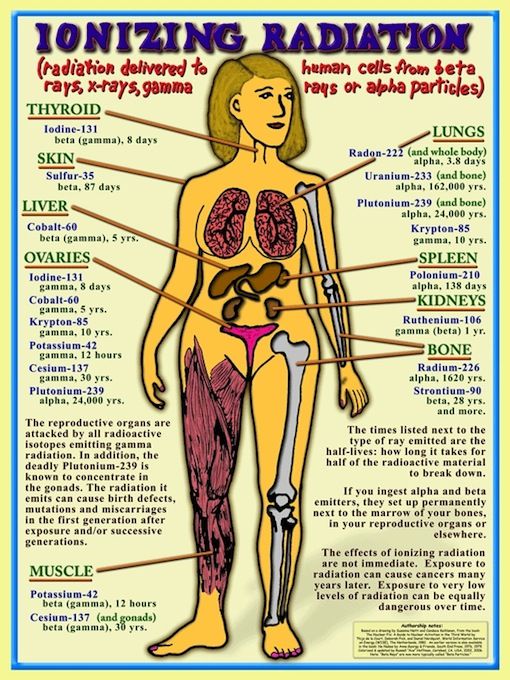
Women appear to be at a greater risk of suffering from the harmful effects of space radiation, so they have different radiation boundary levels than their male colleagues. Studies of radiation exposure for men and women indicate a higher chance of women developing cancer, while other research has found that space radiation is likely to affect female reproductive health…………………………………. https://www.gizmodo.com.au/2022/05/nasa-is-sending-artificial-female-bodies-to-the-moon-to-study-radiation-risks/
Senate Approves Radiation Exposure Compensation Act Extension
https://nativenewsonline.net/health/senate-approves-radiation-exposure-compensation-act-extension, BY KELSEY TURNER MAY 02, 2022, The U.S. Senate on Thursday unanimously approved a two-year extension of an act giving compensation to people who were exposed to radiation from atomic weapons testing and uranium mining. The Radiation Exposure Compensation Act (RECA), which is set to expire in July, provides one-time benefit payments to those who have been diagnosed with cancer or other diseases relating to radiation exposure. The extension now awaits approval by the House.
Since its creation in 1990, RECA has given over $2.4 billion in benefits to more than 38,000 people in Nevada, Utah and other impacted areas. Compensation is available to several groups, including “onsite participants” involved in atmospheric test of an atomic weapon, “downwinders” who were present in certain areas near test sites, and uranium miners, millers and ore transporters who worked with uranium. If passed, the extension would give people more time to apply for compensation.
Navajo Nation President Jonathan Nez applauded the Senate’s approval of the extension, saying it “demonstrates strong bi-partisan support for former uranium miners, downwinders, and many others who have to live with the devastating health effects to this day.”
In March, Nez met with members of both political parties in Washington, D.C., where he voiced the concerns of Navajo people experiencing health impacts due to radioactive contamination and exposure from abandoned uranium mines.
“This is a united effort on behalf of former uranium miners and their families, to secure just compensation and benefits for the health issues and detrimental impacts of uranium mining conducted by the federal government,” Nez said in a Navajo Nation press release. “The RECA bill is an opportunity for Congress to be a part of something historic for the Navajo people, the Navajo Uranium Radiation Victims Committee, and other impacted groups.”
Nez encouraged legislators to work toward a long-term solution that would extend RECA until 2040. A bill sponsored by Idaho Sen. Mike Crapo proposes to expand and extend RECA for another 19 years following the bill’s enactment.
Navajo Nation is pushing for this expansion to include all downwinders, create additional categories of uranium workers and radiation-related illnesses, and increase the minimum compensation received by affected individuals.
Where will Connecticut’s nuclear waste go?

Connecticut has been living more than half a century with what was supposed to have been temporary spent fuel storage.
On any day since the mid 1950s, there might be multiple reactors in or around the Thames River, welded into the nuclear powered submarines stationed at the U.S. Naval Submarine Base in Groton
The Navy won’t discuss how it disposes of its spent nuclear waste.
It’s in question as the state pushes toward a green future, By Edmund H. Mahony, Hartford Courant, May 01, 2022, The federal government is jump-starting its long-stalled search for a place to store the tons of spent nuclear fuel piling up in Connecticut and other states.
…… The U.S. Department of Energy is reviewing responses to a request for information it issued to nuclear industry stakeholders late last year as a first step in another attempt to resolve one of the thorniest challenges of the nuclear age: how and where to store the highly-radioactive, spent uranium that is the waste product of nuclear energy production.
The state legislature this session approved a bill requiring all electric power consumed in Connecticut to be produced from carbon free sources by 2040. Another bill, written with smaller, better reactors in mind, is pending. It would lift a state moratorium on new nuclear power production — a moratorium enacted decades ago over the same concerns about the state’s spent fuel stockpiles — but limit new production to the Millstone nuclear complex in Waterford, where Dominion Energy has what was intended to be a temporary nuclear waste storage facility.
The country’s inability to figure out what to do with waste stockpiles has become an impediment for nuclear-generating states like Connecticut…… That has power industry and private capital looking toward the development of a new generation of smaller [really?] safer, more efficient [really?] nuclear reactors — reactors that will continue to produce waste that needs to be disposed of someplace safe.
……………………….. “Disposal is absolutely an issue,” State Sen. Norm Needleman said. “That is why this is limited to a site that is a going plant today where they already are dealing with that problem. I would not at this moment support any expansion until the Department of Energy finds someplace. If you are going to build nuclear power plants and you are going to be siting 200 piles of nuclear waste, it is better to have it buried 2,000 feet below ground someplace, rather than having it spread all over.”
……………………… Connecticut has been living more than half a century with what was supposed to have been temporary spent fuel storage.
On any day since the mid 1950s, there might be multiple reactors in or around the Thames River, welded into the nuclear powered submarines stationed at the U.S. Naval Submarine Base in Groton, or just down river at the Electric Boat Division of General Dynamics where the ships are built. For years the Navy operated an experimental reactor in Windsor.
Beginning in the late 1960s, four commercial reactors produced power in Connecticut — one at the Connecticut Yankee plant on Haddam Neck, a peninsula stretching into the lower Connecticut River, and three on Millstone Point at the east end of Long Island Sound.
Two of the three Millstone reactors remain operational. Connecticut Yankee has been closed and decommissioned.
The Navy won’t discuss how it disposes of its spent nuclear waste. Because the federal government has not been able to find a politically acceptable commercial disposal solution, every bit of radioactive uranium expended in the production of commercial power in Connecticut remains under guard in what are designed as impregnable — but temporary — storage containers at the Millstone and Connecticut Yankee sites……………………………………
as much as 90,000 metric tons of spent fuel continues to pile up and remain stranded at what were supposed to be temporary sites around the country.
On Haddam Neck, there are 43 enormous concrete and steel storage casks containing radioactive material on the site of the decommissioned Connecticut Yankee plant. At the Millstone site in Waterford, waste is divided between a storage pool and 47 storage modules. Plant operator Dominion Energy says it has the capacity to store a total of 135 modules.
The storage costs, which involve protecting the spent fuel from hazards running from terrorist attacks to natural disasters, is enormous. The cost at Connecticut Yankee is about $10 million a year — at a plant that shut down in 1996 because it was no longer cost effective after 28 years of operation.
The federal government and, ultimately, taxpayers are picking up the cost. The law that was to make Yucca Mountain a national repository carried a provision obligating the Department of Energy to remove and store spent fuel from commercial reactors beginning in 1998. Without a repository, the department cannot meet its obligation. Plant operators sued, and the government has been held responsible for incurred storage costs.
There are intangible costs to temporary storage, too…………………………….
This Is How the United States Could Help Bring Peace to Ukraine

Decisions by the U.S. will have a critical impact on whether there will soon be peace in Ukraine, or only a much longer and bloodier war.
https://7news.com.au/business/call-to-dump-nuclear-go-hydrogen-for-subs-c-6580633?fbclid=IwAR2rf7smDYvCgEnSKGxjYp0rNFExJe0Vv8zd7tt8S9aN1Jkdk3_t9WW0rqY
MEDEA BENJAMIN, NICOLAS J.S. DAVIES, April 28, 2022
On April 21st, President Biden announced new shipments of weapons to Ukraine, at a cost of $800 million to U.S. taxpayers. On April 25th, Secretary of State Antony Blinken and Defense Secretary Lloyd Austin announced over $300 million more military aid. The United States has now spent $3.7 billion on weapons for Ukraine since the Russian invasion, bringing total U.S. military aid to Ukraine since 2014 to about $6.4 billion.
The top priority of Russian airstrikes in Ukraine has been to destroy as many of these weapons as possible before they reach the front lines of the war, so it is not clear how militarily effective these massive arms shipments really are. The other leg of U.S. “support” for Ukraine is its economic and financial sanctions against Russia, whose effectiveness is also highly uncertain.
UN Secretary General Antonio Guterres is visiting Moscow and Kyiv to try to kick start negotiations for a ceasefire and a peace agreement. Since hopes for earlier peace negotiations in Belarus and Turkey have been washed away in a tide of military escalation, hostile rhetoric and politicized war crimes accusations, Secretary General Guterres’ mission may now be the best hope for peace in Ukraine.
This pattern of early hopes for a diplomatic resolution that are quickly dashed by a war psychosis is not unusual. Data on how wars end from the Uppsala Conflict Data Program (UCDP) make it clear that the first month of a war offers the best chance for a negotiated peace agreement. That window has now passed for Ukraine.
An analysis of the UCDP data by the Center for Strategic and International Studies (CSIS) found that 44% of wars that end within a month end in a ceasefire and peace agreement rather than the decisive defeat of either side, while that decreases to 24% in wars that last between a month and a year. Once wars rage on into a second year, they become even more intractable and usually last more than ten year.
CSIS fellow Benjamin Jensen, who analyzed the UCDP data, concluded, “The time for diplomacy is now. The longer a war lasts absent concessions by both parties, the more likely it is to escalate into a protracted conflict… In addition to punishment, Russian officials need a viable diplomatic off-ramp that addresses the concerns of all parties.”
To be successful, diplomacy leading to a peace agreement must meet five basic conditions:
First, all sides must gain benefits from the peace agreement that outweigh what they think they can gain by war.
U.S. and allied officials are waging an information war to promote the idea that Russia is losing the war and that Ukraine can militarily defeat Russia, even as some officials admit that that could take several years.
In reality, neither side will benefit from a protracted war that lasts for many months or years. The lives of millions of Ukrainians will be lost and ruined, while Russia will be mired in the kind of military quagmire that both the U.S.S.R. and the United States already experienced in Afghanistan, and that most recent U.S. wars have turned into.
In Ukraine, the basic outlines of a peace agreement already exist. They are: withdrawal of Russian forces; Ukrainian neutrality between NATO and Russia; self-determination for all Ukrainians (including in Crimea and Donbas); and a regional security agreement that protects everyone and prevents new wars.
Both sides are essentially fighting to strengthen their hand in an eventual agreement along those lines. So how many people must die before the details can be worked out across a negotiating table instead of over the rubble of Ukrainian towns and cities?
Second, mediators must be impartial and trusted by both sides.
The United States has monopolized the role of mediator in the Israeli-Palestinian crisis for decades, even as it openly backs and arms one side and abuses its UN veto to prevent international action. This has been a transparent model for endless war.
Turkey has so far acted as the principal mediator between Russia and Ukraine, but it is a NATO member that has supplied drones, weapons and military training to Ukraine. Both sides have accepted Turkey’s mediation, but can Turkey really be an honest broker?
The UN could play a legitimate role, as it is doing in Yemen, where the two sides are finally observing a two-month ceasefire. But even with the UN’s best efforts, it has taken years to negotiate this fragile pause in the war.
Third, the agreement must address the main concerns of all parties to the war.
In 2014, the U.S.-backed coup and the massacre of anti-coup protesters in Odessa led to declarations of independence by the Donetsk and Luhansk People’s Republics. The first Minsk Protocol agreement in September 2014 failed to end the ensuing civil war in Eastern Ukraine. A critical difference in the Minsk II agreement in February 2015 was that DPR and LPR representatives were included in the negotiations, and it succeeded in ending the worst fighting and preventing a major new outbreak of war for 7 years.
There is another party that was largely absent from the negotiations in Belarus and Turkey, people who make up half the population of Russia and Ukraine: the women of both countries. While some of them are fighting, many more can speak as victims, civilian casualties, and refugees from a war unleashed mainly by men. The voices of women at the table would be a constant reminder of the human costs of war and the lives of women and children that are at stake.
Even when one side militarily wins a war, the grievances of the losers and unresolved political and strategic issues often sow the seeds of new outbreaks of war in the future. As Benjamin Jensen of CSIS suggested, the desires of U.S. and Western politicians to punish and gain strategic advantage over Russia must not be allowed to prevent a comprehensive resolution that addresses the concerns of all sides and ensures a lasting peace.
Fourth, there must be a step-by-step roadmap to a stable and lasting peace that all sides are committed to.
The Minsk II agreement led to a fragile ceasefire and established a roadmap to a political solution. But the Ukrainian government and parliament, under Presidents Poroshenko and then Zelensky, failed to take the next steps that Poroshenko agreed to in Minsk in 2015: to pass laws and constitutional changes to permit independent, internationally-supervised elections in the DPR and LPR, and to grant them autonomy within a federalized Ukrainian state.
Now that these failures have led to Russian recognition of the DPR and LPR’s independence, a new peace agreement must revisit and resolve their status, and that of Crimea, in ways that all sides will be committed to, whether that is through the autonomy promised in Minsk II or formal, recognized independence from Ukraine.
A sticking point in the peace negotiations in Turkey was Ukraine’s need for solid security guarantees to ensure that Russia won’t invade it again. The UN Charter formally protects all countries from international aggression, but it has repeatedly failed to do so when the aggressor, usually the United States, wields a Security Council veto. So how can a neutral Ukraine be reassured that it will be safe from attack in the future? And how can all parties be sure that the others will stick to the agreement this time?
Fifth, outside powers must not undermine the negotiation or implementation of a peace agreement.
Although the United States and its NATO allies are not active warring parties in Ukraine, their role in provoking this crisis through NATO expansion and the 2014 coup, then supporting Kyiv’s abandonment of the Minsk II agreement and flooding Ukraine with weapons, make them an “elephant in the room” that will cast a long shadow over the negotiating table, wherever that is.
n April 2012, former UN Secretary General Kofi Annan drew up a six-point plan for a UN-monitored ceasefire and political transition in Syria. But at the very moment that the Annan plan took effect and UN ceasefire monitors were in place, the United States, NATO, and their Arab monarchist allies held three “Friends of Syria” conferences, where they pledged virtually unlimited financial and military aid to the Al Qaeda-linked rebels they were backing to overthrow the Syrian government. This encouraged the rebels to ignore the ceasefire, and led to another decade of war for the people of Syria.
The fragile nature of peace negotiations over Ukraine makes success highly vulnerable to such powerful external influences. The United States backed Ukraine in a confrontational approach to the civil war in Donbas instead of supporting the terms of the Minsk II agreement, and this has led to war with Russia. Now Turkey’s Foreign Minister, Mevlut Cavosoglu, has told CNN Turk that unnamed NATO members “want the war to continue,” in order to keep weakening Russia.
Conclusion
How the United States and its NATO allies act now and in the coming months will be crucial in determining whether Ukraine is destroyed by years of war, like Afghanistan, Iraq, Libya, Somalia, Syria, and Yemen—or whether this war ends quickly through a diplomatic process that brings peace, security, and stability to the people of Russia, Ukraine, and their neighbors.
If the United States wants to help restore peace in Ukraine, it must diplomatically support peace negotiations and make it clear to its ally, Ukraine, that it will support any concessions that Ukrainian negotiators believe are necessary to clinch a peace agreement with Russia.
Whatever mediator Russia and Ukraine agree to work with to try to resolve this crisis, the United States must give the diplomatic process its full, unreserved support, both in public and behind closed doors. It must also ensure that its own actions do not undermine the peace process in Ukraine as they did the 2012 Annan plan in Syria.
One of the most critical steps that U.S. and NATO leaders can take to provide an incentive for Russia to agree to a negotiated peace is to commit to lifting their sanctions if and when Russia complies with a withdrawal agreement. Without such a commitment, the sanctions will quickly lose any moral or practical value as leverage over Russia and will be only an arbitrary form of collective punishment against its people, and against poor people everywhere who can no longer afford food to feed their families. As the de facto leader of the NATO military alliance, the U.S. position on this question will be crucial.
So policy decisions by the United States will have a critical impact on whether there will soon be peace in Ukraine, or only a much longer and bloodier war. The test for U.S. policymakers, and for Americans who care about the people of Ukraine, must be to ask which of these outcomes U.S. policy choices are likely to lead to.
1 This Month
26 April – Chernobyl: Inside the Meltdown airs on National Geographic on Sunday 26th April from 4pm

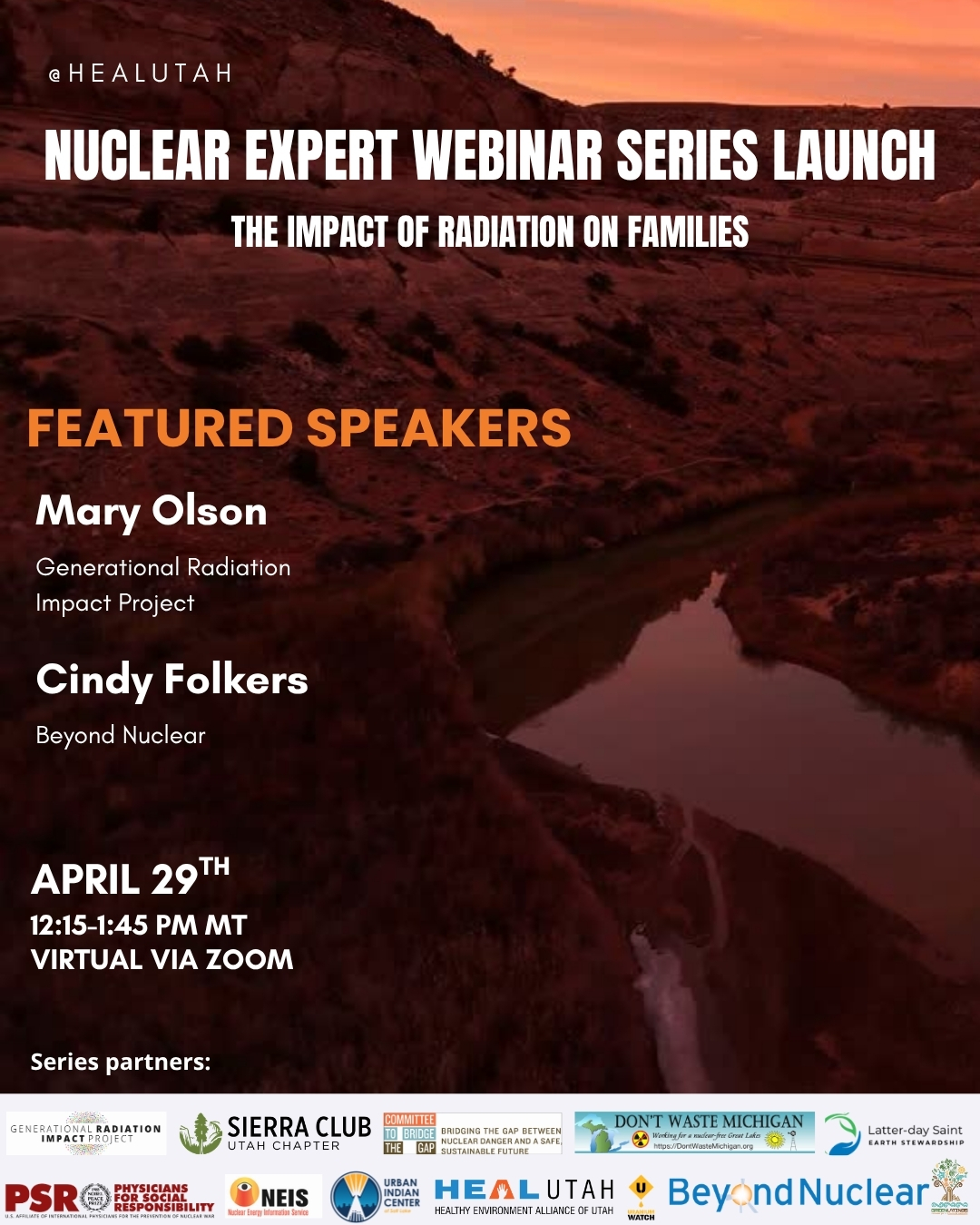
29 April – Nuclear Expert Webinar #1 – Radiation Impacts on Families with Mary Olson and Cindy Folkers
- 12:15 PM MT – 1:45 PM MT
- Location: Virtual – REGISTER TODAY

4 May -West Suburban Peace Coalition to discuss Iran war at May Educational Forum
Monday, May 4, 7:00 – 8:00 PM Central Standard Time
Title: : How Trump’s Narrative Tries to Shape the Reality of the War on Iran.
Contact Walt Zlotow, zlotow@hotmail.com 630 442 3045 for further information
14 May – online event From Bombs to Data Centres: the Face of Nuclear Colonialism

Pine Ridge Uranium is the real threat, not Tehran- Tell Burgum: Stop the Extraction.
Chernobyl: The Lost Tapes – A good documentary on Chernobyl on SBS available On Demand for the next 3 weeks– https://www.sbs.com.au/ondemand/tv-program/chernobyl-the-lost-tapes/2352741955560
To see nuclear-related stories in greater depth and intensity – go to https://nuclearinformation.wordpress.com
-
Archives
- May 2026 (25)
- April 2026 (356)
- March 2026 (251)
- February 2026 (268)
- January 2026 (308)
- December 2025 (358)
- November 2025 (359)
- October 2025 (376)
- September 2025 (257)
- August 2025 (319)
- July 2025 (230)
- June 2025 (348)
-
Categories
- 1
- 1 NUCLEAR ISSUES
- business and costs
- climate change
- culture and arts
- ENERGY
- environment
- health
- history
- indigenous issues
- Legal
- marketing of nuclear
- media
- opposition to nuclear
- PERSONAL STORIES
- politics
- politics international
- Religion and ethics
- safety
- secrets,lies and civil liberties
- spinbuster
- technology
- Uranium
- wastes
- weapons and war
- Women
- 2 WORLD
- ACTION
- AFRICA
- Atrocities
- AUSTRALIA
- Christina's notes
- Christina's themes
- culture and arts
- Events
- Fuk 2022
- Fuk 2023
- Fukushima 2017
- Fukushima 2018
- fukushima 2019
- Fukushima 2020
- Fukushima 2021
- general
- global warming
- Humour (God we need it)
- Nuclear
- RARE EARTHS
- Reference
- resources – print
- Resources -audiovicual
- Weekly Newsletter
- World
- World Nuclear
- YouTube
-
RSS
Entries RSS
Comments RSS
 nuclear-news