All About Groundwater – Hanford part 2
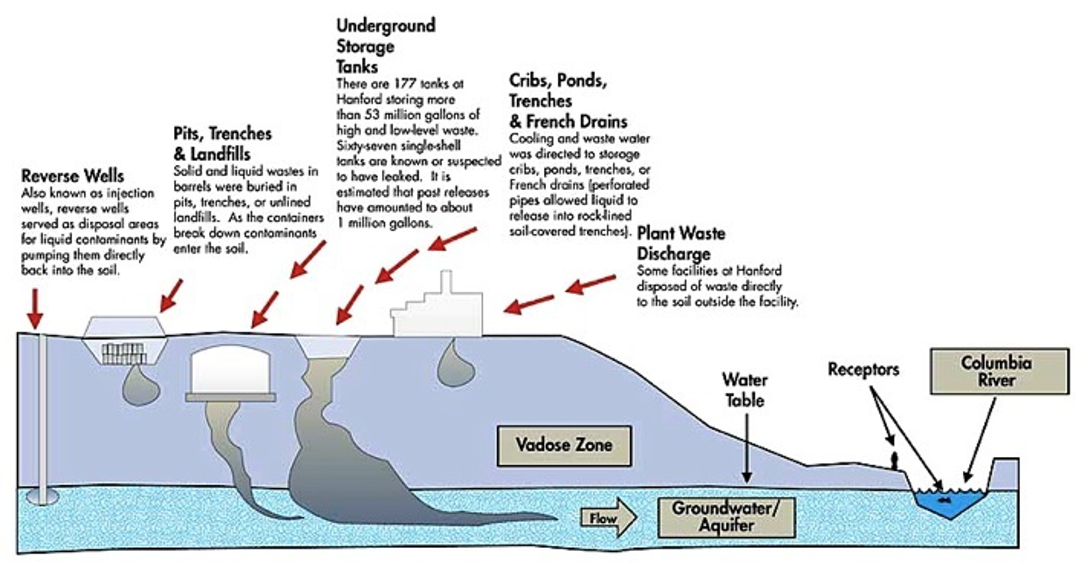
In Part 1 we covered the basics of the Pacific Northwest National Laboratory report, Adaptive Site Management Strategies for the Hanford Central Plateau Groundwater, that outlines an innovative strategy to tackle the challenge of groundwater cleanup. In Part 2 we’ll cover the history of Hanford’s soil and groundwater contamination, current cleanup strategies, and the various challenges to cleaning up the soil and groundwater.
Hanford’s history of soil contamination
The Hanford Site has a history of dumping radioactive and chemical waste directly into the ground on site. About 450 billion gallons of nuclear and chemical waste were dumped directly into the soil during the plutonium production years—the equivalent of more than 680,000 Olympic-size swimming pools. Manhattan Project workers dumped waste in unlined cribs, ponds, ditches, and trenches—four different types of holes in the ground used for disposing of waste. Injection wells pumped the toxic waste directly into the soil to dispose of it.
Workers constructed 177 underground tanks (149 single-shell tanks and 28 double-shell tanks) to hold the most dangerous, high-level waste. However, the soil contamination didn’t stop there. These enormous underground tanks were connected in a row of three or four tanks. The Manhattan Project workers used a process called cascading—which allowed them to fill up one tank with waste, and while the waste solids settled to the bottom, the liquids would flow from one tank to another. If too much waste was added to the final tank, it would overflow to the soil. “From 1944 through the late 1980s, Hanford generated nearly 2 million cubic meters (525 million gallons) of high-level tank waste. Liquid evaporation, discharge to the ground, chemical treatment, and tank leakage reduced this volume by 90%—to 204,000 cubic meters (54 million gallons).”[1]
Cascading wasn’t the only way that waste reached the soil from the tanks. The tank farms were backfilled under an 8-to-10-foot layer of soil before waste was added. Workers built the single-shell tanks between 1943 and 1964. As their name suggests, they only have one liner of carbon steel to contain the waste. Sixty-seven single-shell tanks are known or suspected to have leaked 1 million gallons of waste into the surrounding soil. Two single-shell tanks—B-109 and T-111—are currently leaking. The single-shell tanks were designed to contain the waste for 20-25 years, and they are now more than 40 years past their design life. As these tanks get older and older, they are more likely to fail—causing the waste to leak out into the soil. Once the waste gets into the soil it may remain there—making it very hard to remove—or it may travel with water through the soil and reach the groundwater.
Current cleanup of the groundwater
Today, the soil at the Hanford Site (particularly in the Central Plateau) remains heavily contaminated. Some radioactive and chemical contaminants are more mobile in water, which means a rainstorm may cause those contaminants to move with the water through the soil—reaching the groundwater and ultimately the Columbia River.
One of the cleanup methods to prevent contaminants from spreading and reaching the groundwater is to remove contaminated soil by digging it up and disposing of it in the Environmental Restoration Disposal Facility. Hanford Challenge is concerned that USDOE will decide that it doesn’t need to dig up all of the contaminated soil and will leave it in place—which would increase the risk of harm to future generations.
USDOE implements specific strategies for cleaning up the groundwater. One of those strategies is pump and treat. Pump and treat is the process of pumping contaminated water to the surface, filtering out some of the contaminants, and injecting the water back into the ground. Monitoring wells, extraction wells, and injection wells are interspersed throughout the Hanford Site to implement the pump and treat process. There are six pump and treat facilities on site.
Soil flushing is one strategy used to enhance the pump and treat process. Some contaminants remain in the soil and may take a long time to reach the groundwater. Until the contaminants hit the groundwater, they are impossible to capture with the pump and treat system. Soil flushing speeds up the process by using 225 gallons of water per minute to force—or flush—these hard-to-reach contaminants down to the groundwater where they can be brought up to the surface with the pump and treat system. USDOE has found success using soil flushing to push hexavalent chromium to the groundwater to treat it.
An additional strategy for meeting water quality standards is monitored natural attenuation. Contamination is left to naturally attenuate, which means letting the radiation decay over time. It sounds like a do-nothing approach, and it basically is.
Challenges to groundwater cleanup
USDOE faces many challenges when pursuing groundwater cleanup. As previously mentioned, there are hundreds of contaminated soil sites at Hanford due to past dumping practices and leaking underground tanks. The extent of groundwater contamination is vast.
- There are significant data gaps regarding the number of contaminants in the vadose zone (the area of soil between the ground surface and the water table), the depth and location of the contamination, and the risk the contamination poses to groundwater.
- Some hard-to-control, persistent contaminants, such as technetium-99, iodine-129, uranium, nitrate, and chromium, are located in the deep vadose zone and pose a long-term risk to the groundwater.
- There are extensive groundwater plumes with intermixed contaminants (or contaminants located together), making it difficult to accurately measure the total amount in the aquifer and the contaminant distribution.
Depending on the contaminant, one specific treatment may work better than another. When contaminants are intermixed, the treatment process becomes more complex. Multiple technologies used in tandem or various treatment methods may need to be used to effectively treat intermixed contaminants.- The soil underneath the tank farms is contaminated by tank leaks, accidental spills, and intentional releases, which creates an additional pathway for contaminants in the soil to reach groundwater. As tanks leak—potentially more frequently—they become an additional complexity in groundwater cleanup.
- A borehole is a circular hole drilled into soil or rock that draws samples from deep below ground. USDOE uses boreholes to characterize, or identify, the physical and chemical properties of the contaminants in the vadose zone. Unfortunately, deep borehole characterization is limited in certain areas due to the high price of drilling—contributing to the lack of information regarding the amount, location, and strength of contaminants in the soil.
Geological challenges to groundwater cleanup
Hanford’s geology poses unique challenges to groundwater cleanup. Manhattan Project managers chose the site partially for its geology and proximity to the Columbia River. The reprocessing facilities were sited in certain areas at Hanford because the gravelly soil allowed them to dump waste into the ground, where it percolated down and vanished without a trace. It was a handy way of disposing of the waste—it just disappeared—but the dumped waste now requires a complicated cleanup strategy.
The 200 Area in the Central Plateau contains a high hydraulic conductivity zone that consists of porous soils and rocks that allow contaminants to quickly move through the soil to groundwater and eventually to the Columbia River. USDOE doesn’t know the exact size and location of the hydraulic conductivity zone in the 200 Area, which means that the underground movement of liquids between the Central Plateau and the Columbia River is still an area of considerable uncertainty. On the other hand, some places at Hanford’s Central Plateau have less permeable soils that trap specific contaminants, making it difficult to separate the contaminants from the soil and treat them using the most common cleanup strategies.
Ancient lake beds are hidden underneath the surface and cause contaminants to move laterally (horizontally) instead of vertically down to the groundwater. Lake beds cause contaminants to take longer to reach the groundwater because they aren’t taking the most direct route straight down, and are instead moving sideways. USDOE uses models to predict when specific contaminants will reach groundwater. USDOE bases its models on the assumption that contaminants move vertically to the groundwater. However, ancient lake beds and the lateral flow of contaminants challenge that assumption and highlight the need for USDOE to update its models to better account for the geologic conditions underneath the site.
Perched water also complicates groundwater cleanup. Imagine a bird’s nest that is perched or sitting in a tree. Now, imagine that bird’s nest perched in a tree underground and filled with water. As contaminants move through the soil they can get caught and trapped in that underground bird’s nest. The underground nest creates a pocket of contaminants that is hidden and hard to reach. USDOE is aware of several contaminated perched water areas at Hanford, but lacks information about the size, what contaminants they hold, and how full the perched water areas are. USDOE must incorporate perched water areas into its strategies to ensure a comprehensive cleanup plan for groundwater.
Groundwater cleanup at Hanford is incredibly complex due to the history of waste disposal, the inherently dangerous nature of the contaminants, and the challenges created by the site’s geology. Hanford Challenge urges USDOE to update its groundwater models to include the intricacies of Hanford’s geology, such as ancient lake beds and perched water. Hanford Challenge also encourages USDOE to recognize, investigate, and resolve the uncertainties present in groundwater cleanup.
If you are interested in learning more about Hanford’s geology, check out Tim Connor’s presentation on the cataclysmic floods that shaped the Hanford Site and Vince Panesko’s presentation on the ancient lake beds that impact cleanup.
This blog post is funded through a Public Participation Grant from the Washington State Department of Ecology. The content was reviewed for grant consistency, but is not necessarily endorsed by the agency.
[1] Gephart, Roy. E. (2003). A Short History of Hanford Waste Generation, Storage, and Release. Pacific Northwest National Laboratory, PNNL-13605.
Worst Places to Be If There’s a Nuclear Attack on America
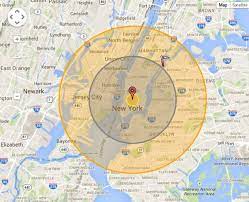
247melly, Michael B. Sauter, August 26, 2022 Russia’s invasion of Ukraine has included battles in or near nuclear power plants. The recent shelling at the Zaporizhzhia Nuclear Power Plant has raised alarm bells worldwide. The recent grandstanding by Russia, China, and North Korea [ed: what about USA and UK?], including several intercontinental ballistic missile tests, has further raised global tensions.
In the unlikely scenario of a nuclear attack on America – an all-out nuclear war – very few places would be safe, though no doubt less populated, remote areas would be safer.
An enemy nation would first aim to neutralize the U.S. nuclear capabilities by targeting strategic military installations, many of which are near large urban centers.
Stephen Schwartz, author of “Atomic Audit: The Costs and Consequences of US Nuclear Weapons Since 1940,” identified 15 such targets. The targets, mapped by Business Insider, include command centers, ICBM bases, communication stations, and air force and submarine bases. In addition, Dr. Irwin Redlener, a professor at Columbia University’s Mailman School of Public Health, identified six economic centers most likely to be attacked.
To find the worst places to be if there’s a nuclear attack on America, 24/7 Wall St. constructed an index consisting of several measures to rank major U.S. cities likely to be targets based on both Schwartz’s and Redlener’s lists. The measures in the index include population density; city preparedness for emergency; economic significance; city preparedness plans; distance to the strategic military target; proximity to nuclear power plants; and ease of evacuation based on commute time as a proxy to congestion and the percentage of a city area that is water. We also added projected fatalities and injuries assuming a 1 megaton bomb, using Nukemap.
Click here to see the worst places to be if there’s a nuclear attack on America.
Click here to see our detailed methodology.………….. https://247wallst.com/special-report/2022/08/26/worst-places-to-be-if-theres-a-nuclear-attack-on-america/—
All About Groundwater- Hanford Part 1
https://www.hanfordchallenge.org/inheriting-hanford 9 Aug 22, [good diagrams]
Part 1
The Hanford Nuclear Site is one of the most complex and arduous cleanup efforts in the history of the United States. Hundreds of billions of gallons of radioactive and chemical waste were dumped into the ground on site. Pacific Northwest National Laboratory (PNNL) issued a report in September 2021, Adaptive Site Management Strategies for the Hanford Central Plateau Groundwater, that outlines an innovative strategy to tackle the challenge of groundwater cleanup. The report suggests adopting a new approach—Adaptive Site Management—to address groundwater cleanup in Hanford’s Central Plateau.
Adaptive Site Management is centered on thorough site planning and a robust understanding of site conditions and uncertainties. Large and complex hazardous waste sites often implement this approach. Adaptive Site Management would create a groundwater cleanup framework of planning, implementation, and assessment to nimbly adapt to new information and changing site conditions at Hanford. The goal would be to develop effective cleanup strategies that achieve the required outcomes while staying on schedule and budget.
The Adaptive Site Management approach attempts to reduce uncertainty by comprehensively characterizing the contaminants in the soil and groundwater. Characterization identifies the physical and chemical properties of the waste and the extent of contaminants in the vadose zone and groundwater. Characterization also identifies the geological makeup of the site, which can influence the movement of contaminants. The characterization process gathers information that then informs waste treatment and cleanup strategies.
An Adaptive Site Management approach for Hanford’s Central Plateau would include:
- Establishing site objectives or end goals that are consistent with the overall Hanford Site goals and that support the development of a long-term management approach;
- Developing interim objectives that provide step-by-step progress toward the overall site cleanup strategy; and
- Identifying key cleanup actions to reduce uncertainty, address site complexities, and analyze data gaps.
The report proposes various long-term site and interim objectives for the Central Plateau to provide examples for implementing the Adaptive Site Management approach at Hanford. These objectives are based on the primary goal of Hanford cleanup operations—protecting the Columbia River.
The objectives must also be consistent with the United States Department of Energy’s (USDOE) decision about future land use when cleanup finishes. For example, USDOE decided that the Central Plateau is designated exclusively for industrial use, meaning manufacturing, processing, or storing materials. The decision to have the Central Plateau remain solely for industrial use means that the cleanup strategy doesn’t have to be as protective as for other areas of the Hanford Site, such as the River Corridor. USDOE can leave some contamination in place because it’s assuming that the land won’t be openly accessible to the public. However, that is a big assumption considering that some radionuclides remain dangerous for hundreds of thousands of years. It’s impossible to know what the world will look like that far into the future, but USDOE probably won’t be around to prevent future generations from staying out of the Central Plateau.
In conclusion, the report makes the case that the Adaptive Site Management approach is an appropriate tool for a large and complex site, such as Hanford. Since many of the cleanup activities in the Central Plateau are still early in the decision process and not set in stone, the report states that now is an appropriate time to implement the Adaptive Site Management approach.
In addition to outlining the Adaptive Site Management approach, the report dives into the history of Hanford’s soil and groundwater contamination, current cleanup strategies, and the various challenges to cleaning up the soil and groundwater. Read on to Part 2 to learn more about soil and groundwater contamination at Hanford.
This material is funded through a Public Participation Grant from the Washington State Department of Ecology. The content was reviewed for grant consistency, but is not necessarily endorsed by the agency.
Rethink Research throws cold water on the Nuclear Energy Institute’s enthusiasm for Small Modular Reactors (SMRs).

For SMRs to remain competitive there will need to be heavy state-side subsidizes for consumers, as the initial cost of energy produced from them is considerably above wholesale auction prices.
https://rethinkresearch.biz/articles/smr-boon-forecast-by-nei-rethink-doubts-it/—SMR boon forecast by NEI, Rethink doubts it, By Connor Watts, 24 Aug 22, Some 19 utilities surveyed by the US Nuclear Energy Institute (NEI) says they see potential for up to 90GW of small modular reactors (SMR) within the United States by 2050. This would work out to around 300 reactors producing 731.3 TWh of energy, most of which would come online before 2050. Those numbers look pretty good until you look at current generation figures
During 2021 the US consumed around 790 TWh of electricity from nuclear power plants and 899 TWh from coal plants. The EIA projects that 16GW of nuclear plants will be decommissioned, alongside 69GW of coal plants up to 2050. This means that as much as 95% of potential SMR energy production could be going directly to the replacement of existing facilities.
This leaves only 5GW of remaining demand potential for SMR energy production up to 2050 outside of decommissioning existing facilities, we think even this may be optimistic.
Traditional nuclear plants take upwards of a decade to build and often run massively overbudget, making the energy it does produce once built more expensive as costs are attempted to be recouped.
SMR producers promise to do away with these drawbacks through standardizing their designs to enable factory production. Minimizing cost while shortening production times, theoretically addressing the main weaknesses of traditional reactors.
In practice it’s a little more complicated.
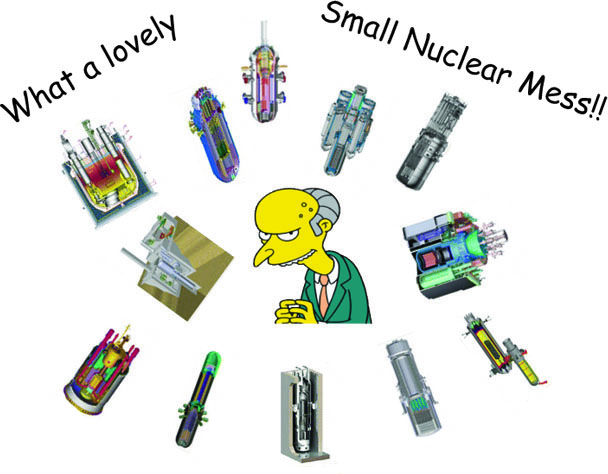
Considering the complexity and risks involved with nuclear power generation, commercial production and design of SMRs remains a slow and meticulous process. This has left many SMR sites still in the planning or design phase years after their announcements, almost competing in deployment time with traditional nuclear plants.
Once a new SMR gets deployed after its design and development period, it will need to be monitored for a few years to inspect for defects and inefficiencies within the design to prevent any mishaps. This is likely to add yet more time to an already long production horizon, adding costs as new units cannot go into production.
The cost savings achieved through modularity and standardization are borne through mass-production and deployment. In a way this is the “gigafactory” approach for nuclear. Considering long initial production times, this will contribute significantly to a short-term increase in the price of nuclear electricity, minimizing its applications where it remains competitive.
SMRs are supposed to come to market at $60 per MWh LCOE – but already wind and solar are considerably below that, and what level will they be at after SMRs arrived on the scene in volume, by say 2030?
For SMRs to remain competitive there will need to be heavy state-side subsidizes for consumers, as the initial cost of energy produced from them is considerably above wholesale auction prices.

Another issue with nuclear power generation is water usage. Earlier this month nuclear plants in France had a rule concerning water discharging waived as heatwaves boiled most of Europe.
Typically, the reactors would reduce their output to minimize damage from discharging hot water into the nearby ecosystems, but this rule has been waived until the 11th of September to ensure energy supplies in the short term. SMRs will also need to use local water supplies as a coolant, which makes them ineffective in a drought.
This can be mitigated through the use of alternative coolants such as liquid metal, gas and molten salt, but many SMR designs currently work similarly to traditional nuclear.
To use the time horizon for SMRs makes them look economically unfavorable, and while these 19 utilities may genuinely feel they like the idea of more nuclear, their controlling state utilities commission may well have something to say about whether they ever actually get installed.
How the USA climate bill will promote the nuclear industry.

What the climate bill does for the nuclear industry, CNBC, Catherine Clifford, AUG 23 20222
Production tax credit for existing nuclear power plants
Production tax credit for advanced nuclear power plants
Investment tax credit for new nuclear power plants
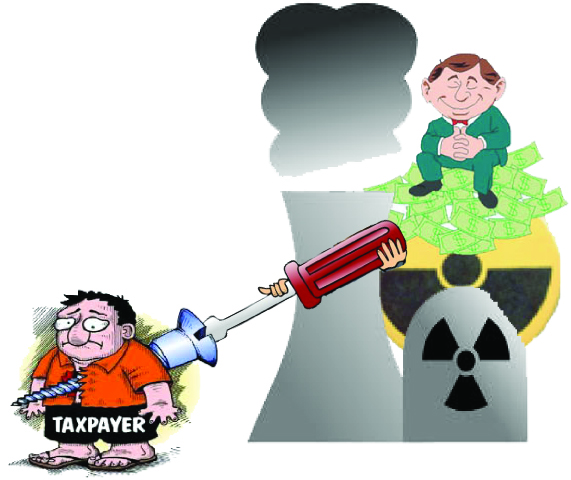
“………………………………………Production tax credit for existing nuclear power plants, Starting in 2024 and running through 2032, utilities will be able to get a credit of $15 per megawatt-hour for electricity produced by existing nuclear plants. If the price of power rises above $25 per megawatt-hour, then the credit will gradually decrease, but it doesn’t phase out completely until energy prices reach around $44 per megawatt-hour, explained Matthew Crozat, the executive director of strategy and policy at the Nuclear Energy Institute, a Washington, D.C.-based trade group.
“Every plant is different and some plants have a different revenue model but we can say that this credit will offer a reprieve from the low revenues that had forced more than a dozen reactors to close,” Crozat told CNBC.
To be eligible for the full $15 per megawatt-hour base tax credit, a nuclear power plant operator has to pay workers operating and doing maintenance on the power plant “prevailing wage requirements,” according to the Nuclear Energy Institute.
Production tax credit for advanced nuclear power plants
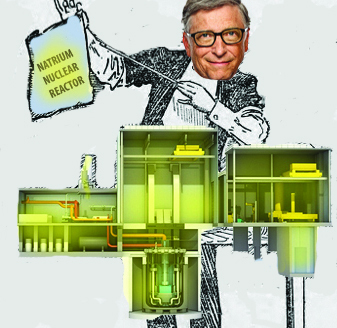
Several companies in the United States are working to commercialize new nuclear power plant designs that are meant to be safer and with a smaller capacity, making them ideally cheaper to build and maintain as well.
For example, Bill Gates’ nuclear innovation company, TerraPower, is developing a couple of advanced reactor designs, one of which is going to be built at a retiring coal facility in Wyoming as part of a demonstration program in partnership with the U.S. government.
Advanced nuclear reactors could benefit from the IRA by way of the Clean Electricity Production Tax Credit, a technology-agnostic production credit, which can be applied toward emissions-free power generation that goes online after 2025. The clean energy production credit is for at least $25 per megawatt-hour for the first ten years the plant is in operation, adjusted for inflation. The credit phases out in 2032 or when carbon emissions coming from electricity have fallen by 75% below the level of 2022, according to the Nuclear Energy Institute. The tax credit is increased by 10% for locating the zero-emissions power source where a coal plant previously lived.
Worth noting, there’s another Advanced Nuclear Production Tax Credit already on the books. That tax credit was established in the Energy Policy Act of 2005 and is for $18 per megawatt-hour for the first eight years that a nuclear power plant is operating, provided the nuclear power plant had not begun construction when the 2005 bill was signed into law, Crozat told CNBC. The third reactor unit of the Vogtle Power plant being constructed in Georgia will be the first power plant to take advantage of the 2005 Advanced Nuclear Production Tax Credit, according to Crozat.
A company can not take advantage of both tax credits — it has to pick. Going forward, the tax credits in the IRA just signed into law will be more attractive. “Since the new production tax credit has been indexed to inflation and last for two additional years, it will be considerably more valuable than the older version,” Crozat told CNBC.
Investment tax credit for new nuclear power plants

New nuclear power plants are eligible for claiming an Investment Tax Credit made available through the new law for facilities that generate energy with zero emissions and that go into service in 2025 or after.
The investment tax credit allows a nuclear power plant to get a tax credit for 30% of what was invested in building the zero-emissions energy production facility, which includes nuclear power plants, according to the Nuclear Energy Institute.
The investment tax credit is increased by 10% for locating the zero-emissions power source where a coal plant previously lived. It starts to phase when carbon emissions from the sector are 75% lower than 2022 levels.
Money to spur innovation

The law includes $700 million that will go towards the research and development of high-assay low enrichment uranium (HALEU) fuel sources in the United States through 2026, according to the Bipartisan Policy Center, a Washington DC-based think tank. That’s important because the advanced, next-generation reactors which are currently being developed by 20 companies in the United States, according to the U.S. Department of Energy, depend on HALEU fuel to operate.
The existing fleet of nuclear power reactors in the United States operate on uranium that has been enriched up to 5%. HALEU fuel has been enriched between 5% and 20%. Many advanced reactor designs are smaller builds than conventional nuclear reactors and so to make a nuclear reactor smaller, they need to get more power from smaller quantities of fuel, the Department of Energy says.
“Right now, the only commercially available source of HALEU is from the Russian Federation and the support for HALEU in the IRA signals an understanding that the federal government is needed to jumpstart domestic enrichment capabilities to support the coming wave of new nuclear technologies,” Rampal told CNBC.
It’s also just the first step, Rampal said. The nuclear industry needs multiple billions of dollars to invest in HALEU production over the next ten years, he told CNBC.
The IRA also includes $150 million for the Office of Nuclear Energy through 2027, according to the Bipartisan Policy Center. That money is for the Department of Energy to invest in its nuclear innovation research at its network of National Laboratories. ……………………………………..
Tax credits for making component parts
The IRA includes a manufacturing production provision that allows for a tax credit for component parts produced and sold after 2022, according to a summary of the benefits of the IRA for the nuclear industry from the law firm Morgan Lewis. https://www.cnbc.com/2022/08/22/what-the-climate-bill-does-for-the-nuclear-industry.html
The only thing keeping US and China from war is running dangerously thin

Washington’s ambiguous Taiwan policies are edging towards conflict, but Beijing wants to exhaust peaceful options first.
A US policy at war with itself
What emerges from this amalgam of policy statements and positions is a US policy that is inherently at war with itself, unable to fully commit either to the finality of a “one China” policy or walk away from the sale of weapons to Taiwan. The US disguises this inherent inconsistency by referring to it as “strategic ambiguity.” The problem is this policy stew is neither strategic in vision, nor ambiguous.
radical departure from stated US policy by the Biden administration helped launch a Congressional trifecta of hubris-laced ignorance, which saw the dispatch of three consecutive delegations that threaten to propel China down the path toward a war with Taiwan it doesn’t want to wage, and which the world (including the US) is not prepared to suffer the consequences of.
Despite the clear evidence of a marked departure [by USA] from past policy regarding Taiwan and weapons sales, China continues to believe that there is a non-violent solution to the one China problem.
https://www.rt.com/news/561182-china-taiwan-us-war/ Scott Ritter, 22 Aug 22,
American relations with China in regards to Taiwan have been dictated by years of ambiguous statements and commitments. Now this rhetoric is breaking down and armed conflict seems closer than ever – but is Washington ready to fight over Taiwan, or capable of winning?
Assurances and commitments
Officially, US policy toward Taiwan is guided by three US-China Joint Communiques issued between 1972 and 1982, the Taiwan Relations Act of 1979, and the so-called “Six Assurances” issued in 1982. In the Shanghai Communique of 1972, China asserted that “the Taiwan question is the crucial question obstructing the normalization of relations between China and the United States,” declaring that “the Government of the People’s Republic of China is the sole legal government of China,” that Taiwan is a province of China, and that “the liberation of Taiwan is China’s internal affair in which no other country has the right to interfere.”
The US responded by acknowledging that “all Chinese on either side of the Taiwan Strait maintain there is but one China and that Taiwan is a part of China,” something the US government did not challenge. The US also reaffirmed its interest “in a peaceful settlement of the Taiwan question by the Chinese themselves.”
Before that, on January 1, 1979, the US and China had issued a “Joint Communique of the Establishment of Diplomatic Relations” in which the US undertook to recognize “the Government of the People’s Republic of China as the sole legal Government of China,” noting that, within the context of that commitment, “the people of the United States will maintain cultural, commercial, and other unofficial relations with the people of Taiwan.”
President Jimmy Carter, in announcing the communique, went out of his way to ensure the people of Taiwan “that normalization of relations between our country and the People’s Republic will not jeopardize the well-being of the people of Taiwan,” adding that “the people of our country will maintain our current commercial, cultural, trade, and other relations with Taiwan through nongovernmental means.”
Carter’s move to establish diplomatic relations with China did not sit well with many members of Congress, who responded by passing the Taiwan Relations Act of 1979, in which it was declared that it is US policy “to preserve and promote extensive, close, and friendly commercial, cultural, and other relations between the people of the United States and the people on Taiwan, as well as the people on the China mainland,” and “to make clear that the United States decision to establish diplomatic relations with the People’s Republic of China rests upon the expectation that the future of Taiwan will be determined by peaceful means.”
In this regard, the Taiwan Relations Act underscored that the US would “consider any effort to determine the future of Taiwan by other than peaceful means, including by boycotts or embargoes, a threat to the peace and security of the Western Pacific area and of grave concern to the United States,” and “to provide Taiwan with arms of a defensive character.” Finally, the Act declared that the US would maintain the capacity “to resist any resort to force or other forms of coercion that would jeopardize the security, or the social or economic system, of the people on Taiwan.”
The emphasis on arms sales contained in the Taiwan Relations Act led to the third joint communiqué between the US and China, released on August 17, 1982, which sought to settle differences between the two nations regarding US arms sales to Taiwan. The communique was basically a quid-pro-quo agreement where China underscored that it maintained “a fundamental policy of striving for a peaceful reunification” with Taiwan, over which it claimed sovereignty. For its part, the US declared that it “understands and appreciates the Chinese policy of striving for a peaceful resolution of the Taiwan question,” and, with that in mind, the US declared that it did not seek to carry out a long-term policy of arms sales to Taiwan, and that it would gradually reduce its sale of arms to Taiwan while working for a final resolution to reunification.
To mollify Taiwanese concerns about the third communique, the US agreed to what have become known as “the Six Assurances” between the US and Taiwan. These are 1) the US has not set a date for ending arms sales to Taiwan, 2) the US has not agreed to prior consultations with China about arms sales to Taiwan, 3) the US has not agreed to any mediation role between China and Taiwan, 4) the US has not agreed to revise the Taiwan Relations Act, 5) the US has not taken a position regarding the sovereignty of Taiwan, and 6) that the US would never put pressure on Taiwan to negotiate with China.
There was an unwritten corollary to the third communique—an internal memorandum signed by President Ronald Reagan in which he declared that “the US willingness to reduce its arms sales to Taiwan is conditioned absolutely upon the continued commitment of China to the peaceful solution of the Taiwan-PRC [People’s Republic of China] differences,” adding that “it is essential that the quantity and quality of the arms provided Taiwan be conditioned entirely on the threat posed by the PRC.”
A US policy at war with itself
What emerges from this amalgam of policy statements and positions is a US policy that is inherently at war with itself, unable to fully commit either to the finality of a “one China” policy or walk away from the sale of weapons to Taiwan. The US disguises this inherent inconsistency by referring to it as “strategic ambiguity.” The problem is this policy stew is neither strategic in vision, nor ambiguous.
From the moment President Reagan issued the “Six Assurances,” US-China policy was strained over the issue of weapons sales, with China making the case that the US was not serious about either the peaceful reunification of Taiwan with China, or the elimination of arms sales to Taiwan. Arms sales increased exponentially from the Reagan administration to that of George H. W. Bush and Bill Clinton, with the US providing Taipei F-16 fighters, Patriot surface-to-air missiles, and other advanced weapons. In 1997, House Speaker Newt Gingrich visited Taiwan as part of a Pacific tour that included China. Gingrich claims he told his Chinese hosts that, if China were to attack Taiwan, the US “will defend Taiwan. Period.”
In 2005, in response to US backsliding when it came to arms sales and Taiwan, China adopted legislation known as the “Anti-Secession Law” which stated firmly that Taiwan “is part of China.”
Continue readingAmerica must consider the risk a war over Taiwan could go nuclear
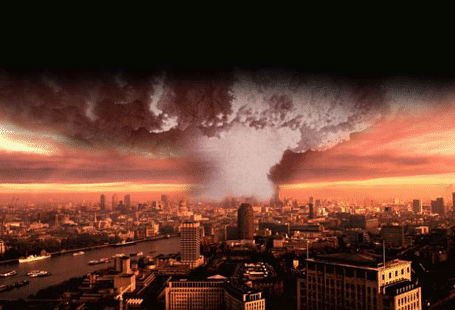
The debate on confrontation with China ignores a crucial conversation about atomic weapons
MICHAEL AUSLIN, Ft.com 22 Aug 22,
The single most important question about a potential war over Taiwan between the United States and China is whether such a conflict could remain non-nuclear. Yet when President Joe Biden stated again in May that America would defend the island in the event of a Chinese attack, no one asked if that meant he was willing to risk a nuclear exchange with Beijing. If the fast-gelling opinion of Washington’s foreign policy elite is correct — that such a war is no longer simply possible but likely — then assessing such a risk needs to be at the forefront of every discussion.
Since the first use of atomic weapons nearly eight decades ago, no nuclear-armed power has ever fought another in a major conflict. During the cold war, America and the Soviet Union fought both direct and indirect proxy wars but avoided direct conventional conflict that could have escalated out of control. The reliability of America’s nuclear umbrella and promises of “extended deterrence” are regularly questioned by non-nuclear allies. It is also the reason that Nato was so circumspect in responding to Russia’s invasion of Ukraine earlier this year.
Once the cold war ended, many in the US assumed that the era of the Cuban Missile crisis and “duck and cover” was over, emphasised by the shutting of the fearsome Strategic Air Command in 1992. Nuclear weapons never went away of course, and SAC eventually morphed into US Strategic Command. Yet the fears that civilisation could end in billowing mushroom clouds rapidly abated as the country turned to another generation of wars in the Middle East and against global terrorism.
But policymakers and the US public can no longer ignore the fact that a new nuclear age has dawned. Vladimir Putin’s sabre-rattling in the early days of the Ukraine war revealed that nuclear-armed authoritarian aggressors may not be restrained. As Beijing considers Taiwan its sovereign territory, there can be no assurance that a conflict would remain conventional. Make no mistake about it, this would be no small clash. Control over Taiwan has been the primary foreign policy and strategic concern of the CCP since Mao Zedong took power in 1949.
…………………… War games are one thing but in the real world, as soon as one US missile hits Chinese territory, the question of escalation becomes critical. ………………………..
Any major clash would, in fact, be the first ballistic missile war between great powers. Americans long ago ceased any civil defence preparation and the public is entirely unprepared to come under missile attack. Such an escalation would put enormous pressure on US leaders to strike back even harder at Chinese targets, thus risking an all-out confrontation, with the urge to go nuclear growing with each new setback.
The implications of a Taiwan war are enormous, but no US leader should blithely commit to defending the island without understanding that a conflict with China could be like no other fought in history. How far the US is willing to go must be openly debated and the risks of action as well as inaction equally assessed. We must think the unthinkable or we might wind up paying a tragic price. https://www.ft.com/content/e919274c-f743-462f-83fe-80ac352036fd
The US Navy is looking at scrapping the ‘Big E,’ the first nuclear-powered aircraft carrier, at a private shipyard
Jake Epstein , Insider 22 Aug 22,
- The US Navy is thinking about how best to scrap its first nuclear-powered aircraft carrier, USS Enterprise.
- It is looking at sending it to a private shipyard given existing maintenance demands and challenges, a new report shows.
- Washington state’s Puget Sound Naval Shipyard has historically handled disposing of nuclear-powered naval assets.
……………………………………….Washington state’s Puget Sound Naval Shipyard and Intermediate Maintenance Facility (PSNS & IMF) has historically managed the disposal of nuclear-powered ships, but a Naval Sea Systems Command spokesperson previously told Insider that other work could delay the process for years.
The Bremerton shipyard might not be able to even start work on scrapping the ex-Enterprise until sometime between 2030 and 2040, according to The Kitsap Sun, which first reported the plans.
…………………………… “The workforce of the public shipyards of the Navy has been under tremendous pressure to execute their primary mission of maintaining the operational fleet,” the report said, explaining that letting a private shipyard handle the scrapping work would keep the Navy yard “focused on high-priority fleet maintenance work and submarine inactivations.”…………………. https://www.businessinsider.com/us-navy-considers-scrapping-first-nuclear-powered-carrier-private-shipyard-2022-8
John Queripel: The blind side to western wars and western war crimes
https://johnmenadue.com/john-queripel-the-blind-side-to-western-wars-and-western-war-crimes/, Pearls and Irritations, By P&I Guest Writers, Aug 22, 2022
The calls mount for the Russian leader to be dragged before a War Crimes Tribunal, while everyone from international sporting bodies to businesses and banks is busy sanctioning Russia. Yet, the three world leaders responsible for the illegal Iraq war of 2003 have still not been held to account
One of the ideas, central to the thought of the Swiss founder of Analytical Psychology Carl Jung, was the shadow side. This is the side of our personalities we find unattractive which we, as a means of defence, then project onto others.
Jung asserted, it is not only individuals, but whole cultures, which are inclined to do this. Thus, in the years preceding the Nazi takeover, Jung spoke of Germany, caught in a cult of intellectualism, denying primal forces, projecting their unacknowledged dark side on to ‘the other.’ Of course, we know that the Nazis rose to power exploiting this projection of darkness to others, be they Communists, Romanies, Jews or homosexuals. The end of that journey was mass extermination in such places as Auschwitz.
It is very comforting but deeply dangerous to project our own darkness onto others, whom we then demonise. Currently most of those things, dark and evil in world politics, are being projected on to Russia, in particular their leader, Vladimir Putin, understood as ‘megalomaniac,’ ‘tyrant,’ and ‘war-monger.’ He may indeed be these things, but projection of these forces on to him saves us having to face up to their presence in ourselves.
The West, so vociferous in their criticism of Putin, cannot front up to the reality that it has been equally criminal in invading a sovereign state on concocted excuses. Unable to convince the U.N. Security Council, over what, even at the time, was a highly dubious claim that Iraq’s Saddam Hussein had ‘Weapons of Mass Destruction,’ which the then U.K. Prime Minister, Tony Blair claimed could reign down on British cities within 40 minutes, the ‘Coalition of the Willing’ chose to go to war.
The resultant destruction was horrendous. Though figures vary greatly, the highly reputable medical journal, ‘The Lancet’ estimated there were 654,965 excess deaths in Iraq from the time of the 2003 invasion to mid-2006 only. In that year, 2006 alone, the U.N. estimates the number of innocent civilians killed as totalling 34,452. The most potent image of the destruction wrought by that war is found in images of Fallujah after the allies had finished their bombing. Putin and the Russians still have a long way to go to reach that level of death and destruction.
The calls mount for the Russian leader to be dragged before a War Crimes Tribunal, while everyone from international sporting bodies to businesses and banks is busy sanctioning Russia. Yet, the three world leaders responsible for the illegal war of 2003 have still not been held to account. Nor were those bodies, now declaring their abhorrence to war, imposing sanctions against the Western nations guilty of the same aggressive invasion of a sovereign state. Having, trashed the ‘rules based international order,’ of which it so loves to speak, did the West not suspect that one like Putin would profit from such?
It is comforting to project one’s shadow side on another, but Jung asserted, it comes back to bite in a highly destructive way.
John Queripel is a Newcastle-based theologian, author, and social commentator
Disarmament is the only cure for nuclear weapons
https://www.washingtonpost.com/opinions/2022/08/21/disarmament-is-only-cure-nuclear-weapons/
Gwen DuBois, Baltimore
The writer is a board member of Physicians for Social Responsibility and a member of the steering committee for Back from the Brink.
The Post is to be commended for informing readers about the disturbing study showing nuclear war could lead to mass starvation [“5 billion may starve in nuclear conflict,” news, Aug. 17]. Telling frightening truths should be coupled with hopeful solutions where solutions exist.
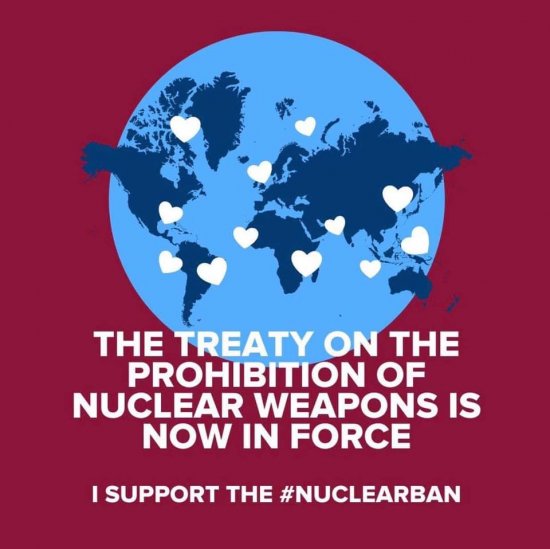
In this case, preventing nuclear war is the way to avoid this horrible possibility of massive global starvation. Internationally, 66 nations have endorsed and 86 nations have signed the United Nations Treaty on the Prohibition of Nuclear Weapons. In this country, about 60 municipalities including Baltimore, D.C., Montgomery County and Chicago and seven state legislatures have approved Back from the Brink Resolutions, a road map to nuclear disarmament. In addition to most resolutions endorsing the U.N. treaty, all urge the United States to lead a global effort to prevent nuclear war by actively pursuing a verifiable agreement with the other nuclear nations to eliminate their nuclear weapons. This is the basic message of Physicians for Social Responsibility: “We must prevent what we cannot cure.”
Bill Gates’ nuclear startup wins $750M, loses sole fuel source
TerraPower notches a record-setting investment round led by South Korea’s SK. But it has no supplier of the enriched fuel it needs, now that sourcing from Russia is off the table.
Canary Media Eric Wesoff, 18 August 2022, Nuclear fission startup TerraPower, founded and chaired by Microsoft co-founder Bill Gates, has raised $750 million to develop advanced nuclear reactors to serve as alternatives to the light-water reactors that make up the vast majority of the world’s civilian nuclear fleet. But cash alone won’t be enough to get the startup over the many hurdles that stand in its way.
TerraPower’s Natrium fast reactor design is radically different from the design of traditional nuclear reactors. For starters, it’s smaller. A typical reactor in the U.S. produces 1,000 megawatts of power. TerraPower’s first demonstration reactor, now being planned for a site in Wyoming, will have a capacity of 345 megawatts. The smaller size could enable the reactor to be built cheaply in a factory and not expensively on-site.
The Natrium reactor will also use a different fuel and a different coolant than standard nuclear reactors. It will be fueled by high-assay low-enriched uranium (HALEU), which is enriched with more uranium than the fuel used in traditional nuclear plants. And the coolant will be high-temperature liquid sodium instead of water.
TerraPower’s new funding includes $250 million from South Korean chaebol SK Group. Previous funding for the firm has come from Gates and Warren Buffett of Berkshire Hathaway. The company was also awarded $80 million from the U.S. Department of Energy to work on its Natrium reactor design.
Canary covered TerraPower’s technology in detail last year when the firm announced that Bechtel will build its first reactor in Kemmerer, Wyoming, near the site of a coal-fired power plant that is scheduled to be shut down. The U.S. Department of Energy and private investors will split the cost of the demonstration project.

The startup claims that this first reactor will be in operation by 2028 and will cost $4 billion, including engineering, procurement and construction. If TerraPower comes anywhere close to meeting those wildly ambitious goals, it will strongly differentiate itself from the traditional nuclear industry, which is notorious for missed deadlines and shocking cost overruns. The only two conventional nuclear reactors currently under construction in the U.S., at the Vogtle plant in Georgia, are already six years overdue and will cost utility customers over $30 billion, more than double the original price tag.
Fuel folly?
One big new problem for TerraPower emerged earlier this year: its fuel source. The only facility currently able to supply commercial quantities of HALEU is in Russia. That wasn’t a great situation even before Russia invaded Ukraine. Now that the war in Ukraine has been grinding on for six months and shows no signs of resolution, relying on fuel sourced from Russia is untenable.
In March, TerraPower said it had cut ties with Tenex, the Russian state-owned company from which it had planned to source HALEU, Wyoming-based nonprofit news outlet WyoFile reported. “When Russia invaded Ukraine it became very clear, for a whole set of reasons — moral reasons as well as commercial reasons — that using Russian fuel is no longer an option for us,” said Jeff Navin, TerraPower’s director of external affairs.
TerraPower did just get good news this week when President Biden signed the Inflation Reduction Act into law. The legislation includes $700 million to help build up a domestic supply chain for HALEU. The funding could give a boost to the U.S. Department of Energy’s plans to launch a congressionally authorized HALEU Availability Program. But developing HALEU production capacity in the U.S. will take years.
TerraPower does not have wiggle room to delay. If it doesn’t complete its demonstration project by 2028, it stands to lose out on up to $2 billion in federal funding from the U.S. Department of Energy’s Advanced Reactor Demonstration Program and the opportunity for expedited federal regulatory reviews.
Some experts are skeptical that TerraPower will make the deadline, especially now that it has no source of fuel. “I didn’t think it was doable before this monkey wrench was thrown in,” Edwin Lyman, director of nuclear power safety for the Union of Concerned Scientists, told WyoFile in March.
A nuclear renaissance?
Despite these headwinds, TerraPower did just raise $750 million, so it’s not alone in anticipating a revival of the nuclear power industry.
The Inflation Reduction Act will help not just HALEU-fueled TerraPower but the rest of the nuclear energy sector too: It includes a production tax credit for nuclear power, an incentive that will benefit struggling nuclear plants that already exist across the country as well as developers of new types of nuclear reactors. In addition to TerraPower, that latter category includes U.S. startups NuScale and Oklo.
….. The bipartisan infrastructure law Biden signed late last year contains $6 billion to support existing nuclear plants and $3.2 billion for development of advanced nuclear power technology. The Department of Energy’s Loan Programs Office has $11 billion in funding for nuclear plants and nuclear supply chains, according to Jigar Shah, director of the office. …………….. https://www.canarymedia.com/articles/nuclear/bill-gates-nuclear-startup-wins-750m-loses-sole-fuel-source
California nuclear power plant extension challenged in legislative proposal
“This is too little too late, a sham process designed to circumvent citizen enforcement of the National Environmental Policy Act,”
Watchdog groups contend that regardless of the review, the NNSA will march ahead with its production plans for plutonium cores at Los Alamos
S nuclear policy | US nuclear stockpile | Environment protection
AP | Albuquerquue (US) August 20, 2022
The US government is planning to review the environmental effects of operations at one of the nation’s prominent nuclear weapons laboratories, but its notice issued Friday leaves out federal goals to ramp up production of plutonium cores used in the nation’s nuclear arsenal.
The National Nuclear Security Administration said the review being done to comply with the National Environmental Policy Act will look at the potential environmental effects of alternatives for operations at Los Alamos National Laboratory for the next 15 years.
That work includes preventing the spread and use of nuclear weapons worldwide and other projects related to national security and global stability, the notice said.
Watchdog groups contend that regardless of the review, the NNSA will march ahead with its production plans for plutonium cores at Los Alamos.
The northern New Mexico lab part of the top secret Manhattan Project during World War II and the birthplace of the atomic bomb is one of two sites tapped for the lucrative mission of manufacturing the plutonium cores. The other is the Savannah River Site in South Carolina.
The US Energy Department had set deadlines for 2026 and 2030 for ramping up production of the plutonium cores, but it’s unclear whether those will be met given the billions of dollars in infrastructure improvements still needed.
Watchdog groups that have been critical of Los Alamos accused the NNSA of going through the motions rather than taking a hard look at the escalating costs of preparing for production, the future consequences to the federal budget and the potential environmental fallout for neighbouring communities and Native American tribes.
This is too little too late, a sham process designed to circumvent citizen enforcement of the National Environmental Policy Act,” said Jay Coghlan, executive director of Nuclear Watch New Mexico.
The Los Alamos Study Group, another New Mexico-based organisation that monitors lab activities, said there is no indication that NNSA will pause any preparations for the sake of complying with National Environmental Policy Act, which mandates some scrutiny before moving ahead with major federal projects.
The group pointed to more than $19 billion in new construction and operational costs for Los Alamos’ new plutonium core production mission through fiscal year 2033. They say the price tag is expected to grow.
According to planning documents related to the sprawling Los Alamos campus, lab officials have indicated that they need more than 4 million square feet (371,612 square metres) of new construction to bolster one of its main technical areas and the area where the lab’s plutonium operations are located. Several thousand new staff members also would be needed.
This is a completely bogus process in which NNSA seeks to create a veneer of legitimacy and public acceptance for its reckless plans,” said Greg Mello, director of the Los Alamos Study Group……….. more https://www.business-standard.com/article/international/plutonium-cores-review-at-us-nuclear-lab-sham-process-watchdog-groups-122082000062_1.html
CIA spying on Assange “illegally” swept up US lawyers, journalists: Lawsuit.
Newsweek SHAUN WATERMAN ON 8/15/22 CIA surveillance of Wikileaks founder Julian Assange while he was sheltering in the Ecuadorian Embassy in London included recording his conversations with American lawyers, journalists and doctors, and copying private data from visitors’ phones and other devices, violating constitutional protections, according to a lawsuit filed Monday.
The suit – filed on behalf of four Americans who visited Assange – seeks damages personally from then-CIA Director Mike Pompeo for violating the plaintiffs’ Fourth Amendment rights against unreasonable search and seizure. The suit also seeks damages against a Spanish security firm contracted to protect the embassy, and its CEO, alleging that they abused their position to illegally spy on visitors and passed on the surveillance data they collected to the CIA, which is also named a defendant in the suit.
Legal experts, including a former senior intelligence official, told Newsweek that the allegations in the lawsuit, if proven, show the CIA crossed lines drawn to protect American citizens from surveillance by overzealous intelligence agencies………………………………………………..
The suit cites evidence gathered in a preliminary criminal inquiry by the Spanish High Court, launched after whistleblowers came forward from the Spanish firm hired to provide physical security for the embassy. The firm and its CEO are under investigation for alleged violations of Assange’s privacy and the confidentiality of communications with his lawyers – both of which are guaranteed by EU law.
The plaintiffs in the U.S. suit – filed in federal District Court in New York – are two New York attorneys on the Assange international legal team and two American journalists who interviewed him. A U.S. doctor who conducted medical interviews with Assange about his mental state chose not to join the lawsuit but told Newsweek he was subjected to the same surveillance. The surveillance also swept up visits from a U.S congressman and celebrities such as model and activist Pamela Anderson.
“As a criminal attorney, I don’t think that there’s anything worse than your opposition listening in on what your plans are, what you intend to do, on your conversations. It’s a terrible thing,” said the lead plaintiff, attorney Margaret Kunstler, a member of Assange’s U.S. legal team. “It’s gross misconduct,” she added, “I don’t understand how the CIA … could think that they could do this. It’s so outrageous that it’s beyond my comprehension.”
New York-based attorney Richard Roth, who filed the suit, said, “This was outrageous and inappropriate conduct by the government. It violated the most profound privacy rights” of the plaintiffs and others who visited Assange in the embassy.
And the violation is worse, Roth added, because it included “conversations of an absolutely privileged and confidential nature,” such as those with his lawyers, and the “theft of data” from devices owned by people such as journalists and doctors who rely on confidential relationships with their sources and patients.
“All my conversations with Julian Assange were covered by doctor-patient confidentiality,” said Sean Love, a physician and faculty member at Johns Hopkins, who visited Assange twice in 2017 to conduct a study of the effects of his confinement on his physical and mental health………………………………
The privacy of other American visitors not party to the lawsuit was also violated, according to copies of surveillance material turned over to the Spanish court and reviewed by Newsweek. Every visitor had their passport photocopied and most seem to have their phones photographed. Among the visitors subject to surveillance was then-California GOP Rep. Dana Rohrabacher, who was trying to negotiate a deal for a presidential pardon for Assange. .Washington Post reporter Ellen Nakashima’s phone was photographed and a detailed written account of her visit (revealing that she removed the battery from her phone before handing it over) was prepared by embassy security guards. Anderson’s passwords for her email and other accounts were included in surveillance photographs allegedly sent to the CIA, according to disclosures by Spanish whistleblowers.
Email messages sent to Anderson’s foundation requesting comment were not returned.
Apart from the constitutional violations against Americans swept up in the surveillance, the sheer magnitude and sensitivity of the material obtained by U.S. authorities may make it impossible for Assange to get a fair trial, Roth said. In addition to the surveillance, after the Ecuadorian government allowed British police to enter the embassy and arrest Assange, it publicly turned over all his legal papers and computer equipment to the U.S. Department of Justice.
“When a federal prosecutor comes after a lawyer with a search warrant and seizes their devices, there are multiple layers of review and protection for privileged lawyer-client communications,” Roth said. The court might appoint a special master – typically a retired judge or a senior attorney independent of the government – to oversee the process and ensure that privileged communications were segregated from those collected for the prosecution.
“None of that happened here. They just grabbed everything.”
…………………………………………………………………………………. Anyone who visited was required to leave their phones and other electronic devices with security guards at the embassy, according to the lawsuit.
“Julian’s visitors weren’t allowed to bring their devices into the embassy, nothing that could photograph or record or connect to the Internet,” WikiLeaks media attorney Deborah Hrbek, the other attorney suing, told Newsweek. “We turned them over to the security guards. We thought they were embassy personnel. We believed it was a measure to protect Julian.”
In fact, the guards were contractors, working for the Spanish private security firm UnderCover Global. Engaged by the Ecuadorian government to provide security for the embassy and its long term houseguest, UC Global in 2017 began secretly also working for U.S. intelligence, according to the lawsuit, citing evidence compiled by the Audiencia National, the Spanish High Court.
UC Global CEO David Morales returned from a Las Vegas security convention in early 2017, telling colleagues they were now working “in the big leagues,” “for the dark side,” and with “our American friends,” according to whistleblower testimony from former UC Global employees. The testimony says it became clear over the subsequent weeks and months that he was being paid substantial sums of money to share surveillance data with the CIA…………………………………………………………………………………….
The suit is directed against Pompeo personally because U.S. law and the Constitution make it difficult to sue executive branch agencies for damages, said Robert Boyle, a constitutional law attorney who consulted with Roth on the suit.
A 1971 Supreme Court judgment “made it possible to personally sue government officials for violations of certain constitutional rights,” he said……………………………………………
The surveillance revealed by the Spanish courts was likely “the tip of the iceberg,” said lead plaintiff Kunstler. “We happen to have discovered that. Who knows what else they were up to?”
https://www.newsweek.com/cia-spying-assange-illegally-swept-us-lawyers-journalists-lawsuit-1731570—
US Deploys Its B-52 Nuclear Bombers At Russia’s Doorsteps As Tensions Soar Between Moscow & Washington
https://eurasiantimes.com/us-deploys-its-b-52-nuclear-bombers-at-russias-doorsteps/ By Sakshi Tiwari, August 17, 2022
The United States Air Force is reportedly sending its strategic bombers to Europe, close to Russia, when there is an uptick in military operations against Russian-occupied Ukrainian territory.
The United States intends to deploy its B-52 strategic bombers close to the Russian borders. According to local Russian media reports and speculations on social media, four American strategic bombers are expected to arrive in Europe in the coming days.
There are reports the B-52s have already arrived.
The B-52 bombers will first need to be stationed at a military air base in the United Kingdom. According to Gloucestershire Live, the American long-range bombers deployed in the UK earlier this year will return to Fairford Air Force Base next week.
More tax-payer money to USA’s nuclear industry with INFLATION REDUCTION ACT OF 2022
INFLATION REDUCTION ACT OF 2022 BOOSTS NUCLEAR POWER WITH TAX CREDITS AND FUNDING
…… The act contains several key provisions that bolster a broad spectrum of new and existing activities in the nuclear industry.
As a targeted benefit to the nuclear industry, the Inflation Reduction Act of 2022 (IRA) modifies the Internal Revenue Code (IRC or Code) to allow new production tax credits (PTCs) for existing nuclear plants.
Importantly, the IRA also introduces significant changes to the Code to allow for greater monetization of applicable tax credits, including those that relate to nuclear power. From a practical perspective, these changes may ultimately prove transformative to the nuclear industry in allowing access to the tax equity markets for project financing, which to date has been virtually nonexistent for largely technical reasons.
Finally, the IRA also provides additional funding to establish a domestic supply of High-Assay Low-Enriched Uranium (HALEU) fuel, which is needed by many next-generation reactors.
ZERO-EMISSION NUCLEAR POWER PRODUCTION TAX CREDIT (IRC SECTION 45U)
IRA Section 13105 creates a “zero-emission nuclear power production tax credit” in Section 45U of the Code (the Nuclear PTC) aimed at preventing the decommission of existing nuclear plants. The Nuclear PTC is available with respect to existing nuclear plants for electricity produced and sold for taxable years beginning after December 31, 2023, and before December 31, 2032…………………..
Importantly, the credit is unavailable to an “advanced nuclear power facility” that qualifies for the advanced nuclear tax credit in IRC Section 45J (added by the Energy Policy Act of 2005). The advanced nuclear tax credit under Section 45J, which offers a maximum 1.8 cent per kWh credit, continues to be the only currently available generation credit for new nuclear electricity generation facilities not yet placed into service (the new 45Y and 48E zero emissions facility credits, each described below, are only available for facilities placed into service after December 31, 2024).
Although outside the scope of this summary, the limited “allocation” Section 45J credit was refreshed by Congress in 2018, and allocations still remain available for advanced nuclear reactors that are placed into service on a first in line basis (although the IRS has yet to update allocation guidance for the 2018 refresh legislation)……………………………
ADDITIONAL FUNDING FOR HALEU AND DOE
Along with the tax credits above, the IRA allocated $150 million to the US Department of Energy’s (DOE’s) Office of Nuclear Energy “to carry out activities for infrastructure and general plant projects.” The IRA also allocated money through 2026 to support the development of a domestic HALEU fuel supply. Most advanced nuclear reactor designs require HALEU, a uranium fuel that is more power dense than the fuel used in the current reactor fleet. Currently, the domestic HALEU supply is constrained and much of the current HALEU supply is sourced from Russia. The IRA addresses this issue by allocating $700 million dollars in funding to DOE to develop a domestic HALEU supply chain…………..
The majority of funding, $500 million, will be allocated to environmental impact reduction work and public relations initiatives, and to support collaboration between the National Laboratories and the private sector. Another $100 million will be allocated to research, development, and safety initiatives. Finally, an additional $100 million will directly support HALEU availability for civilian domestic research, development, demonstration, and commercial use. The advanced reactor community has advocated for this kind of support for years, but this is the first big appropriation to support the domestic HALEU supply. https://www.morganlewis.com/pubs/2022/08/inflation-reduction-act-of-2022-boosts-nuclear-power-with-tax-credits-and-funding
1 This Month
26 April – Chernobyl: Inside the Meltdown airs on National Geographic on Sunday 26th April from 4pm
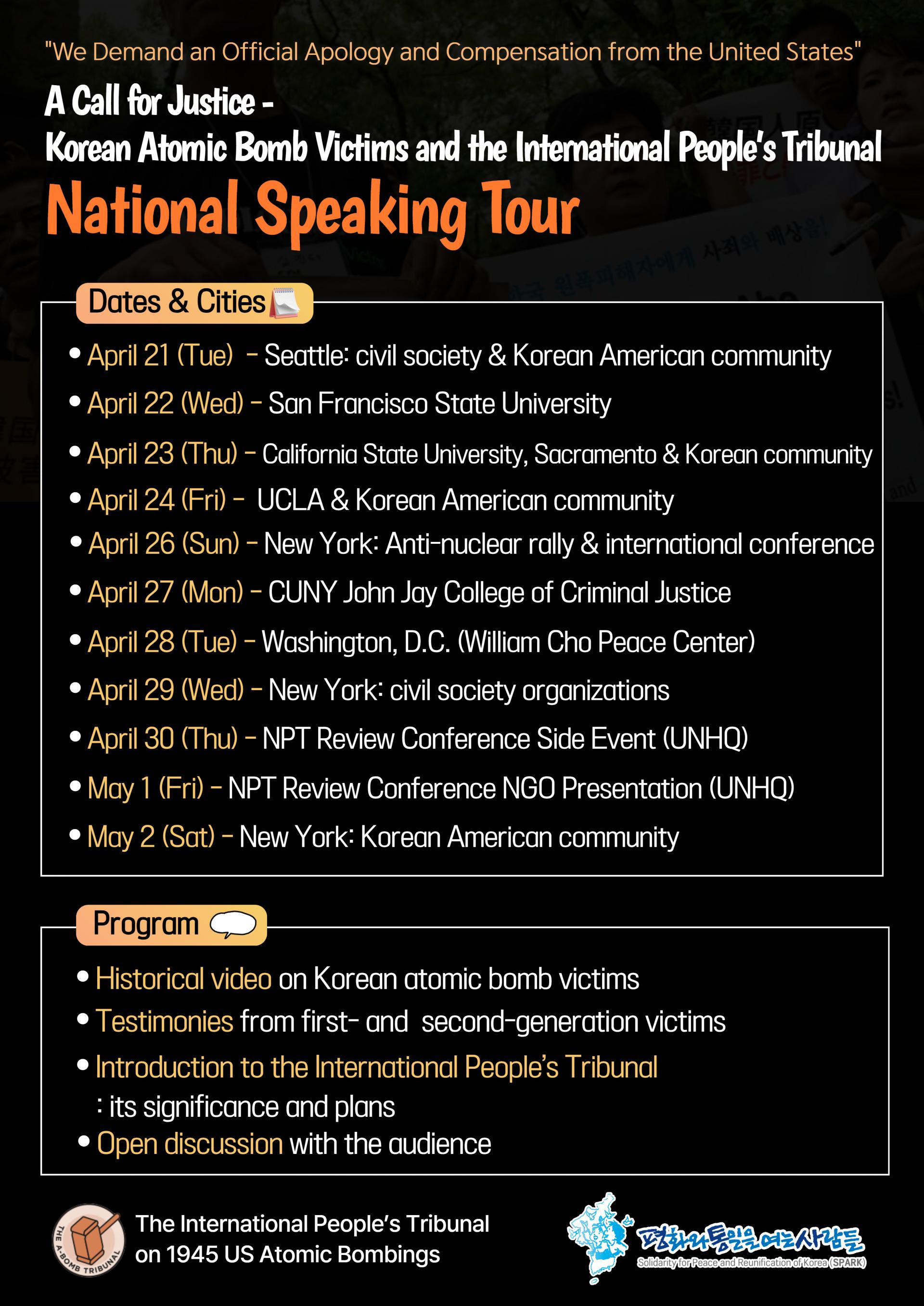
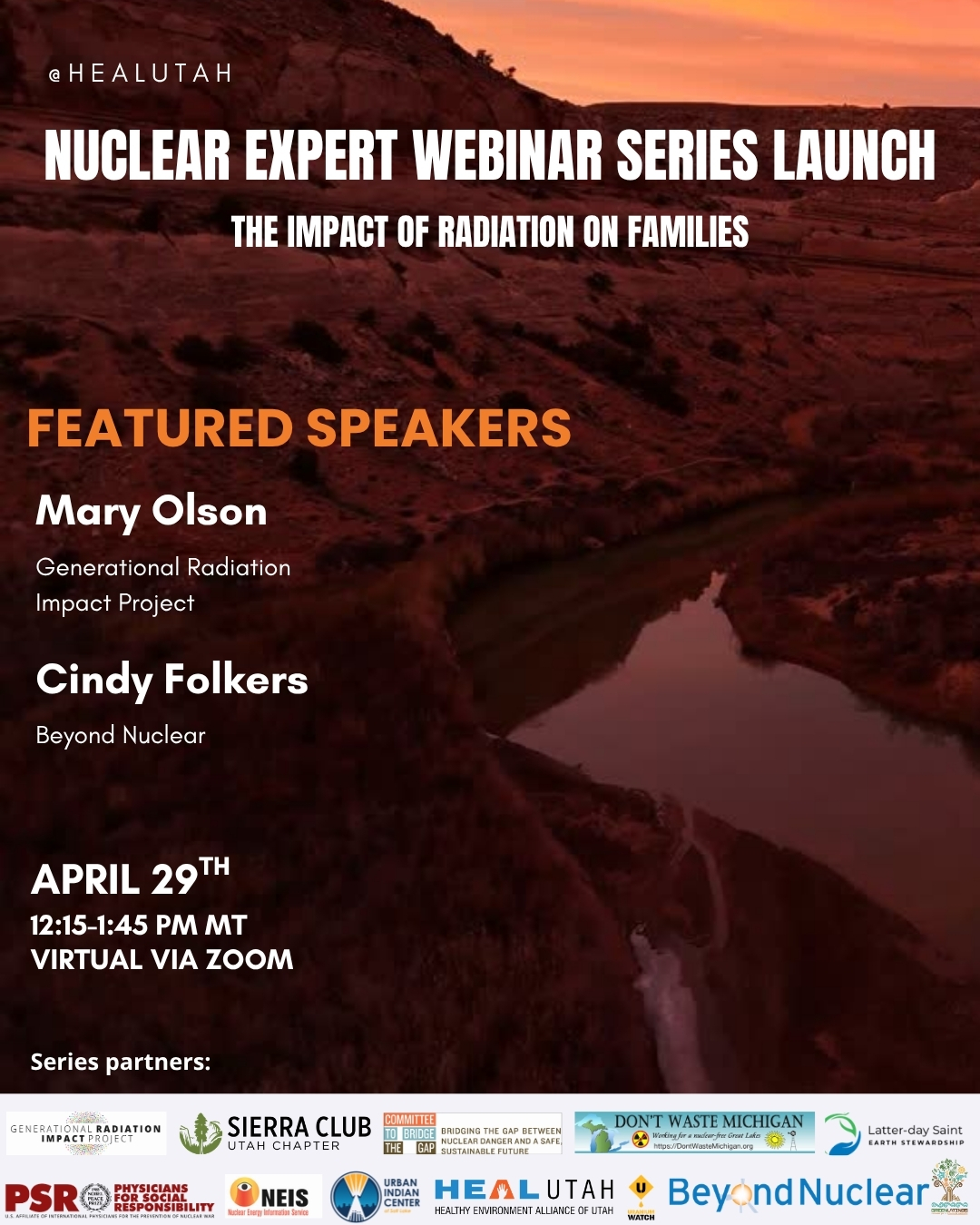
29 April – Nuclear Expert Webinar #1 – Radiation Impacts on Families with Mary Olson and Cindy Folkers
- 12:15 PM MT – 1:45 PM MT
- Location: Virtual – REGISTER TODAY

4 May -West Suburban Peace Coalition to discuss Iran war at May Educational Forum
Monday, May 4, 7:00 – 8:00 PM Central Standard Time
Title: : How Trump’s Narrative Tries to Shape the Reality of the War on Iran.
Contact Walt Zlotow, zlotow@hotmail.com 630 442 3045 for further information
14 May – online event From Bombs to Data Centres: the Face of Nuclear Colonialism

Pine Ridge Uranium is the real threat, not Tehran- Tell Burgum: Stop the Extraction.
Chernobyl: The Lost Tapes – A good documentary on Chernobyl on SBS available On Demand for the next 3 weeks– https://www.sbs.com.au/ondemand/tv-program/chernobyl-the-lost-tapes/2352741955560
To see nuclear-related stories in greater depth and intensity – go to https://nuclearinformation.wordpress.com
-
Archives
- April 2026 (346)
- March 2026 (251)
- February 2026 (268)
- January 2026 (308)
- December 2025 (358)
- November 2025 (359)
- October 2025 (376)
- September 2025 (257)
- August 2025 (319)
- July 2025 (230)
- June 2025 (348)
- May 2025 (261)
-
Categories
- 1
- 1 NUCLEAR ISSUES
- business and costs
- climate change
- culture and arts
- ENERGY
- environment
- health
- history
- indigenous issues
- Legal
- marketing of nuclear
- media
- opposition to nuclear
- PERSONAL STORIES
- politics
- politics international
- Religion and ethics
- safety
- secrets,lies and civil liberties
- spinbuster
- technology
- Uranium
- wastes
- weapons and war
- Women
- 2 WORLD
- ACTION
- AFRICA
- Atrocities
- AUSTRALIA
- Christina's notes
- Christina's themes
- culture and arts
- Events
- Fuk 2022
- Fuk 2023
- Fukushima 2017
- Fukushima 2018
- fukushima 2019
- Fukushima 2020
- Fukushima 2021
- general
- global warming
- Humour (God we need it)
- Nuclear
- RARE EARTHS
- Reference
- resources – print
- Resources -audiovicual
- Weekly Newsletter
- World
- World Nuclear
- YouTube
-
RSS
Entries RSS
Comments RSS
 nuclear-news