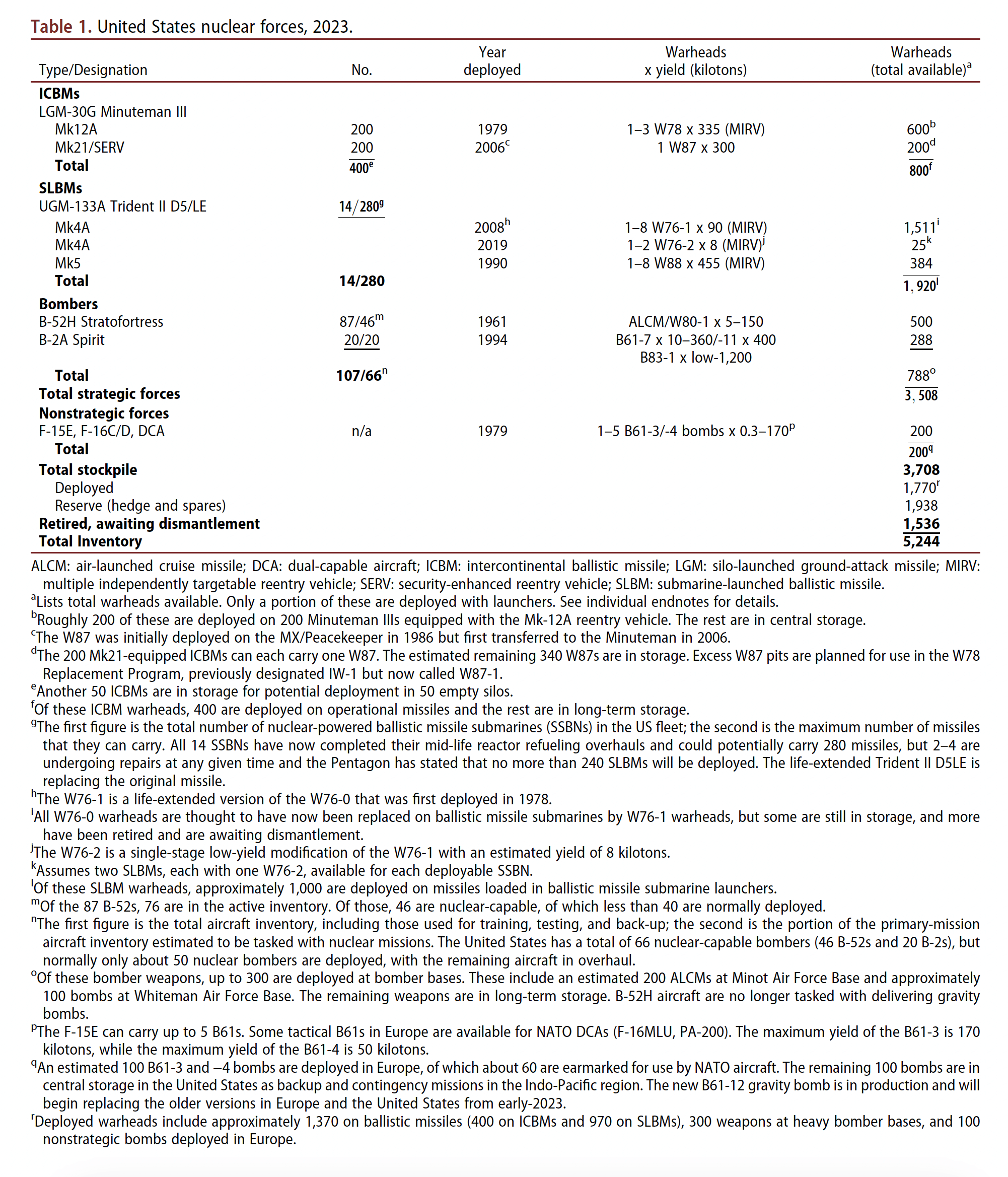
It comes down to weapons

NewAge, by Richard Moser , Jan 22,2023
THE deep divisions in the US left over the Ukraine war can be reduced to a single practical question: Do you support sending weapons to Ukraine?
The answer to that question depends on whether or not you accept the idea that we’re the cops of the world. The two parties accept this without question but the pro-weapons left? Behind a facade of left-sounding words, political practice tells the tale……………..
The pro-weapons left hides their collaboration with NATO behind the seemingly simple idea that ‘Ukraine has the right to get weapons or seek aid from anywhere they see fit.’ Except that ‘anywhere’ does not exist in the real world. Ukraine is not a customer in some free market for weapons. There is a highly structured supply chain for weapons that is a long-standing feature of the US empire and it is directed by the US war machine. The US has dominated the weapons trade since its rise to global power after WWII. Yes, Russia was often in second or third place, but Ukraine will sure not get its weapons from Russia. The only ‘anywhere’ that actually exists is the US government, which is the primary source for weapons transfers to Ukraine.
The other flaw in the ‘from anywhere they see fit’ formula is the assumption that weapons given from the US to Ukraine are simply an exercise in Ukrainian self-determination — not one way it’s incorporated into the US-dominated global order. Self-determination is not a by-product of the world’s largest military alliance, whose standard operating procedure is to turn allies into pawns and proxies. The drill begins with the mandatory weapons trade demanded of all NATO members. The Ukrainian defense minister recently admitted that Ukraine is a NATO proxy trading blood for weapons.
No, the existing international order is not some normal, natural state of affairs whose peace and harmony was disrupted by the ‘unprovoked’ Russian invasion. To believe that, you’d have to ignore decades of historical context, including the obvious expansion of NATO that put missiles and troops on Russia’s borders, military advisers inside Ukraine and the less obvious policy of ‘full spectrum dominance’ by which the US seeks to dominate ‘everyone, everywhere, all at once.’ The neoliberal world order is no more based on free markets than self-determination or peace.
Instead, Ukraine found itself between two great powers with a long history of hostility and rivalry. Its only hope for self-determination would have been to maintain the balancing act of neutrality and diplomacy, playing one power off the other. …………………………………………………….. more https://www.newagebd.net/article/192295/it-comes-down-to-weapons
Canadian MP Charlie Angus Questions the Claims of SMRs (Small Modular Reactors)
Proponents of SMRs are on a major spin campaign. None of them have been approved for licensing. The Toronto Star calls them a “boutique boondoggle”. The IPCC raises serious questions about the dangers of nuclear proliferation. Chris Keefer is their big proponent. Here is the exchange at the Natural Resources Committee.
“Proponents of SMRs are on a major spin campaign. None of them have
been approved for licensing. The Toronto Star calls them a “boutique
boondoggle”. The IPCC raises serious questions about the dangers of
nuclear proliferation.”
Nuclear Regulatory Commission certifies NuScam’s design for small nuclear reactor, despite predictions on uneconomic costs

1st small modular nuclear reactor certified for use in US
AP News, By JENNIFER McDERMOTT, January 21, 2023
The U.S. Nuclear Regulatory Commission has certified the design for what will be the United States’ first small modular nuclear reactor.
The rule that certifies the design was published Thursday in the Federal Register. It means that companies seeking to build and operate a nuclear power plant can pick the design for a 50-megawatt, advanced light-water small modular nuclear reactor by Oregon-based NuScale Power and apply to the NRC for a license.
It’s the final determination that the design is acceptable for use, so it can’t be legally challenged during the licensing process when someone applies to build and operate a nuclear power plant, NRC spokesperson Scott Burnell said Friday. The rule becomes effective in late February………
It’s the seventh nuclear reactor design cleared for use in the United States. The rest are for traditional, large, light-water reactors………….. The first small modular reactor design application package included over 2 million pages of supporting materials………..
However, David Schlissel at the Ohio-based Institute for Energy Economics and Financial Analysis expressed concerns about the costs. Schlissel, who has studied the history of the nuclear power industry and the finances of the NuScale project, expects they will continue to go up, which could limit how many NuScale reactors are built. He said he thinks they’re not competitive in price with renewables and battery storage.
………… The U.S. Energy Department said it provided more than $600 million since 2014 to support the design, licensing and siting of NuScale’s VOYGR small modular reactor power plant and other domestic small reactor concepts. ……………………………..
Diluted plutonium disposed of at Carlsbad nuclear waste site as program draws controversy
“DOE decided to do this before they did any of the analysis,” Hancock said. “All these documents are to give legal cover and justify decisions already made.”
Adrian Hedden, Carlsbad Current-Argus
Federal nuclear waste officials announced a shipment of diluted surplus, weapons-grade plutonium was disposed of using a repository near Carlsbad last month, after it was sent to New Mexico from South Carolina, amid criticism from nuclear watchdog groups in the state.
The shipment contained plutonium diluted using a process known as “downblending” that lowered its radioactivity to meet requirements at the Waste Isolation Pilot Plant, where the U.S. Department of Energy disposes of transuranic (TRU) nuclear waste in an underground salt deposit.
It was brought to WIPP from the DOE’s Savannah River Site, a laboratory where the federal government develops nuclear weapons.
After the downblending, the waste meets the definition of TRU waste, read an announcement from the DOE’s National Nuclear Security Administration (NNSA), and can be legally disposed of at WIPP.
Disposal at WIPP was in response to a 2020 agreement between the DOE and State of South Carolina that called for the removal of 9.5 metric tons (MT) of plutonium waste from the state, reached after years of negotiations and litigation.
The waste was initially brought to Savannah River to be irradiated at a mixed-oxide (MOX) facility, converting the nuclear waste into fuel…………………………………………………………
The initial shipment was announced as the DOE was underway with a public comment period on using the same “dilute and dispose” method for 34 metric tons (MT) of plutonium waste, most of which is at the Pantex Plant in Amarillo, Texas.
But this would entail shipping waste from Pantex to Los Alamos, then to Savannah River Site for final packaging before going to WIPP, meaning the waste would cross through New Mexico three times.
Opponents of this proposal in New Mexico feared the repeated trips through their state would increase the risk of exposing their communities to radiation.
Critics oppose use of New Mexico site to dispose of plutonium
Don Hancock, nuclear waste program manager at Albuquerque watchdog group Southwest Research and Information Center said the group and others in the state opposed the project and its use of WIPP.
He said DOE’s practice of seeking approval for separate segments of the plutonium waste, rather than for all of the waste at once was intended to protect decisions already made without public input.
“DOE decided to do this before they did any of the analysis,” Hancock said. “All these documents are to give legal cover and justify decisions already made.”…………………………………………
Hancock argued using WIPP as the disposal site for the plutonium, even after its diluted to meet the requirements of TRU waste, marked an undue expansion of WIPP’s mission beyond what the people of New Mexico agreed to when the facility was sited in their state.
“We don’t oppose geologic disposal. We don’t think WIPP is the right place,” he said. “WIPP has a limited mission. It was never intended for surplus plutonium. It’s already been decided. The public should be outraged.” https://www.currentargus.com/story/news/2023/01/20/diluted-plutonium-disposed-of-at-carlsbad-nuclear-waste-site/69811929007/
The ‘all-of-the-above’ story used to sneak nuclear power in as a climate-action technology along with renewables .

“These claims are almost entirely misleading as you start looking at the facts”
Nuclear power gets another look in ‘all-of-the-above’ energy approach as climate worries mount
But critics cite safety concerns, costs and say widespread use of reactors is decades away.
Utility Dive. Jan. 20, 2023, Nuclear energy is increasingly getting another look by federal and state officials seeking to cut greenhouse gas emissions and bolster energy security………
A federal zero-emission nuclear power production credit, state legislation ending bans on nuclear plant construction and state policies easing development of small modular reactors, defined by the International Atomic Energy Agency as advanced nuclear reactors with a capacity of up to 300 MW, are among the recent developments spurring renewed interest in the industry.
Detractors cite safety risks, rising costs and other concerns. Critics also caution that a significant increase in nuclear generation in the U.S. is years, maybe even decades, away……….
In the U.S…..nuclear electricity generation declined for a second consecutive year in 2021, according to the U.S. Energy Information Administration. Output from nuclear power plants totaled 778 million MWh, or 1.5% less than in 2020. Nuclear’s share of U.S. electricity generation across all sectors in 2021 was similar to its average share in the previous decade: 19%.
As of November, seven units with a net summer capacity of 5,505 MW had retired since 2018, according to the EIA. The agency listed four Entergy plants: Palisades in Michigan; Indian Point 2 and Indian Point 3 in New York; and Pilgrim in Plymouth, Massachusetts. Also retired were two Exelon plants: Three Mile Island in Pennsylvania and Oyster Creek in New Jersey and NextEra Energy’s Duane Arnold facility in Iowa.
In addition, California’s Diablo Canyon, which is slated to retire a unit in 2024 and another in 2025, could remain open with funding conditionally approved by the U.S. Department of Energy.
Federal money, state policies induce nuclear investment
The Inflation Reduction Act, which commits $369 billion for climate efforts, includes a zero-emission nuclear power production credit. It provides up to $15 a MWh for electricity produced, assuming labor and wage requirements are met.
The credit will be available for plants in service in 2024 and would extend through 2032, according to the DOE.
However, the fiscal year 2023 omnibus spending measure enacted last month cut funding for the DOE’s Office of Nuclear Energy by $182 million from fiscal year 2022, to $1.47 billion. The FY 2023 spending includes $85 million for the Advanced Reactor Demonstration Program, $322 million for fuel cycle research and development, $114 million for accident tolerant fuels and $259 million for reactor research and development.
Maria Korsnick, president and CEO of the Nuclear Energy Institute, said the $1.7 trillion spending bill includes “robust funding” for public-private partnerships and support for nuclear energy education and research infrastructure. But she said it “fell short” of $2.1 billion needed to bolster the domestic nuclear fuel supply.
Federal spending to provide incentives for nuclear energy development began before Congress and President Joe Biden approved the omnibus spending bill last year.
The $1.2 trillion Infrastructure Investment and Jobs Act that Biden signed into law in November 2021 includes $62 billion for clean energy projects. Spending was directed at advanced nuclear projects, preventing the premature retirement of nuclear plants and considering how nuclear power may produce hydrogen for other energy applications.
In addition, states are looking to bolster nuclear power. Christine Csizmadia, senior director of state government affairs and advocacy at the NEI, said several states are broadening policies that aim to advance nuclear energy. Legislation supports studies of small modular reactors, providing tax incentives for nuclear power plant construction and ending moratoriums on new plants…………………………………………………………………………………..
The U.S. is not a ‘great market’ for new nuclear plants
Policies giving nuclear energy a boost have their limits.
Bret Kugelmass, CEO of Last Energy a manufacturer of what it calls micro modular reactors that generate about 20 MW, is active in European markets. It’s announced 10 projects in Poland, two in Romania and has “some activity” in the U.K. that has yet to be publicly detailed, he said in an interview……………………………………
Next nuclear technology is seen as a decade away
Avi Brenmiller, president and CEO of Brenmiller Energy, a thermal energy storage manufacturer, said the next nuclear technology is 10 years away “to be safe and clean, and I don’t see the move yet.”…………………………………………………………
Critics say nuclear power is potentially dangerous and that its promoters are overly optimistic about construction schedules.
Edwin Lyman, director of nuclear power safety at the Union of Concerned Scientists, said during the forum that nuclear power has the potential for a “catastrophic accident that could lead to large scale radiological contamination of the environment, massive economic damages and the potential for significant human health impacts.”
The industry cannot easily estimate the risks associated with storms, earthquakes and tidal waves as climate change makes weather more unpredictable, he said.
Even if a reactor is safe against accidents, it’s vulnerable to terrorists or military attacks as in Ukraine at the hands of Russia, Lyman said.
He questioned whether SMRs are easier to cool and are less radioactive than light water reactors “and therefore we don’t have to worry about it as much.”
“These claims are almost entirely misleading as you start looking at the facts,” he said.
Developers looking to reduce capital expenses and operating costs are cutting “rigorous requirements” for sites in or near populated urban centers or towns, Lyman said.
David Schlissel, director of resource planning analysis at the Institute for Energy Economics and Financial Analysis, cited cost overruns and schedule delays in the nuclear power industry.
“We don’t need a transition from coal to nuclear,” he said at the Dec. 15 forum. “We’re already pretty far along a transition from coal and natural gas to renewables.”……………………… https://www.utilitydive.com/news/nuclear-power-smr-climate-ira-omnibus-spending/639484/
Pentagon can’t account for $220 billion in govt property, fails fifth audit
Pentagon can’t account for $220 billion in gov’t property, fails fifth audit | 18 Jan 2023 | A Tuesday report by the Government Accountability Office revealed that the Department of Defense failed its fifth audit in a row after it could not account for at least 220 billion in government-furnished property, the Daily Caller News Foundation reported.
The DOD has been mandated by federal law to complete audits since 1994; however, the mandate was ignored for decades due to the agency’s massive size, according to Military dot com. Since launching its first independent audit, in 2017 the Pentagon has never passed.
The Pentagon failed its fifth audit in November after the agency could not prove expenditures for 61% of its 3.5 trillion in assets. To perform this year’s overall audit of the DOD, which was expected to cost 218 million, the agency aggregated 27 separate audits conducted by approximately 1,600 auditors. According to Military.com, the auditors performed 220 in-person site visits and 750 virtual site visits.
MICAELA BURROW, January 17, 2023
he Department of Defense (DOD) has neglected to address its inability to keep track of at least 220 billion in equipment provided to government contractors, according to a Tuesday report by the Government Accountability Office (GAO).
Auditors first reported the Pentagon’s failure to account for government-owned equipment or material offered up for use to contracting agencies, also called government furnished property, in 2001, according to the report. DOD has made little improvement since then, increasing the risk that the Pentagon could accidentally overlook errors in the books.
“This long-standing issue affects the accounting and reporting of GFP and is one of the reasons DOD is unable to produce auditable financial statements,” GAO said. Of all the major federal agencies GAO is obligated to review, DOD is the only one unable to receive an opinion on its financial statements. https://dailycaller.com/2023/01/17/watchdog-pentagon-billions-equipment-contractors/
U.S. approves design for NuScale small modular nuclear reactor, but significant problems remain.

By Timothy Gardner WASHINGTON, Jan 20 (Reuters) – The U.S. nuclear power regulator has certified the design for the NuScale Power Corp’s (SMR.N) small modular reactor, the first such approval in the country for the next generation technology.
The Nuclear Regulatory Commission’s approval, published in the Federal Register late on Thursday, clears a hurdle for NuScale. The company plans to build a demonstration small modular reactor (SMR) power plant at the Idaho National Laboratory. NuScale says the six-reactor, 462 megawatt Carbon Free Power Project will be fully running in 2030.
There are significant questions about rising costs of the demonstration plant, expected to provide electricity to the Utah Associated Municipal Power Systems (UAMPS). NuScale said this month the target price for power from the plant is $89 per megawatt hour, up 53% from the previous estimate of $58 per MWh.
Backers of next generation reactors including President Joe Biden’s administration and many Republican lawmakers, say they are crucial in curbing climate change. NuScale says they will be safer than today’s far larger conventional reactors, but the reactors, like conventional nuclear plants, are expected to produce highly toxic waste, for which no permanent fix has been developed.
The U.S. Department of Energy has provided more than $600 million since 2014 to support the design, licensing and siting of NuScale’s power plant and other small modular reactors. NuScale and other companies that succeed in building next generation reactors could receive for the first time lucrative production tax credits contained in last year’s Inflation Reduction Act signed by Biden……………..
NuScale also hopes to build SMRs in Romania, Kazakhstan and Poland, despite concerns from nuclear safety experts who say Russia’s invasion of Ukraine and occupation of the Zaporizhzhia plant should make the industry think seriously about developing plants in the region. https://www.reuters.com/business/energy/us-approves-design-nuscale-small-modular-nuclear-reactor-2023-01-20/
Nuclear Notebook: United States nuclear weapons, 2023

The United States is modernizing its nuclear bomber force by upgrading nuclear command-and-control capabilities on existing bombers, developing improved nuclear weapons (the B61-12 and the new AGM-181 Long-Range Standoff Weapon (LRSO), and designing a new heavy bomber (the B-21 Raider).
Bulletin of the Atomic Scientists By Hans M. Kristensen, Matt Korda, January 16, 2023
t the beginning of 2023, the US Department of Defense maintained an estimated stockpile of approximately 3,708 nuclear warheads for delivery by ballistic missiles and aircraft. Most of the warheads in the stockpile are not deployed but rather stored for potential upload onto missiles and aircraft as necessary. We estimate that approximately 1,770 warheads are currently deployed, of which roughly 1,370 strategic warheads are deployed on ballistic missiles and another 300 at strategic bomber bases in the United States. An additional 100 tactical bombs are deployed at air bases in Europe. The remaining warheads — approximately 1,938 — are in storage as a so-called hedge against technical or geopolitical surprises. Several hundred of those warheads are scheduled to be retired before 2030. (See Table 1. on original)
In addition to the warheads in the Department of Defense stockpile, approximately 1,536 retired — but still intact — warheads are stored under the custody of the Department of Energy and are awaiting dismantlement, giving a total US inventory of an estimated 5,244 warheads. Between 2010 and 2018, the US government publicly disclosed the size of the nuclear weapons stockpile; however, in 2019 and 2020, the Trump administration rejected requests from the Federation of American Scientists to declassify the latest stockpile numbers (Aftergood 2019; Kristensen 2019a, 2020d). In 2021, the Biden administration restored the United States’ previous transparency levels by declassifying both numbers for the entire history of the US nuclear arsenal until September 2020 — including the missing years of the Trump administration.
This effort revealed that the United States’ nuclear stockpile consisted of 3,750 warheads in September 2020 — only 72 warheads fewer than the last number made available in September 2017 before the Trump administration reduced the US government’s transparency efforts (US State Department 2021a). We estimate that the stockpile will continue to decline over the next decade-and-a-half as modernization programs consolidate the remaining warheads.
The Biden administration’s declassification also revealed that the pace of warhead dismantlement has slowed significantly in recent years. While the United States dismantled on average more than 1,000 warheads per year during the 1990s, in 2020 it dismantled only 184 warheads (US State Department 2021a). …………………
In the past, the Obama and Biden administrations often declassified the warhead stockpile and dismantlement numbers around the time of major arms control conferences. That did not happen in 2022, however, and the Biden administration has so far not acted on requests from the Federation of American Scientists to disclose the numbers for 2021 or 2022. A decision to no longer declassify these numbers would not only contradict the Biden administration’s own practice from 2020, but also represent a return to Trump-era levels of nuclear opacity. Such increased nuclear secrecy undermines US calls for Russia and China to increase transparency of their nuclear forces.
The US nuclear weapons are thought to be stored at an estimated 24 geographical locations in 11 US states and five European countries (Kristensen and Korda 2019, 124). The location with the most nuclear weapons by far is the large Kirtland Underground Munitions and Maintenance Storage Complex (KUMMSC) south of Albuquerque, New Mexico. Most of the weapons in this location are retired weapons awaiting dismantlement at the Pantex Plant in Texas. The state with the second-largest inventory is Washington, which is home to the Strategic Weapons Facility Pacific and the ballistic missile submarines at Naval Submarine Base Kitsap. The submarines operating from this base carry more deployed nuclear weapons than any other base in the United States.
Implementing the New START treaty
The United States appears to be in compliance with the New Strategic Arms Reduction Treaty (New START) limits. ………………………………
If New START expired without a follow-on treaty in place, both the United States and Russia could upload several hundred extra warheads onto their launchers. This means that the treaty has proven useful thus far in keeping a lid on both countries’ deployed strategic forces. Additionally, both countries would lose a critical node of transparency into each other’s nuclear forces. As of December 8, 2022, the United States and Russia had completed a combined 328 on-site inspections and exchanged 25,017 notifications (US State Department 2022b)……………………………….
The Nuclear Posture Review and nuclear modernization…………
Just like previous NPRs, the Biden administration’s NPR rejected policies of nuclear “no-first-use” or “sole purpose,” instead preferring to leave the option open for nuclear weapons to be used under “extreme circumstances to defend the vital interests of the United States or its allies and partners” (US Department of Defense 2022b, 9)…………………….
The most significant change between the Biden and Trump NPRs was the walking back of two Trump-era commitments — specifically, canceling the new sea-launched cruise missile and retiring the B83-1 gravity bomb……………………………………….
The complete nuclear modernization (and maintenance) program will continue well beyond 2039 and, based on the Congressional Budget Office’s estimate, will cost $1.2 trillion over the next three decades. Notably, although the estimate accounts for inflation (Congressional Budget Office 2017), other estimates forecast that the total cost will be closer to $1.7 trillion (Arms Control Association 2017). Whatever the actual price tag will be, it is likely to increase over time, resulting in increased competition with conventional modernization programs planned for the same period. …………
The National Nuclear Security Administration (NNSA) and the Department of Defense have also proposed developing several other new nuclear warheads, including the W93 navy warhead. The NNSA’s Stockpile Stewardship and Management Plan (SSMP) of December 2020 doubled the number of new nuclear warhead projects for the next 20 years compared to its 2019 plan (National Nuclear Security Administration (NNSA) 2020b).
Nuclear planning and nuclear exercises
In addition to the Nuclear Posture Review, the nuclear arsenal and the role it plays is shaped by plans and exercises that create the strike plans and practice how to carry them out…………….
OPLAN 8010–12 consists of “a family of plans” directed against four identified adversaries: Russia, China, North Korea, and Iran. Known as “Strategic Deterrence and Force Employment,” OPLAN 8010–12 first entered into effect in July 2012 in response to Operations Order Global Citadel signed by the defense secretary. ……………………
OPLAN 8010–12 is a whole-of-government plan that includes the full spectrum of national power to affect potential adversaries. ……………………………..
This year’s Global Thunder exercise was delayed but will probably happen in early-2023.
These exercises coincide with steadily increasing US bomber operations in Europe since Russia’s invasion of Ukraine in 2014 and again in 2022…………………………………………….
the mission of the Bomber Task Force is to move a fully combat-ready bomber force into the European theater. “It’s no longer just to go partner with our NATO allies or to go over and have a visible presence of American air power,” according to the commander of the 2nd Bomb Wing. “That’s part of it, but we are also there to drop weapons if called to do so” (Wrightsman 2019). These changes are evident in the types of increasingly provocative bombers operations over Europe, in some cases very close to the Russian border (Kristensen 2022a)……………………………..
The close integration of nuclear and conventional bombers into the same task force can have significant implications for crisis stability, misunderstandings, and the risk of nuclear escalation because it could result in misperceptions about what is being signaled and result in overreactions…………………………………
Land-based ballistic missiles
The US Air Force operates a force of 400 silo-based Minuteman III ICBMs split across three wings: the 90th Missile Wing at F. E. Warren Air Force Base in Colorado, Nebraska, and Wyoming; the 91st Missile Wing at Minot Air Force Base in North Dakota; and the 341st Missile Wing at Malmstrom Air Force Base in Montana………………………………
The Minuteman III missiles completed a multibillion-dollar, decade-long modernization program in 2015 to extend their service life until 2030. Although the United States did not officially deploy a new ICBM, the upgraded Minuteman III missiles “are basically new missiles except for the shell,” according to Air Force personnel (Pampe 2012)………………………………………………………………….
To produce the new W87-1 warhead in time to meet the Sentinel’s planned deployment schedule, the NNSA has set an extremely ambitious production rate of at least 80 plutonium pits per year by 2030.
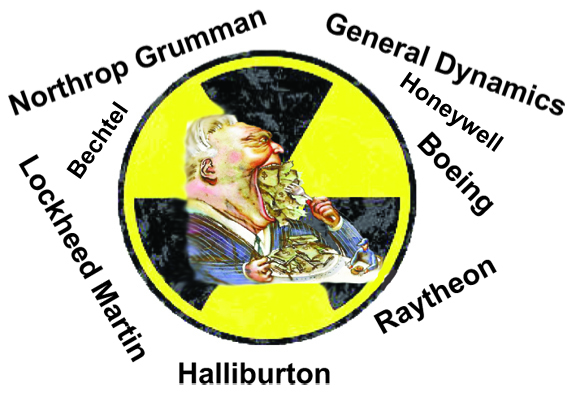
In October 2019, Lockheed Martin was awarded a $138 million contract to integrate the Mk21 reentry vehicle into the Sentinel, beating out rivals Boeing, Raytheon, Northrop Grumman, and Orbital ATK (which Northrop Grumman now owns and has been renamed to Northrop Grumman Innovation Systems) (Lockheed Martin 2019
………………………………………………….. In May 2021, the US Congressional Budget Office estimated that the cost of acquiring and maintaining the Sentinel would total approximately $82 billion over the 2021–2030 period — approximately $20 billion more than the Congressional Budget Office had previously estimated for the 2019–2028 period (Congressional Budget Office 2021, 2019)……………………………………
Nuclear-powered ballistic missile submarines
The US Navy operates a fleet of 14 Ohio-class ballistic missile submarines (SSBNs), of which eight operate in the Pacific from their base near Bangor, Washington, and six operate in the Atlantic from their base at Kings Bay,…………………………………………………….
Design of the next generation of ballistic missile submarines, known as the Columbia-class, is well under way……………………………………
Strategic bombers
The US Air Force currently operates a fleet of 20 B-2A bombers (all of which are nuclear-capable) and 87 B-52H bombers (46 of which are nuclear-capable)……………………
Each B-2 can carry up to 16 nuclear bombs (the B61-7, B61-11, and B83-1 gravity bombs), and each B-52 H can carry up to 20 air-launched cruise missiles (the AGM-86B)……………………..
The United States is modernizing its nuclear bomber force by upgrading nuclear command-and-control capabilities on existing bombers, developing improved nuclear weapons (the B61-12 and the new AGM-181 Long-Range Standoff Weapon (LRSO), and designing a new heavy bomber (the B-21 Raider).
Upgrades to the nuclear command-and-control systems that the bombers use to plan and conduct nuclear strikes include the Global Aircrew Strategic Network Terminal. This is a new, high-altitude, electromagnetic pulse-hardened network of fixed and mobile nuclear command-and-control terminals………………
Another command-and-control upgrade involves a program known as Family of Advanced Beyond Line-of-Sight Terminals, which replaces existing terminals designed to communicate with the MILSTAR military satellite constellation operated by the US Space Force. …………………………………………….
The missile itself is expected to be entirely new, with significantly improved military capabilities compared with the air-launched cruise missile, including longer range, greater accuracy, and enhanced stealth (Young 2016). This violates the 2010 White House pledge (White House 2010) that the “United States will not … pursue … new capabilities for nuclear weapons,” though the 2018 NPR and 2022 NPR eliminated such constraints……………………..
Upgrades to the nuclear command-and-control systems that the bombers use to plan and conduct nuclear strikes include the Global Aircrew Strategic Network Terminal. This is a new, high-altitude, electromagnetic pulse-hardened network of fixed and mobile nuclear command-and-control terminals. ………..
Another command-and-control upgrade involves a program known as Family of Advanced Beyond Line-of-Sight Terminals, which replaces existing terminals designed to communicate with the MILSTAR military satellite constellation operated by the US Space Force. ……………….
The heavy bombers are also being upgraded with improved nuclear weapons. This effort includes development of the first guided, standoff nuclear gravity bomb, known as the B61-12, which is ultimately intended to replace all existing gravity bombs……………………………… The Air Force is also developing a new nuclear air-launched cruise missile known as the AGM-181 Long-Range Standoff Weapon (LRSO).
……………………………………………………… The conversion of the non-nuclear B-1 host bases to receive the nuclear B-21 bomber will increase the overall number of bomber bases with nuclear weapons storage facilities from two bases today (Minot AFB and Whiteman AFB) to five bases by the 2030s (Barksdale AFB will also regain nuclear storage capability) (Kristensen 2020c).
Nonstrategic nuclear weapons
The United States has only one type of nonstrategic nuclear weapon in its stockpile: the B61 gravity bomb……………………
The Belgian, Dutch, German, and Italian air forces are currently assigned an active nuclear strike role with US nuclear weapons……………………………….
NATO is working on a broad modernization of the nuclear posture in Europe that involves upgrading bombs, aircraft, and the weapons storage system (Kristensen 2022c)……………………………
NATO is life-extending the weapons storage security system, which involves upgrading command and control, as well as security, at the six active bases (Aviano, Büchel, Ghedi, Kleine Brogel, Incirlik, and Volkel) and one training base (Ramstein). ……………………… it appears that an air base in the United Kingdom — believed to be RAF Lakenheath — has been quietly added to the list of bases receiving nuclear weapon storage site upgrades (US Department of Defense 2022e). …………………………….. more https://thebulletin.org/premium/2023-01/nuclear-notebook-united-states-nuclear-weapons-2023/
Nuclear waste project in New Mexico opposed in recent poll, company asserts local support
Adrian Hedden, Carlsbad Current-Argus, 14 Jan 23,
New Mexicans in every region of the state allegedly opposed storing high-level nuclear waste in their state, according to a recent poll, as a New Jersey company hoped to build a facility to do so near Carlsbad.
The poll, commissioned by Albuquerque-based Southwest Research and Information Center in a partnership with the Center for Civic Policy surveyed 1,015 voters across the state from Dec. 7 to 14.
It found 60 percent of those surveyed were in opposition to the project, with 30 percent supporting and 10 percent undecided.
Holtec International applied in 2017 for a license from the federal Nuclear Regulatory Commission (NRC) to build and operate what it called a consolidated interim storage facility (CISF) in a remote area near the border of Eddy and Lea counties.
Last year, the NRC published its final environmental impact statement (EIS), contending the project would have little impact on the environment, and recommending the license be issued.
The CISF would temporarily store up to 100,000 metric tons of spent nuclear fuel rods, expected to be brought into the site via rail from nuclear power plants around the country through a 40-year license with the NRC.
The 1,000-acre plot of land where the facility would be built was owned by the Eddy-Lea Energy Alliance, a consortium of local leaders from the cities of Carlsbad and Hobbs, and Eddy and Lea counties.
The Alliance recruited Holtec and set up a revenue-sharing agreement with the company once the CISF goes into operations.
Despite the poll, Holtec officials argued the project was largely supported by New Mexico, after spokesman Gerges Scott said representatives traveled to local governments throughout the state.
Ed Mayer, Holtec project manager of the CISF said the company had adequate support for the project, after he and other representatives met with local leaders and first responders both around the site and along the rail lines.
“We are educating the affected populations, not only from the facility perspective in southeast New Mexico, but from a state perspective on the rail lines,” Mayer said. …………………………….
But opponents, including Southwest Research – a frequent critic of Holtec and the nearby Waste Isolation Pilot Plant repository for transuranic (TRU) nuclear waste – maintained the project would bring an undue risk to New Mexicans nearby and Americans along the waste transportation routes.
That’s why opposition was spread across political parties, gender and ethnicity, said Nuclear Waste Program Manager Don Hancock at Southwest Research and Information Center.
The poll showed more than half of those surveyed in the region were against the project, with opposition also coming irrespective of political affiliation. About 70 percent of Democrats polled opposed Holtec, along with 51 percent of Republicans and 55 percent of Independents.
When broken down by gender, more men supported the project than women, according to the poll.
A majority of Republican men polled were in favor at 51 percent, while 61 percent of Republican women were against the project, read the poll
White men were mostly for the project overall at 49 percent of voters polled in favor, while 71 percent of white women were against.
Hispanic men and women both mostly opposed the project at 51 and 78 percent against, respectively read the poll.
Central, northeast and southwest New Mexico showed opposition of 60 percent or more, while more conservative regions in the southeast and northwest showed 57 and 56 percent against, respectively, the poll showed.
Critics argue storing nuclear waste puts undue risk on New Mexico
Hancock said the poll showed temporary nuclear waste storage was not supported by New Mexico voters, arguing it was opposed through decades of proposals like Holtec’s.
“I’m not surprised by the results because for more than 45 years New Mexicans have strongly opposed high-level waste in New Mexico, whether the waste is proposed for the Waste Isolation Pilot Plant in the 1970s and ‘80s, for Mescalero Apache land in the 1990s, or by Holtec,” he said.
Opposition to the project also came from some of New Mexico’s highest-ranking state officials, and its Congressional delegation, with New Mexico Gov. Michelle Lujan Grisham calling the proposal “economic malpractice” for its potential, she said, of imperiling nearby oil and gas and agriculture industries.
U.S. Sen. Martin Heinrich (D-NM) co-sponsored a bill introduced in the U.S. Senate last year to block any federal funds from supporting such a project.
At the state level, New Mexico Sen. Jeff Steinborn (D-36) was a lead opponent of Holtec’s in the Legislature.
While Texas lawmakers recently passed a bill to ban high-level waste storage in their state, Steinborn said New Mexico policymakers should consider a similar measure to prevent the project coming to fruition.
“From the very beginning this has been a dangerous plan pushed on New Mexico, with real risks for all of our communities, and no end in sight,” Steinborn said. “It’s time for this project to be canceled and be replaced by the federal government committing to a true consent based siting process for the permanent storage of this waste.” https://www.currentargus.com/story/news/2023/01/14/nuclear-waste-project-new-mexico-opposed-recent-statewide-poll-holtec-international-energy/69802597007/
Not all American politicians want to adore Zelensky

House Republican Introduces Resolution to Place Bust of Zelensky in the Capitol
Rep. Marjorie Taylor Greene (R-GA) and other conservative GOP members blasted the ideaby Dave DeCamp Posted onCategoriesNewsTagsUkraine
Rep. Joe Wilson (R-SC) introduced a bill this week that would place a bust of Ukrainian President Volodymyr Zelensky in the House wing of the US Capitol building, an idea that was strongly criticized by more conservative GOP members.
The resolution reads: “Resolved, That the House of Representatives directs the Fine Arts Board to obtain a bust of the President of Ukraine, Volodymyr Zelenskyy, for display in a suitable, permanent location in the House of Representatives wing of the United States Capitol.”
On Twitter, Rep. Marjorie Taylor Greene (R-GA) posted a picture of the resolution and wrote: “Absolutely NOT! We serve AMERICA NOT UKRAINE!”
Rep. Thomas Massie (R-KY) wrote on Twitter that he wanted to believe the resolution was “satire” and linked to an article from the conservative advocacy group FreedomWorks giving five reasons to oppose the bust.
The five reasons FreedomWorks listed are:
- Ukraine is NOT the 51st US State
- The US doesn’t own the conflict or is obligated to continue funding it
- Further payments would encourage US taxpayer-funded reconstruction of Ukraine
- Ukraine is corrupt and this conflict is not about “defending democracy”
- Zero oversight of taxpayer aid to Ukraine
Rep. Andy Biggs (R-AZ) also ripped the resolution on Twitter. “There is now a House resolution that seeks to put a display of Zelenskyy’s head in the US Capitol. Was the $100+ billion to Ukraine not enough?” he wrote.
While Zelensky mostly received a hero’s welcome when he visited Washington DC and was given many rounds of applause when addressing Congress, only 86 out of 213 House Republicans attended his speech, although some of the absences could be explained by the lawmakers getting a head start on Christmas travel.
For now, GOP leadership is incredibly supportive of arming Ukraine and is critical of President Biden for not sending longer-range and more advanced weapons. But there is opposition to the policy among a small but notable number of Republicans, and that opposition will likely grow as the war drags on.
Some Republicans are against arming Ukraine because they think the US should be flooding Taiwan with weapons instead, a policy that could provoke a similar crisis in the Asia Pacific. Sen. Josh Hawley (R-MO) in December wrote a letter to Secretary of State Antony Blinken urging the Biden administration to prioritize arming Taiwan over Ukraine.
Trump suggested dropping a nuclear bomb on North Korea and blaming it on someone else in 2017, book claims.

Yahoo News , Alia Shoaib, Sun, January 15, 2023
- As president, Donald Trump suggested nuking North Korea and blaming someone else, a new book extract says.
- Trump was also reportedly “baffled and annoyed” that he would need congressional approval for a pre-emptive strike.
- It is alleged that Trump made the comments in 2017 around the time he was issuing public threats to North Korea.
In his first year in office, Donald Trump suggested striking North Korea with a nuclear weapon and blaming it on someone else, according to a new section of a book obtained by NBC News.
In this article:
- As president, Donald Trump suggested nuking North Korea and blaming someone else, a new book extract says.
- Trump was also reportedly “baffled and annoyed” that he would need congressional approval for a pre-emptive strike.
- It is alleged that Trump made the comments in 2017 around the time he was issuing public threats to North Korea.
In his first year in office, Donald Trump suggested striking North Korea with a nuclear weapon and blaming it on someone else, according to a new section of a book obtained by NBC News.
The revelation was made in a new afterword to the book “Donald Trump v. The United States” by New York Times Washington correspondent Michael Schmidt, due to be released on Tuesday.
Trump made the alleged comments behind closed doors in 2017 when he publicly warned North Korea that it would “be met with fire and fury like the world has never seen” if it continued to make threats.
The then-president also routinely took to Twitter to taunt North Korean leader Kim Jong-Un, who he had nicknamed “Rocket Man.”
The book suggests that John Kelly, who had started as Trump’s White House Chief of Staff in July 2017, was alarmed by the president’s attitude towards the East Asian nation…………………………………….
Read the original article on Business Insider https://news.yahoo.com/trump-suggested-dropping-nuclear-bomb-103150916.html
Savannah River Site, Los Alamos plutonium pit production plan could cost over $30 billion

Matthew Christian, Aiken Standard, S.C. Sat, January 14, 2023 https://news.yahoo.com/savannah-river-los-alamos-plutonium-005900374.html?guccounter=1&guce_referrer=aHR0cHM6Ly9uZXdzLmdvb2dsZS5jb20v&guce_referrer_sig=AQAAADJqdcGm_qX6CdNLQ8_g7p81OistELVP4KvAUR1PfQl-0Q2SBtdSRa8GwdKyTIcwvX8aofXxou_a1DmL9axGTUu9S4o5f35bRYrwMTXGG5ZaoooE2PgjQaFWi5uLyJbf3gg8EShjtVi5A26UqvyJcSYMPWp9GQCX2T9NlsjflzJW
Jan. 13—It could cost over $30 billion for the National Nuclear Security Administration to reestablish plutonium pit production, according to recently released report.
Allison Bawden, director of natural resources and environment at the Government Accountability Office, wrote Thursday the Government Accounting Office has identified between $18-$24 billion in potential costs to begin production of 80 plutonium pits per year by 2036 at the Savannah River Site and Los Alamos National Laboratory.
Plutonium pits are the core of a nuclear weapon into which a neutron is injected to begin an uncontrolled reaction.
The United States has been without a permanent capability for plutonium pit production since 1989 after a combination of environmental mismanagement — the EPA and the FBI raided the facility in 1989 after receiving reports of numerous environmental violations from employees — and the end of the Cold War stopped pit production at the Rocky Flats facility in Colorado.
From 2007-2012, around 10 pits per year were made at the Los Alamos National Laboratory.
Trying to restart plutonium pit production and modernizing the Los Alamos National Laboratory for production has cost $8.6 billion since 2005 according to the report.
NNSA plans to produce 50 pits per year at the Savannah River Site beginning in 2036 and 30 pit per year at the Los Alamos National Laboratory beginning in 2027.
At the Savannah River Site, the plans call for the failed Mixed-Oxide Fuel Fabrication Facility to be converted into the Savannah River Plutonium Production Facility.
Bawden says the NNSA estimates through 2035 a cost of between $6.9-$11.1 billion to make the conversion, which is in three steps: getting the main building ready, providing utilities and other infrastructure to the area and constructing an administration building, security facilities and a training area.
Other costs include $6.94 billion for plutonium modernization program at the Savannah River Site and the Los Alamos National Laboratory .
At the Savannah River Site, Bawden says costs include preparing employees to produce pits and learning from the Los Alamos National Laboratory how to produce pits more efficiently. She says at Los Alamos the costs include designing a pit production line, getting equipment, hiring and training staff and making sure the production line is working and checking the quality of the produced pits.
She adds other costs at the Los Alamos National Laboratory include between $4.17-$5.61 billion for capital projects, $240-244 million for support buildings and $45-46 million for maintenance and recapitalization.
Bawden spends a few pages in the 84-page report discussing activities at other Department of Energy-owned sites that are not included in the NNSA cost estimates.
Those activities include design of a warhead at Lawrence Livermore National Laboratory and the lab making sure the produced pits meet the specifications of the warhead, experimental facilities at the Nevada National Security Site, production of non-nuclear pit components at the Kansas City National Security Campus, disassembling pits at the Pantex Plant in Texas and storing produced waste at the Waste Isolation Pilot Plant in New Mexico.
Including these costs and developing more thorough estimates of the costs at the Savannah River Site and Los Alamos is one of two recommendations the GAO makes in the report.
The other is for the NNSA to develop a more complete schedule of activities and when they’re supposed to happen.
Bawden notes NNSA decision-makers said both recommendations will be implemented later in the process when firm construction plans for the Savannah River Plutonium Production Facility are set in 2024 or 2025. She adds the NNSA decision-makers said they are hesitant to make more thorough cost estimates because of a concern of making an estimate, then paying a higher cost and having the public concerned about rising costs for the project.
Shouldn’t a new and experimental reactor deserve a federal impact assessment?
These risks are all new to Canada. No sodium-cooled reactor has ever been built here.
BY M.V. RAMANA AND SUSAN O’DONNELL | January 12, 2023 The Hill Times https://www.hilltimes.com/story/2023/01/12/shouldnt-a-new-and-experimental-reactor-deserve-a-federal-impact-assessment/360512/
Towards the end of December 2022, Environment and Climate Change Minister Steven Guilbeault chose to ignore public concerns about small modular nuclear reactors (SMRs), rejecting a request to put a project through an additional federal impact assessment, favouring the nuclear industry and weakening oversight of an untested and risky technology.
When the revised Impact Assessment Act (IAA) became law in 2019, new nuclear reactors were exempted from assessment if they met certain conditions. Those pushing the exemption aimed to open the path to building new reactors. No surprise, then, that the conditions for exemption apply to almost all the SMR designs being considered for construction, even though Canada has no experience with them whatsoever.
The first SMR officially deemed exempt under the IAA is the ARC-100 sodium-cooled fast reactor proposed by NB Power for the Point Lepreau site on the Bay of Fundy in New Brunswick. Given the ecological sensitivity of the site and inherent problems with such reactors, the Coalition for Responsible Energy Development in New Brunswick (CRED-NB) formally requested Guilbeault to designate the project for a full impact assessment. The minister rejected the request on Dec. 22, claiming that a review by the Canadian Nuclear Safety Commission (CNSC) and the New Brunswick government would be adequate.
The federal impact assessment is the most rigorous form of public review available under law, seeking inputs from multiple stakeholders with different forms of expertise and outlooks. Ideally, the review panel would not be solely constituted by CNSC personnel and staff of the provincial government, a project funder. Indigenous nations and public interest groups had clearly stated their concerns to Guilbeault. Letters of support for CRED-NB’s request were submitted by the Wolastoq Grand Council, and Indigenous organizations representing the Peskotomuhkati Nation and the Mi’gmaq First Nations in New Brunswick, as well as more than 300 groups and individuals.
Why the public concern? Unlike the CANDU reactors operating in Ontario and New Brunswick, the ARC-100 design uses molten sodium instead of heavy water to transfer the intense heat produced by nuclear fission. Sodium reacts badly with air or water, burning or exploding upon such contact. Japan’s Monju demonstration reactor was shut down in 1995 within a few months of the reactor starting to generate power because of a sodium fire; it was reactivated in 2010 but was shut down again after another accident. The total price tag for this reactor and its cleanup is upwards of $10-billion.
Sodium also tends to leak out of pipes and vessels because of chemical interactions with the stainless steel in reactors. France’s Superphénix, the world’s largest sodium-cooled reactor, suffered numerous operational problems, including a major sodium leak. When put out of its misery in 1998, its load factor was under eight per cent, a fraction of the 80 to 90 per cent typical of commercial reactors.
Sodium-cooled reactors have also had numerous accidents, starting with the 1955 partial core meltdown of the EBR-1 in Idaho. A decade later, the Fermi-1 demonstration fast reactor near Detroit, Michigan suffered a similar but more devastating accident, leading to the book We Almost Lost Detroit and a song by Gil Scott Heron.
Sodium-cooled reactors have never been successfully commercialized despite numerous attempts over decades. Shut-down sodium-cooled reactors have proven difficult to decommission. In the U.S., the EBR-II reactor was shut down in 1994, but to date it has been unfeasible to extract the sodium metal from the highly radioactive spent fuel. The challenge is to dispose of this material without causing underground explosions due to a sodium-water reaction, as happened with the sodium-cooled Dounreay reactor in Scotland.
Radioactive particles are still being found on the Dounreay foreshore, more than four decades after the reactor waste exploded. A similar accident with the proposed ARC-100 reactor could result in widely spread radioactive contamination next to the Bay of Fundy.
These risks are all new to Canada. No sodium-cooled reactor has ever been built here. The Canadian Nuclear Safety Commission has never evaluated such reactors, one reason why the CNSC’s claim that its regulatory process provides sufficient oversight for SMR development rings hollow. What’s more, the CNSC’s active lobbying to speed up the regulatory process so SMRs could be more quickly brought to market suggests a fundamental conflict of interest by an “independent” regulator.
The ARC-100 project requires federal oversight and assessment. Its impacts on Indigenous rights as well as socio-economic factors and alternatives to the project will not be within the remit of either a CNSC review or a provincial assessment. The opportunities for an independent and official review of public concerns on these issues have now been significantly curtailed.
Susan O’Donnell is an adjunct professor at the University of New Brunswick and St. Thomas University, and a member of the Coalition for Responsible Energy Development in New Brunswick. M.V. Ramana is the Simons Chair in Disarmament, Global and Human Security and professor at the School of Public Policy and Global Affairs, University of British Columbia.
California PUC launches rulemaking to consider extension of Diablo Canyon nuclear plant

Kavya Balaraman, Jan. 13, 2023
Dive Brief:
- California regulators on Thursday voted to open a rulemaking to consider extending the operations of the 2.2-GW Diablo Canyon nuclear power plant, the last operational nuclear facility in the state.
- The rulemaking stems from legislation approved last September, which among other things required the California Public Utilities Commission to issue a decision by the end of this year establishing new retirement dates for the two units of the nuclear plant.
- The Diablo Canyon nuclear plant, which is owned and operated by Pacific Gas & Electric, is currently licensed to operate until 2024 and 2025 for each of its two units respectively. In 2018, state regulators approved a plan to retire the facility once these licenses expire.
Dive Insight:………………………..
Under SB 846, Diablo Canyon Unit 1 could be kept running through Oct. 31, 2029, and Unit 2 until Oct. 31, 2030.
In November, PG&E applied to the U.S. Nuclear Regulatory Commission to keep the plant running until 2030.
Under the umbrella of its new rulemaking, the CPUC could either authorize extending operations at the plant through 2029 and 2030, or establish earlier retirement dates.
…………………………. California stakeholders remain split on the state’s reversal on the future of the Diablo Canyon nuclear plant.
“The rush to keep Diablo Canyon running beyond 2025 is not only dangerous, but will set back California’s drive to make solar and wind the prevailing sources of electricity in the state,” Ken Cook, president of the Environmental Working Group, said in an emailed statement. …………………. https://www.utilitydive.com/news/california-puc-diablo-canyon-nuclear-extension/640351/
Republican Rep Joe Wilson of South Carolina wants the US capitol to have a bust of Ukrainian president Vladimir Zelensky on permanent display.

Chris Menahan
InformationLiberation
Jan. 12, 2023
Rep. Joe Wilson of South Carolina filed a resolution earlier this week directing the Fine Arts Board of the U.S. House of Representatives to obtain a bust of Mr. Zelenskyy for display.
The board has authority over all works of art and historical objects displayed on the House wing of the U.S. Capitol and the associated office buildings.
A staunch conservative, who came under fire for shouting “you lie” at former President Obama during a 2009 address to Congress, Mr. Wilson has emerged as a strong supporter of Ukraine.
In December, he told the Charleston Post and Courier that Ukraine’s fight against Russian aggression reminded him of the American Revolution.
Here’s the full text of his resolution:………..
Truly embarrassing.
If Congress insists that a bust of Zelensky go in the Capitol, it should be placed in a bathroom. https://www.informationliberation.com/?id=63546
1 This Month
26 April – Chernobyl: Inside the Meltdown airs on National Geographic on Sunday 26th April from 4pm

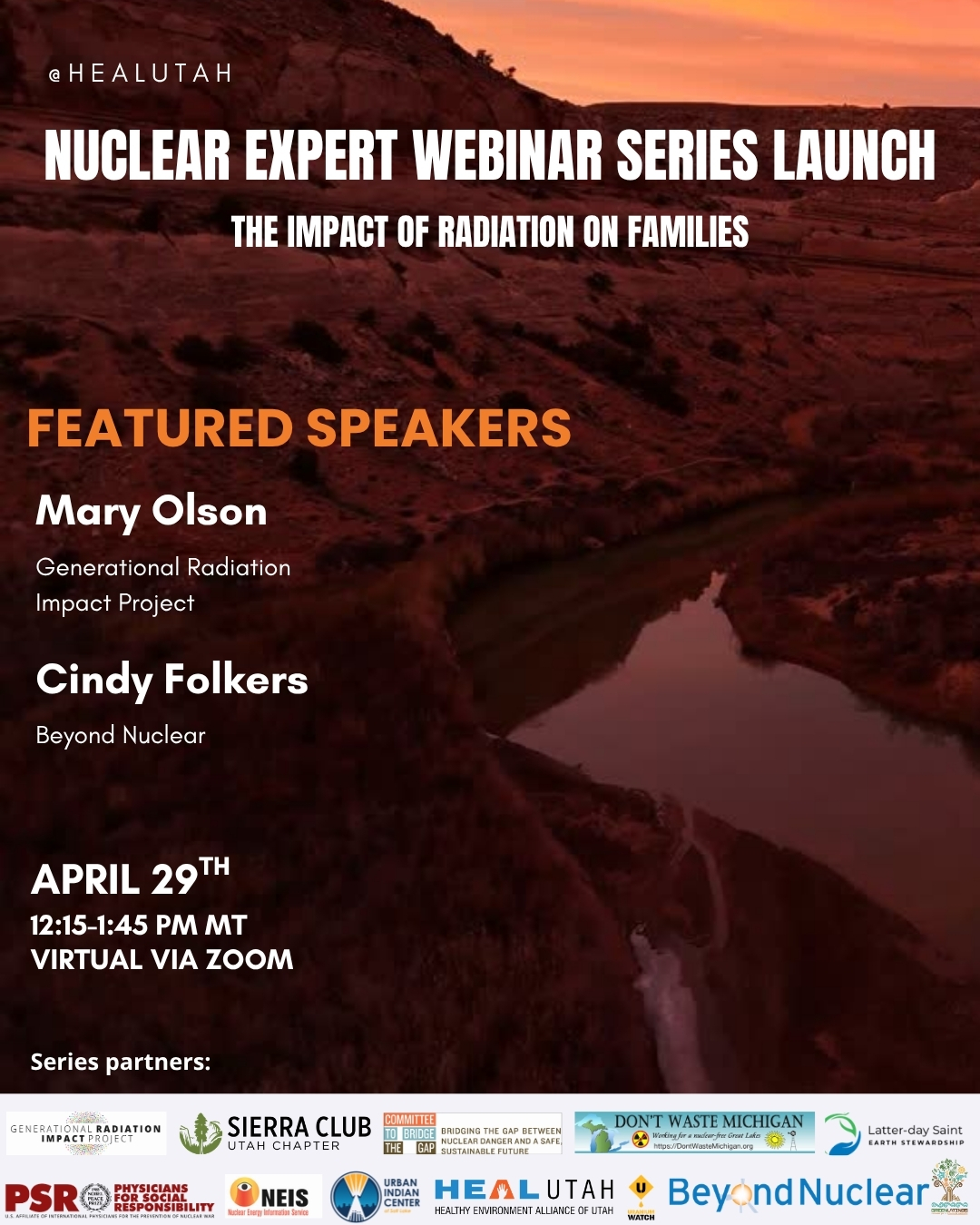
29 April – Nuclear Expert Webinar #1 – Radiation Impacts on Families with Mary Olson and Cindy Folkers
- 12:15 PM MT – 1:45 PM MT
- Location: Virtual – REGISTER TODAY

4 May -West Suburban Peace Coalition to discuss Iran war at May Educational Forum
Monday, May 4, 7:00 – 8:00 PM Central Standard Time
Title: : How Trump’s Narrative Tries to Shape the Reality of the War on Iran.
Contact Walt Zlotow, zlotow@hotmail.com 630 442 3045 for further information
14 May – online event From Bombs to Data Centres: the Face of Nuclear Colonialism

Pine Ridge Uranium is the real threat, not Tehran- Tell Burgum: Stop the Extraction.
Chernobyl: The Lost Tapes – A good documentary on Chernobyl on SBS available On Demand for the next 3 weeks– https://www.sbs.com.au/ondemand/tv-program/chernobyl-the-lost-tapes/2352741955560
To see nuclear-related stories in greater depth and intensity – go to https://nuclearinformation.wordpress.com
-
Archives
- April 2026 (327)
- March 2026 (251)
- February 2026 (268)
- January 2026 (308)
- December 2025 (358)
- November 2025 (359)
- October 2025 (376)
- September 2025 (257)
- August 2025 (319)
- July 2025 (230)
- June 2025 (348)
- May 2025 (261)
-
Categories
- 1
- 1 NUCLEAR ISSUES
- business and costs
- climate change
- culture and arts
- ENERGY
- environment
- health
- history
- indigenous issues
- Legal
- marketing of nuclear
- media
- opposition to nuclear
- PERSONAL STORIES
- politics
- politics international
- Religion and ethics
- safety
- secrets,lies and civil liberties
- spinbuster
- technology
- Uranium
- wastes
- weapons and war
- Women
- 2 WORLD
- ACTION
- AFRICA
- Atrocities
- AUSTRALIA
- Christina's notes
- Christina's themes
- culture and arts
- Events
- Fuk 2022
- Fuk 2023
- Fukushima 2017
- Fukushima 2018
- fukushima 2019
- Fukushima 2020
- Fukushima 2021
- general
- global warming
- Humour (God we need it)
- Nuclear
- RARE EARTHS
- Reference
- resources – print
- Resources -audiovicual
- Weekly Newsletter
- World
- World Nuclear
- YouTube
-
RSS
Entries RSS
Comments RSS
 nuclear-news