Low-dose Radiation Linked to Heart Disease
Columbia University Irving Medical Center, March 23, 2023
People exposed to low doses of ionizing radiation have an extra, but modest, risk of developing heart disease during their lifetime, according to a new study(link is external and opens in a new window) published by an international consortium of researchers.
“The study suggests that radiation exposure, across a range of doses, may be related to an increased risk of not just cancer, as has been previously appreciated, but also of cardiovascular diseases,” says Andrew Einstein, MD, PhD, professor of medicine at Columbia University Vagelos College of Physicians and Surgeons and one of the study’s senior authors.
“It should not steer people away from receiving radiation if necessary—in fact many medical uses of radiation are lifesaving—but it underscores the importance of ensuring that radiation is used appropriately and kept as low as reasonably achievable.”…………
The researchers used data from 93 studies covering all ranges of radiation exposures to find a relationship between dose and heart disease.
They found an increased excess lifetime risk of 2.3 to 3.9 cardiovascular deaths per 100 persons exposed to one Gy of radiation. (In the United States, about 25 out of every 100 people die from cardiovascular disease; a person exposed to 1 Gy of radiation will have a slightly higher, 27% to 29%, risk of dying from cardiovascular disease).
Few people other than those receiving radiation therapy will receive 1 Gy during their lives. But the researchers also found a higher risk of heart disease at low dose ranges (<0.1 Gy) more commonly experienced by the public and also for protracted exposures to low doses.
More research is needed to determine the precise increased excess lifetime risk of heart disease from these low doses.
“The effect of lower doses of radiation on the heart and blood vessels may have been underestimated in the past,” Einstein says. “Our new study suggests that guidelines and standards for protection of workers exposed to radiation should be reconsidered, and efforts to ensure optimal radiation protection of patients should be redoubled.”
References
More information
The study, titled “Ionising radiation and cardiovascular disease: systematic review and meta-analysis(link is external and opens in a new window),” was published March 8 in The BMJ…………………………….. https://www.cuimc.columbia.edu/news/low-dose-radiation-linked-heart-disease
—
Cry from soldier, unrecognised victim of depleted uranium radiation

Depleted uranium, used in some types of ammunition and military armour, is the dense, low-cost leftover once uranium has been processed….
A high-ranking official from Veterans Affairs says a handful of vets mistakenly believe their bodies have been damaged by depleted uranium…..
the Federal Court of Canada has found depleted uranium to be an issue. The court ruled the Veterans Affairs Department must compensate retired serviceman Steve Dornan for a cancer his doctors say resulted from exposure to depleted uranium residue.
Poisoned soldier plans hunger strike at minister’s office in exchange for care, Montreal CTV.ca Andy Blatchford, The Canadian Press, 30 Oct 11, MONTREAL — An ex-soldier who says he was poisoned while serving overseas is planning to go on a hunger strike outside the office of Canada’s veterans affairs minister until he gets medical treatment.

US regulators delay decision on nuclear fuel storage license
KSL, By Susan Montoya Bryan, Associated Press – March 22, 2023
ALBUQUERQUE, N.M. — U.S. regulators say they need more time to wrap up a final safety report and make a decision on whether to license a multibillion-dollar complex meant to temporarily store tons of spent fuel from commercial nuclear power plants around the nation.
The Nuclear Regulatory Commission issued a new schedule Monday, citing unforeseen staffing constraints. The agency was initially expected to issue a decision by the end of March. It will now be the end of May.
The announcement comes just days after New Mexico approved legislation aimed at stopping the project. It’s expected that supporters of the storage facility will take the fight to court, but New Mexico Gov. Michelle Lujan Grisham on Tuesday asked the NRC to suspend its consideration of the license application……………………………………………………
Since the federal government has failed to build a permanent repository, it reimburses utilities to house the fuel in either steel-lined concrete pools of water or in steel and concrete containers known as casks at sites in nearly three dozen states. That cost is expected to stretch into the tens of billions of dollars over the next decade.
The legislation signed by Lujan Grisham last week requires that the state provide consent for bringing in such radioactive material. Consent from the Democratic governor would be unlikely, as she has argued that without a permanent repository, New Mexico stands to be the nation’s de facto dumping ground.
She reiterated her opposition in the letter to NRC Chairman Christopher Hanson.
“Thank you for respecting the state of New Mexico’s laws and the voices of our citizens, tribes and pueblos who overwhelming(ly) supported this legislation,” she wrote.
Similar battles have been waged in Nevada, Utah and Texas over the decades as the U.S. has struggled to find a home for spent fuel and other radioactive waste. The proposed Yucca Mountain project in Nevada was mothballed and a temporary storage site planned on a Native American reservation in Utah was sidelined despite being licensed by the NRC in 2006.
That project would have been located on land belonging to the Skull Valley Band of Goshute. Utah’s governor at the time — Republican Mike Leavitt — was among those fighting the effort. He and others were successful in getting Congress to amend a defense spending bill, essentially landlocking the site by creating the Cedar Mountain Wilderness and blocking a rail spur that would have delivered casks.
But it was only six weeks later that the NRC issued a license for the project.
Don Hancock with the nuclear watchdog group Southwest Research and Information Center pointed to the Utah case.
“If congressional action doesn’t affect NRC decision making, there’s no reason to think that New Mexico action has an effect,” he said in an email Tuesday…………………………… https://www.ksl.com/article/50605329/us-regulators-delay-decision-on-nuclear-fuel-storage-license
Lawsuit over internal records of 2018 ‘near miss’ at San Onofre nuclear plant moves forward
Case dates back to ‘serious near-miss’ incident involving a canister filled with nuclear waste.
San Diego Union-Tribune BY ROB NIKOLEWSKI, MARCH 7, 2023
A lawsuit seeking the release of internal communications surrounding an incident nearly five years ago at the San Onofre Nuclear Generating Station will continue after a ruling Monday by a federal judge in San Diego.
U.S. District Judge John A. Houston turned down a motion by the Nuclear Regulatory Commission to toss out the case brought by San Diego attorney Michael Aguirre.
The judge also determined that while the NRC was within its rights to redact some documents it had previously released, the federal regulator “has not provided sufficient evidence” to show that it made a reasonable effort to search for documents requested by Aguirre under the Freedom of Information Act.
The case is “still alive,” Aguirre said of the judge’s decision. “We’re going to keep digging hard to find the documents that will hopefully inform the public about what happened.”
A spokesman for the NRC said the commission is reviewing the judge’s order and had no comment to make on it.
The case dates to Aug. 3, 2018, when workers at the plant operated by Southern California Edison were transferring canisters filled with highly radioactive spent fuel from storage pools to a newly constructed dry storage facility at the north end of the plant. During the transfers, each canister is lowered into a protected vertical cavity.
Operators thought they had successfully lowered one particular canister but discovered it instead got stuck on the inner ring of the cavity, left unsupported by support rigging, about 18 feet from the floor of the enclosure. Eventually, the canister was safely deposited…………………………………………………………………………………………
Some 3.55 million pounds of radioactive spent fuel is kept at the storage facilities at the plant because — as is the case at nuclear plants across the country — the federal government has not found a permanent repository to store the roughly 86,000 metric tons of spent fuel that has built up over the decades at the nation’s commercial nuclear facilities. https://www.sandiegouniontribune.com/business/story/2023-03-07/lawsuit-to-obtain-internal-records-of-2018-incident-at-san-onofre-nuclear-generating-station-stays-alive
Bi -Partisan measure opposes Canadian plan to store nuclear waste long term near Lake Huron

Melissa Nann Burke, The Detroit News
Washington ― A bipartisan group of Great Lakes lawmakers introduced a resolution in Congress on Wednesday to oppose a Canadian proposal to permanently store spent nuclear fuel waste in the Great Lakes Basin.
The move comes ahead of President Joe Biden’s first trip to Canada as president this week to meet with Prime Minister Justin Trudeau.
The resolution is concerned with Canada’s Nuclear Waste Management Organization, which plans to decide next year on one of two potential sites for a nuclear waste facility, either Ignace, Ontario, or South Bruce, which is in the Great Lakes basin and less than 40 miles from Lake Huron.
The resolution says that Biden and Secretary of State Antony Blinken should ensure that the government of Canada does not permanently store nuclear waste in the Great Lakes Basin.
It goes on to warn that a “spill” of such waste into the lakes during transit to a deep geological repository “could have lasting and severely adverse environmental, health and economic impacts on the Great Lakes and the individuals who depend on the Great Lakes for their livelihoods.”
The measure is led by U.S. Reps. Dan Kildee, D-Flint Township, and John James, R-Farmington Hills, in the House and U.S. Sen. Debbie Stabenow, D-Lansing, in the Senate.
“Storing hazardous nuclear waste in our shared waterways threatens the drinking water of millions of people in the United States and Canada, and jeopardizes jobs in the fishing, boating and tourism industries,” Kildee said in a statement. “I urge President Biden to address Canada’s plan to permanently bury nuclear waste in the Great Lakes basin as he meets with Canadian Prime Minister Trudeau.”
The resolution has 15 other House co-sponsors including Michigan Reps. Jack Bergman of Watersmeet, John Moolenaar of Caledonia, Bill Huizenga of Holland, Lisa McClain of Bruce Township, Debbie Dingell of Ann Arbor, Elissa Slotkin of Lansing, Hillary Scholten of Grand Rapids, Haley Stevens of Birmingham and Shri Thanedar of Detroit as well as five Senate co-sponsors, including Sen. Gary Peters of Bloomfield Township………………………………………………………………………………. https://www.detroitnews.com/story/news/politics/michigan/2023/03/22/measure-opposes-canadian-plan-to-store-nuclear-waste-near-lake-huron/70036108007/
The (Vancouver) Columbian Editorial Board: Congress must recognize urgency at Hanford.
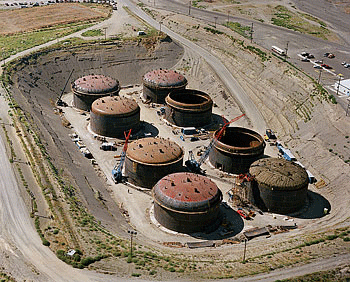
Hanford represents “the costliest environmental remediation project the world has ever seen and, arguably, the most contaminated place on the entire planet.”
as Washington residents learned long ago, it is difficult to draw federal attention to a remote site in our state.
The (Vancouver) Columbian Editorial Board, Mar 17, 2023 https://www.wenatcheeworld.com/opinion/opinion-the-vancouver-columbian-editorial-board-congress-must-recognize-urgency-at-hanford/article_b86f63c1-8193-5510-b3b0-b5357aa2c4d5.html
For too long, the federal government has kept cleanup at the Hanford nuclear reservation toward the bottom of its to-do list. “It’s a nice idea,” a long string of presidential administrations have seemed to say. “We’ll get to it eventually.”
With such nonchalance being the prevailing attitude for decades, the fact that President Joe Biden’s proposed 2024 federal budget includes record funding for Hanford is encouraging. But it is far from cause for celebration.
Congress must join the administration in recognizing the importance of the site and approving the president’s request for some $3 billion for Hanford. The issue is not only a matter of cleaning up hazardous, radioactive waste in Washington; it is about the federal government fulfilling its moral and court-ordered duty.
“There’s more work to do, but this is a big step in the right direction to getting this cleanup done efficiently, effectively and safely,” Gov. Jay Inslee wrote on Twitter this week.
Beggars, as they say, can’t be choosers, which puts Washington leaders in a difficult spot. While the proposal for increased funding is a step in the right direction, it does not mitigate years of inattention by the federal government. Nor does it fully fund cleanup at what is considered the nation’s most contaminated radioactive site.
Hanford, once the hub of plutonium production for the United States’ arsenal of nuclear weapons, now is home to underground tanks holding 56 million gallons of radioactive waste. Many of those tanks are known to be leaking, and with the site’s proximity to the Columbia River — 200 miles upstream from Vancouver — federal officials should have brought urgency to the project long ago.
“The citizens living along banks of the Columbia River deserve to know the full story of what is happening with the Hanford tanks,” U.S. Sen. Ron Wyden, D-Ore., once wrote to Department of Energy officials, who oversee Hanford cleanup.
That was in 2014. Citizens still are waiting for significant progress.
According to the Tri-City Herald, Biden’s proposed budget would increase spending on a vitrification plant at Hanford from its current $875 million to $1 billion; that plant is being prepared to treat radioactive waste for disposal. The budget also would add an extra $34 million for work at the tank farms.
Rep. Dan Newhouse, R-Sunnyside, whose district includes the Hanford site, long has worked to draw attention to the cleanup. So have Washington Sens. Patty Murray and Maria Cantwell. As Congress considers the details of Biden’s budget proposal, Washington lawmakers — including Rep. Marie Gluesenkamp Perez, D-Skamania — should impress upon their colleagues the importance of Hanford.
Every state and every congressional district has its own needs, but a site largely unknown to the rest of the country warrants special attention. As journalist Joshua Frank wrote last year in the book “Atomic Days: The Untold Story of the Most Toxic Place in America,” Hanford represents “the costliest environmental remediation project the world has ever seen and, arguably, the most contaminated place on the entire planet.”
With Murray serving as chair of the Senate Appropriations Committee — and with Newhouse sitting on the House Appropriations Committee — there is hope that Hanford funding will remain unscathed when Congress takes a scalpel to Biden’s proposed budget. But as Washington residents learned long ago, it is difficult to draw federal attention to a remote site in our state.
Nuclear option: Illinois grapples with the future of nuclear power
WSIU Public Broadcasting | By Andrew Adams | Capitol News Illinois, March 17, 2023
Lawmakers consider loosening restrictions as environmentalists seek an end to state’s atomic age
A measure allowing the construction of new commercial nuclear power plants has bipartisan, bicameral support in the state legislature as the body considers its next steps in meeting carbon-free energy goals while maintaining grid reliability.
Its advocates say the measure would open the door for the use of smaller nuclear reactors to serve as a carbon-free power source when the wind doesn’t blow on turbines and the sun doesn’t shine on solar plants.
While proponents are hopeful, the technology behind nuclear power’s potential resurgence hasn’t yet been deployed for power generation anywhere in the United States. A few examples of small next generation reactors exist across the world, but in the U.S. only one of these smaller nuclear reactor designs has been approved by regulators…………….
The nuclear industry is all for this push. Representatives of Constellation Energy, the state’s nuclear power company, have said they support any legislation to make it easier to build nuclear reactors……….
But some environmentalists and anti-nuclear advocates say allowing new nuclear technologies represents a fundamental risk to the future of the carbon-free movement and the state’s environment………………………………………..
Two of the state’s major environmental advocacy groups, the Illinois Environmental Council and the Illinois Chapter of the Sierra Club, oppose lifting the moratorium on nuclear power plant construction.
“We believe that nuclear is not clean energy,” said Jack Darin, the director of the Illinois Chapter of the Sierra Club. “Its full life cycle has very serious impacts.”
After nuclear fuel is used, it continues to emit potentially hazardous radiation for tens of thousands of years. Eventually, this spent fuel should be moved to a long-term disposal facility, although no such facility has ever been designated or built in the U.S. This means waste is often kept on-site at nuclear facilities in pools or in steel cannisters designed to block radiation.
Grundy County has the nation’s only de facto permanent disposal site, and it has been at capacity since 1989. With nowhere to dispose of spent fuel, waste management continues to be an open question for the nuclear industry and the NRC.
Darin also pushed back on some of the concerns about electrification, pointing out that advancements in energy efficiency could reduce the overall load on the electric grid.
“The ideal path for our nuclear fleet is a steady reduction of our reliance on it,” Darin said.
……………………….A new regulatory landscape?
To facilitate this potential nuclear renaissance, lawmakers are considering two effectively identical proposals to end a moratorium on nuclear plant construction that has been in effect since 1987. The temporary ban was put in place pending the federal government’s designation of a long-term disposal site for nuclear waste.
One bill, House Bill 1079, was introduced by Rep. Mark Walker, D-Arlington Heights, and passed out of committee on Feb. 28 on a 18-3 vote. The second, Senate Bill 76, was introduced by Rezin and passed out of committee on March 9 by a 15-1 vote.
Nuclear construction was mostly abandoned after the 1980s
The average age of the nation’s nuclear fleet is just over 41 years old. Though the NRC is increasingly licensing plants to a lifespan of 60 or 80 years, this has raised questions about how long nuclear plants should be allowed to operate.
…………………. No commercial SMRs are online in the U.S., meaning their long-term economic benefits (or unforeseen costs) are yet to be seen……………………
Edwin Lyman is a physicist and director of nuclear power safety with the Union of Concerned Scientists. While he and the UCS took no position on lifting the state moratorium, he likened lifting the policy to “opening Pandora’s box.”
“We have extensively reviewed the safety claims for a range of new nuclear technologies that have been proposed and found that in general they offer few safety benefits compared to current technologies, and in some cases may pose even greater risks from accidents, terrorist attacks or extreme weather events made more probable by climate change,” Lyman said in written testimony to the Senate Energy and Public Utilities Committee.
In a follow-up interview, Lyman said construction moratoriums are one of the few ways states can regulate nuclear safety.
David Kraft is the head of the Nuclear Energy Information Service, an anti-nuclear advocacy group. He said that ending the moratorium could result in the state becoming the dumping ground for spent nuclear fuel.
“This puts a safety and security burden on the state that it didn’t sign up for,” Kraft said.
Kraft said he is particularly worried about ending the moratorium because of lawmakers’ interest in new nuclear models, like microreactors and small modular reactors. He cited the fact that some designs for smaller reactors don’t have safety features required for traditional reactors, like containment buildings………………………………………………………………………..
Under their current licenses, Illinois’ six nuclear power stations will be offline by 2047
Constellation has said they will extend the licenses of their plants to 80 years if they continue receiving state and federal support, although its predecessor company has announced (and reversed) plans to close four plants in the past 6 years.
………………….. Constellation announced in October that it’s applying to extend the life of its Dresden and Clinton plants for 20 more years. If the application is approved, Clinton could operate until 2047 and Dresden could operate until 2051.
………………. Nuclear critics have taken issue with the relationship the state has with its nuclear energy provider.
“For decades, the only way you could get renewables built in Illinois was if Exelon got something in exchange. Now it’s gonna be Constellation,” Kraft said. “They’ll come back in a few years for more bailouts. They’ll be complaining even if the small modulars come online because the market is lowering the prices. They’ll come up with excuses.”
Huge 1.5 million litres of radioactive water with tritium leaks from nuclear power plant
Xcel Energy said they are cleaning up the leak of 400,000 gallons (1.5
million litres) of tritium-contaminated water from its Monticello nuclear
power plant in Minnesota.
Mirror 18th March 2023
https://www.mirror.co.uk/news/us-news/huge-15-million-litres-radioactive-29492496
Changing dynamics of US nuclear alliances, and a brazen violation of the Nuclear Non Proliferation Treaty.

Deccan Herald, 16 Mar 23
China has strongly condemned the submarine deal, accusing AUKUS of displaying a ‘Cold War mentality.
The AUKUS trilateral alliance, which includes Australia, the UK and the US, has signed a landmark deal under which it will create a fleet of nuclear-powered submarines to counter China in the Indo-Pacific region. The deal provides a significant shot in the arm to Australia’s military capability. Canberra will buy three nuclear submarines, with the option to purchase two more. The submarines will use the US’s elite nuclear propulsion technology and be built in Britain and Australia. In addition, American and British nuclear-powered submarines will rotate into Australian waters as early as 2027. The deal marks a significant milestone; Australia has now become the second country after the UK to be provided with this elite American technology. While the supply of nuclear submarines to Australia will beef up Western capacity to contain China in the Indo-Pacific, this is a brazen violation of the Nuclear Non Proliferation Treaty, under which nuclear weapons states are forbidden from sharing nuclear technology with non-nuclear weapon states. However, this is not the first time that such nuclear sharing is taking place. China has shared its nuclear and missile technology with Pakistan and North Korea, while the US stationed its tactical nuclear weapons in several Western European countries during the Cold War. China has strongly condemned the submarine deal, accusing AUKUS of displaying a “Cold War mentality,” embarking on a “path of error and danger,” damaging the NPT regime, and triggering a nuclear arms race. Its allegations are valid……………………
It is hard to ignore the fact that the hostility between China and the West is increasingly looking like that between the latter and the Soviets during the Cold War years. The Cold War resulted in both sides pouring billions of dollars into their conventional and nuclear arsenals. It is still possible for the two sides to back off. Importantly, they must continue to engage diplomatically and ensure that their competition does not escalate into armed conflict. Weapons and alliances may give countries a sense of security but this is at best hollow. Misperceptions can trigger a war. AUKUS must follow up its nuclear deal by calling for talks with China. https://www.deccanherald.com/opinion/first-edit/changing-dynamics-of-us-nuclear-alliances-1200527.html—
l
400,000 gallons of radioactive water leaked from a nuclear plant in Minnesota
AP By STEVE KARNOWSKI 16 Mar 23
ST.. PAUL, Minn. (AP) — Minnesota regulators said Thursday they’re monitoring the cleanup of a leak of 400,000 gallons of radioactive water from Xcel Energy’s Monticello nuclear power plant, and the company said there’s no danger to the public.
………………… While Xcel reported the leak of water containing tritium to state and federal authorities in late November, the spill had not been made public before Thursday. State officials said they waited to get more information before going public with it.
…………………….. The Monticello plant is about 35 miles (55 kilometers) northwest of Minneapolis, upstream from the city on the Mississippi River.
………………. Xcel said it has recovered about 25% of the spilled tritium so far, that recovery efforts will continue and that it will install a permanent solution this spring.
…………… Xcel Energy is considering building above-ground storage tanks to store the contaminated water it recovers, and is considering options for the treatment, reuse, or final disposal of the collected tritium and water. State regulators will review the options the company selects, the MPCA said. https://apnews.com/article/minnesota-xcel-energy-nuclear-radioactive-tritium-leak-c7a12ecb1b203179c5f7fef42bd0a3aa?utm_source=homepage&utm_medium=TopNews&utm_campaign=position_02
Georgia’s big new nuclear reactors could be the last built in the US
Billions over budget and years behind schedule, the expansion of the Vogtle nuclear power plant signals that conventional nuclear projects are a dying breed.
Eric Wesoff, Canary Media, 13 March 2023
The first new nuclear reactor built in the U.S. in the last 30 years reached a milestone last week that brings it tantalizingly close to syncing up with the electrical grid and generating power for customers. But this is not the dawn of the long-threatened nuclear renaissance — it’s more like the swan song of the conventional nuclear industry in the U.S.
………….. Construction started for the two reactors in 2009, with plans to get them online by 2017, but the project is six years overdue and has cost utility customers well over $30 billion, more than double the original price tag. The Department of Energy’s Loan Programs Office provided about $12 billion in loan guarantees to help complete the project against a backdrop of spending freezes and lawsuits.
……………….
If and when Georgia’s two new Vogtle reactors become fully operational, they will be the first nuclear reactors to have completed the full licensing process under the U.S. Nuclear Regulatory Commission. All other reactors in operation began licensing before the NRC opened its doors in 1975.
It’s the end of the reactor as we know it
……….“Vogtle 3 and then Vogtle 4. And then most likely nothing,” said Gregory Jaczko, a former chair of the Nuclear Regulatory Commission.
…….The NRC has issued permits for eight more nuclear reactors to be built at or near existing plant sites in the U.S., but none of these are expected to be completed. Instead, the industry is betting on advanced nuclear reactors to save the day.
It’s a bad bet.
The Idaho National Laboratory has an optimistic timeline for the demonstration and test-bed reactors it expects will power up this decade, but the commercialization path for these experiments is uncertain. The advanced and small modular reactors (SMRs) under development face a raft of economic, regulatory, technological and temporal risks. This will translate to cost overruns, project delays and uneconomic power, with utility customers ultimately left holding the bag at some distant day in the 2030s or 2040s.
The advanced reactor closest to market in the U.S. is being developed by NuScale, which has a nonbinding agreement to build a first-of-its-kind SMR project in Idaho. The company has already raised its projected power cost from $58 per megawatt-hour to $89, even though it’s still years away from even beginning construction. The first module at the plant is set to begin commercial operation in December 2029, NuScale says, but nuclear project timelines are inevitably Pollyannaish and wildly off-base.
NuScale’s regulatory journey with the NRC has been long and arduous, and it’s far from over. Advanced reactors such as TerraPower’s Natrium, which are significantly different in design from existing light-water reactors, face an even steeper regulatory climb. And they’ll have to contend with broken or nonexistent supply chains because the more highly concentrated uranium fuels used by most advanced reactors are currently unavailable in large quantities outside of Russia.
Regardless of rosy messaging from DOE and the industry, it’s almost certain that Vogtle 3 and 4 are going to be the last big nuclear reactors coming online in the U.S. for a long time. https://www.canarymedia.com/articles/nuclear/georgias-big-new-nuclear-reactors-could-be-the-last-built-in-the-us—
Something Is Missing From Americans’ Greatest Fears. It’s the Bomb.
NYT, By Serge Schmemann, Mr. Schmemann is a member of the editorial board., March 13, 2023
“……………………………………………………….. More than 30 years after the end of the Cold War, the threat of nuclear obliteration simply doesn’t rank among Americans’ greatest fears. For a while after Sept. 11, global terrorism reigned in the public’s mind as the most pressing threat. According to a 2022 survey by the Pew Research Center, cyberattacks are now considered the major global menace, followed by false information, China, Russia, the global economy, infectious diseases and climate change. My grandson, a college student, told me his peers don’t see a global nuclear war as a real danger today.
Yet even the sharply reduced Russian and American nuclear arsenals are still enough to wipe out much of the world, China is pushing hard to become the third nuclear superpower, and at least six other countries, including the uber-dictatorship North Korea, have nuclear weapons (the others: Britain, France, Israel, India and Pakistan).
Perversely, the complexity of today’s world has even generated something akin to nostalgia for a time when there were only two superpowers to deal with and stability depended on mutually assured destruction. But it is hard to be nostalgic about a time when President John Kennedy urged all Americans to prepare nuclear shelters (“The time to start is now”) and nuclear nightmares were the stuff of popular movies like “On the Beach,” “Fail Safe” and “Dr. Strangelove or: How I Learned to Stop Worrying and Love the Bomb.”
…………………………… nuclear arms controls are as needed today as they ever were, and not only with Moscow. Mr. Putin obliquely acknowledged that when, after saying on Feb. 21 that Russia would suspend participation in New START, Russia quickly added that the country would continue to respect the treaty’s limits on nuclear warheads and delivery systems.
…………………….. Even if the Doomsday Clock doesn’t move any closer to midnight, time is still running out. New START expires in three years. It’s hard to imagine negotiations on a new treaty so long as the war in Ukraine rages on. At the same time, China is racing ahead in an apparent bid to match the U.S. and Russian arsenals by 2035. So far, Beijing has rebuffed any efforts to negotiate limits with the United States, though it joined the United States, Russia, France and Britain in January 2022 in declaring that “nuclear war cannot be won and must never be fought.” Even if Russia and China can be brought to the table, the parties will need a new way to define how many bombs each nation needs to deter the other two………………………………….more https://www.nytimes.com/2023/03/13/opinion/international-world/putin-ukraine-nuclear-weapons.html
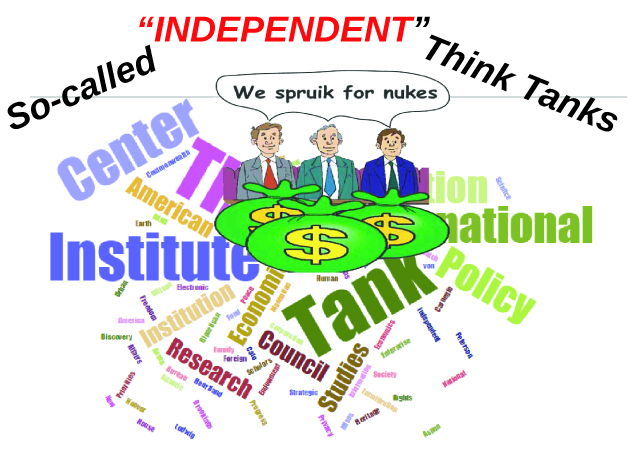
A SIX WAR MONGERING THINK TANKS AND THE MILITARY CONTRACTORS THAT FUND THEM
By Amanda Yee, Orinoco Tribune., March 12, 2023 https://popularresistance.org/six-war-mongering-think-tanks-and-the-military-contractors-that-fund-them/
From producing reports and analysis for U.S. policy-makers, to enlisting representatives to write op-eds in corporate media, to providing talking heads for corporate media to interview and give quotes, think tanks play a fundamental role in shaping both U.S. foreign policy and public perception around that foreign policy. Leaders at top think tanks like the Atlantic Council and Hudson Institute have even been called upon to set focus priorities for the House Intelligence Committee. However, one look at the funding sources of the most influential think tanks reveals whose interests they really serve: that of the U.S. military and its defense contractors.
This ecosystem of overlapping networks of government institutions, think tanks, and defense contractors is where U.S. foreign policy is derived, and a revolving door exists among these three sectors. For example, before Biden-appointed head of the Pentagon Lloyd Austin took his current position, he sat on the Board of Directors at Raytheon. Before Austin’s appointment, current defense policy advisor Michèle Flournoy was also in the running for the position. Flournoy sat on the board of Booz Allen Hamilton, another major Pentagon defense contractor. These same defense contractors also work together with think tanks like the Center for Strategic and International Studies to organize conferences attended by national security officials.
On top of all this, since the end of the Cold War, intelligence analysis by the CIA and NSA has increasingly been contracted out to these same defense companies like BAE Systems and Lockheed Martin, among others — a major conflict of interest. In other words, these corporations are in the position to produce intelligence reports which raise the alarm on U.S. “enemy” nations so they can sell more military equipment!
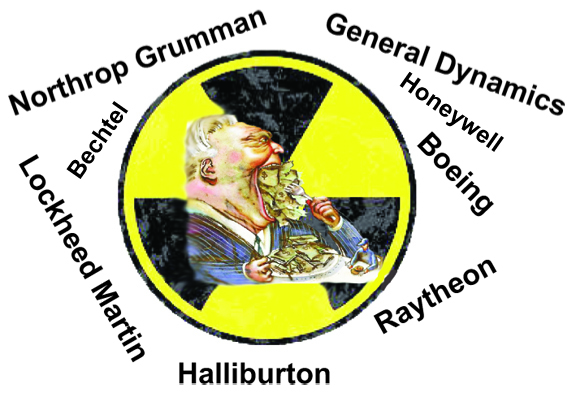
And of course these are the same defense companies that donate hundreds of thousands of dollars each year to think tanks. Given all this, is it any wonder the U.S. government is simultaneously flooding billions of dollars of weaponry into an unwinnable proxy war in Ukraine while escalating a Cold War into a potential military confrontation with China?
The funding to these policy institutes steers the U.S. foreign policy agenda. To give you a scope of how these contributions determine national security priorities, listed below are six of some of the most influential foreign policy think tanks, along with how much in contributions they’ve received from “defense” companies in the last year.
All funding information for these policy institutes was gathered from the most recent annual report that was available online. Also note that this list is compiled from those that make this information publicly available — many think tanks, such as the hawkish American Enterprise Institute, do not release donation sources publicly.
1 – Center for Strategic and International Studies
According to their 2020 annual report
$500,000+: Northrop Grumman Corporation
$200,000-$499,999: General Atomics (energy and defense corporation that manufactures Predator drones for the CIA), Lockheed Martin, SAIC (provides information technology services to U.S. military)
$100,000-$199,999: Bechtel, Boeing, Cummins (provides engines and generators for military equipment), General Dynamics, Hitachi (provides defense technology), Hanwha Group (South Korean aerospace and defense company), Huntington Ingalls Industries, Inc. (largest military shipbuilding company in the United States), Mitsubishi Corporation, Nippon Telegraph and Telephone Corporation (provides intelligence and information technology services to U.S. military), Qualcomm, Inc. (semiconductor company that produces microchips for the U.S. military), Raytheon, Samsung (provides security technology to the U.S. military), SK Group (defense technology company)
$65,000-$99,999: Hyundai Motor (produces weapons systems), Oracle
$35,000-$64,999: BAE Systems
2 – Center for a New American Security
From fiscal year 2021-2022
$500,000+: Northrop Grumman Corporation
$250,000-$499,999: Lockheed Martin
$100,000-$249,000: Huntington Ingalls Industries, Neal Blue (Chairman and CEO of General Atomics), Qualcomm, Inc., Raytheon, Boeing.
$50,000-$99,000: BAE Systems, Booz Allen Hamilton, Intel Corporation (provides aerospace and defense technology), Elbit Systems of America (aerospace and defense company), General Dynamics, Palantir Technologies
3 – Hudson Institute
According to their 2021 annual report
$100,000+: General Atomics, Linden Blue (co-owner and Vice Chairman of General Atomics), Neal Blue, Lockheed Martin, Northrop Grumman.
$50,000-$99,000: BAE Systems, Boeing, Mitsubishi Heavy Industries
The Comprehensive Crisis in the US and the Revolutionary Way Forward
4 – Atlantic Council
According to their 2021 annual report
$250,000-$499,000: Airbus, Neal Blue, SAAB (provides defense equipment)
$100,000-$249,000: Lockheed Martin, Raytheon
$50,000-$99,000: SAIC
5 – International Institute for Strategic Studies
Based in London. From fiscal year 2021-2022
£100,000+: Airbus, BAE Systems, Boeing, General Atomics, Lockheed Martin, Raytheon, Rolls Royce (provides military airplane engines)
£25,000-£99,999: Northrop Grumman Aerospace Systems, Northrop Grumman Corporation
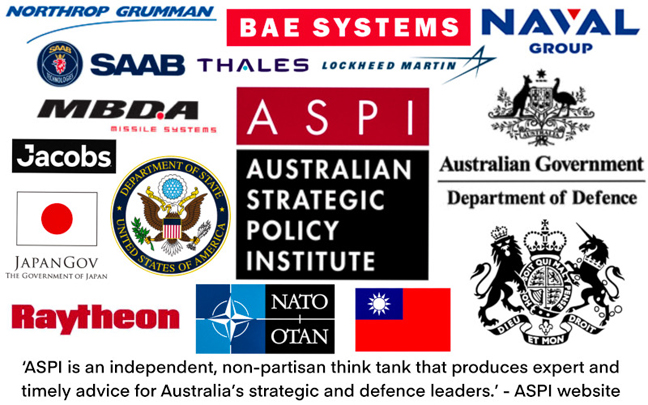
6 – Australian Strategic Policy Institute
Note: ASPI has been one of the primary purveyors of the “Uyghur genocide” narrative
From their 2021-2022 annual report
$186,800: Thales Australia (aerospace and defense corporation)
$100,181: Boeing Australia
$75,927: Lockheed Martin
$20,000: Omni Executive (aerospace and defense corporation)
$27,272: SAAB Australia
Lesson from Fukushima: Collusion in the nuclear domain
Nuclear power became an unstoppable force, immune to scrutiny by civil society. Its regulation was entrusted to the same government bureaucracy responsible for its promotion.”
Canada has not heeded these warnings. ……. The CNSC, mandated to protect the public and the environment, lobbied government to abolish full impact assessments for most “small modular nuclear reactors” (SMN
By Gordon Edwards & Susan O’Donnell | Opinion | March 13th 2023 https://www.nationalobserver.com/2023/03/13/opinion/lesson-fukushima-collusion-nuclear-domain
—
This month marks the 12th anniversary of the Fukushima disaster, when three nuclear reactors in Japan suffered catastrophic meltdowns.
A tsunami knocked out the reactors’ cooling systems. The plant was shut down, but radioactivity sent temperatures soaring past the melting point of steel.
Radioactive gases mingled with superheated steam and explosive hydrogen gas, which detonated, spreading radioactive contamination over a vast area; 120,000 people were evacuated and 30,000 are still unable to go home.
Radioactively contaminated water from the stricken reactors has accumulated in 1,000 gigantic steel tanks, and despite objections from China, Korea and local fishers, Japan plans to dump it into the Pacific Ocean soon.
What caused this catastrophe? Most people blame the tsunami. The commission of investigation in Japan concluded otherwise. In its report to the National Diet, the commission found the root cause was a lack of good governance.
The accident “was the result of collusion between the government, the regulators and TEPCO [the nuclear company], and the lack of governance by said parties. They effectively betrayed the nation’s right to be safe from nuclear accidents. Therefore, we conclude that the accident was clearly ‘man-made.’ We believe that the root causes were the organizational and regulatory systems that supported faulty rationales for decisions and actions…”
The commission chairman wrote: “What must be admitted — very painfully — is that this was a disaster ‘made in Japan.’ Its fundamental causes are to be found in the ingrained conventions of Japanese culture: our reflexive obedience; our reluctance to question authority; our devotion to ‘sticking with the program’; our groupism; and our insularity… Nuclear power became an unstoppable force, immune to scrutiny by civil society. Its regulation was entrusted to the same government bureaucracy responsible for its promotion.”
Canada has not heeded these warnings. After Justin Trudeau was elected in 2015, his government did away with environmental assessments for any new reactors below a certain size, thus eliminating scrutiny by civil society. This leaves all decision-making in the hands of the Canadian Nuclear Safety Commission (CNSC) — an agency previously identified by an expert review panel as a captured regulator.
The CNSC, mandated to protect the public and the environment, lobbied government to abolish full impact assessments for most “small modular nuclear reactors” (SMNRs).
Back in 2011, in the midst of the media frenzy about the triple meltdown, Canadians were testifying at federal environmental assessment hearings for up to four large nuclear reactors to be built by Ontario Power Generation (OPG) at Darlington, about 50 kilometres east of Toronto’s edge. The Fukushima disaster was cited repeatedly as a warning.
The panel approved OPG’s plan, but the Ontario government was thunderstruck by the price tag, reputed to be over $14 billion per unit, and cancelled the project.
Now OPG wants to build a smaller reactor at the Darlington site. Since a full impact assessment has been ruled out, CNSC is using the report from 12 years ago as the basis for public interventions. The reactor now proposed (the BWRX-300) has no similarity to any of the reactors that were under consideration then or to any operating today in Canada. Ironically, it is a “miniaturized” version of those that melted down at Fukushima.
CNSC is legally linked to the minister of Natural Resources, who is also tasked with promoting the nuclear industry at home and abroad. The International Atomic Energy Agency (IAEA) warns that regulators must be independent of any agency promoting the industry.
One day after Canada’s Infrastructure Bank gave OPG a $970-million “low-interest loan” to develop the BWRX-300 at Darlington, the minister boasted to a Washington audience that it would soon become Canada’s first commercial SMNR.
CNSC president Rumina Velshi lauded the speed at which the licensing is proceeding, saying that Canada would be the first western country to approve an SMNR built for the grid.
CNSC is at least two years from approving the reactor. Nevertheless, OPG held a ground-breaking ceremony at Darlington in December. The licence to construct seems a foregone conclusion. When asked, CNSC freely admitted that from the day of its inception, it has never refused to grant a licence for any major nuclear facility.
Government, regulator and industry are already on board. Collusion? Or just co-operation?
Gordon Edwards is president and co-founder of the Canadian Coalition for Nuclear Responsibility, a not-for-profit corporation established in 1975. He is a retired professor of mathematics and science at Vanier College in Montreal.
Susan O’Donnell is an adjunct professor at St. Thomas University and a member of the Coalition for Responsible Energy Development in New Brunswick.
1 This Month
26 April – Chernobyl: Inside the Meltdown airs on National Geographic on Sunday 26th April from 4pm

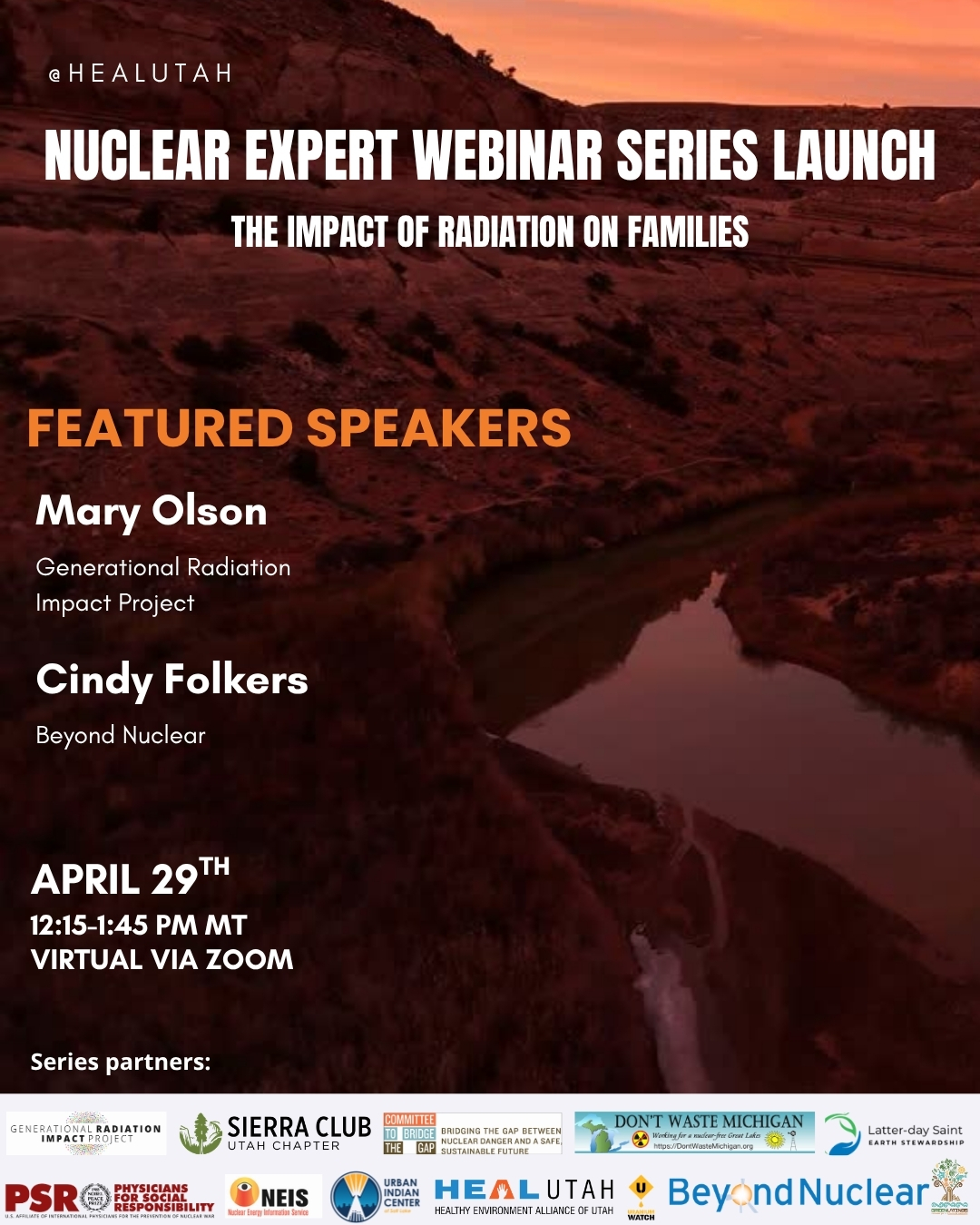
29 April – Nuclear Expert Webinar #1 – Radiation Impacts on Families with Mary Olson and Cindy Folkers
- 12:15 PM MT – 1:45 PM MT
- Location: Virtual – REGISTER TODAY

4 May -West Suburban Peace Coalition to discuss Iran war at May Educational Forum
Monday, May 4, 7:00 – 8:00 PM Central Standard Time
Title: : How Trump’s Narrative Tries to Shape the Reality of the War on Iran.
Contact Walt Zlotow, zlotow@hotmail.com 630 442 3045 for further information
14 May – online event From Bombs to Data Centres: the Face of Nuclear Colonialism
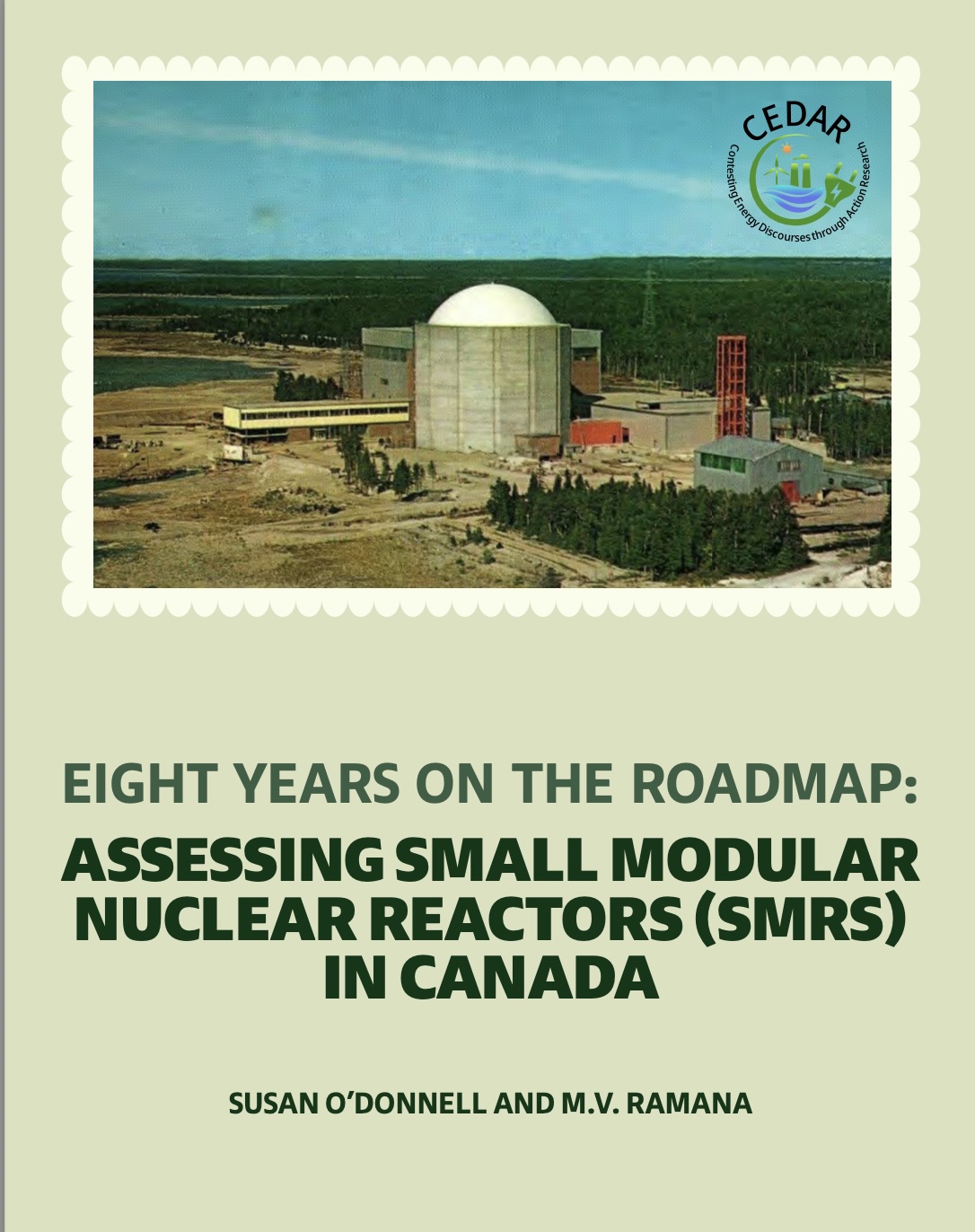

Pine Ridge Uranium is the real threat, not Tehran- Tell Burgum: Stop the Extraction.
Chernobyl: The Lost Tapes – A good documentary on Chernobyl on SBS available On Demand for the next 3 weeks– https://www.sbs.com.au/ondemand/tv-program/chernobyl-the-lost-tapes/2352741955560
To see nuclear-related stories in greater depth and intensity – go to https://nuclearinformation.wordpress.com
-
Archives
- April 2026 (327)
- March 2026 (251)
- February 2026 (268)
- January 2026 (308)
- December 2025 (358)
- November 2025 (359)
- October 2025 (376)
- September 2025 (257)
- August 2025 (319)
- July 2025 (230)
- June 2025 (348)
- May 2025 (261)
-
Categories
- 1
- 1 NUCLEAR ISSUES
- business and costs
- climate change
- culture and arts
- ENERGY
- environment
- health
- history
- indigenous issues
- Legal
- marketing of nuclear
- media
- opposition to nuclear
- PERSONAL STORIES
- politics
- politics international
- Religion and ethics
- safety
- secrets,lies and civil liberties
- spinbuster
- technology
- Uranium
- wastes
- weapons and war
- Women
- 2 WORLD
- ACTION
- AFRICA
- Atrocities
- AUSTRALIA
- Christina's notes
- Christina's themes
- culture and arts
- Events
- Fuk 2022
- Fuk 2023
- Fukushima 2017
- Fukushima 2018
- fukushima 2019
- Fukushima 2020
- Fukushima 2021
- general
- global warming
- Humour (God we need it)
- Nuclear
- RARE EARTHS
- Reference
- resources – print
- Resources -audiovicual
- Weekly Newsletter
- World
- World Nuclear
- YouTube
-
RSS
Entries RSS
Comments RSS
 nuclear-news