Ontario opts for high-risk nuclear over low-risk energy sources
Rather than increasing energy efficiency and productivity and reducing the need for new energy resources, the province has chosen nuclear expansion.
The Star, By Mark Winfield , Friday, July 21, 2023
The consequences of these decisions for Ontario electricity ratepayers and taxpayers are likely to stretch far into the future. No cost estimates are available for the proposed nuclear projects. The bids submitted as part of the province’s last attempt at a new-build nuclear project would optimistically suggest costs in the range of $50 billion for the Bruce project alone. The costs of the four smaller reactors proposed for Darlington remain unknown, given that none of the proposed type of reactor have ever been built or operated before anywhere in the world.
………………………………………. private capital has been hesitant to engage with nuclear projects, and progress on a much-touted nuclear “renaissance” in Europe and North America has been slow. This has been despite aggressive efforts by governments to guarantee returns on investment and assume ultimate liability for waste management, decommissioning costs and accidents. It is no surprise that the only significant investor in the first of the proposed new “small” reactors at Darlington was the federal government’s own Infrastructure Bank.
A rational planning process around electricity and decarbonization would have prioritized the options with the lowest economic, environmental, technological and safety risks first. Higher risk options, like new nuclear, should only be considered where it can be demonstrated that the lower-risk options have been fully optimized and developed in the planning process.
…………………………….. The good news is that the province’s announcements remain at a preliminary stage — key technical approvals for new build reactor projects will still be needed and their economics remain very open questions. There may still be time for Ontario to move toward a more rational, open, and evidence-based approach to energy planning and decarbonization. But nuclear proponents will be doing everything they can to lock in the government’s choices as quickly as possible. https://www.thestar.com/opinion/contributors/ontario-opts-for-high-risk-nuclear-over-low-risk-energy-sources/article_49afb2a3-7cca-5dee-bc2b-5d57eef76a75.html
The Empire Knows It’s Pouring Ukrainian Blood Into An Unwinnable Proxy War

That’s right kids! We’re turning Ukraine into an uninhabitable wasteland of death and dismemberment to save the Ukrainians
Caitlin’s Newsletter CAITLIN JOHNSTONE, JUL 24, 2023
In a new article titled “Ukraine’s Lack of Weaponry and Training Risks Stalemate in Fight With Russia,” The Wall Street Journal’s Daniel Michaels reports that western officials knew Ukrainian forces didn’t have the weapons and training necessary to succeed in their highly touted counteroffensive which was launched last month.
Michaels writes:…………………………………………………
The claim that western officials had sincerely believed Ukrainian forces might be able to overcome their glaring deficits through sheer pluck and ticker is undermined later in the same article by a war pundit who says the US would never attempt such a counteroffensive without first controlling the skies, which Ukraine doesn’t have the ability to do:
“America would never attempt to defeat a prepared defense without air superiority, but they [Ukrainians] don’t have air superiority,” the U.S. Army War College’s John Nagl told WSJ. “It’s impossible to overstate how important air superiority is for fighting a ground fight at a reasonable cost in casualties.”
Antiwar’s Dave DeCamp writes the following on the latest WSJ revelation:
“Leading up to the Ukrainian counteroffensive, which was launched in June, the Discord leaks and media reports revealed that the US did not believe Ukraine could regain much territory from Russia. But the Biden administration pushed for the assault anyway, as it rejected the idea of a pause in fighting.”
So the empire is still knowingly throwing Ukrainian lives into the meat grinder of an unwinnable proxy war, even as western officials tell the public that this war is about saving Ukrainian lives and handing Putin a crushing defeat whenever they’re on camera.
This attitude from the empire is not a new development. Last October The Washington Post reported that “Privately, U.S. officials say neither Russia nor Ukraine is capable of winning the war outright, but they have ruled out the idea of pushing or even nudging Ukraine to the negotiating table.”
Now why might that be? Why would the western empire be so comfortable encouraging Ukrainians to keep fighting when it knows they can’t win?
We find our answer in another Washington Post article titled “The West feels gloomy about Ukraine. Here’s why it shouldn’t.”, authored last week by virulent empire propagandist David Ignatius. In his eagerness to frame the floundering counteroffensive in a positive light for his American audience, Ignatius let slip an inconvenient truth:
“Meanwhile, for the United States and its NATO allies, these 18 months of war have been a strategic windfall, at relatively low cost (other than for the Ukrainians). The West’s most reckless antagonist has been rocked. NATO has grown much stronger with the additions of Sweden and Finland. Germany has weaned itself from dependence on Russian energy and, in many ways, rediscovered its sense of values. NATO squabbles make headlines, but overall, this has been a triumphal summer for the alliance.”
Anyone who believes this proxy war is about helping Ukrainians should be made to read that paragraph over and over again until it sinks in. The admission that the US-centralized power structure benefits immensely from this proxy conflict is revealing enough, but that parenthetical “other than for the Ukrainians” aside really drives it home. It reads as though it was added as an afterthought, like “Oh yeah it’s actually kind of rough on the Ukrainians though — if you consider them to be people.”
The claim that this war is about helping Ukrainians has been further undermined by another new Washington Post report that Ukraine is now more riddled with land mines than any other nation on earth, and that US-supplied cluster munitions are only making the land more deadly.
That’s right kids! We’re turning Ukraine into an uninhabitable wasteland of death and dismemberment to save the Ukrainians.
We should probably talk more about the fact that the US empire is loudly promoting the goal of achieving peace in Ukraine by defeating Russia while quietly acknowledging that this goal is impossible. This is like accelerating toward a brick wall and pretending it’s an open road.
The narrative that Russia can be beaten by ramping up proxy warfare against it makes sense if you believe Russia can be militarily defeated in Ukraine, but the US empire does not believe that Russia can be militarily defeated in Ukraine. It knows that continuing this war is only going to perpetuate the death and devastation.
“Beat Putin’s ass and make him withdraw” sounds cool and is egoically gratifying, and it’s become the mainstream answer to the problem of the war in Ukraine, but nobody promoting that answer can address the fact that the ones driving this proxy war believe it’s impossible. In fact, all evidence we’re seeing suggests that the US is not trying to deliver Putin a crushing defeat in Ukraine and force him to withdraw, but is rather trying to create another long and costly military quagmire for Moscow, as western cold warriors have done repeatedly in instances like Afghanistan and Syria.
Wanting to weaken Russia and wanting to save lives and establish peace in Ukraine are two completely different goals, so different that in practice they wind up being largely contradictory. Drawing Moscow into a bloody quagmire means many more people dying in a war that drags on for years, with all the immense human suffering that that entails.
The US does not want peace in Ukraine, it wants to overextend Russia, shore up military and energy dominance over Europe, expand its war machine and enrich the military-industrial complex. That’s why it knowingly provoked this war. It’s posing as Ukraine’s savior while being clearly invested in Ukraine’s destruction.
It is not legitimate to support this proxy war without squarely addressing this massive contradiction using hard facts and robust argumentation. Nobody ever has. https://www.caitlinjohnst.one/p/the-empire-knows-its-pouring-ukrainian?utm_source=post-email-title&publication_id=82124&post_id=135389526&isFreemail=true&utm_medium=email
From body bags of ice to pavement burn: US grapples with new extreme heat reality

From body bags of ice to pavement burn: US grapples with new extreme heat
reality. As unrelenting, record-breaking temperatures continue across many
states, pressure is mounting on US healthcare systems due to an increasing
number of people in heat distress coming through their doors.
In the Southwest, doctors are relying on tried-and-tested measures such as body
bags packed with ice to quickly bring down dangerously high body
temperatures. Doctors at Memorial Hermann Medical Center in Houston, Texas,
told The Independent that there has been an increase in the number of
patients presenting with heat-related illnesses including heat stroke,
which can be potentially fatal if not treated rapidly.
Independent 22nd July 2023
https://www.independent.co.uk/climate-change/news/heatwave-arizona-texas-deaths-burns-b2378285.html
Science and Global Security Maps Radioactive Fallout from U.S. Nuclear Weapon Tests, Beginning with July 1945 Trinity Test
July 21, 2023
SGS has released research showing in unprecedented detail the spread of radioactive fallout from 94 continental U.S. atmospheric nuclear weapon tests, including the first nuclear weapon test – the 16 July 1945 Trinity explosion that was a key part of the Manhattan Project. This work has been reported in The New York Times.
The new model shows the nuclear explosions carried out in New Mexico and Nevada between 1945 and 1962 led to widespread radioactive contamination, with Trinity making a significant contribution to exposure in New Mexico, in neighboring states, and reaching 46 of the 48 contiguous United States as well as Canada and Mexico. The study also documents significant deposition in Nevada, Utah, Wyoming, Colorado, Arizona and Idaho, as well as dozens of federally recognized tribal lands.
The research provides estimates of the deposition of radioactivity over 10 days following the detonation of the Trinity nuclear explosion, and for five days subsequent to the atmospheric tests in Nevada. It highlights that significant radioactive deposition took place in locations in New Mexico and on federally recognized tribal lands not covered by the U.S. Radiation Exposure Compensation Act. It also reveals that plutonium carried by the wind from the Trinity test explosion reached Crawford Lake in Canada on July 20, 1945. The presence of plutonium in Crawford Lake sediments has been proposed as one maker for the beginning of the Anthropocene epoch……………………………………….. more https://sgs.princeton.edu/news-announcements/n
The True Symbol Of The United States Is The Pentagon

JUL 22, 2023
The real symbol of the United States is not the stars and stripes, nor the bald eagle, nor the Statue of Liberty, nor even the mighty McDonald’s logo. The real symbol of the United States is the Pentagon.
The Pentagon should feature centrally on the US flag. It should be on the coins and on all the bills, and it should appear next to the name of every American in the Olympics. When anyone sees a five-sided polygon, they should immediately think “United States of America”.
There is nothing more representative of the most significant things about the United States than the Pentagon. Sure the US has lovely national parks, an abundance of fast food chains and 500 million-dollar superhero movies, but nothing has anywhere near the effect on the world as the US government’s ability to project force around the planet with military violence and the threat thereof.
That is the main thing that makes the US unique among nations, after all. Americans are taught from childhood to take special pride in their nation’s “freedom” and “democracy” (of which they have neither), when what actually makes their country stand out against the crowd is its role as the hub of a globe-spanning empire that is held together by nonstop military aggression. The five-sided building which houses the US Department of Defense — formerly called the Department of War until someone noticed that was a bit too truthful — is the perfect symbol for that empire. It conveys what the United States is really putting out into the world more accurately than any other…………………………………….. more https://www.caitlinjohnst.one/p/the-true-symbol-of-the-united-states
USA government – more money, $19 billion, grant for making deadly plutonium
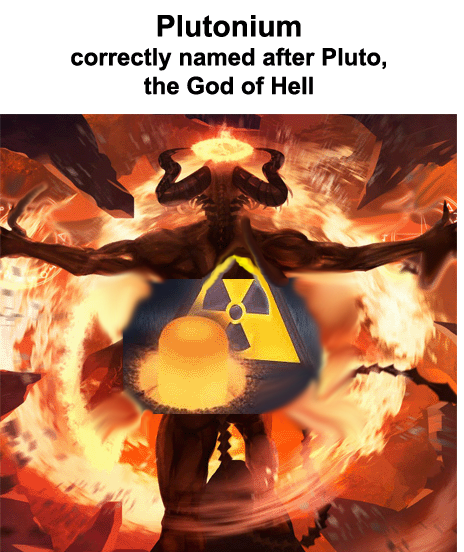
Senate appropriators boost funding for plutonium, uranium production facilities, By Dan Parsons, 21 Jul 23
Nearly $19 billion is included in the Senate Appropriations Committee’s 2024 spending bill for National Nuclear Security Administration nuclear-weapon programs, with funding boosts for planned facilities that will process plutonium and uranium for refurbished…………… (Subscribers only) https://www.exchangemonitor.com/senate-appropriators-boost-funding-for-plutonium-uranium-production-facilities/
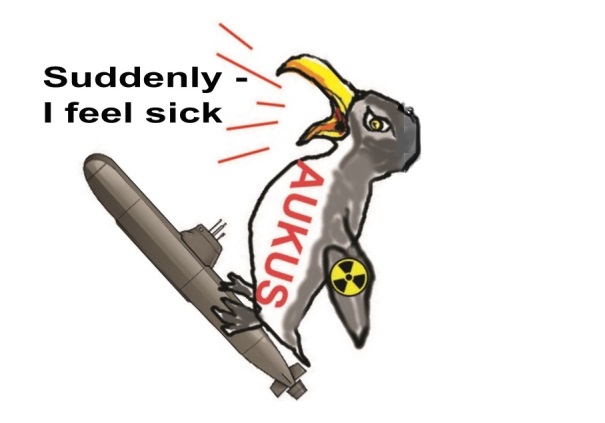
US Republicans threaten to block AUKUS deal
By Anthony Galloway, The Age, July 21, 2023
Australia’s AUKUS submarine deal with the United States has hit a hurdle with Senate Republicans threatening to block the sale unless President Joe Biden boosts funding for the domestic production line.
Republican members of the Senate Armed Services Committee on Friday moved to block legislation which would enable the sale of US Virginia-class submarines to Australia.
Under the AUKUS deal, Washington was set to sell Canberra between three and five of its own nuclear submarines in the 2030s before Australia begins building a new class of boat with Britain.
But the ranking Republican on the Senate Armed Services Committee, senator Roger Wicker, said Biden needed to commit more money to guarantee “we have enough submarines for our own security before we endorse that pillar of the agreement”.
Wicker said Australia’s commitment of US$3 billion ($4.4 billion) for the US production line would not be enough to meet the needs of both countries.
“The president needs to submit a supplemental request to give us an adequate number of submarines,” he told US news outlet Politico…………………………………………………….. https://www.theage.com.au/politics/federal/foolish-us-republicans-threaten-to-block-aukus-deal-20230721-p5dqc3.html
Ontario – Ford government’s electricity plan takes wrong approach
Windsor Star, By Jack Gibbons 21 Jul 23
Having missed the boat on the global green energy boom by crushing the province’s early leadership on renewable energy, Premier Doug Ford is now trying to take another stab at building a future economy by investing in buggy whip manufacturing.
That’s what spending tens of billions of dollars on high-cost, high-risk nuclear power essentially represents — a bet on a technology that has been in decline for decades.
Instead of trying to catch up with a global marketplace that is decidedly all-in on renewable energy — with the International Energy Agency saying 90 per cent of new electricity capacity will come from renewables over the next five years — Ontario wants to go back to the 1960s and ‘70s and embark on another long shot effort to build nuclear power plants.
It’s important to remember the province’s past nuclear projects have been one fiasco after another. Our most recent nuclear new build project — the Darlington nuclear station — went massively over budget.
The huge cost overruns and poor performance of its nuclear reactors essentially bankrupted the old Ontario Hydro. Ontario power ratepayers and taxpayers were left paying off the utility’s massive $19.4-billion stranded nuclear debt.
That hasn’t stopped a government with a strong distaste for solar panels and wind turbines from warmly embracing a technology that has never lived up to its promise.
It is now planning to build a massive new nuclear plant right beside the Bruce nuclear station which is already the largest nuclear station in the world. It also wants to build mythical “modular” reactors along the waterfront at Darlington right next to Toronto.
That the reactors the government is touting for Darlington are, at this point, nothing more than PowerPoint slides in a nuclear PR presentation hasn’t stopped the government from making wild claims that these unproven (and, at this point, unlicensed and physically non-existent) reactors can be built at what it deems to be a reasonable cost.
In 2009, when the nuclear companies wanted to build two new nuclear reactors at Darlington, the Dalton McGuinty government required them to submit fixed-price bids.
Not surprisingly the most competitive bid was 3.7 times higher than the forecast price. As a result, the government suspended the procurement process and the reactors were never built.
But despite repeatedly slamming the “fiscal irresponsibility” of previous Liberal governments, it appears that Premier Doug Ford is only too happy to give the nuclear industry a blank cheque and allow inevitable cost overruns to be passed on to electricity consumers and taxpayers.
That the projected cost for the province’s new dream nuclear projects are more than three times higher than what we would pay today for power from competitively procured wind and solar also doesn’t seem to bother Energy Minister Todd Smith…………………………………………..
New nuclear reactors that will take at least 10 to 15 years to build can not provide the dramatic reductions in greenhouse gas pollution that we need now. To add insult to injury, Doug Ford’s solution to keeping the lights on in the interim is to ramp up use of climate-wrecking gas plants and, even more astoundingly, build new ones.
But what’s truly scandalous about the government’s Powering Ontario plan is prioritizing phantom nuclear technology over what the world wants: smart, integrated and highly efficient renewable power systems………… more https://windsorstar.com/opinion/letters/guest-column-ontario-governments-electricity-plan-taking-wrong-approach
Feds digging up nuclear waste in Los Alamos for disposal at Carlsbad-area repository
Adrian Hedden, Carlsbad Current-Argus, 21 Jul 23, https://www.currentargus.com/story/news/2023/07/21/feds-digging-up-nuclear-waste-in-los-alamos-for-disposal-at-carlsbad-area-repository/70426843007/
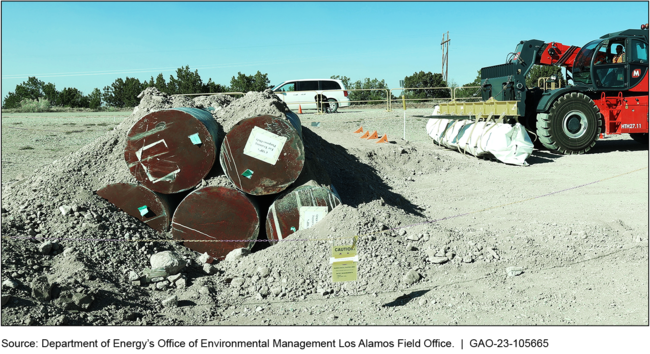
Workers at Los Alamos National Laboratory dug up buried nuclear waste they planned to dispose of at the federal repository near Carlsbad, amid pressure from State officials that the facility prioritize New Mexico waste.
The U.S. Department of Energy’s Los Alamos Field Office and the lab’s cleanup contractor Newport News Nuclear BWXT (N3B) Los Alamos announced Tuesday they began exhuming corrugated metal pipes containing transuranic (TRU) nuclear waste and preparing them for shipment.
At the Waste Isolation Pilot Plant near Carlsbad, TRU waste is disposed of via burial in a salt deposit about 2,000 feet underground, trucked into the site from DOE facilities throughout the country.
TRU waste is made up of irradiated clothing, equipment and other debris from nuclear research and development activities around the U.S.
Before it can be shipped to WIPP, the pipes must be cut using hydraulic sheers, allowing them to be loaded into waste boxes for shipment and disposal.
The pipes weight about 10,000 to 14,000 pounds, and measure about 20 feet long. They are cut into five pieces, with each piece loaded into a box.
It’s occurring at portion of the lab known as Dome 375, and the waste came from Los Alamos’ former radioactive liquid waste treatment facility operating during the Cold War at Technical Area 21 (TA-21).
There were 158 pipes in total transferred from TA-21, records show, containing cemented waste.
They were buried in 1986, where the waste sat until recently when worked began preparing it for final disposal.
The DOE hoped to finish digging up and preparing the pipes for disposal by spring 2024.
More: No progress to report on nuclear waste site aside from Carlsbad-area repository, feds say
The US should end its use of nuclear power plants – the intractible problem of dangerous spent fuel rods

Chicago Tribune, Jul 21, 2023 , Larry R. Eaton, Chicago
Fifty years ago, as chief of the Illinois attorney general’s Environmental Control Law Division, a relatively new field of law at that time, I had the occasion to tour an Illinois nuclear power plant. I was taken aback to see extensive pools of water containing bundles of spent nuclear fuel rods standing on end just beneath the surface of the water. I was advised that a pilot plant study had indicated that it would have an essentially closed-loop system that would not generate large amounts of spent fuel; however, once the full-scale plant became operational, the system failed to perform as anticipated. Plant workers were left with no good alternative but to store spent fuel rods in pools of water, at least temporarily, pending (hopefully) a better idea.
It appears that the nuclear power industry is still waiting for that better idea. A supporter of nuclear power production now maintains, in essence, that we have nothing to be concerned about regarding spent nuclear fuel because all we need to do is encase it in concrete and then open it up and repackage it in concrete every several decades. (In perpetuity, presumably; the radioactivity will remain unabated for a very long time indeed.) To understand how absurd this proposal is requires little more than to say it out loud.
Chernobyl and Three Mile Island were wake-up calls, but we do not appear to have fully awakened. It does not help that a nuclear power plant now sits near the front lines of a shooting war between Russia and Ukraine. Hopefully, we will somehow be lucky enough never to have a massive nuclear power plant disaster. But regardless of that, we will have radioactive spent fuel problems with us forever. We can no longer escape that fact. However, we can choose to stop making it worse.
Germany has decided to end its use of nuclear power. The U.S. should do the same. If there is anything worse than having an enormous carbon footprint, it has to be for that footprint to be radioactive too!
Corruption In Ukraine & The U.S. Mutually Rewarding
The Pentagon failed its 5th consecutive audit last year, appearing to lose track of 61% of its $3.5 trillion in assets.
Substack, LISA SAVAGE, JUL 20, 2023
“…………………………………………………………………………………………. Ukraine’s leaders are so over the top that it’s becoming impossible to ignore. Add in the fact that they have been enriched by U.S. taxpayers more or less directly despite crumbling infrastructure, catastrophic homelessness, apartheid healthcare, and a host of other problems that the U.S. could address with adequate funding.
From RT (whose editor-in-chief, Margarita Simonyan, just survived a second assassination attempt):
On July 7, US Under Secretary of Defense for Policy Colin Kahl spoke about a new package of aid from the US which includes cluster munitions – which are banned in 120 countries. The cost was $800 million.This is the 42nd delivery of aid that Ukraine has received from the US in the past year and a half.[emphasis mine] Since the beginning of Russia’s offensive, the US Congress has approved military and economic assistance to Ukraine amounting to over $70 billion – and that’s only counting direct expenses..
“Ukraine needs only one thing… To have someone come to power who won’t steal. Someone who won’t do it himself and won’t allow others to do so. Unfortunately, so far we haven’t been lucky,” [Aleksey Arestovich, former advisor to President Zelensky] said.
Ok, so Arestovich has a motive for trashing the government that used to include him. How about Pulitzer Prize-winning U.S. investigative journalist Seymour Hersh? Hersh does not approve of Russia’s entry into the war but he nonetheless published a piece on rampant corruption in Ukraine, “Trading with the Enemy,” back in April.
Zelensky has been buying fuel from Russia, the country with which it, and Washington, are at war, and the Ukrainian president and many in his entourage have been skimming untold millions from the American dollars earmarked for diesel fuel payments. One estimate by analysts from the Central Intelligence Agency put the embezzled funds at $400 million last year, at least; another expert compared the level of corruption in Kiev as approaching that of the Afghan war………………………………
Then there is President Zelensky, elected on pledges to end corruption and, incidentally, the war on the Donbas.
Pre-2022, i.e. when corporate media headlines about Ukraine did a 180, even The Guardian found he was part of the problem and not likely to be part of the solution.
Neither is the U.S. government likely to be part of the solution. The Pentagon failed its fifth consecutive audit last year, appearing to lose track of 61% of its $3.5 trillion in assets……………………….. more https://went2thebridge.substack.com/p/corruption-in-ukraine-and-the-us?utm_source=post-email-title&publication_id=1580975&post_id=135301485&isFreemail=true&utm_medium=email_medium=email
The Big Problem With Small Nuclear Reactors

The diminutive reactors are likely to be just as prone to delays and cost overruns as their behemoth predecessors.

I just read Pal Hockenos’ fine story about small nuclear reactors. But Hockenos is naive to think that Bill Gates and co. give a hoot about our future. What they do care about is their own increasing $squillions. And the coming source of new $squillions is in weaponry – that’s where all sorts of applications for SMRs lie. And Gates etc are well aware that the fixing-climate story is just a cover for the real practical purpose.
UNDARK BY PAUL HOCKENOS , 07.20.2023
IN RECENT YEARS, the nuclear power lobby and its advocates have begun to sing a new song. They have bailed on the monstrous reactors of the 20th century — not because of safety or toxic waste concerns, but because of the reactors’ exorbitant expense and ponderous rollout schedules. And they have switched their allegiance to a next generation nuclear fission technology: small modular reactors, which they claim will help rescue our warming planet, as well as the nuclear power industry— once they exist.
Respected thinkers such as former U.S. president Barack Obama, French president Emmanuel Macron, and Microsoft co-founder and philanthropist Bill Gates have toasted the idea of small modular reactors, or SMRs, as a potentially reliable, almost-emissions-free backup to intermittent renewable energy sources like wind and solar. Advocates claim that because SMRs will be smaller than the giants that currently dominate horizons, they will be safer, cheaper, and quicker to build. Although SMRs will have only a fraction of the power-generating capacity of traditional nuclear power reactors, proponents envision that they will, one day, be assembled in factories and transported as a unit to sites — like Sears’ mail-order Modern Homes of the early 1900s.
Currently, half of the states in the EU, both major political parties in the U.S, and the five BRICS nations — Brazil, Russia, India, China, and South Africa — have indicated that they want to split atoms for the purpose of generating energy. U.S. President Joe Biden included billions of dollars in tax credits for nuclear energy in the Inflation Reduction Act and the Infrastructure Investment and Jobs Act. Gates has gone so far as to invest a chunk of his fortune in a firm he founded, TerraPower, a leading nuclear innovation company. But despite the prodigious chatter, the endeavor to blanket the Earth with SMRs is a Hail Mary pass that’s very unlikely to succeed.
Granted, it is certainly a step in the right direction that most observers now see the postwar, giga-watt-scale water-cooled reactors as obsolete. When constructed new, these behemoths generate electricity at up to nine times the cost of large-scale solar and onshore wind facilities, and can take well over a decade to get up and running. Perhaps for this reason, there has been one, and only one, new nuclear power project initiated in the U.S. since construction began on the last one 50 years ago: a two-reactor expansion of the Vogtle Electric Generating Plant in Georgia. The first of the reactors came online this year — seven years behind schedule. The staggering $35 billion cost for the pair is more than twice the original projection.
But SMRs are just as likely to face similar delays and cost overruns. Currently, there are just two existing advanced SMR facilities in the world that could be reasonably described as SMRs: a pilot reactor in China and Russia’s diminutive Akademik Lomonosov. More small reactors are under construction in China, Russia, and Argentina, but all of them are proving even more expensive per kilowatt than traditional reactors.
It’s worth noting that in the U.S., and everywhere else in the world, nuclear policy relies heavily on subsidies to be economically competitive. Starting next year, utilities operating nuclear facilities in the U.S. can qualify for a tax credit of $15 per megawatt-hour — a break that could be worth up to $30 billion for the industry as a whole. However, even these giveaways won’t reduce the projected costs of SMR-generated electricity to anywhere near the going prices of wind and solar power.
In the U.S., the only SMR developer with a design approved by the Nuclear Regulatory Commission is NuScale, which plans to deploy six modules at one site in Idaho that will together generate less electricity than a smallish standard nuclear reactor. So far, however, NuScale has yet to lay a single brick. Its biggest win to date is securing $4 billion in federal tax subsidies. In January of this year, NuScale announced plans to sell electricity not at $58 per megawatt-hour, as originally pledged, but at $89 per megawatt-hour, citing higher than anticipated construction costs. The new projection is nearly twice the average global cost of utility-scale solar and onshore wind, according to calculations by BloombergNEF. And without the government subsidies, NuScale’s price tag would be that much higher.
In fact, there’s a fair chance that not a single NuScale SMR will ever be built: The company has said it will not begin construction until 80 percent of its expected generation capacity is subscribed, and currently buyers have signed up for less than a quarter of the plant’s capacity.
Gates’s TerraPower has an even longer way to go, although it too is cashing in on subsidies. The U.S. Department of Energy has pledged up to $2 billion in matching funds to construct a demonstration plant in Wyoming. Yet TerraPower recently announced it’s facing delays of at least two years because of difficulties securing uranium fuel from its lone supplier: Russia.
Even if the unlikely rollout of SMRs eventually happens, it will unfold too late to curb the climate crisis. And the reactors will face many of the same safety and radioactive waste concerns that plagued their larger counterparts, if only at smaller scales. Meanwhile, the siren song of nuclear energy is diverting critical resources from the urgent task of building out clean technologies. And the idea that nuclear reactors would serve as “backups” for wind and solar is misguided because the reactors can’t be ramped up and down quickly.
……………………………The technology of the future is already here. Clean wind and solar energy — coupled with updated smart grids, expanded storage capacity, hydrogen technology, virtual power plants, and demand response strategies — can work. Our energy systems of the future will look like a patchwork quilt, with diverse energy sources kicking in at different times during the day, and with the mix differing from one day to the next.
Bill Gates and like-minded innovators should put their minds and fortunes to work on this futuristic project of the present — and leave the 20th century relic that is nuclear power in the past, where it belongs
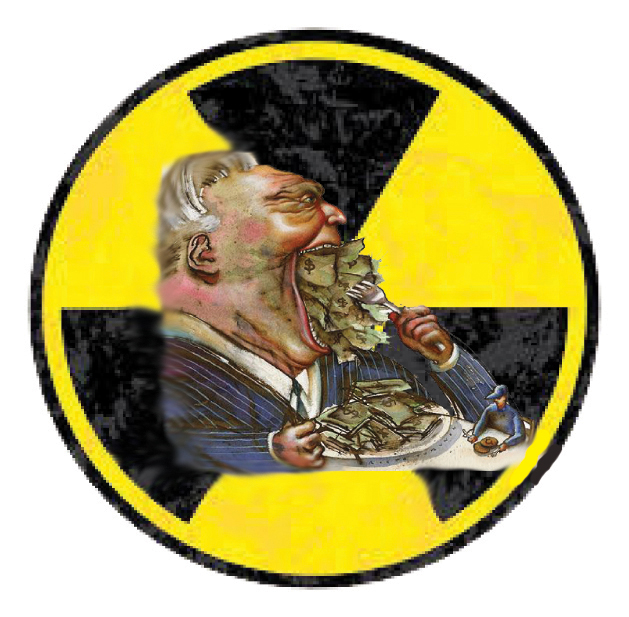
US Asset Managers Have ‘Significant Investments’ in Nuclear Weapons and Cluster Bombs: Analysis
“Many investors, given a choice, would not want to profit from companies that manufacture weapons of mass destruction,” said As You Sow’s Andrew Behar.
By Brett Wilkins / Common Dreams https://scheerpost.com/2023/07/19/us-asset-managers-have-significant-investments-in-nuclear-weapons-and-cluster-bombs-analysis/
Amidst what the Bulletin of Atomic Scientists calls “an exceedingly dangerous nuclear situation” facing humanity today, the largest U.S. mutual funds—which manage the retirement and other savings of tens of millions of Americans—are profiting from investments in nuclear weapons, cluster munitions, and other banned or controversial arms, an analysis by a leading shareholder advocacy group revealed Tuesday.
Measured by dollars invested, the top 25 U.S. asset managers “all earn a D grade or worse, with significant investments in arms manufacturers and major military contractors, including companies involved with nuclear weapons and controversial weapons like cluster munitions, anti-personnel landmines, incendiary weapons, and depleted uranium,” Berkeley, California-based As You Sow said in its new report.
Some of the largest corporate 401(k)s like American Funds, John Hancock Funds, and Franklin Templeton Investments were among the most heavily invested in these armaments, while “fund managers that focus on sustainable investing have less exposure to military weapons, on average.”
Seven funds profiled in the analysis—Eventide Funds, Ecofin, New Alternatives, Vert Asset Management, Aspiration Funds ,Thrivent, and Kayne Anderson—held no investments in the controversial weapons.
“Many investors, given a choice, would not want to profit from companies that manufacture weapons of mass destruction,” As You Sow CEO Andrew Behar said in a statement. “Yet nearly every retirement plan has nuclear and other controversial weapons embedded in their plan. Our new ratings empower investors with the tools to know what they own so they can invest their money in alignment with their values.”
As You Sow’s mutual fund ratings are part of the group’s Weapons Free Funds investment tool, “built to help responsible investors prioritize peace and people over war and violence.”
Nuclear weapons, landmines, and cluster munitions are all banned under international law. However, the United States is not a signatory to any of the bans, and none of the world’s nine nuclear powers have signed the landmark Treaty on the Prohibition of Nuclear Weapons.
Common Dreams reported last month that nuclear-armed nations spent $82.9 billion on their arsenals last year, with the United States accounting for more than half of the global total, according to the Nobel Prize-winning International Campaign to Abolish Nuclear Weapons.
Meanwhile, U.S. House Republicans last week blocked a bipartisan amendment to the 2024 National Defense Authorization Act that would have banned the export of cluster munitions. This, as the Biden administration was giving final approval to transfer cluster bombs to Ukraine’s military—which, like its Russian enemy, has used the weapons during the ongoing war with devastating effects.
Almost forgotten? the Church Rock nuclear tragedy
On July 16, 1979, the worst accidental release of radioactive waste in U.S.
history happened at the Church Rock uranium mine and mill site. While the
Three Mile Island accident (that same year) is well known, the enormous
radioactive spill in New Mexico has been kept quiet. It is the U.S. nuclear
accident that almost no one knows about. Just 14 weeks after the Three Mile
Island reactor accident, and 34 years to the day after the Trinity atomic
test, the small community of Church Rock, New Mexico became the scene of
another nuclear tragedy.
Beyond Nuclear 16th July 2023
Safety lapses at Los Alamos National Laboratory

By Searchlight New Mexico
by Alicia Inez Guzmán, Searchlight New Mexico https://nmpoliticalreport.com/2023/07/17/safety-lapses-at-los-alamos-national-laboratory/
In a windowless corridor of PF-4, the Los Alamos National Laboratory’s plutonium processing facility, the deputy director of weapons stood among a cluster of journalists and National Nuclear Security Administration officials, all clad in anti-contamination lab coats and booties, safety goggles and dosimeters.
“It’s not that scary,” said Robert Webster, during a rare media tour of several rooms brimming with glove boxes, some almost as old as the Cold War-era building itself, others newly installed. “You just have to be careful.”
In these highly classified rooms, each task is the sum of its many protocols, a meticulous choreography that was palpable on a recent morning — June 22 — even in the absence of workers. The respirators, protective clothing, ventilation systems and dosimeters — fail-safes aimed, according to officials, at reducing or detecting the risk of exposure — are routine and required controls at “the plant,” as PF-4 is popularly known. Here, no task can be taken for granted and no movement unintended.
Five years ago, LANL began embarking on a controversial mission — to produce an annual quota of plutonium pits, the triggers for nuclear weapons. Matt Johnson, head of the lab’s Pit Technologies division, characterized it as “probably one of the safest places in New Mexico.”
A recent NNSA investigation portrays another version of the plant, a place cited for its “significant lack of attention or carelessness” in protecting workers and the public, as a Preliminary Notice of Violation read. Released on May 18, the findings detailed four “nuclear safety events” that took place over a five-month period in 2021, including one glove box breach, two floods, and an instance in which too much fissionable material was placed in one area.
The NNSA, as a result, withheld nearly $1.5 million from its 2021 contract award to Triad National Security, the organization that manages and operates the lab. (The NNSA, nonetheless, refrained from exacting additional civil penalties, which could have totalled an extra half a million dollars.)
Its 11-page report revealed an environment in which workers were either too underqualified to perform certain tasks or overburdened by too many tasks to perform them well. Another problem stemmed from faulty equipment, which had presented problems since 1990 and had not been replaced under Triad’s tenure, despite multiple requests.
The report emphasized that Triad routinely focused on “human errors rather than on the conditions that make those errors more likely.”
That particular oversight, in part, led to water entering a ventilation system for multiple rooms and glove boxes — the windowed, stainless-steel containers where radioactive materials are handled. According to the NNSA, it amounted to a violation of “criticality safety requirements.” Water has long been known to enhance fission and, in certain circumstances, cause plutonium to go critical, sending out a blast of blue light and radiation.
The four nuclear safety events cited by the NNSA represented only a small fraction of the many “process deviations” and compliance concerns around handling nuclear materials that have beset the plant since May 2018. That’s the same year the lab was recommended as one of two sites in the country to produce plutonium pits for nuclear warheads.
In an attempt to understand a fuller picture of risks at the plant, Searchlight New Mexico culled through the last five years of weekly reports by the Defense Nuclear Facility Safety Board (DNFSB), a federal watchdog that oversees the U.S. nuclear weapons complex and makes recommendations to the Department of Energy. An analysis like this has never been conducted before, according to the DNFSB.
Searchlight counted at least 100 process deviations at the plant during that period: a mix of safety incidents, emergency events and protocol violations. The examples were wide ranging — from construction accidents and small fires, to floods and worker contamination. Not all had the potential to be catastrophic, but at a facility like PF-4, the consequences can be much higher than in other workplaces.
In 2019, one worker was nearly felled by a 320-pound toxic nuclear waste container and, in 2020, another inhaled plutonium oxide powder — the most dangerous form of plutonium. There was a broken finger, a mysterious head injury and several instances in which containers of toxic waste were backlogged, up to 80 at one point, in a single storage room. The all-important protective gloves inside the glove boxes have on occasion become separated from their ports in the box wall; they’ve also torn on sharp objects or been worn down by tools or overuse. The DNFSB called glove box glove failures and floods “repeat events” — serious incidents they attribute to “poor conduct of operations.” Records show at least 20 such incidents in the last five years that resulted in several instances of skin contamination, though only 2 reports indicated an “uptake” — an absorption of plutonium into the body.
“NNSA is investing billions of dollars in production-related infrastructure at Los Alamos,” a DNFSB spokesperson wrote in an email to Searchlight, “and the Board is continuing to urge commensurate investment in the safety infrastructure needed to ensure workers and the public are adequately protected from potential accidents at PF-4.”
In the June 2020 glove box breach, the worker underwent chelation therapy for significant radiation — on hair, skin and by inhalation — when he “pulled out of the glovebox gloves after weighing and packaging plutonium-238 oxide powder.” As a soluble form of plutonium, oxide powder can begin to circulate in the bloodstream almost immediately and eventually end up in the liver and bones, according to reports. Fourteen other workers were also exposed in that same incident.
Searchlight found other incidents that could be considered outliers. In July 2021, for example, a 4.2 magnitude earthquake hit some 30 miles northwest of the lab, located within the Pajarito Fault System.
The plant’s new glove boxes have been built to withstand an earthquake, according to the DNFSB. But, there are “a large number of existing gloveboxes that do not meet current seismic standards,” the agency’s email to Searchlight made clear.
The worst possible scenario would be a cataclysmic earthquake that triggers a fire at the plant. For almost two decades, the DNFSB has argued that the building’s “passive confinement system” — essentially its capacity to prevent a release of radioactive material from leaking out and reaching the public — is insufficient. After years of back and forth on the matter, and piecemeal enhancements to the plant, the NNSA, in 2022, deemed significant upgrades, including to the ventilation system, were unnecessary — despite DNFSB’s strong recommendations to the contrary.
Another one-off event occurred in February 2019, when two electricians were “inadvertently locked inside a caged storage location” for 40 minutes. “During this time,” the DNFSB reported, “the workers would have been unable to properly respond to alarms associated with a nuclear criticality, an airborne radioactive material release, fire, or other emergency situations requiring egress.”
When asked about a recent spate of glove box and other safety matters at the plant, the lab responded with the following statement:
“PF-4 is one of the safest places in the country as a result of the many redundant safety and security measures in place to protect our workforce, the environment, and the community. We have ongoing programs to ensure the safe handling of materials at TA-55. In the case of glove box breaches, training and controls identified the breaches and allowed us to address them immediately. Employees’ personal protective equipment and the facility and room ventilation systems help keep workers safe at all times.”
Searchlight produced the interactive graphics in this story to help visualize the DNFSB reports. Searchlight’s counts are based on the findings of site inspectors and confirmed by the DNFSB. While there could be many reasons behind an incident, site inspectors categorized the events according to a complex set of procedures. The number of reported incidents in 2022 rose by 33 percent compared to the previous year. In 2022, Triad commenced round-the-clock operations.
Noah Raess contributed to the reporting of this story.
Safety Report Graph:
https://public.tableau.com/app/profile/christian.marquez/viz/Safety_Reports/Dashboard1
Searchlight New Mexico is a nonpartisan, nonprofit news organization dedicated to investigative reporting in New Mexico.
1 This Month
26 April – Chernobyl: Inside the Meltdown airs on National Geographic on Sunday 26th April from 4pm

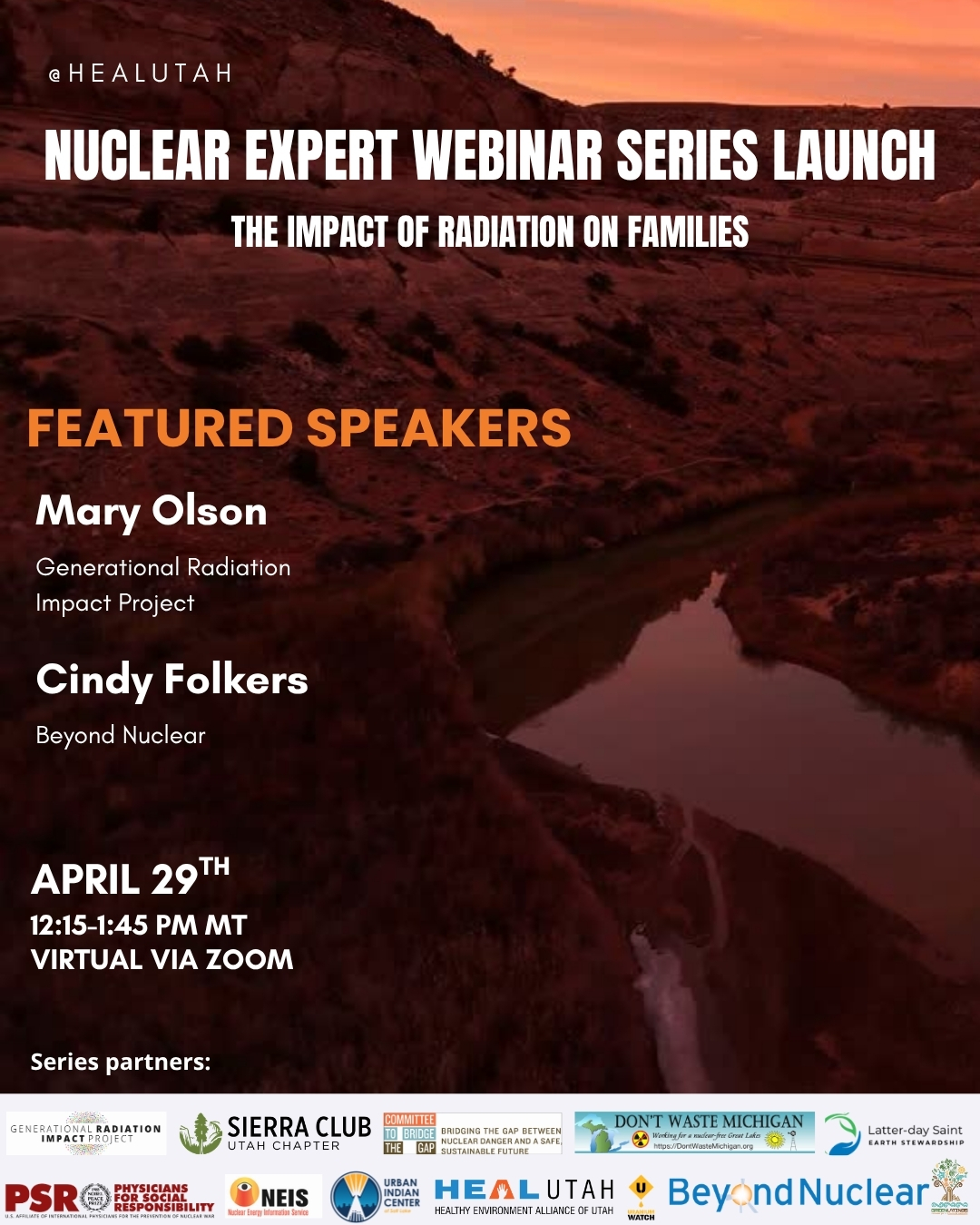
29 April – Nuclear Expert Webinar #1 – Radiation Impacts on Families with Mary Olson and Cindy Folkers
- 12:15 PM MT – 1:45 PM MT
- Location: Virtual – REGISTER TODAY

4 May -West Suburban Peace Coalition to discuss Iran war at May Educational Forum
Monday, May 4, 7:00 – 8:00 PM Central Standard Time
Title: : How Trump’s Narrative Tries to Shape the Reality of the War on Iran.
Contact Walt Zlotow, zlotow@hotmail.com 630 442 3045 for further information
14 May – online event From Bombs to Data Centres: the Face of Nuclear Colonialism

Pine Ridge Uranium is the real threat, not Tehran- Tell Burgum: Stop the Extraction.
Chernobyl: The Lost Tapes – A good documentary on Chernobyl on SBS available On Demand for the next 3 weeks– https://www.sbs.com.au/ondemand/tv-program/chernobyl-the-lost-tapes/2352741955560
To see nuclear-related stories in greater depth and intensity – go to https://nuclearinformation.wordpress.com
-
Archives
- April 2026 (317)
- March 2026 (251)
- February 2026 (268)
- January 2026 (308)
- December 2025 (358)
- November 2025 (359)
- October 2025 (376)
- September 2025 (257)
- August 2025 (319)
- July 2025 (230)
- June 2025 (348)
- May 2025 (261)
-
Categories
- 1
- 1 NUCLEAR ISSUES
- business and costs
- climate change
- culture and arts
- ENERGY
- environment
- health
- history
- indigenous issues
- Legal
- marketing of nuclear
- media
- opposition to nuclear
- PERSONAL STORIES
- politics
- politics international
- Religion and ethics
- safety
- secrets,lies and civil liberties
- spinbuster
- technology
- Uranium
- wastes
- weapons and war
- Women
- 2 WORLD
- ACTION
- AFRICA
- Atrocities
- AUSTRALIA
- Christina's notes
- Christina's themes
- culture and arts
- Events
- Fuk 2022
- Fuk 2023
- Fukushima 2017
- Fukushima 2018
- fukushima 2019
- Fukushima 2020
- Fukushima 2021
- general
- global warming
- Humour (God we need it)
- Nuclear
- RARE EARTHS
- Reference
- resources – print
- Resources -audiovicual
- Weekly Newsletter
- World
- World Nuclear
- YouTube
-
RSS
Entries RSS
Comments RSS
 nuclear-news