The proposed site of the Natrium fast nuclear reactor in Kemmerer, Wyoming is subject to potential volcanic hazards that must be rigorously evaluated. Volcanic ash falls and nuclear plants don’t play together very well.
Citing “the urgency of Israel’s defensive needs,” the Biden administration on Friday said it would bypass Congress for the second time this month to approve an immediate arms sale to the key Middle East ally as it continues to wage a genocidal war against Gaza.
The Associated Pressreported that U.S. Secretary of State Antony Blinken notified lawmakers of the new emergency determination involving the sale of $147.5 million in equipment including fuses, charges, and primers for 155mm artillery shells that Israel has already purchased from the United States.
The unguided explosive rounds—which Israel is using in heavily populated urban areas—have a “kill radius” of about 50 meters, with shrapnel able to inflict lethal wounds on people hundreds of meters away.
“The United States is committed to the security of Israel, and it is vital to U.S. national interests to ensure Israel is able to defend itself against the threats it faces,” the State Department explained.
The move follows a similar State Department determination on December 9, which expedited 13,000 rounds of tank ammunition to the Israel Defense Forces (IDF), whose troops have killed and maimed more than 80,000 Palestinians—mostly women, children, and elders—during 84 days of near-relentless attacks on Gaza.
Some of the deadliest Israeli attacks of the war have been carried out with U.S. weapons, including an October 31 airstrike with 2,000-pound bombs on the densely populated Jabalia refugee camp. More than 120 civilians were killed.
The State Department also said that “we continue to strongly emphasize to the government of Israel that they must not only comply with international humanitarian law, but also take every feasible step to prevent harm to civilians.”
Critics pushed back against that language, with Ibrahim Zabad, a professor of international relations at St. Bonaventure University in upstate New York, asserting on social media that the State Department’s move to bypass Congress “shows the U.S. administration wholeheartedly supports the mass slaughter of Palestinians, their ethnic cleansing, and the demolition of Gaza.”
British journalist Andy Worthington, known for his work chronicling the cases of Guantánamo Bay detainees, asked: “Do they think not enough Palestinian children are being orphaned or killed in Gaza?”
Eli Clifton, a senior researcher at the Quincy Institute for Responsible Statecraft, noted Blinken’s lamentation Thursday that 2023 “has been an extraordinarily dangerous year for press around the world.” Blinken’s statement did not mention the scores of journalists killed—sometimes allegedly on purpose—by Israeli troops during the war.
The U.S. already gives Israel almost $4 billion in nearly unconditional military aid each year. Since the October 7 Hamas-led attacks and Israel’s retaliatory onslaught, U.S. President Joe Biden has repeatedly affirmed his “unwavering” support for Israel. His administration has blockedmultiple global cease-fire efforts at the United Nations while seeking an additional $14.3 billion in armed assistance for Israel.
While Biden recently decried Israel’s “indiscriminate bombing” of Gaza, he has refused to acknowledge what many international experts have called Israel’s genocide against the people of the besieged strip. Some activists have dubbed him “Genocide Joe.”
On Friday, South Africa filed a genocide case against Israel at the International Court of Justice.
Hundreds of rights groups and a handful of progressives in the U.S. Congress have implored the Biden administration to suspend military aid to Israel, while others including Democratic lawmakers have called for conditions to be placed on such assistance.
Earlier this month, Sen. Elizabeth Warren (D-Mass.) led a letter urging Biden to boost oversight of how American arms are used against Palestinian civilians. The letter specifically mentions 155mm artillery shells.
“The IDF has previously used these shells to hit populated areas including neighborhoods, hospitals, schools, shelters, and safe zones, causing a staggering number of civilian deaths,” the senators noted.
According to a Quinnipiac University poll published on December 20, less than half of registered U.S. voters support sending military aid to Israel—an approximately 10-point decrease from the previous month.
If there’s one thing Blinken and his cohorts understand, it’s that you’re not supposed to describe the evil things you want to do in evil-sounding language. You’ve got to tapdance gracefully around the actual depravity you intend to inflict, uttering flowery prose about humanitarian concerns and compassion for both sides to keep everyone dazzled and hypnotized while the killing machines are quietly rolled out in the background. You’ve got to be eloquent and elusive about your murderousness.
“The United States rejects recent statements from Israeli Ministers Bezalel Smotrich and Itamar Ben Gvir advocating for the resettlement of Palestinians outside of Gaza. This rhetoric is inflammatory and irresponsible. We have been told repeatedly and consistently by the Government of Israel, including by the Prime Minister, that such statements do not reflect the policy of the Israeli government. They should stop immediately.
“We have been clear, consistent, and unequivocal that Gaza is Palestinian land and will remain Palestinian land, with Hamas no longer in control of its future and with no terror groups able to threaten Israel. That is the future we seek, in the interests of Israelis and Palestinians, the surrounding region, and the world.”
The offending statements by Ben Gvir and Smotrich promoted the idea of “encouraging” Palestinians to flee Gaza en masse, absurdly referring to this hypothetical outcome as “voluntary migration” despite the fact that Israel has been doing everything in its power to make living in Gaza impossible.
You will note, probably without surprise, that the statement contains nothing but empty scolding. No mention is made of the faintest possibility of any consequence of any kind being brought to bear should Israeli officials continue to openly advocate for eliminating the Palestinian population of Gaza and replacing it with Jewish settlements. This is because the US has no intention of actually doing anything to hinder Israel’s ethnic cleansing agendas.
And make no mistake, that absolutely is Israel’s agenda. The State Department can claim all it wants that “such statements do not reflect the policy of the Israeli government” and that Israeli Prime Minister Benjamin Netanyahu has assured Washington that there are no plans to resettle Palestinians outside of Gaza, but Netanyahu himself has been publicly contradicting this claim with increasing brazenness.
Just last week at a Likud party meeting Netanyahu explicitly said that his government is working on finding countries who would be willing to “absorb” Palestinian refugees from Gaza, claiming that the world is “already discussing the possibilities of voluntary immigration.”
Indeed, it’s fair to say that the extreme-right ministers Ben Gvir and Smotrich are not actually saying anything on this front that is significantly different from what Netanyahu himself has been saying. Bibi’s just a bit more polite about it, with Ben Gvir openly thumbing his nose at the State Department’s remarks saying “we aren’t another star on the American flag” and “facilitating the relocation of hundreds of thousands from Gaza will allow those in the Israeli Gaza border communities to return home and live securely while safeguarding the IDF soldiers.”
In fact, one could easily argue that Netanyahu as well as Ben Gvir and Smotrich have been entirely in alignment with the State Department’s own language on this subject. The idea of “voluntary immigration” does not contradict the position asserted by Secretary of State Antony Blinken that the US vision for Gaza involves “no forcible displacement of Palestinians from Gaza — not now, not after the war.”
Notice Blinken’s careful insertion of the word “forcible” there. His wording makes it clear that the US would only object if Palestinians were actually forced onto ships or marched across the Egyptian border at gunpoint, as middle east analyst Mouin Rabbani recently observed on Twitter:
“Alarm bells should have started ringing in early November when US Secretary of State Antony Blinken and other Western politicians began insisting there could be ‘no forcible displacement of Palestinians from Gaza’. Rather than rejecting any mass removal of Palestinians, Blinken and colleagues objected only to optically challenging expulsions at gunpoint. The option of ‘voluntary’ displacement by leaving residents of the Gaza Strip with no choice but departure was pointedly left open.”
So contrary to its self-righteous moral posturing, the State Department is not actually upset with Ben Gvir and Smotrich for advocating the ethnic cleansing of Gaza. They’re just upset they said the quiet part out loud.
If there’s one thing Blinken and his cohorts understand, it’s that you’re not supposed to describe the evil things you want to do in evil-sounding language. You’ve got to tapdance gracefully around the actual depravity you intend to inflict, uttering flowery prose about humanitarian concerns and compassion for both sides to keep everyone dazzled and hypnotized while the killing machines are quietly rolled out in the background. You’ve got to be eloquent and elusive about your murderousness. Like Obama.
The US war machine is every bit as depraved as the state of Israel, and the Biden administration is just as culpable for the horrors being unleashed in Gaza as Netanyahu and his goons. Ignore their words and watch their actions. Don’t let them dazzle you with their feigned concern for human rights.
Researchers with the Canadian Museum of Nature say a proposed nuclear waste storage facility upstream could destroy the delicate balance of two endangered species thriving in an Ottawa River cave network.
Last month, the museum’s André Martel lowered his scuba goggles and plunged into what he deemed an “extraordinary” segment of the river around Lac Coulonge east of Pembroke, Ont.
An absence of hydroelectric dams, a fast-flowing current, naturally forming fluvial sand dunes and the country’s longest freshwater cave network have made this an Eden for an endangered, wavy brown mollusc called the Hickorynut mussel.
Martel believes the delicate population of the freshwater mussel has a secret ally in a fish just as enigmatic and just as threatened: the lake sturgeon………………………………………………………………………………………
New facility at Chalk River
Though they don’t yet have the full answer, there is real concern about a proposal to dump nuclear waste near the shoreline upstream in Deep River, Ont.
A consortium led by SNC-Lavalin has proposed a “near surface disposal facility” waste site just one kilometre from the river.
“Let’s be sure that we are aware of what we’re doing, what is at stake,” Martel said.
He said special protection is needed for the 141-kilometre segment of river where the fragile hickorynut and ancient sturgeon are working together to filter silt and bacteria from the water like a massive river kidney.
Katriina Ilves, a Canadian Museum of Nature ichthyologist — a marine biologist who studies different fish species — called the Lac Coulonge-area sturgeon population “an important, and enigmatic species.”
“I would have some concerns over any type of development that would have the potential to lead to contamination of this water system,” she said.
Nuclear Waste Management Organization has stated that they will put to a vote in two communities, Ignace/Wabagoon First Nation and South Bruce/Saugeen Ojibway Nation, for a permanent burial of nuclear waste.
I have been following this search for a burial place for nuclear waste since the early 1980s when Atomic Energy of Canada was in charge of the process. The planning and testing the concept of burial of nuclear waste goes back to the 1960s with drilling in Northern Manitoba. Manitoba has a High-Level Nuclear Waste Act, which states that there will be no storage of any nuclear waste that was not produced in Manitoba.
The site proposed to burial this nuclear waste is half way between Ignace and Dryden, but people in Dryden will not be given the option to vote on this waste site. When there is a leak (not if) the water flow will go into the Wabagoon water system, though to Dryden, Kenora and parts of Manitoba before heading north to Hudson Bay and south to Minnesota.
Do any of the people who will be affected have a vote on this nuclear waste site?
No.
When there is a nuclear accident with a transport moving this waste, we have no knowledge on how long the highway will be closed. We are not talking about a transport truck moving Amazon packages or a logging truck that closes down the highway for 12 hours, we could be talking weeks.
When there is an accident, and your home is contaminated, your insurance policy is null and void. If you read the fine print in your policy, it clearly stated that in case of a nuclear incident you are not covered.
You and everyone who is on the route to move this nuclear waste through Northwestern Ontario is in danger of losing everything you have worked so hard for. But you don’t have a vote because the Nuclear Waste Management Organization has rigged the system on who is allowed to say yes or no.
If this was great jobs and a safe option, do you honestly think that Southern Ontario would allow it to be buried in Northern Ontario? The answer would be no, they would be fighting to keep the jobs down in the South. But they got all the nuclear power, all the jobs, all the spin off jobs, and now they want to “Share” by giving us the hole.
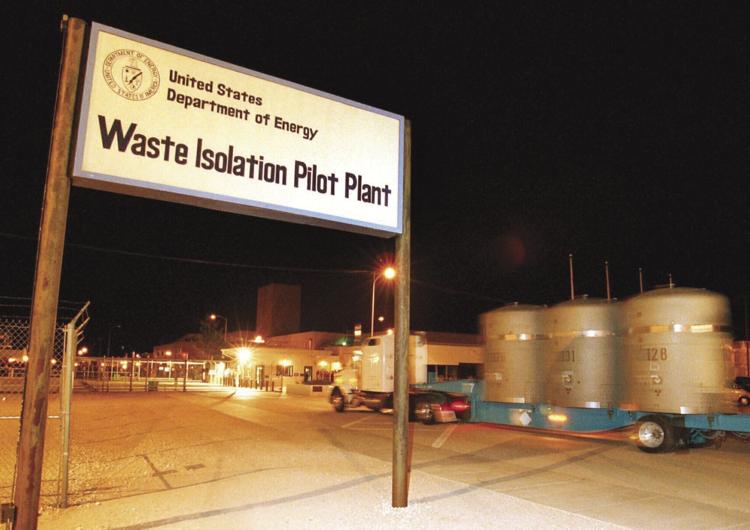
The New Mexico Environment Department’s hazardous waste permit for the Waste Isolation Pilot Plant (WIPP) requires the Department of Energy (DOE) to submit a Legacy Transuranic, or TRU, Waste Disposal Plan to the Environment Department. DOE submitted its inadequate plan on November 4th for a 60-day public comment period, which ends on Friday, January 3rd, 2025. https://wipp.energy.gov/Library/documents/2024/24-0772-s.pdf
A sample public comment letter you can use to create your comments is available HERE.
The DOE plan ignores the promises DOE made to New Mexicans. WIPP was sold as a pilot project to clean up Cold War legacy radioactive and hazardous waste at DOE’s nuclear weapons sites located across the country. It was a test case for the deep geologic disposal of transuranic, or plutonium-contaminated, nuclear waste made during the Cold War. DOE promised it would cleanup all its transuranic waste, ship it to WIPP for disposal and close WIPP after 25 years of operations. WIPP opened in 1999 and was scheduled to close in 2024.
But DOE changed its mind. DOE now wants to keep WIPP open until at least 2083 for the transuranic waste created by fabricating new plutonium triggers, or pits, for nuclear weapons at Los Alamos National Laboratory (LANL) and the Savannah River Site in South Carolina.
DOE is ignoring its promises and the buried transuranic waste at LANL that needs to be packaged and shipped to WIPP. Further, there are 2,025 transuranic waste containers stored aboveground in the Area G fabric tents in a wildfire zone. https://n3b-la.com/area-g-tru/ New Mexicans can challenge DOE’s plan through the WIPP Hazardous Waste Permit and the three new permit conditions that address the need for another nuclear waste repository in a state other than New Mexico; the need to prioritize and reduce risk of transuranic waste stored in New Mexico; and the need for a Legacy TRU Waste Disposal Plan that prioritizes disposal of Cold War legacy waste over newly generated nuclear waste, including at LANL. https://www.env.nm.gov/hazardous-waste/wipp-permit-page/ , see permit conditions 2.14.3 Repository Siting Annual Report; 4.2.1.4 Prioritization and Risk Reduction of New Mexico Waste; and 4.2.1.5 Legacy TRU Waste Disposal Plan on the attached. 240924 NMED WIPP HazWaste Renewal Permit Conditions
DOE’s plan fails to define legacy waste. DOE’s definition is explicitly intended to include as legacy waste whatever any DOE site describes as legacy, including waste generated more than a decade after WIPP opened. The plan also includes as legacy waste “surplus” plutonium that DOE plans to ship and process at LANL and dispose of at WIPP.
DOE will submit the public comments to the Environment Department before the end of January. The Environment Department will determine whether DOE met the permit requirements for the plan.
Documents show the risks toxic substances posed in the underground capsules and silos where Air Force nuclear missile crews have worked since the 1960s
abc news, By TARA COPP Associated Press, December 29, 2023
WASHINGTON — A large pool of dark liquid festering on the floor. No fresh air. Computer displays that would overheat and ooze out a fishy-smelling gel that nauseated the crew. Asbestos readings 50 times higher than the Environmental Protection Agency’s safety standards.
These are just some of the past toxic risks that were in the underground capsules and silos where Air Force nuclear missile crews have worked since the 1960s. Now many of those service members have cancer.
The toxic dangers were recorded in hundreds of pages of documents dating back to the 1980s that were obtained by The Associated Press through Freedom of Information Act requests. They tell a far different story from what Air Force leadership told the nuclear missile community decades ago, when the first reports of cancer among service members began to surface:
“The workplace is free of health hazards,” a Dec. 30, 2001, Air Force investigation found.
“Sometimes, illnesses tend to occur by chance alone,” a follow-up 2005 Air Force review found.
The capsules are again under scrutiny.
The AP reported in January that at least nine current or former nuclear missile officers, or missileers, had been diagnosed with the blood cancer non-Hodgkin’s lymphoma. Then hundreds more came forward self-reporting cancer diagnoses. In response the Air Force launched its most sweeping review to date and tested thousands of air, water, soil and surface samples in all of the facilities where the service members worked. Four current samples have come back with unsafe levels of polychlorinated biphenyls, or PCBs, a known carcinogen used in electrical wiring.
In early 2024, more data is expected, and the Air Force is working on an official count of how many current or former missile community service members have cancer.
……………………………………………………………….. When the latest rounds of test results were released, the Air Force did not initially reveal that samples showing contamination had critically higher PCB levels than EPA standards allow — and dozens of other areas tested were just below the EPA’s threshold, said Steven Mayne, a former senior enlisted nuclear missile facility supervisor at Minot Air Force Base in North Dakota who now runs a Facebook group that is dedicated to posting Air Force news or internal memos.
“At this point the EPA, OSHA (Occupational Safety and Health Administration) and senators from North Dakota and Montana need to look into this matter,” Mayne said.
In December 2022, former Malmstrom missileers Jackie Perdue and Monte Watts, both of whom have been diagnosed with non-Hodgkin’s lymphoma, asked the Defense Department’s inspector general to investigate.
“I believe health and safety standards have been violated, or not considered, and should be investigated,” said Perdue, who served as a nuclear missile combat crew commander at Malmstrom from 1999 to 2006, in an inspector general complaint obtained by the AP.
…………………………………………………………………………………………. The environmental reports from Malmstrom when Jason was assigned there show Sierra had a long list of hazards. In 1996, a medical team reported there were more than 25 gallons of fluid overrun with biological growth festering on Sierra’s capsule floor. An intake that collected outside air for Sierra was located by the parking lot, and the team watched a running car idle near it for 20 minutes. The team documented that a fan needed to pull clean air down into Sierra had been broken for at least six months, so the only way crews could get fresh air was if they left the capsule’s steel vault door open.
………………………………………… Sierra was dangerous. In March of 1996, the medical team measured carbon dioxide levels of 1,700 parts per million in the air. “At these levels you can expect complaints of headache, drowsiness, fatigue and/or difficulty concentrating from a majority of the occupants. Worker removal should be considered.”
Nothing changed. That May the medical team again recorded exposure levels of 1,800 ppm, and advised again that the missileers should be removed.
By the mid-1990s a new missile targeting system was needed, and each capsule began a refurbishment to install a wall-sized computer console called REACT, for Rapid Execution and Combat Targeting System……………………………….
A clear liquid began to leak, followed by a fishy, ammonia-like smell. The crew began to complain of headaches and nausea, and the capsule was evacuated two hours later.
Malmstrom’s team learned that the liquid was dimethylformamide, an electrolyte used in REACT’s video display unit capacitors, because F.E. Warren, the Wyoming base, had recently reported similar leaks.
…………………… All of the capsules will be closed down in a few years, as the military’s new ICBM, the Sentinel, comes online. As part of the modernization, the old capsules will be demolished. A new, modern underground control center will be built on top of them.
……………………. The old capsules will remain in use until then, though, which makes it even more important that the Air Force is completely open with its missileers now, Doreen Jenness said.
Because they were so young, neither she nor Jason suspected cancer when he started to feel fatigued in the fall of 2000. Nor when his hip started to ache that December.
When he finally gave in and saw a doctor in February 2001, he was admitted to the hospital the same day. By March, Jason and Doreen knew his lymphoma was untreatable. He died that July.
“We can all pretend to not know, because knowing is really hard,” Doreen Jenness said. “Knowing and doing something about it is even harder. Now, 23 years after Jason’s been gone there’s a whole bunch of young men and women that are having to go through the same things that we had to go through. They have to live the same lives and maybe have the same future as me, and it’s just sad. Really sad.”………………… https://abcnews.go.com/US/wireStory/air-force-nuclear-missile-capsules-safe-toxins-lurked-105982645
Microsoft is training an AI to generate the paperwork needed to get next-gen nuclear reactors approved by regulators — all so that the reactors can power Microsoft data centers running generative AIs.
Tech giant Microsoft is shouldering much of that burden — in addition to investing a reported $13 billion into OpenAI, it also built the massive supercomputer used to train the startup’s generative AIs, and its data centers provide the processing power used to run the models.
Nuclear vision: Microsoft appears keen to use nuclear energy — specifically from small modular reactors (SMRs) — to meet the increased electricity demand that generative AI is putting on its data centers……………………
There aren’t any SMRs in operation in the US yet, though, and getting one approved by regulators is an expensive, complex process. The only company to do it, NuScale, spent $500 million, and its application was 12,000 pages long, with more than 2 million pages of supporting documents.
What’s new? In the hope of streamlining this process, Microsoft has teamed up with Terra Praxis, a nonprofit that promotes decarbonization, to train a generative AI to help create the documents needed to get new nuclear reactors approved.
Looking ahead: Ingersoll estimates that the AI could cut the number of human hours needed to get a new SMR approved by 90%, and while it’s too soon to say whether he’s right, Microsoft appears hopeful that its bet on generative AI to accelerate its nuclear vision will pay off.
As a private citizen, the options for suing an intelligence agency are few and far between. The US Central Intelligence Agency, as with other members of the secret club, pour scorn on such efforts. To a degree, such a dismissive sentiment is understandable: Why sue an agency for its bread-and-butter task, which is surveillance?
This matter has cropped up in the US courts in what has become an international affair, namely, the case of WikiLeaks founder and publisher, Julian Assange. While the US Department of Justice battles to sink its fangs into the Australian national for absurd espionage charges, various offshoots of his case have begun to grow. The issue of CIA sponsored surveillance during his stint in the Ecuadorian embassy in London has been of particular interest, since it violated both general principles of privacy and more specific ones regarding attorney-client privilege. Of particular interest to US Constitution watchers was whether such actions violated the reasonable expectation of privacy protected by the Fourth Amendment.
Four US citizens took issue with such surveillance, which was executed by the Spanish security firm Undercover (UC) Global and its starry-eyed, impressionable director David Morales under instruction from the CIA. Civil rights attorney Margaret Ratner Kunstler and media lawyer Deborah Hrbek, and journalists John Goetz and Charles Glass, took the matter to the US District Court of the Southern District of New York in August last year. They had four targets of litigation: the CIA itself, its former director, Michael R. Pompeo, Morales and his company, UC Global SL.
All four alleged that the US Government had conducted surveillance on them and copied their information during visits to Assange in the embassy, thereby violating the Fourth Amendment. In doing so, the plaintiffs argued they were entitled to money damages and injunctive relief. The government moved to dismiss the complaint as amended.
On December 19, District Judge John G. Koeltldelivered a judgment of much interest, granting, in part, the US government’s motion to dismiss but denying other parts of it. Before turning to the relevant features of Koeltl’s reasons, various observations made in the case bear repeating. The judge notes, for instance, Pompeo’s April 2017 speech, in which he “‘pledged that his office would embark upon a ‘long term’ campaign against WikiLeaks.’” He is cognisant of the plaintiffs’ claims “Morales was recruited to conduct surveillance on Assange and his visitors on behalf of the CIA and that this recruitment occurred at a January 2017 private security industry convention at the Las Vegas Sands Hotel in Las Vegas, Nevada.”
From that meeting, it is claimed that “Morales created an operations unit, improved UC Global’s systems, and set up live streaming from the United States so that surveillance could be accessed instantly by the CIA.” The data gathered from UC Global “was either personally delivered to Las Vegas; Washington, D.C.; and New York City by Morales (who travelled to these locations more than sixty times in the three years following the Las Vegas convention) or placed on a server that provided external access to the CIA.”
Koeltl preferred to avoid deciding on the claims that Morales and UC Global were, in fact, “acting as agents of Pompeo and the CIA.” Such matters were questions of fact “that cannot be decided on a motion to dismiss.”
A vital issue in the case was whether the plaintiffs had standing to sue the CIA in the first place. Citing the case of ACLU v Clapper, which involved a challenge to the National Security Agency’s bulk telephone metadata collection program, Koeltl accepted that they did. In doing so, he rejected a similar argument made by the government in Clapper – that the injuries alleged were simply “too speculative and generalized” and that the information gathered via surveillance would necessarily even be used against them. “In this case, the plaintiffs need not allege, as the Government argues, that the Government will imminently use their information collected at the Ecuadorean Embassy in London.” If the search of the conversations and electronic devices along with the seizure of the contents of the electronic devices “were unlawful, the plaintiffs have suffered a concrete and particularized injury fairly traceable to the challenged program and redressable by favorable ruling.”
Less satisfactory for the plaintiffs was the finding they had no reasonable expectation of privacy regarding their conversations with the publisher given that “they knew Assange was surveilled even before the CIA’s alleged involvement.” The judge thought it significant that they did “not allege that they would not have met Assange had they known their conversations would be surveilled.” Additionally, it “would not be recognized as reasonable by society” to have expected conversations held with Assange at the embassy in London to be protected, given such societal acceptance of, for instance video surveillance in government buildings.
This reasoning is faulty, given that the visits by the four plaintiffs to the embassy did not take place with their knowledge of the operation being conducted by UC Global with CIA blessing. In a general sense, anyone visiting the embassy could not help but suspect that Assange might be the object of surveillance, but to suggest something akin to a waiver of privacy rights on the part of attorneys and journalists aiding a persecuted publisher is an odd turn.
The US Government also succeeded on the point that the plaintiffs had no reasonable expectation to privacy regarding their passports or their devices they voluntarily left at the Embassy reception desk. In doing so, they “assumed the risk that the information may be conveyed to the Government.” Those visiting embassies must, it would seem, be perennially on guard.
That said, the plaintiffs convinced the judge that they had “sufficient allegations that the CIA and Pompeo, through Morales and UC Global, violated their reasonable expectation to privacy in the contents of their electronic devices.” The government even went so far as to concede that point.
Unfortunately for the plaintiffs, the biggest fish was let off the hook. The plaintiffs had attempted to use the 1971 US Supreme Court case of Bivens to argue that the former CIA director be held accountable and liable for violating constitutional rights. Koeltl thought the effort to extend the application of Bivens inappropriate in terms of the high standing nature of the defendant and the context. “As a presidential appointee confirmed by Congress […] Defendant Pompeo is in a different category of defendant from a law enforcement agent of the Federal Bureau of Narcotics.” More’s the pity.
Leaving aside some of the more questionable turns of reasoning in Koeltl’s judgment, public interest litigants and activists can take heart from the prospect that civil trials against the CIA for violations of the US Constitution are no longer unrealistic. “We are thrilled,” declaredRichard Roth, the plaintiffs’ attorney, “that the court rejected the CIA’s efforts to silence the plaintiffs, who merely seek to expose the CIA’s attempt to carry out Pompeo’s vendetta against WikiLeaks.” The appeals process, however, is bound to be tested.
There will be a most unusual public hearing by the CNSC in late January 2024. It’s not a licensing hearing. It’s an attempt to cover up or to exonerate an act already performed by OPG without explicit approval.
The first construction licence for a commercial SMNR (Small Modular Nuclear Reactor) in Canada has been requested by OPG, who wants to build up to 4 GE-Hitachi “boiling water” reactors on the Darlington site. But there’s a glitch.
OPG used an old 2011 “site preparation licence” to prepare the site for the GE-Hitachi BWRX-300 reactor on the same property as the Darlington Nuclear Generating Station, where 4 large CANDU reactors are currently being refurbished.
The old licence was granted on the basis of an Environmental Assessment Report published in 2011 by a Joint Review Panel (JRP) who had examined and approved four large candidate reactors that had very little in common with the BWRX-300.
The JRP stipulated in their report that if OPG chooses a reactor design that is “significantly different” from those that they had examined from 2009-2011, then a NEW EA should be conducted. In other words, OPG should start over again.
But OPG “jumped the gun” by using that antiquated site preparation licence without explicit approval.
Fearing that they may have violated the terms of the 2011 EA Report, by using an old site preparation licence granted for a significantly different reactor construction project, OPG is now asking the CNSC to declare that the BWRX-300 design was, in effect, already approved by the JRP back in 2011 (even though no design of that type was ever considered by the JRP).
My intervention for this upcoming hearing is entitled “DNNP: Mischief in the Making” in which I argue that the 2011 EA Report did not and could not be construed to cover the BWRX-300, and recommending the CNSC to so confirm as a matter of fact.
Accordingly, before a construction licence is considered for a BWRX-300, a new EA is required.
COLUMBUS, Ohio (AP) — Ohio’s former top utility regulator surrendered Monday in connection with a $60 million bribery scheme related to a legislative bailout for two Ohio nuclear power plants that has already resulted in a 20-year prison sentence for a former state House speaker.
Sam Randazzo, former chair of the Public Utilities Commission of Ohio, self-surrendered at U.S. District Court in Cincinnati after being charged in an 11-count indictment that was returned on Nov. 29, U.S. Attorney Kenneth L. Parker’s office announced. Randazzo was scheduled for an initial court appearance later in the day.
“Today’s indictment outlines an alleged scheme in which a public regulatory official ignored the Ohio consumers he was responsible for protecting, instead taking a bribe from an energy company seeking favors,” FBI Cincinnati Special Agent in Charge J. William Rivers said in a statement.
Randazzo, 74, resigned in November 2020 after FBI agents searched his Columbus townhome and FirstEnergy revealed in security filings what it said were bribery payments of $4.3 million for his future help at the commission a month before Republican Gov. Mike DeWine nominated him as Ohio’s top utility regulator.
He faces one count of conspiring to commit travel act bribery and honest services wire fraud, two counts of travel act bribery, two counts of honest services wire fraud, one count of wire fraud and five counts of making illegal monetary transactions.
A message seeking comment was left for his lawyer. If convicted as charged, the defendant could face up to 20 years in prison.
Ohio Consumers’ Counsel Maureen Willis, who represents the state’s utility ratepayers, said the indictment was “an important first step to bring justice to Ohio utility consumers” — but that more is needed.
“It underscores the need for near-term reform of the PUCO selection process that led to his appointment as Chair of the PUCO,” Willis said in a statement. “OCC’s calls for reform so far have gone unanswered. Ohioans deserve better from the public officials in this state.”
The long-awaited indictment marks the latest development in what has been labeled the largest corruption case in Ohio history.
Former Ohio House Speaker Larry Householder was sentenced in June to 20 years in prison for his role in orchestrating the scheme, and lobbyist Matt Borges, a former chair of the Ohio Republican Party, was sentenced to five years.
The U.S. attorney’s office in Cincinnati indicted three others on racketeering charges in July 2020.
Lobbyist Juan Cespedes and Jeffrey Longstreth, a top Householder political strategist, pleaded guilty in October 2020. The third person arrested, statehouse lobbyist Neil Clark, pleaded not guilty before dying by suicide in March 2021. The dark money group used to funnel FirstEnergy money, Generation Now, also pleaded guilty to a racketeering charge in February 2021.
All were accused of using the $60 million in secretly funded FirstEnergy cash to get Householder’s chosen Republican candidates elected to the House in 2018 and then to help him get elected speaker in January 2019.
Every time we gamble on a nuclear project like Nuscale to deliver carbon-free power, we are hampering our ability to meet critical climate goals by 2030.
Early last month, Nuscale made headlines by canceling its 462 MW proposal for a small modular nuclear reactor (SMNR) at the Idaho National Laboratory. Here in Utah, the news was met with little surprise.
For the past six years, we’ve been raising crucial questions about the viability of the so-called “Carbon Free Power Project” (CFPP). Was it a project that could deliver power on time and at a reasonable cost to ratepayers? How much would taxpayers and ratepayers ultimately pay, and who would bear the environmental, public health and financial risks? Could it meet our energy needs at a time when electrification is more critical than ever?
In 2015, the Nuscale project was eight years out. In 2022, it was still eight years out. As we watched other nuclear power projects be abandoned or blunder online years late and billions of dollars over cost, there was a sense of inevitability about who would suffer when this project failed: the communities who had placed their faith in its fantastical promises of affordable, reliable and “clean” power.
We were told that these SMNRs would be revolutionary — smaller, more cost-effective and with cutting-edge technology, but as we watched the costs swell from $55/MWh to $89/MWh and well beyond, even with huge federal subsidies, it was clear the financial risks were only mounting. With the collapse of the hypothetical project, Utah Associated Municipal Power Systems (UAMPS) member communities in rapidly growing areas like Hurricane and Washington City are now left with the reality of scrambling for alternatives to meet their future energy needs.
As we see nuclear projects around the country experience delay after delay, the Nuscale experience is one reason why we continue to watch the developments of the Terrapower Natrium reactor in Kemmerer, Wyoming, with a mix of skepticism and concern. The other reason is that the Terrapower project has promised not just electricity to Pacificorp customers, but also jobs in a community that desperately needs them. This is irresponsible at best.
The projected timeline for the Terrapower reactor to come online has already been pushed to 2030, which Terrapower external affairs director Jeff Navin admits is “cutting it close.” In addition, the community faces an economic abyss between the projected closure of the coal plant and the startup of the nuclear facility, and federal officials recently noted that with no permanent waste repository existent in the U.S., spent nuclear fuel will be stored “temporarily” on-site. Similar concerns can and should be raised about the proposed nuclear plants at Hunter and Huntington in Utah. At the end of the day, it is workers who are being let down, and it is communities who have to deal with the long term consequences.
We know that the next few years are of critical importance in our ability to combat the worst effects of climate change before we kick off even more warming feedback loops. Every time we gamble on a nuclear project like Nuscale to deliver carbon-free power, we are hampering our ability to meet critical climate goals by 2030. As timelines for such projects are inevitably dragged out, in the interim we continue to burn fossil fuels that choke the air that people breathe and force the climate ever closer to its tipping point.
The hard truth is that there is no silver bullet for climate change. Relying on nuclear power maintains dependence on a flawed energy system that primarily benefits industries that have historically profited from past harms. Now they promise to seamlessly plug in nuclear power and conduct business as usual.
According to the latest estimates, about a billion dollars was sunk into the now-abandoned Nuscale CFPP. This is a drop in the bucket compared to some other nuclear projects this country has seen over the last 30 years. But imagine that $1 billion spent elsewhere on legacy cleanups of the nuclear and uranium mining industry, aiding Downwinders or boosting renewable energy capacity that we know can work. There is an opportunity cost for investing in nuclear when we have faster, lower-risk options that we can prioritize now. Instead, we can take on climate change with what has been called “rational hope,” by investing in wind, solar, geothermal power, storage, grid improvements and efficiency technologies that offer cost-effective climate solutions. And Utah’s potential in these areas is immense.
But this energy future requires a reimagining. It requires permitting and energy-sourcing processes that put the health and vitality of communities front and center. It means changing course to avoid mistakes of the past.
Here at HEAL Utah, we collaborate with communities to shape an energy future crafted by the people it serves. This future prioritizes clean air, a healthy environment and family-sustaining jobs, all powered by accessible, sustainable and affordable renewable energy sources. In short, this is rational hope in practice. Together, we can make it a reality.
Lexi Tuddenham is the executive director of the Healthy Environment Alliance of Utah (HEAL Utah).
For two years, Biden and Zelenskyy have been focused on driving Russia from Ukraine. Now Washington is discussing a move to a more defensive posture.
Politico, By MICHAEL HIRSH, 12/27/2023
With U.S. and European aid to Ukraine now in serious jeopardy, the Biden administration and European officials are quietly shifting their focus from supporting Ukraine’s goal of total victory over Russia to improving its position in an eventual negotiation to end the war, according to a Biden administration official and a European diplomat based in Washington. Such a negotiation would likely mean giving up parts of Ukraine to Russia.
The White House and Pentagon publicly insist there is no official change in administration policy — that they still support Ukraine’s aim of forcing Russia’s military completely out of the country. But along with the Ukrainians themselves, U.S. and European officials are now discussing the redeployment of Kyiv’s forces away from Ukrainian President Volodymyr Zelenskyy’s mostly failed counteroffensive into a stronger defensive position against Russian forces in the east, according to the administration official and the European diplomat, and confirmed by a senior administration official. This effort has also involved bolstering air defense systems and building fortifications, razor wire obstructions and anti-tank obstacles and ditches along Ukraine’s northern border with Belarus, these officials say. In addition, the Biden administration is focused on rapidly resurrecting Ukraine’s own defense industry to supply the desperately needed weaponry the U.S. Congress is balking at replacing.
The administration official told POLITICO Magazine this week that much of this strategic shift to defense is aimed at shoring up Ukraine’s position in any future negotiation. “That’s been our theory of the case throughout — the only way this war ends ultimately is through negotiation,” said the official, a White House spokesperson who was given anonymity because they are not authorized to speak on the record. …………………………………………………………….
“Those discussions [about peace talks] are starting, but [the administration] can’t back down publicly because of the political risk” to Biden, said a congressional official who is familiar with the administration’s thinking and who was granted anonymity to speak freely……………………………………….
Over the past year — with U.S. military support flagging fast on Capitol Hill and Zelenskyy’s once-vaunted counteroffensive failing since it was launched in June — Biden has shifted from promising the U.S. would back Ukraine for “as long as it takes,” to saying the U.S. will provide support “as long as we can” and contending that Ukraine has won “an enormous victory already. Putin has failed.”
Concerns were raised by government watchdog groups for a plan to dispose of Cold War nuclear waste at the Waste Isolation Pilot Plant repository in southeast New Mexico, as the federal government could soon generate more new waste through weapons development that would also need disposal.
In a recent 10-year renewal of the Department of Energy’s permit with the New Mexico Environment Department for WIPP’s operations, the NMED added a mandate to prioritize “legacy waste” held for decades at DOE sites and ensure there was adequate space in the underground for its disposal.
At a Dec. 13 public meeting held in Carlsbad and virtually, required by the new permit enacted Nov. 3, DOE and WIPP officials sought input on officially defining legacy waste and how it would be disposed of at WIPP.
Joni Arends with New Mexico-based Concerned Citizens for Nuclear Safety argued the DOE had held inadequate public meetings with the generator sites, and needed to work quicker to determine how much legacy waste was needing disposal around the U.S.
“You’ve got to do more to get people involved in this very important issue so that we have a complete inventory by the due date in November 2024,” she said.
The permit specified that a legacy waste disposal plan must be developed and submitted to NMED a year after the permit takes effect, and reserved Panel 12 for the disposal of this waste.
That panel was one of two new panels approved for mining in the permit, intended to replace space lost to contamination in a 2014 incident……………………………………………………………………
Edward Holbrook, with the Department of Ecology’s nuclear waste program at Washington State University said legacy waste is not officially defined at the DOE’s Hanford Site in Washington.
He proposed meetings at the local level as the project moves forward to better determine what the term meant to specific sites, and how much of the waste was present.
“I don’t have those answers right now,” Holbrook said.
Former-NMED scientist Steve Zappe said during the meeting the legacy waste requirement was added to the permit amid concerns that newer streams of waste, such as from increased plutonium pit production at Los Alamos and other facilities, could take up space originally intended for older waste.
“Newly-generated waste which might be easier to dispose of could displace legacy waste which is maybe difficult to characterize or retrieve,” he said.
Tom Clements, executive director at Savannah River Site Watch, a government watchdog group focused on the DOE facility in South Carolina, worried an ongoing project to “down-blend” or dilute surplus weapons-grade plutonium at the facility could result in excess waste needing disposal.
This new stream would likely not be considered legacy waste, and Clements argued the DOE would need to find a process to balance such emerging needs, including planned pit production at Savannah River.
“This is not legacy material,” Clements said. “The pit-TRU is not included. I wonder how the plutonium down-blended material is going to be categorized. To me it is not legacy waste.”
Chavez agreed that the wastes Clements mentioned were not legacy waste.
That could be a problem, said Don Hancock with the Southwest Research and Information Center in Albuquerque.















 nuclear-news