South Dakota Governor Signs Bill Into Law That Conflates Criticism of Israel With Anti-Semitism
Under the law, drawing ‘comparisons of contemporary Israeli policy to that of the Nazis’ is considered anti-Semitic
by Dave DeCamp March 11, 2024 ,https://news.antiwar.com/2024/03/11/south-dakota-governor-signs-law-that-conflates-criticism-of-israel-with-anti-semitism/
South Dakota Governor Kristi Noem signed a bill into law last week that conflates some criticisms of the modern state of Israel with anti-Semitism.
By signing the bill into law, the International Holocaust Remembrance Alliance’s (IHRA) definition of anti-Semitism must be taken into consideration in investigations of unfair or discriminatory practices within the state of South Dakota.
The IHRA’s definition was first adopted in 2016 and lists “drawing comparisons of contemporary Israeli policy to that of the Nazis” as an example of anti-Semitism. Noem signed the bill into law as Israel’s brutal campaign in Gaza has killed over 31,000 Palestinians, mostly women and children, and after the International Court of Justice ruled it’s “plausible” that Israel is committing genocide.
The IHRA also defines anti-Semitism as applying “double standards” to Israel by “requiring of it a behavior not expected or demanded of any other democratic nation.” It lists “denying the Jewish people their right to self-determination” by “claiming that the existence of a State of Israel is a racist endeavor” as another example of anti-Semitism.
According to The Jerusalem Post, South Dakota has become the 12th US state to codify the IHRA’s definition of anti-Semitism into law. At least 23 other states have supported the definition through legislative action but have not officially made it into law. The US State Department has also adopted the definition, as the US is a member country of the IHRA.
Many US states have also passed laws to punish individuals or companies who boycott Israel. The legislation is designed to fight against the global Boycott, Divestment, and Sanctions (BDS) movement that advocates for global boycotts against Israel.
Over 30 states have adopted anti-BDS laws, and several states used them to punish Unilever, the parent company of Ben & Jerry’s, over the ice cream maker’s decision to stop selling its product in illegal Israeli settlements in the West Bank. Colorado, New York, New Jersey, Illinois, Arizona, Florida, and Texas all took action against Unilever by moving to divest state pension funds from the British conglomerate.
When Ben & Jerry’s first announced it would stop selling ice cream in the occupied territory, Israel launched a “maximum pressure” campaign and urged states to take action against Ben & Jerry’s. Unilever eventually sold the ice cream company’s business interests in Israel to a local company that would keep selling the product in settlements.
MOLTEX nuclear reactors: The whole thing is a scam, wasting tax payer money again.
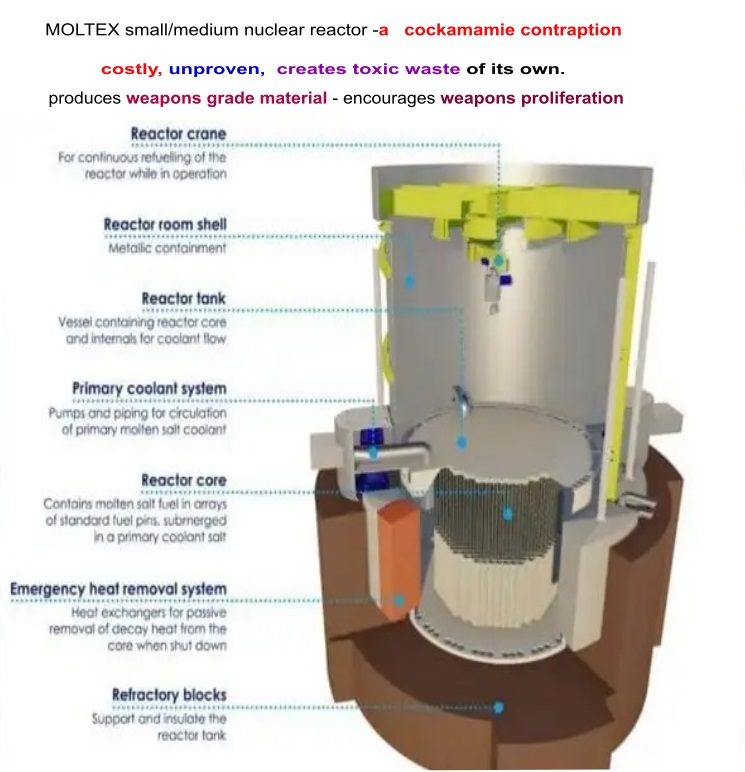

14 Mar 24
Why this pyro-reprocessing? Vitrification is the proven and researched method for reprocessed nuclear fuel waste. The U.S. NUCLEAR WASTE TECHNICAL REVIEW BOARD states, ” HLW is vitrified by mixing it with a combination of silica sand and other glass-forming chemicals, heating the mixture to very high temperatures [approximately 1,150°C (2,100°F)] until it melts, and pouring the molten material into stainless steel canisters where it cools to form a glass. Vitrification is used in several countries to immobilize HLW because it has advantages over other modes of treatment. It is a well-demonstrated technology resulting from more than 40 years of industrial experience, it can be used for a wide range of HLW compositions, it is a continuous process that can be applied to large volumes of HLW, and the resulting glass product is chemically durable in many geologic disposal environments.” https://www.nwtrb.gov/docs/default-source/facts-sheets/vitrified_hlw.pdf?sfvrsn=18
A soluble corrosive salt from pyro-reprocessing is not an acceptable wasteform.
It is important to realize even with glass vitrification there will still be an off gas waste stream containing the volatiles such as Tc99, I131 and C14, the major contributors to dose in the Seaborn EIS. There needs to be extensive research done on immobilization on the volatile off gas reprocessed waste stream.
Why is it that for reprocessed waste disposal the volatile, mobile, major contributors to dose consequence are ignored?
In fact the cost and feasibility of waste disposal and decommissioning in general is never properly accounted for in the development of nuclear reactors. New reactors are not designed to make decommissioning feasible without huge cost and extensive worker radiation exposure. This is short sighted madness that the nuclear industry is allowed to get away with.
Guess what? There is no nuclear waste, no nuclear proliferation and no possible nuclear meltdown from the much cheaper solar wind and deep geothermal power options. Is this not obvious? Yet government money (our money) is poured into nuclear energy. Did the public have a say in this? No expenditure without representation? Can we dump the reactors into Boston harbour?
Observing the 45th Anniversary of the Worst U.S. Commercial Nuclear Power Plant Accident.
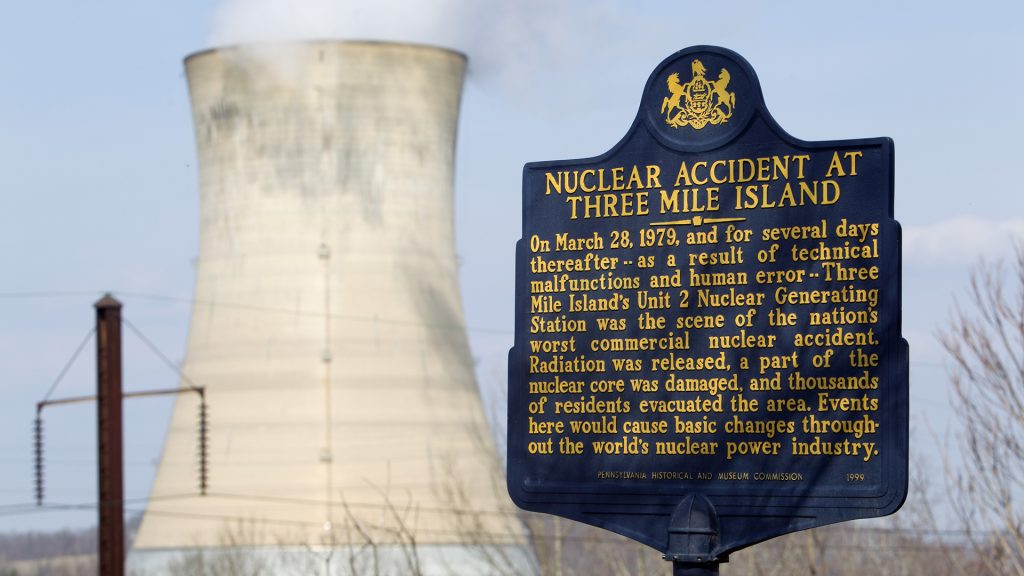
March 13th, 2024, https://nuclearactive.org/
Thursday, March 28th marks the 45th anniversary of the Three Mile Island nuclear power plant accident in Pennsylvania. A new documentary, “RADIOACTIVE: The Women of Three Mile Island,” tells the harrowing story of the 1979 accident involving the release of radioactive and toxic materials into the air, soils, water and into bodies young and old. As official evacuation orders were delayed, people received much larger radioactive doses than if the evacuation orders were issued immediately.
Forty-five years later four women continue to challenge what the company and government say about the accident.
One review explained how the documentary “uncovers the never-before-told stories of four intrepid homemakers who take their local community’s case against the plant operator all the way to the [U.S.] Supreme Court –- and a young female journalist who’s caught in the radioactive crossfire.”
It also breaks the story of a “radical new health study that may finally expose the truth of the meltdown. For over forty years, the nuclear industry has done everything in their power to cover up their criminal actions, claiming, as they always do, ‘No one was harmed and nothing significant happened.’”
The director of the outstanding documentary is Heidi Hutner. She is a professor of Literature, Sustainability, Women’s and Gender Studies at Stony Brook University New York, and a scholar of nuclear and environmental history, literature, film, and ecofeminism. Hutner chaired the Sustainability Studies Program for six years.
Beginning on March 12th, the documentary is being streamed on Apple + and Amazon Prime for $3.99. Search for The Women of Three Mile Island.
After you watch the film, be sure to register for the historic webinar coming up on Thursday, March 28th at 6 pm Mountain Time with the director Heidi Hutner and her team: Anna Rondon, who is Diné and founder of the New Mexico Social Justice and Equity Institute; Krystal Curley, who is Diné and director of Indigenous Life Ways; Mary Olson, founder of the Gender and Radiation Impact Project; and Professor Mark Jacobson, Stanford University. Cindy Folkers, of Beyond Nuclear, will moderate. The Sierra Club and Beyond Nuclear host the webinar.
In March and April, seven in-person screenings will be held in the U.S. and Canada. CCNS saw the film last weekend at the International Uranium Film Festival in Window Rock, Arizona. It received the Best Investigation Documentary award. We highly recommend watching this story about how the nuclear industry operates and covers up the truth.
EVENTS:……………………………………………….
Nuclear industry wants Canada to lift ban on reprocessing plutonium, despite proliferation risks
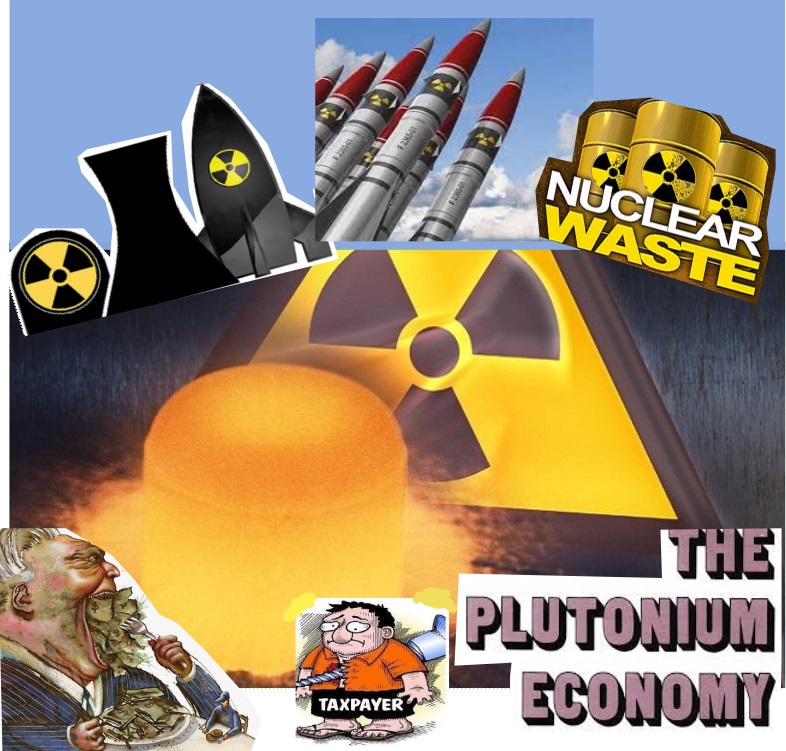

The CANDU Owners Group is far from neutral or independent…………… First, Canadian Nuclear Laboratories is a private company owned by a consortium of multi-national companies: AtkinsRéalis (formerly SNC Lavalin), Fluor, and Jacobs. ……...has overseas members, including utilities from China, Pakistan, India, South Korea, Argentina, and Romania. The first three countries are nuclear weapons states that either possess reprocessing plants for military purposes (India and Pakistan) or reportedly divert plutonium extracted from commercial spent fuel for military purposes (China), while South Korea and Argentina have for decades flirted with the idea of reprocessing.
Bulletin, By Gordon Edwards, Susan O’Donnell | March 11, 2024
Plutonium is “the stuff out of which atomic bombs are made.” Plutonium can also be used as a nuclear fuel. Reprocessing is any technology that extracts plutonium from used nuclear fuel. In Canada, the nuclear industry seems determined to close the nuclear fuel cycle by pushing for a policy to permit reprocessing—thereby seeking to lift a 45-year-old ban.
In 1977, Canada tacitly banned commercial reprocessing of used nuclear fuel, following the lead of the Carter administration, which explicitly opposed reprocessing because of the possibility it could lead to increased proliferation of nuclear weapons around the world.[1] That unwritten policy in Canada has held sway ever since.[2] New documents obtained through Canada’s Access to Information Act reveal that, behind closed doors, the nuclear industry has been crafting a policy framework that, if adopted, would overturn the ban and legitimize the extraction of plutonium from Canada’s used commercial nuclear fuel.
For over two years, documents show that the Canadian government has held a series of private meetings with industry representatives on this subject, keeping such activities secret from the public and from parliament. This raises questions about the extent to which nuclear promoters may be unduly influencing public policymaking on such sensitive nuclear issues as reprocessing in Canada.[3] But, given the stakes for the whole society and even the entire planet, the public must have a say about nuclear policy decisions…………………………………………………………………………………………………………………………………………………..
Before the ban. Dreams of a plutonium-fueled economy were spawned in 1943-44 by British, French, and Canadian scientists working at a secret wartime laboratory in Montreal, which was part of the Anglo-American Project to build the first atomic bombs. Canada’s first heavy-water reactors were designed by the Montreal team, in part, to produce plutonium for weapons. The team also had hopes that after the war, plutonium might become a dream fuel for the future. They envisioned a “breeder reactor” that could produce more plutonium than it uses, thereby extending nuclear fuel supplies.
For 20 years after the war, Canada sold uranium and plutonium for US bombs. Two reprocessing plants were operated at Chalk River Nuclear Laboratories in Ontario. In addition, all the pilot work on plutonium separation needed to design Britain’s Windscale reprocessing plant was carried out at Chalk River.
After the ban. Although the 1977 ban scuppered AECL’s hopes for commercial reprocessing, plutonium remained the holy grail. In the decades that followed, AECL researchers studying the geologic disposal of high-level radioactive waste clandestinely carried out reprocessing experiments at the Whiteshell Nuclear Research Establishment in Manitoba. Instead of burying used nuclear fuel bundles, the scientists anticipated burying solidified post-reprocessing waste. Meanwhile, AECL scientists at Chalk River fabricated three tonnes of mixed-oxide fuel (MOX) in glove boxes, using plutonium obtained from CANDU fuel reprocessed overseas. In 1996, Prime Minister Jean Chrétien volunteered to import weapons-grade plutonium from dismantled US and Soviet warheads to fuel CANDU reactors. Facing fierce public opposition in Canada, the project never came to pass.
But the dream of a plutonium economy remained. In 2011, a sprawling mural on three walls of the Saskatoon Airport depicted the nuclear fuel chain, from mining uranium to the reprocessing of used fuel to recover “potential energy” before disposing of the leftovers. Although the word plutonium appeared nowhere, reprocessing was presented as the inevitable final step in this vision of a virtuous nuclear fuel cycle. The mural was commissioned by Cameco, the giant Canadian multi-national corporation that helped make the central Canadian province of Saskatchewan into the “Saudi Arabia of uranium.” At the time, Cameco co-owned the largest operating nuclear power station in the world, the eight-reactor Bruce complex beside Lake Huron bordering the United States.
Despite such hopes, it became fashionable to publicly downplay reprocessing as expensive and therefore economically unlikely.[5] But the technology stayed on the books as a possibility, especially in case future generations would want to extract plutonium from used nuclear fuel for re-use before disposing of the remaining radioactive waste.
Back to the future? New Brunswick has one 660-megawatt-electric CANDU reactor at Point Lepreau on the Bay of Fundy in eastern Canada. The plant has been operating for over 40 years. In March 2018, two start-up companies—UK-based Moltex Energy and US-based ARC Clean Technology—offered to build “advanced” (fast) reactors on the same site.
The Moltex design is a 300-megawatt-electric molten salt reactor called “Stable Salt Wasteburner.” It is to be fueled with plutonium and other transuranic elements extracted from CANDU used fuel already stored on that site. Accordingly, the Moltex proposal requires a reprocessing plant in tandem with the reactor. The ARC design is a 100-megawatt-electric liquid sodium-cooled reactor, inspired by the second Experimental Breeder Reactor (EBR-2) operated by the Argonne National Laboratory in Idaho between 1964 and 1994. Although the ARC-100 does not require reprocessing at the outset, its optimal performance requires that the used fuel be recycled, likely through reprocessing.
From the beginning, Moltex claimed its proposed molten salt reactor would “recycle” CANDU used fuel and “burn” it in its molten salt reactor. Moltex claims that this would virtually eliminate the need for a deep geologic repository by turning a million-year disposal problem into a roughly 300-year storage problem. This claim has been flatly rebuffed.[6] Only later did the public learn that the Moltex technology requires reprocessing CANDU used fuel to extract plutonium using an innovative process called “pyroprocessing.” (In pyroprocessing, used fuel is converted to a metal and immersed in molten salt, then the plutonium and other transuranic elements are recovered by passing a current through the salt and collecting the desired products on electrodes.)

ARC Clean Technology maintains that its reactor design is proven by the 30-year operating experience of the EBR-2 reactor, despite differences in size and fuel enrichment.[7] The company, however, says nothing about the intimate connection between breeder reactors and plutonium, nor does it mention the chequered history of liquid sodium-cooled reactors globally—including the Fermi Unit 1 reactor’s partial meltdown near Detroit, the commercial failure of France’s Superphénix, the conversion of a German breeder reactor into an amusement park, or the dismal performance of Japan’s Monju reactor.
For either of the proposed New Brunswick reactors to operate as intended, Canada would need to lift its 45-year-old ban on commercial reprocessing of used nuclear fuel.
Testing the limits. The first sign that Canada’s reprocessing ban might be lifted came in 2019, when the federal government’s Impact Assessment Act exempted specified projects from environmental assessment. The exemption included any reprocessing plant with a production capacity of up to 100 metric tons (of used nuclear fuel) annually—just above the reprocessing capacity required for the Moltex project.[8]
Public calls to explicitly ban reprocessing started shortly after March 2021, when the federal government gave 50.5 million Canadian dollars in funding for Moltex’s project. This project clearly requires reprocessing: Without the plutonium produced by CANDU reactors to fuel its proposed molten salt reactor, the Moltex project can go nowhere.
In addition, Moltex hopes to eventually export the technology or the fuel, or both. Many Canadians are alarmed at the prospect of normalizing the use of recycled plutonium as a nuclear fuel in Canada and abroad.
In 2021, in response to a recommendation by the International Atomic Energy Agency, the Canadian government conducted public consultations to develop a modernized policy on commercial radioactive waste management and decommissioning. Over 100 citizens groups participated, and many called for an explicit ban on reprocessing.
Public attention to the issue of reprocessing grew after nine US nonproliferation experts sent an open letter to Prime Minister Justin Trudeau in May 2021. The letter expressed concern that by funding a spent fuel reprocessing and plutonium extraction project, Canada would “undermine the global nuclear weapons nonproliferation regime that Canada has done so much to strengthen.” …………………..
A second letter sent to Trudeau in July 2021 refuted “misleading claims” that Moltex posted on-line in rebuttal to the first letter. Moltex’s rebuttal claims were quickly taken down. And a third letter authored by one of the US nonproliferation experts was sent in November 2021. None of the government responses to these three letters addressed the core issue, which is the request for an independent review of the proliferation implications of Canada’s funding of reprocessing.
The federal government released its draft policy for radioactive waste management and decommissioning in March 2022, hinting that reprocessing might be permitted in the future. Public interest groups made their opposition to that suggestion very clear. A national steering group coordinated by Nuclear Waste Watch, a Canada-based network of public interest organizations, released an alternative policy proposal that explicitly banned reprocessing. The Council of Canadians, a national advocacy group, sent out an action alert that generated 7,400 letters calling for the explicit prohibition of reprocessing.
The Canadian Nuclear Safety Commission, tasked with the job of licensing Moltex’s proposed reactor, declared that a policy framework for reprocessing is necessary and that such a policy must come from the federal government.[9] Moltex’s Chief Executive Officer, Rory O’Sullivan, observed that Canada was chosen by Moltex because the country had no explicit policy on reprocessing: “Moltex would likely not have come to Canada if a reprocessing policy had been mandated at the time.”
In November 2021, Canada’s Ministry of Natural Resources—the lead federal department on nuclear issues—issued an internal memo entitled “Policy Development on Reprocessing” that refers to a series of planned meetings on reprocessing with industry representatives starting December 1, 2021.[10] The CANDU Owners Group—a nonprofit corporation assembling utilities operating CANDU reactors, Canadian Nuclear Laboratories, and nuclear suppliers—was singled out by the ministry to prepare a policy paper on reprocessing.[11]
The CANDU Owners Group is far from neutral or independent.
First, Canadian Nuclear Laboratories is a private company owned by a consortium of multi-national companies: AtkinsRéalis (formerly SNC Lavalin), Fluor, and Jacobs. The company is currently constructing a government-funded facility with hot cells at Chalk River to conduct research, including on reprocessing and plutonium extraction. Canadian Nuclear Laboratories operates under a “government-owned contractor operated” agreement with Atomic Energy of Canada Limited, the same publicly owned corporation that pushed for commercial reprocessing in the late 1970s.
The CANDU Owners Group also has overseas members, including utilities from China, Pakistan, India, South Korea, Argentina, and Romania. The first three countries are nuclear weapons states that either possess reprocessing plants for military purposes (India and Pakistan) or reportedly divert plutonium extracted from commercial spent fuel for military purposes (China), while South Korea and Argentina have for decades flirted with the idea of reprocessing.
By all evidence, the government of Canada is currently enlisting private entities that favor reprocessing to assist in the development of an industry-friendly policy on reprocessing. And the government does this without involving the public, parliament, or outside experts—all of whom have expressed a keen interest—and repeatedly asked to participate—in plutonium policy discussions. In the process, misleading information about reprocessing is being forwarded to government officials with no other voices to correct the record.[12]
In the most recent move, a dozen US nonproliferation experts wrote again to Prime Minister Trudeau on September 22, 2023, after the release of documents obtained through an access to information request. In their letter, the experts reiterated their concerns that the Canadian government is funding a project that would lead to increase the availability—and therefore potential proliferation—of weapons-usable plutonium for civilian purposes in Canada and beyond.
Democratic deficit. Despite all these developments, there has been no public discussion or parliamentary deliberation about the implications of introducing civilian reprocessing into Canada’s nuclear fuel cycle. Absence of transparency and public debate means the democratic process is being ignored. Yet, the issue is of great public importance because of the taxpayer money invested, proliferation risks involved, and the long-term societal implications of the security measures needed to safeguard nuclear weapons usable materials.
This makes one wonder why it took a group of concerned citizens and an access to information request to find out that, behind closed doors, the nuclear industry has been drafting its own policy to permit commercial reprocessing, expecting its adoption by the government of Canada against all objective criteria of democracy.
n 1976, British nuclear physicist Brian Flowers authored a Royal Commission report to the UK parliament. He wrote: “We regard the future implications of a plutonium economy as so serious that we should not wish to become committed to this course unless it is clear that the issues have been fully appreciated and weighed; in view of their nature we believe this can be assured only in the light of wide public understanding.”
The same precept should apply to nuclear policy in today’s Canada.
Notes…………………………………………………………………. https://thebulletin.org/2024/03/nuclear-industry-wants-canada-to-lift-ban-on-reprocessing-plutonium-despite-proliferation-risks/
Cold turkeys: The demise of nuclear power

Jim Green, Mar 12, 2024, https://reneweconomy.com.au/cold-turkeys-the-demise-of-nuclear-power-in-australias-aukus-partner-countries/
When announcing the AUKUS agreement in 2021, then Prime Minister (and secret energy minister) Scott Morrison said: “Let me be clear: Australia is not seeking to establish … a civil nuclear capability.” He also said that “a civil nuclear energy industry is not a requirement for us to go through the submarine program.”
However, Coalition Senators argued in a report last year that Australia’s “national security” would be put at risk by retaining federal legislation banning nuclear power and that the “decision to purchase nuclear submarines makes it imperative for Australia to drop its ban on nuclear energy.”
So, let’s see how nuclear power is faring in our AUKUS partners, the UK and the US.

This is a story about conventional, large reactors. All that needs to be said about ‘small modular reactors’ in the UK and the US is that none exist and none are under construction.
This is a story about conventional, large reactors. All that needs to be said about ‘small modular reactors’ in the UK and the US is that none exist and none are under construction.
The UK

The last power reactor start-up in the UK was 29 years ago — Sizewell B in 1995.
Over the past decade, several proposed new nuclear power plants have been abandoned (Moorside, Wylfa, Oldbury) and the only project to reach the construction stage is Hinkley Point C, comprising two French-designed EPR reactors.
In the late 2000s, the estimated construction cost for one EPR reactor in the UK was £2 billion (A$3.9 billion). When construction of two EPR reactors at Hinkley Point commenced in 2018 and 2019, the cost estimate for the two reactors was £19.6 billion.
The current cost estimate for the two reactors has ballooned to £46 billion (A$89 billion) or £23 billion (A$44.5 billion) per reactor. That is 11.5 times higher than the estimate in the late 2000s. Further cost overruns are certain. This is an example of the Golden Rule of Nuclear Economics: Add a Zero to Nuclear Industry Estimates.
The UK National Audit Office estimates that taxpayer subsidies for Hinkley Point — primarily in the form of a guaranteed payment of £92.50 (A$180) per megawatt-hour (2012 prices), indexed for inflation, for 35 years — could amount to £30 billion (A$58 billion) while other credible estimates put the figure as high as £48.3 billion (A$94 billion).
Delays

The delays associated with Hinkley Point have been as shocking as the cost overruns. In 2007, French utility EDF boasted that Britons would be using electricity from an EPR reactor at Hinkley Point to cook their Christmas turkeys in 2017. In 2008, the UK government said the reactors would be complete “well before 2020”.
But construction of the two reactors didn’t even begin until 2018 and 2019, respectively, at which time completion was expected in 2026. Now, completion is expected in 2030 or 2031.
Undoubtedly there will be further delays and if the reactors are completed, it will be more than a quarter of a century after the 2007 EDF boast that Britons would finally be using electricity from Hinkley Point to cook their Christmas turkeys.
Construction will take well over 10 years; planning and construction over 25 years. Yet in Australia, the Coalition argues that Australians could be cooking Christmas turkeys with nuclear power 10 years from now.
‘Something of a crisis’
Nuclear industry lobbyist Tim Yeo said in 2017 that the UK’s nuclear power program faced “something of a crisis”. The following year, Toshiba abandoned the planned Moorside nuclear power project near Sellafield despite generous offers of government support — a “crushing blow” according to Yeo.
Then in 2019, Hitachi abandoned the planned Wylfa reactor project in Wales after the estimated cost of the twin-reactor project had risen by 50 percent.
Hitachi abandoned the project despite an offer from the UK government to take a one-third equity stake in the project; to consider providing all of the required debt financing; and to consider providing a guarantee of a generous minimum payment per unit of electricity.
Long gone was the 2006 assertion from then UK industry secretary Alistair Darling that the private sector would have to “initiate, fund, construct and operate” nuclear power plants.
The UK Nuclear Free Local Authorities noted that Hitachi joined a growing list of companies and utilities backing out of the UK nuclear new-build program:
“Let’s not forget that Hitachi are not the first energy utility to come to the conclusion that new nuclear build in the UK is not a particularly viable prospect. The German utilities RWE Npower and E-on previously tried to develop the site before they sold it on Hitachi in order to protect their own vulnerable energy market share in the UK and Germany.
“British Gas owner Centrica pulled out of supporting Hinkley Point C, as did GDF Suez and Iberdrola at Moorside, before Toshiba almost collapsed after unwise new nuclear investments in the United States forced it to pull out of the Sellafield Moorside development just a couple of months ago.”
Sizewell C

The UK government hopes to progress the Sizewell C project in Suffolk, comprising two EPR reactors, and is once again offering very generous support including taking an equity stake in the project and using a ‘regulated asset base‘ model which foists financial risks onto taxpayers and could result in taxpayers paying billions for failed projects — as it has in the US.
If recent experience is any guide, the government will struggle to find corporations or utilities willing to invest in Sizewell regardless of generous government support.
(The same could be said for plans for small modular reactors or mid-sized reactors envisaged by Rolls-Royce — it is doubtful whether private finance can be secured despite generous taxpayer subsidies.)
Many reactors have been permanently shut down in the UK: the IAEA lists 36 such reactors. Since the Sizewell B reactor startup in 1995, there have been 24 permanent reactors shut-downs and zero startups.
Repeat: since the last reactor startup in the UK, there have been 24 shut-downs!
The capacity of the nine remaining reactors (5.9 gigawatts — GW) is less than half of the peak of 13 GW in the late 1990s. Nuclear power’s contribution to electricity supply has fallen from 22 percent in the early 2000s to 14.2 percent.
Meanwhile, the UK government reports that renewable power sources accounted for 44.5 percent of total UK generation in the third quarter of 2023, a higher share than fossil fuels and around three times more than nuclear’s share.
What to make of the conservative UK government’s goal of quadrupling nuclear capacity to 24 GW by 2050? It is deeply implausible. The facts speak for themselves. Two dozen reactor shutdowns and zero startups since 1995.
The Hinkley Point project has been extremely slow and extremely expensive. The Sizewell C project is uncertain. Other proposals — including proposals for small modular reactors — are even more uncertain and distant.
Unsurprisingly, the extraordinary cost overruns and delays associated with Hinkley Point have complicated plans to advance the proposed Sizewell C project.
In 2010, the UK government announced that Sizewell was one of the locations slated for new reactors. Fourteen years later, construction is some years away and it remains uncertain if the project will reach the construction stage. EDF and the UK government are seeking to raise a further £20 billion from new investors. All reasonable offers considered.
France

The Sizewell C project is equally complicated across the channel due to EDF’s massive debts and its plan to replace the EPR design with an EPR2 design, about which little is known except that safety will be sacrificed on the altar of economics. EDF’s debt as of early 2023 was €64.5 billion (A$107 billion) and it was fully nationalised later in 2023 due to its crushing debts.
In addition to its adventures across the channel, EDF has a “colossal maintenance and investment programme to fund” in France as the Financial Times noted in October 2021.
As in the UK, there has not been a single reactor startup in France since the last millennium. The only current reactor construction project is one EPR reactor under construction at Flamanville. The current cost estimate of €19.1 billion (A$31.6 billion) is nearly six times higher than the original estimate of €3.3 billion (A$5.5 billion).
Construction of the Flamanville reactor began in 2007 and it remains incomplete 17 years later. Planning plus construction have taken over a quarter of a century. Yet the Coalition argues that Australians could be cooking Christmas turkeys with nuclear power 10 years from now.
France’s nuclear industry was in its “worst situation ever“, a former EDF director said in 2016 — and the situation has worsened since then. Another former EDF director said in early 2024 that the French nuclear industry is “on a slow descent to hell” and he has “fierce doubts about EDF’s ability to build more reactors.”
The US

The V.C. Summer project in South Carolina (two AP1000 reactors) was abandoned in 2017 after the expenditure of around US$9 billion (A$13.6 billion). Construction began in 2013 and the project was abandoned in 2017.
The project was initially estimated to cost US$11.5 billion; when it was abandoned, the estimate was US$25 billion (A$38 billion).
Largely as a result of the V.C. Summer disaster, Westinghouse filed for bankruptcy in 2017 and its parent company Toshiba only avoided bankruptcy by selling its most profitable assets. Both companies decided that they would no longer take on the huge risks associated with reactor construction projects. A year earlier, Westinghouse said its goal was to win overseas orders for at least 45 AP1000 reactors by 2030.
Criminal investigations and prosecutions related to the V.C. Summer project are ongoing: the fiasco is known as the ‘nukegate’ scandal.
Vogtle

With the abandonment of the V.C. Summer project in South Carolina, the only remaining reactor construction project in the US was the Vogtle project in Georgia (two AP1000 reactors).
Construction of the Vogtle reactors began in 2013 and the expected completion dates of 2016 and 2017 were pushed back seven years to 2023 and 2024. In 2014, Westinghouse claimed a three-year construction schedule for AP1000 reactors but the Vogtle reactors took 10 and 11 years to complete.
The first licence application for the Vogtle project was submitted in 2006 so planning and construction took 17 years in addition to the time spent before the 2006 application.
The latest cost estimate for the Vogtle project is $34 billion (A$51 billion), more than twice the estimate when construction began (US$14–15.5 billion). The project only survived because of multi-billion-dollar taxpayer bailouts.
In 2006, Westinghouse said it could build an AP1000 reactor for as little as US$1.4 billion (A$2.1 billion) — 12 times lower than the latest Vogtle estimate of US$17 billion (A$25.5 billion) per reactor. Another example of the Golden Rule of Nuclear Economics: Add a Zero to Nuclear Industry Estimates.
Corruption scandals

In 2005, the US Nuclear Energy Institute claimed that Westinghouse’s estimate of US$1,365 per kilowatt “has a solid analytical basis, has been peer-reviewed, and reflects a rigorous design, engineering and constructability assessment.”
In fact, the estimate was out by an order of magnitude and the Institute’s involvement in a raft of corruption scandals has been exposed. No doubt the Dutton Coalition would happily parrot whatever lies the Institute chose to feed them, and no doubt the Murdoch/Sky/AFR echo-chamber would happily amplify those lies.
During the ill-fated ‘nuclear renaissance’, the US Nuclear Regulatory Commission received applications to build 31 reactors, but only the Vogtle and V.C. Summer projects reached the construction stage and only the twin-reactor Vogtle project was completed. Two out of 31 ain’t bad. Well it is, actually.
Thirteen reactors have been permanently shut down since 2013 with many more closures in the pipeline. The US has one of the oldest reactor fleets in the world with a mean age of 42.1 years. The mean age of the 29 reactors closed worldwide from 2018‒2022 was 43.5 years.
Around 20 unprofitable, ageing reactors have been saved by nuclear bailout funding but their future is precarious. In addition to the V.C. Summer corruption scandal, nuclear bailout programs are mired in corruption scandals (see here, here, here and here and if you’re still not convinced see here, here, and here).
Dr. Jim Green is the national nuclear campaigner with Friends of the Earth Australia and a member of the Nuclear Consulting Group.
U.S. Congress about to fund revival of nuclear waste recycling to be led by private start-ups.
Jimmy Carter Killed This Technology 50 Years Ago. Congress Is About To
Fund Its Revival. The spending bill the House just passed contains $10
million for recycling nuclear waste. The nuclear waste sitting at power
plants across the United States contains enough energy to power the country
for more than 100 years.
But recycling spent uranium fuel was banned in
1977 because President Jimmy Carter feared that nuclear reprocessing could
lead to more production of atomic weapons. In the last 47 years, China,
France, Japan, Russia and the United Kingdom have all developed the tools
to recycle nuclear waste.
The U.S., by contrast, made a plan to bury that
spent fuel underground and even built a facility — but then abandoned the
strategy without any clear alternative. The short-term spending bill passed
this week in the U.S. House to avert a government shutdown contains the
first major funding for commercializing technology to recycle nuclear
waste. The legislation earmarks $10 million for a cost-sharing program to
help private nuclear startups pay for the expensive federal licensing
process ― and for the first time explicitly makes waste-recycling
companies eligible.
Huffington Post 8th March 2024
Canada, Sweden Restore UNRWA Funds as Report Accuses Israel of Torturing Agency Staff
“The work that UNWRA does cannot be overstated,” said Canadian lawmaker Salma Zahid. “It will save lives as we have seen the visuals of children dying of hunger in Gaza. The need for immediate aid is non-negotiable.”
JON QUEALLY, Mar 09, 2024 https://scheerpost.com/2024/03/09/canada-sweden-restore-unrwa-funds-as-report-accuses-israel-of-torturing-agency-staff/
The governments of Canada and Sweden have announced they will resume funding for the United Nation’s agency that provides humanitarian aide and protection to Palestinians living in Gaza and elsewhere—a move that other powerful nations, including Israel’s most powerful ally the United States, continue to refuse.
Calling the lack of humanitarian relief inside Gaza “catastrophic,” Canadian Minister of International Development Ahmed Hussen said Friday his nation would restore funding for the United Nations Relief and Works Agency for Palestine Refugees in the Near East (UNRWA) in order to help address the “dire” situation on the ground living.
Sweden made its announcement Saturday and said a $20 million disbursement would be made to help UNRWA regain its financial footing.
The restoration of funds follows weeks of global criticism and protest for the decision by many Western nations to withhold UNRWA funds after Israel claimed, without presenting evidence, that a few members of the agency—the largest employer in the Gaza Strip—had participated in the Hamas-led attacks of October 7.
As a result, UNRWA has said it’s ability to provide aid and services to Gaza—where over 100,000 people have been killed or wounded in five months of constant bombardment and blockade by the Israeli military—has been pushed to the “breaking point” as malnutrition and starvation has been documented among the displaced population of over 2 million people.
“Canada is resuming its funding to UNRWA so more can be done to respond to the urgent needs of Palestinian civilians,” Hussen said. “Canada will continue to take the allegations against some of UNRWA’s staff extremely seriously and we will remain closely engaged with UNRWA and the UN to pursue accountability and reforms.”
“I welcome Canada lifting the pause on funding for UNWRA,” said Canadian MP Salma Zahid, a member of the Liberal party representing Scarborough Centre in the House of Commons. “The work that UNWRA does cannot be overstated. It will save lives as we have seen the visuals of children dying of hunger in Gaza. The need for immediate aid is non-negotiable.”
Earlier this week, UNRWA Commissioner-General Philippe Lazzarini told a special meeting of the U.N. General Assembly the agency was “facing a deliberate and concerted campaign” by Israel “to undermine its operations, and ultimately end them.”
On Friday, Reutersreported on an internal UNRWA report that included testimony of employees who said they were tortured by Israeli officers while in detention to make false admissions about involvement in the October 7 attack.
U.S. Sells ‘Link 16’ Battlefield Communications System to Taiwan
22 February 2024
Taipei, February 22 (EFE).- The United States has approved the possible sale of an advanced military data link system upgrade to Taiwan, the first acquisition of this type following Taipei’s January election, the island’s government confirmed Thursday.
In a statement, Taiwan’s foreign ministry said it received formal notification from the US government about the possible sale of the Link-16 system to Taiwan for an estimated value of $75 million.
Link-16 is a standardized communications system used by the armed forces of the US and other countries to transmit and exchange real-time tactical data through the use of links between allied military network participants…………………………………….. https://efe.com/en/latest-news/2024-02-22/us-approves-possible-sale-of-advanced-military-data-link-system-to-taiwan/
After Ukraine, US readies ‘transnational kill chain’ for Taiwan proxy war

It effectively prepares Taiwan to be used as the spear tip and trigger of a multinational war offensive against China.
This discussion includes preparations for a nuclear first strike on China.
The question in Washington regarding war with China is not if, but when–and how.
The US plans on using proxies for war against China: Taiwan, Korea, Japan (JAKUS), Philippines, and Australia (AUKUS).
fight could involve a nuclear first strike. Palestine has shown what it will try to get away with: brazen genocide with the whole world watching.
The issue is no longer war or peace in Ukraine. Deputy Secretary of State Kurt Campbell sees Ukraine as a “unified field” of war with China. He revels in the possibility of a “magnificent symphony of death” in Asia.
The coda, of course, will be a deafening fermata of silence across the entire planet. Unless we stop this insane march to war.
K.J.Noh, 1 Mar 24, https://geopoliticaleconomy.com/2024/03/01/ukraine-us-kill-chain-taiwan-war/
Washington approved the dangerous sale of the Link 16 communications system to Taiwan. This is the final link of what the US military calls a “transnational coalition kill chain” against China, and signals a commitment to kinetic war.
In many traditions, when you paint or sculpt a Buddha, the eyes are the very last to be painted. It’s only after the eyes have been completed that the sculpture is fully alive and empowered.
The United States has approved a $75 million weapons package to Taiwan province, involving the sale of the Link 16 communications system.
The acquisition of Link 16 is analogous to “painting the eyes on the Buddha”: a last touch, it makes Taiwan’s military systems and weapons platforms live and far-seeing.
It confers deadly powers, or more prosaically, in the words of the US military, it completes Taiwan as the final, lethal link of what the US Naval Institute calls a “transnational coalition kill chain”, for war against China.
What exactly is Link 16? It is a key system in the US military communications arsenal. Specifically, it’s the jam-resistant tactical data network for coordinating NATO weapons systems for joint operations in war.
If this sale is completed, it signals serious, granular, and single-minded commitment to kinetic war. It would signal that the Biden administration is as serious and unwavering in its desire to provoke and wage large-scale war with China over Taiwan as it was with Russia over Ukraine, which also saw the implementation of this system.
More important than any single weapons platform, this system allows the Taiwan/ROC military to integrate and coordinate all its warfighting platforms with US, NATO, Japanese, Korean, Australian militaries in combined arms warfare.
The deadliest link
Link 16 would be the deadliest piece of technology yet to be transferred, because it allows sea, air, and land forces to be coordinated with others for lethal effect.
It permits, for example, strategic nuclear/stealth bombers (US B-1B Lancers, B-2 Spirits) to coordinate with electronic warfare and surveillance platforms (EA Growlers, Prowlers, EP-3s), fighters and bombers (F-16,F-22, F-35s) as well as conduct joint arms warfare with US, French, British carrier battle groups, Japanese SDF destroyers, and South Korean Hyun Moo missile destroyers, as well as THAAD and Patriot radars and missile batteries.
It also allows coordination with low-earth orbit satellites and other Space Force assets.
In other words, Link 16 supplies a brain and nervous system to the various deadly limbs and arms that the Taiwan authorities have been acquiring and preparing on the prompting of the US. It ensures interoperability and US control.
It effectively prepares Taiwan to be used as the spear tip and trigger of a multinational war offensive against China.
To give a shoe-on-the-other-foot analogy, this would be like China giving separatists in a US territory or state (e.g. Hawaii, Guam, Puerto Rico, Texas) not just arms and training – already a belligerent act of war, which the US is currently doing – but connecting insurgent militaries directly to the PLA’s surveillance, reconnaissance, and command/control systems.
This coordinates and completes, to borrow the words of the US Naval Institute (USNI), the final link in a “transnational coalition kill chain” for war.
Offsetting peace, sowing dragon’s teeth
The current US doctrine of war against China is based on distributed, dispersed, diffused, network-centric warfare to be conducted along the myriad islands of the archipelagic states encircling China in the Pacific.
These are the “island chains” upon which the US has encircled and sown dragon’s teeth: tens of thousands of troops armed with mobile attack platforms and missiles.
This is to be coordinated with subsurface warfare, automated/autonomous warfare, and longer-range stand-off weapons and attacks.
Powerful think tanks like CSBA, CNAS, CSIS, RAND and the Pentagon have been working out the doctrine, details, logistics, and appropriations for this concept intensively for over a decade while advocating intensely for it.
The sale of link 16 to Taiwan realizes and completes a key portion of this, binding the Chinese island as the keystone of this “multinational kill chain”.
This doctrine of dispersion is based on a “rock-paper-scissors” concept that networked diffusion “offsets” (Chinese) precision.
China’s capacity to defend itself and its littoral perimeter with precision missiles can be undermined with diffuse, distributed attacks from all across the island chains.
Note that this diffusion and dispersion of attack platforms across the entire Pacific gives the lie to the claim that this is some inherently deterrent strategy to defend Taiwan island. Diffusion is clearly offensive, designed to overrun and overwhelm defenses: like Ukraine, this is not to deter war, but to enable it.
This thus signals that aggressive total war against China is being prepared, in granular, lethal fashion on tactical and operational levels.
On the strategic level, currently, at the CFR, CNAS, and other influential think tanks in Washington, the talk is all about “protracted warfare” with China, about pre-positioning systems and munitions for war, about ramping up to an industrial war footing for the inescapable necessity of war with China.
This discussion includes preparations for a nuclear first strike on China.
The US senses that the clock is running rapidly down on its power. If war is inevitable, then it is anxious to start war sooner rather than later.
RAND warned in 2016 that 2025 was the outside window for the US to prevail in war with China. The “Minihan window” also hints at 2025. The “Davidson window” is 2027.
The question in Washington regarding war with China is not if, but when–and how.
Link 16 makes “how” easier, and brings “when” closer.
But the US is still engaged in Ukraine. Can it wage a two-front war?
The current administration has hardline Russophobes who want to continue to bleed Russia out in Ukraine. It wants protracted war with Russia. It firmly believes it can wage ambidextrous, multi-front war.
Many US officials also believe that war with Ukraine and war with China are connected. They see Russia and China as a single axis of “revisionist powers” (i.e., official enemies) conspiring against the US to undermine its so-called “rules-based order” (i.e., US hegemony).
Furthermore, if the US abandons Ukraine, this could weaken the Taiwan authorities’ resolve and willingness to wage war on behalf of Washington.
Earlier in the war, when Russian gains in Ukraine were uncertain, Bi-khim Louise Hsiao (Taiwan’s current vice-president elect) gloated publicly and prominently that Ukraine’s victories were a message to China, as well as proof-of-concept of an effective doctrine for waging and winning war against China. As such, the Taiwan authorities were and are a major supporter of the Ukraine proxy war.
But the converse also holds true. Based on the same premise, if the US abandons and loses Ukraine, it sends a clear message to the people on Taiwan island that they will be the next to be used and abandoned; that their US-imposed war and war doctrine (light, distributed, asymmetrical combined arms warfare) for fighting China is a recipe for catastrophic loss.
The US plans on using proxies for war against China: Taiwan, Korea, Japan (JAKUS), Philippines, and Australia (AUKUS). Thus it cannot signal too overtly its perfidious, unreliable, and instrumental mindset.
Washington has to keep up the pretense. It cannot be seen to overtly lose in or abandon Ukraine. It needs a “decent interval”, or a plausible pretext to cut and run.
Still, the US is stretched thin. For example, it is relying on Korean munitions to Ukraine, and South Korea has provided more munitions than all of the EU combined.
Moreover, the US is currently at war with itself. The fracturing of its body politic can only be unified with a common war against a common enemy. Russia is not that enemy for the US. China is. The Republicans want war with China now.
Eli Ratner and Elbridge Colby have been fretting for years about the need to husband weaponry, arms, and munitions in order to wage war against China.
Since the outbreak of Ukraine, Ratner has been working hard to pull India into the US defense industry’s supply chain, and claims to have been successful.
South Korea’s considerable military-industrial complex is being pulled into sub-contracting for US war with China.
Since many of its major Chaebol corporations got their start as subcontractors for the war in Vietnam (for example, Hyundai was a subcontractor for Halliburton/Brown & Root), the Korean economy is simply reverting back to its corporate-martial roots.
South Korea’s economy is currently tanking due to US-forced sanctions on China. Major Korean electronic firms have lost 60 to 80% of their profits due to US-imposed chip sanctions.
Under those conditions, military manufacturing and/or subcontracting looks to be the only way forward.
In this way, the US is forcing a war economy onto its vassals.
The business of the US is war
Continue readingSaying “Hamas Just Needs To Surrender” Is Saying “We’ll Kill Kids Until We Get What We Want”

“It’s heartbreaking,” added Biden, referring to the genocide that he himself is actively backing and could choose to end at any time.
CAITLIN JOHNSTONE, MAR 9, 2024
Of the many awful warmonger comments President Biden made in his State of the Union address Thursday night, arguably the worst was when he reiterated the US empire’s position that it is fine and good for the IDF to keep murdering Gazan civilians until Hamas bows to all of Israel’s demands.
Biden did this by lamenting the “heartbreaking” death and starvation of civilians in Gaza while in the same breath stating that Hamas could end all of this violence by laying down arms and surrendering those responsible for the October 7 attack.
“Israel has a right to go after Hamas,” Biden said. “Hamas ended this conflict by releasing the hostages, laying down arms — could end it by — by releasing the hostages, laying down arms, and surrendering those responsible for October 7th.”
“This war has taken a greater toll on innocent civilians than all previous wars in Gaza combined,” Biden went on to say. “More than 30,000 Palestinians have been killed, most of whom are not Hamas. Thousands and thousands of innocents — women and children. Girls and boys also orphaned. Nearly 2 million more Palestinians under bombardment or displacement. Homes destroyed, neighborhoods in rubble, cities in ruin. Families without food, water, medicine.”
“It’s heartbreaking,” added Biden, referring to the genocide that he himself is actively backing and could choose to end at any time.
(Democrats love babbling about how “heartbreaking” Gaza is. It’s their favorite thing to do. They love nothing more than to weep publicly over the death and starvation and unfathomable human suffering they themselves are directly responsible for, as though it’s some kind of natural disaster and not a US-backed genocide that is only happening because this Democrat-run administration actively facilitates it.)
We don’t talk enough about how horrifyingly evil it is that the actual, stated position of Israel and its immensely powerful allies is that all of the killing and starvation of Palestinian civilians in Gaza is entirely the fault of Hamas, because Hamas has not acquiesced to the military demands made by Israel. In effect, it is saying “We will kill thousands and thousands of children until you give us everything we want.”
I mean, imagine if Russia did that. Imagine if Putin started raining military explosives on parts of Ukraine known to be densely packed with children, and then saying the mass-scale child-killing will continue until Ukraine surrenders and that all of the child deaths are actually the fault of the Ukrainians because they still haven’t given Putin everything he wants.
I think we all know that if such a thing were to happen it would be the subject of worldwide condemnation, and justifiably so. Such a tactic is not meaningfully different from lining up children on their knees on the battlefield and shooting them one by one in the back of the head until the enemy unconditionally surrenders.
They’re not just doing this with airstrikes and bullets — they’re doing it with food as well. Aaron Maté has a new article out titled “The Biden doctrine in Gaza: bomb, starve, deceive” which picks apart statements from White House officials about the temporary pier this administration is planning to build on Gaza’s coast over the next several weeks, ostensibly to allow for the arrival of more aid into the enclave………………………………………………………………………………………………………………
Maté explains that Vice President Kamala Harris recently gave a speech in which she said Hamas needs to agree to a hostage deal in order to “get a significant amount of aid in,” which is the same as saying Israel and its allies will help starve Gazan civilians until Hamas capitulates to their demands.
“The very fact that the delivery of ‘a significant amount’ of aid is conditional on Hamas accepting Israeli demands underscores that Israel, with US backing, is using that aid as a tool of coercion,” Maté writes, noting that this directly contradicts Biden’s admonishment to Israeli leaders in his State of the Union address that “Humanitarian assistance cannot be a secondary consideration or a bargaining chip.”
Washington’s role in the mass murder of Palestinians in Gaza makes a lot more sense when you stop looking at it as a reluctant passive witness to Israel’s crimes and begin viewing it as an active participant. US officials will occasionally wag their fingers at the Netanyahu government and act like Israel’s worst atrocities are being carried out against the beneficent humanitarian wishes of the United States, but if you mentally mute all the narrative spin that’s being placed on this thing you just see a giant concentration camp packed full of children being murdered at mass scale by the most powerful empire that has ever existed. https://www.caitlinjohnst.one/p/saying-hamas-just-needs-to-surrender
Biden is building for Israel a super weapon to replace the Iron Dome
U.S. Department of Defense
Contracts For Feb. 10, 2023
MISSILE DEFENSE AGENCY
InTSI LLC,* a Joint Venture, Huntsville, Alabama, is being awarded a competitive, cost-plus-fixed-fee, level-of-effort contract with a total value of $637,123,220. Under this new contract, the contractor will support the layered Missile Defense System (MDS) and help advance concepts for future MDS inclusion.
Activities will include supporting the government with: threat systems engineering; advanced technology; directed energy; hypersonic defense engineering; space systems engineering; U.S-Israeli Cooperative Program engineering; cybersecurity systems engineering; test analyses and reporting; lethality, hit assessment/kill assessment, and collateral effects and consequence management; and, concurrent test, training, and operations engineering.
The work will be performed at Redstone Arsenal, Alabama; Fort Belvoir, Virginia; Kirtland Air Force Base, New Mexico; Tel Aviv, Israel; and Schriever Space Force Base, Colorado. The performance period is from February 2023 to August 2030. This contract was competitively procured via publication on the SAM.gov website with two proposals received. Fiscal 2023 research, development, test and evaluation funds in the amount of $8,302,098.15 are being obligated at time of award. The Missile Defense Agency, Huntsville, Alabama, is the contracting activity (HQ0858-23-C-0001).
Coalition Kill Chain for the Pacific: Lessons from Ukraine
U.S. Naval Institute, By Majors Dylan Buck and Steven Stansbury, U.S. Marine Corps, July 2023
Proceedings Vol. 149/7/1,445
Russia’s war in Ukraine offers a critical case study on why—and how—to build a more robust kill chain that leverages partners’ and allies’ capabilities. A more expansive satellite communications (SATCOM) network that enables a real-time integrated common operational picture (COP) will be necessary to generate the relative combat power advantage over the People’s Liberation Army (PLA). Russia initiated combat operations in Ukraine with cyberattacks on SATCOM to disrupt Ukraine’s kill chain—the methodology for finding, fixing, targeting, tracking, engaging, and assessing (F2T2EA) an adversarial objective.
Ukraine’s kill chain—the methodology for finding, fixing, targeting, tracking, engaging, and assessing (F2T2EA) an adversarial objective. The United States, alongside partners, allies, and industry, was able to blunt Russia’s invasion by reconstructing Ukraine’s SATCOM network and sharing critical intelligence. However, the kill chain architecture leveraged against Russia does not exist in the first island chain of the western Pacific.
…………… To achieve the capability required to deter the PLA, the Department of Defense (DOD) must further develop SATCOM architecture in the first island chain and expand partners and allies’ access to the COP to build a coalition kill chain that can mass fires.
……….. the United States had to create more permissive policy for intelligence sharing for more effective targeting. Furthermore, kill chains in the Pacific are more dependent on SATCOM as submarine internet cables are more vulnerable and likely already compromised by China.
……. First, to enhance U.S. SATCOM architecture, the DoD could begin to supplement geosynchronous orbit satellites by proliferating low-earth-orbit and medium-earth-orbit satellites. This would reduce vulnerabilities related to adversarial space operations and expand SATCOM range and resiliency. SpaceX’s Starlink functions off the same principle of a mesh networks of low-earth-orbit satellites.
Second, the United States could use partner and allies’ satellite networks and make policy more permissive with intelligence sharing. In March 2022, the Department of Defense announced its Joint All-Domain Command and Control Implementation Plan with the 5th line of effort to “Modernize Mission Partner Information Sharing.” The intent is to enhance the ability to integrate partner and allies’ data for all-domain coalition operations. After all, the value in integrating systems is only as good as the real-time tracks being shared. To build a coalition kill chain, U.S. policy will have to become more permissive with intelligence sharing among partners and allies.
Structure of the Multinational Kill Chain
The United States will also need to create a methodology for building a multinational COP and integrated fires network. Tactical-level forces across the partner and ally network must evolve to contribute more to operational and strategic-level fires and effects. This effort is twofold: first, the joint force could expand partners and allies’ access to Type-1 Link-16 cryptography, so they are built into the operational tasking link; and second, it could reduce constraints on protocols and pathways for sharing information.
The first effort would integrate partners and allies into the tactical data link router used by the U.S. joint force, also known as the Joint Range Extension Applications Protocol. This would require access to the joint Link 16 architecture by assigning partners and allies a cryptographic variable logic label via an operational tasking data link (OPTASK LINK). Access to the Link 16 architecture would provide a shared COP capable of integrating national technical means for finding and fixing targets and cuing assets to track them.
……………………………………………Once the multilateral kill chain is built, it must be rehearsed with common understanding of joint war-at-sea terminology among partners and allies. War-at-sea, zones of action, and zones of fire must be standardized in planning to achieve a common lexicon. The Global Area Reference System is also key to orientation and understanding the battlespace. Rehearsing multilateral plans for fire, specifically including protocols for authorities, and collaborating on battle damage assessments are necessary to achieve true integration………………………………………………….. https://www.usni.org/magazines/proceedings/2023/july/coalition-kill-chain-pacific-lessons-ukraine
The Biden doctrine in Gaza: bomb, starve, conceal, deceive
The White House unveils a new PR stunt for Gaza aid while hiding US arms transfers to Israel.
AARON MATÉ, MAR 9, 2024
At his State of the Union address Thursday night, President Biden announced that the US military will install a temporary pier off the coast of Gaza to deliver emergency aid to the besieged enclave, where more than 2.2 million Palestinians face a humanitarian crisis, including starvation. The pier, which will take weeks if not months to complete, will be built by US soldiers.
The US, Biden claimed, “has been leading international efforts to get more humanitarian assistance into Gaza” and believes that “protecting and saving innocent lives has to be a priority.”
In reality, the emergency project underscores Biden’s real priority: to prolong Israel’s rampage in Gaza, the US is even willing to deploy its own military for face-saving public relations stunts.
With criticism of Biden’s Gaza complicity increasing inside the Democratic Party, and threatening him at the ballot box, the pier is the latest in a series of token gestures aimed at feigning concern for Gazans while providing unfettered support to the Israeli government that is indiscriminately attacking them.
The White House has carried out air drops over Gaza that amount to a few trucks’ worth of aid – compared to the thousands of trucks that Israel is blocking with US support. “The food, water, and medical supplies so desperately needed by people in Gaza are sitting just across the border,” Doctors Without Border said Friday. “Israel needs to facilitate rather than block the flow of supplies.”
Even those trucks that can enter Gaza have been unable to make safe deliveries after Israel attacked their Hamas police escorts and crowds of desperate civilians lining up to receive aid. One air drop has even killed five Palestinian civilians and wounded others when a parachute failed to open.
The US military pier, Biden claimed, “will enable a massive increase in the amount of humanitarian assistance getting into Gaza every day.” His own aides acknowledge that this is a ruse. According to the Washington Post, administration officials quietly concede that “only by securing the opening of additional land crossings would there be enough aid to prevent famine.” And given that the pier will take at minimum 30 days to complete, that “[raises] questions about how famine in Gaza will be staved off in the critical days ahead,” the New York Times notes.
The White House has given the answer: rather than compel Israel to open those land crossings and prevent famine, it is instead adopting the Israeli position that the land crossings can be used as a tool of leverage against Hamas — and that Israel can control everything that gets in. In ceasefire talks, Israel has demanded that Hamas release hostages in exchange for, at best, a six-week pause to the massacre………………………………………………………………………………………………………………………………………………
it would be incongruent for the Biden administrating to publicly rebuke the Israeli government while privately rushing it weapons to help exterminate the Gazan “animals.”
Which explains why, five months into Israel’s genocidal campaign, the White House’s empty gestures have extended beyond mere empty words to costly, empty stunts by sea and air. https://www.aaronmate.net/p/the-biden-doctrine-in-gaza-bomb-starve?utm_source=post-email-title&publication_id=100118&post_id=142435082&utm_campaign=email-post-title&isFreemail=true&r=ln98x&triedRedirect=true&utm_medium=email
F-35A aeroplanes officially certified to carry thermonuclear bomb

The designation marks the first time that a stealth fighter can carry a nuclear weapon, in this case the B61-12 thermonuclear gravity bomb.
Breaking DEFENSE, By MICHAEL MARROW, March 08, 2024
WASHINGTON — The F-35A Joint Strike Fighter has been operationally certified to carry the B61-12 thermonuclear gravity bomb, a spokesman for the F-35 Joint Program Office (JPO) tells Breaking Defense.
In a statement, JPO spokesman Russ Goemaere said the certification was achieved Oct. 12, months ahead of a pledge to NATO allies that the process would wrap by January 2024. Certain F-35As will now be capable of carrying the B61-12, officially making the stealth fighter a “dual-capable” aircraft that can carry both conventional and nuclear weapons.
“The F-35A is the first 5th generation nuclear capable aircraft ever, and the first new platform (fighter or bomber) to achieve this status since the early 1990s. This F-35 Nuclear Certification effort culminates 10+ years of intense effort across the nuclear enterprise, which consists of 16 different government and industry stakeholders,” Goemaere said. “The F-35A achieved Nuclear Certification ahead of schedule, providing US and NATO with a critical capability that supports US extended deterrence commitments earlier than anticipated.”
Responding to follow-up questions from Breaking Defense, Goemaere said US disclosure policy prohibits the release of information on dual-capable aircraft among NATO partners. According to analysis by the Federation of American Scientists, as of 2023 approximately 100 older variants of B61 bombs are housed by NATO allies Belgium, Germany, Italy, the Netherlands and Turkey, who share the alliance’s nuclear strike mission. The first four nations are all planned F-35 operators, with the need to have a nuclear-capable aircraft a key reason for Germany signing onto the program.
The F-35A is certified to only carry the newer B61-12 variant, which will replace the older models………………………………………………………………………………………………………………………………
Hans Kristensen, director of the Nuclear Information Project with the Federation of American Scientists, noted the announcement is another milestone in America’s ongoing nuclear modernization effort.
“The stage is set for the tactical nuclear weapons upgrade in Europe with full-scale production of the B61-12 and four NATO allies and the US fighter wing at Lakenheath upgrading to operate the bomb on the F-35A,” he said……………….. more https://breakingdefense.com/2024/03/exclusive-f-35a-officially-certified-to-carry-nuclear-bomb/—
Plutonium pit ‘panic’ threatens America’s nuclear ambitions

The Hill, BY BRAD DRESS – 03/06/24
This is the second story in a series about Sentinel, the Air Force’s nuclear missile modernization project. Other stories touch on the challenges in the surrounding communities near Sentinel construction and with the Air Force’s budget issues.
At Los Alamos National Laboratory in New Mexico, where the U.S. built its first nuclear bomb, work on a key component of the next generation of nuclear missiles is already underway.
Workers have begun laying the groundwork for the first production later this year of plutonium “pits” — hollow spheres the size of a half grapefruit, made from the rare chemical element. They fit inside a warhead and create a nuclear explosion when compressed by explosives.
These pits are crucial: As a source of nuclear fuel, they will transform the Air Force’s new, modernized nuclear missiles, called Sentinel, into weapons of mass destruction. Sentinel is scheduled to be fielded in the Western rural U.S. in the 2030s, though that is likely to be delayed.
The pit work will first unfold at the nation’s only fully operational plutonium pit production facility, the Plutonium Facility at Technical Area 55, in a building known as PF-4 at Los Alamos.
Overseeing the production is the Department of Energy’s National Nuclear Security Administration (NNSA), which is pushing to get Los Alamos whirring to life this year to start making plutonium pits, with the hopes of eventually producing 30 per year at the site. The agency also plans to open a brand-new plutonium pit production plant in South Carolina, known as the Savannah River site, to meet an ultimate target goal of 80 pits a year.
But the NNSA hasn’t done large-scale pit production since the early 1990s, creating unease about restarting the process after decades of inactivity. And the agency is plagued by schedule delays, workforce challenges and budget concerns.
Sébastien Philippe, a research scientist at Princeton University who has closely tracked the Sentinel project, said the NNSA is struggling to meet its goals and raised concerns about the lack of a specific cost estimate for pit production.
“At this point, the deadline keeps moving, and the cost keeps growing,” he said.
The pit production is part of a U.S. scramble to modernize its entire triad after delaying such efforts for years due to the war on terrorism. The total modernizing effort is expected to exceed more than a trillion dollars.
Washington will replace its aging Minuteman III Intercontinental Ballistic Missiles and build new submarines and bomber planes capable of carrying nuclear weapons, with the latest 10-year projection cost putting the modernization effort at $750 billion……………………………………………………………..
The NNSA pit production effort has been flagged for several years by a government watchdog group, the Government Accountability Office (GAO). The GAO in a 2020 report said history has “cast doubt on NNSA’s ability to produce the required number of plutonium weapon cores on schedule.”
“We found NNSA’s plans for re-establishing pit production do not follow best practices and run the risk of cost increases and delays,” GAO said in an updated report last year. “The re-establishment of pit production capabilities is one of the most complex and potentially costly efforts presently operated by NNSA.”
The NNSA budget for pit production proposed in Congress for the next fiscal year is around $3 billion. The overall NNSA budget is expected to be boosted by 8 percent to $24 billion, based on congressional budget documents.
Sen. Elizabeth Warren (D-Mass.), a member of the Senate Armed Services Committee, grilled NNSA Administrator Jill Hruby in a 2022 hearing over budget and schedule concerns………………….
n last year’s National Defense Authorization Act, which was signed into law in December, lawmakers inserted several amendments due to concern about NNSA’s work.
Congress noted that reports have flagged the management and oversight of the plutonium modernization program with “serious deficiencies,” and required the NNSA to develop a master schedule and a life-cycle cost estimate. ……………………………………………………..
NNSA facing workforce challenges, lawsuit
…………………………………………………………..With the NNSA restarting pit production after so long, others are concerned about the potential for contamination and leakage from the hazardous practice.
Rocky Flats looms large over the debate. In 1957 and 1969, fires broke out at the facility and nearly created an environmental catastrophe on par with the meltdown in Ukraine’s Chernobyl plant.
The site was also known to have leaked barrels of radioactive waste into nearby fields. The FBI and the Environmental Protection Agency raided Rocky Flats in 1989 over environmental concerns.
The facility stopped production in 1992 and officially shut down in 1994. The Department of Energy took 10 years to clean up the area, which was designated as a hazardous waste site.
And Los Alamos itself has shut down in the past, from 2013-16, over safety concerns at PF-4.
The shaky history has spurred concerns in the communities around Los Alamos, where the “downwinders” — those who were affected by the winds carrying radioactivity after the Trinity test — have long kept a critical eye on NNSA operations.
As part of the new pit production, remaining plutonium after conversion to a new pit will be stored as waste. That waste will be sent to a disposal plant in Carlsbad, N.M.
Los Alamos said the facility has upgraded fire suppression systems and checked nuclear containers to ensure safety in case of an accident. Additionally, plutonium pits are handled inside of sealed compartments, which technicians insert gloves into to prevent harmful exposure.
But Jay Coghlan, executive director of Nuclear Watch New Mexico, wasn’t convinced the safety measures were sufficient.
“Los Alamos has a very checkered nuclear safety track record,” he said, and “production always causes more contamination and more radioactive waste.”
Coghlan sued the NNSA in 2021 for violating the National Environmental Policy Act (NEPA), which requires an environmental review and public input for government projects. He said the NNSA has not conducted a robust town hall or environmental review on the pit production.
“That is not just a paper document. It requires public hearings. It requires NNSA to essentially make its case,” he said. “It requires NNSA to respond to public comment.”……………………………………
Questions linger over Savannah River
At the Savannah River site in South Carolina, the NNSA will have to start up a facility that has never produced plutonium pits……………………………………………………………
The new Savannah site is only half-designed and is estimated to finish construction sometime between 2032 and 2035 — missing the goal of the Air Force, which wants to field its 400 Sentinel missiles in 2030.
At the same time, the budget for the site to complete construction has ballooned from about $3 billion in 2017 to an estimated cost of $11 billion.
Von Hippel, the nuclear policy scientist, and Curtis Asplund, an assistant professor in the department of physics and astronomy at San José State University, said it would be better to focus on small-scale pit production at Los Alamos first.
“Trying to build a second pit production facility at the Savannah River Site in a building designed for another purpose while simultaneously re-equipping Los Alamos’s plutonium facility and crowding it with hundreds of trainees for both facilities is a prescription for a fiasco,” they wrote in an opinion last year………………………………………………….
With the challenges facing the NNSA, critics question if the pits are even needed, given the tens of thousands made during the Cold War period. The pits used today are about 40 years old, and while around 100 years is considered the end of a pit’s life, that’s a best guess…………………………………………….. more https://thehill.com/policy/defense/4510010-plutonium-pits-us-nuclear-ambitions-sentinel/
1 This Month
23 April – WEBINAR – Why new nuclear reactors are the wrong tools for decarbonization Thursday, April 23 • 1 AM – 2 AM AEST

Pine Ridge Uranium is the real threat, not Tehran- Tell Burgum: Stop the Extraction.
Chernobyl: The Lost Tapes – A good documentary on Chernobyl on SBS available On Demand for the next 3 weeks– https://www.sbs.com.au/ondemand/tv-program/chernobyl-the-lost-tapes/2352741955560
To see nuclear-related stories in greater depth and intensity – go to https://nuclearinformation.wordpress.com
-
Archives
- April 2026 (231)
- March 2026 (251)
- February 2026 (268)
- January 2026 (308)
- December 2025 (358)
- November 2025 (359)
- October 2025 (376)
- September 2025 (257)
- August 2025 (319)
- July 2025 (230)
- June 2025 (348)
- May 2025 (261)
-
Categories
- 1
- 1 NUCLEAR ISSUES
- business and costs
- climate change
- culture and arts
- ENERGY
- environment
- health
- history
- indigenous issues
- Legal
- marketing of nuclear
- media
- opposition to nuclear
- PERSONAL STORIES
- politics
- politics international
- Religion and ethics
- safety
- secrets,lies and civil liberties
- spinbuster
- technology
- Uranium
- wastes
- weapons and war
- Women
- 2 WORLD
- ACTION
- AFRICA
- Atrocities
- AUSTRALIA
- Christina's notes
- Christina's themes
- culture and arts
- Events
- Fuk 2022
- Fuk 2023
- Fukushima 2017
- Fukushima 2018
- fukushima 2019
- Fukushima 2020
- Fukushima 2021
- general
- global warming
- Humour (God we need it)
- Nuclear
- RARE EARTHS
- Reference
- resources – print
- Resources -audiovicual
- Weekly Newsletter
- World
- World Nuclear
- YouTube
-
RSS
Entries RSS
Comments RSS
 nuclear-news