Why Won’t the US Help Negotiate a Peaceful End to the War in Ukraine?

In the course of 2014, Putin called repeatedly for a negotiated peace, and this led to the Minsk II Agreement in February 2015 based on autonomy of the Donbas and an end to violence by both sides. Russia did not claim the Donbas as Russian territory, but instead called for autonomy and the protection of ethnic Russians within Ukraine. The UN Security Council endorsed the Minsk II agreement, but the U.S. neocons privately subverted it. Years later, Chancellor Angela Merkel blurted out the truth. The Western side treated the agreement not as a solemn treaty but as a delaying tactic to “give Ukraine time” to build its military strength. In the meantime, around 14,000 people died in the fighting in Donbas between 2014 and 2021.
Jeffrey Sachs, 19 June 24, https://www.commondreams.org/opinion/role-of-us-in-russia-ukraine-
For the fifth time since 2008, Russia has proposed to negotiate with the U.S. over security arrangements, this time in proposals made by President Vladimir Putin on June 14, 2024. Four previous times, the U.S. rejected the offer of negotiations in favor of a neocon strategy to weaken or dismember Russia through war and covert operations. The U.S. neocon tactics have failed disastrously, devastating Ukraine in the process, and endangering the whole world. After all the warmongering, it’s time for Biden to open negotiations for peace with Russia.
Since the end of the Cold War, the U.S. grand strategy has been to weaken Russia. As early as 1992, then Defense Secretary Richard Cheney opined that following the 1991 demise of the Soviet Union, Russia too should be dismembered. Zbigniew Brzezinski opined in 1997 that Russia should be divided into three loosely confederated entities in Russian Europe, Siberia, and the far east. In 1999, the U.S.-led NATO alliance bombed Russia’s ally, Serbia, for 78 days in order to break Serbia apart and install a massive NATO military base in breakaway Kosovo. Leaders of the U.S. military-industrial complex vociferously supported the Chechen war against Russia in the early 2000s.
To secure these U.S. advances against Russia, Washington aggressively pushed NATO enlargement, despite promises to Mikhail Gorbachev and Boris Yeltsin that NATO would not move one inch eastward from Germany. Most tendentiously, the U.S. pushed NATO enlargement to Ukraine and Georgia, with the idea of surrounding Russia’s naval fleet in Sevastopol, Crimea with NATO states: Ukraine, Romania (NATO member 2004), Bulgaria (NATO member 2004), Turkey (NATO member 1952), and Georgia, an idea straight from the playbook of the British Empire in the Crimean War (1853-6).
Brzezinski spelled out a chronology of NATO enlargement in 1997, including NATO membership of Ukraine during 2005-2010. The U.S. in fact proposed NATO membership for Ukraine and Georgia at the 2008 NATO Bucharest Summit. By 2020, NATO had in fact enlarged by 14 countries in Central Europe, Eastern Europe, and the former Soviet Union (Czech Republic, Hungary, and Poland in 1999; Bulgaria, Estonia, Latvia, Lithuania, Romania, Slovakia, and Slovenia in 2004; Albania and Croatia, 2009; Montenegro, 2017; and Northern Macedonia, 2020), while promising future membership to Ukraine and Georgia.
The White House is dead wrong to evade negotiations just because of disagreements with Russia’s proposals. It should put up its own proposals and get down to the business of negotiating an end to the war.
In short, the 30-year U.S. project, hatched originally by Cheney and the neocons, and carried forward consistently since then, has been to weaken or even dismember Russia, surround Russia with NATO forces, and depict Russia as the belligerent power.
It is against this grim backdrop that Russian leaders have repeatedly proposed to negotiate security arrangements with Europe and the U.S. that would provide security for all countries concerned, not just the NATO bloc. Guided by the neocon game plan, the U.S. has refused to negotiate on every occasion, while trying to pin the blame on Russia for the lack of negotiations.
In June 2008, as the U.S. prepared to expand NATO to Ukraine and Georgia, Russian President Dmitry Medvedev proposed a European Security Treaty, calling for collective security and an end to NATO’s unilateralism. Suffice it to say, the U.S. showed no interest whatsoever in Russia’s proposals, and instead proceeded with its long-held plans for NATO enlargement.
The second Russian proposal for negotiations came from Putin following the violent overthrow of Ukraine’s President Viktor Yanukovych in February 2014, with the active complicity if not outright leadership of the U.S. government. I happened to see the U.S. complicity up close, as the post-coup government invited me for urgent economic discussions. When I arrived in Kiev, I was taken to the Maidan, where I was told directly about U.S. funding of the Maidan protest.
The evidence of U.S. complicity in the coup is overwhelming. Assistant Secretary of State Victoria Nuland was caught on a phone line in January 2014 plotting the change of government in Ukraine. Meanwhile, U.S. Senators went personally to Kiev to stir up the protests (akin to Chinese or Russian political leaders coming to DC on January 6, 2021 to rile up the crowds). On February 21, 2014, the Europeans, U.S., and Russia brokered a deal with Yanukovych in which Yanukovich agreed to early elections. Yet the coup leaders reneged on the deal the same day, took over government buildings, threatened more violence, and deposed Yanukovych the next day. The U.S. supported the coup and immediately extended recognition to the new government.
In my view, this was a standard CIA-led covert regime change operation, of which there have been several dozen around the world, including sixty-four episodes between 1947 and 1989 meticulously documented by Professor Lindsey O’Rourke. Covert regime-change operations are of course not really hidden from view, but the U.S. government vociferously denies its role, keeps all documents highly confidential, and systematically gaslights the world:
“Do not believe what you see plainly with your own eyes! The U.S. had nothing to do with this.” Details of the operations eventually emerge, however, through eyewitnesses, whistleblowers, the forced release of documents under the Freedom of Information Act, declassification of papers after years or decades, and memoirs, but all far too late for real accountability.
In any event, the violent coup induced the ethnic-Russia Donbas region of Eastern Ukraine to break from the coup leaders, many of whom were extreme Russophobic nationalists, and some in violent groups with a history of Nazi SS links in the past. Almost immediately, the coup leaders took steps to repress the use of the Russian language even in the Russian-speaking Donbas. In the following months and years, the government in Kiev launched a military campaign to retake the breakaway regions, deploying neo-Nazi paramilitary units and U.S. arms.
In the course of 2014, Putin called repeatedly for a negotiated peace, and this led to the Minsk II Agreement in February 2015 based on autonomy of the Donbas and an end to violence by both sides. Russia did not claim the Donbas as Russian territory, but instead called for autonomy and the protection of ethnic Russians within Ukraine. The UN Security Council endorsed the Minsk II agreement, but the U.S. neocons privately subverted it. Years later, Chancellor Angela Merkel blurted out the truth. The Western side treated the agreement not as a solemn treaty but as a delaying tactic to “give Ukraine time” to build its military strength. In the meantime, around 14,000 people died in the fighting in Donbas between 2014 and 2021.
Following the definitive collapse of the Minsk II agreement, Putin again proposed negotiations with the U.S. in December 2021. By that point, the issues went even beyond NATO enlargement to include fundamental issues of nuclear armaments. Step by step, the U.S. neocons had abandoned nuclear arms control with Russia, with the U.S. unilaterally abandoning the Anti-Ballistic Missile (ABM) Treaty in 2002, placing Aegis missiles in Poland and Romania in 2010 onwards, and walking out of the Intermediate Nuclear Force (INF) Treaty in 2019.
In view of these dire concerns, Putin put on the table on December 15, 2021 a draft “Treaty between the United States of America and the Russian Federation on Security Guarantees.” The most immediate issue on the table (Article 4 of the draft treaty) was the end of the U.S. attempt to expand NATO to Ukraine. I called U.S. National Security Advisor Jake Sullivan at the end of 2021 to try to convince the Biden White House to enter the negotiations. My main advice was to avoid a war in Ukraine by accepting Ukraine’s neutrality, rather than NATO membership, which was a bright red line for Russia.
The White House flatly rejected the advice, claiming remarkably (and obtusely) that NATO’s enlargement to Ukraine was none of Russia’s business! Yet what would the U.S. say if some country in the Western hemisphere decided to host Chinese or Russian bases? Would the White House, State Department, or Congress say, “That’s just fine, that’s a matter of concern only to Russia or China and the host country?” No. The world nearly came to nuclear Armageddon in 1962 when the Soviet Union placed nuclear missiles in Cuba and the U.S. imposed a naval quarantine and threatened war unless the Russians removed the missiles. The U.S. military alliance does not belong in Ukraine any more than the Russian or Chinese military belongs close to the U.S. border.
The fourth offer of Putin to negotiate came in March 2022, when Russia and Ukraine nearly closed a peace deal just weeks after the start of Russia’s special military operation that began on February 24, 2022. Russia, once again, was after one big thing: Ukraine’s neutrality, i.e., no NATO membership and no hosting of U.S. missiles on Russia’s border.
Ukraine’s President Vladimir Zelensky quickly accepted Ukraine’s neutrality, and Ukraine and Russia exchanged papers, with the skillful mediation of the Foreign Ministry of Turkey. Then suddenly, at the end of March, Ukraine abandoned the negotiations.
U.K. Prime Minister Boris Johnson, following in the tradition of British anti-Russian war-mongering dating back to the Crimean War (1853-6), actually flew to Kiev to warn Zelensky against neutrality and the importance of Ukraine defeating Russia on the battlefield. Since that date, Ukraine has lost around 500,000 dead and is on the ropes on the battlefield.
Now we have Russia’s fifth offer of negotiations, explained clearly and cogently by Putin himself in his speech to diplomats at the Russian Foreign Ministry on June 14. Putin laid out Russia’s proposed terms to end the war in Ukraine.
“Ukraine should adopt a neutral, non-aligned status, be nuclear- free, and undergo demilitarization and de-nazification,” Putin said. “These parameters were broadly agreed upon during the Istanbul negotiations in 2022, including specific details on demilitarization such as the agreed numbers of tanks and other military equipment. We reached consensus on all points.
“Certainly, the rights, freedoms, and interests of Russian-speaking citizens in Ukraine must be fully protected,” he continued. “The new territorial realities, including the status of Crimea, Sevastopol, Donetsk and Lugansk people’s republics, Kherson, and Zaporozhye regions as parts of the Russian Federation, should be acknowledged. These foundational principles need to be formalized through fundamental international agreements in the future. Naturally, this entails the removal of all Western sanctions against Russia as well.”
Let me say a few words about negotiating.
Russia’s proposals should now be met at the negotiating table by proposals from the U.S. and Ukraine. The White House is dead wrong to evade negotiations just because of disagreements with Russia’s proposals. It should put up its own proposals and get down to the business of negotiating an end to the war.
There are three core issues for Russia: Ukraine’s neutrality (non-NATO enlargement), Crimea remaining in Russian hands, and boundary changes in Eastern and Southern Ukraine. The first two are almost surely non-negotiable. The end of NATO enlargement is the fundamental casus belli. Crimea is also core for Russia, as Crimea has been home to Russia’s Black Sea fleet since 1783 and is fundamental to Russia’s national security.
The third core issue, the borders of Eastern and Southern Ukraine, will be a key point of negotiations. The U.S. cannot pretend that borders are sacrosanct after NATO bombed Serbia in 1999 to relinquish Kosovo, and after the U.S. pressured Sudan to relinquish South Sudan. Yes, Ukraine’s borders will be redrawn as the result of the 10 years of war, the situation on the battlefield, the choices of the local populations, and tradeoffs made at the negotiating table.
Biden needs to accept that negotiations are not a sign of weakness. As Kennedy put it, “Never negotiate out of fear, but never fear to negotiate.” Ronald Reagan famously described his own negotiating strategy using a Russian proverb, “Trust but verify.”
The neocon approach to Russia, delusional and hubristic from the start, lies in ruins. NATO will never enlarge to Ukraine and Georgia. Russia will not be toppled by a CIA covert operation. Ukraine is being horribly bloodied on the battlefield, often losing 1,000 or more dead and wounded in a single day. The failed neocon game plan brings us closer to nuclear Armageddon.
Yet Biden still refuses to negotiate. Following Putin’s speech, the U.S., NATO, and Ukraine firmly rejected negotiations once again. Biden and his team have still not relinquished the neocon fantasy of defeating Russia and expanding NATO to Ukraine.
The Ukrainian people have been lied to time and again by Zelensky and Biden and other leaders of NATO countries, who told them falsely and repeatedly that Ukraine would prevail on the battlefield and that there were no options to negotiate. Ukraine is now under martial law. The public is given no say about its own slaughter.
For the sake of Ukraine’s very survival, and to avoid nuclear war, the President of the United States has one overriding responsibility today: Negotiate.
Blinken made secret weapons promise to Israel – Netanyahu

https://www.sott.net/article/492412-Blinken-made-secret-weapons-promise-to-Israel-Netanyahu 18 June 24
The Secretary of State said the White House “is working day and night” to resume all arms shipments, according to the PM.
Israeli Prime Minister Benjamin Netanyahu has claimed to have pressured the United States over arms supplies that his country needs in its war with the Palestinian militant group Hamas.
The US paused delivery of weapons to Israel in early May amid calls for it to scale back its assault on the densely-populated city of Rafah in southern Gaza. The shipment reportedly included 3,500 bombs for fighter jets. The Jewish state’s offensive on Rafah has left thousands of Palestinians dead and injured, according to the local Hamas-run authorities.
In a video posted on X (formerly Twitter) on Tuesday, Netanyahu said in English that US Secretary of State Antony Blinken has assured him the White House“is working day and night to remove these bottlenecks,” referring to arms supplies.
The statement confirms the latest media reports that during a meeting with Blinken last week in Jerusalem, Netanyahu had demanded the removal of barriers to the flow of munitions.
Netanyahu stated:
“When Secretary Blinken was recently here in Israel, we had a candid conversation. I said I deeply appreciated the support the US has given Israel from the beginning of the war. But I also said something else, I said it’s inconceivable that in the past few months, the administration has been withholding weapons and ammunitions to Israel.”
The Israeli leader stressed that an increased flow of US weapons would help bring the end to the struggle with Hamas.
“During World War II, [Winston] Churchill told the United States, ‘Give us the tools, we’ll do the job.’ And I say, give us the tools and we’ll finish the job a lot faster.”
Comment: When Israel demands, US complies.
Netanyahu has reportedly told Defense Minister Yoav Gallant and other high-ranking officials to make sure that arms transfers are fully resumed during upcoming meetings with American counterparts in Washington this week.
US President Joe Biden has repeatedly warned Israel he would halt arms shipments over the situation in Rafah, but despite those warnings his administration had reportedly kept weapons and ammunition flowing. According to a Wall Street Journal report, the US proceeded with a transfer of $1 billion worth of ammunition and vehicles for Israel in May, the same month it stopped the delivery of bombs.
On Monday, the Washington Post reported that the White House had successfully pressured Democrats in Congress to support a major arms sale to Israel that includes 50 F-15 fighter jets worth more than $18 billion.
Israel declared war on Hamas after militants killed around 1,200 people and took more than 200 hostage in a surprise attack on October 7. More than 37,000 Palestinians have been killed in the months of fighting that have followed, according to the latest figures from Gaza’s health ministry.
Comment: Regarding his recent reticence, Biden is roleplaying for the masses in an election year. He supports only one outcome: fulfilled, unimpeded.
Very late and over budget: Why newest large nuclear plant in US is likely to be the last

Fereidoon Sioshansi Jun 20, 2024
With a lot of exaggerated fanfare, in early May 2024 the Georgia Power Company announced that the 1,114 MW Unit 4 nuclear power reactor at Plant Vogtle near Waynesboro, Georgia, entered commercial operation after 11 years of construction.
The former CEO of the company reportedly had installed a TV screen in his office remotely monitoring the progress of the work at the construction site. It must have been the most boring show to watch since on most days very little was actually happening at the site. He was mostly watching delays.
Vogtle unit 3 began commercial operation in July 2023. The plant’s first two older reactors, with a combined capacity of 2,430 MW, began operations in 1987 and 1989, respectively. The Plant Vogtle’s total generating capacity is nearly 5 GW surpassing, the 4,210-MW Palo Verde nuclear plant near Phoenix in Arizona.
Construction of the last 2 reactors began in 2009 and was originally expected to cost $US14 billion with a start date in 2016 and 2017. But as often happens the project suffered construction delays and cost overruns – exceeding $US30 billion ($A45 billion).
It is the latest – and possibly the last – addition to the US nuclear installed capacity, which is currently around 97 GW and accounted for nearly 19% of domestic electricity production in 2023, making it the second-largest source of electricity generation after gas, which was around 43% last year.
Vogtle Units 3 and 4 use the Westinghouse AP1000 design (cited enthusiastically by Australian opposition leader Peter Dutton this week) which includes new passive safety features that allow the reactors to shut down without any operator action or external power source.
Two similar reactors were planned for South Carolina, but the utilities halted construction in 2017 amidst escalating costs and delays.
The Executive Director of American Nuclear Society (ANS) Craig Piercy congratulated Southern Company, the parent of Georgia Power Company, and Westinghouse:
“This milestone … secures a generational investment in clean energy. Now complete, Vogtle 3 and 4 will deliver 17 million MWhrs of carbon-free power to Georgia annually – equivalent to the energy from all California’s wind turbines – and will be available 24/7.”
Fair enough but Mr. Piercy failed to mention that it took 11 years and $US30 billion of ratepayer money to build it – few private investors can afford the time or the capital.
Nor did he mention that currently there are no other nuclear reactors under construction anywhere in the US and none are presently contemplated. It may be the end of an era despite ANS’ obviously biased praise of the technology.
The story is much the same in France where the state-owned nuclear power giant Électricité de France (EDF), which operates a fleet of 56 reactors in one of the most nuclear dependent countries in the world, has been struggling to complete its last reactor.
The 1.6 GW Flamanville plant in northwest France is 12 years behind schedule and more than four times over budget – for the usual reasons. A faulty vessel cover needs to be fixed, pushing operation date to 2026.
In the meantime, the estimated cost to construct 6 new nuclear reactors, ordered by President Emanuel Macron, has risen to €67.4 billion ($A110 billion), from the original €51.7 billion, and is likely to go higher before they are completed. Nuclear plants are not cheap…………………………………………………
One of the few places where new reactors are being built without long delays is China, but even there the scale of nuclear build is dwarfed by solar and wind by orders of magnitude.
In the past 10 years, more than 34 GW of nuclear power capacity were added in China, bringing the country’s number of operating reactors to 55 – barely shy of the 56 in France – with net capacity of 53.2 GW as of April 2024 (visual on right on original ). Some 23 reactors are reported under construction in China
Globally, nuclear, while a low-carbon and baseload form of generation, is struggling to make much of a dent despite a few isolated places where it is maintained on the agenda – generally by government fiat and through generous subsidies.
It is hard to come up with a conceivable scenario where its fortunes will significantly improve. A hefty global carbon tax, for example, may help but even in this case, it will simply make renewables, not nukes, even more attractive than they already are.
Fereidoon Sioshansi is editor and publisher of EEnergy Informer, and president of Menlo Energy Economics, based in California. https://reneweconomy.com.au/why-the-newest-large-nuclear-plant-in-the-us-is-likely-to-be-the-last/
Top lawmakers sign off on massive US arms sale to Israel

The approval of the F-15 sale comes the month after US President Joe Biden promised to hold off on arms to Israel if it chose to expand the assault on Rafah
The Cradle News Desk, JUN 18, 2024
Two Democratic lawmakers in the US Congress have signed off on a massive arms sale to Israel, which will include $18 billion worth of F-15 fighter jets, the Washington Post reported on 17 June.
Representative Gregory Meeks and Senator Ben Cardin agreed to the deal after months of holding up the sale due to concerns over Israel’s conduct in its genocidal war on the Gaza Strip.
“Any issues or concerns that Chair Cardin had were addressed through our ongoing consultations with the administration, and that’s why he felt it appropriate to allow this case to move forward,” Eric Harris, Communications Director of the Senate Foreign Relations Committee, told the Washington Post……………………
The end of the informal consultation process will allow the US State Department to move ahead with officially notifying Congress of the arms sale, marking the last step before the deal is fully approved.
The State Department has declined to comment on the arms sale to Israel, which was one of the largest in years……………………………………
The Biden administration has already approved over 100 US arms sales to Israel since the start of the war in Gaza in October. https://thecradle.co/articles/top-lawmakers-sign-off-on-massive-us-arms-sale-to-israel
Vandenberg Conducts Test Launch for Development of New Weapon System
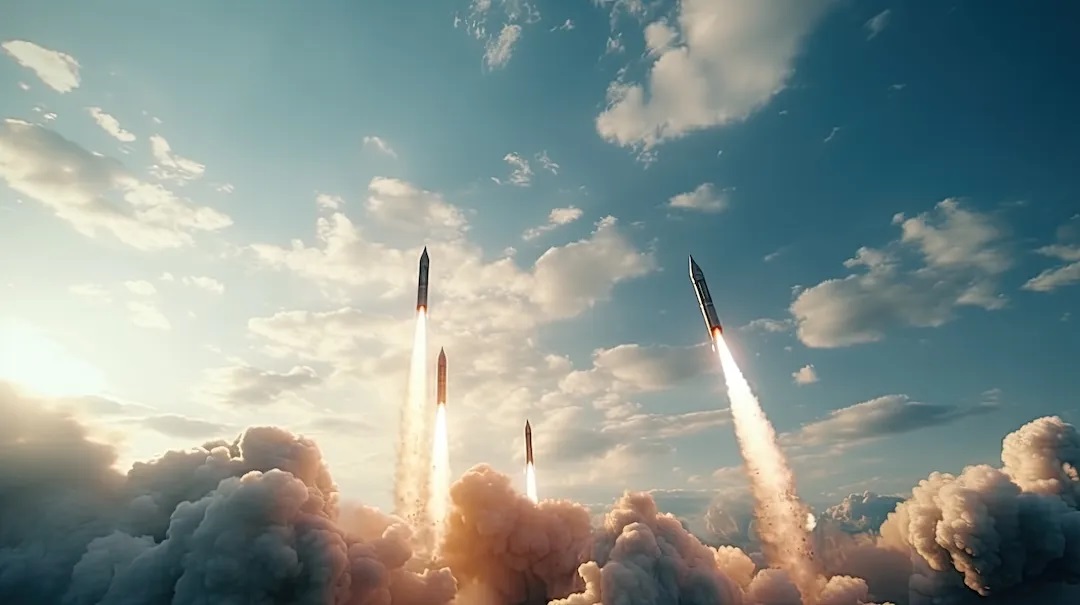
by Janene Scully | Noozhawk North County Editor, June 18, 2024
A Minotaur I rocket launch late Monday night at Vandenberg Space Force Base tested a new re-entry vehicle, which carries the warhead, under development for the Air Force for the intercontinental ballistic missile weapon system.
The Minotaur I rocket equipped with an unarmed Mk21A reentry vehicle blasted off at 11:01 p.m. flying over the Pacific Ocean as Vandenberg officials remained mostly mum about the mission beyond issuing a warning notices for boaters and pilots. Vandenberg officials finally released vague details a few hours before the launch window opened Monday night……………………………

The Air Force has contracted with Lockheed Martin for the Mk21A engineering and manufacturing development phase.
Once deemed fully operational, the Mk21A RV will be integrated on the nation’s intercontinental ballistic missile weapon system.
The Air Force Nuclear Weapons Center, based in New Mexico, is currently spearheading development of Mk21A. …………
Northrop Grumman equipped the rocket with modern flight-proven avionics and other subsystems to produce what the military calls “cost-effective, responsive launch vehicles to support missile defense testing and other suborbital applications.”
A similar test took place two years ago, but ended in failure 11 seconds after launch from Vandenberg.
The Air Force is developing a next-generation intercontinental ballistic missile under the Ground-Based Strategic Deterrent weapons system, also known as Sentinel………………………………. more https://www.noozhawk.com/vandenberg-conducts-test-launch-for-development-of-new-weapon-system/
Chutzpah: Netanyahu demands Biden give him more genocide weapons “to finish the job a lot faster.”

Walt Zlotow, West Suburban Peace Coalition, Glen Ellyn IL 19 June 24
Israeli Prime Minister Benjamin Netanyahu is seething that President Biden withheld one measly shipment of 2,000 lb. bombs Israel uses to obliterate most of Gaza’s 139 square miles. All schools, hospitals, sewage and water infrastructure kaput under Joe’s billions in genocide weapons, and still Netanyahu is not satisfied.
He released a scathing video charging “When Secretary Blinken was recently here in Israel, we had a candid conversation. I said I deeply appreciate the support the US has given Israel from the beginning of the war. But I also said it is inconceivable that in the past few months, the administration has been withholding weapons and ammunition to Israel.”
Netanyahu then pivoted to the Good War: “In WWII Churchill told the US, ‘Give us the tools and we’ll do the job…and I say, ‘give us the tools and we will finish the job a lot faster.”
Netanyahu then pivoted to the Good War: “In WWII Churchill told the US, ‘Give us the tools and we’ll do the job…and I say, ‘give us the tools and we will finish the job a lot faster.”
Congress will hold a hearing about the Sentinel missile’s exploding budget, but is it too little, too late?
Bulletin. By Chloe Shrager | June 14, 2024
The Pentagon’s new multibillion-dollar intercontinental ballistic missile (ICBM) program has come under fire as a continual offender of overspending, but there has been little reaction on the issue from Congress. The most recent cost overrun for the Sentinel ICBM (previously known as the Ground Based Strategic Deterrent or GBSD) put the program’s budget an unprecedented 37 percent higher than previous estimates and extended its operational schedule by at least two years. As a result, the Pentagon is critically reviewing the program to determine if it will continue or be canceled.
Critics have called the land-based missile modernization project “wasteful and dangerous.” But much to the dismay of Sentinel’s many naysayers, the costly program is expected to be recertified.
While experts and activists have long called for a thorough reevaluation of the program, most of Congress has been silent on the issue. It is only last month that the chairs of a congressional working group on nuclear arms called for an oversight hearing on the controversial program. The hearing, set for July 24, seeks to “raise the alarm about our unsustainable, reckless nuclear posture,” working group co-chair Don Beyer, a Democrat of Virginia, said of the current US nuclear policy.
The upcoming hearing will be the first—and maybe only—opportunity for lawmakers to critically reevaluate US spending on modernization of its ICBM force. But it will come after the program is poised to be recertified by the Defense Secretary on July 10. This raises the question of whether Congress truly has any oversight on the US nuclear modernization program, or if the hearing is merely a performance.
Sentinel’s history of budget breaches. The Sentinel program is meant to completely replace the 400 deployed Minuteman III missiles that constitute the land-based leg of the US nuclear triad, producing 400 new ICBMs and refurbishing the 450 launch silos capable of holding them. The program also includes the acquisition of more than 250 additional ICBMs and the modernization of over 600 command and control facilities. Of the 659 total ICBMs that Sentinel will produce, 400 will be actively deployed in silos and 50 will be kept “warm,” leaving 209 extras for testing and other purposes. However, the US Air Force has yet to publicly justify why it needs these 259 warm and extra missiles not included in the current generation of Minuteman III missiles or how they increase national security
The Sentinel was chosen in large part for its supposed cost-effectiveness, but its price has skyrocketed since initial cost analyses: It nearly doubled in size from its original projections of $62.3 billion back in 2015 to over $130 billion today. That total is almost as much as what is planned to be spent on Medicaid health services for low income families over the next 10 years. A new report from government watchdog group Taxpayers for Common Sense projects the price tag might reach $315 billion by 2075.
The most recent cost overrun happened when the production cost per unit jumped from $118 million to $162 million, a 37-percent increase that set off alarms in the Pentagon…………………………………………………………………………………………………………………………………………….
The July 24 hearing is a first step in the direction of more public accountability in government spending for nuclear weapons programs. But, unless representatives advocate for a full and candid review of Sentinel, the hearing will merely blow hot air at a decision already made. When announcing the oversight meeting on June 4, Garamendi remembered that “historically, nations have collapsed by overspending on outdated defense strategies, and I fear the United States is repeating these mistakes.” https://thebulletin.org/2024/06/congress-will-hold-a-hearing-about-the-sentinel-missiles-exploding-budget-but-is-it-too-little-too-late/?utm_source=Newsletter&utm_medium=Email&utm_campaign=ThursdayNewsletter06132024&utm_content=NuclearRisk_SentinelBudget_06142024
Tensions with First Nations threaten to delay nuclear waste facility

MATTHEW MCCLEARN, 16 June 24 https://www.theglobeandmail.com/business/article-tensions-with-first-nations-threaten-to-delay-nuclear-waste-facility/#:~:text=Prof.%20Leiss%20said%20even%20if,this%20issue%2C%E2%80%9D%20he%20said.
The eight-reactor Bruce Nuclear Generating Station, on the eastern shore of Lake Huron, ranks among the world’s largest nuclear power plants. With four more in the early planning stages, it might become larger still. But for the Saugeen Ojibway Nation (SON), behind its engineering grandeur lies a painful history – which it has described as one “of exclusion.”
Its people were not consulted before the plant’s construction during the 1970s and 80s, which resulted in quantities of radioactive waste stored within what they regard as their traditional territory. Nor did they see many of the economic benefits that flowed to neighbours.
These unresolved tensions threaten to derail – or at least significantly delay – efforts to find a permanent solution for Canada’s nuclear waste, which dates back to the 1970s. As of June, 2023, Canada had accumulated approximately 3.3 million used fuel bundles that were stored temporarily at operating or retired nuclear power plants in Ontario, Quebec and New Brunswick. But there’s nowhere to send them for permanent disposal – a potential stumbling block as the nuclear industry seeks public acceptance for a proposed major expansion.
The Nuclear Waste Management Organization (NWMO), an industry-controlled organization to which the federal government delegated responsibility for nuclear waste management, wants to select a site this year for a proposed, $26-billion underground nuclear waste disposal facility, known as a deep geological repository. The two remaining candidates are the Municipality of South Bruce (about 45 kilometres southeast of Bruce station, and also within SON’s traditional territory) and a site more than 40 kilometres from Ignace, a town of 1,200 northwest of Thunder Bay.
One of the NWMO’s guiding principles is that the repository’s host “must be informed and willing to accept the project.” Ignace’s council will decide that through a resolution; it has agreed to notify the NWMO of its decision by July 30. (It hired a consultant, With Chela Inc., to engage with residents and maintains its decision will be based on public input.) In South Bruce, citizens will vote in a by-election in late October. Both signed hosting agreements with the NWMO this year, under which South Bruce would receive $418-million over nearly a century and a half; Ignace would get $170-million.
Yet all that might well prove a sideshow. The NWMO also seeks consent from Indigenous peoples: Wabigoon Lake Ojibway Nation, in the case of Ignace. SON, which is composed of the Chippewas of Nawash First Nation and Chippewas of Saugeen First Nation, will decide regarding the South Bruce site. NWMO spokesperson Fred Kuntz said the organization is negotiating hosting agreements with both First Nations.
Success is far from assured.
SON’s grievances with the nuclear industry date back to the 1960s, when Ontario Hydro (the predecessor of Ontario Power Generation) began constructing Canada’s first commercial nuclear power plant. For SON, the commissioning of the Douglas Point Nuclear Generating Station marked the beginning of “the nuclear industrialization” of its territory. Douglas Point was followed by the much-larger Bruce station, built immediately next door.
SON ruefully watched its neighbours benefit as tax revenues rolled into local municipalities, while its members were largely shut out. In 2013 SON secured an undertaking from Ontario Power Generation that the utility wouldn’t establish an intermediate-level waste repository (proposed for construction at Bruce station) on its territory without its consent.
That undertaking had far-reaching consequences. It led to a 2020 plebiscite in which SON’s membership overwhelmingly rejected that repository. And it set an important precedent: In 2016, the NWMO granted SON the same ability to veto the South Bruce repository. SON plans to hold a referendum of its members, once it has received all the information it seeks from the NWMO.
“I’d say we’re at least halfway halfway home to having our questions satisfied,” said Gregory Nadjiwon, chief of the Chippewas of Nawash Unceded First Nation, one of SON’s two member nations.
But reaching an agreement this year – or at all – could prove challenging. The NWMO has accepted responsibility for disposing of all Canadian spent fuel, whether from the Point Lepreau station in New Brunswick, or from long-defunct research reactors at Chalk River, or even wastes from reactors yet to be constructed. SON’s leadership, though, is focused on the wastes in its own territory.
“If the [repository] is going to be in the SON territory, why should we be accepting waste that comes from Pickering, Darlington, Chalk River or Point Lepreau?” Chief Nadjiwon said.
“I mean, that’s ludicrous.”
As part of any agreement with NWMO, SON’s leadership seeks resolution to its long-standing concerns, such as the fact that wastes have been stored in its territory for decades without compensation.
“When I go in my truck to a garage in Toronto, I’m charged a cost” to park it, he said. “It’s no different than when you park waste in an Indigenous territory or homeland. We expect an agreement for the cost of doing business.”
William Leiss, an emeritus professor at Queen’s University’s School of Policy Studies, worked as a paid consultant for the NWMO between 2002 and 2011. He wrote a book, Deep Disposal, about the site selection process; the book is scheduled for publication in September. Prof. Leiss said SON’s opposition is so firm that it’s hard to fathom why South Bruce is still in the running.
“Its negatives are so pronounced that one wonders if it is being kept alive solely as a negotiating card so that Ignace does not regard itself as the only viable option,” he wrote.
“It has all the markings of an elaborate charade.”
But Prof. Leiss said the Ignace site is a long shot, too.
The Wabigoon Lake Ojibway Nation has roughly 1,000 members, 200 of which live on a reserve 20 kilometres from the Ignace area site. Its chief, Clayton Wetelainen, said the community has been negotiating a hosting agreement with the NWMO for roughly eight months.
The community has had far less interaction with the nuclear industry than SON has, so its historical baggage is perhaps lighter. Whereas the Ignace and South Bruce agreements would prevent future councils from backing out of the project, Wabigoon Lake’s leadership does not regard the agreement it’s negotiating as irrevocable – in part because there’s insufficient information available on many aspects of the project.
“The current vote that we’re talking about is just to go down to one site,” Chief Wetelainen said.
“This has to go through regulatory approvals, and our own approval, when we get more information about the detailed site.”
Some, he added, have misconstrued the vote as final and binding, “but that’s not the case.”
Prof. Leiss said even if Wabigoon Lake voted in favour of the project, other First Nations throughout the region might launch lawsuits to block the project. “There’s intense fighting among the First Nations in the Treaty 3 area over this issue,” he said.
Chief Wetelainen said his goal is to set a date in the fall for his 1,000 members to vote. Some community members began informing themselves about the project a decade ago, but others are only now beginning to ask the same questions. Getting all members up to speed is proving a challenge, he said – and as with SON, his community does not regard itself as bound by the NWMO’s timetable.
This position is admired by some of the repository’s non-Indigenous opponents. Bill Noll is vice-president of Protect Our Waterways, an opposition group in South Bruce. He said municipal officials have followed the NWMO’s timeline “blindly,” whereas SON is on its own schedule.
“They have a veto capability for the project, which is really an important dimension,” Mr. Noll said.
Prof. Leiss said Ontario is the only logical province for the repository – that’s where the bulk of Canada’s nuclear waste is already stored temporarily. But it’s home to 133 First Nations, whose often-overlapping traditional territories span nearly the entire province. It’s “entirely possible” that no First Nation will agree to accept a repository, he said.
But there’s another wrinkle: The NWMO’s willingness principle is not a legal requirement. OPG’s earlier proposed repository received regulatory approval of its environmental assessment without one. The NWMO’s promise to First Nations, he said, is “not worth the paper it’s written on.”
Prof. Leiss said the NWMO from the outset should have focused on First Nations, which he regards as the repository’s true hosts.
He wrote: “A sardonic take on this siting strategy might go something like this: entice a municipality with a dream of economic riches beyond its wildest imaginings, give it a phone book and tell it to place some calls to the nearest Indigenous communities, and then hope for the best.”
Unveiling Cosmic Secrets: Black Budget Tech and UFOs with Aerospace Expert Michael Schratt
The U.S. military and intelligence agencies have billions of dollars’ worth of secret projects they don’t want you to know about. These billions have funded a secret world of advanced science, technology, weapons, and various covert activities, which have always been shielded from congressional oversight and public scrutiny. Back in the 90s, Members of the House Armed Services Committee once said that 70 percent of the black budget could be declassified at no risk to national security. Our taxpayer dollars are funding these black budget programs, and we have a right to know what we’re paying for. So why the secrecy? What is being kept hidden from the public?
To investigate this further, we recently interviewed private pilot and military aerospace historian Michael Schratt, who’s studied top secret advanced technologies buried deep within the military-intelligence complex for over 25 years. He alleges to have first-hand experience with classified government black budget programs, with access to former US Air Force pilots, retired Naval personnel and former aerospace engineers with top-secret clearance. He’s one of the leading authority voices in investigating government programs involving the recovery and study of off-world technology, also known as UAP/UFO crash retrieval programs. He’s author of DARK FILES, which brings to life historically significant and credible UFO cases obtained from university archives, research centers, and private collections using carefully re-constructed illustrations of the events. Whether it’s advanced military aircraft or serious signs of extraterrestrial life, the implications are too profound to ignore. Michael is suggesting that publicly known technology and weapons programs might be fronts for black budget operations dealing with technologies way more advanced than the public is aware of.
Join us in this fascinating 38-min video interview, with many images and videos throughout to verify and illustrate the points being discussed.
- 00:00:00 Introduction to the military-industrial complex and the black budget world 00:03:54 Interview begins
- 00:06:00 What drew Michael Schratt to studying advanced black budget technologies and UFO phenomena
- 00:07:22 If you could declassify one technology developed under a black budget program, what would it be and why?
- 00:10:20 Out of all the advanced technologies in use on Earth, how much has ET influence?
- 00:11:39 UFO/UAP crash retrieval programs
- 00:18:05 Top secret technologies 101 00:22:32 The infamous Tic Tac video: a UFO, reverse-engineered craft, experimental military tech, or all of the above
- 00:26:32 The military bases that are purported to study ET tech and house advanced technologies
- 00:29:25 How can the most powerful technologies help humanity instead of harm?
- 00:30:37 How to balance disclosure with national security obligations
- 00:33:01 Michael’s thoughts on the UAP Disclosure Act
- 00:36:32 What keeps Michael inspired and hopeful
Uncle Sam cool with arming, training Neo-Nazi Azov Brigade in Ukraine.

Walt Zlotow, West Suburban Peace Coalition, Glen Ellyn IL 16 June 24
Back in 2018, the US banned military assistance to the Azov Brigade due to its neonazi and white supremacist ideology.
Azov was founded by Andriy Biletsky in 2014 to assist Kyiv’s destruction of Ukraine’s breakaway Donbas region, Biletsky also led related group Social National Assembly whose goal was “to prepare Ukraine for further expansion and to struggle for the liberation of the entire White Race from the domination of the internationalist speculative capital…and to punish severely sexual perversions and any interracial contacts that lead to the extinction of the white man.” Ouch.
But with Ukraine near collapse from America’s proxy war against Russia, the Biden administration decided that Azov wasn’t that bad after all. Doesn’t matter that current head Denis Prokopenko has been associated with its neonazi idology since its founding, not that Azov still uses the Wolfsangel neonazi symbol
When the US initially banned Azov, Rep. Ro Khanna (D-CA) praised the decision: “I am very pleased that the recently passed omnibus prevents the US from providing arms and training assistance to the neonazi Azov Battalion fighting in Ukraine.”
But that was before the US provoked an unnecessary war in Ukraine, spiraling it into a failed state. Desperate to achieve victory without shedding any US blood, the Biden administration, with not of peep of protest from Khanna, has suddenly turned neonazi Azov into the Sons of Liberty
Proliferation warnings over enriched nuclear fuel for advanced reactors

BY JULIA ROBINSON, 13 JUNE 2024, https://www.chemistryworld.com/news/proliferation-warnings-over-enriched-nuclear-fuel-for-advanced-reactors/4019621.article—
Governments and others promoting the use of high-assay low-enriched uranium (HALEU) for nuclear power have not considered the potential terrorism risk that widespread adoption of this fuel creates, nuclear scientists have warned.
HALEU is a nuclear reactor fuel enriched with uranium-235 to between 5 and 20%. At 20% uranium-235 and above, the mixture is called highly-enriched uranium (HEU) and it is internationally recognised that it can be employed in nuclear weapons.
Historically, HALEU use has been limited to research reactors, where it is used in small quantities, while commercial reactors typically use fuels with low enrichments, in the range of 3 to 5% uranium-235, which cannot sustain an explosive chain reaction.
However, new advanced reactors are being designed to run on HALEU – most favouring 19.75% uranium-235 HALEU – in the hope that these reactors will be smaller, more flexible and less expensive.
In the US, the Department of Energy (DOE) and US Department of Defense are providing funds for more than 10 reactor concepts, while the UK’s Civil Nuclear Roadmap, announced on 11 January, promised up to £300 million of investment specifically to develop HALEU fuel production.
However, in a policy forum in Science, experts in nuclear science and global security highlight that in many of the designs, the amount of HALEU needed is ‘hundreds to thousands of kilograms’, which may mean that a single reactor contains enough HALEU to make a nuclear weapon.
The authors said that estimates indicate that quantities ranging from several hundred kilograms to about a tonne of 19.75% HALEU could produce explosive yields similar to or greater than that of the Little Boy bomb dropped on Hiroshima.
If this is the case, they said, commercialising HALEU fuels without ensuring that the material is ‘appropriately protected against diversion by national governments or theft by terrorists would pose a serious threat to security’.
‘The time has come to review policies governing the use of this material,’ the authors write. ‘We recommend that the US Congress direct the DOE’s National Nuclear Security Administration to commission a fresh review of HALEU proliferation and security risks by US weapons laboratory experts.’
They also suggested that, according to the information available, a reasonable balance of the risks and benefits could be struck if enrichment of uranium-235 was restricted to 12% or less.
California legislators break with Gov. Newsom over loan to keep state’s last nuclear plant running

BY MICHAEL R. BLOOD, June 14, 2024
LOS ANGELES (AP) — The California Legislature signaled its intent on Thursday to cancel a $400 million loan payment to help finance a longer lifespan for the state’s last nuclear power plant, exposing a rift with Gov. Gavin Newsom who says that the power is critical to safeguarding energy supplies amid a warming climate.
The votes in the state Senate and Assembly on funding for the twin-domed Diablo Canyon plant represented an interim step as Newsom and legislative leaders, all Democrats, continue to negotiate a new budget. But it sets up a public friction point involving one of the governor’s signature proposals, which he has championed alongside the state’s rapid push toward solar, wind and other renewable sources.
The dispute unfolded in Sacramento as environmentalists and antinuclear activists warned that the estimated price tag for keeping the seaside reactors running beyond a planned closing by 2025 had ballooned to nearly $12 billion, roughly doubling earlier projections. That also has raised the prospect of higher fees for ratepayers………………………………………………………………………………………………………
The legislators’ concerns were laid out in an exchange of letters with the Newsom administration, at a time when the state is trying to close an estimated $45 billion deficit. Among other concerns, they questioned if, and when, the state would be repaid by PG&E, and whether taxpayers could be out hundreds of millions of dollars if the proposed extension for Diablo Canyon falls through.
Construction at Diablo Canyon began in the 1960s. Critics say potential earthquakes from nearby faults not known to exist when the design was approved could damage equipment and release radiation. One fault was not discovered until 2008. PG&E has long said the plant is safe, an assessment the NRC has supported.
Last year, environmental groups called on federal regulators to immediately shut down one of two reactors at the site until tests can be conducted on critical machinery they believe could fail and cause a catastrophe. Weeks later, the Nuclear Regulatory Commission took no action on the request and instead asked agency staff to review it………………..
The questions raised by environmentalists about the potential for soaring costs stemmed from a review of state regulatory filings submitted by PG&E, they said. Initial estimates of about $5 billion to extend the life of the plant later rose to over $8 billion, then nearly $12 billion, they said.
“It’s really quite shocking,” said attorney John Geesman, a former California Energy Commission member who represents the Alliance for Nuclear Responsibility, an advocacy group that opposes federal license renewals in California. The alliance told the state Public Utilities Commission in May that the cost would represent “by far the largest financial commitment to a single energy project the commission has ever been asked to endorse.”……….. https://apnews.com/article/diablo-canyon-nuclear-newsom-reactors-california-45f15ac6e3a39f4fe7bbd05a9fd30d8b
Dennis Kucinich America Prepares for Global War and Restarts the Draft for 18-26 year olds
The U.S. has been in a continuous “State of Emergency” since September 11, 2001, which provides a president with over 100 powers he would not ordinarily have.
Greetings to Young Americans: You are Automatically Registered for the Draft Conscription without Representation? Where and WHY are we sending our Kids to War?
DENNIS KUCINICH, JUN 13, 2024
Our government is planning a big draft, conscripting millions of young Americans for an even bigger war!
I call to your attention a Democratic amendment to the National Defense Authorization Act (NDAA), which was slipped into the almost trillion-dollar Pentagon war spending bill, by voice vote, in the House Armed Services committee.
The Democratic Amendment to H.R. 8070, the National Defense Authorization (NDAA) reads
Section 531. Selective Service System: Automatic Registration. SEC. 3. (a)(1) “Except as otherwise provided in this title, every male citizen of the United States, and every other male person residing in the United States, between the ages of eighteen and twenty-six, shall be automatically registered under this Act by the Director of the Selective Service System.”
This amendment is in the NDAA legislation and there is no pending amendment to strip it from the bill. So, when the NDAA passes, as early as this week, Congress will have taken steps to make automatic conscription the law of the land.
Why an automatic draft? Members of Congress and the President have an obligation to explain to the American people to which foreign land will their sons, and perhaps their daughters, be sent to die?
The U.S. has been in a continuous “State of Emergency” since September 11, 2001, which provides a president with over 100 powers he would not ordinarily have. Notwithstanding that the automatic draft provision will go into effect in a year, a presidential order invoking emergency powers and/or an Act of Congress, could readily move millions from their civilian lives to the front lines of a war.
WHAT WE KNOW:
We know that America is fomenting wars around the world
We know that the military industrial complex controls our government
We know that we are on the precipice of a global war, provoking aggression rather than resolution with Russia, China and in the Middle East.
The only winners in these wars are the war profiteers.
They’re now going to take our children to fight in unnecessary, destabilizing, dangerous, debt-creating wars.
Just today President Biden committed the U.S. to an additional decade of support for Ukraine’s war with Russia.
There is no other conceivable reason to require more than 16 million American males to be automatically registered for the draft, other than to prepare for a large-scale war.
The Selective Service System is the vehicle by which individuals are inducted into the armed forces. This NDAA Automatic Registration amendment facilitates an efficient, large-scale draft.
The new law will automatically register all males between the ages of 18 and 26. Selective Service will notify in writing every young American male that they have been registered and will prescribe regulations which can require the registrant to provide “date of birth, address, social security account number, phone number and email address….”
…………………………………………………………………………………………………………………… Congress must take up the question of war, long before the country institutes an automatic draft. An automatic draft is a preparation for war, dramatically altering the lives of young Americans. They deserve an answer. We all deserve an answer. America’s future is literally on the line.
Postscript: For my part, as a former member of Congress who is seeking re-election to the House of Representatives in November – – upon my return to Congress, I will bring forth legislation which will abolish automatic registration for the draft. I believe it is honorable, a sacred obligation, to serve in defense of one’s country. But our leaders have a deeper obligation, a solemn duty to explain why. They have not done so. https://denniskucinich.substack.com/p/america-prepares-for-global-war-and?utm_source=post-email-title&publication_id=1441588&post_id=145618374&utm_campaign=email-post-title&isFreemail=true&r=17xtv&triedRedirect=true&utm_medium=email
Active-Duty US Service Members Issue Appeal to Congress to Stop Funding Genocide
As Israel continues its genocide against the Palestinians, the number of US conscientious objectors is increasing.
By Marjorie Cohn , TRUTHOUT, June 13, 2024
On June 4, a coalition of active-duty service members, veterans and G.I. rights groups launched a campaign called Appeal for Redress V2 to encourage military personnel to tell Congress to stop funding genocide in Gaza. Israel’s genocidal operation, now in its ninth month, has killed more than 37,000 Palestinians and wounded nearly 85,000.
The campaign is sponsored by Veterans For Peace (VFP), the Military Law Task Force of the National Lawyers Guild, About Face: Veterans Against the War and the Center on Conscience & War. It is modeled after the 2006 Appeal for Redress issued during the occupation of Iraq. During that campaign, almost 3,000 active-duty, Reserve and Guard personnel sent protected communications to their members of Congress urging an end to the wars and occupations in Iraq and Afghanistan.
Appeal for Redress V2 was formulated to help G.I.s directly tell their representatives that they oppose U.S. support for Israel’s genocide in Gaza.
“We will not stand by silently while genocide unfolds,” Senior Airman Juan Bettancourt, an active-duty member of the U.S. Air Force, stated at a June 4 press conference announcing the campaign. “We refuse to be complicit” in the “unspeakable carnage,” said Bettancourt, who is seeking separation from the U.S. military as a conscientious objector.
Kathleen Gilberd, executive director of the Military Law Task Force of the National Lawyers Guild and my coauthor for Rules of Disengagement: The Politics and Honor of Military Dissent, told Truthout there has been an increase in the number of applications for conscientious objection (CO) and other types of honorable discharge from the military. “Many military personnel have serious objections to the U.S. support for Israel’s genocide against the Palestinians,” Gilberd said…………………………………………………………………………
The Appeal for Redress
“We know many young people join the military out of necessity to get their needs met. But they are not obligated to contribute to genocide and unjust, unlawful wars that go against their conscience,” said Shiloh Emelein, U.S. Marine Corps veteran and operations director of About Face: Veterans Against the War, in the Appeal’s June 3 press release. “You do have rights, you do have options to object, and there’s a large community of post-9/11 veterans ready to welcome you.”………………………………………………………………………………………….
U.S. Provision of Weapons to Israel Violates Several U.S. Statutes
These active-duty service members oppose U.S. funding of Israel’s genocide both because it’s immoral and because U.S. government employees are violating several federal statutes when weapons are shipped to Israel…………………………………………..more https://truthout.org/articles/active-duty-us-service-members-issue-appeal-to-congress-to-stop-funding-genocide/
LANL plans to release highly radioactive tritium to prevent explosions. Will it just release danger in the air?

The venting may harm pregnant women and fetuses, advocates say. |
| SEARCHLIGHT NEW MEXICO, by Alicia Inez Guzmán 12 June 24 |
Last fall, the international community rose up in defense of the Pacific Ocean. Seafood and salt purveyors, public policy professors, scientists and environmentalists, all lambasted Japan’s release of radioactive wastewater from the disastrously damaged Fukushima Daiichi nuclear plant into the sea.
At the heart of the contention was tritium, an element that, by mass, is 150,000 times more radioactive than the plutonium used in the cores of nuclear weapons. Odorless and colorless, tritium — the radioactive form of hydrogen — combines with oxygen to form water. Just one teaspoon is enough to contaminate 100 billion gallons more water up to the U.S. drinking water standard, according to Arjun Makhijani, an expert on nuclear fusion and author of the monograph, “Exploring Tritium Dangers.”

What didn’t make international headlines — but was quietly taking place on the other side of the world — was Los Alamos National Laboratory’s own plans to vent the same radioactive substance into northern New Mexico’s mountain air. Japan’s releases would take place over three decades. LANL’s would include up to three times more tritium — and take place in a matter of days.
There is no hard timeline for the release, but if the plans are approved by the Environmental Protection Agency, LANL is looking at a period with “sufficiently warm weather,” a spokesperson from the National Nuclear Security Administration wrote by email. That could mean as soon as this summer.
Those controversial plans date back to 2016, when LANL discovered that a potentially explosive amount of hydrogen and oxygen was building up in four containers of tritium waste stored in a decades-old nuclear dump called Area G. The safest and most technically viable solution, the lab decided — and the best way to protect workers — would be to release the pressure and, with it, thousands of curies of tritium into the air.
When advocates caught wind of the venting in March 2020, Covid was in its earliest and most unnerving phase. Pueblo leaders, advocates and environmentalists wrote impassioned letters to the lab and the EPA, demanding that they change or, at the very least, postpone the release until after the pandemic. At the same time, Tewa Women United, a nonprofit founded by Indigenous women from northern New Mexico, issued its first online petition, focusing on tritium’s ability to cross the placental barrier and possibly harm pregnant women and their fetuses. Only after a maelstrom of opposition did the lab pause its plans and begin briefing local tribes and other concerned members of the community.
“We see this as a generational health issue,” said Kayleigh Warren, Tewa Women United’s food and seed sovereignty coordinator. “Just like all the issues of radioactive exposure are generational health issues.”
Last fall, the lab again sought the EPA’s consent. A second petition from Tewa Women United followed. Eight months later, the federal agency’s decision is still pending.
The NNSA, which oversees the health of America’s nuclear weapons stockpile from within the Department of Energy, declined Searchlight New Mexico’s requests for an interview.
The crux of the issue comes down to what is and isn’t known about the state of the containers’ contents. Computer modeling suggests they are pressurized and flammable, but the actual explosive risk has not been measured, the lab has conceded.
Critics have requested that the contents be sampled first to determine whether there is any explosive risk and whether venting is even needed. The EPA says that sampling would require going through the same red tape as venting. The lab, for its part, plans to sample and vent the contents in one fell swoop.
But why, critics wonder, are these containers in this state in the first place? Were they knowingly over packed and left for years to grow into ticking time bombs?
“I do not like the position we’re in,” James Kenney, cabinet secretary of the New Mexico Environment Department, told the Legislature’s Radioactive and Hazardous Materials Committee in 2020. The containers, he said, had been “neglected for so long by both DOE and the Environment Department” that NMED potentially faces a lose-lose situation: Vent the tritium drums and try to prevent the emissions from being released into the air or “run the risk of leaving those drums onsite knowing that they are pressurized and could rupture, meaning an uncontrolled amount of tritium would go out.”
Venting and vexing
State and federal documents paint a kind of chicken-and-egg dilemma. The containers can’t be moved until the pressure is vented. But the movement itself may cause more pressure to build up, requiring a second, third or even fourth venting……………………………………………………………………………………………………………………
Tritium 101
Plutonium and uranium are familiar to most people, if by name only. But few know anything at all about tritium — a radioactive isotope of hydrogen that is used to make watch dials and EXIT signs glow bright neon. Tritium’s other, lesser-known use is as a “boost gas,” which, when inserted into the hollow core of a plutonium pit, amplifies a nuclear weapon’s yield. Globally, hundreds of atmospheric weapons tests dispersed tritium into the atmosphere, steeping rain, sea, and groundwater with the element and, ultimately, lacing sediment worldwide.
Tritium is widely produced at nuclear reactors and is today tested, handled and routinely released at Los Alamos National Laboratory.
Criticisms of this venting have always centered on two of the element’s key characteristics: First, it travels “tens to hundreds of miles,” according to lab documents. Second, when tritium is in the form of water, it becomes omnipresent and easy for bodies to absorb.
“Tritium is unique in this,” wrote Makhijani. “It makes water, the stuff of life, most of the mass of living beings, radioactive.”
Years of LANL reports depict tritium’s ubiquity in the lands and ecosystem within its bounds, a palimpsest of radioactive decay. This is measured in curies, a basic unit that counts the rate of decay second by second.
The lab’s first environmental impact statement, published in 1979, estimated that it had buried close to 262,000 curies of tritium at Area G and released tens of thousands more into the air from various stacks over the decades. The lab had two major accidental releases of tritium around the same time — 22,000 curies in the summer of 1976 and nearly 31,000 curies in the fall of 1977.
Today, trees have taken it into their root systems on Area G’s southeast edge. Rodents scurrying in and out of waste shafts are riddled with the substance, owing to tritium vapors from years past. A barn owl ate those rodents and had 740 times more tritium concentration in its body than the U.S. drinking water standard, the common reference value for indicating tritium contamination. The lab’s honeybee colonies — kept to determine how radioactive contaminants are absorbed — produced tritiated honey up to 380 times more concentrated than the drinking water standard, reports show.
The EPA set the current standard for radioactive emissions at DOE facilities in 1989, but that didn’t stop the lab from releasing thousands of curies of tritium into the air shortly afterward. In 1991, the EPA issued a notice of non-compliance to the lab for not calculating how much of a radiation dose the public received. Another notice followed in 1992.
Concerned Citizens for Nuclear Safety filed a lawsuit two years later alleging that the DOE hadn’t properly monitored radioactive emissions, as required by the Clean Air Act. At the time, a former lab safety officer, Luke Bartlein, observed what he described in an affidavit as a “pattern and practice of deception at LANL with respect to the radionuclide air monitoring system.” It was routine for lab staffers and management to vent glove boxes and other materials contaminated with tritium outside so that the contamination would deliberately “not register” on the stack monitors, he recounted, leading to false emissions reports.
The lab settled in 1997; a consent decree followed and would stay in effect until 2003. The lab says it has maintained low annual emissions ever since…………………………………………………………………………………………………………………………………….
In 1999, Makhijani and more than 100 scientists, activists and physicians across the country and worldwide signed a letter to the National Academy of Sciences. Their ask? To evaluate how radionuclides that cross the placental boundary, including tritium, impact the fetus, a request Makhijani renewed in 2022.
As he put it, tritium — the “most ubiquitous pollutant from both nuclear power and nuclear weapons” — has largely escaped regulatory and scientific scrutiny when it comes to matters of pregnancy.
Cindy Folkers, the radiation and health hazard specialist at Beyond Nuclear, a national advocacy organization, believes the reason is rooted in the radiation establishment’s fear of liability. “You get layers and layers and layers and layers of denial.”
The scant research that does exist comes from pregnant women who survived atomic bombs in Hiroshima and Nagasaki. In 1986, the International Commission on Radiation Protection concluded that exposing a fetus to ionizing radiation, the kind that tritium emits, has a “damaging effect…upon the development of the embryonic and fetal brain.” The area most at risk of harm, it went on, is the forebrain, which controls complex and fundamental functions like thinking and processing information, eating, sleeping and reproduction.
Ionizing radiation damages the cell in two ways. On the one hand, it breaks apart the building blocks from which humans are made, causing rifts in DNA. On the other, it fundamentally changes the chemistry of the cell, breaking apart its water molecules and upsetting its metabolism.
That’s what makes it different from, say, an X-ray, Folkers said. “A machine can be shut off,” but “a radioactive particle that’s inside your body will continue irradiating you.” For a pregnant woman, this adds up to “cumulative biological damage,” the kind that cuts across generations.
“We’re dealing with a life cycle,” Folkers said. “And females are an integral part of that life cycle. Not only are they more damaged by radioactivity, and their risks are higher for cancer, but they are also carrying in them the future generations. So when you’re dealing with a female baby who’s developing in the womb, you are dealing with that child’s children at the very least.”
In other words, a mother is like a Russian nesting doll. She holds a fetus and that fetus, if a female, holds all future eggs. Exposure to her is exposure to future generations. https://searchlightnm.org/lanl-plans-to-release-highly-radioactive-tritium-to-prevent-explosions-will-it-just-release-danger-in-the-air/?utm_source=Searchlight+New+Mexico&utm_campaign=08e25288bd-6%2F12%2F2024+-+LANL+Tritium+Release&utm_medium=email&utm_term=0_8e05fb0467-08e25288bd-395610620&mc_cid=08e25288bd&mc_eid=a70296a261
1 This Month
Chernobyl: The Lost Tapes – A good documentary on Chernobyl on SBS available On Demand for the next 3 weeks– https://www.sbs.com.au/ondemand/tv-program/chernobyl-the-lost-tapes/2352741955560

of the week–London Campaign for Nuclear Disarmament

Tell the Ukrainian Government to Drop Prosecution of Peace Activist Yurii Sheliazhenko
To see nuclear-related stories in greater depth and intensity – go to https://nuclearinformation.wordpress.com
-
Archives
- April 2026 (152)
- March 2026 (251)
- February 2026 (268)
- January 2026 (308)
- December 2025 (358)
- November 2025 (359)
- October 2025 (376)
- September 2025 (257)
- August 2025 (319)
- July 2025 (230)
- June 2025 (348)
- May 2025 (261)
-
Categories
- 1
- 1 NUCLEAR ISSUES
- business and costs
- climate change
- culture and arts
- ENERGY
- environment
- health
- history
- indigenous issues
- Legal
- marketing of nuclear
- media
- opposition to nuclear
- PERSONAL STORIES
- politics
- politics international
- Religion and ethics
- safety
- secrets,lies and civil liberties
- spinbuster
- technology
- Uranium
- wastes
- weapons and war
- Women
- 2 WORLD
- ACTION
- AFRICA
- Atrocities
- AUSTRALIA
- Christina's notes
- Christina's themes
- culture and arts
- Events
- Fuk 2022
- Fuk 2023
- Fukushima 2017
- Fukushima 2018
- fukushima 2019
- Fukushima 2020
- Fukushima 2021
- general
- global warming
- Humour (God we need it)
- Nuclear
- RARE EARTHS
- Reference
- resources – print
- Resources -audiovicual
- Weekly Newsletter
- World
- World Nuclear
- YouTube
-
RSS
Entries RSS
Comments RSS
 nuclear-news