US nuclear plant unfit for quick resurrection, former lead engineer says

By Timothy Gardner, WASHINGTON, Aug 2 2024, (Reuters)
– The first U.S. nuclear plant to ever try reopening after undergoing preparations for permanent closure is not fit to restart anytime soon because it sidestepped important safety work for years before retirement, a former official at the reactor said.
Power company Entergy (ETR.N), opens new tab closed the Palisades reactor in Michigan in 2022, after the plant generated electricity for more than 50 years. Privately-held Holtec International bought Palisades shortly after and has since secured a $1.52 billion conditional U.S. loan guarantee to restart. Holtec seeks to open the plant in about a year.
The fate of Palisades is closely watched by the nuclear industry as at least two other shuttered plants, including a unit at Constellation Energy’s (CEG.O)
, opens new tab Three Mile Island, consider reopening…………
“I’m pro-nuclear, but they selected the wrong horse to ride to town on,” said Alan Blind, who was engineering director at the Palisades plant from 2006 to 2013 under Entergy.
Blind said the plant got exemptions from the U.S. Nuclear Regulatory Commission, the nuclear safety regulator, allowing it to fall short of safety design standards that more modern plants must adhere to because it was nearing retirement.
Those safety standards include prevention of cooling systems being clogged by the breakdown of insulation on pipes, defense against earthquakes, and reduction of risks to fires, Blind said, adding he had been monitoring the plants’ exemption requests since his retirement.
“I’m worried that the NRC will not insist that the generic safety issues be the fixed before they allow Palisades to restart,” Blind told Reuters………………………………………………………..
The Biden administration’s Loan Programs Office at the Department of Energy issued Holtec a conditional $1.52 billion loan guarantee in March to restart Palisades. … https://www.reuters.com/business/energy/us-nuclear-plant-unfit-quick-resurrection-former-lead-engineer-says-2024-08-02/
Kamala: We need a ceasefire and arms embargo NOW!
https://www.codepink.org/kamalastopisrael 2 Aug 24
Over the past weeks, we’ve seen Vice President Kamala Harris’s image being portrayed as more sympathetic to Palestinians in comparison to Joe Biden. But in reality she repeats so many of the same anti-Palestinian talking points and hasn’t done anything to move us towards a ceasefire. It’s time to put pressure on the VP! Sign the petition below!
Vice President Kamala Harris,
As Vice President of the United States, your job is to serve the people, and the majority of Americans want a permanent ceasefire and an end to U.S. arms sales to Israel. We are disgusted with how our hard-earned money is being used to annihilate innocent people in Palestine!
You have strategically presented yourself as distinct from President Biden, especially with regard to Israel’s genocide campaign in Gaza, though you are part of the same administration. We have not been fooled, and we know you are not powerless. We know you can take significant action to stop Israel’s genocide, and you haven’t.
We will not blindly praise you — as others have — for calling for a ceasefire “for at least six weeks” in March of 2024. At that point, 30,000 Palestinians had already been murdered by Israel and we were five months into the genocide.
In the past, you have had no problem meeting with the American Israel Public Affairs Committee (AIPAC), taking in hundreds of thousands of Zionist campaign contributions, and speaking at their events. We understand the true purpose of this lobby group is to ensure continued U.S. funding of Israel’s occupation of Palestine and imperialism in the Middle East. We reject the influence of foreign governments in American politics and see your relationship with AIPAC as a stark contradiction to your supposed support of a ceasefire in Gaza.
Most recently, you condemned protests in D.C. opposing Israeli Prime Minister Benjamin Netanyahu’s visit to Congress — the man spearheading the worst genocide we’ve seen in recent history. Policing Americans who are rightfully angry about war crimes and the mass murder of innocent children was a true display of your immorality, and proved your alignment with Biden’s policies on Israel. What’s worse is that you characterized these protests as anti semitic, showing us your complete lack of understanding for what’s really happening.
Sharing stories of how you as a young girl helped plant trees for Israel is a deliberately tone-deaf attempt at greenwashing Israel’s occupation, given the ecological devastation the IOF have waged on the Palestinian people, land, water and vegetation for 76 years, culminating in the utter devastation of Gaza in recent months. How can you be so selfishly blind to the reality on the ground?
Considering your stances, we have no reason to believe you are not following Biden’s policies on Israel. In order to salvage what political credibility you may have left, it is imperative that you use your capacity as Vice President to push for a ceasefire and an end to U.S. arms sales to Israel. We demand you release a statement explicitly distancing yourself from Biden’s support for genocide, and call for an arms embargo on Israel.
Is Manitoba willing to accept nuclear waste risks?
ANNE LINDSEY. 2 Aug 24.
ANYONE driving Highway 17 from Winnipeg to Thunder Bay will pass through Ignace a couple of hours east of Dryden.
A modest Canadian Shield town with about 1,300 inhabitants, Ignace was built on the forest industry, but like so many northern Ontario towns, today actively seeks other economic opportunities.
The alert traveller will also notice many roadside signs between Kenora and Thunder Bay, proclaiming “No Nuclear Waste in Northwest Ontario.” The issue has reached a critical juncture recently in this area.
Hosting Canada’s high-level nuclear waste repository is one of the economic development opportunities being explored by Ignace.
On July 10, Ignace Town Council voted in favour of being a “willing host” for this massive storage hole in the ground and the accompanying transfer facility for the highly radioactive and toxic “spent” fuel from existing and future reactors.
The taxpayer-funded Nuclear Waste Management Organization or NWMO (consisting of the owners of Canada’s nuclear waste and charged by the federal government to find a repository site) provided Ignace a half-million dollar signing bonus, in addition to NWMO’s many donations and monetary contributions to local initiatives leading up to the vote.
Problems abound with this “willingness” declaration, not the least of which is that the site in question is not even in Ignace or in the same watershed. The Revell batholith site, 45 kilometres west of Ignace, lies on the watersheds of both theRainy River which flows into Lake of the Woods, and thence to the Winnipeg River and Lake Winnipeg, and the English River which flows north through Lac Seul and into Lake Winnipeg.
The waste will remain dangerous for literally millennia. Burying irretrievable nuclear waste in an excavated rock cavern that is deep underground where groundwater flows through the rock and eventually links to surface bodies has never been tested in real life. The industry relies on computer models to persuade us that future generations will not be at risk.
The waste will have to be transported to Revell, mostly from southern Ontario and New Brunswick — several massive shipments daily for 40 years for the existing waste — along the often-treacherous route skirting Lake Superior. It must then be “repackaged” in a surface facility into burial canisters.
Little is publicly known about what this entails, but any accidents and even routine cleaning will result in radioactive pollution to the surrounding waters posing a more immediate risk.
First Nations along the downstream routes have expressed their opposition to this project. Chief Rudy Turtle of Asubpeeschoseewagong (Grassy Narrows) was clear in his letter to the CEO of NWMO: “The water from that site flows past our reserve and into the waters where we fish, drink, and swim. The material that you want to store there will be dangerous for longer than Canada has existed, longer than Europeans have been on Turtle Island, and longer than anything that human beings have ever built has lasted. How can you reliably claim that this extremely dangerous waste will safely be contained for hundreds of thousands of years?”
His views are echoed by neighbouring chiefs, and other Treaty 3 First Nations have rejected nuclear waste transportation and abandonment through and in their territories. Wabigoon First Nation, the closest to the Revell site, will hold its own community referendum on willingness to host the site this fall. It’s not known how much money or other inducements NWMO has offered for a signing bonus.
In 1986, a citizens group in the Eastern Townships of Quebec successfully lobbied politicians on both sides of the border to reject a U.S. proposal for a massive nuclear waste repository in Vermont, on a watershed flowing into Canada.
Around the same time, Manitoba citizens convinced our government to oppose another proposed U.S. nuclear waste site — with potential for drainage to the Red River. And eventually, the NDP government of Howard Pawley passed Manitoba’s High-Level Radioactive Waste Act, banning nuclear waste disposal in this province.
Where does Manitoba stand today? We don’t know, even though the Revell site is not far from Manitoba and the water is flowing this way.
No single town should be making decisions with such profound risks to all of our health and futures. People who depend on Manitoba rivers and lakes (including Winnipeggers, via our water supply from Shoal Lake) should be part of this decision. Now is the time for our elected officials on Broadway and Main Street to become active stakeholders and demand a voice in the nuclear waste “willingness” question.
Anne Lindsey is a longtime observer of the nuclear industry and a Canadian Centre for Policy Alternatives Manitoba Research Associate. This article was written in collaboration with the Manitoba Energy Justice Coalition.
Trump could win back the nuclear codes. Biden should put guardrails on the nuclear arsenal—now.

By Tom Z. Collina | July 30, 2024, https://thebulletin.org/2024/07/trump-could-win-back-the-nuclear-codes-biden-should-put-guardrails-on-the-nuclear-arsenal-now/?utm_source=Newsletter+&utm_medium=Email+&utm_campaign=ThursdayNewsletter08012024&utm_content=NuclearRisk_GuardrailsNuclearArsenal_07302024
On January 6, 2021, then-President Donald Trump inspired a mob attack on the US Capitol to try to prevent the peaceful transfer of power to the Biden administration. Not only was this an unprecedented attack on American democracy, but it represented a serious national security threat. Many saw and see this as one of many examples of an unstable President Trump acting in dangerous, irrational ways. And throughout his time in office, Trump—like all presidents in the nuclear age—had the unilateral authority to launch the US nuclear arsenal.
At any moment, Trump could literally have ended the world with a phone call. Congressional approval is not needed, and the secretary of defense cannot stop a presidential order to unleash the US nuclear arsenal. The system is built for speed, not deliberation. The whole process, from presidential order to the launch of one or hundreds of nuclear warheads, would take just minutes.
The danger that Trump would do something catastrophic was so acute that then-House Speaker Nancy Pelosi desperately looked for ways to prevent the “unstable president from … accessing the launch codes and ordering a nuclear strike,” according to a letter Pelosi wrote in January 2021 to House Democrats in the wake of the January 6 attack on the Capitol. Chairman of the Joint Chiefs of Staff Mark Milley was convinced that Trump had suffered “serious mental decline in the aftermath of the election” and took the extraordinary step of ordering his staff to come to him if they received a nuclear strike order from the president. “No matter what you are told, you do the procedure. You do the process. And I’m part of that procedure,” Milley reportedly told the officers. “You never know what a president’s trigger point is.”
Pelosi and Milley had plenty of reasons to worry that Trump could start a nuclear war. In August 2017, in a thinly veiled nuclear threat, Trump warned North Korea that it would be “met with fire and fury and frankly power, the likes of which this world has never seen before.” Trump mocked Kim Jong Un, the North’s leader, writing “I too have a Nuclear Button, but it is a much bigger & more powerful one than his, and my Button works!” According to then-White House Chief of Staff John Kelly, Trump privately discussed the idea of using a nuclear weapon against North Korea and suggested he could blame a US strike on another country.
Actually, however, Milley was not correct when he told his staff that he was part of the formal procedure to launch nuclear weapons. As former Defense Secretary William J. Perry and I wrote in our 2020 book, The Button, policy established during the Cold War puts decisions about the use of nuclear weapons solely in the hands of the civilian president, not Congress and above all not the military. All the president need do is call the Pentagon’s War Room—using the nuclear “football” or some other means—and identify himself and give the order to launch. The president may choose to consult with senior advisors such as Milley but is not required to.
Milley broke these rules, as others broke them before him. During the Watergate crisis, then-Defense Secretary James Schlesinger was so concerned about President Richard Nixon’s mental state and alcohol consumption that he told military commanders that if Nixon ordered a nuclear strike, they should check with him or Secretary of State Henry Kissinger first. Sen. Alan Cranston phoned Schlesinger, warning him about “the need for keeping a berserk president from plunging us into a holocaust.”
Should Milley, Schlesinger, or any military leader, let a clearly unstable president start a nuclear war just to follow protocol? Of course not. But officials should not have to break the rules to do the right thing. The United States needs to change the policy that put Milley and Schlesinger in an impossible spot.
With just six months left in office, President Biden can fix the system for himself and all future presidents. To do so, Biden should announce the White House will share authority to use nuclear weapons in any first strike with a select group in Congress. The Constitution gives Congress the authority to declare war, not the president. The first use of nuclear weapons is clearly an act of war. In a situation where the United States has already been attacked with nuclear weapons, the president would retain the option to act unilaterally.
President Biden would have to make such a policy change by executive order. Passing congressional legislation would be more durable but is unlikely in the current political environment. If Trump wins the election, he would likely reverse Biden’s order. But if Vice President Kamala Harris wins, the new policy could be strengthened over time with legislation.
Such a policy would provide clear directives for the military to follow: A launch could be ordered only if the United States had already been attacked with nuclear weapons or if Congress had approved the decision, providing a constitutional check to executive power. This would be infinitely safer than our current doctrine.
As an important part of his legacy, President Biden must put guardrails on presidential authority to start nuclear war now before the next dangerous leader gets elected—whomever and whenever that may be. We must never again entrust the fate of the world to just one fallible human. This is not about whose finger should be on the button. This is about making good policy that can keep Americans—and people around the world—alive, regardless of whom US voters happen to put in the White House.
Blank Checks for War: Congress Has Abdicated Its Power From Tonkin to Gaza
As the 60th anniversary of the Tonkin Gulf Resolution approaches, it’s time to reflect on how Congress solidified its long-standing deference to the presidency on foreign policy and how the people can make their voices heard.
Christian Appy Aug 01, 2024, Common Dreams
With the U.S.- backed carnage in Gaza continuing and the threat of growing violence looming throughout the region (in Lebanon, Iran, and who knows where else), we need to think more deeply than ever about how the American people have historically been excluded from foreign policy decision-making. An upcoming anniversary should remind us of what sent us down this undemocratic path.
Sixty years ago, on August 7, 1964, U.S. Congress handed President Lyndon B. Johnson the power to wage a major war in Vietnam, solidifying its long-standing deference to the presidency on foreign policy. Not once since World War II has Congress exercised its constitutional responsibility to vote on declarations to decide if, when, and where the United States goes to war.
The Tonkin Gulf Resolution of 1964 flew through Congress, in part because most members trusted the president’s assurance that he sought “no wider war.” Their trust was misplaced. The Johnson administration kept secret and lied about its plans for future military escalation in Vietnam. …………………………………………………………………………………………………………………………………………….
Congress, for its part, continues to enable an ever more imperial presidency that decides when and where the U.S. goes to war. It almost never uses the power of the purse to reduce U.S. militarism or to cut funding for unpopular wars. The nearly trillion-dollar Pentagon budget is rubber-stamped every year……………………………………………
We have seen, in the last 10 months, an unprecedented outpouring of American protest in support of Palestinian rights. For good reason. Nearly 40,000 Palestinians in Gaza, most of them civilians, and many of them children, have been killed by the Israeli military’s indiscriminate and disproportionate response to the Hamas killing of some 1,100 Israelis on October 7, 2023. Around 1.7% of the Gazan population (2.3 million) have been killed and at least 90% displaced from their homes (many have had to flee multiple times). A recent study by the medical journal The Lancet, estimates that the death toll in Gaza could reach 186,000 even if there is a cease-fire today.
For most Americans, this level of suffering is unimaginable. Yet we must try to imagine it. If we were Gaza, at least 5.7 million of us would be dead, the vast majority women, children, and other civilians. Many millions more would be among the uncounted dead and dying—buried, lost, sick, starving. More than 300 million of us would be forced from our homes, on the road seeking shelter, food, and water under ongoing military attacks and perils beyond description.
That is the reality in Gaza.
In the end, only a mass democratic movement has the potential to dramatically change U.S. foreign policy. The first challenge is to overthrow the baseless claim that the United States is the greatest force for good in the world, the “indispensable nation” that stands for the rule of law, freedom, and democracy. Our record does not warrant such a delusion. Only when that ideology and naïve faith is broadly undermined can we hope to chip away at the long-standing infrastructure of U.S. militarism—the over 750 military bases on foreign soil, the annual military exercises in two-thirds of the world’s nations, and the “defense” budget that equals the next nine most militarized nations combined.
Ellsberg and Morse were right. The people must know the truth. But we have long had more than enough evidence to demand fundamental changes in U.S. foreign policy. We can’t wait for Congress to represent us faithfully. The people’s voice must be heard. https://www.commondreams.org/opinion/congress-blank-checks-war
The Abrahamic Alliance: Reality or work of fiction?

Lorenzo Maria Pacini, Strategic Culture Foundation, Sat, 27 Jul 2024, https://www.sott.net/article/493617-The-Abrahamic-Alliance-Reality-or-work-of-fiction
DC‘Abrahamic Alliance’ will probably end up being an empty and superficial alliance, consisting mostly of the U.S. and Israel, similar to Operation Prosperity Guardian, which is widely considered a flop.
On Wednesday 24 July 2024, Israeli President Bibi Netanyahu delivered a speech to the Congress of the United States of America that will go down in history.
The speech of the world’s most dangerous clown
In the absence of the political leadership – embroiled in an unprecedented social crisis of paedophilia scandals, old men with Alzheimer’s pressing random buttons in war rooms and clowns on psychiatric drugs attacking banks -, the ‘host’ from the Middle East took the opportunity to travel to Washington and clarify certain programmatic aspects of the future of the collective West.
Here are some highlights of his crazy speech, with which he orwellianly turned reality upside down, spread fake news, manipulated his listeners and legitimised a genocide that goes on while the rest of the world thinks about going on holiday, while writing ‘All eyes on Rafah’ on social media to wash hisconscience.
– “The war in Gaza has one of the lowest ratios of combatants to non-combatants in the history of urban warfare”;
– “Not a single innocent Palestinian civilian has been killed by the IDF in Rafah”;
– “Iran is behind all the terrorism, all the unrest, all the chaos and all the endless killing. And this should come as no surprise”;
– “For Iran, Israel is first, America is second. When Israel fights Hamas, we are fighting Iran. When we fight Hezbollah, we are fighting Iran. When we fight the Houthis, we are fighting Iran. And when we fight Iran, we are fighting radical terrorism”;
– “We are not just protecting Israel, we are protecting the United States. Our enemies are your enemies. Our fight is your fight. Our victory is your victory”;
– Netanyahu then proposed an Abrahamic Alliance, consisting of Israel, the U.S., and Arab countries dependent on the two aforementioned.
– He received a total of 58 standing ovations in his 60-minute speech (not even a Taylor Swift concert!).
So, to recap:
– Genocide of the Palestinians does not exist;
– If anything, there is a good genocide and that is the Israeli one;
– Palestine is called Israel and if you think otherwise you are an idiot;
– Israel is a victim, unfortunately it has found itself in the home of people who had been there for thousands of years who are demanding their land back;
– The only good Palestinian is a dead Palestinian;
– Iran (the only country in the world to have fought against the imperialism of the Great Satan (Israel+USA+UK+Saudi Arabia) is entirely to blame for being Shia (and also for having eradicated Wahabi and Salafist Islamic terrorism in the Middle East and curbed imperialist expansionism);
– If you think otherwise, maybe you deserve a bullet too.
The Abrahamic Alliance
In the general delirium of his words, Netanyahu put forward the strategic proposal of an alliance, military, political and economic, called the ‘Abrahamic Alliance’.
If the U.S. had tried to form this alliance 10 years ago, we could say that Saudi Arabia, the United Arab Emirates, Bahrain, Jordan and Egypt would probably have joined. With the ongoing Syrian war, fears over the nuclear programme and anti-Iranian sentiment at boiling point, the Arab nations felt they had something to prove.
However, in the Middle East of the year 2024, with Iran as an emerging force that has imposed hard power equations on its neighbours, and after the peace agreement between Iran and Saudi Arabia, I think such an alliance is not feasible. At best, the Kingdom of Jordan and Bahrain would join such an alliance.
Saudi Arabia is openly interested in closer ties with Iran, the UAE mostly follows Saudi policy and is heavily dependent on Iranian imports, while Egypt has a history of rejecting alliances and has bigger problems than Iran. None of these countries will be enthusiastic about the prospect of an anti-Iran alliance at a time when Iran is rapidly emerging as a pre-eminent geopolitical power in the Middle East.
Jordan, because of its dependence on NATO and the U.S., is the one most likely to be in favour. It was the only Arab nation to open its airspace to the Israeli Air Force when Iran launched its missile attacks against Israel in April this year.
Bahrain, which hosts the U.S. Persian Gulf Fleet, while it might be interested in joining, has also openly expressed its interest in re-establishing diplomatic ties with the Islamic Republic of Iran.
In short: the ‘Abrahamic Alliance’ will probably end up being a shell of what it once could have been. It will be an empty and superficial alliance, consisting mostly of the U.S. and Israel, similar to Operation Prosperity Guardian, which is widely considered a flop.
Then, in all this, there remains one last fundamental point to consider: while Netanyahu and his followers blather on about turning the Israeli-Palestinian conflict into a global war on a religious basis (in perfect neocon eschatological style), they perhaps forget that the rest of the world – ‘the rest’, as the Americans used to say – is turning over a new leaf and will not stand by and watch. Russia and China have already concluded the laying of the pillars of a multipolar world… in which war will no longer be fought as before.
Comment: The Abrahamic Alliance is merely a guise to ‘circle the wagons’ assuring Israel an unhindered mission and survival at the expense of others. Some have eyes to see.
California achieves 100% renewable energy for 100 days.

On 100 out of 144 days since 8 March, California’s electricity has been supplied fully by
renewable energy for at least part of the day.
Power Technology 30th July 2024
https://www.power-technology.com/news/california-achieves-100-renewable-energy-for-100-days/
This nuclear waste site could soon host a massive solar installation
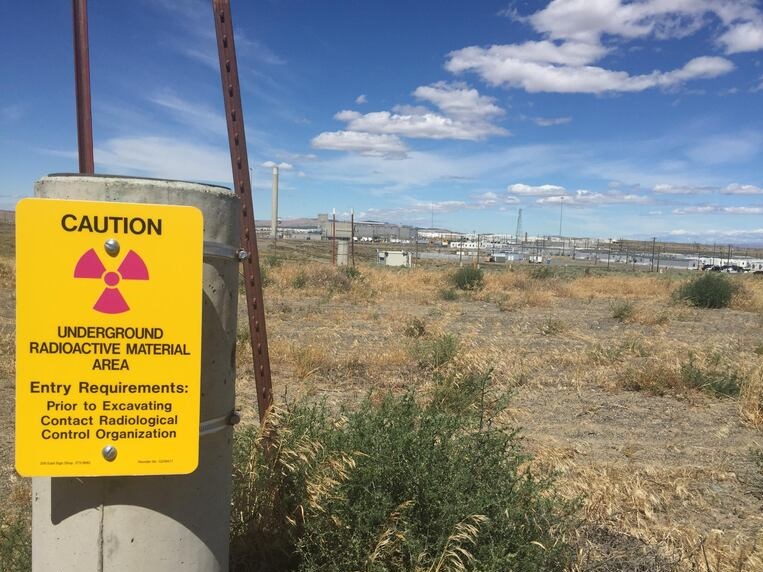
The Hanford Site in Washington state, a radioactive relic of the Manhattan Project and Cold War, was selected by DOE to be outfitted with up to 1GW of solar.
By Carrie Klein, 30 July 2024, https://www.canarymedia.com/articles/solar/this-nuclear-waste-site-could-soon-host-a-massive-solar-installation—
The U.S. Department of Energy announced plans last week to transform a contaminated former nuclear weapons production site into what could be the largest solar project in the country. The installation would stretch across up to 8,000 acres in south-central Washington state and boast up to 1 gigawatt of energy capacity — enough to power 750,000 homes.
One of the core challenges of building large solar installations is deciding where to put them. Local residents and farmers sometimes protest the use of agricultural land, while environmentalists urge caution in disturbing ecosystems. But this project location, known as the Hanford Site, is heavily contaminated from decades of atomic weapons production — first as part of the Manhattan Project and later during the Cold War.
Weapons production at Hanford created around 56 million gallons of radioactive and chemical waste, plus millions of cubic feet of solid waste and billions of gallons of less contaminated liquids. During production and upon Hanford’s decommissioning in the early 1990s, much of this waste was disposed of in concrete-lined pits, trenches, and ponds, and has since leached into the Columbia River basin, contaminating groundwater and causing health issues for locals.
Building solar at this location is “a great way to reuse land that has limited potential for other uses,” said Nels Johnson, senior advisor for renewable energy at The Nature Conservancy, who notes that “it means we’re not converting” prime farmland.
The project is part of the DOE’s new program Cleanup to Clean Energy, launched last year to help attain the climate goals in President Joe Biden’s 2021 executive order directing federal agencies to develop clean energy generation on their properties, with the goal of those agencies achieving 100 percent clean electricity by 2030.
The department announced the program’s first two projects — also solar installations — in June and July. One project will be located on 890 square miles of Idaho National Laboratory land and will feature 400 megawatts of solar capacity. The other will take up 2,400 acres of the Nevada National Security Site and has a capacity of 200 megawatts.
The Hanford project aims to generate the most energy by far — and, in addition to potentially becoming the largest solar project in the country, Johnson said that it would certainly be the largest on mine land, brownfield, or other degraded land.
Real estate negotiations are currently underway between the DOE and renewable energy developer Hecate Energy. Once an agreement is reached, Hecate will lead environmental reviews, including cultural resource surveys and consultations with local tribal nations, a DOE spokesperson told Canary Media. Hecate will also assess the impact of the proposed power generation on the grid to determine if any transmission upgrades are needed. These environmental and grid assessments could impact the ultimate size of the installation, according to the DOE.
The department declined to share a target timeline for the project.
In Benton County, where the Hanford Site sits, the Tri-City Development Council (TRIDEC) sees the solar installation as part of a larger transformation of the economy. The council, originally created to help diversify employment so the county was less dependent on federal funding, is planning several other renewable energy projects, along with “decarbonized manufacturing and industrial” projects, said Sean O’Brien, executive director at TRIDEC. “We very much envision that there will be a strong appetite for the electrons that this project will produce.”
Cleanup of the Hanford Site will be ongoing while the solar project moves forward into construction and operation in the coming years. “We can be doing both,” O’Brien said. The project itself will mostly be located on land that doesn’t require environmental remediation work, he said.
The Hanford Site is 560 square miles — about half the size of the state of Rhode Island. Since the late 1990s, workers have “cocooned,” or covered, seven nuclear reactors, removed 600 tons of contaminants from groundwater, and treated 32 billion gallons more. But decades of work still remain to fully remediate the site, O’Brien said. Adding solar to the site doesn’t change that, though it does at least put the land to productive use in the meantime.
Canada and the Atom Bomb: Remembering As an Act of Resistance

Anton Wagner, July 23, 2024, http://imagearts.ryerson.ca/hiroshima/remembering/
I met Setsuko Thurlow in 1995 when I produced Our Hiroshima for Vision TV for the 50th commemoration of the atomic bombings of Hiroshima and Nagasaki. In 1954, she had received death threats while studying at an American college in Virginia after criticizing the United States’ hydrogen bomb test in the Marshall Islands, one thousand times more powerful than the atom bomb dropped on Hiroshima. But when she settled in Canada with her husband, Jim Thurlow, the following year, she found “a very passive, almost indifferent world here. Maybe Canadians felt they had nothing to do with the nuclear age.”
In Our Hiroshima, Setsuko singled out the Eldorado uranium refinery in Port Hope, Ontario, that enriched all the uranium used by the American Manhattan Project to produce the Hiroshima and Nagasaki bombs. She found Canadians were not informed about their country’s involvement in the development of the atom bomb and failed to recognize that nuclear weapons were a universal, global phenomenon. “We all have to be concerned.”
The documentary showed her speaking to a huge peace rally at the University of Toronto Varsity Stadium in 1982. “Peoples around the world, with their deafening silence, have permitted their government to continue producing and accumulating ever more destructive weapons of genocide,” she told the rally. The hundreds of billions of dollars spent on armaments annually “diverted the resources that could feed the starving, heal the sick, and teach the illiterate.”
Setsuko began sharing the horrors she had witnessed as a survivor of Hiroshima with Canadians in “A Silent Flash of Light,” published in Saturday Night in August 1985. She would make these same very detailed, moving personal descriptions for international media for the next four decades. Nine members of her family and over three hundred of her schoolmates and teachers perished. Her family’s house was but ashes and broken tiles. Only an ornate clock in a cast-iron frame (seen in Jim Allen’s photograph above) could be salvaged as a reminder of life before the atomic bombing. “In the Peace Park in Hiroshima, there is a cenotaph with the inscription: ‘Rest in peace; the evil will not be repeated,’” she concluded her Saturday Night memoir. “This has become the vow of the survivors. Only then will our loved ones’ grotesque deaths not have been in vain. Only then will our own survival have meaning.
Thirty-two years later, in December 2017, Setsuko Thurlow accepted the Nobel Peace Prize, together with Beatrice Fihn, awarded to the International Campaign to Abolish Nuclear Weapons for bringing about the United Nations Treaty on the Prohibition of Nuclear Weapons. In her acceptance speech, she asked her audience in Oslo, “Today, I want you to feel in this hall the presence of all those who perished in Hiroshima and Nagasaki. I want you to feel, above and around us, a great cloud of a quarter million souls. Each person had a name. Each person was loved by someone. Let us ensure that their deaths were not in vain.”
With the approaching 75th anniversary of the atomic bombings in 2020, Thurlow wrote to all the world’s heads of state, including Canada’s Prime Minister Justin Trudeau, who had not yet ratified the Treaty on the Prohibition of Nuclear Weapons. In her personal appeal to the Prime Minister, she included my research document “Canada and the Atom Bomb” that provides the factual basis for this “Canada and the Atom Bomb” exhibition.
Setsuko referred to the delegation from Deline in the Northwest Territories representing Dene hunters and trappers employed by Eldorado to carry the sacks of radioactive uranium ore on their backs for transport to the Eldorado refinery in Port Hope. The delegation travelled to Hiroshima in August of 1998 and expressed their regret that uranium from their lands had been used in the development of the atom bomb. As seen in Robert Del Tredici’s photographs, Dene had themselves died of cancer because of their exposure to uranium ore, leaving Deline a village of widows. “Surely,” Thurlow wrote Trudeau, “the Canadian Government should make its own acknowledgement of Canada’s contribution to the creation of the atom bombs that destroyed Hiroshima and Nagasaki.”
She stated that an awareness by Canadians of our country’s direct participation in the atomic bombings of Hiroshima and Nagasaki had all but disappeared from our collective consciousness. Thurlow proposed to the Prime Minister that the 75th anniversary of the atomic bombings would be the appropriate moment to acknowledge Canada’s critical role in the creation of nuclear weapons, express a statement of regret for the deaths and suffering they caused in Hiroshima and Nagasaki, as well as announce that Canada would ratify the Treaty on the Prohibition of Nuclear Weapons. The Globe and Mail headlined her August 2020 op ed about her appeal to Trudeau, “Canada must acknowledge our key role in developing the deadly atomic bomb.”
Justin Trudeau never acknowledged receipt of Setsuko’s appeal, although Liberal MP Ali Ehsassi personally delivered a copy to the Prime Minister’s Office. With Trudeau’s refusal to meet or communicate with Thurlow, she turned her lobbying efforts to Toronto City Council. She had facilitated the creation of a large Peace Garden directly in front of City Hall as a memorial to the atomic bombings and the need for peace in 1984. As shown in the exhibition, City Council hosted Prime Minister Pierre Elliott Trudeau who turned the sod, beginning construction of the Peace Garden; Pope John Paul II kindled its eternal flame, and Queen Elizabeth II dedicated it as a lasting expression of Toronto’s commitment to peace.
Setsuko was a fierce defender of the Peace Garden when the $40 million revitalization of the City Hall Square resulted in its demolition. She was a leading figure among peace activists and community peace groups who convinced City Council to rebuild the Peace Garden on the civic square. Michael Chambers’ images capture this rededication of the Peace Garden in 2016.
The following year, Toronto City Council honoured Setsuko for her peace activism and reaffirmed Toronto as a nuclear weapons-free zone. The Toronto Board of Health held public hearings that resulted in its recommendation that City Council request that the Government of Canada sign the Treaty on the Prohibition of Nuclear Weapons. City Council passed such a motion and sent the text to Justin Trudeau, the Minister of Foreign Affairs, and the Minister of Health.
But nothing Canadian peace activists did changed the policies of the federal Canadian government. Setsuko Thurlow’s life-long commitment towards the abolition of nuclear weapons is a challenge to all concerned about the survival of human civilization. How can we transform our yearning for peace and justice into political action that will compel governments to prohibit and eliminate nuclear weapons? Setsuko donated her family’s precious ornate clock to the Canadian War Museum in Ottawa for a small peace exhibition in 2013. Will some survivors of a nuclear holocaust digging in the rubble of what once was Ottawa find a small, charred clock that once belonged to a survivor of the first atomic bombing but whose words of remembrance of that horror were buried by the silence of political leaders?
The US might lose a war with China, congressional commission says
Insufficient industry, readiness, innovation, and funding hamper military’s ability to prevail in conflict, key experts find.
By Patrick Tucker, Science & Technology Editor, Defense One, July 29, 2024, https://www.defenseone.com/threats/2024/07/us-might-lose-war-china-congressional-commission-says/398418/
The U.S. military “lacks both the capabilities and the capacity required to be confident it can deter and prevail in combat,” in the judgment of a congressional commission whose new report finds that collaboration between Russia, China, and other autocratic states is increasing the chance of a multi-front conflict—and that the U.S. would have trouble sustaining such a fight.
For more than a year, the former lawmakers, military leaders, and policy experts on the Commission on the National Defense Strategy have studied how well the U.S. military is executing the 2022 national defense strategy. The group released their report on Monday and will present its findings to the Senate Armed Services committee on Tuesday.
The group found big gaps between the Defense Department’s ambitions of deterring or prevailing in a major conflict and reality. One of the reasons they came to that conclusion is the current state of the U.S. defense industrial base compared to China’s.
“Unclassified public wargames suggest that, in a conflict with China, the United States would largely exhaust its munitions inventories in as few as three to four weeks, with some important munitions (e.g., anti-ship missiles) lasting only a few days. Once expended, replacing these munitions would take years,” the report states.
Furthermore, the growing collaboration between autocratic powers make it nearly inevitable that China and Russia would coordinate against the United States in the event of an armed conflict with one or the other.
“The United States should assume that if it enters a direct conflict involving Russia, China, Iran, or North Korea, that country will benefit from economic and military aid from the others. We also believe that this partnership increases the likelihood that a conflict with one would expand to multiple fronts, causing simultaneous demands on U.S. and allied resources,” the report states.
Of the commission’s many recommendations, most are similar to efforts the Pentagon is already undertaking, including reaching out more aggressively to the private sector, particularly new information-technology focused startups, to establish a new industrial base, and reevaluating counterproductive regulatory impediments to buying and selling defense technology.
Other recommendations are more pointed, such as abandoning outdated “programs of record” in order to procure key pieces of equipment, and loosening ship maintenance rules, allowing more maintenance in foreign ports, and being more willing to buy weapons and supplies from other countries.
But for the most part, the commission’s report paints a picture of a situation years in the making that can’t be righted quickly.
“Today, the United States has a DIB with too few people, too few companies, declining and unstable financial support, and insufficient production capacity to meet the needs of the Joint Force in both peacetime and wartime,” the group said.
Largest wildfire in US grows to cover area bigger than Los Angeles

The largest wildfire in the US swelled to more than 380,000 acres (154,000
hectares) on Tuesday morning, an area bigger than the city of Los Angeles
and three times the surface area of Lake Tahoe, as thousands of
firefighters battled the blaze in a remote wilderness area in northern
California. Meanwhile, the destruction caused by wildfires raging across
the US west came into sharp focus as photographers documented the
destruction left by the Borel fire in southern California. The fast-growing
fire tore through the historic mining town of Havilah, leaving burnt
buildings, cars and forests.
Guardian 30th July 2024
https://www.theguardian.com/us-news/article/2024/jul/30/california-wildfires-los-angeles
US Forces Japan to be upgraded to warfighting command

The shift will move operational control of Japan-based forces east from Hawaii and, officials say, deepen cooperation with the Japanese military.
TOKYO—The Pentagon will upgrade and expand its three-star command in Japan to handle operational control of U.S. forces based there, part of an effort to deepen ties between the U.S. and Japanese militaries and to streamline command and control of joint operations, senior defense officials told reporters traveling with Defense Secretary Lloyd Austin on Friday.
“Secretary Austin plans to announce that the United States intends to reconstitute U.S. Forces Japan as a Joint Force Headquarters, reporting to the commander of U.S. INDOPACOM,” said the senior official. The shift will give USFJ, which is “currently, primarily, an administrative command” more warfighting responsibilities. “They do day-to-day management of the alliance, but not operational command of forces. So it’ll be a significant difference for them.”
The announcement comes as part of the Joint Statement of the Security Consultative Committee (“2+2”) committee meeting taking place in Tokyo between Austin, Secretary of State Anthony Blinken, and their Japanese counterparts.
The command will grow as it adds missions and responsibilities to its current alliance-management functions, the official said, “including some of the planning exercises and commanding of operations, and we’ll be doing those, as I mentioned, side-by-side with Japanese forces like never before.”
Many details of the new headquarters aren’t yet known and officials said that the approach will be phased, with many more discussions about how to implement yet to come. Among the decisions to be made is whether the expanded USFJ will have a command structure that integrates Japanese forces, the way U.S. Joint Forces Korea does for South Korean forces.
“A major part of that phased approach will involve bilateral working groups with the U.S. side, led by INDOPACOM, to work through important implementation factors, including potential resourcing needs, infrastructure, personnel, authorities and ranks,” the official said.
The new Joint Force Headquarters will allow INDOPACOM officers and operators to have daily interactions with Japanese counterparts about how to plan exercises, operations, and how to act on shared intelligence and information, the official said. ……………………..more https://www.defenseone.com/policy/2024/07/us-forces-japan-be-upgraded-warfighting-command/398386/
Project 2025 – A New Pax Romana

the plan is chiefly concerned with how to put ever greater control of both people and resources in the hands of a small minority of mostly white, mostly male, wealthy Christians.
The wholesale capture of the state is the ultimate goal of its Christian nationalist architects
Tom Dispatch, By Liz Theoharis and Shailly Gupta Barnes. 28 July 24
Roman poet Juvenal coined the phrase “bread and circuses” nearly 2,000 years ago for the extravagant entertainment the Roman Empire used to distract attention from imperial policies that caused widespread discontent. Imagine the lavish banquets, gladiatorial bouts, use and abuse of young men and women for the pleasure of the rich, and so much more that characterized the later years of that empire. And none of it seems that far off from the situation we, in these increasingly dis-United States, find ourselves in today.
Although the Roman Empire described itself as being in favor of life and peace, the various Caesars and their enablers regularly dealt death and destruction in their wake. They spread the Pax Romana (the Roman Peace), including a taxation system that left the poor in debt servitude, a military that caused terror and violence across the then-known world, and a ruling authority that pitted whole communities against each other, while legislating who could associate with whom (passing marriage laws, for instance, that banned gay, inter-racial, or even cross-class marriages). The emperor in power in Jesus’s time, Caesar Augustus, was known for ushering in a Golden Age of Moral Values that went hand in hand with that Pax Romana, and it meant war and death, especially for the poor.
Fast forward millennia and that world bears a strange resemblance to the media distractions, violence, and regressive policies that MAGA and other extremists are pushing forward in our times. Whether it’s Donald Trump’s assertion that “I alone can fix your problems”; Supreme Court and state legislative attacks on reproductive rights, same-sex marriage, and trans youth in the name of family values; cuts to welfare, healthcare, worker’s rights and other life-sustaining programs to protect corporate interests; the militarizing of endless communities by allowing guns (especially AR-15 rifles) to proliferate, while offering only thoughts and prayers to the victims of violence, the MAGA movement is promoting culture wars and extremist policies under the banner of Christian nationalism. In doing so, its leaders are perfecting a disdain for the excluded, exploited, and rejected that hurts the poor first and worst, but impacts all of society.
And now, after decades of neoliberal plunder and the coronation of an avowed Christian nationalist — Speaker of the House Mike Johnson — to the third most powerful position in the government, the Christian Right and its wealthy patrons have their eyes set on an even more ambitious power-grab: Project 2025. Articulated through the Heritage Foundation’s 2025 Presidential Transition Project, it’s a sprawling plan to maximize presidential power with hundreds of newly trained and deployed political operatives during Donald Trump’s next presidency.
It was seen in full display recently at the Republican National Convention and made all the more likely by the recent assassination attempt against him with (yes!) an AR-15! The nearly 900-page document outlines a plan to ramp up U.S. military might, slash social welfare programs, and prioritize “traditional marriage.” A reflection of the Republican Party today, including several Christian nationalist organizations and billionaire funders listed among its 100 institutional sponsors, Project 2025 is a roadmap for what could be thought of as a new Pax Romana.
The Formal Project 2025 Takeover
As Project 2025’s official website explains (and doesn’t this sound like it could come directly from the mouth of vice-presidential nominee J.D. Vance?): “It is not enough for conservatives to win elections. If we are going to rescue the country from the grip of the radical Left, we need a governing agenda and the right people in place, ready to carry this agenda out on Day One of the next conservative Administration.” Although its authors unabashedly deploy the language of conservative populism — decrying wokeness and “cultural Marxists” — the plan is chiefly concerned with how to put ever greater control of both people and resources in the hands of a small minority of mostly white, mostly male, wealthy Christians.
The wholesale capture of the state is the ultimate goal of its Christian nationalist architects. Project 2025 simply clarifies just how they plan to implement their drive for power. Each of its sections — from “taking the reins of government” by centralizing executive authority in the office of the President to securing “the common defense” by expanding every branch of the military — is worth reviewing.
The longest section focuses on “general welfare” and it should be no surprise that the Departments of Agriculture, Health and Human Services, and Housing and Urban Development are subject to significant cutbacks, including:
Imposing yet stricter eligibility standards, work requirements, and asset tests to constrain access to Medicaid, even though more than 23 million Americans have been unenrolled from that program since 2023;
- Revisiting how the “Thrifty Food Plan” is formulated to minimize food-stamp allocations, while imposing onerous work requirements on the Supplemental Nutritional Assistance Program (SNAP), even though most of its recipients work and/or are in households with children, elderly people, or people with disabilities;
- Ending universal free school meals by removing the “community eligibility provision,” which allows school districts with high poverty rates to provide free breakfast and lunch programs to all children in need;
- Eliminating Head Start, which has served 39 million children and families since 1965 and currently serves more than 800,000 poor families with young children, while shuttering the Department of Education;
- Ending “Housing First” programs and prohibiting non-citizens, including mixed-status families, from living in low-income public housing; and
- Imposing a “life agenda” and a “family agenda” that will restrict access to abortion and reproductive rights, and otherwise curtail LGBTQ+ rights.
Such proposals would undoubtedly be deeply unpopular. In fact, as people learn more about Project 2025, opposition is growing, even across party lines. Most Americans want a government that would provide for the down-and-out, who are a growing segment of the population and the electorate, as well as one that supports abortion rights, voting rights, and the freedom of expression. At least 40% of us — 135-140 million people — are either poor or one emergency away from economic ruin, including 80 million eligible voters. Project 2025’s social welfare cuts would, in fact, push significant numbers of people across the poverty line into financial ruin.
Even Donald Trump has tried to distance himself from Project 2025 as attention has moved toward its distinctly (di)visionary agenda. However, more than half of the project’s listed authors, editors, or contributors were once part of his administration — and no one doubts that his vice-presidential nominee is 100% pro-Project 2025!
The Informal Takeover Already Underway
Perhaps scarier than either Trump’s or Vance’s connection to this regressive plan, however, is the fact that, despite popular distaste for such policies, it may not take a second Trump presidency to implement significant parts of Project 2025. In this sense, it reflects the ancient world of the Pax Romana. Rather than being dependent on particular emperors, its “peace” was a political and ideological program that punished the poor and marginalized so many, while keeping all its subjects in line.
From its recent rulings, it’s clear that the Supreme Court is hastening Project 2025’s agenda judicially, both in terms of specific future policies and the executive power grab at the heart of that mandate (and now of that court’s rulings). In June, for instance, it ruled in favor of the city of Grants Pass, Oregon, which enacted a law to fine, jail, and ultimately expel its unhoused residents. That precedent will only exacerbate the already hostile terrain confronting unhoused people, seeding firm ground to 2025’s plan to eliminate even more housing projects.
Worse yet, as the Nation’s Elie Mystal recently made clear, in just a few weeks of rulings, the court “legalized bribery of public officials, declared the president of the United States absolutely immune from criminal prosecution for ‘official acts,’ and made the power to issue regulations subject to the court’s unelected approval.” As he warns, “There’s no legislative fix for the problems the court has created… [and] they will continue to do all the things Republicans want that nobody elected them to do.”…………………………………………………………………………………..
in lockstep with Project 2025’s call for military expansion, Mississippi Senator Roger Wicker recently released a report proposing that $55 billion be added to the Pentagon’s already humongous budget in fiscal year 2025 while raising military spending by hundreds of billions of dollars in the next five to seven years. The report, “Peace Through Strength,” revives the false idea that spending ever more on war preparations makes us safer. Not only is Wicker distorting Cold War history, but his prescriptions ignore our experience of the past 20 years of military buildup and the disastrous Global War on Terror. According to the Costs of War Project and the National Priorities Project, this country’s post-9/11 wars have cost at least $8 trillion, taken millions of lives, and displaced tens of millions of people globally, while precipitating climate chaos through their polluting emissions. If implemented, Wicker’s plan would only increase the risk of yet more destabilizing conflicts, offering a modern Pax Romana promise for yet more war and death.
Peace, Peace, When There Is No Peace
While extremist Republican politicians and appointees are leading the way on Project 2025, both major parties align around building up the war economy. Indeed, bipartisan support for military aid to Israel is contributing to what the United Nations has labeled a genocide in Gaza.
Nor is this new. Every year, the Pentagon budget invariably passes with widespread bipartisan support, even if a few representatives vote otherwise. Since the 9/11 attacks, in fact, $21 trillion has been funneled into war, surveillance, policing, border control, and incarceration. In Fiscal Year 2023, nearly two-thirds of the federal discretionary budget funded the military-industrial complex and militarized spending. This year, a Democratic amendment to the National Defense Authorization Act will automatically register every male citizen and resident aged 18-26 in the selective service database………….
This remarkably bipartisan consensus for a war economy shouldn’t just be considered another “issue,” but an approach to governance that relies on force and violence, rather than consent, to establish social control…………………………
Jobs and Homes, Not Death in the Streets
The greatest violence of the Pax Romana was always borne by the poor, who were often ripped from their families, enslaved in back-breaking labor, and dispossessed of their land and resources. To maintain its authoritarian rule over millions of people, the Roman Empire relied on its military might and the fear inspired by its brutal army. And yet it was from the ranks of the poor that Jesus and his disciples led a non-violent revolution for peace.
Today, tens of millions of poor people in this country are on the front lines of our failing democracy and increasingly militarized society. They are the true canaries in the coal mine, already living through the violence of a society that has prioritized war and profits over addressing the pain and toll of low-wage jobs, crushing debt burdens, polluted water and land, and lives cut short by poverty, the police, and the denial of basic human rights. They can undoubtedly also foresee the drive toward an ever-deeper warfare state and the possible fallout from Project 2025 if Donald Trump and J.D. Vance win this year.
Forged in the crucible of violence, the criminalized and impoverished still call out for a true peace.
On June 29th, Reverend Savina Martin, a military veteran and formerly homeless mother, took to the stage of the Poor People’s Campaign’s Mass Assembly in Washington, D.C., and shared these thoughts:
“I am a US Army veteran and I was impacted by homelessness many years ago. Today, thousands of homeless veterans are fighting for [their] benefits, housing… navigating a complex system while sick and suffering, trying to survive the war waged against the poor. Yesterday, the US Supreme Court decision in Grants Pass v. Johnson permits cities to criminalize homelessness by enforcing bans on sleeping outside when no shelter is available. How can sleeping while homeless be against the law? If you sleep, you get arrested?
This system depends on us to fight their wars, but we can’t depend on [our government] to guarantee housing or healthcare? Instead, [our government] allocates $1.1 trillion to war, weapons, and a system that criminalizes the poor, leading to mass incarceration, deportations, and detentions. We want jobs and homes, not death in the streets.”
Savina was speaking of the war on the poor, the power of the military-industrial complex, and an extremist agenda that will connect her in unsettling ways with 140 million poor and low-income people in this country — and billions more around the world. As in other moments of history, the struggle of the poor for life and dignity in a world that denies them both is a struggle for the best that we can be as a society. In their leadership lies the hope for us all — not in Project 2025, a future Trump administration, or the all-too-devastating version of a Pax Americana that would go with it, but in the peace (and justice) that Savina and so many others are demanding, and will continue to push for, until it is ours. https://tomdispatch.com/project-2025/
Point Lepreau nuclear station – a heavy financial burden that keeps getting heavier.

Point Lepreau has become a heavy financial burden
the station will remain at risk of unplanned outages because of aging equipment.
NB Power’s latest financial plan forecasts its debt will continue to grow. In the utility’s base case model, debt will keep rising for the rest of this decade, reaching nearly $6.3-billion by 2029. It keeps rising even in more optimistic scenarios.
Point Lepreau station is among North America’s worst-performing nuclear power plants. Can New Brunswick Power turn it around?
Globe and Mail, MATTHEW MCCLEARN , July 29, 2024
In the early hours of Dec. 14, 2022, New Brunswick’s Point Lepreau Nuclear Generating Station lost power after an electrical fault. Just hours later, at 4:40 a.m., an alarm sounded: The plant had suffered a small coolant leak and NB Power, the facility’s owner, detected radioactivity. The station was locked down to prevent that radioactivity from escaping, and an emergency response team was readied.
Somehow, two unrelated pieces of equipment had failed simultaneously, touching off a costly and time-consuming recovery. Workers needed to bring the reactor to a guaranteed shutdown state. They had to regain entry to the reactor building and decontaminate it. And they needed to find the leak and stop it. The station would remain out of service for 42 days.
This outage was just one of several in recent years that, in combination, point to severe reliability problems at Atlantic Canada’s only nuclear power plant. The latest, which was planned to end after 100 days on July 12 and cost more than $100-million, included installing a new 9,000-horsepower primary heat transport pump and motor, which moves heat generated by the reactor to the station’s steam generators.
But NB Power spokesperson Dominique Couture said workers discovered a problem with the station’s main generator, which provides electricity to the province’s grid. At a rate hearing before the New Brunswick Energy and Utilities Board, company officials said the plant is expected to remain offline until at least September. And the station will remain at risk of unplanned outages because of aging equipment.
It will be many years before we have put those risks behind us,” said Jason Nouwens, the station’s director of regulatory and external affairs.
Point Lepreau is one of North America’s worst-performing nuclear stations. Intending to keep it running until at least 2039, NB Power has struggled unsuccessfully for the past several years to rehabilitate the station and expects to spend hundreds of millions of dollars more on it in the next few years.
The utility is not too proud to ask for help: It wants Ontario Power Generation to effectively incorporate the plant into OPG’s large fleet of Candu reactors. Key senior leadership positions at the station are now held by OPG employees.
But there’s no guarantee OPG will agree to take over the stricken station on favourable terms, or at all. And it’s not clear NB Power can afford the steep repair bill.
New Brunswick’s dilemma points to challenges that other provinces, such as Alberta and Saskatchewan, should consider as they look to build new reactors………………………………………………………………………….
According to NB Power, Point Lepreau has roughly 115,000 components. The December, 2022, outage illustrated how the failure of just one of them, however inconsequential it may seem, can knock it out. The culprit for the water leak turned out to be a crack in a small instrument line near the reactor core, about the diameter of a finger. This line had been deemed necessary for the plant’s commissioning more than 40 years earlier, but was useless thereafter.
NB Power concluded that when the station lost power, other systems fired up that increased vibration throughout the plant. “This was essentially the final straw that propagated the crack to a failure point,” Mr. Nouwens explained to the federal safety regulator during a hearing after the incident. “It had been coming for some time.”
Outages are expensive. Point Lepreau’s 900 workers must be paid regardless of how much electricity the plant generates. Each day it’s out of service, NB Power also incurs hundreds of thousands of dollars in overtime costs.
NB Power must purchase energy to cover the shortfall as well, at an average cost of $900,000 a day.
Repeated outages have forced NB Power to divert capital to the station. This thwarted efforts to repay debts, most of which were incurred at Point Lepreau. This year’s extended outage also forced the utility to delay work at other power plants…………………………………………………………………..
NB Power’s latest financial plan forecasts its debt will continue to grow. In the utility’s base case model, debt will keep rising for the rest of this decade, reaching nearly $6.3-billion by 2029. It keeps rising even in more optimistic scenarios.
Heeding nuclear’s siren song
When Point Lepreau was still being planned, some experts doubted how suitable nuclear power was for a small province. Andrew Secord, an economics professor at St. Thomas University, found a March, 1972, memo by Myles Foster, an official at the federal Finance Department, that said that NB Power’s decision to go nuclear was “the equivalent of a Volkswagen family acquiring a Cadillac as a second car.”
Since then, Point Lepreau has become a heavy financial burden. At various times, the province has considered shuttering it or selling it. Ultimately, though, NB Power’s board of directors decided in 2005 to double down and extend the station’s life.
Refurbishments compel utilities to make crucial decisions about which equipment to replace, and what to keep. Pressure tubes, the Candu’s main life-limiting components, are a given, but many other components must be carefully assessed. Misjudgments can be costly.
Point Lepreau’s refurbishment began in March, 2008, and was scheduled to wrap up by October, 2009, at an expected cost of $845-million. According to a 2002 NB Power document, even if all two dozen of the worst disasters the utility could envision came to pass – everything from delays to strikes to unexpected additional work – it would add up to a combined maximum overrun of $623-million.
But things went worse – far worse – than NB Power imagined possible. It called in OPG to assist. The reactor finally returned to service in November, 2012, three years late and massively over budget.
Even this might have been salvageable had the plant operated reliably thereafter. NB Power was counting on Point Lepreau reaching a capacity factor of 89 per cent. Instead, NB Power found itself playing a game of Whac-A-Mole with recurring maintenance issues…………………………
NB Power has acknowledged that while the 2008-12 refurbishment focused on the reactor itself, equipment in the rest of the plant – sometimes referred to as the “conventional” side – typically was not replaced. Some of that equipment, such as the problematic generator that recently delayed the station’s return to service, is now breaking down. The utility made bad calls and is now paying a terrible price.
Recovery plan
NB Power is now drawing up a recovery plan for its ailing station, which features greatly increased maintenance spending: more than $87-million in 2025, tapering off thereafter.
But according to ScottMadden, this likely won’t suffice. Spending less than $80-million a year is “slightly more likely than not to result in performance declines,” whereas spending $100-million to $120-million is expected to deliver “the highest marginal returns in expected improvements.” Under current plans, ScottMadden warned, Point Lepreau’s performance will likely decline again beginning in 2030.
OPG sent a delegation to the stricken station last year to assess its condition, examine maintenance plans and interview NB Power employees. Last September, the utilities signed a three-year agreement under which OPG has seconded staff to the Point Lepreau station. NB Power says it has received support from OPG’s chief nuclear officer, a vice-president who’d supervised refurbishments and outages, and a chief nuclear projects officer.
OPG and NB Power are now in talks that might lead to Point Lepreau becoming part of OPG’s reactor fleet. At a hearing before the New Brunswick Energy and Utilities Board in June, Ms. Clark said OPG would likely assume majority ownership and would bring “some capital to the table to help with some of the investments that are required in the station over the longer term.”
She added, however, that given the difficulty of reaching “even general agreement on things,” a deal likely wouldn’t be reached before late 2025.
Even as NB Power officials struggle to fix Point Lepreau, they continue to offer their services to provinces such as Alberta and Saskatchewan, which possess little prior experience with nuclear technology. At an industry conference in Calgary in April, officials offered to help such provinces evaluate new reactor technologies and work with regulators…………..
They did not share any sense of the pitfalls of nuclear power – a topic for which NB Power has unfortunately gained formidable expertise. https://www.theglobeandmail.com/business/article-point-lepreau-station-is-among-north-americas-worst-performing-nuclear/
Netanyahu’s Visit to Congress Underscores US Contempt for International Law

Netanyahu is getting cozy with Congress, just days after the ICJ told UN members to stop aiding the Israeli occupation.
By Marjorie Cohn , Truthout July 24, 2024
he U.S. has long ignored many commands of international law, but its casual disregard of the International Court of Justice (ICJ) has come into sharp focus this week as the U.S. Congress extends a warm welcome to Israeli Prime Minister Benjamin Netanyahu, just five days after the ICJ notified all UN member states that they have a legal “obligation not to render aid or assistance in maintaining the situation created by Israel’s illegal presence in the Occupied Palestinian Territory.”
The World Court’s historic 83-page advisory opinion, which was issued on July 19 and held that the Israeli occupation of Palestinian territory is illegal, was quickly hailed by Middle East political expert Nomi Bar-Yaacov as a “legal earthquake” and the strongest decision that the court had ever issued.
Unsurprisingly, however, both the Israeli and U.S. governments denounced the ICJ’s ruling and proceeded with their plans — including Netanyahu’s visit to Washington, D.C. — as if it had never occurred.
The purpose of Netanyahu’s trip is to shore up U.S. support for his ongoing genocidal campaign against the Palestinians in Gaza and for his crusade against Iran.
“The Jewish people are not occupiers in their own land, including in our eternal capital Jerusalem nor in Judea and Samaria, our historical homeland,” Netanyahu declared after the ICJ issued its decision. “No absurd opinion in The Hague can deny this historical truth or the legal right of Israelis to live in their own communities in our ancestral home.”
Joe Biden’s administration meanwhile conveyed that it is “concerned that the breadth” of the decision will “complicate” the “efforts to resolve the conflict.” The U.S. State Department said the ICJ’s order that Israel withdraw from the Palestinian territories is “inconsistent with the established framework” for resolving “the conflict.” Parroting Israel’s mantra, the State Department said the resolution should occur through negotiations.
Negotiations have proved worthless in ending Israel’s illegal occupation and its genocide in Gaza and achieving justice for the Palestinians. Although the Biden administration has advocated a two-state solution, its unbridled support for the Zionist regime, which continues to carve up occupied Palestinian territory into noncontiguous enclaves, makes that “solution” impossible.
The U.S. government enables Israel’s illegal occupation by providing $3.8 billion annually and it has sent Israel an addition $15 billion in military aid since October 7, 2023. This helps fund Israel’s genocide, which has killed nearly 39,000 Palestinians by the official Gaza Health Ministry count, although the true death toll is likely much higher. Moreover, the U.S. has vetoed three Security Council resolutions that would have demanded a ceasefire in Gaza.
In order to comply with the ruling of the World Court, the U.S. government would have to end its military assistance to Israel and stop providing political and diplomatic cover to enable Israel’s occupation of Palestinian territory.
The ICJ’s Legal Findings
The ICJ ruled that Israel’s occupation of the West Bank, East Jerusalem and Gaza violates international law, which prohibits the acquisition of territory by threat or use of force and enshrines the right of the Palestinian people to self-determination. “The sustained abuse by Israel of its position as an occupying Power, through annexation and an assertion of permanent control over the Occupied Palestinian Territory and continued frustration of the right of the Palestinian people to self-determination, violates fundamental principles of international law and renders Israel’s presence in the Occupied Palestinian Territory unlawful,” the court wrote…………………………………………………………………………………………………………….
Consequences of the Ruling
The World Court’s advisory opinion was issued in response to a request by the General Assembly. Although not legally binding, the decision carries great moral weight………………………………………………………………………………………….. more https://truthout.org/articles/netanyahus-visit-to-congress-underscores-us-contempt-for-international-law/
1 This Month

of the week – Shut Down Drone Warfare!


Tell the Ukrainian Government to Drop Prosecution of Peace Activist Yurii Sheliazhenko

Petition to revoke the licensing of the Near Surface Nuclear Disposal Facility (NSDF) at Chalk River. https://www.ourcommons.ca/petitions/en/Petition/Details?Petition=e-7247
To see nuclear-related stories in greater depth and intensity – go to https://nuclearinformation.wordpress.com
-
Archives
- April 2026 (114)
- March 2026 (251)
- February 2026 (268)
- January 2026 (308)
- December 2025 (358)
- November 2025 (359)
- October 2025 (376)
- September 2025 (257)
- August 2025 (319)
- July 2025 (230)
- June 2025 (348)
- May 2025 (261)
-
Categories
- 1
- 1 NUCLEAR ISSUES
- business and costs
- climate change
- culture and arts
- ENERGY
- environment
- health
- history
- indigenous issues
- Legal
- marketing of nuclear
- media
- opposition to nuclear
- PERSONAL STORIES
- politics
- politics international
- Religion and ethics
- safety
- secrets,lies and civil liberties
- spinbuster
- technology
- Uranium
- wastes
- weapons and war
- Women
- 2 WORLD
- ACTION
- AFRICA
- Atrocities
- AUSTRALIA
- Christina's notes
- Christina's themes
- culture and arts
- Events
- Fuk 2022
- Fuk 2023
- Fukushima 2017
- Fukushima 2018
- fukushima 2019
- Fukushima 2020
- Fukushima 2021
- general
- global warming
- Humour (God we need it)
- Nuclear
- RARE EARTHS
- Reference
- resources – print
- Resources -audiovicual
- Weekly Newsletter
- World
- World Nuclear
- YouTube
-
RSS
Entries RSS
Comments RSS
 nuclear-news