Algonquin community wins part of court challenge over nuclear waste dump near Ottawa River
Federal judge orders nuclear regulator to renew consultation with Kebaowek First Nation on contentious project
Brett Forester · CBC News ·Feb 21, 2025
An Algonquin community in Quebec is declaring victory after a judge upheld part of its court challenge to a proposed radioactive waste dump to be built about a kilometre away from the Ottawa River.
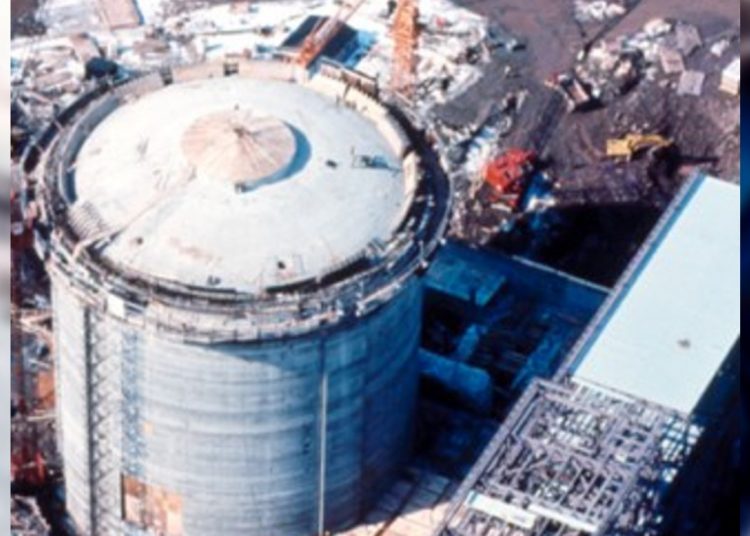
The Canadian Nuclear Safety Commission approved the project in January 2024, greenlighting Canadian Nuclear Laboratories (CNL) to build the “near-surface disposal facility” at the Chalk River research campus near Deep River, Ont., 150 kilometres northwest of Ottawa.
But according to Federal Court Justice Julie Blackhawk, the regulatory body failed to consider internationally recognized Indigenous rights and how they apply in Canadian law when consulting with Kebaowek, rendering the approval decision both unreasonable and incorrect.
“The consultation process in this matter was not adequate,” Blackhawk wrote in a decision released Wednesday.
The judge ordered the commission and CNL to resume consultations with Kebaowek “in a robust manner,” while properly considering the UN Declaration on the Rights of Indigenous Peoples (UNDRIP) and its standard of free, prior and informed consent.
The consultation must be adapted to address Indigenous laws, knowledge and be aimed at reaching an agreement, to be completed by Sept. 30, 2026, Blackhawk ruled.
Kebaowek had asked the court to quash the commission’s approval entirely, requiring CNL to restart the process altogether. But Blackhawk declined, calling that impractical, sending the matter back to the commission to correct the process instead.
Nevertheless, community leaders are ecstatic, said Chief Lance Haymond.
“It’s clear that when Canada adopted UNDRIP, the provisions of UNDRIP had to be applied in Canadian law from the beginning, not in some time in the future,” said Haymond, whose community is 300 kilometres northwest of Ottawa.
“I think that’s a win for Kebaowek, and that’s a win for First Nations across this country.”
Haymond hailed the decision as one with far-reaching implications for industry and project proponents, meaning he expects it will be appealed. …………………………………….
The facility would contain up to one million cubic metres, or about 400 Olympic-sized swimming pools worth, of low-level radioactive waste from the Second World War-era Chalk River site in a specially designed mound.
Kebaowek has raised concerns about the project’s potential impact on drinking water, wildlife and Indigenous rights.
In the judicial review, the community raised novel legal arguments, centring on the commission’s obligations under the United Nations Declaration on the Rights of Indigenous Peoples Act,federal legislation passed in 2021.
The law requires Canada to harmonize federal laws with UNDRIP, an international instrument outlining minimum standards for the protection of Indigenous peoples’ rights around the world. …………………………..more https://www.cbc.ca/news/indigenous/kebaowek-judicial-review-win-1.7464036#:~:text=An%20Algonquin%20First%20Nation%20in,away%20from%20the%20Ottawa%20River.
Prioritizing nuclear power and natural gas over renewable energy is a risky move for Ontario’s energy future
Norman W. Park, The Conversation, 11 Feb 25
The demand for electricity is growing rapidly as the world transitions from fossil fuels to low carbon-emitting forms of energy. However, making this transition will be difficult.
Ontario is projected to require 75 per cent more electricity by 2050, spurred by increasing demand from the industrial sector, data centres, electric vehicle (EV) adoption and households, according to the Independent Electricity System Operator (IESO).
To meet this demand, Ontario Energy Minister Stephen Lecce has proposed transforming the province into an “energy superpower” by aggressively expanding nuclear energy and natural gas while cutting support for wind and solar renewable energy.
This plan was spelled out in a policy directive from Lecce instructing the IESO to consider bids from all energy sources, opening the door to allow bids from natural gas and nuclear energy.
This is a departure from previous policies. Previously, under former Energy Minister Todd Smith, the IESO had stipulated bids for the electrical grid should only be from wind, solar, hydro or biomass.
The Ontario government should reconsider these plans. Non-renewable energy sources are costly, rely on new, expensive technologies, ignore the harm to human health and ignore the consequences for global warming.
Expanding nuclear
A central pillar of the Ontario government’s energy plan is the aggressive expansion of nuclear power. The province has committed to refurbishing 14 CANDU reactors at Bruce, Darlington and Pickering, and has proposed constructing new reactors at Bruce.
Ontario is also the first jurisdiction in the world to contractually build a BWRX–300 small modular reactor project at Darlington, despite not knowing its projected cost.
The cost of this small modular reactor may be much higher than similarly sized solar, wind and natural gas projects. This is unsurprising, given that the costs of nuclear projects are often much higher than projected.
Ontario encountered a similar issue when the Darlington nuclear generating station was constructed. The actual costs of nuclear projects were more than double projected costs and took almost six years longer to complete than projected.
Given these historical challenges and uncertainties, the province’s push for nuclear expansion is a cause for concern.
Opposition to wind and solar
Despite significant cost reductions in utility-scale wind and solar farms, which makes them less expensive than nuclear and fossil fuels in many parts of the world, Ontario’s recent policy directive reduced support for these non-emitting renewable energy sources…………………………………………………………..
Reconsidering Ontario’s energy transition
Ontario’s energy transition must involve supplying more energy to an expanding electrical grid while ensuring it remains reliable and resilient. The current government’s plans to turn the province into an “energy superpower” will commit Ontario to decades of costly expenditures and relies on unproven new technologies.
The government’s proposal to increase natural gas to supply the electricity grid and new buildings will increase the risk of premature death and serious illness to Ontarians and will increase greenhouse gas emission, undermining efforts to combat global warming.
Lecce should reconsider his current policy directive to the IESO. Future bids for the electrical grid should instead be evaluated for their impacts on the health of Ontario residents and climate change.
Ontario’s energy policies should also be guided by knowledgeable experts outside of government, rather than solely by politicians. Establishing a blue-ribbon committee comprising energy scientists and environmental specialists would provide needed oversight and ensure the province’s energy strategy is cost-effective, technologically sound and aligned with climate goals.
Ontario has an opportunity to lead by example in balancing energy needs with environmental and health priorities. https://theconversation.com/prioritizing-nuclear-power-and-natural-gas-over-renewable-energy-is-a-risky-move-for-ontarios-energy-future-246289
How Australia’s CANDU Conservatives Fell in Love with Canadian Nuclear

This time around, with the current push to embrace nuclear energy, the federal Australian Coalition’s ideas appear to be shaped by the internet, where a pro-nuclear media ecosystem of influencers and podcasters has flourished just as nuclear has become attractive to conservative parties worldwide.
Ontario, Canada is the only place in the world to tear out wind turbines and embrace nuclear power. Australia’s conservatives have been taking notes.
DRILLED, Royce Kurmelovs 5 Feb 25
If there is a Holy Land for nuclear energy, Australian Shadow Climate Change and Energy Minister, Ted O’Brien, seems to think it’s Ontario, Canada.
Other countries have well-established nuclear power industries, of course. There’s the United Kingdom where the Hinkley Point C nuclear reactor – dubbed “the world’s most expensive power plant” – where work began in 2007 with an expected start date of 2027 but is now at least ten years behind schedule and billions over budget. Meanwhile, it’s sister project, Sizewell C, is estimated to cost the equivalent of AUD $80bn (GBP £40bn, USD $49bn). There’s France where, in mid-August 2022, half the country’s nuclear reactors were forced offline, many as a direct result of climate impacts such as heat and drought.
Over in the United States, storied home of the Manhattan Project, where newly minted energy secretary (and fracking CEO) Chris Wright has announced a commitment to “unleash” commercial nuclear energy, one of the last two new nuclear power builds attempted this century forced Westinghouse into bankruptcy protection, and a separate effort by NuScale to build a cutting edge small modular reactor (SMR) was cancelled in November 2023 due to rising costs. There’s also Finland, a country of 5.6 million people, that finally turned on Europe’s newest nuclear reactor 18 years after construction began, finishing up with a price tag three times its budget. Though it had a noticeably positive effect on prices after start up, the cost of building Olkiluoto-3 was so high, its developer had to be bailed out by the French government. Since then, technical faults continue to send the reactor temporarily offline – a remarkably common occurrence among nuclear reactors.
Ontario, however, is so far the only place in the world that has ripped out wind turbines and built reactors – though the AfD in Germany has pledged to do the same if elected, and US President Donald Trump has already moved to stop new windfarm construction. Thanks to much self-promotion by pro-nuclear activists and Canada’s resources sector, that move caught the imagination of O’Brien and Australia’s conservative party. Now, as Australians head to polls in 2025, the country’s conservatives are looking to claw back government from the incumbent Labor Party with a pro-nuclear power play that critics charge is nothing more than a climate-delay tactic meant to protect the status quo and keep fossil fuels burning. “This is your diversion tactic,” says Dave Sweeney, anti-nuclear campaigner with the Australian Conservation Foundation. “There’s a small group that have long held an ambition for an atomic Australia, from first shovel to last waste barrel to nuclear missile. Some of the people who support this are true believers, for others it’s just the perfect smoke screen for the continuation of coal and embedding gas as a future energy strategy.”
Apples and Maple Syrup
On the face of it, Ontario is an odd part of the world on which to model Australia’s energy future. Privatization in both places has evolved messy, complicated energy grids, but that’s about all they have in common. One is a province on the sprawling North American landmass, and the other is a nation that spans a continent. Ontario has half the population of Australia and spends five months a year under ice. Its energy system has traditionally relied on hydro power and nuclear, where Australia is famously the driest inhabited continent on the planet that used to depend on coal but now boasts nearly 40% renewable electricity as of 2024.
One Australian state, South Australia, already draws more than 70% of its power from renewables and frequently records weeks where all its electricity needs are met with solar and wind. Unlike Ontario, and the rest of Canada, Australia has no nuclear industry aside from a single research reactor in the Sydney suburbs. The cost of transmitting power over vast distances in Australia makes up approximately two-fifths of retail power prices. Electricity prices in Ontario, meanwhile, have been artificially lowered by an $7.3bn a year bundle of subsidies for households and businesses. Comparing the two jurisdictions is stranger than comparing apples and oranges; it’s more like comparing apples and maple syrup.
None of this has stopped the province from becoming O’Brien’s touchstone for the marvels of nuclear energy, and “Ontario” from becoming his one-word reply to critics who question the wisdom of creating a new nuclear industry from scratch in Australia. If the country wanted to transition away from coal, the Coalition’s suggestion was it should be embracing nuclear energy — not more renewables — just look at Ontario. “We have to keep learning the lessons from overseas,” O’Brien told Sky News in August 2024. “There’s a reason why countries like Canada, in particular the province of Ontario, has such cheap electricity. They’ve done this many years ago. They were very coal-reliant and eventually, as they retired those plants, they went into nuclear.”
Weirder still, O’Brien is not the only Australian political leader to be chugging the maple syrup. Ever since the conservative Liberal-National Coalition began to float the idea of an atomic Australia as part of their 2025 election pitch, its leader, Peter Dutton, has similarly pointed to the Canadian province as an example for Australia to follow. In interview after interview, Dutton referred to Ontario’s power prices to suggest that nuclear is the future for Australia – raising the question: how did Ontario capture the hearts and minds of Australia’s conservatives?
Atomic Australia
The idea of an atomic Australia has long lived in the heart of Australian conservatism. Former conservative Prime Minister Robert Menzies once begged the United Kingdom to supply Australia with nuclear weapons after World War II, going so far as to allow the British to nuke the desert and the local Indigenous people at a site known as Maralinga. The first suggestion for a civilian nuclear power industry evolved out of this defense program and has never been forgotten. Iron ore magnate Lang Hancock and his daughter, Gina Rinehart, today Australia’s richest woman, both remained fascinated by nuclear energy. In 1977, Hancock, a passionate supporter of conservative and libertarian causes, brought nuclear physicist Edward Teller to Australia on a speaking tour to promote nuclear power, including an address to the National Press Club where he promised thorium reactors would change the world.
Though Australian plans to build a domestic nuclear industry have failed due to eye-watering costs and public concerns about safety, the country today is the fourth largest exporter of uranium according to the World Nuclear Association, sending 4820 tonnes offshore in 2022 and providing 8% of the world’s supply. The country is also planning to acquire a nuclear-powered submarine fleet through AUKUS, an alliance with the US and UK. This increasingly tenuous defense deal is thought unlikely to happen thanks to issues with US and UK shipyards, but the existence of the program has been used to justify the creation of a civilian nuclear power sector. There have been at least eight inquiries or investigations into the viability of a nuclear industry in Australia since 2005, and five proposals to build government-owned nuclear waste dumps since 1990. Each inquiry has concluded that nuclear power would largely be a waste of time and money and, with the exception of two facilities in Western Australia that store low-level radioactive waste, efforts to build additional dumps capable of storing higher grades of waste have mostly foundered for lack of community support. This time around, with the current push to embrace nuclear energy, the federal Australian Coalition’s ideas appear to be shaped by the internet, where a pro-nuclear media ecosystem of influencers and podcasters has flourished just as nuclear has become attractive to conservative parties worldwide.
When Australia LNP opposition leader Peter Dutton formally unveiled the gist of his “coal-to-nuclear” transition plan in June 2024, for example, he was asked what the plan would be to handle the waste and responded with a curious sleight of hand: “If you look at a 470MW [nuclear] reactor, it produces waste equivalent to the size of a can of Coke each year.” A fact check published in the Nine papers pointed out that nuclear reactors typically operate on much larger scales than 470 megawatts. Citing World Nuclear Association figures, it found a typical large-scale nuclear reactor with 1-gigawatt capacity will generate 30 tonnes of spent fuel each year – roughly 10 cubic metres, or 10,000 litres a year. It is unclear where Dutton or his speechwriters stumbled onto this talking point, but it appeared to be a corruption of the idea that one person’s lifetime waste from nuclear energy could fit inside a soda can – a common Facebook meme promoted by the Canadian Nuclear Association. A similar claim was repeated last year in a social media video by Brazilian model and Instagram influencer Isabelle Boemeke.
Boemeke, who goes by the online persona Isodope and claims to be the “world’s first nuclear energy influencer,” begins her video by outlining her daily diet, starting with black coffee and ending with a post-gym snack of energy-dense gummy bears. In a dramatic transition, she then compares the size of a gummy bear to the size of a uranium pellet, before launching into a didactic explanation of the role these pellets play in generating nuclear power.

“It also means the waste it creates is tiny. If I were to get all of my life’s energy from nuclear, my waste would fit inside of a soda can,” she says, before ending by advising her viewers not to drink soda because “it’s bad for you.”
Neither the Canadian Nuclear Association nor Boemeke elaborated on how the world might dispose of the cumulative waste if a significant proportion of the Earth’s population drew their energy from nuclear power – but then that is not the point.
Boemeke is hardly alone. Online there is a small but determined band of highly networked, pro-nuclear advocates, podcasters and social media influencers working to present an alternate vision for an atomic world. Many of those involved in this information ecosystem are motivated by genuine belief or concern over environmental issues, even if their activities often align with right-wing causes and ideas. Nuclear is often positioned as an essential climate solution, as well, although it’s typically a cynical promise: nuclear reactors take decades and billions of dollars to build, buying fossil power more time. In the U.S. especially, pro-fossil conservative politicians often use nuclear as a rhetorical wedge: they will ask any expert or advocate in favor of climate policy whether they support nuclear and imply that if they don’t, they must not be serious about actually addressing the climate crisis by any means necessary.
One of those helping export the strategy from North America to Australia is Canadian pro-nuclear advocate, Chris Keefer, host of the Decouple podcast and the founder of Canadians for Nuclear Energy. A self-described “climate hawk”, Keefer is a practicing emergency physician in Toronto who built an online presence as an advocate for keeping existing nuclear power plants open. Through his public advocacy, he has been instrumental in cultivating the image of Canadian – and particularly Ontarian – nuclear excellence, a legend he has recently promoted in Australia through a series of meetings, speeches and his podcast.
Nuclear on Tour
…………………………………………………………………in September 2023, when Keefer traveled to Australia to give a keynote address at Minerals Week, hosted by the Minerals Council of Australia (MCA) at Parliament House in Canberra. Ahead of his visit, a write up published in the The Australian Financial Review framed Keefer as a “leftie” and “long time campaigner on human rights and reversing climate change” who had previously “unthinkingly accepted long-standing left-wing arguments against nuclear” but had embraced nuclear due to his unionism. During his time in Australia, Keefer says he met with federal Opposition leader Peter Dutton to discuss “Ontario’s coal phaseout and just transition for coal workers”,………………………………………..
As political folklore this was a tale that would have appealed deeply to Keefer’s audience, whose constituencies were threatened by renewable energy projects. The MCA itself has historically been hostile to Indigenous land rights and campaigned heavily to stop or delay any government response to climate change during the 90s, largely in defence of coal producers…………………………………………. The promise of an Ontario-style “blue-blue alliance” – a political alignment between certain blue-collar unions and conservatives – would be alluring, especially given how well a pro-nuclear campaign paired with anti-wind scaremongering. Even a nuclear-curious Labor member may have spotted a way to stem the flow of votes to Greens.
Changing Winds
What Keefer presented to the Australian resources sector as a glorious triumph, Don Ross, 70, recalls as a difficult time in his small community that became a flashpoint in a fight over Ontario’s future. ……………………………………………
As a longtime member of the County Sustainability Group, Ross says an awareness that the climate is changing pushed him and others to fight for the White Pines Wind development back in 2018. In his telling, the community had the best wind resource in the area and had been pitched as a site for development since the year 2000. There were six or seven serious efforts over the years, all small projects in the range of 20 megawatts that would have allowed the community to be largely self-reliant in terms of power. Only White Pines came closest to completion. It was a ten year development process that Ross says was fought at every step by an anti-wind campaign, with some of the campaigners active since 2001.
“They just took all the information from Australia or America or around the world to fight the same fight – they used the same information, same tactics, played on the same fears and uncertainties,” Ross says. “They were very effective. They had the media backing them, and the conservatives saw an opportunity to drive a wedge.”……………………………………………………………………………………………..
By election day, four of the nine towers at the White Pines windfarm development were already built, the cranes were on site, and the other towers were laying in position ready to go. The development was just four weeks from completion when the election was called for Ford.
On his first day in office, Ford cancelled 758 renewable energy contracts. ……………………………… Ontario’s future Energy Minister, Todd Smith – a former radio presenter who has since left politics and now serves as Vice President of Marketing and Business Development at the Canadian nuclear technology firm, Candu Energy, a subsidiary of AtkinsRealis – had opposed White Pines from its inception. ………………………………………………………………….
Next the Ford government slammed the brakes on renewables investment. It shredded a cap-and-trade program that was driving investment in the province, a successful energy efficiency strategy that was working to reduce demand and a deal to buy low-cost hydropower from neighbouring Quebec. During the campaign, Ford promised Ontario’s voters that taxpayers wouldn’t be on the hook for the cost of literally ripping the turbines out of the ground and ending the other 750 or so projects. He had pledged that doing so would actually save CAD $790 million. When the final tally came in, that decision alone ended up costing taxpayers at least CAD $231 million to compensate those who had contracts with the province. The amount finally paid to the German-company behind the White Pines development is unknown. The former developers remain bound by a non-disclosure clause.
Canada’s Nuclear Heartland
…………………………………..Under Ford, Ontario – and later, Canada itself – fell into a nuclear embrace. Much of this, Professor Winfield says, played on a historical amnesia and nostalgia for what was considered a hero industry that traced its origins to the dawn of the atomic era. The province supplied the refined uranium used in the Manhattan Project and its civilian nuclear industry grew out of the wartime program. At first, the long-term strategy was to use domestic nuclear power as a base for a new export industry, selling reactor technology and technical expertise to the world. Development on a Canadian-designed and built reactor, the heavy-water CANDU – short for “Canadian Deuterium Uranium” – began in 1954. Two sites, Pickering and, later, Darlington were set aside for the construction of nuclear plants. The first commercial CANDU reactor would start up at Pickering in 1971 but the hope of a nuclear-export industry died on the back of questions about risk, waste, cost and scandals involving Atomic Energy of Canada that included attempts to sell CANDU reactors to Nicholai Ceausescu’s Romania.
………………………………………………“So Ontario went from an electricity system that was basically almost 100% hydroelectric to a system that was about 60% nuclear by the early 90s. By 1997, eight of the original 20 reactors in Ontario were out of service.”
……………………………………….Until 2018, the idea of a nuclear revival in Ontario seemed a fantasy. Then Doug Ford began ripping out wind turbines and blocking the province from considering renewables as part of its energy mix. It was an act designed to play to his base, especially the workforce within the nuclear industry………………… Whatever the precise figure is today, the weight of numbers from those directly involved, or further out in the supply chain, offered a constituency that could be appealed to. It also helped that Ford’s government was able to run its energy systems largely by executive fiat. …………………….
More of the Same
So far, Ford’s government – re-elected in 2022 – has taken advantage of this opaque arrangement to pursue its plan to refurbish 10 existing nuclear reactors, build four new 1200 megawatt units at the Bruce Nuclear Facility, and four new small-modular reactors (SMR) at Darlington – the centerpiece of Ontario’s promised nuclear revival. ………………………….
…………………….Each [smr] unit is built to be smaller, more standardized, with fewer components or systems. On paper, this is supposed to make it possible to manufacture the units in large batches, bringing down costs, which are historically the barrier to a broader embrace of nuclear power. As the Globe and Mail reported in early December 2024, Christer Dahlgren, a GE-Hitachi executive, acknowledged as much during a talk in Helsinki in March 2019. The company, which is responsible for designing the BWRX-300 reactors – an acronym for “Boiling Water Reactor 10th generation” – to be installed at Darlington, needed to line up governments to ensure a customer base. Keeping the total capital cost for one plant under $1 billion was necessary, he said, “in order for our customer base to go up”.
The initial price for Ontario’s new reactors, however, was offered before the design had been finished. As the cost is not fixed, any change to the design at any part of the process will up the cost as the plans are reworked. ………………………….the publicly-owned utility companies most likely to invest in nuclear power take on considerable financial risk with any given project – a risk that only goes up as the price tag climbs through the billions………..
………………..So far Ontario is the only jurisdiction to fully commit to a new SMR build. In January 2023, Ontario Power Generation, the successor entity to Ontario Hydro, signed the contract to deploy a BWRX-300, and preliminary site preparation at Darlington is currently underway. As Darlington was already an approved site for nuclear operations, the regulatory process is expected to be shorter, meaning the project will move towards construction much more quickly than others might – such as any new greenfield development in Australia. If everything goes to plan – a questionable assumption given the project will bind Ontario and Canada to United States at a time when US President Donald Trump is threatening to impose tariffs – the first reactor is expected to come online by 2028, with additional reactors to follow by 2034 and 2036.
………………….. Some estimates, such as Professor Winfields’, put the total cost of the Ford government’s nuclear refurbishment and SMR build plan in the range of $100bn, but firm numbers on the expected cost of the SMR build and the refurbishment of existing reactors have remained elusive. Industry insiders expect the numbers to be released by the end of 2025 potentially after an early provincial election.
……………….“The idea that anybody would be looking at us as a model in terms of how to approach energy and electricity and climate planning is just bizarre,” says Professor Mark Winfield from York University,. “You can’t make this stuff up. We’re a mess.”
……………………………………………………………..Ontario’s Soft Power
Winfield’s is a very different read of the landscape than the one presented by Chris Keefer, who rejects these criticisms, saying claims about overblown costs and delays are themselves overblown – a deflection that has been repeated by Australian political figures.
……………………………………………………….Nuclear, in Keefer’s view, remains not just a climate solution, but the climate solution. A self-described “climate realist”, he has developed this theme across more than 300 episodes of his podcast, Decouple – much of this output devoted to specifically promoting the Canadian nuclear industry and the CANDU reactor. It is a story told again and again, whether in conversation with figures like climate contrarian and long-time nuclear advocate Michael Shellenberger……………………….
Keefer knows his reach. He says he has given no formal advice to the Australian federal Coalition on nuclear but adds that his podcast “is listened to by policy makers throughout the anglosphere,” meaning that “it is possible that the thinking of Australian policy makers has been influenced by this content.” Among his lesser-known guests have been a small contingent of Australian pro-nuclear activists such as Aidan Morrison and former advisor to Ted O’Brien, James Fleay, both of whom have been publicly involved in making the case for an atomic Australia.
As far as pro-nuclear advocates go, Morrison has self-styled himself the “bad boy of the energy debate”. A physicist who abandoned his PhD with the University of Melbourne, he worked briefly as data scientist with large banks and founded a Hunter S. Thompson-themed bar “Bat Country”. His first foray into public life and nuclear discourse was as a YouTuber, where he used the platform to attack the Australian Energy Market Operator (AEMO) and its Integrated System Plan (ISP), a document produced from a larger, iterative and ongoing planning process that guides the direction of the National Electricity Market. ………In December 2023, Morrison was hired into the Centre for Independent Studies (CIS), another free market think tank and Atlas Network partner, as head of research on energy systems.
………………………………..As Keefer hosted Morrison on his podcast, Morrison returned the favor in October 2024 when he brought Keefer back to Australia for a CIS event titled “Canada’s Nuclear Progress: Why Australia Should Pay Attention.” Leading up to the event, they toured the Loy Yang coal-fired power plant together, and visited farmers in St Arnaud, Victoria who have been campaigning against the construction of new transmission lines. Where Keefer previously presented himself as a lefty with a hard realist take on climate change, his address to the free market think tank took a different tack.
Over the course of the presentation, Keefer once more retold the story of the pivotal 2018 provincial election in Ontario, but this time elaborated on how an alliance between popular conservative movements and blue-collar unions mobilised against what he called a “devastating” renewables build out. Because “it was astonishingly difficult to convert environmentalists into being pro-nuclear”, Keefer explained how he had sought to exploit a vacuum around class politics by targeting workers unions and those employed in the industry by playing to an underlying anxiety…………………………..
In the mix were union groups such as the Laborers International Union of North America (LiUNA), the Society of United Professionals, the boilermakers union and, critically, the Power Workers’ Union. These were all unions whose membership depended on big infrastructure builds, but it was helpful that Keefer’s advocacy aligned with the interests of capital and government.
Twenty thousand signatures on a petition wasn’t enough to save the White Pines wind farm from demolition in 2018, but according to Keefer, 5874 names on an online petition to the House of Commons he organized as part of a campaign to save the Pickering nuclear plant in 2020 was enough to earn him access.
“That really opened the doors in Ottawa politically for me,” he said of the petition to save Pickering. His go-to tactic to achieve this influence, he said, was the “wedging tool” to pull left and centrist parties “kicking and screaming at least away from anti-nuclearism.”
………………………………………………………………………. “So the environmental NGOs were very, very powerful. We needed to form a countervailing force within civil society, and so with that intent I co-founded Canadians For Nuclear Energy in 2020 very quickly, to have some kind of influence.”…………………………………………………………………………………………………………
A Confluence of Energies
Within this convergence of pro-nuclear activism, internationalist conservative political ambition and new media ecosystems, companies within Canada’s nuclear industry have also been positioning themselves to take advantage should the prevailing wind change in Australia. In October 2024, Quebecois engineering services and nuclear company, AtkinsRéalis – the parent company of Candu Energy that now employs Ontario’s former energy minister, Todd Smith – announced it was opening a new Sydney office to “deliver critical infrastructure for Australians”.
Though little known in Australia, the company has a storied history in Canada. Formerly known as SNC-Lavalin, the Quebecois company changed name in 2023 in the long wake of a lingering corruption scandal involving allegations of political interference by Canadian Prime Minister Justin Trudeau in the justice system. Today the company holds an exclusive license to commercialize CANDU reactor technology through Candu Energy and in 2023 signed an agreement with Ontario Power Generation to help develop Canada’s first SMR reactor. A year later, the company signed a memorandum of understanding with GE Hitachi Nuclear Energy to support the deployment of its BWRX-300 reactors in the UK.
………………………………………………Under a future Coalition government, AtkinsRealis’s work with traditional reactors and SMRs would make it one among a field of contenders for lucrative contracts to design, build and operate any nuclear facility……………………………………………………………………………….
Just getting started, however, would require lifting a ban on nuclear power introduced in 1998 by former conservative prime minister John Howard, and any state-level equivalent. Communities, many of which are already concerned about unanswered questions such as how material will be transported and stored, or how much water will be required in the driest inhabited continent, would need to be consulted. …………………………………..
If all goes according to plan – a heroic “if” – the earliest any nuclear generator would come online in Australia is 2037 – or 2035 if the country embraces SMR technology – with the rest to follow after 2040. In the short-to-medium term, the Coalition leader Peter Dutton has freely admitted his government would continue with more of the same in a manner reminiscent of Ontario: propping up Australia’s aging fleet of coal-fired power plants, and burning more gas as a “stopgap” solution in the interim.
………………………………“This is not going to deliver anything in the times that are relevant to what the Australian system needs, or certainly what the climate needs. It’s not a serious policy or proposal.” – Dylan McConnell, an energy systems expert with University of New South Wales
……………… …………………………..To sell this vision to the Australian public, the Coalition released a set of cost estimates in late December 2024, claiming its plan would be (AUD) $263bn cheaper than a renewables-only approach. These figures, however, were declared dead on arrival. Not only did the modelling underpinning them assume a smaller economy, with a vastly lower take up in electric vehicles over time, but it excluded the entire state of Western Australia – a state twice as big as Ontario and nearly four times as big as Texas with a tenth of the population – and did not consider ancillary costs such as water, transport and waste management. Even more nuanced reviews, published weeks later, found the assumptions underpinning the model outlined a program of work that would choke off renewables and backslide on Australia’s commitments under the Paris Agreement………………………………………………………………………………………………………………………
Power Politics
The lack of detail and apparent effort to crib from Ontario’s conservatives on strategy underscores how the politics of nuclear power is what made it attractive to the federal Coalition, a party that continues to fiercely protect the interests of oil, gas and coal producers. As the reality of climate change increasingly compels action, the party has been facing a challenge from independent, climate-conscious candidates known collectively as the “Teals”, running in seats previously thought safe. Nuclear power offers the perception that the party is taking climate change seriously even as it still serves its traditional constituency ………………………………………………… https://drilled.media/news/aus-nuclear
Concerns about Agnew Lake Uranium Mine Unheard at Nuclear Commission Meeting.

| Northwatch, 29 Jan 25 |
Saskatoon – Canada’s federal nuclear regulator is holding a public meeting in Saskatoon today about uranium mines, including closed and decommissioned uranium mines in northeastern Ontario. In their overview presentation this morning Canadian Nuclear Safety Commission (CNSC) staff omitted any discussion of the closed mines in Elliot Lake or the Agnew Lake mine, which were issues of high concern to intervenors including the Township of Nairn and Hyman and the northeastern Ontario environmental group Northwatch.
The Township of Nairn and Hyman retained a technical expert and provide a written intervention outlining their community’s growing concerns regarding the environmental and public health risks associated with the Agnew Lake Tailings Management Area (TMA). The Township noted that the 2023 Annual Report prepared by the Ministry of Mines exposes critical deficiencies in the Agnew Lake TMA’s environmental monitoring and contamination levels. Groundwater, surface water, and soil samples collected during the monitoring period indicate widespread exceedances of contaminants and heavy metals.
“Nothing could be more important to Nairn & Hyman than our drinking water and natural resources. The Agnew Lake Tailings Management Area (ALTMA) needs to be adequately managed to safeguard our immediate neighbours, waterways, and the surrounding environment”, commented Mayor Amy Mazey.
“We have profound concerns for the lack of site-specific details contained in this report. For instance, the report fails to acknowledge contaminant exceedances in the surface water, ground water and sediment adjacent to the site that include uranium, radium, arsenic and cyanide. We are hopeful that the CNSC will take these concerns seriously and act appropriately by expertly managing ALTMA.”
Northwatch outlined similar concerns in their written intervention, including general comments on the CNSC regulatory report, which it found to be lacking detail and sufficient supporting information and rationale for conclusions, and noted that most concerns Northwatch and its technical experts had identified during previous reviews did not appear to have been resolved, and many concerns have continued or perhaps worsened during the current reporting period, particularly at the Agnew Lake site. Northwatch also commented on negative trends in the decommissioned mines in the Elliot Lake area, including rising concentrations of radium in water discharge and sediments and poor performance in meeting water quality benchmarks.
The Township of Nairn and Hyman and Northwatch both expressed strong concerns about a proposal to transfer large low-level radioactive wastes from just outside North Bay to deposit on the tailings management area at the Agnew Lake Mine.
During a 2015 inspection, CNSC staff found sections of the tailings were exposed where the tailings management area cover had degraded. The response proposed by the Ministry of Mines, who is licensed to manage the Agnew Lake Mine, was to transfer 20,000 m3 of niobium bearing material classified as naturally occurring radioactive material (NORM) from the former Beaucage Mine near North Bay and place it on the Agnew Lake tailings. Northwatch objected in its 2018 written intervention on the grounds of there having been insufficient review of the potential for negative effects of adding the niobium wastes to the Agnew Lake tailings. At a public meeting in Nairn Centre on September 11th of this year, repairs to the tailings cover had still not been done and no information on the potential cumulative effects of adding the niobium waste to the uranium tailings was presented by staff from the Canadian Nuclear Safety Commission or the Ontario Ministry of Mines.
Neither the Township of Nairn and Hyman or Northwatch were permitted to present at the Commission meeting underway today in Saskatoon. CNSC staff presented the regulatory report in the morning session but included no mention of the closed mines in northeastern Ontario or the several significant concerns raised by the Township of Nairn and Hyman or Northwatch in their written interventions.
The public meeting is being streamed live at https://cnsc.isilive.ca/ and will continue throughout the day. The Commission has the option of asking questions of CNSC staff about the written interventions during the afternoon session.
The Township of Nairn and Hyman and the Township of Baldwin will be holding a Joint Public Meeting on February 18 at 7:00 p.m. in the community centre in Nairn Centre to provide updates to residents on the review undertaken by the Township of Nairn and Hyman and various meeting outcomes, including today’s public meeting of the CNSC.
Indigenous group vows to stop nuclear waste shipments unless new deal struck

CTV News By Scott Miller, January 23, 2025
Leaders with the Saugeen Ojibway Nation (SON) say they are no longer willing to have their territory “exploited” for the production of nuclear energy and storage of radioactive waste.
“The nuclear issue has the biggest footprint in the Saugeen Ojibway Territory. It’s the biggest footprint bearing on the environmental imprint, so we need to start getting some of that stuff resolved,” said Chippewas of Nawash Unceded First Nation Coun. Paul Jones.
The SON is home to Bruce Power, the world’s largest operating nuclear station, as well as Ontario Power Generation’s (OPG) Western Waste Management Facility that houses most of Ontario’s nuclear waste.
That includes over one million used nuclear fuel bundles and approximately 100,000 cubic metres of low and intermediate level nuclear waste.
SON leadership say they didn’t agree to either nuclear facility being constructed in their territory, but they are left to deal with them on their traditional lands that stretch from Tobermory to Goderich.
“I believe there were some formal agreements with SON in 2018 and 2022. Since then, Ontario Power Generation has reneged (renegotiated) on some of those commitments, and it kind of put some of the talks on standstill for now,” said Saugeen First Nation Chief Conrad Ritchie.
To restart those talks about compensation for hosting a large portion of Ontario’s nuclear waste, SON has threatened to stop allowing shipments of nuclear waste into their territory unless “significant progress” is made “towards the resolution of nuclear legacy issues” within six months………………………………………………..
Although the plan is to eventually move the millions of used nuclear fuel bundles currently stored at the Western Waste Management Facility to a yet constructed underground facility in northern Ontario, the highly radioactive material will remain in Saugeen territory for many more decades, and that’s worth something, said SON leadership.
“We’re taking all the risk and there’s no benefits coming to SON,” said Jones.
“Hopefully we’ll come up with a good plan or a resolution that’s fair for all parties. And that Saugeen and Nawash get their equal share of operating within our traditional treaty territory,” said Ritchie.
The SON is comprised of the Saugeen First Nation and Chippewas of Nawash Unceded First Nation. Their traditional territories stretch from Tobermory east to Collingwood, and south to Arthur and Goderich. https://www.ctvnews.ca/london/article/indigenous-group-vows-to-stop-nuclear-waste-shipments-unless-new-deal-struck/
Northwestern Ontario nuclear waste site selection raises concerns.

The selection process has overlooked the broader impact on local and Indigenous populations near highways that could be used to transport nuclear waste north.
The Hill Times: Canada’s Politics and Government News Source, BY ERIKA SIMPSON | December 12, 2024
The Nuclear Waste Management Organization selection of two northwestern Ontario communities—Wabigoon Lake Ojibway Nation and Ignace—as host communities for Canada’s proposed Deep Geological Repository raises concerns and controversy. Located approximately 1,500 km from Toronto, the distance highlights the geographical separation between the selected communities and Toronto, home to the Darlington and Pickering nuclear power plants that will eventually be decommissioned.
On Nov. 28—the same day of Nuclear Waste Management Organization’s (NWMO) announcement—the Municipality of South Bruce took many by surprise by announcing it was exiting the site selection process for the proposed Deep Geological Repository (DGR). Despite South Bruce’s proximity—just 46 km from the Bruce reactor, the world’s largest-operating nuclear facility on Lake Huron’s shores—the NWMO decided to pursue the Ignace location. This raises questions about why the NWMO chose to bypass South Bruce, which, due to its location, appeared to be a more logical choice for Canada’s first DGR.
Despite being presented as a “community-driven, consent-based” process, the selection process launched in 2010 sought to narrow 22 potential sites down to just one willing community. The process has thus far overlooked the broader impact on local and Indigenous populations near highways that could be used to transport nuclear waste northward.
Media outlets like The Globe and Mail and The Hill Times report that the NWMO’s DGR plan involves transporting nuclear waste by truck for over four decades, from all Canada’s reactor sites to the nuclear facility, where the waste could be stored underground. More than 90 per cent of the waste is currently at Pickering, Darlington, and Bruce nuclear stations in Ontario, with the rest located in Point Lepreau, N.B., Quebec, Manitoba, and Ottawa.
With the NWMO selecting the Ignace site and an all-road transportation method, the trucks are expected to travel a total of 84 million km on Canadian roads. There is always the risk that radioactive material will leak while in transit or short-term storage, something that has happened in Germany and New Mexico over the past two decades.
The NWMO’s claims of a rigorous and independent process are undermined by a lack of public dialogue and transparency. Few have been aware of the proposal to build a national underground nuclear waste site. Northwatch and We The Nuclear Free North raised concerns about the NWMO’s decision involving Wabigoon Lake Ojibway Nation (WLON) in the project.
WLON’s Nov. 28 statement clarifies that the First Nation has not approved the project but has agreed to proceed with the next phase of site characterization and regulatory processes. Their “yes” vote reflects a commitment to assess the project’s feasibility through environmental and technical evaluations, not an endorsement of the DGR itself.
South Bruce, the other potential willing community, held a referendum on Oct. 28, which revealed deep divisions. The final tally was 1,604 votes in favor (51.2 per cent) and 1,526 against (48.8 per cent), with a total of 3,130 votes cast. A margin of just 78 votes decided a by-election with far-reaching implications for millions of people across multiple generations.
The decision to allow a local municipality to oversee the referendum on the nuclear waste disposal site has been met with significant controversy. Critics argue that the arrangement posed a conflict of interest, as municipal staff—partially funded by the NWMO—actively promoted the project, casting doubt on their impartiality and raising concerns about financial influence on the referendum’s outcome. The council’s firm opposition to allowing a paper ballot raised further suspicions. Why reject a voting method that could be physically verified?
Located about 19 km southeast of Dryden, WLON faces similar concerns regarding the fairness of the online voting process and voter eligibility. These issues could erode public confidence in municipal referendum processes, and the handling of decisions by councils.
The nuclear waste storage site selection marks an early shift to the regulatory phase, raising concerns about whether the process is premature. Over the coming year, the effectiveness of the Canadian Nuclear Safety Commission and its regulation of all steps in the management of radioactive waste will come under scrutiny, particularly as Ontario’s new energy minister, Stephen Lecce, emphasizes the need to invest in energy infrastructure to meet rising electricity demand over the next 25 years.
Critics argue that despite evaluations with long-term implications, ethical and environmental concerns surrounding nuclear waste disposal remain long unaddressed. Ontario Power Generation’s initial 2005 proposal to the safety commission for a DGR near the Bruce reactor was rejected in 2020 following a Saugeen Ojibway Nation vote.
While many acknowledge the potential benefits of nuclear energy and DGR technology, the NWMO’s approach to the project over the past two decades has drawn significant scrutiny. Questions centre on the decision to place untested DGR technology in populated farmland near the Great Lakes, the world’s largest source of freshwater. The risks of radiation leakage into Hudson’s Bay and the Arctic over thousands of years are particularly troubling, especially as the technology remains unproven in such a critical and sensitive location.
Despite objections, the NWMO pressed forward, with its process viewed as federally approved bribery through financial incentives. South Bruce has already received millions and will receive $4-million more for its involvement, with another $4-million due in 2025. Mayor Mark Goetz has announced plans for alternative development, but critics like W.J. Noll from Protect Our Waterways question why such options weren’t considered earlier, given the risks to farmland, water sources, and the divisions left in the local farming community.
The growing influence of the nuclear industry on international and local governance has left many feeling powerless, fearing that war-torn regions, Indigenous lands, and rural communities are being sacrificed, threatening ecosystems from Ukraine and Russia to the Great Lakes and Arctic rivers.
If no Canadian community agrees to host a permanent nuclear waste depository, it may be necessary to reconsider nuclear energy expansion, halt new plant construction, and scale back capacity at existing reactors. In the interim, managing waste at above-ground sites could offer a safer alternative until technology ensures long-term environmental protection.
Erika Simpson is an associate professor of international politics at Western University, the author of Nuclear Waste Burial in Canada? The Political Controversy over the Proposal to Construct a Deep Geologic Repository, and Nuclear waste: Solution or problem? and NATO and the Bomb. She is also the president of the Canadian Peace Research Association.
Canada’s Nuclear Waste Management Organization’s (NWMO) proposed DGR is a speculative unproven concept.

The most worrying aspect is an expected long-term “thermal pulse” from the entombed heat-producing radioactive waste. According to an Atomic Energy of Canada environmental study,1994, the DGR temperature could reach 230 degrees C. That intense heat would cause distortion and fracturing of host rock, impacting the structure of metallic containment casks.
David Geary, 19 Jan 25
In Geology 101 we learned that geology is a descriptive science, not a predictive science. Hydrology of rock is especially unpredictable. Science can not foresee what happens to a stable rock formation once disturbed by human activity. Thus, any Deep Geological Repository (DGR) cannot be counted on to maintain the required long-term stability to contain Canada’s high-level nuclear waste.
Because leaks do happen.
Canada’s Nuclear Waste Management Organization’s (NWMO) proposed DGR is a speculative unproven concept. A study of NWMO’s literature and conceptual renderings reveals numerous unresolved scientific, engineering, and modelling challenges.
Also troublesome is that Canada’s engineered ‘vertical shaft’ design vs. the European ‘inclined ramp’ approach was flagged as potentially dangerous by NWMO’s own expert international Independent Technical Review Group (ITRG), a body composed of European scientists and engineers. Vertical shafts relying on powered lift systems frequently fail.
Geologists at previous DGR hearings noted numerous NWMO deficiencies in the hydro-geological realm. For example, the integrity of host rock would be severely compromised by underground blasting required to create the extensive lattice-work of tunnels, chambers, and vertical shafts. There’d likely be rapid and unpredictable geo-hydrological changes, including water ingress, from the fracturing that ensues.
The most worrying aspect is an expected long-term “thermal pulse” from the entombed heat-producing radioactive waste. According to an Atomic Energy of Canada environmental study,1994, the DGR temperature could reach 230 degrees C. That intense heat would cause distortion and fracturing of host rock, impacting the structure of metallic containment casks.
Depicted in NWMO’s diagrams is a DGR air vent to the surface. It would carry the heat upwards while easing underground air pressure buildup. However, should nuclear waste casks become damaged or crushed by rock pressures, carcinogenic fission & activation products would leak out of them. Those radionuclides would be carried via the air vent to the surface, to the biosphere, to nearby communities, to people.
In fact, that is precisely how, in 2014, several workers near a vent far above a nuclear waste DGR in New Mexico were contaminated with radioactive plutonium.
Because geology is unpredictable.
Leaks happened and people were affected.
How Canada supplied uranium for the Manhattan Project
Peter C. van Wyck · CBC, Jan 10, 2025
In the past couple of years, the public imagination has been taken up with all things nuclear — the bomb, energy and waste. The film Oppenheimer recasts the story of the bomb as a Promethean and largely American narrative, while the series Fallout depicts a post-nuclear world. Russia has repeatedly emphasized its readiness for nuclear conflict. Nuclear energy has been regaining popularity as a hedge against climate change.
And yet, the story of Canada’s nuclear legacy — and our connection to the bombs that the U.S. military dropped on the Japanese cities of Hiroshima and Nagasaki, killing tens of thousands in an instant — is rarely told.
The documentary Atomic Reaction examines the impact of the radioactive materials mined in a Dene community in the Northwest Territories in the 1930s and ’40s. That radioactive ore was transported thousands of kilometres south, via Canada’s “Atomic Highway,” to be refined in Port Hope, Ont. And the uranium was used in the Manhattan Project, which developed those atomic bombs.
A mineral with immense power
This Canadian story began in 1930. Gilbert LaBine, a co-founder of Eldorado Gold Mines, discovered a rich deposit of radioactive pitchblende ore — containing radium, uranium and polonium — as well as silver, on the eastern shores of Great Bear Lake in the Northwest Territories. The site, on the traditional lands of the Sahtúgot’įnę Dene, came to be known as Port Radium. In a stroke, the country had entered the atomic age. ………………………………….
Port Hope: ‘The town that radiates friendliness’
In 1932, Eldorado constructed a radium-processing plant in Port Hope, the only such refinery in North America. Eldorado secured an abandoned waterfront factory and hired Marcel Pochon, a former student of radioactivity pioneers Marie and Pierre Curie, to mass-produce radium.
By 1936, the first grams of radium salts had been produced. (More than six tonnes of pitchblende are needed to produce a gram of radium.) However, by the late 1930s, Eldorado’s radium business was in decline. Competition with Belgium’s mine in the Congo was fierce, and global radium prices had fallen. In 1940, the Port Radium mine closed.
But soon, Eldorado’s and Port Hope’s fortunes radically changed. Uranium, previously considered waste from the processing of radium, became a strategic commodity. In 1942, LaBine’s Eldorado signed contracts with the U.S. military to supply uranium to the fledgling Manhattan Project, and the mine at Port Radium quietly reopened. In 1943, the company changed its name to Eldorado Mining and Refining, and in early 1944 the Canadian government took over the company and made it a Crown corporation.
The Port Hope refinery processed both Canadian and Congolese ores for the Manhattan Project. Eldorado continued to refine military-grade uranium for the Americans until 1965. The facility currently converts nuclear-grade uranium trioxide into uranium hexafluoride or uranium dioxide, used in nuclear reactors around the world. In the 1970s, a billboard leading into town even read, “Beautiful old Port Hope. The town that radiates friendliness.” Today, the plant is owned by Cameco, one of the world’s largest publicly traded uranium companies.
A lasting legacy and a massive cleanup
In Délı̨nę, a Dene community near Port Radium, a dark shadow remains after so many residents worked in the mine without being told they were involved in the Manhattan Project. And later, Dene miners started dying of lung cancer, earning the community of Délı̨nę the grim nickname the “Village of Widows.”
In 2005, a national report examining the health and environmental effects of the mine concluded there was no scientific link between cancer rates in Délı̨nę and mining activities in the area. But another study by the Canadian Nuclear Safety Commission the following year found increased rates of lung cancer in mine workers. People in the community still feel fear and anxiety about Port Radium’s impact on their health.
But the story of Eldorado and Port Hope also includes radioactive and chemical contamination.
Today, the municipalities of Port Hope and neighbouring Clarington are the sites of the largest volume of historic low-level radioactive waste in Canada — a result of spillage, leakage and widespread disposal of contaminated fill and other materials.
Major radioactive contamination in the area first came to light in the late 1960s, but little was done.
It wasn’t until 1975 that the public started to become aware of the problem, when St. Mary’s elementary school was abruptly closed. Eldorado had detected gamma radiation in the school’s parking lot and dangerously high levels of radon gas in the school; the building had unknowingly been built on contaminated fill from Eldorado’s operations some 15 years earlier.
The school closure set in motion a flurry of activity. It came to light that radioactive and chemical waste — estimated at roughly two million cubic metres — had been dumped directly into the harbour beside the plant and in ravines around town and used in the construction of homes, basements, driveways, businesses, roads, schools and other public buildings. Properties were surveyed for radiation levels; several hundred of them were remediated; and some 100,000 tonnes of contaminated soil and materials were relocated to a site at Chalk River, operated by Atomic Energy of Canada Ltd. (AECL). Still, the scope and severity of the contamination was not fully understood.
In 2001, the Port Hope Area Initiative (PHAI) began — a government plan to ensure the safe long-term management of historic low-level radioactive waste.
In 2012, the minister of natural resources announced an investment of $1.28 billion over 10 years for the PHAI. A radiological survey of approximately 4,800 public and private properties began, along with project design, an environmental assessment and community engagement.
Today, many sites await cleanup, and waste is still produced and stored at the Port Hope facility. https://www.cbc.ca/documentaries/how-canada-supplied-uranium-for-the-manhattan-project-1.7402051
Lepreau nuclear plant’s costs will continue to balloon: critic.

But NB Power insists the station should supply safe, reliable electricity for years to come
Telegraph-Journal, John Chilibeck • Local Journalism Initiative reporter, Jan 08, 2025
Last year’s costly, prolonged shutdown at the Point Lepreau Nuclear Generating Station near Saint John is just a piece of debilitatingly expensive repairs to come, warns an industry critic.
The outage that lasted between April 6 and Dec. 11 could end up costing New Brunswick ratepayers hundreds of millions.
But Gordon Edwards argues far bigger costs could be coming down the line in the years ahead to the workhorse in NB Power’s fleet of generators that supplies more than one-third of the province’s electricity.
Edwards is the president and co-founder of the nonprofit organization Canadian Coalition for Nuclear Responsibility and a long-time anti-nuclear activist who testified in 2023 before a New Brunswick legislative committee.
He told Brunswick News in a recent interview that many of the hopes behind the massive $2.5-billion refurbishment of the plant in 2012 turned out to be a fantasy. Now 41 years old, the plant is showing its age, he said.
There are things in the Lepreau reactor that were simply not done that should have been done at the time of the refurbishment. – Gordon Edwards
“The promise was held out that by spending all this money on refurbishment that essentially we’d have a brand new reactor,” Edwards said from his home in Montreal.
“And that’s obviously not true. When you replace a part of a complicated piece of machinery, like an automobile for that matter, often times it causes something else to go wrong because it’s worn but has not been replaced. And there are things in the Lepreau reactor that were simply not done that should have been done at the time of the refurbishment.”
According to a report by New Brunswick’s auditor general in 2014, Lepreau’s refurbishment took 37 months longer and cost $1 billion more than anticipated.
The latest shutdown started on April 6. It was supposed to be a 100-day planned maintenance outage to ensure the ongoing reliability and safety of the station’s operations. However, when workers started to fire up the plant again, they discovered a big problem on the non-nuclear side of the station where none of the maintenance work had been done.
Before the plant could get back up and running, the problem had to be fixed: six damaged stator bars inside the main generator. NB Power described the repair process as complex, requiring careful disassembly, reassembly, and extensive testing to meet strict safety and operational standards.
In the end, it took 149 extra days to get the job done and the plant back online.
No official figures have been released on the extra cost to customers, but earlier in the summer an NB Power official at rate hearings in Fredericton said the repairs would be more than $70 million and the cost of buying power or burning more fossil fuel at other stations to pick up the slack would be on average $900,000 a day.
This raises the possibility that the shutdown cost as much as $294 million.
“NB Power continues to assess the financial impact of the extended outage and is actively exploring options to mitigate costs for customers, including potential recovery through corporate insurance policies,” the public utility stated in a press release on Dec. 12.
Edwards predicts more problems will arise because the refurbishment, now more than a decade old, mostly addressed the plant’s nuclear side, not the conventional one.
“The fact that you have the core of the reactor back up to top operating condition, puts more of a strain on these other components that have not been replaced,” he said. “Among the components that weren’t replaced are the steam generators, which are critical.”
Edwards said the private consortium Bruce Power in Ontario took a different course, replacing steam generators at the first two units at the Bruce nuclear plants on the eastern shore of Lake Huron when they were refurbished in 2012.
“That was a prudent thing to do, but NB Power did not replace them at Lepreau. I predict that will be a source of problems going forward,” said the critic, an octogenarian who has a PhD in mathematics from Queen’s University.
……………………………………………………………………Edwards said another major issue at the plant is the prolonged use of the same hard water, which has different physical properties than regular water. He said the 200,000 litres that circulate in tubes is highly radioactive and should have been replaced long ago.
“To keep the costs from ballooning completely out of proportion, NB Power hasn’t replaced the hard water,” he said. “The cost of hard water is expensive. As much as one-fifth of the cost of a nuclear plant is simply the hard water.”
He and other anti-nuke activists, such as the Sierra Club of Canada, have for years called for the hard water’s replacement, arguing the radioactivity can leak during accidental spills, causing a threat to plant workers and the wider environment.
But NB Power says for the time being, such a drastic step is unnecessary.
“We continue to monitor industry-wide processes and improvements as it relates to the reactor moderator heavy water,” Couture said. “It has not been determined at this time that a replacement of the moderator heavy water is required.” https://tj.news/new-brunswick/lepreau-nuclear-plants-costs-will-continue-to-balloon-critic#:~:text=No%20official%20figures%20have%20been,slack%20would%20be%20on%20average
First Nations chiefs shouldn’t be duped by ‘nuclear-is-green’ deception
Commentary
by William Eric Altvater, January 6, 2025, : https://nbmediacoop.org/2025/01/06/first-nations-chiefs-shouldnt-be-duped-by-nuclear-is-green-deception/
Some First Nation Chiefs are victims of shenanigans, not unlike the swindle behind the purchase of Manhattan. The federal government needs the support of Indigenous peoples to expand nuclear power generation capacity in Canada.
For millennia, the cornerstones of the Indigenous people that inhabit Turtle Island, now known as North America, held all that is essential to life, in reverence. Every decision considered the next 7 generations. These cornerstones are crumbling.
Newcomers, armed with the Colonizing tool, “The Doctrine of Discovery” and their mentality of superiority, invaded the land of those they called “Savages,” almost totally exterminating Skicinuwok, People of The Earth.
Determined to bestow Christianity and civility to this wild untamed population, old growth forests were cut, rivers and streams were dammed to power sawmills, roads and railroads were built, bridges erected. All to create an infrastructure for capitalism, a system to make a profit, that morphed into greed, a word of foreign root. This unbridled desire for progress has ruined what was once called Paradise.
Now most water is not fit to drink, clean air is scarce, deforestation is rampant, biodiversity loss out of control, plants genetically modified, food manufactured with unpronounceable chemicals, caged fish starved of oxygen while being fed chicken feathers and pig parts, cancer cases in the millions, the list goes on.
As the population increased over this continent the available sources for power generation have not been able to satisfy the insatiable desires of the “bigger, better, faster, more is never enough” mentality. Some have finally acknowledged the fact that fossil fuels are not the golden egg they were once deemed to be.
So-called “Green Energy” is required to slow the blind drive to extinction of man; man, who is considered by some to be the most intelligent creature to ever roam Earth. Unfortunately, the lure of riches and the corruption of self-serving purposes have led man to stray from practices that nurture everything required to sustain life on this tiny blue marble floating through the universe.
Nuclear power is now being touted as being “Green.” It is not. Big money corporations are lobbying legislators to convince them and the public that it is. They are also lobbying to convince the public that they should foot the bill in the form of taxes and rate hikes, for a process that pollutes from the day it starts. Water is life. As soon as uranium is mined from the earth it begins to contaminate the water in surrounding aquifers.
When the uranium is processed sufficiently, it is used as fuel for reactors where it generates heat while delivering electricity, not just for essential needs, but also for many things once considered luxuries. This fission generated heat is then dumped into nearby waters where it kills thousands, if not millions of small beings that form the basis of life itself.
After this radioactive fuel is depleted, it is stored in various containers where it will stay radioactive for eons. Indigenous Grandmothers have labelled it “Forever Dangerous.”
The power generated during the fission process benefits only those who exist today as the process occurs, not those born tomorrow or next week or next month. All the radioactive waste and the inherent danger it creates is left to future generations, kicking the can down the road.
What better place to dump this waste than in an area with a population that has witnessed Newcomers enrich themselves for hundreds of years? Yes, what better place than a population that has been targeted for assimilation, suffered theft of lands, witnessed the taking of naturally bestowed rights? A population that has been subjected to racial Indian Act legislation essentially stripping away all that sustained this population for thousands of years.
Yes, let us give the Indians some more shiny beads and trinkets so that they willingly agree to care for our radioactive garbage. How do we do this? Let’s talk to the Chief and Council. Let’s wine and dine them. Let’s give them some money, take them to dinner, buy some drinks and make them feel all festive and most of all make them think we are looking out for their best interests. Some Chiefs have taken the bait.
Egregious as it may be, this is exactly what is happening in some Indigenous communities contrary to the will of the majority. Elected Chiefs are continuing the deception as they are blinded and professing the “Nuclear is Green” mantra. They have lost connection with the Spirit of Ancestors and traditional values. They need to have a serious introspection and realize that looking forward, we need only look back at what has sustained us to this point in time. We need not do any more than that.
Armed with Canadian taxpayer support, AtkinsRéalis and Westinghouse are competing to export nuclear reactors. Which one will prevail?

One thing is certain: No vendor will get far without taxpayer support.
But some observers think that dwelling on the prospects of various reactor vendors entirely misses the point. Mr. Schneider said renewables, already considerably cheaper to build than nuclear plants, can now offer a steadier supply of electricity thanks to maturing battery storage technologies. In major markets such as the U.S., China and India, solar combined with storage is the cheapest option.
MATTHEW MCCLEARN, January 2, 2024, https://www.theglobeandmail.com/business/article-atkinsrealis-westinghouse-nuclear-reactors-exporting/
After a long absence, Canada is back in the business of exporting nuclear reactors.
In November, Montreal-based AtkinsRéalis Group Inc. (formerly SNC-Lavalin) announced it will participate in a four-company consortium that could resume construction of two 700-megawatt reactors at Cernavoda, Romania’s only nuclear power station. The new units, Cernavoda Units 3 and 4, would be the first Candus built anywhere since their sister, Unit 2, was completed in 2007. The deal was sealed by $3-billion in Canadian export financing, provided by the federal government and administered by Export Development Canada, a Crown corporation.
Mere weeks later, AtkinsRéalis’s Pennsylvania-based competitor, Westinghouse Electric Co., announced it had a “letter of interest” from EDC for just over $2-billion in financing to build three of its AP1000 reactors at what would be Poland’s first nuclear power plant. Westinghouse is now under Canadian ownership – just over a year ago it was purchased by Brookfield Asset Management and Cameco Corp.
These announcements represent notable victories for Western nuclear interests, which otherwise have greatly receded in importance globally in recent decades. Russian dominance has been near-total: According to Mycle Schneider Consulting’s annual report on the state of the nuclear industry, Russia is constructing 20 reactors abroad, including in China, Egypt, India and Turkey. Mr. Schneider said the only other international vendor is Électricité de France SA, which is building two reactors in Britain. Canada isnot even in the running because it hasn’t built a reactor in so long.
But Russia’s invasion of Ukraine, and growing concerns around its use of its energy clout to achieve geopolitical ends, has raised discomfort. This at a moment when nuclear power plants are again being considered worldwide. Suddenly, Western reactor vendors smell opportunity – and they’re scrambling to win contracts, recruit from the same limited pool of partners and suppliers, and secure the government loans that are crucial to these projects.
Home-court advantage
AtkinsRéalis is a large international engineering firm; last year its nuclear division accounted for 12per cent of its revenues. That division is growing rapidly, however, and now employs about 4,000 people, up from 3,000 in 2022. Much of its recent hiring is in preparation for anticipated new reactor sales, in Canada and abroad.
Cernavoda exemplifies the nuclear industry’s meandering fortunes. Conceived during the long reign of Communist dictator Nicolae Ceaușescu, it was built in fits and starts. The earliest design and procurement contracts for the first reactor were signed in 1978; within a decade, five Candu 6 reactors were under construction. But the first wasn’t even half-complete by the time of the Romanian revolution, in December, 1989, during which Mr. Ceaușescu was deposed and executed. Only two units were completed after lengthy delays. They now supply about 20 per cent of Romania’s electricity.
Units 3 and 4 are to be Enhanced Candu 6s, updated versions of the originals. During the initial phase, AtkinsRéalis will provide design, engineering and procurement services, and handle relations with the country’s nuclear regulator. The company said this work will earn revenues of $224-million. The other partners include the nuclear division of Italy’s Ansaldo Energia SpA, Texas-based engineering and construction firm Fluor Corp., and Sargent & Lundy, an architect engineering firm. The customer is Nuclearelectica, Romania’s nuclear power utility, which must ultimately decide whether to proceed with the rest of the €3.2-billion ($4.7-billion) project.
Joe St. Julian, president of AtkinsRéalis’s nuclear division, sees this as just the beginning.
He expects 1,000 new reactors will be built worldwide over the next 25 years, at a cost of up to US$15-billion each. As many as 100 could be Candus, he predicts. His reasoning is that 35 of the approximately 600 reactors built to date worldwide were Candus, about 5 per cent.
“In the next round, we’ll call it round two, we should be able to get more than 5 per cent, maybe as much as 10 per cent,” he said.
The Candu’s most important advantage, he contends, is that it runs on natural uranium. Most reactors require enriched uranium, which is expensive to produce, and Russia dominates international nuclear fuel supply chains. This does seem to have influenced Romania, where wariness over reliance on Russian nuclear technology dates back to Mr. Ceaușescu’s time.
Another advantage might be AtkinsRéalis’s relationships with the rest of the Canadian nuclear industry. This year, several other companies havejoined AtkinsRéalis’s Canadians for CANDU campaign, including nuclear industry giants such as BWX Technologies Inc. and Aecon Group Inc. Earlier this month, AtkinsRéalis boasted that its Canadian subsidiary, Candu Energy Inc., had issued more than $1-billion in orders across its supply chain. Unifor, a large private-sector trade unionthat represents many workers in the nuclear industry, recently issued an open letter calling on the Ontario government to prioritize the Candu.
But there’s a problem.
Reactors have trended ever-larger since the dawn of the nuclear age, and the average output of new ones is about 1,000 megawatts. AtkinsRéalis largely stayed out of the risky business of reactor development, a decision that anemic global reactor sales long seemed to vindicate. But now, as governments and utilities consider building large new reactors to meet surging power demand, AtkinsRéalis lacks a modern, large model to offer them.
So, last year it proposed the Monark, which at 1,000 megawatts would be the largest-ever Candu. The company plans to spend $50-million to $70-million annually to complete the design by the end of 2026 and has 250 employees working on it.
Mr. St. Julian said the Monark’s success depends entirely on selling it in Canada first, to utilities such as Bruce Power and Ontario Power Generation, which are in the early planning stages for potential new power plants in Ontario.
“If we cannot sell a Candu Monark in Canada, there is no export strategy,” he said.
Contenders
But gone are the days when Candus enjoyed exclusivity at home. Key legacy customers have already defected: OPG, which owns more Candus than any other utility, selected an American light water reactor for its next power plant in Ontario, Darlington B. It plans to construct four BWRX-300s from America’s GE Hitachi Nuclear Energy – a model the Ontario government is actively marketing in Eastern Europe, according to Stephen Lecce, its Energy Minister.
In the large reactor market, Westinghouse aims to steal the Candu’s lunch. Westinghouse has opened an office in Kitchener, Ont., and now employs 270 people in Canada. It’s courting many suppliers that are members of AtkinsRéalis’s Canadians for CANDU campaign, including BWX Technologies and Aecon, both of which entered agreements in December to work on AP1000 projects in Canada and worldwide.
“The not-so-secret secret is that we help them participate in the export markets to build up the diversification and strength in the Westinghouse technologies, and then we deliver here at home, domestically,” said John Gorman, president of Westinghouse Canada, who joined the company last month.
In Poland, Westinghouse markets itself as a “gold standard American” company. But Mr. Gorman emphasizes its Canadian ownership. “Let’s use our Canadian ownership, let’s use this very strong Canadian supply chain, to help service those export markets, to diversify our supply chain here at home,” he said.
Mr. Gorman is careful not to directly diss the Candu. (He previously served for six years as head of the Canadian Nuclear Association, the industry’s trade association.) AtkinsRéalis has the “ambition” to design a new reactor, he says, “that will be modern and be up to today’s requirements” – a quest he encourages.
But the AP1000, he notes, is “not only developed, but proven and recently being built out in multiple jurisdictions.” Two AP1000s have already been licensed and constructed in the United States. (Those reactors, at the Vogtle site in Georgia, were tremendously over-budget and behind schedule, which led to Westinghouse’s bankruptcy and its acquisition by Brookfield and Cameco.) Another four AP1000s have been built in China; eight are under construction worldwide, and more are under consideration in Europe, Britain and India, according to Westinghouse.
It’s a considerable head start, albeit one purchased at great expense.
Mr. St. Julian says he isn’t worried. He said the most important purchase consideration will be the levelized cost of electricity that reactors produce.
“Can we produce a megawatt hour of electricity at a lower cost than the AP1000? We absolutely believe we can.”
Watch your wallet
But some observers think that dwelling on the prospects of various reactor vendors entirely misses the point. Mr. Schneider said renewables, already considerably cheaper to build than nuclear plants, can now offer a steadier supply of electricity thanks to maturing battery storage technologies. In major markets such as the U.S., China and India, solar combined with storage is the cheapest option.
One thing is certain: No vendor will get far without taxpayer support.
Foreign reactor sales are invariably accompanied by generous and highly opaque government subsidies. Global Affairs Canada says the loan for the Cernavoda project is still being negotiated, but terms and conditions are considered “commercially confidential” and will never be disclosed. EDC wasn’t any more forthcoming about its proposed $2-billion loan in favour of Westinghouse.
“As per our Transparency and Disclosure policy, we cannot comment on prospective transactions or anything beyond what we’ve provided already and what the company announced,” wrote spokesperson Anil Handa in an e-mailed response to questions.
As construction of first small modular reactor looms, prospective buyers wait for the final tally.

the first BWRX-300 could cost more than five times GE-Hitachi’s original target price.
emerging consensus that SMRs are not economic
“The nuclear people don’t operate in a vacuum, they operate in competition to other technologies,………… “The cost for solar is going down.”
Matthew McClearn, Dec. 27, 2024 , https://www.theglobeandmail.com/business/article-as-construction-of-first-small-modular-reactor-looms-prospective/
The race to construct Canada’s first new nuclear power reactor in 40 years seems to have passed a point of no return. This summer, Ontario Power Generation completed regrading the site for its Darlington New Nuclear Project in Clarington, Ont., and started drilling for the reactor’s retaining wall, which will be buried partly underground. At a regulatory hearing, OPG’s chief executive officer Ken Hartwick, who will retire at the end of this year, promised that this reactor will be “the first of many to come.”
But that will depend on a crucial yet-to-be-revealed detail: its price tag.
It’s no exaggeration to say that the world is waiting for it. The new Darlington reactor would be the first BWRX-300, a small modular reactor (SMR) being designed by an American vendor, GE-Hitachi Nuclear Energy, and the first SMR built in any Western country. Other prospective buyers include the Tennessee Valley Authority (TVA), SaskPower and Great British Nuclear. More BWRX-300s are in early planning stages in Poland and the Czech Republic.
Crucially, however, OPG is the first and only utility worldwide to bind itself contractually to build a BWRX-300. A report published by the U.S. Department of Energy in September said American utilities are waiting to see pricing and construction schedules for early units, and would “prefer to be fifth.” SaskPower also wants to avoid the risks associated with building a “first of a kind” reactor; it won’t decide until 2029 and it hopes SMRs will be less expensive than traditional nuclear plants.
Scheduled for release this winter, the Darlington SMR’s estimated cost will speak volumes about whether SMRs can deliver on their many promises. Yet there are early indications of serious sticker shock: Recently published estimates from the TVA suggest the first BWRX-300 could cost more than five times GE-Hitachi’s original target price. How will OPG and GE-Hitachi drive pricing far below the TVA’s estimate? And if they cannot, what then will be the prospects for SMRs?
Ditching the scaling law
SMRs were conceived as an antidote to the hefty price tags that brought reactor construction to a standstill in Western countries for decades.
Previously, the nuclear industry relied heavily on something called economies of scale or the “scaling law”: As a power plant’s size increases, capital costs also rise, but in a less than linear fashion. So vendors designed ever-larger reactors. Reactors under construction today average about one gigawatt, roughly three times the BWRX-300’s output. They can cost more than US$10-billion, leaving only the largest government-backed utilities as potential purchasers.
SMRs represent a promising but untested new approach to manufacturing reactors – one that emphasizes simplification and mass production techniques. The key term is modular: Rather than building monolithic, one-of-a-kind plants, the industry hoped instead to churn out substantially identical factory-built units; repetition would help drive down costs, as it had for competing technologies such as wind turbines and solar panels.
But modularity requires multiple orders, which in turn demands competitive pricing. Through early discussions with potential customers, GE-Hitachi executives understood the BWRX-300 had to be priced low, not only in absolute terms, but also relative to other power-generation technologies. They told audiences it would cost less than US$1-billion, or US$2,250 per kilowatt hour of power generation capacity – low enough to compete with natural gas-fired power plants.
“The total capital cost of one plant has to be less than $1-billion in order for our customer base to go up,” Christer Dahlgren, a GE-Hitachi executive, said during a talk in Helskini in March, 2019.
Shrinking a giant
GE-Hitachi’s designers began by shrinking a behemoth: the 1,500-megawatt Economic Simplified Boiling Water Reactor (ESBWR). Their objective was to reduce the volume of the building housing the reactor by 90 per cent, to greatly reduce the amount of concrete and steel required during construction.
This was accomplished primarily through eliminating safety systems. Pressure relief valves, common in traditional reactors, were removed. In place of two completely separate emergency shutdown systems, as is customary, the BWRX-300 would have two systems that would propel the same set of control rods into the reactor’s core. GE-Hitachi emphasized that the BWRX-300 featured “passive” safety systems that would keep the reactor safe during an accident, and its simplicity reduced the need for redundant engineered systems.
Sean Sexstone, head of GE-Hitachi’s advanced nuclear team, said the entire facility – which includes the reactor building, the control room and the turbine hall – will measure just 145 metres by 85 metres.
“You can walk that site in a minute-and-a-half,” he said.
GE-Hitachi also sought substitutes for concrete. The reactor building is to be constructed using factory-made steel panels that will be shipped to the site, assembled into modules and lifted by crane into position. These modules essentially serve as forms into which concrete is poured. These steel plates are as strong as concrete, OPG says, yet eliminate the need to use rebar extensively. This approach “lends itself to more modularity, more work in a factory, versus more work in the field,” Mr. Sexstone explained.
The Darlington SMR will be erected using a technique called “open-top construction.” The reactor building’s roof won’t be installed until the very last. The building will be constructed upward, floor by floor, with large components lowered in by crane rather than being moved through doors and hatches.
Many of the BWRX-300’s components would be identical to those used in previous GE power plants, such as its control rods, fuel assemblies and steam separators. Its steam turbine would be the same one used in natural-gas-fired plants. And the plant could be run by as few as 75 staff, far below the nearly 1,000 employed at large single-reactor Canadian nuclear plants.
Historically, utilities tended to build bespoke nuclear plants meeting highly individualized requirements. The result: In the United States alone there are more than 50 commercial reactor designs. Few designs were built twice, limiting opportunities to learn through repetition.
GE-Hitachi intended the BWRX-300 to be highly standardized, constructible in multiple countries with as few tweaks as possible. It assembled an international coterie of utility partners, including OPG, the TVA and a Polish company named Synthos Green Energy, which last year agreed to jointly contribute to the estimated US$400-million cost of the SMR’s standardized design.
Subo Sinnathamby, OPG’s chief projects officer, acknowledged in an interview that the first SMR will be expensive. But lessons learned from building it, including newly identified opportunities for additional modularization, will be applied to three subsequent units at Darlington, bringing down overall costs.
“For us, success is going to be sticking to how we have executed megaprojects at OPG, using the same processes and principles,” she said, citing the continuing refurbishment of Darlington’s existing reactors.
“The last thing we want to do is get into construction and then stop the work force.”
GE-Hitachi’s emphasis on lowering plant costs has been validated by many independent observers, who regard it as essential to SMRs’ future prospects.
In a report published in May, Clean Prosperity, a climate policy think tank, concluded that the BWRX-300 “is the strongest candidate” among SMRs to experience continued cost reductions as more were built – but only at the right price, which it pegged at about $3.3-billion. “Cost curves will only become possible for the BWRX-300 in Ontario and beyond,” it warned, “with a final price tag that is low enough to compel additional expansion.”
In September, the U.S. Department of Energy published a report examining the prospects for widespread deployment of reactors across the U.S., an expansion it strongly supported. But to drive down costs, SMR vendors needed to move more than half of the overall spending on a project into standardized factory-like production – a tall order.
Similarly, a report published last year by the U.S. National Academy of Sciences argued that if nuclear plants are to contribute meaningfully to future electricity systems, they must be cost-competitive with other low-emission technologies. It looked at so-called overnight capital costs – what costs would be if construction were completed overnight, with no charges for financing and no consideration of how long it will last. The academy said capital costs should be US$2,000 or less per kilowatt of generating capacity. At between US$4,000 and US$6,000 a kilowatt, reactors might still be competitive if costs unexpectedly rose for renewable technologies.
Enter the TVA.
In an integrated resource plan published in September, the TVA estimated that a first light water SMR would have an overnight capital cost of nearly US$18,000 a kilowatt.
At that pricing, the first Darlington SMR would cost more than $8-billion. That’s about 10 times the cost of a similarly sized natural-gas-fired plant: SaskPower’s recently completed Great Plains Power Station, a 377 MW natural-gas-fired plant in Moose Jaw, cost just $825-million.

Oregon-based NuScale Power Corp. has already discovered what happens when pricing falls in this range. Founded in 2007, its 77-MW NuScale Power Module was the first SMR to be licensed by regulators in a Western country. But last year its flagship project, undertaken with the Utah Association of Municipal Power Systems (UAMPS), was cancelled after cost soared to about US$20,000 a kilowatt.
There are several important caveats about the TVA’s estimate.
Greg Boerschig, a TVA vice-president, described it as a “Class 5″ estimate. According to standard global practices, cost estimation is based on a five-level system. Class 5 is the least detailed and reliable and is intended for planning purposes; actual costs could be half that much, or double.
The estimate is far higher than the TVA would have liked, Mr. Boerschig said. But since OPG is further along in deploying the BWRX-300, he added, it has a better sense of the reactor’s cost.
“We’re a couple of years behind them,” Mr. Boerschig acknowledged.
Indeed, according to a presentation by Aecon Group Inc., a partner on the Darlington SMR, a Class 4 estimate had already been completed as of February this year. Ms. Sinnathamby said OPG is working on a Class 3 estimate.
“Our number is going to be very specific: What is it going to cost us to build, on this location, these four SMRs?” she said.
Another caveat is that the BWRX-300 was only one of several reactors represented in the estimate, which was based on the TVA’s experience exploring potential SMRs at its Clinch River site near Oak Ridge, Tenn., and by examining recently completed nuclear construction projects.
OPG might enjoy certain cost advantages over the TVA. The Darlington Nuclear Generating Station is a complex that was built during the 1980s and early 1990s on the shore of Lake Ontario, the proximity of which could make cooling reactors there cheaper. Clinch River is a greenfield site, whereas Darlington already has four operating reactors.
“That will automatically reduce the cost to OPG relative to TVA,” said Koroush Shirvan, a professor of energy studies at the Massachusetts Institute of Technology, who has studied the BWRX-300’s economics.
Nonetheless, opponents and skeptics of SMRs in general, and the Darlington SMR in particular, have embraced TVA’s estimate.
Chris Keefer, an emergency medicine physician, has advocated passionately for refurbishment of Ontario’s existing nuclear power plants, which are all based on Canada’s homegrown reactor design, the Candu. He has also argued for modernizing the Candu design and building more. He said the TVA’s estimates reflect a more honest assessment of SMR pricing than Canadians received in the past.
“It points to this emerging consensus that SMRs are not economic, and that shouldn’t be a surprise,” he said.
“TVA, I think they’ve got several hundreds of millions of dollars in the development process on this reactor. I wouldn’t say that those numbers are naive.”
Prof. Shirvan said his own cost estimate for the BWRX-300 reactor is “in line” with the TVA’s.
Chris Gadomski, head of nuclear research at BloombergNEF, said TVA’s estimates are discouragingly high, and imply that reactor sales might be less than anticipated. Contributing factors might include high labour costs in North America, and recent high inflation and high financing costs, factors he expects will persist.
“The nuclear people don’t operate in a vacuum, they operate in competition to other technologies,” he said.
“The cost for solar is going down. The cost of batteries, we anticipate, is going down. And so, when you’re looking at spending billions of dollars and all of a sudden the price tag gets so large, people will say: ‘Hey, listen, you’ve got to look at other options, or buy less of this.’ ”
If there is a silver lining, the TVA estimated follow-on SMRs would cost substantially less than the first, at roughly US$12,500 a kilowatt. But that’s still more than double the upper limit the U.S. National Academy of Sciences deemed necessary to support widespread SMR adoption.
We might learn in a few months whether GE-Hitachi and OPG have succeeded in bringing the BWRX-300’s cost down. But a review of regulatory applications and other documents hint at why the original US$1-billion target price might be difficult to realize.
Prof. Shirvan said GE-Hitachi’s original plan – to slim the reactor down by removing safety systems – encountered resistance from regulators in Canada and the U.S. “When you strip out most of the safety system, you have to come up with very good reasoning how that’s justified,” he said. GE-Hitachi started adding some of those systems back in, he said, which caused the BWRX-300’s reactor building’s diameter to swell.
This dramatic increase, Mr. Keefer said, has greatly reduced the BWRX-300’s economic attractiveness.
“Proportionately, you’re actually doing a lot more civil works than you would for a large reactor,” he said. “And that actually means that the whole SMR paradigm, which is to get all the work into a factory, goes away.”
(GE-Hitachi denied that the plant had grown. “While the design has matured, the overall footprint of the BWRX-300 plant has not changed significantly,” Mr. Sexstone said.)
OPG’s regulatory documents also make clear that some modular construction techniques it seeks to employ at Darlington are in their infancy. As recently as last year, most of the walls and floors of the SMR building were to have been built using a technique developed in Britain known as Steel Bricks. GE-Hitachi recently dropped Steel Bricks in favour of a similar approach known as Diaphragm Plate Steel Composite.
Moreover, OPG’s published construction plans show that the reactor building will be built largely below-grade, requiring significant excavation including into bedrock. Tunnel boring machines will be used to excavate more tunnels, tens of metres wide, to convey cooling water to and from Lake Ontario. Make no mistake, the Darlington SMR remains a complex capital project.
To date there have been no indications that pricing might derail the Darlington SMR. Ontario’s government appears willing to pay a significant premium: It hopes that as a first mover, OPG will be well-poised to sell equipment and expertise in other countries.
During a stump speech in Scarborough in December, Energy Minister Stephen Lecce said Ontario was keen to sell its technology and expertise for building SMRs abroad.
“I was just in Poland and Estonia, literally selling Canadian small modular reactors that will be built here, exported there,” he said.
Yet Mr. Lecce has also vowed to keep Ontarians’ electricity bills low, an objective high SMR price tags might compromise.
GE-Hitachi maintains its creation’s pricing will stack up favourably.
“I think we’re in a really good spot to feel very comfortable about this unit being probably the most cost competitive SMR in the market,” Mr. Sexstone said. “I think your readers will be pleasantly surprised.”
Ms. Sinnathamby, for OPG’s part, said actual costs to construct BWRX-300s should be considerably lower than TVA’s estimate.
“The TVA numbers can only come down,” she said. “That’s how conservative, in our mind, those numbers are.”
Northwestern Ontario nuclear waste site selection raises concerns
The Hill Times: Canada’s Politics and Government News Source, BY ERIKA SIMPSON | December 12, 2024, https://www-hilltimes-com.proxy1.lib.uwo.ca/story/2024/12/12/northwestern-ontario-nuclear-waste-site-selection-raises-concerns/444838/
The selection process has overlooked the broader impact on local and Indigenous populations near highways that could be used to transport nuclear waste north.
Opinion | BY ERIKA SIMPSON | December 12, 2024
The Nuclear Waste Management Organization selection of two northwestern Ontario communities—Wabigoon Lake Ojibway Nation and Ignace—as host communities for Canada’s proposed Deep Geological Repository raises concerns and controversy. Located approximately 1,500 km from Toronto, the distance highlights the geographical separation between the selected communities and Toronto, home to the Darlington and Pickering nuclear power plants that will eventually be decommissioned.
On Nov. 28—the same day of Nuclear Waste Management Organization’s (NWMO) announcement—the Municipality of South Bruce took many by surprise by announcing it was exiting the site selection process for the proposed Deep Geological Repository (DGR). Despite South Bruce’s proximity—just 46 km from the Bruce reactor, the world’s largest-operating nuclear facility on Lake Huron’s shores—the NWMO decided to pursue the Ignace location.
This raises questions about why the NWMO chose to bypass South Bruce, which, due to its location, appeared to be a more logical choice for Canada’s first DGR.
Despite being presented as a “community-driven, consent-based” process, the selection process launched in 2010 sought to narrow 22 potential sites down to just one willing community. The process has thus far overlooked the broader impact on local and Indigenous populations near highways that could be used to transport nuclear waste northward.
Media outlets like The Globe and Mail and The Hill Times report that the NWMO’s DGR plan involves transporting nuclear waste by truck for over four decades, from all Canada’s reactor sites to the nuclear facility, where the waste could be stored underground. More than 90 per cent of the waste is currently at Pickering, Darlington, and Bruce nuclear stations in Ontario, with the rest located in Point Lepreau, N.B., Quebec, Manitoba, and Ottawa.
With the NWMO selecting the Ignace site and an all-road transportation method, the trucks are expected to travel a total of 84 million km on Canadian roads. There is always the risk that radioactive material will leak while in transit or short-term storage, something that has happened in Germany and New Mexico over the past two decades.
The NWMO’s claims of a rigorous and independent process are undermined by a lack of public dialogue and transparency. Few have been aware of the proposal to build a national underground nuclear waste site. Northwatch and We The Nuclear Free North raised concerns about the NWMO’s decision involving Wabigoon Lake Ojibway Nation (WLON) in the project.
WLON’s Nov. 28 statement clarifies that the First Nation has not approved the project but has agreed to proceed with the next phase of site characterization and regulatory processes. Their “yes” vote reflects a commitment to assess the project’s feasibility through environmental and technical evaluations, not an endorsement of the DGR itself.
South Bruce, the other potential willing community, held a referendum on Oct. 28, which revealed deep divisions. The final tally was 1,604 votes in favor (51.2 per cent) and 1,526 against (48.8 per cent), with a total of 3,130 votes cast. A margin of just 78 votes decided a by-election with far-reaching implications for millions of people across multiple generations.
The decision to allow a local municipality to oversee the referendum on the nuclear waste disposal site has been met with significant controversy. Critics argue that the arrangement posed a conflict of interest, as municipal staff—partially funded by the NWMO—actively promoted the project, casting doubt on their impartiality and raising concerns about financial influence on the referendum’s outcome. The council’s firm opposition to allowing a paper ballot raised further suspicions. Why reject a voting method that could be physically verified?
Located about 19 km southeast of Dryden, WLON faces similar concerns regarding the fairness of the online voting process and voter eligibility. These issues could erode public confidence in municipal referendum processes, and the handling of decisions by councils.
The nuclear waste storage site selection marks an early shift to the regulatory phase, raising concerns about whether the process is premature. Over the coming year, the effectiveness of the Canadian Nuclear Safety Commission and its regulation of all steps in the management of radioactive waste will come under scrutiny, particularly as Ontario’s new energy minister, Stephen Lecce, emphasizes the need to invest in energy infrastructure to meet rising electricity demand over the next 25 years.
Critics argue that despite evaluations with long-term implications, ethical and environmental concerns surrounding nuclear waste disposal remain long unaddressed. Ontario Power Generation’s initial 2005 proposal to the safety commission for a DGR near the Bruce reactor was rejected in 2020 following a Saugeen Ojibway Nation vote.
While many acknowledge the potential benefits of nuclear energy and DGR technology, the NWMO’s approach to the project over the past two decades has drawn significant scrutiny. Questions centre on the decision to place untested DGR technology in populated farmland near the Great Lakes, the world’s largest source of freshwater. The risks of radiation leakage into Hudson’s Bay and the Arctic over thousands of years are particularly troubling, especially as the technology remains unproven in such a critical and sensitive location.
Despite objections, the NWMO pressed forward, with its process viewed as federally approved bribery through financial incentives. South Bruce has already received millions and will receive $4-million more for its involvement, with another $4-million due in 2025. Mayor Mark Goetz has announced plans for alternative development, but critics like W.J. Noll from Protect Our Waterways question why such options weren’t considered earlier, given the risks to farmland, water sources, and the divisions left in the local farming community.
The growing influence of the nuclear industry on international and local governance has left many feeling powerless, fearing that war-torn regions, Indigenous lands, and rural communities are being sacrificed, threatening ecosystems from Ukraine and Russia to the Great Lakes and Arctic rivers.
If no Canadian community agrees to host a permanent nuclear waste depository, it may be necessary to reconsider nuclear energy expansion, halt new plant construction, and scale back capacity at existing reactors. In the interim, managing waste at above-ground sites could offer a safer alternative until technology ensures long-term environmental protection.
Erika Simpson is an associate professor of international politics at Western University, the author of Nuclear Waste Burial in Canada? The Political Controversy over the Proposal to Construct a Deep Geologic Repository, and Nuclear waste: Solution or problem? and NATO and the Bomb. She is also the president of the Canadian Peace Research Association.
The Hill Times
Ontario First Nation challenging selection of underground nuclear waste site in court
Eagle Lake First Nation is seeking a judicial review of the Nuclear Waste Management Organization’s decision to select the Township of Ignace and Wabigoon Lake Ojibway Nation area as the repository site.
Toronto Star, Dec. 24, 2024 , By Sonja Puzic The Canadian Press
A First Nation in northern Ontario is challenging the selection of a nearby region as the site of an underground repository that will hold Canada’s nuclear waste, arguing in a court filing that it should have had a say in the matter as the site falls “squarely” within its territory.
Eagle Lake First Nation has filed an application in Federal Court seeking a judicial review of the Nuclear Waste Management Organization’s decision to build the deep geological repository in the Township of Ignace and Wabigoon Lake Ojibway Nation area.
The decision was announced in November after Ignace’s town council and Wabigoon Lake Ojibway Nation both agreed to move forward, but Eagle Lake First Nation says it was “unjustifiably” rejected as a host community and denied its own right to consent to the project.
“NWMO rejected ELFN as a host community and not for any fair, justifiable or defensible reasons,” but because members of the First Nation had raised concerns about the nuclear waste site, court documents filed last Friday allege.
The court filing, which also names the federal minister of natural resources among the respondents, accuses the NWMO of acting in “bad faith” and seeks to have its decisions quashed.
The NWMO, a non-profit body funded by the corporations that generate nuclear power and waste, said it is reviewing the legal challenge…………………………….
The $26-billion project to bury millions of used nuclear fuel bundles underground will include a lengthy regulatory and construction process, with operations not set to begin until the 2040s. ………………………………………………………. more https://www.thestar.com/news/canada/ontario-first-nation-challenging-selection-of-underground-nuclear-waste-site-in-court/article_375e4d88-c0bd-53e5-ba7a-03a2c2f8e4e1.html?utm_campaign=Nuclear+Free+North++e-news+%7C+Eagle+Lake+First+Nation+is+seeking+a+judicial+review+of+the+NWMO+Site+Selection&utm_medium=email&utm_source=newsletter
A nuclear-free energy future for Hydro-Québec, says Michael Sabia

Marie-Anne Audet, Thursday, December 12, 2024, Le Journal de Montreal,
Hydro-Québec has definitively closed the door to nuclear power, according to its CEO, Michael Sabia, who assured Thursday that energy production will reach new heights with the agreement in principle announced between Quebec and Newfoundland and Labrador around the Churchill Falls dam.
If approved, the deal would add 2,400 MW to Hydro-Québec’s production. The Crown corporation also plans to invest $25 billion to launch three new power plants in Labrador
“We are going to increase production between 8,000 and 9,000 megawatts [by 2035]. With the 2,400 megawatts coming from Newfoundland, we arrive at more than 11,000 megawatts of additional power,” he illustrated during an interview with LCN………………………………………………… https://www.journaldemontreal.com/2024/12/12/un-futur-energetique-sans-nucleaire-pour-hydro-quebec-affirme-michael-sabia
-
Archives
- January 2026 (227)
- December 2025 (358)
- November 2025 (359)
- October 2025 (377)
- September 2025 (258)
- August 2025 (319)
- July 2025 (230)
- June 2025 (348)
- May 2025 (261)
- April 2025 (305)
- March 2025 (319)
- February 2025 (234)
-
Categories
- 1
- 1 NUCLEAR ISSUES
- business and costs
- climate change
- culture and arts
- ENERGY
- environment
- health
- history
- indigenous issues
- Legal
- marketing of nuclear
- media
- opposition to nuclear
- PERSONAL STORIES
- politics
- politics international
- Religion and ethics
- safety
- secrets,lies and civil liberties
- spinbuster
- technology
- Uranium
- wastes
- weapons and war
- Women
- 2 WORLD
- ACTION
- AFRICA
- Atrocities
- AUSTRALIA
- Christina's notes
- Christina's themes
- culture and arts
- Events
- Fuk 2022
- Fuk 2023
- Fukushima 2017
- Fukushima 2018
- fukushima 2019
- Fukushima 2020
- Fukushima 2021
- general
- global warming
- Humour (God we need it)
- Nuclear
- RARE EARTHS
- Reference
- resources – print
- Resources -audiovicual
- Weekly Newsletter
- World
- World Nuclear
- YouTube
-
RSS
Entries RSS
Comments RSS